



Community hub
Papenburg
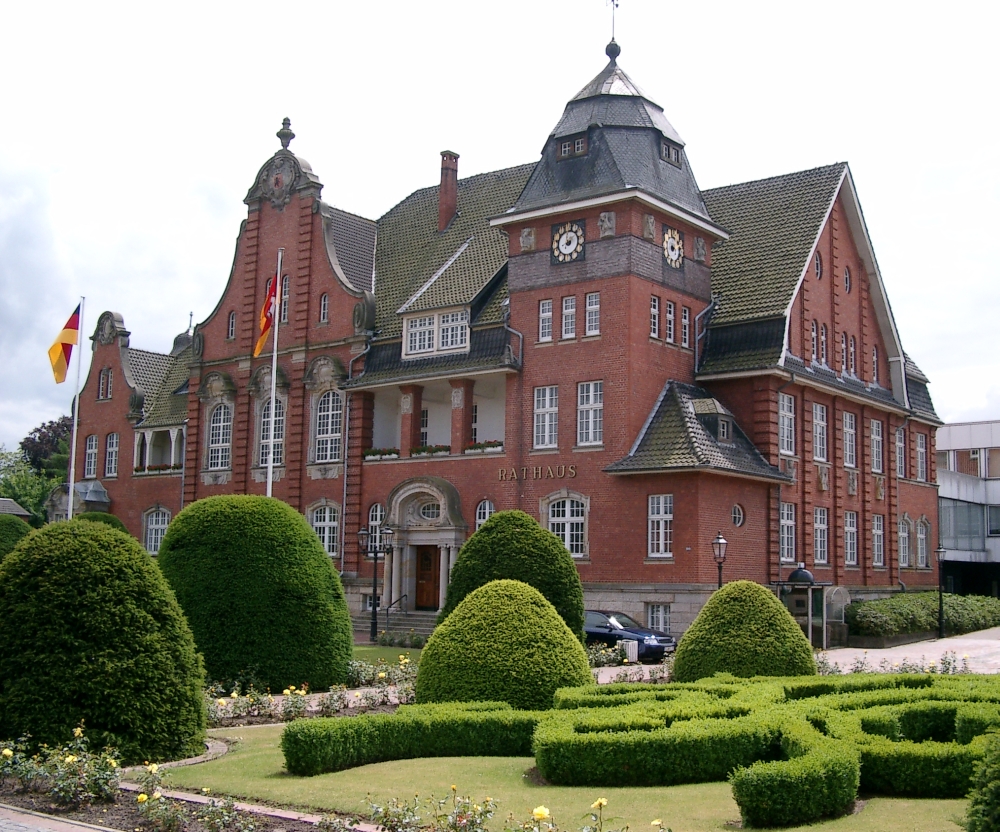
View on WikipediaPapenburg (German pronunciation: [ˈpaːpm̩bʊʁk] ⓘ; East Frisian Low Saxon: Papenbörg) is a city in the district of Emsland, Lower Saxony, Germany, situated at the river Ems. It is known for its large shipyard, the Meyer-Werft, which specializes in building cruise liners.
Key Information


Geography
[edit]Districts
[edit]Papenburg is subdivided into 6 urban districts, Papenburg-Untenende, Papenburg-Obenende, Herbrum, Tunxdorf-Nenndorf, Aschendorf and Bokel.
History
[edit]In the Chronicle of the Frisians, written in the 16th century by the East-Frisian council Eggerik Benninga, the Papenburg (at that time a manor) is mentioned for the first time. In 1458, Hayo von Haren, called "von der Papenburch", confessed to be leaned with the Papenburg. The contract that was made because of this is the earliest verifiably documented mention of Papenburg.
On 2 December 1630, the district administrator Dietrich von Velen purchased the manor for 1500 Reichsthaler from Friedrich von Schwarzenberg in order to found a settlement in the fen-surrounded region.
On 4 April 1631, Bishop Ferdinand von Münster leased the then castle and manor Papenburg to Dietrich von Velen. This is considered to be the foundation of the city of Papenburg.
Matthias von Velen and his wife Margartha Anna, born von Galen, endowed the oldest church in Papenburg on 7 December 1680, dedicated to Anthony of Padua, making him its patron saint.
From 1933 to 1945 a series of 15 moorland labor, punitive and POWs-camps were active in the districts of Emsland and Bentheim. The central administration was set in Papenburg where now a memorial of these camps, the Dokumentations- und Informationszentrum (DIZ) Emslandlager, is located.[2]
Population
[edit](always according to 31 December)
- 1998 - 33,671
- 1999 - 33,731
- 2000 - 34,096
- 2001 - 34,266
- 2002 - 34,403
- 2003 - 34,245
- 2004 - 34,440
- 2005 - 34,905
- 2006 - 34,797
- 2007 - 35,431
- 2012 - 37,532
- 2021 - 38.573[3]
Twin towns – sister cities
[edit] Pogranichny, Russia
 Rochefort, France


Gallery
[edit]-
 Papenburg Hauptkanal
 -
 Bridge on Hauptkanal
 -
 Boat on Hauptkanal
 -
 Waterlock
 -
 Ship Die Friederike von Papenburg
 -
 Church of Saint Antonius
 -
 Meyers-Mühle


.jpg)


References
[edit]- ^ "Stichwahlen zu Direktwahlen in Niedersachsen vom 26. September 2021" (PDF). Landesamt für Statistik Niedersachsen. 13 October 2021.
- ^ "Official site of the DIZ Emslandlager in Papenburg". Archived from the original on 19 January 2016. Retrieved 12 December 2015.
- ^ "Stadt Papenburg: Basis und Strukturdaten". stadt.papenburg.de. Archived from the original on 2019-02-22. Retrieved 2022-10-19.
- ^ "Partnerstädte". stadt.papenburg.de (in German). Papenburg. Archived from the original on 2019-04-14. Retrieved 2021-03-07.
External links
[edit]
- Official website
 (in German)
 - Short introduction to Papenburg (in English)


| International | |
|---|---|
| National | |
| Geographic | |
| Other | |
Papenburg
View on GrokipediaGeography
Location and Physical Features
Papenburg is positioned in the Emsland district of Lower Saxony, northwestern Germany, along the Ems River, roughly 10 kilometers east of the German-Dutch border.[6] The town's geographic coordinates are approximately 53.077° N latitude and 7.404° E longitude.[7] The area lies within the North German Plain, characterized by low elevation averaging 3 meters above sea level, with flat terrain dominated by alluvial deposits from the Ems River. Surrounding features include extensive peat moors and reclaimed marshlands, historically prone to flooding, which have been modified through drainage for agriculture and settlement.[8][9] The Ems River, navigable in this lower stretch, forms the primary physical axis, supporting connectivity to the North Sea via the Ems-Dollard estuary about 50 kilometers downstream.[10] Local canals, such as the Hauptkanal branching from the Ems, enhance waterway infrastructure amid the otherwise level, sedimentary landscape.Climate and Environmental Factors
Papenburg experiences a temperate oceanic climate classified as Cfb under the Köppen-Geiger system, characterized by mild temperatures, high humidity, and relatively even precipitation distribution throughout the year.[11] The annual average temperature is approximately 10.1°C, with average highs reaching 14.1°C and lows around 6.7°C.[12] [13] Winters are mild, with January averages near 2-3°C and rare frost, while summers are cool, peaking at 17-18°C in July and August.[14] Annual precipitation totals about 833-866 mm, with wetter conditions in autumn and winter due to westerly winds from the North Sea, though no month exceeds 80-90 mm on average.[12] [15] The local environment is shaped by the Ems River and associated canal systems, such as the Hauptkanal, which facilitate navigation and shipbuilding but also introduce hydrological influences like water level fluctuations and sediment management.[16] The surrounding Emsland district features extensive peatlands and raised bogs, remnants of Lower Saxony's moor-dominated landscape covering historically about 6% of the state's surface area, though much has been drained for agriculture and peat extraction.[17] These wetlands support specialized flora and fauna, including bog mosses and acid-tolerant species, but face pressures from land-use changes and drainage, contributing to biodiversity conservation efforts under regional water management plans.[18] Flood risk is a notable environmental factor due to Papenburg's riverside location on the Ems, part of a basin prone to high-water events from heavy rainfall and storm surges, managed through international commissions focused on hydrometeorological monitoring and protective infrastructure.[19] Water quality in the Ems has been addressed via initiatives like the Masterplan Ems, aiming to balance ecological health with economic activities such as shipping, amid concerns over pollution from upstream agriculture and industry.[20] Anthropogenic macrolitter in tributaries, including plastics and debris, poses ongoing challenges to aquatic ecosystems, as assessed in studies of North Sea inflows.[21] Overall, the area's environmental management emphasizes sustainable river use, with Lower Saxony's state plans integrating ecology, flood prevention, and habitat restoration to mitigate climate-driven changes like altered precipitation patterns.[22]Administrative Districts
Papenburg is divided into seven administrative districts, known as Stadtteile, which include the core urban area and five formerly independent municipalities incorporated into the city. These districts are Papenburg-Untenende, Papenburg-Obenende, Aschendorf, Bokel, Herbrum, Nenndorf, and Tunxdorf.[23][24] The core district of Papenburg itself is subdivided into Untenende (lower end) and Obenende (upper end), reflecting historical divisions along the Ems River, with Untenende encompassing the southern, more traditionally developed portions and Obenende the northern areas toward the shipyards and industrial zones. Aschendorf, one of the oldest districts with roots dating back centuries, covers 3,221 hectares and includes the sub-area of Aschendorferm oor, primarily agricultural in character.[25][26] Bokel spans 858 hectares and is situated to the east, known for its rural landscape interspersed with residential developments. Herbrum, at 1,754 hectares, lies to the south and maintains a strong agricultural focus. The total municipal area is 11,836 hectares, with the core Papenburg district accounting for 4,928 hectares.[25] Nenndorf and Tunxdorf, located to the northeast, were integrated as smaller former villages, contributing to the city's expansive rural-urban mix.[23][27] These districts retain some local administrative functions, such as school districts and urban planning initiatives, while unified under the city's governance since the incorporations primarily occurred in the mid-20th century.[28][29]History
Origins and Early Settlement (Pre-19th Century)
The name Papenburg, meaning "priest's castle," first appears in historical records as a fortification in 1431, referenced in the Cronica der Fresen by East Frisian councilor Eggerik Benninga.[30] The earliest verifiable document dates to 1458, when Bishop Johann of Münster enfeoffed Provost Hayo von Haren of Leer with the Papenburg estate amid ongoing regional conflicts between the Bishopric of Münster and Frisian groups.[30] Prior to organized settlement, the area consisted largely of uncultivated moorland along the Ems River, with sparse prehistoric activity evidenced by Roman naval use of the Ems estuary around 15 AD, though no permanent structures are attested locally.[31] The modern origins of Papenburg as a settlement trace to 1631, when Bishop Ferdinand of Münster enfeoffed Dietrich von Velen (1591–1657), a local drost (administrator) loyal to the bishopric, with the dilapidated Papenburg castle, manor, and surrounding moors on April 4.[30] [31] Von Velen, having acquired the estate in 1630, initiated a Fehnkolonie—a Dutch-inspired moor reclamation project—involving canal construction for drainage and the Dever River's redirection for peat transport to the Ems.[31] Initial settlers, primarily Heuermann (tenant farmers obligated to peat cutting), included figures like Johan Veen in 1639, enduring harsh conditions during the Thirty Years' War (1618–1648), which delayed expansion.[31] Settlement grew slowly post-war, reaching only four households by 1656 due to famine, disease, and conflict, but expanded to 36 plots by 1660 and 59 by 1710 through sustained peat extraction and rudimentary agriculture on reclaimed land.[31] Von Velen's efforts, supported by the bishopric, transformed the moor into a viable economic base, establishing Papenburg as Germany's oldest documented moor colony, though it remained a rural Freiheit (free estate) without urban privileges until later.[30] [31]Rise of Shipbuilding (19th Century)
Shipbuilding in Papenburg expanded markedly in the 19th century, fueled by the town's strategic location along the Ems River, which facilitated the construction and downstream transport of vessels to the North Sea. Initially focused on wooden sailing ships, the local industry benefited from increasing demand for maritime trade and emigration routes, particularly to the Americas. By mid-century, Papenburg hosted up to 23 shipyards, supporting a fleet of approximately 190 seagoing ships.[32] A notable peak occurred around 1860, when roughly 20 shipyards operated in the area, reflecting the industry's vitality amid broader European industrialization. In 1868, a record 44 Papenburg-built ships reportedly converged in Buenos Aires harbor, underscoring the quality and far-reaching export of local vessels for transatlantic voyages. However, the Ems River's variable water levels posed logistical challenges, limiting initial ship sizes and requiring adaptive infrastructure improvements over time.[33][32] Meyer Werft, established in 1795 but pivotal to the century's advancements, constructed over 60 wooden sailing boats in its early phases before pioneering the shift to iron-hulled ships equipped with steam engines starting in 1872—the first in the region to do so. This technological leap enabled larger, more efficient vessels, but many competing yards failed to transition from wood to iron, leading to consolidations and the dominance of Meyer Werft by century's end. The adaptation aligned with global maritime innovations, positioning Papenburg as a key player in Germany's emerging shipbuilding sector despite its inland constraints.[34][35][34]Industrial Expansion and World Wars (1900–1945)
In the early 20th century, Meyer Werft in Papenburg faced challenges transitioning from wooden to iron ship construction, with many local shipyards failing due to the Ems River's navigational limitations on vessel tonnage.[34] Under Joseph Lambert Meyer, the yard specialized in vessels suited to narrow channels, including pilot boats, tugboats, and lightships, enabling steady output despite constraints.[34] A milestone came in 1913 with the construction of the Graf Goetzen, a passenger and freight steamer for German East Africa; the 60-meter vessel was dismantled into 5,000 crates, shipped via rail and sea to Lake Tanganyika, and reassembled for colonial service.[36] This project highlighted Papenburg's growing expertise in modular, export-oriented shipbuilding, contributing to industrial diversification beyond traditional sailing craft.[35] During World War I, Meyer Werft continued producing civilian-oriented vessels such as fishing steamers and pilot boats, avoiding direct naval contracts that might have complicated postwar recovery.[36] The war's economic disruptions limited expansion, but the yard's focus on essential maritime support infrastructure sustained operations in Papenburg's shipbuilding-dependent economy.[4] In the interwar period, Meyer Werft expanded into general cargo shipping, launching the Durazzo in 1922—the yard's first vessel exceeding 70 meters, marking a shift toward larger freighters despite the Ems's restrictions.[34] Production emphasized coastal cruisers, lightships, and fishing vessels, adapting to post-Versailles Treaty constraints on German naval capabilities and global demand for commercial tonnage.[4] Papenburg's industrial base, centered on this single dominant yard, grew modestly through such specialization, though broader economic instability from the Great Depression hampered scaling.[36] World War II brought severe setbacks, with Meyer Werft constructing auxiliary vessels like pilot boats and lightships amid wartime shortages, while initiating projects such as the Elbe 1 lightship in 1939 that remained incomplete until 1948 due to material rationing and Allied bombing.[36] The shipyard suffered near-total destruction from air raids, underscoring Papenburg's vulnerability as a regional industrial hub without diversified defenses.[37] This devastation halted output and inflicted long-term infrastructural damage, though the yard's prewar avoidance of military specialization preserved some capacity for eventual resumption.[36]Post-War Reconstruction and Modern Growth (1945–Present)
Following the Allied advance in April 1945, Papenburg experienced significant destruction from artillery and ground fighting, with British and Polish forces formally occupying the town on April 22, marking the end of hostilities there.[38] The pre-occupation population stood at roughly 14,000 residents, many of whom had endured evacuations and shortages in the preceding months.[38] In the immediate aftermath, the Emsland region, including Papenburg, fell under British occupation zone administration, which delegated local security to Polish military units until 1948, leading to temporary Polish governance structures and the housing of displaced persons in makeshift camps.[39] This period facilitated initial stabilization but also strained resources, as the town absorbed refugees amid widespread infrastructure damage, including to the vital shipbuilding facilities along the Ems River.[31] Reconstruction accelerated in the late 1940s and 1950s as part of West Germany's Wirtschaftswunder, with Papenburg benefiting from federal initiatives to develop the underdeveloped Emsland district through industrial incentives. The Meyer Werft shipyard, which had been nearly obliterated during the war, underwent rebuilding and resumed operations, initially focusing on repair work and smaller vessels before expanding into commercial shipping.[37] By the 1960s, the yard shifted toward constructing gas tankers, roll-on/roll-off ferries, and container ships, capitalizing on global maritime trade growth and providing steady employment that anchored local recovery.[37] This revival drove population influx, with Emsland's overall numbers rising markedly due to job opportunities in shipbuilding and related sectors, transforming Papenburg from a war-ravaged outpost into a burgeoning industrial hub.[40] From the 1980s onward, Meyer Werft specialized in large cruise liners, delivering over 60 such vessels and establishing Papenburg as a global leader in luxury ship construction, which spurred further modernization including massive covered docks for year-round production.[4] Economic expansion included ancillary industries like testing facilities and supplier networks, contributing to sustained population growth—reaching over 50,000 by the early 21st century—and infrastructure upgrades such as canal expansions for ship launches.[5] Challenges emerged in the 2020s, including pandemic-related order delays, prompting a 2024 state-backed financial restructuring involving government loans and bank support to preserve 3,000+ jobs and prevent collapse.[41] Despite these hurdles, shipbuilding remains the dominant economic driver, with recent projects emphasizing LNG-powered and eco-friendly designs, underscoring Papenburg's adaptation to contemporary maritime demands.[36]Demographics
Population Statistics and Trends
As of December 31, 2023, Papenburg had a population of 37,403 residents, according to data from the Landesamt für Statistik Niedersachsen.[42] This figure incorporates post-census adjustments following the 2022 Zensus, reflecting the official statistical estimate for the city proper, which spans 118.4 km² and yields a density of approximately 314 inhabitants per km².[5] The population has exhibited steady, modest growth in recent years, with an estimated annual increase of 0.45% between 2022 and 2024, based on extrapolations from state statistical records.[5] This trend aligns with broader patterns in the Emsland district, where net migration inflows, particularly tied to employment in manufacturing and shipbuilding, have offset natural decrease from aging demographics.[43] Local registration data from municipal sources occasionally report higher figures, such as 39,354 as of January 1, 2023, due to unadjusted resident counts, but these are reconciled in official state statistics to account for under- or over-reporting.[25] Longer-term development indicates expansion from roughly 32,000 residents in 2000 to the current level, driven primarily by industrial attraction rather than high birth rates, with the average age hovering around 43 years amid regional demographic shifts.[44] Projections suggest continued slow growth, contingent on sustained economic stability, though vulnerabilities to sector-specific downturns could moderate inflows.[45]Ethnic and Religious Composition
Papenburg's population is overwhelmingly ethnic German, consistent with patterns in rural Lower Saxony where indigenous Germanic heritage predominates. Official statistics do not track ethnicity directly but use citizenship and migration background as proxies; as of 2021, foreign nationals comprised 16.2% of residents, higher than the Emsland district average of about 11% due to labor demands in shipbuilding.[46] [47] This share has risen steadily, driven by EU migrant workers and non-EU skilled labor, though detailed breakdowns of specific nationalities (e.g., Polish, Romanian, or Turkish origins) are not publicly granular for the locality.[44] Religiously, Roman Catholicism holds a strong majority, rooted in the town's medieval founding by monks and the Emsland's historical ties to the Diocese of Osnabrück. The 2022 census recorded 18,590 Roman Catholics (50.6% of the enumerated population), 6,675 Protestants (18.2%), and 11,506 in other, none, or unknown categories (31.3%).[5] These figures align with Lower Saxony's overall Christian dominance but show a declining affiliation trend, with unaffiliated shares growing amid secularization; minority faiths like Islam, linked to immigrant communities, remain marginal at under 5% based on regional extrapolations.[48]Migration Patterns and Social Structure
Papenburg has experienced net positive migration since the early 2000s, offsetting natural population decline and contributing to modest growth. From 2001 to 2013, the foreign-born population share rose from 4.2% to 7.2%, primarily through international inflows that surpassed domestic movements.[44] By 2023, the proportion of foreign residents reached approximately 13.57%, totaling around 5,074 individuals out of a population of roughly 37,400.[49] These patterns reflect labor demands in key industries like shipbuilding, with projections indicating sustained inflows of 1,780 persons annually through 2030 to support a forecasted population of 35,600, despite an aging native demographic.[44] Inflows have increasingly originated from abroad since 2009, including EU migrants benefiting from free movement and non-EU arrivals tied to economic opportunities at Meyer Werft, though specific national origins remain underreported in local statistics. Net migration saldo stood positive at +2,513 over 2014–2030 in baseline scenarios, with districts like Untenende mit Bokel seeing +1,301 due to family-oriented attractions, while outflows to nearby areas like Westoverledingen totaled -592 in earlier periods.[44] Protection seekers comprised about 1.96% of the population in 2017, fluctuating slightly downward to 1.93% by 2018, indicating a minor but stable component of refugee-related migration.[50] Shipbuilding sector adaptations, including union-led inclusive policies for migrant workers, have facilitated integration into the workforce, though overall migration rates remain balanced near 0‰ net in some aggregated data.[51] Social structure in Papenburg exhibits a traditional, family-centric profile shaped by its rural Catholic heritage in the Emsland district, with migration introducing younger cohorts that mitigate aging trends—such as projected +39% growth in the 60–74 age group by 2030.[44] Household patterns favor family units in growth areas like Untenende, contrasting with senior-heavy declines in Obenende, where youth outflow exacerbates structural shifts. Integration initiatives, such as the city-funded "JuMP" program for youth with migration backgrounds, address multicultural dynamics without altering the predominantly German core composition.[44] Economic reliance on skilled labor sustains a working-class orientation tied to industry, with limited evidence of broader socioeconomic stratification beyond industry-specific employment.Economy
Dominant Industries: Shipbuilding and Meyer Werft
Shipbuilding constitutes Papenburg's primary industry, anchored by Meyer Werft, a globally renowned shipyard specializing in luxury cruise liners and passenger vessels. Established in 1795 by Willm Rolf Meyer, the yard initially produced small wooden sailing boats suited for the Ems River's shallow waters.[34] Over generations, it transitioned to iron-hulled ships in the late 19th century and emerged as a leader in constructing large-scale cruise ships, completing over 700 vessels to date.[52] Meyer Werft employs more than 3,000 workers directly in Papenburg, making it the region's largest employer and sustaining thousands of indirect jobs through supply chains and services.[53] The shipyard typically delivers three to four ships annually, leveraging facilities like the world's largest roofed construction dock to build mega-cruise liners exceeding 300 meters in length for international clients.[36] Its Papenburg location benefits from the Ems River and connected canal system, enabling efficient assembly and flotation of vessels for delivery.[4] The company's family-managed structure, now in its seventh generation, has driven innovations such as early adoption of LNG-powered cruise ships, with orders for multiple such vessels by 2018.[54] Despite its prominence, Meyer Werft faced severe financial strain in the 2020s, reporting a €2.7 billion balance sheet deficit by mid-2024, prompting a €400 million German government bailout to preserve operations and jobs.[55] [56] This underscores shipbuilding's outsized economic role in Papenburg, where the sector's volatility ties local prosperity to global maritime demand.[57]Supporting Sectors: Testing Facilities and Renewables
ATP Automotive Testing Papenburg GmbH (ATP) operates one of Europe's largest and most advanced proving grounds for passenger cars and commercial vehicles, spanning approximately 870 hectares with over 75 kilometers of specialized test tracks.[58][59] Established in 1998 as a key research and development hub for Mercedes-Benz, the facility supports comprehensive vehicle and component testing under diverse conditions, including high-speed tracks, off-road courses, and environmental simulations.[60] This infrastructure contributes to Papenburg's economy by attracting automotive industry partners and enabling innovations in vehicle durability, safety, and performance, though it operates independently of the local shipbuilding sector.[61] In parallel, the renewables sector in Papenburg is gaining prominence through large-scale wind energy projects integrated with industrial sites. Mercedes-Benz initiated construction of a 140 MW onshore wind farm in September 2025 at the ATP proving ground, featuring 20 turbines and positioning it as one of Germany's most powerful such installations upon completion.[62][63] The project, developed in collaboration with partners including UKA, Nordex, and Max Bögl, aims to supply renewable power for Mercedes-Benz operations, covering about 20% of the company's German electricity needs and reducing Scope 2 emissions.[64][65] These developments underscore Papenburg's diversification beyond shipbuilding into high-tech testing and green energy, leveraging the ATP site's expansive land for dual-use applications in automotive validation and renewable generation. While the wind farm supports corporate sustainability goals, its economic impact includes job creation in construction and operations, aligning with regional efforts to integrate renewables into industrial heating and power systems, as seen in projects like Hafenwärme Papenburg.[66] Local shipbuilders such as Meyer Werft have explored adjacent renewables through offshore wind platform contracts and eco-friendly propulsion research, but these remain secondary to core vessel production.[67][68]Employment, Challenges, and Recent Restructuring
Meyer Werft, Papenburg's dominant employer, maintained a workforce of approximately 3,300 at its shipyard as of mid-2024, down from peaks exceeding 3,600 in prior years, with the company supporting an estimated 18,000 direct and indirect jobs regionally, including around 10,000 in and near Papenburg.[69][70] This concentration underscores the local economy's heavy reliance on shipbuilding, where fluctuations in orders directly impact unemployment rates and ancillary sectors like suppliers and logistics. The industry has grappled with persistent challenges, including acute material shortages and inflation spikes following the COVID-19 pandemic and global supply disruptions, which eroded profit margins despite a robust order backlog.[71] Broader sector vulnerabilities, such as excessive regulatory bureaucracy, skilled labor shortages, and competitive distortions from state-subsidized rivals in Asia, have compounded these issues, limiting Papenburg's diversification efforts.[72] Shipbuilding's capital-intensive financing model has further strained cash flows, with Meyer Werft requiring €2.3 billion in working capital and €400 million in equity to address accumulated losses by mid-2024.[73] Restructuring efforts intensified in April 2024, when Meyer Werft engaged insolvency expert Ralf Schmitz to streamline operations amid liquidity pressures, initially proposing 440 job cuts before negotiating with unions to reduce this to 340 positions at the Papenburg yard.[74][75] By September 2024, a comprehensive stabilization package was finalized, including a €400 million equity injection from federal and state governments, €2.6 billion in refinancing from a banking syndicate, and transfer of operations to a new parent entity, securing viability through orders valued at €11 billion extending to 2031.[53][76][77] A co-determined supervisory board was established in January 2025 to oversee ongoing reforms, while targeted expansions in engineering services added over 100 specialized roles, offsetting some reductions.[78][79]Government and Politics
Local Governance Structure
Papenburg functions as a self-governing municipality (selbständige Gemeinde) within the Emsland district of Lower Saxony, adhering to the state's municipal code (Gemeindeordnung Niedersachsen). The primary legislative body is the city council (Rat der Stadt), comprising 38 elected members who serve five-year terms and handle policy-making, budgeting, and oversight of municipal affairs. The council was last elected on September 12, 2021, with seats distributed among parties including the CDU (largest faction), SPD, Greens, FDP, and smaller groups such as the Unabhängige Wählergemeinschaft and Die Linke.[80][81] Executive authority rests with the directly elected mayor (Bürgermeisterin), who manages day-to-day administration, implements council decisions, and represents the city externally. Vanessa Gattung of the SPD has held the position since November 2021, succeeding Jan Peter Bechtluft of the CDU after winning the runoff election. The mayor chairs the administrative board (Verwaltungsvorstand) and is supported by appointed city councilors (Stadträte), including First City Councilor Hermann Wessels of the CDU, who oversees specific departments.[82][83][84] The administration employs approximately 280 staff across departments handling services like public utilities, education, and urban planning, operating from the city hall (Rathaus) renovated and expanded as of 2025. Council committees, such as the main administrative committee (Hauptausschuss), assist in specialized decision-making, ensuring checks on executive actions. This structure balances representative democracy with efficient local executive management, typical for mid-sized German cities with populations exceeding 30,000.[85][86]Political Landscape and Voting Patterns
Papenburg's political landscape reflects the conservative leanings prevalent in the Emsland district, where the Christian Democratic Union (CDU) has historically dominated due to the region's Catholic heritage and economic stability. However, local governance features a balance, with the Social Democratic Party (SPD) securing the mayoralty in recent elections. Vanessa Gattung of the SPD was elected mayor on September 26, 2021, in a runoff against CDU candidate Pascal Albers, marking a shift from prior CDU leadership.[87][88] In the simultaneous city council (Stadtrat) election on September 12, 2021, the CDU remained the strongest party but experienced losses in seats and vote share, while the SPD made substantial gains, resulting in a more diverse council composition that includes increased representation from smaller parties and independents.[89] This outcome prompted discussions on potential coalitions, with the CDU's traditional dominance challenged by rising SPD influence amid local economic priorities like shipbuilding support. Federal voting patterns in Papenburg demonstrate volatility aligned with national trends. In the 2021 Bundestag election, the SPD captured 34.9% of second votes, edging out the CDU's 28.6%, with turnout reaching 81.0%. By the 2025 Bundestag election on February 23, support shifted, as the CDU achieved 31.0% compared to the SPD's 21.8%, alongside declines for the Greens (8.0%) and FDP (4.3%), reflecting a regional conservative resurgence evident across Emsland where the CDU emerged as the clear victor.[90] These results underscore Papenburg's high civic participation and preference for center-right policies on issues like employment and infrastructure, tempered by local social democratic governance.[90]Fiscal Policies and Economic Interventions
Papenburg's municipal budget operates under Lower Saxony's double-entry bookkeeping system, emphasizing transparency, intergenerational equity, and cost control, with annual plans approved by the city council detailing revenues from taxes, grants, and fees alongside expenditures on public goods and development. The 2024 budget plan projected revenues and outlays through 2027, incorporating fiscal restraints to curb deficits amid economic pressures tied to the dominant shipbuilding sector.[91] Despite anticipating deep red figures, the council approved the 2024 budget in December 2023 with adjustments reducing projected net new debt to 45.7 million euros by 2027.[92][93] Local tax policies maintain a property tax multiplier (Hebesatz) of 380 for Grundsteuer A and B in 2024, consistent with prior years and regional norms, generating steady revenue for infrastructure and services without aggressive hikes that could deter investment.[94] The 2024 fiscal year concluded with an ordinary results deficit of 1.653 million euros, partially mitigated by a 14.8 million euro increase in net assets, primarily from investments.[95] Economic interventions prioritize business retention and attraction via the city's Wirtschaftsförderung office, which offers investor consulting, site management, and events like leadership forums and startup awards to foster diversification beyond shipbuilding dependency.[96] In November 2024, the appointment of Marco Abheiden as economic promoter carried expectations from local politicians for enhanced firm recruitment, innovation support, and mitigation of sector-specific risks.[97] During the 2024 Meyer Werft crisis, which threatened thousands of local jobs, Papenburg officials underscored the yard's centrality to the economy but deferred direct fiscal rescue to higher authorities; the federal government and Lower Saxony injected 400 million euros, acquiring 80% equity to avert insolvency from 2.8 billion euros in debts exacerbated by order delays and rising costs.[53][76] The city contributes indirectly through waterway advocacy, as affirmed in a 2010 European Court of Justice ruling recognizing Papenburg's shipyard-dependent planning and investments reliant on Ems navigability for vessel transport.[98]Culture and Society
Cultural Institutions and Landmarks
Papenburg's cultural landscape emphasizes its maritime history and architectural heritage, with landmarks centered around historical buildings, churches, and canal-side features. The Friederike von Papenburg, a replica wooden brig museum ship constructed in 1986, anchors permanently in the Hauptkanal opposite the city hall, symbolizing the town's shipbuilding legacy.[99] The vessel, measuring 32 meters in length, serves as an educational exhibit on 19th-century sailing ships and attracts visitors for guided tours.[100] The St. Antonius Catholic Parish Church, built in the neo-Gothic style in 1898, features a prominent tower and intricate stonework, functioning as a central religious and cultural site for the predominantly Catholic population.[101] Nearby, the Nikolaikirche represents Protestant heritage, constructed earlier in the 19th century as a simpler hall church.[101] Historical mills like the Meyers Mühle and Bockwindmühle exemplify Papenburg's agrarian past, with the latter dating to 1850 and operational until the mid-20th century before restoration as a cultural monument.[102] The von-Velen-Anlage open-air museum preserves relocated 18th- and 19th-century farmhouses and structures, offering insights into rural Emsland architecture and daily life.[103] The Alte Drostei, originating in the 16th century as a manor house and administrative seat, remains the oldest extant building in Papenburg, now housing exhibitions on local history.[104] Complementing these, the Gut Altenkamp estate includes exhibition spaces for contemporary art and regional artifacts, fostering cultural events since its adaptation in the late 20th century.[103] The Maritime Erlebniswelt visitor center integrates shipbuilding exhibits with interactive displays, drawing on Papenburg's industrial culture for public education.[102]Traditions, Events, and Daily Life
Papenburg maintains traditions tied to its Emsland regional heritage, including Catholic-influenced customs and rural guild practices. The Schützenfest, a longstanding shooting festival emblematic of northwest German communal life, is organized annually by the Schützenverein von 1800 Papenburg e.V., featuring marksmanship contests, parades in traditional attire, folk music, and beer tents that draw local participation for several days in summer.[105] Prominent events include the summer town festival (Stadtfest), which hosts markets, live performances, and family-oriented activities along the canals, emphasizing community bonding and local vendors. The Christmas market in late November or December showcases artisanal goods, mulled wine, and seasonal illuminations in the town center, aligning with regional yuletide observances. The NDR 2 Papenburg Festival, held over multiple days in early September, focuses on contemporary music concerts at sites like the Meyer Werft grounds and Zollhaus, attracting regional audiences with pop and rock lineups since its inception in the 2010s.[106][107] Daily life reflects the town's industrial rhythm, with a significant portion of the approximately 50,000 residents commuting to Meyer Werft for shifts in ship construction, fostering an international demographic due to expatriate workers from over 40 countries. Weekends often involve canal-side leisure such as boating or cycling in nearby nature areas, alongside visits to cultural sites like the Bockwindmühle windmill or Meyers Mühle for historical insights. Community engagement through Vereine (associations) for sports, music, and volunteering underscores social cohesion, while proximity to urban amenities in nearby Emden supports routine errands and healthcare access.[1][103]Education and Social Services
Papenburg's education system encompasses early childhood facilities, primary and secondary schools, and vocational training institutions aligned with the city's industrial economy. Kindergartens, known as Kindertagesstätten, provide care for children aged 1 to 6, with several facilities such as Kita St. Antonius and Kita St. Josef offering up to 80 places each and operating from 7:30 a.m. to 2:00 p.m. or longer in some cases; attendance is free for up to eight hours daily, with contributions for crèche services scaled according to income and inclusive options for children with special needs available in three facilities.[108][109] Secondary education includes the Gymnasium Papenburg, established in 1869 as a grammar school preparing students for university entrance through grades 5 to 13, and options like the Heinrich-von-Kleist-Schule for enrolment following primary school.[110][111] Compulsory education requires at least nine years of general schooling, followed by three years of vocational training in the dual system combining classroom and workplace learning.[112] Vocational schools, or Berufsbildende Schulen (BBS), play a central role, with BBS Papenburg – Technik und Wirtschaft offering apprenticeships in fields such as electrical engineering, metalworking, construction, and IT professions, tailored to local shipbuilding and manufacturing demands.[113][114] BBS Papenburg – Hauswirtschaft und Soziales provides training in social pedagogy, health and social care, and home economics, including pathways to Fachoberschule qualifications for further specialization.[115] These programs support the dual apprenticeship model, with practical placements at firms like Meyer Werft emphasizing technical skills.[116] Social services in Papenburg are administered through the city's Bürgerdienste Soziales office, which processes applications for Bürgergeld (basic income support) and Wohngeld (housing benefits) to ensure livelihood security.[117] Under the Social Code XII (SGB XII), social welfare provides assistance for those unable to support themselves, including medical care coverage for uninsured individuals via the welfare provider.[118][119] Additional offerings include educational counseling, social group work, family assistance through socio-educational measures, and support from organizations like Caritas' SKFM Papenburg for community-based social tasks.[120][121] The Familienwegweiser service coordinates family-oriented support, integrating education and welfare needs.[122]Infrastructure and Transport
Road, Rail, and Water Connectivity
Papenburg is connected to the regional road network primarily via Bundesstraße B 70, which links the city eastward to Meppen and westward to Leer, facilitating access to the A 31 Autobahn approximately 20 kilometers north near Weener.[123] The B 401 federal road provides southern connectivity toward Oldenburg, integrating with the A 28 Autobahn, while the broader Emsland district benefits from the A 30 to the east, enabling efficient freight and passenger movement to major hubs like Osnabrück and the Ruhr area.[123] These routes support the logistics needs of local industries, including shipbuilding and agriculture, with intermodal parks like Verdion offering direct road access for heavy goods transport.[124] Rail services center on Papenburg (Ems) station, a stop on the Emsland Railway line running from Rheine via Münster to Norddeich Mole, with regional trains operated by Deutsche Bahn and WestfalenBahn providing hourly connections to Emden (about 50 minutes) and Osnabrück (around 1.5 hours).[125] The station features basic amenities including parking, taxi ranks, and bicycle facilities, serving daily commuters and tourists, though it lacks high-speed long-distance services, relying on regional expresses for broader integration into Lower Saxony's network.[125] Water connectivity leverages Papenburg's position on the Ems River, where the city's port handles significant cargo volumes, ranking as Lower Saxony's leading facility for peat transshipment alongside bulk goods like steel, ship parts, and agricultural products.[126] The Meyer Werft shipyard exemplifies large-scale navigation, with completed vessels such as the Disney Destiny conveyed downstream approximately 32 kilometers through barrages and locks to the Dollart estuary and Eemshaven, often requiring precise tidal coordination and occasional backward maneuvering due to the river's narrow channels.[127] Complementing this, a local network of about 40 kilometers of canals, including the Hauptkanal with its bascule bridges and locks, supports smaller commercial and recreational boating, historically tied to peat extraction and drainage but now integrated into urban promenades.[103]Energy and Utilities Developments
Papenburg's energy landscape features significant investments in renewable sources, particularly biomass and wind power. The B+S Papenburg Energie GmbH operates a biomass cogeneration plant at the Nordhafen site, processing approximately 170,000 tons of biomass annually to generate eco-friendly electricity sufficient for around 50,000 households and businesses, which is fed into the EWE public grid.[128][129] This facility supports local decarbonization efforts by utilizing sustainable wood chips and residues, contributing to Lower Saxony's biomass capacity. A major wind energy project is underway at Mercedes-Benz's Papenburg test track, where UKA Group is installing around 20 turbines with 164-meter hub heights, with construction starting in 2024 and grid connection anticipated by 2026.[130][131] The farm is projected to produce enough power for approximately 100,000 households annually, aligning with corporate sustainability goals and regional wind resource utilization in the Emsland district.[132] Local initiatives include the Papenburg energy cooperative, which enables residents to invest in renewables such as photovoltaics, wind, and biogas plants, fostering community-owned generation amid Germany's Energiewende transition.[133] The "Hafenwärme Papenburg" project integrates renewable heat sources into industrial applications, demonstrating scalable coupling of power and thermal systems using technologies like those from 2G Energy.[134] Utilities developments emphasize electrification and efficiency, with E.ON deploying six fast-charging stations (each with two points) in 2025 under the Deutschlandnetz program to support electric vehicle adoption.[135] Municipal energy reports highlight ongoing reductions in consumption through efficiency measures, though water usage has rebounded post-COVID due to public facilities.[136] Gas supplies increasingly incorporate biomethane from regenerative sources, reducing reliance on imports.[137]Healthcare and Public Services
The primary healthcare facility in Papenburg is the Marien Hospital Papenburg Aschendorf, a general hospital owned by a non-profit GmbH that provides comprehensive medical and nursing care to residents of northern Emsland and southern East Frisia.[138] The hospital operates with 275 beds across 10 specialist departments, including internal medicine, gynecology and obstetrics, pediatrics, orthopedics, trauma and hand surgery, and others, handling 9,423 inpatient cases and 53,144 outpatient treatments annually.[139] [140] As an academic teaching hospital affiliated with Carl von Ossietzky University of Oldenburg, it contributes to medical training and research while serving as a basic and standard care provider.[141] Public services in Papenburg are administered through the municipal Bürgerdienste Soziales department, which manages key welfare programs including Bürgergeld (citizen's basic income support for those in need), Wohngeld (housing benefits), and assistance for education and participation for children and youth from low-income families.[117] These services ensure coverage for preventive medical checkups, early disease detection, and health counseling for recipients lacking statutory or private insurance, aligning with Lower Saxony's social assistance framework.[119] The hospital itself maintains an internal social services team to support patients with post-discharge planning, financial aid coordination, and psychosocial counseling.[142]International Relations
Sister Cities and Partnerships
Papenburg has established formal partnerships with two international cities, focusing on cultural, economic, and humanitarian exchanges. These relationships emphasize mutual understanding and cooperation, coordinated through dedicated local associations.[143] The partnership with Rochefort, France, was formalized on 10 September 1988. Located on the Atlantic coast in the Charente-Maritime department along the Charente River, Rochefort shares similarities with Papenburg in maritime heritage and marshland geography, with a population of approximately 27,500. Exchanges include cultural events, sports activities, and economic initiatives, managed by the Förderverein für internationale Begegnungen Papenburg-Rochefort e.V.[143][144] The partnership with Pogranitschny (formerly Hermsdorf), Russia, dates to 14 October 1995. Situated in Kaliningrad Oblast, about 2 km north of the Polish-Russian border in the former Königsberg region, it prioritizes fostering friendship, providing humanitarian aid, and promoting cultural ties, overseen by the Förderverein für deutsch-russische Zusammenarbeit e.V. Despite geopolitical tensions following Russia's 2022 invasion of Ukraine, Papenburg officials have affirmed continued support for the local partnership while condemning the war.[143][145]| Partner City | Country | Establishment Date | Key Focus Areas |
|---|---|---|---|
| Rochefort | France | 10 September 1988 | Cultural, sports, economic exchanges |
| Pogranitschny | Russia | 14 October 1995 | Friendship, humanitarian aid, culture |