Hubbry Logo
Pawnee BillPawnee BillMain
Open search
Pawnee Bill
Community hub
Pawnee Bill
logo
8 pages, 0 posts
0 subscribers
Be the first to start a discussion here.
Pawnee Bill
Pawnee Bill
from Wikipedia

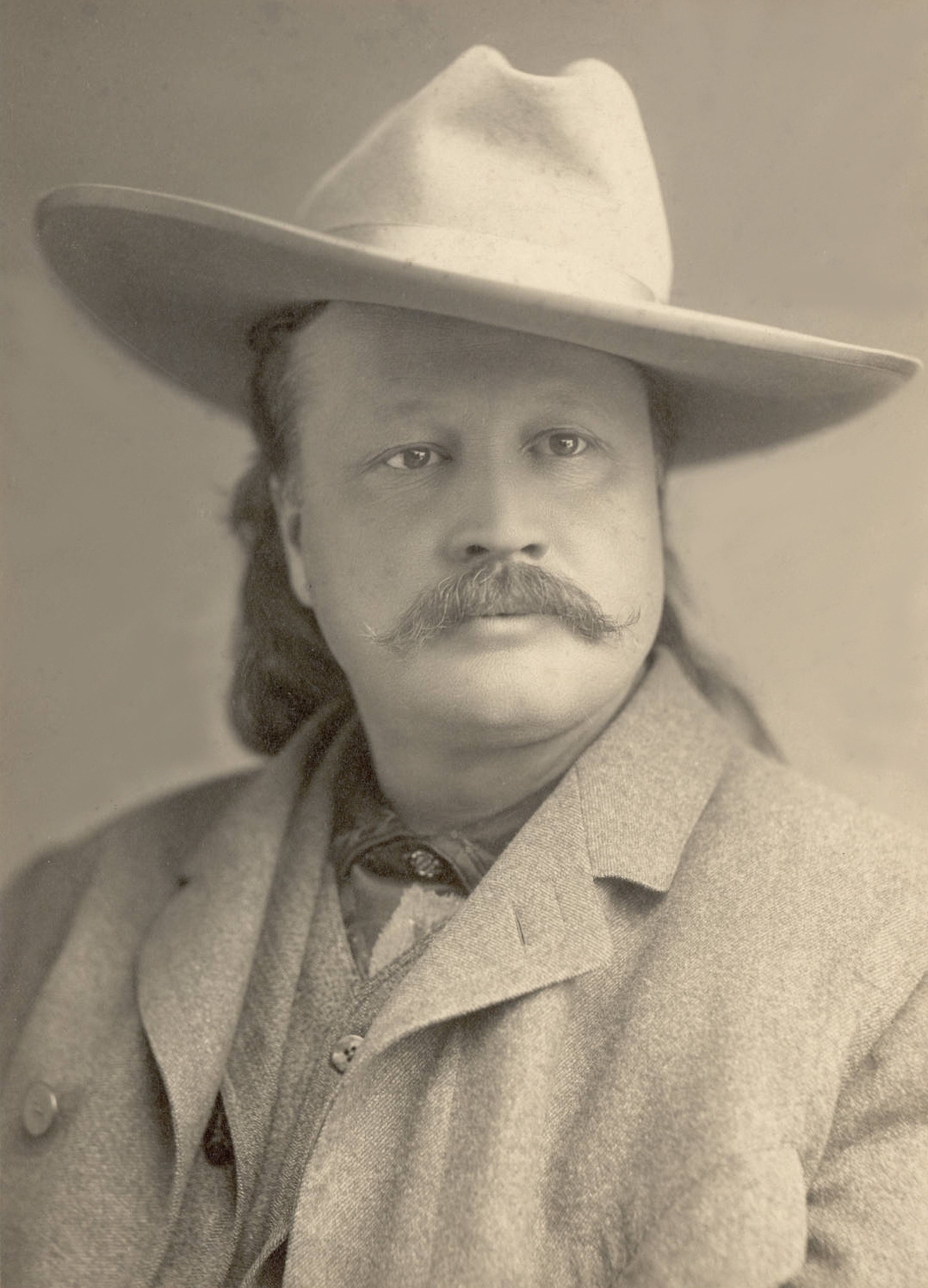
Gordon William Lillie (February 14, 1860 – February 3, 1942), known professionally as Pawnee Bill, was an American showman and performer who specialized in Wild West shows and was known for his short partnership with William "Buffalo Bill" Cody. In 2010, he was inducted into the Hall of Great Westerners of the National Cowboy & Western Heritage Museum.[1]

Key Information

Early life and family

[edit]

Pawnee Bill was born on February 14, 1860, in Bloomington, Illinois. His father Newton operated a flour mill in Bloomington; the mill burned to the ground in 1876.[2] The family then moved to Wellington, Kansas, where Gordon developed a love for the West. By the age of 19, he was working on the Pawnee Indian agency in Indian Territory. In 1883, he was given the chance to work as the Pawnee interpreter with Buffalo Bill's Wild West Show. His work with the show was the origin of his nickname as "Pawnee Bill".[3]

Wild West show

[edit]
Poster for Pawnee Bill's Historic Wild West.

After courting for two years, Lillie married May Manning in 1886, a petite Quaker from Pennsylvania, who was younger by nine years, a graduate of Smith College, and the daughter of a wealthy Philadelphia physician. At first, her parents objected to their refined young daughter marrying a cowboy, but eventually they agreed to the union.[4]

In 1888, the Lillies launched their own Wild West show, which they called "Pawnee Bill’s Historic Wild West". May starred in the show as the "Champion Girl Horseback Shot of the West." Their first season was a financial disaster where they re-organized as a smaller operation called "Pawnee Bill’s Historical Wild West Indian Museum and Encampment Show." That show was popular and financially successful. Lillie added Jose Barrera to the cast; he was widely popular performing as "Mexican Joe". Mamie Francis performed with Pawnee Bill's from 1901 to 1905. In 1907, Lillie hired performers from a variety of backgrounds. The show included Mexican cowboys, Pawnee, Japanese performers, and Arab jugglers. The ensemble debuted as "Pawnee Bill’s Great Far East Show."[5]

In 1908, Pawnee Bill and Buffalo Bill joined forces and created the "Two Bills' show. That show was foreclosed on when it was playing in Denver, Colorado.[6]

While Gordon Lillie had been on tour, May supervised their buffalo ranch, now known as Pawnee Bill Ranch. The Lillies completed work on their Arts-and-Crafts style home on Blue Hawk Peak in 1910.[7]

Later life

[edit]

Pawnee Bill invested in banking, real estate, and oil. He operated various business interests and dabbled in filmmaking at his ranch. In 1930, May and Pawnee Bill opened Pawnee Bill’s Old Town near the ranch. They sold Indian and Mexican crafts, and featured annual rodeos. That enterprise burned to the ground in the 1940s and was never rebuilt.

In 1936, the couple celebrated their 50th wedding anniversary in Taos, New Mexico. In September of that year they attended a local celebration in Tulsa, Oklahoma. While driving back to their ranch that night, Pawnee Bill lost control of their vehicle. May died as a result of her injuries, and Pawnee Bill never fully recovered. He died in his sleep on February 3, 1942, at the age of 81 in his home outside of Pawnee, Oklahoma.[8]

Legacy

[edit]

The Pawnee Bill Ranch continues to exist, including a museum.[9] The Pawnee Bill Memorial Rodeo is held annually,[10] as is a version of Pawnee Bill’s Original Wild West Show.[11]

References

[edit]
[edit]
Revisions and contributorsEdit on WikipediaRead on Wikipedia
from Grokipedia
Gordon William Lillie (February 14, 1860 – February 3, 1942), professionally known as Pawnee Bill, was an American showman, scout, hunter, and interpreter renowned for founding and leading Wild West extravaganzas that authentically depicted life, Native American cultures, and Western expansion. Born in , as the son of a miller, Lillie grew up frail but developed resilience through outdoor pursuits, later teaching school and working as a buffalo hunter and trapper in and . By 1878, he had joined the Pawnee Agency as an interpreter and educator on the reservation, earning his nickname from his close ties to the Pawnee people. Lillie's show business career began in 1883 when he served as an interpreter for the Pawnee performers in Buffalo Bill Cody's Wild West show, a role that lasted several years and propelled his fame across the . In 1888, he launched his own Pawnee Bill's Historic Wild West production, which grew into a massive touring enterprise featuring hundreds of performers—including up to 58 Native Americans—along with 150 horses, reenactments of historical battles, and exotic animal displays; the show performed internationally in , , , and . He married May Manning in 1886, a skilled equestrian and markswoman who performed as the "Champion Lady Horseback Rifle Shot" in his shows and co-managed their ventures. In 1908, Pawnee Bill merged his operation with Buffalo Bill's to form the combined Buffalo Bill's Wild West and Pawnee Bill's Great show, creating one of the era's largest spectacles with over 1,000 participants until financial strains led to its dissolution in 1913. Beyond entertainment, Lillie contributed to historical events by leading the Boomer movement, guiding settlers into Oklahoma's during the 1889 land rush, and aiding buffalo conservation through his efforts to breed and preserve the species from near-extinction. In his later years, he settled in , establishing the expansive Pawnee Bill's Buffalo Ranch—home to the world's largest private bison herd at the time—an Indian Trading Post, and Old Town , while also producing early Western films and authoring books such as Thirty Years Among the Pawnee Indians (1928) and Blazing Horizons (1927). Lillie's multifaceted legacy as Oklahoma's inaugural "King of the Cowboys" endures through his preserved ranch, now a , and his role in romanticizing and educating the public about .

Early Life

Birth and Family Background

Gordon William Lillie, professionally known as Pawnee Bill, was born on February 14, 1860, in Bloomington, Illinois. He was the eldest of four children in a family headed by Newton Wesley Lillie, a flour mill operator, and his wife, Susan Ann Conant Lillie. Lillie's siblings included Albert, Effie, and Lena, and the family resided in Bloomington during his early years, where Newton managed the local mill alongside a partner. The Lillie household experienced economic challenges typical of mid-19th-century Midwestern life, exacerbated by the fire that destroyed Newton's flour mill and left the family in financial distress. As a , Lillie was described as frail, prompting unconventional remedies such as drinking on the advice of a local butcher to build his strength. He contributed to the family by delivering newspapers for the Pantagraph, Bloomington's local publication, which provided early exposure to community stories and events. Growing up in Bloomington's rural environment near Miller Park, Lillie developed a keen interest in frontier narratives and Western history, often favoring tales of the American West and Native American cultures over classical like Shakespeare during his school years. This early fascination, influenced by family discussions and regional amid Illinois's transitioning landscape, laid the groundwork for his lifelong engagement with and the .

Education and Relocation to Kansas

Gordon William Lillie, born to a family of modest means in , received his early education in local public schools, where he demonstrated academic aptitude and musical talent on the guitar. In 1877, at the age of seventeen, he briefly served as a teacher at the one-room Brush College School in nearby Arrowsmith Township, where he quickly established discipline among his students on his first day by physically restraining two unruly boys. Lillie graduated from in 1879 as part of a small class, marking the completion of his formal education at age nineteen; his final exams, dated May 20, 1879, confirmed his readiness to enter the world beyond academia. The Lillie family's relocation westward was prompted by economic hardship following the 1876 fire that destroyed their Bloomington flour mill, operated by Gordon's father, Newton Lillie. Seeking new opportunities to rebuild their livelihood, Newton departed for , in the summer of 1878, with the intention of reestablishing a milling or related business in the burgeoning town of , where land was available and the region's growth promised prosperity. The rest of the , including Gordon, joined him shortly after Gordon's high school graduation in 1879, drawn by the allure of the expanding American West and the need for fresh starts amid post-Civil War economic shifts. This move positioned the Lillies amid the rapid settlement of , facilitated by railroad expansion and incentives. Upon settling near , Gordon contributed to the family's adjustment through local , including labor on the Atchison, Topeka and Santa Fe Railway—a vital for the area's development—and as a waiter in a local , tasks that provided immediate income while he acclimated to prairie life. These early jobs reflected the diverse, hands-on work available to young men in late-1870s , where farming supplements and service roles supported incoming settlers before more specialized opportunities arose. The family's efforts to establish roots involved rudimentary farming on their claim, aligning with the agricultural boom in Sumner County, though challenges like harsh weather and isolation tested their resolve. During the relocation and initial years in , the Lillie family had their first encounters with Plains Indian cultures, particularly the Pawnee, who were encamped nearby as part of their forced migration from to in the mid-1870s. Wintering in the vicinity around this period, the Pawnee provided opportunities for casual interactions through trade and community proximity, exposing young Gordon to their customs, language, and nomadic traditions amid the shifting frontier landscape. These formative glimpses into Native life, observed during family travels and settlement, ignited his enduring fascination with the West's without yet involving formal roles.

Work at Pawnee Indian Agency

At the age of 19, Gordon W. Lillie began his employment in 1879 at the Pawnee Indian Agency in (present-day ), where he served as a teacher and interpreter for the Pawnee tribe. Following his family's relocation to in the late , Lillie had already developed an interest in Native American cultures through interactions with the Pawnee near , which prepared him for this government position. In his roles at the agency, Lillie taught English to Pawnee children and adults while working as an interpreter and secretary to Major Bowman, the U.S. . He immersed himself in the community, learning the fluently, which enabled him to build strong relationships with tribal members. His daily responsibilities included coordinating tribal activities, such as educational programs and administrative tasks, and mediating disputes between the Pawnee and government officials or settlers to ensure smooth operations at the agency. Due to his close ties and effective advocacy for the Pawnee, the tribe adopted him, bestowing the nickname "Pawnee Bill" and granting him honorary status as a "White Chief," a rare recognition symbolizing his integration into their society. This period marked the foundation of Lillie's deep cultural understanding and lifelong connection to the .

Frontier Activities

Role as Interpreter and Scout

In the late 1870s, Gordon W. Lillie honed his practical skills as a hunter, trapper, and scout while residing near the Pawnee Reservation in , where he immersed himself in the daily life of the tribe. He joined trapping expeditions and buffalo hunts alongside Pawnee warriors, navigating the challenging terrain of the and contributing to the tribe's sustenance efforts amid declining herds. These experiences not only sharpened his survival abilities but also fostered deep personal bonds with Pawnee leaders, such as the elder Blue Hawk, enhancing his understanding of their customs and the rigors of frontier existence. By 1879, Lillie leveraged his growing fluency in the —acquired through proximity to the reservation—to secure a position as a teacher at the Pawnee Indian Agency in . He was soon appointed interpreter and secretary to Major Edward Bowman, the U.S. , where he played a key role in facilitating communications during tribal negotiations and administrative dealings with government officials. Lillie's interpretive work extended to scouting duties for U.S. Army units operating in the region, providing guidance on local geography and tribal relations amid tensions with neighboring groups. These responsibilities exposed him to significant personal risks, including exposure to extreme weather and potential conflicts in the unsettled Plains. Prior to formal Wild West engagements, Lillie coordinated small groups of Pawnee individuals for preliminary demonstrations and cultural exchanges, drawing on his agency connections to organize participants who showcased traditional skills like reenactments. This preparatory involvement underscored his emerging expertise in bridging Native American and white settler worlds, solidifying his reputation among the Pawnee as a trusted ally.

Involvement in Oklahoma Land Run

Gordon William Lillie, known as Pawnee Bill, affiliated with the Boomer Movement in the mid-1880s, becoming its leader in 1888 following the death of David L. Payne four years earlier. The movement sought to pressure the federal government to open the in —approximately two million acres in central —to non-Native settlement, arguing that the land was underutilized and suitable for . Lillie's prior experience as a scout and interpreter for the Pawnee Indians at the Pawnee Agency in Indian Territory equipped him with the organizational and negotiation skills necessary for this advocacy role. As leader, Lillie organized the Pawnee Bill's Oklahoma Colonization Company around 1887 to coordinate Boomer expeditions and promote settlement opportunities, issuing notices to newspapers to recruit participants from and beyond. This effort culminated in the Oklahoma Land Run of April 22, 1889, when President officially proclaimed the open at noon, allowing eligible settlers to claim 160-acre homesteads. Lillie led a large contingent of about 4,000 Boomers across the border from Caldwell, directing them toward prime locations in what became Kingfisher County. Following the run, Lillie and his group staked claims in the newly opened territory, contributing to immediate settlement efforts through and the establishment of provisional communities in central Oklahoma, including areas near the Pawnee Indian lands. These activities involved coordinating with other settlers to form basic infrastructure, such as town sites and supply lines, fostering early community development amid the chaos of "" who had entered illegally beforehand. During the Boomer campaigns leading up to the run, Lillie interacted with federal authorities, including U.S. Army troops stationed to enforce restrictions on unauthorized entries into . His diplomatic approach, honed from years as a Pawnee interpreter, helped manage tensions by emphasizing organized, non-violent advocacy rather than the more confrontational tactics of earlier leaders like Payne, who had faced multiple evictions and arrests. This strategy minimized direct conflicts during the 1889 run itself, allowing his group to participate legally once the lands were proclaimed open.

Wild West Show Career

Debut with Buffalo Bill Cody

In 1883, Gordon William Lillie, leveraging his prior experience as an interpreter and scout at the Pawnee Indian Agency where he had become fluent in the Pawnee language, was recruited to coordinate a group of Pawnee performers for William F. "Buffalo Bill" Cody's newly formed Wild West show. Cody had sent a request to the Pawnee Agency for Native American participants to add authenticity to his inaugural production, and Lillie was selected alongside six Pawnee individuals to join the troupe. The show made its debut performance on May 19, 1883, in Omaha, Nebraska, marking the start of Lillie's entry into the entertainment world. Lillie's multifaceted role encompassed serving as the primary interpreter to facilitate communication within the diverse troupe, which included , sharpshooters, and other Native American performers, while also acting as a scout and featured entertainer. He showcased his proficiency in marksmanship by glass balls and other targets, demonstrated expert riding skills in simulated frontier scenarios, and highlighted Pawnee cultural elements through coordinated acts such as traditional dances and horsemanship displays by the Pawnee contingent. These performances emphasized the romanticized American West, blending education with spectacle, and Lillie quickly earned the moniker "Pawnee Bill" from audiences and cast alike for his authoritative presence and cultural insights. His background in aided in authenticating the show's reenactments of historical events like Indian attacks on stagecoaches. From 1883 to 1886, Pawnee Bill traveled extensively with the show across the , performing in major cities such as , , and New York, where the troupe dynamics fostered a collaborative environment under Cody's leadership. Cody, as the charismatic headliner, often shared the spotlight with Lillie during shooting and riding exhibitions, building a professional rapport that highlighted their mutual respect for frontier skills; for instance, in in 1883, Lillie's coordination of Pawnee acts drew particular acclaim for their precision and energy. The tours covered thousands of miles by rail, with up to 100 performers and livestock, creating a self-contained mobile community that navigated logistical challenges like weather and scheduling while captivating audiences with high-energy spectacles. By 1886, Pawnee Bill had established himself as a key attraction, contributing to the show's rising popularity and his own emerging fame.

Founding Pawnee Bill's Historic Wild West

In 1888, Gordon W. Lillie, known as Pawnee Bill, launched his independent Wild West show titled Pawnee Bill's Historic Wild West after departing from Cody's troupe, where he had gained experience as an interpreter and performer. With financial backing from his wife May Lillie's family, the inaugural season toured the but faced financial difficulties, prompting a reorganization into Pawnee Bill's Historical Wild West Indian Museum and Encampment for the following year. This pivot emphasized educational elements alongside entertainment, setting the show apart in the competitive Wild West circuit. The production incorporated a diverse array of acts to depict frontier life vividly, featuring Pawnee and other Native American performers in dances and encampments, vaqueros demonstrating lassoing and equestrian drills, and Japanese and Arabian acrobats executing high-wire and riding feats. Historical reenactments formed the core, including simulated stagecoach robberies, attacks on cabins, and battles such as the , with May Lillie starring as a premier performing trick shots from horseback. These elements drew from Lillie's firsthand knowledge of the Plains, blending authenticity with spectacle to engage audiences. Operationally, the show adopted a robust touring model reliant on railroad , transporting up to 17 cars loaded with 150 horses, performers, and equipment across extensive routes, such as 79 performances in 19 states during the season alone. Admission prices ranged from 25 to 50 cents for two daily shows, supporting a that included $25 monthly for adult male performers and horses, fostering financial stability in the as attendance grew and the operation expanded to include a European tour. Marketing emphasized "authentic" narratives through street parades, advertisements, and program books that highlighted the show's historical fidelity and exotic performers. A key innovation was the integration of educational lectures and museum exhibits on Native American history, delivered by Native American performers to challenge prevailing stereotypes of as mere savages and instead portray their cultural depth and resilience. This approach, rooted in Lillie's prior work as a teacher and interpreter at the Pawnee Agency, aimed to foster public understanding amid assimilation policies, with encampments allowing visitors to observe daily Native traditions and purchase crafts.

Partnership and Merger with Buffalo Bill

In 1908, Gordon W. Lillie, known professionally as Pawnee Bill, merged his Historic Wild West company with William F. Cody's to form "," commonly referred to as the Two Bills show. This was born out of mutual financial pressures, with Lillie acquiring an initial one-third interest to leverage Cody's enduring fame alongside his own organizational expertise. The merger was negotiated amid Cody's ongoing disputes with the estate of his former partner James A. Bailey, culminating in Lillie purchasing full control later that year for $66,000, assuming substantial liabilities in the process. The production was unprecedented in its ambition and scale, billed as the largest Wild West extravaganza ever assembled, blending traditional reenactments with exotic Far Eastern and international elements. It featured hundreds of performers, including cowboys, Native American tribes, Arab horsemen, , and Japanese acrobats, supported by elaborate sets depicting battles, hunts, and cultural spectacles. The troupe traveled with numerous animals—hundreds of horses, buffalo, and exotic beasts—requiring multiple for transport, and aimed for global appeal though primarily touring major U.S. cities from 1908 to 1913. Despite initial successes drawing massive audiences, the venture's high operational costs, including daily expenses exceeding those of prior shows, strained resources from the outset. By 1913, the partnership unraveled amid escalating debts, an economic downturn following the , and mismanagement exacerbated by Cody's extravagant spending on ventures like gold mines and personal loans. Lillie had advanced thousands to cover Cody's share, but tensions mounted as Cody failed to contribute adequately to seasonal preparations, leading to a $40,000 shortfall for wintering animals and reopening. The collapse came dramatically in July 1913 during a Denver engagement, when the show was foreclosed upon over a $20,000 loan from Denver Post owners Harry H. Tammen and Frederick G. Bonfils; the creditors seized assets, including performers and equipment, and absorbed the operation into their Sells-Floto Circus, leaving the partners bankrupt. The fallout strained the personal relationship between Lillie and Cody, with Lillie later expressing frustration over Cody's financial irresponsibility in private accounts not publicized until . Deeply impacted by the losses and the exploitative takeover, Lillie chose to retire from West , shifting focus to other enterprises while Cody was compelled to perform under the new owners until his death in 1917. The merger, though a commercial failure, marked the end of an era for large-scale Wild West productions and underscored the genre's vulnerability to rising costs and changing public tastes.

Business Ventures

Investments in Real Estate and Oil

Following the dissolution of his Wild West show partnership in 1913, Gordon W. Lillie, known as Pawnee Bill, channeled earnings from his entertainment career into diversified investments in , particularly in and , to secure his financial future. These ventures capitalized on the state's burgeoning economy during the early , though they involved significant risks amid fluctuating markets. In , Lillie focused on acquisitions in Pawnee , purchasing multiple sections of through deeds and assignments starting in 1915 and continuing through the 1930s. A notable example was his development of the Pawnee Bill Addition to the town of Pawnee, formalized by a dedication certificate in 1921, which expanded local infrastructure and residential areas. These holdings not only provided steady income from rentals but also positioned him as a key player in regional growth, as property values rose with Oklahoma's population influx post-statehood. Lillie's oil investments began in earnest during the 1910s, aligning with that transformed the region into a major producer. In March 1918, he acquired a skimming in Yale, Oklahoma, from Petrol Refining Company, and soon after incorporated the Pawnee Bill Oil Company on February 25, 1918, to handle exploration and production. He secured leases in Payne County and contracted with Twin State Oil Company for output, while also forming the Buffalo Refining Company in 1921, where he served as president and treasurer. Additional ventures included the Fern Oil and Gas Company, active from 1925 to 1938, and various oil and gas leases across the state from 1915 to 1940, some of which generated royalties. By June 1922, his Yale operated at 700 barrels per day—half its capacity—and the company declared an 8% dividend in the early , reflecting profits from wartime demand. However, these oil pursuits carried economic risks, particularly after when demand plummeted, leading to widespread refinery closures in ; by 1921, many plants, including aspects of Lillie's operations, ran at 50% capacity or shut down temporarily. Disputes over rentals and production, such as those with lessees in 1926, further highlighted the volatility, though his diversified leases helped mitigate losses during the boom's fluctuations. Complementing these efforts, Lillie maintained banking interests that supported local development, including involvement with the Pawnee National Bank, where he directed oil and gas rental payments in 1925. He extended loans to businesses, such as a $100 advance to the Goes Lithographing Company, fostering economic ties in Pawnee and surrounding areas. Earlier ties to institutions like the Valley National Bank, where he was a principal since , continued to influence his portfolio, aiding loans and investments that bolstered community growth amid the oil-driven prosperity. Overall, these strategies enabled Lillie to recover from setbacks and contribute to Oklahoma's economic landscape, balancing successes like refinery dividends against the inherent uncertainties of resource extraction.

Development of Pawnee Bill Ranch and Old Town

In 1902, Gordon W. Lillie, known as Pawnee Bill, purchased nearly 2,000 acres of land in Pawnee County, , from Pawnee Indian allotments authorized by a Congressional Act, establishing the foundation for what became the Pawnee Bill Ranch. The development was financed through Lillie's investments in , allowing him to create a showplace for his interests in frontier life and . By 1910, he constructed a 14-room stone mansion on the property at a cost of $75,000, featuring imported hardwoods, arched doorways, and facilities to accommodate up to 50 guests, alongside a pre-1910 , a three-story stone barn, and other outbuildings like a saddle shop and facility. Adjacent to the ranch, Lillie opened the Old Town Indian Trading Post in 1909 as a venue to sell Native American crafts and promote cultural exchange, drawing visitors to experience recreated . In 1930, Lillie and his wife May expanded the trading post, enhancing it with additional structures and programming to boost , including the sale of goods alongside Indigenous artifacts. The ranch and trading post emphasized educational and entertainment features, such as herds of buffalo that Lillie cultivated to support conservation efforts and lobby for protective legislation, leading to the establishment of Wichita Mountains Wildlife Refuge. Visitors could observe Native American demonstrations of traditional crafts and skills, participate in annual rodeos at Old Town, and tour the expansive pastures, which highlighted the American West's heritage and Lillie's role in preserving it. Tragedy struck in the 1940s when a fire destroyed the Old Town Indian , preventing its reconstruction, though Lillie and subsequent caretakers maintained the ranch's core facilities, including the mansion and buffalo herds, to sustain its operations as a tourist destination until his death in 1942.

Personal Life

Marriage to May Manning

Gordon W. Lillie, known as Pawnee Bill, met May Manning in in 1884 while touring with Cody's Wild West show, where the 15-year-old Manning watched a . Born on March 12, 1869, in to a prominent Quaker family—her father, William R. Manning, was a physician—May came from a background that emphasized education and restraint, yet she was drawn to the excitement of the spectacle. After a two-year , the couple married on August 31, 1886, when May was 17; as a wedding gift, Lillie presented her with a pony and a .22 target rifle, symbols of the life they would share. May Lillie rapidly adapted to the demands of , training under her husband to become an accomplished equestrian and markswoman before starring in Pawnee Bill's Historic Wild West, which debuted in 1888. Billed as the "World’s Greatest Lady Horseback Shot" or "Champion Horseback Shot of the West," she performed daring feats such as trick shooting glass balls and targets from horseback, often , using rifles like the Flobert .22 and an 1873 Winchester, achieving near-perfect accuracy in competitions, such as hitting 24 out of 25 targets. As co-manager of the show, May handled critical , financial oversight, and performance coordination, leveraging her business acumen to ensure smooth operations during extensive tours across the and , where the production competed directly with Cody's enterprise. The Lillies' partnership extended to joint decision-making in their broader ventures, including the show's evolution and their investments in following the 1893 . They developed a 2,000-acre near , in the early 1900s, where they raised a herd of nearly 200 buffalo to preserve the species central to Plains Indian culture and Western lore; May supervised operations, including oversight, during her husband's absences. Their shared life blended the rigors of road travel—enduring years of performances and mergers, such as the 1908 union with show—with rooted stability in , though the couple had no biological children.

Family Dynamics and Philanthropy

Gordon William Lillie and his wife May shared a childless that formed the foundation of their lifelong partnership in and ranching endeavors. Although they had no biological children, the couple adopted a son, Billy Lillie, in 1917; he tragically died in a in 1925. Despite this, they maintained close relationships with Lillie's , including nieces and nephews from his three younger siblings, with whom he remained connected throughout his life. Lillie's deep bonds with the Pawnee tribe, forged during his years living among them as a scout, interpreter, and teacher, led him to view many tribal members as an adopted , providing ongoing support and employment opportunities through his . Lillie's philanthropic efforts were particularly focused on the Pawnee tribe, where he contributed to education and health initiatives by serving as a teacher at the Pawnee Indian Agency in the 1880s, helping to educate tribal youth in English and practical skills. In recognition of the buffalo's cultural significance to Native Americans, Lillie advocated for bison conservation, lobbying Congress and offering to donate his herd, which contributed to the establishment of the Wichita Mountains Wildlife Refuge in 1907 and helped prevent the species' extinction; he maintained a large private herd on his ranch to aid preservation efforts. Beyond tribal support, Lillie engaged in local Oklahoma charities, contributing to community development in Pawnee through his ranch operations and public events that promoted historical . He was instrumental in preserving frontier artifacts, amassing a collection of Western memorabilia—including saddles, firearms, and Native American —that he shared with family and visitors, ensuring these items endured as educational resources. His hobby of collecting such pieces not only enriched family gatherings but also laid the groundwork for the Pawnee Bill Ranch's museum, which safeguards these artifacts for public appreciation today.

Later Years and Legacy

Retirement and Challenges

Following the financial collapse of the combined Wild West and Pawnee Bill's Far East show in 1913, Gordon W. Lillie, known as Pawnee Bill, withdrew from the entertainment industry and retired to his Blue Hawk Peak Ranch near . There, he shifted his focus to ranching operations, emphasizing the preservation and expansion of and herds, which helped sustain native species amid declining wild populations. Lillie also cultivated as a key aspect of ranch life, welcoming visitors to experience frontier authenticity; in 1930, he and his wife May opened Pawnee Bill's Old Town, a recreated Western village adjacent to the ranch that drew tourists interested in Wild West memorabilia and demonstrations. These efforts provided a measure of stability during his later years, blending agricultural pursuits with promotional activities rooted in his showmanship background. Lillie's post-retirement ventures, including prior successes in and , encountered significant economic pressures during the , as Oklahoma's economy—reliant on , , and —suffered widespread bank failures, plummeting commodity prices, and reduced opportunities starting in the late . Rural financial institutions, including those tied to ranching and energy sectors, collapsed amid the broader downturn, straining Lillie's diversified holdings and limiting expansion at . Despite these obstacles, he adapted to emerging modernizations, particularly the rise of automobiles and improved roadways; as president of the Highway 64 Association, Lillie advocated for infrastructure development, earning U.S. Highway 64 the nickname "The Pawnee Bill Route" for its passage near his property. This embrace of automotive travel facilitated greater visitor access to , helping to offset some financial strains through increased tourism. The 1930s brought further personal and health challenges for Lillie. On September 13, 1936, he and May were involved in a severe automobile accident near Cleveland, Oklahoma, when their gold-colored vehicle collided head-on with another car; May sustained critical injuries, including a broken and , and died four days later on September 17 at age 67. Lillie himself suffered injuries in the crash, which exacerbated ongoing health issues and left him with mobility limitations, including an inability to walk unaided in his final years; the profound emotional toll of losing his longtime partner and collaborator deepened his physical decline, from which he never fully recovered.

Death and Cultural Impact

Gordon William Lillie, known as Pawnee Bill, died in his sleep on February 3, 1942, at the age of 81 from natural causes at his ranch near . Through his , Pawnee Bill significantly shaped popular imagery of , blending historical reenactments with to romanticize life and cowboy heroism. His performances, which toured extensively from 1888 onward, promoted a form of Native American inclusion by featuring tribal performers in acts that showcased skills like horsemanship and traditional dances, though these depictions often idealized or simplified indigenous cultures for audience appeal. This approach provided some Native participants an outlet to preserve and display aspects of their heritage amid assimilation pressures, yet it reinforced romanticized narratives of the West. Critiques of Pawnee Bill's shows highlight their role in perpetuating stereotypes, portraying Native Americans as either noble or ignoble savages in scenarios like attacks on settlers' cabins, which emphasized Euro-American triumph and indigenous "barbarism." Modern reevaluations question the authenticity of his claims to deep cultural understanding, noting exaggerations in his self-presentation as a Pawnee interpreter and advocate, while acknowledging Native agency in using the shows to subvert imposed narratives. In Oklahoma history, his leadership in the Boomer Movement—advocating for the opening of —directly contributed to the 1889 , influencing settlement patterns and state formation. Additionally, his ranching efforts helped preserve elements of heritage, including herds that supported regional conservation.

Memorials and Modern Recognition

The Pawnee Bill Ranch Historic Site and Museum, managed by the Historical Society, preserves the 14-room mansion built in 1910 as the home of Gordon W. "Pawnee Bill" Lillie and his family, offering guided tours that showcase original furnishings, memorabilia, photographs, and artwork from their lives and . The museum features exhibits on Pawnee Bill's career, including artifacts related to his performances and the Pawnee Nation, along with outdoor structures like the barn, , and blacksmith shop that highlight ranch life. Annual events continue to honor Pawnee Bill's legacy through reenactments and rodeos. The Pawnee Bill Memorial Rodeo, held each July at the Lakeside Arena in Pawnee, Oklahoma, is an IPRA-sanctioned event featuring traditional competitions such as bareback bronc riding, bull riding, and barrel racing, alongside novelty acts like wild horse races and bull poker, culminating in a parade and dances. At the ranch, Pawnee Bill's Original Wild West Show occurs annually on Flag Day, with the 2025 edition themed "Pawnee Bill Honors Old Glory," including reenactments of stagecoach holdups, gunfights, trick riding, roping demonstrations, and escaramuza charra equestrian drills performed by historical interpreters. Pawnee Bill has received formal recognitions for his contributions to Western heritage. He was inducted into the Oklahoma Hall of Fame in 1934 as Gordon W. Lillie, acknowledged for his roles as a scout, interpreter, and promoter of 's history. In 2010, he was honored with induction into the at the , celebrating his innovations in Wild West entertainment. Recent activities at the ranch include cultural programs such as the annual October quilt exhibit, which in 2025 displayed heirloom and modern quilts from across Oklahoma to explore textile traditions tied to Western history. Scholarly examinations in the 2010s have analyzed themes of race and gender in Pawnee Bill's shows; for instance, a 2013 thesis by Alyce Vigil at the University of Central Oklahoma details how the productions offered economic opportunities to American Indian women, early cowgirls, and performers of color while reinforcing stereotypes of Euro-American heroism and Native savagery. These efforts underscore Pawnee Bill's enduring influence on American cultural narratives of the frontier.

References

Add your contribution
Related Hubs
User Avatar
No comments yet.