Hubbry Logo
Pin firingPin firingMain
Open search
Pin firing
Community hub
Pin firing
logo
8 pages, 0 posts
0 subscribers
Be the first to start a discussion here.
Pin firing
Pin firing
from Wikipedia
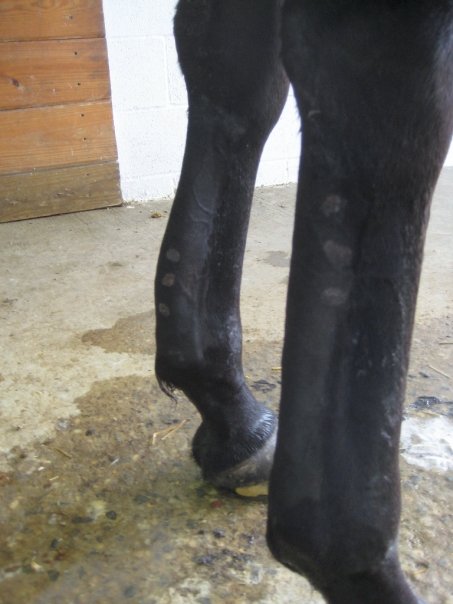
A horse with bowed tendons showing marks from recent pin firing treatment

Pin firing, also known as thermocautery,[1] is the treatment of an injury to a horse's leg, by burning or freezing. This is supposed to induce a counter-irritation and speed and/or improve healing. This treatment is used more often on racehorses than on other performance horses. It is sometimes used in the treatment of bucked shins or splint, curb, or chronic bowed tendons.[2] There was also the theory that it would "toughen" the leg of the horse. This treatment is prevalent in equine veterinary books published in the early 20th century; however, many present-day veterinarians and horse owners consider it barbaric and a cruel form of treatment.[3] It is not generally taught in veterinary schools today.[2]

See also

[edit]

References

[edit]
Revisions and contributorsEdit on WikipediaRead on Wikipedia
from Grokipedia
Pin firing, also known as thermocautery, is a longstanding but controversial veterinary procedure in equine medicine that involves using a heated metal instrument to create small, patterned burns through the skin over areas of chronic injury or lameness in ' . The technique aims to stimulate localized as a counter-irritant to purportedly accelerate in conditions such as bowed tendons, splints, curbs, and strains around the . Originating from ancient medicinal uses of heat and documented in equine practice since the , pin firing persisted into modern veterinary care despite advancing diagnostic and therapeutic alternatives like and controlled rehabilitation protocols. Empirical studies, including experimental trials on ponies with induced lesions, have demonstrated no improvement in recovery rates or tissue repair compared to untreated controls, with outcomes often showing only marginal returns to function in a minority of cases. Major professional bodies, including the American Association of Equine Practitioners and the Canadian Veterinary Medical Association, oppose pin firing due to the absence of scientific validation for its and the evident causation of acute , stress, and potential scarring without corresponding therapeutic gains. Its continued application in certain regions reflects cultural traditions rather than , raising ongoing debates about standards in equine sports and husbandry.

Overview and Procedure

Definition and Basic Mechanism

Pin firing, also known as thermocautery, is a traditional veterinary procedure primarily applied to , involving the application of a heated metal instrument—typically a firing iron with a pinpoint tip—to create a series of small, controlled burns or punctures through the skin overlying an injured area, most often on the lower limbs. The burns are arranged in a linear or grid-like pattern aligned with the injury site, such as along the course of a or over a bony prominence, and the procedure is usually performed under to mitigate acute pain during application. This method dates back centuries but remains in limited use despite widespread veterinary opposition due to its invasive nature. The basic mechanism underlying pin firing relies on the principle of counter-irritation, whereby the deliberate creation of a superficial second-degree induces a localized inflammatory response, including increased , serous exudation, and cellular infiltration, intended to stimulate enhanced blood circulation and tissue remodeling in the deeper, chronic injury site. Proponents historically posited that this controlled trauma "flushes out" accumulated irritants or while promoting or healing through intensified physiological repair processes, such as neovascularization and deposition, without causing excessive degeneration. However, no rigorous empirical studies validate these effects; major veterinary bodies, including the American Association of Equine Practitioners (AAEP) and Australian Veterinary Association (AVA), state that pin firing lacks of efficacy and may primarily serve as a or through non-specific rather than targeted repair. Post-procedure, a chemical blistering agent is often applied to prolong irritation, followed by bandaging and rest, further amplifying the counter-irritant cascade.

Step-by-Step Process

The pin firing procedure, a form of thermocautery, typically commences with the preparation of 's by clipping the over the targeted site to ensure direct access to the skin. is administered to to reduce stress and movement, often using agents such as or , while —via infiltration or regional blocks—is applied to numb the area and mitigate acute during the intervention. The skin is then thoroughly cleaned and disinfected with antiseptic solutions, such as or , to minimize risk. A set of fine metal pins or a probe attached to a firing iron is heated to approximately 800–1000°C (red-hot) using a , gas , or similar heat source, after which the pins are pressed perpendicularly into the skin over the injury in a precise pattern—often linear rows spaced 1–2 cm apart—penetrating superficially into the or for 1–3 seconds per point to create controlled thermal lesions. Typically, 20–50 such points are applied along the length of the affected structure, such as the for bucked shins, with the process completed in 5–10 minutes per leg. Post-application, the treated area is allowed to cool naturally, followed by the application of a counterirritant ointment or "firing paint" (containing substances like iodine or phenol) daily for 7–10 days to sustain localized inflammation, while bandages may be used if blistering occurs. Analgesics, such as non-steroidal anti-inflammatory drugs (e.g., phenylbutazone), and additional sedation are provided for 24–48 hours to manage residual pain, with the horse restricted from exercise during the initial healing phase of 2–4 weeks.

Tools and Techniques

Pin firing, also known as thermocautery, primarily employs a specialized firing iron consisting of a metal probe or series of pointed tips that are heated to high temperatures, typically red-hot, to cauterize the skin and underlying tissues. These irons are traditionally heated using a gas flame, forge, or butane torch before application, allowing precise control over the depth and pattern of burns, which penetrate 1-2 mm into the skin to create localized inflammation. Modern adaptations may incorporate electrosurgical generators with electrodes or surgical lasers for controlled cauterization, though these are less common in traditional equine practice and often criticized for lacking empirical support. The core technique involves applying the heated instrument directly to the affected area, such as the cannon bone or region, without to minimize procedural complexity, though may be used for restraint. In pin firing, multiple discrete punctures are made in a grid or linear pattern spaced 1-2 cm apart, targeting bucked shins or splints to induce counter-irritation and purportedly stimulate periosteal blood flow. Line firing extends this by drawing a continuous heated line or bar along the injury site, often for broader or involvement, creating a superficial burn to promote and formation. Less frequent variants include bar firing, using a flat heated bar for uniform surface , or freeze firing, which applies cryogenic agents post-thermal treatment, though evidence for efficacy remains anecdotal and unvalidated by controlled studies. Post-application, the site is typically left to heal without bandaging, with owners monitoring for or excessive scarring, as the procedure intentionally damages tissue to elicit a response. Veterinary guidelines emphasize sterile technique and immediate aftercare, such as topical antiseptics, to mitigate risks like abscesses, though organizations like the AAEP deem the practice unsupported by scientific data and advocate alternatives like extracorporeal shock wave therapy.

Historical Development

Origins in Traditional Veterinary Practice

The earliest documented reference to firing as a veterinary treatment for horses appears in the writings of Publius Flavius Vegetius Renatus, a Roman military author who lived circa 450–500 AD, where he described the application of heat via cautery to draw off "noxious humours" from tissues, reflecting the humoral theory prevalent in ancient medicine. This practice, rooted in pre-scientific understandings of disease as imbalances of bodily fluids, involved using red-hot irons to burn the skin over affected areas, such as joints or limbs, to induce localized inflammation and purportedly redirect internal pathologies. Throughout the Middle Ages and into the early modern period, firing persisted in equine care among farriers and rudimentary veterinary practitioners in Europe, often as a counterirritant for lameness, splints, and soft-tissue injuries, though application to tendons and ligaments ("sinews") was explicitly prohibited in many texts until the 18th century due to fears of inducing weakness or cramp. Traditional methods employed forged irons heated in forges to create linear or point burns, with the depth and pattern varying by practitioner; superficial firing targeted skin to stimulate scar tissue formation, while deeper applications aimed at underlying structures, typically followed by prolonged rest periods of months to a year for healing. By the late 18th century, figures like surgeon John Hunter endorsed burning chronically injured tendons in his Dictionary of Farriery (1796), marking a shift toward broader acceptance for persistent lameness in working and military horses. Pin firing, a refined variant using heated needles or pins to produce discrete punctate burns rather than broad lines, emerged within this traditional framework as a more precise counterirritation technique, particularly for bucked shins and early strains in performance , though its exact initial adoption predates standardized veterinary records and aligns with 19th-century farriery tools. In pre-modern contexts, such procedures lacked and relied on restraint, with efficacy attributed to empirical observation rather than controlled evidence, perpetuating the practice despite inconsistent outcomes observed in field applications.

Evolution Through the 19th and 20th Centuries

During the , thermocautery, or firing, emerged as a standard counter-irritant therapy in equine for treating chronic lameness, particularly in working and racing horses. William Youatt recommended it in 1851 to alleviate persistent inflammation in conditions such as bone spavin and tendon sprains by creating superficial burns that purportedly redirected inflammatory processes. Veterinarians utilized forged hot irons to apply line firing—linear burns along affected tendons—or broader , with the practice becoming widespread by the late century for issues including splints, curbs, and injuries in performance animals. This technique saw refinement in the early with the adoption of pin firing, which employed small, pointed heated instruments to generate precise puncture burns over targeted sites such as joints, tendons, and ligaments, contrasting with the more extensive line firing. Pin firing gained traction for conditions like osselets, , and chronic tendonitis, especially in and , where it was routinely applied to young horses with bucked shins or ligament strains to stimulate localized and enable rehabilitation after extended rest periods of up to two years. Throughout the mid- to late , pin firing persisted as a common intervention in equine , particularly in North American and European racing circuits, with veterinarians applying rows of small cauterizations (typically 20-50 pins per session) to the bone or flexor tendons under . The procedure's evolution reflected a shift toward precision, incorporating electric or gas-heated tools for controlled depth and pattern, though empirical studies from the 1960s onward, such as L.H. Larsen's 1960 University of Sydney thesis, began documenting limited histological benefits beyond scar formation. Despite emerging alternatives, it remained embedded in racing protocols into the , with anecdotal reports of returning to post-treatment.

Decline in Mainstream Use

The decline of pin firing in mainstream equine veterinary practice accelerated in the late , coinciding with the adoption of and advancements in diagnostic imaging such as ultrasonography, which allowed for more precise assessment and targeted treatments of musculoskeletal injuries. By the and , controlled studies failed to demonstrate superior outcomes from thermocautery compared to conservative management like rest and controlled exercise, undermining the counter-irritation rationale that had justified the procedure since its historical origins. Professional veterinary organizations formalized opposition based on empirical shortcomings and welfare considerations. The American Association of Equine Practitioners (AAEP) explicitly stated in its that it does not support pin firing or thermocautery, citing an absence of validating efficacy in , with potential for iatrogenic harm including scarring and delayed healing. Similarly, the Canadian Veterinary Medical Association's 2021 policy discouraged its use for lameness treatment, aligning with national codes of practice that prioritize minimally invasive alternatives. These stances reflected broader shifts away from empirical traditions toward therapies supported by randomized trials, such as regenerative injections and physical rehabilitation, which reported higher return-to-performance rates without thermal tissue damage. Regulatory changes further marginalized pin firing in competitive settings. In 2022, the Horseracing Integrity and Safety Authority (HISA) implemented anti-doping and medication control rules that veterinarians anticipated would phase out the practice, particularly for shin conditions in racehorses, by classifying it as an unproven intervention prone to overuse in high-stakes environments. critiques, including reviews by bodies like the Australian Veterinary Association, highlighted the procedure's induction of acute pain and inflammation without proportional benefits, contributing to its relegation to niche or traditional applications rather than routine mainstream protocols. Despite persistent use in some racing jurisdictions where anecdotal success stories prevail over data, by the 2020s, pin firing comprised less than 5% of reported lameness interventions in surveyed U.S. equine clinics, supplanted by modalities with documented biomechanical and histological improvements.

Indications and Applications

Primary Use for Bucked Shins and Splints

Pin firing serves as a traditional counter-irritant therapy primarily applied to bucked shins, a periosteal reaction or microfracturing of the dorsal cortex of the third metacarpal prevalent in young racehorses during early high-speed training phases. This condition, affecting up to 70% of such horses in some training programs, arises from repetitive strain causing localized pain, heat, swelling, and lameness along the anterior cannon . The technique involves heating a pointed iron to approximately 800–1000°F and pressing it into the skin over the affected dorsal metacarpus in linear or dotted patterns, creating superficial third-degree burns that penetrate to the to provoke an inflammatory response purportedly enhancing blood supply, periosteal proliferation, and adaptive . For splints, another common forelimb affliction in working horses, pin firing targets inflammatory or ossified enlargements near the second or fourth metacarpal (splint) bones, often triggered by direct trauma or uneven stress leading to interosseous desmitis and palpable bony protuberances. The procedure is performed by applying the hot pins medially or laterally along the cannon bone proximal to the , with the intent of inducing and resorption of ectopic bone formation via the resulting hyperemia and . Treatment typically follows acute management with rest and non-steroidal anti-inflammatories, with firing reserved for persistent cases where conservative approaches fail to resolve lameness. Proponents, often experienced racetrack veterinarians, attribute short-term relief to the procedure's ability to desensitize superficial and accelerate resolution, allowing to resume within weeks post-firing under bandaging and controlled exercise. However, empirical support remains anecdotal, as analyses of treated racehorses show no consistent superiority over alone in preventing recurrence or improving long-term soundness. The American Association of Equine Practitioners (AAEP) explicitly rejects pin firing for bucked shins or splints, citing absence of controlled studies demonstrating biomechanical or histological benefits beyond or natural healing, and highlighting risks of scarring, , and delayed recovery from the induced tissue . Similarly, the Canadian Veterinary Medical Association deems it ineffective for promoting tissue repair in these conditions, emphasizing that evidence from biomechanical models favors preventive training modifications over thermocautery. Despite regulatory pressures from bodies like the Horseracing Integrity and Safety Authority aiming to phase it out, its persistence in some jurisdictions underscores a divide between traditional practice and evidence-based standards.

Treatment of Tendon and Ligament Injuries

Pin firing, also known as thermocautery, has historically been applied to horses with tendon injuries such as superficial digital flexor tendonitis, commonly referred to as bowed tendon, by creating a pattern of small burns over the affected area to induce counterirritation. This technique aims to stimulate localized inflammation believed to promote healing through increased circulation and fibrosis in chronic cases. Similarly, it has been used for ligament injuries, including suspensory ligament desmitis, where hot irons or needles are applied along the ligament's path to target damaged fibers. The procedure for these soft tissue injuries typically involves marking lines or points parallel to the tendon or ligament, then pressing heated instruments to penetrate the skin and superficial tissues without reaching deeper structures. Proponents, often traditional practitioners, claim it toughens the leg and accelerates return to work in performance horses, with anecdotal reports of improved soundness in racehorses post-treatment. However, controlled studies, such as one by Silver in ponies with induced tendon lesions, found no improvement in healing rates or return to soundness compared to untreated controls. Major veterinary organizations, including the American Association of Equine Practitioners (AAEP) and the Australian Veterinary Association (AVA), oppose pin firing for and ligament injuries due to the absence of supporting efficacy and the procedure's inherent pain and risk of complications like . The Canadian Veterinary Medical Association echoes this, noting that thermocautery causes unnecessary suffering without promoting tissue repair. Despite this, isolated use persists in some racing contexts for chronic cases unresponsive to conservative management like rest and controlled exercise.

Application in Racing and Performance Horses

Pin firing has been employed in to address bucked shins, a periosteal of the dorsal metacarpus common in young horses transitioning to high-speed , by applying heated pins to the shins to create controlled burns that purportedly promote localized and subsequent fibrosis for stabilization. In performance horses, particularly those in and , the technique targets chronic superficial digital flexor injuries, known as bowed tendons, where rows of pinpoint burns are made along the to induce counterirritation, aiming to enhance blood flow and formation for quicker return to athletic use. Practitioners in stables have historically applied pin firing to splints and curbs, conditions involving or at attachments, using irons heated to approximately 1000°F (538°C) pressed into the skin for 2-3 seconds per point, often in linear patterns over the injury site to "toughen" the leg and reduce reinjury risk during intense workloads. Despite regulatory scrutiny, such as potential restrictions under the Horseracing and Authority implemented in 2022, some veterinarians and trainers continue its use for select cases where conventional therapies like rest and fail to restore levels within timelines. The procedure's appeal in high-stakes environments stems from anecdotal reports of resuming 4-6 weeks post-firing, contrasting longer recovery periods for non-invasive methods, though long-term remains debated among equine specialists. In performance disciplines beyond flat , such as , pin firing addresses repetitive strain ligaments, with applications documented in older veterinary texts but increasingly supplanted by regenerative therapies.

Theoretical Rationale and Evidence

Counter-Irritation Hypothesis

The counter-irritation hypothesis underlies the traditional rationale for pin firing in equine veterinary practice, proposing that the deliberate infliction of superficial injury—via heated pins or irons penetrating the skin—triggers a controlled inflammatory cascade that counteracts or modulates deeper-seated pathological processes in tendons, ligaments, or bones. This acute dermal and subdermal trauma is theorized to provoke localized hyperemia, increased , and recruitment of inflammatory mediators, which proponents claim redirect physiological resources toward repair in underlying tissues, potentially accelerating resolution of chronic inflammation or stimulating fibrotic strengthening. Neurologically, the mechanism is posited to involve segmental inhibition of signals, akin to early concepts of the of , wherein intense stimulation of superficial nociceptors activates non-nociceptive afferents that suppress transmission from deeper, damaged structures at the level, thereby providing symptomatic relief during the horse's . This distraction effect, combined with presumed enhancement of local circulation and cellular proliferation, was historically invoked to explain observed anecdotal improvements in conditions like bucked shins, where periosteal reaction might thicken cortical bone, or superficial digital flexor tendinitis, fostering scar tissue alignment. Critics within veterinary literature, including bodies like the Australian Veterinary Association, contend that while counter-irritation principles persist in select human and veterinary therapies (e.g., or certain topical agents), the hypothesis for pin firing lacks robust physiological validation, as the induced may primarily affect cutaneous layers without reliably penetrating to avascular cores or altering core dynamics. Nonetheless, historical texts and practitioner accounts from the mid-20th century, such as those in equine orthopedics, attributed efficacy to this paradigm, viewing the procedure as a means to "balance" inflammatory forces through countervailing trauma.

Empirical Studies on Effectiveness

Empirical investigations into pin firing's effectiveness have yielded limited and predominantly negative results, with no controlled clinical trials demonstrating superior outcomes compared to conservative management. A comprehensive review of available literature, including historical studies, concludes that thermocautery provides no verifiable benefits for or shin injuries in . In a 1983 study conducted at the by Silver and Rossdale, post-mortem examinations of 350 fired horses revealed no enhancement in healing from pin or line firing; instead, the procedure appeared to retard repair processes, with recovery still requiring a minimum of 15 months unaffected by the intervention. The analysis showed thinner, weaker overlying skin post-firing, without improvements in neo-vascularization or locomotion scores. An earlier investigation by L.H. Larsen in a 1960 thesis used micro-radiography on cauterized equine limbs and found no increase in , raising concerns about restrictive adhesions that could impair function; the author deemed of doubtful value for repair. Uncontrolled observations occasionally cited by proponents, such as a small cohort where only 25% of pin-fired horses returned to prior activity levels after 10 months, underscore poor return-to-performance rates without establishing causality or superiority over rest and rehabilitation. Leading veterinary bodies, including the American Association of Equine Practitioners (AAEP), affirm the absence of scientific validation for pin firing's efficacy in treating lameness or soft-tissue injuries. Similarly, the Australian Veterinary Association (AVA) and Canadian Veterinary Medical Association (CVMA) cite the lack of empirical support, positioning it as ineffective relative to evidence-based alternatives.

Long-Term Outcomes and Failure Rates

Historical data from a study of 54 horses treated with counterirritation, including pin firing or external blistering, combined with six months of rest showed that 23 (43%) returned to racing. However, among those that raced again, 13 (57%) experienced reinjury, indicating limited long-term success and high failure rates even in this traditional application. Subsequent empirical research has found no evidence that pin firing accelerates or healing beyond alone, with tendons requiring at least 15 months for maturation regardless of treatment. A five-year study involving 350 equine post-mortems by Silver and Rossdale (1983) demonstrated that pin firing damaged fibers, prolonged healing, and resulted in that was biomechanically inferior, contributing to higher rates of ongoing tissue damage and adhesions. Similarly, Larsen's analysis using micro-radiography showed no improvement in vascularity or repair processes post-cauterization, further questioning its value. Contemporary veterinary reviews conclude that pin firing yields no measurable long-term benefits for equine injuries, with failure rates comparable to or exceeding those of untreated or conservatively managed cases, where superficial digital flexor tendon reinjury can reach 56-75% upon return to exercise. The procedure's potential to induce restrictive adhesions between tendons and synovial sheaths may impair function and increase susceptibility to future breakdowns, as evidenced by histopathological findings of and weaker in fired tissues. Absent controlled trials demonstrating superior outcomes, pin firing is regarded as ineffective for sustained recovery in performance horses.

Criticisms and Ethical Debates

Animal Welfare and Pain Assessment

Pin firing, a thermocautery procedure involving the application of heated pins or irons to create controlled burns on equine over injured areas, induces acute through thermal tissue damage. Veterinary assessments indicate that the process triggers immediate nociceptive responses, including muscle tension, vocalization, and attempts to evade restraint, reflecting activation of A-delta and C-fiber pathways. Post-procedure, exhibit signs of ongoing distress such as increased , elevated levels, and localized persisting for at least 24 hours, exacerbating welfare concerns in the absence of robust protocols. Pain assessment in horses relies on composite tools like the Horse Grimace Scale (HGS), which evaluates expressions (e.g., orbital tightening, pinning) alongside behavioral indicators such as reluctance to bear weight or altered , as verbal reporting is impossible. Physiological metrics, including thermal imaging of sites and biomarkers like , further quantify , with studies on similar thermal injuries showing prolonged sensitization in equine models. However, application to pin firing specifically remains limited, as ethical constraints hinder controlled trials; extrapolations from or wound pain models suggest moderate-to-severe scores on validated scales like the Composite Orthopedic Pain Scale. From a welfare standpoint, major veterinary bodies classify pin firing as causing unnecessary suffering, given its lack of empirical support for therapeutic benefits outweighing the inflicted . The Canadian Veterinary Medical Association and American Association of Equine Practitioners oppose its use, citing thermal necrosis risks like scarring and without evidence of superior healing over non-invasive alternatives. Proponents occasionally argue that post-firing discomfort mirrors that of injections, but this view lacks peer-reviewed validation and contrasts with organizational consensus emphasizing preventable harm.

Scientific and Veterinary Opposition

Major veterinary organizations have formally opposed pin firing, citing its lack of proven therapeutic value and inherent cruelty. The Canadian Veterinary Medical Association (CVMA) opposes thermocautery, including pin firing, for treating lameness in horses, stating that does not support its use in promoting and describing it as an archaic procedure amounting to mutilation. Similarly, the Australian Veterinary Association (AVA) declares that thermocautery must never be used, as it lacks for efficacy and inflicts unnecessary pain, potentially desensitizing tissues and masking underlying issues to exacerbate injuries. Empirical investigations underscore this opposition by revealing no substantive benefits to underlying or . A key study by Silver and Rossdale in 1983 examined line firing—a related thermocautery method—and found it produced only superficial changes, with no penetration to the tendon core and no enhancement of healing; biochemical analysis showed transient alterations but concluded the practice ineffective and potentially harmful by inducing adhesions or without resolution. Pathological evidence from such work indicates that firing fails to address core tissue repair mechanisms, relying instead on unverified counter-irritation that does not align with modern understanding of and in equine injuries. Veterinarians further criticize pin firing for its welfare implications, as the acute causes documented and stress lasting at least 24 hours post-procedure, without analgesic justification given the absence of superior outcomes over or conservative therapies. Earlier research, such as Larsen (1960), echoed doubts about its value for repair, noting risks of counterproductive scarring. of Veterinary Surgeons (RCVS) has classified certain firing variants as mutilations, reflecting a consensus that the procedure contravenes evidence-based standards in favor of proven alternatives like controlled exercise or regenerative modalities. No controlled studies have since demonstrated long-term efficacy, reinforcing calls for its obsolescence in clinical practice.

Proponent Viewpoints from Practitioners

Practitioners who continue to employ or defend pin firing, particularly for bucked shins in racehorses, emphasize its practical utility based on decades of observational experience in high-performance settings. Racetrack Dr. Kevin Dunlavy has noted that longstanding industry figures maintain pin firing allows horses to resume training with reduced recurrence of shin issues, attributing this to the procedure's ability to induce localized and subsequent tissue toughening. This viewpoint aligns with traditional practices where the enforced rest period following firing—typically several weeks—combined with the counter-irritant effect, is credited with promoting periosteal remodeling and preventing stress fractures in young Thoroughbreds under intense training loads. For and injuries, some experienced trainers and veterinarians report anecdotal successes, arguing that the intense local reaction stimulates increased and , stabilizing damaged structures for return to athletic function. In one account from the mid-20th century era, veterinarian Les Harris applied acid firing (a variant of thermocautery) to horses with strains, resulting in multiple cases of successful rehabilitation and resumption, as recalled by practitioners familiar with the outcomes. Proponents contend that such results, observed over generations in stables, demonstrate where modern alternatives like shock wave therapy may fall short in cost or immediacy for working horses, despite the absence of controlled studies validating the mechanism. These practitioners often highlight the procedure's role in resource-limited or urgent contexts, such as international racing circuits where trainers face for rapid recovery, viewing pin firing as a reliable, low-tech intervention that has sustained equine performance in competitive environments for over a century. While acknowledging ethical concerns, defenders like Dunlavy stress that the is transient and comparable to other orthopedic interventions, with long-term benefits outweighing drawbacks in select cases based on empirical track records rather than laboratory data.

Alternatives and Modern Approaches

Non-Invasive Therapies

Non-invasive therapies for equine superficial digital flexor (SDFT) injuries, such as bowed tendons, prioritize reducing , supporting tissue repair, and promoting controlled rehabilitation without penetrating the skin or injecting substances. These approaches contrast with historical invasive methods like pin firing by focusing on physical modalities and conservative management, which veterinary guidelines recommend as first-line interventions for acute and chronic cases. Initial protocols typically involve stall confinement for 2-6 weeks, combined with cold therapy—such as hosing or ice packs applied for 15-20 minutes several times daily—to minimize swelling and formation, alongside supportive bandaging to stabilize the limb and prevent further strain. Non-steroidal anti-inflammatory drugs (NSAIDs) like may be administered systemically for pain relief during this phase, though their use is adjunctive rather than therapeutic core. Therapeutic ultrasound delivers acoustic energy to heat deep tissues, enhancing blood flow, synthesis, and activity while disrupting adhesions. In , a frequency of 3.3 MHz at 1.0 W/cm² intensity achieves therapeutic temperatures (40-45°C) in the SDFT and deep digital flexor within 5-10 minutes of application, without overheating superficial structures like epaxial muscles. Clinical studies in polo ponies with SDFT tendinitis have demonstrated reduced lesion size and improved when ultrasound is combined with other modalities, with follow-up showing healing progression over 3-6 months. Evidence suggests it accelerates hydroxyproline content increases, indicative of remodeling, though standalone efficacy remains moderate compared to multimodal protocols. Extracorporeal shock wave therapy (ESWT) applies high-energy acoustic pulses externally to stimulate neovascularization, reduce pain, and enhance matrix remodeling. In equine SDFT lesions, ESWT protocols typically involve 1,000-3,000 pulses per session at 0.09-0.55 mJ/mm² energy flux density, administered weekly for 3-5 treatments. Experimental models show it increases and transforming growth factor-beta expression in suspensory ligaments and , leading to denser, more organized repair tissue histologically. Clinical outcomes in racehorses include lameness reduction in 70-90% of chronic cases and lower re-injury rates when integrated with rest, as supported by the American Association of Equine Practitioners (AAEP) for desmitis and tendinopathies. However, benefits are most pronounced in subacute to chronic injuries, with limited impact on core resorption in acute tears. High-intensity laser therapy (), using wavelengths of 800-1,064 nm at doses of 10-30 J/cm², provides and effects by modulating cellular and reducing without thermal damage. In horses with and strains, HILT sessions of 10-15 minutes daily for 10-15 days have yielded visual lameness score improvements and up to 50% volume reduction on , alongside decreased proinflammatory cytokines. Complementary therapies like pulsed (PEMF) devices or controlled underwater exercise further support gradual return to function, with rehabilitation timelines extending 6-12 months based on serial monitoring to assess alignment and cross-sectional area recovery. Overall, these non-invasive options yield return-to-racing rates of 50-70% in performance horses, though success correlates inversely with initial severity (>30% disruption portends poorer ).

Regenerative and Advanced Treatments

Regenerative therapies represent a shift from ablative techniques like pin firing toward biologically mediated repair for equine superficial digital flexor (SDFT) injuries, commonly known as bowed tendons. (PRP) therapy concentrates autologous platelets to deliver growth factors that stimulate , synthesis, and cellular proliferation at the lesion site, typically administered via ultrasound-guided intralesional injection. Experimental studies in have shown PRP enhances tendon metabolic activity and advances repair tissue maturation, with histologic evaluations revealing improved alignment and biomechanical strength compared to untreated controls after 8-24 weeks. A 2025 review of 22 clinical studies confirmed PRP's role in reducing healing time for tendinopathies, though outcomes vary with lesion severity and PRP preparation (e.g., leukocyte-rich formulations showing superior results in meta-analyses). Mesenchymal stem cell (MSC) therapy deploys multipotent cells, sourced from , or blood, to differentiate into tenocytes and modulate , fostering organized formation over disorganized . Autologous bone marrow-derived MSCs, cultured for 2-3 weeks post-harvest, have demonstrated 81% full rates in clinical cases of SDFT desmitis, with only 7% treatment failures and 8% relapses observed in follow-up data. Allogeneic MSCs, such as those in RenuTend™ approved in 2022, enable immediate treatment without culturing delays, yielding comparable efficacy in suspensory ligament and tendon repairs. Longitudinal studies report interventions halve re-injury rates in racehorses versus conservative rest and controlled exercise alone, with and confirming reduced core lesion size by 50-70% at 6-12 months post-injection. "Stealthy" MSCs engineered to evade immune detection further optimize outcomes by sustaining engraftment. Combining PRP with MSCs or cells amplifies regenerative potential, as evidenced by halted progression in collagenase-induced tendinitis models, where adMSCs plus plasma concentrate improved and remodeling. aspirate concentrates (BMAC), rich in MSCs and growth factors, serve as a single-step alternative, promoting similar histopathologic improvements without ex vivo expansion. These treatments, often integrated with rest and rehabilitation, outperform historical counter-irritants by targeting underlying —poor and suboptimal fibroplasia—rather than inducing secondary , with success rates exceeding 70-90% return to prior athletic function in select cohorts. Despite promising data, variability in cell viability, dosing, and horse-specific factors necessitates individualized protocols, with ongoing trials refining allogeneic banking for broader accessibility.

Comparative Efficacy Data

Scientific evaluations of pin firing reveal a consistent absence of controlled evidence supporting its superiority over standard conservative protocols, such as prolonged rest and controlled exercise, for treating equine injuries like bowed tendons. The American Association of Equine Practitioners asserts that no scientific validation exists for pin firing's effectiveness in promoting healing or improving outcomes in musculoskeletal conditions. Similarly, veterinary bodies including the Australian Veterinary Association emphasize that thermocautery methods, including pin firing, lack empirical backing for efficacy and are associated with unnecessary pain without therapeutic gain. In direct comparisons involving related firing techniques, such as bar firing for superficial digital flexor in National Hunt racehorses, outcomes mirrored those of exercise-only management. A 2016 observational study of 127 cases from 2007–2011 found no significant differences in return-to- rates, total races completed, or maximum ratings between bar firing (alone or combined with tendon splitting) and controlled exercise; firing conferred no additive reduction in reinjury or enhancement of post-treatment earnings. This aligns with broader reviews indicating that counter-irritant procedures like pin firing fail to accelerate repair or lower recurrence beyond baseline conservative care, which yields reinjury rates often exceeding 50% for core lesions in horses. Regenerative biologics, by contrast, demonstrate measurable advantages in key metrics. A 2024 and of 21 studies on naturally occurring and injuries reported that (MSC) administration reduced reinjury odds by 71% ( 0.29, 95% CI 0.18–0.46) compared to conservative groupings, which incorporated pin firing, , and rest protocols across varied equine populations including race and sport . (PRP) monotherapy showed no significant impact on return-to-performance rates but, when combined with MSCs, mirrored the reinjury reduction observed with MSCs alone; however, and potential bias warrant cautious interpretation. Absent head-to-head trials, these disparities underscore pin firing's lack of competitive edge against evidence-supported alternatives that target underlying tissue regeneration rather than superficial irritation.

Regulatory Status and Current Practices

Professional Organization Positions

The American Association of Equine Practitioners (AAEP) opposes the use of thermocautery or pin firing in horses, stating there is no to validate its efficacy and citing advancements in alternative treatments as rendering it obsolete. This position was formalized following a update to prior guidelines that had conditionally accepted it under strict application. The Canadian Veterinary Medical Association (CVMA) explicitly opposes pin firing or any thermocautery for treating lameness in horses, describing it as a painful procedure unsupported by evidence of benefit and incompatible with modern veterinary standards. The Australian Veterinary Association (AVA) recommends prohibiting thermocautery, including pin firing, across all Australian jurisdictions under laws, asserting it causes unnecessary suffering without proven therapeutic value. In the , the Royal College of Veterinary Surgeons (RCVS) deems all forms of firing, such as pin or bar firing, unethical due to the infliction of thermal burns without substantiated clinical justification, a stance reiterated in guidance to members. The British Veterinary Association (BVA) and British Equine Veterinary Association (BEVA) have similarly debated and critiqued its ethics, aligning with broader opposition based on welfare and evidential shortcomings. In the United States, pin firing is prohibited nationwide for racehorses under the Horseracing Integrity and Safety Authority (HISA) regulations, which ban the practice everywhere on the body effective July 2024, though freeze-firing remains permitted outside the shin area. State-level veterinary practice acts impose varying restrictions; for instance, it is illegal in but permitted in neighboring , reflecting inconsistent enforcement across borders. In , the Australian Veterinary Association (AVA) mandates that all state and territory regulatory authorities prohibit thermocautery, including pin firing, deeming it an unethical procedure that inflicts unnecessary pain without scientific validation. This aligns with broader calls for legislative bans to eliminate the practice entirely in equine care. Canada's veterinary landscape opposes pin firing through the Canadian Veterinary Medical Association (CVMA), which explicitly rejects thermocautery for lameness treatment as cruel, potentially subjecting practitioners to disciplinary action under provincial laws. In the , pin firing is not statutorily banned but risks prosecution under the Animal Welfare Act 2006 for causing unnecessary suffering, with the Royal College of Veterinary Surgeons (RCVS) permitting it only in exceptional cases after exhaustive alternatives fail, following a temporary ban lifted in the . enforces a total prohibition via the Swedish Equine Veterinary Association and Equestrian Federation, integrating it into national equine welfare standards. South Africa's South African Veterinary Council (SAVC) classifies pin firing as unethical under its , lacking scientific proof and barring licensed veterinarians from performing it without risking professional sanctions. Internationally, bodies like the Fédération Equestre Internationale (FEI) discourage such counterirritants through veterinary regulations, though enforcement depends on national laws.

Persistence in Certain Regions or Contexts

Despite opposition from major veterinary organizations, pin firing continues in limited equine contexts, particularly within sectors where traditional methods persist amid regulatory gaps. In the United States, the procedure remains in use at certain racetracks for treating bucked shins, splints, curbs, and associated injuries, though the Horseracing and Safety Authority's 2022 regulations signal efforts to curtail it through enhanced oversight and anti-doping rules. In more broadly, practitioners apply it selectively for and ligament conditions, often as a low-cost alternative in high-volume racing environments despite the American Association of Equine Practitioners' longstanding rejection of its efficacy. In the , pin firing is performed regularly on horses with superficial digital flexor tendonitis and suspensory desmitis, even as the Royal College of Veterinary Surgeons permits it only in rare, post-failure scenarios following exhaustive alternative trials; a ban was partially relaxed under these constraints. European racing circuits, including informal or less-regulated operations, also report ongoing application, driven by entrenched practitioner preferences for its purported counterirritant effects over evidence-based therapies. These instances reflect persistence in performance-oriented subcultures valuing anecdotal outcomes, though global trends favor prohibition in jurisdictions like and , where veterinary codes deem it unethical and unsupported.

References

Add your contribution
Related Hubs
User Avatar
No comments yet.