Hubbry Logo
Poolesville, MarylandPoolesville, MarylandMain
Open search
Poolesville, Maryland
Community hub
Poolesville, Maryland
logo
8 pages, 0 posts
0 subscribers
Be the first to start a discussion here.
Poolesville, Maryland
from Wikipedia

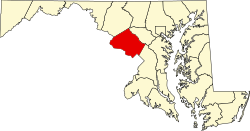
Poolesville is a U.S. town in the western portion of Montgomery County, Maryland. The population was 5,742 at the 2020 United States census.[3] It is surrounded by (but is technically not part of) the Montgomery County Agricultural Reserve,[4] and is considered a distant bedroom community for commuters to Washington, D.C.

Key Information

The name of the town comes from the brothers John Poole Sr. and Joseph Poole Sr. who owned land in what is now Poolesville. Due to an historical anomaly, until 2010 the legal name of the town was "The Commissioners of Poolesville".[5] Residents overwhelmingly voted to formally change the name to "The Town of Poolesville" in the November 2010 general election.[6]

History

[edit]

In 1760, brothers John Poole Sr. and Joseph Poole Sr. purchased 160 acres (0.65 km2; 0.25 sq mi) in the area that is now Poolesville. Thirty-three years later, John Poole Jr. used a 15 acres (0.061 km2) tract that he inherited from his father to build a log store and subdivided the tract, selling portions to a number of other merchants. The settlement grew from there and was incorporated in 1867.[7]

During the Civil War, Union military leaders realized that the shallow fords of the Potomac River posed a threat to the capital city. At certain times of the year, the Potomac River is shallow enough to cross and thus thousands of troops were moved to both Darnestown and Poolesville. The Corps of Observation was established just outside Poolesville and soldiers were stationed near the river to monitor potential Confederate incursions into Maryland. During the winter of 1861–1862, it is estimated that 20,000 Union troops were stationed in or around the town. There were no battles fought in Poolesville; however, the infamous Battle of Ball's Bluff was fought nearby on October 21, 1861. Hundreds of Union soldiers who were stationed in Poolesville were killed in this battle that was badly managed by inexperienced Union generals.[8]

There were several Confederate raids into the town during the war, and the Confederate Army invaded Maryland by crossing the Potomac near Poolesville in 1862 and 1864. The old Poolesville Methodist Church cemetery contains the remains of approximately twenty soldiers who either were killed in action at Ball's Bluff or who died of illness while in camp.[9]

The Seneca Schoolhouse, a small one-room schoolhouse of red sandstone, was built in Poolesville in 1866 to educate the children of the stone cutters who worked at the Seneca Quarry. Operating as the Seneca Schoolhouse Museum, it provides tours to schoolchildren so that they can experience a typical school day as it would have been on March 13, 1880.[10][11]

The Kunzang Palyul Choling Buddhist temple opened in Poolesville in 1985.[12]

The Poolesville Historic District was listed in 1975 on the National Register of Historic Places.[13]

In December 2020, White's Ferry, a ferry service west of the town across the Potomac River that a number of citizens have depended on for their livelihoods, ceased service due to a legal conflict between the ferry and Rockland Farm over ownership of land on the banks of the river.[14] As of July 2025, the ferry has not yet reopened due to the legal conflict, though the owners have offered to donate the ferry to the Montgomery County government.[15]

Geography

[edit]

According to the United States Census Bureau, the town has a total area of 3.95 square miles (10.23 km2), of which 3.93 square miles (10.18 km2) is land and 0.02 square miles (0.05 km2) is water.[16]

Poolesville lies off Montgomery County's main axis of suburban development along the Interstate 270 and Maryland State Route 355 corridor, separated from the contiguous Maryland suburbs of Washington by the rural lands of the county agricultural reserve, where new housing and commercial starts are restricted.

Government

[edit]

Poolesville is governed by five commissioners elected in staggered 4-year terms. Commissioners are not paid. The commissioners elect among themselves a president (known informally as "the mayor") and vice president. A Town Manager is responsible for the day-to-day operations of the town. Six Boards and Commissions assist the commissioners: the Planning Commission, Parks Board, Board of Elections, Sign Review Board, Board of Zoning Appeals, and Ethics Commission.[17]

Demographics

[edit]
Historical population
CensusPop.Note
1900236
1910174−26.3%
192032586.8%
1930197−39.4%
19402043.6%
1950161−21.1%
196029885.1%
197034917.1%
19803,428882.2%
19903,79610.7%
20005,15135.7%
20104,883−5.2%
20205,74217.6%
U.S. Decennial Census[18]
2010–2020[3]

2000 census

[edit]

As of the census[19] of 2000, there were 5,151 people, 1,601 households, and 1,402 families residing in the town. The population density was 1,333.8 inhabitants per square mile (515.0/km2). There were 1,630 housing units at an average density of 422.1 per square mile (163.0/km2). The racial makeup of the town in 2000 was 93.57% White, 2.85% African American, 0.49% Native American, 1.09% Asian, 1.4% from other races, and 1.28% from two or more races. Hispanic or Latino of any race were 2.68% of the population.

There were 1,601 households, out of which 56.8% had children under the age of 18 living with them, 75.6% were married couples living together, 9.0% had a female householder with no husband present, and 12.4% were non-families. 9.3% of all households were made up of individuals, and 2.0% had someone living alone who was 65 years of age or older. The average household size was 3.22 and the average family size was 3.44.

In the town, the population was spread out, with 35.0% under the age of 18, 5.6% from 18 to 24, 32.2% from 25 to 44, 24.0% from 45 to 64, and 3.2% who were 65 years of age or older. The median age was 35 years. For every 100 females, there were 96.5 males. For every 100 females age 18 and over, there were 94.2 males.

The median income for a household in the town was $85,092, and the median income for a family was $88,916. Males had a median income of $60,596 versus $42,051 for females. The per capita income for the town was $30,211. About 2.5% of families and 2.6% of the population were below the poverty line, including 3.0% of those under age 18 and 7.5% of those age 65 or over.

2010 census

[edit]

As of the census[20] of 2010, there were 4,883 people, 1,602 households, and 1,348 families residing in the town. The population density was 1,242.5 inhabitants per square mile (479.7/km2). There were 1,663 housing units at an average density of 423.2 per square mile (163.4/km2). The racial makeup of the town was 88.4% White, 5.2% African American, 0.5% Native American, 2.1% Asian, 1.4% from other races, and 2.5% from two or more races. Hispanic or Latino of any race were 7.0% of the population.

There were 1,602 households, of which 45.4% had children under the age of 18 living with them, 71.0% were married couples living together, 8.8% had a female householder with no husband present, 4.4% had a male householder with no wife present, and 15.9% were non-families. 12.2% of all households were made up of individuals, and 3% had someone living alone who was 65 years of age or older. The average household size was 3.04 and the average family size was 3.30.

The median age in the town was 41.5 years. 27.7% of residents were under the age of 18; 8.6% were between the ages of 18 and 24; 19.2% were from 25 to 44; 38.4% were from 45 to 64; and 6.1% were 65 years of age or older. The gender makeup of the town was 49.2% male and 50.8% female.

Education

[edit]

Poolesville is served by Montgomery County Public Schools. Three schools are located in Poolesville: Poolesville High School,[21] John Poole Middle School,[22] and Poolesville Elementary School.[23] Monacacy Elementary School[24] in Dickerson also feeds into John Poole MS.

Transportation

[edit]
MD 107 eastbound in Poolesville

Two state highways serve Poolesville. Maryland Route 107 extends southeast from the center of town, joining Maryland Route 28 on its way to Rockville. Maryland Route 109 proceeds northeast from the center of town, intersecting MD 28 on its way to Interstate 270 in Hyattstown.

Notable people

[edit]

References

[edit]
[edit]
Revisions and contributorsEdit on WikipediaRead on Wikipedia
from Grokipedia
Poolesville is a small town in the western portion of Montgomery County, Maryland, United States, situated in the Piedmont region and within the county's 93,000-acre Agricultural Reserve. As of the 2020 United States Census, the population was 5,742, with an estimated 5,692 residents as of July 1, 2023; the town spans about 4.0 square miles and features a median age of 44.1 years (2018-2022 ACS), a median household income of $215,025, and a per capita income of $71,675 (2018-2022 ACS). In the 2020 Census, 73.2% of residents identified as White alone, 7.0% as Asian alone, 5.2% as Black or African American alone, and 11.1% as two or more races, with 9.9% Hispanic or Latino of any race; recent ACS data (2018-2022) shows non-Hispanic White at 77.6% and Asian at 9.2%, reflecting a diverse yet predominantly affluent suburban-rural community about 33 miles northwest of Washington, D.C., near the Potomac River. The town was founded in 1760 by John Poole, a local landowner, and officially incorporated as a in 1867 under law, adopting a commission form of government with five elected commissioners who oversee property taxes, zoning, planning, parks, streets, and public utilities. Originally part of the Sugarland Hundred area settled in the , Poolesville developed as an agricultural hub, with historical significance tied to the and proximity to Civil War-era crossings of the by Confederate forces in 1862. The Poolesville , designated in 1975 and listed on the , preserves structures dating to around 1793, including homes and mills that highlight the town's early milling and farming heritage. Today, Poolesville maintains a balance between its rural roots and suburban growth, with much of the surrounding land protected for and open space to limit , contributing to its high and low rate of 3.1% (2018-2022 ACS). The local economy benefits from the , with many residents commuting to jobs in , , healthcare, and ; median home values exceed $700,000 as of 2025, underscoring the area's desirability. is a standout feature, anchored by Poolesville High School, which ranked as the top public high school in Maryland in 2025 according to Niche and No. 4 statewide by , offering specialized magnet programs in global ecology and small learning communities. The town also supports community events, parks like the Poolesville Town Center, and access to the C&O Canal for , fostering a strong sense of local identity.

History

Early Settlement and Founding

The early settlement of Poolesville began in 1760 when brothers John Poole Sr. and Joseph Poole Sr. purchased and divided a 160-acre tract of land suitable for cultivation in what is now . John named his portion "Poole's Right," while Joseph called his "Poole's Hazard," reflecting the speculative nature of frontier land acquisition during Maryland's colonial expansion. These land grants were part of broader resurveys and divisions that encouraged to establish farms on the area's fertile soils, drawing families from English, Scottish, and German backgrounds to clear forests and develop agricultural holdings. By the late , the community coalesced around a key trade post established by John Poole Jr., who in 1793 constructed the town's first structure—a on a 15-acre parcel of "Poole's Right" at a strategic crossroads. This building initially served as a , facilitating commerce for scattered farms by trading goods such as tools, cloth, and provisions for local produce and . Known initially as "Poole's Store," the site became the nucleus of settlement, with the designated "Poole's Store, Maryland" in 1810, underscoring its role in regional communication and economic exchange. The community's name evolved to Poolesville by the early , honoring the Poole family's foundational contributions to the area's development. Early farming practices in Poolesville emphasized to support the rural layout of dispersed homesteads connected by rudimentary roads and trails. Tobacco dominated initial cultivation, but settlers soon adopted and natural fertilizers to maintain soil fertility on the gently rolling terrain near the , which provided water access for transport and . This agricultural focus shaped a compact village core around the store, with outlying farms forming a loose grid that prioritized open fields over dense , laying the groundwork for the region's enduring rural character.

Civil War Era and Incorporation

During the early stages of the Civil War, Poolesville emerged as a strategic Union outpost due to its proximity to the and key fords. In August 1861, approximately 15,000 Union troops encamped in and around the town, which had a population of about 350, establishing it as a major hub in Montgomery County. The town served as the headquarters for Pomeroy Stone's 12,000-man of Observation, tasked with guarding river crossings east of , and more soldiers passed through Poolesville than any other locality in the county during this period. Local facilities, including the Methodist Church, were repurposed as a signal post, telegraph office, and hospital to support these operations. The nearby Battle of Ball's Bluff on October 21, 1861, further underscored Poolesville's military significance, as Union forces under Stone dispatched troops from the town to Edwards Ferry for a reconnaissance that escalated into the engagement. Units such as Colonel Edward D. Baker's 1st California Infantry and Colonel Milton Cogswell's 42nd New York Infantry moved from Poolesville to support the action across the Potomac, resulting in a Union defeat with heavy casualties, including Baker's death. The battle's fallout imposed martial law on Poolesville, with residents facing checkpoints, curfews, and property seizures—such as fence rails and corn—leading to damage claims filed against the Union, including amounts like $125.86 and $476.45 for commandeered resources. By fall 1862, the town was still recovering from the 1861 occupation when Confederate cavalry under Brigadier General Fitzhugh Lee approached on September 5, sparking skirmishes that killed 43 Confederates and captured 48 Union troopers, while locals with Southern sympathies welcomed the invaders and some joined their ranks. Following the war, Poolesville formalized its status through incorporation on March 13, 1867, via an act of the that created "The Commissioners for Poolesville" as a with , the right to sue and be sued, and authority to adopt a common seal. The defined the town's boundaries, starting from G. W. Spates' lot and encompassing properties along the Rockville road up to T. K. Hall's lots, granting the commissioners powers to manage local affairs, though specific provisions for initial elections were not detailed in the enacting legislation. This structure reflected the town's evolution from its origins as a settlement founded by the Poole family in the late . In a modern affirmation of its municipal identity, Poolesville's official name changed from "The Commissioners of Poolesville" to "The Town of Poolesville" after residents overwhelmingly approved the measure in a November 2, 2010, , addressing longstanding confusion in official documents and billing. The proposal, advanced during a town revision, highlighted the desire for a simpler, more recognizable designation.

20th Century Growth and Recent Developments

Throughout the , Poolesville transitioned from a rural farming community to a growing suburban enclave, largely influenced by its location approximately 33 miles northwest of The town's expanded significantly, rising from 235 residents in 1900 to 5,151 by 2000, reflecting broader regional development pressures as commuters sought near the capital. This growth accelerated in the mid- to late , with a notable spurt in the 1970s driven by improved infrastructure and economic ties to the D.C. metro area, transforming Poolesville from an isolated agricultural outpost into a bedroom community while retaining much of its small-town character. A pivotal moment in managing this expansion came in 1980, when the Montgomery County Council established the Agricultural Reserve, encompassing over 93,000 acres in the county's northwest, including much of the land around Poolesville. This zoning initiative aimed to curb , safeguard prime farmland, and preserve rural open spaces amid rapid , limiting development to agricultural, conservation, and low-density residential uses. The reserve's creation has since protected Poolesville's agricultural heritage, supporting local farming operations and environmental features like the , while fostering a balance between growth and preservation that distinguishes the area from more densely developed parts of Montgomery County. In recent years, Poolesville has emphasized controlled development through its 2024 Comprehensive Plan, which prioritizes maintaining the town's charm, enhancing public safety, and revitalizing historic districts while projecting a modest population increase to around 6,500 by 2030. Key proposed projects under this framework include Poolesville Crossing, a development of 38 townhomes at the intersection of Fisher and Wootton Avenues, and Ferry Crossing, a single-family home community on over 13 acres adjacent to , both designed to integrate with existing infrastructure and promote . However, tensions over land use persist, exemplified by the Montgomery County Planning Board's 3-2 approval in April 2025 of a 3-megawatt solar array on 11 acres of protected Agricultural Reserve land near Poolesville, sparking debates among farmers and conservationists about balancing goals with long-term agricultural preservation.

Geography

Location and Physical Features

Poolesville is situated in the western portion of Montgomery County, Maryland, approximately 30 miles northwest of Washington, D.C., within the expansive 93,000-acre Montgomery County Agricultural Reserve, a preserved rural zone that encompasses the largest percentage of agriculturally zoned land of any U.S. county. The town's geographic coordinates are approximately 39°08′46″N 77°25′01″W, placing it in the Piedmont Plateau region amid the northern Culpeper Basin. According to the U.S. Census Bureau, Poolesville occupies a total area of 3.95 square miles, with 3.93 square miles consisting of land and a minimal 0.02 square miles of water, reflecting its predominantly terrestrial and rural-suburban character. The town's boundaries are defined by its corporate limits, which align closely with the Priority Funding Area and are buffered by surrounding farmlands and forests, with no planned expansions into adjacent agricultural zones that restrict development to one dwelling per 25 acres. To the south, Poolesville is bordered by the , which marks the boundary with and supports nearby historic sites like the C&O Canal and , contributing to the area's scenic and recreational appeal. The town lies in close proximity to , a prominent 1,283-foot monadnock rising about 800 feet above the surrounding terrain to the southeast, offering panoramic views and serving as a natural landmark visible from much of Poolesville. These features, including tributaries like Dry Seneca Creek and Great Seneca Creek, enhance the rural landscape that defines the community's identity within the Agricultural Reserve. Elevations in Poolesville range from 260 to 494 feet above , with the town center situated around 335 feet, providing a gently rolling conducive to its agricultural heritage. The underlying consists of from the New Oxford Formation, including , , and , which supports unconfined aquifers and fractured-rock sources. Predominant soil types are silty loams with low permeability, categorized as well-drained (60%, such as Penn silt loam), moderately well-drained (23%, such as Readington silt loam), and poorly drained (17%, such as Glenville silt loam); these soils overlie the and are highly productive for and , though susceptible to and saturation during heavy rains. This composition underpins the region's focus on farming, with the soils facilitating crops and pastures while maintaining the open spaces that buffer urban pressures from the east. Poolesville's compact layout centers on the intersection of Fisher Avenue (Maryland Route 107) and Elgin Road ( Route 109), which serve as the primary arteries linking the historic village core to outlying residential subdivisions and commercial strips. The town extends outward from this hub in a linear fashion along these corridors, featuring four shopping centers bookending the central commercial area and a walkable downtown with 18th- to 20th-century architecture, all positioned off major regional routes like Interstate 270 to preserve its rural isolation. This arrangement emphasizes low-density residential zones radiating from the core, interspersed with horse meadows and open farmlands that reinforce the community's agricultural and small-town ethos.

Climate and Environment

Poolesville lies within the watershed, where its environmental features play a key role in supporting regional through natural processes in streams and preserved lands that help mitigate nutrient and sediment runoff into the . The area experiences a , with an average annual temperature of 55°F and approximately 40 inches of distributed across the seasons. Winters typically feature average temperatures between 30°F and 40°F, while summers see highs of 70°F to 85°F, accompanied by high humidity that fosters diverse vegetation growth. Environmental protections are bolstered by the Montgomery County Agricultural Reserve, a 93,000-acre zone established in 1980 that encompasses much of Poolesville to preserve farmland, limit development, and sustain rural ecosystems, thereby contributing to watershed health by reducing pollution from urban expansion. A notable concern involves per- and polyfluoroalkyl substances (PFAS) in the local drinking water; 2023 monitoring data, detailed in the town's 2024 Consumer Confidence Report, showed average levels of PFOA at 2.94 parts per trillion (ppt) and PFOS at 2.65 ppt—both below the U.S. Agency's maximum contaminant levels of 4 ppt—after granular filtration was installed on impacted wells. Biodiversity thrives in protected areas such as the McKee-Beshers Wildlife Management Area, a 2,000-acre tract near Poolesville that serves as habitat for , wild turkeys, squirrels, waterfowl, and more than 200 species of songbirds, underscoring the region's ecological value within the broader watershed.

Demographics

Poolesville's population has shown steady long-term growth, transitioning from a small rural community to a suburban town within Montgomery County. According to the 1900 U.S. Census, the town had 236 residents, reflecting its early status as an agricultural settlement. By 1960, this figure had increased to 349, indicating gradual expansion. The 2000 U.S. Census recorded 5,151 residents, marking significant in the late . The 2010 U.S. Census showed a temporary dip to 4,883 residents, a decrease of 5.2% from 2000, possibly due to economic factors affecting housing growth. However, the population rebounded in the following decade, reaching 5,742 in the 2020 U.S. Census, an increase of 17.6% from 2010. This growth rate highlights a recovery and continued appeal as a residential area near Washington, D.C. In 2020, Poolesville's population density stood at approximately 1,460 per , based on the town's land area of about 3.93 s. Recent U.S. Census Bureau estimates indicate 5,962 residents in 2023, while Data Commons projections show 5,856 in 2024, suggesting ongoing modest expansion at around 0.5% annually. These trends underscore Poolesville's evolution from rural sparsity to denser suburban living while maintaining controlled growth.

Racial Composition and Socioeconomics

Poolesville's racial and ethnic composition reflects a predominantly population with growing diversity, according to the 2020 U.S. Census. Approximately 85.8% of residents identified as , 5.5% as Asian, 4.2% as two or more races, and 3.7% as or African American, with Hispanic or Latino (of any race) comprising 4.2%. An estimated 93% of the population are U.S. citizens, indicating a largely native-born community with limited foreign-born influence. The town exhibits strong socioeconomic indicators consistent with an affluent suburban enclave. The median household income reached $164,583 in 2023, significantly higher than state and national averages, underscoring economic prosperity driven by professional and technical occupations. Homeownership stands at 95.9%, reflecting stable housing markets and family-oriented settlement patterns, while the rate remains low at 2.81%, affecting fewer than 3% of residents. Educational attainment further highlights the community's high , with about 60% of adults aged 25 and older holding a or higher, exceeding broader regional benchmarks and supporting a skilled workforce. This profile positions Poolesville as a desirable location for educated professionals seeking rural amenities near urban centers.

Government

Local Government Structure

Poolesville operates under a commission-manager form of government, as established by its municipal charter codified under Article 23A of the Annotated Code of Maryland. The town was originally incorporated in 1867 through Chapter 174 of the Acts of the General Assembly of Maryland, granting it status as a municipal corporation with perpetual succession. The charter was substantially revised and adopted in 1982, with further housekeeping amendments approved in 2010 to align with contemporary administrative needs. The legislative body is a five-member Board of Commissioners, all elected by town residents to four-year staggered terms, ensuring continuity in governance. The board holds all legislative powers authorized under , including enacting ordinances for , safety, welfare, and fiscal management, with a of three members required for action. From among its members, the board elects a president to serve as and a ; the presides over meetings and performs ceremonial duties but holds no veto power. Commissioners serve without compensation, focusing on policy direction. The Town Manager serves as the , appointed by and reporting to the Board of Commissioners, and is responsible for the town's day-to-day operations, including administration of departments, of ordinances, and oversight of the annual preparation and execution. This structure separates policy-making from administrative functions, promoting efficient management. Board meetings occur bi-weekly on the first and third Mondays at 7:00 p.m. in the Town Hall meeting room at 19721 Beall Street. This framework has supported recent planning efforts, such as the adoption of the 2024 Comprehensive Plan.

Public Services and Recent Initiatives

Poolesville's public safety services are primarily provided through partnerships with Montgomery County. The town relies on the for , with non-emergency services accessible at 301-279-8000, and residents encouraged to dial 9-1-1 for emergencies. Efforts are underway to establish a dedicated police substation to enhance local response capabilities. and (EMS) are handled by the Upper Montgomery County Volunteer Fire Department, which serves the western Montgomery County area including Poolesville through a combination of volunteer and county resources. The town's Water and Sewer Department operates the municipal utilities, consisting of a superintendent and four state-licensed operators who maintain 13 wells (ranging from 285 to 800 feet deep in the New Oxford Formation Aquifer), five sewage pump stations, two storage tanks, and over 18 miles of water and sewer lines. The system draws an average of approximately 530,000 gallons per day, with a permitted annual average of 650,000 gallons per day and a maximum monthly average of 910,000 gallons per day, and undergoes treatment to ensure quality, naturally filtered by overlying soil layers. is contracted to Titus Trash Services, providing curbside trash collection twice weekly (Mondays and Thursdays or Tuesdays and Fridays, depending on location), weekly on Wednesdays via dual-stream carts, and yard waste collection in brown paper bags or bundled branches. Bulk item pickup is available once per quarter at no cost, with special collections for appliances charged at $25 each. In recent years, Poolesville has prioritized sustainable development through its 2024 Comprehensive Plan, adopted in May 2024 after extensive community input, which emphasizes quality growth over quantity to preserve the town's small-town charm and limit population to approximately 6,500 residents by 2030 via infill and redevelopment rather than expansion. Key initiatives include the completion of a 5,000-square-foot "street style" addition to the Dillingham Park Skatepark in 2024, funded by a $180,000 state grant, enhancing recreational facilities for youth while aligning with broader goals for diverse park amenities. Ongoing PFAS (per- and polyfluoroalkyl substances) monitoring in the water supply, initiated after detections exceeding EPA advisory levels in wells 2 and 3 in 2022, has led to those wells being taken offline, the installation of granular activated carbon filters at well 3, and testing of corn-based filtration; low-level detections above updated EPA health advisory limits were also found in wells 5 through 9 as of 2025, with a pilot program underway with the Maryland Department of the Environment and grant applications submitted for further treatment, though no voluntary water use restrictions are currently in effect amid a continuing contamination crisis and proposals for system reconfiguration as of November 2025. An April 2025 water supply evaluation confirmed sufficient capacity under the updated well count and permitted limits to support planned growth. Housing development approvals reflect the plan's focus on controlled growth, such as the Grace Cottages subdivision on 3.5 acres along Fisher Avenue, a three-single-family-home project by CE Rensberger and Family Builders that is under to provide modest residential options without straining . Environmental protections are central to these efforts, with the plan mandating 100-foot stream buffers, conservation of 300.9 acres of wetlands and 403 acres of farmland easements, and integration of Montgomery County's to address flooding, , and watershed preservation in sensitive areas like Broad Run. These measures aim to balance limited development with resource sustainability, directing growth toward the Town Center for mixed-use revitalization.

Education

Public Schools

Public schools in Poolesville, Maryland, operate under the Montgomery County Public Schools (MCPS) district, providing K-12 to local students through a cluster of high-performing institutions. The primary schools serving the community include Poolesville High School for grades 9-12, John Poole Middle School for grades 6-8, Poolesville Elementary School for grades K-5, and Monocacy Elementary School for grades K-5. These schools collectively enroll approximately 2,558 students as of September 2024, with Poolesville Elementary serving 576 students, John Poole Middle enrolling 467, Monocacy Elementary with 164, and Poolesville High School accommodating 1,351. Poolesville High School stands out as a selective magnet program focused on science, technology, engineering, and mathematics (STEM), drawing students from across Montgomery County through a competitive admissions process based on test scores, grades, and teacher recommendations. The school offers specialized magnet programs including global ecology and small learning communities. The school is ranked as the top college preparatory public high school in Maryland by Niche and fourth overall in the state by U.S. News & World Report, with 86% of students participating in Advanced Placement courses and strong proficiency rates of 79% in math and 85% in reading as of 2023-2024. John Poole Middle School supports this pathway with rigorous academics, achieving 35% proficiency in math and 69% in reading as of 2023-2024, while ranking in the top 20% of Maryland middle schools for overall test scores. Poolesville Elementary, ranked in the top 10% statewide, emphasizes foundational skills with 55% math proficiency and 70% in reading as of 2023-2024, and Monocacy Elementary similarly performs above average, with 57% proficient in math and 62% in reading as of 2023-2024. To address growing enrollment driven by regional population increases, Poolesville High School underwent a major expansion project, adding 141,000 square feet of new space and renovating 68,000 square feet of existing facilities while keeping the school operational. Phase I of the construction, which included the core addition, was completed in 2024, with Phase II—covering interior fit-outs for auditoriums and teaching spaces—scheduled for completion by the 2025-2026 school year at a total cost of $70 million. This upgrade enhances capacity for the school's specialized STEM programs and supports projected enrollment growth.

Community Libraries and Programs

The Maggie Nightingale Library, located at 19633 Fisher Avenue in Poolesville, serves as the primary public library branch for the community as part of the Montgomery County Public Libraries (MCPL) system. This facility provides residents with access to physical collections including books, DVDs, and audiobooks, alongside the broader MCPL resources exceeding 10 million items countywide. Digital access is available through platforms like OverDrive, enabling borrowing of e-books, audiobooks, and streaming media with a library card obtainable online or in-person. The library hosts community programs such as computer and technology skills workshops, which support adult learners in navigating digital tools for everyday research and information management. Additional adult-oriented events include informational sessions on topics like Medicare choices and book discussion groups focused on local history and literature. Complementing the library's offerings, the Historic Medley District, Inc., founded in 1974 to preserve Poolesville's heritage, organizes educational programs through its affiliated sites, including the Seneca Schoolhouse Museum and the Old Town Hall Bank Museum. At the Seneca Schoolhouse, an 1866 one-room schoolhouse built of Seneca sandstone, visitors participate in immersive 19th-century school day programs led by costumed teachers using period materials like McGuffey's Readers; these sessions run from 10 a.m. to 2 p.m. and accommodate groups of up to 28 students, with adaptations for all ages. The museum also hosts seasonal events, such as " in the 1800s," blending historical reenactments with festive activities to educate on Victorian-era school life. The Old Town Hall Bank Museum features ongoing educational exhibits tied to Poolesville's , including a permanent Civil War display with local artifacts, encampment replicas, and accounts of skirmishes involving the town as a Union outpost. Rotating exhibits and programs cover topics like African American heritage tributes, , and community art shows, often in collaboration with local authors and photographers to foster public engagement with the area's past. These initiatives, administered by the Historic Medley District, extend learning beyond formal settings by integrating town landmarks into interactive historical experiences.

Economy

Agriculture and Local Businesses

Poolesville's economy is deeply rooted in agriculture, owing to its location within Montgomery County's 93,000-acre Agricultural Reserve, where farming constitutes the dominant land use across much of the surrounding area. This reserve, established to preserve rural character and limit urban development, encompasses a significant portion of land dedicated to crop production and livestock, with restrictions such as one dwelling unit per 25 acres in rural density transfer zones helping to maintain agricultural viability. Key commodity crops in the region include corn, soybeans, and wheat, grown on family-operated farms like Plow & Stars Farm, which supports broader Maryland agricultural needs such as poultry feed production. Specialty and horticultural crops, including peaches, apples, blueberries, blackberries, and tart cherries, are also prominent, often cultivated through sustainable practices on operations like Jamison Ag & Turf. Agritourism plays a vital role in diversifying agricultural income, drawing visitors to interactive farm experiences. Homestead Farm, a year-round operation on Sugarland Road, offers pick-your-own fruits and vegetables, along with educational activities that highlight working farm life, attracting families from the Washington, D.C., metro area. Similarly, Lewis Orchards provides locally grown produce such as , nectarines, plums, and raspberries, emphasizing sales through its farm market. Local businesses complement the agricultural base with ventures focused on value-added products and community-oriented retail, all shaped by the reserve's limited commercial that prioritizes rural preservation over expansive development. Rocklands Farm Winery, situated on 34 acres bordering , produces low-intervention wines using holistic farming methods and also offers pasture-raised meats, fostering a connection between and . In the heart of historic Poolesville, Locals Farm Market operates as a cafe, bakery, and retailer in an 1840s home, sourcing fresh produce and handcrafted goods from nearby farms to support local producers. Small-scale retail outlets, such as those selling artisanal items and farm-fresh goods, thrive under these constraints, contributing to the town's quaint, agrarian atmosphere without large-scale commercialization. The Agricultural Reserve's development restrictions have bolstered the local economy by sustaining over 500 farms county-wide, with the horticultural sector generating approximately $154 million in annual gross sales (2023) and contributing to a broader agricultural economic impact of nearly $300 million annually through direct sales, employment for over 10,000 people, and ecosystem services like clean water provision (as of 2025). In 2025, enacted legislation (HB 1228) requiring a study on the economic impacts of and development in the Agricultural Reserve, amid farmer concerns over the Renewable Energy Certainty Act's potential effects on farmland.

Employment Patterns and Commuting

Poolesville primarily functions as a community within the Washington, D.C. metropolitan area, where the vast majority of employed residents—approximately 95%—commute to jobs outside the town limits. This pattern underscores the town's role in supporting the broader regional economy, with residents leveraging its rural setting while accessing urban employment opportunities. Approximately 85% of the workforce commutes to , or Montgomery , with 25% to D.C. and 60% to Montgomery , reflecting the town's strategic location about 30 miles northwest of the capital. The average one-way commute time is 41.1 minutes (2021), exceeding the Montgomery average and highlighting the daily trade-off between Poolesville's and professional demands. Long-distance commutes are common, with 21.8% of workers taking 60 to 89 minutes and 6.3% exceeding 90 minutes. The employment landscape features key sectors including professional, scientific, and technical services at 21.2%, at 12.9%, and construction at 14.5%, based on 2021 data; these align with broader trends in (around 40% when aggregated with related fields), roles (25%), and education/health services (15%). Unemployment remains low, under 3% as of 2023, supported by steady job growth in the region. The town's high median household income of $141,250 in 2021—rising to $216,653 by 2023—is largely driven by access to high-paying tech, federal , and professional positions in the D.C. area. The accelerated a shift toward , with 28.9% of Poolesville residents working from home in 2021, increasing to 37.6% by 2023—well above state and national averages. This trend has enhanced the appeal of Poolesville as a residential base, allowing more flexibility for commuters while contributing to economic resilience amid fluctuating office return policies. Local businesses offer supplementary employment but play a minor role compared to external opportunities.

Transportation

Road Infrastructure

Poolesville's road infrastructure primarily consists of state-maintained arterial routes that connect the town to broader Montgomery County and regional highways, supplemented by a network of local streets under town and county jurisdiction. The primary access routes are Maryland Route 107 (MD 107), designated as Fisher Avenue within Poolesville, which runs east-west from the town's center to MD 28 near Darnestown, facilitating connections to urban centers like Rockville and Gaithersburg. Similarly, Maryland Route 109 (MD 109), known as Elgin Road in Poolesville, extends northward from its intersection with MD 107 to MD 355 in Hyattstown, providing essential linkage to Interstate 270 approximately 15 miles east of the town, which serves as a major commuter corridor to . Local roads form a compact grid of approximately 21.5 miles, with the town maintaining about 18 miles of these asphalt-paved streets, including collectors such as Wootton Avenue and distributors like West Willard Road, all generally limited to 25 mph speeds. Street maintenance falls under town jurisdiction for its owned segments, encompassing routine repairs, , and cleaning, while state highways like MD 107 and MD 109 are managed by the Administration, and select county roads—such as Hughes Road and Road—are handled by Montgomery County. No major interstate highways or limited-access freeways pass within Poolesville's borders, preserving its rural character. Traffic patterns in Poolesville reflect its low-density, agricultural setting, with minimal congestion on local streets and moderate volumes on arterial routes like Fisher Avenue and Elgin Road, where intersections typically operate at Level of Service (LOS) A to C during peak hours. The town's 2024 Comprehensive Plan has introduced enhancements to bike and pedestrian infrastructure, including prioritized sidewalk construction along major arterials per the Sidewalk Master Plan and the addition of multi-purpose trails with signage and bike racks to promote safe non-motorized travel.

Water Access and Ferries

Poolesville's location along the offers residents and visitors access to recreational boating and fishing activities. The river's upper reaches near the town support small watercraft such as kayaks, canoes, and rowboats, with suitable conditions for angling species like and . Public access is available at the site on Whites Ferry Road, managed by the , featuring a single concrete boat ramp (43 feet wide) and a soft launch area, though no public docks or piers are present. A $5 fee applies for ramp use, and vessels longer than 16 feet are not recommended due to shallow waters and navigational hazards. Private access points along the riverbanks supplement public options for local boaters, but large-scale commercial docking remains unavailable. Historically, served as Poolesville's primary water transportation link across the , connecting the town in , to Leesburg in . Established in 1786 as Conrad's Ferry and later renamed, it operated continuously as a for automobiles, bicycles, and pedestrians, becoming the last of over 100 such crossings on the river. By the late , it transported 600 to 800 passengers daily, functioning as a vital alternative to congested bridges like the American Legion Bridge. The ferry ceased operations on December 28, 2020, following a ruling in a long-standing private lawsuit over the use of the Virginia landing site on Rockland Farm property, where operators lacked documented easement rights. As of October 2025, remains shuttered amid ongoing negotiations, with the owners offering to donate the Maryland-side property to Montgomery County in April 2025 to facilitate reopening, though the county instead proposed a $3 million incentive from state and local funds to resolve the Virginia-side dispute. The closure has significantly impacted Poolesville's local and recreation by eliminating direct cross-river access, reducing from visitors who previously contributed to area businesses through day trips and events. A 2021 joint study by Montgomery and Loudoun counties estimated that resuming operations could generate over $9 million annually in economic benefits, including job support and reduced regional , while the absence has limited recreational opportunities like biking tours and historical site visits that relied on the ferry route.

Culture and Attractions

Historic Sites and Museums

Poolesville's historic sites and museums preserve the town's architectural and cultural heritage, offering insights into its 19th-century development and diverse influences. The , encompassing a core area of the town, was listed on the in 1975. This district features 33 contributing buildings, many of which are private residences dating to the first half of the , along streets including , reflecting vernacular Federal and Greek Revival styles typical of rural communities. These structures, built primarily of brick and frame, illustrate Poolesville's evolution from a small to a mid-19th-century agricultural hub. Among the district's preserved educational landmarks is the Seneca Schoolhouse Museum, a one-room schoolhouse constructed in 1866 from local Seneca sandstone. Located about five miles south of downtown Poolesville, this building served as a public school until the early 20th century and now offers immersive "" programs simulating a typical day in , complete with period furnishings and teaching methods. Adjacent to the C&O Canal, it highlights the challenges of rural in post-Civil War . The Old Town Hall Bank Museum, situated in the heart of the , occupies a 1907 structure originally built as the Poolesville National Bank. Restored to its early 20th-century appearance, including its original vault, the museum features rotating exhibits on local artifacts, such as tools, documents, and household items from Poolesville's farming and mercantile past. Managed by the Historic Medley District since 2006, it also hosts a permanent display on the town's Civil War connections, emphasizing its role as a Union supply point. A distinctive cultural addition to Poolesville's historic landscape is the Kunzang Palyul Choling (KPC) , established in as a center for Tibetan practice in the Palyul lineage. Founded by Jetsunma Ahkon Lhamo under the guidance of His Holiness , the temple complex includes a main prayer hall, meditation gardens, and the Stupa Peace Park with several , including the Migyur Dorje Stupa dedicated to ending incurable diseases and the Enlightenment Stupa, blending Eastern spiritual traditions with the area's rural setting since its inception. Situated on 72 acres near Poolesville, it serves as an active monastery and interfaith site.

Parks, Farms, and Outdoor Recreation

Poolesville features several local parks that serve as hubs for community gatherings and active recreation. Whalen Commons, located at 19701 Fisher Avenue, acts as the town's central green space and hosts events such as outdoor concerts, farmer's markets, and movie nights, particularly during the summer months through programs like Friday on the Commons. Adjacent to this, the in Dr. Dillingham Park provides a 6,000-square-foot facility with transition and street-style elements, originally built in 2010 and expanded in Phase 2 during early 2024 to enhance open-flow skating opportunities for all skill levels. The area's agricultural heritage supports through family-oriented farms and wineries. Homestead Farm at 15604 Sugarland Road offers pick-your-own experiences for seasonal produce including peaches, apples, berries, and pumpkins, complemented by hayrides, farm animal interactions, and a market open from late May to November. Rocklands Farm Winery and Market, situated at 14531 Montevideo Road, combines sustainable farming with leisure activities, featuring guided wine tastings in a historic , rotating food vendors, and events like farm tours and live music sessions year-round. Outdoor enthusiasts benefit from Poolesville's proximity to expansive natural areas managed for conservation and recreation. The McKee-Beshers Wildlife Management Area, spanning 1,971 acres along the just west of town, provides trails for hiking and prime birdwatching spots, where visitors can observe more than 200 species of songbirds, waterfowl, and such as deer and . Nearby, the Chesapeake & Ohio National Historical Park offers access points like Edwards Ferry for hiking and canoeing along the towpath, with flat terrain suitable for multi-use trails paralleling the . Additionally, Natural Area, about 10 miles southeast, features a network of well-marked trails including the 7-mile Mountain Loop and Northern Peaks routes, ideal for moderate hikes with panoramic views and biodiversity exploration.

Notable People

Historical Figures

The town of Poolesville traces its origins to brothers John Poole Sr. and Joseph Poole Sr., who in 1760 purchased a 160-acre tract of land in what is now Montgomery County, establishing the foundation for early settlement and agricultural development in the region. John Poole Sr. named his portion "Poole's Right," reflecting the family's commitment to tobacco farming and land stewardship that influenced Maryland's colonial agrarian economy. Their efforts as pioneers helped transform the area from hunting grounds into a viable farming community, setting precedents for sustainable amid British colonial expansion in Montgomery County. John Poole Jr. (c. 1769–1828), son of John Sr., emerged as a key early influencer by constructing a one-room in 1793 that served as the area's first and store, fostering commerce and connectivity among scattered farms. As a second-generation , he expanded the family's agricultural legacy while promoting trade in goods essential to rural life, such as tools and provisions, which solidified Poolesville's role as a local hub. His enterprise not only supported but also earned him lasting recognition, with the town named in his honor and his home preserved as Poolesville's oldest structure. During the Civil War, Poolesville served as headquarters for P. Stone's of Observation comprising 12,000 troops, despite the predominant Confederate sympathies of its residents. Local figures, including members of the family such as W. D. , whose property bordered the defined town limits during this era, were part of the community near fords monitored against Confederate threats. The aftermath of the nearby in October 1861 involved Union casualties near Poolesville. Thomas Plater (May 9, 1769 – May 1, 1830) was an American lawyer and politician who served as U.S. Congressman for Maryland's 3rd District from 1801 to 1805. Born in Annapolis, he later moved to Poolesville, where he died. Elijah V. White (August 29, 1832 – January 11, 1907), born near Poolesville, was a Confederate officer who commanded the 35th of , known as the Comanches, during the Civil War. He participated in numerous raids and battles, including in the . In the mid-19th century, the properties of merchants and landowners like J. O. Merchant, Samuel Cator, and Samuel C. Young were referenced in the town's 1867 incorporation boundaries under Chapter 174 of the acts.

Modern Residents

Poolesville has been home to several notable individuals in the late 20th and 21st centuries, particularly in , religion, sports, and local governance, reflecting its role as a bedroom community for professionals and families. Actor , best known for his roles in films like The French Connection (1971) and (1973), resided in Poolesville for many years until his death there in 2024 at age 87; he owned a country estate in the town and was remembered for his contributions to American cinema portraying tough, charismatic characters. In the realm of religion and public service, the Rev. Ann Ritonia served as rector of St. Peter's in Poolesville from 2011 to 2017, becoming a prominent during her tenure; a retired U.S. Marine Corps major, she was later consecrated in 2023 as the first woman suffragan for Armed Forces and Federal Ministries in the , advocating for spiritual support among military personnel and federal workers. Local politics has also seen influential figures, such as , a lifelong resident elected in 2020 as Poolesville's first Black town commissioner and later vice president, who has championed community development and equity in the town's governance. Sports have produced standout alumni from Poolesville High School, including Irvin Smith, a tailback who led the Falcons to the 1983 Maryland state championship game and later played professionally in the Canadian Football League for teams like the Baltimore Stallions and Montreal Alouettes from 1991 to 2001; after retiring, he pursued a career as a Montgomery County firefighter while earning a degree in criminal justice from the University of Maryland. Similarly, Filip Burnett, a defender who graduated from Poolesville High in 2016, advanced to NCAA Division I soccer at Saint Francis University and Liberty University before turning professional, signing with Maryland Bobcats FC in 2022 and contributing to the USL League Two club as a local talent. In equestrian sports, Joseph "Joe" Muldoon III, raised in Poolesville, achieved a 5-goal amateur rating in polo and served as Eastern Circuit Governor for the United States Polo Association, promoting the sport through family traditions and regional leadership. Recent residents have also contributed to community advocacy, particularly around and . Members of the Sustainable Poolesville Committee, a volunteer group established in 2014, have advised on environmental initiatives like and the town's Community Garden, influencing the 2024 Comprehensive Plan's emphasis on slow, quality growth to preserve rural character. Figures like Thomas Kettler, president of the Poolesville Area , provided key input during the plan's development in 2022, advocating for balanced economic and environmental policies. These individuals highlight Poolesville's blend of suburban tranquility and ties to broader professional and civic achievements, often stemming from its strong local schools.

References

Add your contribution
Related Hubs
User Avatar
No comments yet.