


_by_country.svg/250px-GDP_(PPP)_by_country.svg.png)

Wikipedia
Purchasing power parity
View on WikipediaPurchasing power parity (PPP)[1] is a measure of the price of specific goods in different countries and is used to compare the absolute purchasing power of the countries' currencies. PPP is effectively the ratio of the price of a market basket at one location divided by the price of the basket of goods at a different location. The PPP inflation and exchange rate may differ from the market exchange rate because of tariffs, and other transaction costs.[2]
The purchasing power parity indicator can be used to compare economies regarding their gross domestic product (GDP), labour productivity and actual individual consumption, and in some cases to analyse price convergence and to compare the cost of living between places.[2] The calculation of the PPP, according to the OECD, is made through a basket of goods that contains a "final product list [that] covers around 3,000 consumer goods and services, 30 occupations in government, 200 types of equipment goods and about 15 construction projects".[2]
_by_country.svg)
Concept
[edit]Purchasing power parity (PPP) is an economic term for measuring prices at different locations. It is based on the law of one price, which says that, if there are no transaction costs nor trade barriers for a particular good, then the price for that good should be the same at every location.[1] Ideally, a computer in New York and in Hong Kong should have the same price. If its price is 500 US dollars in New York and the same computer cost 2000 HK dollars in Hong Kong, PPP theory says the exchange rate should be 4 HK dollars for every 1 US dollar.
This makes PPP similar to the consumer price index (CPI).[3] Per D. S. Prasada Rao, an economics professor at the University of New England (Australia), "The CPI measures differences in levels of prices of goods and services over time within a country, whereas PPPs measure the change in levels of prices across regions within a country."[3]
Poverty, tariffs, transportation, and other frictions prevent the trading and purchasing of various goods, so measuring a single good can cause a large error. The PPP term accounts for this by using a basket of goods, that is, many goods with different quantities. PPP then computes an inflation and exchange rate as the ratio of the price of the basket in one location to the price of the basket in the other location. For example, if a basket consisting of 1 computer, 1 ton of rice, and half a ton of steel was 1000 US dollars in New York and the same goods cost 6000 HK dollars in Hong Kong, the PPP exchange rate would be 6 HK dollars for every 1 US dollar.
The name purchasing power parity comes from the idea that, with the right exchange rate, consumers in every location will have the same purchasing power.
The value of the PPP exchange rate is very dependent on the basket of goods chosen. In general, goods are chosen that might closely obey the law of one price. Thus, one attempts to select goods which are traded easily and are commonly available in both locations. Organizations that compute PPP exchange rates use different baskets of goods and can come up with different values.
The PPP exchange rate may not match the market exchange rate. The market rate is more volatile because it reacts to changes in demand at each location. Also, tariffs and differences in the price of labour (see Balassa–Samuelson theorem) can contribute to longer-term differences between the two rates. One use of PPP is to predict longer-term exchange rates.
Because PPP exchange rates are more stable and are less affected by tariffs, they are used for many international comparisons, such as comparing countries' GDPs or other national income statistics. These numbers often come with the label PPP-adjusted, or are expressed in 'PPP' currencies, etc.
There can be marked differences between purchasing power adjusted incomes and those converted via market exchange rates.[4] A well-known purchasing power adjustment is the Geary–Khamis dollar (the GK dollar or international dollar). The World Bank's World Development Indicators 2005 estimated that in 2003, one Geary–Khamis dollar was equivalent to about 1.8 Chinese yuan by purchasing power parity[5]—considerably different from the nominal exchange rate. This discrepancy has large implications; for instance, when converted via the nominal exchange rates, GDP per capita in India is about US$1,965[6] while on a PPP basis, it is about Int$7,197.[7] At the other extreme, Denmark's nominal GDP per capita is around US$53,242, but its PPP figure is Int$46,602, in line with other developed nations.
Variations
[edit]There are variations in calculating PPP. The EKS method (developed by Ö. Éltető, P. Köves and B. Szulc) uses the geometric mean of the exchange rates computed for individual goods.[8] The EKS-S method (by Éltető, Köves, Szulc, and Sergeev) uses two different baskets, one for each country, and then averages the result. While these methods work for 2 countries, the exchange rates may be inconsistent if applied to 3 countries, so further adjustment may be necessary so that the rate from currency A to B times the rate from B to C equals the rate from A to C.
Relative PPP
[edit]Relative PPP is a weaker statement based on the law of one price, covering changes in the exchange rate and inflation rates. It seems to mirror the exchange rate closer than PPP does.[9]
Usage
[edit]Conversion
[edit]Purchasing power parity exchange rate is used when comparing national production and consumption and other places where the prices of non-traded goods are considered important. (Market exchange rates are used for individual goods that are traded). PPP rates are more stable over time and can be used when that attribute is important.
PPP exchange rates help costing but exclude profits and above all do not consider the different quality of goods among countries. The same product, for instance, can have a different level of quality and even safety in different countries, and may be subject to different taxes and transport costs. Since market exchange rates fluctuate substantially, when the GDP of one country measured in its own currency is converted to the other country's currency using market exchange rates, one country might be inferred to have higher real GDP than the other country in one year but lower in the other. Both of these inferences would fail to reflect the reality of their relative levels of production.
If one country's GDP is converted into the other country's currency using PPP exchange rates instead of observed market exchange rates, the false inference will not occur. Essentially GDP measured at PPP controls for the different costs of living and price levels, usually relative to the United States dollar, enabling a more accurate estimate of a nation's level of production.
The exchange rate reflects transaction values for traded goods between countries in contrast to non-traded goods, that is, goods produced for home-country use. Also, currencies are traded for purposes other than trade in goods and services, e.g., to buy capital assets whose prices vary more than those of physical goods. Also, different interest rates, speculation, hedging or interventions by central banks can influence the purchasing power parity of a country in the international markets.
The PPP method is used as an alternative to correct for possible statistical bias. The Penn World Table is a widely cited source of PPP adjustments, and the associated Penn effect reflects such a systematic bias in using exchange rates to outputs among countries.
For example, if the value of the Mexican peso falls by half compared to the US dollar, the Mexican gross domestic product measured in dollars will also halve. However, this exchange rate results from international trade and financial markets. It does not necessarily mean that Mexicans are poorer by a half; if incomes and prices measured in pesos stay the same, they will be no worse off assuming that imported goods are not essential to the quality of life of individuals.
Measuring income in different countries using PPP exchange rates helps to avoid this problem, as the metrics give an understanding of relative wealth regarding local goods and services at domestic markets. On the other hand, it is poor for measuring the relative cost of goods and services in international markets. The reason is it does not take into account how much US$1 stands for in a respective country. Using the above-mentioned example: in an international market, Mexicans can buy less than Americans after the fall of their currency, though their GDP PPP changed a little.
Exchange rate prediction
[edit]PPP exchange rates are never valued because market exchange rates tend to move in their general direction, over a period of years. There is some value to knowing in which direction the exchange rate is more likely to shift over the long run.
In neoclassical economic theory, the purchasing power parity theory assumes that the exchange rate between two currencies actually observed in the different international markets is the one that is used in the purchasing power parity comparisons, so that the same amount of goods could actually be purchased in either currency with the same beginning amount of funds. Depending on the particular theory, purchasing power parity is assumed to hold either in the long run or, more strongly, in the short run. Theories that invoke purchasing power parity assume that in some circumstances a fall in either currency's purchasing power (a rise in its price level) would lead to a proportional decrease in that currency's valuation on the foreign exchange market.
Identifying manipulation
[edit]PPP exchange rates are especially useful when official exchange rates are artificially manipulated by governments. Countries with strong government control of the economy sometimes enforce official exchange rates that make their own currency artificially strong. By contrast, the currency's black market exchange rate is artificially weak. In such cases, a PPP exchange rate is likely the most realistic basis for economic comparison. Similarly, when exchange rates deviate significantly from their long term equilibrium due to speculative attacks or carry trade, a PPP exchange rate offers a better alternative for comparison.
In 2011, the Big Mac Index (see below) was used to identify manipulation of inflation numbers by Argentina.[10]
Issues
[edit]The PPP exchange-rate calculation is controversial because of the difficulties of finding comparable baskets of goods to compare purchasing power across countries.[11]
Estimation of purchasing power parity is complicated by the fact that countries do not simply differ in a uniform price level; rather, the difference in food prices may be greater than the difference in housing prices, while also less than the difference in entertainment prices. People in different countries typically consume different baskets of goods. It is necessary to compare the cost of baskets of goods and services using a price index. This is a difficult task because purchasing patterns and even the goods available to purchase differ across countries.
Thus, it is necessary to make adjustments for differences in the quality of goods and services. Furthermore, the basket of goods representative of one economy will vary from that of another: Americans eat more bread; Chinese more rice. Hence a PPP calculated using the US consumption as a base will differ from that calculated using China as a base. Additional statistical difficulties arise with multilateral comparisons when (as is usually the case) more than two countries are to be compared.
Various ways of averaging bilateral PPPs can provide a more stable multilateral comparison, but at the cost of distorting bilateral ones. These are all general issues of indexing; as with other price indices there is no way to reduce complexity to a single number that is equally satisfying for all purposes. Nevertheless, PPPs are typically robust in the face of the many problems that arise in using market exchange rates to make comparisons.
For example, in 2005 the price of a gallon of gasoline in Saudi Arabia was US$0.91, and in Norway the price was US$6.27.[12] The significant differences in price would not contribute to accuracy in a PPP analysis, despite all of the variables that contribute to the significant differences in price. More comparisons have to be made and used as variables in the overall formulation of the PPP.
When PPP comparisons are to be made over some interval of time, proper account needs to be made of inflationary effects.
In addition to methodological issues presented by the selection of a basket of goods, PPP estimates can also vary based on the statistical capacity of participating countries. The International Comparison Program (ICP), which PPP estimates are based on, require the disaggregation of national accounts into production, expenditure or (in some cases) income, and not all participating countries routinely disaggregate their data into such categories.
Some aspects of PPP comparison are theoretically impossible or unclear. For example, there is no basis for comparison between the Ethiopian labourer who lives on teff with the Thai labourer who lives on rice, because teff is not commercially available in Thailand and rice is not in Ethiopia, so the price of rice in Ethiopia or teff in Thailand cannot be determined. As a general rule, the more similar the price structure between countries, the more valid the PPP comparison.
PPP levels will also vary based on the formula used to calculate price matrices. Possible formulas include GEKS-Fisher, Geary-Khamis, IDB, and the superlative method. Each has advantages and disadvantages.
Linking regions presents another methodological difficulty. In the 2005 ICP round, regions were compared by using a list of some 1,000 identical items for which a price could be found for 18 countries, selected so that at least two countries would be in each region. While this was superior to earlier "bridging" methods, which do not fully take into account differing quality between goods, it may serve to overstate the PPP basis of poorer countries, because the price indexing on which PPP is based will assign to poorer countries the greater weight of goods consumed in greater shares in richer countries.
There are a number of reasons that different measures do not perfectly reflect standard of living. In 2011, interviewed by the Financial Times, a spokesperson for the IMF declared:[13]
The IMF considers that GDP in purchase-power-parity (PPP) terms is not the most appropriate measure for comparing the relative size of countries to the global economy, because PPP price levels are influenced by nontraded services, which are more relevant domestically than globally. The IMF believes that GDP at market rates is a more relevant comparison.
— International Monetary Fund spokesperson, Webber, Jude (2011). China's rise, America's demise. Financial Times.
Range and quality of goods
[edit]The goods that the currency has the "power" to purchase are a basket of goods of different types:
- Local, non-tradable goods and services (like electric power) that are produced and sold domestically.
- Tradable goods such as non-perishable commodities that can be sold on the international market (like diamonds).
The more that a product falls into category 1, the further its price will be from the currency exchange rate, moving towards the PPP exchange rate. Conversely, category 2 products tend to trade close to the currency exchange rate. (See also Penn effect).
More processed and expensive products are likely to be tradable, falling into the second category, and drifting from the PPP exchange rate to the currency exchange rate. Even if the PPP "value" of the Ethiopian currency is three times stronger than the currency exchange rate, it will not buy three times as much of internationally traded goods like steel, cars and microchips, but non-traded goods like housing, services ("haircuts"), and domestically produced crops. The relative price differential between tradables and non-tradables from high-income to low-income countries is a consequence of the Balassa–Samuelson effect and gives a big cost advantage to labour-intensive production of tradable goods in low income countries (like Ethiopia), as against high income countries (like Switzerland).
The corporate cost advantage is nothing more sophisticated than access to cheaper workers, but because the pay of those workers goes farther in low-income countries than high, the relative pay differentials (inter-country) can be sustained for longer than would be the case otherwise. (This is another way of saying that the wage rate is based on average local productivity and that this is below the per capita productivity that factories selling tradable goods to international markets can achieve.) An equivalent cost benefit comes from non-traded goods that can be sourced locally (nearer the PPP-exchange rate than the nominal exchange rate in which receipts are paid). These act as a cheaper factor of production than is available to factories in richer countries. It is difficult by GDP PPP to consider the different quality of goods among the countries.
The Bhagwati–Kravis–Lipsey view provides a somewhat different explanation from the Balassa–Samuelson theory. This view states that price levels for nontradables are lower in poorer countries because of differences in endowment of labor and capital, not because of lower levels of productivity. Poor countries have more labor relative to capital, so marginal productivity of labor is greater in rich countries than in poor countries. Nontradables tend to be labor-intensive; therefore, because labor is less expensive in poor countries and is used mostly for nontradables, nontradables are cheaper in poor countries. Wages are high in rich countries, so nontradables are relatively more expensive.[14]
PPP calculations tend to overemphasise the primary sectoral contribution, and underemphasise the industrial and service sectoral contributions to the economy of a nation.
Trade barriers and nontradables
[edit]The law of one price is weakened by transport costs and governmental trade restrictions, which make it expensive to move goods between markets located in different countries. Transport costs sever the link between exchange rates and the prices of goods implied by the law of one price. As transport costs increase, the larger the range of exchange rate fluctuations. The same is true for official trade restrictions because the customs fees affect importers' profits in the same way as shipping fees. According to Krugman and Obstfeld, "Either type of trade impediment weakens the basis of PPP by allowing the purchasing power of a given currency to differ more widely from country to country."[14] They cite the example that a dollar in London should purchase the same goods as a dollar in Chicago, which is certainly not the case.
Nontradables are primarily services and the output of the construction industry. Nontradables also lead to deviations in PPP because the prices of nontradables are not linked internationally. The prices are determined by domestic supply and demand, and shifts in those curves lead to changes in the market basket of some goods relative to the foreign price of the same basket. If the prices of nontradables rise, the purchasing power of any given currency will fall in that country.[14]
Departures from free competition
[edit]Linkages between national price levels are also weakened when trade barriers and imperfectly competitive market structures occur together. Pricing to market occurs when a firm sells the same product for different prices in different markets. This is a reflection of inter-country differences in conditions on both the demand side (e.g., virtually no demand for pork in Islamic states) and the supply side (e.g., whether the existing market for a prospective entrant's product features few suppliers or instead is already near-saturated). According to Krugman and Obstfeld, this occurrence of product differentiation and segmented markets results in violations of the law of one price and absolute PPP. Over time, shifts in market structure and demand will occur, which may invalidate relative PPP.[14]
Differences in price level measurement
[edit]Measurement of price levels differ from country to country. Inflation data from different countries are based on different commodity baskets; therefore, exchange rate changes do not offset official measures of inflation differences. Because it makes predictions about price changes rather than price levels, relative PPP is still a useful concept. However, change in the relative prices of basket components can cause relative PPP to fail tests that are based on official price indexes.[14]
Global poverty line
[edit]The global poverty line is a worldwide count of people who live below an international poverty line, referred to as the dollar-a-day line. This line represents an average of the national poverty lines of the world's poorest countries, expressed in international dollars. These national poverty lines are converted to international currency and the global line is converted back to local currency using the PPP exchange rates from the ICP. PPP exchange rates include data from the sales of high end non-poverty related items which skews the value of food items and necessary goods which is 70 percent of poor peoples' consumption.[15] Angus Deaton argues that PPP indices need to be reweighted for use in poverty measurement; they need to be redefined to reflect local poverty measures, not global measures, weighing local food items and excluding luxury items that are not prevalent or are not of equal value in all localities.[16]
History
[edit]The idea can be traced to the 16th-century School of Salamanca. In 1802, Henry Thornton "was the first economist to clearly explain the operation of the self-adjusting mechanism that keeps the exchange rate close to its purchasing power par" in his book Paper Credit. In 1807, John Wheatley "extended" Thornton's analysis,[17] producing an "extreme monetarist version of the PPP doctrine", which was "adhered to" by David Ricardo, Walter Boyd, and the "famous Bullion Report (1810)".[18][19] In 1912, Ludwig von Mises "provided a modern 'purchasing power parity' theory of exchange rates" in his book The Theory of Money and Credit.[20] In 1913, Ralph Hawtrey gave "a terse, and precise, statement of the purchasing-power-parity doctrine."[21][22]
In spite of the above antecedents, Gustav Cassel is often credited for developing the idea of PPP, especially in his two 1916 Economic Journal papers, both titled "The Present Situation of the Foreign Exchanges".[23][24] In 1918, he introduced the phrase "purchasing power parity" in a paper titled "Abnormal Deviations in International Exchanges" (which was also published in The Economic Journal).[25][26] While Cassel's use of PPP concept has been traditionally interpreted as his attempt to formulate a positive theory of exchange rate determination, the policy and theoretical context in which Cassel wrote about exchange rates suggests different interpretation. In the years immediately preceding the end of WWI and following it economists and politicians were involved in discussions on possible ways of restoring the gold standard, which would automatically restore the system of fixed exchange rates among participating nations.[27]
The stability of exchange rates was widely believed[by whom?] to be crucial for restoring the international trade and for its further stable and balanced growth. Nobody then was mentally prepared[peacock prose] for the idea that flexible exchange rates determined by market forces do not necessarily cause chaos and instability in the peaceful time (and that is what the abandoning of the gold standard during the war was blamed for). Cassel supported the idea of restoring the gold standard, although with some alterations. The question, which Cassel tried to answer in his works written during that period, was not how exchange rates are determined in the free market, but rather how to determine the appropriate level at which exchange rates were to be fixed during the restoration of the system of fixed exchange rates.[27]
His recommendation was to fix exchange rates at the level corresponding to the PPP, as he believed that this would prevent trade imbalances between trading nations. Thus, PPP doctrine proposed by Cassel was not really a positive (descriptive) theory of exchange rate determination (as Cassel was perfectly aware of numerous factors that prevent exchange rates from stabilizing at PPP level if allowed to float), but rather a normative (prescriptive) policy advice, formulated in the context of discussions on returning to the gold standard.[27]
Calculating PPP factors
[edit]Professional
[edit]OECD comparative price levels
[edit]Each month, the Organisation for Economic Co-operation and Development (OECD) measures the differences in price levels between its member countries by calculating the ratios of PPPs for private final consumption expenditure to exchange rates. The OECD table below indicates the number of US dollars needed in each of the countries listed to buy the same representative basket of consumer goods and services that would cost US$100 in the United States.
According to the table, an American living or travelling in Switzerland on an income denominated in US dollars would find that country to be the most expensive of the group, having to spend 27% more US dollars to maintain a standard of living comparable to the US in terms of consumption.
| Country | Price level 2015 (US = 100)[28] |
Price level 2024 (US = 100)[29] |
|---|---|---|
| Australia | 123 | 96 |
| Austria | 99 | 82 |
| Belgium | 101 | 84 |
| Canada | 105 | 90 |
| Chile | 67 | 52 |
| Colombia | *No Data | 44 |
| Costa Rica | *No Data | 67 |
| Czech Republic | 59 | 63 |
| Denmark | 128 | 105 |
| Estonia | 71 | 74 |
| Finland | 113 | 92 |
| France | 100 | 80 |
| Germany | 94 | 80 |
| Greece | 78 | 63 |
| Hungary | 52 | 55 |
| Iceland | 111 | 119 |
| Ireland | 109 | 104 |
| Israel | 109 | 105 |
| Italy | 94 | 73 |
| Japan | 96 | 69 |
| South Korea | 84 | 69 |
| Latvia | No Data | 64 |
| Lithuania | No Data | 59 |
| Luxembourg | 112 | 98 |
| Mexico | 66 | 65 |
| Netherlands | 102 | 84 |
| New Zealand | 118 | 93 |
| Norway | 134 | 92 |
| Poland | 51 | 51 |
| Portugal | 73 | 64 |
| Slovakia | 63 | 66 |
| Slovenia | 75 | 66 |
| Spain | 84 | 69 |
| Sweden | 109 | 87 |
| Switzerland | 162 | 127 |
| Turkey | 61 | 31 |
| United Kingdom | 121 | 95 |
| United States | 100 | 100 |
Extrapolating PPP rates
[edit]Since global PPP estimates—such as those provided by the ICP—are not calculated annually, but for a single year, PPP exchange rates for years other than the benchmark year need to be extrapolated.[30] One way of doing this is by using the country's GDP deflator. To calculate a country's PPP exchange rate in Geary–Khamis dollars for a particular year, the calculation proceeds in the following manner:[31]
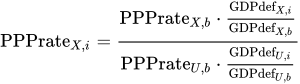
Where PPPrateX,i is the PPP exchange rate of country X for year i, PPPrateX,b is the PPP exchange rate of country X for the benchmark year, PPPrateU,b is the PPP exchange rate of the United States (US) for the benchmark year (equal to 1), GDPdefX,i is the GDP deflator of country X for year i, GDPdefX,b is the GDP deflator of country X for the benchmark year, GDPdefU,i is the GDP deflator of the US for year i, and GDPdefU,b is the GDP deflator of the US for the benchmark year.
UBS
[edit]The bank UBS produces its "Prices and Earnings" report every three years. The 2012 report says, "Our reference basket of goods is based on European consumer habits and includes 122 positions".[32]
Simplified
[edit]To teach the intuition and calculation of PPP factors, the basket of goods is often simplified to a single good.
Big Mac Index
[edit] | This section needs additional citations for verification. (October 2023) |
.jpg)
The Big Mac Index is a simple implementation of PPP where the basket contains a single good: a Big Mac burger from McDonald's restaurants. The index was created and popularized by The Economist in 1986 as a way to teach economics and to identify over- and under-valued currencies.[33]
The Big Mac has the value of being a relatively standardized consumer product that includes input costs from a wide range of sectors in the local economy, such as agricultural commodities (beef, bread, lettuce, cheese), labor (blue and white collar), advertising, rent and real estate costs, transportation, etc.
There are some problems with the Big Mac Index. A Big Mac is perishable and not easily transported. That means the law of one price is not likely to keep prices the same in different locations. McDonald's restaurants are not present in every country, which limits the index's comprehensiveness globally. Also, Big Macs are not sold at every McDonald's store (notably in India), which limits its usage further.[34]
In the white paper, "Burgernomics", the authors computed a correlation of 0.73 between the Big Mac Index's prices and prices calculated using the Penn World Tables. This single-good index captures most, but not all, of the effects captured by more professional (and more complex) PPP measurement.[9]
The Economist uses The Big Mac Index to identify overvalued and undervalued currencies. That is, ones where the Big Mac is expensive or cheap, when measured using current exchange rates. The January 2019 article states that a Big Mac costs HK$20.00 in Hong Kong and US$5.58 in the United States.[35] The implied PPP exchange rate is 3.58 HK$ per US$. The difference between this and the actual exchange rate of 7.83 suggests that the Hong Kong dollar is 54.2% undervalued. That is, it is cheaper to convert US dollars into Hong Kong dollars and buy a Big Mac in Hong Kong than it is to buy a Big Mac directly in US dollars.[citation needed]
KFC Index
[edit]Similar to the Big Mac Index, the KFC Index measures PPP with a basket that contains a single item: a KFC Original 12/15 pc. bucket. The Big Mac Index cannot be used for most countries in Africa because most do not have a McDonald's restaurant. Thus, the KFC Index was created by Sagaci Research (a market research firm focusing solely on Africa) to identify over- and under-valued currencies in Africa.
For example, the average price of KFC's Original 12 pc. Bucket in the United States in January 2016 was $20.50; while in Namibia it was only $13.40 at market exchange rates. Therefore, the index states the Namibian dollar was undervalued by 33% at that time.
iPad Index
[edit]Like the Big Mac Index, the iPad index (elaborated by CommSec) compares an item's price in various locations. Unlike the Big Mac, however, each iPad is produced in the same place (except for the model sold in Brazil) and all iPads (within the same model) have identical performance characteristics. Price differences are therefore a function of transportation costs, taxes, and the prices that may be realized in individual markets. In 2013, an iPad cost about twice as much in Argentina as in the United States.
| Country or region | Price (US dollars) [36][37][38][39] |
|---|---|
| Argentina | $1,094.11 |
| Australia | $506.66 |
| Austria | $674.96 |
| Belgium | $618.34 |
| Brazil | $791.40 |
| Brunei | $525.52 |
| Canada (Montréal) | $557.18 |
| Canada (no tax) | $467.36 |
| Chile | $602.13 |
| China | $602.52 |
| Czech Republic | $676.69 |
| Denmark | $725.32 |
| Finland | $695.25 |
| France | $688.49 |
| Germany | $618.34 |
| Greece | $715.54 |
| Hong Kong | $501.52 |
| Hungary | $679.64 |
| India | $512.61 |
| Ireland | $630.73 |
| Italy | $674.96 |
| Japan | $501.56 |
| Luxembourg | $641.50 |
| Malaysia | $473.77 |
| Mexico | $591.62 |
| Netherlands | $683.08 |
| New Zealand | $610.45 |
| Norway | $655.92 |
| Philippines | $556.42 |
| Pakistan | $550.00 |
| Poland | $704.51 |
| Portugal | $688.49 |
| Russia | $596.08 |
| Singapore | $525.98 |
| Slovakia | $674.96 |
| Slovenia | $674.96 |
| South Africa | $559.38 |
| South Korea | $576.20 |
| Spain | $674.96 |
| Sweden | $706.87 |
| Switzerland | $617.58 |
| Taiwan | $538.34 |
| Thailand | $530.72 |
| Turkey | $656.96 |
| UAE | $544.32 |
| United Kingdom | $638.81 |
| US (California) | $546.91 |
| United States (no tax) | $499.00 |
| Vietnam | $554.08 |
See also
[edit]
References
[edit]- ^ a b Krugman and Obstfeld (2009). International Economics. Pearson Education, Inc.
- ^ a b c OECD. "Purchasing Power Parities - Frequently Asked Questions (FAQs)". OECD.
- ^ a b D., Rao (2001). "Integration of CPI and PPP: Methodological Issues, Feasibility and Recommendations" (PDF). Recent Advances in Methods and Applications. Joint World Bank – OECD Seminar on Purchasing Power Parities. Agenda item n° 4. Archived from the original (PDF) on Aug 12, 2022.
- ^ Daneshkhu, Scheherazade (18 December 2007). "China, India economies '40% smaller'". Financial Times. Archived from the original on 2022-12-10.
- ^ 2005 World Development Indicators: Table 5.7 | Relative prices and exchange rates Archived 2007-02-23 at the Wayback Machine
- ^ List of countries by past and future GDP (nominal)
- ^ List of countries by future GDP (PPP) per capita estimates
- ^ "EKS Method". OECD. Archived from the original on 2019-06-24. Retrieved 2019-08-26.
- ^ a b Pakko, Michael (2 March 1917). "Burgernomics" (PDF). St. Louis Federal Reserve Bank. Research Division Publications (Federal Reserve Bank of St. Louis). Retrieved 24 August 2019.
- ^ Politi, Daniel (2011-11-24). "Argentina's Big Mac Attack". Latitude. Archived from the original on 2019-10-23. Retrieved 2019-10-23.
- ^ Taylor and Taylor, Alan and Mark (Fall 2004). "The Purchasing Power Parity Debate" (PDF). Journal of Economic Perspectives. 18 (4): 135–158. doi:10.1257/0895330042632744.
- ^ "Global gas prices". CNN/Money. 23 March 2005.
- ^ "China's rise, America's demise | beyondbrics | News and views on emerging markets from the Financial Times – FT.com". 2011-05-29. Archived from the original on 2011-05-29. Retrieved 2023-03-22.
- ^ a b c d e Krugman and Obstfeld (2009). International Economics. Pearson Education, Inc. pp. 394–395.
- ^ "Policy Innovations Digital Magazine (2006–2016)". Carnegie Council for Ethics in International Affairs. Retrieved 2019-09-27.
- ^ Price indexes, inequality, and the measurement of world poverty Angus Deaton, Princeton University
- ^ Wheatley, John (1807–1822). An essay on the theory of money and principles of commerce. London – via Columbia University Libraries Electronic Books.
- ^ Great Britain. Parliament. House of Commons. Select Committee on the High Price of Gold Bullion (1810). Report, together with minutes of evidence, and accounts, from the Select committee on the high price of gold bullion (Report). London: self-published.
- ^ "The Purchasing Power Parity Doctrine | Richmond Fed". www.richmondfed.org. Retrieved 2025-04-22.
- ^ "Lawrence White,". oll.libertyfund.org. 2014-01-07. Retrieved 2025-04-22.
- ^ Hawtrey, Ralph George (1913). Good and bad trade: an inquiry into the causes of trade fluctuations. London: Constable.
- ^ Glasner, David (2021-11-01). Studies in the History of Monetary Theory: Controversies and Clarifications. Springer Nature. ISBN 978-3-030-83426-5.
- ^ Cassel, Gustav (March 1916). "The Present Situation of the Foreign Exchanges". The Economic Journal. 26 (101): 62–65. doi:10.2307/2222038. JSTOR 2222038.
- ^ Cassel, Gustav (September 1916). "The Present Situation of the Foreign Exchanges". The Economic Journal. 26 (103): 319–323. doi:10.2307/2221918. JSTOR 2221918.
- ^ Cassel, Gustav (December 1918). "Abnormal Deviations in International Exchanges". The Economic Journal. 28 (112): 413–415. doi:10.2307/2223329. JSTOR 2223329.
- ^ Cheung, Yin-Wong (2009). "purchasing power parity". In Reinert, Kenneth A.; Rajan, Ramkishen S.; Glass, Amy Jocelyn; et al. (eds.). The Princeton Encyclopedia of the World Economy. Vol. I. Princeton: Princeton University Press. p. 942. ISBN 978-0-691-12812-2. Retrieved 2 October 2011.
- ^ a b c Kadochnikov, Denis (2013). "Gustav Cassel's purchasing power parity doctrine in the context of his views on international economic policy coordination". European Journal of the History of Economic Thought. 20 (6): 1101–1121. doi:10.1080/09672567.2013.824999. S2CID 154383662.
- ^ as of 14 Apr 2015 "Monthly comparative price levels". OECD. 14 April 2015.
- ^ as of 25 May 2024 "Monthly comparative price levels". OECD. May 2024.
- ^ Paul Schreyer; Francette Koechlin (March 2002). "Purchasing power parities – measurement and uses" (PDF). Statistics Brief (3). OECD.
- ^ Paul McCarthy. "Chapter 18: Extrapolating PPPs and Comparing ICP Benchmark Results" (PDF). International Comparison Program. World Bank. p. 29.
- ^ "Prices and Earnings (Edition 2012)" (PDF). UBS. Archived from the original (PDF) on 26 August 2019. Retrieved 26 August 2019.
- ^ "Our Big Mac index shows how burger prices are changing". The Economist. 2023-08-03. Archived from the original on 2023-10-16. Retrieved 2023-10-17.
- ^ Anand, Shefali (2011-08-02). "India Ranks Low in Big Mac Index". Wall Street Journal. ISSN 0099-9660. Retrieved 2025-02-13.
- ^ "The Big Mac index". The Economist. 2019-01-10. ISSN 0013-0613. Archived from the original on 2019-07-01. Retrieved 2019-07-02.
- ^ Glenda Kwek (23 September 2013). "Is the Aussie too expensive? iPad index says no". The Age.
- ^ Joaquin Trapero (12 December 2024). "Melbourne vs. Ballarat: Cost of Living, Jobs, and Lifestyle Comparison". Retrieved 2025-02-08.
- ^ [1] Commonwealth Securities 23 September 2013
- ^ Liz Tay (September 23, 2013). "Here's How Much An iPad Costs In 46 Countries". Business Insider Australia. Archived from the original on Oct 23, 2023.
External links
[edit]- Penn World Table Archived 2017-10-20 at the Wayback Machine
- Purchasing power parities updated by Organisation of Cooperation and Development (OECD) from OECD data
- Explanations from the U. of British Columbia Archived 2019-08-11 at the Wayback Machine (also provides daily updated PPP charts)
- Purchasing power parities as example of international statistical cooperation from Eurostat – Statistics Explained
- World Bank International Comparison Project provides PPP estimates for a large number of countries
- UBS's "Prices and Earnings" Report 2006 Good report on purchasing power containing a Big Mac index as well as for staples such as bread and rice for 71 world cities.
- "Understanding PPPs and PPP based national accounts" provides an overview of methodological issues in calculating PPP and in designing the ICP under which the main PPP tables (Maddison, Penn World Tables, and World Bank WDI) are based.
- List of Countries by Purchasing Power Parity since 1990 (World Bank)
- The Big Mac Index
- Purchasing power parity Definition, Unesco
- Comparison of PPP index values based on same year Purchasing Power Calculator
| International | |
|---|---|
| National | |
| Other | |

Grokipedia
Purchasing power parity
View on GrokipediaFundamental Concepts
Absolute Purchasing Power Parity
Absolute purchasing power parity (PPP) posits that the nominal exchange rate between two currencies should equal the ratio of their respective price levels for an identical basket of goods and services, ensuring equivalent purchasing power across countries.[4] Mathematically, this is expressed as , where is the nominal exchange rate (units of domestic currency per unit of foreign currency), is the domestic price level, and is the foreign price level.[11] This condition implies that arbitrage opportunities would drive prices to equality when expressed in a common currency, assuming frictionless trade.[12] The theory rests on the law of one price, which holds that identical goods should command the same price in different markets after currency conversion, extended to aggregate price indices.[4] Key assumptions include the absence of transportation costs, trade barriers, and tariffs; perfect competition; identical consumption baskets across countries; and complete information for arbitrageurs.[13] These prerequisites enable law-of-one-price deviations to be eliminated through cross-border trade, aligning exchange rates with relative purchasing powers.[11] ![Big Mac hamburger in Japan as an example of absolute PPP testing for a single tradable good][float-right] Empirical tests of absolute PPP, often using consumer price indices or specific goods like the Big Mac hamburger, reveal significant deviations in the short run, with real exchange rates exhibiting persistence and volatility.[14] For instance, studies on OECD countries from 1960 to 2021 found that absolute PPP does not hold consistently, as exchange rates fail to equalize price levels due to non-tradable goods and market imperfections.[15] Long-run evidence is mixed; while some panel data analyses detect mean reversion toward PPP after shocks, others, such as bilateral tests for Canada-U.S. rates, reject a stable long-run relationship.[16] [17] Unlike relative PPP, which focuses on exchange rate changes equaling inflation differentials and holds more robustly over time, absolute PPP requires price levels to align precisely, a condition undermined by structural factors.[12] Limitations include the predominance of non-tradable services (e.g., housing, healthcare) with differing productivities and prices across borders, as per Balassa-Samuelson effects; transportation and transaction costs; varying taxes and regulations; and incomplete arbitrage due to information asymmetries.[9] [13] These frictions explain why absolute PPP rarely materializes in practice, rendering it more a benchmark for real exchange rate deviations than a predictive tool.[14]Relative Purchasing Power Parity
![Formula for adjusting PPP rates using GDP deflators][float-right] Relative purchasing power parity (RPPP) asserts that the percentage change in the nominal exchange rate between two currencies over a given period equals the difference in their respective inflation rates during that period.[18] This condition implies that exchange rates adjust to offset relative price level changes, preserving the real exchange rate.[4] Formally, RPPP can be expressed as , where is the nominal exchange rate (domestic currency per unit of foreign currency), is the domestic inflation rate, and is the foreign inflation rate.[9] Unlike absolute PPP, which equates absolute price levels across countries at a point in time and rarely holds empirically due to factors like non-tradable goods and transportation costs, relative PPP focuses on dynamic adjustments and serves as a weaker, more testable hypothesis.[12] It assumes that deviations from absolute PPP are temporary and that inflation differentials drive exchange rate movements, drawing from the law of one price applied to changes in tradable goods prices.[11] This version avoids issues with incomparable consumption baskets or base-period mismatches inherent in absolute comparisons.[18] RPPP finds application in forecasting exchange rates, particularly in international finance models like the monetary approach to exchange rates, where expected inflation differences inform anticipated depreciation or appreciation.[19] For instance, if Country A experiences 5% inflation while Country B has 2%, RPPP predicts a 3% depreciation of Country A's currency against Country B's.[20] Central banks and policymakers use it to assess real exchange rate misalignments over time, though it performs better for flexible exchange rate regimes than fixed ones.[21] Empirical evidence supports RPPP more robustly in the long run than the short run, where exchange rate volatility and price stickiness cause frequent deviations.[22] Studies of post-Bretton Woods floating rates show half-lives of real exchange rate adjustments ranging from 3 to 5 years, indicating gradual convergence toward parity.[4] Stronger evidence emerges in high-inflation environments, such as in Argentina, Brazil, and Israel during the 1980s and 1990s, where hyperinflation amplified relative price effects and forced rapid exchange rate responses.[23] However, persistent deviations occur due to productivity differences in tradables (Balassa-Samuelson effect) and barriers to arbitrage, limiting short-term predictive accuracy.[24]Law of One Price as Foundation
The law of one price posits that, in efficient markets without transportation costs or trade barriers, identical goods will sell for the same price across different locations when prices are expressed in a common currency.[3][25] This principle arises from arbitrage: if a good trades at different prices, traders can buy low in one market and sell high in another, equalizing prices until profits vanish.[26] As the foundational microeconomic building block of purchasing power parity (PPP), the law of one price extends to aggregate price levels under absolute PPP, where exchange rates should adjust to make the overall cost of a representative basket of identical goods equivalent across countries.[27][21] For a single tradable good , this implies , where denotes local currency prices and is the nominal exchange rate; aggregating over goods yields PPP as .[4] The assumption of perfect arbitrage underpins this, but real-world frictions like tariffs, shipping costs, and non-tradable components (e.g., services) introduce deviations, explaining why LOOP holds more reliably for homogeneous tradables like commodities than for differentiated consumer goods.[28][29] Empirical tests, such as the Big Mac Index introduced by The Economist in 1986, apply LOOP to a standardized hamburger, revealing persistent price disparities; for instance, as of July 2023, a Big Mac cost $5.58 in the United States versus ¥450 ($3.20 at market rates) in Japan, implying undervaluation of the yen by about 43% under PPP.[26] Such deviations stem causally from market segmentation, local pricing strategies (e.g., "pricing to market" where exporters absorb exchange rate changes), and sticky prices due to menu costs or contracts, rather than pure arbitrage failures.[30][31] Long-run evidence over centuries shows half-lives of deviations around 3-5 years for tradables, shortening with trade liberalization but not eliminating gaps, as transport costs have declined yet non-tradables (e.g., housing) anchor aggregate PPP violations.[30][32] Relative PPP, focusing on inflation differentials rather than levels, builds on LOOP by predicting exchange rate changes mirror goods price changes, offering better short-term alignment in high-inflation contexts but still prone to commodity-specific breaks.[33][34] Critics note LOOP's idealizations overlook causal factors like distribution markups and local monopolies, which amplify deviations in retail markets versus wholesale; for example, studies of disaggregated U.S. import data during the 2008-2009 crisis found LOOP violations widened due to credit constraints hindering arbitrage, not just fundamentals.[28][35] Nonetheless, LOOP remains theoretically central, as evidenced by its role in international finance models where deviations signal misalignments exploitable by trade flows, though empirical validity strengthens only for border prices of bulk commodities like oil, where arbitrage enforces near-equality (e.g., Brent crude priced within 1-2% globally in stable periods).[36][37]Historical Development
Origins in Classical Economics
The foundational principles of purchasing power parity (PPP) emerged implicitly in classical economics through discussions of international arbitrage, the law of one price, and exchange rate determination by relative commodity costs. Classical economists, emphasizing free trade and self-correcting market mechanisms, argued that persistent price differences across borders would trigger trade flows, smuggling, or specie movements until prices equalized in a common currency, barring frictions like transport costs or barriers. This arbitrage logic underpinned the notion that exchange rates should reflect the relative purchasing power of currencies over tradable goods, preventing profitable deviations.[38] Adam Smith, in An Inquiry into the Nature and Causes of the Wealth of Nations (1776), described how international competition enforces price uniformity for exportable commodities, with smuggling mitigating but not eliminating disparities caused by protectionism; he likened trade barriers to a dam restraining water (prices), implying that unrestricted arbitrage would restore equilibrium akin to PPP. Smith's analysis of money and banking highlighted that extra smuggling costs prevent perfect price parity, yet market forces drive convergence toward it. David Ricardo advanced this in On the Principles of Political Economy and Taxation (1817), articulating a purchasing power theory of exchange rates where rates adjust to the relative values (labor costs) of exported commodities, ensuring no systematic gains from trade imbalances; deviations invite corrective bullion flows under a gold standard.[39][40] Ricardo's framework connected to his labor theory of value, positing that exchange rates equate the purchasing power of money in terms of internationally tradable outputs, with comparative advantage reinforcing the law of one price for goods. John Stuart Mill, in Principles of Political Economy (1848), formalized aspects of this by explaining how price level differences induce balance-of-payments adjustments via commodity exports or imports, aligning exchange rates with relative domestic price indices over time. These ideas, rooted in causal mechanisms of trade and monetary flows rather than formal parity equations, provided the intellectual groundwork for later PPP formulations, though classical writers focused on tradables and overlooked non-tradable goods' role in sustained deviations.[41][42]20th Century Formalization and Early Applications
The concept of purchasing power parity (PPP) was formalized in the early 20th century by Swedish economist Gustav Cassel, who introduced it as a framework for determining equilibrium exchange rates amid the disruptions of World War I and the collapse of the classical gold standard.[43] Cassel first articulated the theory in 1916 in advisory memoranda to the Swedish government, positing that the exchange rate between two currencies should reflect the ratio of their domestic price levels to equalize the purchasing power of money across borders.[44] By 1918, he explicitly coined the term "purchasing power parity" and defined it mathematically as the rate where a unit of one currency buys the same quantity of goods in its home market as a unit of the foreign currency does in its own, expressed as , with as the nominal exchange rate, the domestic price level, and the foreign price level.[44] This absolute PPP formulation assumed frictionless trade and the law of one price for tradable goods, aiming to provide a benchmark for post-war currency stabilization rather than a short-term predictor.[45] Cassel's theory gained traction in the interwar period (1918–1939) as policymakers sought to restore fixed exchange rates under the gold standard's remnants, with early applications focusing on estimating "true" par values for currencies like the British pound and German mark.[46] In the 1920s, Cassel applied PPP to forecast deviations during the floating exchange rate episodes following wartime inflations, calculating implied rates based on wholesale price indices from sources such as the U.S. Federal Reserve and European statistical offices; for instance, he estimated the U.S. dollar-pound rate should adjust to around $4.86 by 1925 to reflect relative price changes since 1913.[43] These computations were used by central banks and the League of Nations in discussions on monetary reconstruction, though empirical deviations—often exceeding 20%—highlighted limitations from transport costs, tariffs, and non-tradables, prompting Cassel to qualify PPP as a long-run tendency rather than an absolute rule.[47] Further early applications emerged in comparative economic studies, such as Jacob Viner's 1924 analysis of interwar trade balances, which incorporated PPP-adjusted price indices to assess real exchange rate misalignments contributing to imbalances like Germany's hyperinflation.[44] By the 1930s, the theory informed League of Nations reports on international price levels, where PPP served as a tool to deflate nominal GDP proxies for cross-country welfare comparisons, revealing, for example, that U.S. real income per capita in 1929 exceeded Britain's by over 50% when adjusted via PPP rather than market rates.[48] These efforts laid groundwork for multilateral price surveys but faced criticism for relying on aggregated indices that masked basket composition differences, as noted in contemporary econometric tests showing half-lives of PPP deviations spanning several years.[47] Despite such challenges, PPP's formalization shifted economic discourse from metallic standards to price-level anchors, influencing post-Depression policy debates on devaluation.[49]Post-1990 Benchmarks and Methodological Advances
The 1993 benchmark of the International Comparison Program (ICP), involving 115 economies, represented the initial effort to achieve comprehensive global coverage by linking regional comparisons, though methodological challenges in aggregation prevented the release of fully integrated global purchasing power parity (PPP) estimates.[50] This round highlighted limitations in linking disparate regional data sets, prompting reforms in data collection and estimation procedures to enhance consistency across economies.[50] Subsequent benchmarks expanded participation and addressed prior shortcomings. The 2005 ICP round covered 146 economies, including major omissions like China and India since 1985, and introduced refined methods for price data gathering and PPP calculation, enabling the first reliable global aggregates since earlier phases.[50] By 2011, participation reached 199 economies—the largest to date—with innovations in merging regional PPPs into global figures via improved linking techniques, such as region-specific product lists to better capture price variations.[50] The 2017 cycle involved 178 economies and solidified the ICP as a permanent initiative with regular benchmarks, while the 2021 round maintained high coverage at 176 economies, yielding updated PPPs published in 2024.[50] Methodological advances since 1990 emphasized multilateral aggregation and quality controls to mitigate biases in bilateral comparisons. The ICP adopted the Gini-Éltető-Köves-Szulc (GEKS) method for computing PPPs at the basic heading level, ensuring transitivity and country-of-reference invariance through subsequent redistribution of regional volumes based on expenditure shares.[51] Regional PPPs are first derived using national average prices for a standardized basket of goods and services, aligned with detailed expenditure data under evolving System of National Accounts frameworks—SNA 1993 for the 2011 cycle and SNA 2008 thereafter—before global integration.[51] [51] Further refinements included enhanced item matching protocols to reduce substitution biases and the incorporation of scanner data for consumer goods, improving accuracy in non-tradable sectors like housing and services.[52] These developments, alongside annual extrapolations using GDP deflators for inter-benchmark years, have increased the reliability of PPP-based GDP comparisons, particularly for developing economies previously underrepresented.[53] The shift to a rolling regional approach in some cycles, inspired by Eurostat-OECD practices, facilitated more frequent updates while preserving benchmark integrity.[54]Calculation Methodologies
International Comparison Program Framework
The International Comparison Program (ICP), coordinated by the World Bank under the United Nations Statistical Commission, provides a standardized multilateral framework for estimating purchasing power parities (PPPs) to enable cross-country comparisons of GDP and its components in real terms.[55] Initiated in 1968 as a collaboration between the United Nations Statistical Division and the University of Pennsylvania's International Comparisons Unit, the ICP operates through periodic cycles—typically every three to six years—involving up to 200 participating economies, national statistical offices, and regional agencies such as the Asian Development Bank and Eurostat/OECD.[50] The program's governance includes an ICP Governing Board that sets policies, approves methodologies, and ensures coordination, with the World Bank managing global aggregation while regions handle initial data collection and linking.[51] The most recent cycle, ICP 2021, collected data for the reference year 2021 and released results on May 30, 2024, covering revised PPPs for 2017 and extrapolations through 2023.[55] At its core, the ICP framework rests on three interconnected components: the expenditure framework aligned with the System of National Accounts (SNA 2008), price data collection for comparable goods and services, and aggregation procedures to derive transitive PPPs.[51] Expenditures are disaggregated into approximately 3,000 basic headings—detailed categories representing household consumption (e.g., specific food items like rice or apparel types), government spending, gross capital formation, and net exports—ensuring coverage of final GDP uses while excluding intermediate inputs to focus on value added at market prices.[56] Participating economies submit national average prices for a regionally harmonized basket of representative items (e.g., over 1,000 for consumption goods), collected via surveys of outlets and service providers to capture urban-rural and quality variations, alongside GDP expenditure weights in local currencies, population data, and market exchange rates.[51] This data submission occurs within a fixed reference year to minimize temporal biases, with quality controls emphasizing representativeness and avoidance of substitution effects inherent in consumer indices.[51] PPPs are computed hierarchically, starting at the basic heading level using binary or multilateral comparisons. For basic headings with multiple comparable items, the Jevons method calculates unweighted geometric means of price relatives (unit value ratios) across countries, providing elementary PPPs that equalize the cost of identical or similar goods.[51] These are then aggregated upward to higher nomenclatures (e.g., group, class, section) via weighted averaging, incorporating expenditure weights to reflect consumption patterns, with the Gini-Éltető-Köves-Szulc (EKS) method applied at regional levels to impose transitivity—ensuring consistent multilateral ratios—and base-country invariance, addressing biases from bilateral methods like the Fisher index.[51] Regional PPPs are linked to form global estimates through bridge countries or supernumerary items, producing economy-wide PPPs for GDP (e.g., the 2021 global GDP in PPP terms totaled approximately $140 trillion) and price level indices (PLIs) measuring relative cost of living against a reference (often the U.S. at 100).[55] This structure mitigates exchange rate distortions but relies on data accuracy, with deviations arising from non-tradable goods pricing and regional heterogeneity.[51]Data Collection and Price Basket Design
The International Comparison Program (ICP), coordinated by the World Bank, facilitates global data collection for PPP estimation by requiring participating economies to gather national annual average prices in local currency for a reference year, such as 2021 in the most recent cycle.[51] Prices are collected through structured surveys targeting expenditures across GDP components, with national statistical offices typically conducting fieldwork in urban areas from representative outlets like supermarkets, markets, and service providers to capture average transaction prices excluding taxes where possible.[57] These surveys occur during benchmark years every five to six years, after which PPP time series for interim periods are extrapolated using consumer price indices (CPI) and other deflators to maintain continuity.[58] Price basket design in the ICP employs a hierarchical classification aligned with the System of National Accounts, centered on basic headings—the lowest aggregation level for which explicit national expenditure weights can be derived, such as specific categories like rice or passenger cars.[51] The basket encompasses the full spectrum of final goods and services in GDP, including over 200 basic headings in recent cycles (e.g., 206 total, with 143 for household individual consumption), selected to represent average national consumption patterns rather than a fixed universal bundle.[54] Items are drawn from precisely specified lists: a global core list (GCL) for cross-regional consistency, supplemented by regional and national lists to accommodate local availability and relevance, ensuring at least 80-90% coverage of expenditure weights within each heading.[57] Survey types are differentiated by expenditure domain to enhance granularity:- Household consumption: The largest component (>60% of GDP in many economies), covering food, beverages, clothing, transport, and recreation via quarterly or annual price collections for hundreds of items, priced at multiple outlets to compute averages.
- Housing: Annual rental equivalents or dwelling stock data for comparable units (e.g., by size, location, amenities) to proxy imputed rents.
- Private education: Tuition fees at primary, secondary, and tertiary levels from public and private institutions.
- Government consumption: Wages and salaries for public employees classified by occupation (e.g., using ILO standards).
- Machinery and equipment: Prices for branded and generic capital goods, including import duties.
- Construction: Inputs like materials, labor rates, and equipment hire for standardized projects.[57]
Bilateral versus Multilateral PPP Estimation
Bilateral purchasing power parity (PPP) estimation computes exchange rates directly between two countries by comparing the prices of an identical basket of goods and services in each country's currency, yielding a PPP rate equal to the ratio of those aggregate price levels.[60] This approach, also termed binary comparison, relies solely on data from the pair of economies involved and assumes the law of one price holds for the basket, adjusting for differences in domestic purchasing power without intermediate countries.[61] For instance, if a basket costs 100 units in country A's currency and the equivalent exchange rate-adjusted cost in country B is 80 units, the bilateral PPP rate implies B's currency is undervalued relative to market rates by that ratio.[11] Multilateral PPP estimation, in contrast, aggregates bilateral comparisons across multiple countries to produce consistent rates for all participants, enforcing properties like transitivity—where the indirect PPP between countries A and B via country C equals the direct bilateral rate—and base country invariance, ensuring results do not depend on the chosen reference economy.[51] Methods such as the Gini-Eltetö-Köves-Szulc (GEKS) procedure, used in the World Bank's International Comparison Program (ICP), calculate multilateral PPPs by taking geometric means of direct and chained bilateral rates, incorporating relative price data from all countries to mitigate inconsistencies.[62] In the 2021 ICP cycle, for example, multilateral PPPs were derived from price surveys covering over 190 economies, enabling transitive global aggregates like GDP at PPP, which bilateral methods alone cannot reliably chain without arbitrage violations.[59] The primary distinction lies in handling multi-country comparability: bilateral estimates are simpler and preserve direct price relativities but often violate transitivity, leading to circular inconsistencies (e.g., A > B, B > C, yet C > A in chained comparisons), which distort aggregated metrics like world GDP shares.[60] Multilateral methods resolve this by weighting and averaging bilaterals, as in the ICP's use of both direct surveys and indirect extrapolations, but introduce distortions to individual bilateral rates—potentially by 10-20% in some cases—to achieve consistency, as evidenced in 1985 ICP data where multilateral bounds exceeded bilateral ones significantly.[63] Empirical studies, such as those on Eurostat-OECD PPP programs versus ICP, show multilateral approaches yield more stable long-run estimates for policy uses like poverty lines, though they require extensive data harmonization across diverse economies.[54]| Aspect | Bilateral PPP | Multilateral PPP |
|---|---|---|
| Scope | Two countries only | Multiple countries |
| Key Property | Direct price ratio | Transitivity and base invariance |
| Strength | Unbiased for pairwise analysis | Consistent for global aggregation |
| Weakness | Intransitive when chained | Distorts some bilateral relativities |
| Common Use | Specific trade partner comparisons | ICP global benchmarks (e.g., 2021 cycle) |
Applications in Economic Analysis
Adjusting GDP for Cross-Country Comparisons
Gross domestic product (GDP) measured at market exchange rates often misrepresents the relative economic sizes and living standards across countries because exchange rates are influenced by trade balances, capital flows, and speculation rather than solely by domestic price levels.[1] In economies with lower overall price levels, particularly for non-tradable goods and services, a unit of local currency purchases more domestically than the equivalent in a high-price economy like the United States, leading to undervaluation when converted at nominal rates.[66] High-salary countries like Switzerland and Norway often feature elevated living costs, necessitating PPP adjustments to assess net purchasing power and true living standards beyond nominal income figures.[67] Purchasing power parity (PPP) addresses this by providing conversion rates that equalize the purchasing power of currencies for a comparable basket of goods and services, enabling more accurate cross-country comparisons of real GDP volumes. PPP GDP adjusts nominal GDP for cost-of-living differences across countries, better reflecting domestic purchasing power and real output volume; this adjustment often results in higher GDP figures for emerging economies due to their lower price levels compared to advanced economies.[1] To compute PPP-adjusted GDP, national accounts data in local currency units are divided by the PPP conversion factor for GDP, yielding values in international dollars—a hypothetical unit where one international dollar has the same purchasing power as one U.S. dollar in the United States.[68] This methodology, developed through frameworks like the World Bank's International Comparison Program (ICP), ensures that adjustments reflect empirical price surveys across countries rather than fluctuating market rates.[51] For instance, the IMF's World Economic Outlook database applies ICP-derived PPPs to estimate that in 2024, China's GDP at PPP reached approximately 35.3 trillion international dollars, exceeding the United States' 28.8 trillion, while nominal figures reverse this order with the U.S. at about 28.0 trillion U.S. dollars and China at 18.5 trillion.| Country | Nominal GDP (2024, trillion USD) | PPP GDP (2024, trillion int. $) |
|---|---|---|
| United States | 28.0 | 28.8 |
| China | 18.5 | 35.3 |
| India | 3.9 | 14.6 |
| Japan | 4.1 | 6.5 |
| Germany | 4.5 | 5.7 |
Poverty Measurement and Global Inequality Assessments
Purchasing power parity (PPP) adjustments are integral to international poverty measurement, enabling the World Bank to establish comparable poverty thresholds across countries by accounting for differences in price levels and cost of living. The international poverty line for extreme poverty, set in PPP terms, is converted into local currencies using country-specific PPP conversion factors derived from the International Comparison Program (ICP). As of June 2025, the World Bank updated this line to $3.00 per person per day, reflecting revisions based on 2021 PPPs and replacing the prior $2.15 threshold anchored to 2017 PPPs; this adjustment incorporates new price data and results in an estimated 831 million people living in extreme poverty globally in 2025.[70][71] Without PPP, nominal exchange rates would distort comparisons, overestimating poverty in high-price economies like those in Western Europe and underestimating it in low-price ones such as India or Nigeria, as they fail to reflect real command over goods and services.[72] In practice, national household surveys collect consumption or income data in local currencies, which are then deflated by PPP rates to express values in international dollars, allowing aggregation into global estimates. For lower-middle-income countries, the World Bank applies a higher threshold of $3.65 per day, and for upper-middle-income ones, $6.85 per day, all in updated PPP terms, to better align with regional welfare standards. This methodology underpins projections showing global extreme poverty declining to approximately 9.9% of the population by 2025, though revisions from new PPP benchmarks have occasionally increased headcount estimates by adjusting relative price levels upward for many developing nations.[73][74] Critics, including Nobel laureate Angus Deaton, argue that standard PPP baskets—averaging national consumption patterns—overstate the purchasing power available to the poor, who allocate disproportionately more to food and basics where relative prices may differ systematically, potentially biasing downward global poverty rates by 6-10% in cases like China without methodological fixes for such Engel curve deviations.[75][76] For global inequality assessments, PPP facilitates the construction of distribution-neutral measures like the Gini coefficient across borders by standardizing incomes or consumption to a common purchasing power base, revealing trends such as a declining global Gini from 0.70 in 1980 to around 0.62 by recent estimates when using PPP-adjusted data. Organizations like the World Inequality Database (WID) employ PPP to compare real income shares, highlighting that PPP accounts for cost-of-living disparities better than market exchange rates (MER), which can exaggerate inequality by undervaluing output in low-price economies; for instance, India's GDP per capita rises by a factor of 3-4 under PPP versus MER.[77][78] However, reliance on PPP for inequality can mask intra-country variations if national baskets inadequately capture non-tradable goods or urban-rural price gaps, and some analyses suggest PPP underestimates inequality persistence in fast-growing economies by smoothing short-term deviations. Empirical tests indicate PPP-based inequality metrics are more stable over time than MER ones, though they remain sensitive to ICP benchmark updates, which have periodically shifted global Gini estimates by 2-5 points.[72][66]Exchange Rate Evaluation and Forecasting
Purchasing power parity (PPP) serves as a benchmark for evaluating exchange rate misalignment by comparing the implied PPP exchange rate—derived from the ratio of domestic to foreign price levels—to the prevailing market exchange rate. If the market rate deviates from the PPP rate, it indicates overvaluation or undervaluation of the currency; for instance, a market rate where fewer units of domestic currency are needed to buy foreign currency than suggested by PPP implies domestic currency overvaluation. This approach assumes long-run PPP equilibrium, where price levels equalize across countries when expressed in a common currency.[4] Empirical applications, such as pre-1997 assessments of East Asian currencies, have utilized PPP to identify overvaluations preceding economic crises.[79] The Big Mac Index, introduced by The Economist in 1986, exemplifies a simplified PPP evaluation using the price of a McDonald's Big Mac as a standardized good. It calculates an implied exchange rate from local Big Mac prices and compares it to the actual rate; as of July 2025, the index suggested the British pound was undervalued by approximately 15% against the U.S. dollar based on a Big Mac priced at £5.09 in Britain versus $6.01 in the U.S., implying an exchange rate of 0.85 pounds per dollar against the actual rate.[80] While informal, this index highlights deviations driven by non-tradable costs and productivity differences, though it overlooks broader basket compositions.[81] In forecasting, PPP provides a long-run anchor assuming real exchange rates mean-revert to parity, outperforming random walk models in certain calibrated frameworks. Half-life PPP models, which estimate the speed of adjustment to equilibrium (often 3-5 years), have demonstrated superior out-of-sample forecasts for real exchange rates when adjustment parameters are derived from historical data rather than assumed stationarity.[82] Econometric tests confirm PPP's predictive power, with the model beating benchmarks in 70-80% of cases for horizons beyond one year, particularly when incorporating relative PPP for inflation differentials.[83] However, short-term forecasts remain challenged by persistent deviations, limiting PPP's utility without hybrid models integrating monetary fundamentals.[84] The International Monetary Fund notes PPP exchange rates' relative stability aids in assessing sustainable levels, though bivariate applications risk overlooking multilateral trade dynamics.[1][85]Empirical Validation and Deviations
Tests of Long-Run PPP Validity
Empirical tests of long-run purchasing power parity (PPP) validity focus on whether real exchange rates exhibit mean reversion or stationarity, implying that deviations from PPP are temporary and correct over extended periods, or whether nominal exchange rates and relative price levels share a stable long-run equilibrium via cointegration.[86] Unit root tests, such as augmented Dickey-Fuller or Phillips-Perron procedures, assess the null hypothesis of a unit root (non-stationarity) in real exchange rates; rejection supports long-run PPP.[87] Cointegration analyses, including Johansen's multivariate approach, examine if linear combinations of price levels and exchange rates are stationary despite individual non-stationarity.[88] Early post-Bretton Woods studies using quarterly data from major currencies often failed to reject unit roots, suggesting persistent deviations and invalidating long-run PPP for samples spanning 1973–1990.[89] For instance, univariate tests on bilateral real exchange rates for the US dollar against major currencies indicated non-stationarity, with adjustment speeds too slow for practical equilibrium.[90] However, multivariate unit root tests, which account for cross-country correlations, provided evidence of mean reversion in panels of OECD countries over similar periods, reducing deviations by half in approximately three years.[91] Advances in panel data econometrics and longer historical spans have yielded mixed but increasingly supportive results. Panel unit root tests on real exchange rates from 20+ countries post-1973 often reject non-stationarity, affirming long-run PPP, though results weaken for subsets excluding high-inflation episodes.[92] Cointegration studies using century-long data for 14 advanced economies find evidence of a common stochastic trend consistent with PPP, particularly when incorporating structural breaks like wars or regime shifts.[93] Taylor and Taylor (2004), reviewing hyperinflation cases, silver-standard eras, and floating periods, conclude that long-run PPP holds more robustly than previously thought, with nonlinear adjustments accelerating reversion near equilibrium.[94] Emerging market tests show variability; for example, smooth time-varying cointegration for Brazil, India, and others from 1980–2018 supports PPP validity in high-volatility contexts, but ASEAN-5 analyses from 2000–2016 reject it under standard thresholds.[95][96] Overall, while short-span floats challenge PPP, extended horizons and refined methods—such as allowing for asymmetry or regime changes—bolster its long-run empirical foundation, with estimated half-lives of shocks ranging 2–5 years across studies.[97] These findings underscore that barriers like transportation costs and non-tradables explain short-term failures without negating the underlying arbitrage mechanism over decades.[98]Short-Term Deviations and Persistence Metrics
Short-term deviations from purchasing power parity (PPP) arise primarily from nominal rigidities, such as sticky prices and wages, which prevent immediate adjustment of exchange rates and price levels to equilibrate purchasing power across countries. These deviations are quantified using the real exchange rate, defined as the nominal exchange rate adjusted for relative price levels, where log deviations from the PPP-implied level (typically the long-run mean) capture misalignments. Empirical studies consistently find that such deviations are substantial in the short run, often exceeding 20-30% for major currency pairs over quarterly or annual horizons, driven by monetary shocks, trade costs, and demand fluctuations rather than fundamental productivity differences.[4][17] Persistence of these deviations is assessed through metrics like the autoregressive coefficient in AR(1) models of the real exchange rate, where the half-life—calculated as , with as the coefficient—measures the time required for a shock to dissipate by half. Consensus estimates from post-Bretton Woods data indicate half-lives of 3 to 5 years for bilateral real exchange rates against the U.S. dollar, far exceeding predictions from New Keynesian models incorporating Calvo-style price stickiness, which imply half-lives of under 1 year.[99][100] This "PPP puzzle" highlights excessive inertia, as unit root tests frequently fail to reject non-stationarity, suggesting near-random walk behavior over short-to-medium terms.[101] Panel data approaches and nonlinear threshold models yield somewhat shorter half-lives, often 1-3 years, particularly for high-inflation economies or when conditioning on trade openness, but confidence intervals for point estimates remain wide, with lower bounds typically 1-2 years even in optimistic specifications.[102][103] Autocorrelation functions further reveal slow mean reversion, with first-order correlations exceeding 0.9 in quarterly data for many OECD pairs, implying multi-year persistence inconsistent with efficient markets or rapid arbitrage.[104] These metrics underscore that while PPP provides a long-run anchor, short-term dynamics exhibit high volatility and sluggish correction, challenging exchange rate predictability.[105]Factors Explaining Empirical Failures
Empirical deviations from purchasing power parity (PPP) often persist due to structural differences in productivity across tradable and non-tradable sectors, as captured by the Balassa-Samuelson effect. This effect posits that higher productivity growth in tradables relative to non-tradables in more developed economies raises wages and, consequently, prices in the non-tradable sector, leading to systematically higher overall price levels and real exchange rate appreciation that violates absolute PPP.[106] Empirical studies confirm this pattern, with richer countries exhibiting real exchange rates about 40-50% higher than predicted by PPP, though the effect's magnitude varies and is weaker when using total factor productivity measures rather than GDP per capita.[107] Transportation costs, trade barriers, and other frictions in goods markets further impede arbitrage, preventing price equalization across borders. These "real barriers" include tariffs, quotas, and distribution markups, which elevate the effective cost of traded goods and sustain deviations, particularly for differentiated products where local pricing strategies dominate.[108] For instance, empirical models estimate that such barriers account for up to 20-30% of observed real exchange rate volatility, as they create wedges that nominal exchange rate adjustments cannot fully offset.[109] Non-tradable goods, such as services and housing, constitute a large share of consumption baskets (often 50-70% in advanced economies) and are inherently immune to international arbitrage, amplifying deviations. Prices for these goods respond to domestic supply-demand imbalances rather than global competition, with empirical evidence showing faster price divergence in non-tradables during economic expansions.[110] Government interventions, including subsidies, taxes, and capital controls, exacerbate this by distorting relative prices; for example, varying VAT rates across countries can introduce persistent 5-10% biases in PPP calculations.[111] Short-term persistence, known as the PPP puzzle, arises from nominal rigidities combined with exchange rate volatility, where price stickiness delays adjustment to shocks, yielding half-lives of real exchange rate deviations estimated at 3-5 years—far longer than typical wage or goods price contracts.[112] This puzzle persists even after controlling for aggregation biases, as disaggregated data reveal sector-specific frictions like local currency pricing by exporters, which insulate foreign markets from domestic cost changes.[113] Exchange rate risk premia also contribute, with moderate risk levels generating deviations that do not revert quickly due to hedging costs and investor behavior.[114]Limitations and Criticisms
Challenges with Non-Tradable Goods and Barriers
One fundamental limitation of purchasing power parity (PPP) arises from the prevalence of non-tradable goods and services, which constitute a significant portion of consumption baskets—often 50-70% in developed economies—and are not subject to international arbitrage due to inherent characteristics like immobility or localization.[115] Unlike tradable goods, items such as housing, healthcare, education, and personal services (e.g., haircuts or restaurant meals) cannot be easily shipped across borders, preventing price equalization through competition and leading to persistent deviations from PPP predictions.[99] This structural feature implies that PPP exchange rates may systematically overstate or understate true purchasing power in economies where non-tradable prices diverge due to local supply constraints, labor costs, or productivity differences, rather than exchange rate misalignments alone.[106] The Balassa-Samuelson effect provides a causal explanation for these deviations, positing that faster productivity growth in tradable sectors (e.g., manufacturing) relative to non-tradables raises overall wages, which in turn inflate non-tradable prices more sharply in high-productivity economies.[99] Empirical evidence supports this: cross-country data show a positive correlation between per capita income levels and the relative price of non-tradables, with richer nations exhibiting higher non-tradable costs that appreciate their real exchange rates beyond PPP benchmarks.[106] For instance, services like construction and real estate often command premiums in advanced economies due to wage pressures from tradable-sector gains, contributing to observed PPP half-lives of deviations lasting 3-5 years even after controlling for nominal shocks.[115] This effect challenges absolute PPP validity for aggregate comparisons, as it introduces a productivity-driven bias favoring undervaluation of poorer countries' currencies in PPP terms.[45] Trade barriers exacerbate these issues by impeding arbitrage even among tradables, including tariffs, transportation costs, quotas, and non-tariff measures such as regulatory standards or border delays that fragment markets.[116] These frictions create "real barriers" to integration, sustaining price dispersion; for example, empirical models estimate that higher trade costs correlate with larger deviations from the law of one price, particularly for goods with high transport elasticity.[117] In sectors blending tradables and non-tradables (e.g., processed foods incorporating local services), such barriers compound inaccuracies in PPP basket construction, as evidenced by studies showing reduced PPP adherence in high-friction environments like those with protectionist policies.[118] Consequently, PPP estimates may underperform in policy applications, such as undervaluing living costs in barrier-heavy economies where effective arbitrage is curtailed.[119]Quality Adjustments and Basket Comparability Issues
Quality adjustments in purchasing power parity (PPP) calculations are essential to account for differences in the characteristics, durability, and performance of goods and services across countries, as unadjusted prices may reflect quality variations rather than pure cost differences.[120] Failure to adjust adequately can introduce biases, such as overestimating inflation in high-quality environments or understating it where quality improvements are ignored, with empirical evidence from Sweden showing quality adjustments reducing measured consumer price inflation by 0.2–0.3 percentage points annually between 2000 and 2018.[120] These adjustments are particularly challenging for heterogeneous items like electronics or vehicles, where hedonic methods regress prices on attributes (e.g., processor speed or engine capacity) to isolate quality effects, yet subjectivity in consumer perceptions—such as varying preferences for mobile phone features—complicates standardization.[120] The hedonic country product dummy (CPD) method addresses some inefficiencies by using panel data across outlets and countries to estimate quality-adjusted PPPs, incorporating dummies for specific products and countries to mitigate omitted variable bias in basic expenditure headings.[121] However, inconsistencies arise from divergent national practices; for instance, differing quality adjustment approaches between countries like Sweden and Luxembourg can distort cross-border price level comparisons, as seen in divergent Harmonized Index of Consumer Prices (HICP) movements despite similar underlying trends.[120] In PPP frameworks like the International Comparison Program (ICP), reliance on average outlet prices rather than quality-matched specifics exacerbates inefficiency, especially for non-comparable replacements where specifications vary.[121] Basket comparability issues stem from the core PPP requirement to compare identical or near-identical items, encompassing physical traits (e.g., material composition, size) and market factors (e.g., brand equivalence, seasonality), where deviations yield invalid price ratios.[122] Representivity demands that selected items reflect national consumption patterns at the basic heading level; however, differing consumption patterns across countries, including variations in preferences and availability, challenge standardization of the basket alongside quality variations and the inclusion of non-tradable services, but prioritizing it over strict comparability—such as including unbranded goods in one country versus branded in another—introduces the Gershenkron effect, biasing PPPs toward countries with more diverse or lower-quality options.[122] Temporal comparability further erodes due to evolving baskets between ICP rounds, mismatched with national deflators, and index formulae optimized for either spatial or temporal analysis but not both, potentially misrepresenting real income changes.[123] These problems amplify in non-tradables, where low item-matching rates and quality mismatches (e.g., service durability) can overstate price levels in lower-income countries by favoring internationally traded goods.[66] Major PPP revisions, such as those from 2005 to 2011, have altered per capita income estimates by up to 40% for countries like China, underscoring measurement sensitivities.[66]Potential for Data Manipulation and Measurement Errors
PPP calculations for GDP adjustments are harder and more resource-intensive to compute accurately than using market exchange rates, involving massive data collection through the International Comparison Program (ICP), which conducts benchmarks infrequently every few years and aggregates inputs from participating countries' statistical offices, potentially leading to estimation errors particularly in developing countries.[124][55] These processes introduce measurement errors, including sampling errors from limited outlets or products surveyed, and non-sampling errors such as deviations from strict product specifications during price collection or data entry mistakes like incorrect units of measurement. For instance, the ICP explicitly acknowledges that PPP estimates are approximations vulnerable to classification errors in categorizing goods and services, potentially distorting cross-country price level comparisons by 10-20% in some cases.[69][56][125] Further errors arise from inconsistencies in extrapolating benchmark PPPs over time using domestic price indices like CPI, where relative price changes may not align due to differing inflation patterns or methodological shifts between ICP rounds. World Bank analyses have identified patterns of such inconsistencies, particularly in non-tradable sectors, leading to revisions in price levels and real income estimates; for example, the 2011 ICP round prompted significant adjustments compared to prior benchmarks, partly attributable to divergent domestic inflation rates. These temporal mismatches can amplify deviations in PPP-based GDP rankings, with errors propagating from faulty national accounts assumptions underlying expenditure weights.[126][127][128] Data manipulation poses additional risks, as PPP relies on self-reported price and expenditure data from national authorities, which in some regimes face incentives to understate prices or inflation to portray stronger economic performance. In Argentina, the national statistics agency INDEC systematically manipulated CPI data from 2007 to 2015, reporting inflation rates as low as 10% annually while independent estimates exceeded 20-25%, distorting price relatives used in PPP computations and leading to overstated purchasing power in international benchmarks. Similarly, concerns over China's official price data reliability have prompted alternative PPP estimates; for 2025, World Economics calculates China's GDP at $43.2 trillion PPP—26% higher than World Bank figures—citing underreporting in official statistics influenced by political priorities. Such manipulations undermine PPP's validity for policy applications, as evidenced by the ICP's dependence on potentially biased inputs without robust independent verification mechanisms.[129][130][131][132] Institutional factors exacerbate these vulnerabilities, with weaker governance correlating to higher manipulation risks in official statistics, including those feeding into PPP. Economists note that while ICP quality controls detect some clerical errors, they cannot fully mitigate deliberate alterations, resulting in PPP rates that may systematically favor countries with controlled data environments over those with transparent reporting. This has led to calls for supplementary validation, such as satellite-based price proxies or third-party audits, to enhance credibility in global comparisons.[133][134]Comparisons with Alternative Metrics
PPP versus Market Exchange Rates
Market exchange rates represent the prevailing prices at which currencies are traded in foreign exchange markets, influenced primarily by factors such as international trade balances, capital flows, interest rate differentials, and speculative activities, leading to frequent volatility.[5] In contrast, purchasing power parity (PPP) exchange rates are synthetic constructs derived from comparisons of price levels for identical baskets of goods and services across countries, intended to reflect the rate at which currencies would theoretically equalize purchasing power in equilibrium.[9] These PPP rates are calculated periodically through international price surveys, such as those conducted by the International Comparison Program, and tend to exhibit greater stability over time compared to market rates, as they are less responsive to short-term financial shocks.[5] Empirical deviations between PPP and market rates arise systematically, often following patterns predicted by economic theory like the Balassa-Samuelson effect, where productivity gains in tradable sectors outpace those in non-tradables, causing real exchange rate appreciation in higher-income economies relative to PPP.[5] For instance, in lower-income countries, non-tradable goods and services (e.g., housing, local labor) are typically cheaper due to lower wages and costs, leading market rates to undervalue these economies' currencies against PPP benchmarks and thus understate their real output volumes when converted at market rates.[5] This distortion is evident in GDP aggregates: China's 2023 nominal GDP at market exchange rates stood at approximately $17.9 trillion, while its PPP-adjusted GDP reached $33.0 trillion, reflecting the higher relative purchasing power of the yuan for domestic goods.[135] PPP is preferred over market rates for cross-country comparisons of economic welfare, living standards, and aggregate output volumes because it neutralizes distortions from nominal exchange rate fluctuations and price level differences, enabling assessments based on physical quantities of goods rather than monetary transactions.[136] Market rates, however, remain more appropriate for valuing international trade flows, debt servicing, or investment returns, as they directly capture the terms of actual cross-border exchanges without adjustment artifacts.[5] Using PPP narrows measured income disparities; for example, the per capita income gap between high- and low-income countries diminishes under PPP conversions, though substantial differences persist due to genuine productivity variances.[5]| Country | GDP at Market Exchange Rates (2023, USD trillion) | GDP at PPP (2023, international dollars trillion) |
|---|---|---|
| United States | 26.9 | 26.9 |
| China | 17.9 | 33.0 |
| India | 3.4 | 13.1 |