Hubbry Logo
Reactive armourReactive armourMain
Open search
Reactive armour
Community hub
Reactive armour
logo
8 pages, 0 posts
0 subscribers
Be the first to start a discussion here.
Reactive armour
Reactive armour
from Wikipedia

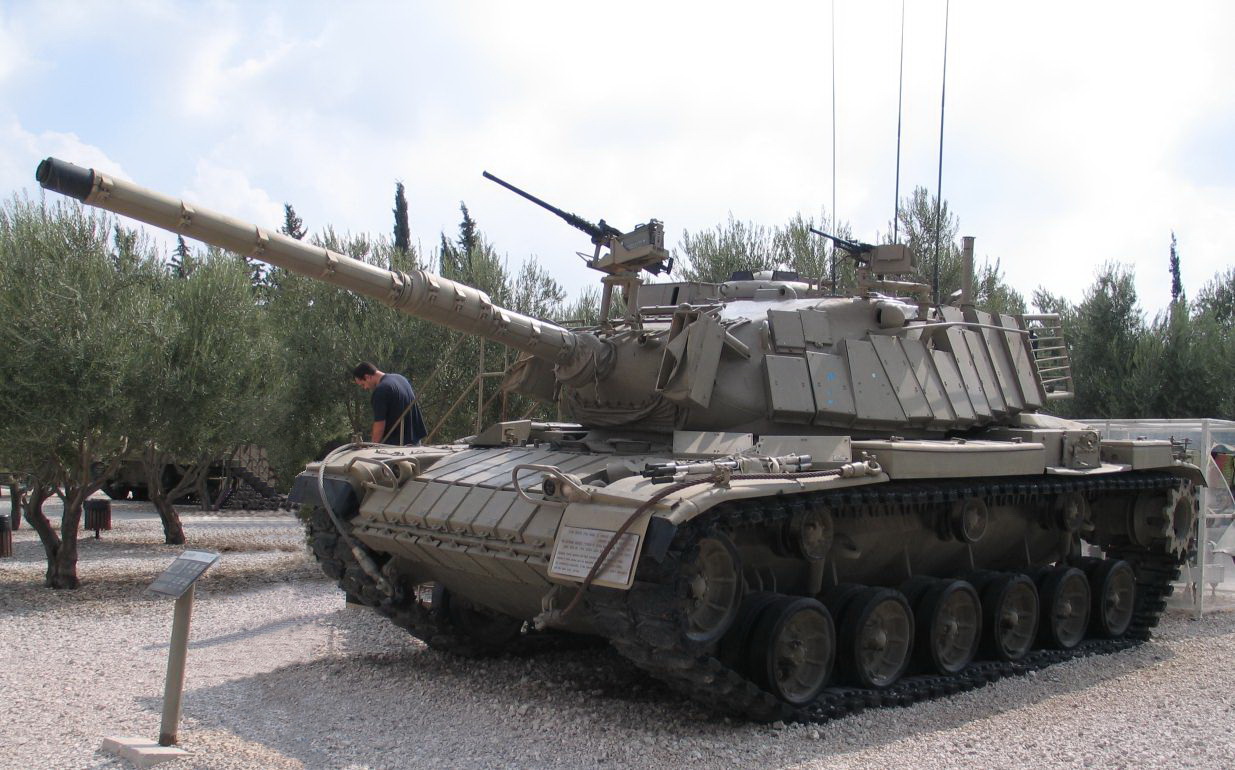
M60A1 Patton tank with Israeli Blazer ERA
A Georgian T-72 tank layered with reactive armour bricks

Reactive armour is a type of vehicle armour used in protecting vehicles, especially modern tanks, against shaped charges and hardened kinetic energy penetrators. The most common type is explosive reactive armour (ERA), but variants include self-limiting explosive reactive armour (SLERA), non-energetic reactive armour (NERA), non-explosive reactive armour (NxRA), and electric armour. NERA and NxRA modules can withstand multiple hits, unlike ERA and SLERA.

When a shaped charge strikes the upper plate of the armour, it detonates the inner explosive, releasing blunt damage that the tank can absorb.

Reactive armour is intended to counteract anti-tank munitions that work by piercing the armour and then either killing the crew inside, disabling vital mechanical systems, or creating spalling that disables the crew—or all three.

Reactive armour can be defeated with multiple hits in the same place, as by tandem-charge weapons, which fire two or more shaped charges in rapid succession. Without tandem charges, hitting precisely the same spot twice is much more difficult.

History

[edit]
Reactive armour "DYNA" for T-72 MBT

The Australians were the first recorded to have conceptualized and developed methods to disrupt and spread the jet of a hollow charge shell to reduce its penetrating power. In a June 1944 report from the Explosives Manufacturing Practices Laboratory of the Defence Explosive Factory Maribyrnong, an operational requirement for the defence against shaped charges was laid out. The focus was in regard to Japanese 75 mm hollow charge shells used against Allied tanks in the Pacific. The destructive effect of the shaped charge was identified as caused by a jet moving at high velocities, consisting of particles from the liner. The two methods developed were to destroy the jet by forcing it to act through a layer of explosives, disrupting the jet, and to make it act through a layer of oxidiser, destroying the jet by burning it with oxidising agents.

The earliest trials were done with small charges able to defeat 2 inch of steel plate which were readily defeated by a layer of explosive (Baratol, R.D.X., Cordite, etc.) or a vigorous oxidising medium. Subsequent trials with British No.68 and American M9A1 grenades were carried out. However trials were done in few numbers which caused varied results. A mixture of Sodium and Potassium Nitrates explosives was seen as the most practical option due to their casting properties. The mixture acted as an oxidiser which may explode when dispersed and heated. The Explosives Manufacturing Practices Laboratory seemingly developed a more middle road between chemical armor and explosive reactive armor concepts to counter the hollow charge threat.[1][2]

The idea of counterexplosion (kontrvzryv in Russian) in armour was proposed in the USSR by the Scientific Research Institute of Steel (NII Stali) in 1949 by academician Bogdan Vjacheslavovich Voitsekhovsky.[3] The first pre-production models were produced during the 1960s. However, insufficient theoretical analysis during one of the tests resulted in all of the prototype elements being detonated.[citation needed] For a number of reasons, including the aforementioned accident and a belief that Soviet tanks had sufficient armour, the research was ended. No more research was conducted until 1974, when the Ministry of the Defensive Industry announced a contest to find the best tank protection.[citation needed]

Picatinny Arsenal, an American military research and manufacturing facility experimented with testing linear cutting charges against anti-tank ammunition in the 1950s, and concluded that they may be effective with an adequate sensing and triggering mechanism, but noted "tactical limitations"; the report was declassified in 1980.[4]

A West German researcher, Manfred Held, carried out similar work with the IDF in 1967–1969.[5] Reactive armour created on the basis of the joint research was first installed on Israeli tanks during the 1982 Lebanon war and was judged very effective.[by whom?]

Explosive reactive armour

[edit]
The advanced Kontakt-5 explosive reactive armour on this T-90S is arranged in pairs of plates, giving the turret its prominent triangular profile.

An element of explosive reactive armour (ERA) is made of either a sheet or slab of high explosive sandwiched between two metal plates, or multiple "banana shaped" rods filled with high explosive which are referred to as shaped charges. On attack by a penetrating weapon, the explosive detonates, forcibly driving the metal plates apart to damage the penetrator. The shaped charges, in contrast, each detonate individually, launching one spike-shaped plate each, meant to deflect, detonate or cut the incoming projectile.

The disruption is attributed to two mechanisms. First, the moving plates change the effective velocity and angle of impact of the shaped charge jet, reducing the angle of incidence and increasing the effective jet velocity versus the plate element. Second, since the plates are angled compared to the usual impact direction of shaped charge warheads, as the plates move outwards the impact point on the plate moves over time, requiring the jet to cut through fresh plates of material. This second effect greatly increases the effective plate thickness during the impact.

Reactive armour detail

To be effective against kinetic energy projectiles, ERA must use much thicker and heavier plates and a correspondingly thicker explosive layer. Such heavy ERA, such as the Soviet-developed Kontakt-5, can break apart a penetrating rod that is longer than the ERA is deep, again reducing penetration capability. Such ERA is ineffective against modern armor-piercing fin-stabilized discarding sabot (APFSDS) projectiles, however, due to their depleted uranium construction.

An important aspect of ERA is the brisance, or detonation speed of its explosive element. A more brisant explosive and greater plate velocity will result in more plate material being fed into the path of the oncoming jet, greatly increasing the plate's effective thickness. This effect is especially pronounced in the rear plate receding away from the jet, which triples in effective thickness with double the velocity.[6]

How ERA works

ERA also counters explosively forged projectiles, as produced by a shaped charge. The counter-explosion must disrupt the incoming projectile so that its momentum is distributed in all directions rather than toward the target, greatly reducing its effectiveness.

Explosive reactive armour has been valued by the Soviet Union and its now-independent component states since the 1980s, and almost every tank in the eastern-European military inventory today has either been manufactured to use ERA or had ERA tiles added to it, including even the T-55 and T-62 tanks built forty to fifty years ago, but still used today by reserve units. The U.S. Army uses reactive armour on its Abrams tanks as part of the TUSK (Tank Urban Survivability Kit) package and on Bradley vehicles and the Israelis use it frequently on their American built M60 tanks.

ERA tiles are used as add-on (or appliqué) armour to the portions of an armoured fighting vehicle that are most likely to be hit, typically the front (glacis) of the hull and the front and sides of the turret. Their use requires that a vehicle be fairly heavily armoured to protect itself and its crew from the exploding ERA.

A further complication to the use of ERA is the inherent danger to anyone near the tank when a plate detonates, though a high-explosive anti-tank (HEAT) warhead explosion would already cause great danger to anyone near the tank. Although ERA plates are intended only to bulge following detonation, the combined energy of the ERA explosive, coupled with the kinetic or explosive energy of the projectile, will frequently cause the plate to explode, creating shrapnel that risks injuring or killing bystanders. Thus, infantry must operate some distance from vehicles protected by ERA in combined arms operations.

Sensitivity

[edit]

ERA is insensitive to impact by kinetic projectiles up to 30 mm in caliber. A 20 mm APIT autocannon round penetrates a Serbian ERA sample but fails to detonate it. However, computer simulations indicate that a small caliber (30 mm) HEAT projectile will detonate an ERA, as would larger shape charges and APFSDS penetrators.[7]

Non-explosive and non-energetic reactive armour

[edit]

NERA and NxRA operate similarly to explosive reactive armour, but without the explosive liner. Two metal plates sandwich an inert liner, such as rubber.[8] When struck by a shaped charge's metal jet, some of the impact energy is dissipated into the inert liner layer, and the resulting high pressure causes a localized bending or bulging of the plates in the area of the impact. As the plates bulge, the point of jet impact shifts with the plate bulging, increasing the effective thickness of the armour. This is almost the same as the second mechanism that explosive reactive armour uses, but it uses energy from the shaped charge jet rather than from explosives.[9]

Since the inner liner is non-explosive, the bulging is less energetic than on explosive reactive armour, and thus offers less protection than a similarly-sized ERA. However, NERA and NxRA are lighter, safe to handle, and safer for nearby infantry; can theoretically be placed on any part of the vehicle; and can be packaged in multiple spaced layers if needed. A key advantage of this kind of armour is that it cannot be defeated by tandem warhead shaped charges, which employ a small forward warhead to detonate ERA before the main warhead fires.

Electric armour

[edit]

Electric armour or electromagnetic armour is a proposed reactive armour technology. It is made up of two or more conductive plates separated by an air gap or by an insulating material, creating a high-power capacitor.[10][11][12][13][14] In operation, a high-voltage power source charges the armour. When an incoming body penetrates the plates, it closes the circuit to discharge the capacitor, dumping energy into the penetrator, which may vaporize it or even turn it into a plasma, diffusing the attack. It is not public knowledge whether this is supposed to function against both kinetic energy penetrators and shaped charge jets, or only the latter. As of 2005, this technology had not yet been introduced on any known operational platform.

Another electromagnetic alternative to ERA uses layers of plates of electromagnetic metal with silicone spacers on alternate sides. The damage to the exterior of the armour passes electricity into the plates, causing them to magnetically move together. As the process is completed at the speed of electricity the plates are moving when struck by the projectile, causing the projectile energy to be deflected whilst the energy is also dissipated in parting the magnetically attracted plates.[citation needed]

See also

[edit]

References

[edit]

General references

[edit]
[edit]
Revisions and contributorsEdit on WikipediaRead on Wikipedia
from Grokipedia
Reactive armour is a type of add-on protective layer used on military vehicles, particularly tanks and armoured fighting vehicles. It includes reactive armour (ERA), consisting of modular blocks or tiles that contain an material sandwiched between two metal plates, as well as non- variants like non- reactive armour (NERA), which use rubber or other materials to deform and disrupt incoming threats without detonation. In ERA, upon impact from anti-tank munitions such as (HEAT) warheads or shaped-charge jets, the detonates, propelling the outer plate outward to disrupt the incoming projectile's penetration mechanism, thereby enhancing the vehicle's survivability against shaped-charge threats. This reactive response increases the effective thickness of the by deflecting or fragmenting the penetrator, often at optimal angles like the 60° standard, and is most effective when the detonation occurs 150-200 microseconds before full impact. The concept originated in the in 1949 under Ukrainian scientist Bogdan Vjacheslavovich Voitsekhovsky, but initial experiments failed, leading to its abandonment until revival in the by German scientist Manfred Held, who patented it in and collaborated with Israel's Rafael Armament Development Authority. The first combat use occurred in 1982 during Israel's invasion of with the "" system fitted to Israeli tanks such as and M60 variants, proving its value against RPGs and other anti-tank weapons. The adopted ERA in 1983 on T-55 and tanks as the Kontakt-1 system, while the began fielding it in 1991 during Operation Desert Storm on M60 tanks, followed by integration on Bradley Fighting Vehicles in the late 1980s to counter evolving threats like ATGMs and 30mm cannons. Key developments include second-generation ERA, such as , designed to defeat tandem-warhead munitions by incorporating thicker explosives and spaced plates; non-explosive reactive armour (NERA), which uses non-detonating materials for safer urban operations; and experimental electric reactive armour (ELRA) that employs electromagnetic pulses to vaporize projectiles. ERA provides significant protection, reducing vulnerability to shaped charges by up to 80% on frontal arcs of main battle tanks (MBTs) like the or , though it adds weight (e.g., ~2,700 kg to a ) that can impact mobility and poses risks to nearby from blast fragments. Modern iterations, seen in conflicts like the ongoing war in on Russian and Ukrainian vehicles, continue to evolve with lightweight composites and improved anti-tandem designs to address advanced threats.

Fundamentals

Definition and Mechanism

Reactive armour is a form of protection for military vehicles, particularly armoured fighting vehicles like tanks, consisting of panels that actively respond to incoming projectiles by detonating or deforming to interfere with the threat's penetration mechanism. These panels are typically attached to the vehicle's exterior and designed to counter (HEAT) warheads, which rely on shaped charges to focus energy into a high-velocity metal jet capable of piercing conventional . The core concept distinguishes reactive armour from passive types by its dynamic reaction, which disrupts the incoming threat rather than merely absorbing or deflecting it. The fundamental mechanism of reactive armour involves a layered structure, often resembling a sandwich of two outer metal plates enclosing a reactive core, such as an filler or a deformable like rubber. Upon impact from a , the outer plate is breached, triggering the core: in variants, a controlled propels the plates outward at high speed, while in non- variants, the impact energy causes the layers to bulge and separate. This reaction projects transversely into the path of the incoming , either through expansion or mechanical deformation, to alter the jet's and integrity. For visualization, consider a basic cross-section: an incoming jet strikes the front plate, initiating the core, which then drives the plates apart in opposing directions, creating a disruptive barrier. At its physics foundation, reactive armour defeats rounds by countering the Munroe effect, the principle behind s where a conical metal liner collapses under to form a coherent, elongated of molten material travelling at extreme velocities. The armour's response perturbs this jet by introducing lateral forces—via products or moving plates—that break its continuity, fragment it, or deflect portions away from the vehicle's main hull, thereby reducing overall . This disruption relies on timing the reaction to coincide with jet formation, ensuring the threat's focused energy is scattered before it can fully exploit the Munroe effect. Concepts like the "" and "" thus form essential prerequisites for understanding reactive armour's role in modern vehicle protection, with early developments tracing back to the .

Advantages and Disadvantages

Reactive armour offers significant advantages in enhancing vehicle survivability against shaped-charge warheads, such as those in (HEAT) rounds, by actively disrupting the penetrating jet through explosive or mechanical reaction, far outperforming passive steel armour of comparable thickness. For instance, early explosive reactive armour (ERA) like Kontakt-1 provides an additional 350-400 mm of (RHA) equivalent protection against shaped charges, effectively doubling or more the defensive capability of baseline against such threats. Against penetrators, reactive designs can deflect or fragment , with advanced ERA reducing penetration by up to 20% in some cases, though effectiveness varies by impact angle and design. A key benefit is the lighter weight per unit of protection achieved compared to adding equivalent passive layers; for example, modular adds targeted defence without proportionally increasing overall vehicle mass, allowing for better mobility in designs like the where it contributes around 2,700 kg but yields substantial anti-HEAT gains. Certain reactive systems, particularly non-explosive variants (NERA), support multi-hit capability through reusable deformation mechanisms, enabling sustained protection across multiple impacts without full replacement. However, reactive armour's single-use nature in explosive configurations limits its utility, as detonation damages or ejects the module, exposing underlying to subsequent hits and necessitating post-combat replacement. It remains vulnerable to tandem warheads, which employ a precursor charge to prematurely trigger the reactive element, allowing the main charge to penetrate unhindered. Safety concerns are prominent, with blasts generating shrapnel and that pose risks to nearby , particularly in close-quarters or urban operations. The added complexity of integration increases and costs, while the bulk and explosive components can degrade stealth by altering profiles or emitting signatures during reaction. Trade-offs arise in balancing rapid response times—typically in microseconds to milliseconds for —to match incoming threat velocities against impacts on mobility, as added mass and volume reduce speed and .

Historical Development

Origins and Early Concepts

The concept of reactive armour originated as a response to the growing threat of warheads, which gained prominence during for their ability to penetrate conventional armour. Although early countermeasures focused on spaced or composite designs, the first documented proposal for an explosive-based reactive system came in 1949 from Soviet Bogdan Vjacheslavovich Voitsekhovsky. He theorized that an explosive layer sandwiched between metal plates could produce a directed counter-blast to disrupt the high-velocity jet formed by a upon impact. Voitsekhovsky's idea marked a pivotal theoretical foundation, but initial testing revealed significant technical hurdles. In a 1949 experiment, the charge was miscalculated, causing a premature and uncontrolled that completely destroyed the prototype . This failure underscored early challenges in achieving precise control over the reaction, including the need for accurate to ensure the disrupted incoming threats without self-inflicted damage. Research on energetic armours, building on earlier concepts, occurred in the during the 1960s. Concurrently, in the West, German engineer Manfred Held contributed key insights in the late 1960s and 1970s by modeling the physics of explosive reactions against shaped charges, including impact initiation thresholds and jet disruption mechanisms; he patented the first viable reactive armour system in 1970. These efforts faced ongoing issues, such as the risk of premature from non-penetrating impacts and the structural integration of bulky explosive modules onto vehicles, which added weight and complicated mobility.

Cold War Innovations

During the , the proliferation of shaped-charge anti-tank guided missiles (ATGMs) and rocket-propelled grenades posed a severe threat to armored vehicles, accelerating the development of reactive armour as a . The 1973 exemplified this vulnerability, where Soviet-supplied ATGMs inflicted heavy losses on Israeli tanks, highlighting the need for innovative protection against (HEAT) warheads. This conflict spurred rapid advancements in explosive reactive armour (ERA), with both Eastern and Western blocs pursuing systems to disrupt incoming penetrators through controlled detonation. The led in practical implementation, building on conceptual research from the late that emphasized "energetic" armours to address deficiencies in passive composites like ceramics. By the late , prototypes were tested on T-55 and tanks, culminating in the fielding of early variants on upgraded models such as the T-55M and T-62M in the early 1980s. These systems, including the foundational Kontakt-1 introduced in 1983, used sandwiched layers to violently separate metal plates upon impact, significantly reducing HEAT penetration by up to 50-80% in tests. , responding to the same ATGM threats encountered in , independently developed the in the late through collaboration with West German engineer Manfred Held, who patented the core concept in 1970. was first operationally deployed on modified T-55s (designated Tiran-5), Centurions (Sho't), and M60 Pattons (Magach) during the , marking the inaugural combat use of and demonstrating its effectiveness in reducing casualties from close-range ambushes. Western responses were more cautious, with the initiating research in the 1970s to protect vehicles like the M60 series, but adoption remained limited due to safety risks from blast and fragmentation effects on nearby . American evaluations focused on non-explosive alternatives and integration challenges, with kits prototyped but not widely fielded until the 1991 . allies conducted extensive testing in the to assess Soviet capabilities, revealing vulnerabilities to single hits but prompting the development of tandem-warhead munitions to defeat the reactive layer. These assessments underscored the bipolar rivalry's role in pushing armour innovation, as tanks gained a defensive edge in simulated Central European scenarios. A key technological advancement was the shift to tiled ERA configurations, which emerged in the early to enable multi-hit protection. Unlike uniform sheets, individual explosive tiles allowed localized detonation, preserving adjacent areas for subsequent impacts and improving survivability against —a critical leap for high-intensity warfare. Soviet Kontakt-1 exemplified this design, with modular bricks applied to tank hulls and turrets, while Israeli Blazer adopted similar tiling for rapid retrofitting on legacy platforms. This innovation balanced protection gains with logistical feasibility, influencing NATO's own modular studies by the decade's end.

Post-Cold War Evolution

Following the end of the in 1991, reactive armor technologies that had been developed during the preceding decades saw significant refinements and wider adoption across various militaries, driven by lessons from regional conflicts and the need for enhanced protection against evolving anti-tank threats. The Soviet-designed , a second-generation reactive armor (ERA) system introduced in 1985 on the T-80U tank, proliferated extensively on and series vehicles in the post-Cold War era, providing improved defense against both shaped-charge warheads and penetrators by disrupting incoming projectiles through deflection. This system was integrated into upgraded variants like the T-72BM, enhancing the survivability of Russian main battle tanks during the as export models were prepared for international markets. The 1991 Gulf War marked a pivotal real-world evaluation of reactive armor, with coalition forces applying ERA plates to select armored vehicles, including M60 tanks, to counter Iraqi anti-tank threats; these additions were credited with bolstering protection in urban and open-desert engagements. Iraqi T-72M1 tanks, retrofitted with the first-generation Kontakt-1 ERA, demonstrated limited effectiveness against advanced Western munitions like the M1A1 Abrams' 120mm depleted-uranium rounds, highlighting vulnerabilities in older ERA designs under high-intensity combat conditions and informing subsequent refinements. Post-war analyses emphasized the need for more robust, multi-threat ERA to address tandem-warhead missiles observed in Iraqi inventories. In response to these lessons, the United States initiated testing of the Abrams Reactive Armor Tile (ARAT) in the 1990s, a modular ERA system designed specifically for the M1 Abrams to provide rapid-add-on protection against rocket-propelled grenades and anti-tank guided missiles without compromising mobility. Meanwhile, proliferation accelerated through exports, particularly of Russian T-72 and T-90 variants equipped with Kontakt-5 to Middle Eastern and Asian nations, including India and Syria, where these systems were integrated into local armored forces to counter regional threats amid shifting post-Cold War alliances. Early experiments with (NERA) also emerged in the , with British prototypes focusing on rubber- or elastomer-layered designs to achieve deflection effects without explosives, aiming to reduce collateral risks in urban operations while building on Challenger tank armor baselines. standardization efforts in the late included trials under STANAG protocols to evaluate interoperable reactive kits across alliance vehicles, promoting compatibility in multinational deployments and addressing the logistical challenges of diverse implementations.

Explosive Reactive Armour

Design and Operation

Explosive reactive armour (ERA) typically consists of modular tiles or blocks attached to a vehicle's hull and turret, featuring a high-explosive filler, such as RDX-based , sandwiched between two metal plates, often , to form a multi-layered structure. These tiles are bolted or adhered externally, covering vulnerable areas like the front and sides, with the explosive layer designed for controlled upon threat impact. The operation of ERA begins when a projectile, such as a shaped-charge warhead, strikes the outer plate, either directly penetrating to initiate the explosive or triggering an impact sensor in more advanced setups. This leads to rapid detonation of the filler within 60-200 microseconds, propelling the outer "flyer" plate outward at high velocity toward the incoming threat. The sequence proceeds as follows: the impact crushes or pierces the tile, igniting the explosive; the detonation wave propagates through the filler, accelerating both plates but primarily directing the outer one to interfere with the penetrator; finally, the moving plate disrupts the shaped-charge jet by dispersing its particles or deflects a kinetic rod, significantly reducing its penetrating power before it reaches the main armour. This outward projection creates a dynamic barrier that increases the effective path length and destabilizes the threat without damaging the underlying vehicle structure. Variants of include tandem configurations, where multiple explosive layers or blocks are stacked to counter tandem-warhead threats by sequentially disrupting precursor and main charges. For threats like long-rod penetrators, designs optimize timing and plate thickness to achieve 65-75% reduction in , often with standoff distances of 50-130 mm. In terms of performance, provides equivalent protection of typically 300-600 mm (RHA) against (HEAT) rounds, depending on the ERA type, impact angle, and configuration. For instance, the Soviet Kontakt-1 system, introduced in the , effectively defeats early anti-tank guided missiles (ATGMs) by disrupting their shaped-charge jets, offering substantial enhancement over baseline .

Sensitivity and Safety

Explosive reactive armour (ERA) employs insensitive high explosives, such as those formulated to withstand fire and fragments without , thereby minimizing unintended from environmental factors or low-velocity impacts. These explosives are encased in robust metal containers that further raise the threshold, typically requiring penetration depths exceeding those of standard rounds—often in excess of 10 mm for jets or penetrators to initiate the reaction reliably. Sympathetic risks, where one panel's triggers adjacent ones, are mitigated through material selection, such as high-impedance confinements that dampen shock waves, and by incorporating or isolated panel designs that interrupt propagation. Safety protocols for adhere to (IM) standards outlined in MIL-STD-2105D, which mandate hazard assessment tests including bullet impact, fragment impact, and evaluations to ensure no catastrophic reactions occur under logistical or operational stresses. These tests, aligned with STANAG 4241 and 4496, classify as hazard division 1.2 or 1.6 munitions, requiring outcomes limited to burning or rather than full in non-threat scenarios. Early deployments, such as during the , highlighted potential vulnerabilities in less stable formulations, prompting refinements to prevent chain reactions from RPG strikes or nearby explosions. Post-2000 advancements have focused on more stable explosives and enhanced confinement materials, reducing sensitivity to environmental factors like or while maintaining reactivity against anti-tank threats. These improvements, including polymer-bonded explosives with lower impact sensitivity, have been integrated into systems like later-generation Kontakt variants, balancing performance with operational safety. A key trade-off in ERA design involves optimizing reactivity for vehicle protection against crew loss while addressing hazards to nearby infantry, as detonating panels generate blast and fragmentation effects. This requires tactical doctrines that integrate ERA-equipped vehicles with infantry spacing protocols, ensuring enhanced mounted survivability does not unduly compromise dismounted forces in combined arms operations.

Non-Explosive Reactive Armour

Types and Mechanisms

Non-explosive reactive armour (NERA) operates through mechanical deformation of layered materials, typically consisting of metal plates sandwiching an inert interlayer such as rubber or polymers, to disrupt incoming threats without the use of explosives. Upon impact from a kinetic energy penetrator or shaped charge jet, the kinetic energy causes the interlayer to compress and expand, driving the outer plates to bulge or shear in opposite directions, which deflects and fragments the projectile. This "bulging effect" relies on the elastic properties of the interlayer to store and release strain energy, propelling the plates to interfere with the penetrator's path. Key types of NERA include elastomeric variants, which employ compressible rubber or interlayers confined between plates to maximize the bulging response. For instance, designs using , , or epoxy-based materials as interlayers have been studied for their ability to generate asymmetric forces upon impact, with and speed influencing the extent of plate . Perforated NERA incorporates holes in the plates or interlayers to enhance multi-threat capability by allowing localized deformation without compromising adjacent sections, though this variant prioritizes repeated hits over single-impact intensity. Hybrid configurations may integrate air gaps within the layered structure to amplify disruption through additional hydrodynamic effects, combining the benefits of elastomeric compression with void-induced jet instability. The physics underlying NERA involves hydrodynamic disruption where the rapid movement of the plates—accelerated by propagating through the inert interlayer—alters the jet's coherence and . Unlike reactive armour, which projects plates via to violently shear the , NERA achieves interference through controlled mechanical bulging, bending the penetrator and reducing its penetration depth by fracturing it into less effective fragments. This process depends on the interlayer's impedance (product of and bulk speed), which governs transmission and plate velocity, typically resulting in lower but more predictable disruption compared to methods. NERA was developed primarily as a safer alternative to reactive , addressing concerns over accidental and to nearby personnel or structures. Its reusability stems from the absence of consumable energetic materials, allowing the to withstand multiple impacts with minimal structural degradation, as demonstrated in tests where targets remained intact after repeated firings. This design also enables lighter weight configurations for equivalent protection levels, making it suitable for applications where and operational longevity are paramount.

Examples and Deployments

One prominent example of non-explosive reactive armour (NERA) implementation is the British Dorchester armour fitted to the Challenger 2 main battle tank starting in the 1990s, which incorporates layered composite elements with non-energetic reactive components to enhance protection against shaped charge threats. In the United States, the MEXAS appliqué armor system, which incorporates NERA, was developed and applied to Stryker wheeled armored vehicles during the 2000s as part of urban survivability upgrades, providing add-on protection without the hazards of explosive materials. Similarly, the German Puma infantry fighting vehicle (IFV), which utilizes AMAP composite armor incorporating non-energetic reactive elements, entered service in the 2010s, combining them with base composite armour to achieve modular protection levels suitable for high-threat environments. These systems saw significant deployments in urban operations during the and conflicts, where NERA-equipped vehicles like the provided fire support in close-quarters combat against improvised threats, demonstrating resilience in prolonged engagements. The with armor was particularly valued in for convoy protection and rapid maneuvers in cityscapes, allowing forces to operate amid frequent ambushes without risking secondary explosions from the armour itself. In performance evaluations, NERA has proven effective against explosively formed penetrators (EFPs) commonly deployed in roadside IEDs, as the bulging mechanism disrupts the penetrator's formation and significantly reduces residual penetration in layered configurations, contributing to in scenarios. However, NERA exhibits limitations against (APFSDS) rounds, offering only marginal disruption to high-velocity projectiles due to its reliance on elastic deformation rather than deflection, often requiring substantial base to mitigate full penetration. Adoption trends for NERA favour lighter vehicles such as IFVs and wheeled platforms like the Puma and , driven by its reusability after non-lethal impacts and compatibility with weight-sensitive designs that prioritize mobility over heavy explosive reactive alternatives.

Advanced Reactive Systems

Electric Reactive Armour

Electric reactive armour, also known as electromagnetic reactive armour, employs to counter incoming threats such as shaped charge jets from anti-tank weapons. The design typically features two parallel conductive metal plates separated by an insulating gap, with the outer plate serving as the initial barrier and the inner plate connected via a high-voltage source. Advanced configurations incorporate a structured inner , such as meandering metal foil or a arrangement embedded in insulating material like plastic foam, to enable sequential disruptions as the threat penetrates multiple layers. This setup creates electromagnetic fields that interact with the conductive jet material, deflecting or fragmenting it without relying on explosives. In operation, the armour functions passively: upon detection of impact, the jet bridges the insulating gap, triggering a rapid electrical discharge across the plates. This discharge, often at voltages ranging from 1 to 20 kV and currents up to 400 kA sustained for 50–100 microseconds, generates Lorentz forces that distort the jet into broad, less penetrative fragments, potentially reducing its effectiveness by 50–70% against threats like warheads. The system's response time aligns with the jet's formation speed, occurring in microseconds, and dissipates energy on the order of 25 kJ per event to vaporize or bend the incoming material. Unlike explosive variants, this approach allows for multi-hit capability on the same module, as the electrical components can recharge. Development of electric reactive armour began in the under the Ministry of Defence's (DSTL), with an initial demonstration in 2002 showcasing its potential against shaped charges. Subsequent testing by the Organisation for Applied Scientific Research (TNO) in 2005–2006 validated the concept through live-fire trials, confirming enhanced jet instability and penetration reduction. Prototypes developed by TNO have explored variations like layered conductive structures for improved performance, though full-scale integration remains experimental. As of 2025, the technology is still in development and not yet operationally deployed. Key challenges include the need for compact, high-energy power supplies, such as low- capacitors, to ensure rapid discharge without excessive weight or volume. Long electrical cables can introduce , delaying current rise and diminishing effectiveness, necessitating localized power storage near the panels. Integration with electronics poses risks of , requiring shielding and isolation measures, while logistical demands for recharging or replacing capacitors limit operational endurance in prolonged engagements. Despite these hurdles, the technology offers a non-explosive alternative that enhances for nearby and crews.

Electromagnetic and Hybrid Variants

Electromagnetic (EMA) represents an advanced form of reactive protection that employs systems to generate magnetic fields, disrupting the conductive plasma jets formed by shaped-charge warheads. Unlike purely explosive variants, EMA relies on high-voltage discharges—often tens of thousands of amperes—to induce currents in the incoming jet, causing it to heat rapidly, destabilize, and fragment before penetrating the underlying structure. This approach enhances multihit capability and reduces , as no occurs, making it suitable for urban environments or close-quarters operations. The core mechanism involves layered conductive plates separated by insulators, such as air gaps or spacers, integrated with capacitors and sensors for rapid activation. Upon detecting an impact via optical fibers or , the system discharges stored through metal coils, creating a powerful that interacts with the jet's metallic components traveling at speeds up to 10 km/s (approximately 22,000 mph). Early prototypes demonstrated this by limiting RPG penetration to superficial dents on test vehicles, validating the concept's efficacy against anti-tank threats. Power requirements remain a challenge, necessitating integration with vehicle electrical systems, but advancements in capacitors have enabled pulses of several megajoules in milliseconds. Hybrid variants combine electromagnetic principles with explosive or sensor-based elements to address multi-threat scenarios, including both shaped charges and kinetic penetrators. In explosively powered EMA, an initial layer—such as PETN or —detonates on impact to activate onboard generators like piezoelectric arrays or flux compression devices, which then produce the necessary current for the without relying on external power. This self-contained design ensures functionality at any impact and allows modular installation on base armor, with cover plates at least 7-8 mm thick to initiate the sequence. Such systems offer improved sustainability over traditional by minimizing residue while providing electromagnetic disruption. Sensor-integrated hybrids further enhance precision by incorporating impact or detectors to trigger responses selectively, reducing false activations and energy waste. For instance, the UK's (DSTL) system uses mats within armor tiles to sense threats and direct electromagnetic countermeasures, potentially reducing vehicle weight by up to 60% compared to conventional plating. In the United States, pioneered EMA testing on a hybrid-electric demonstrator in the mid-2000s, integrating the with vehicle powertrains for seamless operation against RPGs and ATGMs. These developments, funded through programs like the , highlight EMA's role in balancing protection, mobility, and power efficiency for next-generation armored platforms. As of 2025, these systems remain experimental without operational deployment.

Modern Developments

Recent Technological Advances

In recent years, explosive reactive armour () has seen significant advancements aimed at enhancing protection against evolving threats while addressing limitations in weight, modularity, and multi-hit capability. These developments, primarily from 2020 to 2025, focus on integrating with modern vehicle designs to counter advanced anti-tank guided missiles (ATGMs), kinetic penetrators, and top-attack munitions. Key innovations emphasize lighter, more adaptable systems suitable for a range of platforms, including infantry fighting vehicles and main battle tanks (MBTs). Russia has continued to upgrade its ERA systems, with the Relikt ERA being applied to BMP-3 infantry fighting vehicles as part of ongoing serial production and incremental enhancements to improve survivability against shaped-charge threats. In 2024, these upgrades were integrated into BMP-3 variants, featuring enhanced explosive elements for better disruption of incoming projectiles. In July 2025, Rostec delivered upgraded BMP-3 vehicles featuring drone-proof armor and enhanced ERA elements to the Russian Army, improving survivability against low-flying UAVs. Similarly, Poland unveiled the Pangolin modular ERA at the MSPO 2024 exhibition, a flexible system designed for adaptation to various platforms like the RAK mortar vehicle, offering customizable protection against tandem warheads through its tile-based configuration. In November 2024, India's Defence Research and Development Organisation (DRDO) finalized the Next-Generation Explosive Reactive Armour (NGERA), providing superior defense against high-explosive anti-tank (HEAT), tandem, and fin-stabilized armor-piercing discarding sabot (FSAPDS) threats, with applications extending to lighter armored vehicles for improved mobility. Optimization techniques have also advanced, including the application of (BO) methods in 2024 research to design minimum-weight configurations that maintain effectiveness against both and shaped-charge threats. This approach uses adaptive algorithms to efficiently explore design parameters, reducing overall armor mass by approximately 41% compared to trial-and-error methods in simulated scenarios while preserving protective performance. Additionally, the Greek firm EODH's NG system, showcased in 2023, incorporates enhanced top-attack resistance through modular active armor elements equipped with sensors and explosive effectors, enabling detection and neutralization of overhead threats like ATGMs. For emerging drone and UAV threats, adaptable tiles have been developed with configurable geometries to provide overhead coverage, integrating reactive elements that respond to low-velocity, top-down attacks. A prominent global trend is the shift toward modular kits, facilitating rapid retrofits on existing fleets to adapt to dynamic conditions. This allows for quick installation and upgrades, driven by needs in urban and , enabling forces to enhance vehicle protection without full overhauls.

Integration with Other Defenses

Reactive armour is increasingly integrated with active protection systems (APS) to create layered defenses on modern armored vehicles, enhancing survivability against diverse threats such as anti-tank guided missiles (ATGMs) and unmanned aerial vehicles (UAVs). Explosive reactive armour () complements systems like Israel's Rafael APS, which was upgraded in October 2024 to include top-attack interception capabilities, allowing it to neutralize drones and overhead munitions while provides passive disruption of shaped-charge warheads on vehicle surfaces. This synergy is evident in Israeli main battle tanks, where 's hard-kill interceptors work alongside tiles to address vulnerabilities from multiple angles. Similarly, the Iron Fist APS has been integrated into the U.S. Army's Bradley M2A4E1 infantry fighting vehicles as part of a $127 million awarded in November 2024, building on earlier 2024 upgrades that pair the system's radar-guided interceptors with existing for comprehensive protection against RPGs and ATGMs. Iron Fist's allows it to overlay ERA-equipped hulls, enabling rapid threat detection and neutralization before impacts reach the reactive layers. In layered defense architectures, reactive tiles are often positioned beneath APS to handle residual threats that evade interception. Russia's Arena-M APS, tested extensively in 2023 and deployed on T-72B3M and T-90M tanks by 2025, uses directional explosives to destroy incoming projectiles, with underlying providing a secondary barrier against fragments and kinetic penetrators. China's GL-6 APS, unveiled in late 2024 and integrated on ZTZ-99B tanks, employs similar multi-layered tactics, where the system's 360-degree radar and interceptors shield blocks designed to counter top-attack drones and ATGMs. Emerging trends emphasize AI-driven to enable predictive reactivity in reactive armour systems, where algorithms integrate data from , electro-optical sensors, and vehicle networks to anticipate threats and trigger preemptive responses. This approach enhances APS-reactive combinations by reducing reaction times to milliseconds, as seen in conceptual designs for future armored platforms. Counter-drone adaptations further evolve these integrations, with variants modified for overhead protection, such as enhanced top-mounted tiles that detonate against low-flying UAVs carrying explosives. Case studies illustrate these advancements in practice. The U.S. Army's ongoing StrikeShield APS tests in 2025 evaluate its compatibility with reactive armour on vehicles, focusing on performance against evolving threats like drone-delivered munitions to inform broader integration strategies. In , upgrades during the 2020s, including those for German and Spanish variants, incorporate advanced alongside potential APS to counter drones and ATGMs, with modular armor kits enhancing overall resilience.

References

Add your contribution
Related Hubs
User Avatar
No comments yet.