Hubbry Logo
Types of cheeseTypes of cheeseMain
Open search
Types of cheese
Community hub
Types of cheese
logo
8 pages, 0 posts
0 subscribers
Be the first to start a discussion here.
Types of cheese
Types of cheese
from Wikipedia

A range of cheeses for sale

There are many different types of cheese, which can be grouped or classified according to criteria such as: length of fermentation, texture, production method, fat content, animal source of the milk, and country or region of origin. These criteria may be used either singly or in combination,[1] with no method used universally.[2] The most common traditional categorization is based on moisture content, which is then further narrowed down by fat content and curing or ripening methods.[3][4]

In many consumer-facing guides, cheeses are further organized into intuitive categories such as fresh, soft, semi-soft, firm, hard, and blue—often based on texture, aging, and moisture characteristics. These practical groupings help non-specialists understand and compare the wide range of available cheeses.[5]

The combination of types produces around 51 different varieties recognized by the International Dairy Federation,[3] over 400 identified by Walter and Hargrove, over 500 by Burkhalter, and over 1,000 by Sandine and Elliker.[6] Some attempts have been made to rationalize the classification of cheese; a scheme was proposed by Pieter Walstra that uses the primary and secondary starter combined with moisture content, and Walter and Hargrove suggested classifying by production methods. This last scheme results in 18 types, which are then further grouped by moisture content.[3]

Source of milk

[edit]

Cheeses may be categorized by the source of the milk used to produce them. While most of the world's commercially available cheese is made from cow's milk, many parts of the world also produce cheese from goats and sheep. Examples include Roquefort (produced in France) and pecorino (produced in Italy) from ewe's milk.[7] One farm in Sweden also produces cheese from moose's milk (known as "elk" in the UK).[8]

Sometimes cheeses marketed under the same name are made from milk of different species—feta cheeses, for example, are made in Greece from either sheep's milk, or a combination of sheep and goat's milk.[9] Queso añejo cheese is traditionally made with goat milk, but in the modern era is generally made with cow's milk.[10]

Cheeses are also labeled based on the added fat content of the milk from which they are produced. Double cream cheeses are soft cheeses of cows' milk enriched with cream so that their fat in dry matter (FDM or FiDM) content is 60–75%, while triple cream cheeses are enriched to at least 75%.[11]

Moisture: soft to hard

[edit]

Categorizing cheeses by moisture content or firmness is a common but inexact practice. Harder cheeses have a lower moisture content than softer cheese, as they are generally packed into molds under more pressure and aged for a longer time than the soft cheeses. The lines between soft, semi-soft, semi-hard, and hard are often classified by a metric based on the weight of the moisture content of the cheese as a division of its dry weight minus the weight of the fat content in the cheese.[12] Other factors than moisture have a role in the firmness of the cheese; a higher fat content tends to result in a softer cheese, as fat interferes with the protein network that provides structure, other significant factors include pH level and salt content.[13][14][15]

Soft cheese

[edit]
Brie, a soft cheese originally from the Brie region of France

Soft cheeses include soft-ripened cheeses, some blue cheeses, some pasta filata cheeses, and fresh cheeses. They are often spreadable, but do not generally melt or brown well.[16] Soft cheeses are generally produced in a cool and humid environment and tend to have very short maturation periods: cream cheeses, which are not matured; Brie and Neufchâtel that mature for no more than a month, and Neufchâtel which can be sold after 10 days of maturation.[17][18]

The higher moisture content of soft cheeses will mean they spoil faster than hard cheeses and are kept at low temperatures to delay spoiling.[19]

The moisture content of soft cheeses is between 55–80% of its dry weight.[20]

Semi-soft cheese

[edit]
Cabrales, a semi-soft Blue cheese from Cabrales, Spain

Semi-soft cheeses, and the sub-group Monastery cheeses, have a high moisture content, smooth and creamy interior, and a washed rind.[21][22][23] Well-known varieties include mozzarella, Havarti, Munster, Port Salut, Jarlsberg, and Butterkäse. Many blue cheeses are semi-soft.[16]

The moisture content of semi-soft cheeses is between 42–55% of its dry weight.[20]

Semi-hard cheese

[edit]
Cheddar, a semi-hard cheese originally from the English village of Cheddar

Semi-hard cheeses include the familiar Cheddar, one of a family of semi-hard or hard cheeses (including Cheshire and Gloucester), whose curd is cut, gently heated, piled, and stirred before being pressed into forms. Colby and Monterey Jack are similar but milder cheeses; their curd is rinsed before it is pressed, washing away some acidity and calcium. Certain Swiss-style cheeses, such as Emmental (often called "Swiss cheese" in the US), may be semi-hard. The same bacteria that give such cheeses their eyes also contribute to their aromatic and sharp flavors. Other semi-soft to firm cheeses include Cantal and Kashkaval/Cașcaval.

Cheeses of this type are often considered as lending themselves to melting in culinary preparation.[24]

The moisture content of semi-hard cheeses is between 45–50% of its dry weight.[20]

Hard cheese

[edit]
Parmesan, a hard cheese originally from the province of Parma, in Emilia-Romagna, Italy

Hard cheeses are packed tightly into forms (usually wheels) and aged for months or years until their moisture content is significantly less than half of their weight, leading to a firm and granular texture. Most of the whey is removed before pressing the curd.

Hard cheeses are often consumed in grated form, and include Grana Padano, Parmesan or pecorino. The flavor of hard cheeses is often perceived to be richer.[25][26]

The moisture content of hard cheeses is between 25–45% of its dry weight.[20]

Mold

[edit]
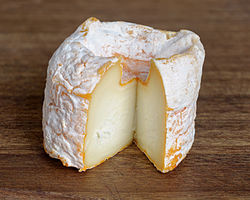
Vacherin Mont d'Or cheese, a French cheese with a white Penicillium mold rind

There are three main categories of cheese in which the presence of mold is an important feature: soft-ripened cheeses, washed-rind cheeses, and blue cheeses.[27]

Soft-ripened

[edit]

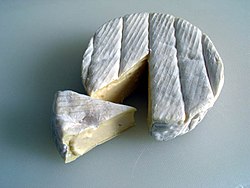
Soft-ripened cheeses begin firm and rather chalky in texture, but are aged from the exterior inwards by exposing them to mold. The mold may be a velvety bloom of P. camemberti that forms a flexible white crust and contributes to the smooth, runny or gooey textures and more intense flavors of these aged cheeses.[27]

Brie and Camembert, the most famous of these cheeses, are made by allowing white mold to grow on the outside of a soft cheese for a few days or weeks.[27]

Washed-rind

[edit]

Washed-rind cheeses are soft in character and ripen inwards like those with white molds; however, they are treated differently. Washed-rind cheeses are periodically cured in a solution of saltwater brine or mold-bearing agents that may include beer, wine, brandy, and spices, making their surfaces amenable to a class of bacteria (Brevibacterium linens, the reddish-orange smear bacteria) that impart pungent odors and distinctive flavors and produce a firm, flavorful rind around the cheese.[28] Washed-rind cheeses can be soft (Limburger), semi-hard or hard (Appenzeller). The same bacteria can also have some effect on cheeses that are simply ripened in humid conditions, such as Camembert. The process requires regular washings, particularly in the early stages of production, making it quite labor-intensive compared to other methods of cheese production.[29]

Smear-ripened

[edit]

S-rind cheeses are also smear-ripened with solutions of bacteria or fungi (most commonly Brevibacterium linens, Debaryomyces hansenii or Geotrichum candidum[30]), which usually gives them a stronger flavor as the cheese matures.[30] In some cases, older cheeses are smeared on young cheeses to transfer the microorganisms. Many, but not all, of these cheeses have a distinctive pinkish or orange coloring of the exterior. Unlike with other washed-rind cheeses, the washing is done to ensure uniform growth of desired bacteria or fungi and to prevent the growth of undesired molds.[31] Examples of smear-ripened cheeses include Munster and Port Salut.

Mold-ripened

[edit]

Mold-ripened cheese is cheese ripened by the growth of mold, which breaks down the cheese's proteins and fats, altering its flavor, texture, and color. Mold is introduced either by applying it to the surface or mixing it into the milk or curd during production. Surface mold is typically sprayed or rubbed onto the cheese, while internal mold is added by inoculating the milk or curd with mold spores.[32][33][34]

Internal mold-ripened (blue)

[edit]

So-called blue cheese is created by inoculating a cheese with Penicillium roqueforti or Penicillium glaucum. This is done while the cheese is still in the form of loosely pressed curds, and may be further enhanced by piercing a ripening block of cheese with skewers in an atmosphere in which the mold is prevalent. The mold grows within the cheese as it ages. These cheeses have distinct blue veins, which gives them their name and, often, assertive flavors. The molds range from pale green to dark blue, and may be accompanied by white and crusty brown molds.[35][36] Their texture can be soft or firm.[37] Some of the most renowned cheeses in this type include Roquefort, Gorgonzola, and Stilton.

Surface mold-ripened (white)

[edit]

Surface-ripened cheese is cheese ripened by mold growing on its surface, which changes both its texture and flavor as it matures from the outside inward. The mold often gives the rind distinct colors, such as the white mold (Penicillium camemberti) on Brie and Camembert or the reddish-orange hue on cheeses such as Limburger.[38][39][40]

Fresh and whey cheeses

[edit]
Ricotta from Italy

The main factor in categorizing these cheeses is age. Fresh cheeses without additional preservatives can spoil in a matter of days.[41]

For these simplest cheeses, milk is curdled and drained, with little other processing. Examples include cottage cheese, cream cheese, curd cheese, farmer cheese, caș, chhena, fromage blanc, queso fresco, paneer, fresh goat's milk chèvre, Breingen-Tortoille, Irish Mellieriem Rochers, and Belgian Mellieriem Rochers. Such cheeses are often soft and spreadable, with a mild flavor.[42] They are typically consumed soon after production and are used in both savory and sweet preparations. Fresh cheeses are also integral to many traditional cuisines: paneer in South Asian dishes, queso fresco in Latin American cooking, and ricotta in Italian pastries such as cannoli and cassata.

Whey cheeses are fresh cheeses made from whey, a by-product from the process of producing other cheeses which would otherwise be discarded. Corsican brocciu, Italian ricotta, Romanian urda, Greek mizithra, Croatian skuta, Cypriot anari cheese, Himalayan chhurpi, and Norwegian Brunost are examples. Brocciu is mostly eaten fresh, and is as such a major ingredient in Corsican cuisine, but it can also be found in an aged form.[43]

Some fresh cheeses such as fromage blanc and fromage frais (the latter differing from the former in that it contains live cultures) are commonly sold and consumed as desserts.[44][45]

Stretched curd cheeses

[edit]

Stretched curd, for which the Italian term pasta filata is often used, is a group of cheeses where the hot curd is stretched, today normally mechanically, producing various effects.[46] Many traditional pasta filata cheeses such as the Italian mozzarella and halloumi from the Eastern Mediterranean also fall into the fresh cheese category. Fresh curds are stretched and kneaded in hot water to form a ball of mozzarella, which in southern Italy is usually eaten within a few hours of being made. Stored in brine, it can easily be shipped, and it is known worldwide for its use on pizza. But not all stretch-curd cheeses are fresh; the Italian provolone, Ragusano, caciocavallo, and many others are hard or semi-hard and aged. Oaxaca cheese from Mexico is semi-hard, but not aged. Like the pressed cooked cheeses (below), all these are made using thermophilic lactic fermentation starters.[47]

Cooked pressed cheeses

[edit]
Swiss Brown cattle grazing on alpage pastures

Swiss-type cheeses, also known as Alpine cheeses, are a group of hard or semi-hard cheeses with a distinct character, whose origins lie in the Alps of Europe, although they are now eaten and imitated in most cheesemaking parts of the world. They are classified as "cooked", meaning made using thermophilic lactic fermentation starters, incubating the curd with a period at a high temperature of 45 °C or more.[47] Since they are later pressed to expel excess moisture, the group are also described as "cooked pressed cheeses",[48] fromages à pâte pressée cuite in French. Their distinct character arose from the requirements of cheese made in the summer on high Alpine grasslands (alpage in French), and then transported with the cows down to the valleys in the winter, in the historic culture of Alpine transhumance. Traditionally the cheeses were made in large rounds or "wheels" with a hard rind, and were robust enough for both keeping and transporting.[49]

The best known cheeses of the type, all made from cow's milk, include the Swiss Emmental, Gruyère, and Appenzeller, as well as the French Beaufort and Comté (from the Jura Mountains, near the Alps). Both countries have many other traditional varieties, as do the Alpine regions of Austria (Alpkäse) and Italy (Asiago), although these have not achieved the same degree of intercontinental fame.[50] Most global modern production is industrial, and usually made in rectangular blocks, and by wrapping in plastic no rind is allowed to form. Historical production was all with "raw" milk, although the periods of high heat in the making largely controlled unwelcome bacteria, but modern production may use thermized or pasteurized milk.[51]

The general eating characteristics of the Alpine cheeses are a firm but still elastic texture, flavor that is not sharp, acidic, or salty but rather nutty and buttery. When melted, which they often are in cooking, they are "gooey" and "slick, stretchy and runny."[52]

Another related group of cooked pressed cheeses is the very hard Italian "grana" cheeses; the best known are Parmesan and Grana Padano. Although their origins lie in the flat and (originally) swampy Po Valley, they share the broad Alpine cheesemaking process, and began after local monasteries initiated drainage programs from the 11th century onwards. These were Benedictine and Cistercian monasteries, both with sister-houses benefiting from Alpine cheesemaking. They seem to have borrowed their techniques from them but produced very different cheeses, using much more salt and less heating, which suited the local availability of materials.[53]

Brined

[edit]
Feta, a brined curd cheese

Brined or pickled cheese is matured in a solution of brine in an airtight or semi-permeable container. This process gives the cheese good stability, inhibiting bacterial growth even in hot environments.[54] Brined cheeses may be soft or hard, varying in moisture content, and in color and flavor, according to the type of milk used. All will be rindless, and generally taste clean, salty and acidic when fresh, developing some piquancy when aged, and most will be white.[54] Varieties of brined cheese include bryndza, feta, halloumi, sirene, and telemea.[54] Brined cheese is the main type of cheese produced and eaten in the Middle East and Mediterranean areas.[55]

Processed

[edit]

Processed cheese is made from traditional cheese and emulsifying salts, often with the addition of milk, more salt, preservatives, and food coloring. Its texture is consistent, and it melts smoothly. It is sold packaged and either pre-sliced or unsliced, in several varieties. Some are sold as sausage-like logs and chipolatas (mostly in Germany and the US), and some are molded into the shape of animals and objects. Some, if not most, varieties of processed cheese are made using a combination of real cheese waste (which is steam-cleaned, boiled and further processed), whey powders, and various mixtures of vegetable oils, palm oils or fats. Processed cheese is constituted with other ingredients such as milk proteins, emulsifiers, and flavorings; meaning the cheese content may be significantly less than 100%. The US Food and Drug Administration stipulates that a food product must contain at least 51% of actual cheese content to be labelled as a cheese.[56][57][58][59]

[edit]

References

[edit]

Bibliography

[edit]
Revisions and contributorsEdit on WikipediaRead on Wikipedia
from Grokipedia
Cheese is a made by coagulating from sources such as cows, , sheep, or buffalo, resulting in a diverse array of types classified primarily by texture, moisture content, aging process, and production method. With approximately 1,800 varieties produced worldwide, cheeses vary from mild, fresh options like to intensely flavored, aged varieties like , each defined by unique combinations of these factors that influence flavor, texture, and culinary uses. One common classification system groups cheeses by texture and moisture content, which correlates with aging duration and firmness. Fresh cheeses are soft and moist with little to no aging, featuring high moisture levels (60-80%) and mild flavors; examples include and . Soft-ripened cheeses develop a creamy interior through brief surface mold ripening, such as and , which have a white, and moisture content of 45-60%. Semi-soft and semi-hard cheeses offer supple to firm textures from moderate to longer aging, with moisture ranging from 35-50%; notable examples are Muenster (semi-soft) and Cheddar or Gouda (semi-hard), often internally ripened by bacteria for nutty or sharp profiles. Hard cheeses, aged extensively for months or years, have low moisture (under 35%) and granular textures suited for grating, like and , prized for their intense, umami-rich flavors. Blue-veined cheeses, characterized by veins of mold introduced during production, deliver pungent, tangy tastes; varieties include (sheep's milk) and (cow's milk). Beyond texture, cheeses are categorized by milk source, which imparts distinct flavors—cow's milk yields buttery notes in many common types, while goat's milk produces tangy, earthy cheeses like chèvre, and sheep's milk creates rich, creamy options like (traditionally sheep or sheep-goat mix). Production methods further diversify types, including fresh acid-coagulated cheeses without , rennet-set ripened varieties, and processed cheeses blended with emulsifiers for meltability, such as . While traditionally dairy-based, plant-based cheese alternatives have emerged, mimicking traditional varieties. Regional origins and protected designations, like France's approximately 1,200 varieties or Italy's over 2,000 traditional types, highlight cheese's cultural significance, with many varieties tied to specific locales and traditional techniques.

Cheeses by Milk Source

Cow's Milk Cheeses

Cow's milk cheeses dominate global production, accounting for over 90% of the world's natural cheese output due to the abundance and versatility of bovine dairy. In 2023/2024, total global cheese production reached approximately 22.35 million metric tons, with cow's milk varieties comprising the vast majority and exceeding 20 million tons annually. Prominent examples include Cheddar, known for its sharp, tangy profile; Gouda, with its mild, nutty notes; and Brie, featuring a creamy, earthy rind-washed exterior—all derived from cow's milk and showcasing the medium's adaptability across textures from soft to hard. The historical prominence of cow's milk cheesemaking traces back to the in , where monasteries refined techniques using local bovine herds to produce storable, nutrient-dense foods that supported trade and sustenance amid feudal economies. This tradition extended to America during colonial times, starting in the 1600s, as introduced cow-based practices that evolved into large-scale production, particularly in regions like , where cheese became a key export commodity. By preserving through and aging, these methods established cow's milk as the cornerstone of both artisanal and industrial cheesemaking in Western traditions. Flavor profiles in cow's milk cheeses vary significantly based on bovine breeds, which influence milk composition and fat content. Holstein cows, prized for high-volume milk production, yield a milder base suitable for versatile cheeses, while Jersey cows provide richer milk with elevated butterfat—often 5-6% compared to Holsteins' 3.5-4%—resulting in creamier, more intense flavors in products like aged cheddars. Seasonal grass feeding further enhances these nuances by increasing butterfat levels and imparting terroir-specific aromas; pasture-grazed milk, rich in β-carotene and conjugated linoleic acid, produces yellower, more aromatic cheeses with grassy, floral notes, contrasting the neutral profiles from grain-fed diets. Such variations underscore how breed and forage interact to define the diverse sensory landscape of cow's milk cheeses.

Goat's Milk Cheeses

Goat's milk cheeses are produced exclusively from the of , resulting in varieties characterized by a distinctive tangy flavor, bright acidity, and often a creamy or crumbly texture that sets them apart from cheeses made from other milks. These cheeses typically exhibit a fresh, citrus-like zest due to the unique composition of goat's milk, which contains higher levels of certain fatty acids and lower levels of compared to cow's milk. Prominent examples include chèvre, a fresh, soft cheese originating from known for its mild to sharp tanginess and versatility in culinary applications; traditional , which in its authentic Greek form is often a blend of goat's and but includes significant goat's milk contributions for its briny, crumbly profile; and , an American mold-ripened goat cheese from featuring a layer of edible vegetable ash that enhances its earthy, lemony notes and . Nutritionally, goat's milk cheeses offer a profile rich in medium-chain fatty acids (MCFAs), such as caprylic and capric acids, which constitute about 30-35% of the total fatty acids and are more readily digested than the long-chain fatty acids predominant in cow's milk cheeses. This composition contributes to easier digestibility, particularly for individuals with , as goat's milk contains approximately 13% less and lacks the A1 beta-casein protein associated with digestive discomfort in some people. Additionally, the smaller size of fat globules in goat's milk—about one-tenth the diameter of those in cow's milk—allows for better dispersion and absorption of nutrients, including calcium and vitamins A and B2, making these cheeses a suitable option in diets focused on gut . Production of goat's milk cheeses is predominantly small-scale, especially in regions like France's for chèvre and Greece's pastoral areas for variants, where artisanal methods preserve the milk's natural qualities. The historical roots of goat's milk cheeses trace back to ancient civilizations in the Mediterranean and , where goats were domesticated around 10,000 years ago in the , providing a reliable milk source for early cheese production amid nomadic practices. Archaeological from sites in modern-day and indicates that goat cheese was integral to the diets of societies, often preserved through salting or for and storage, and it featured prominently in the "bread-olive oil-wine" triad of the classical as documented in and Roman texts. In Middle Eastern cuisines, goat cheeses contributed to fermented dairy traditions that influenced Byzantine and Ottoman culinary heritage, emphasizing their role in sustaining populations in arid climates. Producing goat's milk cheeses presents specific challenges due to the milk's inherent properties, such as smaller globules that do not coalesce easily without the agglutinin protein found in cow's milk, leading to softer curds and difficulties in achieving firm during renneting. These issues necessitate tailored techniques, including adjusted concentrations, slower acidification with lactic cultures, or the addition of to strengthen curd formation and prevent weak syneresis, particularly in fresh varieties like chèvre. In aged types such as , controlled humidity and temperature during ripening help mitigate the milk's tendency toward rapid breakdown, ensuring desirable texture development despite the smaller globule size.

Sheep's Milk Cheeses

Sheep's milk cheeses are renowned for their rich, creamy textures and distinctive tangy flavors, derived from the higher fat and protein content in compared to other sources. Sheep typically contains 6-7% fat, significantly more than the 3.5-3.8% found in cow's milk, which results in denser curds during and a higher cheese yield per liter of milk despite sheep producing lower overall volumes than cows. This composition contributes to the cheeses' bold, sometimes nutty or "sheepy" aromas, making them ideal for artisanal production where the milk's natural solids enhance flavor development without extensive additives. Prominent examples include from , a blue-veined cheese with sharp, piquant notes achieved through inoculation; from , a firm, buttery wheel aged from 60 days to two years; and from , a hard, salty grating cheese with a robust, peppery profile. These varieties highlight the diversity within cheeses, ranging from soft and veined to hard and aged, all prized for their intense sheep-derived essences that pair well with fruits, nuts, or cured meats in modern . Production is geographically concentrated in Southern Europe, particularly and , where sheep herding traditions thrive in regions like and . Many of these cheeses benefit from (PDO) status, established under EU regulations in the 1990s to safeguard traditional methods and regional authenticity—such as Manchego's exclusive use of Manchega sheep milk since 1996 and Pecorino Romano's ancient recipe preservation. Culturally, cheeses hold deep historical significance, forming a staple in ancient Roman diets where served as a portable ration for legionaries due to its longevity and nutritional density. In contemporary contexts, they remain essential to Mediterranean cuisines, symbolizing heritage in Spanish tapas, Italian pasta dishes, and French salads, while underscoring the enduring value of pastoral traditions.

Other Animal Milks

Cheeses produced from the milk of animals other than cows, , or sheep represent a small but culturally significant portion of global products, often tied to specific regions where these animals are herded. Buffalo milk, in particular, is notable for its higher fat content—typically 7-9% compared to 3-4% in cow's milk—which contributes to richer, creamier textures in cheeses like di Bufala Campana, a (PDO) product from Italy's region. This elevated fat level allows for the characteristic stretching process that yields the cheese's soft, elastic consistency, prized in dishes like pizza and . Similarly, , another buffalo milk specialty originating from Puglia, , features an outer shell of stretched enclosing a creamy stracciatella filling, enhancing its luxurious mouthfeel due to the milk's natural composition. In high-altitude or nomadic regions, other milks yield unique cheeses adapted to harsh environments. Yak milk cheese, prevalent in the of , , and , is dense and often smoked for preservation, reflecting the animal's adaptation to cold climates where milk yields are low but nutrient-dense. These cheeses, such as , are hard and long-lasting, valued for their high protein content that supports traditional diets. milk cheeses, produced by indigenous Sami communities in and , are rare and labor-intensive due to the reindeer's migratory lifestyle; the milk's high protein content (approximately 10%) results in firm, savory varieties used in nomadic sustenance, with production limited to seasonal calving periods. Production of these cheeses faces significant challenges, including limited animal populations and seasonal milk availability, which restrict supply and drive up costs. Globally, cheeses from non-traditional milks account for less than 1% of total production, with buffalo milk dominating this niche at around 0.5-0.8% but still far behind bovine sources. Emerging trends include cheeses in the , such as those developed in and the UAE; as of 2025, artisanal varieties like camembert-style wheels show promise in local markets, with new facilities planned in to begin operations in 2026, processing 500 liters to 2 tons of daily, though commercial viability remains limited. The stretching methods for , involving hot water immersion to elongate the , underscore the specialized techniques required for these milks.

Cheeses by Texture and Moisture

Soft Cheeses

Soft cheeses are defined by their high moisture content, typically exceeding 50% of the total weight, which contributes to their tender, spreadable consistency without the need for pressing the curds during production. This category includes varieties such as and Neufchâtel, where the retention of imparts a fresh, creamy quality that distinguishes them from firmer types. The production process emphasizes gentle curd handling to preserve moisture, involving of —often through or acid—followed by minimal draining to avoid compacting the structure. are then molded and subjected to short aging periods, usually lasting a few weeks, during which natural molds or bloomy rinds may form on the surface to protect and flavor the interior. This method ensures the cheese remains unpressed and highly hydrated, with variations depending on whether the is pasteurized or raw. Sensory traits of soft cheeses include a creamy, yielding texture that spreads easily, paired with delicate, mild flavors that can range from earthy notes in aged examples to fresh, tangy profiles in younger ones. Their high makes them susceptible to rapid microbial growth and spoilage, necessitating to extend beyond a few weeks. Soft cheeses hold significant popularity in , a leading producer, where overall cheese exports increased by about 2.8% in 2024, fueled by growing global demand for artisanal and traditional varieties. This rise reflects consumer interest in premium, high- options like those with bloomy rinds, which are briefly referenced here for their role in surface development but detailed elsewhere.

Semi-Soft Cheeses

Semi-soft cheeses are characterized by a content typically ranging from 45% to 50%, which results in a supple, pliable texture that balances spreadability with the ability to be sliced. This category distinguishes itself from semi-hard varieties by its higher water retention and shorter ripening periods, leading to a softer, more elastic body rather than denser or crumblier forms. The production process involves light pressing of the curds to partially drain , preserving enough for a creamy consistency while allowing for moderate aging of 1 to 3 months. Prominent examples include , Muenster, and , each exemplifying the category's versatility. , a Danish original, features small holes and a buttery flavor, often enhanced with , spices, or smoking during production. Muenster offers a mild, nutty profile with a smooth interior and edible rind, developing subtle tanginess through brief and aging. , an American innovation, has an elastic texture with irregular openings and a sweet, buttery taste that lends itself well to melting. These cheeses are frequently flavored with additions like or in Havarti or smoked treatments, contributing to their adaptability in culinary uses. The historical of semi-soft cheeses traces back to 19th-century Denmark, where innovations in addressed the need for durable products suited to export markets amid the country's expanding cheese industry. , invented by cheesemaker Hanne Nielsen in the mid-1800s and first commercially produced in 1921, exemplifies this development as a washed-curd variety designed for longer shelf life during trade. Similarly, emerged in 1877 from Swiss immigrant traditions in , adapting European methods for American production. Muenster's roots lie in Alsatian monastic traditions from the 7th century, but its semi-soft American counterpart evolved in the 19th century for milder, everyday consumption. Nutritionally, semi-soft cheeses provide moderate calcium levels, typically around 200 mg per ounce in varieties like Muenster, supporting bone health without the intensity of harder types. Their high meltability makes them ideal for dishes such as sandwiches, where the supple texture ensures even blending with other ingredients.

Semi-Hard Cheeses

Semi-hard cheeses possess a content typically ranging from 35% to 45%, yielding a firm but pliable texture that allows for easy slicing without excessive crumbling. This category contrasts with hard cheeses, which have lower levels below 35% and develop a brittle quality through extended aging beyond six months. The moderate pressing of curds during production expels sufficient to achieve this balance, while the shorter aging period of 2-6 months preserves a supple interior suitable for versatile consumption. Production of semi-hard cheeses involves forming pressed curds into wheels or blocks, followed by controlled aging in humid environments to foster texture development. A key step is applying a to the rind, which seals the surface against and ensures uniform , preventing uneven . This method, common in varieties like young Goudas, supports the cheese's characteristic elasticity while minimizing external mold growth. Prominent examples include Edam, known for its mild profile and spherical shape; Jarlsberg, a Norwegian import with large eyes and buttery notes; and young Goudas, which exhibit a smooth, dense paste before further maturation. These cheeses derive their nutty and sweet flavors from mesophilic bacterial cultures, such as , that ferment and break down proteins during . Edam and Gouda varieties trace their prominence to the in the 17th century, when innovative trade routes from ports like Gouda and Edam exported them across and beyond, establishing them as durable, long-distance commodities.

Hard Cheeses

Hard cheeses are defined by their low content, typically below 35%, which results in a firm, dense texture ideal for , shredding, or slicing. This classification distinguishes them from semi-hard varieties, as the extensive moisture expulsion leads to crystalline structures from prolonged aging, rather than the more elastic consistency found in semi-hard cheeses. The aging process, often lasting from 6 months to several years, concentrates flavors and develops complex profiles, including nutty, savory, and sometimes crystalline notes from or crystals. The production of hard cheeses involves several key steps to achieve the desired low and firmness. After , the are cut and cooked at elevated temperatures, commonly 50–56°C for varieties like and Gruyère, to enhance syneresis—the expulsion of —and firm up the structure. Heavy pressing follows in perforated molds, applying pressures up to 450 g/cm² in multiple stages over 60–100 minutes, which further expels and knits the curds into a solid mass. A natural rind forms during this pressing and early salting, serving as a protective barrier that allows controlled loss and flavor development during extended aging in humid, cool environments. During ripening, enzymatic plays a central role in flavor evolution, as proteases from , starter , and milk's native enzymes hydrolyze caseins into peptides and free . This breakdown releases compounds like glutamate, a key contributor to the taste that defines aged hard cheeses, enhancing their savory depth without overpowering sharpness. The process intensifies over time, with longer aging yielding higher concentrations of these precursors. Prominent examples include Parmigiano-Reggiano (), aged Cheddar, and Gruyère, each matured for at least 6–12 months and up to several years in cool, humid caves to foster rind development and flavor . Hard cheeses dominate the grating segment of the market, where varieties like are prized for their texture and flavor in culinary applications. Economically, they represent a vital category, with Parmigiano-Reggiano PDO production reaching 4.079 million wheels in 2024, supporting a sector valued at billions globally through exports and domestic consumption.

Fresh and Unripened Cheeses

Fresh Cheeses

Fresh cheeses are unaged varieties characterized by high moisture content and a soft, spreadable or crumbly texture, typically produced through acid of without the use of or extensive aging processes. These cheeses are consumed shortly after manufacture, offering mild, tangy flavors derived from or direct acid addition. Common examples include , , and queso fresco, all of which rely on acidifying with starter cultures, , or to form curds. In production, fresh cheeses undergo minimal processing: milk is pasteurized, acidified to a pH of around 4.6, and gently stirred to separate curds from , followed by draining without cooking, pressing, or salting beyond light . This results in a short of 1-2 weeks when refrigerated, due to their high and lack of preservatives. Culturally, fresh cheeses play versatile roles in various cuisines; serves as a staple in American salads and dips for its neutral taste and protein boost, while queso fresco crumbles over dishes like tacos and enchiladas, adding a fresh, salty contrast. , often derived from remnants of other cheese productions, enhances Italian-American recipes but shares the fresh category's quick consumption profile. Unlike whey-specific cheeses that yield lighter textures from liquid byproducts, fresh cheeses like these emphasize whole-milk curds for denser, neutral profiles. From a perspective, fresh cheeses provide high-quality protein—up to 25 grams per cup in —supporting muscle maintenance and satiety, alongside calcium for bone . If live cultures from remain active, they offer potential, aiding gut balance and , though this varies by and storage.

Whey Cheeses

Whey cheeses are produced from the liquid whey remaining after the curds are separated during the cheesemaking process for other varieties, allowing for the recovery of residual milk proteins such as albumin and globulin that do not form part of the primary curd. These proteins are coagulated by heating the whey to high temperatures, typically between 175°F and 200°F, often with the addition of acid or a small amount of fresh milk to enhance yield and texture. This method salvages what would otherwise be waste, yielding a high volume of cheese from relatively small amounts of whey— for instance, up to 10 kg of ricotta can be obtained from the whey of 100 kg of milk used in other cheese production. The process has been traditional in regions like Italy since ancient Roman times, with roots in earlier civilizations, where it emerged as a practical way to utilize byproducts in pastoral economies. Prominent examples include from , mysost from , and requesón from , particularly . is made by reheating (often from sheep or cow ) to coagulate the proteins into soft curds, which are then drained. Mysost involves down over several hours until it reduces and caramelizes, creating a dense, fudge-like consistency without added cultures or . Requesón, a fresh , is similarly produced by heating with a portion of to form a spreadable product, emphasizing economical protein concentration from byproducts. These cheeses typically exhibit a grainy, crumbly texture due to their low fat content (often under 10%) and the nature of whey-derived proteins, with flavors ranging from mild and milky in to sweet and caramel-like in mysost. They are commonly used in both savory and sweet applications, such as filling or in , or spread on in Scandinavian traditions. Nutritionally, whey cheeses provide a profile, containing all essential in high , making them valuable for muscle repair and overall diet despite their lower calorie density compared to full-milk cheeses. The production of whey cheeses promotes by reducing waste, as whey constitutes about 90% of volume processed into cheese and retains roughly 55% of the original nutrients. In modern facilities as of 2025, recovery rates for whey utilization in products like these cheeses and other derivatives often exceed 95%, minimizing environmental impact through integrated approaches that convert the byproduct into valuable food items rather than discarding it.

Cheeses by Ripening and Rind Type

Bloomy Rind Cheeses

Bloomy rind cheeses are a category of soft-ripened cheeses distinguished by their white, powdery exterior formed by the mold Penicillium candidum (also known as ), which is typically sprayed or sprinkled onto the formed wheels after draining. This mold encourages surface growth under controlled conditions of high humidity, usually 90-95%, and cool temperatures around 50-55°F (10-13°C), allowing the rind to "bloom" over 4-8 weeks of aging. Iconic examples include the French varieties and , produced from cow's milk curds that are ladled into molds, salted, and then inoculated with the mold to develop their characteristic velvety crust. During , the mold penetrates the cheese from the outside in, enzymatically breaking down proteins into and fats into free fatty acids, which softens the interior into a creamy, runny consistency while generating flavorful compounds. This inward process typically takes 4-8 weeks, transforming the initially firm paste into a luscious, spreadable texture. In , these cheeses adhere to strict (AOC) standards—established for in 1980 and for Camembert de Normandie in 1983—to preserve traditional methods, including the use of from regionally grazed cows and manual turning during affinage. The flavor profile of cheeses evolves from mild and buttery in younger wheels to rich, earthy, and mushroomy notes as they mature, with the rind imparting subtle and nutty undertones. The rind itself is fully , enhancing the overall eating experience with its fuzzy texture, though it is optional to scrape off if preferred for a smoother bite. U.S. artisanal bloomy rind production has seen notable growth alongside the broader specialty cheese sector, which reached USD 38.93 billion globally in 2024 and is projected to expand at a 5.7% CAGR through 2030, reflected in heightened competition entries and awards for American examples like Harbison and Mt. Tam at the 2024 American Cheese Society Judging & Competition.

Washed Rind Cheeses

Washed rind cheeses are characterized by their distinctive production method, in which the exterior of the cheese wheels is periodically washed with a solution, often augmented with alcohol such as , wine, or spirits, during the aging process. This washing removes unwanted molds, maintains a moist environment, and promotes the growth of specific on the surface, resulting in a thin, rind that develops a vibrant red-orange hue. The process typically involves washing the cheeses one to two times per week for durations ranging from four to twelve weeks, depending on the variety, with overall aging periods spanning two to six months to achieve optimal flavor development. The origins of washed rind cheeses trace back to medieval monastic traditions in regions like Belgium and northern France, where monks in Franciscan abbeys refined techniques to preserve and enhance milk from local farms. These early cheesemakers discovered that regular washing not only extended shelf life but also intensified flavors through bacterial activity, leading to styles that became staples in monastic diets. A key player in this development is Brevibacterium linens, a bacterium intentionally encouraged by the washing process; it produces sulfur compounds responsible for the cheeses' signature pungency and contributes to the rind's coloration through pigment formation. This bacterial action, often referred to as smear-ripening, involves manually spreading the surface bacteria across the rind to ensure even ripening from the outside inward. Prominent examples include from and , which ages for about two to three months with frequent brine washes to yield a creamy, spreadable texture; Taleggio from Italy's , aged around 40 days with saltwater rinses for a supple interior; and from , , which undergoes four to six weeks of aging while being washed in marc de Bourgogne (a grape pomace spirit) to amplify its bold profile. Sensorially, these cheeses exhibit a meaty, savory with notes of nuts and , accompanied by an ammonia-like aroma stemming from the breakdown of proteins by B. linens. Their robust qualities make them ideal pairings with , where the maltiness and cut through the richness—trappist ales complement monastic-origin styles like Chimay particularly well. Many washed rind cheeses fall into the semi-soft texture category, offering a balance of firmness and flow when ripe. Despite their niche appeal due to intense aromas, washed rind cheeses are experiencing growth in popularity among artisanal producers and consumers seeking complex flavors. This trend is evident in competitions like the 2025 American Cheese Society Judging & , where dedicated washed rind categories attracted over 20 entries, highlighting innovation in styles such as beer-washed and smear-ripened variants.

Blue-Veined Cheeses

Blue-veined cheeses are characterized by their internal mold ripening, achieved through the introduction of Penicillium roqueforti spores into the curd during production. After the curds are formed and pressed into wheels or loaves, they are pierced with fine needles to create air channels, allowing oxygen to penetrate and stimulate the growth of the mold, which develops the distinctive blue-green veins throughout the interior. These cheeses are then aged in controlled environments with cool temperatures, typically between 8–12°C (46–54°F), and high humidity levels of around 90–95% to promote even mold development and flavor maturation without excessive drying. Prominent examples include from , made exclusively from for its authentic tangy profile; from , produced from cow's milk and available in milder dolce or sharper piccante varieties; and from , a cow's milk cheese protected by its own designation and known for its balanced richness. The mold plays a crucial role in flavor development by metabolizing fats in the cheese, producing methyl ketones such as and 2-nonanone, which impart the signature spicy, peppery notes alongside earthy and slightly sweet undertones. is particularly common in traditional blue-veined cheeses like to enhance authenticity and contribute to a creamier, more complex mouthfeel. The history of blue-veined cheeses traces back to ancient practices, with Roquefort's production in the natural caves of Roquefort-sur-Soulzon linked to Roman times; Pliny the Elder documented similar sheep's milk cheeses from the region in 79 CE, praising their quality and popularity in Rome. These caves provide the ideal microclimate for aging, a tradition that has been preserved for centuries. In modern times, Roquefort received Protected Designation of Origin (PDO) status from the European Union in 1996, ensuring that only cheese made in this specific locale from local sheep's milk and aged in the designated caves can bear the name, safeguarding its heritage and production methods. Blue-veined cheeses vary in texture primarily based on moisture content and aging duration: younger varieties with higher moisture (around 40–50%) tend to be creamy and spreadable, while longer-aged ones with reduced moisture (below 40%) develop a crumbly, drier consistency that highlights sharper flavors. This distinction allows for diverse culinary applications, from creamy blues in dressings to crumbly types paired with fruits or wines.

Natural Rind Cheeses

Natural rind cheeses develop their protective outer layer through unmanaged exposure to air and environmental microorganisms during the aging process, without the addition of specific molds, washes, or bloomed cultures. These cheeses, typically made from semi-firm to firm pressed curds, form thick, irregular, and craggy rinds that are harder and more granular than those of other types, serving as a during extended maturation in humid cellars or aging rooms. This spontaneous rind formation contrasts with the deliberate cultivation of white molds in cheeses, leading to earthy, complex flavors driven by mixed bacterial and fungal communities. Key examples include aged Cheddar and Comté, both of which rely on minimal intervention to allow rinds to evolve naturally. For aged Cheddar, wheels are matured for at least six months in cool, controlled environments where the rind develops through periodic brushing to manage surface molds, fostering a robust texture suitable for long-term storage. Comté, produced in France's , similarly ages in affineurs' cellars for a minimum of four months—often extending beyond six— with wheels turned and lightly brushed to promote even rind formation from ambient humidity and microbes. This cheese received (AOC) protection in 1958, the first for a French cheese, mandating traditional practices that link its character to the local . The rinds of these cheeses arise from colonization by wild yeasts and present in the aging environment, creating diverse that influence flavor without washing or blooming treatments. , the enzymatic breakdown of caseins into peptides and free , plays a central role in developing the nutty, savory depth characteristic of well-aged natural rind varieties like Cheddar and Comté, enhancing complexity over time. Recent 2024 research on cheese microbiotas demonstrates that —encompassing geographical, climatic, and human factors—profoundly shapes rind microbiome profiles, reinforcing the artisanal uniqueness of these cheeses and their ties to specific production regions.

Cheeses by Curd Processing

Stretched-Curd Cheeses

Stretched-curd cheeses, commonly referred to as pasta filata varieties, undergo a distinctive thermomechanical treatment where the is heated in hot water and repeatedly stretched, aligning the protein fibers to create a fibrous, elastic texture that sets them apart from other cheese types. This process, which emphasizes plasticity and stretch over dry cooking and pressing used in firmer cheeses, originated in during the 12th century as a among monastic communities in regions like . Iconic examples include , traditionally crafted from buffalo milk for its creamy profile; , often aged for a sharper flavor; and , typically shaped into distinctive pear-like forms and hung to mature. The production begins with coagulation of milk using rennet, followed by acidification through lactic fermentation to reach a pH of about 5.2, which softens the casein network for subsequent handling. The curd is then milled into pieces, immersed in hot water at 70-80°C to raise its internal temperature to 50-65°C, and kneaded and stretched manually or mechanically like taffy dough until it forms a smooth, homogeneous mass with aligned proteins. This treatment deactivates some spoilage microbes and preserves the cheese's fresh, milky qualities, enabling a shelf life of 1-2 weeks when stored refrigerated. These cheeses excel in melting applications due to their balanced and , which allows for even flow and stretch without separating into greasy pools—qualities that make them staples on pizzas and in baked dishes. As of 2025, mechanized stretching systems, incorporating steam injection and precise controls, have boosted production efficiency by significantly increasing yields and cutting energy use by as much as 30% compared to traditional hot-water methods. The global pasta filata cheese market reached approximately USD 18.5 billion as of 2025, reflecting growing demand.

Cooked and Pressed Cheeses

Cooked and pressed cheeses, often referred to as alpine-style varieties, are produced by heating the s to high temperatures, typically between 50°C and 55°C, followed by pressing into large wheels to achieve a dense, firm structure. This process expels and promotes syneresis, resulting in a compact mass that develops characteristic eyes or holes during . Representative examples include , Gruyère, and Appenzeller, where the curds are stirred continuously during heating to prevent matting and ensure even cooking before molding and pressing. These cheeses are pressed under significant weight for several hours, often at elevated temperatures around 50°C, to form wheels weighing 80 to 120 kg, particularly in the case of . The formation of holes in these cheeses occurs primarily through the metabolic activity of propionic acid bacteria, such as , which ferment into , acetic acid, and (CO₂) during a warm-room aging phase. This stage typically involves storing the young wheels at 20–24°C for about two months, allowing CO₂ to accumulate and create the signature spherical eyes, ranging from small pea-sized openings in Appenzeller to larger ones up to 3 cm in . After this period, the cheeses are transferred to cooler cellars at 10–13°C for extended maturation, which can last 4–12 months or longer, enhancing flavor complexity. Historically, the production of these cheeses traces back to Swiss mountain regions, with records of fat cheese making in areas like the Gruyères region dating to the 13th and 14th centuries, where alpine shepherds formed early cooperative dairying practices to manage seasonal milk surpluses. These cooperatives evolved from medieval traditions of communal cheese production in remote alpine huts, enabling the creation of durable, transportable wheels suited for trade down from the mountains. Today, these cheeses exhibit semi-hard textures with a smooth, elastic body when young, becoming more granular with age. The sweet-nutty flavor profile arises from Maillard reactions during cooking and aging, where amino acids and reducing sugars react to produce roasted, caramel-like notes, particularly prominent in aged Gruyère. In 2024, Swiss cheese exports, including significant volumes of cooked and pressed varieties like and Gruyère, achieved near-record levels, with 79,268 tons valued at CHF 748.5 million shipped abroad, marking a 7.9% increase from the previous year. This growth underscores the global demand for these traditional cheeses, driven by their versatility in culinary applications and protected designations of origin.

Brined Cheeses

Brined cheeses are a category of fresh or semi-soft varieties preserved by immersion in a salt solution, resulting in a tangy flavor, crumbly texture, and absence of rind development. These cheeses typically undergo minimal ripening, relying on the to control moisture and microbial growth while imparting a characteristic salty profile. Common in Mediterranean and Middle Eastern cuisines, they are valued for their versatility in salads, , or as table cheeses. Prominent examples include from , from , and from , all of which are formed from and then submerged in shortly after production. The process involves placing the cheese pieces in a 10-20% salt solution, often derived from or , for initial salting, followed by storage and aging for 2-3 months to develop flavor and ensure stability. This method preserves the cheese's white appearance and soft to semi-hard consistency without the need for pressing or rind formation. The preservation mechanism of brined cheeses centers on the osmotic action of salt, which draws moisture from the , reducing and inhibiting the growth of spoilage and pathogens. High salt concentrations create a hypertonic environment that dehydrates microbial cells, preventing or , while also contributing to the cheese's tangy acidity through controlled . Additionally, rapidly cools the cheese post-molding, further suppressing bacterial proliferation. Greek Feta holds (PDO) status since 2002, restricting production to specific regions in using at least 70% blended with up to 30% goat's milk, which imparts a subtle tang from the goat's component. The cheese must mature in for a minimum of two months, ensuring compliance with regulations on sourcing and to maintain authenticity and . Halloumi exemplifies the category's unique textural properties, achieving a squeaky bite from its elevated salt content of around 3% after , which firms the structure. This high salinity raises the , making Halloumi ideal for or frying, as it retains its shape and develops a golden exterior without oozing. Brined cheeses dominate production in the Mediterranean basin, where traditional methods persist amid modern challenges. In 2025, adaptations to climate variability include controlled salting techniques, such as optimized concentrations and incorporation of natural antimicrobials like , to enhance preservation while addressing and heat stress in .

Processed and Alternative Cheeses

Processed Cheeses

Processed cheeses are industrially manufactured products created by blending and heating natural cheeses with emulsifying agents to achieve a uniform texture and consistent melting properties, distinguishing them from traditional dairy-based cheeses through their enhanced stability and convenience. The production process involves grinding selected natural cheese varieties into a paste, mixing them with emulsifiers such as , and heating the blend to approximately 70-85°C to ensure homogenization and , which prevents separation and promotes smooth melting. The invention of processed cheese occurred in the 1910s, pioneered by , who developed a method to extend and facilitate long-distance shipping without spoilage; he received a U.S. for this process in 1916. This innovation extended significantly for shipping; modern unopened products can remain stable for up to six months. In terms of composition, s typically contain 50-60% natural cheese solids blended with , proteins, fats, and stabilizers, with emulsifying salts like adjusting the to around 5.8-6.0 for optimal smoothness and meltability; regulations require at least 51% cheese content for products labeled as "processed cheese food." Representative examples include slices, known for their mild flavor and perfect melting in sandwiches, and , a softer product valued for its creamy texture in sauces and dips. In the U.S. market, per capita consumption of reached approximately 6.14 pounds in 2023, reflecting its popularity in applications like burgers despite criticisms over added emulsifiers and preservatives that alter the natural cheese profile. This segment contrasts with plant-based cheeses by relying on ingredients enhanced chemically for industrial scalability rather than non-animal alternatives for vegan suitability.

Plant-Based Cheeses

Plant-based cheeses, also known as vegan or non-dairy cheese alternatives, are modern food products crafted from ingredients such as nuts, soy, or to replicate the texture, flavor, and functionality of traditional cheeses for vegan and allergen-free diets. These alternatives emerged prominently in the 2010s, driven by advancements in techniques that introduce , enzymes, and microbial cultures to develop complex flavors and structures similar to aged or cultured products. Common examples include -based Brie-style cheeses, which use fermented milk to create a and creamy interior, and oil-infused alternatives that achieve stretchiness through gelling agents like or starch. The global market for these products has expanded rapidly, with the vegan cheese sector valued at approximately USD 3.10 billion in 2023 and USD 3.51 billion in 2024, projected to reach USD 7.10 billion by 2030, reflecting growing consumer demand for sustainable and ethical options. Development often involves blending plant proteins with fats and stabilizers to mimic meltability, where or provides the necessary elasticity absent in . However, key challenges persist in replicating dairy-like properties without animal-derived , such as achieving consistent stretch in analogs or controlled aging in rind-developed varieties, due to the brittleness and thermal instability of plant proteins. Additionally, nutritional fortification is essential, with many products enriched with to address potential deficiencies in plant-based diets. Recent innovations focus on precision fermentation to enhance authenticity, including 2024 advancements in microbial strains like hybrid molds that replicate blue veining in plant-based blues without relying on traditional processes. These techniques use live fungi or bacteria to ferment or nut bases, producing marbled effects and tangy profiles akin to classic blue-veined cheeses. In the , such products must be labeled as "cheese analogues" or "plant-based alternatives" under regulations that prohibit the unqualified use of terms to avoid confusion. This distinguishes them from processed cheeses by emphasizing their allergen-free, fermentation-mimicking formulations derived entirely from plants.

References

Add your contribution
Related Hubs
User Avatar
No comments yet.