
Hubbry Logo
HumidityHumidityMain
Open search
Humidity
Community hub
Humidity
logo
8 pages, 0 posts
0 subscribers
Be the first to start a discussion here.
Humidity
Humidity
from Wikipedia
Global distribution of relative humidity at the surface averaged over the years 1981–2010 from the CHELSA-BIOCLIM+ data set[1]

Humidity is the concentration of water vapor present in the air. Water vapor, the gaseous state of water, is generally invisible to the naked eye.[2] Humidity indicates the likelihood for precipitation, dew, or fog to be present.

Humidity depends on the temperature and pressure of the system of interest. The same amount of water vapor results in higher relative humidity in cool air than warm air. A related parameter is the dew point. The amount of water vapor needed to achieve saturation increases as the temperature increases. As the temperature of a parcel of air decreases it will eventually reach the saturation point without adding or losing water mass. The amount of water vapor contained within a parcel of air can vary significantly. For example, a parcel of air near saturation may contain 8 g of water per cubic metre of air at 8 °C (46 °F), and 28 g of water per cubic metre of air at 30 °C (86 °F)

Three primary measurements of humidity are widely employed: absolute, relative, and specific. Absolute humidity is the mass of water vapor per volume of air (in grams per cubic meter).[3] Relative humidity, often expressed as a percentage, indicates a present state of absolute humidity relative to a maximum humidity given the same temperature. Specific humidity is the ratio of water vapor mass to total moist air parcel mass.

Humidity plays an important role for surface life. For animal life dependent on perspiration (sweating) to regulate internal body temperature, high humidity impairs heat exchange efficiency by reducing the rate of moisture evaporation from skin surfaces. This effect can be calculated using a heat index table, or alternatively using a similar humidex.

The notion of air "holding" water vapor or being "saturated" by it is often mentioned in connection with the concept of relative humidity. This, however, is misleading—the amount of water vapor that enters (or can enter) a given space at a given temperature is almost independent of the amount of air (nitrogen, oxygen, etc.) that is present. Indeed, a vacuum has approximately the same equilibrium capacity to hold water vapor as the same volume filled with air; both are given by the equilibrium vapor pressure of water at the given temperature.[4][5] There is a very small difference described under "Enhancement factor" below, which can be neglected in many calculations unless great accuracy is required.

Definitions

[edit]
Paranal Observatory on Cerro Paranal in the Atacama Desert is one of the driest places on Earth.[6]

Absolute humidity

[edit]

Absolute humidity is the total mass of water vapor (gas form of water) present in a given volume or mass of air. It does not take temperature into consideration. Absolute humidity in the atmosphere ranges from near zero to roughly 30 g (1.1 oz) per cubic metre when the air is saturated at 30 °C (86 °F).[7][8]

Air is a gas, and its volume varies with pressure and temperature, per Boyle's law. Absolute humidity is defined as water mass per volume of air. A given mass of air will grow or shrink as the temperature or pressure varies. So the absolute humidity of a mass of air will vary due to changes in temperature or pressure, even when the proportion of water in that mass of air (its specific humidity) remains constant. This makes the term absolute humidity as defined not ideal for some situations.

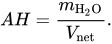
Absolute humidity is the mass of the water vapor , divided by the volume of the air and water vapor mixture , which can be expressed as: In the equation above, if the volume is not set, the absolute humidity varies with changes in air temperature or pressure. Because of this variability, use of the term absolute humidity as defined is inappropriate for computations in chemical engineering, such as drying, where temperature variations might be significant. As a result, absolute humidity in chemical engineering may refer to mass of water vapor per unit mass of dry air, also known as the humidity ratio or mass mixing ratio (see "specific humidity" below), which is better suited for heat and mass balance calculations.[citation needed] Mass of water per unit volume as in the equation above is also defined as volumetric humidity. Because of the potential confusion, British Standard BS 1339[9] suggests avoiding the term "absolute humidity". Units should always be carefully checked. Many humidity charts are given in g/kg or kg/kg, but any mass units may be used.

Relative humidity

[edit]

Relative humidity is the ratio of how much water vapour is in the air to how much water vapour the air could potentially contain at a given temperature and pressure.

If a sample of humid air at temperature T1 contains water vapour with partial pressure Pw the relative humidity RH is:[10]


where Ps is the saturation pressure of water at temperature T1.

Relative humidity varies with any change in the temperature or pressure of the air: colder air can contain less vapour, and water will tend to condense out of the air more at lower temperatures. So changing the temperature of air can change the relative humidity, even when the specific humidity remains constant. If two parcels of air have the same specific humidity and temperature but different pressures, the parcel at the higher pressure will have the higher relative humidity.

Cooling air increases the relative humidity. If the relative humidity rises to 100% (the dew point) and there is an available surface or particle, the water vapour will condense into liquid or deposit into ice. Likewise, warming air decreases the relative humidity. Warming some air containing a fog may cause that fog to evaporate, as the droplets are prone to total evaporation due to the lowering partial pressure of water vapour in that air, as the temperature rises.

Relative humidity only considers the invisible water vapour. Mists, clouds, fogs and aerosols of water do not count towards the measure of relative humidity of the air, although their presence is an indication that a body of air may be close to the dew point.

Relative humidity is normally expressed as a percentage; a higher percentage means that the air–water mixture is more humid. At 100% relative humidity, the air is saturated and is at its dew point. In the absence of a foreign body on which droplets or crystals can nucleate, the relative humidity can exceed 100%, in which case the air is said to be supersaturated. Introduction of some particles or a surface to a body of air above 100% relative humidity will allow condensation or ice to form on those nuclei, thereby removing some of the vapour and lowering the humidity.

In a scientific notion, the relative humidity ( or ) of an air-water mixture is defined as the ratio of the partial pressure of water vapor () in air to the saturation vapor pressure () of water at the same temperature, usually expressed as a percentage:[11][12][4]

Relative humidity is an important metric used in weather forecasts and reports, as it is an indicator of the likelihood of precipitation, dew, or fog. In hot summer weather, a rise in relative humidity increases the apparent temperature to humans (and other animals) by hindering the evaporation of perspiration from the skin. For example, according to the heat index, a relative humidity of 75% at air temperature of 80.0 °F (26.7 °C) would feel like 83.6 ± 1.3 °F (28.7 ± 0.7 °C).[13][14]

Because wood changes shape with changes in humidity, relative humidity is used to evaluate moisture content and size changes in wood, such as making allowances for seasonal movement in wood floors.

Specific humidity

[edit]

Specific humidity (or moisture content) is the ratio of the mass of water vapor to the total mass of the air parcel.[15] Specific humidity is approximately equal to the mixing ratio, which is defined as the ratio of the mass of water vapor in an air parcel to the mass of dry air for the same parcel. It is typically represented with the symbol ω, and is commonly used in HVAC system design.[citation needed]

[edit]

The term relative humidity is reserved for systems of water vapor in air. The term relative saturation is used to describe the analogous property for systems consisting of a condensable phase other than water in a non-condensable phase other than air.[16]

Measurement

[edit]
A hygrothermograph for humidity and temperature recording
Hygrometer for domestic use, wet/dry psychrometer type
Thermo hygrometer displaying temperature and relative humidity

A device used to measure humidity of air is called a psychrometer or hygrometer. A humidistat is a humidity-triggered switch, often used to control a humidifier or a dehumidifier.

The humidity of an air and water vapor mixture is determined through the use of psychrometric charts if both the dry bulb temperature (T) and the wet bulb temperature (Tw) of the mixture are known. These quantities are readily estimated by using a sling psychrometer.

There are several empirical formulas that can be used to estimate the equilibrium vapor pressure of water vapor as a function of temperature. The Antoine equation is among the least complex of these, having only three parameters (A, B, and C). Other formulas, such as the Goff–Gratch equation and the Magnus–Tetens approximation, are more complicated but yield better accuracy.[citation needed]

The Arden Buck equation is commonly encountered in the literature regarding this topic:[17] where is the dry-bulb temperature expressed in degrees Celsius (°C), is the absolute pressure expressed in millibars, and is the equilibrium vapor pressure expressed in millibars. Buck has reported that the maximal relative error is less than 0.20% between −20 and +50 °C (−4 and 122 °F) when this particular form of the generalized formula is used to estimate the equilibrium vapor pressure of water.

There are various devices used to measure and regulate humidity. Calibration standards for the most accurate measurement include the gravimetric hygrometer, chilled mirror hygrometer, and electrolytic hygrometer. The gravimetric method, while the most accurate, is very cumbersome. For fast and very accurate measurement the chilled mirror method is effective.[18] For process on-line measurements, the most commonly used sensors nowadays are based on capacitance measurements to measure relative humidity,[19] frequently with internal conversions to display absolute humidity as well. These are cheap, simple, generally accurate and relatively robust. All humidity sensors face problems in measuring dust-laden gas, such as exhaust streams from clothes dryers.

Humidity is also measured on a global scale using remotely placed satellites. These satellites are able to detect the concentration of water in the troposphere at altitudes between 4 and 12 km (2.5 and 7.5 mi). Satellites that can measure water vapor have sensors that are sensitive to infrared radiation. Water vapor specifically absorbs and re-radiates radiation in this spectral band. Satellite water vapor imagery plays an important role in monitoring climate conditions (like the formation of thunderstorms) and in the development of weather forecasts.

Air density and volume

[edit]

Humidity depends on water vaporization and condensation, which, in turn, mainly depends on temperature. Therefore, when applying more pressure to a gas saturated with water, all components will initially decrease in volume approximately according to the ideal gas law. However, some of the water will condense until returning to almost the same humidity as before, giving the resulting total volume deviating from what the ideal gas law predicted.

Conversely, decreasing temperature would also make some water condense, again making the final volume deviate from predicted by the ideal gas law. Therefore, gas volume may alternatively be expressed as the dry volume, excluding the humidity content. This fraction more accurately follows the ideal gas law. On the contrary the saturated volume is the volume a gas mixture would have if humidity was added to it until saturation (or 100% relative humidity).

Humid air is less dense than dry air because a molecule of water (m18 Da) is less massive than either a molecule of nitrogen (m ≈ 28) or a molecule of oxygen (m ≈ 32). About 78% of the molecules in dry air are nitrogen (N2). Another 21% of the molecules in dry air are oxygen (O2). The final 1% of dry air is a mixture of other gases.

For any gas, at a given temperature and pressure, the number of molecules present in a particular volume is constant. Therefore, when some number N of water molecules (vapor) is introduced into a volume of dry air, the number of air molecules in that volume must decrease by the same number N for the pressure to remain constant without using a change in temperature. The numbers are exactly equal if we consider the gases as ideal. The addition of water molecules, or any other molecules, to a gas, without removal of an equal number of other molecules, will necessarily require a change in temperature, pressure, or total volume; that is, a change in at least one of these three parameters.

If temperature and pressure remain constant, the volume increases, and the dry air molecules that were displaced will initially move out into the additional volume, after which the mixture will eventually become uniform through diffusion. Hence the mass per unit volume of the gas—its density—decreases. Isaac Newton discovered this phenomenon and wrote about it in his book Opticks.[20]

Pressure dependence

[edit]

The relative humidity of an air–water system is dependent not only on the temperature but also on the absolute pressure of the system of interest. This dependence is demonstrated by considering the air–water system shown below. The system is closed (i.e., no matter enters or leaves the system).

State A to B
If the system at State A is isobarically heated (heating with no change in system pressure), then the relative humidity of the system decreases because the equilibrium vapor pressure of water increases with increasing temperature. This is shown in State B.
State A to C
If the system at State A is isothermally compressed (compressed with no change in system temperature), then the relative humidity of the system increases because the partial pressure of water in the system increases with the volume reduction. This is shown in State C. Above 202.64 kPa, the RH would exceed 100% and water may begin to condense.

If the pressure of State A was changed by simply adding more dry air, without changing the volume, the relative humidity would not change.

Therefore, a change in relative humidity can be explained by a change in system temperature, a change in the volume of the system, or change in both of these system properties.

Enhancement factor

[edit]

The enhancement factor is defined as the ratio of the saturated vapor pressure of water in moist air to the saturated vapor pressure of pure water:

The enhancement factor is equal to unity for ideal gas systems. However, in real systems the interaction effects between gas molecules result in a small increase of the equilibrium vapor pressure of water in air relative to equilibrium vapor pressure of pure water vapor. Therefore, the enhancement factor is normally slightly greater than unity for real systems.

The enhancement factor is commonly used to correct the equilibrium vapor pressure of water vapor when empirical relationships, such as those developed by Wexler, Goff, and Gratch, are used to estimate the properties of psychrometric systems.

Buck has reported that, at sea level, the vapor pressure of water in saturated moist air amounts to an increase of approximately 0.5% over the equilibrium vapor pressure of pure water.[17]

Effects

[edit]
Hygrostat set to 50% relative humidity
Humidor, used to control humidity of cigars

Climate control refers to the control of temperature and relative humidity in buildings, vehicles and other enclosed spaces for the purpose of providing for human comfort, health and safety, and of meeting environmental requirements of machines, sensitive materials (for example, historic) and technical processes.

Climate

[edit]
Average humidity around Australia year-round at 9 am
  80–90%
  30–40%

While humidity itself is a climate variable, it also affects other climate variables. Environmental humidity is affected by winds and by rainfall.

The most humid cities on Earth are generally located closer to the equator, near coastal regions. Cities in parts of Asia and Oceania are among the most humid. Bangkok, Ho Chi Minh City, Kuala Lumpur, Hong Kong, Manila, Jakarta, Naha, Singapore, Kaohsiung and Taipei have very high humidity most or all year round because of their proximity to water bodies and the equator and often overcast weather.

Some places experience extreme humidity during their rainy seasons combined with warmth giving the feel of a lukewarm sauna, such as Kolkata, Chennai and Kochi in India, and Lahore in Pakistan. Sukkur city located on the Indus River in Pakistan has some of the highest and most uncomfortable dew points in the country, frequently exceeding 30 °C (86 °F) in the monsoon season.[21]

High temperatures combine with the high dew point to create heat index in excess of 65 °C (149 °F). Darwin experiences an extremely humid wet season from December to April. Houston, Miami, San Diego, Osaka, Shanghai, Shenzhen and Tokyo also have an extreme humid period in their summer months. During the South-west and North-east Monsoon seasons (respectively, late May to September and November to March), expect heavy rains and a relatively high humidity post-rainfall.

Outside the monsoon seasons, humidity is high (in comparison to countries further from the Equator), but completely sunny days abound. In cooler places such as Northern Tasmania, Australia, high humidity is experienced all year due to the ocean between mainland Australia and Tasmania. In the summer the hot dry air is absorbed by this ocean and the temperature rarely climbs above 35 °C (95 °F).

Global climate

[edit]

Humidity affects the energy budget and thereby influences temperatures in two major ways. First, water vapor in the atmosphere contains "latent" energy. During transpiration or evaporation, this latent heat is removed from surface liquid, cooling the Earth's surface. This is the biggest non-radiative cooling effect at the surface. It compensates for roughly 70% of the average net radiative warming at the surface.

Second, water vapor is the most abundant of all greenhouse gases. Water vapor, like a green lens that allows green light to pass through it but absorbs red light, is a "selective absorber". Like the other greenhouse gasses, water vapor is transparent to most solar energy. However, it absorbs the infrared energy emitted (radiated) upward by the Earth's surface, which is the reason that humid areas experience very little nocturnal cooling but dry desert regions cool considerably at night. This selective absorption causes the greenhouse effect. It raises the surface temperature substantially above its theoretical radiative equilibrium temperature with the sun, and water vapor is the cause of more of this warming than any other greenhouse gas.

Unlike most other greenhouse gases, however, water is not merely below its boiling point in all regions of the Earth, but below its freezing point at many altitudes. As a condensible greenhouse gas, it precipitates, with a much lower scale height and shorter atmospheric lifetime — weeks instead of decades. Without other greenhouse gases, Earth's blackbody temperature, below the freezing point of water, would cause water vapor to be removed from the atmosphere.[22][23][24] Water vapor is thus a "slave" to the non-condensible greenhouse gases.[25][26][27]

Animal and plant life

[edit]
Tillandsia usneoides in Tropical house, Royal Botanic Gardens, Kew. It is growing where the climate is warm enough and has a relatively high average humidity.

Humidity is one of the fundamental abiotic factors that defines any habitat (the tundra, wetlands, and the desert are a few examples), and is a determinant of which animals and plants can thrive in a given environment.[28]

The human body dissipates heat through perspiration and its evaporation. Heat convection, to the surrounding air, and thermal radiation are the primary modes of heat transport from the body. Under conditions of high humidity, the rate of evaporation of sweat from the skin decreases. Also, if the atmosphere is as warm or warmer than the skin during times of high humidity, blood brought to the body surface cannot dissipate heat by conduction to the air. With so much blood going to the external surface of the body, less goes to the active muscles, the brain, and other internal organs. Physical strength declines, and fatigue occurs sooner than it would otherwise. Alertness and mental capacity also may be affected, resulting in heat stroke or hyperthermia.

Domesticated plants and animals (e.g. lizards) require regular upkeep of humidity percent when grown in-home and container conditions, for optimal thriving environment.

Human comfort

[edit]

Although humidity is an important factor for thermal comfort, humans are more sensitive to variations in temperature than they are to changes in relative humidity.[29] Humidity has a small effect on thermal comfort outdoors when air temperatures are low, a slightly more pronounced effect at moderate air temperatures, and a much stronger influence at higher air temperatures.[30]

Humans are sensitive to humid air because the human body uses evaporative cooling as the primary mechanism to regulate temperature. Under humid conditions, the rate at which perspiration evaporates on the skin is lower than it would be under arid conditions. Because humans perceive the rate of heat transfer from the body rather than temperature itself, we feel warmer when the relative humidity is high than when it is low.

Humans can be comfortable within a wide range of humidities depending on the temperature—from 30 to 70%[31]—but ideally not above the Absolute (60 °F Dew Point),[32] between 40%[33] and 60%.[34] In general, higher temperatures will require lower humidities to achieve thermal comfort compared to lower temperatures, with all other factors held constant. For example, with clothing level = 1, metabolic rate = 1.1, and air speed 0.1 m/s, a change in air temperature and mean radiant temperature from 20 °C to 24 °C would lower the maximum acceptable relative humidity from 100% to 65% to maintain thermal comfort conditions. The CBE Thermal Comfort Tool can be used to demonstrate the effect of relative humidity for specific thermal comfort conditions and it can be used to demonstrate compliance with ASHRAE Standard 55–2017.[35]

Some people experience difficulty breathing in humid environments. Some cases may possibly be related to respiratory conditions such as asthma, while others may be the product of anxiety. Affected people will often hyperventilate in response, causing sensations of numbness, faintness, and loss of concentration, among others.[36]

Very low humidity can create discomfort, respiratory problems, and aggravate allergies in some individuals. Low humidity causes tissue lining nasal passages to dry, crack and become more susceptible to penetration of rhinovirus cold viruses.[37] Extremely low (below 20%) relative humidities may also cause eye irritation.[38][39] The use of a humidifier in homes, especially bedrooms, can help with these symptoms.[40] Indoor relative humidities kept above 30% reduce the likelihood of the occupant's nasal passages drying out, especially in winter.[38][41][42]

Air conditioning reduces discomfort by reducing not just temperature but humidity as well. Heating cold outdoor air can decrease relative humidity levels indoors to below 30%.[43] According to ASHRAE Standard 55-2017: Thermal Environmental Conditions for Human Occupancy, indoor thermal comfort can be achieved through the PMV method with relative humidities ranging from 0% to 100%, depending on the levels of the other factors contributing to thermal comfort.[44] However, the recommended range of indoor relative humidity in air conditioned buildings is generally 30–60%.[45][46]

Human health

[edit]

Higher humidity reduces the infectivity of aerosolized influenza virus. A study concluded, "Maintaining indoor relative humidity >40% will significantly reduce the infectivity of aerosolized virus."[47]

Excess moisture in buildings expose occupants to fungal spores, cell fragments, or mycotoxins.[48] Infants in homes with mold have a much greater risk of developing asthma and allergic rhinitis.[48] More than half of adult workers in moldy/humid buildings develop nasal or sinus symptoms due to mold exposure.[48]

Mucociliary clearance in the respiratory tract is also hindered by low humidity. One study in dogs found that mucus transport was lower at an absolute humidity of 9 g/m3 than at 30 g/m3.[49]

Increased humidity can also lead to changes in total body water that usually leads to moderate weight gain, especially if one is acclimated to working or exercising in hot and humid weather.[50]

Building construction

[edit]
Effects of high humidity level in a building structure (primary efflorescence)

Common construction methods often produce building enclosures with a poor thermal boundary, requiring an insulation and air barrier system designed to retain indoor environmental conditions while resisting external environmental conditions.[51] The energy-efficient, heavily sealed architecture introduced in the 20th century also sealed off the movement of moisture, and this has resulted in a secondary problem of condensation forming in and around walls, which encourages the development of mold and mildew. Additionally, buildings with foundations not properly sealed will allow water to flow through the walls due to capillary action of pores found in masonry products. Solutions for energy-efficient buildings that avoid condensation are a current topic of architecture.

For climate control in buildings using HVAC systems, the key is to maintain the relative humidity at a comfortable range—low enough to be comfortable but high enough to avoid problems associated with very dry air.

When the temperature is high and the relative humidity is low, evaporation of water is rapid; soil dries, wet clothes hung on a line or rack dry quickly, and perspiration readily evaporates from the skin. Wooden furniture can shrink, causing the paint that covers these surfaces to fracture.

When the temperature is low and the relative humidity is high, evaporation of water is slow. When relative humidity approaches 100%, condensation can occur on surfaces, leading to problems with mold, corrosion, decay, and other moisture-related deterioration. Condensation can pose a safety risk as it can promote the growth of mold and wood rot as well as possibly freezing emergency exits shut.

Certain production and technical processes and treatments in factories, laboratories, hospitals, and other facilities require specific relative humidity levels to be maintained using humidifiers, dehumidifiers and associated control systems. [citation needed]

Vehicles

[edit]

The basic principles for buildings, above, also apply to vehicles. In addition, there may be safety considerations. For instance, high humidity inside a vehicle can lead to problems of condensation, such as misting of windshields and shorting of electrical components. In vehicles and pressure vessels such as pressurized airliners, submersibles and spacecraft, these considerations may be critical to safety, and complex environmental control systems including equipment to maintain pressure are needed.

Aviation

[edit]

Airliners operate with low internal relative humidity, often under 20%,[52] especially on long flights. The low humidity is a consequence of drawing in the very cold air with a low absolute humidity, which is found at airliner cruising altitudes. Subsequent warming of this air lowers its relative humidity. This causes discomfort such as sore eyes, dry skin, and drying out of mucosa, but humidifiers are not employed to raise it to comfortable mid-range levels because the volume of water required to be carried on board can be a significant weight penalty. As airliners descend from colder altitudes into warmer air, perhaps even flying through clouds a few thousand feet above the ground, the ambient relative humidity can increase dramatically.

Some of this moist air is usually drawn into the pressurized aircraft cabin and into other non-pressurized areas of the aircraft and condenses on the cold aircraft skin. Liquid water can usually be seen running along the aircraft skin, both on the inside and outside of the cabin. Because of the drastic changes in relative humidity inside the vehicle, components must be qualified to operate in those environments. The recommended environmental qualifications for most commercial aircraft components is listed in RTCA DO-160.

Cold, humid air can promote the formation of ice, which is a danger to aircraft as it affects the wing profile and increases weight. Naturally aspirated internal combustion engines have a further danger of ice forming inside the carburetor. Aviation weather reports (METARs) therefore include an indication of relative humidity, usually in the form of the dew point.

Pilots must take humidity into account when calculating takeoff distances, because high humidity requires longer runways and will decrease climb performance.

Density altitude is the altitude relative to the standard atmosphere conditions (International Standard Atmosphere) at which the air density would be equal to the indicated air density at the place of observation, or, in other words, the height when measured in terms of the density of the air rather than the distance from the ground. "Density Altitude" is the pressure altitude adjusted for non-standard temperature.

An increase in temperature, and, to a much lesser degree, humidity, will cause an increase in density altitude. Thus, in hot and humid conditions, the density altitude at a particular location may be significantly higher than the true altitude.

Electronics

[edit]
Desiccant bag (silica gel), commonly included in packages containing electronic products to control humidity

Electronic devices are often rated to operate only under certain humidity conditions (e.g., 10% to 90%). The optimal humidity for electronic devices is 30% to 65%. At the top end of the range, moisture may increase the conductivity of permeable insulators leading to malfunction. Too low humidity may make materials brittle. A particular danger to electronic items, regardless of the stated operating humidity range, is condensation. When an electronic item is moved from a cold place (e.g., garage, car, shed, air conditioned space in the tropics) to a warm humid place (house, outside tropics), condensation may coat circuit boards and other insulators, leading to short circuit inside the equipment. Such short circuits may cause substantial permanent damage if the equipment is powered on before the condensation has evaporated. A similar condensation effect can often be observed when a person wearing glasses comes in from the cold (i.e. the glasses become foggy).[53]

It is advisable to allow electronic equipment to acclimatise for several hours, after being brought in from the cold, before powering on. Some electronic devices can detect such a change and indicate, when plugged in and usually with a small droplet symbol, that they cannot be used until the risk from condensation has passed. In situations where time is critical, increasing air flow through the device's internals, such as removing the side panel from a PC case and directing a fan to blow into the case, will significantly reduce the time needed to acclimatise to the new environment.

In contrast, a very low humidity level favors the build-up of static electricity, which may result in spontaneous shutdown of computers when discharges occur. Apart from spurious erratic function, electrostatic discharges can cause dielectric breakdown in solid-state devices, resulting in irreversible damage. Data centers often monitor relative humidity levels for these reasons.

Industry

[edit]

High humidity can often have a negative effect on the capacity of chemical plants and refineries that use furnaces as part of a certain processes (e.g., steam reforming, wet sulfuric acid processes). For example, because humidity reduces ambient oxygen concentrations (dry air is typically 20.9% oxygen, but at 100% relative humidity the air is 20.4% oxygen), flue gas fans must intake air at a higher rate than would otherwise be required to maintain the same firing rate.[54]

Baking

[edit]

High humidity in the oven, represented by an elevated wet-bulb temperature, increases the thermal conductivity of the air around the baked item, leading to a quicker baking process or even burning. Conversely, low humidity slows the baking process down.[55]

Other important facts

[edit]

At 100% relative humidity, air is saturated and at its dew point: the water vapor pressure would permit neither evaporation of nearby liquid water nor condensation to grow the nearby water; neither sublimation of nearby ice nor deposition to grow the nearby ice.

Relative humidity can exceed 100%, in which case the air is supersaturated. Cloud formation requires supersaturated air. Cloud condensation nuclei lower the level of supersaturation required to form fogs and clouds – in the absence of nuclei around which droplets or ice can form, a higher level of supersaturation is required for these droplets or ice crystals to form spontaneously. In the Wilson cloud chamber, which is used in nuclear physics experiments, a state of supersaturation is created within the chamber, and moving subatomic particles act as condensation nuclei so trails of fog show the paths of those particles.

For a given dew point and its corresponding absolute humidity, the relative humidity will change inversely, albeit nonlinearly, with the temperature. This is because the vapor pressure of water increases with temperature—the operative principle behind everything from hair dryers to dehumidifiers.

Due to the increasing potential for a higher water vapor partial pressure at higher air temperatures, the water content of air at sea level can get as high as 3% by mass at 30 °C (86 °F) compared to no more than about 0.5% by mass at 0 °C (32 °F). This explains the low levels (in the absence of measures to add moisture) of humidity in heated structures during winter, resulting in dry skin, itchy eyes, and persistence of static electric charges. Even with saturation (100% relative humidity) outdoors, heating of infiltrated outside air that comes indoors raises its moisture capacity, which lowers relative humidity and increases evaporation rates from moist surfaces indoors, including human bodies and household plants.

Similarly, during summer in humid climates a great deal of liquid water condenses from air cooled in air conditioners. Warmer air is cooled below its dew point, and the excess water vapor condenses. This phenomenon is the same as that which causes water droplets to form on the outside of a cup containing an ice-cold drink.

A useful rule of thumb is that the maximum absolute humidity doubles for every 20 °F (11 °C) increase in temperature. Thus, the relative humidity will drop by a factor of 2 for each 20 °F (11 °C) increase in temperature, assuming conservation of absolute moisture. For example, in the range of normal temperatures, air at 68 °F (20 °C) and 50% relative humidity will become saturated if cooled to 50 °F (10 °C), its dew point, and 41 °F (5 °C) air at 80% relative humidity warmed to 68 °F (20 °C) will have a relative humidity of only 29% and feel dry. By comparison, thermal comfort standard ASHRAE 55 requires systems designed to control humidity to maintain a dew point of 16.8 °C (62.2 °F) though no lower humidity limit is established.[44]

Water vapor is a lighter gas than other gaseous components of air at the same temperature, so humid air will tend to rise by natural convection. This is a mechanism behind thunderstorms and other weather phenomena. Relative humidity is often mentioned in weather forecasts and reports, as it is an indicator of the likelihood of dew, or fog. In hot summer weather, it also increases the apparent temperature to humans (and other animals) by hindering the evaporation of perspiration from the skin as the relative humidity rises. This effect is calculated as the heat index or humidex.

A device used to measure humidity is called a hygrometer; one used to regulate it is called a humidistat, or sometimes hygrostat. These are analogous to a thermometer and thermostat for temperature, respectively.

The field concerned with the study of physical and thermodynamic properties of gas–vapor mixtures is named psychrometrics.

Relationship between absolute humidity, relative humidity, and temperature

[edit]
Absolute humidity of Earth's atmosphere at sea level in g/m3 (oz/cu. yd)[56][57]
Temperature Relative humidity
0% 10% 20% 30% 40% 50% 60% 70% 80% 90% 100%
50 °C
(122 °F)
0
(0)
8.3
(0.22)
16.6
(0.45)
24.9
(0.67)
33.2
(0.90)
41.5
(1.12)
49.8
(1.34)
58.1
(1.57)
66.4
(1.79)
74.7
(2.01)
83.0
(2.24)
45 °C
(113 °F)
0
(0)
6.5
(0.18)
13.1
(0.35)
19.6
(0.53)
26.2
(0.71)
32.7
(0.88)
39.3
(1.06)
45.8
(1.24)
52.4
(1.41)
58.9
(1.59)
65.4
(1.76)
40 °C
(104 °F)
0
(0)
5.1
(0.14)
10.2
(0.28)
15.3
(0.41)
20.5
(0.55)
25.6
(0.69)
30.7
(0.83)
35.8
(0.97)
40.9
(1.10)
46.0
(1.24)
51.1
(1.38)
35 °C
(95 °F)
0
(0)
4.0
(0.11)
7.9
(0.21)
11.9
(0.32)
15.8
(0.43)
19.8
(0.53)
23.8
(0.64)
27.7
(0.75)
31.7
(0.85)
35.6
(0.96)
39.6
(1.07)
30 °C
(86 °F)
0
(0)
3.0
(0.081)
6.1
(0.16)
9.1
(0.25)
12.1
(0.33)
15.2
(0.41)
18.2
(0.49)
21.3
(0.57)
24.3
(0.66)
27.3
(0.74)
30.4
(0.82)
25 °C
(77 °F)
0
(0)
2.3
(0.062)
4.6
(0.12)
6.9
(0.19)
9.2
(0.25)
11.5
(0.31)
13.8
(0.37)
16.1
(0.43)
18.4
(0.50)
20.7
(0.56)
23.0
(0.62)
20 °C
(68 °F)
0
(0)
1.7
(0.046)
3.5
(0.094)
5.2
(0.14)
6.9
(0.19)
8.7
(0.23)
10.4
(0.28)
12.1
(0.33)
13.8
(0.37)
15.6
(0.42)
17.3
(0.47)
15 °C
(59 °F)
0
(0)
1.3
(0.035)
2.6
(0.070)
3.9
(0.11)
5.1
(0.14)
6.4
(0.17)
7.7
(0.21)
9.0
(0.24)
10.3
(0.28)
11.5
(0.31)
12.8
(0.35)
10 °C
(50 °F)
0
(0)
0.9
(0.024)
1.9
(0.051)
2.8
(0.076)
3.8
(0.10)
4.7
(0.13)
5.6
(0.15)
6.6
(0.18)
7.5
(0.20)
8.5
(0.23)
9.4
(0.25)
5 °C
(41 °F)
0
(0)
0.7
(0.019)
1.4
(0.038)
2.0
(0.054)
2.7
(0.073)
3.4
(0.092)
4.1
(0.11)
4.8
(0.13)
5.4
(0.15)
6.1
(0.16)
6.8
(0.18)
0 °C
(32 °F)
0
(0)
0.5
(0.013)
1.0
(0.027)
1.5
(0.040)
1.9
(0.051)
2.4
(0.065)
2.9
(0.078)
3.4
(0.092)
3.9
(0.11)
4.4
(0.12)
4.8
(0.13)
−5 °C
(23 °F)
0
(0)
0.3
(0.0081)
0.7
(0.019)
1.0
(0.027)
1.4
(0.038)
1.7
(0.046)
2.1
(0.057)
2.4
(0.065)
2.7
(0.073)
3.1
(0.084)
3.4
(0.092)
−10 °C
(14 °F)
0
(0)
0.2
(0.0054)
0.5
(0.013)
0.7
(0.019)
0.9
(0.024)
1.2
(0.032)
1.4
(0.038)
1.6
(0.043)
1.9
(0.051)
2.1
(0.057)
2.3
(0.062)
−15 °C
(5 °F)
0
(0)
0.2
(0.0054)
0.3
(0.0081)
0.5
(0.013)
0.6
(0.016)
0.8
(0.022)
1.0
(0.027)
1.1
(0.030)
1.3
(0.035)
1.5
(0.040)
1.6
(0.043)
−20 °C
(−4 °F)
0
(0)
0.1
(0.0027)
0.2
(0.0054)
0.3
(0.0081)
0.4
(0.011)
0.4
(0.011)
0.5
(0.013)
0.6
(0.016)
0.7
(0.019)
0.8
(0.022)
0.9
(0.024)
−25 °C
(−13 °F)
0
(0)
0.1
(0.0027)
0.1
(0.0027)
0.2
(0.0054)
0.2
(0.0054)
0.3
(0.0081)
0.3
(0.0081)
0.4
(0.011)
0.4
(0.011)
0.5
(0.013)
0.6
(0.016)

References

[edit]

Further reading

[edit]
[edit]
Revisions and contributorsEdit on WikipediaRead on Wikipedia
from Grokipedia
Humidity is the presence of water vapor in the Earth's atmosphere, a gaseous form of water that constitutes about 1% to 4% of the air and plays a crucial role in the planet's weather, climate, and hydrological cycle. It can be quantified in various ways, with absolute humidity representing the actual mass of water vapor per unit volume of air—typically measured in grams per cubic meter—and relative humidity indicating the ratio of the current water vapor amount to the maximum possible at a given temperature, expressed as a percentage. Relative humidity reaches 100% when the air is saturated, meaning it cannot hold additional water vapor without condensation occurring. The measurement of humidity relies on instruments such as hygrometers, which detect levels through changes in hair tension, electrical conductivity, or other physical properties, while satellites like NOAA's Geostationary Operational Environmental Satellites (GOES) provide global observations of atmospheric , including total precipitable water. Absolute humidity values can reach up to 30 grams per cubic meter in warm air, such as mid-80s°F conditions, but it varies independently of , whereas relative humidity decreases as rises for the same amount of , since warmer air can hold more . Another related metric is the , the at which air becomes saturated and forms, which serves as a direct indicator of content—dew points in the 50s°F are comfortable, while those in the 70s°F feel oppressively humid. Humidity significantly influences phenomena by facilitating formation, , and development; higher atmospheric increases the potential for heavy rainfall in thunderstorms and contributes to the through and processes concentrated in the lowest 5 kilometers of the atmosphere. In terms of comfort and , elevated relative humidity exacerbates the perceived during heatwaves by reducing sweat , leading to higher values, and it can promote mold growth or respiratory issues in indoor environments. On a broader scale, variations in humidity patterns are integral to dynamics, affecting global energy balance and regional phenomena like monsoons or droughts.

Definitions and Types

Absolute Humidity

Absolute humidity is the mass of water vapor contained within a unit volume of moist air under specified conditions of and . This measure provides a direct quantification of the atmospheric density, independent of the air's capacity to hold , making it a fundamental in meteorological and environmental analyses. The primary unit for absolute humidity is grams of water vapor per cubic meter of air (g/m³), which reflects the density of water vapor in the air parcel. In certain engineering contexts, especially in (HVAC) systems in the United States, it is alternatively expressed in grains per , where one grain equals 64.79891 milligrams and one is approximately 0.028317 cubic meters. Absolute humidity can be determined directly through methods, such as enclosing a known volume of air and condensing and weighing the it contains. More commonly, it is derived from measurements of using the for the component: ρv=eMwRT\rho_v = \frac{e \cdot M_w}{R \cdot T} where ρv\rho_v denotes absolute humidity in g/m³, ee is the partial pressure of in pascals, MwM_w is the of (18.015 g/mol), RR is the universal (8.314 J/mol·K), and TT is the absolute temperature in . This derivation assumes ideal gas behavior for , which holds well under typical atmospheric conditions. In the early development of meteorology during the 18th and 19th centuries, absolute humidity served as one of the initial quantitative tools for assessing air's moisture content without relying on comparative terms like saturation, aiding foundational studies of weather patterns and evaporation processes. In Earth's atmosphere, typical values vary widely by region and season; for instance, polar areas often exhibit near 0 g/m³ due to low temperatures limiting vapor presence, while tropical environments can reach up to 30 g/m³ under warm, saturated conditions. Unlike specific humidity, which expresses moisture relative to the total mass of air, absolute humidity emphasizes volumetric density.

Relative Humidity

Relative humidity (RH) is defined as the ratio of the of in the air (e) to the saturation (e_s) at the same , expressed as a : RH = (e / e_s) × 100%. This measure indicates how close the air is to saturation with , where saturation occurs at 100% RH, meaning the air holds the maximum amount of possible at that without . Unlike absolute humidity, which quantifies the actual of per unit of air, relative humidity reflects the proportion of relative to the air's capacity, which varies with environmental conditions. The saturation vapor pressure e_s increases exponentially with , as described by the Clausius-Clapeyron equation, which relates the change in vapor pressure to temperature through the of . This exponential relationship means that even small temperature increases can significantly raise the air's moisture-holding capacity, thereby lowering RH if the actual vapor pressure remains constant. For instance, warming air without adding moisture reduces RH, while cooling it raises RH toward saturation, potentially leading to or formation. In practical applications, relative humidity is a key parameter in , helping predict comfort levels, potential, and phenomena like when RH approaches 100%. It also influences human perception of temperature through metrics like the , where high RH impedes sweat evaporation and amplifies heat stress. Variations in RH definitions include measurements with respect to liquid water (common in warmer conditions) versus (relevant in cold environments), where saturation over occurs at lower vapor pressures, allowing over relative to water in mixed-phase clouds. The presence of hygroscopic particles, such as or sulfates, can alter local RH by absorbing above certain thresholds, promoting particle growth and potentially accelerating formation or affecting visibility. Measuring RH poses challenges due to its high sensitivity to fluctuations; a mere 1°C change can alter RH by up to 5-7%, necessitating precise in sensors to avoid errors. This sensitivity underscores the importance of calibrating instruments under varying conditions to ensure accurate readings in meteorological and .

Specific Humidity

Specific humidity is defined as the ratio of the mass of to the total of moist air contained in a sample of moist air, denoted as q=mvmd+mvq = \frac{m_v}{m_d + m_v}, where mvm_v is the of and mdm_d is the of dry air. This measure is typically expressed in units of grams of per of moist air (g/kg), providing a that reflects the actual moisture content independent of the air's volume. Specific humidity is particularly useful in because it remains conserved during adiabatic processes, such as the ascent or descent of unsaturated air parcels without phase changes, allowing meteorologists to track moisture without accounting for heat exchanges. Additionally, as a , it is unaffected by changes, unlike volume-dependent measures, ensuring stability in analyses of compressed or expanded air masses. The calculation of specific humidity relies on vapor pressure data and can be approximated using the formula q0.622eP0.378eq \approx \frac{0.622 e}{P - 0.378 e}, where ee is the of (in the same units as total PP) and 0.622 is the of the molecular weights of to dry air. This approximation holds well under typical atmospheric conditions where the water vapor contribution to total pressure is small. In meteorological applications, specific humidity is essential for developing vertical humidity profiles in models, where it serves as a prognostic variable to simulate moisture , , and processes accurately. Compared to absolute humidity, which quantifies mass per unit volume and thus fluctuates with variations in air from or shifts, specific humidity's mass-based reference to the total mass of air ensures greater consistency in evaluating moisture transport across diverse atmospheric conditions. Specific humidity is closely related to the as a similar mass ratio, though the two differ slightly in their precise formulations. The mixing ratio, denoted as rr, is defined as the ratio of the mass of water vapor (mvm_v) to the mass of dry air (mdm_d) in a sample of moist air, expressed as r=mvmdr = \frac{m_v}{m_d}. This measure provides an absolute indication of the content, independent of or changes. It is approximately equal to specific humidity, differing only slightly since the latter includes the water vapor mass in the denominator. Typically expressed in grams of water vapor per kilogram of dry air (g/kg), the mixing ratio is widely used in aviation weather reports and climate modeling due to its conservation during adiabatic processes in the atmosphere. For instance, in the humid tropics near the equator, mixing ratios often range from 10 to 20 g/kg, reflecting the high moisture capacity of warm air masses. A related measure is vapor pressure (ee), the partial pressure exerted by water vapor in the air mixture, which follows from Dalton's law of partial pressures within the ideal gas law framework. This partial pressure determines the water vapor's contribution to the total atmospheric pressure and is fundamental for calculating other humidity parameters via the equation of state for moist air. The concept of mixing ratio evolved as a standard in meteorology during the early 20th century, particularly in the 1930s and 1940s, when it gained prominence in weather forecasting techniques, such as analyzing upper-air soundings for precipitation prediction.

Physical Principles

Temperature and Pressure Dependence

The saturation vapor pressure of water vapor in air, a key factor in humidity measures, increases nonlinearly with temperature, fundamentally influencing relative humidity (RH) and other metrics at constant moisture content. This relationship is approximated by the Magnus formula, which provides a practical expression for the saturation vapor pressure ese_s over liquid water as es6.11×107.5T237.3+Te_s \approx 6.11 \times 10^{\frac{7.5T}{237.3 + T}} in hectopascals (hPa), where TT is the temperature in degrees Celsius; this approximation holds well for temperatures between 0°C and 50°C and is widely used in meteorological applications. As temperature rises, ese_s grows exponentially, meaning that for a fixed amount of water vapor (constant actual vapor pressure ee), RH—defined as RH=ees×100%\mathrm{RH} = \frac{e}{e_s} \times 100\%—decreases because the air's capacity to hold moisture expands. For instance, air at 20°C with e14e \approx 14 hPa has RH ≈ 60%, but warming to 30°C at the same ee drops RH to ≈ 33%. This temperature sensitivity underscores why warming dry air can lead to lower perceived humidity even without moisture loss. Conversely, cooling static air with constant moisture content increases RH due to the decreased saturation capacity; however, in scenarios involving air exchange (e.g., ventilation), the influx of drier ambient air can reduce absolute humidity, potentially causing RH to decrease despite the cooling. Total atmospheric pressure has a minimal direct effect on RH for ideal gas behavior, as RH depends primarily on the ratio of vapor pressures rather than the overall . However, pressure indirectly influences partial pressures through Dalton's law of partial pressures, which states that the total pressure of a gas equals the sum of the partial pressures of its components, including and dry air. In moist air, the partial pressure of ee remains tied to the vapor's mole fraction, but at lower total pressures (e.g., higher altitudes), the same RH corresponds to slightly lower absolute moisture content due to reduced air density affecting vapor mixing. Non-ideal effects introduce small corrections, such as the enhancement factor, which adjusts ese_s for interactions between and dry air. Psychrometric charts visualize these dependencies by plotting air properties like , , RH, and specific humidity on a graph where isotherms (constant lines) curve upward to reflect increasing ese_s with , and isobars (constant lines) outline boundaries for processes at fixed total . These charts, typically constructed for standard sea-level (1013.25 hPa), allow engineers and meteorologists to trace how humidity measures shift along constant lines (e.g., constant ) as or varies, aiding in applications like HVAC design and . In the atmosphere, humidity exhibits pronounced variations across layers due to these dependencies. In the (up to ≈12 km altitude), where temperatures decrease with height ( ≈6.5°C/km), absolute humidity generally declines with elevation as colder air holds less moisture, leading to lower RH aloft unless supplemented by ; for example, tropical tropospheric RH often ranges from 50-80% near the surface to 20-40% at the . The (≈12-50 km), with its temperature inversion and dry conditions, maintains very low concentrations (typically <5 ppmv), resulting in RH near 0-10% due to the extremely low ese_s at sub-zero temperatures and minimal vertical mixing. These layer-specific patterns arise from temperature-driven saturation limits and pressure reductions with altitude. Laboratory demonstrations consistently illustrate the temperature dependence of RH: in a closed chamber with fixed water vapor content, heating the air from 10°C to 25°C can reduce RH from 90% to approximately 35%, as measured by hygrometers, confirming the inverse relationship without altering moisture. Such experiments, often using psychrometers or controlled ovens, highlight the practical implications for instrument calibration and environmental control.

Enhancement Factor

The enhancement factor, denoted as ff, is a correction term that accounts for the real-gas behavior in humid air mixtures, defined as the ratio of the observed saturation vapor pressure of water in the presence of air to the saturation vapor pressure over pure water: f=es(observed)es(pure water)f = \frac{e_s(\text{observed})}{e_s(\text{pure water})}. This factor arises because the presence of non-condensable air molecules slightly alters the equilibrium conditions at the liquid-vapor interface, primarily through intermolecular interactions that enhance the effective vapor pressure. The derivation of ff stems from the virial equation of state for moist air, incorporating the second virial coefficient for air-water interactions (BawB_{aw}) to model deviations from ideal gas behavior. Experimental data on saturation conditions are used to compute these coefficients iteratively, enabling accurate predictions across temperature and pressure ranges. At standard atmospheric conditions (101.325 kPa), ff typically ranges from 1.002 at 0°C to 1.004 at 25°C, representing an enhancement of about 0.2% to 0.4%; it increases slightly with temperature due to stronger molecular interactions at higher thermal energies. In engineering applications, the enhancement factor is crucial for precise psychrometric calculations, such as converting between humidity measures or determining dew points in HVAC systems and industrial processes, where neglecting it could introduce errors exceeding 0.5% in vapor pressure estimates. The concept was introduced in the mid-20th century to refine meteorological models, with key formulations developed in the 1970s and 1980s based on experimental virial data for improved accuracy in atmospheric science.

Impact on Air Density and Volume

Humidity significantly alters the physical properties of air, particularly its density and volume, due to the lower molecular weight of water vapor (18 g/mol) compared to the average molecular weight of dry air (approximately 29 g/mol). As a result, moist air is less dense than dry air at the same temperature and pressure, with the density of moist air given by the approximation ρmoist=ρdry(10.378eP)\rho_{\text{moist}} = \rho_{\text{dry}} \left(1 - 0.378 \frac{e}{P}\right), where ρdry\rho_{\text{dry}} is the density of dry air, ee is the partial pressure of water vapor, and PP is the total atmospheric pressure. This formula, derived from the equation of state for moist air, highlights how increasing water vapor content reduces overall density by displacing heavier dry air components. The CIPM-2007 revision provides the authoritative basis for this calculation, ensuring accuracy in meteorological and engineering applications. The volume of moist air is also affected, as moisture modifies thermal expansion behavior through changes in the effective gas constant of the mixture. For a mixture of dry air and water vapor, the ideal gas law applies as PV=ndRT+nvRvTPV = n_d R T + n_v R_v T, where ndn_d and nvn_v are the moles of dry air and water vapor, respectively, RR is the universal gas constant, and Rv=R/MvR_v = R / M_v accounts for the specific gas constant of water vapor (Mv=18M_v = 18 g/mol). This results in a higher effective specific gas constant for moist air, leading to greater volume occupancy for the same mass, pressure, and temperature compared to dry air. Consequently, moist air expands more readily under heating, influencing atmospheric dynamics. The same CIPM-2007 framework supports this mixture model for precise volumetric computations. The reduced density of humid air enhances its buoyancy, allowing it to rise more easily in the atmosphere and thereby driving convective processes. This buoyancy effect is crucial in weather formation, as ascending moist air parcels cool adiabatically, often leading to cloud development and precipitation. In such rising parcels (assuming no condensation), the decreasing atmospheric pressure causes the parcel to expand, increasing its volume while the mass of water vapor remains constant, thereby decreasing absolute humidity (the mass of water vapor per unit volume). For instance, the lighter composition of humid air facilitates stronger updrafts in convective systems, contributing to the stability of tropical climates by promoting efficient heat and moisture transport. A quantitative example illustrates this: at 20°C and 50% relative humidity under standard pressure (1013.25 hPa), moist air density is approximately 1.199 kg/m³, a reduction of about 0.4% from the dry air value of 1.204 kg/m³, which can measurably influence buoyancy in boundary layer flows. This density difference underscores humidity's role in modulating vertical motion without altering the fundamental principles of dry convection. Measurements of moist air density rely on barometric methods, which compute density from simultaneous readings of pressure, temperature, and vapor pressure using the equation of state, and gravimetric methods, which involve directly weighing a known volume of air to determine mass per unit volume. Barometric approaches offer real-time estimates suitable for field applications, while gravimetric techniques provide high-precision standards for calibration, with uncertainties as low as 0.01% when accounting for moisture effects. Both methods confirm the density-lowering impact of humidity, as validated through intercomparisons in international metrology. Pressure corrections via the enhancement factor may be applied briefly in these calculations to refine vapor pressure estimates, but the core density determination remains tied to the moist air equation.

Environmental and Climatic Roles

Local Weather and Climate Patterns

Humidity plays a pivotal role in local weather phenomena by influencing condensation processes that lead to fog, mist, and precipitation. Fog and mist form when relative humidity (RH) reaches 100%, causing water vapor to condense into visible droplets as air cools to its dew point temperature. Radiation fog develops primarily at night through radiative cooling of the Earth's surface, which chills the overlying air and increases RH until saturation occurs, often in calm, clear conditions over land. In contrast, advection fog arises when warm, moist air moves horizontally over a cooler surface, such as cooler ocean waters or land, leading to rapid cooling and condensation without significant radiative effects. These fog types commonly reduce visibility in coastal or valley regions, impacting transportation and daily activities. High humidity is essential for triggering precipitation, as it provides the moisture necessary for condensation in rising air parcels, particularly along weather fronts. In warm fronts, moist air with high RH is gradually lifted over cooler air masses, promoting widespread condensation and steady rainfall as the air ascends and cools. Cold fronts, with their steeper slopes, force humid air upward more abruptly, often resulting in intense, short-lived showers or thunderstorms where RH exceeds 80-90%, enabling efficient droplet formation on condensation nuclei. In humid climates, such as the southeastern United States, elevated moisture content amplifies rainfall intensity during these events compared to drier regions. Regional climate patterns starkly illustrate humidity's influence on local weather. Humid subtropical zones, like those in the southeastern U.S. or eastern Asia, feature consistently high RH (often 70-90%) due to proximity to warm ocean currents, fostering frequent convective showers and thunderstorms that maintain moist conditions. Arid deserts, such as the or Sonoran, exhibit low RH (typically below 30%) from subsiding dry air in subtropical highs, limiting precipitation and promoting clear skies year-round. Monsoon dynamics exemplify seasonal humidity shifts; in South Asia, the summer monsoon transports vast moisture from the , elevating RH to near 100% and driving heavy regional rainfall, while winter sees drier northeasterly flows. Diurnal cycles of humidity underscore its daily variability in local weather. Relative humidity typically peaks at night due to radiative cooling, which lowers air temperature without altering moisture content, often pushing RH above 90% in vegetated or urban areas. Daytime heating then evaporates surface moisture and warms the air, reducing RH to minima around midday, which can delay afternoon convection until evening cooling rebuilds humidity. Observational data from weather stations consistently reveal strong correlations between high RH and subsequent rainfall, providing empirical evidence for humidity's role in local precipitation patterns. For instance, analyses of global land data assimilation systems (GLDAS) and station records show positive correlations between antecedent RH and rainfall amounts, particularly in mid-latitude regions where moist air advection precedes storms. In cooler climates, elevated RH from imported moist air masses enhances precipitation efficiency. These patterns, captured by networks like NOAA's Automated Surface Observing System, aid short-term forecasting by linking RH thresholds to rainfall onset.

Global Climate Systems

Humidity plays a pivotal role in the global water cycle, where evapotranspiration from land surfaces recycles moisture back into the atmosphere, contributing to a significant portion of precipitation over continents. Globally, terrestrial evapotranspiration accounts for about 40% of continental precipitation through moisture recycling processes, highlighting the interconnectedness of land-atmosphere interactions in sustaining hydrological balance. This recycling is essential for large-scale circulation patterns, as evaporated water vapor is transported by atmospheric dynamics to form clouds and precipitation elsewhere, influencing the distribution of freshwater resources across regions. As the dominant greenhouse gas, water vapor exerts a strong positive feedback on global warming by enhancing the atmosphere's capacity to retain heat. Warmer temperatures increase evaporation, leading to higher concentrations of atmospheric water vapor, which in turn traps more outgoing longwave radiation and amplifies surface warming—effectively doubling the climate response to forcings from other greenhouse gases like CO₂. This feedback mechanism is particularly pronounced in the tropics and is a key driver of long-term climate sensitivity in global systems. General circulation models (GCMs) incorporate humidity dynamics to simulate and predict large-scale shifts in atmospheric moisture under changing climate conditions. These models evaluate tropospheric relative humidity processes to assess future changes, such as increased moisture convergence in storm tracks, which are critical for projecting precipitation patterns and extreme weather events. Accurate humidity parameterization in GCMs helps resolve uncertainties in climate feedbacks and regional moisture transport. Paleoclimate records derived from ice cores offer valuable proxies for reconstructing past atmospheric humidity levels over millennia. Deuterium excess in ice core samples serves as an indicator of relative humidity at moisture source regions, revealing variations tied to changes in evaporation conditions and air-sea interactions during past climate transitions. Such proxies, analyzed from sites like Greenland and Antarctica, demonstrate how humidity fluctuations have influenced global circulation and temperature regimes in historical contexts. Looking ahead, 21st-century climate projections anticipate rising specific humidity in response to global warming, scaling approximately 7% per degree Celsius according to the Clausius-Clapeyron relation. This increase in atmospheric moisture content will intensify the water vapor feedback and alter global circulation patterns, potentially leading to more extreme precipitation events. GCM simulations under various emissions scenarios consistently project this thermodynamic scaling, underscoring its implications for future climate stability.

Ecosystem Interactions

Humidity plays a pivotal role in ecosystem dynamics by modulating water availability, which in turn influences community structure and processes across terrestrial and aquatic environments. High relative humidity (RH) limits evaporation rates from soil and water surfaces, thereby sustaining moisture levels essential for microbial activity and biogeochemical cycles. In contrast, low humidity can impose physiological stresses that alter species distributions and interactions within ecosystems. These effects are particularly pronounced in moisture-sensitive biomes, where humidity gradients act as natural boundaries shaping biodiversity and resilience. In soil ecosystems, elevated RH reduces evaporative losses, preserving soil moisture and facilitating nutrient cycling. As RH increases, the vapor pressure gradient between soil and air diminishes, slowing transpiration and evaporation, which helps maintain adequate water for root uptake and microbial decomposition. This preservation of soil moisture enhances nitrogen mineralization and availability, as drier conditions under low RH can inhibit microbial processes and lead to nutrient immobilization. For instance, studies show that soil moisture, modulated by atmospheric humidity, controls hotspots of nitrogen transformation, directly impacting ecosystem productivity and carbon storage. Humid environments foster biodiversity hotspots by providing consistent moisture that supports complex food webs and high species diversity. Tropical rainforests, such as the Amazon, exemplify this, with average RH exceeding 80% year-round, enabling dense vegetation cover and habitat for over 10% of global species. This sustained humidity stabilizes microclimates, reduces water stress, and promotes nutrient recycling through frequent rainfall and low evaporation, contrasting with arid regions where low humidity limits primary productivity and species richness. Low humidity serves as a barrier to the spread of invasive species in dry ecosystems by exacerbating water deficits that hinder establishment and reproduction. In semi-arid zones, reduced RH accelerates soil drying, limiting seed germination and growth of moisture-dependent invasives, thereby protecting native communities. For example, low soil moisture associated with arid conditions restricts the expansion of invasive grasses like Guinea grass, preventing their dominance in resource-poor habitats. Case studies highlight humidity's role in aquatic-terrestrial interfaces. In coral reef systems, high air-sea humidity differences diminish during calm, humid periods, reducing latent heat flux and allowing sea surface temperatures to rise, which triggers mass bleaching events. A 2024 analysis of the 2022 mass bleaching event on the showed that high humidity combined with weak winds decreased evaporative cooling by 42%, intensifying thermal stress on corals. Similarly, in wetlands, high RH minimizes evaporation from saturated soils, maintaining water levels critical for habitat preservation and preventing desiccation that could degrade ecosystem services like flood mitigation. Ecosystem humidity fluxes are monitored using eddy covariance flux towers, which quantify water vapor exchange between the surface and atmosphere at ecosystem scales. These towers measure RH, wind, and latent heat fluxes to assess how humidity influences evapotranspiration and carbon-water coupling in diverse biomes, from forests to grasslands. Networks like FLUXNET integrate such data to track long-term responses to climatic variability, informing conservation strategies.

Biological and Human Impacts

Human Comfort and Health

Human comfort is significantly influenced by relative humidity (RH), particularly in combination with temperature. According to ASHRAE standards, acceptable thermal comfort for most occupants is achieved within a range of 30-60% RH at air temperatures of 20-25°C, as this balance minimizes sensations of stuffiness or dryness while supporting effective thermoregulation. The heat index, a metric developed by the National Weather Service, further illustrates humidity's role by estimating the apparent temperature felt on the skin; high RH impedes sweat evaporation, making conditions feel hotter—for instance, at 32°C and 70% RH, the heat index can exceed 40°C, increasing perceived discomfort. Physiologically, high humidity exacerbates heat stress by reducing the evaporation rate of sweat, the body's primary cooling mechanism, leading to elevated core temperatures and risks of heat exhaustion or stroke during physical activity or exposure to warm environments. Conversely, low humidity below the ideal indoor range of 30–50% for winter comfort—which influences perceived comfort along with temperature and air circulation—particularly below 30% in bedrooms during winter, can cause dehydration of mucous membranes, resulting in dry skin, irritated eyes, worsened respiratory problems, poor sleep quality, static electricity buildup, and increased susceptibility to respiratory infections, as drier air facilitates the airborne survival and transmission of viruses like influenza. Recent studies, including those on COVID-19, confirm that low indoor RH enhances the viability and airborne transmission of respiratory viruses. Epidemiological studies have linked low indoor RH below 40% to higher influenza transmission rates, with optimal RH levels of 40-60% shown to suppress viral viability and support mucosal immune defenses. Health guidelines emphasize maintaining moderate indoor RH to mitigate these effects. The Centers for Disease Control and Prevention recommend 40-60% RH indoors to balance comfort, reduce infection risks, and prevent issues like mold growth associated with high humidity, which can trigger allergies and asthma exacerbations. Indoor humidity can be monitored using inexpensive hygrometers or humidity-temperature monitors available at pharmacies, hardware stores, or online. To maintain optimal levels, targeting 40-50% RH, humidifiers or simple evaporation methods such as placing water bowls or hanging wet clothes can address low humidity, while dehumidifiers and ventilation through open windows or exhaust fans manage excess moisture. In winter, heating systems like furnaces or radiators lower indoor humidity by warming cold outdoor air, which holds less absolute moisture; this heating increases the air's capacity to hold vapor without adding it, often dropping RH below 30-40%, which can be counteracted with humidifiers; if condensation occurs indicating excess moisture, improving insulation or ventilation helps prevent mold and other issues. Prioritizing humidity control in bedrooms supports improved sleep quality by minimizing respiratory irritation and dryness. The World Health Organization advises keeping RH below 60% to avoid dampness-related health problems, such as respiratory symptoms from biological agents in moist environments. Vulnerable populations, including the elderly and infants, face heightened risks; older adults exhibit impaired sweat responses and thermoregulation, amplifying heat stress under high humidity, while infants' limited physiological adaptations make them more prone to dehydration and infection in low-humidity conditions.

Plant Physiology and Agriculture

Humidity plays a critical role in plant physiology by influencing water relations and gas exchange, particularly through its effect on transpiration rates. Transpiration, the evaporation of water from plant leaves, is primarily driven by the vapor pressure deficit (VPD), defined as the difference between the saturation vapor pressure (e_s) at leaf temperature and the actual vapor pressure (e) of the air: VPD = e_s - e. High relative humidity reduces VPD by increasing e, thereby decreasing the gradient for water vapor diffusion from the leaf interior to the atmosphere, which slows transpiration and conserves soil moisture. This mechanism helps prevent excessive water loss in humid environments but can limit carbon dioxide uptake if prolonged. Conversely, low relative humidity increases VPD, accelerating transpiration and potentially causing water stress in plants, such as wilting or damage in dry indoor winter environments where heating reduces humidity. In response to high relative humidity (RH), plants regulate stomatal aperture to balance water conservation and photosynthesis. Stomata, the microscopic pores on leaf surfaces, tend to close partially or fully at elevated RH levels (above 85-90%) to minimize overhydration and reduce the risk of cellular damage from excess moisture. This closure is mediated by hormonal signals, such as abscisic acid, and sensory responses in guard cells that detect humidity changes, effectively limiting transpiration further while potentially constraining photosynthetic rates. Plants grown under persistently high RH, such as in greenhouses, often develop larger but less responsive stomata, leading to higher post-transplant water loss when transferred to drier conditions. In agriculture, humidity levels significantly impact crop health and productivity, often favoring the proliferation of fungal pathogens in high-RH environments. Elevated humidity (typically >80-90%) promotes diseases like early blight () in tomatoes and potatoes, where prolonged leaf wetness facilitates spore germination and infection, potentially causing defoliation and reduced yields. For tomatoes, optimal RH ranges from 60-85% support balanced growth, , and fruit development, as higher levels increase disease incidence while lower levels stress water relations. Maintaining ventilation and spacing in cultivation helps mitigate these risks by lowering canopy humidity. Precision strategies in modern incorporate ambient RH to optimize delivery and enhance efficiency. By monitoring VPD alongside , farmers adjust frequency and volume; for instance, high RH reduces crop rates, allowing for decreased watering to avoid over-saturation and nutrient leaching. Tools like weather stations and crop water stress indices integrate RH data to schedule deficit , conserving resources while sustaining yields in variable climates. Field trials demonstrate the tangible effects of extreme humidity on productivity, with high RH often linked to yield reductions exceeding 20% through disease pressure. In unmanaged tomato fields, severe early outbreaks under prolonged high humidity have resulted in 20-52% yield losses due to premature defoliation and rot, underscoring the need for . Similarly, studies on cereals show that humid conditions exacerbate foliar diseases, amplifying yield penalties beyond direct physiological stress.

Animal Adaptation and Welfare

Animals rely on evaporative cooling for , but high relative humidity (RH) impairs this process by reducing the gradient between the skin and air, leading to stress in mammals. In , RH levels above 70% significantly exacerbate physiological responses to , increasing respiration rates and reducing production while elevating . Respiratory systems in birds and show heightened sensitivity to humidity variations, as it affects and through tracheae. Poultry, for instance, experience optimal performance and reduced mortality when housed at 50-70% RH, which balances moisture removal via ventilation while preventing excessive dust and proliferation. Insects like mosquitoes demonstrate similar vulnerabilities, with high humidity altering flight and by influencing cuticular permeability and spiracle function. Behavioral adaptations help animals cope with humidity extremes; in humid tropical environments, many shift to nocturnal activity to evade daytime stress, when high RH limits cooling efficiency and increases risk for active individuals. standards in the , under Council Directive 98/58/EC, require that housing maintains relative humidity within limits that do not harm animal health, with typical recommendations around 50-70% for many to support respiratory function and prevent stress, and tolerances up to higher levels in specific contexts like transport. Amphibians, dependent on , require high humidity for skin hydration, with temperate species needing 75-80% RH and tropical ones up to 85-90% to avoid and maintain osmotic balance. In contrast, desert animals exhibit adaptations for low-humidity tolerance, such as concentrated and minimized evaporative loss in mammals like kangaroo rats, enabling survival in RH below 20% through behavioral burrowing and physiological efficiency.

Engineering and Industrial Applications

Building Materials and Design

Humidity significantly influences the durability and performance of building materials, particularly through moisture absorption and related degradation processes. Wood, a common construction material, is hygroscopic and prone to dimensional changes when exposed to fluctuating relative humidity (RH) levels. At RH exceeding 60%, wood can absorb sufficient moisture to exceed its equilibrium moisture content, leading to swelling, warping, and potential structural instability, as the material expands tangentially and radially by up to 0.2-0.3% per percent change in moisture content. Similarly, concrete experiences efflorescence, where soluble salts migrate to the surface via moisture transport, forming white, powdery deposits that weaken the material and compromise aesthetics. This phenomenon is driven by water movement through porous concrete, exacerbated by high humidity that maintains elevated moisture levels within the substrate. To mitigate these effects, incorporates strategies like vapor barriers and retarders, which limit diffusion through walls and roofs. In humid s, low-permeance vapor retarders (Class I or II, with permeance ≤1 perm) are placed on the warm side of insulation to prevent interstitial while allowing assemblies to dry inward. The International Energy Conservation Code (IECC) further adjusts insulation requirements based on zones, mandating higher R-values in humid areas—such as R-30 for ceilings in Zone 2A (hot-humid)—to reduce conductive that could otherwise promote . These provisions ensure that envelope assemblies maintain thermal performance without fostering moisture accumulation. HVAC systems play a critical role in controlling indoor humidity, with dehumidification capacity sized according to latent loads—the energy required to remove moisture from air without changing its temperature. In residential designs, supplemental dehumidifiers are calculated to handle 85-100% of the latent load, often 20-30% of total in humid regions, using methods that separate sensible and latent components via psychrometric analysis. This integration prevents overcooling while achieving RH targets of 30-50%, thereby protecting materials from degradation. Case studies from humid regions like highlight the consequences of inadequate humidity management. In coastal residences, unchecked indoor RH above 70% due to air conditioning oversizing led to widespread mold growth on wallboard and wooden framing, resulting in risks and costly remediation exceeding $50,000 per structure. Investigations of hotel buildings in the region revealed that poor sealing allowed humid outdoor air infiltration, promoting proliferation within 6-12 months of occupancy. Standardized testing ensures suitability, with ASTM E96 providing gravimetric methods to measure transmission rates (WVTR) through building envelopes. This standard evaluates permeance under controlled or conditions, guiding selections for barriers with WVTR below 0.1 perms to minimize moisture ingress in high-humidity environments.

Transportation Systems

High relative humidity (RH) accelerates in ground transportation vehicles, particularly in metallic components exposed to moisture. In automobiles, underbodies are especially vulnerable, as persistent dampness promotes rust formation on frames and exhaust systems, necessitating protective coatings like or oil-based undercoatings to create barriers against ingress. For rail systems, high RH combined with environmental contaminants such as salts exacerbates rail base and ; for instance, corrosive wear on wheels intensifies when RH exceeds 80%, leading to accelerated degradation. Iron surfaces begin rusting at RH levels around 60%, with the process hastening in the presence of salts from road or track exposure. Humidity influences performance in internal combustion vehicles through its effect on . Humid air is less dense than dry air because , with a lower molecular weight, displaces heavier oxygen and molecules, reducing the oxygen available for per unit volume. This lower typically decreases engine power output and can increase , as the slower rate extends burn duration and requires adjustments in fuel delivery. However, in some configurations, the cooling effect of allows for advanced , potentially mitigating knock and yielding marginal efficiency gains under specific conditions. Passenger comfort in transportation systems is maintained through integrated dehumidification, particularly in buses and electric vehicles (EVs). Bus HVAC systems employ that condense from cabin air during cooling cycles, reducing RH to prevent discomfort from muggy conditions and fogging. In EVs, relative humidity sensors within battery systems (BMS) monitor environmental to optimize thermal regulation, as excessive humidity can degrade lithium-ion battery performance and lifespan by promoting decomposition or formation. To simulate humidity's role in corrosive environments, salt spray tests are conducted on vehicle components, replicating coastal conditions with saline mist and elevated RH. Standards like ASTM B117 expose samples to a 5% fog in a hot, humid chamber (typically 35°C and near 100% RH) to assess resistance, correlating to accelerated degradation equivalent to years of marine exposure. These tests inform underbody and chassis protections for vehicles operating in humid, salt-laden areas. Federal Motor Vehicle Safety Standards (FMVSS) incorporate humidity-related durability requirements to ensure integrity. For example, FMVSS No. 111 mandates post-humidity exposure tests for rearview systems, subjecting components to 90% RH for two hours followed by performance checks to verify resistance to moisture-induced failure. Similarly, FMVSS No. 108 for includes humidity and salt mist cycles to evaluate protection, maintaining high RH post-exposure to promote realistic degradation assessment. These provisions address the combined effects of humidity and contaminants on long-term .

Aviation and Aerospace

In aviation, high relative humidity (RH) poses significant risks to aircraft operations, particularly through engine icing. Carburetor icing occurs when temperatures drop below 70°F (21°C) and RH exceeds 80%, causing moisture in the intake air to freeze and restrict airflow to the engine, potentially leading to power loss. To mitigate this, aircraft are equipped with anti-icing systems such as carburetor heat, which diverts warm air to evaporate ice formations, and more advanced thermal or pneumatic de-icing boots on modern engines. These systems are critical during descent or low-power phases where venturi effects in the carburetor further lower temperatures. Fog formation, resulting from RH reaching 100% saturation, severely impacts and can reduce it to below standard takeoff minima, delaying or grounding flights. Under FAA regulations (14 CFR § 91.175), standard IFR takeoff minimums require 1 statute mile for aircraft with one or two engines, with no restriction, but often drops to fractions of a mile, necessitating instrument departures or cancellations. from near-saturation RH (95-99%) further degrades without full , complicating operations. Humidity also affects aircraft performance by altering air density, as water vapor displaces denser dry air molecules, reducing overall density and lift generation. This increases effective density altitude, where, for example, at 80°F and 80% RH, density altitude increases by approximately 300 feet compared to dry conditions. Pilots account for this using performance charts that incorporate dew point to adjust for moist air's lower oxygen content, which also slightly reduces engine thrust. Historical incidents underscore these hazards; for instance, the 1990 runway collision at involved Northwest Airlines Flight 1482, a DC-9 that taxied onto an active in dense with visibility at 1/4 mile due to high RH, colliding with a and causing eight fatalities. Such events prompted enhanced ground radar and low-visibility procedures by the FAA. In environments, low cabin humidity during flight contributes to passenger and crew , as typical levels of 15-20% RH dry mucous membranes and increase fluid loss through respiration. While not causing severe central , prolonged exposure leads to discomfort, dry eyes, and , prompting recommendations for hydration and occasional humidification in long-haul flights. For spacecraft like the (ISS), humidity control is vital to prevent condensation and maintain crew health, with standards requiring an average RH of 25-75% over 24-hour periods to avoid microbial growth and ensure comfort. The ISS Environmental Control and Life Support System uses condensing heat exchangers to remove excess moisture from cabin air, targeting operational levels around 50-60% RH while recycling water from condensate. Deviations can impair equipment and exacerbate in microgravity, where fluid shifts already challenge .

Electronics and Computing

Humidity plays a critical role in the reliability of electronic components and computing systems, where deviations from optimal levels can lead to failures through mechanisms such as corrosion and electrostatic discharge (ESD). High relative humidity (RH) promotes moisture ingress into circuits, facilitating electrochemical reactions that cause corrosion and the formation of conductive dendrites—metallic filaments that bridge insulating gaps, potentially leading to short circuits. Conversely, low RH exacerbates static charge buildup on surfaces, increasing the risk of ESD events that can damage sensitive semiconductors and integrated circuits by generating high-voltage discharges exceeding 10 kV. In data centers and server environments, maintaining precise humidity control is essential for operational stability, with the American Society of Heating, Refrigerating and Air-Conditioning Engineers () Technical Committee 9.9 recommending an RH range of 40-60% to minimize these risks while optimizing energy efficiency. This range balances protection against at higher humidities and ESD at lower ones, ensuring server inlet conditions support hardware warranties and reduce failure rates. Mitigation strategies include the use of packs, which absorb ambient in and storage to keep RH below 10% for sensitive components like printed circuit boards. In manufacturing and assembly, humidity-controlled cleanrooms maintain RH at 30-50% using dehumidifiers or vapor compression systems, preventing contamination and ensuring yield rates above 95% for . Empirical evidence from field studies highlights humidity's impact on storage devices; for instance, in tropical climates like , high ambient RH above 70% correlates with increased hard drive failures through of read-write heads, with HDD failure rates 9 times more correlated with RH than . A analysis of large-scale data centers further confirmed that RH variations correlate more strongly with hard disk drive (HDD) crashes than fluctuations. Looking toward 2025, the proliferation of in distributed IoT networks demands robust, integrated humidity sensors to monitor microenvironments in real-time, enabling and adapting to variable conditions in remote deployments. These sensors, often capacitive or resistive types with accuracies of ±2% RH, are increasingly embedded in edge nodes to support AI-driven , aligning with market projections for IoT growth exceeding 20% CAGR through the decade.

Manufacturing Processes

In manufacturing processes, precise control of relative humidity (RH) is essential to prevent material degradation, ensure product consistency, and optimize across various industries. Fluctuations in humidity can lead to physical changes in raw materials and intermediates, compromising quality and necessitating costly rework or scrap. For instance, in production, low RH levels cause fibers, particularly natural ones like , to dry out and shrink, resulting in dimensional instability and fabric distortion during weaving, spinning, or finishing stages. Similarly, in , elevated RH promotes moisture absorption by hygroscopic powders and granules, accelerating , clumping, or microbial growth, which can degrade active ingredients and reduce . To mitigate these sensitivities, advanced control systems such as closed-loop humidifiers are employed, particularly in environments classified under standards, which specify particle and environmental controls for contamination-sensitive processes. These systems use feedback mechanisms, including sensors and actuators, to maintain RH within tight tolerances—often ±2-5%—by integrating steam injection or ultrasonic humidification directly into HVAC loops, ensuring compliance with classes like ISO 5 or 7 for sterile or precision manufacturing. Resistive steam humidifiers, for example, provide precise control without introducing contaminants, supporting operations in -compliant facilities. Unplanned in , which can be exacerbated by humidity fluctuations leading to equipment failures or quality issues, is estimated to cost the U.S. industry up to $50 billion annually, including millions per facility in lost production and remediation. In high-stakes sectors, even brief deviations can halt lines, as seen in cases where improper RH control leads to batch rejections or warranty escalations exceeding $100,000 per incident. Specific examples illustrate these requirements: semiconductor fabrication facilities typically maintain RH below 50%, often in the 30-50% range, to minimize risks and prevent adhesion issues during and . In paper mills, optimal RH is controlled at 45-55% to stabilize sheet dimensions, reduce static buildup on rollers, and prevent cracking or warping during drying and calendering. Since the 2010s, automation has enhanced RH management through -integrated monitoring systems, which interface with sensors like capacitive hygrometers to enable real-time data acquisition, predictive adjustments, and oversight for proactive control in dynamic production environments. These integrations have become standard in facilities aiming for Industry 4.0 compliance, reducing manual interventions and improving response times to environmental variances.

Food Processing and Baking

In food processing and baking, relative humidity (RH) plays a critical role in influencing product texture, microbial stability, and overall quality by affecting migration and interactions within matrices. High RH levels can lead to undesirable softening of structures like , while low RH facilitates preservation through . Conversely, excessive ambient humidity may cause defects such as stickiness in hygroscopic products, necessitating precise environmental controls to maintain consistency and safety. During baking, humidity impacts dough rheology by modulating water retention and network development. High RH environments prevent excessive surface drying, which softens the gluten matrix and enhances extensibility, allowing better gas retention and volume expansion during proofing. Optimal proofing conditions typically maintain RH around 75%, promoting uniform without skin formation or collapse. In preservation processes like , low RH is essential to inhibit microbial growth by rapidly reducing below levels that support bacteria, yeasts, or molds. For instance, production relies on at RH below 60% to achieve safe moisture contents (typically 0.85 or lower ), preventing pathogen survival such as or . High humidity can induce quality defects in processed foods, particularly sticky or tacky textures in sugar-rich items like confections, where moisture absorption leads to partial dissolution and recrystallization of sugars on the surface. To evaluate and mitigate such issues, humidity chambers are employed for accelerated stability testing, simulating controlled RH (e.g., 60-85%) and conditions to assess shelf-life and defect thresholds in products like snacks or baked goods. Hazard Analysis and Critical Control Points (HACCP) guidelines integrate RH monitoring as a key control in operations to ensure , with critical limits often set below 75% RH in chambers to suppress mold and proliferation during processes like or . Specific examples illustrate humidity's role: experiences sugar bloom when exposed to high RH (>60%), where surface dissolves , leading to recrystallization as a white, powdery coating upon . In rice milling, adjustments to ambient RH (ideally 50-70%) and content (13-14%) during storage and minimize breakage and maintain milling yield by preventing excessive or reabsorption.

Key Relationships and Phenomena

Interdependence of Humidity Measures

Humidity measures such as relative humidity (RH), specific humidity (q), and absolute humidity are interconnected through thermodynamic variables like (T), total pressure (P), and saturation vapor pressure (e_s). These relations stem from the applied to moist air mixtures, allowing conversions between measures for applications in , , and . For instance, RH, defined as the ratio of actual vapor pressure (e) to e_s at a given T, can be linked to other metrics by first determining e = (RH/100) × e_s(T). A key conversion is from RH to specific humidity, which represents the mass of per unit mass of moist air. The is derived as follows: first compute e from RH and e_s, then apply q = (ε e) / (P - (1 - ε)e), where ε ≈ 0.622 is the of the molecular weight of to dry air. Substituting e yields q = 0.622 × (RH × e_s) / (P - RH × e_s), with RH as a decimal fraction and pressures in consistent units (e.g., hPa). This relation highlights how q depends on both RH and T via e_s(T), which increases exponentially with . Psychrometric relations further tie these measures together. Absolute humidity, or vapor density ρ_v = e / (R_v T), where R_v = 461.5 J/(kg·K) is the for , connects to specific humidity via q ≈ 0.622 ρ_v / ρ_a for low humidities, with ρ_a as dry air ; more precisely, both link to mixing ratio w = ε e / (P - e), which approximates q when vapor mass is small compared to total . These ties emphasize temperature's role: at constant P, higher T reduces RH for fixed q, as e_s rises. Graphical tools like psychrometric charts visualize these interdependencies, plotting dry-bulb T against humidity ratio (similar to or ) with curved lines for constant RH, , and . Users interpolate multi-variable states; for example, knowing T and RH locates and absolute humidity directly from chart scales, aiding quick assessments in HVAC design or field measurements without iterative calculations. In practice, software such as NIST's REFPROP enables precise interconversions for moist air modeled as mixtures of dry air and water vapor, using equations of state beyond simple ideals for high accuracy in engineering simulations. It computes properties like q from inputs of T, P, and RH, supporting complex scenarios in refrigeration or atmospheric modeling. These conversions rely on ideal gas assumptions for water vapor and dry air, treating the mixture as non-interacting with constant ε, which holds well at atmospheric pressures (<10% error) but deviates near saturation or high altitudes where real gas effects emerge. Specific humidity suits mass conservation in advection problems, while RH better indicates moisture-holding capacity relative to T; absolute humidity aids density-based analyses. Select measures based on context to avoid misinterpretation, as approximations like q ≈ 0.622 e / P ignore partial pressure corrections for precision-critical uses.

Saturation and Dew Point

Saturation in the context of humidity refers to the condition where air holds the maximum amount of possible at a given and , corresponding to 100% relative humidity. At this point, the actual vapor ee equals the saturation vapor ese_s, and any addition of water vapor exceeding the saturation limit leads to relative humidity reaching 100%, with excess vapor condensing into water droplets, often on cooler surfaces such as walls, windows, and furniture. This state is thermodynamically stable until the changes, influencing processes like formation and . The TdT_d is defined as the to which a parcel of air must be cooled at constant and content to achieve saturation, resulting in the onset of formation. It serves as a direct measure of atmospheric , independent of the current air . The calculation of TdT_d from the actual typically employs the inverse of the Magnus-Tetens approximation, where the saturation over is given by es(T)=6.1094exp(17.625TT+243.04)e_s(T) = 6.1094 \exp\left( \frac{17.625 T}{T + 243.04} \right) in hPa for TT in °C; solving for TdT_d such that e=es(Td)e = e_s(T_d) yields the . This , valid over 0–50°C, originates from empirical fits to thermodynamic data and is widely used in meteorological and applications. For temperatures below 0°C, the frost point temperature replaces the , representing the temperature at which directly deposits as upon cooling, rather than condensing as . The frost point is calculated similarly using the saturation over , which is lower than over supercooled , leading to a frost point typically 1–2°C below the under subfreezing conditions. This distinction is crucial in cold environments to predict frost formation on surfaces. In meteorological applications, the is essential for forecasting phenomena such as , which forms when the air temperature approaches or reaches TdT_d within about 2–5°C, or potential in lifting air parcels that cool adiabatically to saturation. Hygrometers, particularly chilled-mirror types, measure by cooling a mirrored surface with a Peltier element until is detected optically via light scattering, providing a with accuracy up to ±0.2°C. In (HVAC) systems, saturation and data are critical for psychrometric calculations of loads during phase changes, enabling precise control of dehumidification processes to maintain indoor comfort and prevent mold growth.

Humidity in Phase Changes

Humidity plays a pivotal role in phase change processes, particularly , where the rate at which transitions from to vapor is strongly influenced by the vapor pressure deficit (VPD), defined as the difference between the saturation vapor pressure at the surface and the actual in the overlying air. This deficit drives the net flux of away from the surface, accelerating in drier atmospheres. The bulk aerodynamic transfer formula quantifies this process as E=ρaCEU(ese)E = \rho_a C_E U (e_s - e), where EE is the evaporation rate (typically in kg/m²/s), ρa\rho_a is air , CEC_E is the transfer coefficient (around 1.1 × 10⁻³ for neutral stability), UU is , ese_s is saturation vapor pressure, and ee is ambient ; this , derived from turbulent , highlights how higher VPD and enhance evaporation rates in both natural and engineered systems. In condensation, high humidity levels approaching 100% relative humidity activate aerosols as (CCN), enabling to condense onto these particles and form droplets. Aerosols such as or sulfates serve as effective CCN when supersaturation exceeds 0.1–1%, a threshold reached in humid environments where surpasses the equilibrium value over the nuclei; this process is critical for formation in the atmosphere, as observed in field studies over oceans and continents. Laboratory experiments confirm that at relative humidities near saturation, the activation fraction of aerosols increases sharply, leading to droplet growth rates of 1–10 µm/min depending on and composition. Sublimation, the direct phase change from solid to vapor, occurs prominently in dry, cold conditions where low humidity maintains a significant VPD over surfaces, such as in polar regions like Antarctica's Dry Valleys. Here, hyperarid atmospheres with relative humidities below 50% at subzero temperatures facilitate loss without , with rates ranging from near 0 mm/day in winter to up to 2.5 mm/day during warm and dry on exposed glacier , though mean summer rates are lower (e.g., ~0.1 mm/day); this process contributes to in ice sheets, bypassing water formation due to the energy barrier of fusion. Field measurements in polar environments reveal that sublimation dominates over deposition when vapor density gradients favor outward , exacerbating retreat in warming but still frigid climates. These phase changes involve substantial energy transfers via , with the of for at 100°C being 2.26 MJ/kg, representing the energy required to break intermolecular bonds during or absorbed during ; in systems, this heat release powers storms, while in applications like cooling towers, it dictates . Similarly, sublimation's (approximately 2.83 MJ/kg at 0°C) influences energy balances in cryogenic processes and polar . Overall, humidity modulates these energetics by altering phase equilibrium, with VPD determining the direction and magnitude of . Laboratory setups, such as controlled chambers simulating varying humidity and , have measured and dynamics, revealing that phase change rates peak during transitions from unsaturated to supersaturated conditions, with effects delaying equilibrium. Field observations, including towers over lakes and flux measurements in arid soils, quantify humidity's impact on net phase changes, showing reductions of 50–80% as relative humidity rises from 20% to 80%; these data underscore humidity's control over fluxes in diverse environments.

References

Add your contribution
Related Hubs
User Avatar
No comments yet.