


Community hub
Recent from talks
Contribute something
Nothing was collected or created yet.
Ruth Ware
View on Wikipedia
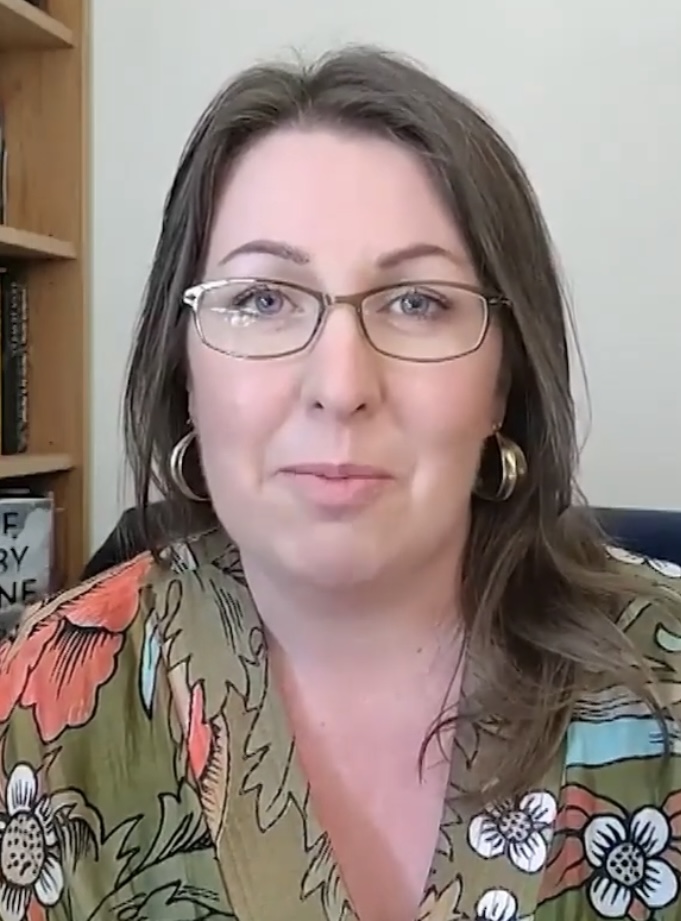
Ruth Warburton (born 1977), known by the pen name Ruth Ware, is a British author.
Key Information


Early life and education
[edit]Ruth Ware was born in 1977 and grew up in Lewes. She studied English at the University of Manchester, where she developed an interest with Old English and Middle English texts.
Before her writing career, Ware worked as a waitress, a bookseller and a publicist. She also spent time in Paris, teaching English as a foreign language.
Career
[edit]Ware’s novels include In a Dark, Dark Wood (2015), The Woman in Cabin 10 (2016), The Lying Game (2017), The Death of Mrs Westaway (2018), The Turn of the Key (2019), One by One (2020), The It Girl (2022), Zero Days (2023), One Perfect Couple (2024), and The Woman In Suite 11 (2025). Both In a Dark, Dark Wood and The Woman in Cabin 10 were on the UK's Sunday Times and The New York Times top ten bestseller lists.[1] She is represented by Eve White of the Eve White Literary Agency.[2] She switched to the pen name Ruth Ware to distinguish her crime novels from the young-adult fantasy novels published under her birth name.[3]
Writing style
[edit]In her crime books, Ware's writing style is often compared to that of Agatha Christie.[4][5] Ware has said that some aspects of her writing are directly inspired by Christie.[6] Ware's protagonists are usually ordinary women who find themselves in dangerous situations involving a crime. The first two of Ware's novels feature a murder mystery with a group of people trapped, or otherwise restricted from immediately escaping the dangerous environment. Christie was famously known for utilizing this plot device, in novels such as Murder on the Orient Express.[7] Ware and Christie both choose settings and situations that foster the sense of dread that propels their characters to paranoia and often they react violently as a result. These environments create a sense of isolation for the events to unfold in.[8] Ware's settings play a key role in drawing in the reader and are as essential and integral to her story as the characters.
Reception
[edit]Reviews of Ware's psychological crime thrillers have been generally positive.
The Independent named In A Dark, Dark Wood as "this year's hottest crime novel",[9][10] and The Guardian praised its "excellent characterisation" and called the book's ending "mesmerising".[11]
In a four-star review, The Independent described The Lying Game as "gripping enough to be devoured in a single sitting,"[12] and Kirkus Reviews' writer said "cancel your plans for the weekend when you sit down with this book, because you won’t want to move until it’s over."[13]
Bibliography
[edit]Young adult fiction
[edit]Before writing under the pen name Ruth Ware, she wrote five young-adult fantasy novels, all of which were published by Hodder's Children Books.
- A Witch Alone (2013) 978-1444904710
- A Witch in Winter (2013) 978-1444904697
- A Witch in Love (2013) 978-1444904703
- Witch Finder (2014) 978-1444914467
- Witch Hunt (2014) 978-1444914481
As Ruth Ware
[edit]- In a Dark, Dark Wood (2015) is about a woman who attends a bachelorette party (hen do) of a childhood friend whom she hasn't heard from in years. The party takes place in an isolated glass house in the woods and takes a turn for the worse. By the end of the weekend someone is dead and everyone is a suspect.[14][15][16][17][18]
- The Woman in Cabin 10 (2016) is about Laura "Lo" Blacklock, a travel journalist who goes on the maiden voyage of the Aurora Borealis, a luxury cruise ship, for an assignment in the Norwegian fjords. Lo is on the trip to further her career, but everything changes when she witnesses what she believes to be a woman being thrown overboard, yet all the passengers remain accounted for and no one believes her.[19][20][21][22][23]
- The Lying Game (2017) revolves around four girls named Kate Atagon, Fatima Chaudhry (née Qureshy), Thea West, and Isa Wilde who attend a private boarding school called Salten House. At the school, they form a bond from a game of telling lies. The poor actions of the girls' boarding school days resurface years later when they receive a mysterious text from Kate asking them to return to the mill where they hung out as teenagers.[24][25][26][27][28]
- The Death of Mrs Westaway (2018) is about Hal, a young tarot card reader, who receives a mysterious and large inheritance. When Hal attends the funeral of the deceased it becomes clear that she was not the intended recipient of the inheritance and that she has become involved in a dangerous mystery.[29]
- The Turn of the Key (2019) is about a nanny and four children, written as if updating Henry James's The Turn of the Screw in a 21st-century setting.[30]
- One by One (2020) revolves around the directors and shareholders of a hot new technology company on a corporate retreat at an exclusive ski resort to decide the future of the company. Tensions run high approaching a possible billion-dollar buyout as an avalanche cuts the chalet off from help, and one board member goes missing.[31]
- The It Girl (2022) is about a woman, Hannah de Chastaigne, whose college roommate was murdered while the two attended Oxford University. Ten years later, Hannah discovers that her testimony in court may have resulted in the wrong person being convicted of the crime.[32]
- Zero Days (2023) is about a husband-and-wife duo who use their combined computer hacking and breaking-and-entering skills to penetration test high-security facilities, and then the wife finds her husband murdered.[33]
- One Perfect Couple (2024) is about a couple who are cast on a reality show with 4 other couples in a tropical island paradise. An overnight storm leaves them cut off from the mainland without their phones or anyway to contact the boat or crew that brought them. Tensions run high and contestants start to die and they realize they are trapped on an island with a murderer on the loose.[34]
- The Woman in Suite 11 (2025) is a direct sequel to The Woman in Cabin 10 set and published 10 years after the original book. It follows Lo Blacklock, now married and a mother of 2 boys, as she decides to revive her career as a travel journalist by traveling to a luxury Swiss resort, and includes several characters from the Aurora Borealis.[35]
Adaptation of works
[edit]Several of Ware's novels have been optioned for screen.
- In a Dark, Dark Wood (2015): In 2017, New Line Cinema acquired the film rights, at which time Reese Witherspoon's Pacific Standard was attached to produce.[36]
- The Woman in Cabin 10 (2016): In 2016, CBS Films acquired the film rights;[37] the project did not move forward, and in 2024 Netflix announced that it owned the rights,[38] releasing its adaptation, starring Keira Knightley, in October 2025.[39]
- The Lying Game (2017): In 2017, Entertainment One acquired the television rights.[40]
- Zero Days (2023): In 2023, Universal International Studios acquired the television rights.[41]
Awards and nominations
[edit]Ware's novels have won or been nominated for a number of awards and end-of-year lists:
- In a Dark, Dark Wood (2015)
- The Woman in Cabin 10 (2016)
- Nominated for the 2016 Goodreads Choice Awards Best Mystery & Thriller
- 2016 Book of the Year Finalist selected by Book of the Month[43][44][45]
- The Death of Mrs. Westaway (2018)
- Nominated for the 2018 Goodreads Choice Awards Best Mystery & Thriller
- Nominated for the 2019 Audie Awards Best Thriller or Suspense
- The Turn of the Key (2019)
- Nominated for the 2019 Goodreads Choice Awards Best Mystery & Thriller
- One by One (2020)
- Shortlisted for the 2021 Ian Fleming Steel Dagger Award at the Crime Writers' Association Awards[46]
- Nominated for the 2020 Goodreads Choice Awards Best Mystery & Thriller
- The It Girl (2022)
- Nominated for the 2022 Goodreads Choice Awards Best Mystery & Thriller
- Nominated for 2023 Theakston's Old Peculier Crime Novel of the Year Award
- Zero Days (2023)
- Nominated for the 2024 Ned Kelly Awards Best International Crime Novel
- Murder at the Turkish Baths
- Longlisted for 2025 The Crime Writers' Association's "Short Story Dagger"[47]
Personal life
[edit]Ware lives near Brighton.
References
[edit]- ^ Ruth Ware, www.ruthware.com/. Accessed 8 Nov. 2017.
- ^ Sue Leonard http://www.suejleonard.com/articles/beginners-pluck/ruth-ware/
- ^ Virtual Interview with Ruth Ware. https://soundcloud.com/user-269339596/a-very-special-episode-interview-with-ruth-ware
- ^ "Love in Suspense recommended read: 'The Woman in Cabin 10' by Ruth Ware". Happy Ever After. 11 July 2016. Retrieved 20 November 2017.
- ^ Cowles, Gregory (27 July 2016). "Inside the List". The New York Times. ISSN 0362-4331. Retrieved 20 November 2017.
- ^ "Ruth Ware on Agatha Christie - Dead Good". Dead Good. 29 August 2016. Retrieved 20 November 2017.
- ^ Christie, Agatha (31 October 2017). Murder on the Orient Express: A Hercule Poirot Mystery (Reprint ed.). William Morrow. ISBN 9780062693662.
- ^ "'Scream' Meets Agatha Christie In 'A Dark, Dark Wood'". NPR.org. Retrieved 20 November 2017.
- ^ "In a Dark, Dark Wood." Penguin Books, https://www.penguin.co.uk/books/1099571/in-a-dark-dark-wood/. Accessed 8 Nov. 2017.
- ^ Ruth Ware, www.ruthware.com/. Accessed 8 Nov. 2017.
- ^ Wilson, Laura (22 August 2015). "The best recent crime novels – review roundup". the Guardian. Retrieved 14 March 2018.
- ^ "The Lying Game by Ruth Ware, book review: A plausible mystery". The Independent. 21 June 2017. Retrieved 14 March 2018.
- ^ THE LYING GAME by Ruth Ware | Kirkus Reviews.
- ^ "In a Dark, Dark Wood". Penguin Books. 3 June 2021. Retrieved 26 August 2025.
- ^ "In a Dark, Dark Wood Setting". Book Rags. Retrieved 8 November 2017.
- ^ "In a Dark, Dark Wood". Ruth Ware. Retrieved 26 August 2025.
- ^ Zimmerman, Jean (18 August 2015). "'Dark, Dark' Doings In A Slick Debut Thriller". NPR Books. Retrieved 8 November 2017.
- ^ "In a Dark, Dark Wood". www.goodreads.com. Retrieved 20 November 2017.
- ^ Gonzalez, Vilma. "Love in Suspense recommended read: 'The Woman in Cabin 10' by Ruth Ware". Happy Ever After. USA Today. Archived from the original on 23 November 2017. Retrieved 8 November 2017.
- ^ "The Woman in Cabin 10". Ruth Ware. Retrieved 26 August 2025.
- ^ "The Woman in Cabin 10 by Ruth Ware". Book of the Month. Archived from the original on 12 November 2017. Retrieved 8 November 2017.
- ^ Ware, Ruth (19 July 2016). The Woman in Cabin 10. Simon and Schuster. ISBN 978-1-5011-3294-0. Retrieved 26 August 2025.
{{cite book}}:|website=ignored (help) - ^ "The Woman in Cabin 10". www.goodreads.com. Retrieved 20 November 2017.
- ^ "The Lying Game". Ruth Ware. Retrieved 26 August 2025.
- ^ "Summary and reviews of The Lying Game". Book Browse. Retrieved 8 November 2017.
- ^ Ware, Ruth (25 July 2017). The Lying Game eBook by Ruth Ware. Simon and Schuster. ISBN 978-1-5011-5619-9. Retrieved 26 August 2025.
{{cite book}}:|website=ignored (help) - ^ "The Lying Game". www.goodreads.com. Retrieved 20 November 2017.
- ^ Aikman, Becky (1 September 2017). "Suspense Fiction That Mines the Terrain of Female Guilt". The New York Times. ISSN 0362-4331. Retrieved 20 November 2017.
- ^ Ware, Ruth (30 April 2019). The Death of Mrs Westaway. Simon and Schuster. ISBN 978-1-5011-5625-0. Retrieved 26 August 2025.
{{cite book}}:|website=ignored (help) - ^ "Book Marks reviews of The Turn of the Key by Ruth Ware". Book Marks. Retrieved 9 August 2019.
- ^ "One by One". www.penguin.co.uk. 2 September 2021. Retrieved 26 August 2025.
- ^ "The It Girl (B&N Exclusive Edition) by Ruth Ware, Hardcover". Barnes & Noble.
- ^ Nolan, Tom (16 June 2023). "Mysteries: Ruth Ware's 'Zero Days'". Wall Street Journal. Retrieved 26 August 2025.
- ^ One Perfect Couple. 16 July 2024. ISBN 978-1-6680-3229-9.
{{cite book}}:|website=ignored (help) - ^ "The Woman in Suite 11". Retrieved 18 September 2025.
- ^ "Reese Witherspoon is developing an 'In A Dark, Dark Wood' adaptation". EW.com. Retrieved 20 November 2017.
- ^ McNary, Dave (16 March 2017). "Ruth Ware's 'The Woman in Cabin 10' Adaptation in the Works at CBS Films". Variety. Retrieved 15 May 2024.
- ^ London, Rob (15 May 2024). "Knightley Is 'The Woman in Cabin 10' in Netflix's New Thriller Adaptation". Collider. Retrieved 15 May 2024.
- ^ "Keira Knightley Sets Sail in The Woman in Cabin 10 in First Look Photos". Netflix Tudum. Archived from the original on 26 August 2025. Retrieved 18 September 2025.
- ^ Busch, Anita (16 August 2017). "Ruth Ware's 'The Lying Game' Picked Up By The Gotham Group". Deadline. Retrieved 20 November 2017.
- ^ Andreeva, Nellie (6 June 2023). "Ruth Ware's Novel 'Zero Days' Acquired By Universal International Studios For Series Development". Deadline. Retrieved 20 June 2023.
- ^ "The Reviewers' Choice Award: A Literary Award for Crime Fiction".
- ^ Ruth Ware, www.ruthware.com/. Accessed 8 Nov. 2017.
- ^ "The Woman in Cabin 10 by Ruth Ware." Book of the Month, https://www.bookofthemonth.com/best-books-of-the-year/the-woman-in-cabin-10-138. Accessed 8 Nov. 2017.
- ^ "The Woman in Cabin 10." Simon & Schuster, www.simonandschuster.com/books/The-Woman-in-Cabin-10/RuthWare/9781501132933. Accessed 8 Nov. 2017.
- ^ "Dagger shortlists announced". The Crime Writers’ Association. Crime Writers Association. 20 May 2021. Retrieved 26 June 2021.
- ^ "Short Story Dagger".

Ruth Ware
View on GrokipediaEarly Life and Education
Childhood and Family
Ruth Ware, born Ruth Warburton in 1977, grew up on the south coast of England in Lewes, East Sussex.[6] She was raised in a household by her parents, described as regular working people.[5] This environment fostered an early love for books and stories in Ware.[2] From a young age, Ware displayed a vivid imagination, often creating tales with her toys like Barbie dolls and teddy bears, and sharing stories with her younger sister.[5] She began writing her own narratives around age seven or eight, using her mother's typewriter after her mother took a typing course, producing early works such as a murder mystery about a caretaker uncovering witches and a dead body.[2] Her mother encouraged this budding interest in storytelling, though she wisely suggested pursuing a practical career alongside it due to the competitive nature of writing.[2] By age twelve, Ware had drafted a full novel inspired by fantasy literature, highlighting her precocious engagement with narrative forms.[5] In her personal life, Ware has been married to her husband Ian, with whom she has two sons.[7][5] As of 2025, the family resides near Brighton, East Sussex.[2] She later adopted the pen name Ruth Ware for her adult thriller novels to distinguish them from her young adult fantasy works published under her real name, Ruth Warburton.[5]Academic Background
Ruth Ware attended Priory School in Lewes, East Sussex, a local comprehensive school where she received her secondary education. The school's curriculum provided a solid foundation in literature, fostering her early interest in storytelling and reading, which had been nurtured by her family from childhood.[8][7][2] She later pursued higher education at the University of Manchester, studying English and graduating before relocating to Paris. Ware has described her university years as an "incredible time" at the tail end of Manchester's vibrant Madchester era, a period buzzing with creative energy that complemented her academic pursuits. During her studies, she developed a particular fascination with Old English and Middle English texts, deepening her appreciation for narrative forms and literary history.[5][9][6] This academic background played a pivotal role in shaping Ware's literary interests, exposing her to influential 20th-century fiction and thrillers. Her coursework and reading introduced her to classic mystery writers such as Agatha Christie and Daphne du Maurier, whose works on suspense and psychological depth would later inform her own genre. While specific extracurricular involvement like writing societies is not detailed in available accounts, the university environment honed her passion for crafting stories, bridging her formal education with her eventual career in thriller writing.[10][11]Career Beginnings
Early Professional Roles
After graduating from the University of Manchester with a degree in English in the late 1990s, Ruth Ware relocated to Paris, where she taught English as a foreign language for several years. This position immersed her in multicultural environments, interacting with students from various backgrounds and adapting to life abroad.[6][9] Returning to London in the early 2000s, Ware worked as a waitress, navigating the demanding service industry and engaging with a wide array of customers in urban settings. She subsequently took a role as a bookseller at a children's bookshop, where she recommended titles to families and observed patterns in reading habits across different demographics. These experiences in retail and hospitality offered direct exposure to everyday social interactions and community dynamics.[1][5] In the mid-2000s, Ware transitioned to a press officer position, managing media relations and communications for an organization. This communications role further developed her ability to convey information effectively while dealing with public-facing pressures and diverse stakeholders. Overall, her early career spanned service, education, and publicity sectors, providing broad insights into varied professional and social contexts.[1][5]Transition to Writing
In the early 2010s, while employed in various professional roles including as a publicist, Ruth Ware began writing seriously, initially focusing on attempts at fantasy novels that drew from her longstanding interest in imaginative storytelling. These efforts marked a shift from her childhood scribbles to more structured pursuits, though she continued to balance writing with full-time work. Her first published success came under her real name, Ruth Warburton, with the young adult fantasy novel A Witch in Winter in 2012, the inaugural book in the Winter Trilogy issued by Hodder Children's Books, which established her entry into the publishing world.[2][12] Following the acclaim of her YA series, Ware adopted the pen name Ruth Ware specifically for her adult thrillers to delineate the genres and cultivate a distinct author brand, allowing her to pivot without confusing her existing readership. This transition was facilitated by signing with literary agent Eve White of the Eve White Literary Agency shortly after her YA achievements, who had initially represented Warburton for the fantasy works. With White's guidance, Ware secured a publishing deal for her debut thriller In a Dark, Dark Wood with Gallery Books, an imprint of Simon & Schuster, positioning her firmly in the psychological suspense market.[5][13][14] The success of In a Dark, Dark Wood, released later that year and achieving bestseller status, enabled Ware to leave her prior employment and commit to writing full-time by 2016, a milestone she has described as profoundly fortunate after years of juggling careers. This pivotal shift solidified her trajectory as a prominent thriller author, building on the foundation laid by her earlier fantasy publications.[2][15]Literary Works
Adult Thrillers
Ruth Ware's adult thrillers, published under her primary pen name, are psychological suspense novels that have established her as a prominent figure in contemporary crime fiction. All of her adult works are issued by Gallery Books and Scout Press, imprints of Simon & Schuster, and have collectively become international bestsellers, with translations available in more than 40 languages.[2][1] Her debut novel, In a Dark, Dark Wood (2015), centers on a hen party that turns into a murder mystery when guests are isolated in a remote house.[14] This was followed by The Woman in Cabin 10 (2016), a thriller involving a journalist who witnesses a disappearance on a luxury cruise ship.[16] In The Lying Game (2017), Ware explores the resurfacing secrets among four school friends who reunite following a suspicious death.[17] The next year, The Death of Mrs. Westaway (2018) features a tarot-reading protagonist who receives an inheritance meant for the wrong family, unraveling a web of deception.[18] The Turn of the Key (2019) draws inspiration from real-life nanny cases, depicting a caregiver accused of murder in a high-tech smart home plagued by eerie events.[19] Ware's 2020 release, One by One, unfolds as a whodunit during a corporate retreat at a ski chalet, where tensions escalate amid deadly accidents.[20] Shifting to university-era intrigue, The It Girl (2022) follows a woman who reexamines the murder of her roommate from years past.[21] In Zero Days (2023), a tech security consultant is framed for her husband's murder, forcing her into a desperate fight for survival.[22] One Perfect Couple (2024) traps contestants on a reality TV survival show that devolves into chaos and peril.[23] Her most recent novel, The Woman in Suite 11 (2025), serves as a sequel to The Woman in Cabin 10, bringing back protagonist Lo Blacklock for a tale of hotel intrigue during the opening of a luxury Swiss property, which spirals into a high-stakes pursuit across Europe.[24]Young Adult Fantasy (as Ruth Warburton)
Under the pen name Ruth Warburton, Ruth Ware wrote five young adult fantasy novels published by Hodder Children's Books between 2012 and 2014, targeting readers aged 12 and above. These works explore themes of magic, romance, identity, and conflict within witch communities, blending contemporary and historical settings to create atmospheric tales of discovery and peril. The series emphasize the ethical dilemmas of power and the blurred lines between love and enchantment, appealing to teens navigating self-discovery in worlds where the supernatural intersects with everyday life.[25][26] Her debut trilogy, known as the Winter Trilogy, is set in the fictional coastal town of Winter in contemporary rural England and follows teenager Anna Winterson as she uncovers her latent witchcraft abilities. In the first installment, A Witch in Winter (published January 5, 2012), Anna relocates from London to Winter with her father and unwittingly enchants local boy Seth Waters to fall in love with her during a slumber party prank, only to ignite a fierce rivalry between two ancient witch clans and question the reality of their budding romance.[25] The narrative builds tension through Anna's reluctant immersion in a hidden magical world, where spells amplify personal desires but unleash dangerous consequences, including threats from rival covens.[25] The second book, A Witch in Love (published July 5, 2012), continues Anna's struggle as she vows to suppress her powers to preserve her relationship with Seth, who insists his affections are genuine despite the spell. However, relentless pursuit by witch hunter Abe complicates her efforts, forcing Anna to investigate her mother's mysterious past and confront echoes of historical witch persecutions like the Salem trials, marked by betrayal, torture, and fiery executions.[27] This installment deepens the exploration of uncontrollable magic intertwined with adolescent emotions, as Anna grapples with external hunts and internal doubts about trust and autonomy.[27] The trilogy concludes with A Witch Alone (published February 7, 2013), where a heartbroken Anna delves into her family history after personal losses, unearthing dark secrets about her heritage and powers that propel the global witch community toward all-out war. Torn between loyal friends, familial blood ties, rival witch factions, and the pull between romantic love and magical destiny, Anna must navigate escalating threats from betrayals within her circle.[28] The story culminates in high-stakes confrontations that resolve the trilogy's central conflicts, highlighting themes of isolation, resilience, and the cost of embracing one's true self in a divided supernatural society.[28] Following the Winter Trilogy, Warburton shifted to a historical fantasy duology, the Witch Finder series, set in Victorian London in 1880, which contrasts the modern magical realism of her earlier work with gothic intrigue and societal oppression. Witch Finder (published January 2, 2014), the opening novel, centers on eighteen-year-old apprentice blacksmith Luke Lexton, who seeks vengeance for his parents' murder by joining the secretive witch-hunting brotherhood Malleus Maleficorum; his initiation requires killing a selected target, sixteen-year-old witch Rosa Greenwood, who faces an arranged marriage to the ruthless Sebastian Knyvet to save her impoverished family. As Luke and Rosa form an unexpected bond, revelations about Knyvet's connection to Luke's tragedy force them to weigh loyalty against emerging affection in a world of deception and power imbalances.[29] The sequel, Witch Hunt (published June 5, 2014), picks up immediately after, with Luke having spared Rosa's life—a betrayal that brands him a traitor to the Malleus—while Rosa's act of burning Knyvet's factory in defiance of their engagement dooms her family to ruin. The pair flees across England, evading pursuit by Knyvet and the brotherhood, as they confront their clashing backgrounds, unresolved traumas, and growing reliance on each other amid a landscape of industrial grit and supernatural danger.[30] This duology underscores gender dynamics, class struggles, and the moral ambiguities of persecution, portraying witches not as villains but as marginalized figures resisting systemic violence.[30] Warburton's young adult output concluded with these five titles, after which she transitioned to writing psychological thrillers for adults under her real name, Ruth Ware.Writing Style and Themes
Stylistic Elements
Ruth Ware's thrillers are characterized by their use of unreliable narrators, often presented through first-person perspectives that immerse readers in the protagonist's subjective reality, thereby heightening suspense and encouraging doubt about the unfolding events.[31] This technique allows Ware to manipulate reader perception, as the narrator's biases, fears, or deceptions gradually reveal inconsistencies that propel the narrative forward.[32] Critics note that this approach draws from psychological thriller conventions, where the narrator's unreliability serves as a lens for exploring internal conflicts without overt exposition.[33] Ware employs rapid pacing to maintain tension, frequently confining action to claustrophobic settings such as isolated retreats, luxury ships, or remote houses, which amplify a sense of entrapment and urgency.[34] These environments not only limit physical escape but also accelerate the plot's momentum through escalating confrontations and revelations, creating a breathless rhythm that mirrors the characters' rising anxiety.[35] Shorter sentences and paragraphs in high-stakes scenes further contribute to this brisk tempo, drawing readers deeper into the narrative's inexorable pull.[36] Central to Ware's style are intricate twists and misdirection, achieved through multi-layered reveals that introduce psychological ambiguity, blurring the lines between truth and perception.[37] These plot devices unfold gradually, often withholding key information until pivotal moments, which fosters paranoia and reevaluation of earlier clues.[38] The ambiguity surrounding character motivations—whether driven by guilt, trauma, or deception—adds depth, ensuring that resolutions challenge initial assumptions without resolving all uncertainties.[39] Her prose is accessible yet richly atmospheric, employing vivid descriptions that evoke unease through sensory details reminiscent of Gothic traditions, such as shadowy interiors and oppressive weather.[40] This style balances straightforward language with evocative imagery, making complex emotional states tangible while avoiding ornate excess.[39] Ware's atmospheric writing thus sustains immersion, transforming ordinary scenes into harbingers of dread.[41] Ware adeptly blends psychological suspense with locked-room mystery elements, where confined spaces serve as both plot catalysts and metaphors for interpersonal isolation.[42] This fusion heightens the genre's introspective focus, integrating mental unraveling with the mechanics of impossibility—such as crimes in sealed environments—that demand logical deduction amid emotional chaos.[33] The result is a hybrid form that prioritizes character-driven tension over procedural detail, distinguishing her work within contemporary thrillers.[43]Key Themes and Influences
Ruth Ware's novels frequently explore the fragility of female friendships, often delving into betrayals that arise from jealousy, competition, and unspoken resentments within close-knit groups. In works such as In a Dark, Dark Wood and The Lying Game, these dynamics highlight how bonds formed in youth can unravel under pressure, leading to profound emotional fractures. Ware has noted that she is drawn to the fascination of friendships that "take a bitter turn," observing groups where members "delight in tearing each other apart" as a source of inspiration, though she emphasizes these are not direct reflections of her own experiences but rather mental notes from everyday encounters.[44] A recurring motif in Ware's thrillers is the psychological toll of isolation, manifesting as characters trapped in confined spaces—whether physical like remote cabins or social like unwanted gatherings—that amplify paranoia and vulnerability. This theme stems from her personal shyness and social anxiety, where she describes her "nightmare" as being "trapped at a party with people I don’t know," a fear that permeates her protagonists' ordeals and underscores the terror of enforced proximity. Complementing this is the unreliability of memory and perception, where narrators grapple with fragmented recollections that blur truth and deception, heightening suspense and questioning personal reliability.[5] Ware incorporates social issues such as class dynamics, reflecting her working-class upbringing in East Sussex, where her mother worked as a library assistant and her father as an IT manager, limiting early exposure to creative pursuits like writing. She has reflected that becoming an author "didn’t feel like... something regular people like me got to do," infusing her stories with undercurrents of social mobility struggles and the unease of navigating elite environments. Technology's intrusive role emerges as a modern anxiety, particularly in The Turn of the Key, where smart home systems—complete with surveillance cameras and automated controls—invade privacy and exacerbate isolation, turning domestic spaces into sites of paranoia and control. Post-2020 works like Zero Days extend this to broader digital threats, such as hacking and online scrutiny, mirroring societal shifts toward pervasive connectivity.[5] Her literary influences include Agatha Christie's intricate plotting and locked-room puzzles, which provide the structural backbone for many of her whodunits, as well as Daphne du Maurier's atmospheric suspense that builds emotional tension through lush, foreboding settings. Ware also draws from Gillian Flynn's sharp, contemporary edge in portraying flawed female characters entangled in moral ambiguity, blending these with classic crime elements to create "psychological crime thrillers."[5][45][46] The evolution of Ware's themes shows a progression from early focuses on group dynamics and interpersonal betrayals in her 2010s novels to later integrations of technology and media examination after 2020, influenced by global events like the pandemic that stalled her writing but reignited editing through characters' confinement struggles. Personal ties to these elements trace back to her family life, where supportive yet ordinary circumstances shaped her interest in relational tensions, and early job experiences in diverse settings like tech and publishing honed her observations of social hierarchies.[46][47]Adaptations
Film Projects
Ruth Ware's novels have attracted interest from major studios for cinematic adaptations, with a focus on translating the psychological tension of her thrillers to the screen. The most prominent project is the 2025 Netflix film adaptation of her 2016 bestseller The Woman in Cabin 10, directed by Simon Stone and starring Keira Knightley as journalist Lo Blacklock, who witnesses a murder on a luxury yacht but struggles to convince others.[3] The screenplay, co-written by Stone with Joe Shrapnel and Anna Waterhouse, diverges from the book in key plot elements, such as altering the protagonist's backstory and the climactic revelations, to heighten visual suspense and pacing for the medium.[48] Rights to the novel were initially acquired by CBS Films in 2017, with Hillary Seitz attached to write the script, but the project shifted to Netflix, which announced production in May 2024.[49] The film premiered on October 10, 2025, and Ware has described watching it as an "out-of-body experience," noting how the visual format amplifies the isolation and paranoia central to her story while emphasizing the need to preserve thriller tension through cinematography and performance.[50] Another key film project is the adaptation of The Turn of the Key (2019), a smart-home thriller optioned by Working Title Films—a Universal Pictures label—in 2021.[51] Actors Max Minghella and Jamie Bell are penning the screenplay, drawing on the novel's gothic elements of a nanny accused of murder in a high-tech Scottish mansion. As of November 2025, the project remains in development without a confirmed release date or cast, though Ware has highlighted the challenges of visually conveying the book's unreliable narration and domestic horror.[52] Screen rights to One by One (2020), Ware's locked-room mystery set during a corporate ski retreat, were optioned in 2020 for potential film development, with reports of a pitch to Netflix for a feature adaptation.[53] However, as of 2025, no production updates, director, or cast have been confirmed, leaving it in early stages. Ware has consulted on various adaptation scripts across her works, advocating for fidelity to the psychological depth and confined settings that build suspense, while adapting narrative twists for cinematic impact.[5]Television and Other Media
Ruth Ware's novels have seen several developments in television adaptations, reflecting the growing interest in her psychological thrillers for serialized formats. In October 2025, Amazon MGM Studios announced a young adult series adaptation of The Lying Game (2017), with screenwriter Suzanne Heathcote attached and executive producers including Ted Gold.[54] This project builds on earlier efforts, as Entertainment One acquired TV rights to the novel in 2017 for development.[55] Similarly, Zero Days (2023) was optioned by Universal International Studios in June 2023 for series development, highlighting its high-stakes plot involving cybersecurity and pursuit.[56] The It Girl (2022) followed suit, with Universal Television securing rights in February 2024 to adapt the story of a woman's quest to uncover doubts about a past conviction.[57] Beyond live-action television, Ware's works have thrived in audio formats, where the medium amplifies the suspense central to her storytelling. All of her major adult thrillers, including In a Dark, Dark Wood (2015), The Woman in Cabin 10 (2016), and The Turn of the Key (2019), have been produced as audiobooks narrated primarily by British actress Imogen Church.[58] Church's performance, characterized by nuanced voicing of multiple characters and tense pacing, has been widely praised for heightening the psychological tension and unreliable narration that define Ware's prose.[59] For instance, her narration of The It Girl has been noted for immersing listeners in the protagonist's mounting paranoia, earning acclaim from audio reviewers for making the format ideal for Ware's twisty narratives.[60] These productions, available through platforms like Audible, have contributed to the novels' commercial success by appealing to commuters and multitasking audiences seeking portable suspense.[61] Other media explorations include podcast appearances and readings, though full adaptations of Ware's shorter works remain limited. Ware has contributed to audio anthologies and storytime series, such as Vintage Storytime in 2020, where she read excerpts and original pieces to evoke her atmospheric style.[62] While no major podcast adaptations of her short stories have materialized, her novels frequently inspire episodes on literary podcasts, discussing themes like deception and isolation. Adapting Ware's books to television poses unique challenges, particularly in translating the extensive internal monologues that drive character psychology and plot ambiguity. In interviews, Ware has described the process as an "out-of-body experience," noting the difficulty of externalizing protagonists' private doubts without voiceover reliance, which could disrupt visual pacing in serialized formats.[63][4] This tension underscores the shift from introspective prose to dynamic screen storytelling, requiring writers to balance fidelity with dramatic necessity.Awards and Recognition
Literary Prizes
Ruth Ware's literary works have earned several nominations and awards from prominent organizations in the mystery and thriller genres, recognizing her contributions to psychological suspense and contemporary crime fiction. Her debut novel, In a Dark, Dark Wood (2015), won the RT Reviewers' Choice Award for Best Suspense Novel, highlighting its gripping narrative and atmospheric tension. It was also selected as an NPR Best Book of 2015 and a BEA Buzz Panel selection.[64] Ware has received multiple nominations for the Goodreads Choice Awards in the Best Mystery & Thriller category, reflecting reader appreciation for her page-turning plots. The Woman in Cabin 10 (2016) was nominated, praised for its claustrophobic setting aboard a luxury cruise ship.[65] Similarly, The Death of Mrs. Westaway (2018), The Turn of the Key (2019), and The It Girl (2022) each garnered nominations, underscoring her consistent appeal in the genre.[66][67] In recognition of her thriller craftsmanship, One by One (2020) was shortlisted for the Crime Writers' Association (CWA) Ian Fleming Steel Dagger in 2021, an award for outstanding blockbuster thrillers.[68] More recently, Zero Days (2023) was shortlisted for the Ned Kelly Award for Best International Crime Fiction in 2024, affirming her international impact.[69] Under her pseudonym Ruth Warburton for young adult fantasy, her debut A Witch in Winter (2012) did not receive verified literary prizes, though her adult works continue to build on her reputation for suspenseful storytelling that has contributed to her prestige among peers and readers alike.| Book | Award | Year | Outcome | Source |
|---|---|---|---|---|
| In a Dark, Dark Wood | RT Reviewers' Choice Award (Best Suspense Novel) | 2015 | Winner | Omnimystery Awards |
| In a Dark, Dark Wood | NPR Best Book | 2015 | Selection | NPR |
| The Woman in Cabin 10 | Goodreads Choice Award (Best Mystery & Thriller) | 2016 | Nominee | Goodreads |
| The Death of Mrs. Westaway | Goodreads Choice Award (Best Mystery & Thriller) | 2018 | Nominee | Book Notification |
| The Turn of the Key | Goodreads Choice Award (Best Mystery & Thriller) | 2019 | Nominee | Book Notification |
| The It Girl | Goodreads Choice Award (Best Mystery & Thriller) | 2022 | Nominee | Eve White |
| One by One | CWA Ian Fleming Steel Dagger | 2021 | Shortlist | Ian Fleming Website |
| Zero Days | Ned Kelly Award (Best International Crime Fiction) | 2024 | Shortlist | Eve White Literary Agency |