Hubbry Logo
SV2ASV2AMain
Open search
SV2A
Community hub
SV2A
logo
8 pages, 0 posts
0 subscribers
Be the first to start a discussion here.
SV2A
SV2A
from Wikipedia
SV2A
Available structures
PDBOrtholog search: PDBe RCSB
Identifiers
AliasesSV2A, SV2, synaptic vesicle glycoprotein 2A
External IDsOMIM: 185860; MGI: 1927139; HomoloGene: 32237; GeneCards: SV2A; OMA:SV2A - orthologs
Orthologs
SpeciesHumanMouse
Entrez
Ensembl
UniProt
RefSeq (mRNA)

NM_014849
NM_001278719
NM_001328674
NM_001328675

NM_022030

RefSeq (protein)

NP_001265648
NP_001315603
NP_001315604
NP_055664

NP_071313

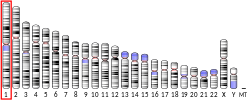
Location (UCSC)Chr 1: 149.9 – 149.92 MbChr 3: 96.09 – 96.1 Mb
PubMed search[3][4]
Wikidata
View/Edit HumanView/Edit Mouse

Synaptic vesicle glycoprotein 2A (SV2A) is a transmembrane protein belonging to a family of keratan sulfate proteoglycans, located on the synaptic vesicles of mammalian neuronal and endocrine cells. It is encoded by the SV2A gene.[5][6][7]

SV2A is the most widely expressed isoform of the SV2 family (which also includes the SV2B and SV2C proteins) found in all brain regions.[8] The role of the SV2 proteins is not well understood; however, they are thought to be involved in regulating vesicular processes.[8]

The SV2A protein is a target of the anti-epileptic drugs (anticonvulsants) levetiracetam and brivaracetam[9] but it is not clear how these drug affect SV2A activity.[10]

Localisation

[edit]

SV2A is differentially expressed in both inhibitory GABAergic and excitatory glutamatergic terminals[11] however it is not expressed in all synapses[12] as was previously thought.[13] There is a slightly stronger colocalisation between SV2A and GABA than glutamate[14] and the association differs across brain regions and changes with developmental stages.[15]

SV2A PET

[edit]

Several PET radiotracers targeting SV2A have been developed, allowing for measuring SV2A density in-vivo: [11C]LEV, [11C]UCB-A, [11C]-UCB-H, [18F]UCB-J, [18F]Syn-VesT-1, [18F]Syn-VesT-2, and [18F]SDM-16. SV2A density has been used as a proxy for measuring in vivo synaptic density.[16][17][18][19] A 2024 systematic review and meta-analysis of [11C]UCB-J PET studies reported lower SV2A binding in individuals with psychotic disorders compared with healthy controls.[20]

See also

[edit]

References

[edit]

Further reading

[edit]
[edit]
Revisions and contributorsEdit on WikipediaRead on Wikipedia
from Grokipedia
Synaptic vesicle protein 2A (SV2A) is a ubiquitous transmembrane located on the membrane of in neuronal and endocrine cells throughout the , essential for regulating release by modulating vesicular and calcium-dependent synaptic transmission processes. As the most widely expressed member of the SV2 protein family—which also includes SV2B and SV2C—SV2A is present in all synaptic terminals, regardless of type, and is particularly abundant in regions such as the cortex, hippocampus, , and . Structurally, SV2A features 12 transmembrane domains with homology to bacterial sugar transporters and the , along with extensive N-glycosylation in its luminal domains and a short cytoplasmic N-terminal tail. This architecture positions SV2A as an integral component of synaptic vesicles, where it interacts with key proteins like synaptotagmin-1 to facilitate vesicle priming and fusion with the presynaptic membrane. Functionally, SV2A controls the size of the readily releasable pool of vesicles, enhances release probability at low-activity synapses, and binds , though it does not transport neurotransmitters or ions directly. Knockout studies in mice demonstrate that absence of SV2A leads to impaired short-term and increased susceptibility, underscoring its non-redundant role in maintaining balanced . In clinical contexts, SV2A is the primary binding site for the antiepileptic drug , which modulates SV2A function to inhibit excessive release and reduce epileptiform activity without altering baseline synaptic transmission. Reduced SV2A expression has been observed in and neurodegenerative conditions like Alzheimer's and Parkinson's diseases, where it correlates with synaptic loss. Furthermore, SV2A serves as a for synaptic density, enabling (PET) imaging with ligands such as [¹¹C]UCB-J to assess neuronal health .

Molecular Structure and Genetics

Gene Characteristics

The SV2A , with the official symbol SV2A and NCBI Gene ID 9900, encodes synaptic vesicle glycoprotein 2A, a key component of synaptic vesicles in neurons and endocrine cells. It is located on the q arm of chromosome 1 at cytogenetic band 1q21.2, spanning approximately 14.5 kb of genomic sequence from position 149,903,318 to 149,917,844 (GRCh38.p14 assembly) and consisting of 13 exons. SV2A exhibits strong evolutionary conservation across mammals, reflecting its essential role in synaptic function, with orthologs identified in such as mice (Sv2a on ) and (Sv2a on ), as well as in primates like chimpanzees. The protein sequence shares 99.1% identity with the ortholog, and overall similarity among mammalian orthologs typically exceeds 90%. The 's expression is predominantly neuronal, driven by regulatory elements including a core promoter and associated enhancers that ensure tissue-specific transcription in regions rich in synaptic activity. These elements, mapped within and around the locus, facilitate high-level expression in mature neurons while restricting it in non-neuronal cells.

Protein Structure

The synaptic vesicle glycoprotein 2A (SV2A) is a composed of 742 residues in its mature human form, with a predicted molecular weight of approximately 82 kDa based on its sequence. This is characterized by a bundle of 12 transmembrane domains, which span the membrane, along with intracellular N- and C-termini that facilitate interactions within the neuronal . A prominent structural feature is the large fourth luminal domain (L4), located between transmembrane domains 7 and 8, which contains multiple N-linked sites essential for protein stability and function. SV2A shares significant with the major facilitator superfamily of sugar transporters, particularly the facilitative family, yet it does not exhibit capabilities. Instead, its architecture supports roles in vesicle trafficking, including a dileucine-based targeting motif in the cytoplasmic that directs SV2A to . The protein's overall , with alternating cytoplasmic and luminal loops, positions these elements to mediate selective interactions during vesicle maturation and . High-resolution cryo-electron microscopy (cryo-EM) structures of native SV2A, reported in 2025, have elucidated its three-dimensional architecture and revealed specific binding pockets for neurotoxins such as tetanus neurotoxin (TeNT). These structures demonstrate that TeNT engages SV2A at a distinct site involving the luminal domain and ganglioside co-receptors, differing markedly from the binding mode of botulinum neurotoxin A and providing insights into toxin entry mechanisms at central synapses.

Isoforms

The SV2 family consists of three paralogous isoforms, SV2A, SV2B, and SV2C, each encoded by distinct genes and sharing structural similarities while exhibiting differences in expression patterns and functions. SV2A is the most ubiquitously expressed isoform across the , present in nearly all synaptic terminals regardless of type. In contrast, SV2B is co-expressed with SV2A in specific neuronal populations, such as those in the hippocampus, , and , but displays a more restricted distribution overall. SV2C expression is highly limited, primarily confined to phylogenetically ancient brain regions including the and . At the sequence level, SV2A shares approximately 65% identity with SV2B and 62% identity with SV2C, with all three isoforms featuring 12 transmembrane domains but differing in N-linked sites and intracellular loop compositions. SV2A and SV2B each possess three glycosylation sites, whereas SV2C has five, potentially influencing their stability and interactions. These sequence variations contribute to partial functional among the isoforms, as evidenced by genetic studies in mice: SV2A leads to severe epileptic seizures and early within weeks of birth, underscoring its essential role, while SV2B results in viable animals with only mild deficits in specific , such as in the . Double knockout of SV2A and SV2B phenocopies the SV2A single knockout, indicating that SV2B can partially compensate for SV2A loss in some contexts but not sufficiently to prevent lethality. SV2A itself undergoes alternative splicing, producing minor variants that primarily alter the C-terminal region; one such variant lacks the final 60 amino acids (residues 683–742) of the canonical 742-amino-acid protein. These C-terminal modifications are thought to influence protein trafficking and localization to synaptic vesicles, though the variants remain far less abundant than the full-length form.

Biological Function

Role in Synaptic Vesicle Cycle

SV2A plays a crucial role in the priming of , where it interacts with synaptotagmin-1 (SYT1), the primary calcium sensor for , to facilitate the stabilization of the SNARE complex and prepare vesicles for fusion. This interaction ensures that primed vesicles become competent for calcium-triggered release, with SV2A modulating the calcium sensitivity of SYT1 to enhance the efficiency of the priming process. In the absence of SV2A, the priming step is impaired, leading to fewer vesicles in a fusion-ready state. SV2A also regulates the filling and maturation of synaptic vesicles, contributing to their structural integrity and functional readiness. During neurotransmitter loading, SV2A is essential for the osmotic swelling and size increase of vesicles, as demonstrated in isolated synaptic vesicles where its absence prevents glutamate-induced dimensional changes. Furthermore, recent studies indicate that SV2A's primary function involves controlling the trafficking and presynaptic localization of synaptotagmin-1. Studies using SV2A knockout mouse models reveal significant impairments in vesicle replenishment, with a notable reduction in the size of the readily releasable pool (RRP) by approximately 50% in affected and chromaffin cells. These deficits manifest as slower recovery of the RRP after depletion, underscoring SV2A's role in sustaining vesicle availability during repeated activity. A proposed mechanism for SV2A's function involves its role as a modulator of presynaptic calcium dynamics, buffering calcium accumulation to enhance fusion probability specifically at low stimulation frequencies while preventing excessive release during high-frequency trains. This calcium-regulatory action, distinct from direct channel modulation, optimizes vesicle priming under physiological conditions of sparse activity.

Regulation of Neurotransmitter Release

SV2A plays a critical role in modulating the efficiency of release during synaptic transmission, particularly by enhancing evoked release in response to low-frequency stimulation. In neurons lacking SV2A, evoked synaptic responses are reduced by approximately 50% in hippocampal terminals, without alterations in the number of docked vesicles or spontaneous miniature release frequency. This reduction reflects a specific impairment in the readiness of primed vesicles for Ca²⁺-triggered rather than defects in vesicle priming itself. SV2A serves as a key receptor for botulinum A (BoNT/A) and (TeNT), facilitating their entry into presynaptic terminals and subsequent inhibition of release. The luminal domain 4 (L4) of SV2A provides the primary for the C-terminal receptor-binding domain of BoNT/A, enabling toxin uptake during recycling and cleavage of SNARE proteins to block . Similarly, SV2A mediates TeNT binding and internalization through interactions involving its luminal domains, leading to inhibition of inhibitory release in central neurons. SV2A also fine-tunes asynchronous release, with its expression levels in presynaptic terminals directly correlating to the magnitude of this delayed release component following stimulation. In SV2A-deficient , asynchronous release is diminished at low stimulation frequencies, indicating SV2A's role in maintaining the balance between synchronous and asynchronous phases of . Although SV2A does not function as a direct vesicular Ca²⁺ transporter, it influences the coupling between voltage-gated Ca²⁺ channels and synaptic vesicles to optimize release probability. By regulating the recruitment of vesicles to release sites and interacting with the Ca²⁺ synaptotagmin-1, SV2A enhances Ca²⁺-dependent without altering cytosolic or vesicular Ca²⁺ levels. This modulation may involve brief interactions with vesicle priming machinery to position vesicles optimally for Ca²⁺ influx.

Expression and Localization

Tissue and Cellular Distribution

SV2A is predominantly expressed in neuronal cells throughout the , where it localizes to synaptic vesicles in presynaptic terminals of all synapses, irrespective of the type. Immunohistochemical and autoradiographic studies have demonstrated its ubiquitous presence in gray matter regions, with colocalization alongside presynaptic markers such as in these terminals. While expressed in both excitatory and inhibitory synapses, SV2A shows a stronger association with terminals compared to ones in structures like the hippocampus. In the brain, SV2A exhibits the highest levels of expression in the and hippocampus, intermediate levels in the , and relatively lower abundance in the . (PET) imaging and quantitative autoradiography in and non-human confirm these regional variations, highlighting peaks in cortical and hippocampal areas essential for synaptic mapping. Additionally, SV2A is present at neuromuscular junctions, particularly in motor terminals innervating slow-twitch muscle fibers. An asymmetric distribution has been observed in brain hemispheres, with slight but consistent differences in laminated structures. Beyond neurons, SV2A expression is minimal in non-neuronal cells, with trace levels reported in and peripheral tissues. It is also found in endocrine cells, including adrenal chromaffin cells and the PC12 line, where it associates with secretory vesicles analogous to synaptic vesicles.

Developmental Expression

SV2A expression in the developing brain is characterized by low levels during embryogenesis, followed by a marked postnatal upregulation that aligns with synaptic maturation and the establishment of release mechanisms. In , SV2A mRNA and protein are detectable as early as embryonic day 14 (E14) in key regions such as the hippocampus and cortex, but remain at minimal levels throughout . Postnatally, expression surges, reaching peaks around postnatal day 9 (P9) in the cortex and P10 in the hippocampal , before stabilizing into adulthood. This temporal pattern reflects the progressive formation and functional refinement of synapses across brain regions. Regional variations in SV2A expression highlight its role in area-specific . In the hippocampus, upregulation occurs earlier in the CA1 region between P5 and P7 compared to the cortex, where detectable levels emerge at E14 but peak later at P9; this precedes the onset of and correlates with heightened susceptibility in developing circuits. Such differences underscore SV2A's contribution to the differential maturation of excitatory and inhibitory synapses, with broader increases observed in subcortical structures. The critical importance of SV2A for postnatal neuronal survival is evident from knockout studies in mice. Homozygous SV2A-null animals appear normal at birth but fail to thrive after P7, exhibiting severe motor seizures from P6–P10 due to impaired action potential-dependent , particularly in pathways; they invariably die between P12 and P23 from widespread hyperexcitability. These findings indicate that while SV2A is not required for embryonic formation or basic brain morphology, it is indispensable for sustaining functional cycling during early postnatal development. In humans, direct developmental data are limited, but studies in nonhuman provide insight into gestational dynamics. SV2A protein levels in the fetal are low in early but increase substantially during the third trimester, with greater concentrations in subcortical regions than cortex, mirroring rapid and supporting its role as a marker of maturing neural circuits.

Clinical and Pathological Significance

Association with Neurological Disorders

Biallelic loss-of-function variants in the SV2A gene cause developmental and epileptic 113 (DEE113; MIM: 620772), a severe characterized by early-onset intractable , profound developmental delay, , and involuntary movements such as or . Affected individuals typically present with seizures beginning in the first weeks to months of life, often resistant to antiepileptic drugs, alongside and . Homozygous mutations, such as R383Q and R289X, disrupt SV2A protein function, leading to impaired trafficking and release, as evidenced in case reports of consanguineous families. Reduced SV2A density has been implicated in synaptic pathology across several neurological disorders. In , a 2024 meta-analysis of PET imaging studies revealed approximately 10% lower SV2A levels in the and other regions, including the anterior cingulate and hippocampus, correlating with disease severity and unaffected by antipsychotic treatment. Similarly, SV2A reductions contribute to synaptic loss in , where up to 41% decreases in neocortical regions are observed postmortem and via imaging, linking to cognitive decline. In , diminished SV2A expression in the and cortex reflects progressive synaptic degeneration, exacerbating motor and non-motor symptoms. SV2A plays a key role in epilepsy susceptibility beyond monogenic forms, with in heterozygous models enhancing vulnerability. SV2A+/- mice exhibit accelerated kindling epileptogenesis in the and hippocampus, requiring fewer stimulations to reach fully kindled states compared to wild-type controls, due to altered and cortical hyperexcitability. This proepileptic underscores SV2A's dosage sensitivity in modulating neuronal excitability. Emerging evidence suggests SV2A dysregulation may contribute to autism spectrum disorder (ASD) and mood disorders through impaired regulation of release. In ASD, modulation of SV2A with reduces subclinical epileptiform activity and improves cognitive functions, potentially indicating a role in synaptic regulation. For mood disorders like depression and anxiety, genetic associations at the SV2A locus correlate with altered synaptic density and traits, influencing glutamate and monoamine release in limbic regions. Preclinical PET studies as of 2025 indicate SV2A reductions in stress models of mood disorders, supporting its potential role in circuit-level dysfunction.

Therapeutic Targeting

SV2A serves as the primary for the antiepileptic drugs and , which exhibit high-affinity interactions with the protein to modulate function. These ligands selectively bind to SV2A on , inhibiting release primarily at high-frequency, high-affinity sites associated with pathological hypersynchronous activity, while sparing normal at lower frequencies. This selective action reduces epileptiform bursts and seizure propagation without broadly impairing physiological , contributing to their favorable safety profile. The therapeutic mechanism involves allosteric modulation of the SV2A-synaptotagmin-1 (SYT1) interaction, a critical step in calcium-dependent vesicle priming and . By binding to SV2A, and disrupt this interaction, thereby decreasing the readily releasable pool of vesicles in hypersynchronous neuronal networks, which dampens excessive excitatory signaling during seizures. demonstrates approximately 20-fold higher affinity for SV2A compared to , enabling faster brain occupancy and potentially more rapid onset of action. In clinical practice, and are approved as adjunctive therapies for partial-onset s in adults and children, with evidence from randomized controlled trials showing significant reductions in frequency. , in particular, is widely used due to its intravenous formulation for acute settings, including , where it terminates s in up to 70% of cases as second- or third-line treatment. Ongoing clinical trials are evaluating these SV2A modulators, including , for optimized dosing in and broader syndromes. Beyond epilepsy, SV2A ligands hold potential for treating synaptic dysfunction in other neurological disorders, such as and neurodegeneration, by restoring impaired vesicle trafficking and release. In , reduced SV2A expression correlates with synaptic deficits, suggesting that targeted ligands could enhance synaptic density and cognitive function. Similarly, in neurodegenerative conditions like , SV2A modulation may mitigate progressive synaptic loss, with preclinical data indicating preservation of synaptic integrity through inhibition of amyloid-beta-induced vesicle depletion.

Research Applications

Positron Emission Tomography (PET) Imaging

Positron emission tomography (PET) imaging targeting synaptic vesicle glycoprotein 2A (SV2A) has emerged as a non-invasive method to assess synaptic density in vivo, leveraging radiotracers that bind specifically to SV2A on synaptic vesicles. The most widely used tracer, [¹¹C]UCB-J, exhibits high affinity for SV2A with a dissociation constant (K_d) of approximately 7 nM and binds to the luminal domain of the protein, allowing quantification of SV2A density as a proxy for synaptic vesicle numbers and overall synaptic integrity. Another key tracer, [¹⁸F]SynVesT-1, an analog of [¹¹C]UCB-J with a longer half-life, also targets the same luminal binding site and demonstrates favorable pharmacokinetics, including high brain uptake and rapid washout, making it suitable for clinical applications. These tracers enable pan-synaptic imaging, independent of specific neurotransmitter types, providing a broad measure of synaptic health across brain regions. In human studies, SV2A PET imaging has shown excellent reproducibility, with test-retest variability of binding potential (BP_ND) typically below 10%, supporting its reliability for longitudinal assessments of synaptic changes. This technique quantifies synaptic density by modeling tracer kinetics, often using simplified reference tissue methods like the multilinear analysis-1 (MA1) approach with cerebellar gray matter as the reference region, which correlates strongly with vesicular counts from postmortem validations. Applications include evaluating synaptic alterations in neurological conditions, where reduced SV2A binding serves as an indicator of synapse loss, such as up to 37% decreases in the sclerotic hippocampus of patients compared to contralateral regions. Key findings from SV2A PET studies reveal reduced binding in several disorders: in schizophrenia, widespread reductions of 10-20% in cortical and subcortical regions have been observed with [¹¹C]UCB-J, independent of antipsychotic effects. For aging, studies report mixed results, with some indicating gradual declines in specific brain regions before partial volume correction, though cortical synaptic density often appears stable after corrections. Evidence from SV2A PET also suggests increases in binding during early brain development, such as in the fetal third trimester, with relative stability into adulthood. As of 2025, emerging applications include assessing cortical synapse loss in multiple sclerosis. These patterns highlight SV2A PET's utility over transmitter-specific markers, offering a comprehensive view of synaptic dynamics.

Other Experimental Methods

Genetic models have been instrumental in elucidating SV2A's role in synaptic function. SV2A (KO) mice exhibit severe deficits in release, with studies using these models demonstrating reduced action potential-evoked transmission in hippocampal neurons, as measured by whole-cell patch-clamp recordings of inhibitory postsynaptic currents. These mice display normal numbers but impaired readily releasable pool size, leading to decreased release probability during low-frequency stimulation, as quantified in cultured hippocampal neurons. CRISPR-based editing has enabled functional validation of SV2A variants, such as in models where loss-of-function mutations recapitulate epilepsy-like phenotypes, allowing connectivity mapping and assessment of synaptic deficits. Biochemical approaches, including co-immunoprecipitation (co-IP), have mapped SV2A's protein interactions critical for vesicle trafficking. Co-IP assays from rat brain lysates and cultured neurons reveal direct binding between SV2A and synaptotagmin-1 (Syt1) via the Syt1 C2B domain, with cross-linking enhancing detection of this interaction; mutations like SV2A T84A disrupt this binding and alter Syt1 surface clustering. Similarly, SV2A interacts with SNARE proteins, though less directly characterized, supporting its role in exocytic complexes. of N-glycosylation sites on SV2A (e.g., N573Q) has shown that is essential for botulinum entry but dispensable for synaptic targeting and recycling, as assessed in SV2A/B double-KO neurons expressing mutants. Electrophysiological techniques provide mechanistic insights into SV2A's impact on release dynamics. In acute hippocampal slices from SV2A KO mice, patch-clamp recordings reveal reduced but normal of miniature excitatory postsynaptic currents, indicating presynaptic deficits in vesicle priming without altered postsynaptic sensitivity. Voltage-clamp experiments in cultured SV2A-deficient neurons demonstrate that SV2A modulates calcium-dependent release probability, with rescue by wild-type SV2A restoring synaptic depression profiles during high-frequency stimulation. In vitro reconstitution assays have clarified SV2A's contributions to vesicle priming and . fusion assays incorporating purified SV2A with SNAREs and synaptotagmin-1 show enhanced priming efficiency, where SV2A stabilizes the trans-SNARE complex to facilitate calcium-triggered fusion, mimicking behavior. Recent cryo-electron (cryo-EM) structures from 2025 reveal SV2A's binding mode to botulinum receptors, including the tetanus neurotoxin heavy chain interacting with SV2A's luminal domain at a novel site distinct from botulinum neurotoxin A, with resolutions around 3.5 Å enabling validation of key residues. These methods complement imaging by providing high-resolution functional and structural data.

References

Add your contribution
Related Hubs
User Avatar
No comments yet.