Hubbry Logo
SavagingSavagingMain
Open search
Savaging
Community hub
Savaging
logo
8 pages, 0 posts
0 subscribers
Be the first to start a discussion here.
Savaging
Savaging
from Wikipedia
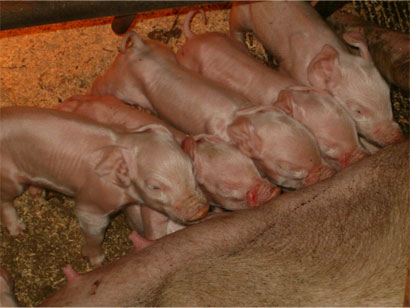
Proper care of piglets by a mother gilt or sow depends on sanitary conditions and a comfortable environment.

Savaging is a term used in the study of ethology that refers to aggressive behaviour displayed by the mother towards the offspring. Aggressive behaviour includes being rough with, injuring, biting, attacking, crushing and killing (maternal infanticide) of the offspring. While savaging behaviour has been seen in multiple species, it is predominantly demonstrated in domestic pigs (Sus scrofa domesticus). As the definition of savaging is so broad, research on the prevalence of savaging behaviour varies with reports of little savaging of offspring to savaging of offspring up to the 20th percentile. Prevalence of aggressive, non-fatal savaging is greater in gilts, or females who have not yet previously farrowed, as piglet-focused aggression is more frequent in young animals than sows, adult females who have previously given birth.[1] Occurrence of savaging demonstrated by sows is greater if the sow has previously savaged her offspring either as a gilt or sow. Savaging behaviour usually occurs during the first two days after parturition.[2] Prevalence of savaging is similar among first and second farrowing cycles.[1] Savaging behaviour has a significant impact on both agricultural economy and animal welfare which is why it is currently a subject of interest in the pig industry.

Environmental factors

[edit]

There exist multiple environmental factors that increase the rate of savaging demonstrated by pigs. It has been shown that human attitudes and behaviour can affect the behaviour of domestic pigs. For example, annoyance and transmission of emotions can occur in gilts and sows when a new worker enters the farrowing rooms and makes excessive noise, does not feed the animals in a timely manner and/or is frustrated/annoyed. Research suggests that maternal behaviour may improve when workers and pigs are familiar with their environment and on a set schedule.[1] Another environmental factor that has been examined is the amount of time spent by humans in the farrowing room. Decreased disturbance of the sows by human intrusions during farrowing has indicated a decrease in savaging behavior.[3] Increased aggression in sows is not always directed towards piglets as sows were just as likely to attack inanimate objects (bricks) as they were to attack piglets.[4] As indicated by the fact that aggressive behaviour can be predicted before parturition begins as indicated by pre-farrowing restlessness and the fact that aggression was directed towards both piglets and inanimate objects, sow aggression is not a result of a response to the sudden appearance of piglets.[4] A study by Gonyou and Harris found that increasing light exposure in the farrowing rooms to 16–24 hours per day decreased piglet deaths due to savaging. In the same study, it was found that increased piglet vocalizations around the time of farrowing did not help gilts adjust to the sudden presence of piglets, and instead was shown to increase the amount of piglet-directed aggression.[5] The influence of nest-building and nest-building materials has been shown to influence negative piglet-directed communication.[6] Access to materials as well as higher quality materials such as straw decreased the amount of negative communication between sows and piglets.[6] Similarly, limited space and poor pen conditions have been shown to increase the amount of piglet-directed aggression.[6] Pigs are social animals and a female's social support network can play an important role in postpartum piglet-directed aggression. Free ranging pigs form sounders, or small social units, give young gilts the opportunity to observe gestation and parturition and exposing them to normal maternal behavior.[7] Gilts raised in commercial pens are not exposed to piglets nor expecting mothers and thus are not aware of what to expect during gestation and parturition and are not aware of how to raise piglets.[7] In support of this theory, there is strong evidence that parity influences the amount of savaging and piglet-directed aggression displayed among primiparous gilts versus muiltiparous sows.[4][6][7] Some studies have found evidence of increased savaging rates in larger litter sizes as well.[1]

Genetic and biochemical factors

[edit]

It has been proposed that the degree of aggressive behaviour displayed prior to farrowing cycles by sows and gilts predicts whether the offspring will be savaged and to what extent.[8] Evidence has also been found that savaging sows may be genetically less likely to crush piglets, which lends to the existing research supporting that savaging sows can be competent mothers. Levels of steroid hormones such as estrogens and progestogens around farrowing correspond with levels of maternal aggression.[7] Specifically, high levels of estradiol at postpartum and high levels of pre-farrowing estradiol to progesterone ratios in gilts show more savaging behaviour to piglets. An increase in maternal aggressive behaviour as a result of low levels of progesterone would not be implausible as progesterone has been known to modulate serotonergic receptors.[7] High postpartum levels of estradiol and estriol have also been associated with maternal mood and behaviour.[7] The paraventricular nucleus (PVN) and the amygdala play important roles in moderating anxiety and depression with the PVN being responsible for secreting corticotropin releasing hormone (CRH) and oxytocin.[7] This would explain the increased amount of CRH in stressed gilts.[7] Abnormal levels of prepartum and postpartum oxytocin have also been linked to increased aggression and savaging as both abnormally high and abnormally low levels has been reported in savaging mothers.[7] Low levels of oxytocin result in fear and aggression as a result of the interaction between oxytocin and the opioid system and has also been linked to insufficient nursing.[6] Low levels of prolactin result in decreased milk let-down, leading to insufficient nursing and limited oxytocin being produced as a result of nursing.[6] Since oxytocin reduces functioning of the hypothalamic-pituitary-adrenal (HPA) axis, high levels of oxytocin corresponding to an increase in unnresponsiveness to piglet vocalizations would be the result of abnormal HPA pathway functioning.[7] Heritability estimates of 0.11 and 0.25 from half-sib analyses have demonstrated that selection against sow savaging of pigs is possible; however, it may be slow to show effectiveness.[9]

Preventive measures

[edit]

The pig industry is investing in research regarding savaging behaviours in hopes to diminish the losses they face when gilts and sows commit infanticide. Sedation techniques following birth have prevented savaging; however, in many cases, the onset of aggression is merely delayed.[8] Light exposure has the potential to prevent or limit savaging in pigs as pigs exposed to light for 16–24 hours a day in farrowing room experienced a decrease in the prevalence of savaging.[5] The industry has also attempted to avoid savaging behavior by limiting reproduction in gilts and sows that have previously savaged their offspring. Efforts to eliminate the behavior include additional care and attention to the mother pig during her farrowing cycles. Access to nesting materials such as straw and peat as well as sufficient pen space and conditions around the time of farrowing are also important factors in limiting savaging and piglet-directed aggression in pigs.[6] Increased social interactions and support from sounders also reduces the rate of savaging and piglet-directed aggression, indicating that would be beneficial to raise pigs in a free-roaming environment, but further research is needed to indicate if this would be economically feasible.[7] Restlessness and aggressive behaviour prior to farrowing have been shown to predict savaging and piglet-directed aggression following farrowing, allowing for the identification of individuals prone to savaging and subsequent treatment, precautionary measures, or supervision.[4]

Savaging in other species

[edit]

Savaging of offspring by the biological mother has been reported in multiple species including farmed silver foxes, farmed wild boar and domestic breeds of farmed pigs.[8] Though aggressive savaging behaviour is demonstrated by other species, it is most commonly used to describe pig aggression. Infanticide in rodents has also been observed, with Syrian hamsters engaging in both infanticide and then cannabalizing some of their offspring following parturition.[10] Syrian hamsters are more likely to savage and successfully kill female offspring compared to male offspring and will cannibalize more offspring if metabolic fuels from food or fat stores are insufficient.[10] This is unlike savaging in pigs, who don't cannabalize piglets and are not motivated to savage by hunger.[4] Similar to pigs, litter size was shown to influence savaging with an increase in Syrian hamster litter size correlating to an increase in maternal infanticide.[10] Research has shown that primiparous silver foxes demonstrate savaging shortly after birth with a 37% chance of killing the offspring through bite wounds.[11] Silver foxes have been shown to engage in savaging behaviour followed by infanticide and cannibalism of the offspring.[11] Savaging in wild boars has been found to have genetic significance as different genetic lines have produced varying degrees of savaging.[12] Wild boars have shown aggression after parturition towards their offspring; however, they have lower infanticide rates than other species.

See also

[edit]

References

[edit]
[edit]
Revisions and contributorsEdit on WikipediaRead on Wikipedia
from Grokipedia
Savaging is an aggressive behavior exhibited by newly farrowed sows toward their own newborn piglets, typically involving deliberate biting attacks that can result in severe injury or death to the offspring, and is a recognized phenomenon in the of domestic pigs. This maternal , often termed progeny savaging, primarily affects first-litter gilts—young female pigs giving birth for the first time—and is responsible for 1-3% of overall preweaning mortality, though it can account for up to 10-25% of such deaths in some populations. While the exact incidence varies by farm and parity, studies report rates ranging from 3.2% to 14.6% among observed sows, with higher prevalence in gilts compared to multiparous sows. The is linked to heightened excitability and restlessness during the periparturient period, including increased postural changes, rooting, and responsiveness to stimuli around farrowing, though it is not specifically triggered by the piglets themselves. Contributing factors include environmental stressors such as confinement in unfamiliar farrowing crates, nutritional imbalances, and poor human-animal interactions that hinder sow-stockperson , with a heritable component (estimates ranging from 0.08 to 0.90). Certain breeds, like pure-bred Large White gilts, and management practices involving large groups without established social hierarchies may exacerbate the risk. Savaging poses significant welfare challenges for both sows and lets, as well as economic losses in swine production due to reduced survival, prompting into prevention strategies like pre-farrowing to crates, environmental enrichments (e.g., and dim ). Ongoing studies emphasize the role of genetic selection and improved housing in mitigating this damaging across populations.

Overview

Definition and Characteristics

Savaging is an aggressive exhibited by a mother animal toward her own shortly after birth, typically involving deliberate , crushing, or killing that results in injury or death. This ethological phenomenon is distinct from general predation or non-maternal , as it arises specifically in the and disrupts normal maternal care. In domestic pigs, which represent the primary studied example, savaging often leads to of the young. Key characteristics of savaging include its sudden onset post-parturition, frequently within the first hour after delivery, and its classification as an abnormal form of maternal aggression in . The behavior is marked by heightened restlessness, such as frequent posture changes and walking, along with vocalizations like grunting or barking, active pursuit of , and potential consumption of the victims. These traits reflect a maladaptive escalation from typical maternal interactions, often linked to excitability rather than inherent poor parenting. The behavioral sequence of savaging typically progresses from initial , involving sniffing or investigative contact with the newborn, to abrupt physical attacks that may include seizing and shaking . This shift provokes distress responses from the young, such as squealing or evasion attempts, further stimulating the mother's . While detailed observations are most available for pigs, analogous sequences occur in other mammals , where overzealous grooming can escalate to .

Prevalence and Significance

Savaging, a form of maternal directed toward neonates, is most prevalent in domestic pigs, where it affects 5-15% of gilts during their first farrowing, with incidence rates dropping to 1-6% in multiparous sows. This variation is attributed to the higher levels in primiparous females, though exact figures differ across farms due to practices. While the term "savaging" is primarily applied to , analogous maternal behaviors are rare but documented in other mammals, such as stress-induced pup killing in and occasional neonate abandonment or attack in . The significance of savaging extends to substantial offspring mortality, with affected litters often losing 1-3 piglets (up to 20% of the litter in severe cases) from direct attacks, contributing to approximately 4% of overall pre-weaning piglet deaths industry-wide. In livestock farming, particularly pork production, these incidents result in economic losses estimated in the millions annually, stemming from reduced weaning numbers and culling of aggressive sows, which impacts herd productivity and profitability. Beyond finances, savaging raises ethical concerns in animal welfare, as it inflicts severe suffering on vulnerable neonates and underscores deficiencies in maternal care under intensive farming conditions. Within , savaging has been studied since the 1970s, building on early observations of maternal behaviors in captive and wild mammals, and it is distinguished from broader patterns—often male-driven—by its focus on postpartum maternal . This research highlights savaging's role in understanding reproductive conflicts and welfare interventions, influencing applied ethology in agriculture to mitigate such behaviors through environmental and genetic strategies.

Causes

Environmental Factors

Environmental factors play a significant role in triggering or exacerbating savaging behavior in sows, particularly gilts, by inducing during the vulnerable periparturient period. Confinement in farrowing crates, which restricts sow movement and prevents natural nesting behaviors, heightens agitation and increases the likelihood of toward piglets. Studies indicate that crating gilts shortly before farrowing amplifies this risk, as the sudden restriction exacerbates discomfort during parturition, leading to higher rates of piglet or . In contrast, farrowing systems, where sows experience minimal or no confinement, have been shown to reduce the severity and duration of savaging attacks. The provision of nesting materials, such as or , mitigates stress by allowing sows to perform instinctive nest-building activities, thereby lowering the frequency of negative interactions with . Research demonstrates that sows given access to these materials during farrowing exhibit reduced posture changes and toward piglets, with enriched environments promoting calmer maternal responses. Lack of such materials in barren crates contributes to redirected , as frustrated nesting drives increase restlessness. Additionally, high stocking densities in farrowing areas amplify , promoting a cascade of where one sow's unrest influences others nearby. Human disturbances, including noisy handling or frequent interventions during farrowing, further elevate stress levels and savaging incidence, as startled gilts may misdirect fear toward their litters. Nutritional inadequacies pre-partum, such as excessive body condition from overfeeding or abrupt feed reductions, complicate farrowing and trigger aggression, while temporal factors like nighttime farrowing in low-light conditions correlate with higher savaging rates due to disrupted circadian rhythms. Heat stress in warmer climates compounds these issues by impairing thermoregulation and increasing overall sow irritability, though its direct link to savaging is mediated through generalized stress. Experimental evidence supports interventions like continuous lighting, which reduced fatal savaging by approximately 40% and overall piglet mortality by 15% in commercial settings, highlighting the potential of modifiable environmental adjustments. These external triggers can interact with genetic predispositions to amplify risk, underscoring the importance of holistic management.

Genetic and Biochemical Factors

Savaging behavior in sows exhibits a genetic component, with estimates ranging from 0.20 to 0.90 based on studies of maternal toward piglets. This variability suggests that programs targeting low- traits can reduce incidence, as demonstrated in lines where gilts selected for calm maternal responses showed fewer savaging events compared to unselected counterparts. Quantitative trait loci (QTLs) on chromosomes SSC2, SSC6, SSC14, SSC15, and SSCX have been identified as associated with maternal , influencing anxiety-related and bipolar-like behaviors that may underlie aggressive outbursts. Hormonal imbalances post-farrowing contribute to savaging, particularly through dysregulation of the hypothalamic-pituitary-adrenal (HPA) axis, where elevated cortisol levels indicate chronic stress and correlate with reduced maternal care and increased piglet mortality. Disruptions in oxytocin signaling are also implicated, with higher plasma oxytocin concentrations observed in high-risk sows that exhibit unresponsiveness to piglet vocalizations and heightened aggression shortly after birth. Prolactin levels, however, show no significant differences between savaging and non-savaging sows, though fluctuations in estrogen-to-progesterone ratios during the periparturient period have been linked to aggressive tendencies in primiparous gilts. Neurological factors involve altered systems, such as reduced serotonin (5-HT) activity, which is associated with increased in pigs; lower expression of 5-HT1A receptors in the medial and lateral has been noted in aggressive individuals, potentially extending to maternal savaging contexts. In , models of maternal reveal hyperactivity in the , where increased (CRH) expression in stressed females leads to heightened defensive responses toward intruders, mirroring mechanisms that may drive in sows. Biochemical markers include deficiencies in enzymes like monoamine oxidase A (MAOA), where specific single nucleotide polymorphisms (SNPs) in the porcine MAOA gene correlate with elevated aggressive behavior in young pigs, suggesting a role in modulating serotonin and dopamine turnover that could predispose sows to savaging episodes. These genetic variations in MAOA haplotypes are among the strongest predictors of aggression risk, highlighting potential targets for genomic selection to mitigate such behaviors.

Savaging in Pigs

Description in Domestic Pigs

Savaging in domestic pigs manifests as a form of maternal where sows, especially gilts, actively attack their newborn piglets through or other deliberate actions, often leading to immediate or . This is distinct from accidental crushing and is characterized by targeted rather than general . Behavioral patterns are most pronounced in gilts, with incidence rates of savaging reported between 5% and 15% of litters across commercial farms, though severe outbreaks can affect up to 50% in new herds. Attacks typically peak within the first 24 hours after farrowing, with observations spanning from 5 hours pre-parturition to 24 hours postpartum, and often focus on weaker or smaller piglets. In intensive production systems, such as crated indoor environments, these episodes are more visible and frequent compared to outdoor settings, where they may go unnoticed. Signs preceding savaging include heightened restlessness, rearing, and a wild-eyed, apprehensive demeanor in the sow. The immediate physical outcomes are severe, including crushing under the sow's body weight during attacks, deep bite wounds that frequently result in bacterial infections requiring antibiotics, and in extreme instances, cannibalism where the sow partially or fully consumes the victims. Savaging accounts for a notable portion of early piglet mortality, contributing to 11-25% of pre-weaning losses in affected litters. Breed variations influence susceptibility, with studies showing differing patterns; for example, one reported crossbred sows (e.g., Large × ) at around 4.1%, purebred at 3.8%, and purebred Large at 2.6%, while other sources indicate higher rates in purebred Large gilts compared to or Duroc counterparts.

Risk Factors Specific to Pigs

Savaging is most prevalent among gilts, or first-time farrowing females, with incidence rates ranging from 3.4% to 14.6% across commercial farms, compared to 1.22% in multiparous sows. This elevated risk in gilts stems from their inexperience with parturition and piglet care, leading to heightened agitation and misdirected toward . The behavior decreases with subsequent litters, as experienced sows exhibit more stable maternal responses, though approximately 14% of gilts that savage may repeat the behavior in their second parity. In severe cases, savaging accounts for up to 25% of preweaning piglet deaths, underscoring its impact on litter survival. Certain breeds show higher savaging rates, with purebred Large White gilts exhibiting greater aggression than or Duroc counterparts, potentially due to temperament differences influenced by for productivity. Litter size also plays a role, where smaller litters containing larger, heavier piglets increase the risk by prolonging and intensifying farrowing discomfort, which can trigger aggressive responses. Conversely, larger litters with smaller piglets tend to reduce this pain-related aggression, though overall piglet mortality may rise indirectly from other vulnerabilities in hyper-prolific lines. Health-related factors, particularly excessive body condition in gilts, contribute significantly by causing fat accumulation that narrows the pelvic canal and leads to difficult farrowings, thereby heightening agitation and savaging propensity. Difficult farrowings themselves act as a direct trigger for aggression, as the associated pain disrupts normal maternal bonding. While viral infections like parvovirus are not directly linked, underlying health stressors can exacerbate general environmental influences on behavior.

Savaging in Other Species

In Wild Animals

In wild rodents such as house mice (Mus musculus), virgin females frequently exhibit infanticidal behavior toward pups, with approximately 60% of non-maternal females in wild populations killing unrelated offspring, often driven by resource competition in dense habitats where investing energy in non-kin reduces their own reproductive success. This behavior is particularly pronounced in high-density environments, where females prioritize their future litters over caring for others' young. Among , is well-documented in species like Hanuman langurs (Semnopithecus entellus), where incoming males typically kill infants to accelerate female estrus. In other , such as chimpanzees (Pan troglodytes), female-led targets unrelated juveniles during periods of ecological stress, serving to reduce competition within groups. Similarly, in carnivores like lions (Panthera leo), mothers may kill deformed or weak cubs to cull non-viable offspring, allowing focus on healthier littermates that have higher survival prospects. These behaviors often carry adaptive value in wild contexts, enabling mothers to eliminate weak or deformed offspring that would consume limited resources without contributing to future , thereby enhancing overall fitness in unpredictable environments. Compared to domestic settings, savaging-like in wild animals is less frequent due to natural population spacing and dispersal, which minimize intense , and is more commonly triggered by external threats like predation or seasonal resource shortages rather than artificial confinement. This ecological distinction underscores the behavior's role in maintaining adapted to wild variability.

In Other Domestic Animals

In sheep and goats, maternal rejection of offspring is relatively rare but can manifest as or aggressive displacement, particularly in primiparous females due to inexperience and lower oxytocin levels (13 pg/mL compared to 17 pg/mL in multiparous ewes). This behavior is more prevalent with twin births, where nutritional deficits during late impair bonding and increase neonatal mortality rates up to 1.2 per 100 animals in inexperienced mothers. In , primiparous does exhibit prolonged latency to grooming (365.6 seconds versus 60.5 seconds in multiparous) and reduced success (9% within one hour versus 33%), exacerbated by dystocia and inadequate nutrition, leading to a 24.56-fold higher of offspring loss. In dogs and cats, pseudopregnant females occasionally display toward puppies or kittens, often linked to hormonal imbalances such as elevated and disrupted or oxytocin signaling post-weaning. Maternal in dogs arises from stress, inexperience, or perceived weakness in offspring, with dystocia further reducing protective instincts and prompting rejection or attack behaviors. In cats, similar hormonal disruptions can lead to or , though protective maternal responses are more common during pseudopregnancy, mimicking true without viable offspring. Rabbits experience doe-inflicted kit mortality through or neglect, particularly in commercial breeding settings where in hutches induces stress and for nesting resources. This , affecting entire litters in up to 77% of cases, stems from uterine inertia, , and environmental stressors like poor , with separate birthing enclosures reducing incidence by mitigating inter-female . In intensive production, kit mortality from such events contributes to overall welfare concerns, though specific rates hover around 5% in stressed commercial populations. Compared to savaging in pigs, which affects 3.4% of gilts and 1.22% of sows due to similar and hormonal factors, these behaviors in other domestic receive less , with welfare reports from the 2000s highlighting connections to early practices that amplify nutritional and deficits across .

Prevention and Management

Preventive Measures

Preventive measures for savaging in pigs emphasize pre-farrowing interventions to mitigate and behavioral triggers in sows and gilts, with similar adaptations possible for related species like wild boars. plays a key role, as providing nesting materials such as or 3-5 days before farrowing allows sows to express natural nest-building behaviors, reducing frustration and spikes associated with confinement. systems, where sows have freedom to move post-farrowing, may improve sow welfare through natural locomotion but require careful design to minimize piglet crushing risks, with mixed on overall mortality compared to crates. Genetic selection forms the foundation of long-term prevention, with breeding programs screening for low-aggression traits through heritability estimates of savaging (ranging from 0.08 to 0.90), targeting improved maternal to avoid high-risk gilts that exhibit restless or hyper-responsive tendencies during farrowing. In practice, farms cull gilts that have savaged in previous litters and prioritize lines like those with higher oxytocin responsiveness, which correlates with reduced risk. Nutritional protocols further support hormonal stability; balanced diets incorporating omega-3 s, such as from supplementation during , enhance profiles and may lower manipulative responses. Feeding schedules should mimic natural patterns, reducing high-energy feeds pre-farrowing to prevent hunger-induced agitation, with options like bran supplementation ensuring sows do not farrow in excess condition. Monitoring techniques enable early detection of at-risk individuals, using or 3D imaging systems in farrowing areas to observe sow posture, restlessness, and interactions, allowing for timely interventions like temporary separation of piglets into heated creep areas for high-risk sows. Sympathetic handling of pregnant gilts throughout , combined with quiet farrowing environments, further minimizes disturbances that could exacerbate underlying causes such as elevation from novel stimuli. These proactive steps, when integrated, significantly lower savaging incidence without relying on post-event responses. While primarily discussed for domestic pigs, similar stress-reduction principles may apply to savaging-like behaviors in other .

Management Strategies

Upon detecting savaging behavior in sows, immediate physical separation of the sow from her is essential to protect surviving piglets, often achieved by confining the piglets to a designated creep area away from the sow for at least 20 minutes or until she has calmed and rolled onto her side. of the aggressive sow using azaperone (1 ml per 12 kg body weight) or similar agents like Stresnil can rapidly reduce agitation during or immediately after farrowing. Temporary restraint options, such as a cut-off placed over the sow's snout or a rubber muzzle, help prevent further attacks while allowing supervised reunification. Analgesics like (Metacam) administered during farrowing may also mitigate pain-induced aggression, facilitating safer management. For injured piglets that survive initial attacks, prompt wound care is critical to minimize infection risk and promote recovery; minor skin lacerations should be cleaned, sutured, glued, or stapled, followed by administration to prevent . Surviving piglets require assisted suckling to ensure intake, along with measures to prevent chilling, such as placement in a warmed hospital pen under veterinary supervision. Severely compromised piglets may necessitate to avoid prolonged suffering, with segregation of affected individuals to isolate them from further harm. Long-term farm adjustments focus on refining reproductive timing and sow conditioning to lower recurrence risks; farrowing induction using prostaglandins on day 113 of enables supervised births, reducing opportunities for unsupervised aggression. Behavioral conditioning through positive human-sow interactions, such as gentle handling and reward-based starting weeks before farrowing, can decrease overall nervousness and improve maternal responses in subsequent litters. Farms may also implement protocols for sows exhibiting repeated savaging across multiple litters to prevent ongoing losses. Research demonstrates the efficacy of integrated approaches in curbing savaging; for instance, a study across seven commercial herds found that continuous (16-24 hours per day) in farrowing rooms significantly reduced the incidence of fatal savaging (P < 0.05) and the number of piglets killed per . Regulatory frameworks from organizations like the FAO emphasize general welfare practices, such as adequate and stress minimization, indirectly supporting these interventions through broader guidelines on maternal behavior monitoring.

References

Add your contribution
Related Hubs
User Avatar
No comments yet.