Hubbry Logo
Sean ReinertSean ReinertMain
Open search
Sean Reinert
Community hub
Sean Reinert
logo
8 pages, 0 posts
0 subscribers
Be the first to start a discussion here.
Sean Reinert
Sean Reinert
from Wikipedia

Key Information

Sean Landon Reinert (May 27, 1971 – January 24, 2020) was an American musician. He was the drummer for the rock band Æon Spoke, the drummer for Death metal band Death and the drummer and cofounder of the progressive metal band Cynic along with Paul Masvidal until leaving the band in September 2015.[1]

Career

[edit]

In 1991, Reinert and Paul Masvidal (also of Cynic) joined the band Death to record the Human album. This album is seen by many as the start of the technical death metal genre. After touring with Death, he returned to Cynic.

1993 saw the release of Focus (regarded as a landmark release in the field of technical/progressive metal) on the Roadrunner Records label. Roadrunner re-released it in 2005 as a special collector's edition due to high demand. After Cynic's disbandment Reinert had been a member of the Cynic spin-off band Portal which released a demo but eventually disbanded. Having relocated to Los Angeles, Reinert continued working with music by writing and performing for television shows and motion pictures.

In 1999, Reinert helped form Æon Spoke alongside Masvidal, which is described as an "ethereal rock" band.[2] The band saw releases in 2004 and 2007, receiving national and satellite airplay, performing, hosting radio appearances, and even appearing on television show and motion picture soundtracks.

During this time in 2006, it was announced that Cynic would reform for a tour which took place in the summer of 2007. The reformed lineup then recorded a follow-up to Focus entitled Traced in Air, which was released in 2008 and followed by more touring. In 2009, a new EP with Cynic was recorded scheduled for release in May 2010.

As of May 2014, he publicly revealed his homosexuality along with fellow Cynic member Paul Masvidal.[3]

Reinert died on January 24, 2020, due to an aortic rupture.[4]

Legacy and influence

[edit]

Reinert credited Kenny Clarke, John Bonham, Neil Peart, Gary Husband and Vinnie Colaiuta as being important influences during his formative years.

Many artists have cited Reinert as an influence, including Peter Wildoer of Darkane,[5][6] Brann Dailor of Mastodon,[7] Gene Hoglan,[8] Richard Christy,[9] Dirk Verbeuren of Soilwork and Megadeth,[10] Chris Pennie of The Dillinger Escape Plan and Coheed and Cambria,[11] George Kollias of Nile,[12] John Merryman of Cephalic Carnage,[13] Daniel Moilanen of Katatonia,[14] Elliot Hoffman of Car Bomb,[15] Evan Sammons of Last Chance to Reason,[16] and Mario Duplantier of Gojira.[17]

In addition, other artists have been quoted expressing admiration for his work including Mike Portnoy, Hannes Grossmann,[18] Kai Hahto of Nightwish,[19] Dan Presland of Ne Obliviscaris,[20] and Danny Walker of Intronaut.[21]

Discography

[edit]
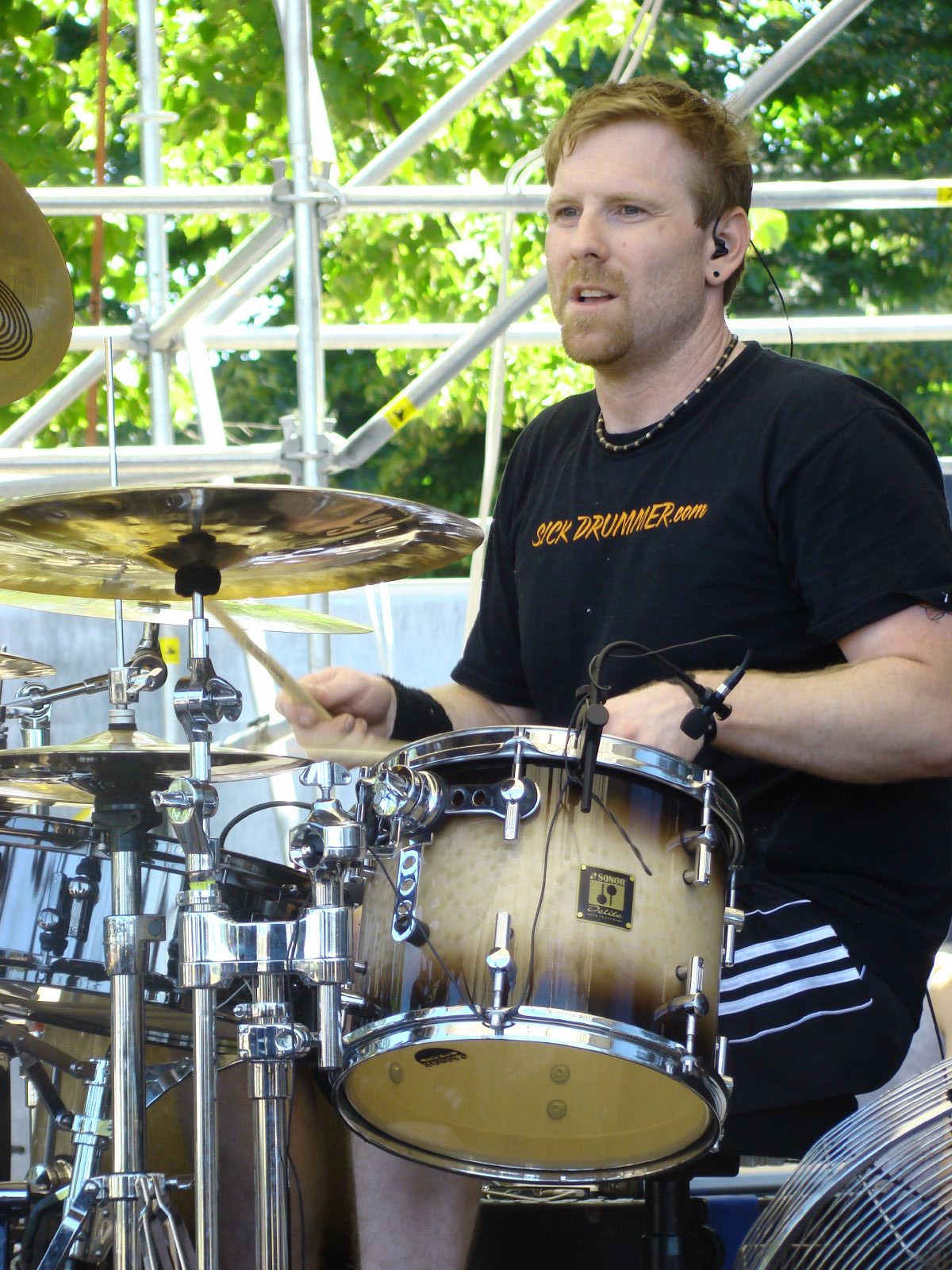
Reinert performing in 2007
Cynic
Other

References

[edit]
[edit]
Revisions and contributorsEdit on WikipediaRead on Wikipedia
from Grokipedia
Sean Reinert (May 27, 1971 – January 24, 2020) was an American , , and educator renowned for his innovative fusion of , , and , particularly as the co-founding of the influential band Cynic and for his contributions to Death's landmark 1991 album . Born in Miami, Florida, Reinert formed Cynic in 1987 alongside guitarist and vocalist while still a teenager, drawing from influences like and to craft a unique sound that blended complex polyrhythms, atmospheric textures, and technical precision. The band's debut album, Focus (1993), is widely regarded as a cornerstone of progressive and , showcasing Reinert's drumming—characterized by odd time signatures, layered percussion, and melodic sensibility—that elevated the genre beyond brute aggression toward sophisticated artistry. At just 19 years old, Reinert joined , the pioneering band led by , to record , which marked a pivotal shift in the band's sound by incorporating progressive elements and jazz-inspired improvisation, largely thanks to Reinert's and Masvidal's involvement. He also toured with and later participated in Death to All, a tribute project honoring Schuldiner's legacy with fellow former members. Beyond metal, Reinert co-founded the ethereal rock project Æon Spoke in 1999, releasing albums that explored ambient and introspective themes, and contributed to outfit Perfect Beings, with their final collaborative effort Vier in 2018. After an acrimonious split from Cynic in 2015, Reinert relocated to , where he pursued composition for television and film, reflecting his broader musical versatility as an educator and . His from an and hypertensive at age 48 shocked the metal community, prompting tributes that highlighted his enduring impact as a "genre-changing" who bridged heavy music with improvisational finesse.

Early life and education

Childhood and family background

Sean Reinert was born on May 27, 1971, in , Florida. Growing up in the area, he was exposed to a vibrant local scene during his adolescence, including the emerging community centered around bands like , which would later influence his path. Details about Reinert's family background remain limited in public records, but his early environment proved supportive of his musical interests, including his mother's requirement for formal drum lessons upon switching instruments. He began exploring as a child, taking lessons for three years starting around age seven, which provided him with a foundation in reading music and classical techniques. This encouragement extended to other instruments; by his pre-teen years, he had also experimented with the , reflecting a household that fostered creative pursuits despite the challenges of practicing loud instruments. At age 10, Reinert transitioned to drums after negotiating a deal with his mother for lessons, marking the start of his focused percussion journey; he practiced intensively, even to the point of disturbing neighbors, and quickly demonstrated natural timing during his first lesson by playing a song by . Self-taught elements emerged as he immersed himself in rock and metal records, including early influences like and . By high school, this passion led to his first band experiences in local groups, where he connected with fellow musician , whom he had first met in elementary school.

Musical training and influences

Reinert began his formal musical training in his youth, initially studying piano for several years before exploring other instruments, including the . At around age 10, he switched to drums, taking lessons immediately after the transition, which his mother had conditioned on formal instruction. He demonstrated an early aptitude for rhythm, impressing his first drum teacher by maintaining precise time on a Police track during his initial session. Admitted to the School of the Arts at age 15, Reinert graduated at the top of his class, honing his skills in a rigorous environment. Reinert pursued higher education in music, earning an associate's degree from Miami Dade Community College before transferring to the , where he obtained a in composition and , with a minor in percussion. His instructors there included Lou Abbott, Harry Hawthorne, and Fred Wickstrom. Later, after relocating to , he studied with Steven Scott Smalley, a longtime collaborator of on films such as Batman. These academic pursuits emphasized theoretical foundations and orchestral techniques, complementing his practical drumming experience. Reinert's key influences spanned jazz, rock, and fusion genres, shaping his versatile approach. He cited jazz pioneers like Kenny Clarke for innovative rhythm concepts, Gary Husband for fusion dynamics, and Vinnie Colaiuta for technical precision and adaptability. Rock icons John Bonham and Neil Peart inspired his powerful grooves and progressive structures, while broader figures such as Steve Gadd, Dave Weckl, and Dennis Chambers contributed to his emphasis on feel and musicality over sheer speed. During his college years at the University of Miami, Reinert began experimenting with blending these jazz, fusion, and progressive rock elements into heavier styles, laying the groundwork for his distinctive polyrhythmic and textural drumming. This period of self-directed exploration, alongside formal studies, allowed him to integrate complex improvisation with structured composition.

Career

Early involvement with Death

In 1990, Death frontman recruited drummer Sean Reinert and guitarist —longtime friends from their earlier collaboration in the band Cynic—to join the band's lineup for its next album. This marked Reinert's entry into the professional scene at age 19, where his sophisticated drumming style complemented Schuldiner's evolving songwriting. Reinert's contributions to Death's fourth studio album, (1991), showcased his technical precision and infusion of jazz-fusion elements into the genre's aggressive framework. On tracks like "Lack of Comprehension," his drumming featured intricate patterns, polyrhythms, and dynamic shifts that blended percussive intensity with melodic subtlety, elevating the album's complexity. These performances helped push toward greater sophistication, laying groundwork for the technical subgenre. Following 's release in October 1991, Reinert toured with on the Inhuman Tour of the World, performing across , , and through late 1991 and into early 1992. The tour included high-profile European dates, such as the Rock Hard Festival, and extensive U.S. shows that solidified the band's international presence. Reinert departed in 1992 to prioritize his commitments with Cynic, though his brief tenure left a defining mark on through Human's enduring influence.

Founding and evolution of Cynic

Cynic was co-founded in late 1987 by drummer Sean Reinert and guitarist/vocalist , who were high school classmates in Miami, Florida, amid the burgeoning scene. The initial lineup included guitarist Jason Gobel, Mark Van Erp, and vocalist Jack Kelly, with the band quickly recording their first demo in 1988, characterized by raw thrash-influenced riffs and aggressive energy devoid of the progressive elements that would later define them. Subsequent demos in 1989 (Reflections of a Dying World) and 1990 refined their sound, incorporating twin guitar harmonies and technical precision, while lineup changes—such as Tony Choy's addition—hinted at growing ; meanwhile, Masvidal and Reinert temporarily joined to contribute to their 1991 album Human and subsequent tour, placing Cynic on hold. The band's breakthrough arrived with their debut album Focus in 1993, released through , which marked a radical shift to a style infused with elements, including intricate guitar work, lines, and vocoder-treated vocals evoking an otherworldly atmosphere. Reinert's drumming on Focus was particularly innovative, blending furious double-kick patterns rooted in death metal with dexterous phrasing, odd time signatures like layered 12/8 rhythms, and atmospheric builds that provided dynamic tension and release throughout the tracks. This fusion approach, drawing briefly from Reinert and Masvidal's shared interests in and fusion during their formative years, elevated Focus to cult status despite initial commercial underperformance. Following Focus, Cynic entered a hiatus in 1994 after just one tour, driven by creative differences, frustration with the music industry's lack of support, and unresolved personal tensions that left the band feeling alienated from their work. Masvidal later described the dissolution as a painful wound, prompting him to relocate to and pursue other endeavors, while Reinert briefly contributed to projects like the jazz-infused metal band Aghora. The band reunited in 2006, with Masvidal and Reinert reconvening alongside bassist and guitarist to write new material, culminating in the 2008 album via , which expanded on Focus's progressive and atmospheric blueprint with even more ethereal soundscapes and mathematical precision. This revival led to extensive touring and the 2011 EP Carbon-Based Anatomy, a six-track release blending prog rock, tribal folk, and futuristic elements, further solidifying their influence in the . Cynic continued performing until 2015, when Reinert announced the split on the band's page, citing insurmountable artistic and personal differences that ended their collaborative chapter, though the band's online presence remained active for updates.

Side projects and Æon Spoke

During the hiatus of Cynic following the release of Focus in 1993, drummer Sean Reinert and guitarist formed the alternative rock project Æon Spoke in 1999, marking a significant departure from their roots toward an ethereal, atmospheric sound characterized by ambient pop elements and introspective songwriting. The duo, who had previously collaborated in Cynic and , recruited additional members including guitarist Evo (E. van Orden) to expand their lineup, focusing on melodic structures and layered textures that evoked a sense of emotional depth and subtlety. Æon Spoke's music represented a creative exploration for Reinert, allowing him to incorporate keyboards and percussion alongside his drumming to create immersive soundscapes. The project released its debut album, Above the Buried Cry, independently in 2004, featuring tracks that blended influences with haunting vocals and intricate rhythms driven by Reinert's precise yet understated drumming. This was followed by the self-titled Æon Spoke in 2007 on SPV Records, which refined their atmospheric style with more polished production and songs emphasizing themes of introspection and transience. Æon Spoke's compositions gained visibility through placements in television soundtracks, including episodes of and One Tree Hill, where tracks like "Emmanuel" and "No Answers" underscored dramatic scenes with their emotive, dreamlike quality. In parallel with Æon Spoke, Reinert contributed to the band Aghora during the early 2000s, providing drums for their self-titled debut album released in 2000. Formed by guitarist Santiago Dobles, Aghora fused technical with elements, incorporating exotic scales, rhythms, and influences from through vocalist Danica Roem's heritage and lyrical themes. Reinert's involvement, which lasted until around 2000, added his signature polyrhythmic complexity to the album's tracks, enhancing its blend of aggressive riffs and melodic interludes. Reinert also participated in , a project led by bassist from 1999 to 2003, where he handled on the self-titled debut album (1999) and Emergent (2003). This instrumental endeavor emphasized a hybrid of bass and drums within jazz-fusion and progressive frameworks, showcasing Reinert's ability to navigate intricate time signatures and textural dynamics without vocals. Throughout the early , Reinert made select guest appearances on recordings and took on production roles for emerging artists in the progressive and alternative scenes, further diversifying his contributions beyond his primary projects.

Later work with Perfect Beings and other endeavors

Following his departure from Cynic in 2015, Reinert joined the Los Angeles-based band Perfect Beings in September 2017 as their . He contributed to the band's third studio album, Vier, which was released on January 19, 2018, via InsideOutMusic and featured extended conceptual compositions blending , rock, and experimental elements. Reinert's on tracks like "Guedra" showcased his signature polyrhythmic precision and dynamic shifts, enhancing the album's ambitious 70-minute structure divided into three suites. Perfect Beings performed live with Reinert in , including a show on April 29 at The Hi Hat in and an appearance at RoSfest on May 5 in , where they played material from their catalog. These performances marked Reinert's return to the stage after a period of reduced activity, highlighting his ability to integrate fusion-influenced grooves into the band's live sound. In addition to band work, Reinert pursued education and compositional interests. He taught drumming techniques through clinics and contributed instructional articles to Sick Drummer Magazine, such as lessons on foot patterns and polyrhythmic grooves like "3 against 4," which emphasized applications in contexts. These materials focused on developing rhythmic complexity and feel, drawing from his background in blending odd meters with intensity. Reinert also engaged in compositional studies after relocating to , where he trained in under Steven Scott Smalley—a frequent collaborator with composer —and in composition with Robert Drasnin. Earlier in his career, he participated in the short-lived project C-187 alongside Pestilence guitarist and Atheist bassist , contributing drums to their 2007 debut album Collision.

Personal life and death

Private life and relationships

Sean Reinert maintained a close friendship with , whom he first met in junior high school in , fostering a deep creative and personal bond that lasted decades. The two shared a house in , , during the , reflecting their intertwined lives beyond music. This partnership evolved through mutual support, including Masvidal introducing Reinert to his first long-term partner, with whom Reinert was in a seven-year relationship. Reinert resided in for much of his early career, rooted in the area where he grew up, before relocating to . He led a low-profile personal life, prioritizing privacy and avoiding public scrutiny of his private affairs. In , Reinert and Masvidal publicly came out as in a joint interview, addressing stereotypes in the metal community while emphasizing their authentic lives. By that time, Reinert was living with a longtime boyfriend in . No public details exist regarding children or formal marriages during Reinert's lifetime, underscoring his emphasis on . Music remained central to his identity, with limited documented pursuits outside of it, though he occasionally engaged in and practice-related activities in his .

Health issues and passing

Sean Reinert died on January 24, 2020, at the age of 48, from an stemming from an undiagnosed hypertensive cardiovascular condition. He was discovered unresponsive at his home in by his husband, Thomas Snyder, who performed CPR with guidance from a 911 operator until emergency services arrived; Reinert was subsequently pronounced dead at a local . The official was determined to be an due to hypertensive , with no suspicion of foul play or external factors. Following his death, Reinert's husband sought to honor his wish to be an , but the request was denied by authorities due to federal guidelines excluding sexually active , sparking over in organ donation policies. Reinert's longtime friend and Cynic collaborator promptly informed immediate family members and issued a public statement requesting privacy to allow them space to grieve. A private service was conducted for family and close associates in the days following his passing, while public notifications were shared through official band channels and news outlets to honor his memory without further intrusion.

Legacy and influence

Drumming style and innovations

Sean Reinert's drumming was characterized by a sophisticated fusion of intensity and -inflected subtlety, employing polyrhythms and odd time signatures such as 7/8 to create intricate, flowing rhythms within heavy contexts. His seamless integration of fills into metal structures allowed for expressive, improvisational phrasing that contrasted with the genre's typical aggression, drawing briefly from influences like during his formal training. Techniques like added textural depth and nuance, enabling dynamic shifts that built tension through subtle volume variations and layered percussion accents. In Death's Human (1991), Reinert elevated death metal drumming by incorporating finesse and melodic phrasing into double bass patterns, as heard in tracks like "Flattening of Emotions," where rapid footwork intertwined with syncopated snare work to produce a sense of propulsion and complexity. This approach marked an innovation by transforming the double bass from mere speed tool into a vehicle for harmonic interplay, blending blast beats with jazz grooves to expand the genre's rhythmic palette. Similarly, on Cynic's Focus (1993), his use of odd meters and polyrhythms in songs like "Uroboric Forms" introduced progressive experimentation, where ghost notes and dynamic swells created ethereal transitions amid technical metal frameworks. These elements collectively pushed boundaries, making Reinert's contributions pivotal in redefining death metal's technical possibilities. Reinert favored custom drum setups tailored for progressive complexity, endorsing Tama Starclassic Maple kits for their resonant tone and versatility in handling odd-meter demands. He also held a full endorsement with , utilizing models like the HHX series for their crisp response in jazz-metal hybrids, which supported his preference for setups emphasizing dynamic control and extended tom configurations. Over time, Reinert's style evolved from the high-octane aggression of metal and Cynic to more atmospheric and subtle expressions in later projects. In Æon Spoke, his drumming adopted ethereal textures with restrained ghost noting and ambient fills, prioritizing mood over velocity. This progression culminated in Perfect Beings, where he explored improvisational subtlety and space, using polyrhythms to evoke rather than intensity, reflecting a maturation toward fusion-oriented nuance.

Tributes, recognition, and posthumous projects

During his lifetime, Sean Reinert received recognition for his innovative drumming through features in prominent publications and professional endorsements. In 2018, he was profiled in Modern Drummer magazine's October issue for his contributions to the progressive rock band Perfect Beings, highlighting his precise and dynamic style honed from earlier work in extreme metal. Reinert also conducted drum clinics, such as a notable session at Guitar Center in Hallandale, Florida, in 1997, where he demonstrated his techniques to aspiring musicians. Additionally, he held endorsements from major manufacturers, including Sabian cymbals, Sonor drums, and Grindstix, which supported his setups across various projects. Following Reinert's death on January 24, 2020, tributes poured in from the metal , underscoring his enduring impact. Drummers like of Testament and of acknowledged his influence, with Hoglan participating in memorial discussions that celebrated Reinert's role in elevating metal's technical boundaries. Social media and fan communities dedicated to Cynic and shared widespread memorials, reflecting collective grief and admiration for his legacy. A significant posthumous tribute was the 2021 documentary Sean Reinert Tribute produced by DrumTalk, an hour-long film featuring interviews with prominent drummers including (Testament), (), and (). The film premiered online on the first anniversary of his passing, exploring his career and innovations through personal anecdotes and archival footage. Posthumous projects continued to honor Reinert's work, particularly through archival material and tribute performances. While Perfect Beings did not release new material featuring him after 2018's Vier, the band's prior recordings preserved his contributions to progressive rock. In Death tribute events, the Death To All (DTA) project dedicated live performances to him, such as a rendition of "Suicide Machine" at the 2022 Graspop Metal Meeting in Dessel, Belgium, where the band explicitly acknowledged his foundational role in the group's sound. On the fifth anniversary of his death in January 2025, Cynic co-founder Paul Masvidal posted a tribute highlighting Reinert's unmatched musicianship and ongoing inspirational impact.

Discography

With Cynic

Sean Reinert co-founded the progressive metal band Cynic in 1987 alongside guitarist and served as its primary drummer through 2015, providing full drumming credits on every official release during that span. His contributions spanned the band's evolution from roots in their early demos to the intricate fusion of , , and metal heard on later studio works. Cynic's debut studio album, Focus, released in 1993 on , showcased Reinert's complex drumming style, blending polyrhythms and odd time signatures with influences on tracks like "" and "Celestial Voyage." Following a period of inactivity, the band reunited in the mid-2000s, leading to the second studio album, , issued in 2008 by , where Reinert's precise and dynamic percussion supported the album's ethereal, evolutionary themes across songs such as "Evolutionary Sleeper" and "The Unknown Guest." The third and final studio album featuring Reinert, , arrived in 2014, again via , emphasizing a more atmospheric sound with Reinert's subtle yet innovative drum work on pieces like "True Hallucination Speak" and "Ayatana." In addition to full-length albums, Reinert drummed on Cynic's EPs, including Re-Traced (2010), a collection of remixed tracks from that highlighted the band's experimental production alongside his rhythmic foundation. The EP [Carbon-Based Anatomy](/page/Carbon-Based Anatomy) (2011), also on , featured original compositions with Reinert's drumming driving the futuristic, carbon-themed narratives in songs like "Carbon-Based Anatomy" and "Elves Beam Out." Cynic's early years were documented through a series of self-released demos from the late and early , all featuring Reinert on drums and reflecting the band's initial thrash and influences transitioning toward progressive complexity. Notable examples include Demo 1988, Reflections of a Dying World (1989), Demo 1990, and Demo 1991 (also known as Uroboric Forms). These recordings were later compiled officially as Uroboric Forms: The Complete Demo Recordings in 2017 by , preserving Reinert's foundational performances from the band's formative era. Reinert also appeared on supplementary releases tied to Cynic's catalog, such as The Portal Tapes (2012), an archival studio album of mid-1990s outtakes where he provided drums for unfinished tracks originally intended as a follow-up to Focus. While no official live album from Cynic during Reinert's tenure was released, his drumming powered performances like the band's set at ProgPower Europe in 2013, capturing their evolving sound in a festival setting. Additionally, Reinert's isolated drum and bass tracks from Focus were made available in 2025 as Focus: The Official Drum and Bass Tracks, underscoring his technical prowess in the band's seminal work.

With Death and session work

Reinert's involvement with Death began in 1990 when he was recruited by guitarist to join the band for their fourth studio album, , released in 1991. At age 19, Reinert provided full drumming on all nine tracks, marking his major-label debut and introducing a fusion of jazz-inflected rhythms and technical precision to . His performances, including intricate patterns on tracks like "Lack of Comprehension" and "Cosmic Sea," elevated the album's progressive elements and influenced the genre's evolution. Beyond , Reinert's session work remained selective, focusing on high-impact collaborations within circles. In 2007, he contributed drums to the full-length album Collision by C-187, a short-lived project led by former Pestilence guitarist , alongside bassist ; Reinert tracked his parts at Space Lab Studios in , blending progressive and thrash influences across the record's nine songs. Reinert also participated in tribute efforts honoring Death founder Chuck Schuldiner after his 2001 passing. He performed live with Death to All (DTA), a rotating ensemble of former Death members, including a notable appearance at Graspop Metal Meeting in 2014, where he drummed on classics from Human and other albums. In 2017, he made a guest drumming appearance on the track "Fragments of Psyche" from Gruesome's EP of the same name, a band emulating early Death's sound; the song paid homage to the Human era with Reinert's signature fluid grooves. These contributions underscored Reinert's preference for targeted, influential sessions over extensive solo endeavors.

Other bands and collaborations

In addition to his work with Cynic and , Reinert contributed to several progressive and projects, showcasing his versatile drumming style across diverse genres. One notable collaboration was with Æon Spoke, a band formed by former Cynic vocalist and Jason Ward, where Reinert served as the drummer. The group released their debut , Above the Buried Cry, in 2004 independently through Mercy Stroll, blending atmospheric rock with electronic elements and featuring Reinert's intricate percussion on tracks like "Existence in Exile." This was followed by the studio Æon Spoke in 2007 through InsideOut Music, continuing the band's introspective themes with Reinert's dynamic rhythms supporting Masvidal's vocals. Reinert also played a key role in the progressive rock outfit Perfect Beings, which he joined around 2017 alongside Masvidal and bassist Javier Reyes. As the band's drummer, he contributed to their evolving sound, drawing from and technical metal influences. Perfect Beings released Vier in 2018 via InsideOut Music, an album that highlighted Reinert's precise and polyrhythmic drumming on compositions such as "The Blood of the Ruins." Beyond full-band commitments, Reinert participated in session work for other artists' projects. He drummed on Aghora's self-titled debut album in 2000, released by System Shock Records, providing the rhythmic foundation for the band's fusion-metal tracks like "Sattwa," which incorporated Indian classical influences. Similarly, he contributed to Gordian Knot's Emergent in 2003, a Sensible Music release led by bassist Jonas Hellborg, where Reinert's technical prowess shone on progressive instrumentals such as "Vespertilion." Reinert also made soundtrack contributions, including drumming and composition for the 2001 short film The Yellow Umbrella and music for the 2012 film Scenesters. His involvement extended to guest appearances on progressive metal compilations, such as contributions to anthologies from labels like Magna Carta Records, though he never released a solo drum album during his career. These collaborations underscored Reinert's adaptability, bridging technical metal with broader experimental sounds.

References

Add your contribution
Related Hubs
User Avatar
No comments yet.