Hubbry Logo
CharophyceaeCharophyceaeMain
Open search
Charophyceae
Community hub
Charophyceae
logo
8 pages, 0 posts
0 subscribers
Be the first to start a discussion here.
Charophyceae
Charophyceae
from Wikipedia

Charophyceae
Chara globularis
Scientific classification Edit this classification
Kingdom: Plantae
Division: Charophyta
Class: Charophyceae
Rabenhorst[1]
Orders[1]

Charophyceae is a class of charophyte green algae. AlgaeBase places it in division Charophyta.[1] Extant (living) species are placed in a single order Charales,[2] commonly known as "stoneworts" and "brittleworts". Fossil members of the class may be placed in separate orders, e.g. Sycidiales and Trochiliscales.[1]

Charophyceae is basal in the Phragmoplastophyta clade which contains the embryophytes (land plants).[3][4][5] In 2018, the first nuclear genome sequence from a species belonging to the Charophyceae was published: that of Chara braunii.[6]

Description

[edit]

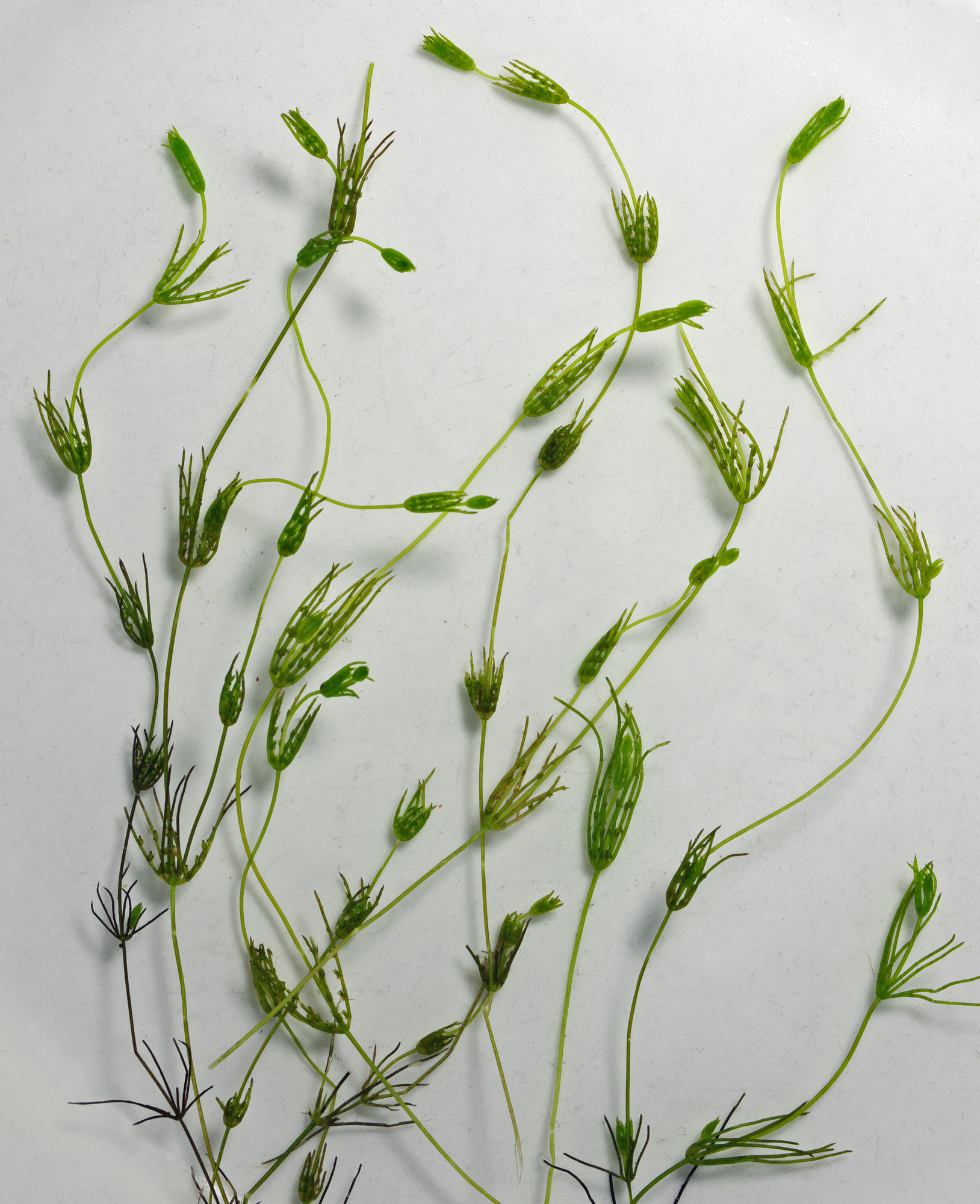
The thallus is erect with regular nodes and internodes. At each node there is a whorl of branches. The whole plant is calcified and Equisetum-like. The internodes of the main axis consist of a single elongated cell, in Chara the internodes are corticated covering the main axis. In other genera these are absent. Where there is a single row of cortical cells the cortex is referred to as diplostichous, where there are two rows of cortical cells it is termed triplostichous. The intermodal cells elongate and do not divide, they become many times longer than broad.[7]

Evolution

[edit]

Below is a consensus reconstruction of green algal relationships, mainly based on molecular data.[8][9][10]

Streptophyta/
charophyta

References

[edit]
Revisions and contributorsEdit on WikipediaRead on Wikipedia
from Grokipedia
Charophyceae is a class of charophyte within the streptophyte lineage, encompassing the single order Charales and commonly known as stoneworts, brittleworts, or muskgrasses. These macroscopic, multicellular organisms are distinguished by their complex thalli, which feature a central haploid axis surrounded by whorls of short, branched branchlets, often anchored by rhizoids and encrusted with deposits that give them a brittle, stone-like appearance. Taxonomically, Charophyceae belongs to the division , part of the broader (green plants), and includes two extant families—Characeae and Nitellaceae—with approximately 6 genera and over 400 species distributed globally in freshwater habitats. Key genera include Chara (for example, in around 27 species), Nitella (over 30 species in ), and Tolypella (about 12 species in ), characterized by unforked or forked branchlets and varying degrees of monoecious or dioecious sexual reproduction. These exhibit oogamous reproduction, producing motile in antheridia and non-motile eggs in oogonia, with oospores that can overwinter and enable asexual propagation via bulbils or fragmentation. Ecologically, Charophyceae dominate shallow, nutrient-rich freshwater systems such as lakes, ponds, and slow-moving rivers, where they play crucial roles in stabilizing sediments, cycling nutrients like and , and enhancing through oxygen production and provision for aquatic fauna. They serve as primary producers and food sources for waterfowl, , and , while also acting as bioindicators of due to their sensitivity to pollution and . Evolutionarily, Charophyceae represent an ancient lineage dating back over 400 million years, sharing key traits with land plants such as phragmoplast-mediated and storage, though molecular phylogenies place the Zygnematophyceae as the closest algal relatives to embryophytes. Their study has advanced understanding of plant terrestrialization, with ongoing genomic research highlighting their value as model organisms for .

Taxonomy and Classification

Historical Development

The classification of Charophyceae traces back to Carl Linnaeus, who in 1753 formally described the genus Chara as part of the algae in his seminal work Species Plantarum, recognizing its distinct macroscopic form among aquatic plants. This initial recognition grouped Chara within the broader category of algae, highlighting its calcified, branching structure but without establishing a separate higher taxon. In the 19th century, classifications advanced with C.A. Agardh's Systema Algarum (1824), which elevated Characeae to family status within the algae, separating it from simpler filamentous forms due to its oögamous reproduction and complex organization. Subsequent workers, including Heinrich Friedrich Link, proposed the order Charales in 1820 to accommodate these features, while Alexander Braun's extensive morphological studies, culminating in his 1882 Fragmente einer Monographie der Characeen (completed posthumously by O. Nordstedt in 1883), provided the first comprehensive revision, emphasizing thallus development, reproductive structures, and sectional divisions that influenced taxonomy for decades. These efforts positioned Charales as a distinct algal order, distinct from other green algae. Twentieth-century revisions built on this foundation, with G.M. Smith establishing the class Charophyceae in to reflect their advanced morphology, including multinucleate cells and elaborate reproductive organs, leading some to view them as transitional "proto-" bridging algae and higher . Early comparisons often confused Charophyceae with bryophytes owing to superficial resemblances in branching patterns and non-vascular habit, but electron studies in the —such as those examining mitotic spindles and flagellar roots—clarified their algal affinities while underscoring ultrastructural parallels to embryophytes, solidifying their position as a unique class within .

Modern Systematics

Charophyceae is recognized as a class within the division , which forms part of the larger monophyletic in the , encompassing and land . This placement reflects phylogenetic analyses that position Charophyceae as a late-diverging group among streptophyte algae, closely related to embryophytes. The class comprises a single extant order, Charales, commonly known as stoneworts, which are macroscopic, freshwater algae characterized by their complex organization. The extant taxonomy of Charales includes two families—Characeae and Nitellaceae—with six genera and approximately 511 species. Characeae includes key genera such as Chara (around 80 species), Tolypella, Lamprothamnium, and Lychnothamnus; Nitellaceae includes (over 200 species) and Nitellopsis. Fossil records extend the class's diversity to include extinct families such as Porocharaceae, which flourished from the Permian to the but became extinct near the Cretaceous-Paleogene boundary, and other groups like Clavatoraceae. Overall, Charophyceae encompasses approximately 511 extant species, all confined to the order Charales, with a global distribution primarily in freshwater habitats. Modern systematics of Charophyceae relies heavily on molecular data to resolve phylogenetic relationships and delimit taxa, moving beyond traditional morphology-based classifications. The chloroplast gene rbcL has been instrumental in reconstructing phylogenies of extant genera within Characeae, revealing monophyly for tribes like Chareae (Chara and allies) and Nitelleae ( and Tolypella). Similarly, nuclear 18S rDNA sequences have been used to infer and species-level distinctions in genera like Chara, supporting revisions to subgeneric boundaries and highlighting cryptic diversity. These markers, often combined with morphological traits like ornamentation, provide a robust framework for contemporary taxonomic delimitations.

Morphology and Anatomy

Thallus Organization

The thallus of Charophyceae represents a complex, macroscopic body plan unique among , consisting of a central axis differentiated into alternating nodes and internodes, with whorls of branchlets emerging from the nodes. This structure forms an erect, branched filament that can reach lengths exceeding 1 meter in favorable conditions, such as nutrient-rich freshwater environments. The internodes are characteristically long, single-celled, and multinucleate, providing structural elongation, while nodes are short, multicellular regions that give rise to the lateral branchlets. A one-cell-thick cortex of narrow cells often envelops the internodes and branchlets, with variations in cortical organization including haplostichous (single row), diplostichous (double row), or triplostichous (triple row) arrangements, influencing the overall robustness of the . Early developmental stages of the begin with the of an into a short, filamentous approximately 1 mm long, which transitions into the more differentiated axis as growth proceeds. In mature forms, the is typically upright and anchored to substrates by colorless rhizoidal branches at the base, forming extensive submerged meadows in lakes and slow-moving waters. Branchlets vary in length and complexity, often featuring stipulodes—small, needle-like cells in double rings at the nodal base—that subtend and support them. Many species, particularly in the genus Chara, accumulate encrustations on the surface, contributing to their rigid, "stonewort" appearance and enhanced fossil preservation. Sexual structures, including oogonia containing oospores and antheridia, are positioned on the branchlets, with oospores typically forming at nodal positions and antheridia near the tips, integrating reproductive functions into the overall architecture without disrupting its vegetative growth. This organization underscores the evolutionary advancement of Charophyceae toward multicellular complexity, bridging algal and body plans.

Cellular Characteristics

Cells in Charophyceae exhibit several ultrastructural features that align closely with those of embryophytes, underscoring their phylogenetic proximity to land . The cell walls are primarily composed of microfibrils, which form the structural framework, along with hemicelluloses such as xyloglucans, xylans, and mannans that reinforce the matrix. Pectic polysaccharides, including homogalacturonan and rhamnogalacturonan-I, are also prominent, contributing to flexibility and adhesion. Cytokinesis in Charophyceae occurs via a phragmoplast, a microtubule-based structure that directs the deposition of vesicles to form the cell plate between daughter nuclei, mirroring the mechanism in land plants. In genera like Chara, phragmoplast microtubules persist throughout the process, enabling centripetal cell plate expansion across the entire cell width, which contrasts with the more localized division seen in other green algae. This phragmoplast-mediated division supports the evolution of multicellularity and tissue differentiation in streptophytes. Chloroplasts in Charophyceae are lens-shaped or band-shaped organelles containing and b, which facilitate light harvesting in a manner analogous to higher . These plastids are arranged in helical rows along the cell's longitudinal axis in elongated cells, such as Chara internodes, optimizing . Starch accumulates as granules within the chloroplast stroma, serving as the primary storage and distinguishing Charophyceae from chlorophytes, where is often cytosolic. Charophyceae feature specialized cell types that enhance to freshwater environments. Rhizoids, arising from basal nodes, function in anchorage and uptake through tip-directed growth and . Nodal cells, smaller and more compact than internodal cells, occur at regular intervals and give rise to whorls of branchlets, enabling organized branching. Many species deposit (CaCO₃) as encrustations on cell walls or in spine cells, imparting a rough texture and contributing to that strengthens the against mechanical stress.

Reproduction

Asexual Methods

in Charophyceae primarily occurs through vegetative propagation, enabling rapid and persistence in freshwater habitats. This method involves fragmentation of the into pieces that develop rhizoids and form new , particularly effective in temporary or disturbed environments. Specialized structures such as bulbils—dormant, starch-rich propagules formed at apices—or amylum stars (contracted, starch-filled branchlet tips) also contribute to asexual propagation. These structures germinate under favorable conditions to produce upright shoots, promoting resilience against , herbivory, and environmental stress. Bulbils have been documented in like Chara delicatula.

Sexual Processes

Sexual reproduction in Charophyceae is characterized by oogamy, where large, non-motile gametes (eggs) are produced in oogonia and small, motile gametes (spermatozoids) are formed in antheridia. This process involves complex gametangia that develop as intricate structures, often with protective envelopes around the oogonia and carotenoid-pigmented antheridia for photoprotection. Species exhibit either monoecious (hermaphroditic) or dioecious (separate sexes) sexual systems, with maintained through in some cases, such as in Chara vulgaris. Gametangia formation typically occurs on specialized branches or nodes of the thallus. Oogonia are flask-shaped or spherical, often spirally surrounded by 8–10 envelope cells that provide mechanical protection and may facilitate sperm attraction. Antheridia, in contrast, are globular and brightly colored due to conserved carotenoids like β-carotene, which accumulate at concentrations up to 0.0468 µmol mgDW⁻¹ in species such as Chara tomentosa, aiding in light harvesting and oxidative stress mitigation during development. Spermatogenesis within antheridia involves successive mitotic divisions to produce numerous biflagellate spermatozoids, while oogenesis yields a single egg per oogonium. Fertilization is achieved when mature antheridia release spermatozoids into the surrounding water, where they swim toward the , guided by chemotactic cues and water currents. In dioecious like Chara tomentosa, male and female plants must be in proximity for successful syngamy, whereas monoecious forms such as Chara baltica allow internal compatibility. Environmental factors, including high light intensity (e.g., 100% ) and temperatures around 25°C, accelerate gametangia maturation and fertilization in Chara braunii, with low light or temperature delaying or inhibiting the process. The develops into a durable , featuring a multilayered wall with an outer calcified layer for dispersal and , enabling survival through adverse conditions. This serves as the primary means of and in Charophyceae, with pigmentation patterns in reproductive organs conserved across the group, reflecting ancient evolutionary adaptations shared with land plants.

Life Cycle

Generational Alternation

The life cycle of Charophyceae exhibits haplontic , dominated by a multicellular haploid phase that forms a free-living responsible for vegetative growth and production. This , complex and branched with a central axis surrounded by whorls of short branchlets, undergoes mitotic divisions to maintain its structure and develop reproductive organs such as oogonia and antheridia. Fertilization results in a diploid , which constitutes the brief diploid phase and typically remains attached to the parental . The undergoes direct zygotic , often preceded by DNA , to yield haploid spores or meiospores that germinate into new , thereby closing the cycle without an extended diploid stage. In contrast to embryophytes, Charophyceae lack a true multicellular generation, as the diploid phase is limited to the and does not develop into an independent, spore-producing structure. The duration of the life cycle varies among and is influenced by environmental factors such as water availability and temperature; annual , such as Chara muelleri and Nitella sonderi, complete their cycle within one , germinating rapidly after inundation, reproducing sexually, and producing dormant oospores before . , like Chara australis, maintain long-lived shoots for up to 400 days, allowing vegetative persistence across multiple seasons while reproducing opportunistically in response to cues.

Developmental Patterns

In Charophyceae, development begins with the of the , which forms a thick-walled following fertilization. Upon , the undergoes initial mitotic divisions to produce a protonema-like filament, typically consisting of 2-4 cells, that emerges from the oospore wall and attaches to the substrate via rhizoids. This filament serves as the foundational structure, with its apical cell continuing to divide to elongate and form a multicellular axis that differentiates into the mature , including the main stem and branchlets. The process mirrors early embryonic development in land plants, establishing a basal holdfast and upright growth orientation. Apical growth in the developing thallus is driven by meristematic cells located at the tips of the main axis and branchlets. These undifferentiated cells divide asymmetrically, producing daughter cells that elongate and differentiate into nodal and internodal cells, which alternate along the axis to support structured branching. Branchlets arise from nodes and grow via their own terminal meristematic cells, contributing to the complex, three-dimensional body plan characteristic of Charophyceae, such as in genera like Chara. This meristematic activity ensures continuous elongation and branching, adapting the thallus to aquatic environments. Many Charophyceae species exhibit seasonal dimorphism, with active summer growth phases producing extensive thalli under favorable conditions, contrasted by winter resting stages. During winter, plants may overwinter as green individuals in deeper waters or form dormant structures like oospores, bulbils, or shortened axes to survive low temperatures and reduced light. In shallow habitats, resting occurs primarily through oospores, enabling resurgence in spring. This dimorphism optimizes resource allocation, with rapid vegetative expansion in summer followed by reproductive and survival strategies in winter. Morphogenesis in Charophyceae is heavily influenced by environmental triggers, particularly light and availability. Light intensity and quality regulate elongation, thallus branching, and the formation of pH-banding patterns on internodal cells, which facilitate uptake. levels, such as and , modulate growth rates and depth distribution, with often suppressing complex thallus development in favor of simpler forms. These cues integrate with the life cycle phases to synchronize development, ensuring to fluctuating aquatic conditions.

Evolutionary History

Fossil Evidence

The fossil record of Charophyceae, also known as stoneworts or Charales, extends back to the Late Silurian or , approximately 425 million years ago, marking one of the earliest appearances of complex freshwater algae in the era. The oldest confirmed representatives include simple thalloid forms and early reproductive structures preserved in marine and freshwater deposits, providing of their adaptation to stable aquatic environments during a period of increasing terrestrialization. These early s, such as those from the in , reveal bisexual reproductive features that predate similar complexities in land plants, highlighting the evolutionary significance of Charophyceae as precursors to embryophytes. A key feature in the paleontological identification of Charophyceae is the preservation of gyrogonites, which are calcified oogonia (female reproductive structures) that form durable fossils due to their spiral, chambered architecture. While gyrogonites appear sporadically in Paleozoic strata, they become abundant and taxonomically diagnostic from the Mesozoic onward, particularly in the Jurassic and Cretaceous periods, where they document diversification into genera like Chara and Nitella. In the Cenozoic, gyrogonites dominate the record in lacustrine and fluvial sediments across Europe, Asia, and North America, often comprising a large proportion of carbonate microfossils in some lake deposits, reflecting their role in biomineralization and stable, oligotrophic freshwater habitats. This abundance underscores their ecological stability in ancient lakes, where they contributed to sediment formation and indicated low-turbidity, calcareous conditions. The Charophyceae fossil record also includes several extinct orders that illustrate early evolutionary experimentation, primarily from the to Permian. The Sycidiales, known from Late deposits in and , featured utricles with calcified covers and simple branching thalli, representing primitive stem-group forms ancestral to modern Charales. Similarly, the Trochiliskales (or Trochiliscales), documented in Middle shales, possessed distinctive spiral utricles with transverse ridges, but became extinct by the end of the , likely due to environmental shifts toward more variable freshwater systems. These extinct lineages, alongside early Charales, dominated aquatic biotas and provide critical evidence of the group's diversification in continental settings.

Phylogenetic Relationships

The Charophyceae, particularly the order Charales, occupy a pivotal position within the Streptophyta as one of the closest algal lineages to the Embryophyta (land plants). Molecular phylogenetic analyses, including multigene studies of nuclear, chloroplast, and mitochondrial genes, place the Charophyceae as sister to a clade comprising Coleochaetophyceae, Zygnematophyceae, and Embryophyta, collectively forming the monophyletic Phragmoplastophyta. This relationship underscores the evolutionary proximity of Charophyceae to land plants, distinguishing them from more distant streptophyte groups like Klebsormidiophyceae and earlier-diverging lineages such as Mesostigmatophyceae and Chlorokybophyceae. Key synapomorphies supporting this close affinity include -mediated and rosette-shaped -synthesizing complexes (rosettes). The , a array that facilitates formation during , is a defining feature of Phragmoplastophyta, enabling precise akin to that in land plants. Similarly, rosette synthases produce linear cellulose microfibrils in the cell walls, a trait absent in but shared across Charophyceae and Embryophyta, reflecting a common mechanism for structural reinforcement. Additional ultrastructural synapomorphies involve wall development and morphology; the walls in Charophyceae exhibit multilayered, ornate with sporopollenin-like components, mirroring the protective walls of early land plant embryos. ultrastructure in Charophyceae features biflagellate cells with a multilayered (MLS) at the anterior end and stellate compounds in the flagellar transition zone, paralleling the motile gametes of basal Embryophyta like bryophytes. Molecular clock analyses estimate the divergence of Phragmoplastophyta from earlier streptophytes around 800 million years ago, with the specific split separating Charophyceae from the Coleochaetophyceae–Zygnematophyceae–Embryophyta occurring approximately 550–750 Ma. The more recent divergence between Zygnematophyceae and Embryophyta is dated to around 550 Ma, aligning with early fossil evidence of land colonization. These timelines highlight the gradual acquisition of traits in streptophyte that preadapted lineages for terrestrial environments. These phylogenetic ties have profound implications for understanding land plant evolution, particularly the aquatic-to-terrestrial transition. Shared innovations in Charophyceae, such as robust cell walls and advanced reproductive structures, likely facilitated the development of resistance, uptake, and embryonic in Embryophyta ancestors. For instance, the and rosette synthases enabled multicellular complexity, while oospore and sperm features supported retention and fertilization in variable aquatic habitats, precursors to the retained embryo characteristic of land plants. Recent genomic studies, including the 2018 sequencing of the Chara braunii genome and 2024 assemblies of Zygnematophyceae species, have further elucidated shared genetic pathways with land plants, reinforcing their role in understanding terrestrial . This evolutionary continuum illustrates how Charophyceae contributed foundational genetic and morphological toolkits for terrestrial .

Ecology and Distribution

Habitat Preferences

Charophyceae, commonly known as charophytes or stoneworts, predominantly occupy freshwater habitats worldwide, including lakes, ponds, and slow-flowing rivers or streams characterized by low . These thrive in lentic (still ) and low-flow lotic (flowing ) systems, where water movement is minimal to support their delicate, branched thalli. They are particularly associated with oligotrophic to mesotrophic waters that are clear and unpolluted, often in shallow depths less than 1-2 meters, allowing for sufficient light penetration for . Most species prefer neutral to slightly alkaline pH levels, typically ranging from 7 to 9, and are commonly found in calcareous or mineral-rich waters that provide essential ions like calcium for their calcification processes. While the majority are strictly freshwater inhabitants, certain taxa exhibit tolerance to brackish conditions; for instance, species in the genus Lamprothamnium can persist in hypersaline or coastal brackish environments with elevated conductivity. This adaptability is limited, however, as fully marine habitats are rare for the class, with only a few exceptions in transitional zones. Charophyceae display a , occurring on all continents except , from tropical to polar regions, though their highest species diversity is concentrated in temperate zones of , , and . In these areas, they form extensive submerged meadows in natural and artificial water bodies, such as gravel pits or reservoirs. Regarding substrate, they favor soft, fine-grained bottoms like sand, , or , where rhizoids anchor the plants securely against minor currents. Examples include Chara vulgaris in lowland ponds and Nitella species in silty lake beds.

Ecological Roles

Charophyceae, commonly known as stoneworts, serve as primary producers in aquatic ecosystems, forming dense submerged meadows that contribute significantly to and stabilize nutrient cycles. These absorb essential nutrients such as and from the , facilitating their cycling and reducing availability for blooms. Associations with epiphytic on species like Chara vulgaris enable , where these prokaryotes convert atmospheric N₂ into bioavailable forms, supporting the nitrogen demands of the charophyte community and broader productivity; in rice field ecosystems, such associations account for over 45% of total activity. This symbiotic role enhances nutrient stability, particularly in oligotrophic waters where charophytes thrive. As habitat providers, Charophyceae enhance by offering structural complexity in freshwater environments. Their branching thalli create refuges and breeding grounds for macroinvertebrates, , , amphibians, and birds, while also serving as a direct food source for herbivores. For instance, dense stands support diverse invertebrate communities and protect from predators and currents, thereby promoting higher trophic levels and overall aquatic . In lakes, these meadows foster specialized communities, with of associated fauna increasing in charophyte-dominated areas compared to unvegetated sediments. Charophyceae contribute to clarification through sediment binding and processes. Their extensive root-like rhizoids and calcified thalli bind sediments, reducing resuspension and , which in turn limits light attenuation and supports clearer conditions. , involving the precipitation of (CaCO₃) as encrustations on their surfaces, further stabilizes substrates and sequesters , preventing its release and aiding in the maintenance of oligotrophic states. In hardwater lakes, increased charophyte biomass correlates with improved Secchi depth transparency, as observed in seasonal studies where meadows suppress and enhance rates. Due to their sensitivity to environmental perturbations, Charophyceae act as reliable indicators of levels and impacts. Many species, such as Nitella mucronata and N. opaca, decline rapidly in response to elevated total phosphorus (>60 μg P L⁻¹) and reduced , signaling shifts toward eutrophic conditions. Their presence is strongly associated with mesotrophic to oligotrophic waters, where they indicate low anthropogenic disturbance, while tolerant species like Chara tomentosa may persist in moderately enriched systems but highlight ongoing degradation. This sensitivity to nutrients and pollutants, including , positions charophytes as key bioindicators for assessing ecological status in lakes and ponds.

Human Relevance

Economic Uses

Charophyceae, particularly species in the order Charales such as Chara, serve as valuable components in systems. They provide essential for and in ponds by stabilizing sediments and offering shelter, which enhances and supports larval fish survival. Additionally, their acts as a natural feed source for herbivorous aquatic animals and can supplement diets in operations. Historically, calcified remains of Charophyceae have been utilized for lime production to amend acidic in . Deposits known as , formed primarily through precipitation by Chara species in hard-water lakes, accumulate over time and have been excavated for use as a liming agent to neutralize soil acidity and improve . For instance, from Chara-rich sites has been applied to agricultural fields to enhance crop yields on poor . Furthermore, species such as Chara serve as model organisms in and research, particularly for studying and cellular responses to environmental stresses, owing to their large cells and complex body plans akin to early land plants. In ornamental contexts, Charophyceae like Chara are employed in to mimic natural aquatic environments, providing aesthetic appeal and functional benefits such as nutrient uptake and structure for ornamental fish. They also play a role in wetlands restoration projects, where transplantations of charophyte species help stabilize sediments, improve , and facilitate recovery in degraded freshwater habitats.

Conservation Status

Charophyceae, commonly known as charophytes or stoneworts, face significant conservation challenges primarily due to anthropogenic pressures. Major threats include , which reduces water transparency and promotes algal blooms that outcompete charophytes for light, leading to population declines in nutrient-enriched waters. Habitat loss from drainage and hydrological alterations, such as water abstraction for and , fragments and degrades their aquatic environments, particularly in wetlands and lakes. Additionally, competition from , including non-native macrophytes and algae, limits native charophyte colonization and survival in altered ecosystems. According to regional assessments using IUCN criteria, many Charophyceae species are classified as vulnerable or endangered, reflecting their restricted distributions and sensitivity to environmental changes. For instance, in South , four species (e.g., Chara dominii and hyalina) are rated vulnerable, while Chara kirghisorum is endangered due to ongoing habitat degradation. Similarly, Nitellopsis obtusa, a representative charophyte, holds vulnerable status in parts of , such as , where its populations have declined from historical levels. Conservation strategies emphasize habitat protection and restoration to mitigate these threats. Protected wetlands and reserves, such as those outlined in Sweden's national action plans, safeguard critical sites for rare species like Nitellopsis obtusa and Chara filiformis by restricting development and maintaining natural . Water quality monitoring programs, including nutrient level assessments and (eDNA) surveys, enable early detection of and track population trends in vulnerable lakes. Ex-situ cultivation and transplantation efforts, involving preculturing oospores in controlled conditions before reintroduction, have shown promise for re-establishing species like Nitella hyalina in restored sites. Climate change exacerbates these pressures through altered hydrology, including increased drought frequency and fluctuating water levels, which disrupt charophyte life cycles and shift suitable habitats. In regions like the Mediterranean and , warming temperatures combined with hydrological changes are projected to contract distributions of sensitive species, underscoring the need for in conservation planning.

References

Add your contribution
Related Hubs
User Avatar
No comments yet.