Hubbry Logo
StratiomyidaeStratiomyidaeMain
Open search
Stratiomyidae
Community hub
Stratiomyidae
logo
8 pages, 0 posts
0 subscribers
Be the first to start a discussion here.
Stratiomyidae
Stratiomyidae
from Wikipedia

Soldier flies
Temporal range: Early Cretaceous – Recent
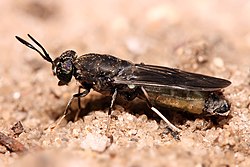
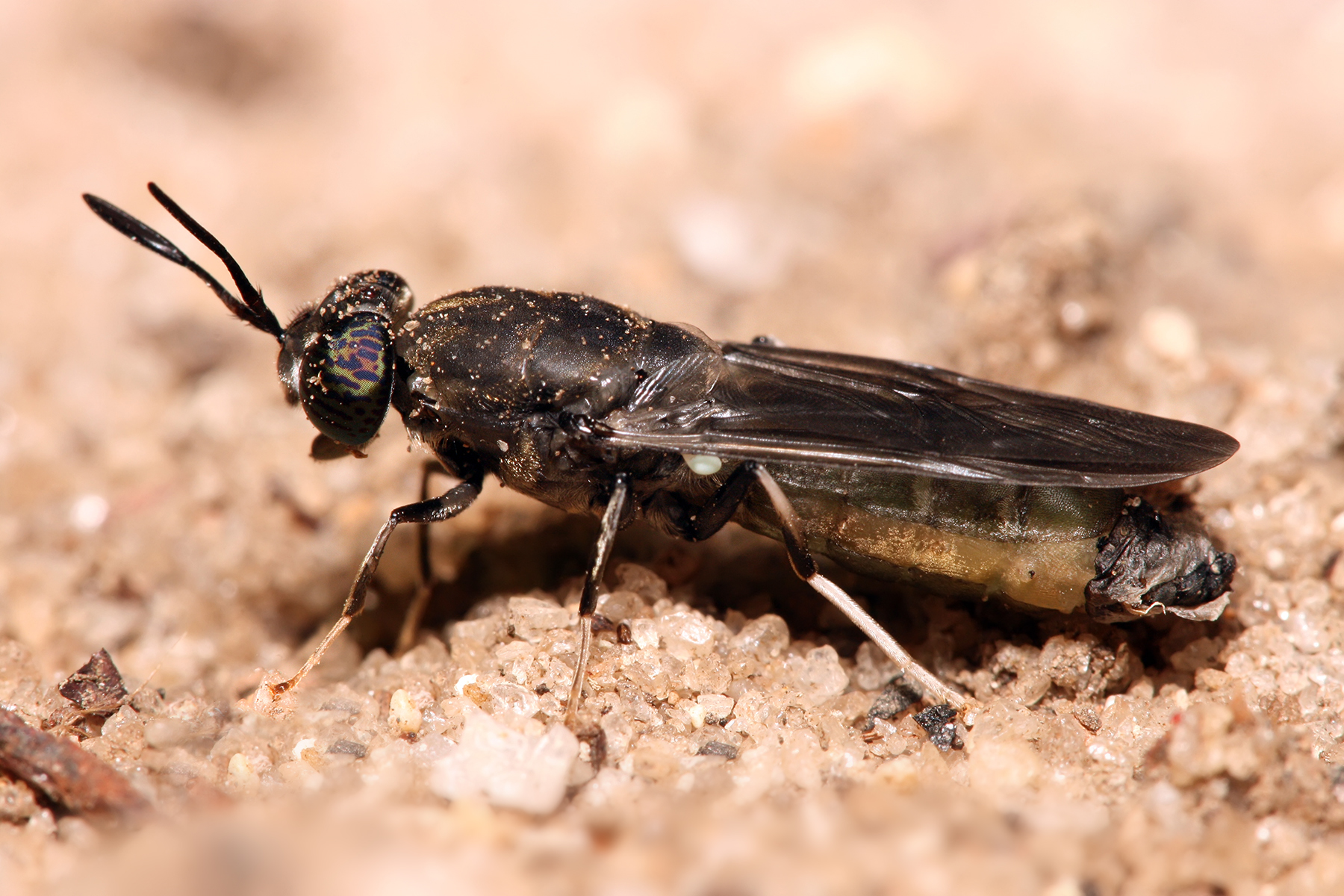
Hermetia illucens
Odontomyia sp.
Scientific classification Edit this classification
Kingdom: Animalia
Phylum: Arthropoda
Class: Insecta
Order: Diptera
Suborder: Brachycera
Infraorder: Stratiomyomorpha
Superfamily: Stratiomyoidea
Family: Stratiomyidae
Latreille, 1802[1]
Subfamilies

The soldier flies (Stratiomyidae, sometimes misspelled as Stratiomyiidae, from Greek στρατιώτης - soldier; μυια - fly) are a family of flies (historically placed in the now-obsolete group Orthorrhapha). The family contains over 2,700 species in over 380 extant genera worldwide.[2][3] Larvae are found in a wide array of locations, mostly in wetlands, damp places in soil, sod, under bark, in animal excrement, and in decaying organic matter. Adults are found near larval habitats.[4] They are diverse in size and shape, though they commonly are partly or wholly metallic green, or somewhat wasplike mimics, marked with black and yellow or green and sometimes metallic. They are often rather inactive flies which typically rest with their wings placed one above the other over the abdomen.

The Stratiomyinae are a subfamily that tend to have an affinity to aquatic environments.[4]

Etymology

[edit]

In English, the Stratiomidi are commonly called soldier flies, in German Waffenfliegen ("armed flies"). In the Italian language, Duméril (1832) used the common names term stratiomidi and mosche armate in the Dizionario delle Scienze Naturali (Dictionary of Natural Sciences). The name might originate from thoracic spines of adults that resemble armor or striped larvae that resemble uniformed soldiers.[5]

Characteristics

[edit]

These flies range from very small to large, 3 to 20 mm long. They have antennae in three segments, with the terminal segment annulated. Ocelli are present; the lower orbital bristles are absent. The postvertical orbital bristles are absent, as are the vibrissae. As for the mouthparts, the proboscis is short and not piercing; the maxillary palps are mono- or bisegmented. The wings have either a small discal cell, or the discal cell is absent. No subapical cell is seen, and a closed anal cell is present. The costa does not extend around the entire wing. The subcosta reaches the costa independently of vein 1, or joins vein 1 close to where it joins the costa. The leading-edge veins are often markedly stronger than the rest; vein 6 is present and reaches the wing margin, whereas vein 7 is present and does not reach the wing margin. The tibiae are without spurs.[6]

Larvae and pupae

[edit]

Larvae may be either aquatic or terrestrial. In regards to feeding, they may be saprophagous, mycophagous, or predatory. The larvae are apodous and eucephalic and cylindrical-fusiform, depressed dorsoventrally and distinctly segmented. The size of the mature larva is variable, depending on the species, from less than 1 cm in length up to 5 cm. The head is much narrower than the thorax and partially sunken into it. The integument is strongly sclerotized with the cuticle containing inclusions of calcium carbonate with hexagonal crystals which form a characteristic microsculpture. In aquatic species, the last urite is thin and more or less elongated forming a breathing tube, which ends with a tuft of waterproofing bristles. It is used to draw air from the surface, with the larva remaining submerged.

The pupa develops inside the exuvia of the last larval stage, a feature common to all Stratiomyomorpha. The pupation within the larval exuvia constitutes a case of evolutionary convergence with Cyclorrhapha, in which group is the formation of a true puparium.

Biology

[edit]

The larvae of Stratiomyidae are characterized by a wide variety of behaviours and habitats. They are mainly scavengers, but aquatic species also feed on algae. Less frequently, they may be predators or herbivores. The aquatic larvae are sometimes characterized by particularly specific habitat requirements. For example, several species colonize rocks covered by a thin layer of water (hygropetric); others are found in brackish water, and some in thermal springs. In general, though, Stratiomyidae larvae colonize stagnant waters or rivers near the shores, seeking the richest vegetation, algae, and debris.

Terrestrial larvae are found in organic substrates: in decomposing vegetable matter and animal excreta, in moist soils and litter, under the bark of trees, etc. Inopus rubriceps (Macquart), the sugarcane soldier fly, is a pest: the larvae attack the roots of sugarcane in Australia.

Adults visit flowers to feed on the sugar-containing nectar, or else do not feed at all, dedicating their short lives to reproduction. Unlike other dipterous scavengers, adults of Stratiomyidae do not have relationships with the growth substrate of the larvae, except for oviposition.

Larval development takes place with a variable number of moults; depending on the species, up to 10 larval stages occur. Particularly well known is the postembryonic development of Hermetia illucens, whose larvae develop through six stages.

Species of this fly may travel along with members of Polybioides raphigastra (a wasp species) through the practice of mimicry.

Systematics

[edit]

The Stratiomyidae are closely related to the family of Xylomyidae, with which they share 10 synapomorphies, and they form a monophyletic clade with the family of Pantophthalmidae with which they share 5 synapomorphies.[citation needed]

Stratiomyomorpha

Stratiomyidae

Xylomyidae

Pantophthalmidae

References

[edit]

Further reading

[edit]
[edit]
Revisions and contributorsEdit on WikipediaRead on Wikipedia
from Grokipedia
Stratiomyidae is a cosmopolitan of true flies (order Diptera) commonly known as flies, comprising approximately 2,500 to 2,700 described distributed across about 385 genera worldwide, with around 260 occurring in alone. These robust, medium- to large-sized are named for their military-like appearance, featuring bold colors and a posture reminiscent of soldiers on parade, and they play key ecological roles as decomposers through their larval stages. Adult soldier flies exhibit diverse coloration, ranging from black, metallic blue, green, or purple to yellow and black patterns, with many species mimicking the warning coloration of bees or wasps to deter predators. Their bodies are typically 5 to 20 mm in length, with that fold scissor-like over the at rest; a diagnostic feature is a small hexagonal cell near the center of the , along with spatulate or aristate antennae and tarsi bearing three pulvilli. Adults are generally harmless to humans, lacking biting mouthparts, and most feed on or , though some, like the black soldier fly (Hermetia illucens), do not feed as adults and rely on energy reserves accumulated during the larval stage. The larvae of Stratiomyidae are dorsoventrally flattened, leathery, and torpedo-shaped, measuring 10 to 55 mm in length, often with a hardened, exoskeleton that allows them to thrive in moist or aquatic environments. These larvae inhabit a wide range of habitats, including decaying such as and , aquatic sediments, saturated wood, and even thermal pools with temperatures exceeding 50°C, where they function as algal feeders, detritivores, or occasional predators (sarcophages). Notably, soldier fly larvae are efficient bioremediators, capable of reducing organic waste volumes by up to 50%—for instance, 45,000 black soldier fly larvae can process 24 kg of swine in 14 days—making them valuable in , production, and .

Taxonomy and Phylogeny

Classification and Subfamilies

Stratiomyidae is classified within the order Diptera, suborder Brachycera, and superfamily Stratiomyoidea. This family encompasses approximately 2,800 species distributed across about 380 genera worldwide (as of 2024). The family is currently divided into 12 recognized subfamilies, reflecting a stable taxonomic framework established in the early 21st century. These include Antissinae, Beridinae, Chiromyzinae, Chrysochlorininae, Clitellariinae, Nemotelinae, Pachygastrinae, Prosopochrysinae, Rubescinae, Sarginae, Stratiomyinae, and Zabrachinae. Key subfamilies such as Stratiomyinae (the type subfamily) feature prominent genera like Stratiomys, the namesake genus of the family, and Odontomyia, known for its diverse aquatic species. Sarginae includes genera like Sargus, characterized by metallic coloration, while Clitellariinae encompasses Hermetia, which contains the economically significant black soldier fly Hermetia illucens. Major historical revisions to Stratiomyidae classification were contributed by Maurice T. James in the 1960s, who provided detailed regional analyses, including a comprehensive treatment of the fauna that refined generic and subfamily boundaries based on morphological characters. Norman E. Woodley advanced this work in the 1980s and 1990s through phylogenetic studies on specific subfamilies like Parhadrestiinae and Beridinae, culminating in his world catalog that formalized the 12-subfamily system and cataloged all known genera and species. Recent molecular phylogenetic analyses, such as those by Brammer and von Dohlen in 2007 using 28S rDNA and CAD gene sequences, have largely corroborated the of most subfamilies, though Stratiomyinae and Clitellariinae were found to be paraphyletic, prompting calls for further revision; no major structural changes have occurred since. Subfamilies within Stratiomyidae are primarily distinguished by variations in wing venation patterns, such as the configuration of the discal cell and crossveins; antennal structure, including the number of flagellomeres and presence of an arista; and thoracic sclerites, particularly the arrangement of notal areas and sternal features. These traits provide the morphological foundation for separating groups like the predatory Beridinae, with their elongate antennae, from the more robust, wasp-mimicking Stratiomyinae.

Diversity and Distribution

Stratiomyidae is a cosmopolitan family comprising approximately 2,800 described distributed across about 380 genera worldwide (as of 2024). The family exhibits highest in tropical , where environmental conditions such as warm temperatures and abundant moisture support diverse larval habitats; for example, approximately 1,000 are recorded from the Neotropical . In contrast, temperate zones show lower diversity, with around 260 in the Nearctic and about 430 in the Palearctic, combining to roughly 690 across the . The Afrotropical hosts 376 described , while the Oriental features significant diversity, including numerous endemics adapted to Southeast Asian ecosystems. Biogeographic patterns reveal distinct regional variations, with many species showing broad distributions but others highly localized. Endemism is prominent in isolated areas, such as , where genera like Opaluma and Antissella are entirely endemic, and , home to unique radiations including 11 of 13 species in the tribe Prosopochrysini. Notable evolutionary radiations occur in genera like Prosopochrysa in , contributing to elevated species counts in Oriental wetlands and forests. Diversity hotspots are concentrated in tropical rainforests and wetlands, where larval stages thrive in moist, organic-rich environments; regions like the Atlantic Forest in and Madagascar's forests exemplify such areas with high local richness and undescribed taxa. Conservation concerns affect certain species, particularly endemics vulnerable to habitat loss from and ; for instance, island taxa in and face threats that could reduce local populations. Recent discoveries since 2000, driven by molecular barcoding, have revealed cryptic genetic diversity and added to species counts by approximately 10%, with techniques identifying hidden lineages in widespread taxa like Hermetia illucens and uncovering new species in understudied tropical areas.

Fossil Record

The fossil record of Stratiomyidae extends to the Early Cretaceous, with the earliest definitive records from Lower Cretaceous deposits in Spain and northeastern China, dating to approximately 125 million years ago (mya). These primitive forms exhibit wing venation patterns characteristic of basal Stratiomyomorpha, linking them to early Brachycera ancestors and suggesting an origin around this period for the crown group. Major fossil deposits include the mid-Cretaceous (Cenomanian, ~99 mya) amber from Myanmar, which has preserved at least five described species of Stratiomyidae among over a dozen stratiomyomorphans, offering detailed views of adult morphology and early diversification. Eocene Baltic amber (~44 mya) represents another key site, with numerous inclusions such as the genus Hermetiella, contributing to an estimated total of around 100 extinct species across various deposits worldwide. These ambers highlight the family's Cenozoic abundance and morphological variation. Fossil evidence reveals evolutionary transitions, including shifts from predominantly aquatic to terrestrial larval habitats, as seen in diverse morphotypes from Cretaceous Myanmar amber and Eocene compression fossils, where larvae adapted to decaying organic matter and damp soils. Wing venation in these fossils underscores connections to orthorrhaphous Brachycera, with reduced discal cells and aligned veins indicating stabilization of modern patterns by the mid-. Extinct subfamilies, such as Parhadrestiinae from Upper Canadian amber (~80 mya), represent basal groups absent in extant , featuring unique antennal and thoracic structures. Recent paleontological work in the 2020s has expanded understanding, with 2023 descriptions of abundant larval fossils from amber emphasizing ecological versatility in early Stratiomyomorpha. Additionally, findings from deposits in (~220 mya) document stem-group relatives of , potentially ancestral to Stratiomyidae, pushing the broader lineage's origins deeper into the .

Morphology

Adult Features

Adult Stratiomyidae exhibit a robust body structure, typically ranging from 2 to 28 mm in length, with coloration varying from metallic green or blue to black, yellow, or patterns mimicking wasps and bees for or defense. The head features large compound eyes that are holoptic in males, meeting dorsally, while females have dichoptic eyes separated by a broader frons; three prominent ocelli are present between the compound eyes. Antennae consist of 3 to 7 segments, with the scape and pedicel basal, and the often annulated or stylate, lacking an arista in most species. The has a reduced pronotum and a scutellum that is frequently armed with spines, aiding in identification; legs are equipped with empodia and pulvilli on the pretarsus for enhanced grip. Wings are broad and held flat over the at rest in a scissor-like fashion, displaying complete venation including a closed discal cell and an anal cell, with the radial sector originating near the base of the discal cell. The is often flattened laterally, comprising distinct tergites and sternites that may show metallic sheen or banded patterns; genitalia, including structures like the surstylus, provide key diagnostic traits for differentiation.

Larval Features

Stratiomyidae larvae exhibit a dorsoventrally flattened, torpedo-shaped body form, typically measuring 10–55 mm in length, with a tough, leathery often reinforced by plates that provide a shagreened texture and protection against environmental stresses. This is particularly firm in aquatic species, enabling survival in harsh conditions such as hot springs or saline pools. The head capsule is reduced yet prognathous and mostly visible dorsally, featuring short, biarticulate antennae protected by a robust antennal pad and prominent, sclerotized mandibles adapted for scraping or piercing substrates to access food. In species like , the head is small, narrow, and retractable into the , with a dark reddish-brown coloration and pigmented stemmata for limited vision. The body comprises 11 segments—three thoracic and eight abdominal—with creeping welts or annular ridges facilitating locomotion in soft substrates; true prolegs are absent, though some bear dorsal setae or tergal spines for stability. Certain aquatic forms, such as those in the Stratiomys, possess elongate caudal processes at the abdominal terminus, functioning as a respiratory to access atmospheric oxygen while submerged. Respiratory structures include spiracles on the and , with anterior spiracles on the often heart-shaped and bearing multiple lobes for efficient ; in aquatic larvae, these may be surrounded by hydrofuge hairs that trap an air film, or supplemented by tracheal gills in the form of tufts on abdominal segments for direct oxygen uptake from water. Posterior spiracles on the eighth abdominal segment are typically prominent and valvular, aiding and in moist environments. Morphological variations reflect ecological adaptations, with saprophagous types like displaying a robust, whitish, torpedo-shaped body suited for burrowing in decaying , contrasting with predatory forms in subfamilies such as Pachygastrinae (e.g., Zabrachia), which have more elongate, flattened bodies for pursuing small under bark or in . Some Stratiomys species exhibit predatory tendencies, feeding on annelids or small arthropods using their strong mandibles, though most Stratiomyidae larvae are detritivorous or algivorous in aquatic habitats like margins of ponds and streams.

Pupal Features

The pupae of Stratiomyidae are adecticous and coarctate, ranging from 5 to 15 mm in length, and develop enclosed within a puparium formed from the hardened of the final larval , which serves as a protective cocoon often impregnated with for rigidity. This puparium typically splits dorsomedially and transversely to allow , and the pupa itself occupies a smaller inside, creating an air-filled chamber in some cases. The head is small and retractable into the , forming a compact cephalothorax-like unit where developing wings and other adult appendages are visible through the semi-transparent puparium in many species; prothoracic respiratory horns or processes are present in various genera for enhanced , alongside thoracic spiracles. The consists of three segments covered in dense hairs or setae, contributing to structural support during . The abdomen comprises eight telescoped, movable segments that taper posteriorly, equipped with spines, hooks, or hydrofuge hairs on the ventral surface for anchorage in soil, decaying matter, or aquatic substrates. Respiratory structures include metapneustic or amphipneustic spiracles on abdominal segments 1–7, with a posterior spiracular chamber on segment 8 featuring radial openings. Pupal morphology varies between terrestrial and aquatic species: terrestrial pupae exhibit a robust, hardened for protection in or , while aquatic forms, such as those in Clitellariinae, often include adaptations like air spaces within the puparium and hydrofuge setae around spiracles to facilitate surface respiration and flotation. The pupal stage generally endures 1–4 weeks, with duration modulated by temperature and humidity.

Life Cycle

Reproduction and Eggs

Stratiomyidae exhibit diverse behaviors, often involving male aggregation in aerial swarms near breeding sites or on , where displays such as fanning or substrate vibrations facilitate pair formation. In some genera, chemical cues including potential pheromones play a role in mate attraction and recognition, though visual and acoustic signals predominate in swarm-based systems. Adults typically mate soon after , with females often mating once but capable of multiple matings in polygynandrous like , where males may attempt copulations with several partners. Oviposition in Stratiomyidae occurs primarily in warm months for temperate species, with females selecting sites such as moist , edges of bodies, or decaying to deposit eggs in clusters, ensuring proximity to larval food sources. Egg masses are typically oval and conspicuous, containing 100 to over 600 eggs per female depending on the ; for instance, Stratiomys females can lay more than 600 eggs in a single mass over several hours. Eggs are elongate to oval, pale yellow or creamy white, measuring approximately 0.5–1 mm in length, with a smooth or ribbed surface and adhesive secretion that cements them together for attachment to substrates. Some species possess specialized ovipositors adapted for inserting eggs into crevices or soft substrates, enhancing protection from predators and . Parental care is absent in Stratiomyidae, with females providing no post-oviposition investment beyond . In temperate regions, reproduction aligns with seasonal availability of resources, often featuring larval during winter to synchronize emergence with warmer conditions. occurs after 4–20 days, influenced by and , marking the transition to larval stages without further adult involvement.

Larval Development

Stratiomyidae larvae undergo 6-8 instars, marked by as they grow from approximately 1 mm in length upon to their full size of 15-30 mm depending on the and environmental conditions, with the entire larval period spanning 2-12 months in natural settings. This developmental progression allows for substantial accumulation, particularly in detritivorous species that process organic substrates efficiently. occurs periodically as the hardens, enabling expansion to accommodate rapid growth during early instars, while later instars focus on maturation and preparation for pupation. Feeding regimes in Stratiomyidae larvae are predominantly detritivorous, centered on the consumption of decaying such as dung, , and carrion, which supports their role as decomposers in various ecosystems. Some species, including those in genera like Stratiomys and Odontomyia, exhibit carnivorous behavior, preying on small , worms, and crustaceans in moist or aquatic habitats, thereby diversifying their nutritional intake and contributing to trophic interactions. This flexibility in diet influences larval vigor and development rate, with detritivores often achieving higher conversion on nutrient-rich substrates. Environmental factors significantly modulate larval development, with optimal temperatures ranging from 20-30°C promoting faster growth and higher survival rates, as seen in controlled studies where deviations lead to prolonged instars or reduced . Aquatic larvae demonstrate notable hypoxia tolerance through spiracular closures that prevent water ingress while allowing intermittent , enabling survival in low-oxygen sediments or piles. Temperate species often enter in later instars to overwinter, suspending development during periods and resuming in spring, which extends the overall larval duration. Variations in development are evident across species; for instance, Hermetia illucens larvae complete their cycle in 4-6 weeks under laboratory conditions at 27-30°C with ample organic feed, contrasting with slower progression in wild or cooler environments. This accelerated timeline in H. illucens highlights its adaptability for bioconversion applications, though it remains representative of the family's broader developmental plasticity.

Pupation and Adult Emergence

In Stratiomyidae, mature larvae typically migrate from their feeding sites to form puparia in protected locations, such as , leaf litter, or decaying wood for terrestrial species, while aquatic larvae often leave the water to seek drier substrates like stream banks or emergent to avoid submersion during this vulnerable stage. The puparium is formed by the hardening and sclerotization of the larval , frequently reinforced with deposits for added durability, creating a barrel-shaped protective case that encapsulates the developing . This process marks the onset of , during which the internal tissues undergo complete reorganization, including the histolysis of larval structures and histogenesis of adult features, typically lasting 7 to 30 days depending on , , and environmental conditions. Throughout pupal development, high levels (around 60% relative ) are essential to prevent of the puparium, as low moisture can lead to reduced survival rates and impaired emergence; for instance, in , emergence drops to as low as 16% under low relative conditions. The pupal stage involves distinct phases, including apolysis (separation of old ), formation of the cryptocephalic , and progression to the pharate , with the entire intra-puparial period averaging about 8 days at 27°C in well-studied species like H. illucens. Pupal morphology, such as the cremaster and respiratory horns in some species, aids in orientation and during this enclosed phase. Adult emergence, or eclosion, occurs when the fully developed adult breaks through the puparium longitudinally, often wriggling to the surface if buried, and then expands and hardens its wings over several hours; this process is generally diurnal in most Stratiomyidae, though some species exhibit crepuscular activity. In tropical environments, certain species synchronize emergences in cohorts to overwhelm predators, enhancing survival through satiation effects, though this varies by and . Mortality during pupation and emergence is notably high due to predation by soil-dwelling arthropods, fungal infections, or environmental stressors like substrate compaction and inadequate moisture, underscoring the stage's sensitivity in the life cycle.

Ecology and Behavior

Habitats and Feeding

Stratiomyidae adults primarily inhabit sunny, open environments such as meadows, forest edges, fields, and woodlands, often in proximity to bodies or decaying . These flies are frequently observed nectaring on flowers in areas with abundant blooming , where exposure positively influences their activity and oviposition. Some species exhibit saprophagous behavior, feeding on dung or honeydew in these settings. As and consumers, adults incidentally facilitate while visiting flowers, contributing to in their habitats. Larval habitats within the Stratiomyidae family are highly diverse, encompassing both terrestrial and aquatic environments rich in organic material. Terrestrial larvae often develop in compost piles, dung, tree holes (phytotelmata), damp moss, sod, under tree bark, or saturated decaying wood. Aquatic larvae, particularly in genera like Stratiomys, inhabit wetlands, shallow nutrient-rich standing waters, pond edges, or muddy shallows near water bodies, sometimes tolerating unusual conditions such as hot springs or high salinity. These larvae function as decomposers, breaking down organic detritus; for instance, Hermetia illucens larvae efficiently process manure and other nitrogen-rich wastes, reducing volume by up to 50% through rapid consumption. Stratiomyidae microhabitats typically favor pH-neutral to slightly alkaline conditions in organic-rich substrates, where diet pH influences larval development rates and survival. The family occurs across a broad altitudinal range from to high elevations, with some genera recorded above 2,800 meters. Seasonal patterns vary by region: in tropical areas, larvae can occupy habitats year-round due to consistent warm conditions, while in temperate zones, adults are active primarily during summer months, with peaks in and early fall supporting multiple generations. Recent studies suggest potential shifts in distribution due to .

Interactions with Other Organisms

Stratiomyidae larvae and adults engage in various biotic interactions within their ecosystems, including predation, , mutualism, and . Predators of adult soldier flies include birds, spiders, dragonflies, and robber flies (), which capture them during flight or while resting on . Amphibians, such as frogs, consume soldier fly larvae in moist habitats, where the larvae are exposed during their detritivorous activities. Parasitic relationships primarily affect the larval and pupal stages of Stratiomyidae. Hymenopteran wasps, including species from the family , target larvae by laying eggs inside them, leading to the eventual death of the host upon parasitoid emergence. Nematodes, particularly entomopathogenic species like those in the Steinernema, infect pupae and late-stage larvae, reducing rates in natural and reared populations. These parasites can regulate Stratiomyidae populations in decaying niches. Mutualistic interactions involve both larval and adult stages, contributing to processes. Larvae of species like facilitate of organic waste, fostering symbiotic relationships with microbes that enhance nutrient cycling and efficiency through shared metabolic pathways. Adult soldier flies act as pollinators for certain flowering , transferring while feeding on , thereby supporting in diverse habitats. Competition occurs mainly among larvae sharing detrital resources, such as in compost heaps or manure. Stratiomyidae larvae, including H. illucens, compete with other Diptera families like Syrphidae (hoverflies) for space and food in these niches, often outcompeting them due to faster development and higher tolerance for high-density conditions. This interspecific rivalry can limit population sizes of competing species in shared larval habitats.

Mimicry and Defense

Many species of adult Stratiomyidae employ as a primary defense mechanism, evolving coloration and patterns that resemble dangerous or unpalatable to deter predators. For instance, the black soldier fly () exhibits a slender black body, elongated antennae, and rapid, darting flight that closely imitate wasps, such as those in the genus , thereby reducing attacks from visually hunting predators. Similarly, species in the genus Nemotelus, such as N. canadensis, display yellow-and-black abdominal patterns and wasp-like body proportions that mimic vespid wasps, enhancing their survival in open habitats near water. Larvae of Stratiomyidae possess chemical defenses that protect against microbial s in their often decaying or contaminated habitats. In H. illucens, the gut produces , such as cecropin-like compounds, which exhibit broad-spectrum activity against Gram-positive and , fungi, and even some viruses, thereby preventing infections and supporting survival in organic waste environments. These secretions contribute to pathogen resistance without harming the host, allowing larvae to thrive in microbially rich substrates. Behavioral defenses in Stratiomyidae include swift aerial maneuvers for evasion and, in some cases, . Disturbed adults often execute rapid, erratic flights to escape threats, mimicking the aggressive movements of their hymenopteran models. While specific documentation for thanatosis (feigning death) in Stratiomyidae is limited, this posture is observed in related Dipteran mimics under predation pressure, potentially serving as a last-resort defense. The evolution of these defenses in Stratiomyidae reflects convergent adaptation across Diptera, where wasp-like traits have independently arisen in multiple lineages, including Stratiomyinae and related subfamilies, to exploit predator avoidance learning. This convergence underscores the selective pressure from shared predators like birds and spiders, favoring mimetic forms in diverse ecological niches. Field observations and experiments on in fly families, including Stratiomyidae, indicate that mimetic adults experience significantly lower predation rates compared to non-mimetic forms in natural settings. Recent studies have also highlighted adaptations in aquatic Stratiomyidae larvae to survive temporary drying of .

Human Relevance

Economic Importance

Stratiomyidae, particularly the black soldier fly (), play a significant role in by bioconverting organic materials such as and food scraps into valuable byproducts. Larvae of H. illucens can reduce the dry mass of by up to 58% when fed at optimal rates, achieving overall mass reductions of 50-70% in various organic wastes through rapid decomposition processes. The larvae serve as a high-protein animal feed ingredient, containing 40-50% crude protein on a dry weight basis, making them suitable for , , and diets. Since the , H. illucens larvae have been increasingly incorporated into commercial feeds, providing a sustainable alternative to traditional protein sources like fishmeal. While predominantly beneficial, some Stratiomyidae species exhibit minor pest status in , with larvae damaging seedlings and in crops such as fields (e.g., Clitellaria spp.) and . These impacts are generally limited compared to major pests. In compost systems, Stratiomyidae larvae, especially H. illucens, demonstrate biocontrol potential by outcompeting and suppressing pest fly populations, such as houseflies, through resource dominance and reduced breeding sites in organic waste. Commercial exploitation has expanded in the , with the approving H. illucens-derived proteins for feed in 2017 and extending authorization to and in 2021, fueling growth. The global black soldier fly market, driven by these applications, is projected to reach approximately $4 billion by 2032.

Medical and Forensic Significance

Stratiomyidae larvae, particularly those of Hermetia illucens, have been implicated in rare cases of myiasis in humans and animals, where they infest wounds or the gastrointestinal tract. For instance, furuncular myiasis occurs when larvae burrow into skin lesions, as documented in a case involving a woman who developed a boil-like lesion after exposure in a tropical environment. Intestinal myiasis has also been reported, with larvae ingested accidentally through contaminated food or water, leading to symptoms like dysentery in affected individuals. These incidents are uncommon and typically facultative, as H. illucens is not a primary obligate parasite; unlike major vectors such as mosquitoes or Dermatobia hominis, Stratiomyidae do not transmit diseases like malaria or myiasis-endemic pathogens on a significant scale. In forensic entomology, Stratiomyidae larvae serve as indicators of decomposition timelines, often colonizing remains during advanced decay stages. H. illucens larvae typically arrive 2–7 days post-mortem in warm climates, feeding on decomposing tissues and providing clues for estimating the (PMI). Studies on carrion in southern Georgia showed eggs appearing as early as day 6 after , challenging earlier assumptions of later (20–30 days) and highlighting their utility in PMI calculations. In a Brazilian case involving a child's remains discovered 42 days after abduction, two H. illucens larvae were collected; their development to adults in 25–26 days allowed of oviposition around 24–25 days post-mortem, aligning with police findings of immediate post-abduction. Similar applications in U.S. and European contexts, such as using Stratiomyidae development rates for accurate PMI , underscore their value in legal investigations, though temperature-dependent growth must be factored in. Allergenic risks from Stratiomyidae are limited but include rare reactions, primarily from larval consumption rather than adult contact. In sensitive individuals, exposure to H. illucens larval proteins can trigger or , often due to with allergens like . Reports of anaphylactic shock following ingestion of products, including soldier fly larvae, highlight potential IgE-mediated responses in atopic persons. Biomedical research on Stratiomyidae has focused on larval antimicrobial peptides (AMPs) for therapeutic applications, particularly in wound care. H. illucens larvae produce diverse AMPs, such as cecropins and attacins, which exhibit broad-spectrum activity against bacteria, fungi, and viruses, making them candidates for novel antibiotics amid rising resistance. Studies from 2014 onward have evaluated these peptides in vitro for efficacy against pathogens like Escherichia coli and Staphylococcus aureus, with applications explored in maggot debridement therapy for non-healing wounds. Recent investigations (2015–2025) propose incorporating purified AMPs into wound dressings to promote healing and combat infections, leveraging the larvae's natural role in tissue cleanup without the need for live maggots.

References

Add your contribution
Related Hubs
User Avatar
No comments yet.