


Community hub
Recent from talks
Contribute something to knowledge base
Content stats: 0 posts, 0 articles, 1 media, 0 notes
Members stats: 0 subscribers, 0 contributors, 0 moderators, 0 supporters
Subscribers
Supporters
Contributors
Moderators
Hub AI
Spice trade AI simulator
(@Spice trade_simulator)
Hub AI
Spice trade AI simulator
(@Spice trade_simulator)
Spice trade
The spice trade involved historical civilizations in Asia, Northeast Africa and Europe. Spices, such as cinnamon, cassia, cardamom, ginger, pepper, nutmeg, star anise, clove, and turmeric, were known and used in antiquity and traded in the Eastern World. These spices found their way into the Near East before the beginning of the Christian era, with fantastic tales hiding their true sources.
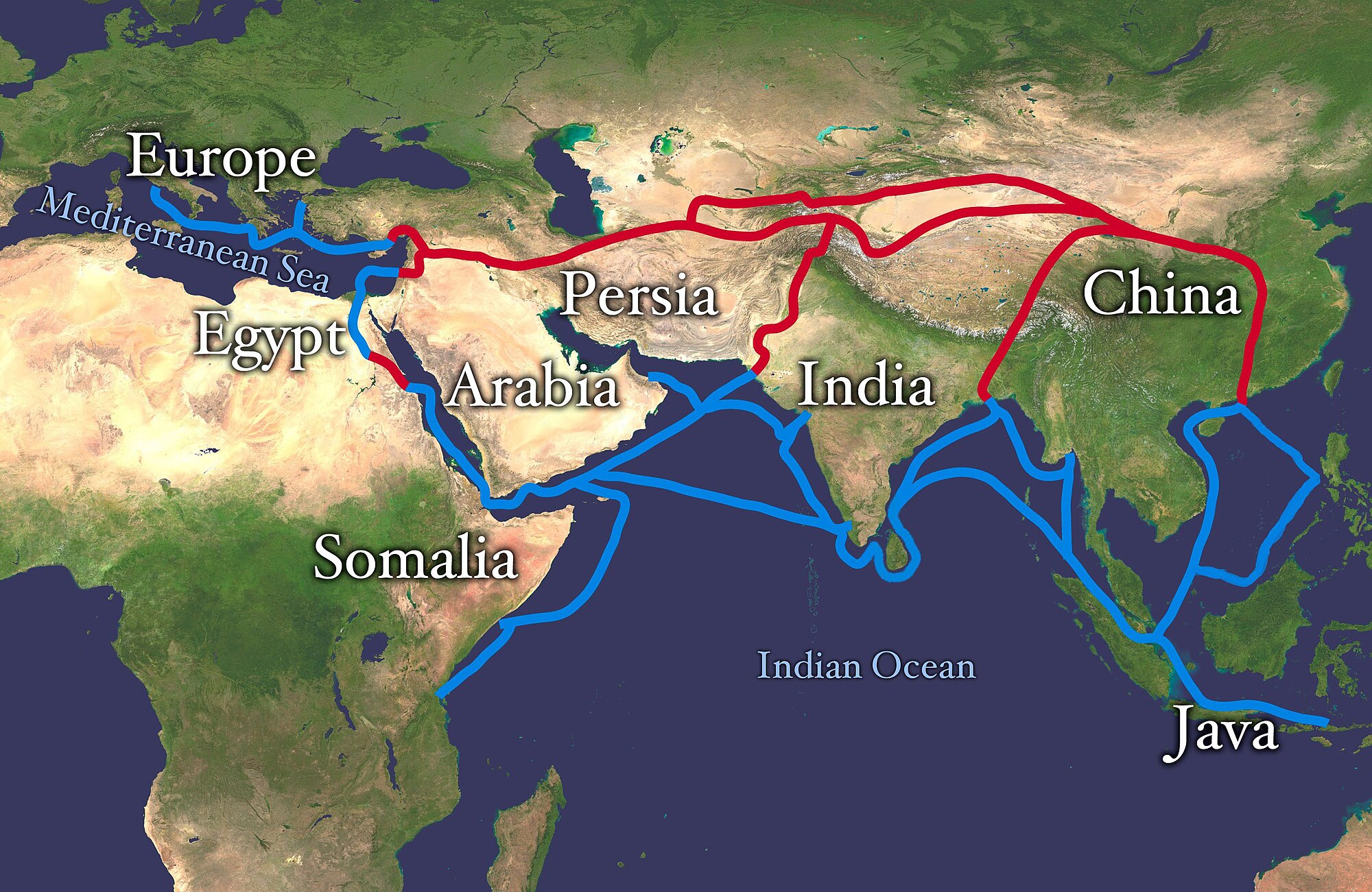
The maritime aspect of the trade was dominated by the Austronesian peoples in Southeast Asia, namely the ancient Indonesian sailors who established routes from Southeast Asia to Sri Lanka and India (and later China) by 1500 BC. These goods were then transported by land toward the Mediterranean and the Greco-Roman world via the incense route and the Roman–India routes by Indian and Persian traders. The Austronesian maritime trade lanes later expanded into the Middle East and eastern Africa by the 1st millennium AD, resulting in the Austronesian colonization of Madagascar.
Within specific regions, the Kingdom of Axum (5th century BC – 11th century AD) had pioneered the Red Sea route before the 1st century AD. During the first millennium AD, Ethiopians became the maritime trading power of the Red Sea. By this period, trade routes existed from Sri Lanka (the Roman Taprobane) and India, which had acquired maritime technology from early Austronesian contact. By the mid-7th century AD, after the rise of Islam, Arab traders started plying these maritime routes and dominated the western Indian Ocean maritime routes.[citation needed]
Arab traders eventually took over conveying goods via the Levant and Venetian merchants to Europe until the rise of the Seljuk Turks in 1090. Later the Ottoman Turks held the route again by 1453 respectively. Overland routes helped the spice trade initially, but maritime trade routes led to tremendous growth in commercial activities to Europe. [citation needed]
The trade was changed by the Crusades and later the European Age of Discovery, during which the spice trade, particularly in black pepper, became an influential activity for European traders. From the 11th to the 15th centuries, the Italian maritime republics of Venice and Genoa monopolized the trade between Europe and Asia. The Cape Route from Europe to the Indian Ocean via the Cape of Good Hope was pioneered by the Portuguese explorer navigator Vasco da Gama in 1498, resulting in new maritime routes for trade.
This trade, which drove world trade from the end of the Middle Ages well into the Renaissance, ushered in an age of European domination in the East. Channels such as the Bay of Bengal served as bridges for cultural and commercial exchanges between diverse cultures as nations struggled to gain control of the trade along the many spice routes. In 1571 the Spanish opened the first trans-Pacific route between its territories of the Philippines and Mexico, served by the Manila Galleon. This trade route lasted until 1815. The Portuguese trade routes were mainly restricted and limited by the use of ancient routes, ports, and nations that were difficult to dominate. The Dutch were later able to bypass many of these problems by pioneering a direct ocean route from the Cape of Good Hope to the Sunda Strait in Indonesia.
People in the Indian Ocean and Island Southeast Asia traded in spices, obsidian, seashells, gemstones and other high-value materials as early as the 10th millennium BC. The first to mention the trade in historical periods are the ancient Egyptians. In the 3rd millennium BC, they traded with the Land of Punt, which is believed to have been situated in an area encompassing northern Somalia, Djibouti, Eritrea and the Red Sea coast of Sudan.
The spice trade was initially associated with overland routes, but maritime routes proved to be the factor that helped the trade grow. The first true maritime trade network in the Indian Ocean was by the Austronesian peoples of Maritime Southeast Asia. They established trade routes with South India and Sri Lanka from around 1500 BC to 600 BC, ushering an exchange of material culture (like catamarans, outrigger boats, lashed-lug boats, sewn boats, and sampans) and cultigens (like coconuts, sandalwood, bananas, and sugarcane), as well as spices endemic to the Maluku Islands (cloves and nutmeg). It also connected the material cultures of India and China later on via the Maritime Silk Road. Ethnic groups in Indonesia in particular were trading in spices (mainly cinnamon and cassia) with East Africa using catamaran and outrigger boats and sailing with the help of the westerlies in the Indian Ocean. This trade network expanded to reach as far as Africa and the Arabian Peninsula, resulting in the Austronesian colonization of Madagascar by the first half of the first millennium AD. It continued into historic times, later becoming the Maritime Silk Road.
Spice trade
The spice trade involved historical civilizations in Asia, Northeast Africa and Europe. Spices, such as cinnamon, cassia, cardamom, ginger, pepper, nutmeg, star anise, clove, and turmeric, were known and used in antiquity and traded in the Eastern World. These spices found their way into the Near East before the beginning of the Christian era, with fantastic tales hiding their true sources.
The maritime aspect of the trade was dominated by the Austronesian peoples in Southeast Asia, namely the ancient Indonesian sailors who established routes from Southeast Asia to Sri Lanka and India (and later China) by 1500 BC. These goods were then transported by land toward the Mediterranean and the Greco-Roman world via the incense route and the Roman–India routes by Indian and Persian traders. The Austronesian maritime trade lanes later expanded into the Middle East and eastern Africa by the 1st millennium AD, resulting in the Austronesian colonization of Madagascar.
Within specific regions, the Kingdom of Axum (5th century BC – 11th century AD) had pioneered the Red Sea route before the 1st century AD. During the first millennium AD, Ethiopians became the maritime trading power of the Red Sea. By this period, trade routes existed from Sri Lanka (the Roman Taprobane) and India, which had acquired maritime technology from early Austronesian contact. By the mid-7th century AD, after the rise of Islam, Arab traders started plying these maritime routes and dominated the western Indian Ocean maritime routes.[citation needed]
Arab traders eventually took over conveying goods via the Levant and Venetian merchants to Europe until the rise of the Seljuk Turks in 1090. Later the Ottoman Turks held the route again by 1453 respectively. Overland routes helped the spice trade initially, but maritime trade routes led to tremendous growth in commercial activities to Europe. [citation needed]
The trade was changed by the Crusades and later the European Age of Discovery, during which the spice trade, particularly in black pepper, became an influential activity for European traders. From the 11th to the 15th centuries, the Italian maritime republics of Venice and Genoa monopolized the trade between Europe and Asia. The Cape Route from Europe to the Indian Ocean via the Cape of Good Hope was pioneered by the Portuguese explorer navigator Vasco da Gama in 1498, resulting in new maritime routes for trade.
This trade, which drove world trade from the end of the Middle Ages well into the Renaissance, ushered in an age of European domination in the East. Channels such as the Bay of Bengal served as bridges for cultural and commercial exchanges between diverse cultures as nations struggled to gain control of the trade along the many spice routes. In 1571 the Spanish opened the first trans-Pacific route between its territories of the Philippines and Mexico, served by the Manila Galleon. This trade route lasted until 1815. The Portuguese trade routes were mainly restricted and limited by the use of ancient routes, ports, and nations that were difficult to dominate. The Dutch were later able to bypass many of these problems by pioneering a direct ocean route from the Cape of Good Hope to the Sunda Strait in Indonesia.
People in the Indian Ocean and Island Southeast Asia traded in spices, obsidian, seashells, gemstones and other high-value materials as early as the 10th millennium BC. The first to mention the trade in historical periods are the ancient Egyptians. In the 3rd millennium BC, they traded with the Land of Punt, which is believed to have been situated in an area encompassing northern Somalia, Djibouti, Eritrea and the Red Sea coast of Sudan.
The spice trade was initially associated with overland routes, but maritime routes proved to be the factor that helped the trade grow. The first true maritime trade network in the Indian Ocean was by the Austronesian peoples of Maritime Southeast Asia. They established trade routes with South India and Sri Lanka from around 1500 BC to 600 BC, ushering an exchange of material culture (like catamarans, outrigger boats, lashed-lug boats, sewn boats, and sampans) and cultigens (like coconuts, sandalwood, bananas, and sugarcane), as well as spices endemic to the Maluku Islands (cloves and nutmeg). It also connected the material cultures of India and China later on via the Maritime Silk Road. Ethnic groups in Indonesia in particular were trading in spices (mainly cinnamon and cassia) with East Africa using catamaran and outrigger boats and sailing with the help of the westerlies in the Indian Ocean. This trade network expanded to reach as far as Africa and the Arabian Peninsula, resulting in the Austronesian colonization of Madagascar by the first half of the first millennium AD. It continued into historic times, later becoming the Maritime Silk Road.
Recent media
Recent media