



Community hub
Recent from talks
Knowledge base stats:
Talk channels stats:
Members stats:
St John Philby
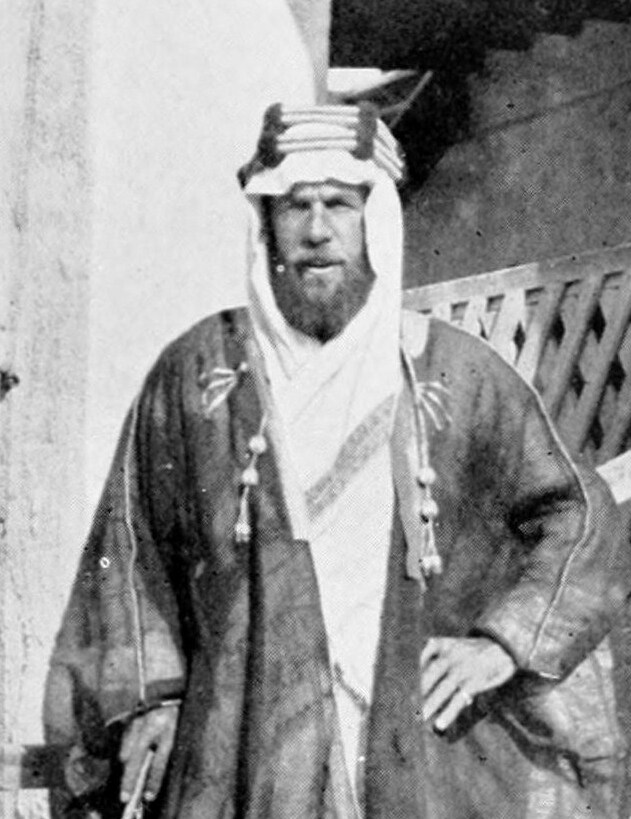
Harry St John Bridger Philby, CIE (3 April 1885 – 30 September 1960), also known as Jack Philby or Sheikh Abdullah (Arabic: الشيخ عبدالله), was a British Arabist, advisor, explorer, writer, and a colonial intelligence officer who served as an advisor to King Abdulaziz ibn Saud, the founder of Saudi Arabia.
As he states in his autobiography, he "became something of a fanatic" and in 1908 "the first Socialist to join the Indian Civil Service". After studying Oriental languages at the University of Cambridge, he was posted to Lahore in the Punjab in 1908, acquiring fluency in Urdu, Punjabi, Baluchi, Persian and eventually Arabic. He converted to Islam in 1930 and later became an adviser to Ibn Saud, urging him to unite the Arabian Peninsula under Saudi rule, and helping him to negotiate with the United Kingdom and the United States when petroleum was discovered in 1938.
Born in Badulla in British Ceylon (now Sri Lanka), the son of a tea planter, Philby was educated at Westminster School and Trinity College, Cambridge, where he studied oriental languages under Edward Granville Browne, and was a friend and classmate of Jawaharlal Nehru, who later became the first prime minister of independent India. Philby passed the Indian Civil Service exam in 1907 and reached India the following year. In 1910, he married Dora Johnston, with his distant cousin Bernard Law Montgomery as best man. In addition to their son, Kim, born in 1912, they had three daughters: Diana, Helena and Patricia. The British historian Robert Lacey wrote that Philby was "conceited, irascible, and thoroughly perverse". Arnold Wilson wrote that Philby was "one of those men who are apt to assume that everything they come across, from a government to a fountain-pen, is constructed on wrong principles, and is capable of amendment", leading Philby to reply that he "had never yet the good fortune to encounter either a perfect government or a perfect fountain-pen".
In late 1915, Percy Cox recruited Philby as head of the finance branch of the British administration in Baghdad. The position included fixing compensation for property and business owners. The mission was to organise the Arab Revolt against the Ottoman Turks and to protect the oil fields in Abadan and the Shatt al Arab, which were a source of fuel for the Royal Navy. The revolt was organised with the promise of creating a unified Arab state, or Arab federation, from Aleppo, Syria, to Aden, Yemen. Gertrude Bell was his first controller and taught him the finer arts of espionage. [citation needed] In 1916 he became Revenue Commissioner for the British Occupied Territories.
In November 1917, Philby was sent to the interior of the Arabian Peninsula as head of a mission to Ibn Saud, the chieftain who professed Wahhabism, the movement within Sunni Islam, and a bitter enemy of Hussein bin Ali, Sharif of Mecca, who led the Hashemites and the Arab Revolt, who were both contenders for "King of the Arabs". Cox had wanted Ibn Saud to attack the Kingdom of Hali, which had supported the Ottoman Empire. The British mission of four officers which arrived in Riyadh, the capital of the Nejd, doubled in one month the total number of Westerners known to have visited Riyadh in all of its recorded history. The Nejd region in central Arabia was so little known in the West at the time that the precise location of Riyadh was a mystery to Western cartographers who did not know the latitude and longitude of Riyadh. Lacey wrote that in Western maps in the early 20th century "Riyadh was a dot placed capriciously somewhere in the central wilderness". On 30 November 1917, Philby arrived in Riyadh after riding across the Arabian desert on a camel. Upon entering the royal palace, he was taken to see a "little old man somewhat inclined to stoutness, sharp-featured and bright-eyed" who was generous in supplying coffee and then retired. At that point, Philby realised "another person had been in the room all the room...a very giant of a man" who introduced himself as Abdul Aziz al-Saud, the Emir of the Nejd, also known as Ibn Saud, who had been waiting respectfully for his father to leave the room before speaking.
Philby greatly liked and admired Ibn Saud, whom he presented as a romantic hero. Philby's attitude to Ibn Saud bordered on hero worship. Reflecting his disenchantment with modern Britain, Philby saw Abdul Aziz as a sort of noble savage, a man unaffected by modern civilisation who because he was "primitive" was a better and nobler man than more "civilised" people. Philby secretly began to favour Ibn Saud even though British policy supported Sherif Hussein. Philby completed a crossing from Riyadh to Jeddah by a "backdoor" route to demonstrate that Saud, not Hussein, was in control of the Arabian highlands. Philby who prided himself on his ability to travel over Arabia-at the time a region that few Westerners had ever visited-kept his distance away from the Ikhwan (Arabic for "the brotherhood"), a ferociously fanatical Wahhabi movement notorious for their practice of shooting anyone who refused their offers to convert to Wahhabism. In 1918, Philby went within 3 miles of the Ikhwan base at Artawiya, and watched the Ikhwan via his binoculars. For his safety, Philby chose not to go any closer to Artawiya. Philby who was fluent in Arabic liked to tease Ibn Saud by telling him it was possible to reach America by either travelling east or west as the earth was round, which led Ibn Saud to say that was not possible as he believed the earth was flat.[dubious – discuss] When Ibn Saud asked what language people in America spoke, Philby told him English, which confused Ibn Saud to no end as he heard that the people in America were Indians and he thought they spoke Hindi, leading Philby to explain to him that there was a difference between the indigenous peoples of the Americas vs. the peoples of the Indian subcontinent.[dubious – discuss] Philby was allowed to meet the future kings of Saudi Arabia who were boys at the time, namely Saud, Faisal, and Fahad.
In November 1918, Britain and France issued the Anglo-French Declaration to the Arabs, which promised self-determination. Philby felt there was a betrayal of that assurance, along with others made in the Balfour Declaration and the Sykes-Picot Agreement, of the promise of a single unified Arab nation. Philby argued that Ibn Saud was a "democrat" guiding his affairs "by mutual counsel", as laid out in the Quran, in contrast to George Curzon's support for Hussein. Tensions between the Hussein bin Ali, the Sharif of Mecca who ruled the Hejaz vs. Ibn Saud the Emir of the Nejd increased after the war as both men sought to rule Arabia. In October 1919, Ibn Saud sent his Foreign Minister, his 14-year-old son, Crown Prince Faisal, to London to seek British mediation of his dispute with the Sharif of Mecca. None of the major London hotels would allow Faisal and the Nejdi delegation to stay as Faisal's slaves had a discontenting habit of starting fires anywhere they wanted to brew coffee for Crown Prince Faisal. Philby who served as the host for Faisal was forced to have the Nejdi delegation stay at a hostel for Indian Army orderly officers at St. George's Road as it was the only establishment that was willing to accept Faisal and his party. The sight of Faisal and his party dressed in traditional Arabian robes staying at a cheap hostel attracted the attention of the British newspapers and on 30 October 1919 King George V received Crown Prince Faisal at Buckingham Palace to make up for the slight. After the 1920 Iraqi revolt against the British, Philby was appointed Minister of Internal Security in Mandatory Iraq.
In November 1921, Philby was named chief head of the Secret Service in Mandatory Palestine, worked with T. E. Lawrence and met his American counterpart, Allen Dulles. In late 1922, Philby travelled to London for extensive meetings with parties involved in the Palestine question, included Winston Churchill, George V, Edward, Prince of Wales, Walter Rothschild, 2nd Baron Rothschild, Wickham Steed and Chaim Weizmann.
Hub AI
St John Philby AI simulator
(@St John Philby_simulator)
St John Philby
Harry St John Bridger Philby, CIE (3 April 1885 – 30 September 1960), also known as Jack Philby or Sheikh Abdullah (Arabic: الشيخ عبدالله), was a British Arabist, advisor, explorer, writer, and a colonial intelligence officer who served as an advisor to King Abdulaziz ibn Saud, the founder of Saudi Arabia.
As he states in his autobiography, he "became something of a fanatic" and in 1908 "the first Socialist to join the Indian Civil Service". After studying Oriental languages at the University of Cambridge, he was posted to Lahore in the Punjab in 1908, acquiring fluency in Urdu, Punjabi, Baluchi, Persian and eventually Arabic. He converted to Islam in 1930 and later became an adviser to Ibn Saud, urging him to unite the Arabian Peninsula under Saudi rule, and helping him to negotiate with the United Kingdom and the United States when petroleum was discovered in 1938.
Born in Badulla in British Ceylon (now Sri Lanka), the son of a tea planter, Philby was educated at Westminster School and Trinity College, Cambridge, where he studied oriental languages under Edward Granville Browne, and was a friend and classmate of Jawaharlal Nehru, who later became the first prime minister of independent India. Philby passed the Indian Civil Service exam in 1907 and reached India the following year. In 1910, he married Dora Johnston, with his distant cousin Bernard Law Montgomery as best man. In addition to their son, Kim, born in 1912, they had three daughters: Diana, Helena and Patricia. The British historian Robert Lacey wrote that Philby was "conceited, irascible, and thoroughly perverse". Arnold Wilson wrote that Philby was "one of those men who are apt to assume that everything they come across, from a government to a fountain-pen, is constructed on wrong principles, and is capable of amendment", leading Philby to reply that he "had never yet the good fortune to encounter either a perfect government or a perfect fountain-pen".
In late 1915, Percy Cox recruited Philby as head of the finance branch of the British administration in Baghdad. The position included fixing compensation for property and business owners. The mission was to organise the Arab Revolt against the Ottoman Turks and to protect the oil fields in Abadan and the Shatt al Arab, which were a source of fuel for the Royal Navy. The revolt was organised with the promise of creating a unified Arab state, or Arab federation, from Aleppo, Syria, to Aden, Yemen. Gertrude Bell was his first controller and taught him the finer arts of espionage. [citation needed] In 1916 he became Revenue Commissioner for the British Occupied Territories.
In November 1917, Philby was sent to the interior of the Arabian Peninsula as head of a mission to Ibn Saud, the chieftain who professed Wahhabism, the movement within Sunni Islam, and a bitter enemy of Hussein bin Ali, Sharif of Mecca, who led the Hashemites and the Arab Revolt, who were both contenders for "King of the Arabs". Cox had wanted Ibn Saud to attack the Kingdom of Hali, which had supported the Ottoman Empire. The British mission of four officers which arrived in Riyadh, the capital of the Nejd, doubled in one month the total number of Westerners known to have visited Riyadh in all of its recorded history. The Nejd region in central Arabia was so little known in the West at the time that the precise location of Riyadh was a mystery to Western cartographers who did not know the latitude and longitude of Riyadh. Lacey wrote that in Western maps in the early 20th century "Riyadh was a dot placed capriciously somewhere in the central wilderness". On 30 November 1917, Philby arrived in Riyadh after riding across the Arabian desert on a camel. Upon entering the royal palace, he was taken to see a "little old man somewhat inclined to stoutness, sharp-featured and bright-eyed" who was generous in supplying coffee and then retired. At that point, Philby realised "another person had been in the room all the room...a very giant of a man" who introduced himself as Abdul Aziz al-Saud, the Emir of the Nejd, also known as Ibn Saud, who had been waiting respectfully for his father to leave the room before speaking.
Philby greatly liked and admired Ibn Saud, whom he presented as a romantic hero. Philby's attitude to Ibn Saud bordered on hero worship. Reflecting his disenchantment with modern Britain, Philby saw Abdul Aziz as a sort of noble savage, a man unaffected by modern civilisation who because he was "primitive" was a better and nobler man than more "civilised" people. Philby secretly began to favour Ibn Saud even though British policy supported Sherif Hussein. Philby completed a crossing from Riyadh to Jeddah by a "backdoor" route to demonstrate that Saud, not Hussein, was in control of the Arabian highlands. Philby who prided himself on his ability to travel over Arabia-at the time a region that few Westerners had ever visited-kept his distance away from the Ikhwan (Arabic for "the brotherhood"), a ferociously fanatical Wahhabi movement notorious for their practice of shooting anyone who refused their offers to convert to Wahhabism. In 1918, Philby went within 3 miles of the Ikhwan base at Artawiya, and watched the Ikhwan via his binoculars. For his safety, Philby chose not to go any closer to Artawiya. Philby who was fluent in Arabic liked to tease Ibn Saud by telling him it was possible to reach America by either travelling east or west as the earth was round, which led Ibn Saud to say that was not possible as he believed the earth was flat.[dubious – discuss] When Ibn Saud asked what language people in America spoke, Philby told him English, which confused Ibn Saud to no end as he heard that the people in America were Indians and he thought they spoke Hindi, leading Philby to explain to him that there was a difference between the indigenous peoples of the Americas vs. the peoples of the Indian subcontinent.[dubious – discuss] Philby was allowed to meet the future kings of Saudi Arabia who were boys at the time, namely Saud, Faisal, and Fahad.
In November 1918, Britain and France issued the Anglo-French Declaration to the Arabs, which promised self-determination. Philby felt there was a betrayal of that assurance, along with others made in the Balfour Declaration and the Sykes-Picot Agreement, of the promise of a single unified Arab nation. Philby argued that Ibn Saud was a "democrat" guiding his affairs "by mutual counsel", as laid out in the Quran, in contrast to George Curzon's support for Hussein. Tensions between the Hussein bin Ali, the Sharif of Mecca who ruled the Hejaz vs. Ibn Saud the Emir of the Nejd increased after the war as both men sought to rule Arabia. In October 1919, Ibn Saud sent his Foreign Minister, his 14-year-old son, Crown Prince Faisal, to London to seek British mediation of his dispute with the Sharif of Mecca. None of the major London hotels would allow Faisal and the Nejdi delegation to stay as Faisal's slaves had a discontenting habit of starting fires anywhere they wanted to brew coffee for Crown Prince Faisal. Philby who served as the host for Faisal was forced to have the Nejdi delegation stay at a hostel for Indian Army orderly officers at St. George's Road as it was the only establishment that was willing to accept Faisal and his party. The sight of Faisal and his party dressed in traditional Arabian robes staying at a cheap hostel attracted the attention of the British newspapers and on 30 October 1919 King George V received Crown Prince Faisal at Buckingham Palace to make up for the slight. After the 1920 Iraqi revolt against the British, Philby was appointed Minister of Internal Security in Mandatory Iraq.
In November 1921, Philby was named chief head of the Secret Service in Mandatory Palestine, worked with T. E. Lawrence and met his American counterpart, Allen Dulles. In late 1922, Philby travelled to London for extensive meetings with parties involved in the Palestine question, included Winston Churchill, George V, Edward, Prince of Wales, Walter Rothschild, 2nd Baron Rothschild, Wickham Steed and Chaim Weizmann.