Hubbry Logo
SugaarSugaarMain
Open search
Sugaar
Community hub
Sugaar
logo
8 pages, 0 posts
0 subscribers
Be the first to start a discussion here.
Sugaar
Sugaar
from Wikipedia
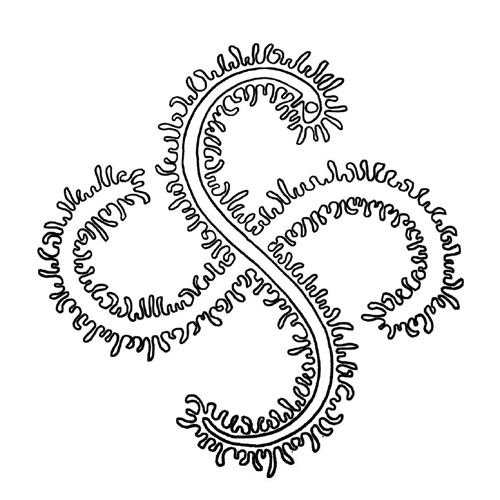
Modern rendering of Sugaar as serpent in the lauburu by Josu Goñi

In Basque mythology, Sugaar (also Sugar, Sugoi, Suarra, Maju) is the male half of a pre-Christian Basque deity associated with storms and thunder. He is normally imagined as a dragon or serpent. Unlike his female consort, Mari, there are very few remaining legends about Sugaar. The basic purpose of his existence is to periodically join with Mari in the mountains to generate the storms.

In one myth[when?] Sugaar seduces a Scottish[clarification needed] princess in the village of Mundaka to father the mythical first Lord of Biscay, Jaun Zuria.[citation needed] This legend is believed[by whom?] to be a fabrication made to legitimize the Lordship of Biscay as a separate state from Navarre, because there is no historical account of such a lord. Only the fact that the delegates of Mundaka were attributed with the formal privilege of being the first to vote in the Biltzar (Parliament) of the province may look as unlikely indication of the partial veracity of this legend.[citation needed]

Etymology

[edit]

The name Suga(a)r is derived from suge (serpent) and -ar (male), thus "male serpent".[1] The suggestions of a formation based on su (fire) and gar (flame), thus yielding "flame of fire" are considered folk etymology.[1]

Sugoi, another name of the same deity, has two possible interpretations, either a suge + o[h]i (former, "old serpent") or su + goi ("high fire").[citation needed] There is no likely etymology for the third name of this god, Maju.

Local legends on Sugaar

[edit]
  • In Ataun he is said to have two homes: in the caves of Amunda and Atarreta. He is said to have been witnessed crossing the sky in form of fire-sickle[clarification needed], which is considered presage of storms. In this area it is also said that Sugaar punishes the children who disobey their parents.[citation needed]
  • In Azkoitia Sugaar is clearly identified with Maju. He meets Mari on Fridays (the day of the akelarre or sabbat), conceiving then the storms.
  • In Betelu Sugaar is known as Suarra and considered a demon. There they say that he travels through the sky in the shape of a fireball, between the mountains Balerdi and Elortalde.

See also

[edit]

References

[edit]
Revisions and contributorsEdit on WikipediaRead on Wikipedia
from Grokipedia
Sugaar, also known as Sugoi or Maju, is a serpentine in pre-Christian , embodying the male principle associated with storms, thunder, and subterranean realms. Typically depicted as a or giant snake, Sugaar emerges from caves and chasms, traversing the sky in forms such as a fiery or to herald tempests. As the consort of the earth goddess Mari, he sires offspring including Atarrabi, symbolizing benevolence, and Mikelatz, representing malevolence, thus reflecting cosmological dualities in Basque lore. His name derives from suge, the Basque term for serpent, underscoring his reptilian essence and role in balancing natural forces with Mari. Regional variations, such as in Gipuzkoa's Azkoiti, portray him explicitly as Mari's husband, linking his underground dwelling to weather disruptions and celestial phenomena.

Etymology and Terminology

Name Origins and Variations

The name Sugaar derives from the Basque terms suge, meaning "serpent" or "snake," and the suffix -ar, denoting masculinity, thus translating literally to "male serpent." This etymology aligns with Basque philology, where suge is a core lexical item for reptilian forms, as evidenced in dialectal forms like suga (Gipuzkoan) and süge (Roncalese), reflecting the language's isolate structure and internal derivations without Indo-European cognates. Alternative designations include Sugoi, prevalent in the Arratia Valley of ; Maju; Sugar; and Suarra, arising from regional phonetic shifts and orthographic variations in oral traditions transcribed from the onward. Proposed folk etymologies linking Sugaar to su ("") and gar ("flame"), implying "flame serpent," or interpreting Sugoi as su + goi ("high "), are unsubstantiated by linguistic reconstruction and dismissed in favor of the suge-based origin, as they impose external semantic overlays without attestation in proto-Basque morphology.

Depictions and Attributes

Physical Manifestations

In Basque oral traditions, Sugaar is most commonly depicted as a giant serpent or dragon-like entity residing in underground realms and emerging through chasms, caves, or natural fissures in the earth. This form aligns with accounts from regions like Gipuzkoa, where it is described as a snake that periodically surfaces. Folkloric narratives emphasize its serpentine body, often without specifying additional features like scales or heads, reflecting the variability inherent in transmitted tales collected in the 19th and 20th centuries. Alternate manifestations include transformations into fiery shapes during sky traversals, such as a or crescent of fire, observed in storm-associated legends from and surrounding areas. Some accounts portray it in humanoid form, appearing as a man, though this is less prevalent than reptilian depictions. These shifting appearances underscore the entity's adaptability in , tied to environmental phenomena like thunder, but without consistent anatomical details across variants. The absence of standardized iconography stems from the exclusively oral preservation of these descriptions prior to ethnographic recordings, with no verified pre-Christian artifacts or visual representations attributable to Sugaar identified in archaeological records of the Basque region. Ethnographers like José Miguel de Barandiaran documented these forms through interviews in the early , highlighting regional differences such as a more fiery emphasis in highland tales versus subterranean focus in lowland lore.

Symbolic Associations

In Basque folklore, Sugaar symbolizes the disruptive forces of thunderstorms and tempests, with his serpentine form and movements directly causally linked to the onset of thunder, , and violent patterns. Accounts describe his aerial flights—manifesting as a fiery serpent or ram-shaped fireball traversing the —as precursors to , wind, and electrical discharges, embodying the chaotic transition from calm to storm. This storm-bringing role underscores a symbolic duality, as Sugaar's primary abode in subterranean caverns and chasms evokes chthonic earth-bound potency, from which he emerges to exert influence over atmospheric phenomena. The serpent motif reinforces associations with primal, regenerative chaos underlying natural cycles, contrasting terrestrial stability with heavenly volatility.

Mythological Role

Relationship with Mari

In Basque mythology, Sugaar serves as the male consort to Mari, the principal goddess associated with the earth and fertility, forming a complementary divine duality that embodies the interplay of celestial storms and terrestrial forces. This partnership reflects a pre-Christian cosmological balance, with Sugaar representing dynamic, disruptive male energies akin to serpentine motion and atmospheric upheaval, in contrast to Mari's stabilizing female dominion over land and growth. Regional folklore accounts, particularly from such as Azkoitia, explicitly identify Sugaar as Mari's husband, residing in underground realms and emerging periodically to unite with her in sacred caves. These unions are depicted as ritualistic encounters that perpetuate natural cycles, without the moralistic interpretations imposed by later Christian influences, emphasizing instead a harmonious renewal of cosmic order through their periodic conjunctions. Such descriptions underscore Sugaar's role as an equal counterpart to Mari, traversing chasms to meet her, thereby ensuring the equilibrium of elemental powers in Basque cosmological traditions.

Parentage and Offspring

In , Sugaar is regarded as the father of the twin brothers Atarrabi and Mikelatz, born from his union with the goddess Mari. Atarrabi embodies benevolence and is associated with light and goodness, while Mikelatz represents malevolence and is linked to darkness and evil, reflecting a dualistic framework in the narratives. Core legends depict the twins undergoing trials under the tutelage of a supernatural teacher, often Etsai, where Atarrabi proves incapable of learning deceit and thus ascends to , whereas Mikelatz masters all vices but fails at and descends to hell. Some variants attribute the twins' birth to Mari's liaison with a mortal rather than Sugaar directly, though consistently positions Sugaar as their divine progenitor in the primary twin cycle. Regional accounts occasionally ascribe other offspring to Sugaar, such as , the mythical first of , conceived with a Scottish princess in the village of , emphasizing his role in foundational lordship myths rather than the dominant dualistic progeny tale. These lesser variants appear in localized Biscayan traditions but lack the widespread recurrence of the Atarrabi-Mikelatz narrative across Gipuzkoan and broader Basque oral lore.

Legends and Regional Variations

Storm and Thunder Narratives

In Basque folklore, manifests as a serpent or dragon coiling through the clouds, often appearing as a fiery or that heralds turbulent weather. His aerial traversals are causally linked to the onset of storms, with eyewitness accounts in oral traditions describing his serpentine form whipping through the to unleash thunderclaps from the friction of his coils or strikes against the heavens. Lightning is attributed to Sugaar's breath or emanations during these flights, illuminating the and striking the as bolts that shepherds and farmers observed following his visible path. These narratives emphasize a direct agency: storms materialize in the wake of Sugaar's sightings, as documented in 19th- and 20th-century collections where rural informants reported tempests brewing precisely after glimpsing the fiery serpent. Particularly tied to Friday evenings, the traditional day of akelarre assemblies, Sugaar's union with Mari in the skies is said to conceive violent events, including hail-laden gales and prolonged thunder. sequences recount how his descent or ascent during these meetings agitates the atmosphere, producing rumbling peals that echo his serpentine movements and serve as omens for herders to secure . This pattern reinforces a pre-modern causal understanding, where Sugaar's periodic apparitions empirically preceded measurable activity in Basque highland communities.

Local Folklore Accounts

In , particularly around Azkoitia, local oral traditions collected in the early portray Sugaar as a colossal serpent residing in subterranean realms, emerging through chasms and caves to consort with Mari, whom informants identified explicitly as his wife. These accounts, drawn from ethnographic fieldwork among rural elders, emphasize Sugaar's periodic ascents from specific locales like the caverns beneath Mount Anboto, where he joins Mari in her underground dwelling every Friday, symbolizing a ritual union tied to natural cycles rather than overt celestial disturbances. In contrast, Biscayan folklore from coastal areas such as features Sugaar manifesting in humanoid guise to interact with mortals, as in the legend of a visiting Scottish seduced by the around the , resulting in the birth of Jaun Zuria, the eponymous first lord of with strikingly pale features. This narrative, preserved in regional chronicles and linked to potential Viking-era settlements, diverges from Gipuzkoan serpentine emphases by highlighting Sugaar's capacity for anthropomorphic deception and lineage-founding, with his form described variably as draconic or man-like depending on the teller's lineage. Navarrese variants, though sparser in documented collections, occasionally depict Sugaar in a more elusive human form wandering rural paths to entice or warn villagers, as noted in 19th-century compilations from the eastern Basque territories, where he avoids direct cave associations in favor of nocturnal apparitions near sacred springs. These provincial differences, captured in works by early ethnographers like those surveying Goierri and surrounding areas, reflect localized adaptations possibly influenced by terrain—serpentine in mountainous versus more versatile in Biscay's littoral zones—without uniform consensus on his precise morphology across informants.

Historical and Cultural Context

Pre-Christian Basque Beliefs

Pre-Christian Basque religion constituted an animistic that venerated spirits and forces embedded in natural phenomena, including mountains, caves, and patterns. Within this system, Sugaar functioned as a manifestation of uncontrolled chaos, often depicted as a serpentine entity tied to storms, thunder, and subterranean realms, in contrast to the stabilizing, earth-bound attributes of the goddess Mari. This oppositional dynamic underscored a perceived equilibrium between disruptive celestial energies and terrestrial order, as inferred from reconstructed reflecting pre-Christian cosmology. The of Sugaar's name, deriving from suge ("serpent") and the masculine suffix -ar, aligns with linguistic evidence positioning as distinct from Indo-European traditions, given Euskara's status as a with roots potentially extending to or earlier periods predating Roman contact around the 1st century BCE. Scholars attribute this uniqueness to the ' cultural continuity, evidenced by genetic and archaeological markers linking modern populations to inhabitants of the region, such as those associated with cave sites like Ekain, though direct iconographic ties to Sugaar remain absent. Lacking contemporaneous written accounts, comprehension of Sugaar's role relies on toponymic survivals—place names incorporating motifs—and parallels with featuring chthonic snake figures from pre-Roman contexts, suggesting an indigenous evolution of storm-serpent archetypes unbound by external mythological imports. These elements indicate Sugaar's embedding in a localized pagan framework emphasizing empirical observation of natural perils over anthropomorphic hierarchies.

Influence of Christianity and Suppression

The process of in the Basque Country, beginning with Roman missionary efforts in the AD and accelerating after the through the establishment of bishoprics and feudal integration, systematically reframed pre-Christian deities as demonic entities to enforce doctrinal conformity. Sugaar, traditionally envisioned as a serpentine storm-bringer, aligned with biblical imagery of the serpent as , leading to its portrayal in texts and hagiographies as a devilish dragon emblematic of chaos and idolatry. This equation facilitated the suppression of associated rituals, such as invocations for weather control, which church authorities deemed heretical superstitions akin to sorcery. The Basque witch trials, particularly the 1609–1614 Logroño proceedings orchestrated by the Spanish Inquisition, exemplify this demonization, with akelarre sabbaths described in trial testimonies as gatherings where participants encountered horned devils or animalistic familiars, including serpents, forging pacts for storm-raising powers reminiscent of Sugaar's attributes. Inquisitorial edicts explicitly targeted residual pagan storm worship, prosecuting it as diabolical conspiracy; records from these trials, involving confessions from over 2,000 accused and culminating in autos-da-fé attended by up to 50,000 spectators, aimed to extirpate such practices through torture-induced admissions and public executions. Inquisition archives nonetheless disclose patterns of Basque resistance, as defendants' accounts persistently wove in causal explanations of meteorological anomalies—thunder as transit or hail as —betraying incomplete assimilation and the entity's persistence in hybridized forms within folk cosmology, rather than outright obliteration. These documents, including reports by commissioners like y Frías, reveal that while overt veneration was curtailed, underlying beliefs endured underground, evading full suppression due to the region's geographic isolation and cultural insularity.

Persistence in Oral Tradition

José Miguel de Barandiaran, a Basque ethnographer active from the early 1900s, systematically collected oral accounts of Sugaar from rural informants across Basque territories, recording narratives that retained core pre-Christian attributes of the deity as a storm-bringing serpent. These field efforts, building on 19th-century folklore initiatives, captured living traditions where Sugaar met Mari periodically, emphasizing continuity in storytelling practices amid broader cultural documentation drives./7.%20Saratxaga%20Arregi%20%20Matrixiality%20of%20the%20Earth/7.%20Saratxaga%20Arregi%20%20Matrixiality%20of%20the%20Earth%20in%20the%20Basque%20Worldview%20-%20Matrix%203(1)%202023.pdf) In these preserved tales, Sugaar explained thunder through his serpentine, fiery form twisting across the heavens, providing a causal framework distinct from punitive divine interpretations and resistant to full displacement by meteorological science until widespread rural education expanded post-World War II. Such mythological etiologies maintained explanatory roles in communities, where oral recitations during gatherings reinforced Sugaar's role in storm generation over abstract physical laws. Transmission strength correlated with geographic isolation, thriving in remote valleys like those in and where intergenerational endured, but fading in urbanizing coastal or industrial zones by the mid-20th century due to migration and literacy shifts favoring written media. Barandiaran's records from these peripheral areas highlight how limited external contact preserved variant details, such as localized sightings of Sugaar's serpentine path, against homogenizing influences.

Interpretations and Significance

Scholarly Analyses

Scholars have interpreted and Mari as embodying a storm-earth duality, with Sugaar representing chaotic atmospheric forces and Mari the stabilizing terrestrial realm, a pairing that some comparative mythologists analogize to Indo-European thunder gods like or confronting earth or serpent motifs. However, such cross-cultural universalizations are critiqued for neglecting Basque mythology's roots in a pre-Indo-European substrate, as evidenced by the language's isolate status and distinct mythological unaligned with IE patterns of divine or heroic conquests. Basque-specific , including oral accounts linking Sugaar explicitly to local chthonic serpents rather than sky-father archetypes, underscores the need for substrate-focused analysis over borrowed frameworks. Critiques of 19th-century folklore revivalists highlight their Romantic influences, which often imposed moral binaries—such as good-evil oppositions or patriarchal-domestic roles—onto raw oral data, diverging from the amoral, cyclical naturalism in pre-collection traditions. Ethnographers like José Miguel de Barandiaran, working in the early , prioritized unfiltered field collections from rural informants, revealing Sugaar's shape-shifting storm agency without the ethical overlays added by nationalist romantics seeking to align Basque lore with European literary canons. Julio Caro Baroja further emphasized empirical of these sources, cautioning against anachronistic moralizations that obscure the figures' origins in pre-Christian animistic practices tied to cycles rather than didactic fables. Recent philological studies reinforce the serpent-storm of Sugaar as deriving from Basque substrate cultures, with the name etymologically linked to suge ("serpent"), evoking indigenous chthonic-underworld motifs rather than unsubstantiated Celtic or Mediterranean loans. This approach favors linguistic from Aquitanian-Basque continuity, positing Sugaar's storm manifestations as extensions of a localized dragon-serpent tradition predating Indo-European overlays in the Pyrenean region. Such work avoids over-reliance on comparative parallels, grounding interpretations in verifiable toponymic and lexical survivals that highlight Basque mythology's resilience as a non-IE holdover.

Role in Basque Identity and Nationalism

In the post-Franco era, commencing after the dictator's death on November 20, 1975, Basque cultural revival efforts intensified amid democratization and the establishment of autonomous institutions, incorporating pre-Christian mythological figures like Sugaar to affirm ethnic distinctiveness and resistance to historical centralization from Madrid. Nationalist discourse in Euskadi has periodically invoked such serpentine storm entities as emblems of ancient, pre-Roman independence, framing them against Spanish-imposed uniformity and emphasizing causal links to enduring linguistic and territorial claims. This symbolic deployment aligns with broader ethno-symbolist strategies where myths mobilize collective memory, though empirical evidence for unbroken transmission remains tied to fragmented 19th- and 20th-century folklore collections rather than continuous practice. Within literature and cultural festivals, Sugaar appears in modern narratives as a motif of resilient, shape-shifting pagan vitality, paralleling themes of Basque renewal post-suppression. For instance, contemporary artistic interpretations portray the figure to evoke identity fluidity and storm-like defiance, integrating it into promotions and media that highlight cave lore and regional . However, these usages carry risks of ethnocentric amplification, where nationalist instrumentalization constructs a homogenized "pre-Hispanic" essence that overlooks regional variations and Christian , potentially fabricating causal continuity absent in primary ethnographic records. Scholarly critiques underscore this as rhetorical myth-making, prioritizing identity assertion over historical fidelity. Eco-spiritual reinterpretations in fringe revivalist circles, often aligned with left-leaning , further adapt Sugaar into ahistorical archetypes of harmonious nature forces, diverging from original storm-punitive connotations documented in localized accounts. While preserving oral motifs aids cultural continuity—evident in persistent references across and traditions—such projections lack verifiable pre-modern precedents and serve modern ideological ends rather than empirical reconstruction. Balancing preservation thus requires distinguishing verifiable persistence from nationalist or spiritual overreach.

References

Add your contribution
Related Hubs
User Avatar
No comments yet.