


Community hub
Recent from talks
Contribute something
Nothing was collected or created yet.
Rakvere
View on Wikipedia
Rakvere is the administrative center, or county seat, of Lääne-Viru County in northern Estonia, about 100 km southeast of Tallinn and 20 km south of the Gulf of Finland and the Baltic Sea. In 2022, Rakvere was one of 10 ACES European Towns of Sport.[1] In 2023, Rakvere won the Green Destinations' Silver Award[2] after having been selected in 2021 as part of the Top 100 Destination Sustainability Stories.[3]
Key Information


Rakvere boasts a distinctive architectural feature: the Rakvere door. Reflecting German baroque cabinets of the 17th and 18th centuries and the expressionist style of the 1920s, the wooden Rakvere door has a pointed, raised rectangle in the center. In 2023, there were 15 Rakvere doors on 13 houses.[4]
Name
[edit]A settlement called Tarvanpea, which means the 'head of an aurochs', was first mentioned in 1226 in the Livonian Chronicle of Henry. This Danish stronghold was first recorded as Wesenbergh, the Middle Low German adaptation of Tarvanpea, in 1252, and, up until the early 20th century, the town was widely known as Wesenberg. The name Rakovor appears in 1268 in the Russian Novgorod First Chronicle, and present-day Rakvere is associated with Rägavere, in which vere in Estonian refers to a topographical feature. Rakvere has also been referred to as Tarvanpää.
History
[edit]The earliest signs of a human settlement, dating back to the 3rd, 4th, and 5th centuries AD, have been found on Rakvere's Theatre Hill (Teatrimägi). Probably to protect this settlement, a wooden stronghold was built on another hill, or mound, (Vallimägi) nearby, Rakvere's highest point.
After the Kingdom of Denmark conquered northern Estonia, it started to erect stone buildings in 1220. The Battle of Wesenberg, with the Danish and Teutonic knights and local militia on one side and the forces of Novgorod and Pskov on the other, occurred near Rakvere on 18 February 1268. The Danish King Erik VI Menved granted Rakvere Lübeck rights on 12 June 1302.[4] After the king sold Danish Estonia to the Livonian Order in 1346, a large stone castle was built on top of the stronghold on Vallimägi. The Ordensburg was protected by towers and courtyards.

The building of a Franciscan monastery started on Theatre Hill in 1508. Yet, in 1558, during the first year of the Livonian War, Muscovite troops captured Rakvere, and, in 1574, Sweden heavily damaged the town after the disastrous Siege of Wesenberg.[5] In 1581, Sweden captured Rakvere[6] and passed it to the Polish–Lithuanian Commonwealth in 1602; Polish troops destroyed the castle in 1605. After Rakvere returned to Swedish control that same year, a mansion was built on the ruins of the monastery. In 1703, during the Great Northern War, Rakvere was burned down. With the capitulation of Estonia and Livonia in 1710 and the subsequent Treaty of Nystad in 1721, the town became part of the Russian Empire. It was a part of Russia until 1918 when, following World War I, Estonia became an independent nation.
During the period of independence from 1918 to 1940, Estonia completed its first railway, and Rakvere was at the heart of the crucial Tallinn-Rakvere-Narva-St. Petersburg trade route. Telephone lines had been installed in 1898, and nearly the entire city had electric lights in 1918.[4] Many prominent buildings were built, too, in Rakvere, during this period, including the market building, the old bank building (today, SEB Pank), and Rakvere Secondary School (since 2022, Rakvere Freedom School). Local newspapers emerged, including the county paper Virumaa Teataja in 1925. The idea of a professional theatre in Rakvere started to take shape as well. In 1930, during the administration of Mayor Heinrich Aviksoo, the town stadium opened. Later, Anton Soans developed a new master plan from which emerged a private German-language school and a public Estonian-language high school.
With Estonia in World War II, the Soviet Red Army invaded and occupied the country in June 1940.[4] On 14 June 1941, hundreds of Rakvere's residents were deported to Russia.[4] From 7 August 1941 to 19 September 1944, the town was occupied by Germany.[4] In the autumn of 1941, the Dulag 102 prisoner-of-war camp was relocated from Šiauliai to Rakvere, and was later moved to Volosovo.[7] On 19 September 1944, the Soviets bombed the town, killing at least 20 civilians, including two children.[4] The next day the town was re-occupied by the Soviets.[4]
On 20 August 1991, Estonia again declared its independence.[4]
On 15 July 2000, a high-end F2/T5 tornado hit Rakvere, killing one person and injuring one other. The tornado damaged 110 homes and destroyed 120 garage buildings. One car was seen airborne.[8][9]
Transport
[edit]The T5 highway to Pärnu starts near Rakvere, and the T1 Tallinn-Narva highway, part of European route E20, is just to the north of the town. Narva is 114 km to the east of Rakvere. The Tallinn-Narva railway passes through the city, and passenger trains between Tallinn and Narva, operated by Elron (rail transit), stop at Rakvere several times a day. Daily busses connect Rakvere to Tallinn and Narva, too, as well as to many small towns throughout Lääne-Viru County, including Tapa and Kunda.
Geography
[edit]Rakvere has a total area of 10.75 square kilometres. There are 19 districts, or neighborhoods, in Rakvere: Kondivalu, Kukeküla, Kurikaküla, Lennuvälja, Lepiku, Lilleküla, Linnuriik, Moonaküla, Mõisavälja, Paemurru, Palermo, Roodevälja, Seminari, Südalinn, Taaravainu, Tammiku, Vallimäe, Vanalinn, and Õpetaja Heinamaa. Although about 15% of Rakvere is covered by forests and parks, it is Estonia's third most densely populated urban area.
Demographics
[edit]| Ethnicity | 1922[10] | 1934[11] | 1941[12] | 1959[13] | 1970[14] | 1979[15] | 1989[15] | 2000[16] | 2011[17] | 2021[18] | ||||||||||
|---|---|---|---|---|---|---|---|---|---|---|---|---|---|---|---|---|---|---|---|---|
| amount | % | amount | % | amount | % | amount | % | amount | % | amount | % | amount | % | amount | % | amount | % | amount | % | |
| Estonians | 6885 | 89.9 | 9108 | 90.8 | 8099 | 95.7 | 11168 | 78.1 | 13292 | 74.3 | 14550 | 76.5 | 14902 | 75.2 | 14496 | 84.8 | 13445 | 88.1 | 13386 | 88.4 |
| Russians | 304 | 3.97 | 355 | 3.54 | 163 | 1.93 | - | - | 3441 | 19.2 | 3326 | 17.5 | 3545 | 17.9 | 1845 | 10.8 | 1371 | 8.98 | 1155 | 7.63 |
| Ukrainians | - | - | 0 | 0.00 | - | - | - | - | 410 | 2.29 | 355 | 1.87 | 507 | 2.56 | 218 | 1.28 | 150 | 0.98 | 193 | 1.27 |
| Belarusians | - | - | - | - | - | - | - | - | 106 | 0.59 | 108 | 0.57 | 171 | 0.86 | 69 | 0.40 | 46 | 0.30 | 36 | 0.24 |
| Finns | - | - | 22 | 0.22 | 5 | 0.06 | - | - | 394 | 2.20 | 406 | 2.14 | 396 | 2.00 | 277 | 1.62 | 137 | 0.90 | 121 | 0.80 |
| Jews | 101 | 1.32 | 100 | 1.00 | 0 | 0.00 | - | - | 44 | 0.25 | 24 | 0.13 | 23 | 0.12 | 11 | 0.06 | 5 | 0.03 | 0 | 0.00 |
| Latvians | - | - | 21 | 0.21 | 8 | 0.09 | - | - | 26 | 0.15 | 26 | 0.14 | 20 | 0.10 | 5 | 0.03 | 6 | 0.04 | 14 | 0.09 |
| Germans | 256 | 3.34 | 281 | 2.80 | - | - | - | - | - | - | 60 | 0.32 | 88 | 0.44 | 9 | 0.05 | 9 | 0.06 | 8 | 0.05 |
| Tatars | - | - | 9 | 0.09 | - | - | - | - | - | - | 50 | 0.26 | 27 | 0.14 | 21 | 0.12 | 15 | 0.10 | 8 | 0.05 |
| Poles | - | - | 13 | 0.13 | 17 | 0.20 | - | - | - | - | 28 | 0.15 | 22 | 0.11 | 15 | 0.09 | 14 | 0.09 | 12 | 0.08 |
| Lithuanians | - | - | 2 | 0.02 | 2 | 0.02 | - | - | 19 | 0.11 | 20 | 0.11 | 24 | 0.12 | 9 | 0.05 | 6 | 0.04 | 7 | 0.05 |
| unknown | 0 | 0.00 | 42 | 0.42 | 5 | 0.06 | 0 | 0.00 | 0 | 0.00 | 0 | 0.00 | 0 | 0.00 | 50 | 0.29 | 5 | 0.03 | 81 | 0.53 |
| other | 113 | 1.48 | 74 | 0.74 | 167 | 1.97 | 3128 | 21.9 | 159 | 0.89 | 58 | 0.31 | 97 | 0.49 | 72 | 0.42 | 55 | 0.36 | 119 | 0.79 |
| Total | 7659 | 100 | 10027 | 100 | 8466 | 100 | 14296 | 100 | 17891 | 100 | 19011 | 100 | 19822 | 100 | 17097 | 100 | 15264 | 100 | 15141 | 99.9 |
- Unaffiliated (83.2%)
- Lutheran (8.50%)
- Orthodox (4.00%)
- Other Christians (1.80%)
- Other religions or unknown (2.50%)
Landmarks
[edit]Rakvere Castle (Linnus)
[edit]The oldest known archeological traces of the ancient fortress on Rakvere's Vallimägi hill date from the 5th and 6th centuries. Throughout the ages, Rakvere Castle has belonged to Danish kings, knight-monks of the Livonian Order, and the Swedish and Polish states. During the Polish-Swedish War of 1600-1629, the castle was partly blown up by Polish troops in 1605, and, later, by the Swedish army. The castle has lain in ruins ever since.[20]
Today, permanent exhibitions and seasonal programs and activities in the castle explain everyday life in the 16th century. Visitors can dress as medieval knights and walk through the castle's rooms, including a torture chamber, an alchemist's workshop, and a room of historical artifacts. -->[21]
Rakvere Trinity Church (Kolmainu Kirik)
[edit]Trinity Church, Rakvere's Lutheran church, originally called St. Michael Church and dedicated to St. Michael the Archangel,[22] dates from the 15th century. It was designed to also be a stronghold in times of trouble. The tower, the masonry stairway, the sharp edges of the windows, and some pillars have been preserved. The church was severely damaged during the Livonian War and during Polish-Swedish conflicts in the 17th century. It was reconstructed from 1684 to 1693, becoming a three-nave chamber from which the name Trinity Church came. In 1703 and 1708, during the Great Northern War, the church was damaged again. It was reconstructed from 1727 to 1730; a Renaissance-style tower was completed in 1752, which was replaced by a neo-Gothic tower in 1852. The church's interior displays fine craftsmanship, including a Baroque pulpit from 1690 made by Christian Ackermann[23] and the altar wall from 1730 by Johann Valentin Rabe.[24] A statute of an egg and a cock that was on the top of the tower is now in the Rakvere Museum [22]
Long Street (Pikk Tänav)
[edit]Long, or Pikk, Street is the oldest street in Rakvere. Most Estonian cities have a Pikk Street, which is like a High Street in the United Kingdom or a Main Street in the United States. In the 19th century and first half of the 20th century, Pikk Street was Rakveres's main shopping street with banks, shops, restaurants, and guesthouses as well as the residences of the town's wealthiest businessmen. In 2016, during the celebration of the 100th Anniversary of the Estonian Republic (Estonian: Eesti Vabariik 100), Rakvere was one of 15 municipalities that won the "Good [sometimes translated as Great] Public Space" competition and received financing from the European Union Regional Development Fund and Enterprise Estonia to reconstruct approximately 700 meters of Pikk Street as a pedestrian-friendly, historical thoroughfare reminiscent of the 19th and early 20th centuries. The National Heritage Board of Estonia (Estonian: Muinsuskaitseamet) recognized Rakvere's project with its 2020 New Building in a Historical Environment award, and, in 2021, Estonia showcased it at Venice's 17th Biennale of Architecture. A sculpture of eight-year-old Estonian: Edith Kotka-Nyman (1932-2017) by G.S. Hansen is at 22 Pikk Street, and, behind her, are the so-called Carrot Stairs (Estonian: Porganditrepp) that lead up to Vallimägi and Rakvere Castle with wider steps at the top and narrower ones at the bottom. [25][26]
Rakvere Theatre and Manor House (Teater ja mõis)
[edit]Rakvere is reportedly Europe's smallest town with its own professional theatre.[27]
The roots of Rakvere Theatre date back to 1882. Following independence, Estonian Land Reform of 1919 gave Rakvere's originally Swedish manor house (mõis) to the local government. On 4 May 1920, Mayor Jakob Liiv created the Rakvere Community Center Society (Rahvamaja Selts) to manage the formerly private building. Liiv's leadership helped create Rakvere Theatre. Construction of the theatre building - an addition to the manor house turned community center now cultural center (kultuurikeskus) - was completed at the end of the 1930s. Its festive opening was on 24 February 1940. The theatre survived World War II, and it was renovated in 2005. A cinema was built along a wall of the manor's carriage stable in 2016.
Today, Rakvere Theatre presents 10 new productions each season. The theatre has given Estonia many renowned actors, including Volli Käro, Üllar Saaremäe, Indrek Saar, Ülle Lichtfeldt, and Aarne Üksküla. Since 1990, it has organized the biannual event Baltoscandal, which hosts avant-garde plays and groups from all over the world.
Rakvere Central Square (Keskväljak)
[edit]In 2004, Rakvere's central, or town, square got a new, modern look with architects' Otto Kadarik, Mihkel Tüür, and Villem Tomiste's five yellow domes (that also look like umbrellas or chanterelle mushrooms or medieval turret tops) hanging from white semi-arches on cobbled hills. In 2010, the sculpture A Young Man on Bicycle Listening to Music was dedicated to Estonian composer Arvo Pärt, a former resident of Rakvere, in honor of his 75th birthday[28] The sculptors are Aivar Simson and Paul Mänd. Surrounding the young man and the square is Rakvere's central business district, including a historical market building and the SEB Pank building, one of the most representative bank buildings in Estonia designed by Ferdinand Gustav Adoff.
St. Paul's Church (Pauluse Kirik) and Ukuaru Concert Hall (Muusikamaja)
[edit]Estonian architect and Rakvere native Alar Kotli designed St. Paul's (Freedom) Church in 1935 to celebrate the 20th anniversary of Estonian independence. Construction started in 1937 but stopped in 1940 due to World War II. The church was consecrated on June 16, 1940, as the Soviet Red Army invaded Estonia. Although St. Paul's is one of the few churches in Estonia with two towers, it was never completed, and the towers were never crowned with its spires.
In 2009, however, the Rakvere Municipality launched an international architectural competition for designs that would transform Kotli's church into a multifunctional music center and concert hall in honor of Arvo Pärt, who lived in Rakvere with his mother from 1938 until at least 1965. Rakvere selected Estonian architects Kristiina Aasvee, Kristiina Hussar, and Anne Kose, working together as Stuudio KAH OÜ, and their 20-million-euro design for what became known as the Ukuaru Concert Hall (Ukuaru Muusikamaja). On March 27, 2025, 85 years late, a spire was rested atop the northwest tower of Kotli's church. The spire for the east tower followed on April 29. The brass flag on the tower has the year 2025, and the one on the east tower has 1940.[29]
Notable buildings
[edit]Rakvere Freedom School (Vabaduse Kool)
[edit]The building of Rakvere Freedom School (Estonian: Rakvere Vabaduse Kool), designed by alumnus Alar Kotli, is a significant example of Functionalism. A key characteristic of Functionalism (architecture) in school architecture is an open building plan that incorporates plain white wall surfaces and round windows. Opened in 1938 or 1939, Freedom School was one of the first schools to have a separate gymnasium and assembly hall.[30] It housed one of the most expensive pianos, purchased from an English company, used in any Estonian school. Today, local singers and musicians contend that Freedom School's assembly hall has the best acoustics of any school in Lääne Viru County.
From 1940 to 1944, the Ministry of Education of the Estonian Soviet Socialist Republic operated Rakvere I and Rakvere II Secondary Schools in two shifts in the Freedom School building. In 1944, the two schools consolidated under the name Rakvere Secondary School; in 1946, it was the Rakvere Estoinan Secondary School, and, in 1950, Rakvere I Secondary School.
From 1994 to 2022, Freedom School was Rakvere Secondary School (gümnaasium). In 2022, the Estonian Ministry of Education and Research opened a state, or national, high school (Estonian: Rakvere Riigigümnaasium) in a new 4,100-square-meter building,[31] and Freedom School became an elementary school.[32]
Harald Estonian: Henno Jänes, an Estonian patriot, was the director of the school during a period of significant growth - from 1936 until he was dismissed and replaced in August 1940. Jänes fled to Sweden to escape persecution by the Soviet Union. Jänes's son established a scholarship fund in 1993 in his father's name. In 1943, Ado Pajo graduated from the school and fought against Soviet forces in Finland as well as Estonia. Pajo returned to the school in 1950 to teach mathematics for more than 30 years. Established in 2006, the Pajo Memorial Medal recognizes the best mathematics student in each year's graduating class. In 1954, composer Arvo Pärt graduated from the school.[30] (Across the street from Freedom School the Municipality of Rakvere is converting St. Paul's Church, also designed by Kotli, into a multipurpose music center in honor of Pärt.)[33] In 1970, entrepreneur Estonian: Oleg Gross graduated from the school. Established in 2004, the Oleg Gross Award recognizes graduates who are active in their communities.
Public sculptures
[edit]Aurochs Sculpture (Skulptuur Tarvas)
[edit].jpg)
Rakvere's Tarvas statue of an aurochs, by Estonian sculptor Tauno Kangro, is considered the largest animal statue in the Baltic region. Along with its granite pedestal, the bronze sculpture is seven meters long and five meters high and weighs about seven tons. According to archeological excavations, animals like the aurochs once lived around Rakvere.
Unveiled on June 15, 2002, on the edge of Vallimägi in celebration of Rakvere's 700th anniversary, Tarvas paid homage to the town's historical name Tarvanpää and symbolizes the town's motto Väge täis (Full of Strength). The individuals and companies who financed the sculpture are engraved into the granite block.[34]
A Young Man on a Bicycle Listening to Music (Noormees jalgrattal muusikat kuulamas)
[edit]In 1949, in order to enjoy symphony broadcasts on Estonian radio, played over the loudspeakers in Rakvere's town square, Arvo Pärt rode his bike around the square.[35] On September 11, 2010, the Young Man on a Bicycle sculpture, created by Aivar Simson and Paul Mänd, was unveiled on the square in honor of Pärt's 75th birthday.
Public parks
[edit]Rakvere Oak Grove Preserve (Estonian: Tammiku maastikukaitseala)
[edit]The Oak Grove Preserve, created in 1999 but in existence since to 1939, has hiking trails over 24.5 hectares with information boards along the paths that introduce individuals to trees up to 240-years-old as well as a variety of lichens and birds. The park surrounds a World War II German military cemetery.
Rakvere Manor House Park (Mõisapark)
[edit]The park behind Rakvere Theatre was originally a garden for the 16th-century monastery and then a park for the 17th-century manor house. It is also known as the Theatre Park.
Freedom War Memorial Park (Vabadussõja mälestussammas)
[edit]Sports
[edit]Athletic facilities
[edit]- Rakvere Sports Hall (Rakvere Spordikeskus) (opened in 2004)
- Rakvere Municipal Stadium (Rakvere Linnastaadion) (renovated in 2005)
- Artificial turf football field (built in 2007, renovated in 2016) - adjacent ropes course (2024) and basketball courts
- Rahu Hall - an indoor basketball/volleyball court
- Aqua Tennis Center (2016) with outdoor courts (2021) by reservation and Rakvere People's Park Outdoor Tennis Courts
- Palermo Fitness and Adventure Trails - 2 km and 3 km trails with a children's playground
- Rakvere Disc Golf Park (Discgolfi park) (2018) - 18 baskets, par 3 or 4, over 1,770 meters in a forest
- Skateboard Park (2016) - within walking distance of the artificial turf football field[36]
- Rakvere Indoor Football Field - the 80,000 square meter project of the Estonian Football Union is scheduled to open in January 2026.
Sports clubs
[edit]- Basketball
- Rakvere Tarvas – a men's basketball team, Estonian second best basketball club in season 2009/2010. In season 2019/2020 they were 4th. The club takes part in Paf Estonian Latvian basketball league. This is the best basketball league in Estonia. The home ground is Kastani Arena.
- Volleyball
- BMF/Rakvere VK (Võrkpalliklub) – a men's volleyball team in the Men's First (Premier) League (Meeste I Liiga) of the Estonian Volleyball Union (Eesti Võrkpalli Liit) (2024-2025). Their home court is the Rakvere Sports Hall (Rakvere Spordihall).
- Rakvere VK – a men's volleyball team that was a multiple Estonian Champion and Cup winner, which took part in Esiliiga, the second best volleyball league in Estonia.
- Football
- Rakvere JK Tarvas – an amateur football club established in 2004. The club plays in Estonian II liiga (fourth tier in Estonian football). In 2016 they played in Estonian premium league. The home ground is Rakvere linnastaadion.
Sporting events
[edit]- Night Run Estonia
- Amateur Sumo World Championships 2008
- U19 EURO2012
Twin towns / sister cities
[edit]Rakvere is twinned with:[37]
- Cēsis, Latvia
- Lappeenranta, Finland
- Lapua, Finland
- Lütjenburg, Germany
- Sigtuna, Sweden
- Panevėžys, Lithuania
- Senaki, Georgia
- Szolnok, Hungary
- Vyshhorod, Ukraine
Gallery
[edit]-
 Rakvere Castle Winter 2024
 -
 Rakvere central square
 -
 Rakvere central square with market building
 -
 Rakvere Trinity Church
 -
 Pikk Street with Trinity Church
 -
 Buildings on Pikk Street
 -
 Pikk Street Winter 2024
 -
 Rakvere Theatre
 -
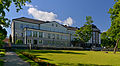 Rakvere Manorhouse and Theatre
 -
 Rakvere Manorhouse Park
 -
 St. Paul's Church with Two Spires (April 2025)
 -
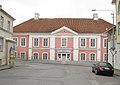 Estonian Police Museum
 -
 Rakvere Sports Hall
 -
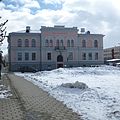 Rakvere County Courthouse


.jpg)


References
[edit]- ^ "European Towns of Sport - ACES". aceseurope.eu. Retrieved 24 July 2025.
- ^ "Green Destinations | Our Destination Collection". www.greendestinations.org. Retrieved 24 July 2025.
- ^ "Green holiday in Estonia | Discover the Good Travel Guide". Archived from the original on 12 May 2021. Retrieved 24 July 2025.
- ^ a b c d e f g h i Rakvere Turismiinfokeskus, Rakvere Eng. Retrieved from https://visitrakvere.com/yldinfo/
- ^ Peterson, Gary Dean (2007). Warrior kings of Sweden. The rise of an empire in the sixteenth and seventeenth centuries. McFarland. pp. 91–92. ISBN 978-0-7864-2873-1.
- ^ Black, Jeremy (1996). Warfare. Renaissance to revolution, 1492–1792. Cambridge Illustrated Atlases. Vol. 2. Cambridge University Press. p. 59. ISBN 0-521-47033-1.
- ^ Megargee, Geoffrey P.; Overmans, Rüdiger; Vogt, Wolfgang (2022). The United States Holocaust Memorial Museum Encyclopedia of Camps and Ghettos 1933–1945. Volume IV. Indiana University Press, United States Holocaust Memorial Museum. p. 71. ISBN 978-0-253-06089-1.
- ^ "European Severe Weather Database".
- ^ "Tornaado läks läbi Rakvere".
- ^ 1922 a. üldrahvalugemise andmed. Vihk IV, Viru maakond (tabelid). Eesti riikline statistika (in Estonian and French). Tallinn: Riigi Statistika Keskbüroo. 1924. pp. 12–13. hdl:10062/4451.
- ^ Rahvastiku koostis ja korteriolud. 1.III 1934 rahvaloenduse andmed. Vihk II (in Estonian). Tallinn: Riigi Statistika Keskbüroo. 1935. pp. 47–53.
- ^ Eesti Statistika : kuukiri 1942-03/04 (in German and Estonian). Tallinn: Riigi Statistika Keskbüroo. 1942. pp. 66–67.
- ^ Katus, Kalev; Puur, Allan; Põldma, Asta; Sakkeus, Luule (1996). Rahvastiku ühtlusarvutatud sündmus- ja loendusstatistika: Lääne-Virumaa 1965-1990. Sari C (in Estonian and English). Tallinn: Eesti Kõrgkoolidevaheline Demouuringute Keskus. pp. 31–32. ISBN 9985-820-21-5.
- ^ Население районов, городов и поселков городского типа Эстонской ССР : по данным Всесоюзной переписи населения на 15 января 1970 года (in Russian). Tallinn: Eesti NSV Statistika Keskvalitsus. 1972. p. 78.
- ^ a b Eesti Vabariigi maakondade, linnade ja alevite rahvastik: 1989. a. rahvaloenduse andmed: statistikakogumik. 1. osa: Rahvaarv rahvuse, perekonnaseisu, hariduse ja elatusallikate järgi (in Estonian). Tallinn: Statistikaamet. 1990. pp. 30, 35. ISBN 978-9949-71-932-7.
- ^ "RL222: RAHVASTIK ELUKOHA JA RAHVUSE JÄRGI". Estonian Statistical Database (in Estonian).
- ^ "RL0429: RAHVASTIK RAHVUSE, SOO, VANUSERÜHMA JA ELUKOHA JÄRGI, 31. DETSEMBER 2011". Estonian Statistical Database (in Estonian).
- ^ "RL21429: RAHVASTIK RAHVUSE, SOO, VANUSERÜHMA JA ELUKOHA (HALDUSÜKSUS) JÄRGI, 31. DETSEMBER 2021". Estonian Statistical Database (in Estonian).
- ^ [1]
- ^ "RAKVERE CASTLE'S HISTORY".
- ^ "Virumaa Museums - Rakvere Castle".
- ^ a b "Rakvere Kolmainu Kirik / Church of the Trinity" monument sign in Trinity Church park, near the bridge, viewed January 11, 2025
- ^ Viirand, Tiiu (2004). Estonia. Cultural Tourism. Kunst Publishers. p. 129. ISBN 9949-407-18-4.
- ^ "Rakvere Kolmainu kirik | Visitrakvere". visitrakvere.com. Retrieved 24 July 2025.
- ^ "Rakvere Stairs". Kavakava. Tallinn: Kavakava Architects. Retrieved 2 October 2024.
- ^ "Historic Pikk street".
- ^ Taul, Gregor. "Turism ja linnamaastikud Pihkvas". Sirp. 22 December 2011. Accessed 4 April 2012. (in Estonian)
- ^ "Market square Rakvere".
- ^ "Ukuaru muusikamaja sai pärast 85 aastast ootust esimese tornikiivri," Rakvere Sõnumid, Rakvere, Eesti, Aprill 2025.
- ^ a b "Rakvere Gümnaasiumi Hoone / Rakvere Secondary School" monument sign at Vabaduse 1 Street, in front of the school, viewed September 15, 2024
- ^ "Tarkuse väega kool – Rakvere Riigigümnaasium". rakvere.edu.ee. Retrieved 24 July 2025.
- ^ "Ajalugu - Rakvere Vabaduse Kool". Archived from the original on 6 February 2023. Retrieved 24 July 2025.
- ^ "Arvo Pärt Music House - Rakvere Linnavalitsus". rakvere.ee. Retrieved 24 July 2025.
- ^ "Tarvas sculpture".
- ^ Joonas Sildre, Between Two Sounds: Arvo Pärt's Journey to His Musical Language, trans. Adam Cullen (Walden, New York: Plough Publishing House, 2024), pp. 29-31
- ^ "Rakvere European Town of Sport 2022 (Rakvere Euroopa Spordilinn)"
- ^ "Sõpruslinnad". rakvere.kovtp.ee (in Estonian). Rakvere linn. Retrieved 7 November 2019.
External links
[edit]

- Rakvere City Government
- Rakvere Tourist Information
- Estonian Pavilion at the 2021 Biennale of Architecture
- Night photos of Rakvere in winter by Kaiko Lipsmäe Archived 20 July 2011 at the Wayback Machine
- Rakvere Castle Picture gallery at Remains.se
- Population of Rakvere by mother tongue in 1897
|  | |
Jaanilinn (Ivangorod) and Petseri (Pechory) were annexed by the Soviet Union in 1945 and are currently part of Russia. | ||
| Urban municipalities |  | |
|---|---|---|
| Rural municipalities | ||

| International | |
|---|---|
| National | |
| Geographic | |
| Other | |

Rakvere
View on GrokipediaName and Etymology
Origins and Historical Usage
The site of modern Rakvere was originally known to Estonians as Tarwanpe or Tarvanpää, a name first recorded in 1226 in the Chronicle of Henry of Livonia, which describes it as a stronghold of the Vironian people during the Northern Crusades.[8] The term derives from the Estonian words tarvas (aurochs, or wild ox) and pää (head or hill), likely referring to a prominent hill associated with the extinct bovine species that symbolized strength in local folklore and served as an ancient emblem of the area.[9] Archaeological evidence confirms human settlement on the Theatre Hill (Teatrimägi) dating to the 3rd–5th centuries AD, but the name Tarvanpää specifically denotes the pre-Christian fortified site atop this elevation, which predated Teutonic incursions.[3] After the Danish conquest in the 1220s and subsequent Livonian Order control, the settlement adopted the Low German name Wesenberg (or Wesenbergh), reflecting Baltic German administrative dominance; this exonym was formalized with the granting of Lübeck town rights on June 12, 1302, marking the establishment of a structured urban center around the castle.[10] Wesenberg remained the primary designation through the medieval Hanseatic period, Swedish rule (1561–1721), and Russian imperial era (1721–1918), appearing in official documents, maps, and treaties as the standard European reference for the town.[11] Russian sources rendered it as Rakovor or Rakowor, adapting the phonetic structure for Cyrillic usage during periods of Muscovite and imperial influence.[12] The indigenous Estonian name Rakvere emerged as the dominant form in the late 19th and early 20th centuries amid the national awakening movement, which sought to restore pre-Germanic toponyms and assert cultural continuity; it supplanted Wesenberg officially following Estonia's independence in 1918 and the 1920 land reforms that diminished Baltic German landownership.[13] While the precise etymological root of "Rakvere" remains undocumented in primary linguistic sources, its adoption aligns with broader Estonian efforts to prioritize native nomenclature over colonial variants, persisting through Soviet occupation (when Russified forms were intermittently imposed) and into the post-1991 restoration of sovereignty.[14]History
Medieval Foundations and Livonian Order
The site of Rakvere featured prehistoric fortifications dating to the 5th and 6th centuries BCE, serving as a hillfort for local Estonian tribes.[15] Danish forces under King Valdemar II captured the area in 1219 during the Northern Crusades, establishing initial control over Virumaa province.[2] The Danes constructed a wooden stronghold on the hillfort's remnants to secure the region against native resistance and neighboring threats.[16] By the mid-13th century, the Danes had initiated construction of a stone fortress to replace the wooden structure, enhancing defensibility amid ongoing conflicts.[16] This development coincided with the Battle of Wesenberg on 18 February 1268, where Danish-led forces, including allies from the Bishopric of Dorpat and the Livonian Order, defeated a coalition of Estonian rebels supported by Novgorod troops, solidifying Danish hold on northern Estonia.[3] On 12 June 1302, King Erik VI Menved granted the settlement Lübeck town rights, fostering trade and urban growth under Danish administration.[7] In 1346, King Valdemar IV of Denmark sold Danish Estonia, including Rakvere (known as Westhusen or Wesenberg), to the Teutonic Order, which promptly transferred control to its Livonian branch on 16 May 1343, with formalization in 1346–1347.[3][7] The Livonian Order expanded the castle into a major convent stronghold, erecting a large stone fortress with high defensive walls to serve as a military and administrative center.[3] Under Order rule, Rakvere functioned as a key bastion guarding trade routes and borders, remaining under their authority until the Livonian War erupted in 1558.[7] The Order's tenure emphasized crusader defense and feudal governance, integrating the site into the broader Livonian Confederation's structure.[3]Periods of Foreign Rule: Danish, Swedish, and Russian Empire
Northern Estonia, including the area of present-day Rakvere, fell under Danish rule after the conquest of 1219, during which Danish forces established fortifications to secure the region against native resistance.[17] The Battle of Wesenberg in 1268 exemplified Danish efforts to maintain control, pitting Danish-Estonian forces alongside allies against Osilian insurgents.[18] Danish authority persisted until 1346, when King Valdemar IV sold the Duchy of Estonia, encompassing Rakvere, to the Teutonic Order, marking the transition to Livonian Order oversight formalized in 1347.[3] Following the dissolution of the Livonian Order amid the Livonian War (1558–1581), Rakvere experienced brief Russian occupation, with the castle suffering significant damage.[19] Swedish forces under Pontus de la Gardie recaptured the castle on 4 March 1581, integrating Rakvere into Swedish Estonia as part of the broader Swedish conquest of northern Livonia via the Treaty of Plussa.[7] Under Swedish rule from 1581 to 1710, the town endured further destruction during the Polish-Swedish War (1600–1629), including partial demolition of the castle by Polish forces in 1605 and subsequent Swedish actions.[3] [7] The Great Northern War (1700–1721) brought Rakvere under Russian control, with the town capitulating in 1710 and formal cession confirmed by the Treaty of Nystad in 1721, incorporating it into the Russian Empire's Estland Governorate.[20] The castle lay in ruins thereafter, while the town functioned as a modest administrative center.[3] Economic stagnation marked the early period, but the 19th century saw gradual development following serfdom's abolition in the Baltic provinces by 1819, fostering peasant mobility and local commerce; by the late 1800s, Rakvere emerged as a growing small town with taverns, markets, and urban institutions, though lacking major industry.[21] [22] Russian imperial administration emphasized Russification policies from the 1880s, yet local Estonian cultural elements persisted amid the broader provincial framework until Estonia's independence in 1918.[23]Interwar Independence and World War II
Following the declaration of Estonian independence on February 24, 1918, Rakvere emerged as a key site in the ensuing War of Independence against Bolshevik forces. The Red Army captured the town on December 1, 1918, amid their rapid advance through northern Estonia toward Tallinn. Estonian troops, supported by allied forces, counterattacked and liberated Rakvere on January 12, 1919, halting the Bolshevik offensive in the region. The Estonian 1st Division, headquartered in Rakvere, played a central role in defending the critical Narva front against further incursions.[24][25] With the Treaty of Tartu securing Estonian sovereignty on February 2, 1920, Rakvere functioned as the administrative center of Viru County during the interwar period of independence. The town hosted the opening of Estonia's first national post office on November 15, 1918, symbolizing the establishment of independent state institutions amid ongoing conflict. Economic and cultural growth followed, with Rakvere benefiting from its position along the vital Tallinn-Narva rail line, which facilitated trade and connectivity to Russia until border closures. A monument commemorating the War of Independence was unveiled on August 30, 1925, reflecting local pride in the victory and featuring a terraced concrete base designed by master builder Reinhold.[26][27] The Soviet occupation began in June 1940, when Red Army forces entered Estonia under the guise of mutual assistance pacts stipulated by the 1939 Molotov-Ribbentrop agreement, leading to rigged elections and forcible annexation as the Estonian Soviet Socialist Republic. In Rakvere, as in other second-tier towns, this period saw the targeting of local political elites through arrests, deportations, and executions to dismantle independent governance structures. The occupation ended abruptly with Germany's invasion of the Soviet Union on June 22, 1941; elements of the German XXVI Army Corps seized Rakvere on August 7, 1941, during their advance to the Gulf of Finland.[28][29] Under German administration from 1941 to 1944, Rakvere hosted a military hospital treating wounded Wehrmacht personnel, resulting in a cemetery where 1,456 soldiers were interred after succumbing to injuries. Local Estonian units, including forest brothers and later conscripts into German forces, resisted Soviet partisans in the surrounding areas, viewing the German presence initially as a reprieve from Stalinist terror. The Red Army retook Rakvere in September 1944 during the Baltic Offensive, reimposing Soviet control and initiating mass deportations, collectivization, and suppression of national symbols like the independence monument, which was destroyed in 1952.[30][31]Soviet Occupation and Resistance
Following the Soviet reoccupation of Estonia in the autumn of 1944 during the Baltic Offensive, Rakvere and surrounding Lääne-Viru County fell under renewed control of Soviet forces as part of the advance southward from the Narva front.[32] The transition imposed immediate collectivization of agriculture, nationalization of industry, and suppression of Estonian national institutions, with local elites targeted for arrest or deportation to consolidate Communist authority.[33] Repressions intensified through mass deportations, including the March 1949 Operation Priboi, which removed approximately 20,000 Estonians—nearly 2% of the population—to Siberia, affecting rural and urban areas around Rakvere with families labeled as "kulaks" or anti-Soviet elements.[34] Earlier waves, such as the June 1941 deportations of over 10,000, had already decimated local leadership during the first occupation, setting a pattern repeated post-1944.[35] Armed resistance emerged promptly via the Forest Brothers (metsavennad), partisan groups operating in Lääne-Viru's forests, where Rakvere's proximity to wooded terrain facilitated evasion and ambushes.[36] These fighters, numbering in the hundreds regionally, conducted hit-and-run attacks on Soviet convoys and officials; for instance, in 1946, a group in Rabivere—near Rakvere—resulted in the deaths of four partisans, Johannes Esop (born 1911), Rudolf Hansen (born 1900), Adolf Ööpik (born 1901), and Manivald Teppor (born 1923), commemorated by a local grave marker.[37] Overall, at least 343 Forest Brothers from Viru counties (encompassing Lääne-Viru) were confirmed killed in clashes through the 1950s, though actual figures likely exceeded this due to incomplete records.[38] Notable survivors included Ruuben Lambur, a Rakvere-area fighter active from 1944 into the early 1950s, who evaded capture through bunkers and local support networks before emerging post-Stalin; he later documented his experiences and received honorary citizenship.[39] Civilian acts of defiance persisted, such as schoolchildren dynamiting Rakvere's first Soviet monument in the late 1940s, reflecting broader underground opposition despite intensifying KGB infiltration and informant networks that dismantled most groups by the mid-1950s.[40]Restoration of Independence and Modern Era
Estonia's restoration of independence on August 20, 1991, ended the Soviet occupation that had reshaped Rakvere's economy and demographics since 1944, enabling the town to realign with national sovereignty and market-oriented reforms.[41] The immediate transition involved privatizing Soviet-era industries, such as food processing and manufacturing, which initially led to unemployment spikes and economic contraction mirroring Estonia's national GDP drop of over 20% in 1992.[42] By the mid-1990s, stabilization measures, including currency board adoption in 1992, supported recovery, with Rakvere benefiting from proximity to Tallinn and infrastructure improvements like rail links.[43] Integration into Western institutions accelerated development; Estonia's accession to NATO and the European Union in 2004 opened funding streams for local projects, including tourism infrastructure around Rakvere Castle and cultural venues.[44] The town's economy diversified into services, retail, and sustainable tourism, with key employers in the Viru County focusing on branded manufacturing and agribusiness. Population dynamics reflected regional trends, declining from Soviet-era peaks due to out-migration toward urban centers and abroad, reaching 15,141 residents in the 2021 census amid Estonia's overall 15% population shrinkage since 1991.[45] [46] In the modern era, Rakvere has emphasized green initiatives and cultural vitality, earning the Green Destinations Silver Award in 2023 for sustainable practices like park enhancements and eco-tourism promotion.[47] The Rakvere Theatre, a longstanding institution, continues to host national productions, while annual castle festivals draw visitors, contributing to Lääne-Viru County's economy.[1] Challenges persist, including demographic aging and regional disparities, but digital integration and EU funds support resilience, with the town serving as the county administrative hub.[48]Geography
Location and Topography
Rakvere lies in northern Estonia within Lääne-Viru County, serving as its administrative center. The town is positioned approximately 100 kilometers southeast of Tallinn, the national capital, and about 20 kilometers south of the Gulf of Finland along the Baltic Sea coast. Its geographic coordinates are roughly 59°21′ N latitude and 26°21′ E longitude.[49][50] The urban area occupies an elevation of around 82 meters above sea level, with local topography dominated by an elongated hill featuring steep slopes that rises prominently above the surrounding terrain. This hill forms the core of the historic settlement, hosting the ruins of Rakvere Castle at its summit. The broader landscape transitions into the characteristic northern Estonian lowlands, marked by glacial deposits and gentle rolling hills, with the nearby Pandivere Upland to the east reaching heights of up to 166 meters.[51][2][52] Rakvere's setting lacks major rivers or lakes within the immediate town limits, though the encompassing parish includes karst regions with subterranean water features and minor streams influenced by the area's limestone bedrock. The topography reflects Estonia's post-glacial morphology, with subdued relief shaped by ice age processes, contributing to a mix of forested plateaus and open agricultural plains in the vicinity.Climate and Environmental Features
Rakvere lies in northern Estonia and experiences a humid continental climate classified as Dfb under the Köppen system, featuring cold, snowy winters and mild summers moderated by Baltic Sea influences but amplified by its inland location. The average annual temperature is approximately 5.5°C, with mean daily highs of 8.7°C and lows of 2.3°C; July, the warmest month, averages 21.6°C highs, while January sees averages around -4°C with frequent sub-zero temperatures and snowfall. Precipitation totals about 737 mm annually, distributed relatively evenly across seasons but peaking in summer months like June and July, contributing to around 116 rainy days per year.[53] The region's environmental features include extensive boreal forests and wetlands characteristic of Estonia's landscape, with Rakvere's administrative area maintaining significant tree cover that acts as a net carbon sink, sequestering 20.8 ktCO₂e annually against emissions of 11.1 ktCO₂e from forest activities between 2001 and 2024. Proximity to Lahemaa National Park, approximately 50 km northeast, preserves diverse ecosystems including pine-dominated forests, raised bogs, and coastal habitats, supporting biodiversity such as moose, lynx, and various bird species. Air quality remains high relative to European urban averages, with low industrial emissions in Rakvere compared to Estonia's oil shale-dependent southern regions, though legacy agricultural practices contribute to nutrient runoff in local rivers like the Valgejõgi.[54][55]Demographics
Population Dynamics
Rakvere's population peaked during the late Soviet era due to industrialization and influxes of ethnic Russian workers, reaching approximately 24,000 by 1989 amid broader Estonian urbanization trends. Following Estonia's independence in 1991, the city experienced significant decline driven by economic restructuring, factory closures in textiles and food processing, and net out-migration to the capital Tallinn or Western Europe. Census figures reflect this: 17,097 residents in 2000, dropping to 15,264 in 2011—a 10.7% decrease—and further to 15,141 in 2021, with an average annual change of -0.08% over the 2011–2021 decade.[56][45] The post-independence contraction mirrors regional patterns in Estonia, where peripheral towns like Rakvere lost population due to disappearing industrial and agricultural jobs, low fertility rates below replacement level (around 1.6 nationally), and an aging demographic structure with over 20% of residents aged 65 or older by 2021.[48] Youth out-migration has exacerbated natural decrease, as deaths outpace births locally, though Rakvere's role as a county administrative center has buffered steeper losses compared to rural surroundings. Estimates indicate stabilization or slight rebound to 15,516 by 2024, potentially aided by remote work trends and inbound migration from Ukraine amid regional conflicts.[57]| Census Year | Population | Change from Prior Census |
|---|---|---|
| 2000 | 17,097 | - |
| 2011 | 15,264 | -10.7% |
| 2021 | 15,141 | -0.8% |
Ethnic Composition and Language Use
As of the 2021 census, Rakvere's urban municipality (Rakvere linn) had a population of 15,059, with ethnic Estonians comprising 13,386 individuals or 88.9%, Russians 1,155 or 7.7%, and other ethnic groups—including Ukrainians, Belarusians, Finns, and smaller minorities—totaling 518 or 3.4%. This composition reflects a post-Soviet decline in the Russian-speaking minority share, from higher levels during the occupation period when industrial migration policies under the USSR encouraged settlement of ethnic Russians in northern Estonian towns like Rakvere; emigration and natural demographic shifts since independence in 1991 have increased the relative Estonian majority.[58] Estonian is the dominant language in Rakvere, serving as the mother tongue for 13,391 residents or approximately 89% of the population in 2021, aligning closely with the ethnic Estonian share. Russian is the mother tongue of 1,409 individuals or about 9.4%, primarily among the ethnic Russian community, while other languages account for 255 speakers or 1.7%. Daily language use is overwhelmingly Estonian in public administration, education, and commerce, as mandated by Estonia's official language policy, though Russian persists in private and some community settings; integration programs since the 1990s have boosted Estonian proficiency among non-native residents, with national trends showing improved command correlating to younger age cohorts and urban exposure.[58]Government and Politics
Local Governance Structure
Rakvere's local governance operates under Estonia's framework for urban municipalities, comprising an elected representative body and an executive administration. The City Council (Rakvere Linnavolikogu) serves as the primary decision-making authority, consisting of 21 members elected by proportional representation every four years during nationwide local elections.[59][60] The council approves the annual budget, establishes local taxes and fees, adopts development plans, and oversees major policy directions, with decisions requiring a simple majority vote in public sessions held at least monthly.[61] The executive branch is led by the mayor (linnapea), elected by secret ballot with a majority vote from the city council for a term aligning with the council's mandate. The mayor heads the City Government (Linnavalitsus), which implements council policies, manages daily operations, and coordinates municipal services such as infrastructure maintenance, public safety, and administrative functions. The government typically includes the mayor and four additional members proposed by the mayor and approved by the council, meeting weekly to handle executive matters.[61][59] Administrative operations are supported by specialized institutions and departments established by the council, including units for education, social services, economic development, and urban planning, all under the government's oversight. The mayor issues directives to ensure coordination and represents the municipality in legal and external affairs, while the council chairman handles internal procedural leadership. This structure emphasizes council supremacy in strategic matters and executive efficiency in implementation, with all bodies adhering to transparency requirements under Estonian law.[61][62]Political Orientation and Key Issues
Rakvere's local politics have shifted toward a conservative orientation following the October 19, 2025, municipal elections, with the national-conservative Isamaa party securing an absolute majority of 11 seats in the 21-member city council.[63] This dominance allows Isamaa to govern independently, though it has invited the right-wing Parempoolsed party into coalition discussions to broaden support.[63] Previously, in the 2021–2025 term, Isamaa held 8 seats alongside smaller representations from the Centre Party (4 seats), EKRE (4 seats), Social Democratic Party (2 seats), Reform Party (1 seat), Eesti 200 (1 seat), and the local list Rakvere Heaks (1 seat), necessitating coalitions.[64] The Centre Party, historically strong in Rakvere due to support from Russian-speaking residents, has lost ground amid national trends favoring pro-Estonian identity politics.[65] Key issues in Rakvere's political discourse center on economic revitalization and demographic retention, as the town grapples with population decline from 16,056 in 2021 to approximately 15,000 by 2025, driven by youth outmigration to Tallinn.[65] Local leaders prioritize attracting investment in food processing and tourism—leveraging the historic castle and theatre—while addressing infrastructure gaps, such as road maintenance and public transport links to the capital.[66] Debates also focus on fiscal tools like potential local taxes to fund regional development, amid constraints from central government policies limiting municipal autonomy.[67] Environmental capacity-building for green transitions, including waste management and energy efficiency, remains uneven due to limited local resources, though council resolutions emphasize sustainable urban planning.[68] Ethnic integration and language policy subtly influence politics, given Lääne-Viru County's mixed demographics, with Russian-speakers comprising about 20% of Rakvere's population; conservative parties advocate stronger Estonian-language requirements in public services to foster national cohesion.[69] Political tourism—candidates residing briefly for electoral gain—has prompted calls for stricter residency verification, as affirmed by recent court rulings applicable to Rakvere.[66] Overall, the new Isamaa-led council is expected to emphasize security-oriented policies, reflecting Estonia's geopolitical context, alongside practical governance reforms to enhance service delivery without over-reliance on EU funds, where absorption challenges persist due to administrative bottlenecks.[70]Economy
Primary Industries and Employment
The primary industries in Rakvere center on food processing, particularly meat production and related activities, which form a cornerstone of local employment. AS Rakvere Lihakombinaat, the region's dominant enterprise in this sector, maintains production facilities and associated operations that employ nearly 1,300 workers engaged in animal husbandry, slaughtering, processing, logistics, and sales. This company, established in 1890, stands as the largest meat processor in the Baltic states, contributing significantly to the town's industrial output and export-oriented economy.[71][72] In the broader Lääne-Viru County encompassing Rakvere, complementary manufacturing sectors such as timber processing, furniture production, metalworking, and building materials fabrication provide additional employment opportunities, with these industries representing the county's largest enterprises outside of food. These activities leverage local resources and proximity to ports for export, though they employ fewer workers compared to the food sector in Rakvere itself. Public sector roles, retail, and services also sustain the workforce, aligning with Estonia's national employment distribution where industry accounts for approximately 27% of jobs.[1][73] Employment levels in Rakvere benefit from the stability of anchor firms like Rakvere Lihakombinaat, though the town faces regional challenges typical of smaller Estonian urban centers, including outmigration and dependence on a limited number of large employers. Recent data indicate Estonia's overall unemployment rate at 7.6% in 2024, with manufacturing sectors maintaining relatively steady demand amid national economic pressures.[74]Economic Challenges and Growth Factors
Rakvere's economy, centered in Lääne-Viru County, faces structural challenges including labor market tightness exacerbated by regional depopulation and outmigration to larger centers like Tallinn, contributing to a shrinking workforce and skills mismatches in manufacturing and services.[48] Estonia's national unemployment rate rose to 7.6% in 2024, with regional areas like Lääne-Viru likely experiencing elevated figures due to reliance on cyclical industries such as food processing and construction materials, which were hit by the 2023 GDP contraction and lingering post-pandemic effects.[75] The closure or restructuring of legacy employers, including past issues at the Rakvere meat processing plant, has amplified vulnerabilities to supply chain disruptions and export slowdowns in Estonia's broader industrial sector.[76] Growth factors include established manufacturing anchors like the Valio Eesti dairy plant and AS Toftan concrete production, which leverage low regional setup costs and proximity to logistical hubs for export-oriented output.[1] Tourism emerges as a diversification driver, capitalizing on Rakvere's historical castle and cultural institutions to attract visitors along routes like Via Hanseatica, supporting service sector expansion amid Estonia's mild recovery projected at 1-2% GDP growth in 2025.[77] EU-funded infrastructure improvements and place-based policies targeting regional strengths, such as green development and industrial parks, further bolster resilience by addressing depopulation through incentives for local retention and investment.[78]Infrastructure
Transportation Networks
Rakvere is connected to Estonia's national transportation infrastructure primarily through rail, bus, and road networks, facilitating links to Tallinn, Narva, Tartu, and regional destinations. The town lacks an airport, with the nearest major facility at Tallinn Airport, approximately 100 km west. Public transit within Rakvere relies on local and regional bus services, while intercity travel emphasizes efficient rail and coach options.[79][80] The Rakvere railway station serves as a key node on the electrified Tallinn–Narva mainline, operated by state-owned Elron, with passenger trains providing direct connections to Tallinn (journey time about 1 hour) and eastward to Narva. Services include multiple daily departures, such as the RE32 route with stops at intermediate stations like Ülemiste and Tapa; for instance, trains from Rakvere to Tallinn operate at least three times daily, with the first around 05:16 and the last near 21:14. Freight traffic also utilizes the line, though passenger focus remains on commuter and regional routes.[81][82][83] Intercity buses depart from Rakvere Bus Station, managed by AS Hansabuss since September 2025, offering frequent services to Tallinn (up to 11 daily via operators like Lux Express and FlixBus, taking 1–1.5 hours) and other cities such as Tartu and Narva. Regional lines, including routes 15, 16, 25, 35, 45, and 746, connect Rakvere to surrounding areas in Lääne-Viru County using an electronic ticketing system purchasable at the station or kiosks. Local intra-city buses provide limited coverage, supplemented by on-demand options.[84][85][86] Road access centers on National Road 21 (Tugimaantee 21), a 69.6 km route linking Rakvere eastward to Luige near Tallinn, featuring four-lane sections for improved capacity and safety. The town intersects with National Road 5 toward Pärnu and lies proximate to the Tallinn–Narva corridor, enabling drives of 100 km to Tallinn and 116 km to Narva. Lääne-Viru County's road network, encompassing over 1,000 km of maintained highways and secondary roads, supports reliable vehicular travel, though winter conditions can affect rural spurs.[79][6]Utilities and Urban Development
AS Rakvere Vesi operates the municipal water supply and wastewater systems, serving 19 inhabited areas with high-quality drinking water and sanitation services.[87] Between 2000 and 2003, the company participated in an EU LIFE project to reduce water losses in its over-dimensioned distribution network through acoustic leak detection and other measures, preserving water quality amid historical infrastructure challenges. The Rakvere wastewater treatment plant underwent reconstruction to upgrade treatment systems and sludge handling.[88] District heating is managed by AS Rakvere Soojus, which supplies heat via pipelines to residential and public buildings, with ongoing reconstructions to replace outdated infrastructure.[89] Following adoption of a Sustainable Energy Action Plan in 2009, the system shifted from fossil fuels to biofuels, targeting 50% wood-based heat production as outlined in the city's general plan.[90] [91] In June 2024, Rakvere Soojus extended its partnership with Adven to enhance sustainable heating services.[92] Electricity distribution in Rakvere connects to Estonia's national grid, managed by Elering, with planned renovations such as the 110 kV Rakvere-Püssi line to ensure reliability. Municipal facilities and street lighting utilize green energy from renewable sources.[93] Waste management falls under the Lääne-Viru Waste Center, which oversees collection and sorting; as of March 2024, 99% of Rakvere's buildings complied with biowaste separation requirements.[94] The COVID-19 period increased waste volumes, prompting adaptations in municipal handling.[95] Urban development emphasizes sustainability and resilience, with an Integrated Urban Development Concept designating pilot residential areas for quality improvements through renewable energy integration and efficient infrastructure.[91] Rakvere leads in energy-efficient building renovations under the EU Green Deal, potentially achieving majority renovated apartments first in Estonia.[96] Investments include pedestrian and cycling paths, earning a Green Destinations Silver Label in 2023 for sustainable infrastructure.[97] Recent projects feature heat pipeline upgrades and new facilities like an indoor football hall on Piiri Street.[98] Planning promotes car-free alternatives and biofuels in transport.Culture and Heritage
Major Landmarks and Historical Sites
Rakvere Castle, known locally as Rakvere Linnus, stands as the town's most prominent historical landmark, originating from a pagan Estonian hillfort captured by Danish crusaders under King Valdemar II in 1219. Construction of the stone fortress began shortly thereafter in the 1220s, serving as a key defensive structure during medieval conflicts. The castle remained under Danish control until 1346, when Northern Estonia was sold to the Teutonic Order, which formalized the transfer to the Livonian Order the following year. It played roles in subsequent wars, including the Livonian War, and fell into ruin by the 17th century after changing hands among Swedish and Polish forces. Today, the preserved ruins house a museum with archaeological exhibits, including Hanseatic-era artifacts uncovered nearby, and host medieval reenactments depicting 16th-century life.[16][2][99][18] The Rakvere Trinity Church, originally dedicated to St. Michael and constructed in the 1430s, represents another cornerstone of the town's medieval heritage with its Gothic architectural elements and prominent spire. The structure was rebuilt between 1684 and 1891 following earlier dilapidation, incorporating Baroque influences while retaining its historical core adjacent to the castle. As the primary Lutheran church in Rakvere, it has endured through regional upheavals, including wars and Soviet-era restrictions on religious practice.[100][101] The Birth of the Holy Mother Orthodox Church, erected between 1898 and 1900 in the Old Russian style, adds to Rakvere's ecclesiastical landmarks, featuring ornate iconography and housing relics of a martyred priest from the early 20th century. This late imperial-era building reflects the diverse religious influences in the region during the Russian Empire's administration of Estonia.[102] Pikk Street (Long Street), lined with preserved 19th- and early 20th-century burgher houses, forms part of the historic town center, evoking Rakvere's role as a trading hub under various rulers from the medieval period onward.[103]Religious and Architectural Monuments
Rakvere Castle stands as the town's foremost architectural monument, originating as a stone fortress erected by Danish forces under King Valdemar II around 1220 following the conquest of northern Estonia.[99] Control transferred to the Livonian Order in 1343, with construction expanding into a convent-style stronghold featuring a rectangular main tower, robust corner bastions, a spacious front courtyard, and an eastern residential wing by the early 16th century.[3][16] During the Livonian War from 1558 to 1583, Russian occupiers enhanced its defenses with additional earthworks and fortifications around the perimeter.[7] The castle's ruins, preserved as a historical site, now host exhibits and reenactments illustrating 16th-century daily life and military history, including artifacts from Hanseatic trade and local excavations.[103][18] The Rakvere Trinity Church (Kolmainu Kirik), the primary Lutheran place of worship, traces its origins to the 1430s when the initial structure was dedicated to St. Michael amid the town's development under Teutonic influence.[104] Severely damaged during the Great Northern War in the early 18th century, it underwent major reconstruction in 1752, incorporating a distinctive tall, slender spire erected in the 17th century that dominates the skyline.[105][106] Positioned adjacent to the castle, the Gothic-influenced edifice served dual purposes as a fortress church during medieval conflicts, reflecting Rakvere's strategic role in regional defense.[107] St. Paul's Church exemplifies early 20th-century architectural innovation in Rakvere, constructed as a modern religious building with prominent twin spires that contribute to the town's eclectic skyline.[108] Complementing these, the Birth of the Holy Mother Orthodox Church represents the Eastern Orthodox presence, though smaller in scale, maintaining traditional liturgical practices amid Estonia's predominantly Lutheran heritage.[109]Public Art, Sculptures, and Parks
Rakvere hosts several prominent public sculptures commemorating local history and natural heritage. The Tarvas sculpture, depicting an aurochs, was unveiled in 2002 to mark the town's 700th anniversary of receiving city rights. Standing 7 meters long, 4 meters high, and weighing 7 tonnes, it is positioned on Vallimägi hill near the Order Castle at Vallimäe tee 5.[110][9] The War of Independence Monument, a replica of the original erected in the interwar period and destroyed in 1940, was reinstalled on August 30, 1992, honoring Estonia's 1918-1920 independence struggle; it was crafted by sculptor Lembit Palm and architect Kalvi Alrau.[111] Public art initiatives have included the Kilometre of Sculpture, an international open-air exhibition held in 2014 across the city's public spaces, featuring contemporary installations to engage residents and visitors with modern art.[112][113] Rakvere maintains diverse parks and green areas emphasizing natural preservation and recreation. The Rakvere Oak Grove Landscape Reserve, located on a glaciated ridge outside the city center, features a 3-kilometer hiking trail amid 150- to 220-year-old oak trees, with minimal coniferous or birch presence to highlight the oak-dominated ecosystem.[114][115] The Rakvere Manor Park, a protected landscape area, preserves historic park elements integrated with urban surroundings.[6] Supeluse Park at L. Koidula Street 24 provides a waterfront green space for walks and picnics adjacent to urban amenities.[116] Additional forested areas like Palermo offer health trails, contributing to the city's network of boulevards, springs, ponds, and woodlands.[117]Cultural Institutions and Events
Rakvere Theatre, established on February 25, 1940, serves as the town's primary professional repertoire theater, presenting a diverse program that includes Estonian and international dramas, comedies, and children's productions.[118] [119] The institution promotes local playwrights and artists while hosting international collaborations, contributing to Estonia's theatrical landscape through innovative stagings and community engagement.[120] Rakvere Kultuurikeskus functions as a central hub for cultural activities, offering spaces for exhibitions, concerts, and workshops that highlight local artists and regional heritage.[121] Complementing these, Virumaa Museums manage cultural collections tied to local history, with occasional temporary exhibits and educational programs that intersect with performing arts and folklore.[122] Annual events underscore Rakvere's vibrant scene, including the biannual Baltoscandal contemporary theatre festival, launched in the 1990s as the Baltic States' first international theater gathering, featuring productions from Estonia and abroad typically in early July.[118] [123] The Rakvere Funkfest, held since 2021 at Vallimäe in mid-July, attracts funk and related music enthusiasts with live performances in an outdoor setting.[124] Other recurring festivals include the Rakvere Old Days, focused on medieval reenactments and authentic historical practices, and the KAMAlammas national food and culture event in September, blending culinary traditions with performative elements.[125] [126] Punk music festivals and Arvo Pärt Music Days further diversify the calendar, drawing crowds for alternative genres and classical compositions amid the town's alternative cultural edge.[127] [6]Education and Society
Educational Institutions
Rakvere's educational system encompasses primary, basic, secondary, and vocational levels, serving the local population of approximately 15,000 residents in Lääne-Viru County.[128] Basic education is compulsory from ages 7 to 17, aligning with Estonia's national framework, while secondary and vocational options prepare students for higher education or workforce entry.[129] The town lacks independent universities or active higher education colleges as of 2020, with prior branches such as Tallinn University's Rakvere College having ceased operations after graduating its final cohort in early 2020.[130] The primary vocational institution is Rakvere Vocational School (Rakvere Ametikool), the sole such facility in Lääne-Viru County, enrolling around 750 to 1,200 students annually in programs spanning information technology, mechanics, construction, hospitality, and environmental technologies.[131][128] Established as a center for lifelong learning, it emphasizes international collaboration through initiatives like Erasmus+ mobility programs, which have operated since 2002, and holds the Erasmus+ Label of Excellence for 2021–2024.[132] The school's facilities include renovated historical buildings, such as the main structure at Piiri Street opened in 2014, supporting hands-on training in a region-dependent economy.[133] Secondary education is provided by several gymnasiums and basic schools, including Rakvere Reaalgümnaasium, a prominent upper-secondary institution focused on sciences and real-world applications; Rakvere Vene Gümnaasium, catering to Russian-speaking students; Rakvere Eragümnaasium, a private option; and Rakvere Vabaduse Kool, emphasizing comprehensive pastoral care alongside academics.[134] Basic-level schools like Rakvere Põhikool and Rakvere Linna Algkool handle grades 1–9, with curricula adhering to national standards that integrate digital competencies and state examinations.[134] These institutions collectively address demographic challenges in rural Estonia, where enrollment reflects local population trends without specialized statistics publicly detailing per-school figures beyond vocational aggregates.[135]Social Services and Community Life
Rakvere Social Centre serves as the primary provider of social services in the city, offering day care, personal assistance, support person services, special welfare for those needing daily guidance due to mental health issues, student development support, and shelter services for vulnerable individuals.[136] Home care services, aimed at enabling elderly or disabled residents to maintain independent living through assistance with daily activities, are also coordinated by the centre and received targeted development funding of 203,574.73 euros from the Support Services Centre in December 2024.[137][138] The City of Rakvere's social department, staffed by seven specialists including case managers for adults and families with children, handles benefit applications such as birth grants, family allowances, and subsistence support, with counseling available on specified weekdays.[139][140] Community life in Rakvere emphasizes inclusive participation, with municipal planning prioritizing access for all ages and backgrounds to cultural and recreational activities, supported by community houses that host educational programs, public festivities, and local gatherings.[97][23] A variety of organizations contribute, including the Jewish Community Welfare Centre, which operates in Rakvere to provide social support and events, and local churches like Karmel Church, which organize performances and gospel choir activities to foster communal engagement.[141][142] Annual events, such as picnics in city parks through adaptation programs for newcomers and cultural festivals listed in the municipal calendar, promote social integration and physical activity via collaborations with sports clubs and NGOs.[143][144][145] In Lääne-Viru County, encompassing Rakvere, preventive social welfare specialists focus on resident well-being to mitigate exclusion, complementing city-level efforts amid national reforms integrating health and social care systems for coordinated service delivery.[146][147] Local healthcare, provided by Rakvere Hospital with nearly 200 beds for general medical needs, interfaces with social services to address welfare gaps, though wait times can vary in the publicly funded system.[148][149]Sports and Recreation
Athletic Facilities and Clubs
Rakvere's primary athletic facilities are overseen by Rakvere Spordikeskus, which operates multiple venues including the Rakvere Sports Hall at Kastani puiestee 12, a multi-purpose arena completed in 2004 supporting indoor sports such as basketball and volleyball.[150] The adjacent Rakvere Stadium features a 400-meter running track, football pitch, and areas for field events like long jump and high jump, accommodating track and field athletics alongside team sports.[151] Additional amenities include artificial turf fields, tennis courts, a minigolf course, climbing wall, and health trails like the Palermo trail for outdoor recreation.[152] In August 2024, Rakvere City Council approved funding for a new indoor football hall to expand year-round training capabilities amid ongoing debates over municipal investment priorities.[153] Prominent sports clubs in Rakvere include Rakvere JK Tarvas, a football team competing in Estonia's II liiga, the fourth tier of the national league system, with home matches at the city stadium.[154] BC Tarvas fields a professional basketball squad in the Estonian-Latvian Basketball League, utilizing the Sports Hall for games and practices.[155] The Rakvere Athletics Club (Kergejõustikuklubi ViKe) supports track and field athletes, including competitors like Taavi Kilki registered with the Estonian Athletic Association.[156] Rakvere Sports School further nurtures youth talent across disciplines like basketball through structured programs.[157]Notable Events and Achievements
VK Rivaal Rakvere, the town's volleyball club founded in 1990, secured three consecutive Estonian national championships in 1995, 1996, and 1997, marking a dominant period in domestic competition.[158] In basketball, BC Tarvas advanced to the semifinals of the Estonian League playoffs six times between 2002 and 2015, including consecutive appearances from 2011 to 2015, while finishing as regular season runner-up in 2005 and 2010.[159] Rakvere JK Tarvas, the local football club, achieved promotion to the Meistriliiga—Estonia's top division—for the first time in club history ahead of the 2016 season, following a fourth-place finish in the Esiliiga during 2015.[160]International Relations
Twin Towns and Partnerships
Rakvere has established twin town partnerships with various municipalities across Europe, primarily aimed at promoting cultural exchange, educational cooperation, and regional development. These relationships, often formalized through official agreements, reflect Rakvere's position within the Baltic Sea region and broader European networks.[161] The partnerships include:- Cēsis, Latvia: A neighboring Baltic town with historical ties, supporting cross-border initiatives in tourism and heritage preservation.[162]
- Lappeenranta, Finland (established 1994): Focuses on educational and business collaborations, including joint events and student exchanges.[163]
- Lapua, Finland (established 1990): Emphasizes cultural and recreational activities, such as shared festivals and sports events.[164]
- Lütjenburg, Germany (established circa 1999): Developed in coordination with regional districts, involving youth programs, trade delegations, and infrastructure support projects.[165]
- Sigtuna, Sweden: Centers on historical and archaeological cooperation, given both towns' medieval heritage.[166]
References
- https://en.wiktionary.org/wiki/Rakvere
- https://en.wikivoyage.org/wiki/Rakvere
- https://en.wikipedia-on-ipfs.org/wiki/List_of_twin_towns_and_sister_cities_in_Latvia