Hubbry Logo
TavulliaTavulliaMain
Open search
Tavullia
Community hub
Tavullia
logo
8 pages, 0 posts
0 subscribers
Be the first to start a discussion here.
Tavullia
Tavullia
from Wikipedia

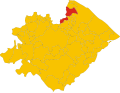
Tavullia is a comune (municipality) in the Province of Pesaro and Urbino in the Marche region of Italy, located about 70 kilometres (43 mi) northwest of Ancona and about 15 kilometres (9 mi) southwest of Pesaro. Until 13 December 1938, it was known as Tomba di Pesaro.

Key Information

Tavullia is the home town of nine-time world motorcycle champion Valentino Rossi. His family built a dirt oval racetrack close to the town.[3] The town is considered by some to be part of the historical region of Romagna.[4]

Geography

[edit]

Tavullia is 70 kilometres (43 mi) northwest of Ancona, 15 kilometres (9 mi) from Pesaro and 30 kilometres (19 mi) from Rimini. Tavullia borders the following municipalities: Gradara, Mondaino, Montecalvo in Foglia, Montegridolfo, Montelabbate, Pesaro, Saludecio, San Giovanni in Marignano, Vallefoglia.

History

[edit]

The area of Tavullia was likely inhabited before the Middle Ages, though the first mentioned settlement is a castle situated on the slopes of Monte Peloso, the "Castrum Montis Pilos Tumbao". It was the location of violent clashes between the Malatesta family (Guelphs who ruled over the city of Rimini) and that of Montefeltro (Ghibellines). The largest battle was fought in 1443 at Monteluro: the Sforza intervention in favor of the Malatesta led to their victory. The territory was always littered with castles, many of which are now disappeared: that of Monteluro was subject of numerous battles for its strategic importance and now only a few ruins remain.

[edit]

People

[edit]
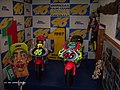
Valentino Rossi in 2010.

References

[edit]
[edit]
Revisions and contributorsEdit on WikipediaRead on Wikipedia
from Grokipedia
Tavullia is a (municipality) in the Province of e , in the region of , situated on hilly terrain between the Foglia and Tavollo river valleys at an elevation of 170 meters above , covering an area of 42 square kilometers with a population of 7,935 as of 2024. Originally known as Tomba di or Castrum Tumbae Montis Pilosi during the , it emerged as a fortified settlement contested between rival families like the Malatesta and Montefeltro, with its history tied to the nearby city of and later impacted by as part of the . Today, Tavullia is renowned worldwide as the birthplace and hometown of , the nine-time MotoGP World Champion, whose legacy has transformed the town into a pilgrimage site for motorsport enthusiasts, featuring attractions like the VR46 Motor Ranch and the "Tour dei Campioni" trail. The town's , including remnants of its castle and churches, reflects its strategic position overlooking the Adriatic coast, while its economy blends —particularly wine and olive production—with driven by natural landscapes and cultural events such as the annual "Camminata sotto le Stelle" hike. Tavullia's emblems and symbols, including its featuring a tombstone motif derived from its ancient name, underscore its historical identity as a fortified agrarian center. In recent years, the municipality has emphasized , with initiatives promoting eco-tourism and preservation of its panoramic views extending to the Apennines and the sea.

Geography

Location and Topography

Tavullia is a comune located in the Province of Pesaro e Urbino within the region of , at coordinates 43°53′53″N 12°45′09″E. The town sits at an elevation of 170 meters above and covers a total area of 42 km². It lies approximately 10 km inland from the to the east, 15 km southwest of the regional city of to the northeast, and 70 km northwest of to the southeast. The topography of Tavullia features rolling hills characteristic of the Marchean landscape, positioned at the transition to the plain. It is nestled between the valleys of the Tavollo Torrent to the north and the Foglia River to the south, which demarcate its position along the regional border with . A notable within the is Monte Peloso, a hill that historically hosted a site known as Castrum Tumbae Montis Pelosi from the 13th century. Tavullia borders nine adjacent municipalities: in Marche, Gradara, Pesaro, Montelabbate, Vallefoglia, and Montecalvo in Foglia; in Emilia-Romagna, Mondaino, Montegridolfo, Saludecio, and San Giovanni in Marignano. The surrounding hilly terrain supports agricultural features such as vineyards and olive groves, contributing to the area's verdant and cultivated environmental profile. This topography influences local climate patterns by moderating temperatures and providing shelter from coastal winds.

Climate

Tavullia features a humid subtropical climate classified as Cfa under the Köppen-Geiger system, characterized by warm, humid summers and mild, wet winters without a pronounced dry season. The annual average temperature stands at approximately 14°C (57°F), reflecting the region's temperate conditions influenced by its position in central Italy's Adriatic hinterland. Precipitation averages 812 mm annually, distributed relatively evenly but with a peak in at 97 mm, contributing to the area's lush vegetation. Winters remain mild, with recording an average high of 8°C (46°F) and low of 2°C (36°F), occasionally accompanied by light snow. Summers are warm rather than scorching, as seen in July's average high of 28°C (84°F) and low of 20°C (68°F), while spring and autumn provide transitional periods with moderate rainfall supporting seasonal growth. The proximity of the moderates temperature extremes, fostering humidity and breezes that temper summer heat. Tavullia's hilly topography creates varied local microclimates, including foggy conditions in valleys during autumn due to cooler air pooling. This climate regime supports key agricultural pursuits, such as and cultivation, which thrive in the mild winters and adequate rainfall. However, recent years have seen occasional summer droughts, exacerbating water stress on crops amid broader Mediterranean trends.

History

Early Settlement and Medieval Period

The area around Tavullia shows evidence of human habitation predating the , with the earliest documented reference appearing in a 1283 record that copies an earlier 1150 mention of the "Ecclesia de Tumba," a church in the locality then known as Tomba di . The toponym "Tomba," derived from Latin and often denoting elevated terrain or fortified farmsteads in medieval usage, suggests the site's strategic positioning on higher ground, which likely facilitated early settlement amid the surrounding hilly landscape. Archaeological and documentary traces indicate sporadic pre-medieval activity, though systematic evidence remains limited, pointing to small-scale communities drawn to the defensible terrain near the Romagna-Marche border. During the medieval period, Tavullia emerged as a key feudal stronghold with the construction of a on Monte Peloso, documented by the 13th century as the Castrum Tumbae Montis Pelosi, which served as a center for local control and defense. This fortress, built to exploit the elevated position for surveillance over the Foglia Valley, became a focal point of territorial disputes, reflecting the broader feudal dynamics of the region under shifting lordships. Its role in maintaining control extended ties to the nearby region, where powerful families vied for influence across the Apennine foothills. A pivotal event in Tavullia's medieval history was the Battle of Monteluro on November 8, 1443, a fierce clash between the forces of , lord of in , and papal troops led by Niccolò Piccinino, including the young . Malatesta's victory, bolstered by the intervention of his ally Francesco Sforza, who dispatched reinforcements from , secured control over the area and underscored Tavullia's position in the inter-family rivalries that defined late medieval Italian politics. The battle, fought at dusk near the settlement, exemplified the era's condottieri warfare and reinforced the site's historical connections to 's turbulent feudal networks. Remnants of this period include traces of early fortifications around the castle site on Monte Peloso, where earthen ramparts and circular bastions once guarded the access ramp, though much was dismantled by the due to ongoing conflicts. Surviving elements of the medieval walls encircle the historic core, while the referenced 12th-century church of hints at foundations that complemented the defensive structures, fostering amid feudal strife. These features, integrated into the , attest to Tavullia's role as a contested .

Modern Developments

During the , Tavullia, then known as Tomba di Pesaro, experienced shifts in control amid broader regional power struggles, eventually integrating into the in 1631 following periods under the Montefeltro and Sforza families. This incorporation placed the area under papal sovereignty as part of the larger territory, marking a period of relative stability under ecclesiastical administration until the . The Risorgimento and Italian unification profoundly affected Tavullia in 1860, when the Papal States' territories, including the Marche region, were annexed to the Kingdom of Italy through military campaigns led by Piedmontese forces. This transition integrated Tavullia into the newly unified nation, aligning it with national administrative structures and ending centuries of papal temporal rule, though local governance retained some autonomy within the Marche province. In 1938, under the Fascist regime, the municipality was officially renamed Tavullia from its historical designation of Tomba di Pesaro, reportedly to honor the nearby Tavollo River and avoid the ominous connotations of "Tomba" (tomb), a change influenced by Benito Mussolini's administration. This renaming persisted even as Allied forces, using outdated maps, referred to the area as Tomba di Pesaro during operations. Tavullia played a strategic role in as part of the German defenses, a fortified barrier stretching across the Apennines to halt the Allied advance into . In late , during Operation Olive, Canadian troops from the 1st Canadian Infantry Division, supported by British armor, breached the line near Tavullia, leading to the town's liberation on August 31 after intense fighting that broke through German positions. The Q204 Memorial in Tavullia commemorates these Canadian efforts, highlighting the area's pivotal contribution to the Italian Campaign. Post-war recovery in Tavullia focused on rural revitalization, benefiting from Italy's broader economic reconstruction under the , which supported agricultural modernization and repairs in the region. Administrative changes included its formal placement within the newly established Region in 1970, streamlining local governance and integrating it into regional development policies. In recent decades, Tavullia has seen minor administrative expansions, such as the reaffirmed inclusion of its frazioni like Padiglione, a longstanding approximately 10 km from the main center known for its agricultural heritage. By 2025, enhancements tied to regional have included upgrades like a new synthetic sports field in Padiglione, supporting community activities and visitor attractions in the broader Pesaro-Urbino area.

Demographics

As of July 31, 2025, Tavullia has an estimated resident of 8,005, with a of 190.28 inhabitants per square kilometer across its 42.07 km² territory. The population peaked at 8,046 residents in 2012 before experiencing a gradual decline, reaching a low of 7,878 in 2020 amid broader rural emigration patterns in the region. From 2021 to 2025, however, the trend reversed slightly with an average annual growth rate of about 0.4%, driven by net positive migration, bringing the population to its current level of 8,005. The age structure reflects a typical demographic profile for small Italian municipalities, with an average resident age of 43.6 years as of 2024 and an old-age index of 135.9 elderly individuals (aged 65+) per 100 young people (aged 0-14). This indicates a higher proportion of older residents, consistent with national patterns of aging in rural areas. Population projections from ISTAT suggest a continued slight stabilization or modest decrease in the coming years.

Social Composition

Tavullia is predominantly inhabited by individuals of Italian ethnicity, comprising over 93% of the resident , with a small but growing of foreign residents for approximately 7% as of 2023. These foreign residents are primarily from Eastern European countries, including (20.5% of foreigners), (19.2%), (5.8%), (3.8%), and (2.7%), reflecting broader migration patterns to rural areas in the region for agricultural and service work. The religious affiliation of Tavullia's population is overwhelmingly Roman Catholic, aligning with the historical dominance of Catholicism in . The town's patron saint, San Lorenzo (St. Lawrence), holds a central place in local identity, with his feast day on serving as a key communal reference point. Residents are known as Tavulliesi, a that underscores their shared regional heritage. Family structures in Tavullia remain traditional and rural in character, often centered on extended kin networks typical of agrarian communities, though marked by low birth rates with a fertility rate of around 6.1 per 1,000 residents. The average size is approximately 2.4 members, indicative of smaller households amid Italy's national demographic trends. These low birth rates contribute to gradual , subtly impacting the vitality of community ties. The town's social fabric is shaped by its patterns, with frazioni such as Rio Salso, Babbucce, Padiglione, and Belvedere Fogliense fostering localized neighborhood identities while maintaining connections to the central .

Economy

Primary Sectors

Tavullia's economy relies heavily on agriculture as its primary sector, shaped by the region's hilly terrain that favors cultivation of olives, vineyards, and grains. Approximately 42.5% of the land in the broader Marche region, including areas around Tavullia, is dedicated to agricultural use, supporting traditional farming practices. Local production includes extra virgin olive oil from varieties such as Frantoio and Leccino, with the Marche hosting around 10,000 hectares of olive groves overall. Vineyards contribute to wine production under the Colli Pesaresi DOC designation, which encompasses Tavullia among 31 municipalities in Pesaro-Urbino province, drawing from approximately 100 hectares within the DOC. Grain cultivation remains a staple, underpinning artisanal food products like pasta. Small-scale industry complements agriculture through , particularly for and wine, alongside artisan crafts, with no large factories present to maintain sustainable rural operations. About 57,000 hectares in are under , representing 12% of total farmland and emphasizing environmental practices in olive and grape cultivation. EU subsidies via the provide critical support for these crops, aiding income stability for farmers. Employment in the primary sector, primarily , , and , accounts for 2.6% of the local workforce as of 2011, down from 9.7% in 1991, reflecting a shift toward other sectors amid modernization. This low share highlights the sector's role in sustaining rural identity rather than mass . Challenges include an aging straining labor availability, a trend evident across Italian where around 9% of farmers are under 40 as of 2020, compounded by the need for seasonal workers during harvests.

Tourism and Services

Tavullia's tourism industry is prominently driven by its association with MotoGP legend , whose hometown status has transformed the locality into a pilgrimage site for enthusiasts worldwide. Fans are drawn to the VR46 , including the official VR46 store, which serves as a museum-like showcase of Rossi's career memorabilia and apparel, attracting visitors year-round. Organized tours from major cities like further boost accessibility, allowing participants to explore the VR46 store and adjacent facilities, enhancing the appeal for international MotoGP supporters. The service sector in Tavullia supports this influx through modest retail outlets centered around motorsport-themed merchandise and a network of options tailored to rural visitors. Agriturismi such as Agri Rio provide accommodations with dining experiences, while bed-and-breakfasts like Il Nido offer simple, authentic stays amid the countryside. These establishments contribute to the broader regional tourism economy in , where overnight stays have increased by 15% from 2018 to 2023, reflecting a surge in sustainable and experiential travel. Infrastructure enhancements bolster Tavullia's visitor appeal, including a network of marked hiking trails known as Sentieri Turistici that traverse cultivated fields, riparian vegetation, and panoramic viewpoints across the municipality. In 2025, the area inaugurated an additional 30 kilometers of naturalistic paths connecting locales like Rio Salso and Belvedere Fogliense, promoting slow tourism through diverse landscapes of and woods. Tavullia's inland position, just a few miles from the Adriatic coast near , facilitates easy day trips to beaches, combining rural exploration with seaside leisure. Tourism's economic role in Tavullia has grown amid Italy's post-pandemic recovery, with the national sector contributing 10.5% to GDP in recent years and projecting further expansion through 2025. Locally, visitor-driven services, including agriturismi featuring regional agricultural products, have amplified income diversification beyond traditional sectors, underscoring the town's evolving reliance on and .

Culture and Heritage

Landmarks and Architecture

Tavullia is surrounded by scenic hills and valleys that form natural landmarks, offering panoramic views of the region's rolling countryside and contributing to its picturesque landscape. The area's undulating terrain, part of the Apennine foothills, provides vantage points for observing the of the Foglia and Tavollo valleys, which have shaped the town's strategic position historically. Among the medieval sites, the ruins of the on Monte Peloso stand as remnants of the area's early fortifications, originally known as "Castrum Montis Pilos Tumbao," dating back to the and serving as a defensive outpost amid conflicts between rival families. These ruins, perched on the hill's slopes, evoke the turbulent feudal era and offer insights into defensive architecture typical of the region, though largely deteriorated over centuries. The Chiesa di San Lorenzo Martire, the in Tavullia's historic center, features 15th-century architectural elements blended with later modifications, including a prominent visible from the ancient borgo. Erected from time immemorial and serving a congregation of about 2,800, the church houses relics of Saint Pio venerated since and an depicting the by Nicola Martinelli from the late , highlighting its role as a cultural and religious hub. The Q204 Memorial commemorates the 1944 Allied breakthrough during , specifically honoring Canadian soldiers of the 1st Infantry Division who captured Hill 204 on August 31 and September 1, supported by British tanks, in a fierce assault that pierced the German defensive line. Located near the village, the site includes interpretive elements like a replica and inscriptions detailing the battle's significance, where over 14,000 Allied troops engaged, underscoring Tavullia's wartime role. Modern attractions tied to local heritage include the VR46 Store, a 400-square-meter facility in the town center dedicated to icon , featuring exclusive merchandise alongside displays of photographs and memorabilia that celebrate his career. Adjacent to it, the VR46 Mural, unveiled in 2023 by Buglisi, portrays Rossi in a stylized "rock star" likeness reminiscent of or , with golden locks and expressive eyes, accompanied by a Led Zeppelin quote, symbolizing his enduring cultural impact on Tavullia. The medieval town center itself preserves stone buildings from the and earlier periods, with narrow cobblestone streets and robust facades that reflect Tavullia's fortified past, integrated seamlessly with contemporary life while maintaining architectural integrity.

Festivals and Traditions

Tavullia's cultural calendar centers on the patronal feast of St. Lawrence, held annually on August 10 to honor the town's . The celebrations feature solemn masses at the Parrocchia San Lorenzo Martire and a traditional through the streets, drawing residents to commemorate the martyr's legacy with prayers and communal gatherings. Summer brings vibrant community events that highlight local heritage and outdoor activities. On August 1, "Bambini in Festa" transforms Padiglione's Parco "Isola del Tesoro" into a magical evening for children, complete with games, animations, and family-oriented entertainment organized by the municipality. Two days later, on August 8, the "Camminata sotto le Stelle" offers a guided nighttime excursion of about 7 kilometers through the historic paths of Tavullia and its hamlets, accessible to all fitness levels and concluding with shared pasta and local camaraderie. The town's deep connection to MotoGP fosters informal fan gatherings and Rossi-themed celebrations, particularly during race weekends at nearby Misano. Residents and visitors often assemble in Tavullia for spontaneous parties, yellow-clad parades, and tributes to upon his returns, blending motorsport enthusiasm with local pride. Underlying these events are enduring rural customs tied to Tavullia's Catholic heritage and agricultural roots, with influences from neighboring evident in shared folk practices. Harvest festivals, or sagre, celebrate seasonal yields like chestnuts and wine in the broader tradition, featuring communal feasts and blessings that reinforce community bonds and historical agrarian lifestyles.

Sports and Leisure

Motorcycle Racing Legacy

Tavullia is indelibly linked to through , the nine-time world champion born in nearby in 1979 but raised in the town from a young age, where his family settled soon after his birth. Rossi's dominance in MotoGP, including nine world championships with seven in the premier class (500cc and MotoGP), transformed the small hillside community into a global symbol of excellence. His enduring nickname "The Doctor," earned for his precise riding style, resonates deeply in Tavullia, where local and infrastructure reflect his influence, such as speed limits set to honor his racing numbers. Central to this legacy is the VR46 Riders Academy, founded by Rossi in and headquartered in Tavullia, which serves as a training hub for emerging Italian talents in . Adjacent to the academy is the VR46 Ranch, Rossi's private 1.8-mile dirt track facility on the outskirts of town, featuring elevation changes and right-hand turns designed for skill development and testing. These local establishments not only host youth training programs like the Yamaha VR46 Master Camp, which has guided dozens of young riders since its inception, but also foster community involvement by inspiring local adolescents to pursue through accessible workshops and mentorship. The academy's emphasis on holistic development—athletic, professional, and personal—has produced several competitive riders, reinforcing Tavullia's role as a nurturing ground for the sport. Rossi’s success has rebranded Tavullia as "The Doctor's Hometown," drawing international fans and providing an economic boost through increased visitor spending on accommodations, dining, and merchandise. Annual events, such as fan gatherings at the Misano circuit near Tavullia and Rossi's Champions of the Future races at the , attract thousands, turning the town into a pilgrimage site highlighted by the VR46 store, which sells branded gear and serves as a focal point for enthusiasts. The 100 km dei Campioni flat-track race, held annually at the Ranch, continued in 2025 with participants from MotoGP and other series. This culture has economically uplifted the community by supporting local businesses and youth initiatives funded by academy proceeds, while fans' visits briefly amplify tourism tied to racing fame. A pivotal milestone in elevating Tavullia's profile was Rossi's tenure with Yamaha from 2004–2010 and again from 2013–2021, during which he secured four MotoGP titles (2004, 2005, 2008, and 2009) and multiple podium finishes, showcasing the YZR-M1 bike's prowess on the world stage. His 2004 debut win with Yamaha in , after switching from , marked a transformative era that not only revitalized the manufacturer but also spotlighted Tavullia as the base for his training and personal brand, embedding the town in global MotoGP narratives.

Outdoor Recreation

Tavullia's outdoor recreation opportunities center on its network of Sentieri Turistici ed Escursionistici, a series of marked trails designed for walking and mountain biking that traverse the commune's Foglia and Tavollo valleys and rolling hills. These paths, totaling over 30 kilometers in recently expanded sections, connect hamlets such as Rio Salso, Case Bernardi, Padiglione, and Belvedere Fogliense, passing through diverse environments including oak and chestnut woodlands, sunny meadows, and cultivated fields. Specific routes like the Sentiero Giallo (Trail of the Oaks) highlight volcanic pebbles and Pliocene fossils near Monteluro, while the Sentiero Verde circles Babbucce Lake for a focus on riparian vegetation, and the Sentiero Blu ascends Monte Benda, suitable for intermediate hikers and cyclists with views of minor wildlife such as kestrels and roe deer. The trails cater to various fitness levels, with shorter family-friendly loops and longer panoramic sections that emphasize slow exploration of the area's biodiversity and historical rural roads. Cycling enthusiasts can follow dedicated routes like the Tour dei Campioni, a permanent cyclotouristic circuit that links Tavullia to nearby towns such as Morciano di Romagna, Montescudo, and San Giovanni in Marignano, celebrating locales tied to Italian MotoGP legends through ring-shaped paths amid the hilly terrain. These routes, often 20-50 kilometers in length with moderate elevation gains of 400-900 meters, feature mostly paved surfaces with occasional unpaved segments, appealing to road and gravel bikers seeking scenic valleys and Adriatic Sea vistas. Birdwatching complements these activities in Tavullia's rural expanses, where the mild Mediterranean climate supports sightings of various bird species along meadow and woodland edges, particularly during spring migrations. Local parks, such as those near Belvedere Fogliense, provide rest areas with benches and interpretive signage, enhancing accessibility for eco-friendly day trips. Seasonal events further enrich the experience, including the annual Camminata sotto le Stelle guided night hike in August, which highlights the trails' nocturnal flora and fauna under the stars and fosters a connection to the region's ethos. This blend of low-impact pursuits leverages Tavullia's undulating topography for immersive nature engagement, drawing visitors year-round without straining local ecosystems.

Notable People

Sports Figures

Valentino Rossi, born on February 16, 1979, in , , is the most prominent sports figure associated with Tavullia, where he grew up and developed his passion for . Influenced by his father, former Grand Prix rider , young Valentino began racing at age five on local minimoto tracks near Tavullia, which fostered his early skills and connection to the town's motorsport culture. This environment, combined with the nearby Adriatic coast circuits, shaped his transition from go-karts to competitive two-wheeled racing by his early teens. Rossi turned professional in 1996, debuting in the 125cc class, and quickly rose to dominance, securing nine world championships across four classes (125cc in 1997, 250cc in 1999, 500cc in 2001, and MotoGP in 2002, 2003, 2004, 2005, 2008, and 2009). His career highlights include 115 Grand Prix victories across all classes and a record 89 wins in the premier class (500cc and MotoGP) at the time of his retirement in 2021, along with 235 finishes that underscored his versatility and longevity over 26 seasons. Nicknamed "The Doctor" for his precise riding style and ability to "cure" underperforming bikes, Rossi's achievements elevated Italian motorsport, inspiring a surge in participation and talent development within the country. In 2014, Rossi founded the VR46 Riders Academy in Tavullia, nurturing young Italian talents like and , who have since won world titles, extending his influence beyond his racing career. He retired from MotoGP at the end of the 2021 season after a final race at , marking the close of an era defined by his charismatic presence and competitive rivalries. Since retiring from MotoGP, Rossi has remained active in motorsport, managing the in MotoGP and competing in the World Endurance Championship with Team WRT, achieving a podium finish at the in 2024. Rossi’s legacy transcends statistics, having cultivated a global fanbase through his entertaining celebrations, media savvy, and dedication to the sport, while Tavullia remains synonymous with his story as a pilgrimage site for enthusiasts. No other athletes from Tavullia have achieved comparable international prominence in sports.

Other Residents

Tavullia, while primarily known for its sports heritage, has produced a number of cultural figures whose works reflect the town's medieval legacy and rural landscapes of the region. Among these secondary notables, Igino Balducci (1891–1974), born in what was then Tomba di Pesaro (now Tavullia), stands out as a and whose captured the everyday life and natural beauty of the local countryside. A by profession who practiced in , Balducci's writings often drew on his roots in Tavullia, preserving the oral traditions and dialects of the through literary depictions of its people and hills. Similarly, Fabio Tombari (1899–1989), who spent much of his later life in the hamlet of Rio Salso within Tavullia after retiring from teaching, was an influential Italian writer known for his satirical and autobiographical works. Titles such as Le Cronache di Frusaglia (1927) and Il libro di Tonino (1955, winner of the Premio Collodi) explored themes of family and provincial life, subtly influencing cultural preservation in the region through his evocative portrayals of identity. In contemporary times, community leaders like former mayor Francesca Paolucci (elected 2019, served until 2024) have focused on sustaining local traditions, including cultural events that highlight Tavullia's artisanal heritage and historical sites. Artisans in Tavullia, exemplified by those crafting handmade leather goods at brands like Brador, continue this legacy on a small scale, producing durable, vegetable-tanned items that embody the region's longstanding craftsmanship and contribute to the Marche's reputation for quality design.

References

Add your contribution
Related Hubs
User Avatar
No comments yet.