Hubbry Logo
Temeke District, Dar es SalaamTemeke District, Dar es SalaamMain
Open search
Temeke District, Dar es Salaam
Community hub
Temeke District, Dar es Salaam
logo
8 pages, 0 posts
0 subscribers
Be the first to start a discussion here.
Temeke District, Dar es Salaam
from Wikipedia

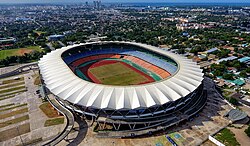
Temeke District, officially the Temeke Municipal Council (Halimashauri ya Manispaa ya Temeke, in Swahili) is one of five districts of the Dar es Salaam Region of Tanzania. Temeke is bordered to the south by the Mkuranga District of the Pwani Region, to the north by the Indian Ocean, and to the northwest by the Ilala District. Temeke's eastern boundary is shared by Kigamboni District. The district covers an area of 150.4 km2 (58.1 sq mi).[2] The district is comparable in size to the land area of Cook Islands.[3] The administrative seat is Miburani. The district is home to the University of Dar es Salaam's School of Education, the National Stadium, the largest stadium in the country, Port of Dar es Salaam the largest port in the country, and The Chamazi Stadium the largest privately owned stadium. The 2012 National Tanzania Census states the population of the district as 1,205,949.[4]

Key Information

Administration

[edit]

The Temeke Municipal Council is organized into 23 wards and two divisions on an administrative level.[5] The wards are:

History

[edit]

One of the five municipalities in the City of Dar es Salaam, Temeke Municipal Council was founded on November 10, 1999, in accordance with Sections 8 and 9 of the Local Government (Urban Authorities) Act, 1982 No. 8.[6]

Geography

[edit]

Temeke Municipal has a total area of 240 square kilometers, including 5 kilometers of coastline. Due to its location in Tanzania's tropical coastline region, Temeke Municipal Council is impacted by two key climatic factors: temperature and rainfall. Bimodal conventional rains accompany the bimodal type of rainfall pattern. Between December and February, the Municipality experiences nearly constant monsoon rainfall. While there were prolonged periods of severe rain from March to June. Every year, there is between 800 and 1200 mm of rainfall. Like rainfall, temperature is likewise impacted by the ocean. The entire year is marked by high temperatures, which range from 35 °C in January to March to 25 °C from June to August.[7]

Topography

[edit]

Temeke Municipal's soil is frequently clayey and partially sandy, making it relatively unproductive for agricultural usage. Alluvial soils—primarily Eutric Fluvisols and Eutric Gleysols—predominate in the river valleys, which are recent floodplains and are prone to floods. Urban soil erosion is mostly caused by the slopes of river valleys, where there is no vegetation to hold the soil in place, and is exacerbated by human activity like the extraction of building materials.[8]

Neogene clay-bound sands to hard sandstones make up Temeke Municipal's outcropping rocks and underlying (semi-)consolidated formations. In the central and southern regions of Municipal, terrace sands and sandstones of the Quaternary System are more prevalent.[9]

Economy

[edit]

Infrastructure

[edit]

Water and Sanitation

[edit]

The Municipality's primary water sources come from both surface sources such as the Mtoni plant and lower Ruvu (through DAWASCO pipes) and ground water sources. The current population (2018) is predicted to be 1,574,167, according to the 2002 National Population and Housing Census. The anticipated daily total water demand is 125,933m3, or 80 liters per person. Only 85.634 cubic meters per day, or 68.1% of the total needed amount, are produced at the moment as part of the water supply.[10]

There are 232 deep boreholes owned by Temeke Municipal Council. 116 of the 232 boreholes—69 for primary schools, 23 for health centers, and 24 for secondary schools—are owned by the government. Out of 368,416 total residences, 9,516 are connected to the DAWASCO network in 13 of the 24 wards. Bore holes and shallow wells are dispersed across the Municipality in various locations. The Mtoni water treatment plant and drill holes jointly produce roughly 6.5 million gallons each day in the metropolitan regions. Boreholes in rural regions and streams in certain places yield a total of roughly 0.7 million gallons daily.[11]

The Temeke Municipal Council is predicted to produce 1494 tons of garbage each day on average. The capacity of municipal vehicles working with private companies to collect rubbish is 964.6 tons per day, or 65% of the waste produced daily from locations within Temeke Municipal Council. The total amount of waste produced that is not collected and delivered to the disposal site is therefore 529.4 tons per day, or 35% of the total amount of waste produced each day (including recyclable wastes). Only five (5) of Temeke Municipal Council's 23 wards—Chang'ombe, Mtoni, Kurasini, Tandika, and Temeke—have private contractors that collect and transport rubbish to the landfill in Pugu Kinyamwezi on a regular basis.[12]

Road and rail

[edit]

Temeke Municipal Council maintains a network of roads totaling 628 km, of which 98.41 km are asphalt roads, 140.48 km are gravel roads, and 389.11 km are earth roads. Within the overall network of 628 km, 59 km (all paved) are under the control of TANROAD, while 575.7 km (paved-59 km, gravel-136.5 km, and earthroad-379.7 km) are under the supervision of TARURA-TEMEKE.[13]

Temeke Municipal is located along the Central Railway Line and TAZARA Railway Line, which operate from Dar es Salaam Port and serve the nation as well as the seven (7) bordering nations of Kenya, Uganda, Malawi, Zambia, Rwanda, and Burundi. As final destinations for the railways, Kigoma, Mbeya, and Mwanza—both of which border the neighboring nations of the Democratic Republic of the Congo, Burundi, Rwanda, Uganda, Zambia, Malawi, and Kenya—could also be useful for the transportation of bulk goods.[14]

Energy

[edit]

Petroleum, hydropower, and 1% of Municipal households utilize kerosene as a lighting source for homes and small businesses are the Municipal's main sources of commercial energy. Given that the Municipal relies on the National Grid for its energy source, power outages are somewhat frequent as a result of low water levels in the hydroelectric dams. The electricity is available in all 23 of the Municipal's wards. The government, a small number of private businesses, and certain religious institutions all use solar energy.[15]

Banking

[edit]

Except for a small number of them, the Municipal has a sizable number of local banks functioning in Tanzania. The financial institutions in Tanzania have a total of 702 branches in their overall branch network, per the most recent BOT banking report.[16]

Agriculture

[edit]

In Temeke Municipal, paddy, cassava, sweet potatoes, maize, pigeon peas, cowpeas, vegetables, and fruits are the primary food crops grown. At Rufu in the Chamazi ward, the irrigation plan for the Major Agricultural Program was created. More than 325 hectares of potential irrigation land are ideal for large-scale crop cultivation. A group of 60 small-holder farmers have developed 75 of these hectares for minor irrigation. Extension officers oversee the 200 hectares of irrigation farming practiced by small holders in Temeke Municipality.[17]

One of the activities carried out by Temeke Municipal Council is livestock keeping. There are 6,095 households that maintain animals in total. However, the space available for cattle husbandry is shrinking as a result of human settlement increase. On a modest scale, dairy cows, goats, and chickens are raised intensively. The Municipal keeps dairy cattle using a zero grazing approach. Systems that are intense and semi-intensive are used for commercial poultry raising. In the Municipality, 742 tons of broiler meat and 928,173 trays of eggs are typically produced.[18]

There are now 30 businesses that buy, sell, process, manufacture furniture, or deal in hides or skins. The majority of animals is transferred to Pugu at Ilala for slaughter before being sold alive. A very tiny number of animals have been killed and eaten within the Municipality.[19]

Trade and industry

[edit]

Fishing, commerce, and small-scale farming are very popular in the Temeke region. It is also regarded as a manufacturing hub because it is home to the majority of Dar es Salaam's industry. Here you can also find the Dar es Salaam International Trade Fair Grounds and Tanzania's biggest port, Dar es Salaam Port, which serves six other nearby nations. The Municipal is connected to a variety of economic infrastructures, including highways, the Tanzania Railway Cooperation (TRC), Tanzania Zambia Railway (TAZARA), and maritime transportation. Temeke Municipal is connected to Dar es Salaam's city center as well as the central areas of Morogoro, Dodoma, Singida, Tabora, Mwanza, and Kigoma by the TRC infrastructure's railway line. The nation is linked to the entire East Africa Community by Mwanza and Kigoma. Currently, Temeke Municipal has 2,353 enterprises invested. 80 of these are heavy manufacturing sectors with more than 100 employees. 62 are medium-sized businesses, whereas 2,131 are small-sized businesses.[20]

The Municipal now employs 67 commercial millers. Private persons own each one of them in large, medium, and small scale units. Since so many commodities from southern Tanzania are transported to the city for sale, the rise in flour milling businesses will encourage farmers and businesspeople to raise the price of their goods. Only 8 fruit canning and juice concentrate manufacturing industries are located in the Municipal.[21]

Serengeti Breweries Limited (SBL) is the sole brewery that the Municipal currently has, despite the fact that the transportation industry has plenty of investment potential and sound physical infrastructure. With its own brands accounting for 15% of the market by volume and when combined with the portfolio of EABL, Serengeti Breweries Limited-SBL, Tanzania's second-largest beer company, accounts for roughly 28% of the country's branded beer market. The business was founded in 1988 under the name Associated Breweries Limited, then in 2002 it changed its name to Serengeti Breweries Limited. The SBL's main office is located in Temeke Municipal.[22]

Over 490 businesses in the district have invested in the processing of timber, The municipal has the largest timber processing facilities in the country. They are divided into four categories: coffin making (2), sawmilling (68), and wood carving (1). There are, nevertheless, 238 businesses that produce doors, windows, and frames. The timbers (raw materials) are acquired from locations other than Temeke and Dar es Salaam, but there is sufficient supply. In Temeke Municipal, more than 2,360m3 of timber are handled each year. The Municipal actually needs about 6,000m3 of wood every year. Over 1,000 casual workers are employed in the sector, and some businesspeople are involved in the sale of lumber in the municipal market.[23]

Tourism and natural resources

[edit]

The largest officially designated protected area is a mangrove forest in the municipal spans 380 hectars and is located in Temeke District in the Kurasini, Kijichi, and Mbagala Mtoni Ward. The Mwalimu J.K.Nyerere Trade Fair Grounds hosts the Dar es Salaam International Trade Fair (DITF), popularly known as Saba Saba Day, every year on the seventh of July. The Temeke Municipality is where the yearly big promotional event hosted by the Board of External Trade is situated along Kilwa Road. To lead Tanzania's export efforts, the Board of External Trade, a government entity, was founded by Act No. 5 of 1978.[24]

One year after Tanzania declared its independence on December 9, 1961, the Trade Fair Grounds, also known as the Mwl. J. K. Nyerere Trade Fair Grounds, were opened for business. The National Agricultural and Trade Fair (NATF) was held at the Grounds, which at the time fell under the Ministry of Trade and Cooperative Unions. Over the years, the Dar es Salaam International Trade Fair has solidified its position as the showcase for goods from East, Central, and Southern Africa as well as Tanzania.[25]

Population

[edit]

The Zaramo and Ndengereko minority were the district's original residents, but increasing urbanization has made Temeke one of Tanzania's most ethnically diverse districts. There is a large Makonde community in Temeke. The city had a total population of 1,205,949 as of the 2012 National Population and Housing Census, of which 587,857 were men and 618,092 were women. There were also a total of 307,760 homes, with an average size of four people per household. The annual average population growth rate was 4.6%. Temeke was expected to have 368,416 households and 1,443,629 residents as of 2016. Men make up 703,718 of them, and women make up 739,912.[26]

Health and education

[edit]

Education

[edit]

The Municipal contains 140 pre-primary schools and 134 primary schools, of which 2 schools and 14 units provide special education for students with various disabilities. 51 of the 134 schools are owned by the private sector, and the remaining 81 are government-run pre-primary schools. There are a total of 134 schools in total. There are 15 COBET (MEMKWA) Centers, 3 vocational centers, 2 government centers, and 1 private center, nevertheless. There are 170,027 pupils enrolled in public and private pre-primary and primary schools overall.[27]

The Municipal has 63 secondary schools in total. wherein there are 37 private secondary schools and 26 public ones. As shown in figure 8 below, there are presently 52,161 pupils enrolled in the Municipal (in both private and public schools), with 25,347 boys and 26,814 girls.[28]

Health

[edit]

There are currently 136 medical facilities in existence, of which 3 are hospitals, 16 are health centers, and 102 are dispensaries. The largest one being the Temeke Regional Referral Hospital located in Temeke ward.[29]

Notable people

[edit]

References

[edit]
Revisions and contributorsEdit on WikipediaRead on Wikipedia
from Grokipedia
Temeke District is one of five administrative districts comprising the in , situated in the southern portion of the city and serving as a key urban and semi-urban area. Covering an area of 245 square kilometers (including 5 square kilometers of water bodies), it features a diverse including highlands, uplands, and lowlands along a coastal zone bordering the , with a of 1,346,674 as recorded in the 2022 Population and Housing Census. The district's coordinates lie between 39°12' and 39°33' east and 6°48' and 7°33' south , encompassing a with bimodal rainfall averaging 800–1,000 mm annually and temperatures ranging from 25°C in the cooler months to 35°C during the hottest period. Established on November 10, 1999, under the Local Government (Urban Authorities) Act of 1982, Temeke District was formed as part of efforts to decentralize administration in , initially including what is now the separate Kigamboni District (split in 2015). It is bordered by Ilala District to the north and west, Kigamboni District to the northeast, the Coast Region to the south, and the to the east, with major transport links such as Kilwa Road and the Road facilitating connectivity. Administratively, it is divided into two divisions—Mbagala and Temeke—encompassing 23 wards and 142 sub-wards, governed by the Temeke Municipal Council with 34 councilors, including representatives for parliamentary oversight. The stands at 5,495 persons per square kilometer as of the 2022 , reflecting an annual growth rate of 1.1% since 2012, with a demographic composition dominated by the Zaramo ethnic group (approximately 90%) and an average household size of 3.5. Economically, Temeke is a hub for trade, employing over 50% of its workforce, alongside small-scale agriculture, livestock rearing, and fisheries supported by its coastal access and mangrove forests covering 378.4 hectares. Infrastructure includes a 628-kilometer road network (with 98.41 km tarmac), rail connections via the Central and TAZARA lines, and essential services like water supply from 237 boreholes serving over 200,000 residents, though challenges persist in waste management and peri-urban road conditions. Notable landmarks include the Benjamin Mkapa Stadium, the Mfugale Flyover Bridge, the Mwalimu Nyerere Bridge, and the historic Chang’ombe Roman Catholic Church, highlighting the district's role in sports, transportation, and cultural heritage within Tanzania's largest urban center.

Governance

Administration

Temeke District is one of five districts comprising the in , alongside Ilala, Kinondoni, Ubungo, and Kigamboni Municipalities. Its administrative seat is located in Miburani ward. The district is administratively divided into two divisions—Chang'ombe and Mbagala—and further subdivided into 23 wards and 142 sub-wards (mitaa). Key wards include Mbagala, Tandika, and Chang'ombe, among others such as Azimio, Buza, and Chamazi, which facilitate local governance and service delivery. The Temeke Municipal Council (Temeke MC) serves as the primary authority, responsible for , public services, revenue collection, and within the district. Established under the Local Government (Urban Authorities) Act, 1982, the council derives its powers from this legislation, which empowers urban authorities to enact bylaws, manage infrastructure, and promote economic activities while ensuring alignment with national policies. Current leadership includes Municipal Director Jomaary Mrisho Satura, appointed in August 2024, and District Commissioner Sixtus Mapunda, who assumed office in October 2023 following a transfer from Sumbawanga. Recent administrative updates include the transition from former District Commissioner Jokate Mwegelo, who served from May 2021 to November 2023, to Mapunda, reflecting ongoing efforts to strengthen local governance amid urban growth challenges.

History

Prior to colonial intervention, the area encompassing modern Temeke District was primarily inhabited by the Zaramo and Ndengereko peoples, Bantu ethnic groups who established small-scale coastal communities focused on fishing along the shoreline and subsistence farming in the surrounding plains. The Zaramo, originating from inland regions like , practiced matrilineal agriculture, cultivating rice in valley bottoms and cash crops such as coconuts and cashews on less fertile plots, while integrating with coastal trade networks. The Ndengereko, residing between the Ruvu and Rufiji Rivers, similarly emphasized coastal livelihoods, with their settlements forming the southern periphery of early influences. During the colonial era, Temeke's integration into accelerated under German administration from 1891, when the city became the capital of , prompting southward urban expansion as the port and administrative centers grew. British rule following reinforced policies, designating Temeke as a predominantly African rural to house migrant laborers and limit urban access for natives, with zoning laws in 1912 dividing the city into 'native' and 'non-native' zones that marginalized Zaramo land claims. In 1942, British authorities merged the urban with the Temeke rural to form the Uzaramo District, aiming to streamline amid post-Maji Maji challenges, though this often overlooked local ethnic dynamics. Post-independence, Temeke District was formally established as a municipal council on November 10, 1999, through Sections 8 and 9 of the Local Government (Urban Authorities) Act, 1982 No. 8, initially encompassing the area that later became Kigamboni District (split in ), as part of Tanzania's broader reorganization of 's administrative divisions to enhance local governance under the 1977 Constitution. In the , the district experienced rapid , with 's metropolitan population reaching 5.38 million in the 2022 census and projected to exceed 10 million by 2030, driven by rural-urban migration and natural growth that transformed Temeke into a densely populated peri-urban zone. The expansion of Port, handling 95% of Tanzania's container traffic, intensified development pressures in Temeke, leading to infrastructure strains like inadequate roads and increased vulnerability to flooding in areas such as the Msimbazi Valley. The 2022 Population and Housing Census integrated Temeke's data into national administrative reporting, recording a population of 1,346,674 across its wards, underscoring its role in decentralized planning and .

Geography

Topography

Temeke District encompasses a total land area of 150.4 km², featuring approximately 5 km of coastline along the Indian Ocean. This coastal extent contributes to the district's low-lying topography, characterized by flat plains that gently rise to low hills in the interior. Elevations near the shoreline are generally below 15 meters above sea level, creating a seaward-sloping landscape that transitions from sandy beaches to inland undulations. The composition in the district is dominated by sandy soils, which are well-drained but have low moisture retention capacity, interspersed with clayey soils in valleys. These clay-bound areas, particularly along the Msimbazi River, consist of fine to coarse sands mixed with silts and clays, forming fertile but waterlogged deposits. clay-bound sands and gravels underlie much of the region, providing a semi-consolidated base that influences soil permeability and agricultural potential. Geologically, Temeke District is shaped by sedimentary formations derived from ancient marine deposits, including unconsolidated sands, gravels, clays, and limestone. These layers, part of the Coastal , overlie sediments and create distinctive landforms such as raised reefs and beach ridges along the coast. The resulting drainage patterns are channeled through river valleys and coastal creeks, where alluvial fills of alternating sands and clays promote seasonal water accumulation and increase vulnerability to inundation in low-gradient areas.

Climate

Temeke District experiences a characteristic of coastal , featuring high temperatures and a bimodal rainfall . Annual typically ranges from 800 to 1200 mm, with the long rainy season occurring from to May and the short rainy season from to . The district's proximity to the contributes to consistently warm conditions, with average daily temperatures between 25°C and 35°C throughout the year, accompanied by high levels often exceeding 80% near the . Environmental challenges in Temeke are intensified by its urban setting and low-lying , leading to frequent flooding during heavy rains due to inadequate drainage systems. These issues are further aggravated by , which has increased the vulnerability of low-lying areas to waterlogging. Additionally, densely built-up zones in the district exhibit effects, where surface temperatures can rise approximately 8°C above surrounding rural areas, exacerbating discomfort and energy demands in informal settlements. Recent climate projections for the Dar es Salaam region, including Temeke, indicate an increase in rainfall intensity and frequency of extreme events post-2020, with models forecasting up to 20% more heavy precipitation days under moderate emissions scenarios by mid-century. These trends underscore the need for adaptive measures to address evolving weather patterns in the district.

Demographics

Population

According to the 2022 Population and Housing Census conducted by the National Bureau of Statistics, Temeke District had a total population of 1,346,674 residents. With an area of approximately 150.4 km², this equates to a population density of about 8,957 people per km². Temeke District's boundaries changed in 2015 when Kigamboni District was split off, affecting direct comparisons with pre-2015 data. The census recorded 1,205,949 for the larger Temeke (including Kigamboni's 162,932 residents), equating to an adjusted of approximately 1,043,017 for current Temeke boundaries. From this adjusted base to 1,346,674 in 2022, the average annual growth rate was approximately 2.6% over the decade. Earlier projections based on the full data estimated the at 1,510,129 by 2016, assuming an annual growth rate of about 5.7%; however, actual growth for the adjusted boundaries was slower than these expectations, attributed in part to initiatives aimed at managing density and infrastructure strain. Temeke District is predominantly urban, with over 90% of its residing in urban areas, consistent with the overall of . High concentrations of informal settlements are evident in wards such as Mbagala, where rapid influxes have led to dense, unplanned housing. Post-2022 trends indicate continued migration into the district, driven by employment opportunities at the nearby Port and ongoing housing developments to address urban expansion (based on up to 2021).

Ethnic Composition

Temeke District's ethnic composition reflects its historical roots as a coastal settlement, primarily shaped by indigenous Bantu groups such as the Zaramo and Ndengereko, who form the foundational of the area. The Zaramo, a matrilineal coastal Bantu people, have long inhabited the region around , including Temeke, where they engaged in agriculture and trade, accommodating diverse influences through intermarriage and cultural exchange. The Ndengereko, another coastal Bantu group, traditionally occupied areas north of the , contributing to the district's early demographic core alongside the Zaramo. These groups established a Swahili-influenced cultural base, with serving as the that facilitated early integration. Rapid urbanization since the mid-20th century has transformed Temeke into a diverse urban hub, attracting migrants from across Tanzania and beyond. Significant influxes include the Sukuma, the largest ethnic group in Tanzania, who have migrated from the northwest for economic opportunities, alongside Chagga from the Kilimanjaro region and other Bantu groups like the Nyamwezi. Small communities of Indian and Arab descent persist due to longstanding trade ties, with Arabs integrated into Swahili networks and Indians maintaining distinct enclaves in broader Dar es Salaam. This migration has resulted in a creolized urban ethnicity, where intermarriage and shared urban experiences have led to a significant proportion of residents with mixed heritage, blending indigenous and migrant identities. The district's proximity to Dar es Salaam's port and bustling markets has amplified multicultural integration, fostering social fluidity through daily interactions in trade and labor. With a 2022 population exceeding 1.3 million, Temeke exemplifies an urban where ethnic boundaries blur via communal living and economic interdependence. Recent studies highlight women's in peripheral neighborhoods like Keko Machungwa, where local federations advocate for land rights and , strengthening community ties across diverse groups and promoting inclusive social dynamics.

Economy

Infrastructure

Temeke District's road network spans a total of 628 kilometers, comprising 98.41 kilometers of asphalted roads, alongside and earthen surfaces that facilitate connectivity across its 23 wards. Major routes such as Kilwa Road and Road serve as vital arteries linking the district to central and beyond, supporting daily commutes and goods transport. Recent upgrades, including the bitumen surfacing of 51.97 kilometers across 40 roads in 11 wards under the Dar es Salaam Metropolitan Development Project Phase 2, aim to enhance accessibility and reduce maintenance costs, with implementation beginning in late 2024. Water supply in Temeke meets approximately 68.1% of daily demand, providing 85,634 cubic meters per day against a required 125,933 cubic meters, primarily through the Water and Sewerage Authority (DAWASA) network and 232 boreholes. services cover solid generation of 964.6 tons per day, with collection achieving 65% efficiency via municipal facilities that exceed the national average of 50%. A 2025 study on clean accessibility in Tanzanian urban areas underscores social determinants such as household income and location as key factors influencing equitable distribution in districts like Temeke. Energy infrastructure relies on access to 's national grid managed by the , with all 23 wards connected and supplementary solar installations in some public facilities. Rail connectivity is provided by the Central Railway Line and TAZARA, directly linking Temeke to the Port for efficient cargo movement to inland regions. The district hosts a significant banking presence, with over 50 branches from institutions like , Equity Bank, and others, supporting for residents and businesses. Recent infrastructure projects include 2024-2025 drainage enhancements integrated with upgrades in wards such as Chang'ombe, Miburani, and Kurasini, featuring drains and culverts to mitigate flooding risks from high tables. The Temeke Integrated Justice Center, operational since 2024, provides consolidated community services including and social welfare in a single facility, improving access to justice for vulnerable groups.

Agriculture

Agriculture in Temeke District primarily involves small-scale farming and rearing in rural and peri-urban areas, supported by alluvial soils in river valleys and floodplains that facilitate cultivation of staple crops. The main crops grown include paddy, , and , alongside sweet potatoes, pigeon peas, cowpeas, , and fruits, with these activities sustaining approximately 6,095 households engaged in agricultural production. These alluvial soils, particularly Eutric Fluvisols and Eutric Gleysols, provide fertile conditions for such farming, though production remains modest due to the district's urbanizing landscape. Livestock activities focus on and production in the district's outskirts, such as wards like Kimbiji and Pemba Mnazi, where zero-grazing systems are common. Annually, the sector produces 742 tons of meat and supports operations with around 5,982 improved yielding 6-8 liters of per cow daily, depending on the season. These efforts contribute to local protein supplies and income generation for farming households, with and integrating well with crop farming in mixed systems. Climate change poses significant challenges to agricultural yields in Temeke, including erratic rainfall, increased , flooding, and , which shorten growing seasons and reduce crop productivity by affecting water availability and . Farmers have adopted innovations such as drought- and flood-resistant varieties of and , on 75 hectares of developed land, , and cover cropping to mitigate these impacts, with 94.5% utilizing resistant crops and 85% employing . The Climate Smart Agriculture Programme (2015-2025) supported these adaptations through extension services and technology dissemination in peri-urban areas like Temeke; following its completion in 2025, ongoing national initiatives continue to enhance resilience amid . Agricultural output from Temeke supplies key local markets such as Tandika, providing fresh produce and products to urban consumers and supporting household for about 28% of the district's requirements. However, rapid constrains expansion, limiting agriculture's contribution to the local GDP as diminishes and populations shift to non-farm activities, with only 14.5% of residents engaged in the sector.

Trade and Industry

Temeke District serves as a vital commercial and hub within , hosting a mix of formal and informal enterprises that drive local economic activity. The district features approximately 40 major industries concentrated in Chang'ombe and 158 medium-scale operations in areas like Mbagala and Kurasini, focusing on and assembly of consumer goods. Small-scale businesses, including garage workshops for repair, are widespread in industrial zones such as Mbagala and Temeke Yombo, supporting everyday trade and services. Prominent enterprises include Serengeti Breweries Limited in Chang'ombe, a leading producer of and spirits that employs hundreds and contributes to the beverage sector's growth. The Dar es Salaam Port, adjacent to Temeke, handles approximately 95% of Tanzania's , facilitating imports and exports that enhance operations in the district. This proximity has spurred development in Mbagala, where inland container depots and bonded warehouses, such as those operated by ETC Cargo at Rangi Tatu (about 12 km from the port), manage handling and storage for regional distribution. These facilities support efficient supply chains for goods moving to landlocked neighbors via and rail connections originating in the area. Industrial expansions in 2024–2025 reflect ongoing efforts to bolster , including a proposed 8.39-acre in Chang'ombe under the Export Processing Zones Authority, targeting assembly and export-oriented production with existing like and utilities. This aligns with Tanzania's national push for industrialization, as outlined in the Third Five-Year Development Plan (2021/22–2025/26). Research on small firms, such as a 2022 study of garage workshops in Temeke, underscores the role of practices—like information sharing and training—in improving operational performance and competitiveness. Informal trade dynamics are prominent, with markets and street vending employing about 49% of the district's labor force and supporting retail and wholesale activities. The informal sector in , including Temeke's 17 formal markets and numerous informal sites, generates significant value added, estimated at TZS 6.2 trillion regionally in 2019, though district-specific GDP shares remain integrated into broader urban contributions.

Tourism and Natural Resources

Tourism

Temeke District serves as a gateway for tourists seeking authentic urban and coastal experiences in , with key attractions centered around cultural events and local markets that blend tradition with modern leisure. The Dar es Salaam International Trade Fair, held annually on (July 7) at the Mwalimu J.K. Nyerere Trade Fair Grounds, stands as a premier event drawing visitors from across and beyond. In 2025, the fair featured exhibitions from over 4,000 companies and was expected to attract over 385,500 attendees, highlighting agricultural innovations, crafts, and entertainment that celebrate national heritage. Local markets provide vibrant cultural draws, such as Tandika Market, where tourists can explore handmade crafts, textiles, and bustling stalls offering dishes like grilled meats and fresh , immersing visitors in everyday Tanzanian commerce and flavors. Emerging initiatives in 2024 have introduced recreational parks and modern shopping centers in Temeke's urban areas, enhancing accessibility and promoting community-based eco-tours that engage locals in guiding visitors through sustainable activities like nature walks and cultural . These developments, including brief explorations of nearby sites, support environmental awareness while boosting visitor engagement. in the district contributes to economic diversification, with notable growth following post-2023 infrastructure upgrades such as improved roads and public facilities that facilitate easier access to attractions.

Natural Resources

Temeke District features forests along its 5 km coastline, covering significant portions of the coastal zone and playing a crucial role in supporting local fisheries by providing habitats for fish and , as well as contributing to through their dense root systems that store . These ecosystems are part of Dar es Salaam's broader areas, distributed across districts including Temeke, where they help mitigate and support . The district's aquifers serve as a primary source for but face vulnerability to from urban expansion and on-site systems, with assessments indicating moderate to high pollution risk across nearly 50% of the area due to factors like shallow aquifers and high recharge rates. Recent monitoring under municipal plans highlights ongoing threats from industrial effluents and waste, emphasizing the need for regular quality checks to prevent health impacts. Additionally, coastal sands in Temeke are extracted for materials, supporting local building activities but requiring to avoid habitat disruption. Conservation efforts in Temeke are bolstered by the Dar es Salaam Metropolitan Development Project Phase 2, launched in 2023 with implementation extending through 2025, which includes measures for habitat restoration, afforestation along coastal and riverine areas, and installation of flood barriers such as stone-pitched drainage channels and culverts to protect mangroves from and inundation. These initiatives align with Tanzania's National Mangrove Management and Development (2025-2035), promoting sustainable use and restoration to enhance resilience. Despite these efforts, challenges persist, including driven by and , with 21 hectares of natural forest lost in 2024 alone, contributing to 12 kilotons of CO₂ emissions. Port-related activities in the district exacerbate through industrial wastes and oil spills, leading to reported in coastal habitats as noted in 2024 environmental assessments.

Health and Education

Education

Temeke District features a network of educational facilities that support , , and levels. As of the 2022 Population and Housing Census, the district records a net enrollment rate of 95.2% for primary school-aged children (7-13 years), with a total of 185,716 individuals attending , reflecting strong access in this urban setting. Secondary school net enrollment stands at 33.8% for youth aged 14-17 years (Dar es Salaam regional average, as district-specific data unavailable), indicating robust participation though with room for improvement in retention. Pre-primary education sees high attendance rates among eligible children, underscoring the district's emphasis on foundational learning. Despite these enrollment figures, the education system in Temeke faces significant challenges, particularly overcrowding and inadequate infrastructure. Overcrowded classrooms in public secondary schools strain resources, leading to difficulties in classroom management and reduced instructional effectiveness, as highlighted in studies on class sizes exceeding optimal levels. Poor infrastructure, including leaky roofs and suboptimal indoor air quality due to inadequate ventilation, compromises learning environments and student health in many facilities, according to 2023 environmental assessments of Tanzanian schools. These issues are exacerbated by rapid urbanization, limiting the capacity to accommodate growing student populations. Recent developments aim to address these gaps through targeted investments. In September 2025, Temeke Municipal Council announced a TZS 70 billion plan for the 2025/26 and 2026/27 financial years, including the construction of three new schools in wards such as Makangarawe and Mwembechia to alleviate and expand access. Additionally, vocational training programs, particularly in port-related skills like logistics and maritime operations, are being promoted through institutions affiliated with the , aligning education with the district's economic role near Port. Adult literacy in Temeke stands at approximately 96.9% for individuals aged 15 and above, with ongoing initiatives focused on achieving by addressing slight disparities (95.8% for females versus 98.1% for males). These efforts include community-based programs that emphasize equitable access and skill-building for women, contributing to broader socioeconomic development in the district.

Health

Temeke District maintains a network of 136 health facilities to serve its approximately 1.3 million residents, encompassing public dispensaries, health centers, and specialized institutions. The flagship facility is Temeke Regional Referral Hospital, a 304-bed public institution that provides advanced referral services, including emergency care and specialized treatments for the district and surrounding areas. Public health challenges in Temeke are exacerbated by seasonal flooding, which contributes to outbreaks of waterborne diseases such as ; in 2025, Tanzania reported elevated cholera cases with high fatality rates linked to contaminated water sources in urban areas like . Additionally, remains prevalent among at-risk groups, particularly pregnant women and children, with studies in Temeke indicating infection rates up to 45.8% in multiparous women and associated congenital risks in offspring. To address these issues, the Temeke Municipal Council approved a TZS 70 billion in 2025 for projects, including the of three new referral hospitals in Yombo, Buza, and Kijichi to expand healthcare access and reduce overcrowding at existing facilities. Complementing this, the 2024 establishment of the Temeke Integrated Justice Center integrates social welfare services that facilitate health access by providing support for vulnerable populations, such as referrals for and family-related care. Nationally, Tanzania's stands at 104 deaths per 100,000 live births as of the 2022 Demographic and Health Survey, reflecting ongoing challenges in that impact districts like Temeke despite targeted interventions. Vaccination coverage in the district aligns with national trends, reaching about 80% for key childhood immunizations such as DTP3, though disparities persist in urban informal settlements.

Society

Culture

Temeke District's culture reflects a dynamic blend of indigenous traditions and urban influences, shaped by its diverse communities along Dar es Salaam's southern periphery. As home to the predominant Zaramo people and a growing multicultural population, the district preserves ancestral practices while embracing contemporary expressions through markets, , and communal events. This underscores resilience and adaptation in a rapidly urbanizing setting. The Zaramo heritage forms a cornerstone of Temeke's , with traditions centered on communal s, , and social structures. Traditional dances, such as those performed during ceremonies, serve as expressions of spiritual beliefs and , often accompanied by rhythmic drumming to invoke ancestral connections. remains a vital practice, passed orally through generations to convey moral lessons, historical events, and environmental wisdom, reinforcing community bonds among Zaramo elders and youth. Matrilineal are prominent, organizing society into kin groups where lineage and trace through the mother's line, empowering women in and within clans. Urban culture in Temeke thrives amid the district's bustling informal economies and social movements, particularly in vibrant markets like Mikoroshini, which embody the chaos of daily and cultural exchange. These open-air spaces, filled with temporary stalls selling mixed from to textiles, foster social interactions and economic survival, holding physical and cultural significance as hubs for low-income residents to negotiate livelihoods and traditions. Women's activism has gained momentum, focusing on reproductive rights and community struggles in peripheral neighborhoods, where 2025 studies highlight how women navigate urban marginalization through collective advocacy for health access and housing equity. Such efforts, documented in reports on feminizing urban struggles, emphasize organizing to address gender-based challenges in and daily survival. Festivals and modern artistic scenes further enliven Temeke's cultural pulse, blending historical commemorations with contemporary creativity. The annual Saba Saba Trade Fair, held at the Mwalimu J.K. Nyerere grounds, acts as a cultural hub featuring traditional music, dances, and performances that celebrate Tanzania's heritage while showcasing local innovations. In areas like Tandika, modern music influences emerge through events such as live performances and festivals like Jamafest, where drums, cheers, and East African rhythms fill streets, reflecting the district's evolving urban soundscape. The social fabric of Temeke weaves a of influences, prominently Swahili-Islamic elements that permeate daily life and community practices. Swahili traditions, infused with Arab-Islamic heritage, manifest in attire like skullcaps, festival observances, and shared values of , creating a cohesive identity amid ethnic diversity. justice centers, such as the Temeke Integrated Justice Center, promote equity by providing accessible , social welfare, and gender-sensitive services for family matters, ensuring timely resolution and empowerment for marginalized groups.

Notable People

Omary Ally Mwanga, professionally known as , was born on December 31, 1995, in Temeke District, Dar es Salaam, where he developed an early interest in music amid the district's vibrant urban culture. As a leading figure in Tanzanian , Marioo has risen to prominence through his songwriting, production, and melodic style, founding the Bad Nation to support emerging artists. His breakthrough tracks, including the 2024 hit "Unanichekesha" featuring S2kizzy, showcase his ability to blend romantic themes with infectious rhythms, earning widespread acclaim across . Marioo's success has spotlighted Temeke's role in nurturing musical talent, with his performances and collaborations amplifying the district's cultural influence on the regional music scene. Jokate Urban Mwegelo, a n politician and advocate, served as District Commissioner for Temeke from July 2021 to January 2023, focusing on community-driven initiatives during her tenure. Appointed to the role amid broader efforts to strengthen local governance, she prioritized and economic opportunities, urging residents to leverage government projects for personal and communal growth. As a former beauty queen and actress, Mwegelo has championed women's rights on international platforms, representing at the 69th Commission on the Status of Women in 2025 to advocate for gender-inclusive leadership and technology access. Her work in Temeke emphasized , including entrepreneurship challenges that engaged over 500 young people in business innovation. Tied to her roots in , Mwegelo's continues to inspire local governance reforms and gender equity in the district. In recent years, Temeke has seen the rise of emerging activists addressing social inclusion, such as youth leaders promoting diverse participation in initiatives starting in 2024, contributing to and environmental . Local political figures have also gained attention through high-profile events, including 2025 presidential campaign visits that highlighted district leaders' roles in fostering unity and development. These individuals underscore Temeke's growing influence in Tanzania's cultural, political, and activist landscapes.

References

Add your contribution
Related Hubs
User Avatar
No comments yet.