Hubbry Logo
Trifolium dubiumTrifolium dubiumMain
Open search
Trifolium dubium
Community hub
Trifolium dubium
logo
8 pages, 0 posts
0 subscribers
Be the first to start a discussion here.
Trifolium dubium
Trifolium dubium
from Wikipedia

Trifolium dubium
Scientific classification Edit this classification
Kingdom: Plantae
Clade: Tracheophytes
Clade: Angiosperms
Clade: Eudicots
Clade: Rosids
Order: Fabales
Family: Fabaceae
Subfamily: Faboideae
Genus: Trifolium
Species:
T. dubium
Binomial name
Trifolium dubium
Synonyms[1]
  • Amarenus flavus C. Presl
  • Chrysaspis dubia (Sibth.) Desv.
  • Chrysaspis dubia (Sibth.) E.H.Greene
  • Trifolium filiforme sensu auct.
  • Trifolium flavum C. Presl
  • Trifolium luteolum Schur
  • Trifolium minus Sm.
  • Trifolium praticola Sennen
  • Trifolium procumbens "L., p.p."
  • Trifolium procumbens sensu auct.

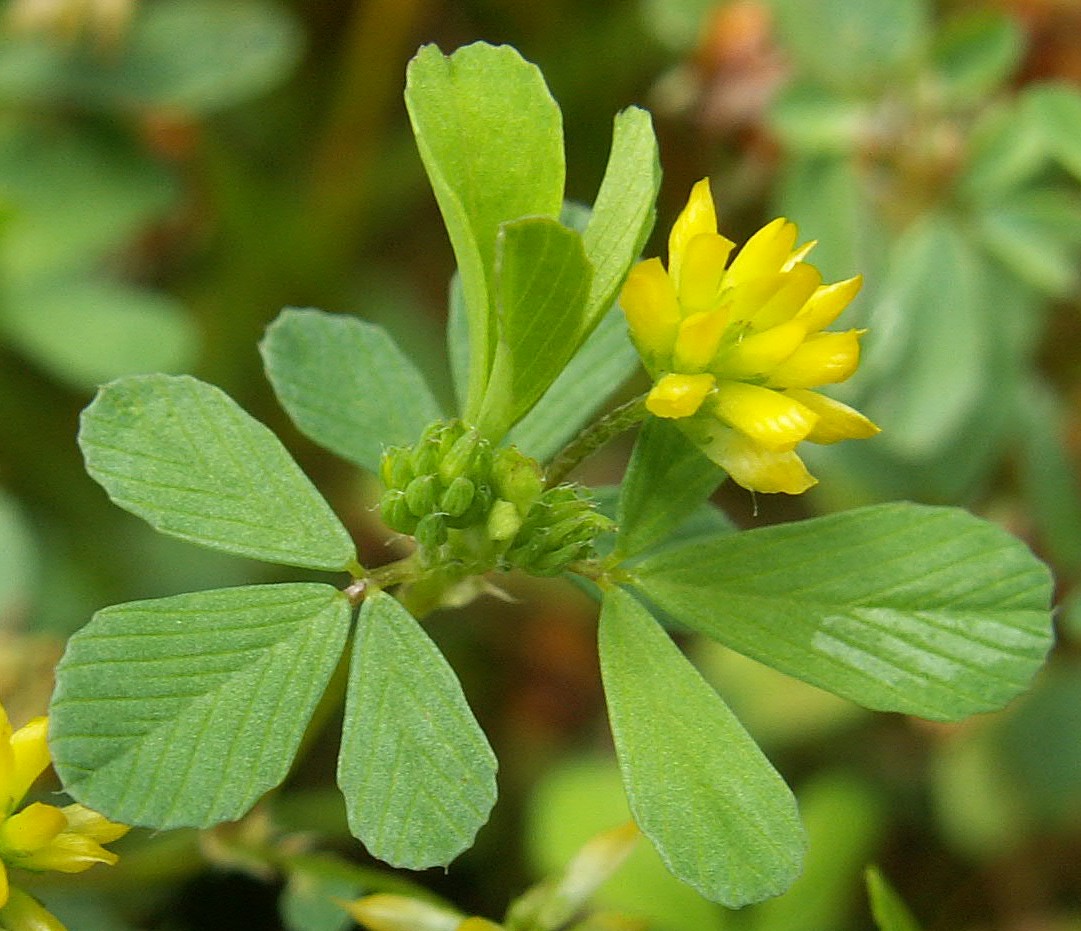
Trifolium dubium, the lesser trefoil,[2] suckling clover,[3] little hop clover or lesser hop trefoil, is a flowering plant in the pea and clover family Fabaceae. This species is generally accepted as the primary plant to represent the traditional Irish shamrock.[4]

It is native to Europe, but can be found in many parts of the world as an introduced species.

It is probably an allotetraploid with 2n=32 that arose from the crossing of Trifolium campestre and T. micranthum.[5]

[edit]

Similar plants

[edit]

Lesser hop trefoil, Trifolium dubium, may be confused with other plants that have three leaflets and small yellow flowers, such as large hop trefoil (T. aureum), hop trefoil (T. campestre), black medick (Medicago lupulina), and yellow woodsorrel (Oxalis stricta).

See also

[edit]

References

[edit]
[edit]
Revisions and contributorsEdit on WikipediaRead on Wikipedia
from Grokipedia
Trifolium dubium, commonly known as lesser hop clover, suckling clover, or shamrock clover, is an annual herbaceous in the family. It features slender, branching stems typically 5–50 cm tall, with alternate, trifoliate leaves consisting of three obovate leaflets, each 5–15 mm long and often marked by fine teeth. The plant produces small, bright yellow flowers, 2.5–4 mm long, arranged in compact, spherical to head-like inflorescences of 3–20 blooms, which fade to brown and bloom from May to October in temperate regions. Fruits are tiny, indehiscent pods, 1.5–2 mm long, each containing a single , and the plant reproduces solely by , forming persistent seed banks. Native to and parts of Macronesia, T. dubium has been widely introduced to other continents, including , , , and , where it thrives in disturbed habitats. It prefers full sun and well-drained soils ranging from clay to sand, with a of 6.0–8.0, and is commonly found in lawns, roadsides, meadows, fields, and waste areas, tolerating mowing and foot traffic. In its introduced range, such as across the and , it often occupies anthropogenic sites and occasionally wetlands. Ecologically, T. dubium plays a key role as a nitrogen-fixing through in its roots, enriching soil nutrients and potentially altering microbial communities. It serves as a forage crop for , attracts pollinators like bees and , and acts as a larval host for the clouded sulfur butterfly (). However, it can become invasive in some regions, competing with native flora in disturbed or ephemeral wetlands and harboring pests like mites that affect crops such as camellias and gooseberries. Culturally, T. dubium is one of the traditionally associated with the Irish shamrock, symbolizing the Holy Trinity, though its exact role alongside other clovers like Trifolium repens remains debated. It is also noted for improving the flavor of apples when grown in orchards and is sometimes used in low-maintenance lawns due to its resilience. Taxonomically, it is an allotetraploid species with 30 chromosomes, distinguishing it from related clovers.

Description

Morphology

Trifolium dubium is an annual herb that grows 5–40 cm tall, typically exhibiting a prostrate or ascending habit with slender, branching stems that may be glabrous or sparsely pubescent. The leaves are alternate and trifoliate, consisting of three obovate to elliptic leaflets measuring 5–15 mm in length, with toothed or entire margins and a pale green coloration often accented by fine hairs. The central leaflet is borne on a longer petiolule compared to the lateral ones, and the petioles range from 4–12 mm long, accompanied by ovate stipules 3–8 mm in size. Flowers are small, measuring 2.5–3.5 mm long, and bright yellow, fading to yellowish-brown with age; they are arranged in compact axillary heads or short spikes containing 3–25 florets. The calyx is campanulate with unequal teeth, the upper ones being longer than the lower. The fruits are oblong to ovoid, indehiscent pods 1.5–2 mm long, each typically containing 1–2 small, yellowish seeds that remain enclosed within the calyx. The features a slender with fibrous lateral roots, which supports through symbiotic root nodules formed with bacteria.

Reproduction

Trifolium dubium is an that completes its life cycle within a single growing season, germinating primarily in autumn or early spring from a persistent and senescing by late summer or autumn. Seeds in the remain viable for up to five years or more, facilitating and enabling the to persist in disturbed habitats. Flowering occurs from April to September in temperate regions, with inflorescences borne on peduncles 1–4 cm long that arise from axils. The flowers are self-fertile and primarily self-pollinate through in situ pollen germination on the stigma, often with limited opening, though they also produce that attracts pollinators such as bees. Following , fruits develop as small oblong to ovoid pods, each typically containing 1–2 , with high overall output per supporting rapid population establishment and colonization of new areas. ripen from summer through early autumn ( to ) and contribute to the long-lived , ensuring future opportunities.

Taxonomy

Etymology and naming

The genus name Trifolium derives from the Latin words tres, meaning "three," and folium, meaning "leaf," referring to the typical trifoliate leaf structure shared by species in this genus. The specific epithet dubium originates from the Latin dubius, translating to "doubtful" or "uncertain," a designation reflecting the long-standing taxonomic confusion with morphologically similar clovers such as Trifolium campestre. Trifolium dubium bears several common names, including lesser hop , suckling , lesser , and . The "hop clover" moniker arises from the appearance of its aging flower heads, which fold and darken in a manner resembling the seed cones of the hop plant (Humulus lupulus). "Suckling clover" likely stems from its historical use as for young or suckling , such as pigs, due to its nutritious qualities and abundance in pastures. The term "shamrock" derives from the Irish Gaelic seamróg, a form of seamar meaning "" or "young ," emphasizing the plant's youthful, tender shoots. This species was first formally described by the British botanist John Sibthorp in his 1794 publication Flora Oxoniensis. Since the , T. dubium has been identified as a primary candidate for the traditional Irish , a role supported by genetic studies in the 2010s that analyzed its allotetraploid origins and widespread adaptation across . Naming variations reflect regional contexts: in Britain, it is predominantly called lesser , while in , little hop is more common.

Synonyms and classification

Trifolium dubium is classified within the kingdom Plantae, phylum Tracheophyta, class Magnoliopsida, order Fabales, Fabaceae, Trifolium, and species T. dubium. The species has numerous historical synonyms, including Amarenus flavus, Chrysaspis dubia, Trifolium minus, Trifolium parviflorum, Trifolium filiforme subsp. dubium, Trifolium flavulum, and Trifolium succisum, among approximately 10 others documented in taxonomic literature. The taxonomic status of T. dubium was debated until the 20th century, often treated as a subspecies or variety of related species such as T. filiforme or T. campestre due to morphological similarities, but it is now widely accepted as a distinct species based on genetic and cytogenetic evidence. Phylogenetically, T. dubium is an allotetraploid with a chromosome number of 2n=30 (sometimes reported as 32), arising from hybridization between the diploid progenitors Trifolium campestre (2n=14) and T. micranthum (2n=16); this origin was confirmed through genomic in situ hybridization (GISH) and fluorescence in situ hybridization (FISH) analyses of rDNA loci in cytogenetic studies published in 2008. A chromosome-scale genome assembly published in 2024 confirmed the allotetraploid nature, with a total size of 679.1 Mb scaffolded into 15 pseudomolecules. It is placed in section Chronosemium of the genus Trifolium and exhibits morphological intermediates between its parental species, such as inflorescence structure and leaflet shape.

Distribution and habitat

Native range

Trifolium dubium is native to , extending from and Britain eastward to the region. It also occurs naturally in , including the and . Within its native distribution, the species thrives in a variety of open habitats such as grasslands, meadows, pastures, rocky outcrops, and waste places. These environments typically feature dry to moist conditions on neutral to slightly acidic soils that are well-drained and often relatively infertile. The altitudinal range of T. dubium in spans from up to approximately 1,500 m, allowing it to occupy both lowland and montane zones within its temperate . indicates its historical presence in the since prehistoric times, with charred remains identified in deposits, suggesting an association with early agricultural practices and disturbed ground. Adapted to temperate climates, T. dubium tolerates cool winters and mild summers characteristic of its European range, contributing to its widespread occurrence in naturally disturbed, grassy ecosystems.

Introduced range and invasiveness

Trifolium dubium has been introduced to various regions outside its native Eurasian range, primarily through agricultural pathways such as contaminated crop seeds, hay, and mixes used for forage. It was brought to in the , where it quickly became established across the and southern . The species has also spread to , , parts of , and , often arriving via in agricultural products. Today, T. dubium is naturalized and ubiquitous in disturbed temperate habitats worldwide, including roadsides, fields, lawns, and urban areas. In , it occurs throughout most states and provinces, favoring open, grassy sites. In , it is widespread in southern and eastern regions, particularly in temperate zones, while in , it inhabits similar disturbed lowland and montane areas. Although generally considered a low-impact introduced species, T. dubium exhibits invasive tendencies in certain ecosystems by competing with native flora in grasslands and lawns through its rapid growth and prolific seeding. It is listed as invasive in select U.S. states, such as , and has been reported as problematic in national parks including (Hawaii), Yellowstone (Wyoming), and Antietam Battlefield (). In , its presence is limited in native vegetation but more notable in agricultural and urban settings. It is not broadly classified as a but appears on regional lists due to its ability to displace desirable plants in managed landscapes. Management of T. dubium in sensitive areas typically involves cultural practices like maintaining dense turf through regular mowing to suppress growth and seed production, or the application of herbicides in targeted sites. These methods help limit its spread in lawns, roadsides, and restoration areas without widespread eradication efforts, given its overall modest ecological impact.

Ecology

Growth conditions

Trifolium dubium, commonly known as lesser or suckling , is an annual that thrives in a variety of temperate environmental conditions, particularly in disturbed habitats where it can establish quickly. It exhibits a rapid growth rate, often reaching heights of 20-40 cm in a single , especially in nutrient-poor or compacted sites, due to its ability to form nitrogen-fixing nodules. This species prefers well-drained soils such as clay, , or sandy textures and tolerates a broad range from mildly acidic (below 6.0) to alkaline (above 8.0), though it performs optimally in neutral conditions (6.0-8.0). It is particularly adapted to poor and compacted soils, where its nitrogen-fixing capability allows it to succeed without high fertility levels. Trifolium dubium requires full sun for optimal growth, receiving at least 6 hours of direct daily, but it can tolerate partial shade in settings. It demonstrates resilience to regular mowing and foot , making it common in managed grasslands and disturbed areas. In terms of , it prefers moderate in mesic conditions but is drought-tolerant once established, adapting well to dry, coarse soils during summer. The plant is suited to USDA hardiness zones 4-9, with frost-tolerant mature plants but sensitive seedlings that germinate in spring after the last . Growth primarily occurs in cool to moderate temperatures, with optimal daytime ranges of 12-18°C, and it follows an annual cycle in temperate climates.

Interactions with other organisms

Trifolium dubium forms a symbiotic relationship with nitrogen-fixing bacteria in the genus , which inhabit root nodules and convert atmospheric into forms usable by the plant, thereby enhancing in nitrogen-poor environments. This mutualism allows the plant to thrive in disturbed or nutrient-limited habitats, contributing to overall nitrogen cycling. The flowers of T. dubium are primarily pollinated by a range of , including bees, bumblebees, , and flies, which are attracted to the nectar-rich blooms. Specifically, adult Clouded Sulphur () butterflies feed on the , while their larvae consume the leaves, integrating the plant into lepidopteran life cycles. These interactions support biodiversity, particularly in meadows and grasslands where the plant provides a consistent nectar source from through early fall. As a low-growing , T. dubium serves as for livestock such as and sheep, as well as wild herbivores including rabbits, due to its palatable foliage and tolerance of grazing pressure. herbivores, including larvae of like the Clouded Sulphur, also feed on its leaves, though the plant exhibits some resistance through its growth habit. Additionally, T. dubium can harbor plant mites (Bryobia praetiosa) that infest nearby crops such as camellias and gooseberries, indirectly influencing agricultural pest dynamics. In managed landscapes like lawns, T. dubium acts as an invasive , spreading via seeds to outcompete turf grasses in areas of low maintenance or poor , though it struggles against dense, vigorous grass stands. Its invasiveness is noted in several regions, where it forms persistent patches that reduce aesthetic quality and require management interventions. Within food webs, T. dubium supports through and provisions, enhancing insect diversity and potentially benefiting adjacent orchard ecosystems by boosting overall populations. The 's seeds serve as a minor source for granivorous birds, aiding while integrating into broader trophic interactions in grasslands and disturbed areas.

Uses and cultural significance

Agricultural and forage uses

Trifolium dubium, commonly known as lesser or suckling , serves as a valuable in agricultural systems, offering high-protein feed for including and sheep. It is commonly planted in and hay fields for , where it integrates well with grasses such as orchardgrass or fescue, enhancing overall pasture productivity. Sheep show a particular preference for this , resulting in improved lamb daily weight gains. As a nitrogen-fixing legume, T. dubium functions effectively as a green manure and cover crop, improving soil fertility by converting atmospheric nitrogen into forms usable by plants through symbiosis with rhizobial bacteria. This biological process reduces reliance on synthetic fertilizers, with annual clovers like T. dubium typically contributing 50–100 kg N/ha under favorable conditions, though actual amounts vary with soil type, phosphate availability, and management. It is often used as a winter annual cover to extend grazing seasons while suppressing weeds and retaining soil moisture. In orchard settings, such as apple groves, it supports pollinator populations like bees, indirectly benefiting fruit quality and making apples tastier. Propagation of T. dubium involves direct seeding at rates of 2–3 kg/ha for pure stands or higher in mixtures, requiring with appropriate for optimal nodulation. It thrives on well-drained, poor soils but is short-lived as an , often volunteering from banks in subsequent years. Despite its benefits, T. dubium has limitations in agricultural use; it produces lower yields than perennial clovers like white clover and can become weedy in row crops, competing with desired . Stands may also be vulnerable to , nematodes, and certain herbicides such as Ally or Banvel.

Symbolic and cultural roles

Trifolium dubium is one of the plants widely recognized as the traditional Irish shamrock, though its exact role alongside other candidates like Trifolium repens remains debated, symbolizing the Holy Trinity in the legend of St. Patrick, who reportedly used its trifoliate leaves to explain Christian doctrine during his mission to Ireland on St. Patrick's Day. A 2013 survey by the National Botanic Gardens Glasnevin found that T. dubium was the most commonly selected plant (46% of respondents) when Irish people were asked to identify shamrock from images. Historical records from the describe the as a small, yellow-flowered , aligning with T. dubium and marking its early establishment as an Irish ; the practice of wearing on was first documented in 1681. In Celtic , like T. dubium held significance for and protection, often pressed between pages to preserve their form or worn as talismans to avert misfortune and evil spirits. In modern contexts, T. dubium is cultivated in gardens for its compact yellow blooms that support pollinators like bees, adding aesthetic and ecological value to naturalistic landscapes. As a primary candidate for the , T. dubium features prominently in global representations of Irish identity, appearing in —such as on official emblems and stamps—and in evoking Ireland's , from medieval texts describing clovered landscapes to contemporary works symbolizing national pride.

Similar species

Distinguishing features from close relatives

Trifolium dubium, commonly known as lesser or small hop , can be distinguished from close relatives through key morphological traits, particularly in leaf structure, flower characteristics, and overall . It typically exhibits a prostrate to ascending growth in disturbed sites such as roadsides, lawns, and waste areas, with stems reaching 5–40 cm long. A diagnostic feature is its calyx, which has five unequal teeth—the upper two shorter and broader than the lower three—making the structure bilaterally symmetrical. Compared to Trifolium aureum (large hop clover), T. dubium has distinctly smaller flowers measuring 2.5–3.5 mm long, versus 5–7 mm in T. aureum. Additionally, the central leaflet of T. dubium's trifoliate leaves is borne on a petiolule up to 1 mm long, much longer than the shorter or nearly sessile lateral leaflets, while in T. aureum the petiolules of all leaflets are approximately equal in length. In contrast to (low hop clover), the flowers of T. dubium turn brown with age and persist around the developing , whereas those of T. campestre remain yellow longer. T. dubium also lacks the post-flowering calyx inflation seen in T. campestre, where the calyx teeth spread more noticeably; furthermore, T. dubium flowerheads are smaller (under 1 cm across with 3–25 flowers) compared to the larger, pom-pom-like heads of T. campestre (over 20 flowers, up to 1 cm or more). The central petiolule in T. dubium is shorter (up to 1 mm) than in T. campestre (1–3 mm). Trifolium dubium differs from (black medick) in leaf and features: its trifoliate leaves are typically hairless or sparsely hairy, lacking the small green triangular tooth (apiculus) at the apex of the central leaflet that is characteristic of M. lupulina, and it has no prominent stipules fused to the petiole base as in medicks. The petals of T. dubium are bright to pale yellow, while those of M. lupulina often appear greenish-yellow and brighter. Unlike (yellow woodsorrel), which has heart-shaped leaflets with a deep basal notch and a sour taste due to content, T. dubium features obovate to elliptic leaflets without such notching or acidity. The flowers of T. dubium are arranged in compact heads of 3–25, whereas O. stricta produces solitary or few-flowered umbels on long peduncles.

References

Add your contribution
Related Hubs
User Avatar
No comments yet.