Hubbry Logo
Tzanck testTzanck testMain
Open search
Tzanck test
Community hub
Tzanck test
logo
8 pages, 0 posts
0 subscribers
Be the first to start a discussion here.
Tzanck test
Tzanck test
from Wikipedia

Tzanck test
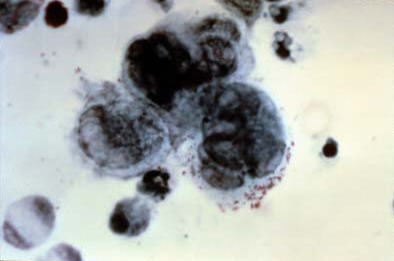
A positive Tzanck test, showing three multinucleated giant cells ("Tzanck cells") in center.
Purposediagnosis of varicella-zoster virus and herpes

In dermatopathology, the Tzanck test, also Tzanck smear, is scraping of an ulcer base to look for Tzanck cells. It is sometimes also called the chickenpox skin test and the herpes skin test. It is a simple, low-cost, and rapid office based test.[1]

Tzanck cells (acantholytic cells) are found in:

Arnault Tzanck did the first cytological examinations in order to diagnose skin diseases.[3] To diagnose pemphigus, he identified acantholytic cells, and to diagnose of herpetic infections he identified multinucleated giant cells and acantholytic cells. He extended his cytologic findings to certain skin tumors as well.

Even though cytological examination can provide rapid and reliable diagnosis for many skin diseases, its use is limited to a few diseases. In endemic regions, Tzanck test is used to diagnose leishmaniasis and leprosy. For other regions, Tzanck test is mainly used to diagnose pemphigus and herpetic infections. Some clinics use biopsies even for herpetic infections.[4] This is because the advantages of this test are not well known, and the main textbooks of dermatopathology do not include dedicated sections for cytology or Tzanck smear.[5] A deep learning model called TzanckNet has been developed to lower the experience barrier needed to use this test.[6]

Procedure

[edit]
  1. Unroof vesicle and scrape base w/ sterile №15 scalpel blade
  2. Smear with cotton stick onto a clean glass slide
  3. Fix w/ gentle heat or air dry
  4. Fix w/ MeOH (Methanol)
  5. Stain w/ Giemsa, methylene blue or Wright’s stain.
  6. Microscopic examination using an oil immersion lens. (Look for multinucleated giant cells)[7]

A modified test can be performed using proprietary agents which requires fewer steps and allows the sample to be fixed quicker.

Cytologic findings

[edit]

For microscopic evaluation, samples are first scanned with low magnification objectives (X4 and X10) and then examined in detail with the high magnification objective (X100). The X4 objectives are used to select the areas to investigate in detail and to detect some ectoparasites, but the basis of the cytological diagnostic process is the X10 objective. With X10 magnification, the individual characteristics of the cells, the relationship of the cells to each other and the presence of some infection and infestation agents are evaluated. For this reason, most of the cytological examination is spent at this magnification, and most samples are diagnosed at this magnification. The key cytological findings that are observed at low magnification or, in other words, should be investigated according to the clinical characteristics of the patient are as follows: acantholytic cells, tadpole cells, granulomatous inflammation, infectious agents and increases in specific cells.

Major indications, cytologic findings and diagnostic value of Tzanck smear test [8]

[edit]
Diseases Cytologic findings Diagnostic value
I. Cutaneous infections
Bacterial infections
Bullous impetigo Dyskeratotic acantholytic cells, abundant neutrophils and clusters of cocci 92% sensitive and 100% specific
Staphylococcal scalded skin syndrome (SSSS) Dyskeratotic acantholytic cells, absence of abundant neutrophils and cocci A Tzanck smear may be a rapid test to distinguish toxic epidermal necrolysis from SSSS
Mycobacterial infections Negative images of mycobacteriae, acid-fast bacilli Maximum acid-fast bacilli positivity (94%) in cases showing caseation necrosis with or without granulomas
Bacillary angiomatosis Clumps of coccobacilli of B Henselae in Warthin-Starry-stained smears
Fungal infections
Dermatophytic infections Hyphae and spores
Candidiasis Pseudohyphae and spores Pseudohyphae and spores in 90% of patients with candida folliculitis
Aspergillosis Septate hyphae with 45-degree angle branching and/or aspergillus heads
Blastomycosis Broad-based budding spores 57.7 - 93% sensitive
Sporotrichosis Spherical, oval or cigar-shaped yeasts and asteroid bodies 84.9% sensitive and 57.9% specific
Viral infections
Herpetic infections Acantholytic cells, multinucleated giant cells and eosinophilic inclusion bodies 53.1 - 86% sensitive and 100% specific
Hand, foot and mouth disease Syncytial nuclei, absence of acantholytic cells1 72% sensitive and 100% specific
Human papillomavirus infections Koilocytes 75% sensitive and 100% specific
Molluscum contagiosum Intracytoplasmic inclusion bodies (“Henderson-Patterson’s bodies”)
Milker’s nodule and orf Intracytoplasmic inclusion bodies (“Guarnieri’s bodies”)
Parasitic infections
Leishmaniasis Ellipsoid-shaped Leishman-Donovan bodie 30 - 82.6% sensitive and 100% specific
Demodicosis More than 5 Demodex mites/cm2 The diagnostic value of cytology for diagnosing Demodex folliculitis is higher than that of histopathology. The sensitivity of histopathology is 60%, whereas that of cytology is 93.3%
Cutaneous amoebiasis Trophozoites of Entamoeba histolytica Direct specimens or PAS and acid phosphatase-stained specimens in cases with doubtful direct specimens show trophozoites of Entamoeba histolytica
II. Immunobullous disorders
Pemphigus Acantholytic cells with direct immunofluorescence positivity With the use of direct immunofluorescence examination, the specificity of cytology for diagnosing pemphigus can be increased from 43% to 100%.
Erythema multiforme, Toxic epidermal necrolysis Apoptotic and necrotic cells, absence of acantholytic cells A Tzanck smear may be a rapid test to distinguish toxic epidermal necrolysis from SSSS
III. Genodermatoses
Hailey-Hailey disease Acantholytic cells without direct immunofluorescence positivity Direct immunofluorescence examination should be made for differentiation from pemphigus.
Darier’s disease Acantholytic cells, corps ronds, grains
IV. Spongiotic dermatitis Presence of more than 10 tadpole cells at x100 magnification
Contact dermatitis Tadpole cells and lymphocytes 83% sensitive and 100% specific
V. Granulomatous diseases Granuloma formation and multinucleated giant cells The main purpose of cytological examination in granulomatous dermatitis is to detect infectious agents. Foreign body materials are very specific for foreign body granuloma.
Granuloma annulare Palisading granuloma and mucin
Necrobiosis lipoidica Palisading granuloma and necrobiotic materials
Foreign-body granuloma Foreign body
Juvenile xanthogranuloma Touton type giant cells and foamy cells
VI. Tumoral lesions
Benign tumoral lesions
Mastocytoma Abundant mast cells Tzanck smear test is useful for rapid diagnosis of mastocytoma in children
Sebaceous hyperplasia Clusters of sebocytes
Seborrheic keratosis Hyperkeratosis and horny cysts 87.5% sensitive and 80.8% specific
Melanocytic nevi Dermal and epidermal type nevoid cells 87.5% sensitive and 100% specific
Eruptive vellus hair cysts Abundant vellus hairs
Malignant tumoral lesions Cellular atypia including mitosis, poikilokaryosis, poikilocytosis, nuclear contour irregularity, prominent nucleoli and nuclear molding
Basal cell carcinoma Clusters of basaloid cells The most common reason to use cytological examination in malignant tumoral diseases is to distinguish basal cell carcinoma from other tumors, such as squamous cell carcinoma and melanoma. Tzanck smear test is 97% sensitivity and 86% specificity for the diagnosis of basal cell carcinoma.
Squamous cell carcinoma Cytologic atypia of keratinocytes
Melanoma Atypical melanocytes
Lymphoma Atypical lymphocytes
Paget’s disease Isolated or clusters of Paget’s cells
Kaposi’s sarcoma Cigar-shaped spindle cells

Tzanck smear examples

[edit]

References

[edit]
[edit]
Revisions and contributorsEdit on WikipediaRead on Wikipedia
from Grokipedia
The Tzanck test, also known as the Tzanck smear, is a rapid cytodiagnostic procedure that involves scraping cells from the base of a , preparing a smear on a glass slide, it (typically with Giemsa or ), and examining it under a light to identify characteristic cellular abnormalities, such as multinucleated giant cells or acantholytic cells, for the presumptive of vesicular, erosive, or bullous dermatoses. Developed in 1947 by Arnault Tzanck, a French dermatologist of Russian origin, the test was initially introduced to distinguish blistering conditions like from viral infections through exfoliative cytology, building on earlier 19th-century cytological techniques but marking its formal application in . Despite the advent of more advanced methods like (PCR) and , the Tzanck test retains value as a simple, cost-effective bedside tool requiring minimal equipment, including a , slide, fixative, stain, and . As of 2024, artificial intelligence applications have been developed to aid in smear interpretation, enhancing accuracy for less experienced users. Clinically, the test is most useful for detecting multinucleated giant cells in infections caused by (HSV) or varicella-zoster virus (VZV), which appear as enlarged with molded nuclei and syncytial formation, and for identifying acantholytic cells—rounded, detached epidermal cells with hyperchromatic nuclei—in autoimmune disorders like or foliaceus. It can also aid in evaluating other conditions, such as bacterial infections or Stevens-Johnson syndrome, though its diagnostic accuracy varies: for example, it shows 86.36% sensitivity and 91.30% specificity for viral infections, 85% sensitivity and 83.33% specificity for , but lower sensitivity (11.11%) for . Limitations include its lack of specificity for differentiating virus types (e.g., HSV-1 vs. HSV-2) or confirming etiology without adjunctive tests like or , making it an initial screening rather than definitive diagnostic method.

Overview

Definition and Purpose

The Tzanck test, also known as the Tzanck smear, is a bedside cytologic diagnostic method that involves gently scraping the base of a fresh vesicle, bulla, or erosive to obtain epithelial cells for microscopic examination after . This technique, named after the French dermatologist Arnault Tzanck who introduced it in 1947, focuses on identifying specific cellular changes in skin samples to aid in the diagnosis of vesiculobullous dermatoses. The primary purpose of the Tzanck test is to provide a rapid, presumptive of infectious and immunobullous conditions, particularly herpesvirus infections such as and varicella-zoster virus, as well as . By detecting hallmark cytologic features like multinucleated giant cells in viral infections or acantholytic cells in autoimmune blistering disorders, it enables clinicians to initiate promptly without awaiting more invasive or time-consuming procedures. This test is especially valuable in resource-limited settings due to its low cost, simplicity, and immediate availability of results. At its core, the Tzanck test exploits the disruption of intercellular bridges (desmosomes) within the , resulting in the separation and rounding of into acantholytic cells that can be visualized under light microscopy following stains such as Wright-Giemsa or May-Grunwald-Giemsa. Unlike a , which requires tissue processing and histopathological analysis, the Tzanck smear is minimally invasive, performed at the point of care, and yields findings within minutes, making it a complementary tool for initial evaluation rather than a definitive diagnostic modality.

Historical Background

The Tzanck test was developed in the 1940s by French dermatologist Arnault Tzanck (1886–1954), who pioneered its use as a straightforward cytologic smear technique for diagnosing cutaneous vesicular and bullous disorders. Initially applied to conditions like , where it identified characteristic acantholytic cells, and herpetic infections, the method allowed for bedside evaluation without complex equipment. Tzanck's innovation built on earlier exfoliative cytology principles but adapted them specifically for dermatologic applications, emphasizing rapid microscopic examination of lesion scrapings. First formally described in a publication, the test gained traction in post-World War II , particularly in resource-constrained environments where it enabled quick presumptive diagnoses of infectious and autoimmune blistering diseases. Its adoption was facilitated by the era's limited access to advanced laboratory facilities, making it a practical tool for clinicians in and beyond during the late and . Over the subsequent decades, the technique was refined for broader use in identifying multinucleated giant cells in and varicella-zoster virus infections, solidifying its role in infectious disease diagnostics. The Tzanck test's prominence waned in the late 20th century with the rise of molecular techniques like (PCR), which offered higher for viral detection, reducing reliance on cytologic smears in well-equipped settings. However, it experienced a revival for point-of-care applications during outbreaks, such as those involving varicella-zoster virus, where its speed and low cost—under one dollar per test with results in under an hour—proved invaluable in low-tech or field conditions. Recent developments as of 2023 include modified Tzanck smear techniques for improved evaluation of and other lesions, alongside ongoing research trends highlighted in bibliometric analyses through 2023 and applications noted in 2025 dermatology congresses. Today, while no longer a first-line method in high-resource areas, it remains valued in for accessible diagnostics in underserved regions. The test's legacy extends to influencing subsequent cytologic approaches in , including adaptations with stains like Giemsa for enhanced visualization of cellular details in parasitic and infectious lesions. These variants have perpetuated Tzanck's emphasis on minimally invasive, immediate analysis, contributing to ongoing refinements in scrape cytology for pathologies.

Procedure

Sample Collection

The Tzanck test requires collection of a specimen from an intact vesicle, bulla, or on the skin or mucosa to obtain and basal cells for cytologic examination. Patient preparation involves selecting an early , ideally 24 to 72 hours old, to ensure optimal yield of viable cells, while avoiding crusted or healed areas that may yield degraded material. The selected site is gently cleaned with an alcohol swab to minimize from surface or . The collection technique begins by unroofing the vesicle or bulla using a sterile or blunt to access the base without causing excessive . The fluid is swabbed if present, and the base is then gently scraped with a sterile or edge to collect cellular material, ensuring minimal trauma to preserve cell morphology. Additionally, the undersurface of the roof may be gently scraped to collect further exfoliated cells. For erosive lesions, scraping targets the advancing border or floor to gather exfoliated cells. Safety protocols include wearing sterile gloves during the procedure to protect against infectious agents, such as , and treating the specimen as a biohazard with appropriate disposal in a sealed container.

Smear Preparation and Staining

The Tzanck test smear is prepared by transferring the scraped material from the base of a fresh vesicle or onto a clean glass slide using a or , ensuring the sample is spread thinly in a single layer to prevent cell overlapping and facilitate microscopic examination. The slide is then air-dried or immediately fixed by gentle heating over a for approximately 10 seconds until warm, or by applying a chemical fixative such as or formol-Zenker solution to preserve cellular morphology and avoid artifacts. Staining is typically performed using Wright-Giemsa or May-Grünwald-Giemsa methods, where the diluted stain (e.g., Giemsa at 1:10 with ) is applied to cover the smear for 5-15 minutes to differentially highlight nuclear and cytoplasmic details. Alternative stains include Papanicolaou for enhanced morphological visualization or rapid options like Hemacolor or , which require only about 1 minute of application followed by a rinse. After staining, the slide is gently rinsed under running , allowed to air-dry, and optionally covered with immersion oil for immediate viewing. The entire preparation and process generally takes 15-30 minutes, requiring no specialized equipment beyond a standard light microscope. Quality control involves using fingerprint-free slides labeled with patient details, ensuring even sample distribution without thick clumps, and discarding preparations that appear clotted, contaminated with blood, or overly crusted to maintain diagnostic reliability.

Interpretation

Characteristic Cytologic Findings

The characteristic cytologic findings in a positive Tzanck test smear for or varicella-zoster virus infections include multinucleated giant cells, known as Tzanck cells, which exhibit syncytial formation with multiple molded nuclei, often displaying margination of and intranuclear Cowdry type A inclusions. These giant cells also demonstrate , where appear enlarged and inflated due to viral cytopathic effects. In contrast, smears from lesions reveal cells, which are rounded basal resulting from loss of desmosomal attachments, sometimes appearing in clustered views reminiscent of a "row of tombstones." Benign or normal smears typically contain only single, non-multinucleated without viral alterations or acantholysis, while abnormal infectious smears highlight these distinctive viral cytopathic effects such as ballooning and syncytia. These features are best visualized under at 40× to 100× with , where Giemsa or Wright-Giemsa staining enhances nuclear details and inclusion visibility.

Diagnostic Criteria and Value

The Tzanck test is interpreted as positive for herpetic infections, such as or varicella-zoster virus, when multinucleated giant cells exhibiting intranuclear inclusions are identified in the cytologic smear. For , positivity is established by the presence of acantholytic cells, characterized by rounded with prominent nuclei and perinuclear halos. A negative result typically shows only nonspecific inflammatory cells, such as neutrophils or lymphocytes, without these hallmark cytologic features. The test demonstrates variable sensitivity (typically 60-90% depending on the lesion type and stage) for detecting and varicella-zoster infections in vesicular lesions. Specificity exceeds 90% when performed by experienced cytologists, but the test lacks the ability to differentiate between and varicella-zoster virus types, limiting its precision in that regard. As a bedside procedure, the Tzanck test offers rapid turnaround with results available in minutes, making it valuable for immediate clinical decision-making, and it is highly cost-effective at less than $5 per test. Its utility shines in outbreak scenarios for quick screening and , but it functions best as an adjunct to confirmatory tests like or rather than as a standalone diagnostic method. False positives may arise from mimics, including where intracytoplasmic can resemble acantholytic or multinucleated cells, or healing wounds featuring regenerative epithelial changes that simulate viral cytopathic effects. False negatives are frequent in early lesions before cytopathic changes develop or in late, crusted lesions where viable cells are scarce.

Clinical Applications

Major Indications

The Tzanck test is primarily indicated for the rapid diagnosis of herpes infections, including (HSV) causing oral or genital lesions and varicella-zoster virus (VZV) responsible for or , particularly when vesicular lesions are present. It provides quick confirmation of multinucleated giant cells characteristic of these viral etiologies, aiding in immediate and antiviral therapy initiation. In autoimmune blistering disorders, the test is recommended for to confirm in erosions or bullae, where rounded acantholytic cells are a hallmark finding. This application is valuable in distinguishing intraepidermal from other blistering conditions. Other indications include suspected hand-foot-and-mouth disease, where the test helps exclude herpetic involvement in vesicular or ulcerative lesions, and disseminated zoster in immunocompromised patients, facilitating prompt identification of widespread VZV infection. Rare uses encompass , typically to rule out concurrent herpetic co-infection in genital ulcers, and , where yeast forms may be visualized in mucosal scrapings. The test is particularly useful in or tropical settings for acute vesicular rashes requiring rapid bedside evaluation, especially in resource-limited environments where advanced diagnostics are unavailable. It offers high utility in herpetic infections due to its simplicity and speed.

Limitations and Comparisons

The Tzanck test is operator-dependent, requiring skilled preparation of the smear and accurate cytologic interpretation to identify characteristic multinucleated giant cells, which can lead to variability in results among practitioners. It exhibits low sensitivity in atypical presentations, such as early-stage or partially healed lesions where viral cytopathic effects may not yet be prominent. Additionally, the test cannot differentiate between types 1 and 2 or varicella-zoster virus infections, necessitating confirmatory molecular testing for specific viral identification. In high-resource settings, it is considered obsolete due to the availability of more precise diagnostics, limiting its routine application. False-negative results occur in 20-30% of cases involving small or crusted lesions, as the limited cellular yield reduces the detection of diagnostic cells. Conditions like can complicate interpretation, as the widespread erosions may yield atypical smears that mimic or obscure herpetic changes, leading to diagnostic confusion. Compared to (PCR), the gold standard with over 95% , the Tzanck test shows lower sensitivity (typically 60-80%) and requires immediate processing but offers bedside results without specialized equipment. Viral culture provides high specificity but is slower (days for results) and less sensitive than PCR, while direct fluorescent (DFA) is faster and more specific than Tzanck (sensitivity around 60-90% for viruses) yet demands . The Tzanck test remains preferred for rapid, point-of-care evaluation in low-income areas due to its low cost and simplicity. As of , the Tzanck test's use is declining with the rise of point-of-care PCR assays, which provide rapid, highly accurate viral detection even in settings. However, it retains relevance in resource-poor environments, where it is endorsed in guidelines for initial assessment of suspected herpetic lesions when advanced testing is unavailable.

References

Add your contribution
Related Hubs
User Avatar
No comments yet.