Hubbry Logo
Unity ChurchUnity ChurchMain
Open search
Unity Church
Community hub
Unity Church
logo
8 pages, 0 posts
0 subscribers
Be the first to start a discussion here.
Unity Church
Unity Church
from Wikipedia
Unity Spiritual Movement
Unity Village
Unity Village
ClassificationUnity (new religious movement)
OrientationNew Thought Christianity
CEORev. Jim Blake
HeadquartersUnity Village, Missouri
FounderCharles and Myrtle Fillmore
Origin1889
Kansas City, Missouri, United States
Official websitewww.unity.org Edit this at Wikidata

Unity is a spiritual organization founded by Charles and Myrtle Fillmore in 1889. It grew out of Transcendentalism and became part of the New Thought movement.[1] Unity may be best known for its Daily Word devotional publication begun in 1924. Originally based in Christianity with emphasis on the Bible, Unity has said it is a "Christian movement that emphasizes affirmative prayer and education as a path to spirituality," and says about itself, "We honor all spiritual practices and the diversity of paths leading to enlightenment."[2]

Overview

[edit]
Unity School of Christianity

Unity describes itself as a global, inclusive, spiritual community, offering practical tools and uplifting resources to help people of all faiths apply positive spiritual principles in their daily lives. Unity welcomes all people regardless of race, color, gender, age, creed, religion, national origin, ethnicity, physical disability, or sexual orientation.[3][4][5][6][7]

Unity describes itself as having no particular creed, set dogma, or required ritual.[8] It maintains that there is good in every approach to God and holds that one should focus on the potential good in all—that the essence of every human is divine regardless of current behavior.

Unity emphasizes healing by spiritual means, but it does not reject or resist medical treatments.[9]

Unity is the largest group connected with the New Thought movement, and the only one to maintain a significant Christian identity.[10]

History

[edit]

The Unity School of Christianity was founded in Kansas City, Missouri, in 1889 by Charles Fillmore (1854–1948) and Myrtle Fillmore (1845–1931) after Mrs. Fillmore had been cured of her tuberculosis, she believed, by spiritual healing. To learn more about spiritual principles, the Fillmores studied the teachings of world religions and the links between science and religion. They were influenced by Dr. E. B. Weeks, Ralph Waldo Emerson, Emma Curtis Hopkins and Mary Baker Eddy (the founder of Christian Science).

Although the Unity School of Christianity was not incorporated until 1914, the Fillmores began publishing their first magazine, Modern Thought, in April 1889. Later magazines included Wee Wisdom (for children) and Daily Word. In 1891, the Fillmores named the movement Unity and began publishing in 1903 with Lessons in Truth by H. Emilie Cady. In 1906, Mr. and Mrs. Fillmore accepted ordination and ordained seven other ministers.[11][12]

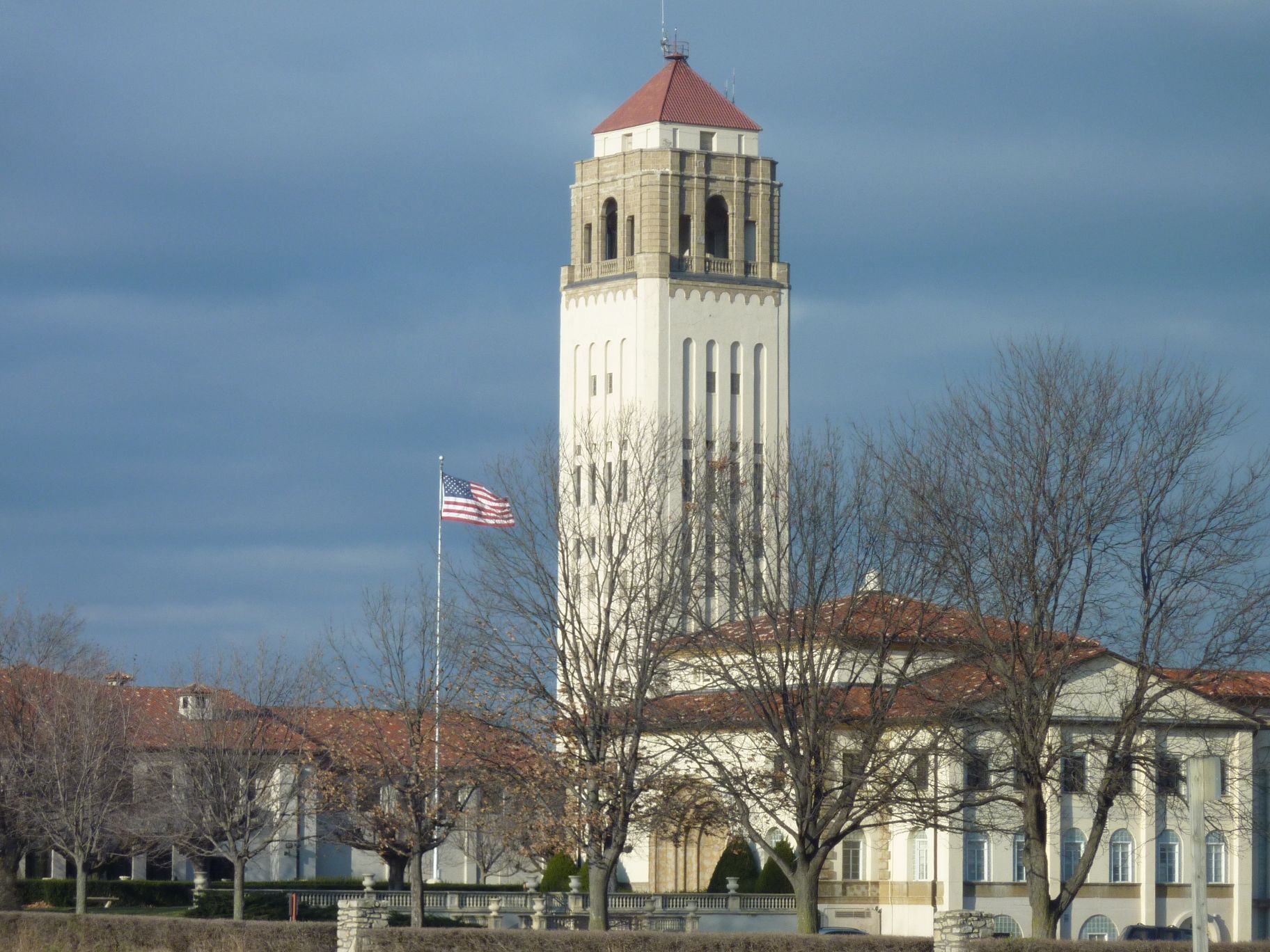
After World War I, Unity Village, which became a 1,200-acre incorporated town, was developed 15 miles southeast of Kansas City, beginning with the purchase of a farm. Originally a weekend getaway for the Fillmores' downtown employees, Unity Village is now the headquarters for the prayer and publishing work of the Unity spiritual movement.

After Charles Fillmore's death, the Fillmores’ sons and grandchildren initially led the movement.[9] Great-granddaughter Connie Fillmore stepped down as president in 2001. Governance was then converted to a CEO and board composed of Unity ministers and outside business people.

The mission of Unity World Headquarters is to help and serve through prayer, publishing, and community. Unity World Headquarters offers resources to people of all faiths, including magazines, booklets, videos, books, meditations, retreats, and events.

The Unity Prayer Ministry, also known as Silent Unity, has continuously prayed with people of all faiths worldwide for more than a century. Prayer associates respond to over 1 million prayer requests yearly by letter, phone, email, and social media.

Organization

[edit]

Individual Unity churches are autonomous, each governed by its own board and minister. Minister training, ministerial placement, and educational resources are supported by Unity Worldwide Ministries, a separate nonprofit organization that leases office space at Unity Village from Unity World Headquarters.[citation needed]

In 2010, there were 594 Unity churches in the United States.[13] Unity Worldwide Ministries counts 650 churches and 1,700 licensed and ordained leaders worldwide.

Basic teachings

[edit]

The five basic ideas of Unity teachings reflect the universal spiritual principles taught in most of the world's religions.

  1. God is everywhere and always present in every circumstance. This divine energy underlies and animates all of existence.
  2. Human beings are innately good because they are connected to and an expression of Spirit.
  3. Our thoughts have creative power to influence events and determine our experiences.
  4. Prayer and meditation connect and align us to our own spiritual nature and to God.
  5. It is not enough to understand spiritual teachings. We must apply our learning in all areas of life, incorporating them into our thoughts, words, and actions.

Unity teaches that each person is a unique expression of God and is sacred and worthy. It emphasizes the creative power of thought and encourages choosing life-affirming thoughts, words, and actions in order to experience a more fulfilling and abundant life.

God

[edit]

Unity views God as spiritual energy that is present everywhere and is available to all people. According to Unity co-founder Charles Fillmore: “God is not a person who has set creation in motion and gone away and left it to run down like a clock. God is Spirit, infinite Mind, the immanent force and intelligence everywhere manifest in nature. God is the silent voice that speaks into visibility all the life there is.”

Jesus

[edit]

Unity teaches the divinity of Jesus and of all human beings. They consider him an “elder brother” or “wayshower” whose life demonstrated what is possible when we live from our innate spiritual nature or divine consciousness.

Nature of humanity

[edit]

Unity teaches that all people are individual, eternal expressions of God, and their essential nature is divine and therefore inherently good. Followers believe their purpose in life is to express their divine potential as demonstrated by Jesus, and that the more they awaken to their divine nature, the more they can do this.

Bible

[edit]

Unity founders Charles and Myrtle Fillmore interpreted the Bible as a metaphysical representation of each soul’s evolutionary journey toward spiritual awakening. Unity considers the Bible its primary spiritual resource, a complex collection of writings compiled over many centuries and a reflection of the comprehension and inspiration of the writers and their times.

Affirmative prayer

[edit]

Affirmative prayer is understood in Unity as the highest form of creative thought. It includes the release of negative thoughts and holding in mind statements of spiritual truth. Unity teaches the use of meditation and prayer as a way to experience the presence of God, heighten the awareness of truth, and thereby transform a person's life. Prayer is believed valuable not because it alters the circumstances and conditions of a person's life but because it alters the person.

Relationship to Christianity

[edit]

Unlike other New Thought groups, Unity emphasizes its agreements, not differences, with traditional Christians and[6][14] stresses its concurrence with the teachings of Jesus, the influence of the Holy Spirit, and the Bible.[15][16][17][18][19][20] According to Unity co-founder Charles Fillmore:

It has been generally accepted that Jesus' great works were miracles and that the power to do miracles was delegated to His immediate followers only. In recent years many of Jesus' followers have inquired into His healing methods, and they have found that healing is based on universal mental and spiritual laws which anyone can utilize who will comply with the conditions involved in these laws.[21]

Unity considers itself a non-sectarian educational institution, although Unity ministers are ordained following their prescribed courses and training.[6]

Notable members

[edit]

See also

[edit]

References

[edit]

Further reading

[edit]
[edit]
Revisions and contributorsEdit on WikipediaRead on Wikipedia
from Grokipedia
Unity, a global spiritual movement and positive thinking now operating as a unified organization under Unity World Headquarters following the November 2025 acquisition of Unity Worldwide Ministries, was founded in 1889 by Charles and in . It emphasizes practical spirituality, teaching that divine intelligence is everywhere present, that humans are inherently good and connected to this divine source, and that and positive thought can transform personal experiences and foster healing, prosperity, and . Rooted in the tradition, Unity draws inspiration from the teachings of Jesus Christ while incorporating universal truths from various to promote interfaith understanding and personal empowerment. The origins of Unity trace back to Myrtle Fillmore's personal healing from tuberculosis in the 1880s through the application of New Thought principles, including daily affirmations and prayer, which inspired the couple to share these ideas through classes and publications. Starting as small prayer circles and a magazine called Modern Thought in 1889, the movement expanded rapidly, leading to the establishment of Unity Inn (a vegetarian restaurant) in 1906 and the relocation to a 1,200-acre campus at Unity Village, Missouri, in 1929. By the mid-20th century, under the leadership of their sons, Unity had grown into an international organization with affiliated churches, study groups, and ministries focused on prayer support and spiritual education. At its core, Unity's teachings are encapsulated in five basic principles that guide its members: (1) is everywhere and always present in every circumstance. This divine energy underlies and animates all of existence; (2) Human beings are innately good because they are connected to and an expression of Spirit; (3) Our thoughts have creative power to influence events and determine our experiences; (4) and connect and align us to our own spiritual nature within ; and (5) It is not enough to understand spiritual teachings. We must apply our learning in all areas of life, incorporating them into our thoughts, words, and actions. Unity views the as a metaphysical text offering wisdom rather than literal , interprets as a wayshower demonstrating humanity's divine potential, and promotes practices like (often called "spiritual mind treatment") over traditional intercessory . Today, with over 600 churches and groups worldwide, Unity continues to serve through its 24/7 ministry Silent Unity—operational since 1890—and publications like Daily Word, reaching millions seeking spiritual growth and practical guidance, following the November 2025 unification of its ministries under Unity World Headquarters.

Origins and History

Founding and Early Influences

The Unity Church was founded in 1889 in , by Charles Fillmore (1854–1948), a , and his wife, (1845–1931), following Myrtle's remarkable healing from chronic health issues through prayer. Myrtle had been diagnosed with in her youth and suffered from additional ailments, including and spinal problems, which left her bedridden and convinced she would die young. In 1886, while attending a New Thought lecture series by E. B. Weeks, Myrtle adopted the affirmative prayer statement, "I am a ; therefore I do not inherit sickness," which she repeated daily and credited with her complete recovery within two years. This personal transformation inspired the couple to share their experiences, marking the inception of Unity as a practical spiritual movement focused on healing and positive thinking. The early development of Unity drew from several key influences within the broader tradition and American metaphysical thought. Charles and Myrtle Fillmore were students of , a prominent New Thought teacher known as the "Teacher of Teachers," who emphasized mental healing and divine science, shaping their approach to . Their ideas were also rooted in Phineas Quimby's pioneering work on mental healing in the mid-19th century, which posited that illness stems from erroneous beliefs and can be cured through the power of the mind aligned with truth. Additionally, the Fillmores were inspired by , particularly the writings of , whose essays on , the divine within humanity, and the unity of nature and spirit resonated deeply with their emerging philosophy. Myrtle's own experiences with illness played a central role in refining these concepts, as she began articulating ideas of innate divine health and the rejection of inherited limitations, which became foundational to Unity's teachings. To disseminate their insights, the Fillmores launched Modern Thought magazine in 1889 from Charles's office, which evolved into Unity Magazine and served as a primary vehicle for sharing articles on , , and metaphysical principles. That same year, they hosted the first informal group meetings in their Kansas City home on Elmwood Avenue, where small gatherings focused on and mutual support for and spiritual growth. These home-based sessions, initially involving friends and neighbors, laid the groundwork for Unity's emphasis on communal practices and marked the movement's transition from personal revelation to organized outreach in its formative years.

Key Milestones and Expansion

In 1914, Charles and Myrtle Fillmore incorporated the Unity School of Christianity in Kansas City, Missouri, formalizing the organization's structure for publishing, education, and prayer ministries, with operations centered in the greater Kansas City area near Independence. This milestone enabled centralized administration amid rising demand for Unity materials. By 1919, the school acquired its first 58 acres of land near Lee's Summit in Jackson County, east of Independence, laying the foundation for a dedicated headquarters. Named Unity Farm in 1920 after additional purchases expanded the property to nearly 1,500 acres, the site symbolized the movement's commitment to self-sustaining community living. Construction of core facilities, including the Silent Unity prayer center and Unity Inn, commenced in 1927, establishing Unity Farm as the enduring global headquarters despite economic challenges ahead. The property was officially renamed Unity Village in 1953 upon its incorporation as a township. The late 1920s marked further institutional advancements, including the 1929 completion of the Education Building at Unity Farm, which housed the Unity School of Christianity's ministerial training program. This initiative trained leaders for emerging Unity centers, with formal classes beginning in 1931. Concurrently, Unity's publications proliferated; Daily Word, launched in 1924 as a monthly devotional containing daily messages, was renamed from Unity Daily Word in 1939, reaching hundreds of thousands of subscribers and serving as a primary for global . During the of the 1930s, Unity emphasized teachings to address widespread economic distress, exemplified by Charles Fillmore's 1936 book , which framed abundance as a spiritual principle accessible through affirmative thought and . These messages resonated, sustaining Unity's operations even as broader construction at Unity Farm halted temporarily due to financial constraints. Post-World War II, Unity experienced robust expansion, with building projects resuming at Unity Village in 1947, including relocation of the printing department to support surging demand for literature. Membership in affiliated centers grew steadily through the , fueled by innovative media like the 1956 debut of Unity's first television program. International outreach accelerated during this decade, building on post-war ministry affiliates—such as the 1946 Silent Unity center in —and extending through translated publications and correspondence to regions in , , and beyond. By 1966, to bolster this network of over 500 affiliated churches, the Association of Unity Churches was established as an independent nonprofit, providing ministerial support, licensing, and resources; it later rebranded as Unity Worldwide Ministries in 2011. The founders' emphasis on practical metaphysics underpinned this era of growth, enabling Unity to adapt and proliferate amid cultural shifts.

Core Beliefs and Teachings

Concept of God

In Unity teachings, is conceptualized as the divine Mind, an infinite intelligence that serves as the Principle of Good and the source of all creation. This understanding posits as omnipresent, expressing itself through every aspect of the and inherently embodying qualities such as love, truth, wisdom, and abundance. As articulated in Unity's first foundational principle, " is the source and creator of all. There is no other enduring power. is good and present everywhere." Co-founder Charles Fillmore emphasized this by stating, " is the original Mind in which all real ideas exist," portraying not as a distant entity but as the universal life force animating all existence. Unity explicitly rejects anthropomorphic interpretations of God, viewing such depictions as limiting human projections rather than accurate representations of divine reality. Instead, God is understood as an impersonal, omnipotent that permeates and sustains creation without human-like attributes or separation from it. Fillmore clarified this distinction: "God is not a person who has set creation in motion and gone away and left it. God is the omnipresent, omniscient, omnipotent , forever expressing as man and the ." This metaphysical perspective aligns with Unity's emphasis on God as absolute good, the origin of all positive attributes, and the underlying that counters notions of or duality. Central to this concept is the idea that God's infinite nature manifests in human potential through the Twelve Powers, which are innate faculties representing divine attributes. Identified by as wisdom, love, strength, faith, imagination, order, understanding, will, power, zeal, release, and life, these powers serve as channels for God's expression within individuals, enabling spiritual growth and alignment with universal good. By activating these powers, practitioners connect personally with the divine Mind, recognizing the of in their own and creative capacities. This framework briefly informs Unity's portrayal of as the ultimate demonstrator of these unified powers in human form.

Role of Jesus Christ

In Unity teachings, Jesus is regarded as a who fully realized and demonstrated , serving as an exemplar of the divine potential accessible to every individual. This realization represents the complete alignment of human with the indwelling divine presence, which achieved through surrender and , thereby modeling the path for others to attain similar enlightenment. Unity maintains a clear distinction between "," the human individual born in , and "Christ," the universal divine idea or eternal principle of incarnated within him. embodied the Christ as the perfect expression of 's infinite nature, but this embodiment is not unique to him; rather, it illustrates the Christ potential latent in all people as spiritual beings with an inherent spark of . The term " Christ" thus signifies the union of his human life with this divine realization, emphasizing his role as a way-shower rather than an exclusive savior. Central to Unity's view of Jesus' role are his teachings, particularly those in the Sermon on the Mount (Matthew 5–7), which are interpreted as practical metaphysics offering tools for prosperity, healing, and harmonious living. For instance, Jesus' instruction in Matthew 7:2—"with the measure you use, it will be measured to you"—is seen as a metaphysical principle of reciprocity, encouraging generous service without fear of depletion by drawing from God's infinite source of good. Similarly, the Beatitudes and exhortations to non-judgment promote inner alignment with divine energy, fostering physical and emotional healing as well as material abundance through affirmative thought and action. These teachings underscore Jesus' function as a guide for applying spiritual truths to everyday challenges, enabling individuals to manifest their divine potential.

Human Nature and Divine Potential

In Unity teachings, human beings are viewed as eternal spiritual beings temporarily embodied in physical form, engaging in a experience to express their divine essence. This perspective emphasizes that individuals are not flawed entities seeking to become spiritual but rather inherently whole expressions of the Divine, with the capacity to manifest God's qualities in daily life. Central to this optimistic is the rejection of the doctrine of , which Unity regards as incompatible with the inherent goodness of humanity. Instead, humans are seen as innately good, directly connected to and an expression of Spirit, free from any inherited moral corruption. Difficulties and limitations in life stem not from an evil nature but from negative thought patterns and misaligned that obscure one's true divine identity. Unity promotes as the process of awakening to this innate , fostering unlimited potential for personal and spiritual growth through the recognition and affirmation of divine qualities such as , , and strength. This includes cultivating a prosperity , where individuals align their thoughts with the eternal flow of abundance from Spirit, allowing positive affirmations to dissolve doubts and unlock creative power to shape fulfilling experiences. serves as the ultimate exemplar of this human-divine potential fully realized.

Interpretation of the Bible

In Unity teachings, the is regarded as a metaphysical that uses allegorical and language to convey inner spiritual truths rather than literal historical accounts. Stories and events are interpreted as representations of the soul's evolutionary journey toward divine realization, emphasizing psychological and spiritual principles over factual chronology. This approach, rooted in the tradition, views the scriptures as a guide for understanding human consciousness and its alignment with divine ideas. A prominent example is the narrative in Genesis, which symbolizes a primordial state of unified consciousness and oneness with the divine, prior to the illusion of separation caused by material identification. Metaphysically, represent faculties of mind—such as will and discrimination—while the expulsion from the garden illustrates the descent into dualistic thinking and the human experience of limitation, ultimately pointing to the potential for spiritual return through inner awakening. This interpretation underscores the Bible's role in mapping states of awareness rather than recounting physical events. To uncover these deeper meanings, Unity practitioners employ concordances and study of original Hebrew and Greek terms to reveal correspondences between biblical symbols and universal divine principles. The Metaphysical Bible Dictionary, compiled by Unity co-founder Charles Fillmore, systematically analyzes names, places, and concepts by tracing etymological roots in ancient languages, associating them with metaphysical ideas like prosperity (from Hebrew terms for abundance) or faith (from Greek notions of inner conviction). This method highlights hidden spiritual dynamics, such as the divine ideas embedded in scriptural metaphors. Unity integrates these biblical principles with insights from modern and to apply them practically in daily life, viewing the scriptures as a framework for understanding through concepts like quantum interconnectedness or reprogramming. For instance, parables are seen as psychological tools for transforming thought patterns, aligning ancient wisdom with empirical knowledge to foster holistic . This synthesis positions the not as but as a dynamic resource for personal and collective evolution.

Affirmative Prayer and Metaphysical Practices

Affirmative prayer, also known as "scientific prayer" in Unity teachings, is a core spiritual discipline that involves making positive declarations in the to align one's with , rather than petitioning or begging a distant for intervention. This method emphasizes the inherent oneness with , affirming that good is already present and manifesting through and mental focus, as opposed to traditional supplicatory . Unity's structured approach to affirmative prayer follows a five-step process designed to shift the practitioner from limitation to spiritual realization. The first step, relaxation, involves deep breathing to release physical tension and quiet the mind, creating an inner stillness receptive to divine presence. Next, concentration focuses on recognizing God as the omnipresent source of life, love, wisdom, and good, unifying the self with this universal power. The third step, meditation, quiets external thoughts to allow intuitive guidance from Spirit to emerge, often through silent contemplation. In realization, the practitioner vividly affirms the desired truth—such as health, harmony, or abundance—as already fulfilled, employing visualization to mentally picture the outcome with conviction. Finally, appreciation or thanksgiving expresses gratitude for the manifestation as if it has occurred, reinforcing the prayer's energy and releasing it to the divine flow. Complementing affirmative prayer, Unity's metaphysical healing practices utilize denial and visualization to address physical, emotional, or relational discord. Denial entails mentally rejecting negative appearances or limiting beliefs—such as illness or lack—as illusions contrary to spiritual reality, clearing mental space for truth to emerge; for example, one might deny "I am sick" by affirming "Divine health is my true nature." Visualization then builds on this by creating clear mental images of wholeness and prosperity, harnessing the creative power of thought to draw corresponding experiences into manifestation. These practices, rooted in the belief that thoughts shape reality, support healing by aligning the subconscious with divine potential.

Organizational Structure and Practices

Governance and Leadership

The Unity movement operates under a decentralized model, where individual congregations maintain in their operations, finances, and decision-making, while receiving supportive resources from the central organization. Following the acquisition of Unity Worldwide Ministries by Unity World Headquarters on November 5, 2025, the organizations unified, with the former UWM Board sunsetted and two members joining the UWH Board. Unity World Headquarters, located at Unity Village near , serves as the spiritual and administrative hub, offering materials such as publications, prayer support, and educational programs without exerting direct control over local ministries. This structure fosters innovation and local of Unity principles, ensuring that each community tailors its practices to its unique context. Leadership within Unity encompasses ordained ministers, licensed Unity teachers, and oversight by the Unity World Headquarters Board of Trustees. The Board, comprising twelve members including seven field ministers and both elected and appointed leaders, sets organizational policies, ensures ethical standards, and promotes the movement's global mission, with responsibilities including financial oversight and approvals. Ordained Unity ministers, credentialed through a rigorous process, lead local congregations, facilitate , and guide spiritual growth, embodying Unity's emphasis on and metaphysical teachings. Licensed Unity teachers, sponsored by an ordained minister, specialize in and community instruction on core principles, often serving in supportive roles within ministries to deepen members' understanding without formal pastoral authority. Ministerial training occurs primarily through the Unity Worldwide Spiritual Institute's Ministerial and Religious Studies program, a two-year cohort-based curriculum that prepares individuals for ordination or licensing by integrating online learning, residencies, and practical application of Unity teachings. This program, evolved from the educational initiatives of the former Unity School of Christianity, prioritizes non-dogmatic leadership that encourages personal spiritual exploration over rigid doctrine, equipping leaders to serve diverse communities with inclusivity and empowerment. Graduates emerge with skills in teaching, counseling, and ministry management, reflecting Unity's commitment to accessible, transformative spiritual guidance.

Worship, Education, and Community Engagement

Worship services in Unity churches typically occur on Sundays and emphasize spiritual upliftment through a structured format that includes uplifting music, guided , , and a lesson or talk focused on practical spiritual principles such as , , and . These elements create an inclusive atmosphere designed to inspire participants and foster a sense of connection to divine potential. Music plays a central role, often featuring inspirational songs and hymns that encourage positive affirmation and communal . Educational programs within Unity communities extend beyond worship to provide ongoing spiritual development for all ages. Sunday schools, such as programs like Kids of Unity (K.O.U.), offer age-appropriate lessons on Unity's core principles, including simplified teachings on prayer and abundance, held concurrently with adult services to nurture family involvement. Adult education includes classes on topics like prosperity and healing, such as the "Prosperity Plus" course, which explores spiritual laws of abundance through practical exercises and affirmations to overcome limiting beliefs. A key publication supporting these efforts is Daily Word, a devotional magazine launched on July 1, 1924, that provides daily inspirational messages and has become a foundational resource for personal study and growth. Community engagement in Unity is exemplified by dedicated prayer ministries and outreach efforts that promote healing and unity across diverse groups. Silent Unity, established in 1890 as one of the oldest continuous prayer ministries, operates 24 hours a day, offering prayer support to individuals worldwide via phone, email, and mail, with requests handled confidentially by trained chaplains. Additionally, Unity fosters interfaith dialogues through inclusive initiatives, such as community events and resources that encourage understanding among different spiritual traditions, as seen in sponsored series like the Promoting Interfaith Understanding program. These activities strengthen local congregations by building bridges of cooperation and shared spiritual exploration.

Relationship to Broader Movements

Position Within Christianity

Unity Church self-identifies as a form of positive, practical that centers on the teachings of Christ as a way of life, emphasizing spiritual principles applicable to daily living without adherence to formal creeds, dogmas, or required rituals such as sacraments. This approach positions Unity as an inclusive spiritual movement that draws from example of love, , and divine potential, while honoring universal truths found in various religious traditions. Unity diverges significantly from traditional Christian in several key areas. It rejects the doctrine of the , viewing as a singular, omnipresent of good rather than three distinct persons, and interprets as a exemplar of divine expression rather than the unique of . Additionally, Unity denies the concept of eternal or , teaching instead that such ideas represent states of created by negative thoughts, with no eternal punishment after . Rather than salvation through faith alone, Unity stresses the practical application of , positive thinking, and metaphysical practices to align one's mind with divine , thereby co-creating harmonious experiences in life. Within broader , Unity has found acceptance among some progressive and groups through its ecumenical approach that promotes and Christian unity across denominations. However, it faces sharp from evangelical , who classify it as non-Christian due to its metaphysical elements, rejection of core orthodox doctrines like the and , and perceived with philosophies that prioritize human potential over .

Ties to the New Thought Movement

The Unity movement emerged in the late 19th century as part of the broader tradition, a spiritual and philosophical current that emphasized the power of the mind to influence reality and promote healing. This movement drew heavily from , particularly the ideas of , whose writings on , the divine within humanity, and the unity of nature and spirit profoundly shaped early New Thought thinkers, including Unity's founders, Charles and . The Fillmores encountered Emerson's transcendental philosophy through publications and lectures, which reinforced their belief in the inherent divinity and potential of the individual, forming a foundational influence on Unity's development as a positive-thinking spiritual path. While distinct from , Unity was also indirectly influenced by Mary Baker Eddy's contributions to , particularly her advocacy for mental healing and the idea that thought shapes physical experience, concepts rooted in the mesmerism and mind-cure practices of . Eddy, who founded in the 1870s, popularized the notion of mind-over-matter in spiritual healing, which resonated within circles and informed Unity's emphasis on for wellness. However, Unity differentiated itself by centering these principles on Christ as a way-shower for , rather than Eddy's more metaphysical reinterpretation of Christian doctrine. Shared tenets, such as the law of attraction—where positive thoughts attract positive outcomes—and the rejection of material limitations through mental discipline, remain core to Unity's teachings, though adapted to a Christ-focused framework. Unity's ties to New Thought were formalized through active participation in collaborative organizations, notably the International New Thought Alliance (INTA), founded in 1916 to unite diverse groups under common principles of spiritual enlightenment and mental healing. The Fillmores and early Unity leaders attended precursor conventions, such as the 1915 New Thought Congress in , contributing to the alliance's formation and its adoption of a "Declaration of Principles" that affirmed the unity of God and humanity, the transformative power of thought, and healing through divine mind. Unity remained a key member of INTA until 1922, when it withdrew to focus on its independent growth, yet continued to influence and draw from the broader movement's evolution.

Notable Figures and Legacy

Founders and Pioneering Leaders

Charles Fillmore, born on August 22, 1854, in , pursued a varied career in business before immersing himself in metaphysics. Growing up in the rugged Midwest, he held numerous jobs, including as a printer's apprentice and in mining, before settling in , where he worked as a and established a printing business. In 1881, he married Mary Caroline "Myrtle" Page, born August 6, 1845, in Pagetown, Ohio, who had suffered from chronic illnesses such as tuberculosis and malaria since childhood. Inspired by a New Thought lecture in 1886, Myrtle applied to heal herself, prompting Charles to join her in studying the and metaphysical principles, leading them to found the Unity movement in Kansas City in 1889. Myrtle Fillmore played a pivotal role in emphasizing prayer healing and empowering women's spiritual roles within Unity. As the emotional core of the movement, she focused on practical applications of , sharing her personal healing testimony to inspire others and contributing writings that highlighted themes of divine potential and inner transformation. Her efforts helped shape Unity's emphasis on accessible spiritual practices for women, fostering a sense of community and self-empowerment. Myrtle passed away on October 6, 1931, at age 86, leaving a legacy of compassionate leadership. Charles Fillmore, often regarded as the intellectual architect of Unity, authored numerous books that articulated its metaphysical teachings, including Talks on Truth and The Twelve Powers of Man (1930), which explored the spiritual faculties within human consciousness. His transition from business to full-time metaphysical study in 1889 marked a dedication to disseminating Unity's principles through writings and classes. Among early pioneers, H. Emilie Cady, a homeopathic physician born in 1848, significantly influenced Unity through her foundational text Lessons in Truth (1896), a series of twelve lessons on practical that introduced core concepts like the power of thought and denial of error. Commissioned by the Fillmores for in Unity publications, Cady's work became Unity's first major , translated into multiple languages and distributed widely to establish doctrinal clarity. Early ministers, including the Fillmores themselves, further advanced the movement by launching key publications such as Modern Thought magazine in 1889 and Unity in 1891, which served as vehicles for spreading metaphysical teachings and building a national network of study groups.

Prominent Members and Cultural Impact

Oprah Winfrey has been notably influenced by teachings, particularly through the works of Unity minister Eric Butterworth, whose book Discover the Power Within You marked a pivotal shift in her spiritual perspective toward a more inclusive, affirmative approach to faith. Butterworth appeared as the first Unity minister on , where his emphasis on metaphysical resonated with her audience and amplified Unity's principles of positive thought and inner divinity. Other prominent figures associated with Unity include actress and singer , who was ordained as a Unity minister and incorporated its principles into her ministry, founding the Understanding Principles for Better Living church while drawing from Unity's practices. Actress was a longtime member of Unity Church, embracing its focus on and practical metaphysics as a foundation for her personal of and animal advocacy. Unity's cultural legacy is deeply embedded in the positive thinking literature that permeates American traditions, with its core teachings on the power of affirmative thought influencing broader movements toward mental and spiritual wellness. This impact extends to modern works like Rhonda Byrne's The Secret, which echoes Unity's emphasis on the law of attraction and visualization as tools for manifesting prosperity, rooted in the church's metaphysical interpretations of biblical principles. Through its publishing arm, Unity has shaped media and spirituality by distributing millions of copies of seminal texts worldwide, such as H. Emilie Cady's Lessons in Truth, which has sold over 1.6 million copies since 1896 and introduced generations to Unity's blend of and mind-over-matter . Similarly, Charles Fillmore's foundational writings, including The Twelve Powers of Man, have reached vast audiences, fostering a global dialogue on prosperity consciousness and inspiring wellness industries that prioritize holistic self-improvement.

Modern Developments

Recent Organizational Changes

In the 2010s, Unity Church faced operational disruptions, including the 2016 transfer of its seminary to Unity Worldwide Ministries, which highlighted tensions in organizational alignment and resource management between Unity World Headquarters (UWH) and field ministries. Financial pressures also emerged, as evidenced by concerns over ministerial compensation outpacing productivity, contributing to difficulties in placing licensed and ordained leaders in sustainable roles. These challenges prompted internal discussions on restructuring to enhance efficiency and support for local congregations, culminating in the launch of the Unity Reimagined initiative in 2024 as a strategic response to long-standing separation dynamics dating back to the 1960s. A key development under Unity Reimagined was the proposed merger of Unity Worldwide Ministries (UWM) and UWH to centralize operations while preserving the independence of individual ministries. The initiative aimed to integrate UWM as a department within UWH, focusing on unified governance, shared resources, and streamlined support for education, credentialing, and community outreach. On November 5, 2025, over 1,000 registered members voted overwhelmingly in favor of the merger, with more than 90% approval, enabling the transition to take effect by the end of the year and marking a significant step toward organizational cohesion. Following the , Unity Church accelerated digitization to maintain connections and expand access, introducing virtual worship services, online , and hybrid events to adapt to remote participation. Educational offerings were enhanced through platforms like the self-directed Virtual Adventures youth curriculum, allowing students to engage with content anytime via computers or mobile devices. These efforts extended to annual virtual summits for rebuilding youth and family ministries, fostering community in digital spaces and ensuring continuity of spiritual education amid health restrictions.

Current Global Reach and Challenges

As of 2025, Unity maintains a presence through more than 600 affiliated churches, study groups, and centers worldwide, primarily concentrated in the United States and , with emerging growth in and parts of such as the and . These centers support a global network of affiliates and spiritual resources available in multiple languages, including English, French, Spanish, and German, fostering connections across diverse regions. While the majority of congregations remain in , international expansion has been gradual, with affiliates established in countries like , , , and since the mid-20th century, reflecting Unity's emphasis on universal spiritual principles adaptable to local contexts. In response to evolving social dynamics since 2020, Unity has reinforced its commitment to inclusivity, explicitly affirming LGBTQ+ individuals as integral to its community and welcoming them without regard to , , or other personal characteristics. This stance aligns with broader (DEI) initiatives launched organizationally, which include efforts and racial programming to address systemic inequities, such as through educational resources and community partnerships aimed at fostering belonging for people of all races and ethnicities. These adaptations build on Unity's foundational principle of honoring all paths to spiritual growth, promoting affirmative practices that integrate into worship and education without doctrinal barriers. Unity faces several contemporary challenges, including declining attendance and financial strains in some ministries exacerbated by the post-pandemic shift toward virtual and competition from secular wellness alternatives like apps and non-religious movements. An aging membership demographic, common among progressive spiritual organizations, poses difficulties in attracting younger participants amid rising toward metaphysical concepts such as and divine healing, which some view as incompatible with evidence-based worldviews. Additionally, the organization's recently approved merger between Unity Worldwide Ministries and Unity World Headquarters, ratified on November 5, 2025, holds potential to streamline global operations but introduces uncertainties in and unity during the ongoing transition.

References

Add your contribution
Related Hubs
User Avatar
No comments yet.