
.jpg/250px-Neustadt_(52297125377).jpg)


.jpg/2000px-Neustadt_(52297125377).jpg)
Community hub
Recent from talks
Contribute something
Nothing was collected or created yet.
University of Strasbourg
View on Wikipedia
The University of Strasbourg (French: Université de Strasbourg, Unistra) is a public research university located in Strasbourg, France, with over 52,000 students and 3,300 researchers. Founded in the 16th century by Johannes Sturm, it was a center of intellectual life during the Age of Enlightenment.
Key Information

.jpg)


In the 1970s, the old university was reorganized into three distinct institutions, which were consolidated in 2009. The current University of Strasbourg comprises 35 academic faculties, schools, and institutes, as well as 71 research laboratories spread across six campuses, including the historic site in the Neustadt.
Throughout its existence, Unistra alumni, faculty, or researchers have included 18 Nobel laureates, two Fields Medalists and a wide range of notable individuals in their respective fields. Among them are Goethe, statesman Robert Schuman, historian Marc Bloch and several chemists such as Louis Pasteur.
History
[edit]
The university emerged from the Jean Sturm Gymnasium, a gymnasium of Lutheran and humanist inspiration, founded in 1538 by Johannes Sturm in the Free Imperial City of Straßburg. It was transformed to a university in 1621 (German: Universität Straßburg) and elevated to the ranks of a royal university in 1631. Among its earliest university students was Johann Scheffler who studied medicine and later converted to Catholicism and became the mystic and poet Angelus Silesius.[3]
The Lutheran German university still persisted even after the annexation of the city by King Louis XIV in 1681 (one famous student was Johann Wolfgang von Goethe in 1770/71), but mainly turned into a French speaking university during the French Revolution.
The university was refounded as the German Kaiser-Wilhelm-Universität in 1872, after the Franco-Prussian war and the annexation of Alsace-Lorraine to Germany provoked a westwards exodus of Francophone teachers. During the German Empire the university was greatly expanded and numerous new buildings were erected because the university was intended to be a showcase of German against French culture in Alsace.[citation needed] In 1918, Alsace-Lorraine was returned to France, so a reverse exodus of Germanophone teachers took place.
During the Second World War, when France was occupied, personnel and equipment of the University of Strasbourg were transferred to Clermont-Ferrand. In its place, the short-lived German Reichsuniversität Straßburg was created.
In 1971, the university was subdivided into three separate institutions:
- Louis Pasteur University (Strasbourg I)
- Marc Bloch University (Strasbourg II)
- Robert Schuman University (Strasbourg III)
Following a national reform of higher education, these universities merged on 1 January 2009, and the new institution became one of the first French universities to benefit from greater autonomy.[4]
Buildings
[edit].jpg)
The university campus covers a vast part near the center of the city, located between the "Cité Administrative", "Esplanade" and "Gallia" bus-tram stations.
Modern architectural buildings include: Escarpe, the Doctoral College of Strasbourg, Supramolecular Science and Engineering Institute (ISIS), Atrium, Pangloss, PEGE (Pôle européen de gestion et d'économie) and others. The student residence building for the Doctoral College of Strasbourg was designed by London-based Nicholas Hare Architects in 2007. The structures are depicted on the main inner wall of the Esplanade university restaurant, accompanied by the names of their architects and years of establishment.
The administrative organisms, attached to the university (Prefecture; CAF, LMDE, MGEL—health insurance; SNCF—national French railway company; CTS—Strasbourg urban transportation company), are located in the "Agora" building.
-
 The Gallia building, formerly Germania, seat of the Regional Student's Service Centre
 -
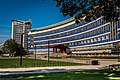 Main Law faculty building of the former Robert Schuman University
 -
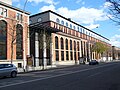 Main building of the university for economic and management studies (AKA : PEGE - Pôle Européen de gestion et d'économie)
 -
 The National and University Library on Place de la République, former Kaiserplatz
.jpg)


Nobel laureates
[edit]- Adolf von Baeyer
- Karl Ferdinand Braun
- Paul Ehrlich
- Hermann Emil Fischer
- Jules Hoffmann
- Albrecht Kossel
- Martin Karplus
- Max von Laue
- Charles Louis Alphonse Laveran
- Jean-Marie Lehn
- Otto Loewi
- Otto Fritz Meyerhof
- Louis Néel
- Wilhelm Röntgen
- Jean-Pierre Sauvage
- Albert Schweitzer
- Hermann Staudinger
- Pieter Zeeman
Notable people
[edit]- Johannes Sturm (1507–1589)
- Johannes Nicolaus Furichius (1602–1633)
- Johann Conrad Dannhauer (1603–1666)
- Angelus Silesius (Johann Scheffler) (1624–1677)
- Philipp Jacob Spener (1635–1705)
- Antoine Deparcieux (1703–1768)
- Johann Hermann (1738–1800)
- Mikhail Illarionovich Kutuzov (1745–1813)
- Johann Peter Frank (1745–1821)
- Dominique Villars (1745–1841)
- Johann Wolfgang von Goethe (1749–1832)
- Louis Ramond de Carbonnières (1755–1827)
- Maximilian von Montgelas (1759–1838)
- Klemens Wenzel von Metternich (1773–1859)
- Jean Lobstein (1777–1835)
- Georg Büchner (1813–1837)
- Charles Frédéric Gerhardt (1816–1856)
- Emil Kopp (1817–1875)
- Charles-Adolphe Wurtz (1817–1884)
- Auguste Nefftzer (1820–1876)
- August Kayser (*1821–1885)
- Louis Pasteur (1822–1895)
- Adolph Kussmaul (1822–1902)
- Ambroise-Auguste Liébeault (1823–1904)
- Georg Albert Lücke (1829–1894)
- Paul Schützenberger (1829–1897)
- Anton de Bary (1831–1888)
- Friedrich Daniel von Recklinghausen (1833–1910)
- Georg Gerland (1833–1919)
- Adolf von Baeyer (1835–1917), Nobel Prize 1905
- Adolf Michaelis (1835–1910)
- Heinrich Wilhelm Gottfried von Waldeyer-Hartz (1836–1921)
- Oswald Schmiedeberg (1838–1921)
- Gustav von Schmoller (1838–1917)
- Paul Laband (1838–1918)
- August Kundt (1839–1894)
- Bernhard Naunyn (1839–1925)
- Friedrich Kohlrausch (1840–1910)
- Rudolph Sohm (1841–1917)
- Heinrich Martin Weber (1842–1913)
- Paul Heinrich von Groth (1843–1927)
- Lujo Brentano (1844–1931)
- Gustav Schwalbe (1844–1916)
- Charles Louis Alphonse Laveran (1845–1922), Nobel Prize 1907
- Wilhelm Röntgen (1845–1923), Nobel Prize 1901
- Harry Bresslau (1848–1926)
- Ernst Remak (1849–1911)
- Josef von Mering (1849–1908)
- Georg Dehio (1850–1932)
- Karl Ferdinand Braun (1850–1918), Nobel Prize 1909
- Hans Chiari (1851–1916)
- Hermann Emil Fischer (1851–1919), Nobel Prize 1902
- Albrecht Kossel (1853–1927), Nobel Prize 1910
- Paul Ehrlich (1854–1915), Nobel Prize 1908
- Emil Cohn (1854–1944)
- Ludwig Döderlein (1855–1936)
- Otto Lehmann (1855–1922)
- Theobald von Bethmann Hollweg (1856–1921)
- Georg Simmel (1858–1918)
- Oskar Minkowski (1858–1931)
- Othmar Zeidler (1859–1911)
- Geerhardus Vos (1862–1949)
- Andreas von Tuhr (1864–1925)
- Pierre Weiss (1865–1940)
- Pieter Zeeman (1865–1943), Nobel Prize 1902
- Eugen Hirschfeld (1866–1946)
- Gustav Anrich (1867–1930)
- Georg Thilenius (1868–1937)
- Gustav Landauer (1870–1919)
- Franz Weidenreich (1873–1948)
- Otto Loewi (1873–1961), Nobel Prize 1936
- Karl Schwarzschild (1873–1916)
- Maximilian von Jaunez (1873–1947)
- Erwin Baur (1875–1933)
- Albert Schweitzer (1875–1965), Nobel Prize 1952
- Ernest Esclangon (1876–1954)
- Paul Rohmer (1876–1977)
- Maurice René Fréchet (1878–1973)
- Helene Bresslau Schweitzer (1879–1957)
- Max von Laue (1879–1960), Nobel Prize 1914
- Leonid Mandelstam (1879–1944)
- René Leriche (1879–1955)
- Nikolai Papaleksi (1880–1947)
- Hans Kniep (1881–1930)
- Hermann Staudinger (1881–1965), Nobel Prize 1953
- Albert Gabriel (1883–1972), professor of Art history (1925–1926)
- Otto Fritz Meyerhof (1884–1951), Nobel Prize 1922
- Étienne Gilson (1884-1978)
- Pablo Groeber (1885–1964)
- Pierre Montet (1885–1966)
- Marc Bloch (1886–1944)
- Robert Schuman (1886–1963)
- Ernst Robert Curtius (1886–1956)
- Hans Schlossberger (1887–1960)
- Friedrich Wilhelm Levi (1888–1966)
- Carl Schmitt (1888–1985)
- Beno Gutenberg (1889–1960)
- André Danjon (1890–1967)
- Pauline Alderman (1893–1983)
- Henri Lefebvre (1901–1991)
- Michel Mouskhely (1903–1964)
- Jean Cavaillès (1903–1944)
- Louis Néel (1904–2000), Nobel Prize 1970
- Henri Cartan (1904–2008)
- Ernst Anrich (1906–2001)
- Emmanuel Levinas (1906–1995)
- Maurice Blanchot (1907–2003)
- Michael Ellis DeBakey (1908–2008)
- Antoinette Feuerwerker (1912–2003)
- Salomon Gluck (1914–1944)
- Wu Wenjun (1919-2017)
- Laurent Schwartz (1915–2002), Fields Medal 1950
- Hicri Fişek (1918–2002)
- Lucien Braun (1923–2020)
- René Thom (1923–2002), Fields Medal 1958
- Robert Preus (1924–1995)
- Francis Rapp (1926–2020)
- Milton Santos (1926–2001), Vautrin Lud Prize 1994
- Gabriel Vahanian (1927)
- Martin Karplus (1930), Nobel Prize 2013
- Yves Michaud (1930)
- Pierre Chambon (1931)
- John Warwick Montgomery (1931)
- Zemaryalai Tarzi (1933)
- Alberto Fujimori (1938–2024)
- Liliane Ackermann (1938–2007)
- Jean-Marie Lehn (1939), Nobel Prize 1987
- Philippe Lacoue-Labarthe (1940–2007)
- Yves Meyer (1940), Abel Prize 2017
- Jean-Luc Nancy (1940)
- Jules A. Hoffmann (1941), Nobel Prize 2011
- Katia Krafft (1942–1991)
- Jean-Pierre Sauvage (1944), Nobel Prize 2016
- Perla Serfaty (1944)
- Isaac_Zokoué (1944–2014)
- Jean-Marc Egly (1945)
- Moncef Marzouki (1945)
- Kenneth Thibodeau (1945)
- Maurice Krafft (1946–1991)
- Jean-Louis Mandel (1946)
- Jacques Marescaux (1948)
- Arsène Wenger (1949)
- Jürgen Wöhler (1950)
- Patrick Strzoda (1952)
- Jean-Claude Juncker (1954)
- Thomas Ebbesen (1954)
- Pascal Mayer (1963)
- Philippe Horvath (1970)
- Simon Schraub
Rankings
[edit]| University rankings | |
|---|---|
| Global – Overall | |
| ARWU World[6] | 151–200 (2023) |
| QS World[7] | =420 (2026) |
| THE World[8] | 601–800 (2023) |
| USNWR Global[9] | =277 (2023) |
See also
[edit]References
[edit]- ^ a b "Chiffres clés". University of Strasbourg. Retrieved 19 March 2025.
- ^ "Formation doctorale". University of Strasbourg. Retrieved 19 March 2025.
- ^ Paterson, Hugh Sinclair; Exell, Joseph Samuel (October 1870). "Angelus Silesius: Physician, Priest and Poet". The British & Foreign Evangelical Review. Vol. XIX. London: James Nisbet & Co. pp. 682–700, based in large part on Kahlert, August (Dr.). Angelus Silesius: Ein literar-historiche Untersuchung (Breslau: s.n., 1853).
{{cite book}}: CS1 maint: postscript (link) - ^ "Décret n° 2008-787 portant création de l'université de Strasbourg" (in French). legifrance.gouv.fr. 18 August 2008. Retrieved 21 June 2009.
- ^ See commemorative plaque Palais Universitaire de Strasbourg-10 août 1949
- ^ "Academic Ranking of World Universities 2023". Retrieved 24 August 2023.
- ^ "QS World University Rankings".
- ^ "World University Rankings: University of Strasbourg". Times Higher Education (THE). 18 October 2023.
- ^ "U.S. News Education: Best Global Universities: Universite de Strasbourg". usnews.com.
External links
[edit]
- University of Strasbourg Archived 16 August 2011 at the Wayback Machine
- The Art and Science collections of the University of Strasbourg
- Scholars and Literati at the University of Strasbourg (1621–1795), in Repertorium Eruditorum Totius Europae/RETE.


Public universities and higher education institutes in France | |
|---|---|
| Public universities, by academy |
|
| Écoles |
|
| Grands établissements |
|
| Other establishments |
|

University of Strasbourg
View on GrokipediaHistory
Founding and Early Years (1538–1793)
The University of Strasbourg originated from the Protestant Gymnasium established in 1538 by Johannes Sturm, a German humanist educator, in the Free Imperial City of Strasbourg, which had embraced the Reformation earlier that decade.[1] Sturm, invited by the city's magistrates to reform education along Protestant lines, modeled the institution on classical humanist principles, integrating rigorous study of Latin, Greek, and Hebrew with moral and religious instruction to cultivate pious scholars and civic leaders.[11] As rector until his death in 1589, Sturm emphasized dialectical method and encyclopedic knowledge, drawing on influences from figures like Philipp Melanchthon, while avoiding direct oversight from Catholic authorities or emerging French influence.[12] [13] The Gymnasium evolved into an academy by the mid-16th century, beginning to confer degrees in 1566, and was formally elevated to university status in 1621, incorporating faculties of theology, law, medicine, and philosophy.[2] This development positioned Strasbourg as a key intellectual hub for Reformation-era scholarship in the Holy Roman Empire, attracting Protestant scholars fleeing persecution and fostering advancements in biblical exegesis, jurisprudence adapted to reformed doctrines, and early medical humanism without the centralized control typical of royal universities elsewhere.[13] The institution's autonomy stemmed from Strasbourg's imperial free city privileges, enabling it to prioritize empirical and scriptural reasoning over confessional impositions, even after the city's annexation by France in 1681 under Louis XIV, which introduced some administrative tensions but preserved its Protestant character until the Revolution.[1] During this period, the university contributed to theological debates through figures like Sturm's successors and hosted interdisciplinary pursuits, such as legal scholarship reconciling Roman law with Protestant ethics and medical studies grounded in observation rather than scholastic abstraction. Enrollment grew steadily, with the Gymnasium educating hundreds annually by the late 16th century, laying foundations for Strasbourg's role as a bridge between German and broader European humanism.[14] Its emphasis on first-hand textual analysis and logical disputation exemplified causal realism in pedagogy, influencing educational models across Protestant regions.[15]Suppression, Refounding, and 19th-Century Developments (1793–1918)
The University of Strasbourg faced suppression in 1793 amid the French Revolution, when revolutionary authorities closed traditional universities as relics of the Ancien Régime associated with ecclesiastical and monarchical privileges.[16] This closure reflected broader dechristianization efforts and restructuring of education to align with republican ideals, halting academic activities for nearly a decade.[17] Refounding occurred under Napoleonic reforms, which centralized higher education through the 1806 Imperial University decree establishing regional academies with specialized faculties. In Strasbourg, the Académie de Strasbourg was reconstituted, with faculties of law and medicine founded in 1808, letters in 1809, and sciences in 1810; a Protestant theology faculty followed in 1830.[18] These developments integrated the institution into France's national system, emphasizing secular, state-controlled curricula in humanities and emerging scientific disciplines, though enrollment remained modest amid post-revolutionary instability. From 1815 to 1870, under restored French monarchy and subsequent republics, the university expanded modestly in enrollment and facilities, adapting to liberal reforms that promoted scientific research and professional training. Political shifts, including the 1848 revolutions, prompted temporary disruptions but reinforced commitments to bilingual instruction reflecting Alsace's cultural duality.[19] The Franco-Prussian War of 1870–1871 and subsequent annexation of Alsace-Lorraine to the German Empire marked a pivotal reconfiguration. Renamed Kaiser-Wilhelm-Universität in 1872, the institution received substantial imperial funding to symbolize German cultural assimilation, leading to rapid infrastructure growth including new laboratories and libraries.[20] [21] The curriculum underwent Germanization, prioritizing Teutonic philology, history, and natural sciences while marginalizing French influences, though regional bilingualism influenced some pedagogical practices.[22] Enrollment surged from around 800 students in the early 1870s to over 2,000 by 1900, driven by state incentives and the university's role in fostering loyalty among Alsatian youth.[23] This era solidified Strasbourg's status as a binational academic hub, albeit under coercive political realignment, until Alsace's return to France in 1918.Interwar Period, Nazi Annexation, and World War II (1918–1945)
Following the Armistice of 11 November 1918 and the entry of French troops into Strasbourg on 22 November, Alsace-Lorraine was returned to French sovereignty under the Treaty of Versailles, reintegrating the University of Strasbourg into the French higher education system.[24] The institution underwent significant rebuilding during the interwar years, expanding facilities and faculty to restore its pre-1871 prominence amid efforts to reestablish French-language instruction in a region shaped by decades of German cultural and administrative influence.[25] This linguistic shift encountered resistance from local Alsatian autonomist movements, which advocated for bilingual education reflecting the area's Germanic heritage and Protestant traditions, though pro-French elements ultimately prevailed in university governance.[26] With the German invasion of France in May 1940 and the subsequent de facto annexation of Alsace, the French University of Strasbourg ceased operations in the city, evacuating its faculty and students to Clermont-Ferrand in central France to preserve academic continuity under Vichy administration.[1] In November 1941, Nazi authorities established the Reichsuniversität Straßburg as the third such ideologically aligned institution in the Greater German Reich, explicitly tasked with advancing Germanization policies, racial hygiene doctrines, and support for the annexation through reeducation of the local population.[27] [28] The Nazi regime purged remaining French, Jewish, and politically dissenting faculty, replacing them with approximately 200 German professors selected for ideological conformity rather than scholarly merit, thereby subordinating empirical inquiry to Aryan supremacist narratives and eroding institutional standards of objective research.[29] [30] This transformation facilitated human rights abuses, including the Anatomical Institute under August Hirt, where experiments on prisoners from Natzweiler-Struthof concentration camp—such as the procurement of 86 Jewish victims for a racial skeletal collection—served as precursors to broader medical atrocities conducted under the guise of scientific advancement.[31] [30] The Reichsuniversität operated until the Allied liberation of Strasbourg in November 1944, after which its infrastructure lay damaged and its legacy tainted by complicity in genocidal policies.[27]Post-War Reconstruction and 2009 Merger (1945–Present)
Following the liberation of Strasbourg in November 1944, the University of Strasbourg reopened for the 1945–1946 academic year, with its faculties returning from exile in Clermont-Ferrand where they had relocated during the Nazi occupation.[27] The institution underwent de-Nazification processes to remove Nazi-appointed personnel and restore French academic standards after the Reichsuniversität Straßburg, established by the Nazis in 1941 as a center for German cultural and ideological propagation, had occupied its premises.[32] Rebuilding efforts focused on reconstituting faculty and infrastructure damaged or repurposed under German control, earning the university the Médaille de la Résistance in 1947 for its wartime exile and resistance activities.[1] In 1971, as part of France's broader higher education reforms under the Faure Law of 1968, the University of Strasbourg was fragmented into three autonomous institutions to promote specialization: Université Louis Pasteur (Strasbourg I) for sciences, Université Marc Bloch (Strasbourg II) for humanities and social sciences, and Université Robert Schuman (Strasbourg III) for law, economics, and political science.[1] This division reflected national efforts to decentralize and modernize universities but led to administrative complexities and reduced cohesion in Strasbourg's academic landscape. The three universities merged on January 1, 2009, forming the refounded Université de Strasbourg, the first such reunification in France under the Pécresse Law of 2007 aimed at enhancing institutional competitiveness and research capacity.[33] The unified entity now enrolls approximately 56,000 students, integrating into the European Higher Education Area through the LMD (Licence-Master-Doctorat) structure aligned with the Bologna Process, while preserving specialized faculties from the predecessor institutions.[4][34] This merger facilitated greater interdisciplinary collaboration and positioned the university as a major European research hub.[33]Governance and Administration
Organizational Structure
The University of Strasbourg maintains a decentralized organizational framework coordinated through a central governance body and administrative services, enabling efficient allocation of resources across its academic units. This structure balances autonomy in departmental operations with overarching strategic direction from the presidency and board of directors.[35] At the apex is the elected president, Frédérique Berrod, selected on March 18, 2025, by absolute majority vote of the board in secret ballot for a term aligning with the board's mandate, typically four years; the president directs policy formulation, budgeting, and executive decisions in tandem with the board to ensure fiscal and operational coherence.[36][37] The university employs approximately 5,202 personnel, comprising 2,814 lecturers and researchers alongside 2,388 staff in library, engineering, administrative, technical, and health roles, to underpin these functions.[4] Academically, operations span 35 departments of studies—faculties, schools, and institutes—grouped into five domains: arts, literature, and languages; law, economics, management, and political science; humanities and social sciences; science and technologies; and health, with specialized entities like EM Strasbourg Business School embedded for targeted programs.[4][38] Cross-disciplinary integration is facilitated by fifteen Interdisciplinary Thematic Institutes (ITIs), which foster collaborative initiatives in training and research spanning multiple faculties to address complex, multifaceted challenges.[39]Leadership and Decision-Making Processes
The presidency of the University of Strasbourg is held by Frédérique Berrod, a professor of European Union law at Sciences Po Strasbourg, who was elected on March 18, 2025, by absolute majority in the first round of voting by the board of directors.[40][36] Her four-year term, standard for French public university presidents and renewable once, focuses on strategic priorities outlined in the university's 2030 roadmap, including innovation and international partnerships.[37][41] The board of directors (conseil d'administration), comprising 36 members including elected faculty, staff, students, and external representatives from regional authorities and socio-economic sectors, serves as the primary strategic body, approving budgets, major policies, and presidential elections via secret ballot.[37][42] Complemented by the academic council (conseil académique) for pedagogical and research decisions, and scientific councils within components for specialized input, this collegial structure emphasizes distributed accountability, with the president delegating operational authority while reporting key decisions back to the board.[42][43] Merit-based selection prevails, as candidates must be tenured academics or equivalents, elected on demonstrated expertise rather than political affiliation, though the process can introduce factional dynamics inherent to representative voting.[37] Decision-making integrates faculty input through component-level senates, which propose policies upward to the academic council, ensuring alignment with national frameworks like France's LRU law of 2007 that enhanced university autonomy while mandating stakeholder consultation.[42] External stakeholders, including Alsace regional council members on the board, influence resource allocation for local relevance, such as EU-border initiatives.[42] This layered approach promotes evidence-based deliberation but risks inefficiencies from consensus requirements, as evidenced by occasional judicial interventions in French universities where board decisions have been overturned for procedural lapses, underscoring the need for streamlined accountability to prioritize institutional goals over internal vetoes.[44] Presidential turnover aligns with the four-year cycle, with Berrod succeeding Michel Deneken after his 2012–2025 tenure marked by the 2009 merger consolidation, reflecting stability rather than high churn; no public data indicates elevated faculty administrative turnover impacting operations.[45] Policies uphold academic freedom under French constitutional protections and EU standards, with no documented restrictions at Strasbourg beyond general compliance reporting, though broader European trends highlight vigilance against external pressures on research autonomy.[46][47]Academics
Faculties, Schools, and Programs
The University of Strasbourg structures its academic programs across five principal fields: arts, literature, and languages; law, economics, management, and political science; humanities and social sciences; science and technologies; and health, encompassing 35 faculties, schools, and institutes that deliver bachelor's (licence), master's, and doctoral degrees.[4][38] It offers licences in 36 disciplines, masters in 87 disciplines, and doctorates in 33 disciplines, alongside complementary formations such as five DEUSTs (two-year university degrees), 12 BUTs (bachelor's in technology), 36 vocational bachelor's, and eight engineering degrees.[4] These 35 components provide a structured overview across the domains: in arts, literature, and languages, entities focused on cultural and linguistic studies; in law, economics, management, and political science, including the Faculty of Law, Political Science, and Management and EM Strasbourg Business School; in humanities and social sciences, covering history, psychology, and education; in science and technologies, with faculties for physics, chemistry, mathematics, and engineering; and in health, led by the Faculty of Medicine for medical and paramedical training.[38] Core disciplinary strengths include comprehensive training in sciences and technologies through the Faculty of Life Sciences and related departments, covering biology, chemistry, physics, and engineering pathways from undergraduate to doctoral levels; health sciences via the Faculty of Medicine, which provides medical and paramedical curricula spanning initial training to advanced specialization; humanities and social sciences in areas like history, psychology, and education; law and economics via the Faculty of Law, Political Science, and Management alongside EM Strasbourg Business School for accounting, finance, and management; and arts, literature, and languages through dedicated faculties emphasizing cultural and linguistic studies.[38][48][49] Strasbourg's proximity to European Union institutions supports specialized programs in European studies and international relations, notably at Sciences Po Strasbourg, which confers a Certificate of European Studies after one semester and masters in public policies, state action, and territorial administration. EM Strasbourg's Master in European Management Studies integrates French-German business training, ranked first in its category by specialized assessments.[50][51] These programs attract exchange students through networks like Eucor and Epicur, with the university maintaining over 400 European and 175 worldwide partnerships facilitating mobility.[52] Enrollment totals approximately 57,000 students as of the 2025-2026 academic year, including 11,339 international students (20% of the total) from more than 150 countries, many engaged in exchange initiatives that enhance program diversity and outcomes. Doctoral programs produced 395 graduates in 2020, underscoring strengths in research-aligned fields across disciplines.[4][53][54]Student Enrollment and Demographics
As of the 2023–2024 academic year, the University of Strasbourg enrolled 55,004 students, reflecting a slight decline from 56,875 in 2020–2021 but maintaining stability amid national trends in French higher education enrollment.[55][4] This figure positions it as one of France's largest universities, with admissions drawing primarily from regional baccalauréat holders, numbering 8,130 in 2023.[55] As a public French university, tuition fees range from approximately 183€ to 606€ per academic year depending on the degree program, with the same rates applying to both domestic and international students.[56] Demographically, the student population exhibits a gender imbalance favoring females at 59% compared to 41% males, consistent with broader patterns in European universities where women outnumber men in undergraduate and master's programs.[57] International students comprise 22.7% of the total, totaling 12,524 individuals from 158 nationalities, driven by the university's location in Strasbourg—a European Union hub bordering Germany—and its multilingual programs appealing to cross-border and global applicants.[55] This international draw exceeds the 20% reported in earlier years, underscoring enhanced mobility under Erasmus+ and bilateral agreements.[4] Enrollment is distributed across disciplines emphasizing sciences, law, and humanities, with strong representation in biology, chemistry, and physics reflecting the institution's research-intensive profile and historical strengths in these areas.[58] The university supports diverse student activities, including 256 associations and weekly participation of over 27,000 in sports programs, fostering retention through extracurricular engagement.[55]Research and Innovation
Major Research Institutes and Centers
The University of Strasbourg maintains 73 research units, many operating as joint laboratories with the French National Centre for Scientific Research (CNRS), emphasizing empirical advancements in natural sciences such as biology, chemistry, and physics.[59] These units prioritize foundational mechanisms in molecular processes, materials properties, and cellular functions, yielding outputs validated through peer-reviewed experimental data.[59] In biology, the Institute of Molecular and Cellular Biology (IBMC), established in 1974 as a CNRS unit in partnership with the university, investigates gene regulation, protein dynamics, and cellular signaling via structural biology and imaging techniques, contributing to over 200 researchers' collaborative efforts on eukaryotic mechanisms.[60] The Plant Molecular Biology Institute (IBMP), another CNRS-associated entity, focuses on plant-pathogen interactions and developmental genetics, employing genomic sequencing and biochemical assays to elucidate causal pathways in crop resilience.[61] Similarly, the Institute of Cellular and Integrative Neurosciences (INCI) examines synaptic transmission and neural circuit integration using electrophysiology and optogenetics, grounding findings in quantifiable neural response data.[62] Chemistry and physics research centers include the Institute of Physics and Chemistry of Materials of Strasbourg (IPCMS), a CNRS-university joint unit advancing nanomaterials and quantum devices through spectroscopy and computational modeling of electronic structures.[63] The Supramolecular Science and Engineering Institute (ISIS), formed as UMR 7006, specializes in self-assembly and host-guest chemistry, leveraging crystallographic and thermodynamic analyses for functional molecular architectures.[64] In earth sciences, the School and Observatory of Earth Sciences (EOST), a joint institution with CNRS, conducts research in geophysics, tectonics, and environmental monitoring through units such as the Institut de Physique du Globe de Strasbourg (IPGS), utilizing seismic networks, geodetic measurements, and modeling to analyze causal dynamics of planetary processes.[65] In the social sciences and humanities, the Maison Interuniversitaire des Sciences de l'Homme Alsace (MISHA), established in 1998 as CNRS unit USR 3227, serves as a key inter-university research hub for these fields in Alsace, jointly managed with CNRS and primarily hosted by the University of Strasbourg to facilitate interdisciplinary collaborative projects.[66] The University of Strasbourg Institute for Advanced Study (USIAS), founded in 2012, supports interdisciplinary fellowships across domains, enabling short-term residencies for empirical synthesis in fields like life sciences and materials, with selections based on proposed verifiable advancements rather than thematic quotas.[67] Complementing these, 15 Interdisciplinary Thematic Institutes (ITIs) integrate outputs from core labs, fostering cross-domain experiments in areas such as health technologies and environmental modeling.[39]Funding, Grants, and International Collaborations
The University of Strasbourg receives primary funding from French state allocations, supplemented by competitive research grants and international partnerships that incentivize innovation through performance-based awards. Research expenditures benefit from national programs like the Initiatives d'Excellence (IdEx), established post-2009 merger, which endowed the university with funds generating approximately €25 million in annual interest to support 11 Laboratories of Excellence (LabEx) projects focused on frontier research.[68] This structure prioritizes merit-driven allocations over blanket subsidies, fostering targeted advancements in fields such as geosciences and materials science. Competitive grants from the European Research Council (ERC) exemplify high-impact inflows, with the university securing an ERC Synergy Grant in 2023 for the ROTTnROCK project, awarded €9.99 million over six years to investigate hydrothermal alteration's effects on volcanic stability, led by geophysicist Michael Heap at the Institut Terre et Environnement de Strasbourg (ITES).[69] Such ERC awards, drawn from Horizon Europe budgets, underscore the university's capacity for collaborative, high-risk research, with additional successes in Starting, Consolidator, and Advanced Grants enhancing output in earth sciences and beyond. Nationally, grants from the French National Research Agency (ANR) and CNRS partnerships further amplify resources, though recent budgetary pressures, including a projected 2024 deficit of €19.5 million amid rising operational costs, highlight dependencies on sustained competitive inflows for growth.[70] International collaborations bolster funding via EU Horizon programs and bilateral agreements, enabling co-financed projects that link resource allocation to verifiable innovation metrics. The university participates in Horizon Europe initiatives, such as the DT-Geo digital twin project for modeling Earth's dynamic systems, which integrates Strasbourg's expertise with pan-European consortia to secure multi-million-euro allocations.[71] Ties through the Eucor – The European Campus alliance, encompassing German counterparts like Heidelberg University, draw EU support from programs including Horizon 2020 and Interreg, funding cross-border mobility and joint labs with contributions exceeding €1 million triennially from member states.[72] Broader networks, including over 750 institutional partners across 75 countries and affiliations with the League of European Research Universities (LERU), facilitate bilateral grants with entities in the United States, Japan, and Canada, emphasizing causal mechanisms where merged post-2009 structures improved grant competitiveness and correlated with expanded publication and patent outputs.[73][74] This post-merger funding escalation, via unified administrative efficiencies, directly supported a policy shift toward excellence-driven pursuits, yielding measurable rises in externally funded research volume since 2009.[75]Notable Achievements and Nobel Laureates
The University of Strasbourg has produced or been affiliated with 18 Nobel Prize laureates among its alumni, faculty, and researchers, spanning disciplines from medicine and chemistry to physics, with contributions often rooted in the institution's historical role as a hub for scientific inquiry during both French and German administrations.[2] These affiliations highlight the university's enduring impact on foundational discoveries, such as innate immunity mechanisms and molecular machinery, though many historical awards trace to pre-World War I research when the institution operated as the German Kaiser-Wilhelm-Universität Straßburg.[76] Key Nobel laureates include Jules A. Hoffmann, awarded the 2011 Prize in Physiology or Medicine for discoveries concerning the activation of innate immunity, conducted as a research director at the CNRS Immunology Institute in Strasbourg.[77] Martin Karplus received the 2013 Chemistry Prize for developing multiscale models of complex chemical systems, with his Strasbourg laboratory contributing to computational chemistry advancements during his tenure as professor emeritus. Jean-Pierre Sauvage earned the 2016 Chemistry Prize for the design and synthesis of molecular machines, building on catenane and rotaxane research initiated at the university's Louis Pasteur University predecessor.[78] Earlier figures like Paul Ehrlich (1908 Medicine, for immunity research conducted in Strasbourg) and Karl Ferdinand Braun (1909 Physics, for wireless telegraphy contributions as rector) underscore the institution's pre-1918 scientific prominence. In mathematics, René Thom received the 1958 Fields Medal for inventing cobordism theory in algebraic topology, a breakthrough developed during his time at the University of Strasbourg that revolutionized manifold classification.[79] The university's research output also features high-impact metrics, with faculty-led teams achieving top-tier citation rates in fields like supramolecular chemistry, evidenced by multiple CNRS Gold Medals to researchers such as Jean-Marie Lehn (1981, for cryptand synthesis foundational to his 1987 Nobel) and Thomas Ebbesen (2019, for nanophotonics).[4] In neuroscience, Jean-Louis Mandel, professor of genetics at the University of Strasbourg's Faculty of Medicine, received the 2022 Kavli Prize in Neuroscience for pioneering discoveries of genes underlying serious brain disorders, including fragile X syndrome.[80]| Award | Laureate | Year | Field/Contribution |
|---|---|---|---|
| Nobel Prize in Physiology or Medicine | Paul Ehrlich | 1908 | Immunity research[81] |
| Nobel Prize in Physics | Karl Ferdinand Braun | 1909 | Wireless telegraphy contributions[82] |
| Fields Medal | René Thom | 1958 | Cobordism in algebraic topology[79] |
| Nobel Prize in Physics | Louis Néel | 1970 | Antiferromagnetism and ferrimagnetism discoveries[83] |
| Nobel Prize in Chemistry | Jean-Marie Lehn | 1987 | Cryptands and supramolecular chemistry[84] |
| Nobel Prize in Physiology or Medicine | Jules A. Hoffmann | 2011 | Innate immunity activation[77] |
| Nobel Prize in Chemistry | Martin Karplus | 2013 | Multiscale chemical modeling |
| Kavli Prize in Nanoscience | Thomas Ebbesen | 2014 | transformative contributions to nano-optics[85] |
| Nobel Prize in Chemistry | Jean-Pierre Sauvage | 2016 | Molecular machines[78] |
| Kavli Prize in Neuroscience | Jean-Louis Mandel | 2022 | Genes underlying brain disorders[80] |
Campuses and Infrastructure
Primary Campuses and Locations
The University of Strasbourg maintains its primary operations across key sites in the Strasbourg metropolitan area, optimized for disciplinary specialization and regional connectivity in the Alsace border zone adjacent to Germany and Switzerland. Distinct from but adjacent to the central Esplanade campus, located in the heart of Strasbourg, is the historic 19th-century campus, situated between rue de l'Université and rue Goethe and comprising buildings along Boulevard de la Victoire such as the Institut de zoologie and Institut de minéralogie.[86] The Esplanade campus functions as the core hub for scientific disciplines, encompassing faculties of chemistry, physics, mathematics, and related research institutes focused on advanced materials and supramolecular science.[87][88] This site supports over 10,000 students and researchers in laboratory-intensive fields, benefiting from dense urban integration that minimizes intra-campus travel.[89] The Cronenbourg campus, located west of Strasbourg and spanning approximately 25 hectares, specializes in life sciences and chemistry research, hosting CNRS research units, the École européenne de chimie, polymères et matériaux, and facilities such as NMR platforms and the Institut de physique et chimie des matériaux de Strasbourg (IPCMS).[90] The Illkirch-Graffenstaden campus, approximately 10 kilometers south of central Strasbourg, specializes in technology and engineering, hosting entities like the Robert Schuman University Institute of Technology (IUT) and the Faculté de pharmacie—which trains around 1,400–1,600 students in pharmacy and related fields, supported by approximately 71 permanent teacher-researchers in dedicated facilities—and laboratories in biomedical engineering, computer science, and imaging such as ICube.[91][92][93] It emphasizes applied innovation in sectors like electronics and sustainable development, drawing on the site's semi-suburban layout for expanded technical facilities while maintaining proximity to urban resources.[94] The medicine site, anchored at the Faculty of Medicine on 4 rue Kirschleger in Strasbourg's northwest quarter, concentrates health sciences training and clinical research, integrating with local hospitals for practical medical education.[48] The Niederhausbergen site, located north of Strasbourg in Niederhausbergen, hosts the Centre de Primatologie (SILABE), a service platform offering housing, breeding, and research services using non-human primates for biomedical studies at Fort Foch.[95] This configuration aligns with Strasbourg's role as an EU administrative hub, where proximity to institutions like the European Parliament—within 5 kilometers of central sites—facilitates specialized policy-oriented programs in European health regulation and international affairs, enhancing cross-border logistical efficiencies for collaborative initiatives. All primary sites connect via the Compagnie des Transports Strasbourgeois (CTS) network, featuring six tram lines and bus routes that enable full campus coverage; students access discounted fares through the Campus Pass, reducing average travel costs by up to 50% compared to standard tickets and supporting daily commutes under 30 minutes between Esplanade and Illkirch.[96]Key Buildings and Facilities
The Palais Universitaire, also known as "Palais U" and a landmark building of Strasbourg, erected between 1879 and 1884 under German imperial administration following the Franco-Prussian War, functions as the central administrative hub for the University of Strasbourg. Architect Otto Warth designed the structure in a neo-Renaissance style, incorporating Italianate elements such as columns, marble pillars, and an expansive inner courtyard known as the Aula. Encircling the building are 36 statues representing prominent figures from Renaissance to modern eras in science and literature. Designated a monument historique since 1971, it exemplifies preserved Germanic-era architecture amid the university's French institutional framework.[97][20][98] The Bibliothèque Nationale et Universitaire (BNU), situated on Place de la République—formerly Kaiserplatz—maintains a collection exceeding 3 million printed volumes, manuscripts, maps, and digital archives, positioning it as France's second-largest library by holdings. Housed in a neoclassical edifice originally built in 1895 and renovated post-World War II, the facility supports university access to over 5,000 study seats across affiliated libraries, with the BNU emphasizing rare historical documents and online repositories for scholarly use. Its preservation efforts include climate-controlled storage for incunabula and early printed works dating to the 15th century.[99][100] On the Cronenbourg campus, the Institut Pluridisciplinaire Hubert Curien (IPHC) operates across 18 specialized buildings equipped for high-precision instrumentation in fields like particle detection and nuclear spectroscopy. These facilities include clean rooms, accelerator interfaces, and detector assembly labs, supporting capacities for large-scale experimental setups shared between CNRS and university operations. Established as a joint unit in 2006, the IPHC's infrastructure underscores modern expansions in technical capabilities while integrating with the broader campus grid.[101][102] The Jardin Botanique de l'Université de Strasbourg, administered by the university, spans 3.5 hectares and houses collections of over 5,500 plant species, serving as a vital facility for botanical research, education, and biodiversity conservation. It supports academic programs, scientific investigations into plant diversity, and public access to medicinal, ornamental, and endemic flora.[103] The Institut de Sciences et d'Ingénierie Supramoléculaires (ISIS), a joint CNRS-University of Strasbourg unit located on the Esplanade campus, conducts multidisciplinary research at the interface of physics, chemistry, and biology, with specialized laboratories for supramolecular assembly and nanoscale engineering. Its facilities support advanced synthesis, characterization, and interaction studies, fostering collaborative research environments.[64] The Observatoire astronomique de Strasbourg, affiliated with the University of Strasbourg, hosts research groups and observation services under INSU/CNRS, featuring historical and modern facilities including a large refractor telescope—the third largest in France—used for astrophysics studies and public outreach. It serves teaching, data analysis, and astronomical reference data distribution.[104] Le Studium, situated on the Esplanade campus, functions as both a library and student life hub, offering spaces for study, learning, research, and community activities to support the university's academic and social needs.[105] The Restaurants universitaires (commonly known as "Restos U"), managed by CROUS Strasbourg, provide affordable student dining facilities located on university campuses, offering complete meals for approximately 3.30€.[106] The Centre Sportif Universitaire (CSU) provides sports facilities and programs for students and staff, promoting physical activity and well-being across the university community. Its brand-new building, opened on October 6, 2025, features eco-friendly design and modern amenities to support diverse athletic activities.[107]Recent Infrastructure Developments
The Esplanade campus, the university's primary central site, has seen ongoing renewal under the national Operation Campus initiative, which funds building refurbishments and green space enhancements to modernize aging infrastructure originally developed in the mid-20th century.[108] This program has prioritized updates to key structures such as the Faculty of Law, Chemistry Tower, and Paul Appell residence halls, managed as part of student accommodations primarily overseen by the CROUS de Strasbourg, which provides over 5,500 rooms and studios across 13 residences for University of Strasbourg students.[109][110] These transformations were reported as active in 2023 to address functional obsolescence and support expanded student capacity.[108] A flagship completion within this framework is the Studium building, inaugurated on January 19, 2023, which integrates student union services, library functions, and event spaces in a 4,000 m² facility designed for high occupancy and multifunctional use.[111] These developments aim to accommodate the university's student body exceeding 52,000, though specific post-renovation usage metrics remain limited in public reports. Sustainability upgrades have emphasized energy efficiency, with eight renovation projects selected under France's post-COVID recovery plan (Plan de relance), allocating 6.944 million euros for thermal insulation, heating system modernizations, and reduced consumption in existing buildings.[112] Newer constructions, including those tied to Operation Campus, adhere to contemporary thermal regulations, incorporating features like low-energy lighting and biodiversity-supporting landscapes to lower operational costs over time.[113] For instance, ongoing works at the Institut Le Bel include terrace reconstructions with enhanced environmental standards, slated for autumn 2025 completion, reflecting a phased approach that balances disruption minimization with long-term efficiency gains.[114] Post-2023 investments have linked infrastructure to research-oriented grants, though primarily through equipment upgrades rather than standalone tech facilities; the Studium's digital integration, for example, supports expanded administrative and learning tech amid enrollment stability around 52,000.[115] Evaluations of these projects highlight timely completions like the Studium—delivered on schedule despite pandemic delays—as evidence of effective resource allocation, with Operation Campus phases demonstrating progressive capacity increases without proportional cost escalations reported in official updates.[116] However, comprehensive cost-benefit analyses incorporating usage data post-occupancy are not yet publicly detailed, limiting full causal assessment of returns on investment.[117]Scientific collections
The University of Strasbourg houses extensive scientific collections accumulated over centuries from teaching and research endeavors, managed by the Jardin des Sciences. These encompass diverse fields, including over 200 astronomical instruments at the Strasbourg Astronomical Observatory, physics apparatus with historical significance, the STR herbarium containing more than 50,000 plant specimens, paleontological holdings reorganized in the 19th century by figures such as Philippe-Louis Voltz into categories of mineralogy, paleontology, and petrography; the zoological collection encompassing over 1,200,000 specimens, including more than 10,000 mammals, 18,000 birds, 5,000 reptiles, 200,000 molluscs, 900,000 insects, and numerous other invertebrates from all continents and oceans,[118]; the mineralogical collection comprising more than 30,000 samples of minerals and meteorites and recognized as one of the region's most important,[119] as well as anatomical and seismological items.[120][121][122] The collections support pedagogical training, facilitate interdisciplinary research, preserve cultural and scientific heritage, and engage the public through exhibitions, guided tours, workshops, and public museums such as the Musée zoologique (co-administered by the university and the municipality), the Musée Adolf Michaelis, the Musée de sismologie, and the Musée de minéralogie,[123] as well as digital inventories developed since the early 2000s, with the STR herbarium's data available on the Global Biodiversity Information Facility (GBIF) for global biodiversity research, and digitized items included in the Numistral database of patrimonial collections from the university libraries, highlighted by events like the 2022 colloquium "Les collections de l'Université de Strasbourg: Histoires et Usages."[124][125][126][127]Notable Individuals
Prominent Alumni
The University of Strasbourg has alumni who have achieved prominence in literature, humanitarianism, sports, and politics, often leveraging interdisciplinary education amid the institution's borderland location fostering cross-cultural perspectives. Johann Heinrich Jung-Stilling (1740–1817), German author, mystic, and ophthalmologist known for autobiographical works and eye surgery techniques, studied medicine and science at the University of Strasbourg, where he met Johann Wolfgang von Goethe.[128] Johann Wolfgang von Goethe (1749–1832), the influential German polymath and author of works like Faust, studied law at the University of Strasbourg from April 1770 to August 1771, a period that profoundly shaped his early intellectual development and affinity for Alsatian landscapes.[129][130] Louis Ramond de Carbonnières (1755–1827), French naturalist, geologist, botanist, politician, and explorer noted for Pyrenees ascents and botanical classifications, studied law and medicine at the University of Strasbourg starting in 1775.[131] Maximilian von Montgelas (1759–1838), Bavarian statesman who modernized Bavaria's administration and elevated it to kingdom status, was educated successively at Nancy, Strasbourg, and Ingolstadt.[132] Georg Büchner (1813–1837), German dramatist known for works like Woyzeck and Danton's Death, studied medicine at the University of Strasbourg from 1831 to 1833, immersing himself in French literature and revolutionary ideas that influenced his political writings.[133] Charles Louis Alphonse Laveran (1845–1922), French physician and 1907 Nobel Prize in Physiology or Medicine laureate for discovering the protozoan parasites causing malaria, obtained his medical degree from the University of Strasbourg in 1867.[134] Emil Fischer (1852–1919), German chemist and 1902 Nobel Prize in Chemistry laureate for elucidating structures of purines, proteins, and sugars, studied chemistry at the University of Strasbourg (then Straßburg) starting in 1872, earning his PhD under Adolf von Baeyer in 1874.[135] Albrecht Kossel (1853–1927), German biochemist and 1910 Nobel Prize in Physiology or Medicine laureate for research on proteins and nucleic acids, studied medicine at the University of Strasbourg, graduating in 1878.[136] Paul Ehrlich (1854–1915), German physician and immunologist, 1908 Nobel Prize in Physiology or Medicine laureate for work on immunity and serum therapy, studied medicine at the University of Strasbourg among other institutions.[81] Jacques Loeb (1859–1924), German-born American biologist and physiologist renowned for pioneering artificial parthenogenesis and tropism studies, earned his M.D. from the University of Strasbourg in 1884.[137] Alfred Hugenberg (1865–1951), German politician, media magnate, and leader of the German National People's Party, earned his PhD in law from the University of Strasbourg (then Strassburg) in 1891 for a dissertation on internal colonization.[138] Otto Loewi (1873–1961), Austro-Hungarian pharmacologist and 1936 Nobel Prize in Physiology or Medicine laureate for discoveries on chemical transmission of nerve impulses, received his medical degree from the University of Strasbourg in 1896.[139] Albert Schweitzer (1875–1965), theologian, musician, and physician renowned for founding the Lambaréné hospital in Gabon, earned a doctorate in philosophy from the university in 1899 and a theology licentiate shortly thereafter, building on prior studies in theology and philosophy begun in 1893.[140] His Strasbourg education informed his ethical framework of "reverence for life," applied in over five decades of medical missionary work treating thousands in equatorial Africa.[141] Hans Hahn (1879–1934), Austrian mathematician who contributed to functional analysis, including the Hahn-Banach theorem, studied mathematics at the University of Strasbourg before obtaining his PhD in Vienna in 1902.[142] Max von Laue (1879–1960), German physicist, 1914 Nobel Prize in Physics laureate for discovery of the diffraction of X-rays by crystals, began studies in physics at the University of Strasbourg in 1898 before continuing elsewhere.[143] Leonid Mandelstam (1879–1944), Soviet physicist noted for contributions to optics and nonlinear phenomena, defended his doctorate in natural philosophy at the University of Strasbourg in 1902 with highest distinction.[144] Otto Fritz Meyerhof (1884–1951), German-born biochemist and 1922 Nobel Prize in Physiology or Medicine laureate for discovering the relationship between oxygen consumption and metabolism in muscles, studied medicine at the University of Strasbourg among other institutions, contributing to his early biochemical research.[145] Robert Schuman (1886–1963), French statesman and key architect of European integration, studied law and related disciplines at universities including Strasbourg, earning his doctorate in law (Dr. jur.) with summa cum laude in 1910.[146] As French Foreign Minister, he authored the 1950 Schuman Declaration that proposed pooling Franco-German coal and steel production, founding the European Coal and Steel Community and paving the way for the European Union.[147] Louis Néel (1904–2000), French physicist and 1970 Nobel Prize in Physics laureate for fundamental work on antiferromagnetism and ferrimagnetism, earned his Doctor of Science from the University of Strasbourg in 1932.[148] Emmanuel Levinas (1906–1995), Lithuanian-born French philosopher renowned for establishing ethics as first philosophy and authoring influential works like Totality and Infinity, began studying philosophy at the University of Strasbourg in 1923, engaging with professors including Maurice Pradines, Charles Blondel, and Maurice Halbwachs, and earned his doctorate in 1929 for a thesis on the theory of intuition in Husserl's phenomenology.[149][150] Michael E. DeBakey (1908–2008), pioneering cardiovascular surgeon who developed techniques for aneurysm repair and coronary bypass, completed his surgical fellowship at the University of Strasbourg under Professor René Leriche in 1935.[151] Alberto Fujimori (1938–2024), who served as President of Peru from 1990 to 2000 and implemented economic reforms reducing hyperinflation from 7,650% in 1990 to 6.4% by 1997 alongside aggressive anti-terrorism measures, conducted postgraduate studies in physics at the university around 1967 before obtaining a master's in mathematics elsewhere.[152][153] His technical education supported data-driven governance, though his tenure involved documented authoritarian actions leading to a 2009 conviction for human rights abuses.[154] Jules Hoffmann, recipient of the 2011 Nobel Prize in Physiology or Medicine, earned his doctoral degree in biology from the university.[77] Arsène Wenger (born 1949), former manager of Arsenal F.C. who led the club to three Premier League titles and seven FA Cups between 1996 and 2018, graduated with a degree in economics from the university in 1974, complementing his early coaching qualifications and contributing to his analytical approach to player development and club finances.[155][156] Jean-Claude Juncker (born 1954), Luxembourgish politician who served as Prime Minister of Luxembourg from 1995 to 2013 and President of the European Commission from 2014 to 2019, earned a law degree from the University of Strasbourg in 1979.[157]Influential Faculty Members
This curated list of some of the most eminent past and present faculty members particularly reflects the university’s traditional excellence in mathematics, medicine, chemistry, theology, and history.Faculty Born Before 1860
- Educational reformer Johannes Sturm, founder of the Strasbourg Gymnasium in 1538, which served as a precursor to the university's academic tradition;[11]
- Historian Johann Daniel Schöpflin, professor of history, rhetoric, and law from 1720 to 1771 and contributor to Alsatian historiography and diplomacy;[158]
- Geologist and naturalist Wilhelm Philippe Schimper, professor of geology and natural history from 1862 to 1879;[159]
- physician Adolf Kussmaul, professor of medicine until 1886 and known for clinical contributions including Kussmaul breathing;
- chemist Louis Pasteur, professor of chemistry from 1848 to 1854 and pioneer of microbiology and germ theory;[160]
- Historian Numa Denis Fustel de Coulanges, professor of history from 1860 to 1870 and author of influential works on ancient societies such as The Ancient City;[161]
- Botanist Heinrich Anton de Bary, professor of botany from 1872 to 1888 and regarded as the father of modern plant pathology;[162]
- geographer Georg Gerland, director of the Imperial Central Bureau for Earthquake Research from 1900 and contributor to geophysics;[163]
- physiologist Friedrich Goltz, professor of physiology from 1872 and known for studies on cerebral function;[164]
- chemist Adolf von Baeyer, professor of chemistry from 1871 to 1875 and 1905 Nobel laureate in chemistry for advancements in organic chemistry;[165]
- pathologist Bernhard Naunyn, professor of medicine from 1888 to 1904, succeeding Kussmaul, and pioneer in experimental pathology;[166]
- Orientalist Julius Euting, professor of Semitic languages from 1880 and director of the university library, noted for epigraphic work in Arabia;[167]
- physicist Wilhelm Conrad Röntgen, professor of physics from 1876 to 1879 and discoverer of X-rays (1901 Nobel laureate in physics);[168]
- physicist Ferdinand Braun, professor of physics from 1895 and director of the Physical Institute, 1909 Nobel laureate in physics for contributions to wireless telegraphy;[169]
- art historian Georg Dehio, professor of art history;[170]
- theologian Friedrich Spitta, professor ordinarius of New Testament and practical theology from 1887 and university preacher;[171]
- physiologist Ernst Julius Richard Ewald, chair of physiology from 1900 to 1918 and researcher on the vestibular system;[172]
- zoologist Ludwig Heinrich Philipp Döderlein, director and curator of the Zoological Museum from 1882 and specialist in echinoderms;[173]
- theologian Julius Smend, professor of practical theology from 1893 and contributor to liturgical studies;[174]
- physiologist Oskar Minkowski, professor of medicine from 1882 to 1904 and known for research on the pancreatic origin of diabetes;[175]
- theologian Édouard Reuss, professor of theology from 1838 to 1888 and biblical scholar;[176]
- pathologist Friedrich Daniel von Recklinghausen, professor of pathology from 1872 to 1906, known for describing neurofibromatosis;[177]
- pathologist Hans Chiari, professor of pathological anatomy from 1906 to 1916, known for describing malformations of the brainstem and cerebellum (Chiari malformations);[178]
- astronomer Walter Wislicenus, professor of astronomy from 1888 to 1905, known for astronomical observations and bibliography;[179]
- art historian Adolf Michaelis, professor of art history and classical archaeology from 1872 to 1910;[180]
- pharmacologist Oswald Schmiedeberg, professor of pharmacology from 1872 to 1918 and pioneer of experimental pharmacology;[181]
- physician Josef von Mering, professor of medicine associated with the medical department and co-discoverer of the pancreatic role in diabetes;[182]
- sociologist and philosopher Georg Simmel, full professor from 1914.[183]
- biochemist Felix Hoppe-Seyler, professor of physiological chemistry from 1872 and founder of physiological chemistry;[184]
- historian Christoph Wilhelm von Koch, lecturer in constitutional law and history from 1772 and contributor to Alsatian historiography;[185]
- pathologist Jean Lobstein (1777–1835), professor of pathological anatomy succeeding his uncle;[186]
- surgeon Eugène Koeberlé (1828–1915), professor at the Faculté de médecine and pioneer of hemostasis in surgery;[187]
- economist Gustav Schmoller, professor of civic administration from 1872 to 1882;[188]
- anatomist Heinrich Wilhelm Waldeyer-Hartz, professor of anatomy from 1872;[189]
Faculty Born 1860–1920
- Seismologist Oskar Hecker, director of earthquake research station until 1919;[190]
- Egyptologist Wilhelm Spiegelberg, associate professor from 1899 and full professor from 1907;[191]
- Orientalist Enno Littmann, chair of Oriental languages from 1906;[192]
- Astronomer Ernest Esclangon, professor of astronomy from 1920 and director of the Strasbourg Observatory;[193]
- Sociologist Maurice Halbwachs, professor of sociology and pedagogy from 1919 to 1935;[194]
- Surgeon René Leriche, professor of clinical surgery from 1924 and innovator in vascular surgery;[195]
- Egyptologist Pierre Montet, professor of Egyptology from 1919 to 1948;[196]
- Medieval historian Marc Bloch, professor of medieval history from 1919 to 1936;[197]
- historian Lucien Febvre, professor of modern history from 1919 to 1938 and co-founder of the Annales School;[198]
- mathematician Henri Cartan, professor of mathematics from 1931 to 1939 and contributor to algebraic topology;[199]
- Law professor René Capitant, professor of law from 1930;[200]
- Physicist Charles Sadron, professor of physics from 1945 and pioneer in biophysics and biological macromolecules;[201]
- Philosopher Paul Ricœur, professor of philosophy from 1948 to 1956 and influential in hermeneutics;[202]
- Geomorphologist Jean Tricart, professor from 1948.[203]
- Astronomer André Danjon, professor of astronomy and director of the Strasbourg Observatory from 1930 to 1945;[204]
- physicist Louis Néel, professor of physics from 1937 to 1945 and 1970 Nobel laureate in physics for fundamental work and discoveries concerning antiferromagnetic and ferrimagnetic phenomena;[148]
- Philosopher and logician Jean Cavaillès, professor of logic and philosophy;[205]
- Mathematician Charles Ehresmann, lecturer from 1939 and contributor to differential topology;[206]
- mathematician Maurice Fréchet, professor of higher analysis from 1919 to 1927 and founder of abstract spaces and metric spaces;[207]
- applied mathematician Richard von Mises, professor of applied mathematics from 1909 to 1918, known for work in aerodynamics, probability theory, and statistics;[208]
- mathematician André Weil, professor of mathematics from 1933 to 1939, influential in number theory, algebraic geometry, and the Weil conjectures;[209]
- theologian Oscar Cullmann, associate professor of Greek and New Testament studies, known for ecumenical work and studies on early Christianity;[210]
- theologian Albert Schweitzer, Privatdozent in theology until 1912, known for The Quest of the Historical Jesus and philosophy of "Reverence for Life";[211]
- church historian Albert Ehrhard, professor of church history from 1903 and university rector in 1911/12;[212]
- historian Claude Cahen, professor from 1945 to 1959, specialist in medieval Islamic history;[213]
- mathematician André Lichnerowicz, professor of rational mechanics from 1941 to 1949, contributor to general relativity and differential geometry;[214]
- historian Georges Lefebvre, early university teaching at Strasbourg and specialist in the French Revolution;[215]
- philosopher Étienne Gilson, professor of history of philosophy from 1919 and scholar of medieval philosophy;[216]
- seismologist Beno Gutenberg, professor until 1918 and contributor to observational seismology;[217]
- sociologist Henri Lefebvre, professor of sociology from 1961 and theorist of everyday life and space;[218]
- chemist Hermann Staudinger, academic lecturer in chemistry from 1907 under Professor Thiele and 1953 Nobel laureate in chemistry for discoveries in macromolecular chemistry;[219]
Faculty Born After 1920
- René Thom, French mathematician born in 1923, awarded the Fields Medal in 1958 for contributions to algebraic topology and singularity theory, served as professor at the University of Strasbourg from 1954 to 1963.[220]
- sociologist Julien Freund, professor of sociology from 1965 and founder of the department of social sciences, known for political realism;[221]
- Lucien Braun, French historian of philosophy born in 1923, served as professor and president of Marc Bloch University, a predecessor to the University of Strasbourg, specializing in Paracelsus and the history of philosophy.
- Guy Ourisson, French organic chemist born in 1926, served as professor at the University of Strasbourg from 1958 to 1995 (emeritus), known for contributions to organic chemistry, stereochemistry, and natural products such as terpenes and steroids.[222]
- Pierre Chambon, French molecular biologist born in 1931, professor emeritus at the Faculty of Medicine, University of Strasbourg, founder of the Institute of Genetics and Molecular and Cellular Biology (IGBMC) in Strasbourg, known for pioneering work on nuclear hormone receptors, gene regulation, and signal transduction.[223]
- Medieval historian Francis Rapp, professor until 1991.[2]
- Theologian Gabriel Vahanian, professor at the Protestant Theological Faculty from 1984 and key figure in death-of-God theology.[2]
- Martin Karplus, awarded the Nobel Prize in Chemistry in 2013 for multiscale models for complex chemical systems, served as a professor associated with the university.[2]
- Jean-Marie Lehn, awarded the Nobel Prize in Chemistry in 1987 for developing the field of supramolecular chemistry, served as a professor at the university.
- Pierre Benveniste, French biochemist born in 1937, professor emeritus in plant biochemistry at the University of Strasbourg, known for research on sterol biosynthesis in plants.[224]
- Agnès Acker, French astrophysicist born in 1940, professor emeritus at the University of Strasbourg, founder of the Strasbourg Planetarium, known for research on planetary nebulae and stellar evolution.[225]
- Philosopher Jean-Luc Nancy, emeritus professor of philosophy; Philippe Lacoue-Labarthe, philosopher and professor at the University of Strasbourg II, collaborator with Jean-Luc Nancy on literary criticism and metaphysics.[226]
- Jules Hoffmann, French immunologist born in 1941, awarded the Nobel Prize in Physiology or Medicine in 2011 for discoveries concerning the activation of innate immunity, served as professor of integrative biology at the University of Strasbourg.[77]
- Claude Traunecker, French Egyptologist born in 1943, held the chair of Egyptology at the University of Strasbourg from 1996 to 2007, emeritus professor known for studies on ancient Egyptian religion.[227]
- Jean-Pierre Sauvage, honored in 2016 with the Nobel Prize in Chemistry for the design and synthesis of molecular machines.[2]
- Jean-Louis Mandel, French geneticist born in 1946, professor of genetics at the Faculty of Medicine, University of Strasbourg, known for research on trinucleotide repeat expansion disorders such as Huntington's disease.[228]
- Jacques Marescaux, chairman of digestive and endocrine surgery at the University Hospital and pioneer in robotic and minimally invasive surgery through founding the IRCAD institute.[229]
- Thomas W. Ebbesen, professor of physical chemistry at the University of Strasbourg, has advanced the field of nanophotonics through foundational research on light-matter interactions, particularly surface plasmon polaritons, enabling novel subwavelength light confinement and manipulation techniques that underpin modern photonic devices. His work, spanning over 400 publications, has garnered an h-index of 119 and more than 102,000 citations, reflecting sustained influence in causal mechanisms of electromagnetic field enhancement.[230][231]
- Marie-Jo Thiel, professor of moral theology and ethics, director of the European Center for Studies and Research in Ethics, specializing in bioethics.[232]
- Jean-François Lutz, research director at CNRS and head of the Chemistry of Informational Macromolecules laboratory affiliated with the University of Strasbourg, has pioneered sequence-controlled polymer synthesis, contributing causally to programmable macromolecular architectures with applications in materials mimicking biological information storage. With an h-index of 79 across 189 indexed publications, his output emphasizes precise control over polymer sequences to drive self-assembly and functionality, distinct from traditional random copolymer methods.[233][230]
- In biotechnology-related polymer science, Luc Avérous, professor at the University of Strasbourg, has developed bio-based and biodegradable polymers from renewable resources, elucidating degradation mechanisms and structure-property relationships that facilitate sustainable alternatives to petroleum-derived plastics. His research, with an h-index of 84 and 239 highly cited works, causally links molecular design to enhanced material performance in biomedical and environmental contexts post-2009 university merger, fostering interdisciplinary applications in green chemistry.[234][230]
- Germain Forestier, associate professor in computer science, leads efforts in machine learning for medical imaging and time-series analysis, developing algorithms that causally improve feature extraction and pattern recognition in complex datasets, such as surgical videos and health monitoring signals. His contributions support AI-driven decision tools in healthcare, aligning with the university's post-merger emphasis on computational biology intersections, though specific h-index metrics remain secondary to applied impact in evolving interdisciplinary teams.[235]
- Michèle Audin, French mathematician born in 1954, professor of mathematics at the University of Strasbourg until 2014, specializing in symplectic geometry and Hamiltonian dynamics.[236]
- Richard Schrock, American chemist born in 1945, awarded the Nobel Prize in Chemistry in 2005 for the development of the metathesis method in organic synthesis, adjunct professor at ISIS (Institut de science et d'ingénierie supramoléculaires), University of Strasbourg.[237]
- historian François Hartog, assistant and associate professor of ancient history from 1975 to 1985, known for theories on regimes of historicity;[238]
Rankings and Assessments
National and Global Ranking Positions
In the QS World University Rankings 2026, the University of Strasbourg is positioned at 420th globally, marking an improvement from 456th in the previous year's assessment, which emphasizes academic reputation, employer reputation, faculty-student ratio, citations per faculty, and international faculty and student metrics.[239][240] In the Times Higher Education World University Rankings, it falls within the 601–800 band as of the 2023 edition (with 2025 data aligning similarly), evaluating teaching, research environment, research quality, industry engagement, and international outlook.[57] The Academic Ranking of World Universities (ARWU, or Shanghai Ranking) places it in the 101–150 range for 2024 and 2025, a metric heavily weighted toward research productivity, including highly cited researchers, papers in Nature and Science, and per capita academic performance, underscoring strengths in fields like chemistry and medicine where the university excels in publication impact and awards.[241][242] Nationally in France, this positions Strasbourg among the top 10 public universities in ARWU terms, behind institutions like PSL University and Sorbonne but ahead of many regional peers, reflecting its competitive research output relative to domestic counterparts.[242]| Ranking Body | Year | Global Position | Key Metrics Emphasized |
|---|---|---|---|
| QS World University Rankings | 2026 | 420 | Reputation surveys, citations, internationalization |
| Times Higher Education | 2023–2025 | 601–800 | Teaching, research quality, industry links |
| ARWU (Shanghai) | 2024–2025 | 101–150 | Research output, highly cited papers, awards |
Methodological Critiques and Alternative Metrics
University rankings often overemphasize subjective reputation surveys, which constitute a significant portion of methodologies in systems like QS and Times Higher Education, introducing biases such as favoritism toward English-speaking and Western institutions due to respondent demographics and cultural familiarity.[243][244] These surveys are prone to manipulation through strategic participation and lack reproducibility, undermining their objectivity as performance indicators.[245] Additionally, rankings systematically underweight teaching quality, prioritizing quantifiable research metrics over pedagogical effectiveness, which is harder to measure but central to educational missions.[246][247] Alternative metrics grounded in tangible outputs offer more reliable gauges of innovation and knowledge dissemination. Patent filings, for instance, reflect practical technological translation from research, bypassing survey subjectivity; the University of Strasbourg filed 166 patents or patent families between 2008 and 2013, primarily in biotechnology, earning it the 88th position in Reuters' global most innovative universities ranking.[248] Open-access publications further serve as proxies for broader societal impact by enhancing accessibility and citation potential beyond paywalled systems.[249] The University of Strasbourg maintains an Open Science Monitor to track its open-access publication rates, aligning with European mandates to increase diffusion of outputs like those in chemistry and life sciences.[250] These alternatives highlight strengths obscured by traditional rankings, particularly given structural constraints in the French system. French universities receive lower per-student funding—dropping from €12,480 to €11,630 between 2015 and 2021, before increasing to €12,250 in 2023—compared to elite grandes écoles or international peers with diversified budgets, limiting infrastructure and competitive research scaling.[251][252][253] Relative to better-resourced counterparts in Germany or the UK, Strasbourg's output in patents and open-access dissemination demonstrates resilience despite state-dominated funding models that constrain autonomy and investment.[254][255]Controversies and Criticisms
Nazi-Era Atrocities and Legacy
During the Nazi occupation of Alsace from 1940 to 1944, Strasbourg's university was reestablished as the Reichsuniversität Straßburg in November 1941, serving as a ideological hub for National Socialism with a medical faculty deeply integrated into the regime's racial and eugenic policies.[28] The institution collaborated with nearby Natzweiler-Struthof concentration camp, where faculty conducted lethal experiments on prisoners, including tests with phosgene gas by Otto Bickenbach, mustard gas by August Hirt, and typhus infections by Eugen Haagen, affecting at least 250 victims in total.[29] Local Alsatian physicians numbered 96 among the staff, with 28 defending theses under these conditions, embedding complicity within regional medical networks.[28] A central atrocity involved August Hirt, director of the Anatomical Institute, who in 1943 orchestrated the gassing of 86 Jews—transferred from Auschwitz—at Natzweiler-Struthof to supply skeletons for a pseudoscientific collection aimed at "proving" Jewish racial inferiority.[256] Victims' bodies were dissected and preserved at the university, yielding histological slides and preparations; similar non-consensual dermatological tests on 130 subjects further exemplified the faculty's role in "murderous medicine" aligned with occupation objectives.[28] Post-liberation in 1944, 86 cadavers were discovered in anatomy department vats, with some buried in 1945 and 1951, though additional remains persisted in storage.[29] In May 2022, a university-commissioned Historical Commission (CHRUS) released a 500-page report documenting these crimes, identifying 252 victims of Strasbourg-area medical abuses—including the 86 from Hirt's project and three Alsatian euthanasia cases—and confirming retained pathological specimens despite three decades of institutional denials.[256][28] The report highlighted post-war leniency, such as the 1952 and 1954 convictions of Haagen and Bickenbach followed by 1955 pardons, and urged ethical reviews for handling collections like Hirt's 1,019 slides.[28] The legacy includes ongoing reckonings, with the university establishing memorial protocols, educational programs on Nazi medicine, and an information center planned for 2024 to commemorate victims and contextualize institutional complicity without evasion.[28] This process, spurred by 2015 discoveries of preserved remains by researcher Raphaël Toledano, addresses prior concealment and integrates findings into curricula to prevent historical amnesia.[29]Modern Political Engagements and Institutional Responses
In October 2024, Sciences Po Strasbourg, the Institute of Political Studies affiliated with the University of Strasbourg, voted to suspend its academic partnership with Israel's Reichman University, accusing the Israeli institution of adopting "warmongering" stances in support of military actions in Gaza following the October 7, 2023, Hamas attacks.[257][258] The decision, passed by a faculty assembly motion, reflected pressures from pro-Palestinian activists who demanded severance of ties with Israeli universities perceived as complicit in the conflict, amid a wave of similar boycotts across European campuses.[257] Defenders of academic neutrality, including some within French higher education circles, criticized the move as politicizing scholarly exchanges and infringing on institutional independence, arguing that such selective boycotts erode the principle of viewpoint diversity essential to free inquiry.[259] The suspension was short-lived; by late 2024, Sciences Po Strasbourg reinstated the partnership, prompting backlash from anti-Israel activists who organized protests and led to the resignation of five professors in December 2024, who cited the restoration as incompatible with ethical stances against perceived Israeli policies.[259] This reversal highlighted institutional tensions between yielding to activist demands and upholding commitments to international collaboration, with administrators facing accusations of inconsistency in balancing political pressures against academic continuity.[259] Broader debates ensued over whether such engagements compromised merit-based evaluation of partner institutions or instead preserved causal links to diverse geopolitical perspectives, as evidenced by Reichman University's hosting of counter-terrorism forums that some activists labeled as propagandistic.[260] The Israel-Hamas conflict also fueled campus-wide tensions at the University of Strasbourg, including documented antisemitic incidents such as the physical and verbal assault on three Jewish students in the aftermath of the October 2023 attacks, amid rising reports of harassment tied to pro-Palestinian demonstrations.[261] Student and faculty groups called for broader divestment from Israeli-linked research and exchanges, mirroring national protests in May 2024 where French universities, including those in Strasbourg, saw rallies demanding severance of ties and ceasefire advocacy.[262][263] In response, university leadership emphasized maintaining the campus as a neutral forum for debate, implementing measures to address hate speech while protecting expression, though critics from both sides questioned whether administrative equivocation exacerbated divisions or safeguarded against ideological capture.[264] These episodes underscored ongoing challenges to institutional neutrality, with empirical patterns of protest-driven policy shifts raising concerns about potential causal shifts from meritocratic priorities toward activism-aligned outcomes, as seen in faculty resignations and selective partnership disruptions.[259][264]References
- https://en.wikisource.org/wiki/1911_Encyclop%C3%A6dia_Britannica/Montgelas,_Maximilian_Josef_Garnerin,_Count_von
- https://en.wikisource.org/wiki/1911_Encyclop%C3%A6dia_Britannica/Spitta,_Friedrich