Hubbry Logo
Vilhelm BuhlVilhelm BuhlMain
Open search
Vilhelm Buhl
Community hub
Vilhelm Buhl
logo
8 pages, 0 posts
0 subscribers
Be the first to start a discussion here.
Contribute something
Vilhelm Buhl
Vilhelm Buhl
from Wikipedia

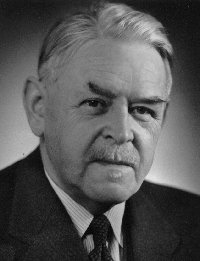
Vilhelm Buhl (16 October 1881 – 18 December 1954) was a Danish politician, who served twice as Prime Minister of Denmark, from May-November 1942 during the German occupation period, and again after Denmark's liberation from May-November 1945.

Key Information

After graduation and serving as collector of taxes in Copenhagen in the 1920s, Buhl joined the Social Democratic Party (Socialdemokratiet), and entered parliament in 1932. In the same year, he became Minister of Finance in the cabinet of Thorvald Stauning. Following Germany's occupation of his country during World War II, Buhl was a determined opponent of Denmark’s forced adherence to the renewed Anti-Comintern Pact with the Axis powers in 1941. Buhl began his first term as prime minister after Stauning's death in 1942, which lasted about six months until his resignation following poor relations with the Germans.

On 5 May 1945 after Adolf Hitler's suicide and Danish Liberation Day, Buhl began his second term as prime minister of the first post-war government, also popularly known as Liberation Cabinet (Danish: Befrielsesregeringen), which lasted about six months until he resigned from office on 7 November of the same year. In the minority Social Democratic government of Hans Hedtoft, Buhl served as the Minister of Economic Coordination from 1947 to 1950, and concurrently as Minister of Justice from March to September 1950. Buhl retired from politics for health reasons after the 1953 elections. He died on 18 December 1954, at the age of 73.

Early life

[edit]

Buhl was born on 16 October 1881 in Fredericia, Denmark, the son of Magdalene Augusta (née Johanne) (1860–1891) and farm owner Hans Peter Buhl (1853–1894). Buhl was one of five siblings. As a student, Buhl co-founded the Legal Discussion Club in 1903. Five years later, in 1908, he graduated from the University of Copenhagen with a Master of Laws degree.

On 20 November 1908, Buhl married Thyra Thygesen Schmidt (b. 29 January 1880 – d. 11 March 1959), and they had four children: Søren Peder Thygesen (1910–1975), Knud (1911–1991), Gerda Martha Magdalene (1914–1993), and Jens (1915–1986).

Political career

[edit]

Buhl joined the Social Democrats while a law student at the University of Copenhagen.[1][2] He was elected to the upper house of parliament in 1932, and then the lower house in 1939. He served as Minister of Finance in the cabinet of Thorvald Stauning from 20 July 1937 until 3 May 1942.

At the beginning of World War II and after the German occupation of Denmark, the government did not establish a government-in-exile in the United Kingdom, as did their neighbor Norway and several other smaller countries. Instead, King Christian remained in Denmark, and Thorvald Stauning created a Unity government that operated with relative independence until August 1943.

When Thorvald Stauning died during the war on 3 May 1942, Buhl succeeded him as prime minister. However, Buhl's government only lasted six months, due to a diplomatic incident (the Telegram Crisis) where King Christian X sent a short and terse reply to a long birthday telegram from Adolf Hitler, who took offense. Consequently, a tough new Nazi commander, Werner Best, was sent to Denmark, and Buhl had poor relations with the Germans. As a result, he resigned on 7 November of the same year, and was replaced by Erik Scavenius.

On 5 May 1945 just three days before VE-Day, many Danish politicians and resistance fighters formed a Liberation Government, which marked the beginning of post-war government after the death of Adolf Hitler on 30 April. Resistance fighters were included because many Danes were dissatisfied with how politicians had cooperation with Germans at the start of the Occupation. Notable members of Buhl's liberation cabinet included Aksel Larsen (communist leader), Hans Hedtoft (future prime minister), H. C. Hansen (future prime minister), Knud Kristensen (future prime minister), and John Christmas Møller (conservative foreign minister). In social policy, the Danish government presided over the passage of the Housing Obligation Act of August 1945, which introduced the obligatory allocation of vacant housing to ensure that vacant flats were let in the first instance to those with low incomes, while also establishing tight rent controls. The Danish government also presided over the trials of Danes who had cooperated with the Germans, which resulted in 45 people being executed. After the October 1945 elections, Buhl resigned from office on 7 November, and was replaced as prime minister by center-right leader Knud Kristensen.

Under the Social Democratic government of Hans Hedtoft, Buhl served as the Minister of Economic Coordination from 1947 to 1950, and also concurrently served as the Minister of Justice from March to September 1950.

Prior to the 1953 elections, Buhl retired from politics, citing health issues.

Death

[edit]

Buhl died of a heart attack at his home in Copenhagen on 18 December 1954, at the age of 73. He was interred in Vestre Cemetery.

References

[edit]
[edit]
Revisions and contributorsEdit on WikipediaRead on Wikipedia
from Grokipedia

Vilhelm Buhl (16 October 1881 – 18 December 1954) was a Danish Social Democratic politician and civil servant who served as from 4 May to 9 November 1942 and from 5 May to 7 November 1945.
A who specialized in taxation as a director in , Buhl succeeded as premier during the Nazi German occupation of .
His initial resisted German demands for expanded collaboration, prompting its forced resignation in November 1942 under occupation authority pressure.
Buhl returned to lead the provisional liberation cabinet immediately following Denmark's release from occupation in May 1945, bridging the transition to full democratic governance.

Early Life and Education

Family Background and Upbringing

Vilhelm Buhl was born on 16 October 1881 in , in the Trinitatis parish of Elbo, , Denmark, to parents Hans Peter Buhl (born 27 August 1856) and Magdalene Augusta Johanne . His father originated from Eltang parish in , while his mother hailed from a similar regional background. Buhl grew up in a family with multiple siblings, including , Kristine, Emil, Aage, and Ane, though records indicate variations such as Agnes Vilhelmine Elisabeth Cecilie and Severin among possible siblings. His early years were spent in , a town with a and industrial character, but specific details on his childhood environment or socioeconomic status remain limited in primary records. His parents' early deaths—mother in 1891 and father around 1894–1897—likely influenced his independent path into adulthood, though direct accounts of his upbringing are scarce.

Professional Training and Early Career

Buhl attended in before matriculating as a student in 1900 and pursuing legal studies at the , from which he graduated with a cand.jur. degree in 1908. Even prior to completing his degree, he began his professional career in , securing employment with the Copenhagen tax authority in 1907. Throughout the 1910s, Buhl advanced steadily in Copenhagen's municipal tax administration, contributing to the drafting of the city's 1910 tax legislation. He was promoted to fullmægtig (clerical officer) in 1911, expeditionssekretær (secretary of the department) in 1916, kontorchef (office manager) in 1918, and vicedirektør (deputy director) in 1919. During , he headed the office tasked with regulating war-related and speculative profits, honing his expertise in and enforcement. In 1924, Buhl reached the pinnacle of his early career with his appointment as skattedirektør (tax director) for , a role in which he oversaw tax collection and administration amid Denmark's evolving economic landscape. This position established his reputation as a skilled tax expert, laying the groundwork for his later involvement in national economic governance.

Rise in the Social Democratic Party

Initial Political Involvement

Vilhelm Buhl joined the Social Democratic Party during his student years at the , where he studied and earned his degree in 1908. He engaged actively in the era's liberal student movement and spent time in the party's youth organization, marking his early alignment with social democratic ideals focused on reformist policies and workers' rights. After graduation, Buhl built a professional career as a expert and eventually director of taxes for , roles that honed his administrative expertise in fiscal matters while he maintained party involvement through local activities. This period of grassroots engagement positioned him for national prominence, as the party valued technocratic competence amid Denmark's interwar economic challenges. Buhl's initial breakthrough came in the 1932 parliamentary elections, when he was elected to the , the of the , representing the Social Democrats in the constituency. His entry into the reflected the party's strategy of elevating experienced administrators to address pressing issues like and , though he initially focused on committee work rather than high-profile debates.

Key Positions and Contributions Pre-1930s

Vilhelm Buhl obtained a degree from the in 1908 and built a career in , serving as a tax expert and later as tax director in during the early 20th century. In the 1920s, he held the position of tax collector for , applying his legal and fiscal knowledge to municipal administration. As an active member of the Danish Social Democratic Party throughout the and , Buhl engaged in the organization's and ideological work amid the party's push for reformist policies, including its brief governance under from 1924 to 1926. His expertise in taxation contributed to internal party discussions on economic equity and public revenue, aligning with the Social Democrats' emphasis on welfare-oriented fiscal strategies, though he did not hold formal leadership roles or elected offices prior to . This period laid the groundwork for his subsequent prominence in party economic affairs.

Pre-War Government Roles

Appointment as Minister of Finance

Vilhelm Buhl, a and former tax director for , was appointed Minister of Finance on 20 July 1937 by Prime Minister as part of a in the ongoing Social Democratic-led . His selection reflected his recognized expertise in taxation and , honed through years as a municipal tax official and his recent election to the Landsting in 1932, positioning him as a trusted advisor to Stauning on economic matters. Buhl had previously declined an offer for the finance portfolio in 1933, prior to his parliamentary entry, underscoring the deliberate timing of his entry into national government to align with legislative experience. The appointment bolstered the government's capacity to manage during a period of economic recovery following the , with Buhl advocating balanced budgets and traditional conservative approaches to spending amid expanding social welfare initiatives. He retained the position through multiple Stauning cabinets until July 1942, navigating pre-war fiscal challenges including unemployment relief and infrastructure investments without resorting to deficit financing beyond established norms.

Economic Policies and Welfare Initiatives

As Minister of Finance from 20 July 1937, Vilhelm Buhl oversaw the fiscal framework supporting 's emerging amid economic recovery from the . Building on the Kanslergade Agreement of 1933, which established key social insurances including , old-age pensions, health coverage, and , Buhl's budgets sustained these programs through progressive taxation and efficient revenue administration, drawing on his prior experience as Copenhagen's in the . The remained modest at around 13% of GDP, with emphasizing orthodoxy via tax hikes over expansive to finance relief for persistent unemployment rates of 13-15%. Buhl managed trade controls and exchange policies inherited from earlier devaluations, aiding export-led growth in and industry during the late , when improved and industrial expansion resumed. His tenure prioritized balanced budgets to avoid while allocating funds for temporary unemployment relief and administrative enhancements to , reflecting Social Democratic commitments from the 1935 victory that bolstered Stauning's III cabinet. In response to rising European tensions, Buhl introduced a defense spending bill to the on 5 1938, marking Denmark's initial budgetary shift toward military strengthening and diverting resources from pure welfare expansion to preparations. This adjustment maintained fiscal restraint, ensuring welfare initiatives like expanded coverage continued without undermining , though no major new reforms were enacted under his direct purview pre-war.

World War II and Danish Occupation

First Prime Ministership (1942)

Vilhelm Buhl assumed the office of Prime Minister of Denmark on May 4, 1942, immediately following the death of his predecessor, Thorvald Stauning, on May 3, 1942, due to complications from a hip fracture sustained in a fall. As the incumbent Minister of Finance, Buhl was appointed by King Christian X to lead a unity coalition government comprising representatives from the major Danish parties, continuing the existing cabinet structure under German occupation. This appointment occurred amid the ongoing policy of samarbejdspolitik (cooperation policy), whereby the Danish government sought to maintain national institutions and legal autonomy by complying with select German directives while resisting broader integration into the Nazi war effort. Buhl's administration adhered to this framework, prioritizing and social welfare provisions despite wartime constraints, but faced escalating tensions as actions by Danish resistance groups intensified in mid-1942. On September 2, 1942, Buhl broadcast a radio address to the nation, imploring citizens to halt and strikes, which he argued undermined the cooperation essential for preserving Danish and averting harsher occupation measures. The speech, delivered in response to growing disruptions including communist-led actions, highlighted the government's view that uncontrolled resistance risked provoking German retaliation against the civilian population and economy. In autumn 1942, German authorities, under new Plenipotentiary , intensified demands on the Danish government, including arming the merchant marine against Allied forces, issuing a on the , and enacting anti-Jewish legislation—requests that Buhl's cabinet largely rebuffed to safeguard national sovereignty and protect . These refusals, particularly on discriminatory laws, strained relations with the occupiers, who perceived Buhl as an obstacle to deeper collaboration. Under mounting pressure, Buhl resigned on November 7, 1942, paving the way for Foreign Minister to form a new cabinet on November 9, viewed by Germans as more amenable to their objectives. His brief tenure thus marked a transitional phase where limited resistance to Nazi encroachments contributed to the government's ouster, the collapse of formal cooperation in 1943.

Opposition to Nazi Collaboration

Vilhelm Buhl's brief tenure as , beginning on 4 May 1942 following Thorvald Stauning's , marked a continuation of Denmark's negotiated cooperation with German occupiers while resisting encroachments on national autonomy. The government under Buhl maintained legal continuity and limited concessions to preserve administrative , but faced mounting German demands for alignment with Nazi priorities, including suppression of and adoption of discriminatory measures. In September 1942, amid escalating pressures, Buhl's administration explicitly rejected German insistence on enacting anti-Jewish , refusing to impose racial restrictions or property confiscations akin to those in other occupied territories. This stance aligned with broader Danish and political reluctance to legitimize Nazi ideology domestically, thereby shielding the Jewish population from immediate legal until the escalation. Tensions peaked during the of October-November 1942, precipitated by King Christian X's curt reply to Adolf Hitler's birthday telegram, which Germans interpreted as defiance. Berlin demanded public repudiation of the king's position, heightened crackdowns on anti-German activities, and greater governmental subservience. Buhl's coalition, comprising Social Democrats and other parties committed to conditional cooperation, declined full compliance, viewing such steps as eroding Denmark's residual sovereignty. Consequently, on 25 November 1942, German authorities compelled Buhl's resignation, installing —a figure deemed more amenable to direct oversight—in his place. This replacement reflected Berlin's frustration with Buhl's resistance to subordinating Danish institutions, as his government had prioritized mitigating occupation hardships over unconditional alignment. Buhl's exit halted further concessions during his term, though it paved the way for intensified under Scavenius until the 1943 government collapse.

Government Dismissal and Aftermath

In November 1942, the German occupation authorities forced 's government to resign amid escalating tensions over Danish resistance to collaboration policies. , who had assumed the premiership on 4 May 1942 following 's death, faced demands for greater compliance, including responses to emerging sabotage against German interests, which his administration viewed as incompatible with national sovereignty. The Germans regarded Buhl's Social Democratic leadership as obstructive, particularly as it prioritized maintaining legal autonomy over concessions like anti-Jewish measures or economic exploitation. Buhl's cabinet was replaced by one led by , the former foreign minister and advocate of pragmatic cooperation with the occupiers, who took office later that month. This transition intensified German oversight of Danish affairs, with Scavenius's government issuing public condemnations of —such as a May 1943 statement drafted under duress—while nominally preserving parliamentary structures. The dismissal underscored the fragility of Denmark's "cooperation policy," accelerating domestic polarization between collaborationists and a burgeoning , though full breakdown occurred only with the August 1943 . Buhl himself withdrew from public office but retained influence within Social Democratic circles opposed to capitulation.

Activities During Scavenius Premiership

Following his resignation as on November 9, 1942, amid the over Denmark's refusal to endorse the , Vilhelm Buhl assumed a pivotal role outside the Scavenius cabinet by joining the Nimandsudvalget—the parliamentary contact committee linking the parties to the government—and emerging as its informal leader. This position bolstered the committee's authority, countering Scavenius's increasing isolation from broader political consensus and enabling Buhl to coordinate responses to German demands while preserving Danish institutional autonomy. As leader of the Nimandsudvalget, Buhl functioned as the nexus of Danish political authority still operating independently of direct German oversight, facilitating communication between the coalition parties in the Rigsdag and the beleaguered Scavenius administration amid mounting actions and economic strains. His influence helped sustain a unified parliamentary front against excessive concessions, though it operated within the constraints of the ongoing cooperation policy. In , Buhl issued a public condemnation of targeting munitions facilities, a statement attributed to German coercion amid heightened reprisals. Tensions culminated in late August 1943, when Buhl played a central role in drafting the committee's resolute "no" to a German on August 28, which sought declarations of loyalty, enhanced police powers, and capital punishment for saboteurs—demands that would have further eroded Danish . This rejection precipitated the of the Scavenius on August 29, the imposition of direct Nazi control, and the dissolution of the , marking the end of formal cooperation. Buhl also rebuffed subsequent German overtures to reconstitute a compliant cabinet under his potential leadership, prioritizing resistance to full subjugation.

Role in Liberation and Provisional Government (1945)

Following the of German forces in on May 5, 1945, Vilhelm Buhl was appointed of the provisional (Befrielsesregeringen), marking the first post-occupation government and initiating the transition from wartime administration to democratic governance. This coalition included representatives from established political parties, such as Buhl's Social Democrats, alongside members of the Danish Freedom Council, reflecting a deliberate balance between continuity from pre-occupation politics and recognition of the resistance's contributions during the Nazi era. Buhl's selection stemmed from his prior experience as in 1942 and his perceived opposition to collaboration with German authorities, which garnered support among both politicians and liberation leaders despite underlying tensions between party establishments and resistance groups. The Liberation Cabinet, under Buhl's leadership, focused on immediate stabilization measures, including the formal acceptance of German capitulation, disarmament of remaining occupation forces, and restoration of public order amid widespread and economic disruption. Buhl also prioritized economic reconstruction, announcing plans for state investments totaling approximately six billion kroner in and projects to combat and exacerbated by five years of and resource extraction under occupation. On May 12, 1945, during the reopening of the Danish parliament (Folketinget), Buhl addressed the assembly, affirming Denmark's commitment to international cooperation by expressing intent to join the nascent organization. Tensions persisted within the provisional framework, as the Freedom Council's push for radical reforms clashed with traditional parties' emphasis on parliamentary restoration, yet Buhl navigated these by maintaining a minority Social Democratic-led coalition until national elections could be held. The dissolved on November 7, 1945, paving the way for a regular parliamentary administration under Knud Kristensen, having served as a bridge from occupation to full sovereignty without major institutional upheaval.

Post-War Political Involvement

Second Prime Ministership and Coalition Formation

Following Denmark's liberation from German occupation on May 5, 1945, King Christian X reappointed Vilhelm Buhl as , tasking him with leading a to restore order and facilitate the transition to full parliamentary . This second Buhl cabinet succeeded the collaborationist administration under and marked the immediate post-war effort to reintegrate resistance elements into governance. The coalition was deliberately broad to bridge divides between the pre-occupation political establishment and wartime opposition groups, comprising ministers from the major parties—including Buhl's Social Democrats, Conservatives, Radicals, and Venstre (Liberals)—alongside delegates from the Danish Freedom Council (Frihedsrådet) and other resistance organizations. Representation was structured for approximate parity between former unity government figures and resistance representatives, totaling 18 ministers, to foster national reconciliation amid urgent tasks such as disarming German forces, addressing food shortages, and purging Nazi collaborators from public institutions. Buhl's administration prioritized economic stabilization and legal continuity, issuing emergency decrees to manage reparations, currency reform, and provisional justice measures while deferring major policy shifts until elections. This unity framework, signed onto by party leaders and the Freedom Council, emphasized anti-Nazi solidarity and Allied cooperation, reflecting pre-liberation planning for a non-partisan interim phase. The government's tenure concluded after the October 30, 1945, elections, in which the Social Democrats secured the largest share of seats but could not command a majority coalition. Buhl resigned on November 13, 1945, paving the way for a Venstre-led minority cabinet under Knud Kristensen, which shifted focus toward agrarian interests and border revisions with .

Transition to Parliamentary Democracy

Following Denmark's liberation from German occupation on May 5, 1945, Vilhelm Buhl formed a provisional unity government as , serving from that date until November 7, 1945. This cabinet, often termed the Buhl II government, integrated ministers from the pre-occupation coalition parties with representatives from the Danish Freedom Council (Frihedsrådet) and other resistance organizations, comprising 18 members in roughly equal proportions to foster national consensus during the immediate postwar period. The government's primary mandate was to restore public order, initiate economic stabilization, and prosecute wartime collaborators through legal processes, all while preparing the framework for resumed democratic elections suppressed since the 1943 dissolution of the under occupation pressures. Denmark's transition from occupation to parliamentary rule under Buhl's leadership was notably orderly, contrasting with more turbulent liberations elsewhere in , as the cabinet avoided radical purges or seizures of power and prioritized institutional continuity. Key actions included reestablishing administrative functions, addressing food shortages and infrastructure damage from the war, and coordinating with Allied forces for and aid distribution, which laid groundwork for credible electoral participation. The provisional regime explicitly committed to holding free and fair elections as soon as feasible, reflecting a deliberate causal chain from resistance-era planning to postwar constitutional restoration, without extending its authority indefinitely. Folketing elections occurred on October 30, 1945—the first since 1940—allowing voters to select representatives under the restored proportional system, with participation exceeding 80% amid heightened political engagement from wartime experiences. Buhl's Social Democrats secured the largest share of seats but lacked a , prompting the government's resignation on November 7, 1945, and the formation of a new Liberal-led coalition under Knud Kristensen on November 8. This handover exemplified the provisional government's self-limiting role, ensuring resumed without interruption or authoritarian drift, thus solidifying Denmark's multiparty democratic framework.

Legacy and Assessments

Achievements in Policy and Resistance

During his first premiership from May 4 to November 9, 1942, Vilhelm Buhl pursued a policy of reluctant cooperation with German occupiers, aiming to safeguard Danish sovereignty and jurisdiction amid escalating sabotage and strikes. This approach opposed the more conciliatory stance of Foreign Minister Erik Scavenius, including resistance to proposals for a customs union with Germany and initial opposition to signing the Anti-Comintern Pact, though Buhl yielded to pressure on the latter to avert a governmental crisis. By maintaining the framework of constitutional governance, Buhl's administration delayed the imposition of direct Nazi rule, preserving institutional autonomy longer than in comparably occupied nations like Norway, where civil administration collapsed earlier. His resignation in November 1942, prompted by the "Telegram Crisis" involving King Christian X's terse response to Adolf Hitler, underscored German frustration with Buhl's insufficient accommodation, leading to Scavenius's interim leadership. Buhl's wartime stance toward active resistance was initially cautious and skeptical, as evidenced by his September 2, 1942, radio address—known as the "Snitch Speech"—in which he urged Danes to report plans to authorities, framing such acts as detrimental to national interests and stability. A similar appeal followed in December 1942, reflecting concerns that uncontrolled risked provoking harsher German reprisals and undermining the government's negotiating leverage. Nonetheless, this legalistic resistance preserved a veneer of Danish self-rule until , 1943, when Buhl, acting in an informal leadership capacity post-resignation, rejected a German demanding suppression of unrest, effectively blocking the formation of a Nazi administration and aligning with shifting public sentiment toward outright opposition. These efforts indirectly supported the broader resistance by sustaining parallel structures, such as the illegal general staff and exiled Danish forces in , which coordinated with underground networks. In the post-liberation period, Buhl's second premiership from to November 1945 marked a key achievement in integrating resistance elements into governance, forming a 18-member cabinet evenly divided between pre-occupation unity government figures and representatives from the Freedom Council (Frihedsrådet) and other underground groups. This coalition facilitated discreet wartime contacts between establishment politicians and resistance mediators, ensuring a unified national front during the transition from occupation. Policy initiatives under Buhl prioritized punishing collaborators, compensating occupation victims, and pursuing membership, culminating in Denmark's invitation to the Conference on May 1945, which affirmed its restored international standing. By balancing continuity with resistance inclusion, Buhl's leadership averted post-war factionalism, enabling parliamentary elections on October 30, 1945, and reinforcing democratic institutions strained by five years of occupation.

Criticisms of Cooperation Policy

Buhl's September 4, 1942, radio address, dubbed the "stikkertalen" (snitch speech), drew sharp rebuke from Danish resistance circles for urging citizens to report acts against German targets, framing such reporting as a civic duty to avert collective reprisals. In the speech, Buhl warned that unchecked by "irresponsible elements," often linked to communists, risked escalating German crackdowns that could dismantle Denmark's remaining and endanger the populace, yet detractors viewed this as actively aiding the occupier by enlisting in suppressing anti-Nazi activities. Resistance publications and underground networks lambasted the government's adherence to samarbejdspolitik (cooperation policy) under Buhl as morally corrosive, arguing it legitimized Nazi authority by prioritizing administrative continuity over outright defiance, thereby delaying broader mobilization against the occupation. Illegal presses highlighted instances where cooperation enabled German exploitation of Danish resources and labor, contending that Buhl's restraint—while resisting overt collaborationist demands like Foreign Minister Erik Scavenius's pro-German overtures—still fostered a facade of normalcy that blunted public outrage and sustained the regime's viability until the 1943 crisis. Communist-led factions, pivotal in early sabotage efforts, leveled particular scorn at Buhl's administration for perceived timidity, positing that the policy inadvertently bolstered German portraying Denmark as a willing partner, which in turn justified harsher measures when resistance intensified. Post-occupation has echoed these sentiments, with some analysts critiquing the approach for underestimating the galvanizing potential of non-cooperation, though defenders note it preserved institutions intact for the liberation; nonetheless, the consensus among wartime opponents remains that Buhl's framework prolonged avoidable concessions to the occupier.

Historical Debates on Wartime Leadership

Historians have long debated the merits of Vilhelm Buhl's leadership during Denmark's German occupation from 1942 to 1943, particularly his commitment to the samarbejdspolitik (cooperation policy), which sought to sustain limited Danish autonomy through negotiation rather than outright confrontation. Appointed on May 4, 1942, following Thorvald Stauning's , Buhl inherited a framework that prioritized preserving democratic institutions, parliamentary functions, and economic stability amid occupation, allowing Denmark to avoid the direct rule imposed on neighbors like . Proponents of Buhl's approach, including post-war Social Democratic assessments, argued that cooperation delayed harsher measures, such as mass deportations or dissolution of the (parliament), which operated until August 1943, and enabled covert resistance networks to organize without immediate reprisals; empirical data supports this, as Danish civilian casualties remained low—around 3,000 total wartime s—compared to over 50,000 in under similar occupation durations. Critics, often drawing from resistance memoirs and early post-liberation inquiries, contend that Buhl's extended German leverage, facilitating of Danish agriculture and industry for the —Denmark supplied 15-20% of Germany's bacon imports by 1943—and morally diluted opposition by framing as detrimental to national interests. A pivotal flashpoint was Buhl's May 1943 radio address condemning against German targets, issued under duress after intensified attacks on rail and infrastructure, which some historians interpret as prioritizing order over with underground groups, potentially discouraging broader mobilization until after his government's fall. This stance reflected causal calculations: Buhl viewed uncontrolled resistance as risking , which the Germans indeed declared on August 29, 1943, following the cabinet's refusal to sign a declaration pledging suppression of unrest, leading to Buhl's dismissal and the installation of Erik Scavenius's more compliant regime. The 1943 crisis underscores a core debate on agency versus inevitability; defenders credit Buhl's partial resistance—such as rejecting anti-Jewish in September 1942—with buying time for the Jewish exodus, where 99% of Denmark's 7,800 escaped deportation through coordinated efforts post-dismissal. Detractors argue this was incidental, not policy-driven, and that earlier abandonment of cooperation, as urged by figures like the Freedom Council, could have accelerated Allied support and shortened , which lasted until May 5, 1945. Recent scholarship, emphasizing spectral analyses of occupation responses, portrays Buhl's tenure as pragmatically realist—balancing empirical risks of escalation against ideological purity—rather than outright collaboration, though it acknowledges systemic trade-offs, including suppressed internal dissent within his Social Democratic party. These evaluations persist in Danish , informing broader reflections on democratic resilience under , with no consensus but a tilt toward conditional vindication based on outcomes like retained welfare structures post-war.

Death

Final Years and Passing

After serving in Denmark's until 1947, Vilhelm Buhl retired from active political life. He resided in during his final years, maintaining a low public profile amid the nation's reconstruction efforts. Buhl died on 18 December 1954 in at the age of 73. His passing marked the end of a career defined by wartime challenges and contributions to Denmark's .

References

Add your contribution
Related Hubs
Contribute something
User Avatar
No comments yet.