


Community hub
Recent from talks
Contribute something
Nothing was collected or created yet.
Volvo Engine Architecture
View on Wikipedia| Volvo Engine Architecture | |
|---|---|
 | |
| Overview | |
| Manufacturer | Proton[2] |
| Also called | |
| Production | 2013[11]–present |
| Layout | |
| Configuration | I3,[12] I4[13] |
| Displacement | 1.5 L (1,498 cc)[12][14] 1.5 L (1,477 cc)[15] 2.0 L (1,969 cc)[16] |
| Cylinder bore | 82 mm (3.23 in) |
| Piston stroke | 70.9 mm (2.79 in) 93.2 mm (3.67 in) |
| Cylinder block material | Aluminum[17] |
| Cylinder head material | Aluminum[17] |
| Valvetrain | DOHC[18] |
| RPM range | |
| Idle speed | 825 rpm – 850 rpm |
| Max. engine speed |
|
| Combustion | |
| Supercharger | Eaton Roots-type (T6 & T8 engine architecture) |
| Turbocharger |
|
| Fuel system |
|
| Management | |
| Fuel type | |
| Oil system | Wet sump |
| Cooling system | Water-cooled |
| Emissions | |
| Emissions target standard | |
| Emissions control systems | |
| Chronology | |
| Predecessor |
|
The Volvo Engine Architecture[13] (VEA) is a family of straight-three and straight-four automobile petrol and diesel engines produced by Volvo Cars in Skövde,[30] Sweden, since 2013,[31] Zhangjiakou,[32] China, since 2016[33] and Tanjung Malim, Malaysia, since 2022 by Proton.[34] Volvo markets all engines under the Drive–E[35][19][36] designation,[37] while Geely groups the three-cylinder variants with its other engines under the G-power[38] name. These engines are some of the few ever put into production as twincharged engines, in the company of the Lancia Delta S4 and concept Jaguar CX-75.
History
[edit]Development of the new engine family began in 2006,[39] with the decision to only produce four-cylinder engines being finalised in 2007.[39] The intention was to produce smaller,[40] more economical and environmentally friendly[41] engines that would be fitted to every Volvo model. In 2008[17] Volvo began to upgrade its Skövde engine plant and invested roughly 2 billion SEK[42] into development and tooling for the VEA.[11]
In the autumn of 2013,[22] the first cars with the new engines were delivered to customers, starting with the S60 II and V60 models.[43] At the same time, Volvo began to phase out the five-cylinder petrol and diesel engines,[44] the six-cylinder petrol engines as well as any four-cylinder engines from other manufacturers.[42] Until the end of 2015,[45] nearly all other engines had been phased out, with only a few non VEA engines remaining in production for select models.[46] Volvo nearly completed the phaseout in 2016[47] with only two variants of the five-cylinder diesel remaining in production for the 60-series models.
In December 2014, Volvo introduced the first hybrid variant of a VEA engine with the launch of the XC90 T8. It uses an electric rear axle drive (ERAD) for both electric propulsion and AWD capabilities. Hybrid engines are equipped with a crankshaft integrated starter generator (CISG) that is used to start the engine, capture otherwise lost energy when slowing down and reduce lag at low rpm by acting as an additional supercharger. Volvo refers to this type of hybrid implementation as Twin Engine.[48]
With the introduction of Volvo's new flagship sedan in 2016, the S90, the PowerPulse anti-lag system for the top of the range diesel engines was unveiled. It uses a small tank of compressed air that can instantaneously be released into the turbocharger to help with spool up, thereby reducing turbo lag.[49][50]
Volvo began testing of three-cylinder variants in mid 2014,[51] it had been planned to introduce these engines[12] in 2015. With their smaller capacity and less power they were meant to be used as base engines.[14] In 2015 no three-cylinder engines were released, instead four-cylinder variants with 1.5 L capacity were introduced as base engines on some models.[52] In the second half of 2017, the first production VEA three-cylinder engine was released with the debut of the LEVC TX, where it is used as a range extender. The first Volvo three-cylinder VEA was slated for introduction in 2018 for the XC40 under the T3 engine designation,[53] however it saw only limited release.
Due to stricter emissions laws, additional and improved emissions control equipment was introduced, beginning in the second half of 2017 for the 2018 model year. Diesel engines gained a SCR-catalyst to decrease NOx emissions, petrol engines received a particle filter. These changes are referred to as VEA GEN2. This improved the emissions rating to Euro 6c and for some engines to Euro 6d-TEMP.[54][55] The improvements were rolled out in stages and some engines, particularly the hybrid variants, remained in Euro 6 configuration until the second quarter of 2018. By model year 2019[56] all engines had been updated to achieve Euro 6d-TEMP certification, with some engines getting discontinued. All diesel engines are now equipped with Ad-Blue[nb 4] and all petrol engines with a particle filter.
Volvo has been developing a major update for all its engines since 2017. It is code-named VEA GEN3 (with VEP GEN3 and VED GEN3[57] respectively) and part of Volvo's effort to hybridize all of its engines. The MHEV variants will have a 48V network separate from the high-voltage battery system.
New B badging for hybrid vehicles.[58] Deviating from the previously introduced T<some number> (1994 with the T-5, without the dash in 1996 for X70) and D<some number> (2002 with the D5 engine, expanded in ~2009 with D4 and D3 subdivision) naming/badging scheme. The system uses kinetic energy recovery via a belt driven integrated starter generator (BISG) which is stored in a 48V 0.25 kWh lion battery. Under heavy load or rapid acceleration the BISG is used as a power adder. P0 hybridization.[59][60][61][62][63]
Nomenclature
[edit]The engine codes consist of a series of letters and digits. The actual, broadly used engine code is 7 or 8 characters long. Hybrid models can have a second engine code that is 7 characters long, mild hybrids engine codes are 6 characters long. Different, more general engine codes are used for some certification and approval documents and are 6 to 8 characters long. An additional 2 characters are used to identify each specific engine variant with an MP or HP suffix to differentiate performance.[18]
Standard engine codes:
- 1st: Fuel type (B/D) B = Bensin (Petrol),[64] D = Diesel
- 2nd: Number of cylinders (3/4)
- 3rd & 4th: Approximate displacement in deciliters, may be rounded up or down (19 ~= 2.0 L)
- 5th: Valves per cylinder (4)[64]
- 6th: Induction method (T) T = turbocharged[65]
- 7th & 8th: Engine variant (4/5/6/9/11/14/20/23/27/35/44)[64]
Petrol (GEP3/VEP4)
[edit]1.5
[edit]All three-cylinder 1.5 L (1,477 cc) petrol engines have a bore of 82 mm (3.2 in) and a stroke of 93.2 mm (3.7 in) with a compression ratio of 10.5:1. All engines are turbocharged and intercooled with direct injection. All 3 cylinder engines are equipped with belt driven water pump and integrated mass balancer shaft,[66] 4 cylinder engines are equipped with an electric water pump.
B3154T
[edit]The B3154T is usually only referred to as range extender. It delivers 82 PS (60 kW; 81 hp) at 4000 rpm and 255 N⋅m (188 lb⋅ft).[67] When running it only recharges the high voltage battery, thus functioning as a range extender giving approx. 300 miles of additional range.[68] Single turbocharger.
CISG.
Emissions level Euro 6.
Applications:
B3154T
[edit]The B3154T[70] (11 or 14 for standard transmission and 15 for automatic) delivers 156 PS (115 kW; 154 hp) at 5000 rpm and 265 N⋅m (195 lb⋅ft) of torque in the range of 1850–3850 rpm with standard transmission or 265 N⋅m (195 lb⋅ft) of torque in the range of 1850–3850 rpm with automatic. Engine variant for cars equipped with a manual or automatic gearbox. Single turbocharger.
This engine is only available with a six-gear gearbox made by Volvo Cars or the Toyota AW8G30 gearbox.
It was replaced by the newer engine B3154T7 which retains the same ID code of 11 but not 14; automatic was changed to B3154T2 which retains the same ID code of 15.
Emissions level Euro 6d-TEMP.
Applications:
- 2019 Volvo XC40 badged as XC40 T3[53]
B3154T2
[edit]The B3154T2 (15) delivers 163 PS (120 kW; 161 hp) at 5500 rpm and 265 N⋅m (195 lb⋅ft) of torque in the range of 1500–3000 rpm. Engine variant for cars equipped with an automatic gearbox. Single turbocharger.
This engine is only available with the AW8G30 gearbox.
Emissions level Euro 6d-TEMP.
Applications:
- 2020–present Volvo XC40 badged as XC40 T3[71]
B3154T3
[edit]The B3154T3 delivers 129 PS (95 kW; 127 hp) at 5000 rpm and 250 N⋅m (180 lb⋅ft) of torque in the range of 1550–3000 rpm.
Emissions level euro 6dtemp.
Applications:
- 2019–present Volvo XC40 badged as XC40 T2
B3154T5
[edit]The B3154T5 (BB) delivers 180 PS (132 kW; 178 hp) at 5800 rpm and 265 N⋅m (195 lb⋅ft) of torque in the range of 1500–3000 rpm. The front electric motor (EFAD) delivers 82 PS (60 kW; 81 hp) and 160 N⋅m (120 lb⋅ft) of torque. Single turbocharger.
Battery capacity is 9.7 kWh.
This engine is only available with the 7DCTH[72] gearbox.
Emissions level Euro 6d.
Applications:
- 2020–present Volvo XC40 badged as XC40 T5 Twin Engine
B3154T7
[edit]The B3154T7 (11) delivers 163 PS (120 kW; 161 hp) at 5500 rpm and 265 N⋅m (195 lb⋅ft) of torque in the range of 1850–3000 rpm. Engine variant for cars equipped with a manual gearbox. Single turbocharger.
This engine is only available with the M76 R6.2 gearbox.
Emissions level Euro 6d-TEMP.
Applications:
- 2020–present Volvo XC40 badged as XC40 T3[71]
B3154T9
[edit]The B3154T9 delivers 129 PS (95 kW; 127 hp) at 5000 rpm and 245 N⋅m (181 lb⋅ft) of torque in the range of 1600–3000 rpm. Single turbocharger.
Emissions level Euro 6d-TEMP.
Applications:
- 2020–present Volvo XC40 badged as XC40 T2[73]
JLH-3G15TD / JLH-3G15T
[edit]The JLH-3G15TD delivers 180 PS (132 kW; 178 hp) at 5500 rpm and 265 N⋅m (195 lb⋅ft) of torque in the range of 1500–4000 rpm. Single turbocharger.
The JLH-3G15T delivers 150 metric horsepower (110 kW; 148 hp) at 5500 rpm and 226 newton-metres (167 lb⋅ft) of torque in the range of 1500 and 4000 rpm. Single turbocharger.[74][75][76]
This engine is only available with a 7-speed DCT.
No emissions standard information.
Applications: JLH-3G15TD
- 2016–present Geely Boyue
- 2018–present Geely Binyue
- 2018–present Geely Borui GE
- 2018–present Lynk & Co 01 / 领克01 badged as 01 PHEV[77]
- 2018–present Lynk & Co 02 / 领克02 badged as 02 or 02 1.5TD
- 2018–present Lynk & Co 03 / 领克03 badged as 03 or 03 1.5TD
- 2020–present Geely Icon
- 2020–present Proton X50
- 2020–present Proton X70
- 2023–present Proton X90
Applications: JLH-3G15T
- 2020–present Proton X50
- 2023–present Proton S70
- 2024–present Geely Xingyue L / Renault Grand Koleos
JLH-3G15TDC
[edit]The JLH-3G15TDC delivers 156 PS (115 kW; 154 hp) at 5000 rpm and 245 N⋅m (181 lb⋅ft) of torque in the range of 1450–4000 rpm. Single turbocharger.
Emissions level China V.
Applications:
- 2018–present Lynk & Co 02 / 领克02 badged as 02 or 02 1.5TD
B4154T2
[edit]The B4154T2[78] (32) delivers 152 PS (112 kW; 150 hp) at 5000 rpm and 250 N⋅m (180 lb⋅ft) of torque in the range of 1800–4000 rpm. Engine variant for cars equipped with an automatic gearbox. Single turbocharger.
This engine is only available with an automatic gearbox.
Emissions level Euro 6d-TEMP.
Applications:
- 2019 Volvo V40 II badged as V40 T3
- 2019 Volvo V40CC badged as V40CC T3
B4154T3
[edit]The B4154T3 (33) delivers 122 PS (90 kW; 120 hp) at 5000 rpm and 220 N⋅m (160 lb⋅ft) of torque in the range of 1800–3500 rpm. Engine variant for cars equipped with an automatic gearbox. Single turbocharger.
Emissions level Euro 6d-TEMP.
Applications:
- 2019 Volvo V40 II badged as V40 T2
B4154T4
[edit]The B4154T4 (29) delivers 152 PS (112 kW; 150 hp)[79] at 5000 rpm and 250 N⋅m (180 lb⋅ft) of torque in the range of 1700–4000 rpm. Engine variant for cars equipped with an automatic gearbox. Single turbocharger.
This engine is only available with the AW TF-71SC gearbox.
Emissions level Euro 6b.
Applications:
- 2016–2018 Volvo V40 II badged as V40 T3[80]
- 2015–2018 Volvo V40CC badged as V40CC T3
- 2016–2018 Volvo S60 II badged as S60 T3[81]
- 2016–2018 Volvo S60L badged as S60L T3[82][79]
- 2016–2018 Volvo V60 badged as V60 T3[83]
B4154T5
[edit]The B4154T5 (28) delivers 122 PS (90 kW; 120 hp) at 5000 rpm and 220 N⋅m (160 lb⋅ft) of torque in the range of 1600–3500 rpm. Engine variant for cars equipped with an automatic gearbox. Single turbocharger.
This engine is only available with the AW TF-71SC gearbox.
Emissions level Euro 6b, upgraded to Euro 6d-TEMP with model year 2018.
Applications:
- 2016–2019 Volvo V40 II badged as V40 T2[80]
- 2016–2018 Volvo S60 II badged as S60 T2[81]
- 2016–2018 Volvo V60 badged as V60 T2[83]
B4154T6
[edit]The B4154T6 delivers 152 PS (112 kW; 150 hp) at 5000 rpm and 250 N⋅m (180 lb⋅ft) of torque in the range of 1600–3500 rpm. Single turbocharger.
This engine is only available with the AW TF-71SC gearbox.
Emissions level Euro 6b.
Applications:
- 2016–2019 Volvo V40 II badged as V40 T3
- 2016–2018 Volvo S60 II badged as S60 T3
- 2016–2018 Volvo V60 badged as V60 T3[84]
2.0
[edit]All 2.0 L (1,969 cc) petrol engines have a bore of 82 mm (3.2 in) and a stroke of 93.2 mm (3.7 in) with a compression ratio of 10.3:1.[85] All engines are turbocharged and intercooled with direct injection. More powerful versions are equipped with a roots type supercharger in addition to being turbocharged and intercooled. All engines come with an electric water pump and balancer shafts.
B4204T5
[edit]The B4204T5 delivers 180 PS (132 kW; 178 hp) at 5800 rpm and 265 N⋅m (195 lb⋅ft) of torque in the range of 1500–3000 rpm. The front electric motor (EFAD) delivers 82 PS (60 kW; 81 hp) at 4000 rpm and 160 N⋅m (120 lb⋅ft) of torque at 3500 rpm. Single turbocharger.
Battery capacity is 10.7 kWh.
This engine is only available with the 7DCT gearbox.
Emissions level Euro 6d-TEMP.
Applications:
- 2020–present Volvo XC40 badged as XC40 Twin Engine or XC40 T5 Twin Engine
JLH-4G20TD
[edit]The JLH-4G20TD delivers 190 PS (140 kW; 187 hp) at 4700 rpm and 300 N⋅m (220 lb⋅ft) of torque in the range of 1400–4000 rpm. Single turbocharger.
Emissions level China VI.
Applications:
- 2018–2023 Lynk & Co 02 / 领克02 badged as 02 or 02 2.0T or 02 AWD
JLH-4G20TDB
[edit]The JLH-4G20TDB delivers 238 PS (175 kW; 235 hp) and 350 N⋅m (260 lb⋅ft) of torque.[86]
Emissions level China VIB.
Applications:
- 2020–present Geely Xingyue / Geely Xing Yue / 吉利星越[87] badged as 驭星者AWD or 星越 350T
JLH-4G20TDC
[edit]The JLH-4G20TDC delivers 254 PS (187 kW; 251 hp) and 350 N⋅m (260 lb⋅ft) of torque in the range of 1800–4800 rpm.
JLH-4G20TDH
[edit]The JLH-4G20TDH delivers 265 PS (195 kW; 261 hp) and 380 N⋅m (280 lb⋅ft) of torque in the range of 2000–4000 rpm.[88]
B4204T9
[edit]The B4204T9[89] (49) delivers 302 PS (222 kW; 298 hp) at 5700 rpm and 400 N⋅m (300 lb⋅ft) of torque in the range of 2100–4500 rpm.[90] For 2016 minor changes increased power output to 306 PS (225 kW; 302 hp) at 5700 rpm.[91] Turbocharger and supercharger.
This engine is only available with the AW TG-81SC gearbox.
Emissions level Euro 6, beginning with model year 2018 emissions level Euro 6b.[92]
Applications:
- 2015–2018 Volvo S60 II[93] badged as S60 T6 or S60 T6 AWD
- 2015–2018 Volvo V60 badged as V60 T6 or V60 T6 AWD
- 2014–2017 Volvo XC60 badged as XC60 T6[94] or XC60 T6 AWD
B4204T10
[edit]The B4204T10[64] (27) delivers 302 PS (222 kW; 298 hp) at 5700 rpm and 400 N⋅m (300 lb⋅ft) of torque in the range of 2100–4500 rpm. Turbocharger and supercharger.
This engine is only available with the AW TG-81SC gearbox.
Emissions level Euro 6b.
Applications:
- 2014–2018 Volvo S60 II[93] badged as S60 T6[95]
- 2014–2017 Volvo XC60 badged as XC60 T6[96]
B4204T11
[edit]The B4204T11[97] (40) delivers 245 PS (180 kW; 242 hp) at 5500 rpm and 350 N⋅m (260 lb⋅ft) of torque in the range of 1500–4800 rpm.[98] The compression ratio was changed to 10.8:1. Single turbocharger. The crankshaft has a stroke of 93.2mm.[99]
This engine is only available with the AW TG-81SC gearbox.
A specially designed ULEV2 emissions variant of this engine exists.[100]
Emissions level Euro 6.
Applications:
- 2015–2019 Volvo V40 II badged as V40 T5[101]
- 2015–2019 Volvo V40CC badged as V40CC T5[102] or V40CC T5 AWD
- 2015–2018 Volvo S60 II badged as S60 T5
- 2015–2018 Volvo S60L badged as S60L T5[82] or S60L T5 AWD[103][93]
- 2015–2018 Volvo S60CC badged as S60CC T5 AWD
- 2015–2018 Volvo V60 badged as V60 T5[104]
- 2015–2018 Volvo V60CC badged as V60CC T5[105] or V60CC T5 AWD[106]
- 2015–2017 Volvo XC60 badged as XC60 T5[90] or XC60 T5 AWD[107]
- 2014–2016 Volvo S80 II badged as S80 T5[108][109]
- 2014–2016 Volvo V70 III badged as V70 T5[110][111] or V70 Bi-Fuel[112]
- 2014–2016 Volvo XC70 II badged as XC70 T5[113]
B4204T12
[edit]The B4204T12[97] (26) delivers 240 PS (177 kW; 237 hp) at 5600 rpm and 350 N⋅m (260 lb⋅ft) of torque in the range of 1500–4500 rpm. Single turbocharger.
This engine is a PZEV[18] emissions variant and features additional emissions reducing equipment.[114][115][116]
Applications:
- 2015-2016 Volvo S80 II badged as S80 T5
- 2015–2018 Volvo S60 II[93] badged as S60 T5[117]
- 2015–2017 Volvo XC60 badged as XC60 T5[118]
B4204T14
[edit]The B4204T14 (13) delivers 247 PS (182 kW; 244 hp) at 5500 rpm[119] and 350 N⋅m (260 lb⋅ft) of torque in the range of 1800–4800 rpm. The compression ratio was changed to 10.8:1. Single turbocharger.
The engine is equipped with a particle filter. Emissions level Euro 6d-TEMP.
Applications:
- 2018–present Volvo XC40 badged as XC40 T5 AWD[119]
B4204T15
[edit]The B4204T15[120] delivers 220 PS (162 kW; 217 hp) at 5500 rpm and 350 N⋅m (260 lb⋅ft) of torque in the range of 1500–4000 rpm. The compression ration was changed to 10.8:1.[121] Single turbocharger.
This engine is only available with the AW TG-81SC gearbox.
Emissions level Euro 6.
Applications:
- 2014–2016 Volvo V40 II badged as V40 T5
- 2015–2016 Volvo V40CC badged as V40CC T5[122]
- 2016–2017 Volvo S60 II badged as S60 T5[123]
- 2016–2017 Volvo V60 badged as V60 T5[124]
- 2014–2016 Volvo S80 II badged as S80 T5[125]
B4204T17
[edit]The B4204T17 (36) delivers 122 PS (90 kW; 120 hp) at 5000 rpm and 220 N⋅m (160 lb⋅ft) of torque in the range of 1200–3500 rpm. The compression ratio was changed to 11.3:1. Single turbocharger.
This engine is only available with the M76 R6.2 gearbox.
Emissions level Euro 6d-TEMP.
Applications:
- 2018–2019 Volvo V40 II badged as V40 T2
B4204T18
[edit]The B4204T18 (16) delivers 252 PS (185 kW; 249 hp) at 5500 rpm and 350 N⋅m (260 lb⋅ft) of torque in the range of 1500–4800 rpm.[126] Single turbocharger.
Nominal rated power is 280 PS (206 kW; 276 hp) at 5500 rpm.
Gearbox only TG-80SC AWD
Emissions level Euro 6d-TEMP.
Applications:
- 2018–present Volvo XC40 badged as XC40 T5 AWD[126]
- 2021–present Lynk & Co 09 Mild hybrid 2.0T+8AT 48V mechanical four-wheel drive
- 2021–present Lynk & Co 09 Hybrid 2.0T HEV light hybrid electric four-wheel drive
B4204T19
[edit]The B4204T19 (41) delivers 190 PS (140 kW; 187 hp)[127] at 4700 rpm and 300 N⋅m (220 lb⋅ft) of torque in the range of 1350–4000 rpm.[98] The compression ratio was changed to 11.3:1. Single turbocharger.
This engine is available with the M66H, M76, AW TF81-SC and AW TF-71SC gearbox.
Emissions level Euro 6, beginning with model year 2018 emissions level Euro 6b.
Applications:
- 2016–2019 Volvo V40 II badged as V40 T4
- 2016–2019 Volvo V40CC badged as V40CC T4
- 2016–2018 Volvo S60 II badged as S60 T4
- 2016–2018 Volvo S60L badged as S60L T4[82][127][128]
- 2016–2018 Volvo V60 badged as V60 T4[129]
- 2015–2016 Volvo V70 III badged as V70 T4[111]
B4204T20
[edit]The B4204T20 (8) delivers 249 PS (183 kW; 246 hp) at 5500 rpm and 350 N⋅m (260 lb⋅ft) of torque in the range of 1500–4500 rpm. Single turbocharger.
Emissions level Euro 6, for the XC60 II emissions level Euro 6b.
Applications:
- 2017–present Volvo XC60 II badged as XC60 T5 AWD[130]
- 2016–present Volvo S90 II badged as S90 T5[131]
- 2017–present Volvo V90CC badged as V90CC T5 AWD[132]
- 2016–present Volvo XC90 II badged as XC90 T5 AWD
- 2019–present Volvo S60 III badged as S60 T5 AWD
B4204T21
[edit]The B4204T21 (57) delivers 190 PS (140 kW; 187 hp) at 5000 rpm and 320 N⋅m (240 lb⋅ft) of torque in the range of 1500–4000 rpm.[133] Single turbocharger.
This engine is only available with the AW TG-81SC gearbox.
Emissions level Euro 6.
Applications:
- 2015–2019 Volvo V40CC badged as V40CC T4 AWD[122]
B4204T23
[edit]The B4204T23 (10) delivers 254 PS (187 kW; 251 hp) at 5500 rpm and 350 N⋅m (260 lb⋅ft) of torque in the range of 1500–4800 rpm. Single turbocharger.
In Europe emissions level Euro 6, for the XC60 II emissions level Euro 6b.
In China emissions level China VI.
Applications:
- 2019–present Volvo S60 III badged as S60 T5 AWD
- 2019–present Volvo V60CC badged as V60CC T5 or V60CC T5 AWD
- 2017–present Volvo XC60 II badged as XC60 T5 AWD[134]
- 2016–present Volvo S90 II badged as S90 T5[135]
- 2016–present Volvo S90L badged as S90长轴距[nb 5] T5[nb 6][136]
- 2017–present Volvo V90 II badged as V90 T5 or V90 Bi-Fuel[137][138]
- 2017–present Volvo V90CC badged as V90CC T5 AWD[132]
- 2015–present Volvo XC90 II badged as XC90 T5 AWD[139]
- 2019–present Lynk & Co 03 / 领克03 badged as 03+[140][141]
B4204T26
[edit]The B4204T26 (25) delivers 250 PS (184 kW; 247 hp) at 5500 rpm and 350 N⋅m (260 lb⋅ft) of torque in the range of 1800–4800 rpm. The compression ratio was changed to 10.8:1. Single turbocharger.
This engine is only available with the AW TG-81SC gearbox.
Emissions level Euro 6, during model year 2018 upgraded to emissions level Euro 6d-TEMP.
Applications:
- 2019–present Volvo S60 III badged as S60 T5 or S60 T5 AWD
- 2019–present Volvo V60 II badged as V60 T5 or V60 T5 AWD
- 2018–present Volvo XC60 II badged as XC60 T5 or XC60 T5 AWD
- 2018–present Volvo S90 II badged as S90 T5
- 2018–present Volvo V90 II badged as V90 T5
- 2018–present Volvo V90CC badged as V90CC T5 AWD
- 2018–present Volvo XC90 II badged as XC90 T5 AWD[142]
B4204T27
[edit]The B4204T27[143] (A2) delivers 320 PS (235 kW; 316 hp) at 5700 rpm and 400 N⋅m (300 lb⋅ft) of torque in the range of 2200–5400 rpm. Turbocharger and supercharger.
Emissions level Euro 6, upgraded to Euro 6b for model year 2017, beginning with model year 2018 emissions level Euro 6d-TEMP.
Applications:
- 2019–2021 Volvo S60 III badged as S60 T6 AWD
- 2019–2021 Volvo V60 II badged as V60 T6 AWD
- 2017–2020 Volvo XC60 II badged as XC60 T6 AWD[134]
- 2017–2021 Volvo S90 II badged as S90 T6 AWD
- 2017–2021 Volvo V90 II badged as V90 T6 AWD
- 2017–2021 Volvo V90CC badged as V90CC T6 AWD[132]
- 2016–2022 Volvo XC90 II[93] badged as XC90 T6 AWD[139]
B4204T28
[edit]The B4204T28[144][145][146] (BC), later B4204T28 (B1FPHEV) (BR), delivers 318 PS (234 kW; 314 hp)[147] at 5700 rpm and 400 N⋅m (300 lb⋅ft) of torque in the range of 2200–5400 rpm. The rear electric motor (ERAD) delivers 87 PS (64 kW; 86 hp) and 240 N⋅m (180 lb⋅ft) of torque. Turbocharger and supercharger.
Battery capacity was 9.2 kWh for model years 2016 and 2017. It was increased to 10.4 kWh[148] beginning with model year 2018.
This engine is only available with the AW TG-81SC gearbox.
Emissions level Euro 6b, from model year 2018 emissions level Euro 6d-TEMP.
Applications:
- 2018–present Volvo XC60 II badged as XC60 T8, XC60 T8 AWD, XC60 Twin Engine[149] or XC60 T8 TWIN ENGINE AWD
- 2018–present Volvo S90 II badged as S90 T8, S90 T8 AWD, S90 Twin Engine[148] or S90 T8 TWIN ENGINE AWD
- 2019–present Volvo V90 II badged as V90 T8, V90 T8 AWD, V90 Twin Engine or V90 T8 TWIN ENGINE AWD
- 2016–present Volvo XC90 II badged as XC90 T8, XC90 T8 AWD, XC90 Twin Engine or XC90 T8 TWIN ENGINE AWD
B4204T29
[edit]The B4204T29[150][151][152] (A3) delivers 310 PS (228 kW; 306 hp) at 5700 rpm and 400 N⋅m (300 lb⋅ft) of torque in the range of 2200–5400 rpm. Turbocharger and supercharger.
In the S60 III and V60 II, and for all other models from and including model year 2020, it delivers 310 PS (228 kW; 306 hp) at 5700 rpm and 400 N⋅m (300 lb⋅ft) of torque in the range of 2200–5100 rpm. Turbocharger and supercharger.
This engine is only available with the AW TG-81SC gearbox.
Emissions level Euro 6, from model year 2019 on emissions level Euro 6d-TEMP.
Applications:
- 2019–present Volvo V60 II badged as V60 T6 AWD
- 2018–2020 Volvo XC60 II badged as XC60 T6 AWD
- 2018–present Volvo S90 II badged as S90 T6 AWD
- 2018–present Volvo V90 II badged as V90 T6 AWD
- 2018–present Volvo V90CC badged as V90CC T6 AWD
- 2018–present Volvo XC90 II badged as XC90 T6 AWD[142]
B4204T30
[edit]The B4204T30[153] delivers 190 PS (140 kW; 187 hp) at 4700 rpm and 300 N⋅m (220 lb⋅ft) of torque in the range of 1400–4000 rpm.[154] Single turbocharger.
This engine is available with a 7-speed DCT.
Emissions level China VI.
Applications:
- 2017–present Lynk & Co 01 / 领克01[155] badged as 01 AWD[156]
- 2018–2023 Lynk & Co 02 / 领克02 badged as 02, 02 2.0T[157] or 02 AWD.[158]
B4204T31
[edit]The B4204T31 (AK) delivers 190 PS (140 kW; 187 hp) at 5000 rpm and 300 N⋅m (220 lb⋅ft) of torque in the range of 1600–4000 rpm. The compression ratio was changed to 11.8:1. Single turbocharger.
This engine is only available with the AW TG-81SC gearbox.
Emissions level Euro 6, beginning with model year 2018 emissions level Euro 6d-TEMP.
Applications:
- 2018–present Volvo S90 II badged as S90 T4
- 2018–present Volvo V90 II badged as V90 T4[159]
B4204T32
[edit]The B4204T32[160] delivers 238 PS (175 kW; 235 hp) at 5700 rpm and 350 N⋅m (260 lb⋅ft) of torque in the range of 1500–4500 rpm. The rear electric motor (ERAD) delivers 68 PS (50 kW; 67 hp) and 200 N⋅m (150 lb⋅ft) of torque.[161] Turbocharger and supercharger.
Battery capacity is 11.2 kWh.[162]
This engine is only available with the AW TG-81SC gearbox.
Emissions level China V.[163]
Applications:
- 2016[164]–2019 Volvo S60L badged as S60L T6 Twin Engine[165]
B4204T33
[edit]The B4204T33 (35) delivers 152 PS (112 kW; 150 hp) at 5000 rpm and 250 N⋅m (180 lb⋅ft) of torque in the range of 1300–4000 rpm.[166] Single turbocharger.
This engine is only available with the M76 manual transmission.
Emissions level Euro 6d-TEMP.
Applications:
- 2019 Volvo V40 II badged as V40 T3[167]
B4204T34
[edit]The B4204T34[168] (BM)[169] delivers 320 PS (235 kW; 316 hp) at 5700 rpm and 400 N⋅m (300 lb⋅ft) of torque in the range of 2200–5400 rpm. The rear electric motor (ERAD) delivers 87 PS (64 kW; 86 hp) and 240 N⋅m (180 lb⋅ft) of torque. Turbocharger and supercharger.
In the newly released S60 III and V60 II,[170] and for all other models from and including model year 2020, it delivers 303 PS (223 kW; 299 hp) at 6000 rpm and 400 N⋅m (300 lb⋅ft) of torque in the range of 2200–4800 rpm. The rear electric motor (ERAD) delivers 87 PS (64 kW; 86 hp) and 240 N⋅m (180 lb⋅ft) of torque. Turbocharger and supercharger.
Battery capacity was 10.4 kWh for model years 2018 and 2019. It was increased to 11.6 kWh[171] for model year 2020.
This engine is only available with the AW TG-81SD gearbox.
Emissions level Euro 6d-TEMP.
Applications:
- 2019–present Volvo S60 III badged as S60 T8 Twin Engine
- 2019–present Volvo V60 II badged as V60 T8 Twin Engine, V60 T8 Twin Engine AWD or V60 T8 Twin Engine eAWD[170]
- 2018–present Volvo XC60 II badged as XC60 T8, XC60 T8 TWIN ENGINE eAWD or XC60 T8 AWD RECHARGE
- 2018–present Volvo S90 II badged as S90L T8, S90 Excellence or S90L Excellence[172]
- 2018–present Volvo XC90 II badged as XC90 T8 or XC90 T8 TWIN ENGINE[171]
B4204T35
[edit]The B4204T35[143][144] (B1APHEV)[173] (BA) delivers 320 PS (235 kW; 316 hp) at 5700 rpm and 400 N⋅m (300 lb⋅ft) of torque in the range of 2200–5400 rpm. The rear electric motor (ERAD) delivers 87 PS (64 kW; 86 hp) and 240 N⋅m (180 lb⋅ft) of torque. Turbocharger and supercharger.
This engine is only available with the AW TG-81SC gearbox.
In Europe emissions level Euro 6, upgraded to emissions level Euro 6b, from model year 2018 on Euro 6d-TEMP.
In China emissions level China V,[174] upgraded to China VI.[175]
Applications:
- 2020–present Volvo V60 II badged as V60 T8, T8 AWD, T8 Twin Engine AWD, T8 Polestar Engineered
- 2018–present Volvo XC60 II badged as XC60 T8, XC60 T8 AWD,[134] XC60 Twin Engine[149] or XC60 T8 TWIN ENGINE AWD
- 2018–present Volvo S90 II badged as S90 T8, S90 T8 AWD, S90 Twin Engine or S90 T8 TWIN ENGINE AWD or S90 RECHARGE T8
- 2018–present Volvo V90 II badged as V90 T8, V90 T8 AWD, V90 Twin Engine or V90 T8 TWIN ENGINE AWD
- 2016–present Volvo XC90 II badged as XC90 T8, XC90 T8 AWD, XC90 Twin Engine[176] or XC90 T8 TWIN ENGINE AWD
- 2021–present Lynk & Co 09 PHEV 2.0T+8AT PHEV electric four-wheel drive
B4204T36
[edit]The B4204T36 (3) delivers 249 PS (183 kW; 246 hp) at 5500 rpm and 350 N⋅m (260 lb⋅ft) of torque in the range of 1800–4500 rpm.[126] Single turbocharger.
Emissions level Euro 6d-TEMP.
Applications:
- 2018–present Volvo XC40 badged as XC40 T5 AWD[126]
B4204T37
[edit]The B4204T37[177] (37) delivers 152 PS (112 kW; 150 hp) at 5000 rpm and 250 N⋅m (180 lb⋅ft) of torque in the range of 1300–4000 rpm. The compression ratio was changed to 11.3:1. Engine variant for cars equipped with a manual gearbox. Single turbocharger.
This engine is only available with the M66H gearbox.
Emissions level Euro 6.
Applications:
- 2016–2018 Volvo V40 II badged as V40 T3[178]
- 2016–2018 Volvo V40CC badged as V40CC T3
- 2016–2018 Volvo S60 II badged as S60 T3
- 2016–2018 Volvo V60 badged as V60 T3
B4204T38
[edit]The B4204T38[177] (21) delivers 122 PS (90 kW; 120 hp) at 5000 rpm and 220 N⋅m (160 lb⋅ft) of torque in the range of 1500–4800 rpm. The compression ratio was changed to 11.3:1. Engine variant for cars equipped with a manual gearbox. Single turbocharger.
This engine was only available with the M66H gearbox until model year 2017, afterwards it was only available with the M76 gearbox.
Emissions level Euro 6.
Applications:
- 2016–2019 Volvo V40 II badged as V40 T2[178]
B4204T41
[edit]The B4204T41[177] delivers 245 PS (180 kW; 242 hp) at 5500 rpm and 350 N⋅m (260 lb⋅ft) of torque in the range of 1500–4800 rpm. The compression ratio was changed to 8.6:1. Single turbocharger.
Emissions level Euro 6.
Applications:
- 2016–2019 Volvo V40 II badged as V40 T5[179]
- 2017–2019 Volvo V40CC badged as V40CC T5 or V40CC T5 AWD
- 2016–2018 Volvo S60 II badged as S60 T5
- 2016–2018 Volvo V60 badged as V60 T5[129]
- 2016–2017 Volvo XC60 badged as XC60 T5[180]
B4204T43
[edit]The B4204T43[129] (A0) delivers 367 PS (270 kW; 362 hp) at 6000 rpm and 470 N⋅m (350 lb⋅ft) of torque in the range of 3100–5100 rpm. The compression ratio was changed to 8.6:1.[181] Turbocharger and supercharger.
This engine is only available with the AW TG-81SC gearbox.
Emissions level Euro 6.
Applications:
- 2017–2018 Volvo S60 II badged as S60 Polestar[182]
- 2017–2018 Volvo V60 badged as V60 Polestar[183]
B4204L43
[edit]The B4204L43 delivers 350 PS (257 kW; 345 hp) at 6000 rpm and 450 N⋅m (330 lb⋅ft) of torque in the range of 3000–5000 rpm. Turbocharger and supercharger.
This engine is only available with the AW TG-81SC gearbox.
Applications:
[[Lynk & Co 03|]]
- 2024-present Lynk & Co 03 / 领克03 badged as 03+Racing, 03+TCR Cyan
B4204T44
[edit]The B4204T44 (AL) delivers 190 PS (140 kW; 187 hp) at 5000 rpm and 350 N⋅m (260 lb⋅ft) of torque in the range of 1400–4000 rpm. The compression ratio was changed to 10.8:1.[184] Single turbocharger.
This engine is only available with the gearbox.
Emissions level Euro 6.
Applications:
- 2020–present Volvo V60 II badged as V60 T4'[185]
- 2018–present Volvo XC60 II badged as XC60 T4
- 2018–present Volvo S90L badged as S90长轴距 T4[nb 7][136]
- 2018–present Volvo V90 II badged as V90 T4[137]
B4204T45
[edit]The B4204T45 (??) delivers 253 PS (186 kW; 250 hp) at 5500 rpm and 350 N⋅m (260 lb⋅ft) of torque in the range of 1700–5000 rpm. The rear electric motor (ERAD) delivers 87 PS (64 kW; 86 hp) and 240 N⋅m (180 lb⋅ft) of torque. Turbocharger and supercharger.
This engine is only available with an automatic gearbox.
Emissions level Euro 6d-TEMP.
Applications:
- 2020–present Volvo S60 III badged as S60 T6, S60 T6 AWD or S60 T6 Twin Engine
- 2019–present Volvo V60 II badged as V60 T8, V60 T8 AWD or V60 T8 Twin Engine
B4204T46
[edit]The B4204T46[170] (BF) delivers 253 PS (186 kW; 250 hp) at 5500 rpm and 400 N⋅m (300 lb⋅ft) of torque in the range of 1700–5000 rpm. The rear electric motor (ERAD) delivers 87 PS (64 kW; 86 hp) and 240 N⋅m (180 lb⋅ft) of torque. Turbocharger and supercharger.
Battery capacity was 10.4 kWh for model year 2019. It was increased to 11.6 kWh for model year 2020.
This engine is only available with the AW TG-81SD gearbox.
Emissions level Euro 6d-TEMP.
Applications:
- 2020–present Volvo S60 II badged as S60 T6 AWD
- 2019–present Volvo V60 II badged as V60 T6 Twin Engine, V60 T6 Twin Engine AWD or V60 T6 Twin Engine eAWD
- 2021–present Volvo XC60 II badged as XC60 Recharge T6 or V60 T6 AWD Recharge
B4204T47
[edit]The B4204T47[70] (AC) delivers 190 PS (140 kW; 187 hp) at 4700 rpm and 300 N⋅m (220 lb⋅ft) of torque in the range of 1400–4000 rpm. The compression ratio was changed to 11.3:1. Single turbocharger.
This engine is only available with the AW TG-81SC gearbox.
Emissions level Euro 6d-TEMP.
Applications:
- 2019–present Volvo XC40 badged as XC40 T4 or XC40 T4 AWD
B4204T48
[edit]
The B4204T48 (BT) delivers 318 PS (234 kW; 314 hp) at 5800–6100 rpm and 430 N⋅m (317 lb⋅ft) of torque at 4500 rpm. The rear electric motor (ERAD) delivers 87 PS (64 kW; 86 hp) and 240 N⋅m (180 lb⋅ft) of torque. Turbocharger and supercharger.
Battery capacity is 11.6 kWh.
This engine is only available with the AW TG-81SD gearbox.
Emissions level Euro 6d-TEMP.
Applications:
- 2020–2022 Volvo S60 III badged as S60 Polestar Engineered or S60 T8 Twin Engine Polestar Engineered
- 2020–2022 Volvo V60 II badged as V60 Polestar Engineered or V60 T8 Twin Engine Polestar Engineered
- 2020–2022 Volvo XC60 II badged as XC60 Polestar Engineered or XC60 T8 Twin Engine Polestar Engineered
- 2019 Polestar 1 badged as Polestar 1
B4204T49
[edit]•Power Output: 246 kW (335 hp) at 6000 rpm
•Torque: 430 Nm at 4500 rpm
•Applications:
- 2020–present Volvo XC60 T8 Twin Engine Polestar
- 2020–present Volvo S60 T8 Twin Engine Polestar Engineered
B4204T52
[edit]•Power Output: 186 kW (253 hp) at 5500 rpm
•Torque: 350 Nm between 2600–5000 rpm
•Applications:
- 2020–present Volvo XC60 T6 AWD Twin Engine
- 2020–present Volvo V60 T6 Twin Engine
B4204T53
[edit]•Power Output: 233 kW (317 hp) at 6000 rpm
•Torque: 400 Nm between 3000–5400 rpm
•Applications:
- 2020–present Volvo XC60 T8 AWD Twin Engine
- 2020–present Volvo S60 T8 Twin Engine
B4204T56
[edit]•Power Output: 228 kW (310 hp) at 6000 rpm
•Maximum Rated Power: 253 kW (344 hp) at 6000 rpm
•Torque: 400 Nm between 3000–4800 rpm
•Applications:
- 2020–present Volvo XC60 T8 AWD Twin Engine
- 2021–present Volvo S90 T8 AWD Twin Engine
B4204T57
[edit]•Power Output: 233 kW (317 hp) at 6000 rpm
•Torque: 400 Nm between 3000–5400 rpm
•Applications:
- 2020–present Volvo XC60 T8 AWD Twin Engine
- 2020–present Volvo S60 T8 Twin Engine
- 2020–present Volvo V60 T8 Twin Engine
B4204TSH
[edit]•Power Output: 233.5 kW (313 hp) at 6000 rpm
•Torque: 400 Nm between 3000–5400 rpm
•Applications:
- 2022–present Volvo XC90 T8 Recharge
- 2022–present Volvo XC60 T8 Recharge
- 2022–present Volvo S90 T8 Recharge
- 2022–present Volvo S60 T8 Recharge
- 2022–present Volvo V60 T8 Recharge
Diesel (VED4) (2013-2024)
[edit]2.0
[edit]All 2.0 L (1,969 cc) diesel engines have a bore of 82 mm (3.2 in) and a stroke of 93.2 mm (3.7 in) with a compression ratio of 15.8:1.[85] All engines are turbocharged and intercooled, certain variants are twin turbocharged. Some variants additionally are equipped with Variable Nozzle Turbine (VNT)[188] turbochargers.[40] In order to achieve injection pressures of up to 2500 bar all engines are equipped with a belt driven fuel pump.[189] High power variants are equipped with balancer shafts and all variants have a mechanical water pump.[190] Volvo has ceased production of all diesel engines, with the last diesel-equipped vehicle built in March 2024.[191]
D420T2 / D4204T2
[edit]The D420T2 / D4204T2[171] (K2) delivers 235 PS (173 kW; 232 hp) at 4000 rpm and 480 N⋅m (350 lb⋅ft) of torque in the range of 1750–2250 rpm. The BISG delivers 14 PS (10 kW; 14 hp) at 3000 rpm and 50 N⋅m (37 lb⋅ft) of torque in the range of 0–2300 rpm. Twin turbochargers.
This engine is only available with the AWF8G55 gearbox.
Emissions level Euro 6d-TEMP.
Applications:
- 2020–2024 Volvo XC60 II badged as XC60 B5 AWD[192]
- 2020–2024 Volvo XC90 II badged as XC90 B5 AWD[193][194]
D420T8 / D4204T8
[edit]The D420T8 / D4204T8 (K5) delivers 197 PS (145 kW; 194 hp) at 4000 rpm and 420 N⋅m (310 lb⋅ft) of torque in the range of 1750–2750 rpm. The BISG delivers 14 PS (10 kW; 14 hp) at 3000 rpm and 50 N⋅m (37 lb⋅ft) of torque in the range of 0–2300 rpm. Twin turbochargers.
This engine is only available with the AWF8G55 gearbox.
Emissions level Euro 6d-Temp.
Applications:
- 2020–2024 Volvo XC60 II badged as XC60 B4 AWD[192]
D4204T4
[edit]The D4204T4[195] (AR) originally delivered 150 PS (110 kW; 148 hp) at 4250 rpm, and 350 N⋅m (260 lb⋅ft) of torque in the range of 1500–2500 rpm. Upgraded to 163 PS (120 kW; 161 hp) at 4250 rpm, and 400 N⋅m (300 lb⋅ft) of torque in the range of 1500–2500 rpm. Twin turbochargers.
Emissions level Euro 6, later upgraded to emissions level Euro 6d-TEMP.
Applications:
- 2017–2018 Volvo S60CC badged as S60CC D3 AWD
- 2016–2018 Volvo V60CC badged as V60CC D3[105]
- 2016–2018 Volvo XC60 badged as XC60 D3
- 2019–2024 Volvo V60 II badged as V60 D3 AWD
- 2019–2024 Volvo V60CC II badged as V60CC D3 AWD
- 2018–2024 Volvo XC60 II badged as XC60 D3
- 2017–2024 Volvo V90 II badged as V90 D3 AWD[196][137]
- 2020–2024 Volvo XC60 II badged as XC60 D4
D4204T5
[edit]The D4204T5[197] (73) delivers 181 PS (133 kW; 179 hp) at 4250 rpm and 400 N⋅m (300 lb⋅ft) of torque in the range of 1750–2500 rpm. Twin turbochargers.
This engine is available with the M66, AW TF-71SC and AW TG-81SC gearbox.
Emissions level Euro 6.
Applications:
- 2014–2015 Volvo S60 II badged as S60 D4
- 2014–2015 Volvo V60 badged as V60 D4[46]
- 2014–2016 Volvo S80 II badged as S80 D4[109]
- 2014–2016 Volvo V70 III badged as V70 D4[198][111]
- 2014–2016 Volvo XC60 badged as XC60 D4[113]
- 2014–2016 Volvo XC70 II badged as XC70 D4[113]
D4204T6
[edit]The D4204T6 (A7) delivers 190 PS (140 kW; 187 hp) at 4250 rpm and 420 N⋅m (310 lb⋅ft) of torque in the range of 1500–2500 rpm. Single turbocharger.
Emissions level Euro 6.
Applications:
- 2016–2018 Volvo XC90 II badged as XC90 D4 AWD[139]
D4204T8
[edit]The D4204T8 (74) delivers 120 PS (88 kW; 118 hp) at 3750 rpm and 280 N⋅m (210 lb⋅ft) of torque in the range of 1500–2250 rpm.[199] The compression ratio was changed to 16.0:1. Single turbocharger.
This engine was available with the M66 gearbox until model year 2017, afterwards it was available with the M76 gearbox. All model years are available with the AW TF-71SC gearbox.
Emissions level Euro 6, upgraded to Euro 6d-TEMP.
Applications:
- 2016–2019 Volvo V40 II badged as V40 D2[200]
- 2016–2019 Volvo V40CC badged as V40CC D2
- 2016–2018 Volvo S60 II badged as S60 D2[201]
- 2016–2018 Volvo V60 badged as V60 D2
D4204T9
[edit]The D4204T9[202] (79) delivers 150 PS (110 kW; 148 hp) at 3750 rpm and 320 N⋅m (240 lb⋅ft) of torque in the range of 1750–3000 rpm. The compression ratio was changed to 16.0:1. Single turbocharger with VNT.[111][nb 8]
This engine was available with the M66F gearbox until model year 2017, afterwards it was available with the M76 gearbox. All model years are available with the AW TF-71SC gearbox.
Emissions level Euro 6, upgraded to Euro 6d-TEMP.
Applications:
- 2016–2019 Volvo V40 II badged as V40 D3
- 2016–2019 Volvo V40CC badged as V40CC D3
- 2018–2024 Volvo XC40 badged as XC40 D3 or XC40 D3 AWD
- 2016–2018 Volvo S60 II badged as S60 D3
- 2016–2019 Volvo V60 badged as V60 D3[84]
- 2016 Volvo V70 III badged as V70 D3[203]
- 2017–2019 Volvo S90 II badged as S90 D3[204]
- 2017–2019 Volvo V90 II badged as V90 D3[137]
D4204T11
[edit]The D4204T11[85] (A4) delivers 225 PS (165 kW; 222 hp) at 4250 rpm and 470 N⋅m (350 lb⋅ft) of torque in the range of 1750–2500 rpm. Twin turbochargers.
This engine is only available with the AW TG-81SC gearbox.[205]
Emissions level Euro 6b.
Applications:
- 2016–2018 Volvo S60 II badged as S60 D5[205][206]
- 2016–2018 Volvo V60 badged as V60 D5
- 2016 Volvo XC90 II badged as XC90 D5 AWD[139]
D4204T12
[edit]The D4204T12 (A6) delivers 190 PS (140 kW; 187 hp) at 4000 rpm and 400 N⋅m (300 lb⋅ft) of torque in the range of 1750–2500 rpm. Twin turbochargers.
The engine is equipped with a SCR system that has a 14.5 L AdBlue tank.[207]
Emissions level Euro 6d-TEMP.
Applications:
- 2018–2024 Volvo XC40 badged as XC40 D4 AWD[207]
D4204T13
[edit]The D4204T13 (70) delivers 120 PS (88 kW; 118 hp) at 3750 rpm and 280 N⋅m (210 lb⋅ft) of torque in the range of 1500–2250 rpm. Single turbocharger.
Emissions level Euro 6d-TEMP.
Applications:
- 2019 Volvo V40 II badged as V40 D2[78]
- 2019 Volvo V40CC badged as V40CC D2[208]
D4204T14
[edit]The D4204T14[143] (A8) delivers 190 PS (140 kW; 187 hp) at 4250 rpm and 400 N⋅m (300 lb⋅ft) of torque in the range of 1750–2500 rpm. Twin turbochargers.
This engine is available with the M66F and AW TG-81SC gearbox.
Emissions level Euro 6 for CC models,[209] non CC models Euro 6b[205] for model years 2016 to 2018 and for the XC60 II, V60 II emissions level Euro 6d-TEMP.
Applications:
- 2015–2019 Volvo V40 II badged as V40 D4[101]
- 2015–2019 Volvo V40CC badged as V40CC D4[210]
- 2016–2018 Volvo S60 II badged as S60 D4[205]
- 2016–2018 Volvo S60CC badged as S60CC D4[209]
- 2016–2018 Volvo V60 badged as V60 D4
- 2016–2018 Volvo V60CC badged as V60CC D4[105]
- 2019–2024 Volvo V60 II badged as V60 D4 or V60 D4 AWD
- 2019–2024 Volvo V60CC II badged as V60CC D4 AWD
- 2014–2017 Volvo XC60 badged as XC60 D4[211]
- 2017–2024 Volvo XC60 II badged as XC60 D4 or XC60 D4 AWD[212]
- 2016–2024 Volvo S90 II badged as S90 D4 or S90 D4 AWD
- 2016–2024 Volvo V90 II badged as V90 D4 or V90 D4 AWD[196]
- 2016–2024 Volvo V90CC badged as V90CC D4 AWD[132]
- 2015–2024 Volvo XC90 II badged as XC90 D4[139]
D4204T16
[edit]The D4204T16 (72) delivers 150 PS (110 kW; 148 hp) at 3750 rpm and 320 N⋅m (240 lb⋅ft) of torque in the range of 1750–3000 rpm. The compression ratio was changed to 16.0:1. Single turbocharger.[207]
This engine is available with the M76 R7.0, M66F and AW TG-81SC gearbox.
The engine is equipped with a SCR system that has a 11.5 L AdBlue tank for SPA models or 14.5 L AdBlue tank for CMA models.[207]
Emissions level Euro 6d-TEMP.
Applications:
- 2018–2019 Volvo V40CC badged as V40CC D3
- 2018–2024 Volvo XC40 badged as XC40 D3 or XC40 D3 AWD'[207]
- 2019–2024 Volvo V60 II badged as V60 D3
- 2019–2024 Volvo S90 II badged as S90 D3
D4204T20
[edit]The D4204T20[213] (78) delivers 120 PS (88 kW; 118 hp) at 3750 rpm and 280 N⋅m (210 lb⋅ft) of torque in the range of 1500–2250 rpm. Engine variant for cars equipped with an automatic gearbox. Single turbocharger.
Emissions level Euro 6b.
Applications:
- 2016–2018 Volvo S60 II badged as S60 D2
- 2016–2018 Volvo V60 badged as V60 D2
- 2015–2016 Volvo V70 III badged as V70 D2[214][215]
D4204T23
[edit]The D4204T23[143][216] (65) delivers 235 PS (173 kW; 232 hp) at 4000 rpm and 480 N⋅m (350 lb⋅ft) of torque in the range of 1750–2250 rpm. Twin turbochargers, one with VNT. Equipped with PowerPulse.
This engine is only available with the AW TG-81SC gearbox.
Starting with model year 2018 the engine is equipped with a SCR system that has a 11.5 L AdBlue tank except model year 2018 built between week 43 2017 - 01 2018).[216]
Emissions level Euro 6, for model year 2018 upgraded to emissions level Euro 6d-TEMP.
Applications:
- 2018–2024 Volvo XC60 II badged as XC60 D5 AWD[212]
- 2017–2024 Volvo S90 II badged as S90 D5 AWD
- 2017–2024 Volvo V90 II badged as V90 D5 AWD[217]
- 2017–2024 Volvo V90CC badged as V90CC D5 AWD[132]
- 2017–2024 Volvo XC90 II badged as XC90 D5 AWD[216]
Notes
[edit]- ^
- Volvo Personvagnar AB Komponentvägen 2
- [Volvo Cars AB component factory 2]
- and
- Zhangjiakou Volvo Engine Manufacturing Co., Ltd.
- ^ Zhejiang Geely Luoyou Engine Co., Ltd.
- ^ GB18352.5-2013 国V
- ^ DEF
- ^ Chinese for 'Long Wheelbase'
- ^ Referred to as S90 China Version T5 by Volvo or informally as S90L T5
- ^ Referred to as S90 China Version T4 by Volvo or informally as S90L T4
- ^ listed as VTG in the brochure
References
[edit]- ^ "Geely annual report 2017" (PDF). www.geelyauto.com.hk (in English and Chinese). Geely Automobile Holdings Ltd. 2017. p. 13. Archived (PDF) from the original on 2018-05-19.
- ^ "Proton launches 1.5L TGDi engine plant in Tg Malim – 180k capacity; first outside of China; 47% automation". www.paultan.org. Paul Tan’s Automotive News. 5 July 2022.
- ^ Peter Granqvist (5 October 2017). "High efficient SI-engine with ultra high injection pressure [Research @ Chalmers University]" (PDF). www.energimyndigheten.se. DENSO EUROPE. p. 14. Archived (PDF) from the original on 2017-10-22.
- ^ "Dürr Ecoclean received Award of Excellence from Volvo Car China" (PDF). www.olpidurr.it. January 2016. Archived from the original (PDF) on 2017-10-22.
- ^ Tommie Heikkinen; John Tagesson Ritz (2015). Utredning och automatisering av verifieringsprocesser [Investigation and automation of verification processes] (PDF). publications.lib.chalmers.se (Examensarbete (Elektroingenjör)) (in Swedish and English). Handledare: Manne Stenberg; Examinator: Bertil Thomas. Gothenburg, Sweden: CHALMERS TEKNISKA HÖGSKOLA. pp. 22–23. Retrieved 2019-06-07.
- ^ Tankai Zhang (10 October 2017). "Butanol as an alternative fuel for Diesel engines" (PDF). www.energimyndigheten.se. Chalmers University. p. 6. Archived (PDF) from the original on 2017-10-22.
- ^ Matt Burt (5 January 2015). "Volvo V40 Cross Country Drive-E three-cylinder prototype review". www.autocar.co.uk. AutoCar. Archived from the original on 2016-06-21.
- ^ Tomas Johannesson (25 August 2017). Development of a dry timing belt system for a 3-cylinder engine (Technical report). The Japan Society of Mechanical Engineers. doi:10.1299/jsmeimpt.2017.11-04. 2017.11-04.
- ^ Eddie Pröckl (1 February 2017). "Sveriges nya biljätte pluggar in" [Sweden's new car giant plugs in]. www.nyteknik.se (in Swedish). Archived from the original on 2017-02-01.
- ^ Jessica Fahlgren; Andreas Telander (Spring 2015). "Building a new production line - Problems, pitfalls and how to gain social sustainability" (PDF). www.diva-portal.se. University of Skövde. pp. 38, 39, 55, 64. Archived (PDF) from the original on 2017-10-22.
- ^ a b "Volvo Car Group starts production of a new engine family". www.media.volvocars.com (Press release). Volvo Car Corporation. 13 May 2013. Archived from the original on 2017-03-12.
- ^ a b c Gary Witzenburg (26 October 2015). "Efficient Drive-E engines transforming Volvo". www.wardsauto.com. Informa USA Inc. Archived from the original on 2015-12-12.
- ^ a b "Volvo Car Group invests in Sweden for next-generation vehicle architecture and engines". www.media.volvocars.com (Press release). Volvo Car Corporation. 3 December 2012. Archived from the original on 2016-08-20.
- ^ a b Av Erik Söderholm (28 April 2015). "Volvonyheterna inför 2016: Nya VEA-motorer och snålare dieselfemmor" [Volvo news for 2016: New VEA engines and smaller diesel engines]. www.automotorsport.se (in Swedish). Archived from the original on 2017-07-02.
- ^ "Geely New 1.4T Engine Awarded "China Heart"". global.geely.com (Press release). Zhejiang Geely Holding Group. 1 December 2017. Archived from the original on 2019-06-07.
- ^ Tom Murphy (7 January 2015). "2015 Winner: Volvo 2.0L turbocharged DOHC 4-Cyl". www.wardsauto.com. Informa USA Inc. Archived from the original on 2015-12-05.
- ^ a b c Volvo Car Corporation (23 January 2014). "Volvo Cars' new Drive-E powertrains - efficient driving pleasure with world-first technologies". www.media.volvocars.com (Press release). Volvo Car UK ltd. Archived from the original on 2016-03-15.
- ^ a b c d Fredrik Holst; Manne Solbreck (2014). Numerical and Experimental Investigation of the Atkinson Cycle on a 2.0 liter 4-cylinder Turbocharged SI-engine (PDF). publications.lib.chalmers.se (Master (Automotive Engineering)). Gothenburg, Sweden: Chalmers University of Technology. pp. 13, 66. Archived (PDF) from the original on 2018-01-02.

- ^ a b "Volvo Denso technical collaboration". www.denso-europe.com. Denso Europe. 2015. Archived from the original on 2016-08-09.
- ^ Stuart Birch (26 August 2013). "Volvo debuts new i-ART diesel technology at 2013 IAA". www.sae.org. Archived from the original on 2014-08-10.
- ^ a b "Volvo Car Corporation's technological future: New vehicle architecture and focus on four-cylinder engines". www.media.volvocars.com (Press release). Volvo Car Corporation. 13 September 2011. Archived from the original on 2017-03-12.
- ^ a b c Mats Laurell; Johan Sjörs; Björn Wernlund; Rolf Brück (November 2013). "Diesel and gasoline catalyst architecture" (PDF). www.mk-metallfolien.de. Archived (PDF) from the original on 2016-03-15.
- ^ Håkan Persson; Aristotelis Babajimopoulos; Arjan Helmantel; Fredrik Holst; Elin Stenmark (28 March 2017). Development of the Combustion System for Volvo Cars Euro6d VEA Diesel Engine (Technical report). SAE International. doi:10.4271/2017-01-0713. 2017-01-0713.
- ^ Mats Laurell; Johan Sjörs; Staffan Ovesson; Mats Lundgren; Rolf Brück; Manuel Presti (2013). "The innovative exhaust gas aftertreatment system for the new Volvo 4 Cylinder Engines; a unit catalyst system for gasoline and diesel cars" (PDF). www.emitec.com. Archived (PDF) from the original on 2014-09-17.
- ^ California Air Resources Board (5 September 2017). "CARB Executive Order: A-018-0211" (PDF). www.arb.co.gov. ARB. pp. 1–4. Archived (PDF) from the original on 2017-10-26.
- ^ "Early adoption of China VI vehicle fuel standards in Jing-Jin-Ji and surrounding areas" (PDF). ICCT. April 2018. Archived (PDF) from the original on 2019-05-20.
- ^ Pavan Potluri (17 June 2015). "European Engine Outlook – Potential of the Gasoline Engine" (PDF). www.ihs.com. IHS AUTOMOTIVE. pp. 19–20. Archived (PDF) from the original on 2017-10-26.
- ^ Marc Noordeloos (16 September 2016). "Volvo and its Performance Future". www.automobilemag.com. Archived from the original on 2016-09-20.
- ^ Frank Volk (20 June 2016). "Volvo: Keine neue Diesel-Baureihe" [Volvo: No new diesel engine family]. www.automobil-produktion.de (in German). Archived from the original on 2016-06-22.
- ^ Volvo Car Group starts production of a new engine family. 13 May 2013. Archived from the original on 2014-06-10 – via YouTube.
- ^ "Volvo's all-new VEA four-cylinder turbo engines enter production". www.carscoops.com. Carscoop. 13 May 2013. Archived from the original on 2013-06-06.
- ^ "Zertifikat ISO 9001:2015" [Certificate ISO 9001:2015] (PDF). www.formeld.com (in German). TÜV Rheinland. 15 August 2017. p. 4. Archived (PDF) from the original on 2017-11-07.
- ^ "全球芯中国造" 沃尔沃汽车张家口发动机工厂全线投产" [Global Core made in China: Volvo engine plant in Zhangjiakou fully operational]. www.volvocars.com (in Chinese). Volvo Cars China. 26 April 2016. Archived from the original on 2016-06-18.
- ^ "Proton Unveils New Hi-Tech Engine Assembly Line in Tanjung Malim". 5 July 2022. Archived from the original on 2022-07-16.
- ^ U.S. Trademark 86,113,644
- ^ "Drive-E engines". www.media.volvocars.com. Volvo Car Corporation. Archived from the original (PDF) on 2016-08-20.
- ^ Erik Wedberg (16 August 2013). "Volvo presenterar nya motorer – Drive-E" [Volvo presents new engines - Drive-E]. www.teknikensvarld.se (in Swedish). Archived from the original on 2014-07-05.
- ^ "g-power". global.geely.com (in English and Chinese). Geely. Archived from the original on 2018-02-11.
- ^ a b Eddie Pröckl (11 September 2013). "Volvos ödesmotor" [Volvo's destiny engine]. www.nyteknik.se (in Swedish). Archived from the original on 2016-12-09.
- ^ a b medels (28 April 2014). "VEA - Drive-E engine architecture". www.forums.swedespeed.com. Archived from the original on 2016-03-15.
- ^ Mihnea Radu (13 May 2013). "Volvo starts production of new VEA engine family". www.autoevolution.com. Archived from the original on 2013-06-12.
- ^ a b Volvo Presse (2013-05-04). "Volvo startet die Produktion der neuen, selbst entwickelten VEA-Motoren" [Volvo starts production of the new, self developed VEA engines]. www.autoeder.de (in German). Archived from the original on 2016-03-15.
- ^ Pär Brandt (16 August 2013). "Volvos nya Drive-E motorer – starka och snåla" [Volvo's new Drive-E engines - strong and economical]. www.mestmotor.se (in Swedish). Auto Motor Sport. Archived from the original on 2016-08-23.
- ^ Glenn Brooks (9 May 2014). "Vehicle Analysis: MY2015 Volvo S60 D4 diesel". www.just-auto.com. Archived from the original on 2014-05-13.
- ^ "Liste aller Vorträge" [List of all talks] (PDF). www.aachener-kolloquium.de. October 2015. Archived from the original (PDF) on 2016-08-18.
- ^ a b "Leicht nervöser Lifestyle-Laster: Test: Volvo V60 D4" [Slightly nervous lifestyle-truck: Review: Volvo V60 D4]. Die Welt (in German). 4 May 2014. Archived from the original on 2015-05-12.
- ^ Roy Ogink; Göran Josefsson; Aristotelis Babajimopoulos (2 July 2015). "Drive-E Petrol Combustion System Design" (PDF). depositonce.tu-berlin.de. Volvo Car Corporation. pp. 76–87. Archived (PDF) from the original on 2017-08-07.
- ^ "Volvo Cars introduces Twin Engine technology in world's most powerful and cleanest SUV". www.media.volvocars.com (Press release). Volvo Car Corporation. 8 December 2014. Archived from the original on 2017-11-07.
- ^ "Technologia Power Pulse w nowym Volvo S90" [Power Pulse technology in the new Volvo S90]. www.youtube.com (in English and Polish). Volvo Car Poland. 2 December 2015. Archived from the original on 2016-08-12 – via YouTube.
- ^ "Borgwarner's turbocharging technology boosts all of Volvo's new four-cylinder gesoline engines". www.borgwarner.com. 24 March 2015. Archived from the original on 2017-07-02.
- ^ "Volvo Car Group already testing its new three-cylinder engine". www.media.volvocars.com (Press release). Volvo Car Corporation. 11 December 2014. Archived from the original on 2015-07-19.
- ^ Joel Miller (3 January 2017). "Drive-E: The Future Of Volvo". newfieldpress.org. Archived from the original on 2017-08-07.
- ^ a b Volvo Car Corporation (October 2017). "Volvo XC40 - Prisjlijst Modeljaar 2019" [Volvo XC40 price list model year 2019] (PDF). volvo-tools-prd-media.s3.amazonaws.com (in Dutch). Volvo Cars NL. pp. 14–15. Archived (PDF) from the original on 2017-10-16.
File Date: 23 April 2018
- ^ Stefan Grundhoff (20 March 2017). "Neue Abgasnorm Euro 6c ab Herbst 2017: Größere Luftverpester als gedacht: Jetzt bekommen auch Benziner einen Partikelfilter" [New emissions level Euro 6C beginning in autumn 2017: Bigger air polluters than expected: Now petrol engines get a particle filter as well]. www.focus.de (in German). Focus. Archived from the original on 2017-10-14.
- ^ Herr Huth (31 August 2017). "Ausrüstung mit Partikelfilter für alle Volvo Benziner ab Ende 2017; hier: offizielle Antwort Volvo" [Equipping all Volvo petrol engines with a particle filter at the end of 2017; here: Official Volvo answer]. www.motor-talk.de (in German). Archived from the original on 2017-10-14.
- ^ "Die schwedische Business-Class. Leistungen für Ihren Fuhrpark" [The Swedish business class. Options for your company fleet] (PDF). www.auto-nova.de (fleet brochure) (in German). Volvo Car Germany Gmbh. April 2018. p. 3. Archived (PDF) from the original on 2019-02-28.
Mit dem Modelljahr 2019 (Produktion ab Mai 2018) werden bei Volvo sämtliche Motoren modellübergreifend auf die neue Abgasnorm Euro 6d-TEMP umgestellt. [With model year 2019 (production starts from May 2018) Volvo has switched all engines across the entire model range to the new emissions standard Euro 6d-TEMP]
- ^ Eric Lansing (2017). "Verification of Polymeric Material Change in the Air Intake System" (PDF). www.diva-portal.org. Stockholm, Sweden. p. 82.
- ^ "Volvo Cars takes major step towards its electrified future with a range of new hybrid powertrains". www.media.volvocars.com (Press release). Volvo Car Corporation. 22 February 2019. Archived from the original on 2019-03-16.
- ^ Arvin Aghaali; Shreyas Kogalur (FEV) (8 October 2018). "Engine Integration with 48V P2 Hybrid Vehicle for Fuel Economy" (PDF). www.gtisoft.com. GT Conference 2018. Frankfurt am Main, Germany: GTISOFT. pp. 2, 5, 15–16. Archived (PDF) from the original on 2019-03-16.
- ^ Ulf Stenzel (2014). "48V Mild Hybrid Systems – Market Needs and Technical Solutions" (PDF). gansystems.com. AVL Engineering and Technology. pp. 12–15, 24–26. Archived (PDF) from the original on 2019-03-16.
- ^ Aaron Isenstadt; John German; Mihai Dorobantu; David Boggs; Tom Watson (2016). "Downsized, boosted gasoline engines" (PDF). www.theicct.org (Working paper). Acknowledgements: Pierre-Jean Cançalon, Sean Osborne, Stefan Münz, Dr. Hermann Breitbach, Erika Nielsen, Dave Lancaste. International Council on Clean Transportation (THEICCT): 13. Archived (PDF) from the original on 2019-03-16.
- ^ Andreas Hägglund; Moa Källgren (June 2018). Impact of Engine Dynamics on Optimal Energy Management Strategies for Hybrid Electric Vehicles (PDF) (Master (Electrical Engineering)). Linköping, Sweden: Linköping University. Archived (PDF) from the original on 2019-03-16.
- ^ "Company Presentation" [Not real title] (PDF). cdn.borgwarner.com (Investor Presentation). BorgWarner Inc. January 2019. pp. 15–16, 26. Archived (PDF) from the original on 2019-03-16.
- ^ a b c d "Updated: Volvo MY 2015 VIN decoder - USA/Canada" (PDF). nhtsa.dot.gov. Volvo Cars of North America. 20 May 2014. Archived from the original (PDF) on 2017-05-04.
- ^ gunshow (July 2017). ""HR" to "HLR" spark plugs for B4204 TX" (JPG). www.photobucket.com. Archived from the original on 2017-07-13.
- ^ Rivista Automobilismo (2016-05-19). All new 2017 Volvo Drive-E 3 cylinder petrol engine Technology Animation. Retrieved 2024-09-08 – via YouTube.
- ^ "TX Price and Specification (Issue 1)" (PDF). www.levc.com. LEVC. October 2017. p. 11. Archived (PDF) from the original on 2017-12-05.
link and archive will download
- ^ "The new metrocab Levc Electric black cab Tx taxi review road test". www.youtube.com. Crimitri Productions. 8 September 2017. Retrieved 2017-10-09 – via YouTube.
- ^ Perico001 (8 June 2018). "LEVC TX e-City London Taxi" (JPG). www-flickr.com. Peter Bovyn fotografie. Archived from the original on 2019-06-21.
{{cite web}}: CS1 maint: numeric names: authors list (link) - ^ a b "Volvo XC40 Prijslijst Modeljaar 2019" [Volvo XC40 price list model year 2019] (PDF). volvo-tools-prd-media.s3.amazonaws.com (in Dutch). Volvo Car BV Netherlands. 23 April 2018. pp. 14–15. Archived from the original (PDF) on 2017-12-23.
- ^ a b "Volvo XC40 MY2020" (PDF). downloads.promotions-volvocars.ch (Brochure & price list) (in German, French, and Italian). Volvo Car Switzerland. 1 December 2018. Archived (PDF) from the original on 2019-03-16.
- ^ Muddassar Zahid Piracha (December 2017). Improving gear shift quality in a PHEV DCT with integrated PMSM (PDF). publications.lib.chalmers.se (Technical report). Dr. Anders Grauers, Johan Hellsing. Berlin, Germany: CEVT AB. pp. 1–4. Archived (PDF) from the original on 2019-06-21.
- ^ "Volvo XC40 specifications - engine (MY20)". www.volvocars.com. Volvo Car Corporation. Archived from the original on 2019-03-16.
- ^ Tan, Danny (24 September 2020). "Proton X50 – Geely releases official info on new 1.5T PFI port injection 3-cyl turbo engine for the first time". Paultan.org.
- ^ Lim, Anthony (30 September 2020). "Proton X50 – 1.5T PFI port-injection three-cylinder turbo engine will be used on future Proton models". Paultan.org.
- ^ Wong, Alexander (30 September 2020). "Proton X50: 3-cylinder 1.5L T and TGDi engine specs revealed, 0-100km/h under 8 seconds". SoyaCincau.com.
- ^ "领克01 PHEV door jamb sticker" [Lynk & Co 01 PHEV door jamb sticker] (JPG). product.auto.163.com (in Chinese and English). 19 September 2018. Archived from the original on 2019-01-15.
- ^ a b "Volvo V40 Editions & V40 Cross Country Editions" (PDF). assets.volvocars.com (Sales Brochure) (in Dutch). Volvo Car Gent NV. 19 September 2018. pp. 16–19. Archived from the original on 2019-01-27.
Archive will download file
- ^ a b "2018 Volvo S60L T3 door jamb sticker" (JPG). car.autohome.com.cn (in English and Chinese). Autohome. Archived from the original on 2018-01-02.
VIN blacked out
- ^ a b "Volvo V40 model year 2017 technical specifications". www.media.volvocars.com. Volvo Car Corporation. September 2016. Archived from the original (PDF) on 2017-03-18.
- ^ a b "Volvo S60 model year 2017 technical specifications". www.media.volvocars.com. Volvo Car Corporation. September 2016. Archived from the original (PDF) on 2017-03-18.
- ^ a b c "发动机规格" [Engine specifications]. support.volvocars.com (in Chinese). Volvo Car Corporation. 2017. Archived from the original on 2017-07-08.
- ^ a b "Volvo V60 model year 2017 technical specifications". www.media.volvocars.com. Volvo Car Corporation. September 2016. Archived from the original (PDF) on 2017-03-18.
- ^ a b "2016 Volvo V60 owner's Manual" (PDF). az685612.vo.msecnd.net. Volvo Car Corporation. 2015. pp. 425–428. Archived (PDF) from the original on 2017-03-19.
- ^ a b c "XC90 - Specifications". www.media.volvocars.com. Volvo Car Corporation. 2016. Archived from the original on 2015-09-06.
- ^ "星越 2019款 350T 暗夜骑士限量版 door jamb sticker" [2019 Geely Xingyue 350T Limited Edition door jamb sticker] (jpg). car.autohome.com.cn (in Chinese and English). 2019. Archived from the original on 2019-06-07.
MR6463D06
- ^ "Geely Auto New Flagship CMA-based Coupe SUV Launched". global.geely.com (Press release). Geely Auto. 10 May 2019. Archived from the original on 2019-06-07.
- ^ "Lynk & Co 05+ Packs A 265 HP 2.0 Turbo And Lots Of Extra Bodywork". 5 August 2021.
- ^ "XC60 - Specifications". www.volvocars.com. Volvo Car Corporation. 2016. Archived from the original on 2016-06-03.
- ^ a b "2016 Volvo XC60 owner's Manual" (PDF). esd.volvocars.com. Volvo Car Corporation. 2016. p. 376. Archived (PDF) from the original on 2016-08-13.
- ^ "Technische Daten Motor" [Technical specifications engine]. support.volvocars.com (in German). Volvo Car Corporation. 2017. Archived from the original on 2017-08-03.
- ^ "Volvo S60 Polar - Prijslijst Modeljaar 2018" [Volvo S60 Polar - price list model year 2018] (PDF). volvo-tools-prd-media.s3.amazonaws.com (in Dutch). Volvo Car BV Netherlands. 24 April 2017. pp. 14–15. Archived (PDF) from the original on 2017-10-17.
Volvo uses the 'Polar' suffix when a car is entering its final year of manufacture
- ^ a b c d e "Low oil in DIM" (PDF). 2017.
- ^ Eric Goh (17 November 2014). "Test Drive Review: Volvo XC60 T6". www.autofreaks.com. Archived from the original on 2014-12-04.
- ^ Antuan Goodwin (16 May 2014). "2015 Volvo S60 T6 Drive-E review: Supercharge? Turbocharge? Volvo does both". www.cnet.com. Archived from the original on 2017-10-24.
- ^ "2015 XC60 - Refueling – octane rating". support.volvocars.com. Volvo Car Corporation. 2014. Archived from the original on 2016-06-03.
- ^ a b "Volvo MY 2016 VIN decoder - USA/Canada". www.nhtsa.dot.gov. Volvo Cars of North America. 25 September 2015. Archived from the original (PDF) on 2016-05-30.
- ^ a b "Models - 2016 V70 - Technical Data". www.media.volvocars.com. Volvo Car Corporation. 2016. Archived from the original on 2016-08-23.
- ^ Dead at Just 100K! 2015 Volvo XC60 T5 2.0L Engine Bites The Dust, 9 March 2024, retrieved 2024-03-20
- ^ "Updated: Volvo MY 2016 VIN decoder - USA/Canada". www.nhtsa.dot.gov. Volvo Cars of North America. 28 April 2016. Archived from the original (PDF) on 2017-02-26.
- ^ a b "Technische Daten Motor" [Technical specifications engine]. support.volvocars.com (in German). Volvo Car Corporation. 2015. Archived from the original on 2016-08-10.
- ^ "2015 Volvo V40 Cross Country Betriebsanleitung" [2015 Volvo V40 Cross Country owner's manual] (PDF). msecnd.net (in German). Volvo Car Corporation. 2014. p. 422. Archived (PDF) from the original on 2016-06-24.
- ^ "S60 Inscription - Owners manual" (PDF). volvornt.harte-hanks.com. Volvo Car Corporation. 2017. Archived (PDF) from the original on 2017-07-04.
- ^ "New Volvo V60 and V70 Bi-Fuel" (PDF). www.westport.com. 2015. Archived from the original (PDF) on 2016-04-04.
- ^ a b c "Technische Daten Motor" [Technical specifications engine]. support.volvocars.com/de (in German). Volvo Car Corporation. 2017. Archived from the original on 2017-09-10.
- ^ "2018 V60 Cross Country - owner's manual" (PDF). volvornt.harte-hanks.com. Volvo Car Corporation. 2017. p. 382. Archived (PDF) from the original on 2017-07-09.
- ^ "Volvo XC60 model year 2017 technical specifications" (PDF). www.media.volvocars.com. Volvo Car Corporation. September 2016. Archived from the original on 2017-03-20.
- ^ "Volvo S80 - model year 2016". www.media.volvocars.com. Volvo Car Corporation. 2015. Archived from the original on 2016-08-23.
- ^ a b "Volvo S80 Preisliste" [Volvo S80 price list] (PDF). downloads.volvocars-aktionen.at (in Austrian German). Volvo Car Austria Gmbh. 1 April 2015. p. 22. Archived (PDF) from the original on 2017-10-24.
- ^ "Volvo V70 - model year 2016". www.media.volvocars.com. Volvo Car Corporation. 28 April 2015. Archived from the original on 2016-04-27.
- ^ a b c d "Preisliste - Volvo V70" [Price list - Volvo V70] (PDF). www.motor-talk.de (in German). Volvo Car Germany Gmbh. 8 October 2015. p. 26. Archived from the original on 2017-10-24.
- ^ "Technische Daten Motor" [Technical specifications engine]. support.volvocars.com (in German). Volvo Car Corporation. Archived from the original on 2017-07-13.
- ^ a b c "Volvo XC70 - model year 2016". www.media.volvocars.com. Volvo Car Corporation. 2015. Archived from the original on 2016-08-22.
- ^ Lars Greger; Martin Bergqvist; Ingemar Gottberg; Göran Wirmark; Ronald Heck; Jeff Hoke; Dennis Anderson; Wayne Rudy; John Adomaitis (19 October 1998). "PremAir Catalyst System". sae.org. SAE Technical Paper Series. 1. doi:10.4271/982728. Archived from the original on 2016-08-06 – via papers.sae.org.
- ^ John Couretas (22 June 1998). "Volvo installs smog-eating radiator". europe.autonews.com. Archived from the original on 2017-08-07.
- ^ "Chemical/Plastics Companies". www.miller-cole.com. Archived from the original on 2016-08-26.
- ^ "2016 Volvo S60 owner's manual" (PDF). volvornt.harte-hanks.com. Volvo Car Corporation. 2015. p. 370. Archived (PDF) from the original on 2016-08-13.
- ^ "Engine specifications". support.volvocars.com. Volvo Car Corporation. 2015. Archived from the original on 2016-08-13.
- ^ a b "Preisliste Volvo XC40 MY18" [Price list Volvo XC40 MY18] (PDF) (in German). Volvo Car Germany GmBH. 21 September 2017. p. 49. Archived (PDF) from the original on 2018-02-03.
Will prompt to download
- ^ "Vida Release News 2013D" (PDF). workshopsupportguide.volvocars.biz. Volvo Car Corporation. 2013. Archived from the original (PDF) on 2016-06-10.
- ^ "S60 owners manual MY17" (PDF). az685612.vo.msecnd.net (in Chinese). Volvo Car Corporation. 2016. Archived (PDF) from the original on 2017-02-26.
- ^ a b "Volvo V40 Cross Crountry Betriebsanleitung MY18" [Volvo V40 Cross Country owner's manual MY18] (PDF). az685612.vo.msecnd.net (in German). Volvo Car Corporation. 2017. pp. 407–409. Archived (PDF) from the original on 2017-11-06.
- ^ "Technische Daten Motor" [Technical specifications engine]. support.volvocars.com (in German). Volvo Car Corporation. 2015. Archived from the original on 2017-07-09.
- ^ "Technische Daten Motor" [Technical specifications engine]. support.volvocars.com (in German). Volvo Car Corporation. 2016. Archived from the original on 2016-12-24.
- ^ "Engine specifications".[dead link]
- ^ a b c d "Volvo XC40 Betriebsanleitung MY18" [Volvo XC40 owner's manual MY18] (PDF). az685612.vo.msecnd.net (in German). Volvo Car Corporation. November 2017. p. 652. Archived (PDF) from the original on 2018-02-03.
KW46/17
- ^ a b "2018 Volvo S60L T4 door jamb sticker" (JPG). photo.bitauto.com (in English and Chinese). BitAuto. Archived from the original on 2018-01-02.
VIN LYVFD41A9JB167152
- ^ "2018 Volvo S60L T4 door jamb sticker (2)" (JPG). photo.bitauto.com (in English and Chinese). BitAuto. Archived from the original on 2018-01-02.
VIN LYVFD41A5JB164930
- ^ a b c "2017 Volvo V60 - Betriebsanleitung" [2017 Volvo V60 - owner's manual] (PDF). az685612.vo.msecnd.net (in German). Volvo Car Corporation. 2016. p. 454. Archived (PDF) from the original on 2016-12-24.
- ^ "XC60 Betriebsanleitung (Modelljahr 2018)" [XC60 owner's manual (model year 2018)] (PDF). vo.msecnd.net (in German). Volvo Car Corporation. 2017. p. 626. Archived (PDF) from the original on 2017-07-04.
- ^ "Volvo S90 Betriebsanleitung MY17 - Technische Daten Motor" [Volvo S90 owner's manual MY17 - technical specifications engine] (PDF). az685612.vo.msecnd.net (in German). Volvo Car Corporation. 2016. p. 589. Archived (PDF) from the original on 2017-07-09.
- ^ a b c d e "Volvo V90CC Betriebsanleitung MY18" [Volvo V90CC owner's manual MY18] (PDF). az685612.vo.msecnd.net (in German). Volvo Car Corporation. 2017. p. 624. Archived (PDF) from the original on 2017-10-16.
- ^ "VCC-426002-9". accessories.volvocars.com (Accessory installation instructions). Volvo Car Corporation. Archived from the original on 2017-03-12.
- ^ a b c "New Volvo XC60 technical specifications" (PDF). media.volvocars.com. Volvo Car Corporation. March 2017. Archived from the original on 2017-03-18.
- ^ "2017 Volvo S90 owner's manual" (PDF). volvornt.harte-hanks.com. Volvo Car Corporation. 2016. p. 529. Archived (PDF) from the original on 2016-10-11.
- ^ a b "发动机规格" [Engine specifications]. support.volvocars.com (in Chinese). Volvo Car Corporation. 2016. Archived from the original on 2017-07-09.
- ^ a b c d "Volvo V90 Betriebsanleitung MY18" [Volvo V90 owner's manual MY18] (PDF). az685612.vo.msecnd.net (in German). Volvo Car Corporation. 2017. p. 628. Archived (PDF) from the original on 2017-10-16.
- ^ Mattias Goldmann (November 2016). "Biltest: Volvo V90 Bi-Fuel" [Car Review: Volvo V90 Bi-Fuel]. www.gronabilister.se (in Swedish). Archived from the original on 2017-01-22.
- ^ a b c d e "Kraftstoffverbrauch und CO2-Ausstoß" [Fuel consumption and CO2 emissions]. support.volvocars.com (in German). Volvo Car Corporation. 2016. Archived from the original on 2017-07-06.
- ^ "领克03 door jamb sticker" [Lynk & Co 03 door jamb sticker] (jpg). car.autohome.com.cn (in Chinese and English). 2019. Archived from the original on 2019-06-21.
Vin: L6T7854D0KZ066081 CCC: MR7202D08
- ^ "领克牌MR7202D08型轿车" [(Lectra) Lynk & Co brand MR720D08 sedan]. www.chinacar.com.cn (CCC type approval) (in Chinese and English). Ministry of Industry and Information Technology. 9 May 2019. Archived from the original on 2019-06-21.
GB18352.6-2016国VI
- ^ a b "Volvo XC90 Betriebsanleitung MY18" [Volvo XC90 owner's manual MY18] (PDF). az685612.vo.msecnd.net (in German). Volvo Car Corporation. 2017. p. 704. Archived (PDF) from the original on 2018-01-27.
- ^ a b c d "Technical Spec Volvo S90" (PDF). www.vpdpresse.dk (in Danish). December 2015. Archived from the original (PDF) on 2016-02-05.
- ^ a b "TJ Instruktion VCC-492167-1" [TJ Instruction VCC-492167-1] (PDF). www.elbilsinfo.se (in Swedish). Volvo Car Customer Service. April 2016. Archived (PDF) from the original on 2016-06-02.
- ^ "Engine specifications". support.volvocars.com. Volvo Car Corporation. 2016. Archived from the original on 2016-06-03.
- ^ Volvo Car USA (21 September 2016). "SB-10087522-5448" (PDF). static.nhtsa.gov. NHTSA. p. 1. Archived (PDF) from the original on 2017-10-19.
- ^ "Technische Daten Motor" [Technical specifications engine]. support.volvocars.com (in German). Volvo Car Corporation. 2016. Archived from the original on 2017-07-09.
- ^ a b "S90 Twin Engine Betriebsanleitung" [S90 Twin Engine owner's manual] (PDF). az685612.vo.msecnd.net (in German). Volvo Car Corporation. 2017. pp. 630, 641. Archived (PDF) from the original on 2017-09-25.
- ^ a b "Technische Daten Motor" [Technical specifications engine]. support.volvocars.com/de (in German). Volvo Car Corporation. 2017. Archived from the original on 2017-09-13.
- ^ "Electric engine heater (Vehicles with fuel operated auxiliary heater)". accessories.volvocars.com (Accessory installation instruction). Volvo Car Corporation. 2017. Archived from the original on 2017-08-07.
Instruction No. 31664065
- ^ "Electric engine heater (Vehicles without fuel operated auxiliary heater)". accessories.volvocars.com (Accessory installation instruction). Volvo Car Corporation. 2017. Archived from the original on 2017-09-11.
Instruction No. 31664722
- ^ "Tablet holder". accessories.volvocars.com (Accessory installation instruction). Volvo Car Corporation. 2017. Archived from the original on 2017-09-11.
Instruction No. 31470846
- ^ "Engine table" (in Chinese). Archived from the original (JPG) on 2018-01-28.
- ^ "Picture" (in Chinese). LYNK & CO. 28 January 2018. Archived from the original (PNG) on 2018-01-31.
- ^ "2017 Lynk & Co 01 2.0T door jamb sticker" (JPEG). car.autohome.com.cn (in Chinese). Autohome. Archived from the original on 2018-01-31.
VIN LB37752D5HL501635
- ^ "Picture of badging on the hatch of an 01 AWD" (JPG). product.auto.163.com (in Chinese). 12 January 2018. Archived from the original on 2019-01-29.
VIN L6T7752Z1JZ000851
- ^ "领克02 door jamb sticker" [Lynk & Co 02 door jamb sticker] (JPG). product.auto.163.com (in Chinese and English). 14 May 2018. Archived from the original on 2019-01-29.
VIN L6T7752Z1JZ000851
- ^ "Picture of badging on the hatch of an 02 AWD" (JPG). product.auto.163.com (in Chinese). 14 May 2018. Archived from the original on 2019-01-29.
VIN L6T7752Z1JZ000851
- ^ "Volvo V90 & V90 Cross Country MY19" (PDF). assets.volvocars.com/nl-be/ (sales brochure & options list) (in Dutch). Volvo Car Gent NV. 26 September 2018. pp. 28–31. Archived from the original on 2019-01-27.
- ^ "2017 Volvo S60L Twin Engine - 车ѫ手册" [2017 Volvo S60L Twin Engine - owner's manual] (PDF). az685612.vo.msecnd.net (in Chinese). Volvo Car Corporation. 2016. pp. 351–358. Archived (PDF) from the original on 2017-02-26.
- ^ "沃尔沃S60L E驱混动价格和配置" [Volvo S60L Drive-E price and configuration]. www.volvocars.com (in Chinese). Volvo Car Corporation. 2017. Archived from the original on 2017-02-26.
- ^ Pär Brandt (15 April 2015). "Volvo S60L T6 får dubbla motorer – Twin Engine" [Volvo S60L T6 doubles motors - Twin Engine]. www.mestmotor.se (in Swedish). Auto Motor Sport. Archived from the original on 2017-10-19.
- ^ "VCC7204C13PHEV混合动力轿车" [VCC7204C13PHEV hybrid sedan]. www.chinacar.com.cn (CCC type Approval) (in Chinese). Ministry of Industry and Information Technology. Archived from the original on 2019-05-20.
B4204T32 张家口沃尔沃汽车发动机制造有限公司 ... 依据标准: GB18352.5-2013国V
- ^ "Volvo Cars continues global roll-out of premium plug-in hybrids with S60L T6 Twin Engine at the Shanghai Auto Show". www.media.volvocars.com. Volvo Car Corporation. 15 April 2015. Archived from the original on 2017-10-24.
- ^ Uli Baumann (15 April 2015). "Volvo S60L T6 Twin Engine auf der Shanghai Auto Show: Plug-in-Hybrid-Limousine für China" [Volvo S60L Twin Engine at the Shanghai Auto Show: Plug-in-hybrid sedan for China]. www.auto-motor-und-sport.de (in German). Auto, Motor und Sport. Archived from the original on 2015-04-15.
- ^ "Volvo V40 Prijslijst Modeljaar 2019" [Volvo V40 price list model year 2019] (PDF) (in Dutch). Volvo Car NL. 23 April 2018. pp. 14–15. Archived (PDF) from the original on 2019-01-27.
- ^ "Volvo V40 Editions Prijslijst Modeljaar 2019" [Volvo V40 editions price list model year 2019] (PDF) (in Dutch). Volvo Car NL. 23 April 2018. pp. 14–15. Archived (PDF) from the original on 2019-01-27.
- ^ "Installation Instructions - Tablet Holder". accessories.volvocars.com (Accessory installation instruction). Volvo Car Corporation. 2017. Archived from the original on 2018-01-03.
Instruction No. 31414847
- ^ "Liste de prix XC60" [price list XC60] (PDF) (Pricelist) (in French). Volvo Car Gent SA. 20 December 2017. pp. 18–19. Archived (PDF) from the original on 2018-01-27.
Link and archive will prompt to download
- ^ a b c "PREISLISTE Modelljahr 2019 Volvo V60 & V60 Cross Country" [price list model year 2019 Volvo V60 & V60 Cross Country] (PDF). downloads.promotions-volvocars.ch (in Swiss High German, French, and Italian). Zürich, Switzerland: Volvo Car Switzerland AG. 1 October 2018. pp. 48–51. Archived (PDF) from the original on 2019-03-16.
- ^ a b c "Technical Specifications New Volvo XC90" (PDF). www.media.volvocars.com (Spec sheet). Volvo Car Corporation. February 2019. pp. 1–2. Archived from the original on 2019-03-16.
File will download and archive is possibly non working
- ^ "Volvo S90L Excellence prijslijst" [Volvo S90L Excellence price list] (PDF). volvo-tools-prd-media.s3.amazonaws.com (Price list) (in Dutch). Volvo Cars NL. 27 August 2018. p. 18. Archived from the original (PDF) on 2018-09-02.
- ^ "New Volvo XC90 Technical Specifications" (PDF). www.autoblog.gr. Volvo Car Corporation. February 2015. Archived (PDF) from the original on 2015-05-17.
- ^ "VCD7204C22PHEV" (PDF). www.8137.hk (CCC type approval) (in Chinese). 4 April 2018. pp. 2–3. Archived (PDF) from the original on 2019-06-21.
排放依据标准:GB18352.5-2013国V
- ^ "座沃尔沃插电式混合动力多用途乘用车 VCC6474H29PHEV" [Volvo plug-in hybrid SUV passenger car VCC6474H29PHEV]. www.chinacar.com.cn (CCC type approval) (in Chinese). 5 September 2018. Archived from the original on 2019-06-21.
B4204T35 张家口沃尔沃汽车发动机制造有限公司 ... 依据标准: GB18352.6-2016国VI
- ^ "Volvo XC90 Pricelist" (PDF). australiancar.reviews. October 2014. Archived (PDF) from the original on 2015-06-16.
- ^ a b c "Technische Daten Motor" [Technical specifications engine]. support.volvocars.com (in German). Volvo Car Corporation. Archived from the original on 2016-06-03.
- ^ a b "2017 Volvo V40 technical specifications" (PDF). www.media.volvocars.com. Volvo Car Corporation. February 2016. Archived (PDF) from the original on 2016-09-11.
- ^ "2016 Volvo V40 Betriebsanleitung" [2016 Volvo V40 owner's manual] (PDF). az685612.vo.msecnd.net (in German). Volvo Car Corporation. 2015. Archived (PDF) from the original on 2017-03-20.
- ^ "Technische Daten Motor" [Technical specifications engine]. support.volvocars.com (in German). Volvo Car Corporation. 2016. Archived from the original on 2017-07-09.
- ^ "Preisliste Volvo S60 & Volvo S60 Cross Country" [Price list Volvo S60 & Volvo S60 Cross Country] (PDF). assets.volvocars.com (in German). Volvo Car Germany Gmbh. 23 March 2017. pp. 34–35. Archived (PDF) from the original on 2017-10-24.
MY18, Auflage 2 [MY18, 2nd edition]
- ^ "2017 Volvo S60 owner's manual" (PDF). volvornt.harte-hanks.com. Volvo Car Corporation. 2016. p. 375. Archived (PDF) from the original on 2017-02-11.
- ^ "2017 Volvo V60 Polestar Wagon Specifications". www.volvocars.com. Volvo Car Corporation. Archived from the original on 2016-12-24.
- ^ "Models - New S90 - technical data". www.media.volvocars.com. Volvo Car Corporation. 2017. Archived from the original on 2017-07-09.
- ^ "Volvo V60 specifications - engine (MY20)". www.volvocars.com. Volvo Car Corporation. Archived from the original on 2019-03-16.
- ^ "Volvo - partslink24". www.partslink24.com. Retrieved 2025-03-04.
- ^ "Volvo MY 2022 VIN Decoder" (PDF). 2021. Retrieved March 25, 2025.
- ^ "Variable Nozzle Turbine, VNT". www.media.volvocars.com. Volvo Car Corporation. 10 April 2001. Archived from the original on 2017-07-06.
- ^ "Volvo Cars' new Drive-E powertrains - efficient driving pleasure with world-first technologies". www.media.volvocars.com. Volvo Car Corporation. 23 January 2014. Archived from the original on 2017-07-06.
- ^ "Drive-E Factsheet Model Year 2019" (PDF). www.media.volvocars.com (Press release). Volvo Car Corporation. 20 June 2018. p. 19. Retrieved 2019-06-10.
- ^ "Dear diesel, it's time to say goodbye". www.volvocars.com. 2024-03-24.
- ^ a b "Prijslijst Volvo XC60 (MY20)" [price list Volvo XC60 (MY20)]. assets.volvocars.com (in Dutch). Volvo Car Gent NV. 18 March 2019. pp. 20–23. Archived from the original (PDF) on 2019-03-23. Retrieved 2019-03-23.
link and archive will download
- ^ "Volvo XC90 prijslijst Modeljaar 2020" [Volvo XC90 price list model year 2020] (PDF). assets.volvocars.com (in Dutch). Volvo Car Gent NV. 25 February 2019. pp. 18–19. Archived (PDF) from the original on 2019-03-16.
link and archive will download
- ^ "Prijslijst Volvo XC90 (MY20)" [price list Volvo XC90 (MY20)]. assets.volvocars.com (in Dutch). Volvo Car Gent NV. 18 March 2019. pp. 18–19. Archived from the original (PDF) on 2019-03-23. Retrieved 2019-03-23.
link and archive will download
- ^ "V90 - Specifications". www.media.volvocars.com. Volvo Car Corporation. 2016. Archived from the original on 2017-07-06.
- ^ a b "Technische Daten Motor" [Technical specifications engine]. support.volvocars.com (in German). Volvo Car Corporation. 2017. Archived from the original on 2017-07-06.
- ^ "Models - 2014 V60 - technical data". www.media.volvocars.com. Volvo Car Corporation. 2013. Archived from the original on 2013-10-23.
- ^ "Models - 2014 V70 - technical data". www.media.volvocars.com. Volvo Car Corporation. 13 May 2013. Archived from the original on 2013-10-23.
- ^ "Der Volvo V60 - Technische Daten" [The Volvo V60 - Technical Data]. www.volvocars.com (in German). Volvo Car Corporation. 2017. Archived from the original on 2017-01-17.
- ^ "Volvo V40 Prijslijst Modeljaar 2019" [Volvo V40 price list model year 2019] (PDF) (in Dutch). 23 April 2018. p. 15. Retrieved 2019-05-21.
- ^ "S60 - Specifications". www.volvocars.com. Volvo Car Corporation. 2017. Archived from the original on 2017-06-15.
- ^ "V60 - Specifications". www.volvocars.com. Volvo Car Corporation. 2014. Archived from the original on 2014-09-05.
- ^ "V70 - Specifications". www.volvocars.com. Volvo Car Corporation. 2014. Archived from the original on 2014-08-28.
- ^ "S90 - Specifications". www.volvocars.com. Volvo Car Corporation. 2017. Archived from the original on 2017-07-06.
- ^ a b c d "PRIJSLIJST Modeljaar 2017 Volvo S60 Nordic" [price list model year 2017 Volvo S60 Nordic] (PDF). volvo-tools-prd-media.s3.amazonaws.com (in Dutch). Volvo Car BV Nederlands. 1 November 2016. pp. 14–15. Archived (PDF) from the original on 2019-03-16.
- ^ "PRIJSLIJST Modeljaar 2018 Volvo S60 Polar" [price list model year 2018 Volvo S60 Polar] (PDF). volvo-tools-prd-media.s3.amazonaws.com (in Dutch). Volvo Car BV Nederlands. 24 April 2017. pp. 14–15. Archived (PDF) from the original on 2019-03-16.
- ^ a b c d e "Volvo XC40 Betriebsanleitung MY19" [Volvo XC40 owner's manual MY19] (PDF). az685612.vo.msecnd.net (in German). Volvo Car Corporation. 2018. pp. 648, 653. Archived (PDF) from the original on 2019-01-27.
- ^ "Volvo V40 Cross Country prijslijst modeljaar 2019" [Volvo V40 Cross Country price list model year 2019] (PDF). volvo-tools-prd-media.s3.amazonaws.com (in Dutch). Volvo Car BV Nederlands. 23 April 2018. pp. 14–15. Archived (PDF) from the original on 2019-01-27.
- ^ a b "PRIJSLIJST Modeljaar 2017 Volvo S60 / V60 Cross Country Nordic" [price list model year 2017 Volvo S60 / V60 Nordic] (PDF). volvo-tools-prd-media.s3.amazonaws.com (in Dutch). Volvo Car BV Nederlands. 1 November 2016. pp. 14–15. Archived (PDF) from the original on 2019-03-16.
- ^ "Technische Daten Motor" [Technical specifications engine]. support.volvocars.com (in German). Volvo Car Corporation. 2015. Archived from the original on 2016-08-10.
- ^ "Volvo XC60 Specifications". www.volvocars.com. Volvo Car Corporation. 2017. Archived from the original on 2017-07-06.
- ^ a b "Volvo S90 China version technical specifications" (PDF). www.media.volvocars.com. Volvo Car Corporation. November 2016. Archived from the original on 2017-03-12.
- ^ "Trockner, Klimaanlage Reparaturteil (#1037520)" [Dryer, Airconditioning Repairpart (#1037520)]. www.skandix.de (in German). Archived from the original on 2017-02-02.
- ^ "Der neue Volvo V70, XC70 und S80: Exklusive Fahrkultur auf einem neuen Niveau" [The new Volvo V70, XC70 and S80: Exclusive driving culture on a new level]. www.autoeder.de (in German). Volvo Cars Germany Gmbh. 6 September 2013. Archived from the original on 2017-02-02.
- ^ "Zuggewicht und Stützlast" [Towing and tongue weights]. support.volvocars.com (in German). Volvo Car Corporation. 2016. Archived from the original on 2017-02-02.
- ^ a b c "Volvo XC90 Betriebsanleitung [MY19]" [Volvo XC90 owner's manual [MY19]] (PDF). az685612.vo.msecnd.net (in German). Volvo Car Corporation. 2018. pp. 694–695, 698. Archived (PDF) from the original on 2019-03-16.
- ^ "Volvo V90 - Specifications" (PDF). www.media.volvocars.com. Volvo Car Corporation. September 2016. Archived from the original on 2017-07-06.

| Parent | |||||||
|---|---|---|---|---|---|---|---|
| Current |
| ||||||
| Discontinued models | |||||||
| Upcoming models | |||||||
| Concepts |
| ||||||
| Related articles | |||||||


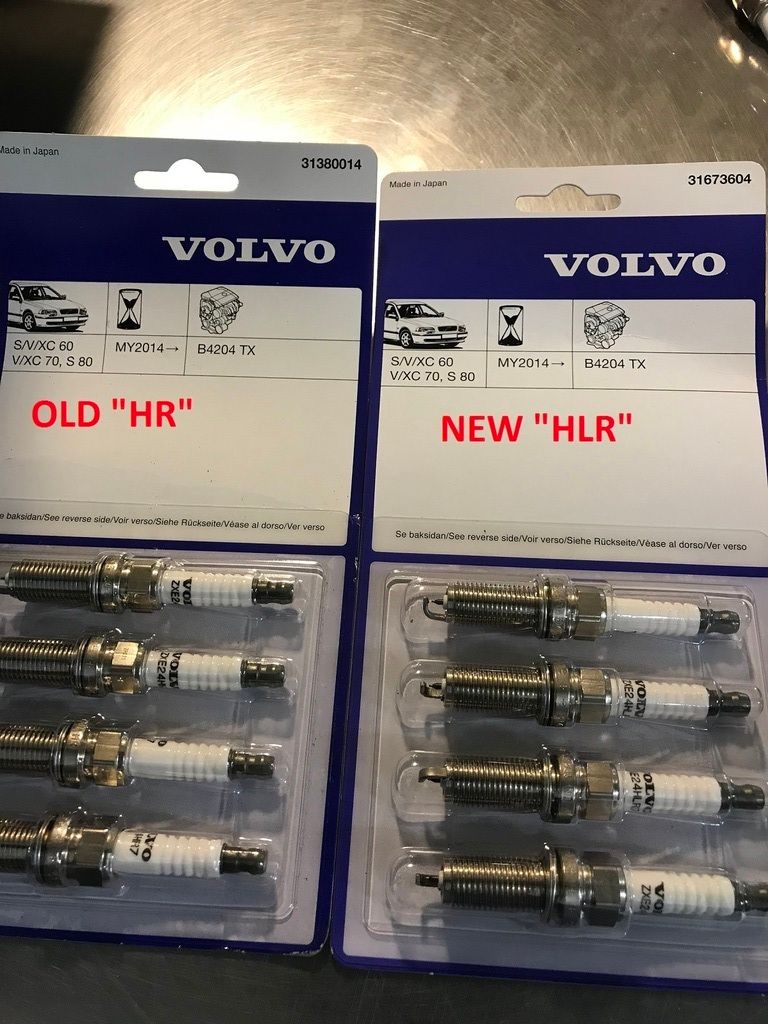


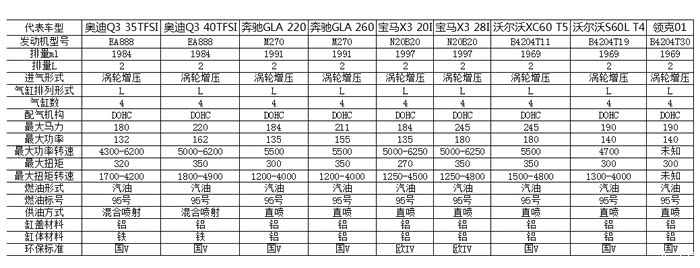


Volvo Engine Architecture
View on GrokipediaOverview
Modular Design Principles
The Volvo Engine Architecture (VEA) embodies a modular engineering philosophy centered on a unified base engine design that supports both inline-three and inline-four configurations for petrol and diesel powertrains. This approach enables Volvo Cars to produce a family of engines sharing core structural elements, facilitating efficient development and production across diverse vehicle applications. The architecture prioritizes scalability, with a foundational module of approximately 500 cc per combustion chamber to optimize thermodynamic efficiency and combustion characteristics.[2] Central to the VEA's modularity is a significant reduction in unique components, achieving up to 60% fewer parts compared to previous engine generations, which streamlines manufacturing processes and lowers costs. The design incorporates a lightweight aluminum block with separate cylinder heads for petrol and diesel variants, contributing to overall weight savings of around 90 kg (200 lbs) relative to comparable prior engines while maintaining structural integrity. Modular fuel systems further enhance this flexibility: petrol variants (VEP) employ direct injection for precise fuel delivery, while diesel variants (VED) utilize common-rail injection, allowing seamless adaptation between fuel types without extensive reengineering.[2][7][1][8] Scalability is a hallmark of the VEA, permitting displacement adjustments from 1.5 L (three-cylinder) to 2.0 L (four-cylinder) through simple variations in bore, stroke, or cylinder count, all while retaining the common architecture to avoid major redesigns. This modularity improves manufacturing efficiency by standardizing assembly lines and supports stringent emissions compliance through enhanced combustion control and compatibility with electrification technologies. Additionally, the VEA integrates directly with Volvo's Scalable Product Architecture (SPA) chassis platform, optimizing engine placement, weight distribution, and overall vehicle dynamics for better fuel economy and safety.[2]Nomenclature System
Volvo's nomenclature system for the Engine Architecture (VEA) distinguishes engine variants through both public marketing labels and internal engineering codes, enabling clear identification of fuel type, configuration, displacement, and performance tuning. Public designations for petrol engines under VEA began with a "T" prefix denoting turbocharging, followed by a numeral approximating power output relative to displacement: T4 for the entry-level 2.0-liter four-cylinder (approximately 190 horsepower), T5 for the mid-tier version (around 250 horsepower), and T6 for the high-performance twin-charged model (about 316 horsepower). A smaller 1.5-liter three-cylinder petrol, derived from the de-stroked 2.0-liter block for efficiency in compact models, uses T2 or T3 labels based on turbo sizing and output (122 or 152 horsepower, respectively). With the shift to mild hybrid systems in VEA Generation 3 (GEN3), designated internally as VEP GEN3 (Volvo Environmental Petrol), naming evolved to the "B" series: B4 for the 48-volt mild hybrid 2.0-liter (197 horsepower), B5 for the higher-output variant (247 horsepower with torque peaking at elevated RPM), and B6 for the supercharged and turbocharged mild hybrid (295 horsepower). Diesel engines, labeled VED (Volvo Environmental Diesel) in GEN3 and phased out as of early 2024, employed a "D" prefix followed by a numeral indicating size and power: D4 for the primary 2.0-liter four-cylinder (approximately 190 horsepower), with D3 for lower-output tunes in select markets. Suffixes such as T2 or T3 specified turbo variants, while atmospheric (non-turbo) "A" designations were uncommon in VEA due to the emphasis on forced induction for efficiency and performance. Internal codes offer granular detail, typically seven to eight characters long. For 2.0-liter petrol, the format B4204Txx breaks down as "B" for gasoline (bensin), "4" for four cylinders, "20" for 2.0 liters (displacement in deciliters), "4" for four valves per cylinder, "T" for turbocharged, and the trailing digits for specific tuning (e.g., B4204T31 for the T4/B4 base model). Diesel counterparts followed D4204Txx, with analogous structure (e.g., D4204T for the D4 core). The 1.5-liter three-cylinder used B4154Txx. This system evolved from pre-VEA conventions, which featured diverse codes across multi-cylinder layouts like the five-cylinder B5254T (2.5-liter petrol) or D5244T (2.4-liter diesel), to VEA's unified four-cylinder focus starting in 2013, streamlining variants while supporting modular interchangeability between petrol and diesel. GEN3 updates, introduced around 2021, incorporated VEP/VED prefixes internally to denote the revised architecture with Miller-cycle combustion and hybrid integration.[2][9][4]Historical Development
Origins of VEA
The development of Volvo's Engine Architecture (VEA), later marketed as the Drive-E family, originated in the late 2000s as Volvo sought to modernize its powertrain lineup amid evolving regulatory and market demands. Prior to VEA's introduction, Volvo had relied heavily on inline-five and inline-six cylinder engines, which were renowned for their smoothness and durability but increasingly challenged by stricter emissions regulations and consumer preferences for efficiency. In 2011, Volvo announced a pivotal shift to an exclusive focus on four-cylinder engines under the Drive-E banner, phasing out larger configurations to streamline production and boost overall performance-to-efficiency ratios.[2][10] This architectural evolution was influenced by Volvo's ownership transitions and strategic partnerships. The project commenced in 2008 during Volvo's tenure under Ford Motor Company, as part of the Premier Automotive Group (PAG), which fostered cross-brand collaboration on modular platforms and shared engineering resources from 1999 to 2010.[11][12] Following Geely's acquisition of Volvo in August 2010 for $1.8 billion, the initiative gained renewed momentum with substantial Chinese investment, enabling full-scale development of a flexible, in-house modular engine family while preserving Volvo's Swedish engineering heritage.[13][14] The core goals of VEA Generation 1 centered on environmental compliance and performance optimization, including adherence to the Euro 6 emissions standards effective from 2014, fuel economy gains of 10 to 30 percent relative to prior engines depending on the application, and inherent compatibility with electrification technologies like hybrid systems.[11][11] These objectives were supported by a 2 billion SEK (approximately $300 million) investment in Volvo's Skövde engine plant, emphasizing downsizing, advanced turbocharging, and lightweight materials to deliver comparable power outputs with reduced environmental impact.[11] VEA engines debuted in production vehicles for the 2014 model year, powering models such as the S60 and V60 with the T5 petrol variant, which utilized turbocharging for responsive performance while exemplifying the architecture's efficiency focus.[15] This nomenclature, where "T5" indicated a turbocharged five-valve-per-cylinder petrol engine, reflected early VEA conventions for variant identification.[16]Key Milestones and Generations
The Volvo Engine Architecture (VEA) was first introduced in 2013 as a modular family of four-cylinder engines, marking the GEN1 phase from 2013 to 2017, which emphasized twin-charged configurations combining superchargers and turbochargers for petrol variants alongside direct fuel injection across both petrol and diesel units to enhance efficiency and performance.[17] This generation debuted in production models starting in autumn 2013, with the first hybrid application appearing in the XC90 T8 plug-in hybrid in 2014, integrating an electric rear axle to support the VEA powertrain.[18] A key milestone of GEN1 was the launch of i-ART (intelligent Accuracy Refinement Technology) injection in 2013, a diesel-specific system using individual injector pressure feedback to optimize fuel delivery and reduce emissions by up to 20% compared to conventional common-rail setups.[18] Transitioning to GEN2 from 2017 to 2023, VEA underwent refinements focused on compatibility with mild hybrid systems, including enhanced turbocharger efficiency through variable geometry and geometry designs that improved low-end torque while integrating 48V electrical architectures for energy recovery.[19] These updates supported broader adoption in models like the second-generation XC60 in 2018, where the architecture enabled smoother transitions between electric assist and combustion operation. Nomenclature evolved slightly during this period to reflect power outputs, such as D4 for diesels and T5 for petrols, aiding model differentiation.[20] GEN3, introduced from 2021 onward, represented a significant evolution with the adoption of the Miller cycle in petrol engines to boost thermal efficiency by delaying intake valve closure, primarily in the VEP (Volvo Environmental Petrol) lineup comprising low-power (LP) at 145 kW, medium-power (MP) at 184 kW, and high-power (HP) at 220 kW variants.[4] This generation prioritized electrified efficiency through deeper mild hybrid integration, debuting the Miller cycle mild hybrid engine in fall 2021 for models like the XC40, V60, and S60, achieving fuel consumption reductions of up to 5% compared to previous generations.[21] Development of the corresponding VED (Volvo Environmental Diesel) GEN3 was halted following Volvo's 2023 announcement to cease all diesel passenger car production by early 2024, accelerating the shift away from diesel amid global electrification trends.[22] Notable milestones include the 2021 debut of the mild hybrid Miller engine, which powered over a dozen Volvo models and contributed to compliance with stricter EU emissions standards.[21] By October 2025, Volvo had produced four million vehicles on the Scalable Product Architecture (SPA) platform, which integrates VEA engines, underscoring the architecture's scalability and role in hybrid advancements. The 2023-2024 diesel phase-out, announced at Climate Week NYC, not only ended new diesel development but also redirected resources toward fully electrified powertrains, with the last diesel VEA units rolling off lines in early 2024.[22]Petrol Engines
1.5-Liter Variants
The 1.5-liter variants of Volvo's Engine Architecture (VEA) family primarily consist of inline-three-cylinder petrol engines designed for efficiency in compact vehicles, featuring a displacement of 1,477 cc, an aluminum block and head, and direct fuel injection.[23][24] These engines incorporate a twin-scroll turbocharger and variable valve timing to balance performance and fuel economy, with a compression ratio typically around 10.5:1.[25] The architecture shares modular components, such as the cylinder head design, with the larger 2.0-liter family for manufacturing scalability.[23] Key variants include the B3154T, an early turbocharged model producing 156 hp (115 kW) at 5,000 rpm and 265 Nm of torque from 1,850 to 3,850 rpm, introduced in 2017 for entry-level applications.[23][24] The B3154T2 updates this to 163 hp (120 kW) at 5,500 rpm and 265 Nm from 1,500 to 3,000 rpm. The B3154T3 produces 129 hp (95 kW) at 5,000 rpm and 250 Nm.[26] The B4154T series represents the 1.5-liter inline-four configuration (1,498 cc displacement), with variants like the T2 (B4154T2) at 148 hp (109 kW) and 250 Nm, and the T3 (B4154T4) at 152 hp (112 kW) and 250 Nm from 1,700 to 4,000 rpm.[27][28] For the Chinese market, the JLH-3G15 series offers localized three-cylinder adaptations, including the JLH-3G15TD single-turbo variant at 160 hp (118 kW) and 255 Nm, and the JLH-3G15TDC twin-turbo version reaching 218 hp (160 kW) and 325 Nm, produced at Volvo's Zhangjiakou facility to meet regional emissions standards. These engines emphasize compact packaging for front-wheel-drive layouts, enabling agile handling and reduced weight—around 100 kg for the block—while achieving CO2 emissions below 120 g/km in configurations under WLTP testing.[25][29] Applications of these 1.5-liter engines include entry-level models like the XC40 compact SUV from 2018 to 2022 and the S60 sedan from 2018, primarily in select markets. In the XC40, for instance, the B3154T enables a 0-100 km/h acceleration of 9.4 seconds with a six-speed manual or eight-speed automatic transmission, prioritizing responsive performance in front-wheel-drive guise.[25][30] These engines have been phased out in major markets like Europe and North America following 2022 model updates, with continued use in Asia via localized variants as of 2025.| Variant | Cylinders | Power (hp) | Torque (Nm) | Key Application | Notes |
|---|---|---|---|---|---|
| B3154T | 3 | 156 | 265 | XC40 T3 (2018-2022) | Base turbo, direct injection |
| B3154T2 | 3 | 163 | 265 | XC40 T3 (2019+) | Updated turbo tuning |
| B3154T3 | 3 | 129 | 250 | Select markets | Lower output variant |
| B4154T2 | 4 | 148 | 250 | V40 T2 (GEN2) | Inline-four for compact models |
| B4154T4 | 4 | 152 | 250 | S60 T3/V40 T3 | Enhanced for emissions |
| JLH-3G15TD | 3 | 160 | 255 | China-market XC40 | Single turbo, local production |
| JLH-3G15TDC | 3 | 218 | 325 | China-market S60 | Twin turbo for performance |
2.0-Liter Variants
The 2.0-liter variants within the Volvo Engine Architecture (VEA) family are inline-four petrol engines with a displacement of 1,969 cc, constructed from an aluminum block and cylinder head for reduced weight and improved thermal efficiency.[31] These engines employ double overhead camshafts (DOHC) with four valves per cylinder, variable valve timing (VVT) on both intake and exhaust sides, and high-pressure direct fuel injection to optimize combustion and performance across a broad RPM range.[32] Turbocharging is standard, with some configurations incorporating twin-charging systems combining a supercharger and turbocharger for enhanced low-end torque delivery, while others use single or variable-geometry turbos for balanced power and efficiency.[33] The core B4204T series encompasses a range of tuned variants tailored to different vehicle trims and performance needs, all sharing the modular VEA base for scalability. The entry-level T4 variant, often coded as B4204T19 or similar evolutions, produces 190 horsepower at approximately 5,000 rpm and 300 Nm of torque from 1,300 to 4,000 rpm, providing adequate propulsion for front-wheel-drive setups in compact models.[34] The T5 configuration, such as B4204T11, steps up to 250 horsepower and 350 Nm, frequently featuring twin-charging for seamless power buildup, as seen in mid-range luxury sedans and wagons. Higher-output iterations include the T6 (B4204T4 or evolutions like T45), delivering 316 horsepower and up to 400 Nm through supercharger-turbo combinations, emphasizing refined acceleration in all-wheel-drive applications. For plug-in hybrid (PHEV) systems, the T8 variant (e.g., B4204T12 in integrated setups) contributes over 300 horsepower from the petrol unit alone, with total system output exceeding 400 horsepower when paired with an electric motor, enabling efficient all-electric driving modes up to 50 km. Additional evolutions, such as the T11 for mild-hybrid applications, maintain around 250 horsepower with integrated 48-volt systems for torque fill and fuel savings, while specialized tunes like the T57 reach 300 horsepower for performance-oriented variants. The nomenclature's "T" suffix denotes turbocharged petrol engines, with numeric extensions indicating specific calibration levels.[34][35] In Asia, particularly for markets like China, Volvo employs the JLH-4G20 series as a regionally adapted 2.0-liter inline-four, co-developed with Geely to meet local emissions and manufacturing standards while retaining VEA-inspired modularity. Variants include the TD tune at 190 horsepower and approximately 300 Nm for base models, the TDC at 218 horsepower and 325 Nm for balanced performance, and the TDH at up to 272 horsepower with enhanced turbo mapping for premium trims.[36] These 2.0-liter engines power a variety of Volvo models starting from 2015, including the XC90 SUV, V90 wagon, and S90 sedan, where they serve as the primary propulsion in both rear- and all-wheel-drive configurations. Outputs span from 190 horsepower in entry-level trims to 455 horsepower in Polestar Engineered variants, which optimize tuning for sharper throttle response and higher boost pressures.[34] Performance metrics highlight torque figures ranging from 300 Nm in base setups to over 500 Nm in high-output PHEV combinations, supporting 0-100 km/h acceleration times under 6 seconds in top configurations. Fuel economy typically achieves 5-8 L/100 km in combined driving cycles, depending on drivetrain and hybridization, aided by stop-start technology and efficient gearing.[37]| Variant | Engine Code Example | Power (hp) | Torque (Nm) | Charging Type | Typical Applications |
|---|---|---|---|---|---|
| T4 | B4204T19 | 190 | 300 | Single turbo | XC60, S60 entry-level |
| T5 | B4204T11 | 250 | 350 | Twin-charged | V90, S90 mid-trim |
| T6 | B4204T4/T45 | 316 | 400 | Supercharger + turbo | XC90, V90 premium |
| T8 (PHEV) | B4204T12 | 320+ (petrol) / 400+ total | 400+ / 500+ total | Twin-charged + electric | XC90 T8, S90 T8 |
| T11 (MHEV) | B4204T evolution | 250 | 350 | Single turbo + 48V | XC60 mild hybrid |
| JLH TD | JLH-4G20TD | 190 | 300 | Turbo | S90L China base |
| JLH TDH | JLH-4G20TDH | 272 | 350 | Turbo | XC60 China premium |