Hubbry Logo
Wars of CastroWars of CastroMain
Open search
Wars of Castro
Community hub
Wars of Castro
logo
8 pages, 0 posts
0 subscribers
Be the first to start a discussion here.
Wars of Castro
Wars of Castro
from Wikipedia

Wars of Castro

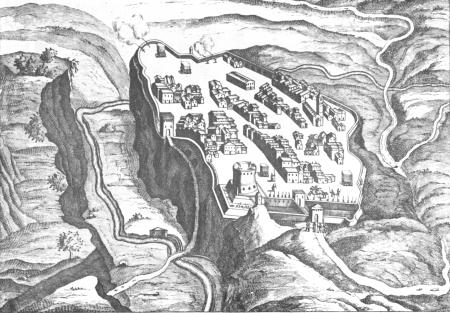
The city of Castro, on which the Wars of Castro centered.
Date1641–44 (1st), 1646–49 (2nd)
Location
Castro, Italy
Result Farnese defeat and the destruction of Castro
Belligerents
Commanders and leaders
Strength
1643:[1]
20,000
Unknown
1643:[2]
Republic of Venice 15,000
10,000
5,000
5,000

The Wars of Castro were a series of conflicts during the mid-17th century revolving around the ancient city of Castro (located in present-day Lazio, Italy), which eventually resulted in the city's destruction on 2 September 1649. The conflict was a result of a power struggle between the papacy – represented by members of two deeply entrenched Roman families and their popes, the Barberini and Pope Urban VIII and the Pamphili and Pope Innocent X – and the Farnese dukes of Parma, who controlled Castro and its surrounding territories as the Duchy of Castro.

Precursors

[edit]

Papal politics of the mid-17th century were complicated, with frequently shifting military and political alliances across the Catholic world. While it is difficult to trace the precise origins of the feud between the duchy of Parma and the papacy, its origins can be looked for in political maneuverings occurring in the years or even decades preceding the start of military action.

In 1611 a group of conspirators, nobles from Modena and Mantua, was accused of devising a plot to assassinate Ranuccio I Farnese, Duke of Parma and other members of the Farnese family in Parma. In reality, the plot had been "uncovered" when a prisoner (being held for unrelated crimes) confessed to it and implicated members of various noble houses. Though the accusations were likely untrue, 100 of the "conspirators" were tortured and eventually executed in Parma's main square in 1612. Many of their estates were confiscated leaving a large number of now legitimately discontented nobles. Until his death in 1622, Ranuccio remained paranoid about future assassination attempts and about curses from witches and heretics. He persecuted "witches" and alleged conspirators savagely and even had his own mistress, Claudia Colla, burned to death. He remained convinced that other noble families were plotting his downfall.[3]

However, tensions between the Farnese and other Italian nobility were not limited to local events in Parma. Historian Leopold von Ranke gives an account of a 1639 visit to Rome by Odoardo Farnese, Duke of Parma and Piacenza. The Duke arrived in Rome to great fanfare – he was given gifts and escorted around the city by Pope Urban's Cardinal-nephews, Antonio Barberini and Francesco Barberini. But the Duke refused to pay due deference to the Pope's other nephew; the newly appointed Prefect of Rome, Taddeo Barberini. As the Duke prepared to leave, he suggested that an escort from the city (ordinarily reserved for the Grand Duke of Tuscany) would be appropriate. Francesco Barberini refused. The Duke took his leave but urged the Pope to chastise both Cardinal-nephews.[4]

The nephews were furious and convinced the pope to punish the Duke by banning grain shipments originating in Castro from being distributed in Rome and the surrounding territory, thereby depriving the Duke of an important source of income.[5] Duke Odoardo's Roman creditors saw their chance – the Duke was unable to pay his debts, which he had accumulated in military adventures against the Spanish in Milan and in luxurious living. The unpaid and unhappy creditors sought relief from the pope, who turned to military action in an attempt to force payment.[4]

Preparations for war

[edit]

Pope Urban VIII responded to the requests of Duke Odoardo's creditors by sending his nephew Antonio, Fabrizio Savelli and Marquis Luigi Mattei to occupy the city of Castro. Papal forces also included commanders Achille d'Étampes de Valençay and Marquis Cornelio Malvasia.

At the same time, the pope sent cardinal Bernardino Spada as plenipotentiary in an effort to resolve the crisis. Spada successfully negotiated a truce but when the pope's military leaders became aware that the dukes were massing troops to counter their own (in case discussions with Spada came to naught), Urban VIII declared the articles of peace null and void and claimed Spada had negotiated them without his consent.[6] Spada later published a manifesto detailing his version of events which, according to contemporary John Bargrave, many accepted to be the truth.

Urban VIII had been amassing troops in Rome throughout 1641. Mercenaries and regular troops filled the streets and Antonio Barberini was forced to institute special measures to maintain authority over the city. But the papacy needed yet more troops. The Duke of Ceri, who had been imprisoned for wounding a papal officer in a dispute over the management of the Duchy of Ceri, and Mario Frangipani, imprisoned for murdering someone on his estate, were both pardoned by the pope and given command of papal troops.[7]

First War of Castro

[edit]

On 12 October, Luigi Mattei led 12,000 infantry and up to 4,000 cavalry against the fortified town.[8] The pope's forces were met by a contingent of 40 troops guarding a bridge leading to the town; a short burst of cannon-fire resulting in a single death was enough to prompt capitulation.[4] Castro, and several other small towns nearby, surrendered. Fabrizio Savelli, though, proved to be an unenthusiastic commander. The army was split into three and the Pope's nephew, Taddeo Barberini, replaced Savelli as Generalissimo, arriving with one contingent in the papal city of Ferrara on 5 January 1642. On 11 January the opera L'Armida, by Barberini house composer Marco Marazzoli, was presented in his honour and Marazzoli composed a work Le pretensioni del Tebro e del Po to commemorate recent events.

On 13 January, Urban excommunicated Odoardo and rescinded his fiefdoms (which had been granted by Pope Paul III – Odoardo's great-great-great-grandfather – in 1545). Odoardo countered with a military march of his own, this time on the papal state itself and his forces were soon close enough to threaten Rome. But Odoardo faltered and the Pope was able to fortify Rome and raise a new army - this time 30,000 troops; enough to drive the Duke back to his own territory. Odoardo forged alliances with Venice, Modena, and Tuscany which was under the command of his brother-in-law, Ferdinando II de' Medici, Grand Duke of Tuscany.[4]

At first, Pope Urban threatened to excommunicate anyone who helped Odoardo, but Odoardo's allies insisted their conflict was not with the papacy, but rather with the Barberini family (of which the Pope happened to be a member). When this failed, the Pope attempted to call on old alliances of his own and turned to Spain for assistance. But he received little help as Spanish forces were fully occupied by the Thirty Years' War. As it was, most of the troops fighting on the side of the papacy were French, most of those fighting for the Dukes were German.[4]

Exasperated, the Pope increased taxes and raised additional forces and the war continued with Cardinal Antonio Barberini (Taddeo's brother) finding success against the Venetians and Modenese. But Papal forces suffered significant defeats in the area around Lake Trasimeno at the hands of the Tuscans (the Battle of Mongiovino). Fighting in the style typical of 17th-century Europe, by the latter half of 1643 neither side had made significant ground, though both sides had spent significant amounts of money perpetuating the conflict. It has been suggested that Pope Urban and forces loyal to the Barberini spent some 6 million thalers[9] during the 4 years of the conflict that fell within Pope Urban's reign.

The papal forces suffered a crucial defeat at the Battle of Lagoscuro on 17 March 1644 and were forced to surrender. Antonio Barberini was almost captured; saved, "only by the fleetness of his horse".[4] Peace was agreed to in Ferrara on 31 March.

Under the terms of the peace, Odoardo was readmitted to the Catholic Church and his fiefdoms were restored to him. Grain shipments from Castro to Rome were once again allowed and Odoardo was to resume payments to his Roman creditors. This peace settlement concluded the First War of Castro and was widely considered a disgrace to the papacy, which was unable to impose its will through use of military force. Urban is said to have been so distressed that after signing the peace agreements he was overcome by a severe malady which stayed with him until his death.

Urban's death and Barberini exile

[edit]

Pope Urban VIII died just a few months after the peace settlement was agreed to, on 29 July and on 15 September Pamphili family Pope Innocent X was elected to replace him. Almost immediately, Innocent X began an investigation into the financing of the conflict. In total, the first war is estimated to have cost the papacy 12 million scudi and special taxes were levied against the residents of Rome to refill church coffers.[4] The nephews of Pope Urban VIII who had led the papal armies, brothers Antonio Barberini (Antonio the Younger), Taddeo Barberini and Francesco Barberini, were forced to abandon Rome and flee to France, assisted by Cardinal Mazarin.[10] There they depended on the hospitality of Louis XIV, King of France.

Taddeo Barberini died in Paris in 1647 but in 1653 Antonio and Francesco Barberini were allowed to return to Rome after sealing a reconciliation with Innocent X through the marriage of Taddeo's son Maffeo Barberini and Olimpia Giustiniani (a niece of Innocent X). Relations were also later repaired with some of Odoardo's former allies when Taddeo's daughter, Lucrezia Barberini married Francesco I d'Este, Duke of Modena who had led Modenese forces against the Barberini.

Second War of Castro

[edit]
Pope Innocent X, on whose orders Castro was destroyed. Portrait by Diego Velázquez.

With peace agreed to and with Barberini power-brokers dead or exiled, the citizens of Castro were left alone. But Odoardo Farnese, who had signed the original peace accord, died in 1646 and was succeeded by his son Ranuccio II Farnese, Duke of Parma.

In 1649, Ranuccio refused to pay Roman creditors as his father had agreed in the treaty signed five years prior. He also refused to recognize the new bishop of Castro, Monsignor Cristoforo Giarda, appointed by Pope Innocent X. When the bishop was killed en route to Castro, near Monterosi, Pope Innocent X accused Duke Ranuccio and his supporters of murdering him.

In retaliation for this alleged crime, forces loyal to the Pope marched on Castro. Ranuccio attempted to ride out against the Pope's forces but was routed by Luigi Mattei.[11] On 2 September, on the Pope's orders, the city was completely destroyed. Not only did Pope Innocent's troops destroy the fortifications and general buildings of Castro, they destroyed the churches as well so as to completely sever all links between the city and the papacy.[12] As a final insult, the troops destroyed Duke Ranuccio's family Palazzo Farnese and erected a column reading Qui fu Castro ("Here stood Castro").

Duke Ranuccio II was forced to cede control of the territories around Castro to the pope, who then attempted to use the land to settle debts with Ranuccio's creditors. This marked the end of the Second War of Castro and the end of Castro itself – the city was never rebuilt.

Notes

[edit]

Bibliography

[edit]
Revisions and contributorsEdit on WikipediaRead on Wikipedia
from Grokipedia
The Wars of Castro were a series of mid-17th-century conflicts between the and the Duchy of Parma centered on the Duchy of Castro, a prosperous in northern held by the Farnese family as papal vassals. Triggered by financial disputes over Farnese debts to Roman bankers protected by papal interests, the wars exemplified clashes between papal temporal ambitions and the autonomy of Italian princely states. The First War of Castro (1641–1644) began when sought to seize Castro to satisfy creditors, leading to the occupation of the duchy and the of Duke Odoardo I Farnese. Despite initial papal advances, Farnese forces, aided by allies including , , and , defeated Urban's armies at battles such as Nonantola in 1643, forcing a 1644 peace treaty that restored Castro to and required debt repayments. Tensions reignited in 1649 during the Second War, when blamed Duke for the murder of the papal-appointed Bishop of Castro, Cristoforo Giarda, prompting a papal siege that captured and utterly razed the city of Castro, including the demolition of its fortifications, on 2 September 1649, erasing it from the map and annexing its territories to the . These events underscored the Barberini and Pamphili popes' aggressive and fiscal policies, which strained papal resources and legitimacy amid broader European power shifts.

Background

The Farnese Duchy of Castro

The of Castro was established on August 13, 1537, by (Alessandro Farnese) as a hereditary for his illegitimate son, , consolidating various Farnese properties in northern into a semi-independent state under papal . Centered on the newly fortified town of Castro, which served as the capital, the duchy represented an effort to secure familial power amid the pope's nepotistic policies, granting Pier Luigi sovereign rights including taxation, justice, and military command within its borders. The territory encompassed a narrow coastal strip extending from the Tyrrhenian Sea inland to Lake Bolsena, bounded by the Marta and Fiora rivers, and included key towns such as Castro, Ischia di Castro, Cellere, and Valentano. This enclave within the Papal States, spanning approximately 60 miles in length but limited in depth, provided the Farnese with strategic access to maritime trade routes and agricultural lands, though its fragmented nature fostered ongoing jurisdictional disputes with Rome. Economically, the duchy relied on grain production and exports—bolstered by privileges for ports like Montalto—alongside forestry and local taxation, generating revenues that supported Farnese ambitions elsewhere but also accrued debts to papal bankers over time. Upon Pier Luigi's assassination in 1547, the duchy passed initially to his son Orazio Farnese, who ruled until his death in 1553 without male heirs, after which it was incorporated into the holdings of and . Subsequent rulers, including Ranuccio I (1586–1622) and Odoardo I (1622–1646), maintained and developed Castro as a fortified residence and administrative center, with Odoardo's heavy fiscal policies exacerbating financial strains that later precipitated conflicts with the Barberini papacy. By the mid-17th century under Ranuccio II (1646–1694), the duchy's autonomy and unpaid obligations had positioned it as a flashpoint for papal intervention, underscoring the tensions between dynastic sovereignty and ecclesiastical authority in .

Papal States and the Barberini Papacy under Urban VIII

The Papal States encompassed central Italian territories such as Rome, the Lazio region, Umbria, the Marche, and portions of Emilia-Romagna, governed as a sovereign entity under the pope's dual spiritual and temporal authority in the 17th century. Administration relied on a hierarchical system of apostolic legates, governors, and local officials appointed by the pope, who held absolute executive, legislative, and judicial powers, often delegated to family members or trusted cardinals for day-to-day operations. This structure facilitated centralized decision-making amid external pressures from neighboring powers like Spain, France, and Italian duchies, with the pope maintaining neutrality in broader European conflicts such as the Thirty Years' War while prioritizing internal defense and fiscal recovery. Maffeo Barberini, elected pope as Urban VIII on August 6, 1623, following a contentious conclave divided among Spanish, French, and independent factions, initiated a papacy dominated by familial appointments that exemplified . Immediately after his , he elevated his nephew Francesco Barberini (born 1597) to cardinal on October 2, 1623, at age 26, appointing him vice-chancellor and later , roles that centralized diplomatic and administrative control under Barberini oversight. Another nephew, Antonio Barberini (born 1607), became cardinal on February 7, 1628, despite opposition from cardinals citing his youth and inexperience, and was assigned commands including legate at in 1633 and in 1638. Secular brother Taddeo Barberini (born 1603) served as general of the Church, governor of the Borgo quarter, and prefect of from 1631, while nephew Carlo Barberini held governorships and leadership. These positions granted the family substantial incomes—Francesco received 80,000 scudi annually by 1630, Taddeo 100,000 scudi from lands by 1635—and control over key papal revenues, abbeys, and estates, drawing criticism for alienating Church property and exacerbating fiscal strains. Urban VIII pursued territorial consolidation, acquiring the Duchy of Palestrina in 1630 for 725,000 scudi and annexing in 1631 after Duke Francesco Maria della Rovere's death on April 28, 1631, without heirs, thereby forming a more compact and defensible bloc in . Financial policies involved heavy taxation, subsidies to Catholic allies (e.g., 120,000 thalers annually to the and League, plus 550,000 thalers in December 1633), and alienation of benefices, yet expenditures on family enrichment, artistic patronage, and military buildup led to debts reaching 30 million scudi by September 24, 1639. Military reforms under the Barberini included maintaining a , with forces numbering 6,000 foot soldiers and 600 by August 25, 1625, expanding to 10,000 infantry and 1,200 by mid-November 1629, commanded by Taddeo and Carlo Barberini, and fortified positions like and Urbano near . These preparations addressed threats from Spanish and disputes like the (1623–1625), where papal fortresses were lost and razed by November 11, 1626, under Franco-Spanish agreement, setting precedents for assertive reclamation efforts against vassal states such as the Farnese Duchy of Castro.

Causes

Financial Grievances and Debt Defaults

The Duchy of Castro, ruled by Odoardo I Farnese, accumulated substantial debts in the 1630s through loans from Roman bankers to finance military campaigns against Spanish forces in and extensive reconstruction of Castro into a fortified planned city. These expenditures, including Odoardo's participation in the 1635 anti-Habsburg , strained the duchy's agrarian economy, which relied heavily on grain sales to . By defaulting on repayments to these creditors, Odoardo provoked appeals to , who as overlord of the papal exercised authority to enforce feudal obligations. Urban VIII responded in 1640 by embargoing grain exports from Castro to papal territories, depriving the of vital revenue and intensifying financial distress while protecting Roman interests. Odoardo's refusal to prioritize debt service, coupled with his issuance of monti farnesiani (state annuities sold in that went unpaid), led the to place Odoardo and his sons under in September 1641. On January 13, 1642, following continued non-payment, Urban VIII formally confiscated Castro and adjacent fiefs, dispatching papal troops to occupy them and framing the action as a legitimate reclamation for default. The 1644 Peace of Ferrara temporarily restored Farnese control in exchange for debt acknowledgments and territorial concessions, but underlying grievances persisted. Upon Odoardo's death in 1646, his successor repudiated the treaty's financial terms, halting payments to Roman creditors and prompting to renew confiscation proceedings in 1649. This second default escalated into the Second War of Castro, culminating in the duchy's destruction to eliminate a perceived economic rival to .

Familial Rivalries and Insults

The Barberini and Farnese families, both prominent Roman noble houses with ambitions in , harbored longstanding rivalries exacerbated by the Barberinis' rapid ascent under (r. 1623–1644). The Farnese, who had ruled , , and Castro since the and produced (r. 1534–1549), viewed the newly elevated Barberini nephews— (b. 1597), (b. 1607), and Taddeo (b. 1603)—as upstarts lacking the pedigree and experience to wield papal nepotism's full power. Urban VIII's aggressive favoritism toward his kin, granting them cardinalates, military commands, and governorships, clashed with Farnese interests in maintaining over their fiefdoms, fostering mutual distrust that intertwined with territorial and financial disputes. A pivotal personal affront occurred during Duke Odoardo I Farnese's (r. –1646) visit to in 1639, when he openly quarreled with the Barberini nephews. Odoardo reportedly insulted Cardinals and Barberini—and by extension Taddeo—by suggesting to Urban VIII that the brothers were too young and inexperienced to effectively manage the pontiff's affairs or hold their elevated positions, a remark interpreted as a direct challenge to their competence and the family's legitimacy. This slight, delivered amid tense court interactions, deeply offended the Barberinis, who leveraged it to portray the Farnese as arrogant interlopers, intensifying familial bad blood and providing a for escalating diplomatic hostilities. The incident underscored broader patterns of elite Roman intrigue, where public barbs could ignite feuds among princely kin. Urban VIII, already predisposed against Odoardo due to the duke's independent streak and alliances with anti-papal powers like and , responded by withdrawing papal envoys and amplifying grievances, though the insult alone did not trigger war—financial defaults by Farnese bankers served as the immediate catalyst. Nonetheless, the personal dimension ensured the conflict's bitterness, with Barberini propagandists later decrying Odoardo's "insolence" in pamphlets and dispatches, framing the Wars of Castro as a defense of familial honor alongside papal prerogatives.

Territorial Ambitions and Papal Authority

Pope Urban VIII pursued expansionist policies aimed at strengthening the Papal States through military and diplomatic means, marking him as the last pontiff to significantly enlarge papal territory by force. These efforts included fortifying key frontiers and asserting direct control over semi-autonomous fiefs to consolidate authority in central Italy. The Duchy of Castro, a Farnese-held enclave in northern Lazio northwest of Rome, represented a prime target due to its strategic position along routes to Tuscany and as a potential vulnerability in papal defenses. Castro's proximity to Rome underscored its importance for papal security and , functioning as a independent entity despite nominal vassalage to the . Urban VIII sought to integrate the duchy directly into the , viewing its elimination as essential to prevent encirclement by rival powers and to enforce uniform governance. This ambition aligned with broader papal strategies to reclaim feudal overlordship, transforming investitures granted to families like the Farnese—originally by Paul III in the —into permanent state holdings. To advance these goals, Urban implemented restrictive measures, such as banning grain exports from Castro on March 20, 1640, and rerouting the Rome-Tuscany road through papal-controlled , economically isolating the duchy and justifying intervention. Papal forces under Taddeo Barberini occupied Castro on October 13, 1641, exemplifying the pope's assertion of suzerain rights to confiscate and administer rebellious territories directly. Although the 1644 peace temporarily restored Farnese control, Urban's actions laid groundwork for eventual under Innocent X in 1649, when Castro was razed and its lands fully incorporated, achieving the long-sought territorial unification.

Preparations and Initial Escalations

Diplomatic Maneuvers and Mobilizations

In early 1641, amid mounting financial disputes over the of Castro's debts to Roman creditors, authorized the Apostolic Chamber to intervene against Duke Odoardo I Farnese on March 20, permitting sequestration of revenues to enforce repayment. This followed years of escalating familial tensions, including discourtesies during Farnese's ill-fated visit to from November 1639 to January 1640, which highlighted Barberini-Farnese rivalries and the pope's nepotistic favoritism toward his nephews. , seeking to assert papal authority over the , mobilized troops in throughout the year, recruiting mercenaries alongside regular papal forces under the command of his nephews, including Cardinal Antonio Barberini, to deter resistance and prepare for enforcement actions. The pope's diplomatic posture framed the crisis as a defense of and creditor claims, though critics later attributed it to Barberini ambitions to acquire Castro's fertile lands for and production. On , 1641, papal forces under Taddeo Barberini, Urban's nephew and general of the Holy Church, occupied Castro, seizing control of the and its resources, including exports pledged for repayment, as a direct escalation. This move effectively nullified Farnese sovereignty there, prompting Odoardo to denounce it in a 1641 , Vera e sincera relazione delle ragioni del duca di contra la presente occupazione del ducato di Castro, portraying the occupation as an unjust Barberini ploy to starve his state. In response, Odoardo Farnese initiated his own mobilizations, assembling a modest army despite limited resources strained by ongoing commitments. Diplomatically, he forged alliances with regional powers wary of papal overreach, including his brother-in-law , Grand Duke of , as well as and the Duchy of under , culminating in a formal pact by August 1642 to counter papal advances. These efforts reflected Farnese's strategy to internationalize the dispute, leveraging anti-Habsburg sentiments and Italian princely autonomy against Urban VIII's centralizing pretensions, though initial mobilizations remained defensive and understrength due to fiscal constraints.

Excommunications and Declarations of War

In September 1641, ordered the occupation of the Duchy of Castro by papal troops under the command of his nephew Taddeo Barberini, aiming to enforce repayment of substantial debts owed by Duke Odoardo I Farnese to Roman creditors, including members of the . The duke's persistent default on loans exceeding 400,000 scudi, coupled with his refusal to cede revenues from Castro's and alum mines as collateral, prompted this military measure to seize assets directly. Odoardo responded by fortifying his territories and forging a defensive league with the Grand Duchy of , the Duchy of Modena, and the , which provided financial and military support against perceived papal overreach. Diplomatic exchanges failed to resolve the , as Farnese rejected papal demands for immediate payment and submission. On , 1642, Urban VIII promulgated a papal brief excommunicating Odoardo Farnese and his heir Ranuccio, simultaneously revoking the apostolic of their fiefs granted by prior popes, including Paul III—a Farnese —and declaring the territories vacant for papal reclamation. This act, justified by the pope as a defense of authority and creditor rights, effectively constituted a by nullifying Farnese sovereignty over Castro and adjacent lands, inviting armed enforcement. The barred the duke from sacraments and legitimate rule, escalating the financial dispute into a broader conflict over feudal rights and papal temporal power. The Farnese coalition interpreted the brief as an aggressive challenge, prompting Odoardo to issue counter-declarations branding Barberini forces as invaders and mobilizing approximately 12,000 troops. Urban VIII's nephews, Cardinals and Antonio Barberini, directed the papal army's advance, with initial skirmishes near Castro marking the onset of hostilities by October 1641, though the formal solidified in early 1642. No contemporary sources dispute the brief's role in igniting open warfare, though critics like Venetian diplomats highlighted its selective application amid Barberini .

First War of Castro (1641–1644)

Outbreak and Early Campaigns

The outbreak of the First War of Castro occurred on October 13, 1641, when papal forces under Taddeo Barberini, nephew of , invaded the Duchy of Castro, a Farnese in the . This action followed prolonged disputes over unpaid debts exceeding 1,500,000 scudi owed by Duke Odoardo I Farnese to papal bankers, compounded by Farnese refusal to comply with demands for fortification restrictions and grain export controls previously revoked on March 20, 1640. Urban VIII's nephews, including Cardinal Antonio Barberini, orchestrated the campaign to seize the territory and assert papal authority amid broader nepotistic favoritism toward the . Taddeo Barberini led an expeditionary force of approximately 12,000 infantry and 3,000 cavalry against the fortified town of Castro, overcoming defenses with minimal casualties due to the element of surprise and superior numbers. The rapid capture on October 13 enabled papal authorities to consolidate control over key assets, including the sequestration of Farnese properties such as the in on November 26, 1641. Duke Odoardo Farnese, caught off-guard, initially relied on local garrisons but faced for high treason on January 13, 1642, which formalized the rupture and justified further papal encroachments. Early campaigns focused on papal efforts to secure the Lake Bolsena region, with Barberini forces establishing garrisons and disrupting Farnese supply lines. Odoardo mobilized around 6,000 troops, including 3,000 , for a counteroffensive by 1642, capturing papal holdings like and , but initial phases underscored the vulnerability of Castro's isolated defenses against coordinated papal aggression. These operations strained papal finances from the outset, foreshadowing the war's protracted costs exceeding 12 million scudi.

Key Battles and Military Engagements

The First War of Castro commenced with the papal siege of Castro on 12 October 1641, when forces commanded by Luigi Mattei, Marquis of Belmonte, numbering approximately 12,000 and 4,000 , encircled the fortified Farnese stronghold. The town, a key economic asset of the of Castro under Duke Odoardo I Farnese, surrendered after minimal resistance due to its inadequate defenses and the overwhelming papal numerical superiority, marking an initial Barberini triumph but sparking broader conflict. In retaliation, Odoardo Farnese mobilized allied forces from Venice, Modena, and Tuscany, launching a counteroffensive into papal territories in late 1641 and 1642; his armies occupied Viterbo and advanced to within 30 kilometers of Rome, ravaging the countryside without a decisive pitched battle but compelling papal concessions through attrition and threat. Renewed hostilities in 1643 saw Farnese conduct operations in the Ferrarese region against papal garrisons, leveraging Venetian naval support along the Po River to disrupt supply lines and seize strategic crossings, though these maneuvers yielded territorial gains rather than large-scale clashes. The war's pivotal engagement occurred at the Battle of Lagoscuro (Pontelagoscuro) on 17 March 1644, where allied forces under Farnese and Venetian command decisively defeated papal troops led by Cardinal Antonio Barberini near . Papal forces, strained by desertions and logistical failures, surrendered en masse; Antonio Barberini narrowly escaped capture, and the rout exposed the inefficiencies of papal recruitment reliant on mercenaries and Barberini . This defeat, compounded by plague outbreaks and financial exhaustion, forced Urban VIII to negotiate the Peace of Ferrara in March 1644, restoring most Farnese holdings including Castro. Throughout the conflict, engagements emphasized sieges and raids over open-field battles, reflecting the fragmented Italian terrain and the combatants' avoidance of mutual destruction amid broader European wars; papal forces, initially bolstered by 20,000-25,000 troops, suffered from poor coordination, while Farnese's 3,000-5,000 core army amplified effectiveness through alliances. Casualties remained moderate—estimated in the low thousands—due to the war's localized scope, but it highlighted the vulnerability of papal military autonomy dependent on familial loyalties rather than professional standing armies.

Papal Defeats and the Peace of 1644

In late 1643, papal forces commanded by relatives of , including Cardinal Antonio Barberini, encountered significant reversals against a supporting Duke Odoardo I Farnese of , comprising , , , and indirect French backing. On October 2, 1643, an assault on led by the papal general De Valengay failed, with Tuscan defenders repelling the advance and maintaining their positions. Similarly, at in October 1643, Tuscan troops under the league's command raised a papal , defeating the invaders who had advanced from Farnese-held territories and forcing a retreat that exposed vulnerabilities in papal and command. These engagements highlighted the inefficiencies of Urban VIII's nepotistic appointments, as Barberini kin prioritized family interests over effective strategy, contributing to morale decline and supply shortages amid ongoing coalition maneuvers. The decisive blow came in March 1644 at the Battle of Ponte Lagoscuro near , where Venetian-led coalition forces routed the papal army under Cardinal Antonio Barberini on March 17. Barberini narrowly escaped capture as his troops surrendered, marking the collapse of papal offensive capabilities and compelling immediate concessions to avert further territorial losses in the . This defeat, following months of attrition that cost the over 12 million gold scudi in expenditures and widespread devastation across its territories, undermined Urban VIII's authority and prompted urgent diplomacy, as coalition advances threatened core papal holdings. Under pressure from these reversals and French mediation, negotiations concluded with the Peace of Ferrara on March 31, 1644, signed by representatives of Urban VIII, , , , and Farnese, with as guarantor. The treaty revoked Farnese's , restored his sovereignty over Castro and other confiscated fiefs to pre-war conditions, and required him to relinquish any wartime gains while settling creditor claims through structured payments rather than outright seizure. Notably, the was excluded from favorable provisions, reflecting their culpability in the military failures and eroding their influence ahead of Urban VIII's death on July 29, 1644. The settlement preserved papal nominal authority but exposed fiscal exhaustion, as war debts lingered without territorial compensation, setting the stage for renewed tensions under Innocent X.

Transition and Interlude

Death of Urban VIII and Barberini Flight

Pope Urban VIII, born Maffeo Barberini, died on July 29, 1644, in Rome at the age of 76, succumbing to natural causes amid prolonged health issues including gout. His 21-year pontificate (1623–1644) concluded in the wake of the First War of Castro's recent peace settlement, which had drained papal finances through military expenditures and indemnities. The Papal States faced crippling debt, having risen from 16 million scudi at his accession to over 35 million by 1640, with roughly 80 percent of annual revenues diverted to interest payments alone—a burden intensified by nepotistic appointments and aggressive territorial policies, including the Castro conflicts. The death triggered immediate instability for the , Urban VIII's kin who had wielded outsized influence as cardinals and commanders. Nephews such as Cardinal Francesco Barberini, Cardinal Antonio Barberini, and Taddeo Barberini (Prince of ) had directed papal armies in the wars, amassing personal fortunes while state coffers emptied, fostering widespread resentment among Roman elites, creditors, and Italian princes. Fearing reprisals for alleged and fiscal mismanagement, the Barberini anticipated ruin under a successor unaligned with their interests; during the ensuing 1644 conclave, French cardinals backed alternatives to protect them, but the election of Giovanni Battista Pamphili as Innocent X on September 15 signaled peril. Innocent X swiftly initiated probes into Barberini finances, accusing them of plundering papal resources and ordering asset seizures to offset debts. By late 1645, escalating pressures— including threats of arrest and property confiscations—compelled the family's flight; Taddeo Barberini and his brothers, along with key cardinals, sought refuge in France in 1646, under the patronage of Cardinal Jules Mazarin, who provided sanctuary in Paris. This exile preserved their lives and remnants of wealth but marked the abrupt end of Barberini dominance in Rome, underscoring the perils of papal nepotism and the causal fallout from Urban VIII's militaristic ventures, which had prioritized familial aggrandizement over fiscal prudence. The flight exacerbated transitional chaos, delaying reconciliation and fueling latent hostilities that resurfaced in subsequent conflicts.

Ascension of Innocent X and Simmering Tensions

Pope Urban VIII died on 29 July 1644, prompting a conclave that began on 9 August. The gathering proved contentious, with French cardinals opposing Spanish-backed candidates amid broader European rivalries. Cardinal Giovanni Battista Pamphilj, previously ambassador to Spain under Urban VIII, emerged as a compromise figure and was elected on 15 September 1644, assuming the name Innocent X. Innocent X swiftly targeted the Barberini family's administration, launching probes into alleged embezzlement and mismanagement of papal funds during the Wars of Castro. These investigations culminated in the exile of Urban VIII's nephews—Cardinals and Barberini, along with Prince Taddeo Barberini—to France, where they received sanctuary from Cardinal Jules Mazarin. The Barberini properties in faced sequestration, and their cardinals were stripped of offices, reflecting Innocent X's determination to reclaim fiscal authority depleted by . Meanwhile, truce with the Farnese Duchy of Parma held precariously. The 1644 treaty obligated Duke Odoardo I Farnese to pay substantial reparations for war damages, yet compliance faltered amid economic strain. Odoardo's death on 21 November 1646 left his 16-year-old son, Ranuccio II, under the regency of , exacerbating administrative disputes over Castro's feudal obligations and papal tax collections. Local grievances, including Farnese tolerance of that harassed papal territories, fostered mutual distrust. Innocent X's broader reforms, including curbing and asserting temporal power, intensified scrutiny on vassal states like . Unresolved from the first war, combined with jurisdictional clashes in the enclave of Castro, sustained low-level hostilities through diplomatic protests and minor skirmishes, setting conditions for escalation. By , these frictions had eroded the fragile peace, as papal envoys reported persistent Farnese encroachments on church revenues.

Second War of Castro (1649)

Triggers under Innocent X

The financial grievances inherited from the First War of Castro persisted into Innocent X's pontificate (1644–1655), as failed to fully honor obligations under the 1644 peace treaty, which had pledged Castro's revenues to repay loans from Roman bankers affiliated with the papal . These debts, totaling significant sums secured against the Duchy of Castro's income since 1642, left creditors—including religious institutions, widows, and orphans—unpaid, exacerbating economic hardship in the amid broader scarcities. By early 1649, Ranuccio's diversion of Castro and revenues to sustain the Farnese Monti (public debt instruments) without remitting interest payments intensified tensions, as the pope held feudal overlordship over Castro and had authorized the bank's establishment. Public discontent peaked in during June 1649, with crowds protesting in the streets and demanding redress for seven years of delayed interest on Montanist investments tied to Farnese securities; Innocent X faced direct shouts for action during public appearances, underscoring the domestic pressure to enforce rights. Ranuccio's explicit threats of in May 1649 further alarmed papal authorities, prompting the mobilization of approximately 4,000 infantry and 1,000 cavalry to secure the ' frontiers. The proximate emerged on March 18, 1649, with the assassination of Monsignor Cristoforo Giarda (1595–1649), whom Innocent X had recently appointed Bishop of Castro to reassert ecclesiastical oversight in the diocese amid Farnese resistance to papal influence. Giarda was ambushed and killed near Monterosi en route from to assume his see, an act Innocent X promptly attributed to Farnese orchestration, though Ranuccio denied involvement. On March 24, the pope excommunicated the identified assailants, Sansone Asinelli and Godefroi, and offered a 3,000-scudo reward (later raised to 5,000) for their apprehension, framing the murder as an assault on papal authority that justified renewed hostilities. These intertwined fiscal defaults and the bishop's provided Innocent X with both legal pretext—rooted in overlord rights over Castro—and moral outrage to declare war, bypassing prolonged diplomacy despite the pope's general aversion to conflict; the Farnese's nominal fealty to the Holy See amplified perceptions of defiance. The ensuing campaign, launched in June 1649, rapidly culminated in Castro's total razing on September 2, with the bishopric transferred to Acquapendente by on September 14 and the duchy's fiefs reverting to the to liquidate outstanding claims.

Siege of Castro and Total Destruction

The Second War of Castro commenced in the summer of 1649 following 's accusation that Duke of had orchestrated the murder of the Bishop of Castro near Monterosi, prompting the revocation of the Farnese fief over the Duchy of Castro. Papal forces under General Luigi Mattei invaded the duchy and besieged its capital, the fortified hilltop town of Castro in present-day , defended by Ranuccio II. The siege, lasting several weeks, targeted the town's strong natural defenses, including cliffs, the River Olpeta, and surrounding valleys, as depicted in contemporary maps. Ranuccio II attempted to relieve the siege with a but was routed by Mattei's troops, leading to the town's surrender on September 2, 1649. Upon capture, explicitly ordered the total razing of Castro to eliminate any Farnese stronghold and forestall potential diplomatic interventions by powers such as or that might compel its restitution. Papal soldiers systematically demolished the fortifications, public buildings, churches, and private structures, reducing the city to rubble. The destruction was thorough, leaving no habitable remnants; Castro's ruins, now overgrown in woodland west of modern Farnese, mark the site's abandonment thereafter. This conclusive act terminated the Wars of Castro, underscoring the papacy's resolve to assert temporal dominance over refractory vassals through irreversible measures.

Aftermath

Immediate Consequences for Farnese and Papal Territories

Following the defeat of Farnese forces near on August 13, 1649, Duke submitted to papal demands, resulting in the complete destruction of Castro on September 2, 1649, by troops under Taddeo Barberini. The razing marked the effective end of Farnese control over the Duchy of Castro, which was annexed directly into the , expanding papal territory to its maximum extent in central Italy, encompassing , , , and the former Farnese holdings around Castro. For the Farnese, the immediate outcome included the permanent loss of Castro and surrounding lands, severely weakening their regional influence and financial position, as the annexed territories were repurposed by to liquidate debts owed by Ranuccio II to Roman creditors allied with the papacy. Ranuccio II retained sovereignty over and but faced heightened papal oversight and threats, compelling a pragmatic submission without formal negotiations. In the , the victory bolstered Innocent X's authority temporarily, enabling the redistribution of Castro's revenues—previously a key Farnese asset—to papal coffers and creditors, though the deliberate destruction drew immediate condemnation for its excess, foreshadowing broader diplomatic isolation. The integrated Castro's remnants administratively under direct papal rule, but reconstruction was minimal, leaving the site as a symbolic ruin to deter future defiance.

Diplomatic Repercussions and Alliances

The Second War of Castro concluded on September 2, 1649, with the total destruction of the city by papal forces, compelling Duke of to submit without external military aid. Unlike the First War of Castro (1641–1644), where the Farnese secured alliances with the Grand Duchy of Tuscany, , Duchy of Modena, and —forming a coalition that forced to the negotiating table—no comparable interstate alliance materialized against in 1649. Surrounding Italian states maintained benevolent neutrality, enabling the papal commander Marcantonio II Colonna to achieve a swift victory through local levies and Roman noble support, rather than relying on foreign contingents. This isolation of the Farnese reflected Innocent X's improved diplomatic footing compared to his predecessor, bolstered by his pro-Habsburg leanings amid 's domestic instability during (1648–1653). , sheltering the exiled Barberini nephews of Urban VIII and protesting the pope's 1646 seizure of their assets as recompense for prior war debts, lodged diplomatic complaints via but refrained from intervention, prioritizing internal pacification over Italian entanglements. provided no formal troops but offered tacit endorsement aligned with its anti-French posture, underscoring the papacy's pivot toward Habsburg interests post-Thirty Years' War. The absence of broader coalitions highlighted the localized nature of the conflict, with Innocent X leveraging feudal claims over Castro without invoking pan-European arbitration. In the ensuing settlement, Ranuccio II ceded the Duchy of Castro and adjacent territories, recognized papal overlordship, and committed to debt repayments, averting escalation but straining Parma-Papal relations indefinitely. The wars' diplomatic fallout amplified perceptions of papal overreach, eroding the Holy See's prestige among Italian princes wary of nepotistic aggression, though Innocent X's success temporarily reinforced temporal authority in . No dedicated treaty formalized the 1649 outcome, unlike the 1644 Peace of Castro, but the episode contributed to the papacy's marginalization in post-Westphalian European diplomacy, where secular states increasingly disregarded .

Legacy

Economic and Political Impacts on Italy

The Wars of Castro imposed severe financial burdens on the , where Pope Urban VIII's nepotistic favoritism toward the diverted resources from state coffers to family estates and military ventures, resulting in a depletion of papal reserves estimated to have ballooned inherited debts from 16 million scudi to over 40 million by the mid-1640s through expenditures on the first war alone. To finance the campaigns against the Farnese, Urban levied more than 52 new taxes on essential foodstuffs such as meat, wine, and salt, sparking widespread resentment among Roman merchants and rural communities in and , where these impositions exacerbated and reduced agricultural output. The second war under Innocent X, culminating in the razing of Castro on September 2, 1649, yielded short-term territorial gains for the papacy but failed to alleviate underlying fiscal insolvency, as seized Farnese lands were insufficient to cover war costs exceeding several million scudi and instead fueled further administrative corruption. These economic strains rippled across , straining trade routes between , , and , where blockades and requisitions disrupted grain supplies and artisanal production, contributing to localized famines in the Papal Marches during 1643–1644. In the Duchy of , the Farnese bankruptcy that triggered the conflicts—rooted in Odoardo I's default on loans guaranteed by Castro revenues—led to the permanent loss of the duchy, forcing Ranuccio II to cede peripheral territories and pledge future tax revenues to papal creditors, which hampered 's recovery and shifted economic power toward and . Politically, the wars eroded papal prestige among Italian principalities, as the first conflict's humiliating defeat despite Odoardo's in March 1642 exposed the limitations of spiritual authority against secular coalitions involving , , and , fostering a perception of the papacy as an overextended aggressor rather than a unifying force. Innocent X's in the second war, reliant on French mercenaries and internal purges of Barberini loyalists, intensified factionalism within the and alienated Roman barons, culminating in 1650 investigations into Barberini financial mismanagement that symbolized a backlash against and set precedents for curbing papal . Across , the conflicts reinforced the fragmented balance of power, emboldening to intervene against papal ambitions in the north and highlighting the vulnerability of small states like Castro to great-power rivalries, a dynamic that persisted into the late and undermined prospects for centralized Italian governance.

Criticisms of Papal Nepotism and Aggression

The exemplified criticisms of papal , as (r. 1623–1644) elevated his Barberini nephews to cardinalates and military commands, amassing wealth estimated at over 595,000 scudi in titles and territories over 17 years, which strained Vatican finances and provoked conflict with the Farnese of . This favoritism culminated in the First War of Castro (1639–1644), initiated when Duke defaulted on loans to Cardinal Barberini, leading Urban to impose sanctions and deploy armies to seize Castro on January 8, 1642, prioritizing family debts over diplomatic resolution. Contemporary Roman satirists, through pasquinades, mocked the Barberini as barbarians who plundered —"Quod non fecerunt barbari, fecerunt Barberini"—highlighting how fueled aggressive that depleted resources for a war costing millions of scudi without strategic gain. Pope Innocent X (r. 1644–1655) perpetuated these practices despite initial anti-nepotism rhetoric, appointing relatives like nephew Camillo Pamphili to key roles and confiscating Barberini assets to fund family enrichment, which critics argued mirrored the corruption that precipitated the wars. The Second War of Castro (1649–1650), reignited by Farnese alliances with and , saw papal forces under Cardinal Fabio Chigi raze Castro to the ground on September 1649, an act decried as vengeful overreach that destroyed a fortified town of strategic but limited value, exemplifying the papacy's conduct as a bellicose rather than a spiritual authority. This aggression, involving interdicts and excommunications against , alienated Italian states and drew rebukes from observers like Girolamo , who documented public outrage over the pontiff's "greed and incompetence" in prolonging conflicts for personal vendettas. Historians have attributed the wars' escalation to nepotistic , where papal relatives commanded armies and dictated , fostering a culture of familial aggrandizement that undermined reform efforts and contributed to the papacy's declining temporal influence in 17th-century . Taxation to finance these campaigns, including burdensome levies on , amplified anticlerical sentiment, with pasquinades and pamphlets portraying the popes as tyrants whose and eroded moral legitimacy. Such critiques persisted posthumously, influencing later pontiffs like Innocent XI to curb through bulls restricting family appointments, acknowledging the Wars of Castro as a cautionary example of how unchecked favoritism bred destructive aggression.

Historiographical Debates

Historiographical interpretations of the Wars of Castro, particularly the second conflict culminating in the destruction of Castro on September 2, 1649, have centered on the tension between papal temporal authority and the feudal rights of Italian principalities like the Farnese duchy. Early accounts, often from papal or Catholic chroniclers, framed Innocent X's actions as a legitimate exercise of over a in arrears on revenues and guilty of ecclesiastical crimes, such as the murder of Bishop Francesco Severini on March 16, 1649, by Farnese agents, which provided the . These narratives emphasized causal links to longstanding disputes over Castro's alum mines and salt taxes, portraying the war as enforcement of feudal obligations rather than aggression. Modern scholarship, drawing on archival diplomatic correspondence from and , increasingly views the conflict through the lens of and economic predation, arguing that the bishop's killing served as a for Innocent X to seize Castro's assets—estimated at over 1 million scudi in value—to enrich his nephew Camillo Pamphili, who received confiscated Farnese properties. Historians like those in Ludwig von Pastor's History of the Popes (vol. 30, 1952 edition) provide detailed reconstructions sympathetic to papal finances strained by prior Barberini debts, but critics note Pastor's Catholic bias may underplay the disproportionate razing of the city despite its surrender terms, which violated customary siege law and alienated allies like . Debates persist over the war's role in papal decline, with some analyses positing it as a symptom of causal overreach in a fragmenting Italian polity, where Innocent X's refusal of mediation exacerbated Farnese ties to Habsburgs and Bourbons, contributing to the ' isolation post-Westphalia. Others, examining quantitative papal expenditure records, attribute the aggression to fiscal imperatives amid the Thirty Years' War's aftermath, where Castro's destruction yielded short-term gains but long-term reputational costs, as evidenced by contemporary Venetian dispatches decrying it as tyrannical. Recent studies question overreliance on elite diplomatic sources, advocating integration of local fiscal data to assess whether Farnese mismanagement—evidenced by defaulted payments since 1630—provoked rather than justified the papal response, though empirical evidence favors viewing it as opportunistic rather than defensive. This causal realism underscores how personal vendettas intertwined with structural fiscal pressures, without excusing the excess that left 3,000 inhabitants displaced.

References

Add your contribution
Related Hubs
User Avatar
No comments yet.