



Community hub
Recent from talks
Contribute something
Nothing was collected or created yet.
Wingate test
View on WikipediaThe Wingate test (also known as the Wingate Anaerobic Test (WAnT)) is an anaerobic exercise test, most often performed on a stationary bicycle, that measures peak anaerobic power and anaerobic capacity.[1] The test, which can also be performed on an arm crank ergometer, consists of a set time pedalling at maximum speed against a given resistance.[2] The prototype test based on the Cumming’s test was introduced in 1974[3] at the Wingate Institute[citation needed] and has undergone modifications as time has progressed. The Wingate test has also been used as a basis to design newer tests in the same vein,[4] and others that use running as the exercise instead of cycling.[5] Sprint interval testing such as is similar to the construction of the Wingate test has been shown to increase both aerobic and anaerobic performance.[6]
Validity
[edit]To determine testing procedure validity, one must test the protocol against a "gold standard" trusted to elicit "true" values. In instances where there is such a standard, such as hydrostatic weighing to determine body composition, this is easy.[7] There is however no such standard protocol for the determination of either anaerobic capacity or power.[2] Due to this problem, the Wingate test has instead been compared with sport performance, sport specialty, and laboratory findings. These comparisons have determined that the Wingate test is measuring what it claims to measure, and is a good indicator of these measurements.[2] Other references question the validity because the usual method of calculating the resistance of a brake band loaded with weights does not take into account all aspects of rope-brake theory and overestimates the actual force by 12–15%.[8]
Application
[edit]The Wingate test is believed to show two things: all-out peak anaerobic power and anaerobic capacity.[1] These two values have been reported as important factors in sports with quick, all-out efforts. Short sprinting events rely heavily upon the anaerobic energy pathways during execution,[2] which leads to speculation that greater performance in a Wingate test can predict success in these events. This has not been proven, and the more applicable theory would be that improvements in Wingate scores could predict improvements in sprinting times.
Variations
[edit]The Wingate test has undergone many variations since its inception in the 1970s. Many researchers have used a 30-sec Wingate,[9][10] while others have lengthened the duration to 60-sec[11] or even 120-sec.[12] The main purpose of this alteration is to more fully stress both the alactic and lactic anaerobic energy systems, which are the main source of energy for the first two minutes of exercise.[1]
Another alteration that has been made is the repetition of Wingate tests. In current literature, this test has been repeated four, five, or even six times in one testing session.[6][13] Repeating the Wingate test during training sessions can increase aerobic power and capacity, as well as maximal aerobic capacity.[6]
The last common alteration is the workload during the test. The original Wingate test used a load of 0.075 kp per kg bodyweight of the subject.[3] As these were young subjects, some suggest that adult subjects should use higher workloads, and several different loads have been used. Katch et al.[12] used workloads of 0.053, 0.067, and 0.080 kp per kg bodyweight, while other researchers have increased the workload even higher, to 0.098 kp per kg bodyweight.[14] The advantage of increasing the workload can show an increased, and therefore more representative, value for peak power in collegiate athletes. The workload can be altered, but a standard Wingate test still uses the original workload.
Common testing procedure
[edit]Before the subject starts the Wingate test, they typically perform a low-resistance warm-up for at least five minutes to help minimize the risk of injury. During the warm-up the subject generally completes two or three 15 second “sprints” to make sure they are used to the fast movement before the test begins. On completing the warm-up the subject should rest for one minute, after which the test begins. The subject gets a five-second countdown to the beginning of the test, during which time they pedal as fast as they can. On the start of the test, the workload drops instantly (within three seconds if using a mechanical ergometer) and the subject continues to pedal quickly for 30 seconds.
An ergometer with an electromagnetic brake generally collects and displays data through a computer. With a mechanical ergometer, the researcher must count and record the number of revolutions pedaled for every five second interval during the test, and then determine power data. On test completion, the subject should pedal against low resistance in a cool-down phase.
The Wingate test can be completed on several types of bicycle ergometers, which can be controlled with either mechanical or electromagnetic brakes. If an ergometer with an electromagnetic braking system is used, it must be capable of applying a constant resistance. The most commonly used testing ergometer in the World is the Monark 894E Wingate testing ergometer.[2]
Relevant calculations
[edit]- Peak Power (PP)
Ideally measured within the first 5 sec of the test, and is calculated by:

where t is time in seconds. On an ergometer with mechanical brakes the force is the resistance (kg) added to the flywheel, while distance is:

where is the distance around the flywheel (measured in meters). Peak power values are given on a computer with electromagnetically braked ergometers. Power is expressed in Watts (W).

- Relative Peak Power (RPP)
This allows for comparisons between people of varying sizes and body masses, and is calculated by:

where BW is body weight.
- Anaerobic Fatigue (AF)
Anaerobic fatigue shows the percentage of power lost from the beginning to end of the Wingate. This is calculated by:
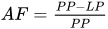
where PP is peak power and LP is lowest power.
- Anaerobic Capacity (AC)
Anaerobic capacity is the total work completed during the test duration.
[15] where is power at any point starting at the beginning of the test (i) to the end (n).


Testing considerations
[edit]Diurnal variations occur within the body in many forms, such as hormone levels and motor coordination, therefore it is important to consideration what effects may become apparent in Wingate testing. Recent studies have confirmed that circadian rhythms can significantly alter peak power output during a Wingate test.[11][16] According to these studies, an early morning Wingate test elicits significantly lower peak power values than a late afternoon or evening Wingate test.
As in every physical exertion, several outside factors can play a role in Wingate performance. Motivation is present in almost every sporting event, and some believe that it can improve performance. Cognitive motivation has not been shown to influence Wingate performance; emotional motivation however has been found to improve peak power ratings.[2] It is therefore suggested that all outside factors that involve emotion be standardized if possible in Wingate testing environments.
Another important outside factor is warm-up. According to some literature, a 15-minute intermittent warm-up improved mean power output by 7% while having no impact on peak values.[17] These findings suggest that warm-up is an unimportant factor in peak power levels, but if mean power is the variable of interest it is important to standardize the warm-up.
Since the Wingate test stresses the anaerobic metabolic systems glucose consumption pre-testing can be another influential factor. The anaerobic energy systems use glucose as the primary energy source, and greater available glucose could influence the power output over short intervals. Therefore, glucose consumption prior to testing should be standardized between all participants.[7]
Sampling rate can severely impact the values obtained for peak and average power output.[18] Sampling rates consistent with a standard mechanical ergometer test show significantly lower peak and average power values than a test with much higher sampling rates in the computer data feeds. Furthermore, tests that use low sampling rates (< 2 Hz) tend to be less consistent than tests with high sampling rates.[18] This suggests that a sampling rate of at least 5 Hz (0.2 sec) provides the most accurate results.
Other uses
[edit]The Wingate test can also be used in training instances, especially in cyclists.[6] In many races, cyclists finish the race with a sprint. This maximal exertion stresses anaerobic energy pathways. As Hazell et al.[6] have demonstrated, training in this manner can increase aerobic and anaerobic performance. Since this method can increase anaerobic performance, many cycling athletes have taken to using repeated sprint intervals, such as the Wingate test, as training devices to increase performance in the final leg of the race. These Wingate tests may be slightly modified version of the standard test laid out above.
See also
[edit]References
[edit]- ^ a b c Vandewalle, D; Gilbert, P; Monod, H (1987). "Standard anaerobic tests". Sports Medicine. 4 (4): 268–289. doi:10.2165/00007256-198704040-00004. PMID 3306867. S2CID 6410061.
- ^ a b c d e f Bar-Or, O (1987). "The Wingate anaerobic test: An update on methodology, reliability and validity". Sports Medicine. 4 (6): 381–394. doi:10.2165/00007256-198704060-00001. PMID 3324256. S2CID 37175618.
- ^ a b Ayalon, A; Inbar, O; Bar-Or, O (1974). "Relationships among measurements of explosive strength and anaerobic power". In Nelson, RC; Morehouse, CA (eds.). Biomechnics IV. International series on sport sciences. Vol. 1. Baltimore: University Press. pp. 572–577.
- ^ Tossavainen, M; Nummela, A; Paavolainen, L; Mero, A; Rusko, H (1996). "Comparison of two maximal anaerobic cycling tests". International Journal of Sports Medicine. 17 (S 2): S120–S124. doi:10.1055/s-2007-972912. PMID 8844276.
- ^ Nummela, A; Alberts, M; Rjintjes, RP; Luhtanen, P; Rusko, H (1996). "Reliability and validity of the maximal anaerobic running test". International Journal of Sports Medicine. 17 (S 2): S97–S102. doi:10.1055/s-2007-972908. hdl:2066/22894. PMID 8844272.
- ^ a b c d e Hazell, TJ; MacPherson, REK; Gravelle, BMR; Lemon, PWR (2010). "10 or 30-s sprint interval training bouts enhance both aerobic and anaerobic performance". European Journal of Applied Physiology. 110 (1): 153–160. doi:10.1007/s00421-010-1474-y. PMID 20424855. S2CID 20559073.
- ^ a b McArdle, W.; Katch, F.; Katch, V. (2007). Exercise Physiology: Energy, Nutrition, and Human Performance (Sixth ed.). Baltimore, MD: Lippencott Williams & Wilkins.
- ^ Franklin, Kathryn L.; Gordon, Rae S.; Baker, Julien S.; Davies, Bruce (2007). "Accurate assessment of work done and power during a Wingate anaerobic test" (PDF). Applied Physiology, Nutrition, and Metabolism. 32 (2): 225–232. doi:10.1139/h06-103. ISSN 1715-5312.
- ^ Astorino, TA; White, AC (2010). "Assessment of anaerobic power to verify VO2 max attainment". Scandinavian Society of Clinical Physiology and Nuclear Medicine. 30 (4): 294–300. doi:10.1111/j.1475-097x.2010.00940.x. PMID 20662880. S2CID 35659759.
- ^ Del Coso, J; Mora-Rodriguez, R (2006). "Validity of cycling peak power as measured by a short-sprint test versus the Wingate anaerobic test". Applied Physiology, Nutrition, and Metabolism. 31 (3): 186–189. doi:10.1139/h05-026. PMID 16770343.
- ^ a b Lericollais, R; Gauthier, A; Bessot, N; Davenne, D (2010). "Diurnal evolution of cycling biomechanical parameters during a 60-s Wingate test". Scandinavian Journal of Medicine and Science in Sports. 21 (6): 1–9. doi:10.1111/j.1600-0838.2010.01172.x. PMID 20807387. S2CID 7608234.
- ^ a b Katch, VL; Weltman, A; Martin, R; Gray, L (1977). "Optimal test characteristics for maximal anaerobic work on the bicycle ergometer". Research Quarterly. 48 (2): 319–327. PMID 267972.
- ^ Greer, F; McLean; Graham, T. E. (1998). "Caffeine, performance, and metabolism during repeated Wingate exercise tests". Journal of Applied Physiology. 85 (4): 1502–1508. doi:10.1152/jappl.1998.85.4.1502. PMID 9760347.
- ^ Evans, JA; Quinney, HA (1981). "Determination of resistance settings for anaerobic power testing". Canadian Journal of Applied Sport Sciences. 6 (2): 53–56. PMID 7237675.
- ^ a b c d e "Sport fitness advisor". 2011-03-09.
- ^ Souissi, N; Driss, T; Chamari, K; Vandewalle, H; Davenne, D; Gam, A; Fillard, J-R; Jousselin, E (2009). "Diurnal variation in Wingate test performances: Influence of active warm-up" (PDF). Chronobiology International. 27 (3): 640–652. doi:10.3109/07420528.2010.483157. PMID 20524806. S2CID 293830.
- ^ Inbar, O; Bar-Or, O (1975). "The effects of intermittent warm-up on 7-9 year-old boys". European Journal of Applied Physiology. 34 (2): 81–89. doi:10.1007/bf00999919. PMID 1193092. S2CID 23710347.
- ^ a b Santos, EL; Novaes, JS; Reis, VM; Giannella-Neto, A (2010). "Low sampling rates bias outcomes from the Wingate test". International Journal of Sports Medicine. 31 (11): 784–789. doi:10.1055/s-0030-1262875. PMID 20812165.
Wingate test
View on GrokipediaOverview and History
Definition and Purpose
The Wingate test, also known as the Wingate Anaerobic Test (WAnT), is a standardized 30-second maximal effort cycling sprint performed on a cycle ergometer to assess anaerobic power and capacity.[3] Developed in the early 1970s at the Wingate Institute of Physical Education in Israel, the test derives its name from the institution where it was first formulated by researchers including A. Ayalon, O. Inbar, and O. Bar-Or.[4][2] The primary purpose of the Wingate test is to quantify short-term maximal power output, anaerobic endurance, and resistance to fatigue in individuals, particularly athletes, making it a gold standard for evaluating anaerobic fitness in sports science and exercise physiology research.[5] It simulates high-intensity, short-duration activities such as sprinting or explosive sports movements by challenging the phosphagen and glycolytic energy systems, providing insights into an individual's ability to generate and sustain power without reliance on aerobic metabolism.[3] Key outcomes from the test include metrics such as peak power (the highest power achieved during the sprint), mean power (average power over the 30 seconds), and fatigue index (the rate of power decline), which serve as reliable indicators of anaerobic performance and capacity.[2] These measures help researchers and coaches identify strengths in explosive efforts and monitor training adaptations or fatigue profiles in populations ranging from elite athletes to clinical patients.[5]Development and Key Contributors
The Wingate test was developed in 1974 at the Wingate Institute for Physical Education and Sport in Netanya, Israel, as a laboratory-based assessment of anaerobic power and capacity, with an initial prototype presented by Ayalon, Inbar, and Bar-Or.[2][6] This prototype emerged from efforts to create a more controlled and reproducible alternative to field-based anaerobic tests, such as the Margaria-Kalamen stair climb, which suffered from variability due to environmental factors and participant technique.[2] The test was initially designed to simulate the high-intensity, short-duration demands of sports like sprinting and weightlifting, focusing on the phosphocreatine and glycolytic energy pathways. Key contributors to its creation included Oded Bar-Or, a prominent exercise physiologist at the institute; Omri Inbar, who played a central role in the experimental design; and Raffy Dotan, who contributed to early physiological validations.[2] Their collaborative work built on prior concepts like the Cumming sprint test but emphasized cycle ergometry for precise measurement of power output.[2] The test's foundational description appeared in a 1976 publication by Inbar, Dotan, and Bar-Or in Medicine and Science in Sports, which detailed the aerobic and anaerobic energy contributions during a 30-second supramaximal cycling bout and established its reliability. By the 1980s, the Wingate test gained widespread adoption in sports science research, with refinements to protocol elements like resistance loading (typically 7.5% of body weight) and participant instructions to enhance validity across populations.[7] Further adjustments, including those by Dotan and Bar-Or, addressed optimal workloads for specific athletic cohorts, solidifying its standardization.[7] The 30-second duration was empirically determined as optimal, based on data showing it effectively captured both peak power and fatigue without excessive aerobic influence, as validated in initial studies.Physiological Basis
Measured Parameters
The Wingate test primarily measures three key parameters that quantify anaerobic performance during high-intensity, short-duration exercise: peak anaerobic power, mean anaerobic power, and anaerobic capacity. Peak anaerobic power represents the highest power output achieved during the test, typically occurring in the initial seconds and reflecting the maximal rate of energy delivery from immediate anaerobic sources. Mean anaerobic power is the average power output sustained over the full 30-second duration, providing an indicator of overall anaerobic endurance under maximal effort. Anaerobic capacity denotes the total mechanical work performed throughout the test, capturing the cumulative energy output from anaerobic metabolism. These parameters are expressed in watts (W) for absolute power values or watts per kilogram of body mass (W/kg) for relative measures, while anaerobic capacity is reported in joules (J) or joules per kilogram (J/kg).[8] Secondary metrics derived from the test include power drop-off, which quantifies the decline in power output from peak to minimal levels, often expressed as a fatigue index in percentage terms to indicate the rate of performance decrement due to metabolic fatigue. Relative power outputs, normalized to body weight, allow for comparisons across individuals of varying sizes and are particularly useful in athletic populations. These metrics are calculated from power-time data recorded during the test but focus on observable performance declines without delving into computational details.[8] The measured parameters provide insights into the contributions of the phosphagen (ATP-PC) and glycolytic energy systems to high-intensity exercise, where peak power highlights rapid ATP-PC utilization and mean power and capacity reflect sustained glycolysis. Unlike aerobic capacity tests such as VO2 max assessments, which evaluate oxygen-dependent energy production over longer durations, the Wingate test isolates non-oxidative pathways for efforts lasting under one minute, emphasizing bursts of supramaximal activity relevant to sports like sprinting or weightlifting.[8]Underlying Energy Systems
The Wingate test primarily engages the anaerobic energy systems to support maximal short-duration efforts, with the ATP-PC (phosphagen) system dominating the initial phase and anaerobic glycolysis providing sustained power thereafter. The ATP-PC system, which rapidly resynthesizes adenosine triphosphate (ATP) from phosphocreatine stores without requiring oxygen, fuels the first 5-10 seconds of all-out sprinting, accounting for up to 92% of total power output in the opening 5 seconds.[9][10] Following this depletion, anaerobic glycolysis takes over, breaking down muscle glycogen to generate ATP via the conversion of glucose to pyruvate and subsequently lactate, which sustains power production through the remaining 20-25 seconds of the 30-second test.[9][10] Over the full duration, these systems contribute approximately 28% from ATP-PC, 56% from glycolysis, and a minor 16% from aerobic metabolism, with glycolytic power peaking between 10-15 seconds at around 82% of total output.[10] Lactate, produced as a byproduct of anaerobic glycolysis, accumulates rapidly during the test, leading to metabolic acidosis through increased hydrogen ion concentration, which impairs muscle contraction and contributes to fatigue.[9][11] The 30-second endpoint of the Wingate test coincides with dynamics near the lactate threshold, where lactate buildup exceeds clearance rates, marking a transition to pronounced performance decline.[9] Post-exercise, excess post-exercise oxygen consumption (EPOC), also known as oxygen debt, indirectly quantifies the anaerobic workload by reflecting the elevated oxygen demand for phosphocreatine resynthesis, lactate oxidation, and pH restoration, often reaching levels equivalent to maximal oxygen debt in trained individuals.[9] Training adaptations enhance Wingate test performance by bolstering these systems, including increased phosphocreatine stores for faster initial ATP provision and elevated activity of glycolytic enzymes such as phosphofructokinase and lactate dehydrogenase, which improve ATP yield and lactate tolerance during sustained efforts.[2] However, the test's assessment of these energy systems remains indirect, relying on power output as a proxy rather than direct sampling of intramuscular metabolites like phosphocreatine or lactate, which limits precise quantification of individual system contributions.[9][12]Equipment and Protocol
Required Equipment
The core equipment for the Wingate test is a friction-loaded cycle ergometer, such as the Monark 894E or similar models equipped with a weighted basket for applying resistance via hanging weights.[13][2] This setup allows for precise control of braking force through mechanical friction on the flywheel, ensuring consistent supramaximal loading during the 30-second all-out sprint.[9] Resistance is typically set at 7.5% of the participant's body mass (0.075 kg/kg), calculated based on pre-test body weight measurement and applied by adding calibrated weights to the ergometer's basket.[2][9] This percentage derives from the original protocol developed at the Wingate Institute to elicit peak anaerobic power.[9] Additional tools include a heart rate monitor to track cardiovascular response, a digital timer or stopwatch for precise 30-second timing and 5-second interval recordings, and data logging software such as Peak Bike or Monark's proprietary interfaces to capture revolutions per minute (RPM) and compute power metrics in real-time.[14][15] Proper calibration is essential for reproducibility, involving verification of the ergometer's resistance calibration (e.g., using manufacturer standards to confirm basket weight accuracy to within 0.1 kg) and flywheel inertia (approximately 0.40 kg·m² for Monark models), which must be accounted for in power calculations to avoid under- or overestimation due to mechanical variances.[2][16][17] The Wingate Institute recommends annual professional servicing and pre-test checks of chain tension and saddle height adjustment for participant safety and data integrity.[9] While friction-loaded models like the Monark remain the gold standard for their simplicity and adherence to the original methodology, modern alternatives include computerized electromagnetic ergometers (e.g., Lode Excalibur Sport) that automatically adjust resistance and integrate high-resolution sensors for RPM and torque, enabling more precise data acquisition without manual weight handling.[2][18] However, these systems must be validated against friction ergometers to maintain comparability with established norms.[9]Standard Procedure
The standard procedure for the Wingate anaerobic test begins with preparation of the subject. The individual is weighed in minimal clothing to determine body mass for resistance calculation, and the cycle ergometer seat height is adjusted to achieve approximately 5–10 degrees of knee flexion at full extension when the pedal is at the bottom dead center of the stroke. A warm-up follows, consisting of 3–5 minutes of submaximal cycling at 60 rpm with a load of 60 W for females or 90 W for males, including 2–3 brief maximal sprints lasting 3–4 seconds each to prime the neuromuscular system. This is followed by a 2-minute passive rest period.[19][20] The test protocol commences with the subject seated on the ergometer, pedaling unloaded at 60 rpm for about 10 seconds to build initial momentum from a stationary start. A 3-second verbal countdown signals the onset of the 30-second all-out maximal sprint against a resistance equivalent to 7.5% of body mass. During the sprint, the subject remains seated and pedals continuously at maximal velocity and force, with strong verbal encouragement provided to ensure supramaximal effort. Upon completion, the subject immediately transitions to a 2–3 minute active cool-down by pedaling without resistance at 60–80 rpm to facilitate recovery and prevent blood pooling.[19] To ensure reliability and reproducibility, the test is conducted at sea level in a controlled laboratory environment with ambient temperature maintained between 20–25°C and relative humidity around 50–60%. Subjects adhere to standardized nutritional guidelines, such as fasting for at least 3 hours prior or consuming a light, carbohydrate-based meal 2–3 hours beforehand, while abstaining from caffeine and alcohol for 24 hours. These conditions minimize external variables that could influence anaerobic performance.[19][21] The 30-second sprint duration is specifically chosen to exhaust anaerobic energy reserves, encompassing the rapid depletion of phosphocreatine (PCr) stores within the first 5–10 seconds and subsequent reliance on glycolytic metabolism, while limiting aerobic contributions to less than 20% of total energy provision. This timeframe allows for the assessment of both peak power and anaerobic capacity without shifting dominance to oxidative pathways.[19] Data collection occurs continuously during the test using the ergometer's integrated software or a connected system, capturing pedal revolutions or torque at high frequency—typically every second for precise real-time power output or aggregated in 5-second intervals for traditional analysis. This enables immediate computation of performance metrics post-test.[19]Calculations and Analysis
Peak Power and Mean Power
Peak power in the Wingate anaerobic test is defined as the highest power output achieved during any 5-second interval of the 30-second test, typically occurring in the initial seconds and reflecting maximal instantaneous effort. It is calculated as the work performed divided by time, where work equals the product of the applied force (from the preset resistance load) and the distance covered by the flywheel during that interval.[14] Specifically, power (P) = force (F, in newtons) × distance (d, in meters) / time (t = 5 s), with force derived from the resistance basket weight (e.g., 7.5% of body mass converted to newtons via gravity, F = m × 9.81). Distance is determined by the number of flywheel revolutions in the interval multiplied by the ergometer's circumference per revolution (typically 6 meters for a Monark cycle ergometer).[22] Mean power represents the average power output sustained over the entire 30-second test duration, providing a measure of overall anaerobic capacity. It is computed as the total work performed divided by 30 seconds, where total work equals the average force (from the resistance load) multiplied by the total distance traveled by the flywheel (total revolutions × circumference).[14] This yields mean power in watts as P_mean = (total work in joules) / 30 s, with total work accounting for the cumulative mechanical output against the constant load.[8] Power outputs are reported in absolute terms (watts, W) or normalized relative to body mass (W/kg) to enable comparisons across individuals of varying sizes. For instance, in a 70 kg subject using the standard resistance of 7.5% body mass (5.25 kg load), peak power might reach 800–1000 W absolutely (11–14 W/kg relatively) in trained athletes, while mean power typically ranges from 500–700 W (7–10 W/kg). Normalization adjusts for body weight differences, as relative values better highlight performance disparities independent of mass. Data processing for these metrics often involves specialized software that integrates the power curve from ergometer sensors capturing revolutions, speed, and load in real-time, ensuring precise interval averaging for peak power and cumulative summation for mean power. In advanced models, corrections for flywheel inertia are applied to account for kinetic energy changes, particularly during acceleration and deceleration phases, using equations that subtract or add inertial contributions (e.g., ½ I ω², where I is the moment of inertia and ω is angular velocity) to yield more accurate total power.[16] These corrections, validated through deceleration tests on the ergometer, can adjust peak power downward by 5–10% in mechanically braked systems. Physiologically, peak power primarily reflects explosive anaerobic power derived from the ATP-PCr (adenosine triphosphate-phosphocreatine) system, emphasizing rapid energy mobilization for short bursts. In contrast, mean power indicates sustained anaerobic effort, integrating contributions from both the ATP-PCr system and anaerobic glycolysis for prolonged high-intensity work.[8]Fatigue Index and Other Metrics
The Fatigue Index (FI) measures the extent of power decline during the Wingate test, reflecting the subject's ability to resist fatigue in anaerobic conditions. It is calculated using the formula: where minimum power is the lowest mean power recorded in any 5-second interval of the 30-second test.[2] This index typically ranges from 30% to 60% in healthy adults, with lower values indicating better fatigue resistance.[14] For instance, a subject achieving a peak power of 800 W and a minimum power of 400 W would have an FI of 50%.[14] Anaerobic capacity, another key metric, represents the total mechanical work performed and is computed as the sum over the six 5-second intervals of (the power output of each interval × 5 seconds), or equivalently mean power × 30 seconds, expressed in joules (or kilojoules).[23] This value provides an overall estimate of the anaerobic energy stores depleted during the test, often correlating with glycolytic capacity.[3] The power drop-off rate, also known as fatigue slope, quantifies the linear rate of power decrease from peak to minimum, usually in watts per second, offering insight into the progression of fatigue.[24] Similarly, the percentage fatigue can be derived from the slope of the power output curve over time, emphasizing the temporal dynamics of decline.[25] Advanced metrics include explosive power, calculated as the mean power output during the initial 5 seconds, which captures the maximal alactic burst.[15] The endurance index, conversely, is the mean power in the final 15 seconds, assessing sustained performance amid accumulating fatigue.[26] These supplementary indices derive from the power curve generated during the 30-second all-out effort.[2] Dedicated software integrated with cycle ergometers automates the derivation of these metrics from raw pedal rate and resistance data, reducing computational errors and enabling real-time analysis.[27]Validity and Reliability
Scientific Validation
The Wingate test exhibits high reliability, with test-retest correlations for peak power exceeding 0.90 and ranging from 0.91 to 0.93 for mean power, as established in comprehensive reviews of methodological studies.[19] Early seminal work by Bar-Or reported intra-class correlation coefficients (ICC) of 0.92 to 0.98 across repeated trials, reflecting strong reproducibility in controlled settings.[8] These metrics hold across multiple administrations, underscoring the test's consistency for assessing anaerobic power outputs. Validity is supported by robust correlations with anaerobic sports performance, particularly cycling sprints, where peak power from the Wingate test aligns with sprint times at r values of 0.54 to 0.82. The test also validates against direct physiological indicators of anaerobic metabolism, including elevated blood lactate concentrations post-exercise (peaking at 10-15 mmol/L), confirming its specificity to glycolytic pathways.[26] Adherence to standardized protocols enhances inter-laboratory agreement, with ICC values of 0.74 to 0.91 reported for power metrics in comparative studies involving both trained athletes and untrained individuals.[26] High reproducibility (r > 0.90) persists regardless of participant training status when resistance loads are appropriately scaled (e.g., 0.7-1.0 Nm/kg body mass).[28] A foundational 1987 review in Sports Medicine affirmed the test's anaerobic specificity through integrated evidence from power output, lactate dynamics, and performance analogs.[8] More recent confirmations in the 2020s incorporate electromyography (EMG) data, revealing consistent quadriceps activation patterns (e.g., decreased median frequency indicative of fatigue) that align with power decrements, further validating neuromuscular demands.[29] Post-2010 studies have broadened validation to diverse populations, including trained and untrained girls under 12, elite kayakers, and adults across fitness levels, demonstrating applicability beyond traditional athletic cohorts with correlations to sport-specific anaerobic demands (r > 0.70).[30][31][19]Known Limitations
The Wingate anaerobic test assumes a constant resistance load, typically 7.5% of body weight, which may underestimate maximal power in highly trained or powerful individuals by up to 25% if the optimal load exceeds this value, as real-world sports often involve variable loads and dynamic movements.[3] This methodological constraint limits its applicability to sports like running or weightlifting, where resistance fluctuates, reducing ecological validity compared to field-based activities.[26] Additionally, the test primarily assesses lower-body anaerobic capacity through cycling, thereby underestimating upper-body anaerobic performance, which is critical in sports such as swimming or combat disciplines.[2] Population-specific biases further constrain the test's validity. For children, particularly those with short stature, the Wingate test elicits insufficient growth hormone secretion and lower lactate responses due to immature glycolytic pathways, rendering it less effective for diagnostic or evaluative purposes in this group.[32] Similarly, limited data exist for elderly individuals, who are often excluded from studies owing to challenges with cycling mechanics and reduced power output, while obese participants require load adjustments based on lean body mass to avoid overestimation of fat mass contributions.[26] Gender differences also necessitate tailored resistance settings, with males typically requiring higher loads (around 0.7 kg/kg) than females (0.67 kg/kg) to optimize peak power, as unadjusted protocols can skew results across sexes.[2] The test provides incomplete coverage of energy systems, overlooking significant aerobic contributions—estimated at 9-40% of total energy during the 30-second effort—which become more prominent in the latter stages and confound metrics like the fatigue index.[3] Additionally, the fatigue index demonstrates lower reliability (test-retest correlations of 0.43–0.73) compared to power metrics, limiting its consistency across trials.[2] In untrained subjects, performance exhibits higher variability than in trained athletes, attributed to inconsistent technique and motivation.[28] Recent critiques from 2015-2023 highlight the test's over-reliance on controlled laboratory settings, which enhances reliability but diminishes ecological validity for team sports, where intermittent, multi-directional efforts predominate over isolated cycling sprints.[26] Studies emphasize that this lab-centric approach poorly translates to on-field performance in sports like soccer or basketball, limiting its predictive value beyond anaerobic power assessment.[2] Furthermore, gaps in inclusivity persist for non-athletes, as most validation research focuses on athletic populations, excluding sedentary or recreationally active individuals and potentially overlooking biomechanical or motivational barriers in broader demographics.[26]Applications and Variations
Primary Applications
The Wingate test serves as a cornerstone in sports science for talent identification and monitoring training progress in anaerobic-dominant activities, such as track cycling, soccer, and basketball, where it evaluates peak power and fatigue resistance to inform athlete selection and program adjustments.[2] For instance, it has been employed by Olympic teams, including protocols endorsed by the United States Olympic Committee for cyclist warm-ups, to establish baselines for sprint-based performance since the 1980s.[2] In these contexts, the test helps quantify anaerobic capacity, guiding interventions like high-intensity interval training to enhance power output in short-burst efforts.[33] In exercise physiology research, the Wingate test is widely used to investigate mechanisms of anaerobic metabolism, including ATP-PCr utilization and glycolytic contributions, as well as the impacts of doping agents and nutritional strategies on power metrics.[2] Studies leveraging the test have examined ergogenic aids, such as caffeine supplementation, which a meta-analysis of 16 trials found to increase mean power by approximately 3% and peak power by 4% during the 30-second protocol.[34] This application extends to broader fitness norms, influencing anaerobic assessments in gym-based protocols and military training programs to evaluate endurance under high-intensity conditions, like field operations.[35] Clinically, the Wingate test assesses anaerobic impairments in metabolic and neuromuscular disorders, providing objective measures of exercise tolerance and rehabilitation outcomes in conditions such as juvenile dermatomyositis.[36] It tracks progress in patients with reduced anaerobic capacity, enabling tailored interventions to improve power and reduce fatigue, and has been validated for reliability in pediatric populations with these disorders.[36]Protocol Variations
The Wingate test has been adapted for specific populations to account for physiological differences, such as reduced muscle mass or lower anaerobic capacity. For children and elderly individuals, resistance is typically lowered to 5-6% of body weight (e.g., 0.53-0.55 kg/kg for prepubertal boys and girls) to optimize peak power output while minimizing injury risk and ensuring feasibility.[8] In wheelchair users, the test is modified using an upper-body ergometer or instrumented roller system with individualized resistance settings based on isometric strength to maintain appropriate velocities, allowing valid assessment of anaerobic capacity in those with lower-body impairments.[37] Duration modifications extend the test's utility beyond the standard 30 seconds. A 15-second variant isolates alactic (phosphocreatine) power by emphasizing peak output without significant glycolytic fatigue.[38] Repeated sprint protocols, such as 6 × 30-second Wingates with 2-minute recoveries, evaluate recovery capacity and interval training adaptations, with prior research indicating improvements in aerobic power by 10-15% after 2-4 weeks in trained athletes.[39] Sport-specific adaptations tailor the test to movement patterns. Arm-cranking versions on upper-body ergometers assess anaerobic power in upper-body dominant activities.[40] For sprinters, running-based protocols like the Running Anaerobic Sprint Test (RAST) on a non-motorized treadmill with resisted loads simulate track demands, yielding similar peak power metrics to cycling Wingates (r = 0.82) while enhancing specificity.[41] Technological integrations enable field-based and outdoor applications. Wireless sensors on portable ergometers facilitate real-time power monitoring during non-laboratory tests, maintaining reliability (CV < 5%) comparable to lab setups.[2] GPS-anchored systems validate outdoor running Wingates by tracking velocity and distance, with strong agreement to lab ergometry (ICC = 0.92, r = 0.88) for team sports assessment.[42] Studies from the 2000s, such as cross-validations of 20-second variants, confirm their utility as shorter alternatives to the 30-second protocol, with peak power correlations of r = 0.85-0.95 and similar sensitivity to training interventions, addressing needs for time-efficient testing in research and coaching.[43]Practical Considerations
Testing Precautions
Prior to administering the Wingate test, thorough health screening is essential to identify and mitigate risks associated with maximal anaerobic effort. Participants should undergo pre-test medical clearance, particularly for cardiovascular conditions such as coronary heart disease, where safety data are lacking and testing is contraindicated.[24] Contraindications also include recent injuries, active inflammatory conditions, fever, uncontrolled hypertension, and exercise-induced asthma, as these can exacerbate strain during high-intensity pedaling.[24][44] Untrained or recreational individuals without prior clearance are generally not recommended due to the test's demands on anaerobic systems.[45] Supervision by trained personnel is mandatory to ensure safety during the maximal sprint nature of the test. An experienced operator, knowledgeable in automated external defibrillator (AED) use, must be present, with immediate access to a physician if no medical professional is on site.[24] Emergency equipment, including an AED, should be readily available given the potential for sharp increases in heart rate and metabolic stress.[45] The supervisor provides standardized verbal encouragement to promote maximal effort while monitoring for signs of distress, preventing underperformance or unsafe exertion.[24] Proper technique coaching is critical to minimize injury risks, such as knee strain from improper pedaling mechanics. Participants must be instructed to remain seated throughout the test, maintain a neutral body position, and pedal with both legs at maximal cadence against the resistance to avoid valgus knee angles or tibial rotation induced by fatigue.[14][46] A 3-5 minute warm-up at low resistance (60-90 W) precedes the test to prepare muscles and reduce strain potential.[2] Post-test monitoring is necessary to address immediate recovery needs and detect complications like dizziness or excessive fatigue from lactic acidosis. Participants should continue pedaling without resistance at 60-80 rpm for 2-3 minutes as a cool-down, followed by slow walking to prevent orthostatic hypotension; taller individuals may need to lie down briefly.[2][24] Hydration must be maintained before, during, and after to counteract dehydration risks, with ongoing observation for symptoms of distress.[45] Ethical considerations underpin safe administration, including obtaining informed consent after fully explaining procedures, risks, and the right to withdraw at any time. Testing should avoid extreme heat to prevent hyperthermia, aligning with general guidelines for high-intensity exercise in adverse conditions.[47]Environmental and Population Factors
High altitude exposure impairs performance in the Wingate test primarily due to reduced oxygen availability, leading to a decrease in both peak and mean power outputs. Studies indicate an approximate 5-10% drop in power per 1000 m elevation gain, with exposure following prolonged high-altitude stays at elevations above 3000 m resulting in reductions of about 8% in peak power (from 7.3 to 6.7 W/kg) and 8.5% in mean power (from 5.9 to 5.4 W/kg).[48][49] Temperature extremes also significantly influence outcomes, as hotter conditions accelerate fatigue through increased thermal stress and altered metabolic responses. For instance, performing the test in hot-wet environments (33°C, 80% relative humidity) elevates the fatigue index by approximately 10% compared to neutral conditions (21°C, 20% relative humidity), from 57.5% to 63.2%.[50] Population demographics further modulate Wingate test results, with age exerting a pronounced effect on anaerobic power. Peak and mean power typically reach their zenith in the early 20s, correlating strongly with age during adolescence and young adulthood (R² = 0.57 for absolute peak power), before stabilizing into the late 20s and then declining linearly at rates of about 1-2% per year after age 35 due to sarcopenia and reduced muscle fiber efficiency.[51][52] Sex differences are evident in absolute metrics, where males generally produce higher peak power outputs owing to greater muscle mass (e.g., classifications for intercollegiate athletes show male elite peak power exceeding female by 30-50% in absolute terms), though relative power (per kg body weight) tends to be comparable between sexes when normalized.[5][53] Training status markedly differentiates performance, with elite athletes achieving higher peak and mean power than untrained individuals, reflecting adaptations in muscle phosphocreatine stores and glycolytic capacity.[54] Obesity impacts relative power negatively, as the standard body weight-based resistance load (7.5% of total body mass) imposes a disproportionately higher burden relative to lean muscle mass; using lean body mass-based loads can mitigate this effect without altering overall outcomes.[55] These factors influence key metrics like the fatigue index, where heat can amplify it by 10-15% via enhanced lactate accumulation and dehydration, while obesity exacerbates power drop-off due to inefficient load distribution.[50] To account for these variables, researchers often normalize results in comparative studies; for instance, altitude correction models from 2010s investigations adjust raw power data using elevation-specific oxygen saturation estimates to enable cross-site validity, ensuring equitable interpretation across environments.[48] Recent research has expanded normative data to underrepresented groups, including females and seniors, revealing that while absolute powers decline with age in both sexes, relative metrics in trained older females approach those of younger males, highlighting the test's applicability in diverse populations beyond traditional young male cohorts.[5][52]References
- https://www.[mdpi](/page/MDPI).com/2076-3417/11/16/7417