Hubbry Logo
CottidaeCottidaeMain
Open search
Cottidae
Community hub
Cottidae
logo
8 pages, 0 posts
0 subscribers
Be the first to start a discussion here.
Cottidae
Cottidae
from Wikipedia

Cottidae
Temporal range: Early Oligocene–recent
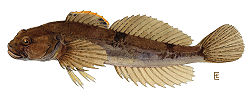
Cottus cognatus
Scientific classification Edit this classification
Kingdom: Animalia
Phylum: Chordata
Class: Actinopterygii
Order: Perciformes
Suborder: Cottoidei
Superfamily: Cottoidea
Family: Cottidae
Bonaparte, 1831[1]
Subfamilies and genera

see text

Synonyms
  • Abyssocottinae Berg, 1907
  • Cottinae Bonaparte, 1831

The Cottidae are a family of fish in the superfamily Cottoidea, the sculpins. Following major taxonomic revisions, it contains about 118 species in 18 genera, the vast majority of which are either restricted to freshwater habitats or are amphidromous.[2] They are referred to simply as cottids to avoid confusion with sculpins of other families.[3]

Cottids are distributed throughout the Northern Hemisphere, especially in boreal and colder temperate climates.[3] They are especially diverse in Lake Baikal and surrounding river basins. Only a few cottids inhabit marine habitats. Other sculpins restricted to marine habitats are now placed in the family Psychrolutidae.[4] In Lake Baikal, many cottids live in deep water, below 170 m (560 ft).[5] There are 24 known species in seven genera.[5] These include, for instance, Abyssocottus korotneffi and Cottinella boulengeri which are among the deepest-living freshwater fish.[6] Baikal is the deepest lake on Earth (1,642 m or 5,387 ft) and sculpins occupy even its greatest depths.[7]

Most cottids are small fish, under 10 cm (3.9 in) in length.[8]

The earliest known skeletal remains of cottids are of Cottus cervicornis (taxonomy uncertain) from the Early Oligocene of Belgium. Cottids become more common in the fossil record from the Miocene onwards.[9]

Taxonomy

[edit]

The Cottidae was first recognised as a taxonomic grouping by the French zoologist Charles Lucien Bonaparte in 1831.[1] The composition of the family and its taxonomic relationships have been the subject of some debate among taxonomists. The 5th edition of Fishes of the World retains a rather conservative classification, although it includes the families Comephoridae and Abbyssocottidae as subfamilies of the Cottidae recognising that these taxa are very closely related to some of the freshwater sculpins in the genus Cottus.[10] More recently, phylogenetic studies have redefined Cottidae to be largely restricted to the freshwater sculpins, i.e. Cottus, Leptocottus, Mesocottus, Trachidermus, and the species flock in and around Lake Baikal, and the marine genera are placed in the Psychrolutidae.[4] Eschmeyer's Catalog of Fishes follows this classification.[11]

Comephorus baikalensis

Based on Eschmeyer's Catalog of Fishes (2025):[11]

Evolution

[edit]

Molecular studies based on mitochondrial DNA suggest that the Lake Baikal cottids, previously placed in the subfamilies Abyssocottinae, Cottocomephorinae & Comephorinae (Baikal oilfish), together make a monophyletic group that has originated and diversified within the lake relative recently, since the Pliocene. The ancestors of this species flock comprising more than 30 species belonged to the widespread freshwater sculpin genus Cottus (in Cottidae). The Abyssocottidae itself appears as a natural group within this radiation, except that also the genus Batrachocottus should be included.[13]

See also

[edit]

References

[edit]
Revisions and contributorsEdit on WikipediaRead on Wikipedia
from Grokipedia
Cottidae is a family of benthic ray-finned fishes in the order , commonly known as sculpins, comprising approximately 300 species across 72 genera. These small to medium-sized fish, typically measuring less than 30 cm in length though some like the cabezon can reach up to 78 cm, lack a and possess a robust, tadpole-like body with a large head, high-placed eyes, and broad pectoral fins adapted for maneuvering over substrates. Their skin is often naked or covered in prickles and spines rather than scales, providing and protection in their environments. Sculpins are predominantly distributed throughout the , with centers of diversity in the northern , waters, and freshwater systems like , where they exhibit remarkable adaptive radiations. They inhabit a wide range of benthic habitats, from shallow marine intertidal zones and tide pools to deep oceanic waters, cold streams, rivers, and lakes in both marine and freshwater settings, often preferring cool, temperate or boreal climates. While most species are marine, several have independently adapted to freshwater life, contributing to their ecological versatility across continents including , , , and near . Ecologically, sculpins are sluggish bottom-dwellers that feed primarily on invertebrates such as crustaceans, insect larvae, and small fish, using their wide mouths and nocturnal habits for foraging. They are oviparous, with males typically guarding adhesive eggs laid among rocks or vegetation until hatching, a behavior that enhances survival in predator-rich environments. In some regions, sculpins play key roles in aquatic food webs, serving as prey for larger fish like salmon and trout, and certain species face conservation concerns due to habitat degradation and invasive species. Their phylogenetic diversity reflects multiple evolutionary lineages within the suborder Cottoidei, with ongoing taxonomic revisions based on molecular data highlighting complex speciation patterns in freshwater isolates.

Taxonomy and phylogeny

History and etymology

The family Cottidae was originally described by French-Italian zoologist in 1831, as part of the superfamily Cottoidea within his systematic classification of vertebrates. In this work, Bonaparte grouped the sculpins under the broader Acanthopterygii, emphasizing their spiny-rayed fins and other morphological traits shared with related groups. The name Cottidae derives from the type genus Cottus, which in turn originates from the Greek word kóttos (κόττος), denoting a type of river observed in ancient texts, likely alluding to early European encounters with these bottom-dwelling species in temperate freshwater systems. This underscores the family's long-standing recognition in ichthyological literature, dating back to Linnaeus's initial description of Cottus in 1758. During the early 19th century, sculpins were commonly classified alongside other scorpaeniform fishes, such as rockfishes and gurnards, based on shared morphological features like robust heads, pectoral fin spines, and benthic adaptations. Key 20th-century revisions, including those by Yabe in the , separated Cottidae from broader assemblages like the suborder Cottiformes through detailed osteological analyses, narrowing the family to its core freshwater and nearshore genera while reassigning marine forms to related families such as .

Current classification

The family Cottidae comprises approximately 294 species distributed across 70 genera, according to Eschmeyer's Catalog of Fishes (as of November 2025). This inventory reflects ongoing refinements, with recent descriptions and synonymies addressing historical estimates of diversity. Some classifications recognize subfamilies such as Cottinae (typical sculpins in freshwater and coastal environments) and Abyssocottinae (deep-water forms endemic to ), though major databases often treat the family as undivided. Among the genera, Cottus is the most species-rich, containing 67 species primarily in freshwater systems of , , and ; representative examples include Cottus gobio, the , a small (up to 12 cm) stream-dweller with mottled , and Cottus bairdii, the of North American rivers, known for its cryptic patterning and nest-guarding behavior. Myoxocephalus encompasses about 12 species, mostly marine or brackish, such as Myoxocephalus scorpius, the shorthorn sculpin, a widespread North Atlantic and Pacific form reaching 30 cm with prominent dorsal spines and a diet of crustaceans. Taurulus includes three species of coastal marine sculpins, exemplified by Taurulus bubalis, the long-spined scorpion of the northeast Atlantic, notable for its elongated pectoral fins and intertidal foraging habits. While some phylogenetic studies propose narrowing Cottidae to primarily freshwater and forms by transferring marine species (e.g., and Ebinania) to , standard classifications in catalogs like and Eschmeyer's retain a broader scope including both marine and freshwater taxa. This reflects ongoing taxonomic debate based on molecular and morphological data.

Evolutionary relationships

The Cottidae family is positioned within the order and the superfamily Cottoidea, a supported by integrated molecular and morphological phylogenetic analyses that resolve Cottoidea as a monophyletic group comprising several families of benthic, primarily marine and freshwater fishes. This placement reflects shared synapomorphies such as cirri on the head and body, along with molecular markers from mitochondrial and nuclear genes that confirm the of Cottoidea from other scorpaeniform lineages around 50-60 million years ago, though exact timelines vary across studies. Cottidae exhibits close phylogenetic relationships with other sculpin-like families within Cottoidea, including (tadpole sculpins) and Agonidae (poachers), characterized by convergent adaptations to benthic lifestyles, such as extensive pectoral rays that aid in substrate adhesion and maneuvering. These affinities are evidenced by Bayesian and maximum likelihood trees from multigene datasets, which place Cottidae as sister to a including and Rhamphocottidae, highlighting a shared evolutionary history of morphological stasis in head and structures despite diversification. A prominent example of evolutionary diversification within Cottidae is the species flock in , , comprising approximately 42 endemic species across 10 genera that originated from Cottus ancestors through into diverse lacustrine niches, from pelagic to profundal zones. Molecular phylogenies based on mtDNA sequencing demonstrate the of this flock, with rapid driven by ecological opportunities in the isolated, environment, resulting in morphological innovations like elongated bodies in deep-water forms. Genetic studies further reveal amphidromous origins in certain Cottus lineages, where ancestral populations exhibited migratory life histories between freshwater and marine environments, facilitating and subsequent isolation in riverine systems. Hybridization events, particularly in European Cottus species such as between C. rhenanus and C. perifretum, have contributed to , with genomic analyses identifying hybrid zones where recombinant genotypes establish novel lineages adapted to local conditions.

Physical description

Morphology and anatomy

Members of the Cottidae family, commonly known as sculpins, exhibit a distinctive body structure adapted to their benthic lifestyle, characterized by an elongated, tadpole-like form with a disproportionately large head and a depressed, tapering posterior body. The body often appears naked or smooth, with reduced scales frequently replaced by prickly dermal structures, spines, or cirri distributed across the head and body surfaces. This robust, flattened morphology facilitates close association with substrates in aquatic environments. The head is notably broad and heavy, featuring large eyes positioned dorsally to provide a superior view of the surroundings while resting on the bottom. The is wide and terminal or slightly inferior, often equipped with cirri—fleshy appendages—along the upper and nostrils that may aid in sensory . Prominent preopercular spines, typically strong and branched, project from the cover and serve a defensive function against predators by deterring attacks. The fin configuration supports precise maneuvering in complex habitats. Pectoral fins are large and fan-like, with 13-20 rays, enabling effective propulsion and station-holding in currents. The dorsal fin is divided or continuous, comprising 7-18 strong spines followed by 13-20 soft rays; the anal fin is soft-rayed with 10-18 rays and no spines. Pelvic fins are positioned thoracically or jugurally, each with one spine and 4-5 soft rays, contributing to stability on uneven substrates. Internally, sculpins lack a functional in adults or possess a highly reduced one, an adaptation that prevents buoyancy issues in their demersal existence and promotes negative for bottom-dwelling. Their large eyes are specialized for low-light conditions prevalent in their habitats, enhancing in dim environments through structural adaptations in the .

Size, coloration, and variation

Members of the Cottidae family exhibit a wide range of body sizes, with most species typically measuring between 5 and 15 cm in total length (TL). For example, the European bullhead (Cottus gobio) reaches a maximum of 18 cm TL, while smaller species such as Artedius meanyi and Oligocottus maculosus attain only about 5–9 cm TL. Larger extremes include Myoxocephalus polyacanthocephalus at up to 76 cm TL and Myoxocephalus scorpius at 60 cm TL, though such sizes are uncommon within the family. Coloration in cottids is predominantly cryptic, featuring mottled patterns of browns, grays, and greens that provide against benthic substrates such as rocks, , and . This includes species like the (Cottus bairdii), which displays disruptive patterns of dark saddles and spots blending with stream bottoms. In troglomorphic forms, such as the cave sculpin (Cottus specus), pigmentation is significantly reduced or absent, resulting in pale, nearly translucent bodies adapted to dark subterranean environments. Intraspecific variation is notable, with minimal in overall coloration but occasional brighter hues in breeding males, such as orange or red fin margins in some Cottus species. Juveniles may show more vivid patterns that fade with age, and coloration can vary with habitat conditions like substrate type or . Geographic variation is pronounced in endemics, where deep-water species like Abyssocottus korotneffi exhibit elongated bodies and subdued pigmentation compared to shallower-water forms. Skin texture varies from smooth in freshwater species to more prickly or spiny in marine representatives, enhancing camouflage and protection in diverse habitats. These adaptations, including variable spine development on the head and body, correlate with environmental pressures across the family's range.

Distribution and habitat

Geographic distribution

The family Cottidae, commonly known as sculpins, is primarily distributed throughout the , spanning waters to temperate zones, with no native presence in southern continents. A few species occur disjunctly in deep waters off in the . This range encompasses cool- and coldwater ecosystems across and , where the family exhibits its highest diversity in boreal and subarctic regions. Key regions of distribution include the North Atlantic and North Pacific Oceans, where species are widespread along coastal areas. For instance, the genus Myoxocephalus occurs in marine and brackish waters from the southward to the coasts of and , including the , , and . In inland systems, in serves as a major center of endemism, hosting 42 Cottidae species (38 of which are endemic) across ten genera, representing a significant portion of the family's freshwater diversity. While many Cottidae species inhabit marine environments, a substantial proportion—particularly in the genus Cottus—are restricted to freshwater habitats such as rivers and lakes, including the of . Estimates indicate that around 75 to 100 of the approximately 300 species in the family are freshwater dwellers, though exact proportions vary with taxonomic revisions. Some species exhibit amphidromous life histories, migrating between freshwater and marine environments; for example, the Coastrange sculpin (Cottus aleuticus) completes its life cycle by spawning in streams while juveniles descend to the sea before returning upstream. The current distribution patterns reflect historical post-glacial recolonization events following the . In , lineages of the bullhead (Cottus gobio) expanded northward from southern refugia, forming distinct phylogeographic groups in river systems like the and basins. Similarly, in , species such as the (Cottus bairdii) recolonized glaciated areas via multiple routes from unglaciated refugia in the and Atlantic drainages, contributing to regional genetic diversity.

Habitat preferences

Members of the Cottidae family are primarily benthic fishes, favoring substrates composed of rocks, , or cobble in , lakes, and coastal marine or estuarine zones. They typically occupy clear, flowing waters with high oxygen levels, avoiding warm or stagnant conditions that reduce dissolved oxygen availability. Preferred water temperatures generally range from 4°C to 15°C, with species like the marbled sculpin (Cottus klamathensis) and rough sculpin (Cottus asper) selecting acute temperatures between 11.1°C and 14.7°C when acclimated to 10–20°C. This thermal preference aligns with their distribution in cool headwaters, riffles, and runs of rivers and lakes, where water movement ensures oxygenation. Depth preferences vary widely across the family, from shallow riffles in fast-flowing streams—often less than 1 m deep—to profound profundal zones in ancient lakes. In , several Cottidae species, such as those in the genus Procottus, inhabit depths exceeding 170 m, adapting to the lake's oligotrophic, cold benthic environment down to over 1,500 m in some cottoid lineages. Hypogean forms, including the grotto sculpin (Cottus specus), are specialized for cave systems in karst regions like those of , where they dwell in pools and riffles with moderate flow and depths of 0.5–2 m, relying on stable, dark, groundwater-fed habitats. These depth adaptations reflect the family's versatility in exploiting vertically stratified aquatic environments while maintaining a bottom-oriented lifestyle. While predominantly freshwater inhabitants, many Cottidae species demonstrate tolerance for brackish conditions, particularly in coastal or estuarine settings. For instance, the prickly sculpin (Cottus asper) thrives in tidepools and estuaries with salinities up to 8–34 ppt, though it avoids hypersaline extremes. Microhabitat selection emphasizes cover for refuge and foraging; individuals often shelter under rocks, boulders, or algal mats during the day, emerging at night to feed. In lacustrine environments, some species exhibit diurnal vertical migrations, shifting from shallow nearshore areas to deeper waters (up to 10–20 m) during daylight to evade visual predators or fluctuations. These behaviors underscore the family's reliance on structured, heterogeneous benthic niches that provide both protection and access to oxygenated, prey-rich zones.

Ecology and behavior

Diet and feeding

Members of the Cottidae family exhibit a carnivorous diet dominated by benthic invertebrates, including aquatic insect larvae such as chironomids (midges) and trichopterans (caddisflies), crustaceans like amphipods and isopods, and annelid worms. Larger species may incorporate small fish, fish eggs, and occasionally plant material into their diet, though these constitute a minor portion overall. Diet composition varies by habitat and species, but invertebrates comprise 60-75% of prey items by number in stream-dwelling forms like the mottled sculpin (Cottus bairdii) and slimy sculpin (Cottus cognatus), dominated by midges. Feeding strategies in Cottidae emphasize benthic ambush predation, where individuals remain camouflaged against the substrate and rapidly lunge to capture passing prey using their expansive mouths. Prey detection relies heavily on non-visual cues, particularly the mechanosensory system, which responds to water movements and vibrations from mobile . Many species, including the , exhibit nocturnal or crepuscular activity patterns to exploit reduced visibility and heightened prey movement during these periods. Sensory cirri on the head enhance tactile detection in low-light or turbid conditions, complementing the large gape suited for engulfing whole prey items. Ontogenetic shifts in diet are common, with juveniles initially targeting smaller planktonic prey such as and microcrustaceans before transitioning to larger macroinvertebrates as they grow. This progression aligns with increasing body size and improved predatory capabilities, allowing adults to exploit a broader range of benthic resources. In stream ecosystems, Cottidae serve a critical trophic role by regulating invertebrate populations, particularly , thereby maintaining balance; for instance, the functions as a key intermediary between macroinvertebrates and predatory fishes in North American rivers.

Reproduction and development

Members of the Cottidae family exhibit as their primary reproductive strategy, with males typically constructing and defending nests in sheltered locations such as under stones, in rocky crevices, or gravel pits to protect from predators and environmental stressors. Females deposit onto these nest substrates, where males fertilize them immediately upon release. This paternal nest-building behavior is widespread across temperate , enhancing survival through in well-oxygenated, low-flow areas. Spawning in Cottidae generally occurs during spring or summer in temperate regions, aligning with rising water temperatures that trigger gonadal maturation; for instance, mottled sculpins (Cottus bairdii) spawn in May, while slimy sculpins (Cottus cognatus) peak in June. Females engage in batch spawning, releasing eggs in multiple clutches over the season, with fecundity typically ranging from 100 to 500 eggs per female, varying by body size and species; in slimy sculpins, this can extend to over 1,000 eggs in larger individuals. The adhesive nature of the eggs ensures they remain attached to the nest surface, resisting dislodgement in currents. Males often spawn with multiple females, accumulating eggs from several batches in a single nest to maximize reproductive output. Following spawning, males provide extensive by vigorously fanning the eggs to maintain oxygenation and remove sediment, while aggressively defending the nest against intruders; this behavior can last several weeks until , significantly reducing fungal infections and predation risks. In fourhorn sculpins (Myoxocephalus quadricornis), for example, fanning increases success from near zero without care to substantial levels. Eggs hatch into larvae within 5-17 days, depending on (e.g., 11-13°C for mottled sculpins), after which males may continue guarding the young for a short period. Larval development in Cottidae varies by species and habitat: many, like mottled and slimy sculpins, produce benthic larvae that remain near the nest substrate, while others, such as deepwater sculpins (Myoxocephalus thompsonii), release pelagic larvae that disperse in the water column before settling as juveniles at 20-25 mm. Growth is rapid post-hatching, with juveniles reaching 2-3 cm within the first few months; slimy sculpins, for instance, average 37 mm by age 1 year. Sexual maturity is attained at 1-2 years of age, enabling early reproduction in short-lived species, though some Baikal-endemic forms exhibit semelparity, breeding only once before death.

Predation and interactions

Cottidae, commonly known as sculpins, face predation from a variety of aquatic and terrestrial predators due to their benthic lifestyle in streams, rivers, and coastal waters. Larger fish such as (Salvelinus fontinalis), (Salmo trutta), and (Esox lucius) frequently consume sculpins, particularly in freshwater habitats where sculpins serve as important forage. Avian predators including belted kingfishers (Megaceryle alcyon) and great blue herons (Ardea herodias) target sculpins in shallow streams and pools, exploiting their cryptic positioning near the substrate. Mammalian predators like river otters (Lontra canadensis) also prey on sculpins, though less commonly documented. To counter these threats, sculpins possess prominent spines on their preopercular, dorsal, and pectoral fins that can inflict injury or deter gape-limited predators; some species, such as the staghorn sculpin (Leptocottus armatus), have sharp spines that can inflict painful punctures, enhancing this defensive capability. Interspecific competition among sculpins and other benthic fishes shapes their distribution and resource use in stream ecosystems. Sculpins often compete with darters (Etheostoma and Percina spp.) and cyprinids like speckled (Rhinichthys osculus) for limited spaces, food resources, and microhabitats in riffles and pools. Niche partitioning mitigates this overlap, with sculpins typically occupying under-substrate crevices and slower-flow areas while darters prefer exposed surfaces on the streambed, reducing direct confrontations and allowing coexistence in diverse benthic communities. Such partitioning is particularly evident in temperate streams, where seasonal flow variations influence competitive dynamics. Parasitic interactions are prevalent among Cottidae, with helminths and protozoans commonly infecting these fishes as definitive or intermediate hosts. Trematodes such as Crepidostomum cooperi and nematodes like Rhabdochona cotti are widespread, often acquired through of infected intermediate hosts like gastropods or , with variable rates in some populations. Sculpins serve as intermediate hosts for digenean trematodes that utilize snails as first hosts, facilitating parasite transmission in aquatic food webs. Symbiotic associations are limited, though some sculpins exhibit enhanced by algae-covered bodies, blending with in intertidal zones to evade visual predators without mutual benefits to the . Sculpins employ behavioral adaptations to minimize predation risk, relying on camouflage through mottled, substrate-matching coloration and prolonged immobility to avoid detection by visually hunting predators. This crypsis is most effective in structured habitats like rocky streambeds, where immobility reduces the likelihood of alerting nearby threats. Schooling behavior is rare, with sculpins typically solitary or in loose aggregations, further emphasizing their reliance on individual stealth over group defenses.

Conservation and human impact

Threats and status

Cottidae species face several anthropogenic threats, primarily loss and degradation from the construction of and associated water management practices, which alter flow regimes and fragment riverine ecosystems essential for their benthic lifestyles. and channelization further exacerbate these issues by increasing and disrupting spawning grounds in cool, clear streams. from agricultural runoff, industrial effluents, and urban development contaminates rivers, reducing and affecting sensitive species that require oxygen-rich environments. In the , such as the (Neogobius melanostomus) pose significant competition for resources and , leading to declines in native sculpins through interference with spawning and foraging behaviors. Most Cottidae species are assessed as Least Concern by the IUCN, reflecting their widespread distributions and adaptability in temperate and cold freshwater systems. However, endemic and range-restricted taxa are more vulnerable; for instance, the Pyrenean sculpin (Cottus rondeleti) is assessed as Near Threatened (as of the 2024 IUCN Red List) due to habitat fragmentation and drought exacerbated by water extraction. Similarly, the Lez sculpin (Cottus petiti) is Critically Endangered, confined to a single river in France where pollution and altered hydrology threaten its survival. In Lake Baikal, endemic cottoid species face risks from pollution and water consumption, though some like Procottus gotoi are Endangered and others remain data-deficient. Climate change compounds these pressures by warming freshwater habitats, which reduces suitable cold-water refugia preferred by many and may lead to physiological stress or local extirpations. In regions, range shifts have been observed among Cottidae, with some boreal species expanding northward into previously -dominated areas, potentially displacing cold-adapted forms like the fourhorn sculpin (Myoxocephalus quadricornis). A notable example is the grotto sculpin (Cottus specus), listed as Endangered , where groundwater-dependent habitats are degraded by , contaminants, and altered from surface activities.

Economic and cultural significance

Members of the Cottidae family, commonly known as sculpins, hold minor commercial value in fisheries, primarily serving as bait for angling rather than direct human consumption. In North America, species such as the mottled sculpin (Cottus bairdii) are frequently used by anglers as live bait due to their abundance in cool, clear streams and their effectiveness in attracting predatory fish like trout. While sculpins are occasionally targeted for sport fishing and noted for their palatable flesh when prepared properly, they are not a major food fish in most regions, with consumption limited by their small size and bony structure. In Asia, particularly around Lake Baikal, endemic sculpins like those in the genus Comephorus contribute indirectly to local fisheries as prey for commercially important species, though direct harvest for human use remains negligible. Sculpins play a significant role in scientific research and studies, valued as model organisms for investigating evolutionary processes and physiological adaptations. The endemic cottoid flock in , comprising over 20 , has been extensively studied for rapid and genetic diversification, providing insights into in isolated ecosystems. These Baikal sculpins also serve as models for examining metabolic adaptations, such as regulation in extreme environments. Additionally, various are employed in testing due to their sensitivity to environmental contaminants; for instance, shorthorn sculpins (Myoxocephalus scorpius) exhibit measurable responses in skin mucous cells to like lead and , making them useful sentinels for assessing impacts in aquatic systems. Culturally, sculpins feature in indigenous of Northwest Coast Native American communities, symbolizing resilience and bottom-dwelling persistence in stories and crests. Among the Haida, Kwakwaka'wakw, and peoples, the sculpin appears in myths, such as tales of encountering the fish during travels, representing lessons on and environmental interconnectedness. In Europe and broader North America, sculpins lack prominent roles but are appreciated in aquarium trade for their hardiness and adaptability to cold-water setups, with species like the available commercially for hobbyists and educational displays. Management of sculpins involves regulations to balance sport fishing with conservation, often as incidental catches in streams. In regions like and , sport fishing rules include bag limits and processing restrictions for sculpins to prevent overharvest, with recent updates eliminating size limits for certain species to simplify . Sculpins are also key indicator species for monitoring, as their presence signals healthy, oxygen-rich habitats; for example, species like the slimy sculpin (Cottus cognatus) and checkered sculpin (Cottus sp.) are intolerant of and acidification, aiding assessments of integrity.

References

Add your contribution
Related Hubs
User Avatar
No comments yet.