Hubbry Logo
Amos LeeAmos LeeMain
Open search
Amos Lee
Community hub
Amos Lee
logo
8 pages, 0 posts
0 subscribers
Be the first to start a discussion here.
Amos Lee
Amos Lee
from Wikipedia

Key Information

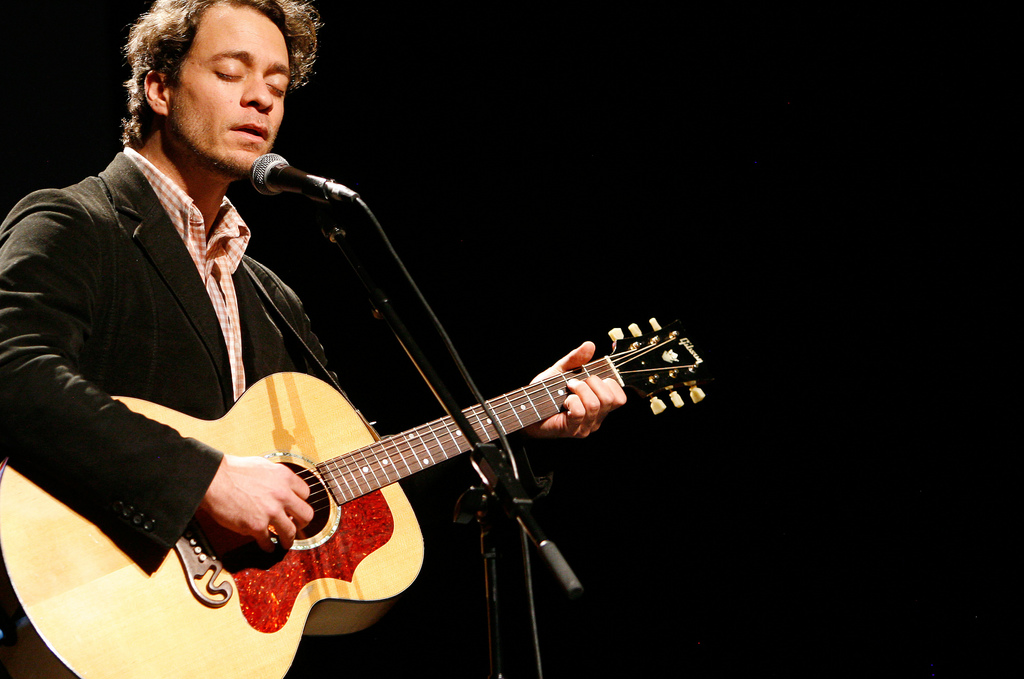
Amos Lee (born Ryan Anthony Massaro,[4] June 22, 1977)[5] is an American singer-songwriter whose musical style encompasses folk, rock, and soul.[6]

Lee has recorded five albums on Blue Note Records and has toured as an opening act for Norah Jones, Bob Dylan, Elvis Costello, Paul Simon, Merle Haggard, Van Morrison, John Prine, Dave Matthews Band, Adele, the Zac Brown Band, Jack Johnson, The Avett Brothers, and David Gray. His music has appeared on the soundtracks of numerous TV shows and movies. He has performed as a featured artist on the PBS series Bluegrass Underground, on several late night TV shows, and at a voter registration rally for Barack Obama. In 2011, his album Mission Bell debuted at No. 1 on the Billboard 200 chart.[7][8][9]

Early life and education

[edit]

Lee was born Ryan Anthony Massaro in 1977 and was raised in Kensington, Philadelphia.[10][11] He moved to Cherry Hill, New Jersey, at age 11 and graduated from Cherry Hill High School East.[8][9][11] Lee attended the University of South Carolina and graduated with a degree in English and a minor in education.[12] During his college years, he developed an interest in music after being inspired by Great Days: The John Prine Anthology.[9][12] During this period, he began playing the guitar and bass as part of a band and listening to the music of Donny Hathaway, Joni Mitchell, Luther Vandross, Bill Withers, and Otis Redding.[12][13][14]

Career

[edit]

After returning to Philadelphia, Lee worked as a second grade teacher at the Mary McLeod Bethune School and as a bartender at local music venues. He performed at open mic events in the area and, through his manager Bill Eib's contacts with promoters, was hired as an opening act for Mose Allison and B.B. King.[11]

In 2003, Lee's manager Bill Eib sent a four-song demo CD to several record labels, and the representative at Blue Note Records was "immediately struck by his [Lee's] voice".[12] Afterwards, Norah Jones heard Lee's music while visiting the record company and invited Lee to be the opening act for her 2004 tour.[9]

The friendship between Lee's manager Bill Eib and Bob Dylan's manager Jeff Kramer resulted in Lee touring with Dylan as his opening act in early 2005.[11][15][16][17] Later, Lee began touring on his own and recorded his self-titled and "widely praised" debut album of "subtle, folky soul" produced by Norah Jones' bassist, Lee Alexander[10][14][18][19] which included vocals and instrumentation by Norah Jones and members of her band.[6][12] After it was released, the album peaked at No. 2 on the Billboard Top Heatseekers chart and Lee was named one of Rolling Stone's "Top 10 Artists to Watch."[13][20] One song from the album, called "Colors", appeared on TV shows Grey's Anatomy and House and in the film Just Like Heaven.[21] Lee's music received additional media attention when he performed on late-night TV shows such as the Late Show with David Letterman[22] and The Tonight Show with Jay Leno.[23]

In 2006, Lee recorded his second album, Supply and Demand, which was produced by a friend of manager Bill Eib, Philadelphia musician and producer Barrie Maguire. An NPR Music reviewer described it as having "more complicated instrumentation and production" than his prior work.[19] The song "Shout Out Loud" was released as a single and peaked at No. 76 on the Billboard 200,[24] and another song, called "Sweet Pea", was used in an AT&T ad campaign.[21]

Lee's third studio album, Last Days at the Lodge was released in 2008 and re-emphasized "his grounding in folk and soul". The album peaked at number 29 on the Billboard 200 chart and Lee performed at the Change Rocks voter registration rally for Barack Obama in Philadelphia that summer opening for Bruce Springsteen.[8][25][26]

In 2011, Lee released his fourth album on Blue Note Records, entitled Mission Bell which was produced by Joey Burns of Calexico. The album debuted at number one on the Billboard 200 chart, number one on the Digital Albums chart, number two on the Internet chart, and number one on the Amazon Top-Selling Albums and iTunes charts.[27] The album's single, "Windows are Rolled Down", became a top 10 hit on USA Today's adult-alternative chart.[21] However, the album also has the dubious distinction of being the lowest-selling, number one Billboard album as of 2011 selling only 40,000 copies.[28] Guest artists on the album included Lucinda Williams, Willie Nelson, Priscilla Ahn, Pieta Brown, James Gadson, and Sam Beam.[16][29]

Lee appeared at Farm Aid 2013 and on the compilation album, The Music Is You: A Tribute to John Denver.[30] He released his fifth studio album, Mountains Of Sorrow, Rivers Of Song in October 2013.[31][32] Lee concludes his successful US tour in 2022 in New Orleans on Halloween night debuting selections from his album Dreamland album including his biggest hit in over a decade, "Worry No More".

Lee's longtime touring band consists of Jaron Olevksy (piano, keyboards), Zach Djanikian (guitar, mandolin, saxophone, background vocals), Jay White (bass, background vocals), Ryan Hommel (guitar, background vocals), David Streim (keyboards, trumpet) and James Williams (drums).[33]

Reception

[edit]

Lee's "folksy, bluesy sound" has been compared to that of John Prine and Norah Jones.[34] His music is said to utilize the "supple funk of his vocals and arid strum of his guitar" while recalling "the low-volume, early-'70s acoustic soul of stars like Bill Withers and Minnie Ripperton".[11] A New York Times music critic described Lee as having a "honeyed singing voice – light amber, mildly sweet, a touch of grain" which he features "squarely, without much fuss or undue strain" in his "1970s folk rock and rustic soul" musical song craft.[35] According to a music writer at ABC News, Lee "has that folksy, bluesy vibe, with a bit of country twang" and a voice that is "ever soulful".[36] Simultaneously Lee has been both lauded and dismissed as the "male Norah Jones" and[7] his lyrics are said to convey "the complexities of everyday emotions" without falling into flowery imagery.[12] Lee's songs have appeared on a number of TV shows including House and Parenthood.[21][37]

Personal life

[edit]

Amos Lee describes himself as being of mixed heritage; he admits he is not fully aware of his background.[38] He maintains a residence in West Philadelphia.

He took the stage name "Amos Lee" because he got sick of people mispronouncing his real name.[39]

He makes appearances on the Rights to Ricky Sanchez including recording the theme song and occasionally appears as the character of Tony Toni Tatone.[citation needed]

His mother, step-father, and father always attended his early shows in Philadelphia around the year 2000, starting at the Tin Angel, a listening room where Amos Lee worked as a bartender. Fans also regularly saw them years later in New York City at various venues as his success was increasing.[citation needed]

Discography

[edit]

Studio albums

[edit]
Title Details Peak chart positions Certifications
US
[40]
US Rock
[41]
AUT
[42]
FRA
[43]
GER
[44]
NL
[45]
SWI
[46]
Amos Lee 113 72 112 75 13
Supply and Demand
  • Release date: October 3, 2006
  • Label: Blue Note
  • Formats: CD, digital download
76 25 23
Last Days at the Lodge
  • Release date: June 24, 2008
  • Label: Blue Note
  • Formats: CD, digital download
29 11
Mission Bell
  • Release date: January 25, 2011
  • Label: Blue Note
  • Formats: CD, digital download
1 1 98 39 61
Mountains of Sorrow, Rivers of Song
  • Release date: October 8, 2013
  • Label: Blue Note
  • Formats: CD, music download, vinyl
16 7
Spirit
  • Release date: August 16, 2016
  • Label: John Varvatos, Republic
  • Formats: CD, LP, digital download
30 3
My New Moon
  • Release date: August 31, 2018
  • Label: Dualtone Music
  • Formats: CD, LP, digital download, streaming
49 4
Dreamland
  • Release date: February 11, 2022
  • Label: Dualtone Music
  • Formats: CD, LP, digital download, streaming
39
My Ideal: A Tribute to Chet Baker Sings
  • Release date: November 18, 2022
  • Label: Dualtone Music
  • Formats: CD, LP, digital download, streaming
Honeysuckle Switches: The Songs of Lucinda Williams
  • Release date: November 24, 2023
  • Label: Hoagiemouth
  • Formats: CD, LP, digital download, streaming
Transmissions[48]
  • Release date: August 9, 2024
  • Label: Hoagiemouth
  • Formats: CD, LP, digital download, streaming
"—" denotes releases that did not chart

Live albums

[edit]
Title Details Peak chart positions
US
[40]
US Rock
[41]
US Folk
[49]
Live from the Artists Den[50]
  • Release date: January 9, 2013
  • Label: Artists Den Records
  • Formats: Digital download
Live at Red Rocks[51]
(Amos Lee with The Colorado Symphony)
  • Release date: June 16, 2015
  • Label: ATO Records
  • Formats: CD, digital download, vinyl
103 16 4

Extended plays

[edit]
Title Details Peak chart
positions
US
[40]
US Rock
[41]
Amos Lee (EP)
  • Release date: 2004
  • Label: Blue Note
  • Formats: CD, music download
Live from KCRW
  • Release date: 2005
  • Label: Blue Note
  • Formats: CD, music download
As the Crow Flies
  • Release date: February 14, 2012
  • Label: Blue Note
  • Formats: CD, music download, 10" vinyl[52]
67 16
"—" denotes releases that did not chart

DVDs

[edit]

Singles

[edit]

As lead artist

[edit]
Title Year Peak chart positions Album
US
AAA

[53]
"Keep It Loose, Keep It Tight" 2005 19 Amos Lee
"Shout Out Loud" 2006 7 Supply and Demand
"Listen" 2008 11 Last Days at the Lodge
"What's Been Going On" 10
"Windows Are Rolled Down" 2010 2 Mission Bell
"Flower" 2011 16
"The Man Who Wants You" 2013 21 Mountains of Sorrow, Rivers of Song
"Chill In the Air"
"Vaporize" 2016 14 Spirit
"No More Darkness, No More Light" 2018 14 My New Moon
"Little Light" 31
"Dying White Light"
"Crooked"
"Holiday Song" 2019 Non-album single
"Worry No More" 2021 6 Dreamland
"Beeline" 2022 Dreamland (Deluxe Edition)
"Game Show"
"My Funny Valentine (For Oskar and Eli)" My Ideal: A Tribute to Chet Baker Sings
"Greenville"[54] 2023 Honeysuckle Switches: The Songs of Lucinda Williams
"Fruits of My Labor"[55]
"Hold on Tight"[48] 2024 Transmissions
"Beautiful Day"[56]
"—" denotes a recording that did not chart or was not released in that territory.
[edit]
Title Year Album
"These Bones"
(Bailen featuring Amos Lee)
2024 Non-album single

Other charted songs

[edit]
Year Single Peak positions Album
US
2012 "Day That I Die"
(with Zac Brown Band)A
104 Uncaged

Other appearances

[edit]
Title Year Credited artist(s) Album
"Do You Know"[58] 2014 Pieta Brown
(featuring Amos Lee)
Paradise Outlaw
"Never More Than Today" 2024 Pride & Shame
(featuring Amos Lee)
Mission to Mars
"—" denotes he wasn't on one song, but an entire album.

References

[edit]
[edit]
Revisions and contributorsEdit on WikipediaRead on Wikipedia
from Grokipedia

Amos Lee (born Ryan Anthony Massaro; June 22, 1977) is an American singer-songwriter based in Philadelphia, Pennsylvania, whose music integrates elements of folk, soul, jazz, and Americana. Born in Philadelphia, he initially pursued guitar and songwriting during his time at the University of South Carolina before working as a schoolteacher and bartender. His self-titled debut album, released in 2005 on Blue Note Records, marked his breakthrough, followed by subsequent releases such as Supply and Demand (2006) and Mission Bell (2011), which showcased his evolving style and thematic focus on personal introspection, relationships, and societal observations. Over his career spanning more than a dozen studio albums, including the recent Transmissions (his eleventh), Lee has built a reputation for his resonant baritone vocals and narrative-driven songwriting, maintaining an active touring schedule without reliance on major commercial controversies.

Early life and education

Upbringing and family influences

Amos Lee, born Ryan Anthony Massaro on June 22, 1977, in , , grew up as an in the working-class neighborhoods of and . These areas, characterized by urban challenges and community interdependence, exposed him to the grit of city life from an early age, where cousins often served as surrogate siblings amid familial self-reliance. At age 11, his family relocated to , a that contrasted with his initial urban environment but maintained proximity to Philadelphia's cultural pulse. His father's background as a disc jockey before Lee's birth introduced household exposure to jazz recordings, with Blue Note label CDs commonly present, fostering an early familiarity with improvisational and soulful expressions. Complementing this, Lee's initial music listening centered on R&B and hip-hop via Philadelphia's Power 99 FM station and artists like , reflecting the city's vibrant local radio and street-level sounds rather than polished commercial fare. These familial and environmental elements cultivated a grounded appreciation for raw, observational authenticity, evident in later thematic emphases on resilience drawn from direct encounters with community hardships over idealized narratives.

Academic pursuits and pre-music career

Lee graduated from the in 1995 with a in English. Following his studies, he relocated to , where he taught at the School in the public school system for approximately two years. This role involved direct engagement with young students in an urban educational environment, providing foundational experiences in and community dynamics prior to his shift toward music. Subsequently, Lee transitioned to service industry jobs, including bartending at local music venues such as the Tin Angel folk club, which facilitated attendance at open-mic nights and informal performances. These positions offered from institutional employment, allowing him to self-support while developing his songwriting and guitar skills through consistent venue exposure. In 2003, he relinquished his apartment and steady bartending shifts to commit fully to touring and music pursuits, marking a deliberate pivot from structured professional paths.

Musical style and influences

Defining stylistic elements

Amos Lee's musical style integrates folk, , and elements, characterized by acoustic guitar-centric arrangements that provide a foundational rhythmic and harmonic structure. His warm vocals, spanning a range from B2 to C5, deliver with a laid-back, evocative that emphasizes emotional directness and phonetic clarity over vocal . Production approaches favor , relying on sparse to highlight narrative content rather than layered effects or dense , allowing textual precision to drive listener engagement. Song forms predominantly employ verse-chorus frameworks, where verses build introspective storytelling through sequential personal anecdotes, transitioning to choruses that reinforce thematic cores with repetitive, memorable phrasing. This structure supports causal depictions of interpersonal and societal relations, grounded in unvarnished observations of and consequence without idealized embellishments, as evidenced by lyrics rooted in verifiable emotional and experiential authenticity. While early output adheres closely to these conventions, subsequent recordings evolve by integrating subtle harmonies and funk-inflected grooves, yet preserve a core fidelity to 1970s traditions of acoustic introspection and unadorned delivery for sustained artistic coherence.

Primary artistic influences

Amos Lee's songwriting and vocal delivery draw substantially from the introspective folk traditions of , whose melodic simplicity and personal narratives shaped Lee's approach to everyday emotional struggles, as Lee has acknowledged in performances blending these elements into his folk-soul hybrid. Similarly, Bill Withers' raw, soul-infused phrasing and themes of resilience influenced Lee's emphasis on grounded vulnerability, evident in his self-described early immersion in Withers' style during formative radio listening and subsequent recordings. The scene, rooted in the city's Motown-adjacent R&B heritage, further informed Lee's harmonic choices and rhythmic restraint, prioritizing emotional directness over ornate production, a causal link traceable to his hometown exposure and echoed in tracks favoring unadorned grooves. Complementing this, 1970s folk artists like contributed to Lee's preference for narrative-driven songs with Celtic-tinged introspection, fostering a realism that avoids experimental abstraction in favor of lived-experience storytelling. Mentorship from proved instrumental in refining Lee's performance ethos, with a 2010 appearance at Helm's Midnight Ramble imparting lessons in authentic band interplay and live immediacy—Helm's ability to maintain presence amid directly informing Lee's maturation in dynamics and gritty delivery on later albums like Mountains of Sorrow, Rivers of Song. This hands-on guidance underscored causal drivers of musical growth, shifting Lee toward communal grit over solitary composition.

Career

Early breakthroughs and debut era (2002–2006)

Amos Lee's entry into the professional music scene occurred through demo submissions and open-mic performances in and during the early 2000s. His manager sent recordings to , securing a contract around 2004, after which bassist Lee Alexander, associated with , agreed to produce his debut. Lee distributed limited-edition EPs at early shows, including a 2004 release containing tracks later refined for studio versions. The self-titled debut album, Amos Lee, was released on March 1, 2005, via , featuring 12 tracks recorded in sessions emphasizing , bass, and minimal instrumentation. Produced by Alexander, it included guest appearances by on "Colors" and "Keep It Loose, Keep It Tight," capturing Lee's blend of folk, soul, and roots elements derived from live-oriented arrangements. Lee established an initial audience via live tours rather than advertising, opening for on her 2004 dates and joining Bob Dylan's spring 2005 itinerary across multiple U.S. venues. These slots, facilitated by connections like his manager's ties to Dylan's team, highlighted his unamplified performances and song-driven sets to audiences of established acts. Supply and Demand, his follow-up album, arrived on October 3, 2006, expanding on the debut's template with 13 tracks, including "Sweet Pea" as a noted for its straightforward and lyrical simplicity. The release sustained momentum from prior touring, maintaining focus on organic production without shifts toward polished production trends.

Mid-career development and collaborations (2007–2014)

Following the release of his second studio album Supply and Demand in 2006, Amos Lee maintained momentum through extensive touring, including opening slots for established artists such as Paul Simon and Merle Haggard, which helped sustain his live audience draw during the late 2000s. In 2011, he issued his third studio album, Mission Bell, produced by Calexico's Joey Burns, which debuted at number one on the Billboard 200 with 40,000 copies sold in its first week, marking Lee's commercial peak to date. The album featured guest appearances by Willie Nelson on "Behind Me Now" and Lucinda Williams on "Clear Blue Eyes," alongside contributions from Iron & Wine's Sam Beam, broadening Lee's soul-folk sound with Americana elements. In 2012, Lee released the EP As the Crow Flies, comprising six unreleased tracks recorded during the Mission Bell sessions and also produced by Burns, which received positive critical reception for its acoustic blues-inflected style. This interim project underscored his ongoing refinement of songcraft amid consistent headlining tours that reinforced his reputation for engaging live performances. Lee's fourth studio album, Mountains of Sorrow, Rivers of Song, arrived on October 8, 2013, produced by and featuring guests including Alison Krauss and , with instrumental support from , , and . The record incorporated fuller band arrangements and experimental production touches, such as distorted vocals and harmonica on tracks like "High Water," while preserving Lee's roots in folk and traditions. This phase highlighted Lee's evolution toward more layered sonic palettes, evidenced by Joyce's emphasis on rhythmic drive and genre-blending, without departing from his core influences.

Recent evolution and projects (2015–present)

In 2016, Amos Lee released Spirit, his sixth studio album, which shifted toward soul and gospel-infused folk, recorded in a converted church in East Nashville to capture a sanctified, intimate acoustic sound. The record explores themes of , isolation, and dysfunctional relationships, with Lee's vocals conveying emotional depth amid tracks like "Lost Child" and "Spirit." Lee's seventh album, My New Moon (2018), continued this introspective trajectory, reckoning with personal losses and broader political turmoil in pursuit of renewal, as evidenced by songs like "Little Light" that pierce through darker, twisty material. Produced with a warm, laid-back blend of , and R&B, it maintained acoustic core elements while unpacking emotional challenges and self-examination. By 2022, Dreamland addressed alienation, anxiety, and depression through confessional lyrics and R&B-leaning arrangements, reflecting Lee's history with struggles and societal views on healing. Tracks such as "Worry No More" offer uplift amid isolation, demonstrating an toward connectivity without abandoning raw, personal realism. That same year, Lee issued My Ideal (A Tribute to Chet Baker Sings), a full-length cover of Baker's 1954 vocal debut, reanimating standards like "My Ideal" and "But Not for Me" to honor their emotional subtlety and interpretive nuance. Transmissions (2024), Lee's eleventh studio album released on August 9, marked a sonic expansion with his longtime touring band, incorporating , , and across 12 tracks to navigate uncertainty and foster human connection. Opening with the expansive "Built to Fall," it balances broader with Lee's foundational acoustic intimacy, underscoring adaptability rooted in thematic consistency.

Reception

Critical evaluations

Amos Lee's vocal , often likened to a blend of and Bill Withers, has drawn consistent praise for its seductive warmth and emotional authenticity in conveying personal struggles. Critics have highlighted his ability to infuse with raw realism, portraying human experiences like anxiety and resilience without romanticized abstraction, as evident in albums like Dreamland, which mirrors his battles with isolation and fear through introspective songcraft. sessions underscore this depth, noting how tracks evolve from acoustic vulnerability to fuller arrangements that maintain causal grounding in lived causality over escapist ideals. Reviewers have recognized Lee's stylistic progression from rootsy folk debut to hybrid funk-soul explorations, as in Mission Bell, where gospel-infused elements add layers without diluting core songwriting integrity, though some falter in overly direct homage to influences like . Recent works like Transmissions exemplify this breadth, incorporating , pop, and soul for a retrospective purity that sustains artistic relevance amid genre shifts. Such evolution reflects empirical adaptation to broader sonic palettes, praised for soulful highlights that celebrate relational lessons learned. However, not all evaluations overlook limitations; has critiqued Lee's Americana as occasionally less distinctive than commercial alternatives, with rustic authenticity sometimes yielding to predictable structures that prioritize familiarity over innovation. This tempers effusive acclaim by noting structural repetition, as in Mission Bell, where absence of thematic novelty frustrates deeper conceptual engagement despite vocal strengths. These observations, from outlets like , emphasize that while Lee's endures, overt stylistic borrowing can constrain originality.

Commercial performance and achievements

Amos Lee's recording career with spanned five studio albums from 2005 to 2014, reflecting the label's commitment to his development amid fluctuating industry sales trends. His self-titled debut album, released in 2005, earned RIAA gold certification, denoting combined sales and streaming equivalents exceeding 500,000 units in the United States. The 2011 release Mission Bell marked Lee's commercial peak, debuting at number one on the chart despite selling only 40,478 copies in its first week—a figure that established it as the lowest-selling number-one album in the Nielsen SoundScan era up to that point. Subsequent albums maintained mid-tier chart performance, with Mountains of Sorrow, Rivers of Song (2013) peaking at number 16, Spirit (2016) at number 30, and My New Moon (2018) at number 49 on the Billboard 200. Lee's touring has sustained steady demand, evidenced by multiple performances at prestigious venues like the Kennedy Center, where he headlined in 2016 and 2022, alongside consistent North American and international dates without reliance on major promotional hype.

Criticisms and stylistic shifts

Some fans and listeners have criticized Amos Lee's stylistic evolution after his early acoustic folk albums, particularly from Mission Bell (2011) onward, for incorporating funk-infused production, horns, and elements that they perceive as diluting the raw, rootsy authenticity of his debut era. This shift, evident in collaborations with producers like Joey Burns of Calexico, moved his sound toward grittier, more layered arrangements, prompting debates among devotees who favor his initial stripped-down guitar-and-vocals approach over what some describe as a "modern product" orientation. Certain reviews of Mission Bell highlighted perceived shortcomings in songcraft, such as generic melodies and a uniformity that renders tracks pleasant yet unmemorable, potentially reflecting broader industry incentives for broader commercial appeal through polished production rather than unadorned folk purity. Later works like Spirit (2016) amplified soul influences akin to Stevie Wonder, further fueling fan discussions on whether such changes prioritize market evolution over artistic consistency, though empirical sales data from subsequent albums indicate sustained viability without abandoning core themes of resilience. No significant lyrical criticisms of excessive sentimentality dominate aggregates, with thematic continuity in realism and struggle persisting across shifts, as cross-album analyses affirm. Amos Lee has faced no major scandals or controversies tied to his output, underscoring that critiques center on artistic trajectory amid label dynamics favoring adaptability, a causal factor observable in the genre-blending common to mid-career folk artists navigating commercial landscapes.

Personal life

Family and personal relationships

Amos Lee, born Ryan Anthony Massaro, spent his early years in Philadelphia's Kensington neighborhood, a area marked by socioeconomic challenges, before his family moved to Cherry Hill, New Jersey, at age 11 following his mother's remarriage after divorcing his father. Raised primarily by his single mother during this period, Lee experienced a household shaped by resilience amid personal transitions, with his stepfather having worked as a roadie for the 1960s bubblegum pop band 1910 Fruitgum Company. In adulthood, Lee has consistently shielded details of his romantic partnerships and from public view, with no verified information on or children disclosed in interviews or official biographies. He has advocated for individual privacy rights, stating that people should retain freedom over personal matters away from public scrutiny. While specific current relationships remain undisclosed, Lee has alluded to past romantic involvements, including one with a partner facing difficulties, which informed songs exploring themes of support and relational endurance. Family ties continue to anchor Lee's perspective, as evidenced by his response to his mother's hospitalization during the , which prompted reflections on vulnerability and interconnectedness in tracks like "Transmissions." These experiences highlight a prioritization of intimate, stabilizing relationships rooted in mutual reliance, distinct from his broader social circle of friends and collaborators.

Themes of struggle and resilience in life

Amos Lee's lifelong battle with anxiety, including panic attacks beginning in childhood and agoraphobia diagnosed at age 10, has profoundly shaped his songwriting, manifesting in themes of isolation and emotional turmoil across his work. His 2022 album Dreamland explicitly chronicles these experiences, drawing from real-world encounters with alienation, fear, and despair to explore paths toward emotional recovery without relying on external validation. This output reflects observable transitions in his life, such as navigating urban disconnection in , where early career pressures compounded internal struggles into a cycle of withdrawal and creative output. His shift from elementary school teaching in to full-time musicianship around 2004 exemplifies individual agency in surmounting practical barriers, including financial instability and lack of industry connections, prioritizing personal conviction over institutional security. This decision, made after balancing daytime education roles with nighttime open-mic performances, underscores a causal link between self-directed risk-taking and sustained professional viability, as evidenced by his two-decade career trajectory. Resilience emerges in Lee's accounts of developing practical strategies to manage anxiety episodes, attributing to familial support and incremental self-mastery rather than therapeutic interventions alone, enabling consistent artistic production amid adversity. Songs like "Hang On, Hang On" from 2018 further illustrate this through meditations on loss and perseverance, grounding abstract endurance in concrete life pivots. While Lee has engaged in community-oriented efforts, such as supporting Musicians on Call for hospital patients and broader charitable causes like , these remain ancillary to the personal determination driving his longevity in a competitive field.

Discography

Studio albums

Amos Lee's studio discography comprises nine full-length albums, released primarily through for the initial five entries before shifting to independent labels, reflecting a progression from intimate folk- origins to broader band-oriented productions. His output demonstrates steady productivity, with releases averaging every two to three years, centered on acoustic-driven songwriting infused with , , and Americana influences. The self-titled debut Amos Lee, issued March 1, 2005, by and produced by Lee Alexander, established Lee's foundational sound through sparse arrangements and themes of personal introspection, featuring tracks like "Keep It Loose, Keep It Tight." followed in 2006 on , expanding on the debut with polished production and commercial singles such as "," which highlighted Lee's accessible soul-folk blend and contributed to early chart traction. Last Days at the Lodge Brothers, released October 28, 2008, by , adopted a looser, collaborative approach recorded at a lodge, emphasizing raw ensemble interplay and themes of communal reflection. Mission Bell (2011, ) marked a peak in production scale, reaching number 23 on the , with guest appearances from and underscoring its roots-oriented expansion. Mountains of Sorrow, Rivers of Song (October 1, 2013, ), Lee's fifth and final album for the label, incorporated gospel elements and featured contributions from Alison Krauss and , focusing on emotional depth in tracks exploring loss and redemption. Subsequent releases shifted to self-production and alternative distribution. Spirit (2016, Records/Vagrant) emphasized spiritual and relational motifs through minimalist instrumentation. My New Moon (2018, Dualtone Records) delved into nocturnal, introspective themes with subdued orchestration, maintaining Lee's core melodic sensibility. Dreamland (2022, Dualtone) explored escapist and dream-like narratives amid pandemic-era recording, blending folk with subtle electronic touches. The most recent, Transmissions (2024, Dualtone), represents an evolution toward fuller band dynamics, with 11 tracks emphasizing live energy and observational lyricism drawn from real-time collaborations.
YearTitleLabelKey Production Note
2005Amos LeeProduced by Lee Alexander; debut folk-soul foundation.
2006Commercial singles focus; soul expansion.
2008Last Days at the Lodge BrothersLodge-recorded ensemble sessions.
2011Mission BellGuest-heavy; peak at No. 23.
2013Mountains of Sorrow, Rivers of SongGospel influences; final Blue Note release.
2016Spirit/VagrantSelf-produced spiritual themes.
2018My New MoonDualtoneIntrospective minimalism.
2022DreamlandDualtonePandemic-inspired .
2024TransmissionsDualtoneBand-driven live evolution.

Live albums and extended plays

Amos Lee's output in live recordings and extended plays has been modest, emphasizing select captures of his performance style rather than extensive documentation. His primary live album, Amos Lee: Live from the Artists Den, was released on January 10, 2013, by Artists Den Records, featuring 16 tracks performed during an intimate session that highlighted songs from his early catalog including "El Camino" and "Street Corner Preacher." The release, also available as a DVD on March 12, 2013, underscores the acoustic intimacy and improvisational elements of his touring sets, drawing from material across his first four studio albums. In 2008, Lee issued the Live Session EP as an iTunes exclusive under Blue Note Records, comprising five live tracks that offered unpolished renditions emphasizing his guitar-vocal core and soul-inflected delivery. This EP provided fans with a raw, session-based glimpse into his live dynamics amid his rising profile post-Supply and Demand. Prior to his major-label debut, Lee self-released an eponymous EP in 2002, which he personally distributed at Philadelphia club gigs, containing early versions of originals like "Soul Suckers" and "Seen It All Before" in a folk-soul framework. A follow-up Amos Lee EP arrived in 2004 via Blue Note (catalog 7243 5 98428 2), with seven tracks such as "Colors," "Jails & Bombs," and "Arms of a Woman," bridging his independent roots to polished production while previewing themes of personal introspection and social observation. These early EPs, limited in distribution, functioned as foundational experiments, prioritizing songcraft over commercial expansion.

Singles and other releases

"Windows Are Rolled Down" (2011), the from Mission Bell, reached the top 20 on Billboard's Adult Alternative Songs airplay chart. "Flower" (2011), another track from the same album, also peaked in the top 20 on the Adult Alternative Songs chart. "Vaporize" (2016), serving as the for Spirit, attained a peak position of No. 18 on the Adult Alternative Songs chart. "Worry No More" (2021), released ahead of Dreamland, became Lee's first top 10 entry on Billboard's chart in over a . Other notable singles include "" (2006) from Supply and Demand, which gained significant radio play on adult alternative formats despite not charting prominently on metrics. Recent standalone releases encompass "Greenville" (2023) and "Holiday Song" (2019), distributed via digital platforms without associated full-length albums.
TitleRelease YearAssociated Album/ReleaseChart Peak (Adult Alternative Songs)
Windows Are Rolled Down2011Mission BellTop 20
Flower2011Mission BellTop 20
Vaporize2016SpiritNo. 18
Worry No More2021Dreamland (lead single)Top 10

References

Add your contribution
Related Hubs
User Avatar
No comments yet.