Hubbry Logo
Aryan Republican ArmyAryan Republican ArmyMain
Open search
Aryan Republican Army
Community hub
Aryan Republican Army
logo
8 pages, 0 posts
0 subscribers
Be the first to start a discussion here.
Aryan Republican Army
from Wikipedia

The Aryan Republican Army (ARA), also dubbed "The Midwest Bank bandits" by the FBI and law-enforcement, was a white nationalist terrorist gang[1] which robbed 22 banks in the Midwest from 1994 to 1996. The bank robberies were spearheaded by Donna Langan.[a][2] The gang, who had links to Neo-Nazism and white supremacism, were alleged to have conspired with convicted terrorist Timothy McVeigh in the months before the Oklahoma City bombing terrorist attack.[3][4] Although it has never been proven, many theorists believe the ARA funneled robbery money to help fund the bombing as a direct response to the Waco and Ruby Ridge sieges.[5]

Key Information

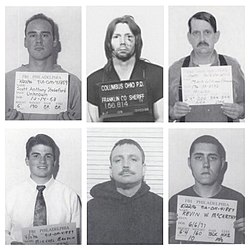
Inspired to rob banks in order to support white supremacist movements by Mark Thomas, the ARA, founded in 1992 by Langan and her best friend from school Richard Lee Guthrie Jr., considered itself a leaderless organization. Although the group was mainly a criminal enterprise, its agenda was terrorist like. After filming and producing right-wing propaganda videos, the group grew and recruited bank robber affiliates: Michael Brescia, Shawn Kenny, Kevin McCarthy, and Scott Stedeford.[1] With the bank heist money, the gang began to stockpile weapons and ammunition in preparation for a future race war. At bank after bank, the bandits became infamous because they left their signature decoy grenades and their pipe bombs as calling cards, a strategy which was implemented to help the gang escape and delay the FBI's pursuit.[2] The bandits used a strict time keeper who called out at elapsed intervals and made sure that they were in and out of the heists within 90 seconds. The time keeping, along with the members wearing of presidential masks, were moves which were believed to be lifted directly from the Kathryn Bigelow film Point Break.[2][6] In addition to wearing Nixon, Reagan and Clinton masks, the ARA also wore jackets and hats emblazoned with "FBI," "ATF" or other law-enforcement acronyms.[2]

The FBI was unaware of the existence of the ARA until one of its members was apprehended. In early 1996, the group began to fall apart as its members were arrested after former members of the group became informants as part of a plea bargain. Guthrie was arrested in Cincinnati on January 15, 1996, concluding a 2-hour chase by FBI agents. Soon after, Guthrie gave up his counterpart Langan. Three days later on January 18, 1996, the FBI arrested Langan after a 50-round shoot-out near a safe house in Columbus, Ohio.[2][7]

Activities

[edit]

Members of the Aryan Republican Army were responsible for a series of 22 bank robberies in the American Midwest. They reportedly targeted banks in the Midwest due to their belief that the security measures which were taken there would be less thorough. The group often left fake explosive devices at the banks which they robbed in order to divert law enforcement officials who could potentially chase them. Known members of the ARA include Langan, Guthrie, Michael William Brescia, Mark William Thomas, Shawn Kenny, Kevin McCarthy, and Scott Stedeford. Subsequent to their arrest, Guthrie, Langan, McCarthy and Thomas became witnesses for the prosecution. Guthrie was found hanged while in custody, a day before he was to give a television interview about an alleged cover-up which was related to the death of Kenneth Michael Trentadue, who was also found hanged while he was in custody. Otherwise, all of the gang's members received prison sentences of varying lengths, on an array of state and/or federal charges.[8]

Connections to the Oklahoma City bombing

[edit]

Several accounts have linked the ARA with Timothy McVeigh, convicted of the 1995 Oklahoma City bombing that killed 168 and injured hundreds more.

Brescia and Guthrie both resided for a time at Elohim City, Oklahoma, a private community made up of followers of Christian Identity pastor Robert G. Millar (d. 2001), and other people associated with right-wing extremist and white nationalist views. Other ARA members were also known to frequent Elohim City. Elohim City security director Andreas Strassmeir was a known associate of Timothy McVeigh, having met him at a Tulsa gun show, and federal investigators determined that McVeigh had made a phone call to Elohim City on April 5, 1995, just two weeks prior to the Oklahoma City bombing. However, no one at Elohim City claims to have spoken with him.[9]

Additionally, five women from a nightclub in Tulsa have each identified Brescia as the man who was paying for McVeigh's drinks on April 8, 1995, just three days after McVeigh's suspicious phone call. Two more women in Kansas reported that McVeigh and Brescia were frequent associates, while Guthrie bore a distinct physical resemblance to "John Doe Number Two". McVeigh's sister, Jennifer, also claimed that he had been one of the participants in several, unspecified bank robberies.[citation needed]

David Paul Hammer, a convicted murderer who was imprisoned with McVeigh at the United States Penitentiary, Terre Haute, has alleged that McVeigh told him details of the Oklahoma City bombing that contradict the account related in court. According to Hammer, McVeigh claimed to have been working as a deep cover operative for the US Department of Defense, having infiltrated ARA and participated in several of the group's bank robberies. McVeigh is further alleged to have indicated Strassmeir and several others at Elohim City were similarly government agents involved in surveillance of extremist elements of the American far-right.[10]

Amtrak Sunset Limited

[edit]

The AYA were reportedly suspects in the professional 1995 sabotage and derailment of the Amtrak Sunset limited,[11] injuring 78 people and killing one. Files from the major case investigation, dubbed SPLITRAIL by the FBI, remain classified as of 2025. In the course of the investigation, the FBI conducted interviews with associates of McVeigh from his time living in Kingman and AYA associates from their time attempting to rob banks in Phoenix. As AYA members were largely prosecuted, dead, or in prison in the two years after the derailment, it may have been more expedient to have had the derailment case go unsolved, which simultaneously reassigned multiple agents from the OKC investigation. Per journalist Mark Hamm, the AYA had discussed plots to derail trains.[12]

Donna Langan

[edit]

Langan was born Peter Kevin Langan[13] in 1958 on Saipan in the South Pacific Islands. She grew up in Vietnam, where her father served in the military and the CIA, before they moved to the United States when Langan was 6 years old.[13] In 1974, at age 16, Langan was sentenced to up to 20 years for robbing a man of $78 and fleeing police.[2] Langan moved to Ohio in 1988, where she converted to Mormonism and became an ordained minister at what authorities describe as a Ku Klux Klan-affiliated church. During the early 1990s, Langan and her childhood friend Richard Guthrie formed the Aryan Republic Army, a white supremacist group with motives to overthrow the US government. The group turned to robbing banks in order to fund their movement.[7] On January 18, 1996, the FBI arrested Langan. Langan, a transgender woman, who publicly renounced her political and racist views, served 18 years in a male prison before she was transferred to a female penitentiary after a legal fight in 2014 during the Obama administration. In 2017, Langan and 435 other transgender inmates who were incarcerated in federal prisons led an LGBT activist group in an effort to challenge the Trump administration's positions regarding transgender prisoners.[6] In 2022, she underwent a gender-affirming surgery, becoming the first transgender inmate in Bureau of Prisons custody to do so.[14] At the start of the second Trump administration in early 2025, she was notified of her impending transfer to a men's facility.[15]

Other members and associates

[edit]

Richard Lee Guthrie Jr.

[edit]

Nicknamed "Wild Bill", Richard Lee Guthrie Jr. grew up within blocks of Langan in Wheaton, Maryland, although they didn't become close until years later.[16] After getting kicked out of the Navy in 1983 for painting a swastika on the side of a ship and threatening superiors, Guthrie attended gatherings of Aryan Nations and traveled the country distributing Christian Identity propaganda.[citation needed]

Guthrie pled guilty in 1996 to three bank robberies in Ohio, and to 16 more in seven states, as well as to weapons charges and credit card fraud. Following a plea agreement, he was to provide authorities with information about terrorist organizations similar to the Aryan Republican Army.[17] On July 12 of that same year, prison officials found Guthrie hanging in his cell, an apparent suicide.[18]

Michael William Brescia

[edit]

A resident of Elohim City and a former student at LaSalle University in Philadelphia, Michael William Brescia was recruited for the ARA by Aryan Nations Pennsylvania state leader, Mark W. Thomas.[19] Brescia was named in a lawsuit filed by the grandparents of a victim of the bombing as being "John Doe 2" seen with McVeigh in the days prior to the bombing. A female friend of McVeigh also identified Brescia as a friend of McVeigh's then known only as "Mike".[20]

Shawn Kenny

[edit]

A 1991 Oak Hills High School graduate and one-time Aryan Nations member from Cincinnati, Shawn Kenny already had a racist background prior to being befriended by Langan at a law seminar.[21][22] Kenny, himself, says he had discussed recruiting robbers with Thomas in 1994.

Despite his criminal history and alleged relationship with Timothy McVeigh, he joined the U.S. Army sometime after the ARA was dissolved and an investigation into the Oklahoma City bombing had taken place.[22]

Scott Anthony Stedeford

[edit]

Growing up in a middle-class town in Pennsylvania, Stedeford was introduced to the Christian Identity Doctrine and then fell in with the revolutionary movement.[23] During this time, he was also the founding member and frontman of the RAC band, Day of the Sword. Guthrie says to have met Stedeford through Berks County right-wing leader, Mark Thomas.[24]

Mark William Thomas

[edit]

A member of both Aryan Nations and Ku Klux Klan, Thomas was ordained an Identity Minister during a stay at Aryan Nations' Idaho headquarters in 1990.[25]

After being indicted in January 1997, Thomas told reporters that at least one gang member was involved in the Oklahoma bombing, according to a newspaper clip in FBI files.[26]

Kevin McCarthy

[edit]

A native Pennsylvanian, Kevin "Blondie" McCarthy spent his adolescence experimenting with drugs before eventually becoming a resident of the Elohim City compound in the fall of 1994. McCarthy was also the bass player for Stedeford's group, Day of the Sword.[16]

Under a plea agreement, McCarthy became a government witness and testified in a pre-trial hearing against Langan in Columbus, Ohio.[18] McCarthy received a lengthy prison term for bank robbery, and was released from prison in 2007.[27]

Chevie Kehoe

[edit]

A fellow white supremacist and resident of the Elohim City compound, Chevie Kehoe was contracted by the Aryan Republican Army to assassinate the Mueller family. The Mueller family were brief residents of Elohim City that had been privy to information dealing with the alleged connection of the Aryan Republican Army to the Oklahoma City bombing. Prior to murdering the Mueller family (with his accomplice Daniel Lewis Lee), Chevie had sold guns to the ARA.[28]

Dennis Mahon

[edit]

While his exact connection to the Aryan Republican Army has not been revealed, white supremacist Dennis Mahon is known to have been a close friend of members of the group during his stay at Elohim City.[29]

A handful of videos were produced in which Dennis Mahon is recorded while he is engaging in paramilitary training alongside Andreas Strassmeir and Carol Howe, as well as a few other individuals which have not been identified. The unidentified militants who appear in the footage may be some members of the Aryan Republican Army, since they lived at Elohim City around the time when the video was recorded. In addition to this, the anonymous persons are seen wearing balaclavas in some videos, while in others, they either sport camouflage face paint or they cannot be seen in detail because they are simply too far away from the camera.[30][31]

Sentences

[edit]
Name Hometown Sentence[32]
Donna Langan Columbus, Ohio Life in prison plus 35 years
Richard Lee Guthrie Columbus, Ohio Found dead in his prison cell after pleading guilty
Scott Anthony Stedeford Ardmore, Pennsylvania 29.5 years
Mark William Thomas Berks County, Pennsylvania 8 years
Kevin William McCarthy Bustleton, Philadelphia, Pennsylvania 5 years
Michael William Brescia Philadelphia, Pennsylvania 57 months
[edit]

In 2010, the Aryan Republican Army was the subject of episode 82 of the television series Gangland.

Notes

[edit]

References

[edit]
[edit]
Revisions and contributorsEdit on WikipediaRead on Wikipedia
from Grokipedia
The Aryan Republican Army (ARA) was a small white supremacist organization led by Peter Langan that conducted a series of armed bank robberies in the Midwestern United States during the early to mid-1990s to fund paramilitary activities directed against the federal government. Also known as the Midwestern Bank Bandits by law enforcement, the group employed tactics including disguises, pipe bombs, and automatic weapons in over 20 heists across multiple states. Its members produced propaganda videos, such as The Armed Struggle Underground, promoting revolutionary violence and Aryan ideology. The ARA's operations ended with the suicide of member Richard Guthrie in 1996 and Langan's capture following a shootout with police, leading to federal convictions for bank robbery, weapons charges, and explosives use. Langan, convicted on multiple counts, received a life sentence, reflecting the group's designation as a domestic terrorist cell within white power networks. While the ARA's direct violence was confined largely to its robberies, which netted significant sums for extremist causes, investigations revealed loose affiliations with figures and compounds like Elohim City, prompting scrutiny over broader conspiracies in the era's militia movement.

Historical Context

Militia Movement Surge in the 1990s

The 1992 Ruby Ridge standoff in northern Idaho marked a pivotal catalyst for the militia movement's expansion, as federal marshals and FBI agents engaged Randy Weaver's family in a confrontation that resulted in the deaths of Weaver's wife Vicki and 14-year-old son Samuel, alongside the family dog, amid disputes over firearms charges and marshals' tactics. This incident, investigated by the U.S. Department of Justice, amplified narratives of federal overreach and unconstitutional enforcement, prompting grassroots organizing against perceived threats to Second Amendment rights and individual sovereignty. The following year's Waco siege in Texas intensified these sentiments, when the FBI's April 19 assault on the Branch Davidian compound—following a prolonged standoff initiated by ATF raids over illegal weapons—culminated in a fire that killed 76 occupants, including 25 children and leader David Koresh, under circumstances scrutinized for excessive force and flawed decision-making. These documented federal actions, involving tactical errors and high civilian casualties, were widely interpreted by movement adherents as evidence of a tyrannical central government, driving recruitment through pamphlets, shortwave radio, and local meetings that framed militias as necessary citizen defenses. By the mid-1990s, the movement had proliferated to include hundreds of groups across all 50 states, with core membership estimates ranging from 20,000 to 60,000, alongside millions of sympathizers influenced by shared anti-federal ideologies. Concentration was heaviest in rural Midwest states like Michigan, Ohio, and Missouri, where blue-collar workers and small landowners cited economic stagnation from the lingering 1980s farm crisis—marked by over 100,000 farm foreclosures and rural depopulation—as compounding cultural alienation from urban-centric policies. Fears of gun confiscation surged after the November 1993 Brady Handgun Violence Prevention Act, which mandated background checks, and the September 1994 Violent Crime Control and Law Enforcement Act's semiautomatic assault weapons ban, which prohibited manufacture and import of certain firearms and magazines over 10 rounds, seen by militias as direct assaults on militia-enabling arms protected under the Second Amendment's reference to a "well regulated Militia." These legislative measures, enacted amid post-Waco debates on federal authority, correlated with heightened paramilitary training camps and arms stockpiling, as groups drilled in marksmanship and survival tactics to prepare for anticipated government crackdowns. While predominantly rural and defensive in orientation, the militia surge's anti-government fervor influenced urban-adjacent cells that positioned themselves as complementary "guerrilla" forces, adapting rural tactics to metropolitan subversion amid the same cascade of standoffs and restrictions. Empirical data from federal indictments and militia literature underscore how these grievances—rooted in verifiable events rather than abstract conspiracies—fostered a decentralized network emphasizing self-reliance and resistance, peaking before Oklahoma City bombing scrutiny in 1995 led to some fragmentation.

Government Actions Fueling Anti-Federal Sentiment

The 1992 Ruby Ridge standoff in Idaho involved U.S. Marshals and FBI agents surrounding the property of Randy Weaver over firearms charges, culminating in the deaths of Deputy Marshal William Degan, Weaver's 14-year-old son Sammy, and Weaver's wife Vicki, who was killed by an FBI sniper shot while holding her infant daughter. FBI rules of engagement authorized deadly force against any armed adult male observed outside the cabin, a policy later deemed unconstitutional and excessively broad by a 1995 Justice Department investigation, which criticized the agency's entrapment tactics and failure to de-escalate. Congressional hearings, including those by the Senate Judiciary Committee, highlighted these lapses as evidence of federal overreach, eroding public trust in law enforcement's adherence to due process and contributing to perceptions of arbitrary state power against isolated families asserting Second Amendment rights. Similarly, the 1993 Waco siege began with an ATF raid on the Branch Davidian compound on February 28, seeking to execute search warrants for illegal weapons, which devolved into a firefight killing four agents and six Davidians, followed by a 51-day FBI-led siege ending April 19 in a fire that claimed 76 lives, including children. A 1999 House Republican-led report on new evidence faulted the FBI for using flammable tear gas and potentially igniting the fire, while criticizing ATF's initial assault planning as flawed and motivated by publicity rather than necessity. These events exemplified criticized federal tactics—such as no-knock raids and lax rules of engagement—that prioritized operational aggression over negotiation, fostering causal distrust among rural and gun-owning communities toward agencies seen as unaccountable. In parallel, IRS enforcement actions in the 1990s, including foreclosures and auctions of private lands from tax protesters and sovereign citizen adherents refusing federal income taxes, amplified grievances over property seizures without adequate recourse, framing the government as an intrusive collector infringing on individual sovereignty. Such disputes, often rooted in disputes over federal authority on state lands, reinforced narratives of a "ZOG"—a term denoting perceived Zionist-occupied governance exerting control through fiscal mechanisms—among anti-federal circles. These incidents correlated with a documented expansion of the militia movement, with federal assessments noting a tripling of paramilitary groups from fewer than 100 in 1993 to over 300 by 1996, driven by widespread reactions to perceived federal abuses rather than inherent extremism. FBI reports from the era attributed this growth to post-Ruby Ridge and Waco fallout, reflecting broader societal erosion of confidence in federal institutions, though most militias remained non-violent and focused on training rather than insurrection, distinguishing them from terrorist fringes. This surge underscored causal links between specific policy failures—unrestrained agency tactics and property enforcements—and heightened anti-federal organizing, without justifying subsequent violent acts.

Formation

Peter Langan's Early Life and Radicalization

Peter Kevin Langan was born on May 18, 1958, on Saipan in the Mariana Islands, a U.S. territory in the western Pacific, to American parents Eugene Langan, a military serviceman, and Mary Ann McGregor. As the sixth of seven children, Langan experienced a peripatetic upbringing tied to his father's postings, including time in Vietnam during the war. The family relocated to the continental United States, settling in Maryland, where Langan attended Fork Union Military Academy before being discharged and transferring to Wheaton High School as a freshman. Following high school, Langan embarked on a criminal career marked by escalating offenses, including multiple armed robberies and an assault with a deadly weapon on a police officer, which contributed to his extensive record by the 1980s. During this era of repeated incarcerations and underworld associations, he encountered white supremacist materials and networks, fostering an affinity for racial separatist doctrines and paramilitary strategies modeled on the Irish Republican Army's guerrilla operations against British rule—tactics he envisioned repurposing for an ethnonationalist "Aryan" insurgency to undermine federal authority through funding via crime. In 1990, Langan moved to the Columbus, Ohio, area, establishing initial ties to local skinhead groups and neo-Nazi elements amid the burgeoning militia and far-right subcultures of the Midwest. These connections, built through shared anti-government sentiments and survivalist leanings, positioned him to recruit operatives and refine his vision of a revolutionary cell blending robbery sprees with ideological warfare.

Establishment of the ARA

The Aryan Republican Army (ARA) was established in 1992 by Peter Kevin Langan and Richard Lee Guthrie Jr., building on their prior associations in white supremacist circles to create a structured group dedicated to funding anti-government operations through crime. Early organizational meetings took place at Langan's sister's house in Ohio during 1992 and 1993, where the pair outlined plans for the group's revolutionary activities. Recruitment initially targeted individuals from established white supremacist networks, including attendees at gatherings in Elohim City, Oklahoma, and affiliations with Aryan Nations chapters, drawing in early associates like Shawn Kenny. Safehouses were set up in Ohio and Kansas to store equipment and provide operational bases, facilitating the transition from planning to readiness. To secure startup capital, Guthrie executed fraudulent schemes, such as submitting fake receipts for reimbursements at retail stores like Kmart, generating around $250,000 to equip the group without relying on external donors. Propaganda efforts began with the production of videos, including one titled "Aryan Republican Army: Armed Struggle Underground," which articulated the group's commitment to clandestine warfare against federal authority. By late 1993, these elements positioned the ARA for escalated actions, with activities noted in the Cincinnati area.

Ideology and Goals

White Nationalist Doctrine

The Aryan Republican Army's white nationalist doctrine emphasized the supremacy and purity of the Aryan race, advocating complete racial separation to preserve white identity against perceived threats from non-whites and Jews. Drawing from Christian Identity theology, members regarded Aryans as God's elect and Jews as satanic agents orchestrating societal decay through promotion of race-mixing and multiculturalism, a view reinforced by influences like Vigilantes of Christendom by Richard Kelly Hoskins. This framework portrayed interracial integration as a deliberate conspiracy to eradicate white heritage, necessitating vigilantism under the Phineas Priesthood model to enforce divine racial laws. Central to their beliefs was the conviction that the U.S. government operated as a Zionist Occupied Government (ZOG), controlled by Jewish interests to subjugate whites and advance a multicultural agenda eroding Aryan dominance. Inspired by The Turner Diaries, which outlines a guerrilla uprising against such a regime culminating in nuclear strikes on non-white populations and the establishment of a white homeland, the ARA sought to replicate this revolutionary blueprint through funding violent actions for an ethnostate, such as a proposed "White American Bastion" in the Pacific Northwest. A member loyalty oath encapsulated this imperative: "I, as a free Aryan man, hereby swear... to deliver our people from the Jew and bring total victory to the Aryan race." Unlike mainstream conservatism's focus on policy reforms or limited government, the ARA doctrine mandated explicit endorsement of terrorism and racial holy war (RAHOWA) as essential for white survival, rejecting non-violent avenues as complicit in ZOG's designs. Leader Peter Langan propagated these tenets in the group's 107-minute recruitment video, The Aryan Republican Army Presents: The Armed Struggle Underground, which glorified armed insurgency, threatened federal building bombings, and framed their operations as liberation from Jewish tyranny to "set free the oppressed people of North America." This commitment to violence distinguished their ideology as a call for total societal rupture, not mere electoral or legislative opposition.

Anti-Government Revolutionary Strategy

The Aryan Republican Army (ARA) adopted an operational philosophy modeled after the Irish Republican Army's (IRA) provisional wing, employing bank robberies and bombings as mechanisms to generate "provisional" funding for a broader revolutionary campaign aimed at destabilizing the U.S. economy and government infrastructure to provoke widespread uprisings. This approach emphasized guerrilla tactics over conventional insurgency, viewing economic disruption—through targeted thefts and sabotage—as a means to erode federal authority and inspire decentralized resistance among sympathizers. ARA leader Peter Langan articulated this strategy in propaganda materials, positioning the group as pioneers of an "armed struggle underground" that prioritized self-financing through crime to sustain long-term operations without reliance on external donors. Rejecting electoral politics as futile under what they deemed federal "tyranny"—manifested in policies like income taxes and gun control restrictions—the ARA advocated direct action to dismantle perceived oppressive structures. Langan and associates produced videos exhorting "lone wolves" and small cells to initiate independent attacks, framing such lone actions as complementary to the group's coordinated efforts in fostering a leaderless revolutionary wave. This philosophy dismissed reformist avenues, insisting that only violent disruption could counter encroachments on individual liberties and sovereignty. Court records from ARA trials confirm the empirical intent behind their crimes: proceeds from approximately 22 Midwestern bank robberies, totaling over $250,000, were directed toward acquiring arms and explosives rather than personal enrichment, aligning with testimonies emphasizing revolutionary armament over individual gain. Langan's federal conviction proceedings highlighted how these funds supported operational logistics, underscoring the causal link between funding imperatives and criminal methodology in their anti-government blueprint.

Structure and Membership

Leadership Under Peter Langan

Peter Kevin Langan emerged as the central figure directing the Aryan Republican Army's operations, adopting the alias "Commander Pedro" to lead the small white supremacist cell from its formation around 1992 through 1996. Under this pseudonym, he orchestrated a series of Midwestern bank robberies intended to fund revolutionary activities, while also overseeing the construction and deployment of pipe bombs for intimidation and disruption. Langan maintained operational control by issuing directives through pseudonymous communications and in-person meetings, emphasizing a strategy of urban guerrilla tactics modeled after Irish Republican Army methods adapted to white nationalist ends. To conceal his identity during reconnaissance and potential escapes, Langan employed elaborate disguises, including cross-dressing as a woman—earning the mocking moniker "Pretty Boy Pedro" from media coverage—and incorporating elements like wigs, makeup, and altered speech patterns laced with faux Spanish phrases. This persona extended to propaganda videos where he appeared hooded, delivering threats of racial warfare and government overthrow, which trial evidence later authenticated as his work. His directives focused on compartmentalized cells to minimize betrayal risks, reflecting a paranoid yet pragmatic approach to leadership in a fugitive lifestyle spanning multiple states. Langan's personal charisma played a role in attracting a handful of committed operatives, drawn from skinhead and militia circles through shared ideological manifestos and promises of action against perceived federal tyranny, though court records indicate no evidence of large-scale recruitment drives or ideological treatises authored solely by him. The group's structure remained informal and ad hoc, lacking codified ranks or bylaws beyond Langan's unilateral authority, which relied on loyalty enforced by shared criminal stakes rather than institutional discipline—evident in the rapid dissolution following key arrests. Following a multi-state manhunt triggered by intensified FBI scrutiny after January 1996 indictments, Langan was apprehended in a shootout with federal agents, leading to his 1997 convictions on multiple bank robbery counts, weapons violations, and use of destructive devices that invoked terrorism sentencing enhancements. He received concurrent life sentences without parole, reflecting judicial findings that the ARA's actions constituted a concerted effort to finance domestic terrorism rather than mere opportunist crime.

Core Operatives

The core operatives of the Aryan Republican Army comprised a tight-knit group of approximately 5 to 7 Midwest-based men who executed around 22 bank robberies from 1992 to 1995, relying on personal networks rather than broad recruitment efforts. These individuals, often trained in explosives handling by leaders Peter Langan and Richard Guthrie, focused on operational roles in heists to fund the group's activities. Richard Guthrie, a co-founder and key participant in multiple robberies, was arrested in early 1996 and died by suicide while in federal custody later that year. Michael Brescia took part in several of the group's bank heists and faced charges alongside other members. Scott Stedeford, arrested on May 22, 1996, was convicted of robbery and weapons charges related to the operations and sentenced in February 1997 on six counts of bank robbery. Shawn Kenny assisted in at least one attempted robbery, such as the Society National Bank heist in Springdale, Ohio. Mark Thomas, who helped orchestrate aspects of the robberies, pleaded guilty in February 1997 to plotting seven bank heists and agreed to cooperate with prosecutors. Kevin McCarthy, an early associate of the Aryan Republican Army (ARA), was introduced to the group in October or November 1994 and provided testimony during federal trials against ARA members, cooperating with authorities after his own arrest on related charges. His involvement highlighted peripheral connections within Midwestern white supremacist circles, though he did not participate in core operational activities. The ARA obtained firearms from Chevie Kehoe, a white supremacist convicted of multiple murders, and his father Kirby Kehoe, who supplied weapons used in the group's 22 bank robberies between 1992 and 1995. Federal investigations traced these arms acquisitions, indicating opportunistic external sourcing rather than structured alliances. No evidence supports deeper operational coordination with the Kehoes, whose activities centered on separate supremacist enterprises like the Aryan Peoples' Republic. While the ARA espoused white nationalist ideology overlapping with organizations such as the Aryan Nations, it maintained semi-independent operations without formal ties. Occasional overlaps occurred at compounds like Elohim City in Oklahoma, a Christian Identity enclave, where ARA members visited but did not establish residency or joint ventures. FBI tracing of select weapons and supplies confirmed limited external procurement, underscoring the group's reliance on ad hoc networks over institutionalized partnerships.

Criminal Activities

Midwestern Bank Robberies (1992–1995)

The Aryan Republican Army (ARA) perpetrated 22 armed bank robberies in the Midwestern United States between November 11, 1992, and December 19, 1995, targeting institutions in multiple states including Ohio, Iowa, and Missouri. These heists, led primarily by Peter Langan and associates such as Richard Guthrie, served as the group's primary funding mechanism for subsequent operations. The FBI designated the perpetrators as the "Midwest Bank Bandits" after analyzing surveillance footage and taunting letters sent to banks and law enforcement, which mocked investigators and claimed ideological motivations. Robbery tactics emphasized speed and intimidation to minimize exposure and resistance. Operatives entered branches in disguises—including wigs, makeup, and unconventional attire—while brandishing firearms such as pistols and sawed-off shotguns, and occasionally deploying fake explosive devices or threatening pipe bombs to deter pursuit. They communicated in Spanish or nonsensical phrases to confuse witnesses and bypassed security measures like dye packs through rapid cash grabs, often escaping in under two minutes without taking hostages or firing shots. Specific incidents included the January 25, 1994, robbery of FirstStar Bank in Ames, Iowa, where robbers left a mock bomb, and a March 1995 heist in West Des Moines, Iowa. No fatalities occurred during these operations, though the threats instilled fear and expedited compliance. The cumulative proceeds, estimated in the low hundreds of thousands of dollars, financed ARA acquisitions of weapons, explosives, and travel for revolutionary activities, emulating tactics of prior white supremacist groups like The Order. The spree concluded in late 1995 amid intensifying FBI surveillance, prompting Langan to flee, though arrests and indictments followed in 1996 for Langan, Guthrie, and accomplices on charges encompassing dozens of counts related to the robberies.

Weapons and Explosives Acquisition

The Aryan Republican Army funded its weapons and explosives procurement primarily through proceeds from Midwestern bank robberies, enabling operational self-sufficiency without documented reliance on major external suppliers or arms trafficking networks. Firearms such as assault rifles, shotguns, and handguns were acquired via cash purchases from local gun shops and shows, often under false identities to evade traceability. This approach allowed the group to stockpile items including a Chinese AR-15 assault rifle and a .223-caliber SGW carbine rifle. Safehouses in rural Kansas near the Missouri border and other Midwestern sites served as storage for these firearms, along with over 3,000 rounds of ammunition, hand grenades, and pipe bomb components. Additional explosives materials, including Semtex, blasting caps, and pipes, were obtained commercially and stored in rented lockers, facilitating manual assembly of devices. Members like Peter Langan possessed grenades and unexploded pipe bombs during operations, reflecting incremental scaling enabled by robbery gains. Federal trials of ARA members, including Langan, confirmed the absence of large-scale deals, with acquisitions limited to low-profile, cash-based methods that transitioned the group from basic armaments to enhanced threats. Pipe bomb components and powders were sourced from hardware and sporting goods outlets, tested in isolated rural settings to verify functionality prior to deployment. This robbery-driven model underscored causal dependencies, where each heist directly amplified procurement capacity.

Terrorist Operations

Pipe Bomb Constructions and Uses

Members of the Aryan Republican Army, led by Peter Langan and Richard Guthrie, manufactured improvised pipe bombs using black powder as the primary explosive agent, supplemented by components such as fuses, circuit boards, and detonating cords recovered from group safehouses. These devices were assembled in rudimentary fashion at operational hideouts, reflecting self-taught expertise derived from white supremacist literature and limited practical testing rather than advanced engineering. The pipe bombs served mainly as psychological weapons to terrorize authorities and bank employees during the group's Midwestern robbery spree from 1994 to 1995, often left behind as decoys or threats to delay responses and publicize their anti-government ideology. Examples include bombs concealed in a lunch box with a Hostess Twinkie in Columbus, Ohio; an Easter basket in Des Moines, Iowa; and a Santa hat in a Cleveland suburb, placed to intimidate tellers and ensure safe getaways without detonation. Small-scale tests verified functionality, such as those conducted in 1994 at operational sites, intended to build confidence for broader revolutionary aims and produce intimidating propaganda material. Searches following arrests in January 1996 yielded 11 pipe bombs from Langan's residence and others from a Shawnee, Kansas storage locker, confirming stockpiling for potential escalation. Despite these preparations, no major deployments occurred after the 1995 robberies, underscoring the devices' primitive limitations—low reliability, confined blast radius, and absence of enhancements like shrapnel—compared to military-grade explosives, as their roles remained confined to extortionate threats and operational rehearsals rather than inflicting widespread damage.

Amtrak Sunset Limited Sabotage (1995)

The sabotage of Amtrak's Sunset Limited passenger train took place on October 9, 1995, approximately 70 miles southwest of Phoenix, Arizona, in a remote desert region near Palo Verde. Unknown perpetrators tampered with the Southern Pacific Railroad tracks by removing spikes from a 19-foot section of rail and displacing the rail itself, creating a gap that caused the westbound train—traveling from El Paso to Los Angeles at roughly 50 mph—to derail while crossing a trestle over a dry ravine around 1:35 a.m. local time. The derailment sent the two locomotives and multiple cars off the tracks, with four passenger cars plunging about 30 feet into the wash below, severely damaging the train and complicating rescue efforts in the isolated terrain. One crew member, conductor Mitchell Bates, was killed, and 78 passengers and crew members suffered injuries ranging from minor cuts to broken bones and concussions among the 248 people on board. Multiple identical typewritten notes were discovered near the site, claiming responsibility on behalf of a group identifying as the "Sons of the Gestapo." The manifesto denounced U.S. military participation in United Nations-led operations in Bosnia, portraying it as subservience to a "New World Order," and invoked federal actions at Waco and Ruby Ridge as tyrannical precedents justifying retaliation against government infrastructure. The FBI classified the incident as deliberate domestic terrorism intended to inflict mass casualties and expose transportation vulnerabilities, launching a broad probe involving forensic analysis of the notes, track tools, and potential anti-government leads. Despite these efforts, including property searches and rewards for information, the perpetrators remain unidentified, with the case actively under review as of 2020.

Alleged Broader Connections

Ties to Oklahoma City Bombing

Michael Brescia, a core operative of the Aryan Republican Army (ARA), resided at the Elohim City compound in Oklahoma from approximately October 1994 to April 1995, where he roomed with Andreas Strassmeir, a German national who received a telephone call from Timothy McVeigh on April 5, 1995—two weeks before the Oklahoma City bombing. Brescia's physical resemblance to the initial FBI sketches of "John Doe #2," an unidentified accomplice seen with McVeigh renting the Ryder truck used in the attack on April 17, 1995, prompted early speculation of his involvement, but forensic analysis and witness testimonies ultimately exonerated him, with authorities confirming he was not present at the bomb site. Elohim City served as a hub for white supremacists and anti-government militants, fostering ideological overlaps with McVeigh's motivations, yet no physical evidence or witness accounts placed ARA members at the Alfred P. Murrah Federal Building during the April 19, 1995, explosion that killed 168 people. Richard Guthrie, ARA's explosives specialist who constructed pipe bombs and acquired materials like Tovex blasting gelatin, possessed technical knowledge akin to the ammonium nitrate-fuel oil (ANFO) mixture used in the Oklahoma City device, and his anti-federal rhetoric echoed McVeigh's grievances over events like the Waco siege. However, FBI investigations, including reviews of ARA robbery proceeds estimated at over $250,000 from 1994–1995 Midwestern bank heists, found no financial transfers to McVeigh or Terry Nichols, the convicted bombers, despite theories positing such funding for the "white revolution." Guthrie, interrogated by the FBI in late 1995, denied direct ties and reportedly claimed only peripheral awareness of broader plots before his suicide on March 13, 1996, which precluded deeper verification. Official FBI conclusions and the federal trials of McVeigh (convicted June 2, 1997) and Nichols (convicted December 23, 1997) attributed the bombing solely to their actions, with no ARA personnel charged or evidence of operational collaboration emerging from thousands of interviews and forensic leads. McVeigh himself disavowed deeper Elohim City involvement in post-arrest statements, though a polygraph suggested inconsistencies—results deemed unreliable by experts. Some militia and alternative media sources have alleged a federal cover-up to minimize right-wing connections, citing unprosecuted Elohim City figures and ARA's proximity in time and ideology, but these claims lack corroborating documents or testimony and contradict the empirical record of the Joint Task Force investigation. Mainstream analyses, informed by trial exhibits and declassified files, affirm the absence of verified personnel or logistical overlaps, emphasizing causal isolation despite shared extremist milieus. The Aryan Republican Army (ARA) exhibited ideological overlaps with established white supremacist organizations, including the Aryan Nations and the National Alliance, primarily through shared adherence to neo-Nazi doctrines such as racial separatism, anti-Semitic conspiracy theories, and accelerationist tactics to provoke societal collapse. ARA founder Peter Langan drew explicit inspiration from The Silent Brotherhood by Kevin Flynn and Gary Gerhardt, a text chronicling The Order—a 1980s group that splintered from Aryan Nations influences and conducted robberies to fund a "race war"—which served as the ARA's operational blueprint for bank heists aimed at similar ends. Members also referenced The Turner Diaries, authored by National Alliance founder William Pierce under pseudonym, as a motivational text endorsing revolutionary violence against the federal government and perceived racial enemies. Correspondence and propaganda exchanges facilitated these connections, with ARA producing and distributing videos featuring Langan as "Commander Pedro" espousing leaderless resistance strategies akin to those promoted by Aryan Nations associate Louis Beam. Such materials circulated via mail within supremacist networks, fostering mutual reinforcement of ideologies without formal affiliation. Additionally, ARA obtained firearms from Kirby and Chevie Kehoe, a father-son duo with documented white supremacist ties; Chevie Kehoe, convicted of interracial murders in 1997, embodied the violent racialism echoed in ARA rhetoric, though transactions were transactional rather than alliance-driven. Federal investigations, including FBI reviews of ARA activities, revealed no evidence of mergers, joint operations, or structural integration with these groups; the ARA's nomadic, urban-focused cell structure contrasted sharply with the compound-centric models of Aryan Nations in Idaho or National Alliance's West Virginia headquarters. Instead, interactions remained confined to ideological diffusion, aligning with the decentralized "leaderless resistance" paradigm that minimized hierarchical dependencies to evade law enforcement. This independence underscores the ARA's role as a peripheral actor in the broader supremacist ecosystem, reliant on borrowed narratives rather than coordinated networks.

FBI Investigations and Arrests

The FBI's investigation into the Aryan Republican Army intensified following a string of bank robberies in 1995, particularly after recovering evidence from heists that prompted multi-agency coordination with the Bureau of Alcohol, Tobacco, Firearms and Explosives (ATF). ATF agents traced serial numbers on firearms and explosives components recovered from robbery scenes, linking them to purchases and acquisitions associated with ARA members, which helped build leads on the group's operations across multiple states. Kevin McCarthy, a young ARA recruit involved in several robberies, turned state's evidence as an informant in late 1995, providing detailed intelligence on the group's activities and membership that directed authorities to key locations and associates. This cooperation facilitated initial arrests and searches, including raids that uncovered ARA propaganda videos, bomb-making materials, and stolen cash. Richard Guthrie Jr., a core member and frequent robbery participant, was arrested in December 1995 in Georgia on federal robbery charges. While awaiting trial in a West Virginia jail, Guthrie died on January 12, 1996; an autopsy determined the cause as suicide by hanging, though his family contested the ruling amid suspicions of foul play linked to his knowledge of broader supremacist networks. Peter Langan, the ARA's leader known as "Commander Pedro," evaded capture until June 1996, when a tip from informants led FBI agents to a hideout in Ohio, resulting in his arrest following a shootout where he wounded an agent before surrendering. Subsequent raids on ARA safehouses yielded additional evidence, including weapons caches, explosive devices, and documentation of the group's underground operations, effectively dismantling the cell's active structure.

Trials and Convictions

Peter Langan, the founder and leader of the Aryan Republican Army, was brought to trial in U.S. District Court in Columbus, Ohio, where on February 10, 1997, a jury convicted him of five felony counts related to bank robberies in Columbus and Springdale, Ohio, in 1994 and 1995. Evidence presented included testimony from cooperating former member Kevin McCarthy, who detailed the group's operations, white supremacist ideology, and use of disguises and weapons in the heists. Prosecutors introduced ARA-produced videos and manifestos outlining their aim to fund a violent revolution against the federal government, alongside testimony linking members to pipe bomb construction and the 1995 Amtrak Sunset Limited sabotage. Federal prosecutors sought terrorism sentencing enhancements under guidelines influenced by the post-Oklahoma City bombing reforms, arguing the robberies were ideologically driven acts intended to finance domestic terrorism rather than mere financial gain. Langan's defense contested the ideological motives but failed to sway the jury, resulting in convictions without mitigation for the group's broader criminal enterprise. In a subsequent October 1997 trial, Langan was convicted on four additional charges involving assault and illegal weapons possession tied to ARA activities. Michael Brescia, arrested on January 30, 1997, in Philadelphia, opted for a plea deal, entering a guilty plea on May 21, 1997, to one count of bank robbery and conspiracy related to a single heist, in exchange for substantial assistance to investigators and reduced charges. His cooperation included testimony corroborating ARA's network and explosives expertise, though limited to lesser involvement compared to core members. Mark Thomas, an Aryan Nations affiliate who aided ARA recruitment, pleaded guilty on February 18, 1997, to conspiracy in seven Midwest bank robberies, admitting the proceeds supported supremacist causes. Across proceedings, no ARA defendants secured acquittals; outcomes adhered to federal sentencing frameworks bolstered by the 1996 Antiterrorism and Effective Death Penalty Act, which prioritized harsher penalties for ideologically motivated violence amid heightened domestic terrorism concerns. Juries consistently rejected claims of isolated criminality, crediting evidence of coordinated supremacist objectives over individual defenses.

Sentences and Member Fates

Peter Langan, the group's leader, was convicted in federal trials in 1997 for bank robberies, firearms violations, and use of destructive devices, receiving a sentence of life imprisonment without parole plus additional consecutive terms. Richard Guthrie, a key operative, died by apparent suicide via hanging in Kenton County Jail, Kentucky, on July 12, 1996, prior to his trial on robbery charges. Michael Brescia pleaded guilty to bank robbery conspiracy and was sentenced to 57 months in federal prison, serving approximately five years before release in the early 2000s. Scott Stedeford received a 20-year sentence for multiple bank robbery and conspiracy convictions related to ARA activities. Other associates, including those with lesser roles in planning or support, faced terms ranging from five to ten years, with some eligible for parole in the 2000s; no documented recidivism or renewed group operations followed their releases. The convictions led to the ARA's dissolution, with seized proceeds from over 20 robberies—estimated at hundreds of thousands of dollars—preventing further funding of supremacist efforts, underscoring the limited scale of the threat posed by such small cells once leadership was neutralized. Sentencing disparities reflected degrees of involvement, with core members receiving mandatory minimums under federal racketeering and firearms statutes, while cooperators benefited from reduced terms.

References

Add your contribution
Related Hubs
User Avatar
No comments yet.