Hubbry Logo
BYD SongBYD SongMain
Open search
BYD Song
Community hub
BYD Song
logo
8 pages, 0 posts
0 subscribers
Be the first to start a discussion here.
BYD Song
BYD Song
from Wikipedia

BYD Song
2020 BYD Song Plus DM-i
Overview
ManufacturerBYD Auto
Production2015–present
Body and chassis
ClassCompact crossover SUV
Body style5-door SUV

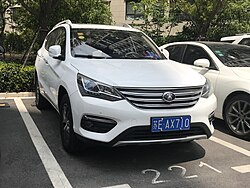
The BYD Song (Chinese: 比亚迪宋, after the Song dynasty) is a series of compact crossover SUVs produced by BYD Auto since 2015.

The Song nameplate consists of several different models. It includes the original first-generation Song, later renamed to Song Classic and was sold until 2019. Another versions are the slightly larger Song Pro was introduced in 2019, followed by the more upmarket Song Plus in 2020, a larger electric vehicle called the Song L EV since 2023, and a plug-in hybrid called the Song L DM-i. The Song nameplate is also adopted by the Song Max compact MPV. Since 2024, the Song Plus is exported overseas as the BYD Seal U and BYD Sealion 6.

Similar to other BYD models, the Song has been available in petrol, plug-in hybrid DM (Dual Mode) system, and pure EV powertrains. The petrol versions were discontinued in March 2022 as BYD ended ICE vehicle production.[1] The Song is part of Dynasty series product line, although since 2022 the Song Plus is offered through the Ocean Network dealerships.

The Song is BYD's best-selling vehicle, and one of the most popular SUV in China by ranking first in the SUV segment in 2022. In that year, the Song sold 478,811 units, surpassing the Tesla Model Y and Haval H6 in the market.[2]

First generation (2015)

[edit]
First generation
Overview
Also calledBYD S5 (Egypt)
Production2015–2022
Powertrain
Engine1.5 L BYD476ZQA I4 (turbo petrol)
2.0 L BYD487ZQA I4 (turbo petrol)
Electric motor218 hp 310 Nm electric motor(EV300/EV400)
Transmission6 speed manual
6 speed DCT
Dimensions
Wheelbase2,660 mm (104.7 in)
Length4,565 mm (179.7 in)
Width1,830 mm (72.0 in)
Height1,720 mm (67.7 in)

The original BYD Song debuted on the Shanghai Auto Show in April 2015, and went on sale in October 2015. It was positioned below the mid-size S6 crossover, and is BYD's first entry to the compact crossover market.[3] Prior to its introduction, the petrol-powered first-generation Song was planned to be marketed as the BYD S3, similar to the petrol powered F3 compact sedan and S6 mid-size crossover, which for its hybrid variants were renamed to the Qin and Tang using the Chinese dynasty naming system. However, BYD reversed course shortly before its launch, and S3 was named the Song for all variants including the ICE engined version, plug-in hybrid version, and electric versions.[4][5][6]

Two powertrains was offered at launch. A 1.5-litre turbo-charged petrol engine capable of producing 154 hp (115 kW; 156 PS) and 240 N⋅m (177 lb⋅ft) of torque and a 2.0-litre turbocharged petrol engine capable of producing 205 hp (153 kW; 208 PS) and 320 N⋅m (236 lb⋅ft) of torque. The 1.5-litre engine could be had with either a 6-speed manual gearbox or a 6-speed automatic gearbox while the 2.0-litre engine could only be had with a 6-speed DCT gearbox.[7][8] Early models with S3 badging has black graphic details on the front bumpers and regular BYD badge instead of the single body color and Dynasty-badging Song.

Later in 2018, a second facelift updating the BYD Song with the new "Dragon Face" design language.

Song DM

[edit]

BYD introduced the Song DM (Dual Mode) plug-in hybrid in April 2017, following the F3DM compact car and F6DM prototype. The Song DM is nearly identical to the regular Song apart from the badging. Song DM is capable of utilizing both the HEV and EV modes with the 1.5-litre turbo engine and dual motors, delivering a range up to 80 km (50 mi). The plug-in outputs up to 333 kW (453 PS; 447 hp) and a torque of 740 N⋅m (546 lb⋅ft) in HEV mode and manages 0–100 km/h (0–62 mph) in 4.9 seconds. Fuel efficiency is 1.4 L/100 km (170 mpg‑US; 71 km/L).[9]

Song EV300 and EV400

[edit]

The Song EV300 and the Song EV400 are both electric versions of the Song based on the regular petrol-powered BYD Song, and both use 218 hp (163 kW) and 310 N⋅m (229 lb⋅ft) electric motors. The Song EV300 has a NEDC range of 270 km (168 mi) and a 60 km/h (37 mph) range of 300 km (186 mi) running on a 48 kWh battery pack while the Song EV400 runs on 62 kWh ones.[10] As for the exterior appearances, the EV300 is identical to the regular Song and Song DM, while the EV400 received redesigned bumpers.

2018 facelift

[edit]

A facelift was launched in 2018 featuring the new BYD dragon face and connected tail lamps. Despite being marketed as a "brand new generation", the 2018 model shares the same body as the previous models.

Song Pro (2019)

[edit]
2019 BYD Song Pro
2023 BYD Song Pro DM-i
2024 BYD Song Pro DM-i

The Song Plus is a compact crossover SUV produced since 2019, which was offered alongside the first-generation Song until 2022. It was initially offered in three variants: an internal combustion engine (ICE) version with a 1.5-litre turbocharged petrol engine, the plug-in hybrid Song Pro DM and the battery electric Song Pro EV. Since 2022, only the plug-in hybrid version remains available, which has been upgraded to the newer DM-i plug-in hybrid powertrain.

The Song Pro became available in global markets in 2024, mostly in Latin American countries.[11]

Song Plus (2020)

[edit]
2022 BYD Song Plus DM-i
2023 BYD Song Plus DM-i

The Song Plus is a larger compact crossover SUV produced since 2020. Initially available solely as an internal combustion engine (ICE) vehicle with a 1.5-litre turbocharged petrol engine, in 2021 BYD introduced the plug-in hybrid Song Plus DM-i and the battery electric Song Plus EV. The petrol model was phased out in 2022 after BYD ended production of internal combustion engine (ICE) vehicles.

In 2023, BYD introduced the Song Plus EV as the BYD Seal U in Europe. The plug-in hybrid Seal U DM-i was introduced later in 2024. In mid-2024, the model was introduced in Australia, New Zealand, the Philippines, and Thailand as the BYD Sealion 6 DM-i.[12][13]

Song L EV (2023)

[edit]
2023 BYD Song L

The Song L EV is a larger and lower SUV in the mid-size crossover SUV segment (B-class in China) using the Song nameplate that was produced since 2023. The Song L EV is based on the e-Platform 3.0.

Song L DM-i (2024)

[edit]
2024 BYD Song L DM-i

In July 2024, the Song L DM-i plug-in hybrid went on sale in China. It is an entirely different vehicle compared to the Song L EV, with minimal resemblance in styling and based on a different platform. It is equipped with the DM-i 5.0 system first introduced with the Qin L and Seal 06.[14]

Song Max (2017)

[edit]
2018 BYD Song Max

The Song Max is a compact multi-purpose vehicle (MPV) using the Song nameplate that was produced since 2017. It was available as a petrol-powered model, then battery electric and plug-in hybrid in 2019. Since 2022, it is solely available in a DM-i plug-in hybrid version. A simplified, battery electric version of the Song Max is marketed as the second-generation BYD e6 for ride-hailing and taxi fleet use. Since 2024, an upgraded version of the e6 went on sale as the BYD M6 in some export markets.

Sales

[edit]
Year China
Song Song Pro Song Plus Song Max Song L Total
ICE[15] DM[16] EV ICE DM EV ICE DM-i[17] EV[18] ICE[19] DM[20] DM-i EV
2015 13,769 13,769
2016 100,042 100,042
2017 101,037 30,390 131,427
2018 43,374 141,068 184,442
2019 85,470 12,585 68,175 166,230
2020 79,031[21] 3,106[22] 3,939[23] 80,854[21] 5,272[22] 6,820[23] 7,108[24] 23,410 1,982[22] 204,414
2021 92,022[25] 79,508[16] 29,340[26] 108,848[25] 9,935 733 211,538
2022 3,505[27] 20,323[28] 388,048[28] 66,935[29] 11,037[28] 489,848
2023 209,690[30] 296,294[30] 93,919[31] 3,720[30] 4,988[31] 608,611
2024 241,598[32] 266,189[32] 152,285[33] 291[32] 109,194[32] 46,683[33] 816,240

See also

[edit]

References

[edit]
[edit]
Revisions and contributorsEdit on WikipediaRead on Wikipedia
from Grokipedia
The BYD Song is a series of vehicles produced by the Chinese automaker since 2015, including compact to mid-size crossover SUVs and an MPV, forming a key part of the company's Dynasty lineup named after historical Chinese dynasties. Initially launched as a and model, the Song family has evolved to emphasize new energy vehicles, incorporating BYD's proprietary Blade Battery technology for enhanced safety and range, along with advanced driver-assistance systems and efficient DM-i super hybrid powertrains. The series is celebrated for its spacious interiors, aerodynamic designs, and competitive pricing, positioning it as a popular choice in both domestic and international markets for urban and family-oriented driving. The original BYD Song debuted at the 2015 Auto Show in and entered production in October of that year, with starting prices ranging from 96,900 to 146,900 yuan in . It featured a 1.5-liter producing 154 horsepower or a setup combining a 1.5-liter with an for a total output of around 218 horsepower and a combined range over 500 km under NEDC standards. Subsequent updates renamed the first-generation model as the Song Classic, which was discontinued in 2019 after sales exceeding 200,000 units, paving the way for expanded variants. The Song lineup has since diversified into several models, including the rugged Song Pro launched in 2019 as a compact with off-road capabilities and a of 2,712 mm; the more premium Song Plus introduced in September 2020, offering mid-size dimensions, up to 1,092 km combined range in DM-i hybrid form, and features like a 15.6-inch rotatable ; and the stylish Song L unveiled in December 2023 as a rivaling the , with pure EV versions providing up to 662 km CLTC range and dual-motor options delivering 520 horsepower. These models utilize BYD's e-Platform 3.0 architecture for improved structural integrity and energy efficiency, with fuel consumption as low as 4.4 L/100 km in hybrid modes under WLTC testing. The Song Plus has sold over 1.5 million units cumulatively as of October 2025, underscoring BYD's dominance in the global new energy vehicle sector.

Overview

Development and launch

The series represented BYD Auto's strategic entry into the compact segment in 2015, serving as the company's first dedicated crossover lineup emphasizing new energy vehicles (NEVs) amid growing demand for electrified mobility in . Building on BYD's established expertise in battery since its founding in 1995, the Song was designed to leverage the firm's in technology, positioning it as a key player in the burgeoning NEV market supported by national incentives. Development of the Song began in 2014, with the phase focusing on a versatile platform suitable for hybrid and electric variants in response to China's NEV policies, including the upcoming mandate requiring automakers to meet NEV credit targets starting in 2019. The vehicle debuted as a near-production at the 2015 International Automobile Industry Exhibition in April, showcasing its compact crossover design and electrified powertrain options. Production commenced later in 2015 at BYD's facilities in , enabling rapid scaling to meet policy-driven demand. A core engineering milestone was the integration of BYD's proprietary DM (Dual Mode) plug-in hybrid system, which combined a 1.5-liter turbocharged with an and lithium-iron-phosphate battery for seamless switching between electric-only, hybrid, and modes, aligning with China's push for energy-efficient vehicles under its NEV credits system. This system built on BYD's earlier DM introduced in the 2013 Qin sedan, optimizing for urban driving efficiency and extended range. The series also laid groundwork for future EV models using BYD's e-platform architecture, though initial emphasis remained on hybrids to capitalize on government subsidies for plug-in technologies. The official launch occurred on October 12, 2015, at a ceremony in , where the Song became available for order in with starting prices around 96,900 yuan for the gasoline variant and higher for the DM hybrid. Initial deliveries followed shortly, marking the Song's role in expanding BYD's Dynasty series of NEV-focused vehicles. The lineup has since grown to include variants like the Song Pro and Song Plus.

Naming and market positioning

The name "Song" in the BYD Song series is derived from the (960–1279 AD), reflecting the era's significant advancements in economy, culture, and technology, as part of BYD's broader Dynasty series naming convention that draws from Chinese historical dynasties such as Qin, Han, and Tang to evoke heritage and innovation. This etymology aligns with BYD's strategy to infuse cultural resonance into its vehicle branding, positioning the series within a lineup that symbolizes enduring Chinese legacy. The Song series is positioned as a mid-size compact crossover SUV lineup targeting urban families in , emphasizing affordability, advanced technology, and eco-friendliness to appeal to practical consumers seeking versatile daily transportation. With starting prices around 100,000–150,000 yuan for entry-level models, it offers a balance of space, hybrid efficiency, and smart features like DiLink infotainment, making it suitable for commuting and family outings without premium pricing. In the competitive Chinese SUV segment, the Song competes directly with international rivals like the and , as well as domestic options such as the , by undercutting on cost while matching or exceeding in and safety. Initially launched with a focus on variants in 2015, the Song series has evolved to include pure electric (EV) and DM-i super-hybrid options in subsequent models, responding to China's surging demand for new energy vehicles () driven by government policies promoting and subsidies. This shift broadens its appeal amid NEV penetration exceeding 50% of the market in 2025, allowing BYD to capture diverse preferences from range-anxious buyers to those prioritizing zero-emission driving. BYD's marketing for the Song series highlights the proprietary Blade Battery's superior safety—passing extreme tests like nail penetration without fire or explosion—and its long-range capabilities, up to 662 km CLTC in EV models, to build consumer trust in NEV reliability and differentiate from competitors' lithium-ion packs. Promotional campaigns often showcase these features through real-world demonstrations, positioning the as a secure, choice for eco-conscious families.

Compact crossover models

Original Song (2015)

The first-generation BYD Song was a measuring approximately 4.57 meters in length with a of 2.66 meters, providing ample interior space for five passengers. Its exterior adopted BYD's "Dragon Face" design language, featuring angular headlights integrated into a prominent U-shaped grille and sculpted lines along the sides for a dynamic appearance. Inside, the cabin included an 8-inch touchscreen supporting and multimedia functions, complemented by leatherette and dual-zone climate control. Powertrain options encompassed and pure electric variants tailored for efficiency in urban driving. The Song DM combined a 1.5-liter turbocharged with an , delivering a combined output of 163 kW (218 hp) and an electric-only range of 80 km under NEDC standards. The pure-electric Song EV300 utilized a 53 kWh lithium-iron-phosphate battery powering a 160 kW motor, achieving a 270 km NEDC range, while the upgraded Song EV400 featured a 62 kWh battery for a 360 km NEDC range. Performance across variants emphasized balanced dynamics, with the Song DM accelerating from 0 to 100 km/h in roughly 8.5 seconds, reaching a top speed of 170 km/h, and offering a combined of 1.6 L/100 km. Electric models provided smooth, instant from their front-mounted motors, prioritizing low-end for city use over high-speed prowess. A facelift in 2018 refreshed the model's aesthetics and technology, introducing an updated front grille aligned with the evolved "Dragon Face" styling, connected taillights, and enhanced battery management for extended electric range in EV variants. It also incorporated initial advanced driver-assistance systems (ADAS), such as and lane-keeping assist, to improve safety and semi-autonomous capabilities. Launched initially in in October 2015 following its debut at the Auto Show, the original Song remained primarily a domestic offering with limited exports to select markets like before base models were phased out by 2020 in favor of updated successors. This foundational model influenced later iterations, such as the Song Pro, by establishing the series' hybrid and electric architecture.

Song Pro (2019)

The BYD Song Pro, launched in 2019, serves as a sub-compact crossover variant in the Song lineup, sharing the foundational platform with the original while adopting a more agile and dynamic profile. Measuring 4.65 meters in length, it features sportier styling elements inspired by BYD's Dragon Face 2.0 , including a bold front grille, LED "777" headlamps, and blacked-out accents on the grille, mirrors, and roof rails for a youthful, energetic appearance. This design targets younger buyers seeking an affordable yet stylish entry into the segment, with a focus on urban mobility and visual appeal. The model's powertrain emphasizes BYD's DM-i super , particularly in its primary configuration, pairing a 1.5-liter Atkinson-cycle gasoline engine with an for a combined output of 145 kW (197 PS). This setup delivers a CLTC pure electric range of up to 115 km on the upgraded , contributing to a total combined range of up to 671 km. includes from 0 to 100 km/h in 8.5 seconds and of 4.4 L/100 km under mixed conditions, balancing everyday usability with hybrid efficiency. In 2021, the Song Pro received a facelift integrating BYD's Blade Battery technology, enhancing safety through superior thermal stability and puncture resistance while maintaining the hybrid system's core capabilities. The 2023 refresh introduced the DiLink intelligent system, featuring a rotatable , voice controls, and over-the-air updates for improved connectivity and user interaction. Positioned as a more budget-friendly option within the Song series, the Song Pro achieved strong domestic sales in as an accessible hybrid , with initial exports beginning in in 2024, including markets like , , and , where it supports BYD's regional expansion with localized hybrid adaptations.

Song Plus (2020)

The BYD Song Plus, launched in 2020 as a mid-size crossover , represents an evolution from the original Song with a significantly larger footprint measuring 4,775 mm in length and a 2,765 mm , providing enhanced interior space and stability. Its design draws from an ocean-inspired aesthetic, featuring the Ocean X Face front grille, sleek LED headlights, and a panoramic that contributes to an airy cabin feel. The premium interior includes high-quality eco-friendly materials, electrically adjustable front seats with heating and ventilation, a rotating 12.8-inch for and instrument display, and a Dirac premium audio system, emphasizing comfort and technological integration. The Song Plus is available in both plug-in hybrid (DM-i) and pure electric (EV) powertrain variants, catering to diverse efficiency needs. The DM-i version combines a 1.5-liter turbocharged producing 74 kW with an delivering 160 kW, for a combined system output of approximately 197 kW, supported by a Blade Battery offering up to 150 km of electric-only range under CLTC standards. The EV model employs battery capacities of 71.8 kWh to 87 kWh, enabling a CLTC range of 505 to 605 km, powered by a front-mounted . Both utilize BYD's proprietary Blade Battery technology, a lithium iron-phosphate design known for its , with over 5,000 charge cycles and no or smoke in penetration tests. Performance highlights include a 0-100 km/h time of 7.9 seconds for the DM-i variant in its standard configuration, a top speed of 170 km/h, and hybrid as low as 4.4 L/100 km under combined driving conditions. The 2023 facelift introduced refinements aligned with BYD's e-Platform 3.0 for improved integration and , including a closed front grille and updated series styling elements. A 2025 minor refresh added an all-wheel-drive option in select markets, enhancing traction with dual motors for up to 6.9 seconds 0-100 km/h. For global markets, the Song Plus EV is rebadged as the Seal U in or Sealion 6 in and other regions, where it features vehicle-to-load (V2L) capabilities for powering external devices up to 3.3 kW, alongside the Blade Battery's safety profile. This adaptation has contributed to its bestseller status, with strong sales driven by competitive range and advanced driver-assistance systems like and 360-degree cameras.

Song L (2023)

The BYD Song L, introduced as an extended-wheelbase mid-size crossover , builds on the Song Plus platform to offer enhanced space and luxury for family use. Measuring 4,840 mm in length with a 2,930 mm , it provides significantly more rear passenger room compared to standard mid-size models, accommodating five occupants comfortably. The exterior adopts BYD's updated Dragon Face design language, featuring a sleek profile, hidden door handles, and an active rear spoiler for aerodynamic efficiency. Inside, the cabin draws inspiration from yacht aesthetics with a panoramic roof, perforated Alcantara leather seats, and ambient lighting to create a premium, serene environment. The vehicle incorporates BYD's DiSus-C intelligent suspension system, which uses air springs and electromagnetic dampers to adjust and firmness in real-time, improving comfort over varied terrains while maintaining stability. The Song L is available in both pure electric (EV) and plug-in hybrid (DM-i) powertrains, positioning it as a versatile premium family SUV primarily targeted at the Chinese market with plans for international exports. The Song L EV utilizes an 87.04 kWh Blade Battery pack, delivering up to 662 km of range under CLTC testing conditions, paired with a rear-mounted permanent magnet synchronous motor producing 218 kW of power and 360 Nm of torque. The DM-i variant combines a 1.5-liter Atkinson-cycle engine (74 kW) with an electric motor (160 kW), yielding a combined system output of 240 kW; it offers 210 km of pure electric range and a total combined range of 1,210 km on a full tank and charge, thanks to an 18.3 kWh battery. Both variants employ BYD's e-Platform 3.0 architecture with cell-to-body (CTB) integration for structural rigidity and efficiency. Performance emphasizes smooth acceleration and advanced assistance features suited for urban and highway driving. The EV achieves 0-100 km/h in 6.9 seconds, supported by features like one-pedal driving and . The DM-i provides similar responsiveness with seamless hybrid transitions. Higher trims include the A-level intelligent driving assistance system, which enables hands-free highway driving, , automatic lane changes, and urban navigation using 12 cameras, five millimeter-wave radars, and 12 ultrasonic sensors for comprehensive environmental perception. The Song L EV debuted at Auto Shanghai in April 2023 as a concept before its production version was unveiled in July and launched in December 2023, starting at around 199,800 yuan (approximately $27,900). The DM-i model followed in mid-2024, expanding the lineup with hybrid efficiency. In 2025, an all-wheel-drive EV variant was added, featuring dual motors—a 160 kW front unit and 230 kW rear—for enhanced traction and performance, targeting export markets like and .

MPV models

Song Max (2017)

The BYD Song Max, launched in 2017 as the MPV variant in the Song lineup, is a 7-seater multi-purpose vehicle designed for family and commercial applications in , sharing its naming convention with the series for brand consistency. Measuring 4680 mm in length with a 2785 mm for the initial model, it emphasizes spaciousness and practicality over sporty dynamics, featuring flexible seating configurations that allow for adjustable second- and third-row positions to accommodate passengers or . Family-oriented amenities include options for rear screens and ample interior volume, making it suitable for long trips or daily use, though it employs conventional hinged doors rather than sliding ones for simpler access. Facelifted versions from 2022 onward increased the length to 4710 mm while retaining the 2785 mm . Powertrain options evolved from the initial gasoline models to electrified variants. The Song Max DM plug-in hybrid, introduced in 2019, pairs a 1.5-liter turbocharged with an for a combined output of 228 kW and an electric-only range of 51 km (NEDC) on its 9.98 kWh . The Song Max EV, a rear-motor electric version launched the same year, uses a 59.1 kWh to deliver 401 km of NEDC-rated range, with 163 hp output, prioritizing efficiency for urban and intercity travel. Performance metrics reflect its utility focus, with the DM hybrid achieving 0-100 km/h in 7.9 seconds and a hybrid-mode of 2.01 L/100 km under NEDC testing, enabling extended total range when combining electric and operation. A 2021 facelift updated the overall model with refined styling and interior tech, while the EV received enhanced battery management. In 2022, the Song Max DM-i variant was introduced, featuring an upgraded super with battery options up to 18.3 kWh for electric ranges of up to 105 km (NEDC) and fuel consumption as low as 4.2 L/100 km (WLTC). In May 2024, the model was rebranded as the BYD M6 for international markets, with EV versions offering a 71.8 kWh Blade Battery for up to 530 km CLTC range as of 2025. Despite lower sales volumes compared to the Song crossover models—positioning it as a niche player in China's competitive MPV segment—the Song Max carved out a role for versatile, electrified multi-seat transport tailored to domestic family and business needs.

Sales and markets

Domestic sales in China

The BYD Song series has achieved significant domestic sales in since its debut, driven primarily by the growing demand for affordable in urban markets and supportive government policies. Cumulative sales of the original model from 2015 to 2019 reached approximately 347,000 units, with annual figures peaking at 101,037 units in 2017 before declining post-facelift due to shifting consumer preferences toward newer variants. By 2020-2023, sales surged for the Song Plus and Song Pro combined, exceeding 1 million units overall, fueled by the popularity of electric vehicle (PHEV) options amid government subsidies that reduced effective purchase prices for qualifying . Key factors propelling the series' performance include competitive pricing starting around ¥100,000 for entry-level models like the Song Plus DM-i, which appeals to middle-class urban buyers seeking compact with extended range, and national incentives such as purchase tax exemptions and trade-in subsidies for PHEVs and battery electric vehicles (BEVs). These policies, combined with China's push toward NEV adoption, have positioned the Song lineup as a leader in the mid-size SUV segment, where urban congestion and environmental regulations favor efficient, versatile vehicles. In 2023, the Song Plus series sold 390,213 units. Model-specific breakdowns highlight varied trajectories: the original Song reached its zenith in 2017 but saw sales drop to under 100,000 units annually thereafter as updated models emerged; the Song Max maintained steadier volumes around 80,000 units per year in its early years (2017-2019) for fleet and family use before tapering to about 10,000-20,000 units annually by 2021-2022. The series as a whole contributed roughly 10-12% to BYD's total domestic sales in recent years, leading the PHEV SUV market with models like the Song Plus holding over 12% share in 2024. In 2024, the Song family recorded strong results with 518,426 units sold through the first 11 months, underscoring its dominance in China's NEV SUV rankings. As of November 2025, early 2025 data showed continued momentum for the Song Plus DM-i as a top-selling NEV SUV, with monthly volumes around 30,000-40,000 units, projecting toward 300,000 annually despite broader market slowdowns. The Song L variants experienced growth in 2025, bolstered by policy shifts emphasizing longer-range NEVs, with year-to-date sales reaching 106,948 units for the DM-i version by September amid enhanced battery tech incentives. In September 2025, Song family sales were 42,178 units, down year-on-year, amid rumors of the Song Plus potentially ending production as part of lineup transitions.

International exports and performance

BYD's international exports of the Song series began on a limited scale in the mid-2010s, with initial shipments of the original model reaching South American markets such as by 2016 as part of BYD's early global expansion efforts. A significant acceleration occurred from 2022, coinciding with the rollout of the Song Plus EV, rebranded as the Atto 3 for overseas markets, which debuted in —starting with , , and —and , including . This marked BYD's strategic push into premium electric segments abroad, building on the model's domestic success to target eco-conscious consumers in developed regions. Key export markets for the Song series have diversified rapidly, with emerging as a stronghold through the Seal U (Song Plus DM-i PHEV) and Atto 3 variants, registering over 55,000 units in the first nine months of 2025 alone. In , the Song Pro DM-i gained traction with launches across multiple countries in 2024, including in August, in October, and and later that year, appealing to cost-sensitive buyers seeking hybrid efficiency. followed suit, with Song Plus models entering in 2024 as the Sealion 6 DM-i and expanding into amid growing regional demand for affordable plug-in hybrids. Export sales performance has been robust, led by the Song Plus DM-i, which topped China's outbound vehicle list with 134,105 units in the first half of 2025, reflecting a 184% year-over-year growth driven by hybrid appeal in tariff-sensitive markets. Across the Song series, cumulative global sales exceeded 3 million units by mid-2025, with exports surpassing 1.5 million units, bolstered by strong uptake in emerging economies and representing nearly 25% of BYD's total overseas passenger vehicle volume for the period. To facilitate market entry, Song models underwent targeted adaptations, including right-hand drive conversions for right-side driving regions like , the , and . Electric variants achieved compliance with stringent emissions standards via WLTP range certifications, ensuring up to 420 km of real-world usability for the Atto 3. Rebadging strategies further localized offerings, such as the Yuan Plus designation for the Song Plus EV in Latin American countries like and , enhancing brand familiarity. Despite challenges like the EU's 17% on Chinese battery-electric vehicles imposed in October 2024—which added costs but spared plug-in hybrids—and prohibitive 100% tariffs effectively barring entry into the market, the series has earned praise for its competitive pricing, advanced Blade Battery technology, and feature-rich interiors. Reviews highlight the Atto 3's exceptional value in the compact EV segment, with smooth performance and innovative tech like the rotating screen setting it apart from rivals. In 2025, BYD expanded the lineup internationally with all-wheel-drive options for the Song L, targeting performance-oriented buyers in select European and Asian markets.

References

Add your contribution
Related Hubs
User Avatar
No comments yet.