


Community hub
Recent from talks
Contribute something
Nothing was collected or created yet.
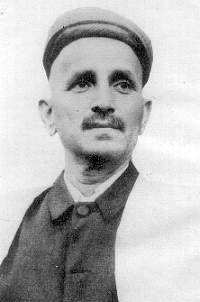
Vishnu Narayan Bhatkhande
View on Wikipedia
Key Information


Pandit Vishnu Narayan Bhatkhande (10 August 1860 – 19 September 1936) was an Indian musicologist who wrote the first modern treatise on Hindustani classical music, an art which had been propagated for centuries mostly through oral traditions. During those earlier times, the art had undergone several changes, rendering the raga grammar documented in scant old outdated texts.[2]
Ragas used to be classified into Raga (male), Ragini (female), and Putra (children). Bhatkhande reclassified them into the currently used thaat system. He noted that several ragas did not conform to their description in ancient Sanskrit texts. He explained the ragas in an easy-to-understand language and composed several bandishes which explained the grammar of the ragas.
Early life
[edit]Pandit Vishnu Narayan Bhatkhande was born on 10 August 1860 in Walkeshwar, Bombay. While not a professional musician himself, his father, who worked for an affluent businessman, ensured that Vishnu Narayan and his siblings received an education in classical music. After turning fifteen, Bhatkhande became a student of the sitar and subsequently began studying Sanskrit texts that dealt with music theory. He completed a BA degree at Deccan College in Pune in 1885. In 1887, Bhatkhande graduated with a degree in law from Elphinstone College, affiliated with Bombay University and briefly pursued a career in criminal law.[3][1]
In 1884, Bhatkhande became a member of Gayan Uttejak Mandali, a music appreciation society in Bombay, which broadened his experience with music performance and teaching. He studied at the Mandali for six years and learned a variety of compositions in both khayal and dhrupad forms under musicians such as Shri Raojibua Belbagkar and Ustad Ali Hussain.[1] Music was still something of a leisurely pursuit for Bhatkhande until 1900 when his wife died, followed, in 1903, by the death of his daughter. This led to him abandoning his law practice and devoting his full attention to music.[3]
Career
[edit]Research in music
[edit]Bhatkhande traveled throughout India, meeting with ustads and pandits, and researching music. He began the study of ancient texts such as the Natya Shastra and Sangeet Ratnakara.[4]

After the death of his wife and his daughter, Bhatkhande abandoned his legal practice and devoted the rest of his life to systematising the prevailing forms of Hindustani music and building on that system a coordinated theory and practice of music. During his travels in India, he spent time in the then princely states of Baroda, Gwalior, and Rampur. In Rampur he was the disciple of legendary veena Player Ustad Wazir Khan, a descendant of Miyan Tansen.
Bhatkhande travelled to South India, arriving in Madras (now Chennai) in 1904. With the help of local contacts he began to familiarise himself with the world of Carnatic music. He established contact with stalwarts such as Tiruvottriyur Tyagayyar and Tachur Singaracharya in Madras, Poochi Srinivasa Iyengar in Ramanathapuram and Subbarama Dikshitar in Ettayapuram but the language barrier made these interactions less fruitful than he expected. Notes from a journal maintained of his time there were later published as Meri Dakshin Bharat Ki Sangeet Yatra (My Musical Journey in Southern India).[5]
While his conversations with exponents of Carnatic music weren't very successful, Bhatkhande procured two valuable manuscripts on the art: the Chaturdandiprakashika by Venkatamakhin and the Svaramelakalanidhi of Ramamatya, both treatises that sought to classify ragas. The two works along with others and his observations from his travels in North India enabled Bhatkhande to classify Hindustani ragas using a system of ten, much like the melakartas of the Carnatic style.[5]
Bhatkhande's first published work, Swar Malika, was a booklet containing detailed descriptions of all prevalent ragas. In 1909, he published Shri Mallakshaya Sangeetam, in Sanskrit, under the pseudonym 'Chatur-pandit'. To make this cultural heritage accessible to the common man, he published commentary on his own Sanskrit grantha in Marathi over a span of several years; it was published over four volumes bearing the title: Hindustani Sangeet Paddhati. These volumes form today the standard text on Hindustani music, an indispensable starting point for any student of Hindustani Classical Music. His disciple S N Ratanjankar, famous musician Shri. Dilip Kumar Roy, Ratanjankar's disciple K. G. Ginde, S.C.R. Bhatt, Ram Ashrey Jha 'Ramrang', Sumati Mutatkar and Krishna Kumar Kapoor are among the notable scholars who followed in the footsteps of Bhatkhande. His notation system became standard and though later scholars like Pandit V. D. Paluskar, Pandit Vinayakrao Patwardhan and Pandit Omkarnath Thakur introduced their improved versions, it remained a publisher's favorite. It suffered a setback with the onset of desktop publishing, which found inserting marks above and below Devanagari text cumbersome; as a result, books carrying compositions yielded to theoretical texts. A recently developed notation system Ome Swarlipi follows the logical structure introduced by Pt. Bhatkhande but uses symbols instead of Devanagari alphabets.[6]
After traveling widely and having discussions with practitioners of various schools, Bhatkhande arranged all the ragas of Hindustani classical music across 10 musical scales, called thaats. Though the thaats do not encompass all possible ragas, they do cover the vast majority and are a key contribution to Indian musical theory. The thaat structure corresponds to the melakarta system of raga arrangement in Carnatic music, the south Indian variety of Indian classical music.
Bhatkhande wrote all of his works under one of the two pseudonyms, Vishnu Sharma and Chaturpandit.
Institutions
[edit]
Bhatkhande started schools and colleges in India for systematic teaching of Hindustani music. In 1916, he reorganized the Baroda state music school, and later, with the help of the Maharaja of Gwalior, established the Madhav Music College in Gwalior.
In 1926, Rai Umanath Bali and his nephew Dr. Rai Rajeshwar Bali, then education minister of United Provinces, established Marris College of Music in Lucknow with Bhatkhande preparing the course material. The college was later renamed Bhatkhande College of Hindustani Music, and is now known as Bhatkhande Music Institute (Deemed University). Preparation of that course material was a landmark achievement of Bhatkhande since musical knowledge used to be passed on orally in earlier times from Gurus and Ustads to their disciples.
Bhatkhande prepared the Hindustani Sangeet Kramik Pustak Maalika as a series of textbooks. He also started the tradition of the All India Music Conferences to provide a common platform for discussion between Hindustani and Carnatic classical musicians.[7][8]
Death
[edit]Bhatkhande suffered paralysis and a thigh fracture in 1933. He died on 19 September 1936, during Ganeshotsav in Mumbai[clarification needed].
Bibliography
[edit]- Shrimallakshya-sangeetam – A treatise, in Sanskrit, on the theory of music in slokas and describing the important ragas. (Lakshya=current)
- Lakshan Geet Sangrah in three parts. Compositions descriptive of the Ragas, giving their characteristics in songs composed by Pandit Bhatkhande.
- Hindustani Sangeet Paddhati in 4 parts – A commentary on the Lakshya Sangeetam in Marathi. It is a detailed study and discussion of the theory of music and explanation of 150 Ragas of Hindustani music. This important work has been translated into Hindi.
- Kramik Pustak Malika – This book was published in six parts. It is a detailed textbook of Hindustani music, describing all the important Ragas, their theory and illustrated with well-known compositions in notations. It contains about 1,200 such compositions.
- Swara Malika (in Gujarati characters) Notation of Ragas in swara and tala.
- A Comparative Study of the Music Systems of the 15th, 16th, 17th and 18th Centuries (in English).
- Historical Survey of the Music of India.
- Geet Malika – which was originally published in 23 monthly issues, each containing 25 to 30 classical compositions of Hindustani Sangeet in notation.
- Abhinav Raga Manjari – A treatise on the Ragas of Hindustani music, each being described briefly in one sloka in Sanskrit.
- Abhinav Tala Manjari – A textbook in Sanskrit on the Talas
Manuscripts edited by Bhatkhande
[edit]- Swara Mela Kalanidhi by Ramamatya
- Chaturdandi Prakashika by Venkatamakhin
- Raga Lakshanam
- Raga Tarangini by Lochan
- Raga Tatva Vibodh by Shriniwas
- Sadraga Chandrodaya by Pundarik Vithal
- Raga Manjari by Pundarik Vithal
- "Raga Mala" by Pundarik Vithal
- Nartan Niranaya by Kashinath Shashtri Appa Tulsi
- Sangeet Sudhakar by Kashinath Shashtri Appa Tulsi
- Sangeet Kalp Drumankur by Kashinath Shashtri Appa Tulsi
- Raga Chandrika by Kashinath Shashtri Appa Tulsi
- Raga Chandrika Sar (Hindi)
References
[edit]- ^ a b c d e Powers, Harold S. (2001). "Bhatkhande, Vishnu Narayan". Grove Music Online. Oxford University Press. doi:10.1093/gmo/9781561592630.article.03008.
- ^ Inventing a tradition – CHEN. The Hindu (2 January 2007). Retrieved on 2018-12-19.
- ^ a b Bakhle, Janaki (2005). "Ch. 3". Two men and music: nationalism in the making of an Indian classical tradition. Oxford University Press. pp. 6–7. ISBN 9780195166101.
- ^ Learn the Lingo – DELI. The Hindu (30 March 2007). Retrieved on 2018-12-19.
- ^ a b V, Sriram (29 March 2019). "An extraordinary seeker". The Hindu. Retrieved 20 May 2022.
- ^ Datta, Jaiti (22 September 2018). "An ode to reverent musicologist Vishnu Narayan Bhatkande". The Times of India.
- ^ Nayar, Sobhana (1989). Bhatkhande's Contribution to Music: A Historical Perspective. Popular Prakashan. ISBN 9780861322381.
- ^ Stone, Ruth M (1998). The Garland Encyclopedia of World Music: South Asia : the Indian subcontinent. Taylor & Francis. pp. 442–. ISBN 978-0-8240-4946-1.
Further reading
[edit]- "Vishnu Narayan Bhatkhande". www.indianpost.com. India Post. Retrieved 5 September 2018.
External links
[edit]
| International | |
|---|---|
| National | |
| Academics | |
| People | |
| Other | |

Vishnu Narayan Bhatkhande
View on GrokipediaEarly Life
Birth and Family
Vishnu Narayan Bhatkhande was born on August 10, 1860, in Walkeshwar, Bombay (now Mumbai), into a Chitpavan Brahmin family that had migrated from Nagaon in the Konkan region.[2][3] His family led a modest life in a home featuring a small shrine to Shree Dattatreya, reflecting their devotional inclinations. Bhatkhande's father, Narayanrao Bhatkhande, served as the manager and accountant of a large estate in Bombay, providing a stable but unpretentious environment.[2] Bhatkhande's mother, though unnamed in records, played a pivotal role in nurturing his early interest in music; she sang lullabies that awakened his musical talent, and as a child, he would imitate her songs with remarkable accuracy.[2] The household was cultured, offering exposure to Sanskrit and traditional literature through family practices, though neither parent was a professional musician.[2] He grew up with three brothers—Appaji, Gajanana, and Haribhau—and two sisters, though Appaji passed away young, leaving a son in the family.[2] In his early years, Bhatkhande engaged in local cultural activities, such as participating in festivals at Walkeshwar and playing the flute, which further sparked his affinity for music.[2] Tragedy struck later in adulthood with the death of his wife in 1900 and his infant daughter in 1903, profound losses that prompted him to redirect his life toward full-time musical pursuits.[4]Education
Vishnu Narayan Bhatkhande received his early education at Elphinstone High School in Bombay, where he completed his matriculation in 1880. He excelled academically, demonstrating strong proficiency in subjects such as mathematics, history, geography, and languages, while balancing his growing interest in music without compromising his scholarly performance.[2] Bhatkhande pursued higher education at Elphinstone College in Bombay, earning a Bachelor of Arts degree in 1885. He continued his studies to obtain a Bachelor of Laws in 1887 from Bombay University, qualifying him to practice law. During this period, his scholarly interests expanded to include Sanskrit, literature, and foundational music theory, reflecting a blend of classical learning and artistic curiosity that had roots in his childhood exposure to family musical traditions. In 1884, while still a student, he joined the Gayan Uttejak Mandali, a prominent music appreciation society in Bombay, where he engaged with performances and began collecting traditional compositions like dhrupads and khayals.[2][4] Following his graduation, Bhatkhande briefly practiced criminal law at the High Court in Karachi, specializing in the Criminal Law and Evidence Act, and even incorporated musical examples into his law lectures. However, by 1900, personal tragedies—the deaths of his wife and daughter—left him disillusioned with his legal career, prompting a shift toward full-time dedication to musicology.[2]Musical Development
Training
Bhatkhande's early musical training began within his family environment in Bombay, where his mother's lullabies and his father's playing of the swaramandal instilled a foundational appreciation for singing and melody. He developed initial vocal skills through self-taught practice, drawing from these familial influences that encouraged informal musical expression at home.[2] During his college years, Bhatkhande pursued formal instrumental training on the sitar under the guidance of Vallabhdas Damulji, a blind Bhatia musician based in Bombay who had been instructed by the renowned Jeevanlal Maharaj. Complementing this, he studied vocal music with Raojiba (Raoji Buwa Belbaugkar), a prominent Dhrupad singer, acquiring proficiency in intricate vocal techniques and demonstrating an innate sense of swaragyan, or melodic intuition. These lessons with local gurus emphasized hands-on skill development in performance rather than abstract concepts.[2] In 1884, Bhatkhande joined the Gayan Uttejak Mandali, a Parsi-initiated music appreciation society in Bombay, where he actively participated in performances and orally studied basic ragas through group sessions. This involvement provided practical exposure to live renditions and collective learning, honing his abilities in vocal and instrumental execution.[2] Bhatkhande's immersion in Bombay's oral traditions deepened through interactions with hereditary musicians, or ustads, such as Ali Hussain Khan and Ashaq Ali Khan, from whom he learned practical renditions of traditional forms like Dhrupads and Khayals—absorbing around 300 Dhrupads from Raojiba and approximately 250 Khayals from Ashaq Ali. These encounters focused on the performative aspects of gharana styles, prioritizing accurate reproduction and stylistic nuances over theoretical analysis.[2] Early in his musical journey, Bhatkhande composed pieces under the pseudonym Vishnu Sharma, including Lakshan Geetas that outlined raga structures through practical examples, marking his initial foray into creative application of acquired skills. His academic background in law and Sanskrit later supported explorations of ancient music texts, but his core training remained rooted in these performative experiences.[2]Influences
Bhatkhande's early exposure to music was profoundly shaped by his family environment, particularly his mother's singing, which served as his primary inspiration during childhood. As a young boy, he would eagerly imitate the sweet lullabies she sang, igniting his lifelong passion for the art form.[2] This familial legacy was further reinforced by his father's proficiency on the swaramandal, creating a nurturing atmosphere that encouraged his initial musical curiosity.[2] While he received basic training in sitar and voice from local teachers, these personal influences laid the emotional foundation for his scholarly pursuits.[1] His development as a musicologist was significantly guided by key mentors who imparted advanced knowledge of oral traditions. In Rampur, Bhatkhande became a disciple of the renowned veena player Ustad Wazir Khan, a descendant of the Senia gharana, through whom he accessed rare dhrupads and horis central to Hindustani music's hereditary lineages.[2] This mentorship involved a formal 'gandha-bandhan' ceremony, symbolizing his commitment despite initial resistance from the ustad.[1] During his extensive travels across North India starting in the early 1900s, Bhatkhande interacted with other prominent ustads, such as Vallabhdas Damulji for sitar and been techniques, and Raoji Buwa from whom he collected around 300 dhrupads, enriching his understanding of diverse regional styles.[2] These encounters highlighted the richness of guru-shishya parampara while underscoring the vulnerabilities of unwritten knowledge transmission.[5] Bhatkhande's scholarly approach was deeply informed by his rigorous study of ancient Sanskrit treatises on music, which provided a historical framework for his reforms. He immersed himself in foundational texts such as Bharata Muni's Natya Shastra, the comprehensive guide to performing arts from around the 2nd century BCE, and Sarngadeva's Sangeet Ratnakara from the 13th century, which systematized musical theory and practice.[5] These works revealed a perceived disconnect between classical principles and contemporary performance, motivating Bhatkhande to bridge ancient theory with modern documentation to preserve and revitalize Hindustani music.[2] His analysis of these texts, combined with observations from South Indian travels where he examined Venkatamakhi's melakarta system, fueled a vision for a unified, accessible musical pedagogy.[1] The broader cultural milieu of 19th-century India profoundly influenced Bhatkhande's reformist zeal, as he witnessed the erosion of oral traditions amid colonial disruptions and social changes. In an era when music was largely transmitted verbally through hereditary practitioners, many of whom lacked formal theoretical knowledge, Bhatkhande noted the increasing ambiguity in raga structures and the risk of losing compositions to forgetfulness.[1] This decline, exacerbated by the absence of standardized notation and the patronage shifts under British rule, compelled him to advocate for systematic preservation and education to safeguard Hindustani music's integrity.[2] No major controversies arose from these influences, which instead channeled his efforts toward constructive institutionalization without alienating traditionalists.[5]Career
Research
Beginning in the early 1900s, Vishnu Narayan Bhatkhande supplemented his study of ancient musical texts with extensive empirical research into contemporary Hindustani music practices. From 1904 onward, he undertook multiple tours across India, visiting over 100 musical centers including Gwalior, Baroda, Rampur, Madras, Tanjore, Calcutta, Hyderabad, and Udaipur, where he observed live performances and conducted interviews with prominent musicians and ustads.[2] Bhatkhande's documentation efforts were meticulous and voluminous; he amassed a large collection of manuscripts, notations, and compositions, including approximately 300 dhrupads and 300 khayals, many of which were at risk of being lost due to the oral tradition's vulnerabilities. He particularly focused on transcribing oral bandishes directly from masters, such as recording approximately 300 khayals from ustads Wazir Khan and Muhammad Ali Khan in Rampur, thereby preserving endangered repertoires that might otherwise have vanished. These methods emphasized capturing the living essence of the tradition through direct engagement rather than relying solely on historical sources.[2] The research was not without significant hurdles. After resigning from his legal practice in 1910 to devote himself fully to musicology, Bhatkhande funded his expeditions entirely from personal resources, often enduring financial strain during prolonged absences from Bombay. Additionally, he encountered resistance from traditionalists who viewed written notation as a threat to the improvisational and guru-shishya parampara of Hindustani music, dismissing his efforts as overly systematizing an inherently fluid art form.[2] Through this fieldwork, Bhatkhande uncovered notable inconsistencies in raga classifications and performances across regions and gharanas, revealing a lack of uniformity that underscored the urgent need for standardization grounded in observed practices. These findings laid the groundwork for his later theoretical contributions without imposing rigid structures on the empirical data itself.[2]Theoretical Innovations
Vishnu Narayan Bhatkhande made significant contributions to Hindustani music theory by developing the thaat system, a structured framework for classifying ragas based on parent scales. Observing the oral tradition's lack of uniformity, Bhatkhande proposed ten thaats as reference heptatonic scales, each comprising seven notes from the twelve semitones of the octave, to organize the diverse raga repertoire into a coherent hierarchy. This system primarily relies on swar samya (note configuration similarity) and roop samya (melodic shape alignment) to assign ragas to thaats, thereby simplifying the identification and teaching of over 200 ragas documented in his research. The ten thaats are:| Thaat | Ascending/Descending Notes |
|---|---|
| Bilaval | S R G M P D N |
| Kalyan | S R G Ṁ P D N |
| Khamaj | S R G M P D N |
| Kafi | S R g M P D n |
| Bhairav | S r G M P d N |
| Marwa | S r G Ṁ P D n |
| Asavari | S R g M P d N |
| Bhairavi | S r g M P d n |
| Poorvi | S r G Ṁ P d n |
| Todi | S r g Ṁ P D n |