Hubbry Logo
search
logo
2189464

Bloomberg Terminal

logo
Community Hub0 Subscribers
Read side by side
from Wikipedia

Bloomberg Terminal
DeveloperBloomberg L.P.
Initial releaseDecember 1982
Operating systemMicrosoft Windows
Other systems (using Citrix Receiver)
TypeElectronic trading platform
Financial software
LicenseProprietary
WebsiteOfficial website

The Bloomberg Terminal is a computer software system provided by the financial data vendor Bloomberg L.P. that enables professionals in the financial service sector and other industries to access Bloomberg Professional Services through which users can monitor and analyze real-time financial market data and place trades on the electronic trading platform.[1] It was developed by employees working for businessman Michael Bloomberg. The system also provides news, price quotes, and messaging across its proprietary network. It is well known among the financial community for its black interface, which has become a recognizable trait of the service.[2] The first version of the terminal was released in December 1982.

Most large financial firms have subscriptions to Bloomberg Professional Services. Many exchanges charge their own additional fees for access to real time price feeds across the terminal. The same applies to various news organizations. All Bloomberg Terminals are leased in two-year cycles (in the late 1990s and early 2000s, three-year contracts were an option), with leases originally based on how many displays were connected to each terminal (this predated the move to a Windows-based application). Most Bloomberg setups have between two and six displays. As a data analytics and electronic trading platform, the Bloomberg terminal is available for an annual fee of around $24,000 per user or $27,000 per year for subscribers that use only one terminal.[3] As of 2022, there were 325,000 Bloomberg Terminal subscribers worldwide.[4]

History

[edit]

In 1981, Michael Bloomberg was fired from Salomon Brothers. He was given no severance package, but owned $10 million worth of equity as a partner at the firm.[5] Using this money, Bloomberg, having designed in-house computerized financial systems for Salomon, set up a data services company named Innovative Market Systems (IMS) based on his belief that Wall Street would pay a premium for high-quality business information, delivered instantly on computer terminals in a variety of usable formats.[6]

The company sold customized computer terminals that delivered real-time market data, financial calculations and other analytics to Wall Street firms. At first, the machine was called the Market Master terminal, but later became known as the Bloomberg Terminal[7] or simply "The Bloomberg." The terminal was released to market in December 1982.[7] Merrill Lynch became the company's first customer, purchasing a 30% stake in IMS for $30 million, in exchange for a five-year restriction on marketing the terminals to Merrill Lynch's competitors.[8] In 1984, Merrill Lynch released IMS from the restriction.[8]

In 1990, the Bloomberg keyboard was released with a trackball and built-in voice-chat features. In 1991, the first color edition of the terminal was released.

In 2001, Michael Bloomberg stepped away from working on the terminal to run for New York City mayor, but returned to lead the project in 2014. Starting in 2012, Bloomberg Terminal had a greater annual revenue than Thomson Reuters, the company that founded the market data business.[9]

Currently, the hardware aspect of the terminal is only a series of accessories. Some of those accessories are a custom keyboard with special keys, a fingerprint scanner, and a dual-screen display.[10]

Pricing

[edit]

Sales from the Bloomberg terminal account for more than 85 percent of Bloomberg L.P.'s annual revenue.[11] The financial data vendor's proprietary computer system starts at $30,000 per user per year.[12]

Architecture

[edit]
With a "B-unit" as a portable alternative to the fingerprint scanner on a Bloomberg custom keyboard, users can remotely access Bloomberg Anywhere services from any computer (both PCs and Mac devices) via the internet.

The terminal implements a client-server architecture with the server running on a multiprocessor Unix platform. The client, used by end users to interact with the system, is a Windows application that typically connects directly through a router provided by Bloomberg and installed on-site.

End users can also make use of an extra service (Bloomberg Anywhere) to allow the Windows application to connect via internet/IP, or Web access via a Citrix client. There are also applications that allow mobile access via Android and iOS. The server side of the terminal was originally developed using mostly the Fortran and C programming languages. Recent years have seen a transition towards C++ and embedded JavaScript on the clients and servers.

Each server machine runs multiple instances of the server process. Using a proprietary form of context-switching, the servers keep track of the state of each end user, allowing consecutive interactions from a single user to be handled by different server processes. The graphical user interface (GUI) code is also proprietary.

Keyboard

[edit]

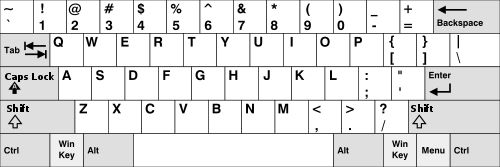
Michael Bloomberg's 1997 autobiography contains a chapter entitled "Computers for Virgins", which explains the differences in the design of the terminal and its keyboard from the standard IBM PC keyboard layout that was popular at that time. The terminal's keyboard layout was designed for traders and market makers who had no prior computer experience. The look and feel of the Bloomberg keyboard are similar to an ordinary computer keyboard, with several enhancements which help users navigate through the system.

Keyboard keys are commonly referred to inside angle brackets, with full commands being contained in curly brackets  e.g., {VOD LN Equity GO}. The function key names and then-standard beige colour of an ordinary keyboard were changed from the technical name, e.g., F10, to a memorable name and colour, e.g., Yellow. The F10 key is thus a Yellow key named Index. The Esc is coloured red and named Cancel in the Bloomberg system, with the red to catch one's eye to stop a task. The ↵ Enter key is referred to as GO with a green color, deriving from the Monopoly game board, by passing Go and collecting $200 in a hope that the user could make money on the information he would find.[13]

The Bloomberg keyboard includes a unique ≣ Menu key which navigates back to the previous function used. If no previous commands are found, ≣ Menu displays a list of related functions. Similarly, the History key will populate the command-line with previously used functions in reverse chronological order, as the key function does in certain command prompts.

The yellow hotkeys along the top of the keyboard are used to enter market sectors, and are generally used as suffixes to allow the terminal to correctly identify a security.

An early 2000s Bloomberg terminal keyboard

For example, if someone is interested in the Vodafone stock listed on the London market, one enters {VOD LN Equity GO} where VOD is the company's ticker symbol, LN is the venue code for London, and Equity is the market sector. A detailed option list related to Vodafone UK stock will pop up, the person can then choose different options by pressing related keys or using the mouse to select the option.

Similarly, {USDEUR Curncy GO} displays the U.S. dollar–Euro exchange spot rate.

Other common Bloomberg commands for Equity include:

  • {HP GO} – Historical Price – Display the detailed historical price of the currently loaded stock
  • {DVD GO} – Dividend / Split Summary of the currently loaded stock
  • {CACS GO} – Corporate Actions related to the currently loaded stock
  • {CN GO} – Company News – News related to the currently loaded stock

Thus, if someone interested in the historical Vodafone UK stock price, they can directly type in {VOD LN Equity HP GO}.

The Bloomberg keyboard has traditionally been heavier and sturdier than standard keyboards (a previous version, the SEA100 Bloomberg keyboard weighed around 3 kg) with 3mm key travel and 19mm key pitch; it also comes with built-in speakers for multimedia features. The SEA100 version has a built-in, 500 PPI, 0.26 sq inch biometric sensor for user login verification. The current Starboard (Keyboard 4) version is 1.08 kg and uses flatter, chiclet-style keys which are quieter and have less key travel than Freeboard (Keyboard 3) and prior.

[edit]

Originally a self-contained operating system running on custom hardware commonly referred to as a Bloomberg Box,[14] the Bloomberg Terminal now functions as an application within the Windows environment. From a user's perspective, there are essentially three distinct levels to the system:

Core Terminal

[edit]

Core Terminal is the original Bloomberg system. Typically consisting of four windows, or Panels, each Panel contains a separate instance of the terminal command line. As the user enters tickers and functions, they can call up and display the real-time data of the market, with each different screen simultaneously running a program to analyze other tickers, functions, values and markets in real time.

This use of multiple screens with user-demanded, specific pieces of differing data—across all relevant markets—allows the user to view diverse and countless volumes of information in real-time. Accessing market data, as it develops, allows the user to make trades and investments in all markets across the world, without having any lag in information. Users can run all four windows on a single monitor or spread them out amongst many monitors, maximizing the information shown on each, to effectually create up to four terminals.

In February 2012, Bloomberg LP publicly announced an upgrade to the Terminal called Bloomberg NEXT. The stated goals of this multi-year, $100 million project were to improve the discoverability and usability of the Core Terminal's functionality.[15]

Launchpad

[edit]

Launchpad is a customizable display consisting of a number of smaller windows, called components, each dedicated to permanently displaying one set of data. A typical user would be a stockbroker who wishes to keep a list of 30 stocks visible at all times: Launchpad allows the user to create a small component which will show these prices constantly, saving the user from having to check each stock independently in the 4 terminal windows.

To turn on Launchpad, the command {BLP GO} is used, {PDFB GO} allows users to set Lpad to open automatically on login. Older keyboards had an <Lpad> key which replicated the {BLP GO} command. Other functions, such as email inboxes, calculation tools and news tickers can be similarly displayed.

The Instant Bloomberg messaging/chat tool is a Launchpad component, as are the chat windows it creates. To launch a normal function from the Bloomberg Terminal's 4 Screens into launchpad, type {LLPGO} from the target screen you wish to turn into a launchpad item.

Application programming interface

[edit]

The Bloomberg Open API (BLPAPI) application programming interface (API) allows third-party applications, such as Microsoft Excel, to access Bloomberg data via the Terminal and Bloomberg's market data products. A user might wish to use Bloomberg data from the Terminal to create their own calculations; by accessing streaming, historical, and reference market data from another program, they can build these formulae. The Bloomberg Terminal installation ships with Excel add-ins, which facilitate building spreadsheets which consume market data.[16] In addition, Bloomberg offers free BLPAPI SDKs allowing Bloomberg subscribers to build their own software which accesses market data in Wolfram Language, C, C++, Java, .NET, Perl, and Python, on Windows, Linux, macOS, and Solaris.[17]

Financial Instrument Global Identifier

[edit]

In September 2021, Bloomberg earned regulatory approval for its Financial Instrument Global Identifier (FIGI), a 12-character alphanumerical, open standard, unique identifier for financial instruments that may be attached to common equities, options, derivatives, futures, corporate bonds, sovereign bonds, municipal bonds, currencies, and mortgage products.[18][19][20][21][22][23][24] This was previously known as the Bloomberg Global Identifier and was introduced in 2009. Once issued, a FIGI number is never reused.[25]

There are unique FIGIs that identify securities and the individual exchanges on which they trade. There are also composite FIGIs that may be used to represent unique securities across related exchanges, although unique FIGIs would be used to identify common stock on an individual exchange. The FIGI structure is defined and copyrighted by the Object Management Group. Unique FIGIs are published by Bloomberg L.P. It's a competitor to the CUSIP.[26]

[edit]

In April 2022, Bloomberg released the Common Data Format 3.1 for Legal Entity Identifiers (LEIs) and received accreditation as an LEI issuer for funds, a move which would allow firms to better understand their exposure to different types of legal entities and meet regulatory requirements.[27][28] Like the FIGI, the LEI is managed under the Open Symbology unit of Bloomberg.

Competitors

[edit]

The largest competitor to the Bloomberg Terminal is Refinitiv with its Eikon offering, formerly owned by Thomson Reuters. Bloomberg and Thomson Reuters split the market with a share of 30% each in 2011. This was a major improvement for Bloomberg as the share in 2007 was Bloomberg's 26% to Reuters' 36%.

Other major competitors include Money.Net, SIX Financial Information, Markit, FactSet Research Systems, Capital IQ, Symphony,[29] Fidessa and Dow Jones. According to Burton-Taylor International Consulting,[30] the market for financial data and analytics was worth almost $25 billion as of 2011.

See also

[edit]

References

[edit]
[edit]
Revisions and contributorsEdit on WikipediaRead on Wikipedia
from Grokipedia
The Bloomberg Terminal is a proprietary software platform developed by Bloomberg L.P. that provides financial professionals with real-time access to market data, news, analytics, trading tools, and communication features essential for decision-making in global finance.[1][2] Launched in 1982 following the founding of Bloomberg L.P. by Michael Bloomberg in 1981 with proceeds from his tenure at Salomon Brothers, the terminal initially focused on fixed-income analytics to address opacity in bond trading but rapidly expanded to encompass equities, commodities, currencies, and derivatives across asset classes.[2][3][4] Its core strength lies in integrating vast proprietary and third-party datasets with proprietary functions for screening, charting, backtesting, and instant messaging among over 350,000 users, fostering a networked community that enhances liquidity and information flow in markets.[5][6] Subscription-based at US$31,980 annually for a single user (reduced to US$28,320 per terminal for multi-terminal deployments), the terminal's high cost reflects its comprehensive scope and reliability, though it has endured outages and drawn criticism for vendor lock-in due to entrenched workflows and interoperability challenges.[2] A notable controversy arose in 2013 when disclosures revealed that Bloomberg reporters had monitored client login and usage patterns via administrative tools, prompting client complaints about privacy invasions and leading to internal reforms and regulatory inquiries.[7][8]

History

Founding and Early Development

Michael Bloomberg founded Innovative Market Systems (IMS) in 1981 after departing Salomon Brothers, where he had risen to partner and developed in-house computerized financial systems.[9] His $10 million severance package from the firm's acquisition by Phibro Corporation provided the initial capital to launch the venture, aimed at delivering real-time market data and analytics to financial professionals.[10] IMS focused on creating a terminal that integrated pricing tools for financial instruments, particularly emphasizing fixed-income securities, building on Bloomberg's experience at Salomon in bond trading.[4] The Bloomberg Terminal, initially known as the Market Master terminal, was developed by a small team and released to the market in December 1982.[11] Merrill Lynch became the first customer, installing 20 terminals that year to access the system's capabilities for tracking market information and performing calculations previously done manually or with less efficient tools.[4] The terminal's innovation lay in its ability to provide comprehensive, real-time financial data, news, and analytical functions through a single interface, addressing gaps in existing systems like those from Dow Jones or Reuters.[12] Early adoption grew steadily as the product demonstrated reliability and utility in high-stakes trading environments. By 1986, IMS was renamed Bloomberg LP to leverage the founder's personal brand and expand its scope.[9] The company's emphasis on proprietary data aggregation and user-friendly software positioned it as a disruptor in financial information services, with terminals leased rather than sold to ensure ongoing updates and support.[13] This leasing model, combined with continuous enhancements, laid the foundation for widespread institutional use in the late 1980s and early 1990s.[10]

Expansion and Key Milestones

Following its initial development, Bloomberg L.P. expanded beyond its exclusive arrangement with Merrill Lynch, which had restricted sales until the late 1980s. In 1986, the company rebranded from Innovative Market Systems to Bloomberg L.P. and began marketing terminals to sell-side firms, enabling annual growth rates of 25-30%.[9][14] This shift marked a pivotal expansion phase, with international offices opening in London and Tokyo in 1987 to serve global clients, followed by Singapore in 1990, Frankfurt and Hong Kong in 1993.[14] The launch of Bloomberg News in 1990 integrated proprietary journalism into the terminal, differentiating it from competitors and spurring subscriber growth; each subsequent media venture, such as Bloomberg Business Radio in 1992, correlated with surges in terminal installations.[14] By 1990, the 10,000th terminal was installed, reaching 14,000 by the end of 1991 with $140 million in sales.[4][14] Installations grew to 22,000 in 1992 ($290 million sales) and 31,000 in 1993 ($370 million sales), reflecting rapid adoption amid expanding data and analytics capabilities.[14]
YearTerminals InstalledKey Developments
199545,000Introduction of "Open Bloomberg" for PC-based access, broadening hardware compatibility.[14]
199775,000Sales exceeded $1 billion in 1996, driven by enhanced fixed-income tools and global reach.[14]
2011300,000Milestone reflecting network effects from features like Instant Bloomberg messaging.[15]
In 1996, Bloomberg repurchased one-third of Merrill Lynch's stake for $200 million, increasing independence, and acquired the remaining shares in 2008 for $4.43 billion, fully privatizing ownership.[4] Subscriber numbers continued climbing, surpassing 325,000 by 2015 despite competition, buoyed by integrations like enterprise analytics platforms.[9] By 2022, usage reached 350,000 professionals, maintaining approximately 33-40% market share even amid a rare 2016 decline of about 3,000 users due to cost pressures in low-volatility markets.[3][16] As of 2025, over 355,000 terminals are in use worldwide, underscoring sustained expansion through data depth and secure communication tools.[17]

Recent Innovations and Adaptations

In response to advancing computational capabilities, Bloomberg has incorporated artificial intelligence (AI) and machine learning (ML) into the Terminal to automate complex analyses and improve query resolution, with techniques applied to sentiment analysis, natural language processing, and predictive modeling as of 2023.[18][19] A key development occurred in April 2025 with the launch of AI-Powered Document Insights, a generative AI tool that extracts and summarizes key financial data from documents, enabling analysts to process earnings reports and filings more rapidly without manual review.[20] In September 2025, Bloomberg introduced AI Portfolio Commentary within its PORT Enterprise analytics platform, which leverages proprietary AI models trained on Terminal data, news, and historical performance to generate narrative explanations of portfolio risks, returns, and attributions, thereby contextualizing quantitative outputs for investment decisions.[21] To facilitate broader content discovery, Bloomberg announced in June 2025 an AI-enhanced natural language search feature spanning the Terminal's research library, allowing users to query vast repositories of premium reports, transcripts, and filings via conversational prompts; this capability, powered by fine-tuned language models, is scheduled for full deployment to subscribers by the end of 2025.[22] Building on earlier efforts, Bloomberg developed an internal large language model akin to GPT architectures by early 2023, designed for Terminal integration to evaluate news sentiment, respond to user queries with higher accuracy than generic models, and assist in drafting summaries, with initial applications focused on reducing reliance on external AI tools vulnerable to hallucinations.[23][24] Adaptations to alternative data ecosystems include the introduction of the ALTD function, which unifies non-traditional datasets—such as satellite imagery and web-scraped metrics—with core market feeds, enabling seamless comparison and modeling within the Terminal interface to address gaps in conventional financial data.[25] In parallel, Bloomberg expanded cryptocurrency coverage on the Terminal to encompass the top 50 digital assets by market capitalization, including real-time pricing, trading volumes, and blockchain-derived metrics for Bitcoin, Ethereum, and others, reflecting adaptations to heightened institutional interest in digital assets since initial Bitcoin integration in 2013.[26] In March 2026, Bloomberg launched customizable Real-Time News Feeds for the Terminal, which provide machine-readable news content enriched with advanced analytics, proprietary sentiment models, and granular metadata tagging in real time, sourced from over 175,000 web and social media sources in addition to Bloomberg's own reporting. The feeds deliver headlines, story bodies, social media posts, and textual analytics with metadata enrichments. They apply automated tagging, normalization, and quality controls supported by human oversight to map unstructured news to tradable securities, enabling seamless integration into systematic and quantitative trading and risk management workflows with proprietary sentiment models and indicators.[27]

Technical Design and Hardware

Software Architecture and Data Systems

The Bloomberg Terminal employs a client-server architecture, where the client software runs on user workstations—typically Windows-based machines—and communicates with Bloomberg's centralized data centers for real-time data retrieval and processing.[1] This setup enables low-latency access to financial data, with the terminal software incorporating an embedded Chromium browser core powered by the V8 JavaScript engine for rendering multi-window interfaces and handling dynamic updates.[28] The frontend has evolved from early implementations in Fortran and C to modern components utilizing C++, JavaScript, and limited Python for internal tools, facilitating efficient execution of complex queries and visualizations.[29] On the backend, proprietary C++-based systems manage high-volume data ingestion and normalization, processing millions of market events per second to deliver consolidated feeds like the B-PIPE, which aggregates real-time pricing, news, and analytics from global exchanges and sources.[30][31] These systems employ UDP for high-speed, low-latency data multicast and TCP for reliable connections, ensuring sub-millisecond delivery during peak trading volumes, such as market opens when data floods exceed typical loads.[32] Data normalization occurs in real time, standardizing disparate feeds into a unified format accessible via the terminal's API libraries, which support integrations in C++, Java, and .NET for custom applications.[29] Bloomberg's data systems prioritize scalability and fault tolerance, leveraging distributed computing to handle petabytes of historical and live data without public disclosure of exact database technologies, though enterprise catalog tools enable selective querying and licensing for downstream use.[33] This architecture supports over 300,000 subscribers as of 2023 by minimizing user-side computation, offloading heavy processing to servers that filter and cache relevant data streams based on user subscriptions and permissions.[30]

Hardware Components and User Interface

The Bloomberg Terminal requires a Windows-compatible personal computer meeting specific performance criteria, such as sufficient CPU and memory for intensive applications, paired with one or more monitors—dual displays recommended at 1920x1080 resolution or higher.[34][35] Users may provide their own hardware, though Bloomberg supplies monitors and the proprietary keyboard in standard installations.[35] Central to the hardware is the custom Bloomberg keyboard, originating with the 1983 "Chiclet" model and updated through versions like Keyboard 5, which integrates with standard PC inputs while adding specialized, color-coded keys.[36][37] Green keys execute commands, including the key functioning as Enter to activate functions; red keys cancel operations or log off; yellow keys access market sectors, such as F2 for GOVT (government securities) or F8 for EQUITY.[36][38] The user interface adopts a command-line driven format optimized for keyboard efficiency, with users typing tickers, function codes (e.g., "N" for news or "EQS" for screening), or identifiers followed by the key in the top command line to retrieve data.[36][38] The screen comprises a top toolbar for shortcuts, central panels for real-time analytics and charts across multiple windows, and a bottom information bar, all customizable via tools like Bloomberg Launchpad for multi-monitor layouts.[36][1] This structure enables seamless integration of data feeds, messaging, and execution tools in a dark-themed environment tailored for high-speed financial workflows.[1]

Core Features and Capabilities

Real-Time Data and Analytics Tools

The Bloomberg Terminal provides real-time market data covering equities, fixed income, commodities, currencies, and derivatives from over 20,000 global exchanges and over-the-counter sources, with updates delivered in milliseconds to minimize latency.[1] This includes live pricing, trading volumes, yields, and bid-ask spreads, enabling users to monitor securities descriptions via the DES function and historical price graphs through the GP (Graph Price) function, which charts a security's historical price performance, can display it as percent change, and supports comparisons to peer groups or benchmarks to assess relative investment performance.[39][40] Data integrity is maintained through proprietary aggregation and validation processes, supplemented by third-party feeds, ensuring coverage of more than 10 million securities as of 2024.[1] Analytics tools within the Terminal facilitate immediate processing of this data for decision-making, including customizable charting via the G function for technical analysis and multi-asset visualizations.[39] For institutional users, time-series analytics from digitized reports are supported through AI-Powered Document Insights, which extracts and analyzes historical data from financial documents to generate time-series datasets.[20] Pre- and post-trade analytics integrate with trading blotters, offering functions like risk assessment and performance attribution through PORT, which evaluates portfolio exposures across factors such as duration, credit, and liquidity.[41] Portfolio simulations with FX hedging are available via PORT Enterprise, allowing users to model hedging strategies against foreign exchange risks in simulated scenarios.[41] Scenario analysis tools allow simulation of market shocks, while merger arbitrage monitoring via MARB tracks real-time spreads and hypothetical outcomes.[42] Inter-bank liquidity visualizations are provided through the Bloomberg Liquidity Assessment (LQA), offering customizable dashboards for monitoring liquidity risks across global markets.[43] Compliance tracking for disclosures is facilitated by integrated tools that monitor regulatory requirements, such as ESG disclosures, ensuring adherence to mandates like EU SFDR.[44] Bloomberg Intelligence enhances these capabilities with interactive datasets from over 350 research analysts, providing sector-specific forecasts and quantitative models accessible in real-time.[45] Trading analytics are embedded directly into data feeds and alerts, supporting accurate execution by correlating live data with strategy backtesting.[46] A 2024 customer survey indicated 97% satisfaction with data quality for analytics applications, underscoring the platform's reliability for high-stakes financial operations.[47]

Communication and Collaboration Functions

The Bloomberg Terminal's communication functions center on Instant Bloomberg (IB), a proprietary instant messaging service launched in 2002 that enables real-time text-based interactions among subscribers.[48] IB supports persistent chat rooms, customizable tabs, and folders to manage high-volume conversations, facilitating direct outreach to colleagues, clients, and counterparties within the platform's global network of over 350,000 subscribers.[5][49] Key messaging capabilities include @mentions for targeted notifications, emoji support, bell alerts for new messages, and one-click broadcasting to multiple recipients via the Blast function.[49] Users can search chat histories using a dedicated icon or keyboard shortcut (CTRL + F), with hover interactions allowing quick replies, forwards, or copies of messages.[49] These features integrate seamlessly with Bloomberg Mail and external email systems, enabling hybrid communication workflows while maintaining Terminal-embedded access.[50] For collaboration, IB permits sharing of screenshots, structured data links, news articles, and analytics outputs directly in chats, with recipients able to access linked Terminal functions via one-click responses.[5][49] This extends to real-time workflow optimization, where natural language processing in messages captures metadata such as security identifiers to trigger actions like data retrieval or trade inquiries without leaving the chat interface.[49] Advanced options include publishing research models and financial insights for broader buy-side and sell-side dissemination.[5] Integrations enhance cross-system collaboration, with APIs supporting intra-firm and cross-firm chatbots for automated responses, IB Connect for on-demand content sharing, and sales trader workflows that link messages to execution tools.[49] As of May 2025, enhancements allow deployment of third-party chatbots in IB rooms to streamline external data exchange and over-the-counter trading discussions.[51] These capabilities position IB as a conduit for turning conversational exchanges into operational actions, such as initiating analytics or compliance-monitored trades.[52]

APIs, Identifiers, and Integration Options

The Bloomberg Terminal offers programmatic access to its data through the Bloomberg API (BLPAPI), a software development kit enabling developers to integrate real-time market data, historical records, reference information, and analytics into custom applications. BLPAPI supports languages such as C++, Java, and C# (.NET), with community-maintained wrappers for Python, facilitating connections to Bloomberg's data network via session-based requests for events and messages.[53][54] API exports for integrations are supported through BLPAPI and the Server API (SAPI), allowing seamless data export to third-party systems for enterprise-wide applications.[53] This API mirrors the Terminal's data entitlements, requiring an active Terminal subscription for authentication, typically through a local delivery point established upon Terminal login.[55] Complementing BLPAPI, the Server API (SAPI) provides server-side integration for enterprise environments, delivering the same dataset as the Professional service—including intraday ticks, end-of-day prices, and derived calculations—without necessitating individual Terminal instances. SAPI supports bulk data feeds and is designed for high-volume applications like automated trading or risk systems, with connectivity via TCP/IP to Bloomberg's hosted servers.[56][57] Securities and instruments on the Terminal are identified primarily via Bloomberg tickers, which append exchange codes and descriptors to base symbols (e.g., "AAPL US Equity" for Apple Inc. shares on U.S. exchanges), ensuring unambiguous referencing across global markets. These tickers integrate with standard identifiers like ISIN, CUSIP, and SEDOL, allowing cross-mapping for queries.[58] Bloomberg's proprietary Bloomberg Global ID (BBGID) evolved into the Financial Instrument Global Identifier (FIGI) in 2014, an ISO 6166-compliant, free standard assigning unique, hierarchical 32-character codes (e.g., BBG000B9XRY4 for Apple equity) to over 300 trillion potential instruments across equities, fixed income, derivatives, and more. FIGIs enable persistent identification independent of market changes, with bulk mapping available via the OpenFIGI API, which accepts inputs like tickers or keywords and returns associated metadata without usage limits.[59][60] Integration options extend beyond core APIs to user-friendly tools like the Bloomberg Excel Add-in, which embeds Terminal data into spreadsheets using formulas such as =BDP("AAPL US Equity","PX_LAST") for real-time prices or =BDS() for bulk historical series, supporting overrides for periodicity, currencies, and fields. This add-in requires an open Terminal session for data pulls and is limited to desktop environments, contrasting with SAPI's scalability for distributed systems.[61][62] Additional pathways include embedding via Bloomberg Query Language (BQL) in select connectors, such as Microsoft Power Query, for SQL-like data retrieval in analytics workflows.[63] All integrations enforce subscription-based entitlements, with no public API access bypassing Terminal licensing.

Pricing and Economic Model

Subscription Structure and Costs

The Bloomberg Terminal operates on a per-user subscription model, where each licensed seat grants an individual access to the full suite of real-time data, analytics, news, and trading tools, along with provided hardware such as the custom keyboard and monitors. Subscriptions are typically structured as multi-year commitments, often two years, billed either annually or monthly, with hardware leased rather than purchased outright to ensure ongoing updates and support. This model emphasizes enterprise-scale deployment, where firms negotiate bulk discounts based on volume, but individual or small-scale users face the full standard rate without significant concessions.[64] In 2025, the annual subscription for a single Bloomberg Terminal increased to US$31,980, with multi-terminal subscriptions priced at US$28,320 per terminal per year, reflecting a 6.5% rise for two-year agreements. These fees encompass unlimited access to core functions but exclude certain premium add-ons, such as specialized execution services or custom API integrations, which incur additional charges negotiated separately.[2][65] Pricing is not publicly listed on Bloomberg's website, requiring direct sales inquiries for precise quotes, which allows for customization based on usage patterns like concurrent logins or regional data needs; however, reported figures from corporate treasury analyses and financial training providers consistently align on the baseline costs for standard deployments. Annual escalators are applied uniformly to renewals, contributing to the Terminal's reputation as a high-fixed-cost tool justified by its comprehensive data monopoly in fixed income and over-the-counter markets.[1][64]

Value Assessment and Market Justifications

The Bloomberg Terminal's annual subscription cost is US$31,980 for a single user (or US$28,320 per terminal for multi-terminal subscriptions) in 2025, positioning it as a premium tool amid sustained demand from financial institutions. This premium pricing reinforces its market standing and is market-justified by the terminal's delivery of real-time pricing data for over 2.5 million financial instruments daily, a depth of coverage that supports high-stakes trading decisions where delays or inaccuracies can result in substantial losses. Beyond data provision, the terminal's value derives from integrated analytics and workflow efficiencies that amplify user productivity, such as multi-asset risk modeling and execution tools that streamline fixed-income and FX trading processes.[66] These capabilities reduce reliance on fragmented third-party services, enabling firms to internalize research and analysis that would otherwise incur additional expenses, thereby generating a return on investment through cost containment and faster insight generation.[67] Empirical demand is evident in its adoption by over 325,000 subscribers globally as of recent estimates, where the platform's network effects—facilitated by proprietary messaging and collaboration functions—foster information flows that enhance market participation and alpha generation for subscribers.[1] While alternatives provide similar or targeted capabilities at lower prices, often with more modern interfaces, AI features, and better affordability for individuals or smaller firms, Bloomberg remains dominant in institutional settings due to its comprehensive real-time data (especially strong in fixed income), news, analytics, and proprietary instant messaging. Key alternatives include LSEG Workspace (formerly Refinitiv Eikon) at approximately $22,000/year, FactSet at around $12,000/year for strong financial modeling and integration, S&P Capital IQ with variable but often lower pricing and web-based access, as well as more affordable options like Koyfin (paid plans from $39/month) and Benzinga Pro ($37/month). These alternatives have gained traction for value and usability, but they generally lack Bloomberg's full institutional depth and integration.[68] Market justifications further hinge on the terminal's role in mitigating operational risks inherent to finance, where its verified data feeds and customizable interfaces minimize errors in high-volume environments, justifying the expense as a fraction of the salaries and bonuses tied to performance outcomes. While pricing draws scrutiny for its opacity and annual escalators, sustained renewals across buy-side and sell-side firms underscore a rational assessment that the platform's causal contributions to decision accuracy and efficiency outweigh alternatives' limitations in scope and integration. This economic model persists due to high switching costs and the absence of direct substitutes matching Bloomberg's data ecosystem, reinforcing its entrenched position.[64]

Market Position and Competition

Dominance and Market Share

The Bloomberg Terminal commands a leading position in the financial data and analytics market, with an estimated 33.4% share as of 2024, significantly ahead of primary rivals.[69] This dominance reflects its role as the standard tool for institutional investors, traders, and analysts requiring integrated real-time data, news, and execution capabilities.[64] The platform's subscriber base surpasses 350,000 global users, primarily high-level financial professionals whose reliance on its proprietary identifiers, messaging functions, and depth of coverage reinforces network effects and barriers to entry for competitors.[5] Bloomberg's financial data operations generate over $10 billion in annual revenue, dwarfing peers like FactSet, which reported $1.3 billion in total revenue as of 2017 with fewer clients.[64][64] Refinitiv (now under London Stock Exchange Group) holds the second-largest share at 19.6%, but trails in user scale and breadth of asset class coverage.[69] High subscription pricing—approximately $28,000–$32,000 per user annually as of 2025, depending on the number of terminals—limits accessibility to large institutions, yet sustains loyalty through perceived indispensable value in fast-paced markets.[70][2] Market analyses attribute Bloomberg's edge to early-mover advantages established since the 1980s, including proprietary data aggregation and low-latency delivery, which competitors have struggled to replicate at equivalent depth.[71] While newer entrants and API-focused alternatives erode edges in niche segments, Bloomberg's overall share has remained stable around 30-33% over the past decade, indicating resilient demand amid digital disruptions.[69][71]

Primary Competitors and Differentiation

The primary competitors to the Bloomberg Terminal in the professional financial data and analytics market include Refinitiv Eikon (now part of London Stock Exchange Group and transitioning to Workspace), FactSet Workstation, and S&P Capital IQ.[64][69] Bloomberg maintains a dominant market share of approximately 33%, compared to Refinitiv Eikon's 20% and smaller shares for FactSet and Capital IQ (around 6% combined in core segments).[69][64] These platforms target similar institutional users such as investment banks, hedge funds, and asset managers, offering real-time market data, research tools, and analytics, but differ in integration depth and cost structures.[64] Refinitiv Eikon serves as the closest rival, providing comprehensive news feeds, trading capabilities, and economic data at a lower annual subscription cost of about $22,000 per user versus Bloomberg's $28,000–$32,000 range.[2] However, Eikon lags in proprietary messaging and collaboration features, where Bloomberg's secure, real-time chat network—used by over 325,000 subscribers globally—creates a network effect that facilitates instant deal-making and information sharing not replicated elsewhere.[64] FactSet differentiates through customizable analytics and portfolio management tools, emphasizing quantitative research and API integrations for data workflows at approximately $4,000–$12,000 annually, but it offers less emphasis on fixed-income and foreign exchange execution compared to Bloomberg's end-to-end trading terminals.[2][64] S&P Capital IQ excels in company screening, financial modeling, and M&A intelligence with extensive private company data at variable pricing often lower than Bloomberg's and with web-based accessibility, yet it provides weaker real-time pricing and global news aggregation, positioning it more as a complementary tool than a full terminal substitute.[2][64] Bloomberg's key differentiators stem from its vertically integrated ecosystem, including proprietary identifiers (e.g., Bloomberg identifiers for over 10 million securities), seamless hardware-software pairing with custom keyboards, and a unified interface that minimizes context-switching—features that foster user loyalty despite high switching costs estimated at 6–12 months of retraining per firm.[64] Its emphasis on causal data linkages, such as tracing market events to underlying economic drivers via advanced analytics, provides causal realism in decision-making that competitors' modular approaches often fragment.[69] While rivals like FactSet offer flexibility for bespoke models, Bloomberg's real-time depth across asset classes, bolstered by in-house journalism and surveillance tools, sustains its edge in high-stakes trading environments where latency under 100 milliseconds can determine outcomes.[64] This holistic integration, rather than siloed strengths, underpins Bloomberg's resilience against lower-cost alternatives, as evidenced by its retention of over 80% of subscribers amid competitive pricing pressures.[69] In recent years, additional lower-cost alternatives have gained traction, particularly among smaller firms and individual investors, offering modern interfaces, AI-enhanced features, and significantly greater affordability. Notable examples include Koyfin (with plans ranging from free to approximately $70 per month), AlphaSense (AI-powered research platform with pricing typically starting around $15,000 annually), Benzinga Pro (approximately $37 per month for real-time news), and StockRover (from approximately $8 per month with a focus on historical data). These platforms provide targeted capabilities and usability advantages but generally lack the Bloomberg Terminal's institutional depth, proprietary messaging network, and comprehensive coverage of fixed income and other asset classes.[72][2] While no major displacement of Bloomberg has occurred in institutional settings, these alternatives have seen growing adoption for their value proposition and enhanced features.

Controversies and Challenges

Privacy and Surveillance Incidents

In 2013, Bloomberg LP faced significant backlash after revelations that its journalists had accessed detailed usage data from the Bloomberg Terminal to inform reporting. Reporters were able to view subscribers' activities, including login times, search queries, and specific functions accessed, which raised concerns among clients like Goldman Sachs about unauthorized surveillance. This capability stemmed from a "customer relationship management" tool intended for sales and support teams to monitor usage patterns and improve service, but journalists had been trained to use it since the 1990s for story leads on market events. Bloomberg restricted journalists' access to this data in April 2013 following a client complaint and further limited it in May, stating that reporters would thereafter see only the information available to clients themselves.[73][74][75] The incident prompted regulatory scrutiny, with the U.S. Federal Reserve and U.K. Bank of England inquiring into whether Bloomberg journalists had tracked officials' terminal usage, potentially compromising sensitive financial decision-making. Bloomberg's editor-in-chief, Matthew Winkler, defended the practice as a means to verify market rumors but acknowledged it had crossed into inappropriate territory, calling any misuse "inexcusable." An internal review commissioned by Bloomberg in June 2013, released in August, confirmed lapses in oversight and recommended segregating newsroom access from client data tools, leading to policy overhauls including enhanced training and audits. Clients, including Deutsche Bank and Rabobank, temporarily halted new terminal subscriptions or reviewed contracts, citing privacy violations that eroded trust in the platform's confidentiality.[76][77][78][79] Bloomberg Terminals inherently log all user actions for operational, compliance, and security purposes, creating a comprehensive record of queries, trades, and communications that the company retains to detect anomalies or support investigations. This panopticon-like monitoring, while standard for financial data providers to ensure data integrity and prevent misuse, amplified privacy fears post-2013, as former employees reported that every keystroke and screen view is archived. In May 2013, an accidental data exposure published over 10,000 private instant messages from terminals online, including sensitive trader communications, though Bloomberg described it as outdated and promptly removed.[80][81] A separate breach in August 2017 unmasked nearly 1,000 anonymous users in Bloomberg Terminal chat rooms, revealing their real identities, email addresses, and affiliations due to a configuration error in the system's anonymity features. Affected users included traders and executives who relied on the chats for confidential discussions, prompting complaints about violated expectations of privacy in professional networking tools. Bloomberg investigated and patched the vulnerability, but the incident highlighted ongoing risks in balancing real-time collaboration with data protection. No major terminal-specific breaches have been publicly reported since, though Bloomberg's privacy policies emphasize security incidents as any unauthorized access to confidential information, with contractual requirements for clients to report compromises.[82][83]

Pricing, Monopoly, and Reliability Critiques

The Bloomberg Terminal's subscription fee has drawn criticism for its steep pricing, with single-user annual costs rising to $31,980 in 2025, reflecting a 6.5% increase from prior years.[70] This pricing structure, which applies per terminal and escalates for additional data licenses or real-time features, burdens smaller financial firms and treasurers, who report exasperation over annual hikes amid stagnant budgets.[70] Critics argue the fees extract rents from users reliant on the platform's ecosystem, with executives grumbling that even modest increases—such as a 9% hike in 2022—strain operational costs without proportional enhancements in core functionality.[84] Bloomberg's market dominance, commanding approximately one-third of the professional financial terminal sector, has fueled monopoly critiques centered on high barriers to entry and network effects that lock in users.[85] The platform's integrated messaging, data aggregation, and proprietary identifiers create switching costs that deter competitors, allowing Bloomberg to maintain elevated prices despite alternatives like Refinitiv or FactSet offering similar capabilities at lower rates.[86] Financial institutions have expressed concerns over this near-monopoly in trader communication, where Bloomberg's instant messaging handles the majority of deal flows, potentially amplifying systemic risks if disruptions occur.[86] While not subject to formal antitrust actions, observers note that the lack of vigorous competition enables pricing power that may stifle innovation, as evidenced by persistent complaints about the terminal's dated interface alongside its premium fees.[68] Reliability issues have intensified critiques, particularly following a global outage on May 21, 2025, which halted live data feeds for approximately two hours and disrupted government bond auctions in the UK, EU, and Portugal.[87] Traders worldwide reported blank screens and delayed market access, exacerbating frustrations during active sessions and prompting extensions to bidding windows for debt sales.[88] Such incidents, echoing a 2015 failure that raised regulatory flags about Bloomberg's role as a potential systemic vulnerability, underscore vulnerabilities in a platform users pay tens of thousands annually to rely upon, with some questioning whether the infrastructure justifies the cost given recurring technical glitches.[89] Regulators have since scrutinized these events for broader market resilience implications, highlighting how dominance can compound outage impacts across interconnected trading ecosystems.[90]

Broader Impact and Reception

Contributions to Market Efficiency

The Bloomberg Terminal enhances market efficiency by delivering real-time financial data, analytics, and news to professional users, thereby diminishing information asymmetries that hinder rapid price discovery. In fixed income markets, its foundational innovation—launched in December 1981—introduced automated, model-based pricing for bonds using inputs like yield curves and Treasury rates, replacing opaque manual calculations that previously delayed adjustments to interest rate shifts and credit events.[91][92] This standardization fostered tighter bid-ask spreads and more responsive valuations in over-the-counter segments, where pre-terminal trading relied on fragmented dealer quotes.[93] Beyond bonds, the terminal's integration of proprietary news wires with quantitative tools—such as customizable alerts and scenario analysis—accelerates the dissemination and processing of public information, aligning with semi-strong efficient market principles by enabling swift incorporation into equity, commodity, and derivative prices.[94][95] Features like the instant Bloomberg (IB) messaging network further support efficiency by allowing secure, timestamped exchanges among traders, which refine collective assessments of asset values without relying on slower public channels.[1] Industry analyses attribute reduced trading frictions to these capabilities, as users leverage the platform for workflow automation, including direct feeds into execution algorithms that execute trades on predefined signals.[17][67] Quantifiable impacts include improved liquidity in historically illiquid assets; for example, the terminal's composite pricing for sovereign and corporate bonds across 14 markets, expanded as of August 2025, provides executable references that minimize discrepancies between indicative and transaction levels.[96] While access remains gated to paying subscribers, its widespread adoption among institutions—spanning sales, trading, and research—ensures broad participation in informed pricing, countering opacity in global markets without endorsing universal retail access.[97][48]

Criticisms of Barriers and Influence

The Bloomberg Terminal's annual subscription fee, which reached approximately $31,980 per user in 2025 following a 6.5% increase, has drawn criticism for creating prohibitive economic barriers that restrict access primarily to large financial institutions capable of absorbing multi-terminal costs often exceeding millions annually.[70] Smaller firms and independent analysts, facing such expenses alongside setup and training requirements, are effectively excluded from real-time data depth and integrated tools, fostering persistent information asymmetries where institutional users gain advantages in speed, analytics, and execution unavailable to retail or under-resourced participants.[2] This dynamic, critics contend, concentrates market intelligence among incumbents, hindering broader market efficiency and innovation from diverse actors. Compounding these cost barriers are formidable switching costs and network dependencies, including the Terminal's proprietary instant messaging system—used by over 350,000 subscribers for deal-making and peer communication—which generates lock-in effects that deter defections to alternatives despite occasional reliability outages or outdated interfaces.[90] Industry reports highlight firms' struggles to negotiate volume discounts or prune terminals during downturns, attributing this to Bloomberg's entrenched position rather than superior value, with sales dips in years like 2016 underscoring vulnerabilities yet failing to erode dominance due to these inertial forces.[98] Such structural moats, while legally permissible absent antitrust violations, invite scrutiny for stifling competition, as evidenced by limited inroads from rivals like Refinitiv or FactSet, which capture under 20% combined market share in professional data platforms. The Terminal's influence extends to shaping financial market norms through its near-exclusive hold on fixed-income pricing and data standardization, processing billions of daily data points that inform liquidity and benchmarks across bonds and foreign exchange—asset classes dwarfing equities in volume.[48] Detractors argue this centrality enables subtle sway over trading conventions and information flows, as proprietary feeds and restrictive licensing terms limit data portability, potentially embedding biases toward Bloomberg's ecosystem and amplifying the firm's leverage in adjacent services like news dissemination. Instances such as the 2021 GameStop episode illustrated this, where Terminal-dependent professionals wielded asymmetric tools against retail platforms, fueling debates on how such gatekeeping exacerbates divides between elite expertise and democratized access, though empirical evidence ties this more to network scale than deliberate manipulation.[99]

References

User Avatar
No comments yet.