Hubbry Logo
BurseraBurseraMain
Open search
Bursera
Community hub
Bursera
logo
8 pages, 0 posts
0 subscribers
Be the first to start a discussion here.
Bursera
Bursera
from Wikipedia

Bursera
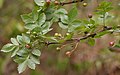
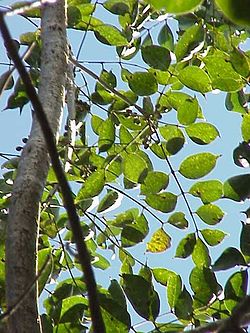
Bursera simaruba
Scientific classification Edit this classification
Kingdom: Plantae
Clade: Tracheophytes
Clade: Angiosperms
Clade: Eudicots
Clade: Rosids
Order: Sapindales
Family: Burseraceae
Genus: Bursera
Jacq. ex L.[1]
Type species
Bursera simaruba
Species

About 100, see text.

Synonyms

Elaphrium Jacq.

Bursera is a genus with about 100 described species[2] of flowering shrubs and trees varying in size up to 25 m (82 ft) high. It is the type genus for Burseraceae. The trees are native (often for many species endemic) to the Americas, from the southern United States south through to northern Argentina, in tropical and warm temperate forest habitats. It is named after the 17th-century Danish botanist Joachim Burser.

Several Mexican species (such as B. aloexylon and B. delpechiana) produce a type of wood known as linaloe (from Mexican Spanish lináloe, from Latin lignum aloes, lit.'wood of the aloe' or 'aloeswood').[3] They contain the aromatic oil linalool.

A number of species from tropical Asia were once included in this genus, but are now treated in the genus Protium.

Species

[edit]

list sources : [2] [5]

Formerly placed here

[edit]

Uses

[edit]
[edit]

References

[edit]
Revisions and contributorsEdit on WikipediaRead on Wikipedia
from Grokipedia
Bursera is a of approximately 100 species of aromatic, resinous flowering trees and shrubs in the family , primarily native to tropical and subtropical regions of the from the to . The genus was established in 1762 by , honoring the German botanist and physician Joachim Burser (1583–1639), with the type species (formerly known as Pistacia simaruba). Species are typically dioecious, with smooth, peeling bark that often reveals colorful underlayers, and they produce terpenoid-rich resins used historically for , varnish, and medicine. Bursera species exhibit high diversity in Mexico, where around 80 occur on the Pacific slopes and approximately 70 are endemic, thriving in seasonally dry habitats such as tropical dry forests, thornscrub, and desertscrub. They are well-adapted to arid conditions, often featuring succulent trunks and leaves that are simple or pinnately compound. Flowers are unisexual, arranged in panicles, and develop into drupe-like fruits that split into 2–3 valves at maturity. Notable species include the gumbo-limbo tree (B. simaruba), known for its rapid growth and use as a in cultivation, reaching heights of 10–18 meters with an open canopy. The elephant tree (B. microphylla) is prized for its swollen, caudiciform trunk resembling a miniature baobab, while many yield central to indigenous rituals and crafts. Ecologically, Bursera plays a key role in dry forest dynamics, supporting through its resins, which deter herbivores, and its ability to resprout after or . Phylogenetic studies using nuclear ribosomal DNA confirm the monophyly of Bursera and its division into sections like Bullockia and Bursera, highlighting evolutionary trends in traits such as bark shedding, leaf morphology, and breeding systems. Conservation concerns arise from habitat loss in tropical dry forests, though some species are cultivated for ornamental and bonsai purposes due to their distinctive forms.

Description

Physical Characteristics

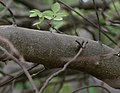
Bursera species are primarily shrubs and trees ranging from small to medium size, typically reaching heights of 2 to 20 meters, though some, like B. simaruba, can attain up to 25 meters or more in optimal conditions. These plants are dioecious or monoecious, with succulent stems that produce aromatic oleoresins exuded from wounds, often emitting scents reminiscent of , , or pine-lemon. The bark is a distinctive feature, generally smooth and exfoliating in thin, papery layers that reveal colorful inner layers ranging from reddish to beige or gray, particularly in the subgenus Bursera; in contrast, subgenus Elaphrium species have non-peeling, grayish to reddish-gray bark. Leaves in the genus are deciduous, alternate, and typically pinnate (imparipinnate), with 3 to 17 (occasionally up to 51) leaflets per leaf, though some species exhibit simple, unifoliolate, or trifoliolate forms; leaflets are often lanceolate, 2.5 to 38 cm in total leaf length, and aromatic when crushed. Flowers are small (3–6 mm), unisexual, actinomorphic, and 3- to 6-merous, featuring 3–5 sepals and petals that are yellowish, white, or greenish; they appear in the dry season, arranged singly or in short cymes or panicles. Fruits are dehiscent drupes, 0.5–1.5 cm long, with 2–3 valves enclosing a single bony pyrene (endocarp) that is partially or fully covered by a colorful pseudoaril (yellow, orange, or red), facilitating dispersal; the ovary is bilocular or trilocular, typically developing one seed per fruit. Certain arid-adapted species exhibit the "elephant tree" morphology, characterized by swollen, pachycaul trunks or basal stems that store water, as seen in B. microphylla and B. fagaroides, where the trunk can be short and thick (up to 0.3 m in ) with tight, smooth green inner bark. This caudiciform habit enhances survival in dry environments by providing water reserves during drought.

Growth and Habitat

Bursera species are predominantly inhabitants of seasonally dry tropical forests (SDTFs), where they comprise a significant portion of the woody , with approximately 75% of adapted to these environments characterized by pronounced wet-dry seasonal cycles and annual rainfall typically below 1800 mm. Some extend into seasonally moist forests, subtropical woodlands, or xeric shrublands, reflecting a degree of niche conservatism toward arid to semi-arid conditions while avoiding frost-prone areas. These plants exhibit notable through physiological and morphological adaptations, including drought-deciduous leaves that are shed during extended dry periods to conserve water, and extensive or deep systems that access or capture sporadic rainfall in nutrient-poor substrates. In arid habitats, growth is generally slow, with maturation taking several years, and mature trees typically reaching heights of 5 to 25 meters, though some species like can attain up to 30 meters in more favorable conditions. Specialized adaptations, such as the water-storing, pachycaulous trunks observed in Bursera microphylla—often likened to an "elephant tree" for its swollen base—enable survival in extreme desert-like settings by retaining moisture during prolonged droughts. Bursera prefer well-drained soils, including rocky, sandy, or substrates that prevent waterlogging, and they thrive across a broad elevational gradient from to approximately 2,000 meters, with highest diversity often in lowland canyons and mid-elevation slopes where seasonal is moderated by .

Taxonomy

Etymology and History

The genus Bursera is named after the German botanist and physician Joachim Burser (1583–1639), who assembled one of the earliest comprehensive herbaria in , containing over 3,000 dried plant specimens that served as a foundational resource for later botanists, including . The name derives directly from Burser's surname, reflecting his contributions to early systematic through his collection and documentation of plant diversity. There have been no major etymological alterations to the spelling since its establishment, maintaining the original form "Bursera" as a straightforward . The genus was first formally described in 1762 by Carl Linnaeus, based on material provided by Nikolaus Joseph Jacquin, in the second edition of Species Plantarum, where it was designated as the type genus of the family Burseraceae. Prior to this, species now classified under Bursera had been placed in other genera, such as Pistacia by Linnaeus in his 1753 Species Plantarum. Early European recognition of Bursera species emerged in the 18th century through explorations and herbaria documentation, with Jacquin's observations from the Americas contributing to Linnaeus's validation of the genus. Resins from Bursera species, known as , have been utilized since pre-Columbian times by indigenous cultures in , including the Maya and , primarily for ceremonial burning, ritual offerings, and as adhesives in crafting figurines and tools. These practices highlight the cultural significance of the genus long before European contact. In the 19th and early 20th centuries, botanical studies advanced understanding of American Bursera species, notably through the work of Charles Sprague Sargent, who in 1890 transferred Pistacia simaruba L. to (L.) Sarg. in the journal Garden and Forest, emphasizing morphological distinctions and distribution across North and . Sargent's contributions, drawn from extensive field collections at the , helped solidify the taxonomic framework for the genus in the .

Classification and Phylogeny

Bursera is classified within the family , order , and serves as the of the family, with Bursera simaruba (L.) Sarg. designated as the . The genus was originally described by Jacquin ex Linnaeus in 1762, and historical synonyms include Elaphrium Jacq. Phylogenetic analyses using molecular markers, such as nuclear sequences from studies spanning the to the , have consistently demonstrated that Bursera forms a monophyletic within the Bursereae of Burseraceae. This is most closely related to the genus Commiphora, with strong bootstrap support in plastid and nuclear phylogenies confirming their sister-group relationship and shared evolutionary history within the family. Molecular evidence, including divergence time estimates from fossil-calibrated trees, indicates that Bursera's diversification primarily occurred in the Neotropics during the , driven by climatic shifts and in seasonally dry forests. Within Bursera, species are informally grouped into sections based on morphological traits such as canal distribution in vascular tissues and leaf architecture, including simple or trifoliolate leaves in section Bursera versus pinnately compound leaves in section Bullockia. These sections are monophyletic, as supported by ITS and ETS sequence data, but no formal subgeneric ranks have been widely adopted or ratified in taxonomic revisions as of 2025.

Diversity and Distribution

Number of Species

The genus Bursera comprises 120 accepted according to the latest taxonomic assessments. This figure reflects ongoing revisions, with the total number of described estimated at around 114 in recent studies, though synonymy and new discoveries continue to refine the count. The highest diversity occurs in , where more recent estimates indicate approximately 100 , with about 85 endemic to the country (as of 2023), particularly in the Pacific slopes and western regions. Earlier assessments reported 84 with over 80 endemic. Notable species include , known as gumbo-limbo, which is widespread across tropical and subtropical America from to and the . , or palo santo, is recognized for its aromatic wood and occurs from to northwestern and . Bursera microphylla, the littleleaf , is native to the ( and ) and . Taxonomic history includes the reclassification of certain Asian taxa formerly placed in Bursera, such as Bursera tonkinensis, now recognized as Protium tonkinense based on molecular and morphological evidence from the early 2000s. Additionally, species previously assigned to the genus Elaphrium have been merged into Bursera, with Elaphrium treated as a rejected synonym, incorporating taxa like Elaphrium fagaroides as Bursera fagaroides.

Geographic Range

The genus Bursera is native to tropical and subtropical regions of the , extending from the through and to northern . In the United States, species occur disjunctly in arid zones of southern states such as , , , and , where they are adapted to dry, rocky habitats. For example, Bursera fagaroides occurs in southern Texas. Throughout , the genus is widespread, with significant presence in diverse regions including the , , , , and the Pacific slopes. Central American countries like , , , , and Panamá also host native populations, often in seasonally dry forests. The highest centers of diversity for Bursera are concentrated in , particularly along the Pacific slopes and in the southwestern regions, where approximately 100 species are found, with about 85% (as of 2023). Earlier studies reported 84 species with over 80 endemic. This area, including the Balsas River depression and areas north of , represents a key hotspot for the genus's , with older lineages originating in western around 30–20 million years ago. Further south, the distribution encompasses countries such as , , , , and , as well as , typically in tropical dry forests and shrublands. In the , Bursera species are present but relatively sparse, occurring on islands including , , , , and the , with some endemics in the Galápagos and Revillagigedo archipelagos. Overall, Bursera species exhibit a predominantly tropical and subtropical pattern, thriving in dry to seasonally dry biomes, with disjunct populations in arid environments like the . While strictly native to the Neotropics, some species, such as B. simaruba, have been introduced outside this range for ornamental purposes, including in Pacific islands like , where they are cultivated as shade trees or living fence posts. No native occurrences exist in following taxonomic reclassifications that have moved certain species to other genera.

Ecology

Reproductive Biology

Bursera species exhibit predominantly dioecious sexual systems, with separate individuals, although some taxa display monoecious tendencies where both flower types occur on the same plant. Flowers are small, typically measuring 3-5 mm in , and appear in axillary panicles; they are usually white or pale greenish in color, with male flowers featuring functional stamens and female flowers bearing pistils with non-functional anthers. Blooming occurs during the , often in to early summer (April-June in many Neotropical regions), coinciding with increasing day length and the onset of initial rains to facilitate activity. Pollination is primarily entomophilous, mediated by such as bees (e.g., Apis mellifera and spp.) and potentially moths, which visit the fragrant, nectar-producing blooms during their brief 3-7 day lifespan. Reproductive in Bursera is closely tied to seasonal , with trees shedding leaves during the extended dry periods to conserve , thereby synchronizing flowering and development with the more reliable brief wet seasons that follow. This strategy minimizes losses while aligning reproduction with periods of heightened moisture availability for transfer and maturation. Female flowers, being self-incompatible, rely on cross-pollination from spatially separated male trees, which can limit set in low-density populations but ensures . Fruits are schizocarpic drupes, typically 5-10 mm long, ovoid to spherical, and leathery, maturing to a red hue over 7-11 months; they dehisce septicidally along 2-3 valves to release . Each is enclosed in a thin, membranous testa forming a wing-like structure that enables anemochorous dispersal by , allowing propagation across open, dry landscapes. germination is dormant initially, requiring —either mechanical abrasion of the hard endocarp or chemical treatment—to break physical and permit water uptake, followed by placement in moist substrates under warm conditions (around 23-30°C) to achieve rates up to 40-50% within 20 days. This process ensures establishment during the wet season's favorable humidity.

Ecological Interactions

Bursera species play a pivotal role as keystone elements in Neotropical tropical dry forests, particularly in and , where they dominate community structure and support diverse faunal assemblages through food provision and features. For instance, acts as a key species in Ecuadorian dry forests, facilitating co-occurrence patterns among woody plants and influencing overall dynamics. In Mexican dry forests, the contributes to physiognomic dominance, with 9–15 often coexisting locally, enhancing structural complexity that benefits birds, , and mammals. These trees provide critical resources for avian communities, with species like Bursera longipes and B. simaruba serving as primary food sources for fruit-eating birds such as Myiarchus flycatchers and up to 26 other species observed feeding on their fruits. The papery, peeling bark of many Bursera species offers nesting and roosting sites for birds, while the canopy and support insect herbivores and pollinators, fostering intricate interactions. Mammals, including coatis and deer, utilize Bursera-dominated patches for and shelter in fragmented landscapes, underscoring the genus's contribution to connectivity. Bursera's ecological interactions are marked by strong antagonistic and mutualistic dynamics, particularly through chemical defenses and specialized relationships. The genus produces —primarily mono- and sesquiterpenes—that deter generalist while targeting specialized ones like the ≈45 of monophagous or oligophagous Blepharida beetles, which coevolve with Bursera and drive chemical in plant communities to reduce shared vulnerability. These same play a dual role by attracting pollinators, as volatile compounds signal rewarding flowers and enhance visitation rates in dry forest settings. Such defenses not only protect the plant but also shape community composition, with high Bursera (over 70 in ) supporting unique, specialized assemblages that reflect ecosystem integrity in fragmented habitats.

Human Uses

Traditional and Medicinal Applications

In Mesoamerican cultures, such as those of the Maya and Aztec, the of Bursera species, commonly known as , has been traditionally burned as during religious and ceremonial rituals to invoke spiritual protection and purification. For instance, Aztec offerings at sites like the included copal figurines symbolizing divine communication, while Maya texts like the describe it as a sacred element brought by celestial bodies for rituals. Additionally, bark decoctions from species like and Bursera fagaroides were prepared by indigenous healers to treat skin ailments, fevers, and digestive issues such as diarrhea, often administered as infusions or poultices in Nahua and Maya communities. Bursera fagaroides, which grows in southern Texas and northern Mexico, produces an aromatic resin referred to as "Mexican frankincense" or copal; this resin is used traditionally for incense and medicinal purposes, though it differs chemically and botanically from true frankincense derived from Boswellia species and lacks commercial harvesting specifically for frankincense-like applications. The medicinal properties of Bursera derive from bioactive compounds including and various , which exhibit and effects supporting traditional applications. For example, resin from Bursera bipinnata has been used in for wound treatment due to its antibacterial qualities, while poultices from the resin alleviate muscle pain and boils in regions like and . A notable case is Bursera graveolens, known as palo santo or "holy wood," employed by indigenous groups in for spiritual cleansing through , where the burned wood's smoke is believed to ward off negative energies and promote emotional healing. Bursera holds cultural symbolism in Mesoamerican as "torchwood," reflecting its resin's flammability and use in fire-starting for practical and ritualistic purposes, evoking themes of illumination and endurance in oral traditions from . The wood of species like Bursera glabrifolia has also been integral to traditional crafts in and , particularly in Oaxacan communities where it is carved into sculptures and utensils, preserving indigenous artistic heritage.

Commercial and Industrial Uses

Bursera species yield several non-timber forest products with significant commercial value, particularly resins and essential oils extracted for industrial applications. The resin known as , derived from various Bursera species such as B. bipinnata and B. fagaroides, is harvested through incisions in the tree bark and processed into forms used in varnishes and as a binding medium in paints, often combined with for artistic and protective coatings. Additionally, serves as a base for production, with commercial varieties like copal blanco and copal negro traded in Central Mexican markets for both domestic and export purposes. Essential oils from Bursera wood are prized for their aromatic compounds, notably from linaloe wood (Bursera delpechiana or B. linanoe), a pale yellow oil primarily produced in and . This oil functions as a fragrance component in perfumes, , and soaps, where it imparts floral and notes, though its market has declined since the 1960s due to synthetic alternatives; U.S. imports in 1969 totaled approximately $815,000, sourced from countries including , , and . Palo santo essential oil, steam-distilled from Bursera graveolens wood in regions from southern to , is commercially available for products, valued for its woody, calming scent and integrated into diffusers, candles, and wellness items. Timber from species like supports regional industries in , where its lightweight, easily worked wood—characterized by low shrinkage and good nailing properties—is utilized for furniture, tool handles, and utility due to moderate durability against decay. The gum extracted alongside from B. simaruba provides further utility as an and base, applied in glues and canoe coatings. Mexico remains a primary exporter of Bursera-derived products to global markets, with and essential oils contributing to rural livelihoods through community-based harvesting. Sustainable certification efforts, including optimized extraction techniques like shallow incisions (<5 mm depth) on trees with at least 15 cm , have gained traction in the to mitigate , as demonstrated in studies from state where resin yields averaged 38.56 g per tree under managed conditions.

Conservation

Threats and Challenges

Bursera species face significant threats from habitat loss, primarily driven by in the tropical dry forests of Mexico and , where these trees are concentrated. , livestock grazing, and urban development have fragmented and reduced these ecosystems, which are already among the most endangered biomes globally, with estimates indicating losses of up to 60% in some regions. further exacerbates these pressures by intensifying droughts and altering patterns, potentially contracting suitable habitats for many species by 20-50% under future scenarios. Overharvesting poses another major risk, particularly for and wood extraction. Species like (palo santo) are targeted for their aromatic wood used in and essential oils, leading to unsustainable collection practices that deplete mature trees and disrupt regeneration. Similarly, resin from various Bursera species is harvested intensively for traditional and commercial uses, often without adequate management, resulting in population declines in accessible areas. In fragmented habitats, competition from further compounds these issues, as non-native plants can outcompete Bursera seedlings for resources and space. Additional pressures include heightened vulnerability to fires in arid zones, where seasonal dryness and human-induced ignitions threaten stands of Bursera trees, which lack adaptations for frequent burning. Several Bursera species are listed as vulnerable or higher on the (as of 2025), reflecting ongoing declines due to these combined factors, with some like Bursera toledoana classified as endangered.

Protection Efforts

Several Bursera species, such as Bursera simaruba, are protected within biosphere reserves like Mexico's Sian Ka'an Biosphere Reserve, a UNESCO World Heritage site encompassing tropical dry forests and mangroves on the Yucatán Peninsula. In Central America, species including Bursera simaruba occur in national parks such as Costa Rica's Palo Verde National Park, where conservation efforts focus on preserving seasonally dry tropical forests that support Bursera populations. Ex situ conservation efforts include cultivation in botanic gardens, with institutions like the Missouri Botanical Garden maintaining living collections of species such as Bursera simaruba to support propagation and genetic preservation. In , national legislation protects native flora, prohibiting unauthorized collection and promoting habitat safeguards for . Research and restoration initiatives emphasize reforestation in the region, where projects have restored tropical dry forests including Bursera species through native on degraded lands, with several sites documented as of 2022 assessments. Genetic studies, such as those on gene flow in and landscape connectivity in Bursera cuneata, inform breeding for resilient strains to enhance population viability amid . Community-based sustainable harvesting programs in , particularly for resin from species like Bursera bipinnata, involve local cooperatives in regulated extraction techniques as of 2025, balancing economic needs with ecological sustainability to mitigate risks from overharvesting.

References

Add your contribution
Related Hubs
User Avatar
No comments yet.