Hubbry Logo
Carried interestCarried interestMain
Open search
Carried interest
Community hub
Carried interest
logo
8 pages, 0 posts
0 subscribers
Be the first to start a discussion here.
Carried interest
Carried interest
from Wikipedia
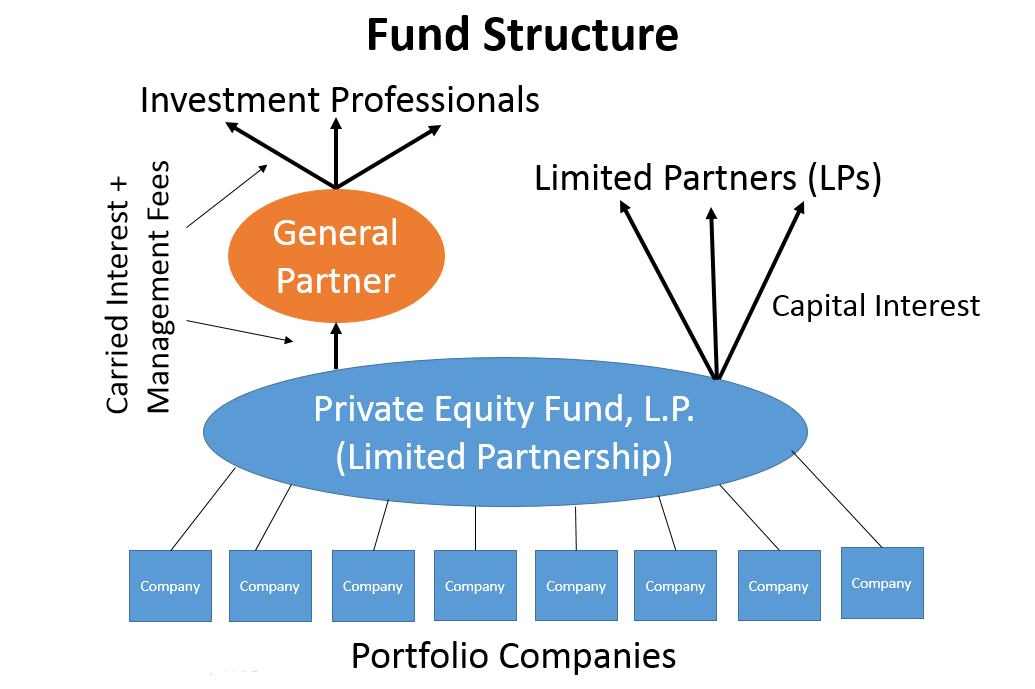
Structure of a private equity or hedge fund, which shows the carried interest and management fee received by the fund's investment managers. The general partner is the financial entity used to control and manage the fund, while the limited partners are the individual investors. The investment managers work as the general partner and are also a partner in the limited partnership. Limited partners collect their return on their capital interest.[1][2]

Carried interest, or carry, in finance, is a share of the profits of an investment paid to the investment manager specifically in alternative investments (private equity and hedge funds). It is a performance fee, rewarding the manager for enhancing performance.[3] Since these fees are generally not taxed as normal income, some believe that the structure unfairly takes advantage of favorable tax treatment, e.g. in the United States.[4] In this regard, it is often referred to as the carried interest loophole.[5] The Hill referred to it as "Wall Street's favorite tax break."[5]

History

[edit]

The origin of carried interest can be traced to the 16th century when European ships were crossing to Asia and the Americas. The captain of the ship would take a 20% share of the profit from the carried goods to pay for the transport and the risk of sailing over oceans.[6] The name is not connected with interest rates or interest payments on a loan or bank account.

Today, the term is used to name the compensation collected by investment executives in private equity funds. In the United States, carried interest is taxed at the same rate as long-term capital gains. Because this tax rate is fairly low, the policy has been criticized as a form of tax avoidance.[7]

Definition and calculation

[edit]

Carried interest is a share of the profits of an investment paid to the investment manager in excess of the amount that the manager contributes to the partnership, specifically in alternative investments, e.g., private equity and hedge funds. It is a performance fee rewarding the manager for enhancing performance.[3]

Amount and calculation

[edit]

The manager's carried interest allocation varies depending on the type of investment fund and the demand for the fund from investors. In private equity, the standard carried interest allocation historically has been 20% for funds making buyout and venture investments, but there is some variability. Notable examples of private equity firms with carried interest of more than 20% ("super carry") include Bain Capital and Providence Equity Partners. Hedge fund carry percentages have historically centered on 20% but have had greater variability than those of private equity funds. In extreme cases performance fees have reached as high as 44% of a fund's profits[4] but is usually between 15% and 20%.

The distribution of fund returns is often directed by a distribution waterfall.[8][4] Returns generated by the investment are first distributed to return each investor's initial capital contribution, including the manager.[8][4] This is not "carried interest" because it is a repayment of principal. Second, returns are paid to investors other than the manager, up to a certain previously agreed rate of return (the "hurdle rate" or "preferred return").[9] The customary hurdle rate is 7% to 9% per annum.[8][4] Third, returns are paid to the manager until it has received a rate of return equal to the hurdle rate (the "catch-up").[8] Not every fund provides for a hurdle and a catch-up. Often, returns during the catch-up phase are split with the manager receiving the larger (e.g. 80%) share and the investors receiving a smaller (e.g. 20%) share, until the manager's catch-up percentage has been collected. Fourth, once the manager's returns equal the investor returns, the split reverses, with the manager taking a lower (often 20%) share and the investors taking the higher (often 80%) share.[4] All manager returns above the returns from the manager's initial contribution are "carry" or "carried interest."[10]

Timing

[edit]

Private equity funds distribute carried interest to managers and other investors only upon a successful exit from an investment, which may take years. In a hedge fund environment, carried interest is usually referred to as a "performance fee" and because it invests in liquid investments, it is often able to pay carried interest annually if the fund has generated a profit. This has implications for both the amount and timing of the taxes on the interest.

Other fees

[edit]

Historically, carried interest has served as the primary source of income for manager and firm in both private equity and hedge funds. Both funds also tend to have an annual management fee of 1% to 2% of assets under management per year. The management fee covers the costs of investing and managing the fund.[4] The management fee, unlike the 20% carried interest, is treated as ordinary income in the United States.[11] As the sizes of both private equity and hedge funds have increased, management fees have become a more meaningful portion of the value proposition for fund managers as evidenced by the 2007 initial public offering of the Blackstone Group.[12]

Taxation

[edit]

Private equity returns are tax-advantaged in several ways.

Private equity carried interest is treated as a long-term capital gain for tax purposes in many jurisdictions. Long-term capital gains are returns on financial and other investments that have been held for a certain statutorily determined amount of time before being sold.[13][12] They are taxed at a lower rate than ordinary income to promote investment.[13] The long time horizons of funds allow their returns, including the manager's carried interest, to typically qualify as long-term capital gains.[13][12] A manager's carried interest can be categorized as capital gains even if the return on the manager's initial investment is higher than the total rate of return for the asset.

Furthermore, taxes on the increase in value of an investor or manager's share of the fund are not due until a realization event occurs, most commonly the sale of an investment.[12]

United States

[edit]

Treatment of active partners' return on investment as capital gains in the United States originated in the oil and gas industry of the early 20th century. Oil exploration companies, funded by financial partners' investments, explored and developed hydrocarbon resources. The profits generated were split between the explorers and the investors. The explorers' profits were subject to favorable capital gains treatment alongside the investors. The logic was that the non-financial partner's "sweat equity" was also an investment, since it entailed the risk of loss if the exploration was unsuccessful.[11][unreliable source?]

Taxes on carried interest are deferred until a realization event due to the difficulties of measuring the present value of an interest in future profits.[12][14] The Internal Revenue Service affirmed this approach in 1993 as a general administrative rule,[15] and again in regulations proposed in 2005.[16]

Carried interest is tax advantaged in several other ways as well. Private equity and hedge funds are usually structured as legal partnerships or other pass-through entities for tax purposes, which reduces taxes at the entity level as compared to corporations. That said, investment managers are still taxed on the pass-through income on their individual tax returns.[17] Private equity funds also benefit from the interest deduction although this benefit decreased significantly in 2017 due to changes in the tax law.[18][19][20]

The implication of treating private equity carried interest as capital gains is that investment managers face significantly lower tax burdens than others in similar income brackets.[12] As of 2021, the maximum long-term capital gains rate (including the net investment income tax) is 23.8%[21] compared to the maximum 37% ordinary income rate.[22] This has generated significant criticism.

Controversy and regulatory attempts

[edit]

Critics of the carried interest system (as opposed to critics of the broader tax systems that affect private equity) primarily object to the ability of the manager to treat most of their return as capital gains, including amounts above and beyond the amount directly related to the capital contributed by the manager. Critics characterize this as managers taking advantage of tax loopholes to receive what is effectively a salary without paying the 37% marginal ordinary income tax rate.[23] However, some feel this criticism is not appropriate for small businesses that are not blind pools as the manager did risk capital prior to the partnership formation. This controversy has been ongoing since the mid-2000s[citation needed] and has increased as the growth in assets under management by private equity and hedge funds has driven up manager compensation. As of September 2016, the carried interest tax regime's total tax benefit for private equity partners is estimated to be from $2 billion to $16 billion per year.

On June 22, 2007, U.S. Representative Sander M. Levin (D-MI) introduced H.R. 2834, which would have eliminated the ability of managers to receive capital-gains tax treatment on their income. On June 27, 2007, Henry Paulson said that altering the tax treatment of a single industry raises tax policy concerns, and that changing the way partnerships in general are taxed is something that should only be done after careful consideration, although he was not speaking only about carried interest.[24] In July 2007 the U.S. Treasury Department addressed carried interest in testimony before the U.S. Senate Finance Committee.[25] U.S. Representative Charles B. Rangel included a revised version of H.R. 2834 as part of the "Mother of All Tax Reform" and the 2007 House extenders package.

In 2009, the Obama Administration included a line item on taxing carried interest at ordinary income rates in the 2009 Budget Blueprint.[26] On April 2, 2009, Congressman Levin introduced a revised version of the carried interest legislation as H.R. 1935. Proposals were made by the Obama Administration for the 2010,[27] 2011,[28] and 2012[29] budgets.

Favorable taxation for carried interest generated national interest during the 2012 Republican primary race for president because 31% of presidential candidate Mitt Romney's 2010 and 2011 income was carried interest.[citation needed] Billionaire Warren Buffett, who also benefits from the capital gains system, famously opined that he should not be paying lower taxes than his assistant.[30] On May 28, 2010, the House approved carried interest legislation as part of amendments to the Senate-passed version of H.R. 4213.[31] On February 14, 2012, Congressman Levin introduced H.R. 4016.[31] On February 26, 2014, House Committee on Ways and Means chairman Dave Camp (R-MI) released draft legislation to raise the tax on carried interest from the current 23.8 percent to 35 percent.[32][33][34]

In June 2015, Levin introduced the Carried Interest Fairness Act of 2015 (H.R. 2889) to tax investment advisers with ordinary income tax rates.[35] As of 2015 some in the private equity and hedge fund industries had been lobbying against changes, being among the biggest political donors on both sides of the aisle.[36] In June 2016 presidential candidate Hillary Clinton said that if Congress were to fail to act, as president she would ask the Treasury Department to use its regulatory authority to end a tax advantage.[37]

In 2018, under President Donald Trump's administration, tax legislation passed that increased the length of time assets must be held by investment managers in order to qualify for long-term capital gains treatment from one year to three years. The legislation also limited the amount of interest deduction that could be taken to 30% of earnings before interest and taxes.[19] The new rule had many exceptions including excepting the real estate sector.[19] Proposed Treasury guidance in August 2020 tightened certain of these exceptions.[38]

In 2022, a proposal to narrow the carried interest loophole as part of the Inflation Reduction Act of 2022 was removed to allow the act to pass, reportedly due to "a last-minute intervention by Senator Kyrsten Sinema of Arizona."[39]

United Kingdom

[edit]

The Finance Act 1972 provided that gains on investments acquired by reason of rights or opportunities offered to individuals as directors or employees were, subject to various exceptions, taxed as income and not capital gains. This may strictly have applied to the carried interests of many venture-capital executives, even if they were partners and not employees of the investing fund, because they were often directors of the investee companies. In 1987, the Inland Revenue and the British Venture Capital Association (BVCA[40]) entered into an agreement which provided that in most circumstances gains on carried interest were not taxed as income.

The Finance Act 2003 widened the circumstances in which investment gains were treated as employment-related and therefore taxed as income. In 2003 the Inland Revenue and the BVCA entered into a new agreement which had the effect that, notwithstanding the new legislation, most carried-interest gains continued to be taxed as capital gains and not as income.[41] Such capital gains were generally taxed at 10% as opposed to a 40% rate on income.

In 2007, the favorable tax rates on carried interest attracted political controversy.[42] It was said that cleaners paid taxes at a higher rate than the private equity executives whose offices they cleaned.[43] The outcome was that the capital-gains tax rules were reformed, increasing the rate on gains to 18%, but carried interest continued to be taxed as gains and not as income.[44]

See also

[edit]

References

[edit]

Further reading

[edit]
Revisions and contributorsEdit on WikipediaRead on Wikipedia
from Grokipedia

Carried interest is the share of profits allocated to general partners managing investment funds, such as private equity, venture capital, or hedge funds, as performance-based compensation, typically comprising 20% of net profits after limited partners recover their capital contributions and often a preferred return or hurdle rate. This arrangement aligns the interests of fund managers with investors by tying compensation to successful outcomes, reflecting the managers' role in sourcing, selecting, and overseeing investments without providing the bulk of the fund's capital. Under U.S. partnership tax rules, carried interest is treated as a distributive share of partnership income rather than a fee for services, enabling taxation at preferential long-term capital gains rates—currently up to 20% plus a 3.8% net investment income tax—provided the underlying assets are held for more than three years as mandated by Section 1061 of the Internal Revenue Code.
The concept traces its modern roots to early 20th-century oil and gas partnerships, where general partners received profit shares for exploratory risks, evolving into standard practice for alternative investment vehicles that deploy capital into illiquid, high-risk assets. This tax treatment incentivizes managers to commit time, expertise, and often personal capital to long-term value creation, fostering economic growth through business formation and expansion, though empirical evidence on its net impact remains debated amid broader capital gains policy effects. Carried interest has faced persistent scrutiny, with critics contending it functions as deferred compensation for asset management services and should incur ordinary income tax rates up to 37%, potentially generating revenue while addressing perceived inequities in the tax code. Proponents counter that recharacterizing it as ordinary income would distort partnership taxation principles, discourage risk-taking in entrepreneurial investments, and overlook the substantial uncompensated labor and failure risks borne by managers, as funds often underperform benchmarks and many dissolve without profits. Legislative attempts to alter its treatment, including proposals in the 2017 Tax Cuts and Jobs Act and subsequent budgets, have largely preserved the structure with the three-year holding requirement, reflecting tensions between equity concerns and efficiency incentives in capital allocation.

Definition and Structure

Core Concept and Components

Carried interest is a performance-based compensation mechanism in investment partnerships, entitling the general partner (GP) to a share of the fund's profits after limited partners (LPs) recover their capital contributions plus a minimum return. This structure aligns GP incentives with long-term value creation in alternative investments like private equity, hedge funds, and venture capital, where GPs typically contribute nominal capital but manage portfolio investments. Standard carried interest rates range from 20% of qualifying profits, separate from the 1-2% annual management fee covering operational costs. Central components include the distribution waterfall, which sequences profit allocations. Initially, LPs receive return of capital. A hurdle rate, often 8% compounded annually, follows to provide preferred returns before GP participation. A catch-up phase then allocates distributions disproportionately to the GP—typically 100% until it reaches its full share of cumulative profits—ensuring equitable alignment post-hurdle. Subsequent profits split per the carry ratio, such as 80/20 favoring LPs. Risk-sharing features mitigate GP over-distribution, including clawback provisions requiring repayment if early successes exceed final fund performance, common in deal-by-deal (American) waterfalls versus fund-level (European) assessments. Vesting over fund life, often 4-6 years with cliffs, and minimum holding periods tie distributions to sustained performance. Under U.S. tax rules, qualifying carried interest receives long-term capital gains treatment at a 20% rate plus 3.8% net investment income tax, contingent on a three-year asset holding period per IRC Section 1061 enacted in 2017.

Standard Terms and Variations

The standard structure for carried interest in private equity funds allocates 20% of the fund's profits to the general partner (GP) after limited partners (LPs) receive their initial capital contributions plus a preferred return, often termed a hurdle rate of around 8% annually. This is commonly paired with a 2% annual management fee on committed capital, forming the "2 and 20" model that aligns GP incentives with long-term performance. Distributions follow a waterfall sequence: first, return of LP capital; second, the hurdle payment; third, a catch-up phase allowing the GP to receive a portion (often 100%) of excess profits until reaching the full carry proportion; and finally, ongoing 80/20 splits between LPs and GP. Key protective terms include clawback provisions, which require GPs to repay excess distributions if the fund underperforms overall upon final liquidation, ensuring LPs receive their full entitlements before GP carry crystallizes. Vesting schedules typically span 4-5 years, often back-loaded to retain key personnel, with allocations tied to individual contributions and fund performance milestones. Crystallization—when carry entitlements are fixed—occurs either deal-by-deal (American-style waterfall) or at fund wind-down (European-style), with the former predominant in modern funds alongside clawbacks to mitigate interim overpayments. Variations arise across fund types and negotiations. In hedge funds, carry often lacks a formal hurdle, instead applying 20% to profits exceeding a high-water mark, with greater flexibility in rates (ranging 10-30%) due to liquid strategies and shorter horizons. Venture capital funds may feature lower hurdles or none, emphasizing whole-fund waterfalls to encourage high-risk bets, while side letters allow favored LPs to negotiate co-investment rights or reduced fees. Carry percentages can deviate to 10-40% based on fund size, strategy, or market conditions, with larger funds sometimes offering tiered rates or deal bonuses; however, post-2008 trends have pressured reductions amid LP demands for alignment. Hurdle types vary between "hard" (strict LP priority without catch-up) and "soft" (with catch-up), influencing risk-sharing.

Distinction from Other Forms of Compensation

Carried interest differs fundamentally from management fees, which are recurring payments to general partners for operational services such as fund administration and investment oversight, typically calculated as a fixed percentage—often 2%—of committed capital or assets under management during the investment period. Management fees provide steady income irrespective of fund performance and are taxed as ordinary income at marginal rates up to 37% in the United States. In contrast, carried interest allocates a performance-contingent share of profits—commonly 20%—only after limited partners recover their capital contributions plus a preferred return (hurdle rate, often 8%), ensuring alignment between general partners' incentives and investor outcomes. Unlike salaried compensation or performance bonuses in traditional employment, which remunerate labor or short-term results and qualify as ordinary income subject to payroll taxes, carried interest represents a partnership interest in the fund's unrealized and realized gains, treated as long-term capital gains eligible for preferential rates of 0%, 15%, or 20% upon holding periods exceeding three years under U.S. tax rules implemented in 2018. This structure reflects the general partners' assumption of economic risk, as they receive no allocation absent net profits exceeding thresholds, fostering long-term value creation rather than immediate service-based pay. The distinction extends to co-investment opportunities, where general partners may commit their own capital alongside limited partners, further blurring lines with equity participation but remaining separate from carried interest's profit-sharing mechanism; co-investments directly expose managers to losses, whereas carried interest activates solely on upside. Critics argue this framework understates service elements in carried interest generation, prompting reform proposals to recharacterize portions as ordinary income, though proponents emphasize its role in risk-sharing absent which fund performance incentives would weaken. Empirical analyses of private equity returns indicate that carried interest's deferred, variable nature correlates with superior net investor gains post-fees, validating its compensatory rationale over fixed alternatives.

Historical Origins and Evolution

Maritime Trade and Early Precedents

The concept of carried interest originated in medieval European maritime trade partnerships, where managing partners received a share of profits from successful ventures as compensation for operational risks and efforts, without contributing capital. In the commenda contract, prevalent in Italian city-states like Genoa and Venice from the 11th century onward, a capital-providing investor (socio) funded overseas expeditions, while the traveling manager (tractator) handled trade logistics; profits were divided—often 75% to the investor and 25% to the manager— with losses absorbed entirely by the investor to encourage risk-taking in perilous sea voyages. This structure, adapted from earlier Islamic mudarabah precedents, facilitated long-distance commerce by aligning incentives without exposing the manager's limited personal assets. In Venice, the related colleganza form, documented as early as 1073, structured joint ventures for trade with Constantinople and the Levant, where merchants managed ships and goods funded by investors, splitting net proceeds per agreed terms that granted operators a performance-based portion—typically substantial to offset voyage uncertainties like storms or piracy. By the early 14th century, such innovations, including limited liability provisions, had propelled Venice's merchant class to political dominance, exemplified by the election of the first merchant Doge in 1036, underscoring the economic impact of these profit-sharing mechanisms. Shipping captains in these eras commonly received around 20% of profits from transported cargo as "carried interest" to remunerate navigation hazards and management, a practice evident in Genoese and Venetian records of the 12th–15th centuries. This share covered no upfront investment but rewarded successful outcomes, distinct from fixed wages, and evolved from broader commenda customs where profit splits reflected customary maritime norms, such as three-quarters to capital providers in Genoese trade by the 13th century. An early modern extension appeared in the 18th–19th century American whaling industry, where the "lay" system distributed voyage proceeds proportionally: ship owners claimed the largest shares (often 50% or more), captains received 1/8 to 1/12 as incentive for command, and crew got fractional "lays" (e.g., 1/150 for ordinary seamen), applied to whale oil and bone values after costs. These high-risk expeditions, averaging 3.6 years by 1850 with failure rates around 6% for ships, resembled venture investments, financing via ownership stakes in vessels rather than loans, and prioritizing profit-sharing over salaries to motivate performance amid uncertain yields. Unlike British whalers' salaried model, this American approach, rooted in colonial maritime traditions, amplified returns in profitable hunts but exposed participants to total loss if voyages yielded no catch.

20th-Century Partnerships and Expansion

The practice of carried interest gained prominence in the early 20th century within U.S. oil and gas partnerships, particularly in speculative "wildcat" drilling ventures in regions like Texas and Oklahoma. General partners, often experienced drillers or promoters, contributed expertise and bore operational risks without providing capital; limited partners funded the explorations, and upon profitable outcomes, general partners received a disproportionate share of net profits—known as promotes—with ratios negotiated based on prospect quality, market conditions, and operator track record; better, lower-risk prospects often commanded higher promotes due to investor competition to participate, while poorer prospects required lower or no promotes to attract funding. These promotes could be structured as carried interests (where promoters paid nothing for certain phases), back-in after payout, or combined with overriding royalty interests. Typically structured as a profits interest to qualify for preferential capital gains taxation under emerging tax codes. These arrangements incentivized deal-making by shifting upfront financial risk to investors while encouraging risk-taking in high-uncertainty endeavors, with the term "carried" reflecting the investors' subsidization of the general partners' participation. By the mid-20th century, the model expanded to other resource-intensive sectors, including ranching, mining, and real estate syndications, where limited partnerships proliferated to pool capital for development projects amid post-Depression recovery and wartime demands. The structure's appeal lay in aligning incentives: general partners earned no carry until limited partners recouped investments plus a preferred return, often 8-10%, fostering disciplined capital deployment. Legal standardization through state-adopted uniform acts facilitated this growth, enabling passive investors limited liability while granting general partners control and upside participation. The post-World War II investment boom marked carried interest's adaptation to financial partnerships, beginning with Alfred Winslow Jones's 1949 hedge fund, which levied a 20% fee on profits exceeding a 4% hurdle—establishing a performance-based compensation precedent that echoed carried interest's risk-reward dynamics. Venture capital followed suit in the 1950s and 1960s, as firms shifted from corporate structures to limited partnerships to attract institutional capital; early examples included allocations where general partners claimed 20% of realized gains after return of capital, standardizing the "2-and-20" fee model (2% management fee plus 20% carry). By the 1970s, amid rising leveraged buyouts, private equity funds embedded carried interest as a core feature, with commitments from pension funds and endowments surging—U.S. private equity assets under management grew from negligible levels in 1969 to over $5 billion by 1980—propelled by the mechanism's ability to tie manager compensation to long-term value creation.

Adoption in Modern Alternative Investments

Carried interest structures were integrated into modern alternative investments through limited partnership vehicles, beginning with venture capital firms in the post-World War II period. The American Research and Development Corporation, established in 1946 as one of the first institutional venture capital entities, employed profit-sharing mechanisms for fund managers that resembled early forms of carried interest, allocating a portion of investment gains to incentivize risk-taking in unproven technologies. By the mid-20th century, these arrangements evolved from precedents in oil and gas exploration partnerships, where general partners received a share of profits without upfront capital contribution, adapting to the illiquid, long-term nature of alternative assets. The structure gained standardization in private equity during the 1970s and 1980s, coinciding with the rise of leveraged buyout firms such as Kohlberg Kravis Roberts, founded in 1976. These entities formalized carried interest at typically 20% of profits exceeding a preferred return hurdle for limited partners, aligning manager incentives with fund performance amid growing institutional capital flows into buyouts. This adoption facilitated the industry's expansion, with private equity assets under management increasing from approximately $5 billion in 1980 to over $100 billion by the late 1980s, as carried interest enabled managers to commit "skin in the game" via co-investments while sharing upside. In hedge funds, carried interest—often structured as or allocations—emerged concurrently with the asset class's , exemplified by Alfred Winslow Jones's fund, which charged a 20% on net gains above a high-water mark to compensate for in strategies. Unlike the deferred realizations in private equity and venture capital, hedge fund variants allowed more frequent distributions but incorporated similar risk-sharing elements, becoming embedded in the "2 and 20" model that dominated the industry through the 1990s. Subsequent extended to other alternative sectors, including and funds by the , where carried interest adapted to asset-specific holding periods and risk profiles, typically retaining the 20% profit share to attract managerial expertise amid diversification of institutional portfolios into non-traditional assets. This proliferation reflected carried interest's in bridging agency gaps in opaque, high-variance investments, though variations emerged, such as lower carry rates (10-15%) in some strategies post-2008 to accommodate demands for alignment.

Operational Mechanics

Profit Allocation and Calculation

In private equity and venture capital funds, carried interest is allocated to the general partner (GP) as a performance-based share of the fund's net profits, typically amounting to 20% after limited partners (LPs) receive their initial capital contributions and a preferred return. This allocation incentivizes the GP to generate returns exceeding baseline thresholds, with profits defined as realized gains from asset sales minus contributed capital, expenses, and any prior losses. The calculation follows a outlined in the limited agreement (LPA), which prioritizes flows from realizations in sequential tiers to ensure LP before GP participation. In a (deal-by-deal) , the first tier returns 100% of capital to LPs from individual investment proceeds; the second tier provides LPs with a preferred return, often 8% annualized IRR compounded; the third tier applies a GP catch-up, allocating 100% to the GP until it receives its full 20% share of cumulative profits above the hurdle; and subsequent tiers split distributions 80% to LPs and 20% to GP. European (whole-fund) waterfalls, by contrast, calculate carry across the entire fund portfolio at maturity, deferring GP allocations until all capital and hurdles are met fund-wide, reducing early GP payouts but aligning with overall performance. Hurdle rates vary by fund and market conditions, with funds commonly setting them at 5-10% to reflect opportunity costs, while provisions ensure GPs repay excess distributions if later losses LP returns below hurdles. Carried interest is computed on realized gains only, excluding unrealized appreciation to avoid premature allocations, and net of management fees (typically 2% of committed capital). Variations include tiered waterfalls with escalating GP shares (e.g., 20% up to a multiple, then higher) or hybrid models blending deal-by-deal and fund-level calculations for balanced risk.

Timing, Vesting, and Distributions

In private equity and funds, carried interest typically vests over the fund's period to align (GP) incentives with long-term and retention. Common vesting schedules vest the interest on a straight-line basis, often matching the fund's expected 5-year horizon, with allocations occurring monthly or annually. One prevalent vests 80% of carried interest over the first 5 years and the remaining 20% over the subsequent 5 years, ensuring GPs remain committed through the harvest period. may accelerate upon fund milestones or terminate upon GP departure, with unvested portions often forfeited to mitigate turnover risks. Carried interest is allocated to the GP entity—a separate legal entity, often an LLC or partnership—which then distributes proceeds to its members, including individual VC partners and sometimes other investment professionals, according to the firm's carried interest plan. This internal distribution accounts for seniority, contributions, vesting schedules (typically 4–6 years, with forfeiture of unvested portions upon early departure), and performance milestones. While commonly described as VC partners directly receiving carried interest, this is shorthand for the economic benefit flowing through the GP entity, the industry norm, with variations in smaller or non-traditional funds. Distributions of carried interest occur upon realization events, such as or exits, following the fund's , which prioritizes limited partner (LP) returns before GP carry. In the American —prevalent in U.S. funds—GPs may receive interim carried interest (e.g., 20% of profits) after returning invested capital plus a preferred return (typically 8%), with a catch-up provision allowing GPs to recoup prior deferrals; this enables earlier distributions but exposes GPs to clawback if later losses erode overall profits. In contrast, the European waterfall delays all carried interest until the entire fund achieves the preferred return and full capital return, reducing interim payouts but minimizing clawback exposure; this model is more common in Europe and certain U.S. funds emphasizing LP protection. Timing of distributions aligns with cash flow realizations rather than , with carried interest calculated on cumulative net profits across the fund, not individual investments, to promote portfolio-level . events, where unrealized gains convert to distributable carry, often occur at fund milestones or audits, but actual payouts depend on and waterfall hurdles. provisions enforce repayment if early distributions exceed final entitlements, typically secured via escrow (10-25% of carry) or GP guarantees, with enforcement varying by fund terms and . These mechanisms ensure distributions reflect sustained outperformance, though empirical from funds like those managed by Blackstone indicate average clawback realizations of under 5% to conservative interim payouts.

Risk Mitigation Features

Hurdle rates, or preferred returns, serve as a foundational tool in carried interest structures, mandating that partners (LPs) receive a minimum —commonly 8% annually—before partners (GPs) can claim their profit share. This threshold prioritizes capital preservation and baseline yields for , compelling GPs to surpass investor hurdles amid market volatility, thereby curbing excessive for short-term gains. In , hurdle rates are embedded in partnership agreements, often compounded annually on unreturned capital, with non-compounding variants used in lower- strategies. Clawback provisions further protect LPs by requiring GPs to repay excess carried interest distributions if aggregate fund performance ultimately fails to meet agreed benchmarks upon liquidation. These mechanisms address the timing mismatch in private equity, where early exits may trigger interim carry payments that subsequent underperformance erodes, ensuring net returns align with whole-fund economics. Clawbacks typically apply fund-wide, with GPs personally liable or backed by escrow holds—often 10-20% of distributions—to enforce repayment, though enforcement varies by jurisdiction and fund size. Industry analyses show clawback risks affecting roughly 7% of funds, underscoring their role in deterring opportunistic behavior. Vesting schedules and co-investment mandates add layers of alignment, with carried interest often vesting over 4-6 years or tied to investment realizations to mitigate key-person risks and promote retention. GPs committing 1-2% of fund capital personally exposes them to downside, fostering skin-in-the-game without diluting LP protections. Fund-level (whole-of-fund) carry calculations, versus deal-by-deal, prevent GPs from harvesting profits on isolated wins amid broader losses, enhancing overall portfolio . These features collectively reduce , as evidenced by their in standard agreements from firms like Blackstone and KKR.

Taxation Treatment

United States Framework

In the , carried interest represents a profits interest granted to managers, such as partners in partnerships, and is generally eligible for taxation as long-term capital gains rather than ordinary , provided specific statutory requirements are satisfied. This preferential treatment stems from the characterization of carried interest as a return on capital exposed to fund risks, aligning with () provisions governing partnership allocations under Section 704(b). Qualifying long-term capital gains are taxed at a maximum federal rate of 20%, plus a 3.8% net tax (NIIT) for high-income taxpayers, contrasting with ordinary rates reaching 37% as of 2025. IRC Section 1061, enacted as part of the and applicable to applicable partnership interests (APIs) acquired on or after , , imposes a three-year holding period for gains allocated via carried interest to qualify as long-term capital gains. An is defined as a interest transferred or held in connection with the of substantial services in an "applicable trade or business," typically involving raising or returning capital and investing in or disposing of specified assets like securities, commodities, real estate held for rental or investment, or interests. Gains failing the three-year threshold—measured from the fund's acquisition of the underlying asset to its disposition—are recharacterized as short-term capital gains, taxed at ordinary income rates. This rule targets short-term trading strategies while preserving preferential treatment for longer-term investments, with final Treasury regulations issued in clarifying application to lookthrough gains and exceptions for certain capital contributions. Exceptions to Section 1061 include qualified capital interests (where the partner contributes capital without service-related conditions), family transfers, and gains attributable to assets held by corporations or certain working capital. Partnerships must furnish Form 8997 annually to API holders reporting short-term recharacterization amounts, with funds aggregating dispositions exceeding $10 million triggering additional IRS reporting via Form 1065 Schedule K-1. No substantive changes to this framework occurred through 2025 legislation, including the One Big Beautiful Bill Act, maintaining the three-year period without further extensions proposed in prior bills like the Inflation Reduction Act. State-level taxation may vary, often conforming to federal treatment but subject to local modifications.

United Kingdom Developments

In the , carried interest has historically been taxed as a , subject to (CGT) rates rather than , on the basis that it represents a share of profits aligned with long-term fund . This treatment was formalized through specific , including provisions in the that outlined CGT application to carried interest, allowing deductions only for acquisition costs of the right to the interest. Concerns over potential disguised remuneration led to the introduction of anti-avoidance measures in under Part 13, Chapter 5A of the Taxation of from Partnerships (TIOPA) , targeting income-based carried interest (IBCI). These rules recharacterize carried interest as trading income—taxable at rates up to 45% plus Contributions (NICs)—if it fails to meet conditions such as a minimum 40-month holding period for underlying investments or sufficient profit thresholds attributable to genuine investment risk. HMRC guidance emphasizes that carried interest must reflect a meaningful economic interest in fund profits, with ongoing compliance checks requiring detailed reporting in self-assessment returns to verify qualifying status. The October 2024 Budget introduced immediate changes, raising the CGT rate on carried interest to 32% for additional-rate taxpayers (from 28%), effective 6 April 2025, as part of broader CGT alignment while preserving its capital character for qualifying amounts. Further reforms, announced in the same budget and refined through consultation, established a new regime from 6 April 2026, redefining carried interest as deemed trading profits within the income tax framework, subject to income tax up to 45% and Class 4 NICs. To account for the performance-risk alignment, only 27.5% of qualifying carried interest is charged as taxable trading profit, yielding an effective marginal rate of 34.075%; this applies without new qualifying conditions beyond existing IBCI tests, though draft legislation clarifies territorial scope to include UK-resident recipients and certain non-residents managing UK-taxable funds. Draft legislation published in July 2025 for inclusion in the Finance Bill 2025-26 confirms the regime's structure, prohibiting double taxation under other income provisions and adjusting IBCI rules to integrate with the new framework, while HMRC continues to enforce disclosure requirements for transparency. These changes aim to close perceived loopholes but maintain a rate below full income tax levels, reflecting empirical recognition of carried interest's role in incentivizing investment returns, as evidenced by industry submissions during the 2025 consultation process.

Other Jurisdictions

In Canada, carried interest is typically taxed as ordinary rather than capital gains, reflecting the Agency's position that it constitutes compensation for services rather than returns, with effective marginal rates reaching 53.53% for non- interest or components under tax-transparent structures. Australia distinguishes between general cases, where carried interest faces top marginal rates of 47% as , and specific venture capital limited partnership (VCLP) structures, which qualify for capital gains treatment at an effective rate of 23.5% provided the fund meets early-stage criteria and other conditions. European jurisdictions often feature tailored regimes granting preferential taxation to qualifying carried interest, typically requiring minimum holding periods (e.g., 3-5 years), co-investment thresholds (e.g., 1%), and alignment with long-term fund strategies, with rates generally 25-30% versus ordinary income rates exceeding 45%. In France, the statutory regime imposes 30% (potentially 34% with surtaxes); Germany applies approximately 27% under its carried interest framework with 40% exemption; Ireland offers 15% for venture capital qualifying investments; Italy levies 26% under bespoke rules; the Netherlands taxes via Box II at 26.9% (2023 rate, rising to 31% in 2024); and Spain provides an effective 27% via a 50% tax base reduction for venture or buyout funds. Luxembourg lacks a dedicated favorable as of 2023, subjecting carried interest to capital gains rates up to 45.78% if held under six months or potential exemptions otherwise, though a 2025 draft bill proposes a unified taxing it as extraordinary income at around 11% starting in 2026, pending adoption, to enhance competitiveness for fund managers. In Asia-Pacific hubs like Singapore, carried interest benefits from territorial taxation with capital gains and dividends exempt, and interest up to 24%, often routed through offshore entities for minimal effective burden; Hong Kong exempts it entirely under qualifying fund rules as of 2023, contrasting higher rates in non-regime scenarios at 17%. These variations underscore efforts to balance incentive alignment with revenue goals, though reforms in several locales aim to curb perceived avoidance by tightening qualification or elevating rates toward income parity.

Economic Rationale and Incentives

Incentive Alignment with Long-Term Performance

Carried interest aligns the interests of general partners (GPs) with those of limited partners (LPs) by tying GP compensation to the fund's net profits exceeding a preferred return threshold, typically 8%, ensuring GPs earn only after LPs recover their capital plus a baseline return. This structure incentivizes GPs to prioritize sustainable value creation over short-term gains, as compensation is deferred until successful exits, often spanning 7-10 years in private equity funds. For instance, in a standard "2-and-20" model, the GP's 20% carry applies solely to profits above the hurdle, calculated on a whole-fund basis rather than individual deals, which discourages high-risk bets on isolated transactions and promotes balanced portfolio management for enduring outperformance. The long-term orientation is reinforced by vesting schedules and clawback provisions, which condition carry realization on sustained fund performance. Vesting often extends over the fund's life, with distributions subject to recall if subsequent losses erode early gains, thereby compelling GPs to focus on operational improvements and strategic holding periods rather than premature sales. Empirical analyses indicate that such deferred compensation mechanisms correlate with superior fund returns; for example, studies on venture capital funds show that aligning GP pay timing with realized exits enhances internal rate of return (IRR) by linking rewards to verifiable long-term outcomes, rather than interim valuations. This contrasts with shorter-horizon incentives in liquid strategies, where carried interest's illiquidity—tied to multi-year lockups—fosters patience in asset transformation, such as through leveraged buyouts that yield compounded growth via revenue expansion and cost efficiencies. Critics occasionally argue that carry may encourage excessive leverage to hit hurdles quickly, but from fund suggests : GPs with significant carry exposure demonstrate higher in value-add strategies, as their lifetime depends on repeatable across funds, where underperformance forfeits future allocations from LPs. In practice, co-investments by GPs, often required alongside carry, further amplify alignment by exposing managers to unlevered , ensuring decisions reflect long-term economic realities over speculative flips. Overall, this framework has underpinned private equity's historical outperformance relative to markets, with net LP IRRs averaging 15-20% annually in top-quartile funds from 2000-2020, attributable in part to these designs.

Managerial Risk Exposure

Carried interest exposes fund managers to significant , as it is a performance-contingent compensation that materializes only after limited partners (LPs) recover their invested capital plus a preferred return, typically 8%. If the fund fails to achieve this hurdle or generates losses, managers forgo the carry entirely, forgoing what often constitutes the of their economic upside while still incurring operational costs covered by modest fees. This ties managerial rewards directly to fund outcomes, subjecting compensation to market volatility, investment selection errors, and economic downturns over extended holding periods of 5-10 years. In addition to the illiquidity and deferral inherent in carried interest, general partners (GPs) typically commit 1-2% of the fund's capital from personal resources, amplifying risk exposure through direct "skin in the game." These commitments, drawn from GP wealth or firm capital, bear full pro-rata losses without offset from fees, and empirical analysis indicates that higher GP ownership correlates with reduced portfolio risk-taking, reflecting a conservative response to heightened personal stakes. Co-investments, where managers deploy additional personal or firm capital into specific deals alongside the fund, further concentrate exposure, often without management fee credits, thereby intensifying alignment but also potential losses in underperforming assets. Clawback mechanisms provide further for LPs but impose ongoing liability on managers, requiring repayment of prior distributions if subsequent fund deteriorates. This deferred and reversible of carried interest, combined with the absence of guaranteed beyond base fees (usually 1-2% of ), compels managers to entrepreneurial akin to equity investors, fostering incentives for value creation amid illiquid, high-variance outcomes. While management fees offer some stability, they are insufficient to offset carry forfeiture in failed funds, underscoring the real economic borne by GPs.

Empirical Contributions to Economic Growth

Private equity and venture capital funds, which rely on carried interest as a performance-based for managers, have been empirically linked to economic growth through improved firm , , and capital allocation. A study analyzing U.S. data from 1980 to 2018 found that private equity investments, encompassing both and venture funds, accounted for 14-21% of aggregate growth in total factor , with venture funds exhibiting particularly strong responsiveness to business cycles by directing capital toward high-potential opportunities during expansions. This contribution arises because carried interest ties managerial compensation to long-term fund returns, encouraging selections of underperforming or innovative assets that, post-investment, demonstrate higher output and efficiency compared to non-PE peers. In private equity buyouts, empirical analyses reveal accelerated and production growth, particularly in private-to-private transactions. from the Booth of , based on European firm-level from 2000-2016, showed that PE-backed firms experienced robust post-buyout increases—driven partly by acquisitions and operational improvements—outpacing matched control firms by up to 2-3% annually in the initial years. These outcomes stem from PE managers' incentives under carried interest to implement value-enhancing strategies, such as and strategic expansions, which boost flows and firm valuations by 15-20% on , as documented in meta-analyses of buyout . Across European economies, regressions further confirm a positive correlation between private equity activity and GDP growth, mediated by increased innovation outputs like patents per capita. Venture capital, where carried interest similarly incentivizes high-risk, high-reward investments, disproportionately drives and technological advancement. NBER indicates that each of generates 2-3 times more patented inventions than equivalent corporate R&D spending, with VC-backed firms contributing outsized shares of technologies in sectors like and software. In the U.S., VC-supported companies accounted for 62% of private-sector R&D expenditures and 48% of value among firms from 1980-2015, underpinning broader through spillovers like and firm scaling. Longitudinal studies of U.S. from 1975-1995 estimate that raised aggregate growth by channeling funds to startups, which later generated revenues equivalent to 16.6% of 2005 GDP. Carried interest's , rewarding only successful exits after multi-year horizons, aligns these incentives with capital deployment, fostering sustained contributions to GDP via scalable innovations rather than short-term gains.

Controversies and Debates

Claims of Tax Avoidance

Critics contend that the taxation of carried interest as long-term capital gains constitutes a form of by permitting managers to classify compensation for services as income, thereby accessing preferential rates of 20 percent plus a 3.8 percent , rather than ordinary rates reaching 37 percent. This treatment, embedded in rules since the Revenue Act of 1954, allows general partners in private equity, hedge funds, and venture capital entities to receive typically 20 percent of fund profits—after limited partners recover their capital plus a preferred return—as if it were a return on illiquid capital commitment, despite minimal or no actual capital at risk from the managers. Proponents of , including economists and analysts, argue that carried interest primarily rewards managerial labor and expertise in selecting and overseeing investments, akin to or bonus, rather than bearing the economic of capital , thus warranting ordinary taxation to align with principles service fees from true capital gains. The has estimated that reclassifying carried interest associated with assets held over three years as ordinary would generate $13 billion in federal over the 2025–2034 period, reflecting the scale of foregone receipts from this . Earlier projections pegged similar reforms at $14 billion from 2019 through 2028, underscoring persistent budgetary impacts amid repeated legislative failures to enact closure. Legislative efforts, such as the Carried Interest Fairness Act introduced in 2025 by Representatives and , highlight claims that the provision disproportionately benefits high-income fund managers—often earning tens of millions annually—while exacerbating income inequality and shifting burdens elsewhere, with executives cited as primary beneficiaries of the differential. Critics from organizations like the on and Priorities have quantified that under pre-2013 , managers could pay the 15 percent capital gains rate on most carried interest, a rate now adjusted but still lower than ordinary , enabling avoidance of higher brackets on what they describe as performance-based pay rather than passive gains. These arguments persist despite industry pushback, with reform advocates estimating that full taxation as ordinary could reduce effective rates for top earners by up to 17 percentage points, though actual realizations depend on holding periods and fund performance.

Counterarguments Based on Investment Realities

Proponents of the current tax treatment argue that carried interest reflects genuine investment risk undertaken by fund managers, who typically receive no share of profits unless portfolio companies achieve successful exits after years of illiquid holdings, often spanning three or more years to qualify for long-term capital gains rates. This structure mirrors the economic substance of equity ownership, as managers forgo guaranteed salaries in favor of deferred, uncertain upside tied to asset appreciation, exposing them to full downside risk if investments fail—realities absent in ordinary service income. Reclassifying it as ordinary income, taxed up to 37% federally plus state rates, would thus penalize this risk-bearing without altering the underlying causal dynamics of fund performance. The alignment inherent in carried interest—typically % of profits above a hurdle rate—encourages managers to prioritize long-term value creation over short-term gains, as compensation vests only upon realized fund-level profits that benefit limited partners. This contrasts with fixed-fee models, fostering behaviors like operational improvements and capital deployment in private markets, where equity benchmarks fail to capture illiquidity premiums and effects. Empirical supports this: U.S. funds have outperformed the by an of over % across most years since , net of fees, to such aligned risk-taking. Private equity's track record further underscores these realities, with state pension allocations yielding 11.0% annualized returns from 2000 to June 2023, surpassing equity amid comparable or lower volatility when adjusted for holding periods. A broader of funds from 2000–2023 confirms a 4.8% annualized excess return over equities, attributable to illiquid, transformative investments rather than mere . Altering treatment could deter such allocations, reducing capital flows to high-growth sectors and job-creating enterprises, as evidenced by private equity's role in expanding bases through business scaling. Critics' focus on "loophole" framing often discounts these outcomes, prioritizing revenue optics over incentives for productive risk.

Regulatory Efforts and Empirical Outcomes

In the United States, repeated legislative efforts to alter the preferential tax treatment of carried interest as long-term capital gains have largely failed to eliminate it, though partial modifications occurred. Proposals date back to 2007, when bipartisan bills like H.R. 2834 sought to recharacterize carried interest as ordinary income, but none advanced significantly. During the Obama administration, annual proposals from 2009 to 2016 advocated taxing carried interest as ordinary income after a three-year holding period, yet these were not enacted amid opposition citing risks to incentives. The 2017 (TCJA) under President Trump introduced a compromise requiring a three-year holding period for carried interest to qualify for long-term capital gains rates (20% plus 3.8% net income tax), up from one year previously, but preserved the lower rate overall and expired provisions after 2025 unless extended. Subsequent Democratic-led initiatives, such as the 2021 For the People Act and Biden administration proposals, aimed to impose ordinary income taxation (up to 37%) but stalled in Congress due to filibuster rules and industry lobbying; as of 2025, bills like the Carried Interest Fairness Act remain pending without passage. In the United Kingdom, regulatory changes have progressed further toward income taxation. Following consultations, draft legislation published in August 2025 mandates that, from April 2026, carried interest will be taxed as trading profits subject to income tax (up to 45%) and Class 4 National Insurance contributions (up to 8%), replacing prior capital gains treatment, with relief only for "qualifying" carry meeting investment performance conditions and a five-year holding period. Non-UK residents will face UK tax on carry linked to UK investment management services, broadening the scope. European Union efforts remain fragmented, focusing on fund-level regulations like AIFMD II without uniform carried interest taxation, though national variations apply. Empirical evidence on outcomes is constrained by the absence of wholesale reforms in major jurisdictions, yielding mostly modeling and correlational studies rather than causal post-reform data. Research indicates that private equity firms factor carried interest tax benefits into acquisition decisions, with higher investment income taxes linked to reduced deal activity; for instance, a 10% tax rate increase correlates with a 1-2% drop in private equity acquisitions. Economic modeling projects that reclassifying U.S. carried interest as ordinary income could shrink private equity assets under management by 2.81-3.94%, potentially curtailing capital deployment and job creation, as managers adjust compensation or relocate activities. No large-scale studies show enhanced economic growth from proposed hikes, while private equity's historical contributions—such as 2.7 million U.S. jobs supported in 2022—align with incentive structures preserved under current rules. In jurisdictions with partial shifts, like the UK's pre-2026 regime, fund inflows persisted without evident disruption, but the full 2026 effects remain unobserved. Critics' claims of revenue gains (e.g., $14 billion over a decade from U.S. reform) assume static behavior, overlooking behavioral responses like reduced risk-taking documented in tax sensitivity analyses.

References

Add your contribution
Related Hubs
User Avatar
No comments yet.