Hubbry Logo
Real aleReal aleMain
Open search
Real ale
Community hub
Real ale
logo
8 pages, 0 posts
0 subscribers
Be the first to start a discussion here.
Real ale
Real ale
from Wikipedia
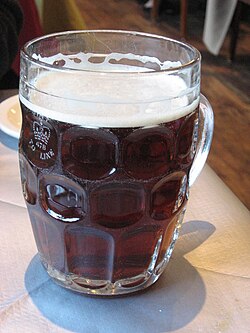
A pint of real ale

Real ale is the name coined by the Campaign for Real Ale (CAMRA) for ale that is "brewed from traditional ingredients, matured by secondary fermentation in the container from which it is dispensed, and served without the use of extraneous carbon dioxide".

Cask and bottle-conditioned beers

[edit]

Cask and bottle-conditioned beers are referred to as real ale by CAMRA, as both fit its description of beers served from a container in which they have undergone secondary fermentation.[1]

Distinction from filtered beer

[edit]

The fundamental distinction between real and other ales is that real ale is unfiltered and unpasteurized, leaving its yeast alive and slowly fermentating in bottle or keg. This secondary fermentation continues until the ale is served, allowing it to retain its natural carbonation. In contrast, natural carbonation is removed from standard beer and ale during filtering, requiring them to be artificially re-carbonated (and often very 'gassy').

Real ales are served "bottle conditioned", gravity direct from the cask, or hand pumped. No external pressurization is used. Electric pumps are occasionally seen, especially in the Midlands and Scotland.[citation needed] Water pumps,[clarify] powered by mains water pressure, were the traditional means of dispensing draught beer in Scotland but this method is discontinued.[citation needed]

Cask breather

[edit]

A cask breather adds low pressure carbon dioxide into the cask to replace the beer as it is drawn off, preventing the admission of ambient air containing oxygen and nitrogen, forestalling spoilage, and thereby extending the beer's saleable life. It does not pressurize the beer like typical of keg beer.

Before 2018, CAMRA refused to regard a cask ale kept "fresh" by cask breather as real ale. In 2018, this policy was changed, allowing pubs using cask breathers to be listed in the Good Beer Guide.[2]

CAMRA

[edit]

The term "real ale" was coined by CAMRA in the 1970s to attract media attention in the U.K. to naturally fermented and served ales at a time when there were very few independent breweries left and most production had gone over to filtered and pasteurised "filtered ales" - "keg beer" - served under carbon dioxide pressure.

Popularity

[edit]

Cask conditioned ale remains popular within the UK, particularly in traditional pubs. In 2019, 420 million pints were sold in the UK, 13.5% of total pint sales.[3] Described as 'Britain's National Drink', cask ale's 'Britishness' is an important factor in its promotion and consumption.[4]

See also

[edit]

References

[edit]
[edit]
Revisions and contributorsEdit on WikipediaRead on Wikipedia
from Grokipedia
Real ale is a naturally carbonated brewed from traditional ingredients including malted barley, , water, and , which undergoes secondary fermentation in the cask or bottle from which it is served, without the use of added or . The term "real ale" was coined in the early 1970s by the (CAMRA), a founded in 1971 by four enthusiasts in response to the dominance of mass-produced, keg-conditioned beers in the UK, aiming to preserve traditional brewing methods and pub culture. CAMRA's efforts led to key achievements, including the publication of the first Good Beer Guide in 1974, which lists pubs serving real ale, and influencing the 1989 Beer Orders that freed over 11,000 pubs from tied sales, boosting independent brewing. In production, real ale begins with barley to create fermentable sugars, followed by to extract , boiling with for bitterness and aroma, and primary using top-fermenting ale at warmer temperatures (up to 22°C), resulting in distinctive fruity flavors. Unlike filtered or pasteurized beers, real ale retains live for conditioning in casks, where secondary produces natural and ongoing maturation, typically lasting a few days to weeks before serving. Serving real ale emphasizes cellar management to maintain quality, with casks stored horizontally at 11–13°C and dispensed via handpump or to preserve its live character and subtle head. This method highlights the beer's complexity, including nuanced hop profiles and sweetness, but requires skill to avoid over-carbonation or oxidation. As of 2025, CAMRA represents nearly 150,000 members and promotes real ale through festivals like the , while advocating for protections and sustainable brewing practices amid evolving craft beer trends.

Definition and Characteristics

Definition

Real ale is a term coined by the (CAMRA) in the early 1970s to describe that is brewed from traditional ingredients—malted barley, , water, and —and has undergone secondary in the container from which it is dispensed. As reinstated by CAMRA in 2024, real ale is defined as that has been brewed and stored in the traditional way and has undergone secondary in the container from which it is dispensed, with secondary fermentation being an essential and indispensable characteristic. This process ensures the beer is a natural, live product that matures without or sterile filtration, retaining live to continue conditioning post-brewing. Real ale must remain unpasteurised and unfiltered to preserve the yeast's activity and enable ongoing in the dispense container. It relies on natural from this fermentation and is served without artificial methods such as external gas pressure. CAMRA's criteria apply to cask-conditioned forms, dispensed via or handpump, and bottle- or can-conditioned variants (known as Real Ale in a Bottle or RAIB, and Real Ale in a Can or RAIC), provided they undergo secondary fermentation naturally.

Key Characteristics

Real ale is distinguished by its natural , which arises from secondary in the cask or , producing subtle and variable levels of fizz—typically low around 1.1 volumes (2 g/L CO₂) in cask-conditioned examples due to the venting of excess gas during conditioning. This contrasts with the forced in many modern beers, resulting in a softer, more integrated that enhances the beer's without overpowering its flavors. The presence of live is a hallmark of real ale, enabling ongoing and contributing to flavor complexity through subtle even after . This can lead to a hazy appearance if the is unfined, adding visual appeal and textural depth, while also fostering fruity and estery notes from the yeast's metabolic activity during conditioning. In cask ales, the yeast settles at the bottom, but gentle handling preserves its influence on taste. Flavor profiles in real ale often feature balanced bitterness from —typically floral, earthy, or resiny in character—alongside moderate fruity esters derived from top-fermenting ale yeasts, creating regional variations such as the citrus-tinged hoppiness in southern English or maltier undertones in northern styles. These elements combine for a lively yet harmonious complexity that develops over time, with the live yeast enhancing ester formation and preventing stale notes. Once a cask is broached, real ale has a limited of typically 5-7 days for optimal freshness, though stronger or darker variants may extend to 8-10 days, as oxidation and over- can quickly degrade quality in this living product. Proper storage at cellar temperatures of 11–14°C is essential to maintain conditioning without stalling or promoting off-flavors. Visually, real ale may exhibit a possible cloudy haze from unsettled or proteins, paired with a creamy, persistent head formed by the natural low and careful dispensing, contributing to its distinctive texture and sensory allure.

History

Origins in Traditional Brewing

Real ale traces its origins to medieval , where it emerged as a top-fermented beverage between the 12th and 15th centuries, primarily brewed from malted , , and wild yeasts. This ale served as a staple drink for and hydration across social classes, with production often occurring in households or small-scale commercial settings, yielding around 60 gallons per quarter of barley in elite establishments like that of in 1333–1334. relied on ambient wild yeasts, resulting in a top-fermenting process that completed in a few days without boiling the , preserving nutrients but limiting to about four days before souring. In traditional pub culture, this was conditioned in wooden casks and served fresh, often still fermenting, directly from cellars via gravity dispense or, later, handpumps, fostering communal consumption in local . Gravity pouring from casks on stillage or low shelves became the standard method by the , with handpumps—mechanical devices drawing through pipes—gaining prevalence in the to improve and efficiency in busier . This cask-conditioning process, where secondary occurred in the vessel, maintained natural and flavor, integral to the social fabric of British alehouses where women frequently brewed and sold the product. Regional styles evolved significantly in the 18th and 19th centuries, influenced by the addition of hops for preservation and bitterness, leading to the development of pale ales, bitters, and milds. Pale ales, exemplified by George Hodgson's India Pale Ale around 1790, used high hop levels to withstand long voyages, later adapted domestically by Burton-upon-Trent brewers like Bass and Allsopp using pale malt for a lighter, clearer beer with original gravities of 1.060–1.072. Bitters emerged around 1880 as draught alternatives, darker and maltier with crystal for caramel notes, while milds remained sweeter and cheaper for working-class drinkers, all benefiting from hops' antimicrobial properties to extend usability beyond medieval limits. Prior to 20th-century industrialization, virtually all British beer was cask-conditioned, with this method dominating production and consumption from through the , as larger breweries scaled up traditional practices using wooden vessels for maturation and dispense. This ubiquity reflected the absence of widespread or forced , ensuring real ale's natural character remained the norm until mechanized brewing shifted preferences.

Decline and Revival in the

Following , traditional cask-conditioned ale faced significant challenges in the 1950s and 1960s as major British breweries pivoted to mass-produced keg beers for efficiency and consistency. Companies like Watney's pioneered this shift with Red Barrel, introduced in 1963 as one of the first national keg bitters, which was filtered, pasteurized, and artificially carbonated, drawing criticism for its perceived blandness and lack of depth compared to unprocessed real ale. Keg beer sales grew rapidly during this period, from 1% of the total beer market in 1960 to 7% by 1965 and 18% by 1971, appealing to publicans due to its longer and reduced handling requirements. This expansion was exacerbated by economic pressures, including the rise of , which captured 27% of the market by 1978 amid shifting consumer tastes toward lighter, imported styles. Additionally, the "Big Six" breweries—Allied, Bass Charrington, , , Watney Mann, and —controlled approximately 75% of the beer market by 1977 through extensive pub tie systems, prioritizing their filtered products over traditional cask ales. The tide began to turn in 1971 with the founding of the (CAMRA), a that mobilized public opposition to the homogenization of beer, coining the term "real ale" to highlight cask-conditioned varieties served without artificial . This backlash spurred a revival, with real ale reclaiming a substantial portion of the cask segment—rising from near marginalization in the early 1970s to over 50% of the ale market by the —as smaller breweries proliferated and public demand for flavorful, unpasteurized options grew. Pivotal events bolstered the movement, including CAMRA's inaugural Great British Beer Festival in 1975 at London's Covent Garden, which featured over 50 real ales and drew 40,000 visitors, helping to normalize and celebrate traditional brewing. Legislative progress followed, notably the 1989 Supply of Beer (Tied Estate) Orders—commonly known as the Beer Orders—which mandated that large brewers with over 2,000 tied pubs offer a "guest beer" option, freeing publicans to stock real ales from independent producers and fostering greater market diversity.

Production Process

Brewing Methods

Real ale brewing begins with traditional ingredients that emphasize natural flavors and processes. The primary components are malted barley, which provides fermentable sugars, body, color, and flavor; , added for bitterness, aroma, and natural preservation; , which influences the overall profile based on its mineral content; and top-fermenting ale yeast, specifically , which ferments at warmer temperatures to produce characteristic fruity esters. These ingredients are selected to maintain authenticity, with malted barley typically from varieties like Maris Otter for British styles. The mashing stage involves crushing the malted and mixing it with hot water in a mash tun to convert starches into fermentable sugars, forming a sweet liquid called . This process occurs at temperatures between 60-70°C, allowing enzymes like alpha- and beta-amylase to break down the starches effectively over several hours. The resulting is then separated from the spent grains through . Next, the wort is boiled in a copper or kettle with hops for 60-90 minutes to sterilize it, extract hop compounds, and concentrate flavors. Hops are added at different stages: early for bitterness from isomerized alpha acids, and late for aroma from volatile oils. This vigorous boil, often using whole hop flowers in traditional real ale production, ensures clarity and stability without artificial additives. Vegan finings like Irish moss (carrageenan from red seaweed) may be added during the last 10-15 minutes of the boil to promote initial protein coagulation and clarity through electrostatic attraction. After boiling and cooling, the wort is transferred to fermenters where top-fermenting is pitched, initiating primary at 18-22°C for 3-7 days. During this phase, the converts sugars into alcohol and , typically yielding a green with 3.5-5% ABV and initial natural . A foamy krausen forms on the surface as the rises, which is skimmed in traditional methods. Real ale production scales vary, from small craft breweries producing under 1,000 hectoliters per year—often benefiting from relief policies like the UK's Small Breweries' Relief—to larger operations that adhere to real ale standards set by CAMRA. These smaller-scale breweries emphasize hands-on control to preserve the living yeast character essential to real ale.

Conditioning and Maturation

After primary , the green is transferred to conditioning vessels such as casks or bottles, where secondary fermentation occurs. This process involves the addition of live and, if necessary, priming to facilitate continued conversion of residual sugars into alcohol and , developing complex flavors and providing natural . Typically lasting 2 to 7 days at cooler s around 11–13°C (cellar temperature), secondary fermentation removes harsh by-products and allows the to condition gently, preserving its live character. To achieve clarity without filtration, finings are introduced during this stage. Isinglass, derived from fish swim bladders, is the most common, forming a gelatinous network that attracts and flocculates yeast cells, proteins, and polyphenols, causing them to settle as a sediment while leaving sufficient viable yeast for ongoing fermentation. Vegan alternatives for conditioning include silica-based finings (e.g., Protosol), which function through similar attraction to promote flocculation and rapid "dropping bright" of the beer. This method ensures the beer remains unfiltered, maintaining its natural haze and live qualities essential to real ale. Packaging follows conditioning, with the beer racked into firkins—traditional casks holding 9 imperial gallons (approximately 41 liters)—for cask-conditioned real ale, or into crown-capped bottles for bottle-conditioned variants. No is applied to preserve the active , allowing secondary fermentation to continue post-packaging and ensuring the beer arrives at its destination as a living product. Firkins are sealed to protect against oxygen exposure, while bottles are designed to withstand from natural . Quality control during maturation focuses on monitoring for off-flavors, particularly , a buttery compound produced early in that naturally reduces over time. Brewers test samples periodically to ensure diacetyl levels drop below sensory thresholds, typically achieving this within the 1–4 weeks of maturation before dispatch from the brewery. This period allows flavors to integrate, with the held at controlled temperatures to prevent spoilage and optimize condition.

Types and Variants

Cask-Conditioned Real Ale

Cask-conditioned real ale refers to the traditional format where undergoes its final maturation and serving directly from a cask, preserving natural through ongoing activity. This method emphasizes the beer's live character, with secondary completing in the cask itself, typically after transport from the to the . Unlike other formats, it relies on minimal intervention to maintain authenticity and flavor development. Casks for this purpose are commonly firkins, holding 9 imperial gallons (about 72 pints), constructed from or materials for and . Polypins, a smaller variant at 36 pints, offer a flexible, alternative for easier handling. These vessels are sealed with a rubber shive in the to prevent contamination, while spiles—porous wooden pegs—are inserted to vent excess during conditioning, allowing controlled pressure release without artificial gas. In the pub cellar, the cask is placed on a stillage—a supportive cradle that positions it horizontally for even settling—and conditioned at around 11–13°C (52–55°F) to facilitate sedimentation and clarity. Secondary fermentation continues here, dropping and to the bottom, resulting in a naturally carbonated served via gravity dispense from a tap or drawn up by a handpump () for optimal freshness. in the cellar is typically 5–10 days before tapping to avoid oxidation, though once opened, it must be consumed within 3–5 days as air ingress accelerates spoilage. This format dominates in UK pubs, where it accounts for a significant portion of draft offerings, particularly session bitters with alcohol by volume (ABV) ranging from 3.5% to 4.3%, designed for extended drinking sessions without overpowering strength. Examples include ordinary bitters like Timothy Taylor's Landlord at 4.2% ABV, exemplifying the balanced malt-hop profile suited to cask serving. Its appeal lies in the nuanced, evolving flavors from live conditioning, contrasting briefly with bottle-conditioned variants that prioritize retail stability over pub immediacy.

Bottle- and Can-Conditioned Real Ale

Bottle- and can-conditioned real ale involves unfiltered, unpasteurized into sealed bottles or cans along with live —typically at least 0.1 million viable cells per milliliter—and a measured amount of fermentable , such as priming sugar. This initiates secondary within the container, where the yeast consumes the sugar, producing alcohol, flavors, and that naturally the as the gas becomes trapped by the seal. The process allows the beer to continue maturing post-packaging, developing complexity over weeks or months, with carbonation levels reaching 4-8 grams per liter (2.0-4.0 volumes). This conditioning method offers key advantages over other formats, including extended —often several months for standard ales and years for stronger variants—as the active scavenges oxygen from the headspace, reducing oxidation and preserving freshness. It also enables greater portability for retail , consumption, and international export, without the venue-specific limitations of cask ale, while the sealed environment protects the live during . Notable examples include Fuller's Vintage Ale, an annual bottle-conditioned barley wine-style beer launched in 1997, crafted with hand-selected and malts from that year's harvest to encourage long-term aging and evolving fruit, malt, and hop profiles. Can-conditioned real ales gained traction in the through advancements in technology, with Moor Beer becoming the first brewery to earn CAMRA accreditation for such a product under its Real Ale in a Bottle scheme, ensuring no artificial pressurization like nitrogen widgets is used to uphold the natural fermentation criteria. To serve, chill bottle- or can-conditioned real ale to a cellar temperature of 10-12°C, allowing its nuanced aromas and flavors to emerge without numbing the from over-chilling. These beers typically form a sediment at the bottom; for enhanced conditioning and fuller , gently swirl the container to resuspend it before pouring into a , though some prefer a careful tilt-pour to leave the sediment behind for brighter clarity.

Distinctions from Other Beers

Versus Keg and Pressurized Beers

Keg beers, also known as pressurized or draught beers served from metal , are typically filtered to remove , pasteurized for stability, and force-carbonated using (CO2), sometimes blended with (N2) for certain styles like nitro beers, to achieve consistent . These beers are dispensed through specialized systems, such as CO2 setups that maintain and prevent oxidation during serving. In contrast to real ale, which undergoes secondary fermentation in the cask for natural that varies slightly with serving conditions, keg beers provide a uniform fizz controlled by gas injection, ensuring predictable but eliminating the subtle evolution of flavors from live activity. This filtration and gassing process allows keg beers to have extended —often weeks longer under refrigeration—compared to real ale's shorter viability due to ongoing , though it results in the loss of yeast-derived complexities like nuanced esters and freshness. During the and , keg beers dominated the market, exemplified by Watney's Red Barrel, which became the highest-selling keg bitter by 1961 with annual production reaching around 150,000 barrels, primarily in and . This shift toward kegs, driven by large breweries' tied estates, prioritized efficiency and consistency over traditional methods, positioning real ale as a more authentic alternative preserving historical practices. Sensory profiles differ markedly: keg beers often deliver a brighter, cleaner taste with lively bubbles and a crisp finish due to higher, stable levels, making them refreshing for quick consumption. Real ale, by comparison, offers greater complexity through its softer, naturally variable , warmer serving temperature, and velvety texture, rendering it more sessionable and layered in flavor for extended enjoyment.

Versus Filtered and Pasteurized Beers

Real ale is distinguished from filtered and pasteurized beers primarily by its unprocessed nature, retaining live and natural particles that contribute to its evolving flavor profile. in beer production involves passing the through materials like or membranes to remove , proteins, and other suspended particles, achieving clarity and preventing formation. This process enhances visual appeal and stability but can strip away essential flavor compounds associated with the , resulting in a that lacks the complexity and freshness of unfiltered real ale. Pasteurization further differentiates these beers by subjecting them to heat, typically in the range of 60–72°C for 15–30 minutes or equivalent time-temperature combinations, to eliminate microorganisms and extend shelf life to several months. While this method ensures microbial stability and allows for wider distribution without spoilage risks, it often dulls the beer's taste by denaturing enzymes and volatile compounds responsible for aroma and mouthfeel. In contrast, real ale avoids such heat treatment, preserving its live character but necessitating consumption within a shorter window, often 3–6 weeks from packaging. The impacts of these processes are evident in mainstream filtered and pasteurized lagers, such as those produced by large breweries like , which prioritize consistency and longevity over the nuanced evolution seen in real ale. These beers offer reliable clarity and flavor uniformity but miss the subtle changes that occur as real ale's yeast continues secondary fermentation, potentially leading to a perception of staleness in comparison.

Serving and Equipment

Dispensing Practices

Real ale is traditionally dispensed using two primary methods to preserve its natural and condition: gravity feed from a stillage, where the cask is positioned horizontally or tilted above the bar and flows through a simple tap, or via a handpump, also known as a , which uses a mechanism to draw through lines from the cask in the cellar. Maintaining optimal temperature is essential for quality, with cellars kept at 11-13°C to ensure the beer remains lively without excessive fizziness, as higher temperatures can accelerate activity and spoilage. To prevent infections that compromise flavor, beer lines must be cleaned regularly—typically weekly—using alkaline detergents such as Powdered Brewery Wash (PBW), followed by thorough rinsing and sanitization to remove organic residues and biofilms. Proper pouring technique enhances the beer's presentation and ; with a handpump, a slow, controlled pull allows the beer to settle and form a creamy head of about 1-2 cm, achieved by gentle agitation without rushing, which could introduce unwanted foam or disrupt natural levels. Pubs adhere to established standards for consistent quality, including CAMRA-endorsed cellar management practices and independent audits like those from Cask Marque, which evaluate factors such as , line , and stock through 11-point inspections. Common faults, such as vinegar-like taint from , often result from inadequate hygiene in lines or casks, leading to sour off-flavors that can be avoided through rigorous cleaning protocols. The cask breather, also known as a cask aspirator or demand valve, is a specialized device developed in the to serve cask-conditioned real ale by maintaining its quality during dispensing. It functions as an automated valve connected to a low-pressure (CO₂) supply, which introduces sterile CO₂ into the cask at to replace the volume of drawn off via a . This blanketing process excludes ambient air, thereby preventing oxidation that leads to off-flavors such as stale cardboard notes and inhibiting bacterial contamination from airborne microbes. By limiting oxygen exposure, the cask extends the of an opened cask beyond the traditional 3–5 days, often allowing it to remain fresh for up to two weeks or more, depending on the , cellar temperature, and handling. This is particularly useful in pubs with variable sales volumes, as it supports consistent dispense without introducing extraneous or pressure that could alter the beer's natural conditioning. For optimal performance, it is typically paired with a and a CO₂ regulated to approximately 5 psi, ensuring the gas forms a protective layer over the without forcing it through the system. Traditional alternatives to the cask breather include spiles, which are wooden or porous pegs inserted into the shive (the bung on top of the cask) to manage manually. A hard vents excess CO₂ during initial conditioning, while a soft, porous allows controlled escape of fermentation gases and limited air intake post-broaching, though this method offers shorter cask life due to inevitable oxidation. Unlike pressurized systems, which rely on higher CO₂ back-pressure and are excluded from real ale definitions, the cask maintains the unpressurized, naturally carbonated character essential to real ale. Adoption of cask breathers became widespread in pubs from the late onward, particularly as a practical solution for extending cask viability in busy cellars, though early use faced opposition from the (CAMRA) for introducing external gas. In April 2018, CAMRA revised its real ale definition to permit cask breathers when used at without or , provided the beer retains live for secondary . This change has facilitated broader implementation, helping to minimize beer spoilage and support real ale's viability in modern operations.

Campaign for Real Ale (CAMRA)

Founding and Core Mission

The (CAMRA) was established on 16 March 1971 in Kruger's Bar, , , , by four disillusioned young journalists and enthusiasts—Michael Hardman, Graham Lees, Bill Mellor, and Jim Makin—who were frustrated by the growing dominance of mass-produced keg beers in the UK pub trade. These founders viewed keg beer, often artificially carbonated and lacking the natural conditioning process, as a threat to the traditional quality and variety of British ale. Their initial protest aimed to rally support for reviving cask-conditioned beers, which they believed offered superior flavor and authenticity through secondary fermentation in the cask. Originally named the Campaign for the Revitalisation of Ale, the organization rebranded to the in to more precisely emphasize its commitment to "real ale"—defined as that undergoes a natural conditioning process without or artificial . This change aligned with the group's evolving focus on defining and promoting unadulterated cask ale as a consumer standard. CAMRA's core mission centers on promoting the production, availability, and enjoyment of cask-conditioned real ale, while protecting community s as vital social hubs and advocating for drinkers' rights against monopolistic practices in the brewing industry. The organization seeks to ensure consumer choice in quality , support independent brewers, and campaign for policies that preserve traditional serving methods and pub viability. From its inception with just four members, CAMRA saw explosive early growth, expanding to over 5,000 members by amid widespread dissatisfaction with industrial brewing trends. By 1975, membership had surged into the tens of thousands, reflecting broad public resonance with the cause. To educate and engage this growing base, CAMRA launched its monthly newspaper What's Brewing in 1972, providing news, guides to real ale pubs, and advocacy updates to foster awareness and participation.

Advocacy Efforts and Achievements

The (CAMRA) has undertaken numerous initiatives to promote and protect real ale, with the Good Beer Guide serving as a cornerstone since its inaugural edition in 1972—a small 18-page publication listing around 300 pubs—and the first full edition in 1974, which listed approximately 1,500 pubs serving real ale and covered 105 brewing companies across 96 pages. This annual publication has grown significantly, reaching its 52nd edition in 2025 and featuring thousands of outlets, thereby guiding consumers to quality real ale experiences while supporting independent pubs and breweries. In the 1980s, CAMRA organized protests against brewery closures and the restrictive practices of tied houses, including a notable 1988 march in to oppose Boddingtons' shutdown of the local brewery, highlighting concerns over monopolistic control and loss of brewing diversity. These efforts contributed to broader advocacy that influenced the Monopolies and Mergers Commission's 1989 report on the supply of , which identified a complex monopoly in tied estates and led to the Beer Orders requiring major brewers to divest thousands of pubs to foster and . CAMRA's advocacy has helped preserve numerous community pubs through campaigns like the Pub Saving Awards, which recognize groups that have prevented demolitions or conversions, with over 100 pubs listed as assets of community value by 2013 alone as part of targeted efforts to expand protections. By the , real ale maintained a significant presence in pubs, reflecting the organization's impact on market resilience amid shifting consumer preferences. Key events have amplified CAMRA's reach, including the Great British Beer Festival, held annually since 1975 and attracting tens of thousands of visitors to sample hundreds of real ales, ciders, and perries, with the 2025 edition at the Birmingham drawing crowds for tastings and . In 2025, CAMRA announced the cancellation of the 2026 Great British Beer Festival due to rising costs and stagnant membership. The Champion Beer of Britain award, judged at the festival, has been a flagship achievement since its inception, crowning top real ales like Penzance Brewing Co's Mild in 2025 and boosting winners' sales and visibility within the industry. In recent years, CAMRA has expanded its focus to modern challenges, launching the "Drink Greener" campaign to highlight cask-conditioned real ale's lower environmental impact compared to other beer formats and supporting adopting sustainable practices, such as fossil fuel-free production. The has also advocated for including craft-conditioned real ales under its definition, provided they meet cask-maturation criteria, while pushing for policy reforms to aid independent brewers amid declining brewery numbers. With membership at approximately 143,000 as of 2025, these efforts continue to drive real ale's cultural and economic relevance.

Popularity and Cultural Significance

Growth in the United Kingdom

Real ale has experienced a notable resurgence in the , supported by a robust network of independent breweries producing diverse offerings. As of early 2025, the UK hosted approximately 1,700 breweries, many of which specialize in cask-conditioned real ales, contributing to a variety of over 2,500 distinct real ales available nationwide. This growth reflects a shift toward traditional methods amid broader trends, with cask ale accounting for about 15% of the market, a stabilization from earlier declines. Integration into the pub landscape remains strong, with nearly 38,000 across the regularly serving real ale, representing a significant portion of the approximately 45,000 pubs nationwide. further bolster this culture, such as the , which attracts over 25,000 attendees annually and features hundreds of real ales. Organizations like the (CAMRA) have played a pivotal role in promoting these venues through awards and guides, enhancing accessibility for enthusiasts. Despite these advances, the sector faces challenges from post-COVID recovery, with pub numbers dropping below 39,000 in by late 2024—a decline of around 13% from pre-pandemic levels, driven by economic pressures and an average of 34 closures per month. However, the boom has provided a counterbalance, exemplified by larger producers like introducing cask-conditioned lines such as their LIVE beer series to appeal to traditional real ale drinkers. Consumer trends indicate sustained momentum, particularly among younger generations, with and Gen Z fueling demand—25% of 18- to 24-year-olds now regularly order cask ale, marking over a 50% increase from the prior year and signaling a broadening appeal beyond traditional demographics. This shift has contributed to volume growth in cask ale production, up 10% among independent brewers in recent years, underscoring real ale's evolving position in drinking culture. Real ale has gained traction beyond the through international adoption in scenes, particularly in the United States where breweries have experimented with cask-conditioned offerings since the early 2000s. For instance, produces cask-conditioned versions of its at its facility, contributing to a growing niche of American real ale enthusiasts who appreciate the unfiltered, naturally carbonated profile. This adoption is supported by events like the DC Brewers Guild's Real-ly Local Ale Fest, which in October 2024 featured 14 cask-conditioned beers from 10 regional breweries, highlighting the method's integration into U.S. craft culture. In and , cask festivals have emerged to celebrate real ale, such as Flat Rock Brewing Company's annual Real Ale Cask Day in , where multiple casks are tapped and served traditionally, drawing crowds to experience British-style conditioning. venues also feature hand-pumped cask options, with at least 23 across eight locations reported in 2024, fostering a small but dedicated following. European adoption has been driven by UK exports and local adaptations, with Belgium serving as a key hub due to its affinity for artisanal beers. CAMRA notes that cask ales are increasingly poured in Belgian bars, though challenges like rapid turnover persist, leading to imports from British breweries like Grain Brewery, which participated in the 2023 Innovation Beer Festival in . In Brussels, Gist brewery has successfully introduced traditional British cask ale since , blending it with local tastes to build a steady market. As of 2025, these efforts reflect a broader interest in real ale's heritage, supported by cross-border collaborations. Modern trends in real ale emphasize sustainability and innovation amid ongoing debates over hybrids like "craft keg" beers, which blend conditioned ale qualities with keg convenience but fall outside traditional definitions. CAMRA's 2024 discussions highlighted tensions between preserving cask methods and embracing kegged craft variants, with advocates arguing that real ale's live yeast offers unique flavors unattainable in pressurized formats. Sustainability practices, such as low-carbon conditioning, have gained prominence; Black Sheep Brewery launched Respire, the UK's first carbon-neutral cask beer in 2023, using renewable energy and offsets to reduce emissions during fermentation and serving. In 2025, efforts to nominate British cask ale and pub-going for UNESCO Intangible Cultural Heritage status gained momentum, underscoring its global cultural importance. Global festivals underscore this evolution, including the Tokyo Real Ale Festival, which in 2024 featured imported English cask ales from breweries like Purity and Mighty Oak, attracting hundreds to sample unpasteurized varieties. Export challenges persist, particularly with regulations on unpasteurized beers; in the U.S., the FDA requires specific labeling for certain non-malt beverages, complicating imports of live-conditioned real ales due to safety and disclosure rules. Growth in shows promise, with Indian microbreweries like Doolally experimenting with conditioned ales using local ingredients, contributing to a craft scene that produced over 30 varieties by 2022 and continues to expand. This regional adoption faces hurdles like high temperatures affecting conditioning but is bolstered by rising demand for authentic flavors. Real ale's cultural shift has inspired "neo-traditional" beers worldwide, where brewers revive cask techniques in modern contexts, influencing the global market's emphasis on authenticity and small-batch production. The model, popularized by CAMRA, has shaped a significant real ale segment within the broader industry, promoting unfiltered beers that prioritize natural over . This influence is evident in hybrid styles that nod to real ale's live qualities while adapting to international preferences, fostering a conceptual bridge between and innovation in culture.

References

Add your contribution
Related Hubs
User Avatar
No comments yet.