Hubbry Logo
Cessna 152Cessna 152Main
Open search
Cessna 152
Community hub
Cessna 152
logo
8 pages, 0 posts
0 subscribers
Be the first to start a discussion here.
Cessna 152
Cessna 152
from Wikipedia

The Cessna 152 is an American two-seat, fixed-tricycle-gear, general aviation airplane, used primarily for flight training and personal use. It was based on the earlier Cessna 150 incorporating a number of minor design changes and a slightly more powerful engine with a longer time between overhaul.

Key Information

The Cessna 152 has been out of production for forty years, but many are still airworthy and are in regular use for flight training.

Development

[edit]
One of the first Cessna 152s produced, a 1978 model year built in 1977
1978 Cessna 152

First delivered in 1977 as the 1978 model year, the 152 was a modernization of the proven Cessna 150 design. The 152 was intended to compete with the new Beechcraft Skipper and Piper Tomahawk, both of which were introduced the same year.[1] Additional design goals were to improve useful load through a gross weight increase to 1,670 lb (760 kg), decrease internal and external noise levels and run better on the then newly introduced Avgas fuel.[2]

As with the 150, the great majority of 152s were built at the Cessna factory in Wichita, Kansas. A number of aircraft were also built by Reims Aviation of France and given the designation F152/FA152.[1]

Production of the 152 was ended in 1985 when Cessna ended production of all of their light aircraft; by that time, a total of 7,584 examples of the 152, including A152 and FA152 Aerobat aerobatic variants, had been built worldwide.

In 1996, the Cessna 152 was certified for operation using 100% ethanol fuel as an alternate to 100LL. This shows that the aircraft is adaptable to alternate and renewable energy sources.[3]

In 2007 Cessna announced that it would build a light-sport successor, designated the Model 162 Skycatcher,[4] although production ended in 2013.

Design

[edit]

Powerplant

[edit]

All Cessna 152s were manufactured with a Lycoming O-235 engine which has been in production since 1942. The Lycoming provided not only an increase in engine power over the Cessna 150, but also was more compatible with the newer 100LL low-lead fuel.[1]

Cessna 152s produced between 1977 and 1982 were equipped with Lycoming O-235-L2C engines producing 110 hp (82 kW) at 2,550 rpm. This engine still suffered some lead-fouling problems in service. In 1983, it was succeeded by the 108 hp (81 kW) O-235-N2C which featured a different piston design and a redesigned combustion chamber to reduce this problem. The N2C engine was used until 152 production ended in 1985.[1]

Airframe

[edit]

The airframe is mainly of metal construction, being primarily of 2024-T3 aluminum alloy with riveted skin. Components such as wingtips and fairings are made from glass-reinforced plastic. The fuselage is a semi-monocoque with vertical bulkheads and frames joined by longerons running the length of the fuselage. The wings are of a strut-braced design and have a 1 degree dihedral angle. The tapered (outboard) portion of each wing has one degree of washout (the chord of the tip section has one degree lower angle of attack than the chord at the end of the constant-width section). This allows greater aileron effectiveness during a stall.[5]

The 1978 model has a one piece cowling nose bowl that requires removing the propeller to remove it. The 1979 model introduced a split-nose cowling nose bowl that can be removed without removing the propeller.[6]

Flying controls

[edit]
Instrument panel

Dual controls are available as optional equipment on the Cessna 152[5] and almost all 152s have this option installed.

The Cessna 152 is equipped with differential ailerons that move through 20 degrees upwards and 15 degrees downwards. It has single-slotted fowler flaps which are electrically operated and deploy to a maximum of 30 degrees. The rudder can move 23 degrees to either side and is fitted with a ground-adjustable trim tab. The elevators move up through 25 degrees and down through 18 degrees. An adjustable trim tab is installed on the right elevator and is controlled by a small wheel in the center of the control console. The trim tab moves 10 degrees up and 20 degrees down relative to the elevator chordline.[5]

Landing gear

[edit]

The Cessna 152 is equipped with fixed tricycle landing gear. The main gear has tubular steel legs surrounded by a full-length fairing with a step for access to the cabin. The main gear has a 7 ft 7 in (2.31 m) wheelbase.[1]

The nosewheel is connected to the engine mount and has an oleo strut to dampen and absorb normal operating loads. The nosewheel is steerable through 30 degrees either side of neutral and can castor under differential braking up to 30 degrees. It is connected to the rudder pedals through a spring linkage.[5]

The braking system consists of single disc brake assemblies fitted to the main gear and operated by a hydraulic system. Brakes are operated by pushing on the top portion of the rudder pedals. It is possible to use differential braking when taxiing and this allows very tight turns to be made.[5]

The 152 is also fitted with a parking brake system. It is applied by depressing both toe brakes and then pulling the "Park Brake" lever to the pilot's left. The toe brakes are then released but pressure is maintained in the system thereby leaving both brakes engaged.[5]

The standard tires used are 600 X 6 on the main gear and 500 X 5 on the nosewheel.[1]

Modifications

[edit]

There are hundreds of modifications available for the Cessna 152. The most frequently installed include:

Tailwheel landing gear

[edit]

Taildragger conversions are available and have been fitted to some 152s. It involves strengthening the fuselage for the main gear being moved further forward, removing the nosewheel and strengthening the tail area for the tailwheel. This greatly improves short field performance and is claimed to give up to a 10 kn (19 km/h) cruise speed increase.[7][8]

STOL kits

[edit]

The wings can be modified using a number of STOL modification kits, some improving high speed/cruise performance but most concentrating on STOL performance. Horton's STOL kit is one of the better-known of the latter. It involves fitting a more cambered leading edge cuff to increase the maximum coefficient of lift, fitting fences at the aileron/flap intersection and fitting drooped wingtips. Stalls with these modifications are almost off the airspeed indicator, since instrument error is high at high angles of attack.[7][8] It has been said that landings can be achieved in two fuselage lengths with the kit installed in addition to a taildragger modification, by balancing power against drag.[8] Takeoff performance is also improved by varying degrees depending on the surface.

Engine

[edit]

The engine's power can be increased by various modifications, such as the Sparrow Hawk power package, increasing it to 125 hp (93 kW).[7][8] The disadvantage of the Sparrow Hawk conversion is that it uses pistons from the O-235-F series engine and therefore the engine recommended time between overhauls is reduced from 2,400 hours to 2,000 hours.[9]

Other modifications

[edit]

Other popular modifications include:

  • Flap gap seals to reduce drag and increase rate of climb.[7]
  • Different wingtips, some of which claim various cruise speed increases and stall speed reductions.[7]
  • Auto fuel STCs, which permit the use of automobile fuel instead of the more expensive aviation fuel.
  • Auxiliary fuel tanks for greater range.[7]
  • Door catches to replace the factory ones that often fail in service.[7]
  • Belly fuel drain valves to drain fuel from the lowest point in the fuel system.[7]

More information

For more information on the Cessna 152, take a look at the Pilots Operating Handbook (POH). This contains the performance data, emergency procedures, and systems descriptions.[10]

Variants

[edit]
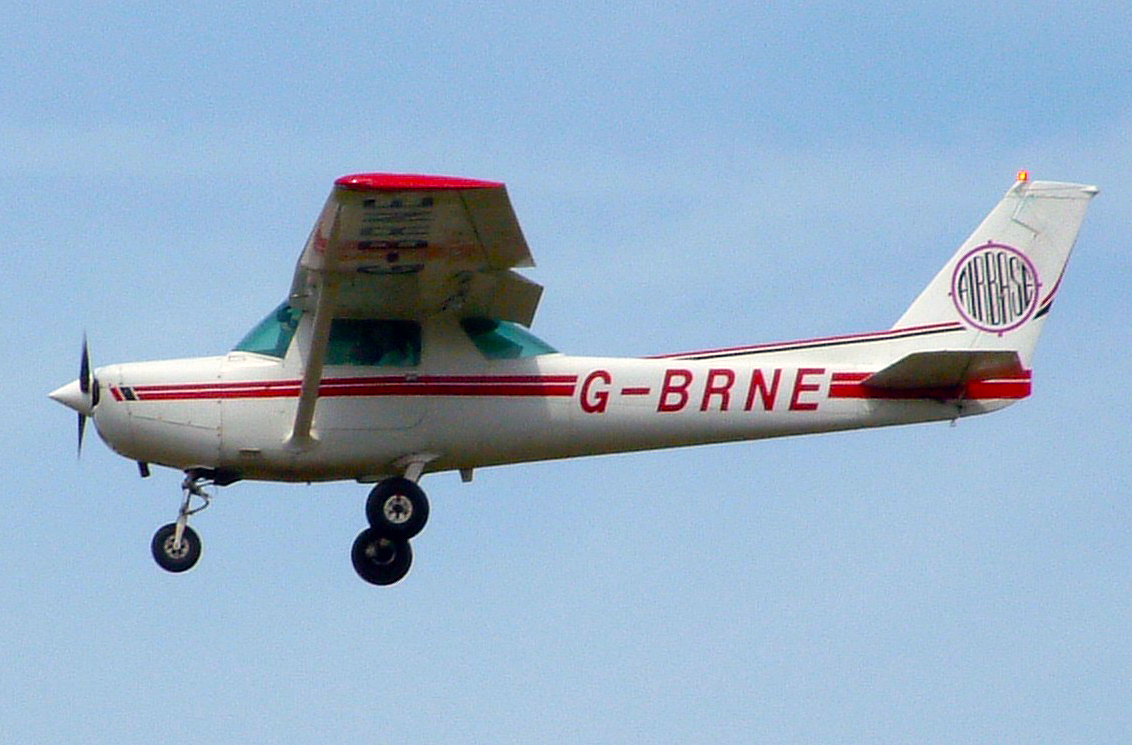
A 1978 Cessna 152 landing
A 1980 A152 Aerobat with its distinctive factory paint scheme
A 1985 Reims-built F152
Front view of a Cessna 152

Cessna 152 has only 4 model variants: 152, F152, A152, FA152 (all equipped with the Lycoming O-235):

152
Two-seat light touring aircraft, fitted with a fixed tricycle landing gear, powered by a 110 hp (82 kW) Lycoming O-235-L2C piston engine, 6628 built.[11] Available with a number of avionic options, aside from the standard Model 152 there was a 152 II with an enhanced package of standard avionics and trim features.[1] Type approved in 1977 and produced as 1978 to 1985 model years.[12]
A152 Aerobat
Two-seat aerobatic-capable aircraft, 315 built.[11] Certified for +6/-3 Gs and had standard four-point harnesses, skylights and jettisonable doors, along with a checkerboard paint scheme and removable seat cushions to allow parachutes to be worn by the crew.[1][2] Type approved in 1977 and produced as 1978 to 1985 model years.[12] The following aerobatic maneuvers are approved: chandelles, steep turns, barrel rolls, snap rolls, loops, vertical reversements, lazy eights, spins, aileron rolls, Immelmann turns, Cuban eights and stalls (except whip stalls).[12]
F152
Reims-built Model 152, 552 built.[11]
FA152 Aerobat
Reims-built Model A152, 89 built.[11]
C152 II
Not a special model but with Nav Pac equipment package, which included better quality avionics for IFR flying and additional interior equipment, which makes it a little more basic weight.[1]
Cockpit of a Cessna 152-T trainer
C152 T
Not a special model but flight school equipment package, with "T" denoting "trainer" and not a sub-model.[1]
C152 Reimagined
Not a special model but a general overhaul and rebuilt of Cessna 152s by Aviat.[13]:

Training

[edit]

The Cessna 152 is a commonly used flight trainer for aviation schools around the world. This plane is good for its low operating cost, reliability, and forgiving flight characteristics making it a good option for student training.[14]

Flight schools like Sunair aviation use Cessna 152 in their fleets because it's simple and cost effective. Rental planes typically range between $100 and $150 per hour.[15]

Operators

[edit]

Civilian operators

[edit]

The 152 is popular with flight training organizations and is also widely operated by private individuals.

Military operators

[edit]
A 1981 Reims-built FA152 Aerobat
 Argentina
 Bangladesh
 Bolivia
 Botswana
 Gabon
 Lesotho
 Mexico

Incidents and accidents

[edit]
  • On May 9, 1989, a man who had murdered his ex-wife earlier that evening stole a Cessna 152T at gunpoint from an employee at Beverly Municipal Airport. During the flight, which lasted over three hours, Alfred James Hunter III fired a semi-automatic AK-47 rifle[23][24][25] at the ground below, buzzed the South Postal Annex in Boston several times, and briefly touched down at Logan International Airport before taking off again. He was arrested when he finally landed with just five minutes' worth of fuel remaining.[26]
  • On 24 May 2001, a Cessna 152 violated Israeli airspace and was shot down by an IAF AH-64 Apache. Estephan Nicolian, a Lebanese student pilot, was shot down after ignoring repeated warnings by Israeli ATC to turn back. This is one of the two only-known operational air-to-air kills using an AGM-114 Hellfire missile.[27][28]
  • On June 24, 2022, a Cessna 152 sustained substantial damage after failing to recover from a spin during training. The aircraft entered the spin at 9,100 ft msl with the wreckage found at 4,590 ft msl. According to flight experience logs, the flight instructor had accumulated only 2 hours of flight experience on learning how to spin the accident airplane.[29]
  • On 20 August 2024, Cessna 152 (VT-TAJ) aircraft used as a trainer aircraft by Alchemist Aviation lost contact with Jamshedpur Air Traffic Control (ATC) tower around 11:10 am, shortly after taking off from Sonari aerodrome at 10:32 am. An investigation of the incident was launched. On 21 August, search operations were initiated by local authorities, the forest department and an NDRF team. On 22 August, the bodies of instructor pilot Captain Jeet Satru (2,000 hours flying experience) and trainee pilot Shubhrodeep Dutta (80+ hours flying experience) were recovered from the reservoir of Chandil Dam. As of 25 August, the search for the missing airframe was ongoing. A search and rescue team of the Indian Navy has joined the search efforts from Visakhapatnam on 22 August upon request. Eyewitnesses said that the aircraft crashed into the water body itself. The aircraft had 80 litres of fuel and 4 hours and 30 minutes of endurance - the schedule was for 1 hour. However, it was not clear why the Emergency Locator Transmitter (ELT) did not turn on. The aircraft had a total certified lifespan of 30,000 flight hours, of which only 16,000 hours had been utilized.[30][31][32] On 26 August, the 20-member diving and hydrographic survey team of the Eastern Naval Command recovered the aircraft's debris after a 5-day long search operation.[33]
  • The Aviation Safety Network regularly updates a list of accidents involving the Cessna 152 including detailed reports and statistics.

Specifications (Cessna 152)

[edit]
View of the underside of a Cessna 152

Data from Cessna 152 Pilot's Operating Handbook[5]

General characteristics

  • Crew: one
  • Capacity: one passenger (plus two children not exceeding 120 lb (54 kg) on optional baggage compartment bench seat)
  • Length: 24 ft 1 in (7.34 m)
  • Wingspan: 33 ft 4 in (10.16 m)
  • Height: 8 ft 6 in (2.59 m)
  • Wing area: 160 sq ft (15 m2)
  • Empty weight: 1,081 lb (490 kg)
  • Gross weight: 1,670 lb (757 kg)
  • Powerplant: 1 × Lycoming O-235-L2C flat-4 engine, 110 hp (82 kW)
  • Propellers: 2-bladed fixed pitch, 69-inch (180 cm) McCauley or 72 in (180 cm) Sensenich propeller

Performance

  • Maximum speed: 126 mph (203 km/h, 109 kn)
  • Cruise speed: 123 mph (198 km/h, 107 kn)
  • Stall speed: 49 mph (79 km/h, 43 kn) (power off, flaps down)
  • Range: 477 mi (768 km, 415 nmi)
  • Ferry range: 795 mi (1,279 km, 691 nmi) with long-range tanks
  • Service ceiling: 14,700 ft (4,500 m)
  • Rate of climb: 715 ft/min (3.63 m/s)

See also

[edit]

Related development

Aircraft of comparable role, configuration, and era

Related lists

References

[edit]
[edit]
Revisions and contributorsEdit on WikipediaRead on Wikipedia
from Grokipedia
The Cessna 152 is a two-seat, single-engine, high-wing developed by the Aircraft Company as a successor to the popular Cessna 150, featuring a more powerful engine and enhanced fuel compatibility for training and personal use. Introduced in 1978 and produced until 1985, it was designed to address limitations in the earlier model, including better performance with 100LL and a widened cabin for improved comfort. Powered by a 110-horsepower Lycoming O-235-L2C engine with a time between overhaul (TBO) of 2,400 hours, the Cessna 152 achieves a maximum speed of approximately 109-110 knots at sea level and a cruise speed of 107 knots at 75% power. Its gross weight is 1,670 pounds, with an empty weight around 1,141 pounds, providing a useful load of 529-589 pounds depending on configuration, and standard fuel capacity of 26 gallons (usable 24.5 gallons), extendable to 39 gallons with long-range tanks. The aircraft's dimensions include a wingspan of 33 feet 4 inches, length of 24 feet 1 inch, and height of 8 feet 6 inches, making it compact yet stable for operations on short runways. Notable for its role in flight instruction, the Cessna 152 offers excellent slow-flight characteristics, a of 715 feet per minute, and a service ceiling of 14,700 feet, with a maximum range of 370-415 nautical miles. Production totaled around 7,584 units, contributing to the overall legacy of over 31,000 150/152 built, many of which remain in service today as one of the most flown light trainer models worldwide. Variants include the and the Aerobat, introduced in 1977, which features reinforced structure capable of +6g and -3g loads for aerobatic and spin recovery practice. Production ended in 1985 amid concerns, but the type's affordability, reliability, and low operating costs—typically $45,000 to $130,000 for well-maintained used examples as of 2025—continue to sustain its popularity among pilots and flight schools.

Development

Origins and Design Evolution

The Cessna 150, introduced in 1958, became one of the most successful two-seat trainers in history, with over 22,000 units produced through its 27-year run ending in 1977. Its popularity stemmed from its simple design, forgiving flight characteristics, and affordability, making it a staple for flight schools and private pilots during the post-World War II aviation boom. However, by the mid-1970s, the Cessna 150 faced limitations in an era of escalating fuel costs triggered by global oil crises, particularly the 1973 embargo that quadrupled prices and strained operating budgets for training operations. These economic pressures highlighted the need for a successor that could deliver similar reliability while reducing fuel consumption and maintenance expenses to better serve cost-conscious flight schools. Cessna's design team responded by developing the Model 152 as a direct evolution of the 150, with primary goals centered on enhanced , increased useful load, and improved climb performance to address the shortcomings exposed by the fuel crises. A key decision was selecting the 110-horsepower Lycoming O-235-L2C engine over the Continental O-200 used in the 150, as the Lycoming burned less fuel at equivalent power outputs while offering a longer time between overhaul (TBO) of 2,400 hours compared to the Continental's 1,800–2,000 hours, thereby lowering overall operating costs for high-hour training fleets. The prototype achieved its first flight in September 1976, paving the way for FAA under FAR Part 23 on March 16, 1977, which confirmed compliance with standards for normal, , and aerobatic categories. Engineering refinements further optimized the 152 for instructional use, including a of 33 feet 4 inches, as on later Cessna 150 models, which improved low-speed handling and stall characteristics without significantly raising complexity. The was subtly refined with a wider cabin for greater occupant comfort during extended training sessions and a lowered, one-piece to enhance forward visibility, reducing pilot workload in pattern work and cross-country flights. These changes aligned with 's marketing strategy to position the 152 as an economical upgrade for flight schools navigating the 1970s fuel shortages, emphasizing its 5–6 gallons-per-hour burn rate at cruise as a competitive edge over thirstier contemporaries.

Production History

Production of the Cessna 152 began in 1977 at Cessna's facility in , as a successor to the Cessna 150 model. The aircraft entered full-scale manufacturing for the 1978 , with initial output reaching a peak of approximately 2,626 standard models in that year alone, reflecting strong demand for affordable trainers during a period of growth in . Overall, Cessna produced 6,620 standard 152s and 307 Aerobats at Wichita through 1985, contributing to a U.S. total of around 6,927 units. Annual production rates for the 152 exceeded 1,000 units in the early , sustaining high output amid expanding needs, but began to decline sharply by 1984-1985 due to a broader downturn in caused by economic recession and fluctuating fuel prices. ceased production of the 152 and all single-engine in 1985, citing escalating costs from lawsuits related to accidents involving older , which had driven insurance premiums to unsustainable levels and shifted market focus toward larger or turbine models. This decision aligned with industry-wide challenges, as manufacturers faced financial pressures that halted output for nearly a decade. Internationally, in held a to produce the F152 variant from to , manufacturing 622 units including aerobatic FA152 models to serve European markets. The global total for the 152 reached 7,584 by the end of production. Although no new Cessna 152s have been manufactured since 1985, continues to support the fleet through parts availability and service programs, ensuring ongoing airworthiness for the thousands of active airframes. As of 2025, the used market remains robust, with dozens of 152s listed for sale worldwide at prices typically ranging from $45,000 to $137,500, driven by their enduring popularity in and personal use.

Design

Airframe and Structure

The Cessna 152 employs an all-metal construction throughout its , utilizing 2024-T3 aluminum for the riveted skin panels that are supported by internal stringers and bulkheads to distribute loads efficiently. This design provides a lightweight yet robust structure capable of withstanding the stresses of and operations. The measures 24 feet 1 inch in length and 8 feet 6 inches in height, forming a compact for its two-seat side-by-side cabin that facilitates pilot and passenger access via 31-inch wide doors on each side. The cabin's layout emphasizes simplicity and comfort, with the framework ensuring structural integrity while minimizing weight. The wings adopt a high-wing configuration with a 33-foot span, incorporating an NACA 2412 section for balanced lift characteristics and a of 1 degree 45 minutes to contribute to lateral stability. At a gross weight of 1,670 pounds, the wing structure relies on front and rear spars, aluminum skin over ribs, doublers, and stringers, with external bracing for added support. The empennage features a conventional tail assembly with a stabilator for primary pitch control, augmented by a dorsal fin that improves directional stability during flight. Fuel is housed in integral wing tanks with a total capacity of 26 US gallons (24.5 gallons usable) to support the aircraft's operational range. The airframe's overall design integrates seamlessly with the powerplant placement to optimize weight distribution and center of gravity.

Powerplant

The Cessna 152 features a Lycoming O-235-L2C four-cylinder, air-cooled, horizontally opposed, direct-drive, carbureted rated at 110 horsepower at 2,550 RPM with an 8.50:1 . This is mounted to the forward firewall using standard attachment points compatible with the aircraft's gear configuration. The engine drives a two-blade, fixed-pitch McCauley 1A103/TCM6958 aluminum with a of 69 inches (maximum) or 67.5 inches (minimum), optimized for efficient climb and cruise operations. The system consists of two gravity-fed tanks, each with a 13-gallon capacity for a total of 26 gallons, of which 24.5 gallons are usable, supplemented by an electrical for backup during engine start and as an emergency measure. This setup supports an endurance of approximately 4 hours at 75% power. With this powerplant, the aircraft attains a cruise speed of 107 knots at 75% power and 8,000 feet under standard conditions, along with a sea-level of 715 feet per minute.

Flight Controls

The Cessna 152 employs conventional primary flight controls, including ailerons for roll control, a for pitch control, and a for yaw control. The ailerons are mounted on the trailing edges of the wings and operate via mechanical linkages to induce differential lift for banking the aircraft. The serves as an all-moving horizontal tail surface, functioning as a full-span elevator to manage pitch attitude, and incorporates an anti-servo tab on the trailing edge to enhance by increasing control forces and preventing over-control. The , located on the , provides directional control and is essential for and crosswind corrections. The utilizes a of mechanical components for precise operation, with pushrod linkages transmitting inputs for pitch from the control wheel to the and for roll from the control wheel to wing-mounted aileron actuators, while cables and pulleys route yaw inputs from the rudder pedals to the . This setup ensures direct and responsive handling without hydraulic or powered assistance, and the lacks separate flap surfaces, relying instead on the aircraft's wing flaps for lift augmentation during low-speed operations. Leading-edge slats are not standard but available as optional modifications in certain variants to improve characteristics at high angles of attack. In terms of handling traits, the Cessna 152 demonstrates benign behavior, with a clean-configuration speed of 49 knots under standard conditions, accompanied by a gentle nose-down break and minimal wing drop when properly coordinated. The aircraft exhibits stable motion, characterized by lightly damped long-period oscillations in speed and altitude that pilots can easily manage with minor trim adjustments. It is particularly effective for spin due to its predictable entry and recovery dynamics, approved by the FAA for intentional spins up to six turns; recovery follows standard procedures of neutralizing ailerons, reducing power to idle, applying full opposite , and smoothly pushing the control wheel forward until rotation ceases. The standard VFR avionics suite integrates seamlessly with the mechanical through basic , with optional upgrades such as VHF communication transceivers for voice coordination during maneuvers.

Landing Gear

The Cessna 152 is equipped with a fixed, non-retractable tricycle landing gear configuration, featuring two main wheels and a steerable for stability during ground operations. The main gear legs consist of tubular spring-steel struts that provide shock absorption, while the nose gear utilizes an air/oil shock strut inflated to 20 psi with MIL-H-5606 . This setup ensures a ground clearance of 12 inches, protecting the fixed-pitch during and landings. The main wheels are fitted with 6.00-6, 4-ply rated tires, and the nose wheel uses 5.00-5, 4-ply rated tires, all blackwall with tubes. Recommended tire pressures are 21 psi for the main wheels and 30 psi for the nose wheel to maintain optimal performance and handling. Braking is provided by single-disc, hydraulically actuated systems on the inboard side of each main wheel, operated via pedals integrated with the controls; there is no independent nose wheel brake. The nose wheel steering, linked to the pedals, allows up to 30 degrees of deflection either side of center, augmented by differential braking for ground maneuvering. Optional wheel fairings may be installed to reduce drag, and the standard landing gear supports aftermarket modifications, such as the installation of amphibious floats under supplemental type certificates from manufacturers like Aerocet.

Variants

Civil Production Models

The Cessna 152 entered production in 1978 as the initial civil model, serving as a two-seat trainer and tourer powered by the Lycoming O-235-L2C engine. This basic variant was certified in the utility category under FAA regulations, with optional aerobatic certification available through structural reinforcements offered in a dedicated sub-variant. The design emphasized simplicity and reliability for flight training, building on the Cessna 150's proven airframe while incorporating the more powerful Lycoming engine to address fuel availability issues with lower-octane avgas. Introduced in 1978, the A152 represented the aerobatic variant of the 152, featuring a reinforced and structure to accommodate load factors of +6g and -3g in the aerobatic category. A total of 307 units of the A152 were built, targeting specialized training and recreational aerobatic use, though it retained the same O-235-L2C powerplant as the standard model. Key differences included beefed-up attachment points for the and control surfaces, along with provisions for inverted fuel and oil systems to support limited inverted flight. The standard 152 model incorporated sequential improvements from 1979 to 1985, such as squared-off rear side windows for improved visibility, an upgraded interior with better padding and simulated wood trim, and a standard instrument flight rules (IFR) avionics panel. These updates focused on enhancing comfort and usability without altering core performance, including minor refinements like integral intercoms and spin-on oil filters in later years. A total of 6,620 standard 152 units were produced, with increased of 1,671 pounds in final iterations. Overall U.S. civil production of the 152 series totaled 6,927 aircraft before halted single-engine piston manufacturing in 1985. Including 641 licensed builds by , the global total reached 7,568 units.

Military and Licensed Variants

Reims Aviation in produced the F152 under license from between 1978 and 1985, manufacturing a total of 641 units of the F152 (552 built) and aerobatic FA152 (89 built) variants. These were largely similar to their U.S.-built counterparts but incorporated metric instrumentation to suit European standards and were primarily utilized by French flying clubs for training purposes. The Cessna 152 has seen limited military adoption worldwide, primarily in training roles without major structural modifications. The Peruvian Air Force operated civil-registered examples, including OB-1827, for basic flight instruction. Similarly, the Argentine National Gendarmerie acquired three Cessna 152s in 2004 for operational training needs. In Bangladesh, the Army procured four A152 Aerobat models in 1982 to support aerobatic and spin recovery instruction. These adaptations typically involved avionics updates for military protocols rather than airframe alterations.

Modifications

Engine and Power Upgrades

One popular aftermarket modification for the Cessna 152 involves converting the standard engine to the series, delivering 150 hp through upgrade kits such as the STC SA4795SW conversion by Aircraft Conversion Technologies Inc. These kits typically include an overhauled or new O-320-E2D engine, along with necessary propeller adjustments to a constant-speed or fixed-pitch unit compatible with the increased power output. The conversion enhances overall , raising cruise speeds to around 135 mph at typical altitudes, while maintaining the aircraft's certification under FAA Supplemental Type Certificates (STCs) such as SA4795SW. Fuel-injected variants provide additional efficiency and altitude performance benefits over the standard carbureted setup. Options such as the conversion modify the O-235 to 125 hp with higher compression pistons for smoother operation and reduced icing risk, or other Lycoming injected models where dedicated STCs exist. These require dedicated STCs for installation on the Cessna 152, often incorporating updated systems and exhaust components to optimize power delivery. These upgrades utilize complete firewall-forward kits that encompass the mount, adaptations, and accessory integrations, resulting in a net weight increase of 20 to 50 pounds depending on the specific and accessories selected. FAA approvals for such modifications date back to the , with ongoing support from manufacturers ensuring compliance with current airworthiness directives. Owners particularly value the reduced time to climb—often halving the standard 715 feet per minute rate—making these conversions ideal for in varied or altitudes. As of 2025, the total cost for a conversion ranges from $30,000 to $50,000, encompassing the engine, kit components, labor, and certification paperwork. While the added weight slightly reduces useful load by a marginal amount, the performance gains contribute to higher resale values, with upgraded often commanding 10-20% premiums over stock models in the pre-owned market.

Aerodynamic and Performance Kits

Aerodynamic and performance kits for the Cessna 152 primarily enhance low-speed handling, distances, and overall efficiency through modifications to wing and drag reduction. These kits are particularly valued in and recreational flying, where improved short-field performance and characteristics provide safety margins without significantly compromising cruise speeds. All such modifications require FAA Supplemental Type Certificates (STCs) for legal installation, ensuring compliance with airworthiness standards. STOL kits, such as those from Horton STOL-Craft and Sportsman, incorporate leading-edge cuffs, stall fences, gap seals, and drooped wingtips to increase wing camber and lift at low speeds. The Horton kit, approved under STC SA01804AK, adds these elements to reduce speeds and improve tolerance, enabling shorter rolls suitable for unprepared strips. Similarly, the Sportsman kit, under STC SA02611CH, enhances flap efficiency and climb performance, with reported reductions in distances by up to 37% compared to stock configurations, while maintaining cruise speeds. These modifications can increase by approximately 100-150 feet per minute and reduce ground roll to around 400 feet under standard conditions, making them popular for operations. Flap gap seals alone, often integrated into these kits, seal airflow gaps to boost cruise speed by 3-4 mph and climb rate by 100-150 fpm. Vortex generators (VGs) from Micro AeroDynamics address and spin risks by energizing airflow on wings, horizontal stabilizers, and vertical surfaces. Approved under FAA STC SA4934NM since the 1990s, these kits reduce speed by 8-9% and improve effectiveness at low speeds, enhancing during takeoff, , and slow flight without measurable drag penalties. Installation involves placing small aluminum tabs in precise patterns, typically requiring 4-6 hours of labor, and they contribute to gentler breaks, reducing the likelihood of inadvertent in training scenarios. Speed-oriented modifications focus on drag reduction through gapless flaps, wheel fairings, and streamlined cowlings. Flap gap seals, as noted earlier, eliminate from flap-wing interfaces, yielding 2-4% gains in top speed alongside the climb benefits. Wheel fairings, such as those from Knots2U under STC SA02200LA, enclose main and nose gear to smooth , adding 5-6 mph to cruise speed while slightly improving climb due to reduced induced drag. These aerodynamic refinements, often combined, provide 5-10 mph overall cruise enhancements on the Cessna 152, with STCs ensuring compatibility with the tricycle landing gear configuration. Such kits are commonly applied in conversions for or high-altitude operations, where balanced performance gains support extended range and payload.

Structural Alterations

One notable structural alteration for the Cessna 152 is the tailwheel conversion, which transforms the standard tricycle landing gear to a taildragger configuration. Kits such as those from Taildragger (STC-approved for Cessna 150 and 152 models from 1959 onward) involve relocating the nose gear forward and installing a tailwheel assembly, resulting in improved clearance of up to 16 inches compared to the standard 9.5 inches. This modification enhances short-field performance and off-airport operations while maintaining the aircraft's certification envelope. Amphibious float installations represent another significant structural change, enabling operations on water. Approved under Supplemental Type Certificates (STCs), such as those for Wipaire 2100-A amphibious floats or similar systems from manufacturers like Aquatic Aero, these setups replace the wheeled with retractable floats that include wheels for land transitions. The installation adds approximately 300 pounds to the empty weight due to the floats and , reducing the maximum gross weight and cruise speed to around 100 mph at typical power settings. This alteration is particularly suited for remote access in regions with limited runways, though it requires specific weight and balance adjustments. For utility roles, enlarged cargo door modifications expand the baggage compartment access, facilitating easier loading of equipment or supplies. These STCs modify the rear door frame to increase the opening size, allowing for better accommodation of bulky items while maintaining structural integrity through reinforced door surrounds. Such changes are common in aircraft repurposed for or light cargo. Durability upgrades, particularly corrosion-proofing kits developed in response to issues identified in post-1980s airframes, address aluminum fatigue in high-time Cessna 152s. These kits, often involving chemical conversion coatings and sealant applications per FAA Advisory Circular 43-4B, target vulnerable areas like wing spars and skins to prevent filiform and exfoliation exacerbated by environmental exposure. Implementation on aircraft exceeding 10,000 hours total time can extend service life by mitigating stress in load-bearing components.

Operational Use

Training Applications

The Cessna 152 is designed specifically for , featuring benign handling characteristics that make it forgiving for novice pilots. Its docile , including stable straight-and-level flight and predictable responses to control inputs, facilitate early skill development in basic maneuvers. The aircraft exhibits a low speed of 48 knots in clean configuration, allowing for gentle handling near the without abrupt tendencies. Additionally, it is spin-resistant, with recoveries typically achievable with approximately 1,000 feet of altitude loss using standard procedures like power reduction and opposite , as per the manufacturer's guidelines, enhancing during spin awareness required by FAA regulations. This combination has made the Cessna 152 one of the most common aircraft types used to train pilots over the past 40 years, serving as the platform for a significant portion of U.S. private pilot certifications since the due to its widespread adoption in schools. The aerobatic variant, the A152 Aerobat, extends its utility to advanced maneuvers, certified for rolls, loops, and spins with a +6/-3 G load limit, allowing progression to introductory . Economically, the Cessna 152 offers advantages that support frequent training flights, with a burn of approximately 6 gallons per hour at 75% power. Operating costs are estimated at $135 to $175 per hour for moderate utilization, including , , and reserves, making it accessible for flight schools and individual students. Dual controls are standard, enabling seamless instructor intervention, while the high-wing design provides excellent visibility for both student and instructor during pattern work and cross-country . Modern adaptations have further enhanced its training role, including glass cockpit retrofits such as the G3X Touch system, which is STC-approved for single-engine piston aircraft like the Cessna 152 to support (IFR) training with integrated primary flight displays and engine monitoring. These upgrades correlate well with programs, enabling cost-effective ground-based practice that mirrors the aircraft's real-world handling for procedures like stalls and emergency recoveries.

Civilian Operators

The Cessna 152 serves as a primary aircraft for civilian operators worldwide, with flight schools forming the largest user group due to its suitability for primary and basic training. Organizations such as AeroGuard Flight Training Center, Flying Academy, NextGen Flight Academy, and Legends Aviation Academy maintain fleets of Cessna 152s for ab initio pilot instruction, leveraging the aircraft's stable handling and low operating costs. Personal owners also favor the type for recreational visual flight rules (VFR) operations and short-distance travel, appreciating its simplicity and affordability for non-commercial use. Specialized civilian applications include aerial surveying and , where the high-wing design provides excellent visibility for low-altitude work; for instance, aircraft like N757SJ are equipped for such missions by dedicated firms. Banner towing for advertising is another niche use, with operators employing modified Cessna 152s in low-speed, high-drag configurations at coastal and event venues. The sees limited involvement in , occasionally competing in handicap events organized by groups like the Sport Air Racing League, where its modest performance allows participation against diverse competitors. In terms of global distribution, the hosts the majority of active Cessna 152s, with thousands registered under the FAA for civilian operations as of 2025. In , the type holds EASA certification and is operated by training entities such as Flying Academy for instructional and time-building flights. Australia features notable adoption among recreational and training users, including the Royal Aero Club of and Royal Newcastle Aero Club, which utilize it for private hire, scenic flights, and charter services. Operational patterns emphasize , with the majority of flight hours dedicated to instruction, supplemented by private VFR activities; the remaining uses encompass aerial work and recreational pursuits. Airframes commonly reach 5,000 hours or more with diligent , adhering to inspections mandated by FAA and equivalent authorities. The Cessna 150-152 Club plays a key role in supporting civilian operators through technical resources, fly-ins, and preservation initiatives to sustain the type's legacy.

Military Operators

The Cessna 152 and its variants have seen limited adoption, primarily for basic pilot training and observation roles, often with modifications such as military-grade radios and reinforced structures for operational demands. A small number of units were militarized across various operators. These were valued for their simplicity, low operating costs, and suitability for introductory flight instruction in non-combat environments. Active and recent military users include the , which operated three Cessna 152s starting in 2004 for training and border patrol observation. The procured four A152 Aerobat variants in 1982, utilizing them for aerobatic and basic training exercises. In , the armed forces have employed Cessna 152s for pilot cadet programs, emphasizing their role in developing foundational skills. The has operated at least one Cessna 152 for training purposes, documented as recently as 2012. Former operators encompass the U.S. Army, which conducted trials and operational use of Cessna 152s in the 1970s and 1980s for utility and purposes, including instances documented in accident reports from that era. The maintained Cessna 152s into the 2010s for proficiency flights before retirement. Licensed variants, such as the Reims-built F152, have also supported in select nations. Overall, the type has largely been phased out in favor of more advanced trainers, with remaining examples in developing countries focused on instruction rather than active combat; no significant involvement in major conflicts has been recorded.

Incidents and Accidents

Notable Events

One notable incident involving the Cessna 152 occurred on July 27, 1982, near Morgan Hill, California, when a Cessna 152 collided mid-air with a Cessna 172 during local instructional flights. The NTSB investigation attributed the collision to inadequate visual lookout by the pilots of both aircraft, resulting in two fatalities in the Cessna 172. In July 2025, a ground collision occurred at Moorabbin Airport in Victoria, Australia, when a taxiing Piper PA-32R struck the tail of a stationary Cessna 152. The incident caused minor damage to the Piper's propeller and substantial but non-structural harm to the Cessna's empennage, with no injuries reported; investigators noted reduced visibility during taxi as a contributing factor. An August 2025 fatal accident near , involved a Cessna 152 entering a stall-spin during maneuvering, leading to a crash in wooded terrain that killed the solo student pilot. Witnesses observed the aircraft circling at low altitude before the descent, and the NTSB preliminary findings pointed to possible loss of control during practice maneuvers. During an October 2025 flight , a Cessna 152 encountered severe on approach to a high-elevation , causing the airframe to bend with substantial damage to the wings and fuselage. Remarkably, no serious injuries occurred, though the pilot reported minor effects; the event highlighted the aircraft's vulnerability to unexpected atmospheric conditions in mountainous areas.

Safety Record and Statistics

The Cessna 152 demonstrates a favorable safety profile among trainers, with an overall rate of 2.2 per 100,000 flight hours and a rate of 0.19 per 100,000 flight hours based on U.S. data from 2005 to 2012. These figures are lower than the broader average of approximately 5.0 overall s and 1.0 s per 100,000 flight hours during the same period, reflecting the aircraft's role in primarily low-risk environments. About 10% of recorded Cessna 152 s result in fatalities (based on 1994–2013 data), frequently linked to low-altitude maneuvers inherent to flight instruction. Accident occurrences for the Cessna 152 peaked during the , coinciding with its main production years from 1977 to 1985, when fleet expansion led to heightened utilization in fleets. Incidents have since declined markedly, dropping more than 70% between 1994 and 2013—twice the rate of reduction in overall single-engine piston activity—due to enhanced pilot standards and regulatory oversight. Leading causes include loss of control during takeoff, , and go-arounds, which account for roughly 60% of instructional accidents; fuel mismanagement, which is more prevalent in Cessna 150/152 models than in comparable aircraft; and weather-related factors contributing to about 25% of incidents in similar trainers. Engine power loss represents around 27% of accidents, benefiting from the reliable powerplant. Key mitigations include FAA airworthiness directives from the early 1980s addressing control system components, such as mechanisms, to prevent binding or interference issues. Mandatory spin recovery training, required for private pilot certification since the , has contributed to fewer stall-spin events. While retrofitted glass cockpits in some Cessna 152s offer enhancements, NTSB analyses indicate mixed impacts on reducing (CFIT) risks, with no statistically significant overall decline observed in early adoption data. Compared to the Cessna 150, the 152 exhibits superior safety, with a fatal accident rate of 0.05 per 100,000 flight hours versus 0.65 for the 150 from 1980 to 2006, largely due to improved control refinement and aerodynamic stability that enhance handling during critical phases.

Specifications

General Characteristics

The Cessna 152 is a lightweight, two-seat airplane certified under FAA No. 3A19, featuring a high-wing configuration and fixed tricycle . It accommodates a crew of one pilot and has capacity for one passenger. The standard model measures 24 ft 1 in (7.34 m) in length, 32 ft 8.5 in (9.96 m) in (33 ft 4 in / 10.16 m with optional conical wing tips), 8 ft 6 in (2.59 m) in height, and has a wing area of 160 sq ft (14.9 m²). Key weights and capacities for the baseline Cessna 152 include a standard empty weight of 1,081 lb (490 kg), a of 1,670 lb (757 kg), and a capacity of 120 lb (54 kg). capacity consists of 26 U.S. gal (98 ) total in standard tanks, with 24.5 U.S. gal (93 ) usable. Later variants like the 152 II exhibit minor differences, such as an empty weight of 1,118 lb (507 kg). The aircraft is equipped with a single Lycoming O-235-L2C flat-four, rated at 110 hp (82 kW) at 2,550 rpm. It drives a two-bladed, fixed-pitch McCauley with a of 69 in (1.75 m).
CharacteristicSpecification
Crew1
Capacity1 passenger
Length24 ft 1 in (7.34 m)
Wingspan32 ft 8.5 in (9.96 m) standard; 33 ft 4 in (10.16 m) optional
Height8 ft 6 in (2.59 m)
Wing area160 sq ft (14.9 m²)
Empty weight1,081 lb (490 kg)
Max takeoff weight1,670 lb (757 kg)
Fuel capacity26 U.S. gal (98 L) total; 24.5 U.S. gal (93 L) usable
Baggage capacity120 lb (54 kg)
Powerplant1 × Lycoming O-235-L2C, 110 hp (82 kW)
Propeller1 × two-bladed fixed-pitch, 69 in (1.75 m)

Performance

The Cessna 152 achieves a maximum speed of 126 mph (TAS) at under standard conditions. Its cruise speed is 107 knots (approximately 123 mph) at 75% power and 8,000 feet altitude in zero wind. Stall speeds are 48 knots (KIAS) in clean configuration and 43 KIAS with full flaps, both at maximum gross weight of 1,670 pounds and forward center of gravity. The aircraft's range is 320 nautical miles with reserves at 75% power, assuming standard fuel load and 45 minutes of reserve fuel based on 45% power consumption. reaches 4.1 hours under similar conditions. The service is 14,700 feet, while the at is 715 feet per minute at maximum gross weight. Takeoff distance over a 50-foot obstacle is 1,085 feet at standard weights and conditions, with landing distance over a 50-foot obstacle measured at 575 feet. These figures assume (ISA) conditions, pressure, and no wind. For the aerobatic variant (A152), performance limits include a positive load factor of +4.4 G and negative of -1.76 G in the utility category.

References

Add your contribution
Related Hubs
User Avatar
No comments yet.