Hubbry Logo
Charles CollettCharles CollettMain
Open search
Charles Collett
Community hub
Charles Collett
logo
8 pages, 0 posts
0 subscribers
Be the first to start a discussion here.
Charles Collett
Charles Collett
from Wikipedia

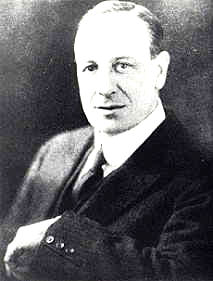
Charles Benjamin Collett OBE JP MInstCE MIMechE[1] (10 September 1871 – 5 April 1952) was Chief Mechanical Engineer of the Great Western Railway from 1922 to 1941. He designed (amongst others) the GWR's 4-6-0 Castle and King Class express passenger locomotives.

Key Information

Education and early career

[edit]

Collett was educated at the Merchant Taylors' School (then at Charterhouse Square, London) and the City and Guilds College of London University. He then became an engineering pupil at Maudslay, Sons and Field, a firm that built marine steam engines. In 1893 he entered the GWR Drawing Office at Swindon as a junior draughtsman. Four years later he was put in charge of the buildings section, and in 1898 became assistant to the Chief Draughtsman. In June 1900 he was appointed Technical Inspector, and soon after Assistant Manager, at the Swindon Works. In 1912 he rose to be Manager of the Works, then in 1919 he was made Deputy Chief Mechanical Engineer of the GWR.[2]

Chief Mechanical Engineer

[edit]

Collett's predecessor, George Jackson Churchward, had delivered to the GWR from Swindon a series of class-leading and innovative locomotives, and arguably by the early 1920s the Great Western‘s 2-cylinder and 4-cylinder 4-6-0 designs were substantially superior to the locomotives of the other railway groupings.

In 1922 Churchward retired, and Collett inherited a legacy of excellent standardised designs. But, with costs rising and revenues falling, there was a need to rationalise the number of pre-grouping designs and to develop more powerful locomotives. Collett was a practical development engineer and he took Churchward's designs and developed them – notably the Hall from the Saint class, and the Castle from the Star. He was also responsible for more humble locomotives, such as many of the pannier tank classes.

4-cylinder engines

[edit]
GWR Castle class 4073 Caerphilly Castle

By the time Churchward retired, his 4-cylinder Star class locomotives were becoming inadequate for the increasing loads and speeds expected of express passenger trains. To solve this, Churchward had proposed fitting a No 7 boiler (designed for the 4700 class 2-8-0 express freight engines) onto a Star. This was not possible, because the weight would be too great for the track. Instead, Collett enlarged the Star design, leaving the wheels the same but with bigger cylinders and a new standard boiler that would not exceed the 19+12 ton permitted axle load. He also fitted a more comfortable cab. The result was christened the Castle class, and the first engine, No 4073 Caerphilly Castle, was soon proudly paraded at the British Empire Exhibition, (placed close to the larger LNER Flying Scotsman) with the claim that it was 'Britain's most powerful passenger locomotive'.[3]

One result of this provocative claim was an agreed exchange of locomotives between the companies. Castle class No 4079 Pendennis Castle went to the LNER in exchange for A1 class No 4474 Victor Wild. Both engines acquitted themselves well, but the performance of the smaller Castle led Gresley to investigate the cause and redesign the A1's valves, as well as give them a higher boiler pressure.[4][5]

As well as rebuilding several Star class locomotives into Castles, Collett shocked some people by rebuilding the GWR's flagship 4-6-2 locomotive No 111 The Great Bear into a 4-6-0 Castle. This at least drew the attention of General Manager Sir Felix Pole to the restrictive permitted axle loads, which had constrained the usefulness of this prestige symbol. When larger locomotives were needed, Sir Felix instructed the Civil Engineer to ensure that the main lines (Paddington–Plymouth, via Westbury or Bristol, and Paddington–Wolverhampton via Bicester) could carry a 22+12 ton axle load. This was quickly done, since work was already underway to meet this standard.[6][7]

GWR King class 6024 King Edward I

By 1926, the other railway companies were catching up with the GWR, with designs such as the LNER Pacifics (improved as a result of the GWR/LNER locomotive exchange), SR Lord Nelson class, and the imminent LMS Royal Scot Class. Better locomotives were needed not only for faster and heavier trains, but also for to uphold the prestige of the GWR.[8][9] Collett started by testing 6 ft 6 in driving wheels on No 5001 Llandovery Castle.[10] When this proved satisfactory, he spread these wheels out under a larger and higher-pressure boiler, and increased the piston stroke to 28 inches, pushing the design to the limit both of the loading gauge and the newly increased axle load. Fitting these increased dimensions together required an unusual front bogie, with outside bearings on the front axle but inside bearings on the rear, to clear the inside and outside cylinders respectively. Finally, the first loco (or first five) had cylinders bored out to 16+14 inches. The significance of this small change was that it pushed the calculated tractive effort over 40,000 lbs, as required by Sir Felix Pole, thereby emphasising the locomotive's status as the most powerful passenger locomotive in the country. It was named the King class.[10][11][12]

Like the Castle class, the King class was exploited for its publicity value. The very first one, No 6000 King George V, was shipped off to America where it led the parade of engines at the Baltimore and Ohio Railroad Centenary Exhibition, and whence it returned carrying a commemorative bell on its front buffer beam.[13] The King class remained the heaviest and most powerful 4-6-0 engine in Britain.[14] Stanier paid it the compliment of using its principal dimensions (Boiler pressure, cylinder size and wheel diameter—and therefore tractive effort) in his first design, the 4-6-2 LMS Princess Royal Class.[15][8][16]

However, while it has been described as Collett's masterpiece,[17] the suggestion has also been made that it was largely the responsibility of Hawksworth, Collett's eventual successor, who was then Chief Draughtsman.[11]

Streamlining

[edit]

A curious event in the story of the 4-cylinder designs was the appearance of two streamlined locomotives. In the 1930s there was a vogue for streamlining, and Collett came under pressure to produce a streamlined locomotive for the GWR, particularly in view of the forthcoming centenary of the company in 1935. The story goes that Collett took a paperweight model of a King, and smeared plasticine over it to produce an outline for the drawing office to work from. Although probably apocryphal, this may have been as good a way of designing a streamlined loco as any, short of carrying out tests in a wind tunnel.[18] Collett was certainly aware of the many other factors causing drag. As The Great Western Railway Magazine put it, "Rigorous application of the principles of scientific streamlining becomes not only difficult but practically inexpedient, as the net reduction in the total resistance may be relatively small."[19] In March 1935, locomotives 5305 Manorbier Castle and 6014 King Henry VII were outshopped with a hemispherical dome over the front of the smokebox, fairings covering the front buffer beam, cylinders, and splashers, fairings behind the chimney and dome, a vee-shaped cab front and a tapered roof over the tender.[20] Both of these engines, and no others, were given a full-page photograph in the GWR's 1935 publication Swindon Works and its place in Great Western Railway History, but without any further descriptive text.[21] The locomotives gradually lost the streamlined features as they passed through the shops in following years.[22]

Absorbed locomotives and the 5600 class 0-6-2T

[edit]
GWR 5600 class no. 6697

Collett became CME just before the grouping of British railway companies took effect on 1st January 1923. Although the GWR retained its identity by virtue of being grouped with many much smaller railways, it did make Collett responsible overnight for over 800 locomotives, of a wide variety of designs, many in a state of disrepair. The ones in the worst condition could only be scrapped; those in a better condition were surveyed to establish which could be refitted with boilers from the GWR standard range, including three new boilers modified for the purpose. The scrapping of so many unmaintainable engines left a shortfall in power, especially in the Welsh valleys where the widely-used compact inside-cylinder 0-6-2T engines were hard to replace with standard GWR classes. Collett decided to build a new class, based on the Rhymney Railway R class 0-6-2T. Although it used a standard No. 2 boiler, and as many other standard parts as possible, the cylinder castings, wheels, hornblocks, valve gear and three-bar motion crosshead were all new designs. The 5600 class was powerful and versatile, working both passenger and freight trains in the Welsh valleys in a characteristic 'facing up the valley' direction, so that on the faster descending services, the pony truck helped to keep them stable.[23][24]

However, one story indicates that the development of these engines was not without problems. According to Hurry Riches, the son of the last Locomotive Superintendent of the Rhymney Railway, who had been taken on by the GWR and worked on the new class, the first engine of the class stalled dramatically when it was first steamed. Investigation showed that in the transfer of the standard Stephenson valve-gear arrangement from outside-cylinder use to an inside-cylinder design, the function of the rocker shaft (a substantial bearing that transferred the valve motion through the frames to drive the steam chest) in withstanding off-axis forces was not appreciated, and inadequate support was provided for the end of the valve spindle. The result was that when steamed, the valve spindle bent under the strain, throwing the whole motion out of alignment. A quick fix had to be developed before any of the locomotives could be rolled out, and the story was apparently suppressed to avoid embarrassment at a senior level.[25]

2-cylinder standard tender classes

[edit]
GWR Hall class 4920 Dumbleton Hall

Collett built no more of Churchward's Saint class locomotives,[26] but he did build further batches of the 2-6-0 'Moguls' in 1925 and 1932.[27] The Running Department asked him to build an enlarged version of this engine, as crews had a tendency to expect too much of it (possibly due to its similarity with larger classes). However, Collett preferred to modify a Saint. He took No 2925 Saint Martin, and fitted it with smaller 6 ft (1.829 m) wheels. Over three years of testing, it proved itself a useful and popular mixed-traffic engine. In 1928 a batch of 80 engines of the new Hall class was ordered, differing from the Saints only in having the smaller wheels and a more generous side-window cab. Further batches totalling 259 locos were built up till 1943, and—together with his successor Hawksworth's 71 Modified Halls—made up the largest class of named locomotives on the GWR.[28] Later testing showed that the Hall class suffered a marked reduction in drawbar horsepower when running over 50mph, as the boiler and cylinders designed for the Saint's 6 ft 8+12 in (2.045 m) wheels struggled to keep up with the faster revolving smaller wheels.[29] Apart from one war casualty, and the prototype Saint Martin (which was not new when rebuilt as a Hall), none were withdrawn from service until 1960.[30][31]

GWR Manor class 7820 Dinmore Manor

In 1901 Churchward had proposed, as part of his set of standard locomotive classes, a two-cylinder 4-6-0 with 5 ft 8 in (1.727 m) wheels, but never developed one.[32] In 1936, seeking to replace the older 4300 'Moguls', Collett produced such a locomotive as the Grange class. Indeed, he withdrew 80 of the 'Moguls', and used the wheels and motion as part of a 4-6-0 with the same No 1 boiler as the Halls.[33] One disadvantage was that the Granges were heavier than the 'Moguls' and thus had more limited route availability. To answer this, in 1938 Collett withdrew another 20 'Moguls', and again used the wheels and motion to build a 4-6-0, this time with the specially developed, lightweight, No 14 boiler. These were the Manor class. Even though they were indifferent steamers until the draughting of the boiler was investigated and modified in 1951–52, British Rail still built another ten Manors (without any 'Mogul' parts) in 1950.[34]

Collett continued to build more 2-8-0s in the form of the 2884 class, which differed only in detail, not in the principal dimensions, from Churchward's 2800 class of 1903. The last of this class was built by Collett's successor Hawksworth in 1942, and this (by then 45 year old) class was represented in the 1948 Locomotive Exchange Trials.[35]

2-cylinder standard tank classes

[edit]

In 1927 Collett produced a version of Churchward's small-wheeled 2-6-2T class with larger water tanks having sloped front ends, the 4575 class.[36] He also continued to build Churchward's large-wheeled 2-6-2T design in the shape of the 1929 5101 class, followed in 1931 by the 6100 class with a higher boiler pressure of 225 lbf/in2 (1.55 MPa), then in 1938 by the 8100 class with smaller 5 ft 6 in (1.676 m) wheels, and in the same year the 3100 class with even smaller 5 ft 3 in (1.600 m) wheels. Both of these latter classes were rebuilds of older 2-6-2T engines.[37]

GWR 7200 class no. 7248

He also built more of Churchward's 2-8-0T engines, giving the 5205 class marginally larger diameter 19 in × 30 in (483 mm × 762 mm) cylinders. 70 of these were built between 1923 and 1926. A further batch of 20 was built in 1930, but due to the depression of the late 1920s, the short-haul South Wales coal trains for which they were intended had decreased, and they were placed in storage. When in 1934 Collett needed to replace the ageing 2-6-0 Aberdare class, he turned to these stored locomotives. In order to increase their range—the 4 ton bunker capacity limited their length of run—he extended the frames at the rear to take a trailing axle which supported an enlarged 6 ton bunker. This was the 7200 class of 2-8-2Ts, and 53 were built in three batches up till 1939, all rebuilds of 2-8-0Ts.[38][39] A further batch of 10 5205 class 2-8-0Ts was built in 1940 as wartime traffic made them useful again.[40]

Pannier tank engines

[edit]
GWR 5700 class no. 5764

The first pannier tanks on GWR engines were introduced by Churchward, as saddle tanks were unsuitable when older engines received new boilers with Belpaire fireboxes.[41] However, he never designed any standard classes using pannier tanks.[42] In 1929 Collett started to replace the hundreds of 0-6-0ST and 0-6-0PT engines that survived from the Victorian and subsequent rebuilding. For this he developed an existing design, the 2721 class of 0-6-0ST/PT, fitting them with a Belpaire boiler pressed to 200 lbf/in2 (1.4 MPa), a larger 3 ton 6 cwt bunker, an all-over cab and improved valve events. No testing was done, and 100 engines of the new 5700 class were ordered as a first batch (the first 50 being built by North British). They were soon followed by another 200 funded by a Government work-creation scheme. All of these were built by outside suppliers: W. G. Bagnall (50), Kerr, Stuart (25), North British (50), Yorkshire Engine Co. (25), Armstrong Whitworth (25), and Beyer, Peacock (25). Further batches were built at Swindon throughout the 1930s and '40s, and one final batch of 10 in 1950 after Nationalization, for a total of 863 locomotives. [43]

In March 1932, No 8700 was converted to a condensing engine for use on the underground Metropolitan line serving Smithfield Market. This led to the construction of ten new condensing engines (with improved cabs), still considered part of the 5700 class, numbered 9701–9710.[44]

One of the more demanding jobs that Collett needed to find new engines for was autotrain working. These trains had to keep to a strict schedule, on some very challenging branch routes, requiring good acceleration and sure-footedness. After considering a number of types, he took No 2080, an 0-6-0ST of Armstrong's 2021 class, and refitted it with larger 5 ft 2 in (1.575 m) wheels, and pannier tanks. After testing proved this a successful design, he took No 2062 of the same class and carried out a more comprehensive rebuilding, including 16+12 in × 24 in (419 mm × 610 mm) cylinders, new motion and a Standard No 21 boiler at 165 lbf/in2 (1.14 MPa). This became the first of the 5400 class, and appeared in 1930. Production of the class followed in batches up till 1935, totalling 25 locomotives.[45]

Collett also updated Churchward's 0-6-0ST 1361 dock shunting tanks, turning out a modernised version with pannier tanks as the 1366 class. Initially intended for Swindon Works, they were later used elsewhere, including Weymouth Docks.[46]

Some autotrain routes, such as those in South Wales, were more steeply graded. To provide for these, Collett took one of his previous prototypes, No 2062 (now running as 5400), and reduced the wheel diameter to 4 ft 7+12 in (1.410 m). When this proved satisfactory, he ordered a batch of ten forming the new 6400 class. Further batches took production to a total of 40. Like the 5400 class, these were all fitted for autotrain working. For other duties, Collett created a variant with a higher boiler pressure of 180 lbf/in2 (1.2 MPa), but not auto-fitted, and 50 of these were produced numbered in the 7400 series.[47]

Other steam engines

[edit]

At the Grouping the GWR had absorbed many lines, such as those in Central Wales, that were lightly built and needed light engines to operate them. By the 1930s, the Victorian 0-6-0s which had filled these duties were wearing out. Still available were the Dean Goods, renovated by the fitting of more modern Belpaire boilers. To free them up from other duties, Collett designed the 2251 class of inside-cylindered 0-6-0 tender engines. Very similar in frames and motion to the 5700 Pannier tanks, but with cylinders designed to support a No 10 standard boiler, they were given a Yellow route classification (slightly heavier than the Dean Goods). 120 engines were built from 1930 to 1948 by Collett and Hawksworth. They were able and popular engines, capable of pulling light passenger trains at 60 mph. As well as branch line duties, they were used on main line stopping trains.[48]

GWR 4800 class no. 4866

For another engine, Collett looked back to the GWR 517 Class for inspiration. Using the same 0-4-2T outline, but modern components in common with the 5400 and 6400 0-6-0PTs, he created the 4800 class. The 75 engines of the 4800 series were all fitted for autotrain working, and were widely distributed around the GWR network. The 20 engines of the 5800 series were identical but not auto-fitted, and less widely spread. In 1946, the 4800 series 0-4-2Ts were renumbered into the 1400 range to make way for some of the 2800 class 2-8-0s which were converted to oil-burning and renumbered in the 4800 range. The 5800s were not renumbered. The 1400s, being small and nowhere near the end of their working life when steam was withdrawn on British Railways, were popular targets for saving, and four have been preserved.[49]

Starting in 1936, Collett took the boilers from a number of old Duke class engines, and mounted them on the frames of some Bulldog class engines. This economical combination of the better parts of older engines was produced as the Earl class, though they were widely termed the Dukedogs due to their origins. Collett was aware that certain members of the GWR Board of Directors (whom he considered pompous) desired that their names should be given to suitable steam engines, and he therefore applied them to Earl class locomotives. When the directors saw their names on these distinctly Victorian-looking double-framed 4-4-0s, they were not amused. The names were later transferred to some of the more impressive Castle class.[50][51]

Collett bought six 0-4-0T dock shunting engines from the Avonside Engine Company to replace engines absorbed from the Swansea Harbour Trust. This 1101 class was an Avonside design to Collett's specification. They were later modified with a rounded-off cab, for better clearance under tight bridges, and standard GWR safety valve covers.[52]

Minor developments, of less significance to the GWR, were a brief experiment with a Sentinel geared locomotive,[53] and the building/rebuilding of three 2-6-2T engines for the narrow-gauge Vale of Rheidol Railway.[54]

Diesel railcars

[edit]
GWR diesel railcar no. 4

While Collett did a lot of reimagining and redevelopment of older steam locomotive designs, he also introduced some very novel diesel railcars. In 1933, AEC built railcar No 1 for the GWR, a streamlined, 121bhp passenger coach with a cab at each end. This proved underpowered, but Collett recognised its potential, and ordered Nos 2–4 which were dual-engined and capable of 75-80mph carrying 44 passengers. A further twelve were purchased in 1935–36. All of these were self-contained; they were not intended to pull other carriages. No 17 was for parcel traffic and carried no passengers.

A further 20 railcars were built at Swindon in 1940–42, with more angular streamlining and no valances over the bogies. These were equipped to pull a load of up to 60 tons, and fitted with autotrain controls so they could be driven from a cab at the far end of an attached autocoach. Nos 35–38 were single-ended, having only one streamlined end with a cab. They were designed to be used back-to-back, or with a coach between them.[55]

Other development

[edit]
Swindon stationary test plant

Collett was responsible for far more than introducing new and updated locomotives. He replaced Churchward's crimson lake livery, reintroducing the old 'chocolate and cream' colours for coaching stock, in 1922, when the backlog of stock maintenance due to WWI was being tackled.[56] He made good use of the dynamometer car to try out new designs. He modernised and strengthened the stationary test plant at Swindon Works to allow testing of engines generating 2000 horsepower, or running at 70mph. In 1934 he introduced the use of Zeiss optical apparatus during locomotive manufacturing to improve the accuracy with which frames and bearing, cylinders and motion were lined up.[57] This doubled the mileage that a locomotive could cover before the motion needed attention.[58]

Collett introduced buckeye couplings for coaching stock, and experimented briefly with articulated coaches in 1925. In 1931 he introduced the luxurious 'Super Saloons' for the Paddington–Plymouth boat train, as well as the less ornate but more modern 'Centenary' coaches in 1935. However, he knew that these large vehicles had limited route availability, and brought about an agreement that all future stock should be no more than 8 ft 11 in (2.718 m) wide, to maximise its route availability.[59]

Legacy

[edit]

A gifted technical engineer, who could look at existing designs and reliably improve them, Collett produced a standardized fleet of locomotives ideally suited to the GWR's requirements. He was able to extract substantial performance gains out of the Churchward designs. In 1924 he reported (in a paper to the World Power Conference) Castle class coal consumption of 2.83 lb per drawbar-horsepower hour, a figure dismissed as too good to be true by many engineers, but taken seriously by Gresley after the locomotive exchange of 1925.[60]

Collett has received criticism by contemporary engineers and later railway historians for undertaking very little innovation in his designs, instead sticking with Churchward's style in every case. Arguably this meant that by the time Collett retired the superiority of Great Western locomotives was lost to more modern designs, particularly those of William Stanier, who worked at Swindon before moving to the LMS in 1932. Stanier took Churchward's style with him, but developed it in line with continuing improvements in steam locomotive technology.

Personal life

[edit]

Collett married Ethelwyn May Simon (1875/6-1923) at St George's, Bloomsbury on 4 November 1896. They had no children. Ethelwyn's premature death in 1923 came as a great shock, and thereafter Collett avoided most social activities. He was very little involved in Swindon's civic affairs, in contrast to his predecessors, but he was a magistrate from 1921 to 1928.[61]

Through his paternal grandparents Benjamin Collett and Charlotte Harriet Sampson, Collett was 1st cousin once removed (1c1r) to Admiral of the Fleet Sir Philip Vian.[citation needed]

See also

[edit]

Notes

[edit]

References

[edit]
[edit]
Revisions and contributorsEdit on WikipediaRead on Wikipedia
from Grokipedia
Charles Benjamin Collett OBE (10 September 1871 – 5 April 1952) was a British railway engineer renowned for his contributions to design and management at the Great Western Railway (GWR). As Chief Mechanical Engineer (CME) of the GWR from 1922 to 1941, he oversaw the standardization and production of locomotives, reducing the number of classes from 52 in 1921 to 37 by 1941, while introducing precision manufacturing techniques that enhanced efficiency. Born in London to a journalist father, Collett was educated at Merchant Taylors' School and the City and Guilds Engineering College in South Kensington, followed by practical training at the marine engineering firm Maudslay, Sons and Field. He joined the GWR in 1893 as a junior draughtsman at the Swindon works, progressing through roles such as assistant to the chief draughtsman in 1898, technical inspector and assistant works manager in 1900, works manager in 1912, and deputy CME in 1919 under George Jackson Churchward. His early career included marine engineering experience, which informed his later work on GWR's rolling stock and infrastructure. Collett's tenure as CME marked a period of significant locomotive innovation, building on Churchward's designs while introducing four-cylinder configurations for higher performance. Key designs included the class 4-6-0 locomotives (introduced 1923, with 31,625 lbf tractive effort), the larger class (1927, 40,300 lbf tractive effort, the heaviest British 4-6-0 at 136 tons), and mixed-traffic classes such as the Hall (two-cylinder 4-6-0), Grange, and Manor. He also developed smaller classes like the 14XX autotank and 90XX, alongside improvements in carriage design and the adoption of GWR . For his World War I munitions work, Collett received the (OBE). Retiring in 1941 at age 70, Collett moved to Wimbledon, where he lived until his death. His legacy endures through preserved locomotives like Caerphilly Castle and King George V, displayed at sites such as the STEAM – Museum of the Great Western Railway and Didcot Railway Centre, and his influence on British steam engineering standards. Although sometimes critiqued for conservatism in design, Collett's output supported the GWR's operational success during the interwar period and into nationalization.

Early Life

Birth and Family

Charles Benjamin Collett was born on 10 September 1871 at 33 Tavistock Crescent in Westbourne Park, , the second son of William Collett, a who reported on race-horse events for the Sporting Life, and his wife Mary Helen Cooke. The family's home in this area, adjacent to station, placed them in close proximity to the Great Western Railway's operations, potentially offering young Charles early glimpses of and . Collett had one older brother, , born in 1869, who died tragically in 1879 at age ten; the family later endured further loss with their father's death in during Charles's youth. Raised in the dynamic Victorian industrial milieu of , amid rapid advancements in and transportation, Collett's childhood environment likely fostered his budding interest in mechanical pursuits. This early foundation preceded his formal schooling at Merchant Taylors' School in Charterhouse Square, London.

Education

Collett received his early education at Merchant Taylors' School in London, attending from 1882 to 1887. His family's residence in the Westbourne Park area of London facilitated access to such institutions. Following this, Collett pursued higher technical education at the City and Guilds Engineering College in , a precursor to , where he focused on principles.

Early Career

Marine Engineering Apprenticeship

Following his education, Charles Collett commenced his professional training in 1887 as an engineering pupil at Maudslay, Sons and Field, a prominent London-based firm specializing in marine steam engines. He gained hands-on experience in the design and construction of systems, including reciprocating engines that drove paddle wheels and propellers for steamships. This practical work involved assembling and testing large-scale components, such as cylinders and crankshafts, which demanded precision in heavy engineering practices. Collett's apprenticeship also encompassed boiler design and fabrication, where he contributed to workshop operations building high-pressure boilers essential for marine steam power generation. Over approximately six years, until 1893, this immersion in the firm's Lambeth facilities honed his expertise in heavy machinery, emphasizing durability and efficiency for maritime applications.

Initial Railway Roles

Collett entered the railway industry in May 1893, joining the Great Western Railway (GWR) as a junior draughtsman in the drawing office at Swindon Works. His prior experience in marine engineering facilitated a smooth transition to railway drafting, where he applied his technical skills to locomotive components. By the late 1890s, Collett had progressed within the design department, taking charge of the buildings section in 1897 and becoming assistant to the chief draughtsman in 1898. In this role, he contributed to the refinement of GWR's emerging standardization efforts. During the 1890s and early 1900s, Collett focused on minor modifications to existing GWR engines, introducing precision techniques to improve manufacturing accuracy and workshop efficiency. These enhancements supported Churchward's designs without major overhauls, aiding the overall reliability and performance of the fleet.

Great Western Railway Career

Rise Through the Ranks

In 1912, Charles Collett was promoted to the position of Works Manager at the Great Western Railway's (GWR) Locomotive Works, a role he assumed after serving as Assistant Works Manager since 1900. This advancement placed him in charge of overseeing the production and maintenance of locomotives and , building on his earlier experience in the drawing office that had equipped him with essential technical knowledge for managing complex engineering operations. During (1914–1918), as Works Manager, Collett played a pivotal role in maintaining the GWR's locomotive fleet under wartime pressures, implementing efficiency improvements to minimize downtime and ensure operational reliability amid resource shortages. His leadership extended to coordinating the production of munitions at , which contributed significantly to the national war effort and earned him the (OBE) in recognition of these contributions. Under his management, the works maintained high standards of quality and output, adapting to the demands of increased traffic and repairs for both GWR and allied military needs. In May 1919, Collett was appointed Deputy Chief Mechanical Engineer (CME), assisting in refining and advancing the GWR's standardization initiatives for locomotives and components. This position allowed him to apply his works management expertise to design and production processes, focusing on enhancing interchangeability and efficiency in the existing standard designs developed under Churchward. His tenure as deputy solidified his preparation for higher leadership, emphasizing systematic improvements that would later influence GWR engineering practices.

Appointment as Chief Mechanical Engineer

Charles Collett succeeded as Chief Mechanical Engineer (CME) of the Great Western Railway (GWR) on 1 January 1922, following Churchward's retirement after a tenure marked by innovative of designs. His appointment was a natural progression, having served as Deputy CME since May 1919, during which he gained intimate knowledge of operations and Churchward's engineering principles. Collett's leadership style, characterized by meticulous attention to manufacturing precision rather than bold , positioned him to maintain and refine the GWR's established mechanical standards. The immediate context of Collett's tenure was shaped by the , which mandated the Grouping effective 1 January 1923, requiring the GWR to absorb locomotives from smaller constituent railways such as the , , Taff Vale, and Barry lines. This influx introduced nearly 1,000 diverse "foreign" engines into the fleet, many incompatible with GWR's standardized boilers, fittings, and other components, presenting significant logistical and maintenance challenges. Collett inherited Churchward's legacy of uniformity but now faced the task of integrating these heterogeneous designs without disrupting operations. Amid post-World War I economic pressures, including rising material costs and declining revenues, Collett's initial priorities centered on and modernization of the inherited fleet to enhance efficiency and reduce long-term expenses. He emphasized practical adaptations, such as developing universal components like bogies, to facilitate the absorption process while preserving the GWR's operational integrity during a period of financial strain. This approach allowed for gradual rationalization, ensuring the GWR's mechanical department could adapt to the expanded network without immediate overhauls.

Locomotive Designs

4-Cylinder Express Engines

Charles Collett, as Chief Mechanical Engineer of the Great Western Railway (GWR), advanced the development of 4-cylinder express locomotives by building upon the foundational designs of his predecessor, George Jackson Churchward. These engines were optimized for high-speed passenger services, emphasizing power, efficiency, and reliability on key routes such as the London to Bristol and Plymouth lines. The GWR 4073 Castle class, introduced in 1923, represented Collett's primary contribution to 4-cylinder express power. Designed as an enlargement of Churchward's Star class, the Castles featured a larger boiler and firebox to accommodate heavier trains and sustain higher speeds, with 155 locomotives built at between 1923 and 1950, plus 16 conversions from earlier classes, totaling 171 engines. This class became the backbone of GWR express services, capable of hauling 400-ton trains at averages exceeding 60 mph while maintaining exceptional fuel economy, with an average consumption of 2.83 pounds per drawbar horsepower-hour—significantly lower than the 4 pounds typical of contemporary designs on other British railways. In 1927, Collett introduced the GWR 6000 King class as a further evolution for the most demanding express workings, producing 30 locomotives between 1927 and 1930. These were enlarged Castles with 6 ft 6 in driving wheels to enable sustained high speeds over 100 mph on flat terrain, positioning them as the GWR's flagship for premier services like the Cornish Riviera Limited. The ' greater power output, derived from an expanded and arrangement, allowed them to outperform in trials, though their weight necessitated route-specific infrastructure reinforcements. To enhance performance amid growing competition from streamlined rivals, Collett oversaw aerodynamic modifications on select Castles in 1935, notably No. 5005 , which received contoured steel casings to reduce air resistance and coal consumption on high-speed runs. These trials demonstrated potential efficiency gains and speeds up to 100 mph, though the full scheme was not adopted fleet-wide due to maintenance complexities.

Two-Cylinder Tender and Tank Classes

Charles Collett's two-cylinder tender and tank classes represented a practical approach to mixed-traffic locomotives, prioritizing and ease of maintenance for everyday operations on the Great Western Railway (GWR). These designs incorporated two outside cylinders to deliver reliable power without the complexity of multi-cylinder arrangements, aligning with Collett's broader philosophy as Chief Mechanical Engineer of favoring simpler mechanisms for reduced production and upkeep costs. The 2-6-2T tank locomotives, introduced in 1929, were developed for suburban passenger and freight duties, offering good acceleration and a wide due to their compact . Forty examples were constructed between 1929 and 1931 at , featuring 5 ft 8 in driving wheels, 18 in × 30 in cylinders, and a of 24,300 lbf at 200 psi. Key design principles included the use of the standardized No. 2 for interchangeability across classes and simpler outside with curved front frames and external steam pipes, which facilitated cost-effective production and streamlined maintenance. These tanks proved versatile workhorses, later expanded in numbers but rooted in Collett's initial blueprint for reliable short-haul service. The GWR 6800 Grange class 4-6-0 tender locomotives, introduced in 1936, were designed for mixed-traffic duties on secondary main lines, featuring 6 ft driving wheels, 18½ in × 30 in cylinders, a No. 1 boiler at 225 psi, and a of 31,530 lbf. Only 80 were built between 1936 and 1939 at due to the onset of , but they provided efficient power for both passenger and freight services, incorporating refinements from the and Hall classes for improved performance. The smaller GWR 7822 Manor class 4-6-0, introduced in 1938, was a lighter variant of the Grange for branch line and lighter main line work, with 6 ft driving wheels, 18 in × 30 in cylinders, a No. 1 boiler at 225 psi, and a tractive effort of 24,790 lbf. Twenty locomotives were built in two batches (1938–1939 and 1950) at Swindon, emphasizing route availability on less substantial tracks while maintaining versatility for mixed traffic. The GWR 1400 class 0-4-2T autotank locomotives, introduced in 1932, were designed for auto-train services on branch lines, allowing the engine to push a single coach without a guard's van. With 5 ft 8 in driving wheels, 16 in × 24 in cylinders, a No. 10 boiler at 180 psi, and a tractive effort of 15,800 lbf, 140 examples were built between 1932 and 1936 at Swindon and by outside contractors, featuring compact dimensions for tight curves and auto-coupling gear. Complementing the tank variants, the tender locomotives served as a redevelopment of earlier Dean Goods designs, modernized for medium-powered freight and light passenger work on lighter-laid lines, such as those in Central Wales. Introduced in 1930 with the first batch of ten locomotives, the class emphasized reliability through updated features like larger 5 ft 2 in driving wheels for smoother running at speed, 17½ in × 24 in cylinders, and a of 20,155 lbf, while retaining proven components for familiarity in depots. Collett's approach incorporated standardization—using the No. 14 type at 200 psi—and straightforward to enhance durability and minimize downtime, making them a dependable replacement for aging predecessors without radical overhauls. Over 120 were eventually built up to 1948, underscoring their long-term operational success.

Absorbed and Modified Locomotives

Following the 1923 Grouping under the , the Great Western Railway (GWR) absorbed 925 locomotives from various smaller constituent companies, significantly expanding its fleet and necessitating a program of standardization to integrate diverse designs into GWR operations. Among these, notable examples included 99 locomotives from the , primarily 0-4-2 and types suited for lighter lines in mid-Wales, and 275 from the , many of which were robust 0-6-2T tank engines designed for heavy coal traffic in the . These absorbed engines, often of varying ages and specifications, posed challenges for maintenance and efficiency, prompting Chief Mechanical Engineer Charles Collett to oversee their renumbering into sequential GWR blocks (e.g., 200-599 for many South Wales types) to streamline inventory and allocation. To address the proliferation of non-standard tank engines for colliery and mineral duties, particularly in , Collett designed the GWR 5600 Class 0-6-2T as a unified replacement, drawing on proven features from absorbed and Taff Vale designs while incorporating GWR elements like the No. 2 boiler. Built between 1924 and 1928, 200 locomotives of this class were constructed, with 150 at and 50 by outside contractors ( for Nos. 6650–6699), enabling the phased withdrawal of older, less reliable absorbed tanks from companies such as the Taff Vale, Barry, and Railways. This class excelled on steep gradients and tight curves typical of Welsh mineral lines, providing a versatile, coal-carrying workhorse that reduced operational variability across the network. Collett's broader modifications to absorbed locomotives emphasized reboilering programs, replacing heterogeneous boilers with GWR standard types (e.g., adapted Standard Nos. 9, 10, and 11) to enhance compatibility with spares and improve overall performance. These efforts, part of Collett's policy during his tenure as CME, involved fitting superheaters where feasible and using higher-strength materials like nickel alloy steel in select rebuilds, yielding substantial gains in reliability and fuel economy without excessive weight increases. By the late , such interventions had transformed many legacy engines into more efficient assets, aligning them with GWR's operational ethos while minimizing withdrawal rates for viable stock.

Pannier Tanks and Other Steam Engines

One of Charles Collett's most prolific designs was the of tank locomotives, introduced in 1929 to modernize the Great Western Railway's fleet for yard shunting and light freight duties. These engines evolved briefly from earlier tank classes, such as the 2721 Class of 1897, by incorporating enclosed cabs, Belpaire fireboxes, and extended bunkers for enhanced stability and crew comfort during prolonged operations in confined spaces. With side-mounted water tanks providing a capacity of 1,200 imperial gallons, the design allowed for better weight distribution and accessibility compared to traditional saddle tanks, enabling reliable performance on short-haul routes without frequent refilling. A total of 863 locomotives were ultimately built between 1929 and 1950, with the majority constructed during Collett's tenure as Chief Mechanical Engineer until 1941. Key innovations in the 5700 Class included an improved bunker capacity of 3 long tons 6 , which extended operational range for light goods and work, and a of 22,515 lbf calculated at 85% of the 200 psi boiler pressure, ensuring adequate pulling power for typical loads while maintaining efficiency. Sub-variants like the 6700 and 8750 subclasses refined these features, with later examples featuring taller cabs and optional condensing gear for underground or restricted-water operations, such as on the . The class's versatility made it a staple for the GWR, handling everything from yard maneuvers to auto-train services, and its robust contributed to its longevity under British Railways post-nationalization. In addition to the pannier tanks, Collett developed the , known as the Hall Class, a 4-6-0 mixed-traffic introduced in 1932 to bridge the gap between express passenger engines and heavier freight haulers. Building on a 1924 prototype derived from a rebuilt Saint Class locomotive, the Hall featured 6-foot driving wheels for higher speeds and a No. 1 boiler delivering 225 psi pressure, providing a tractive effort of 27,275 lbf that balanced power for both passenger and freight services on secondary routes. A total of 259 engines were built between 1932 and 1943, primarily at , with refinements in later batches including adjusted for smoother running and increased boiler output to address limitations in predecessor classes like the 4300. The Hall Class exemplified Collett's focus on versatile steam power, with its 20-by-26-inch cylinders and side-window cab enabling efficient operation across diverse duties, from semi-fast passenger trains to light mixed freight, thus reducing the need for specialized locomotives on the GWR network. These designs underscored Collett's emphasis on incremental improvements in , prioritizing reliability and adaptability over radical changes.

Non-Steam Innovations

Diesel Railcars

Under Charles Collett's leadership as Chief Mechanical Engineer, the Great Western Railway (GWR) introduced a series of diesel railcars from 1933 to 1942, totaling 38 units, to modernize operations on branch lines and provide efficient passenger services where were uneconomical. These vehicles marked an early adoption of diesel power on British railways, reflecting Collett's support for innovation beyond traditional steam technology. The railcars were primarily single power cars, though some later models operated as twin sets with trailers to form 2-car units, powered by AEC diesel engines ranging from 130 hp per engine in early models (totaling around 260 hp for twin-engined cars) to 105 per engine in later variants (approximately 210 hp total). Designed for speeds up to 70-80 mph, they typically operated at around 60 mph on rural services, offering streamlined bodies for aerodynamic efficiency and features like and facilities in select units. Fuel economy was a key advantage, improved by features such as direct in later models. Operationally, these railcars served rural and routes, such as those to Windsor, , , and , where they boosted passenger numbers on lightly used lines by providing faster, more frequent services with reduced crew requirements—often operating with a single driver and conductor instead of a full crew. This efficiency helped transform loss-making routes into viable operations until the 1950s. As of 2025, three examples remain preserved: No. 4 at the in (static exhibit), No. 20 at the Kent & Railway (static, under restoration), and No. 22 at (operational).

Additional Mechanical Developments

During his tenure as Chief Mechanical Engineer of the Great Western Railway (GWR), Charles Collett oversaw advancements in safety and operational systems. He actively promoted the GWR's (ATC) system, introduced in the early 1920s and expanded under his leadership, which used trackside inductors to enforce speed restrictions and signal acknowledgments, thereby enhancing safety and allowing higher sustained speeds on main lines. As a member of the Pringle Committee in the 1930s, Collett advocated for broader adoption of ATC across British railways, though efforts to standardize it nationally were unsuccessful; on the GWR, the system directly supported the performance of high-speed express engines by reducing human error in signaling.

Later Years

Final CME Projects

As the onset of World War II approached, Collett oversaw the continued production of his established Hall class locomotives to meet the escalating military transportation demands on the Great Western Railway network from 1939 to 1941. These mixed-traffic engines, already proven for heavy loads, were prioritized in output to support troop movements, supply convoys, and strategic rail operations amid wartime mobilization. This effort leveraged Collett's earlier standardization of GWR locomotive designs, which facilitated scalable manufacturing and maintenance during the crisis. By 1940, Collett's health had begun to deteriorate significantly, marked by hypochondria and reduced personal vigor following his widowhood in 1923, leading to a noticeable slowdown in initiating new projects. His effectiveness as Chief Mechanical Engineer waned over the preceding four to five years, with no major innovative designs emerging in this period; instead, focus remained on refining and sustaining existing classes like the Halls. This shift reflected both personal challenges, compounded by pacifist beliefs and the strain of wartime production, and the broader constraints of wartime resource allocation, where production emphasized reliability over novelty. Although Collett retired in 1941, his influence persisted through successor Frederick Hawksworth, who drew upon the two-cylinder Hall class framework to develop the County class 4-6-0 locomotives introduced in 1945. These post-war engines represented an evolution of Collett's mixed-traffic concepts, incorporating larger boilers and improved for enhanced performance on express routes, thereby extending the legacy of GWR standardization into the nationalized British Railways era.

Retirement and Succession

Charles Collett retired as Chief Mechanical Engineer (CME) of the Great Western Railway (GWR) on 5 July 1941, after serving in the role for 19 years since January 1922. His departure was prompted by declining health, including reported ill health that had affected his effectiveness in the preceding years. Collett was succeeded by his assistant, Frederick William Hawksworth, who assumed the position of CME in July 1941. Hawksworth continued and modified several of Collett's designs, notably introducing the Modified Hall class in 1944, which featured enlarged superheaters for improved performance.

Legacy

Technical Achievements

Charles Collett's tenure as Chief Mechanical Engineer of the Great Western Railway (GWR) from 1922 to 1941 was marked by a concerted effort to standardize the fleet, building on the foundations laid by his predecessor George Churchward. Under Collett, the number of types was reduced from 17 (encompassing 52 classes) in 1921 to 13 types (37 classes) by 1941, which facilitated greater interchangeability of parts and significantly lowered costs and overhaul times. This policy enabled the production and modification of over 2,000 s, including major classes such as the 4-6-0 (171 built) and Hall (330 built) designs, as well as extensive rebuilds of pre-existing stock like the Modified Halls. By prioritizing common components across classes, Collett streamlined operations and enhanced overall fleet reliability for the GWR's extensive network. Collett's designs emphasized efficiency through refined boiler technology and superheating, leading to notable improvements in fuel economy. His Castle class locomotives, introduced in 1923, demonstrated average coal consumption of 2.83 pounds per drawbar-horsepower hour, a marked improvement over the around 4 pounds achieved by many contemporary locomotives on similar duties. This gain was attributed to higher boiler pressures (up to 250 psi) and optimized superheater arrangements, which maximized the use of high-calorific South Wales steam coal while maintaining high tractive efforts—31,625 lbf for the Castles and 40,300 lbf for the subsequent King class of 1927. These advancements not only reduced operational costs but also supported faster and more reliable express services, such as the GWR's competitive runs between London and Plymouth. As of late 2025, Collett's influence endures through the preservation of his designs on heritage railways, with more than 10 locomotives remaining operational. Prominent examples include the Castle class No. 7029 Clun Castle, which continues to haul mainline excursions for after over 59 years in preservation, and several Manor class 4-6-0s like No. 7820 Dinmore Manor and No. 7827 Lydham Manor active on lines such as the . These preserved engines highlight the durability and adaptability of Collett's standardized engineering principles.

Influence and Criticisms

Collett's influence extended beyond his tenure at the Great Western Railway (GWR), where his designs and standardization practices laid the groundwork for the locomotive standards adopted by the British Railways (BR) Western Region after in 1948. His and classes, among others, became the backbone of the region's express and mixed-traffic operations, ensuring continuity in maintenance and performance until the widespread adoption of diesel locomotives in the 1960s. This pragmatic continuity minimized disruptions during the transition to BR, preserving the efficiency of GWR engineering traditions. In recognition of his wartime contributions, Collett was awarded the (OBE) in 1920 for overseeing munitions production at during , a role that highlighted his organizational acumen under pressure. These efforts not only bolstered national defense but also refined GWR's manufacturing processes, influencing post-war locomotive production strategies across British railways. Criticisms of Collett's tenure often center on his perceived over-reliance on George Churchward's foundational designs, with many of his locomotives—such as the Halls, Castles, and Kings—viewed as incremental modifications rather than bold innovations. Detractors argue this conservatism limited the GWR's adaptability, particularly in the absence of Pacific (4-6-2) locomotives despite growing demands for higher-speed, heavier-haul capabilities on main lines; Collett's decision to scrap the experimental Great Bear Pacific in 1924 stemmed from its excessive weight and incompatibility with existing infrastructure clearances, reinforcing his preference for proven 4-6-0 configurations. Modern reassessments in railway heritage circles portray Collett as a pragmatic whose focus on reliability and cost-effective development ensured the GWR's operational success during economic challenges, a perspective echoed in analyses from the onward that credit his tenure with sustaining high performance without unnecessary risks. In 2020s heritage contexts, such as preservation efforts at the Railway Museum, his contributions are increasingly honored for balancing tradition with efficiency, as seen in initiatives to memorialize his role in iconic designs like the Castles.

Personal Life

Marriage and Family

Charles Collett married Ethelwyn May Simon on 4 November 1896 at St. George's Church, Bloomsbury, in a union marked by deep devotion between the couple. The marriage produced no children, though Collett reportedly longed for a family. Ethelwyn, born in 1876 to Congregational minister Henry Simon and his wife Annie, passed away from illness on 18 March 1923 in Swindon, where she was buried in Radnor Street Cemetery. Devastated by the loss, Collett maintained close ties to his , including a nephew in and other relatives connected through his railway career in . The couple's home life centered in , within the close-knit railway village community, where Collett balanced the intense demands of his engineering role at the Great Western Railway works with a modest, personal existence. Collett was a vegetarian teetotaller who avoided social events. Although career advancements occasionally required relocations within the railway network, the family remained primarily rooted in Swindon.

Death and Honors

Charles Collett died on 5 April 1952 at the age of 80 in , from natural causes. His funeral was a modest affair attended by a small group of railway colleagues, including his successor Frederick Hawksworth, , and . He was buried in Gap Road Cemetery, Wimbledon. Collett held professional memberships in the (MIMechE) from 1920 to 1941 and the (MInstCE) from 1922 to 1941. He received the (OBE) in 1920 for his wartime contributions to during the First World War. Collett also served as a Justice of the Peace (JP) in . In 1938, named Collett Avenue after him. Several of Collett's locomotive designs, such as the and classes, have been preserved and operate on heritage railways today.

References

Add your contribution
Related Hubs
User Avatar
No comments yet.