Hubbry Logo
Christopher MorleyChristopher MorleyMain
Open search
Christopher Morley
Community hub
Christopher Morley
logo
8 pages, 0 posts
0 subscribers
Be the first to start a discussion here.
Christopher Morley
Christopher Morley
from Wikipedia

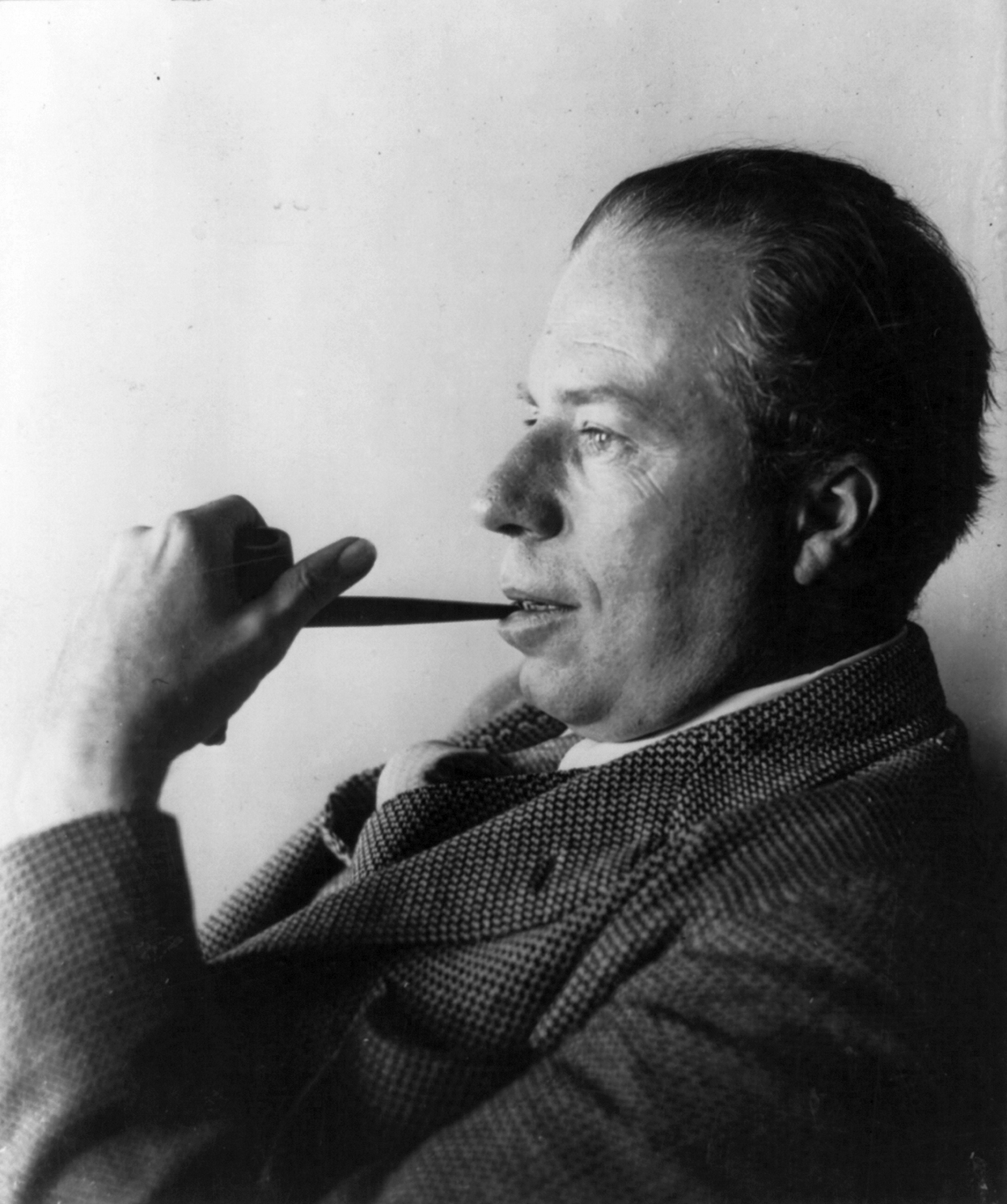
Christopher Darlington Morley (May 5, 1890 – March 28, 1957) was an American journalist, novelist, essayist and poet. He also produced stage productions for a few years and gave college lectures.[1]

Key Information

Biography

[edit]

Morley was born in Bryn Mawr, Pennsylvania. His father, Frank Morley, was a mathematics professor at Haverford College; his mother, Lilian Janet Bird, was a violinist who provided Christopher with much of his later love for literature and poetry.[1]

In 1900, the family moved to Baltimore, Maryland. In 1906 Christopher entered Haverford College, graduating in 1910 as valedictorian. He then went to New College, Oxford, for three years on a Rhodes scholarship, studying modern history.[2]

In 1913 Morley completed his Oxford studies and moved to New York City, New York. On June 14, 1914, he married Helen Booth Fairchild, with whom he would have four children, including Louise Morley Cochrane. They first lived in Hempstead, and then in Queens Village. They then moved to Philadelphia, Pennsylvania, and in 1920 they made their final move to a house they called "Green Escape" in Roslyn Estates, New York. They remained there for the rest of his life. In 1936 he built a cabin at the rear of the property (The Knothole), which he maintained as his writing study from then on.[1]

Christopher Morley in the Feb. 1918 edition of The Bookman (New York City).

In 1951, Morley had a series of strokes, which greatly reduced his voluminous literary output. He died on March 28, 1957, and was buried in the Roslyn Cemetery in Nassau County, New York. After his death, The New York Times and the New York Herald Tribune published his message to his friends and readers:[1]

Read, every day, something no one else is reading. Think, every day, something no one else is thinking. Do, every day, something no one else would be silly enough to do. It is bad for the mind to be always part of a unanimity.

This quote originally appeared in Morley's column "Brief Case; or, Every Man His Own Bartlett" in The Saturday Review of Literature, November 6, 1948.[3]

Career

[edit]

Morley began writing while still in college. He edited The Haverfordian and contributed articles to that college publication. He provided scripts for and acted in the college's drama program. He played on the cricket and soccer teams.

In Oxford a volume of Morley's poems, The Eighth Sin (1912), was published.[4] After graduating from Oxford, Morley began his literary career at Doubleday, working as publicist and publisher's reader. In 1917, he got his start as an editor for Ladies' Home Journal (1917–1918), then as a newspaper reporter and newspaper columnist in Philadelphia for the Philadelphia Evening Public Ledger.

Morley's first novel, Parnassus on Wheels, appeared in 1917. The protagonist, traveling bookseller Roger Mifflin, appeared again in his second novel, The Haunted Bookshop in 1919.

In 1920, Morley returned to New York City to write a column (The Bowling Green) for the New York Evening Post.[5]

The Baker Street Irregulars: Fletcher Pratt, Christopher Morley and Rex Stout (1944)

In 1922, a candid interview was seen nationwide in newspapers, part of a series called Humor's Sober Side: How Humorists Get That Way. Other humorists interviewed in the same series included Will Rogers, Dorothy Parker, Don Marquis, Roy K. Moulton, Tom Sims, Tom Daly, and Ring Lardner.[6]

Morley was one of the founders and a longtime contributing editor of the Saturday Review of Literature. A highly gregarious man, he was the mainstay of what he dubbed the "Three Hours for Lunch Club". Out of enthusiasm for the Sherlock Holmes stories, he helped found the Baker Street Irregulars[1] and wrote the introduction to the standard omnibus edition of The Complete Sherlock Holmes.

"Kit" wrote prefaces, introductions, or forewords for over fifty books. Many of these were posthumously collected as Prefaces without Books.[7] A lion of literature, Morley was able in these essays to analyze subtleties within the Sherlock Holmes stories, for example, examining the influences of Doyle's youthful love of Robert Louis Stevenson's writings upon the Holmes stories. But Morley goes much further, analyzing the Holmes stories as if they are historical artifacts. For examples, he peruses maps of the British sea coast to try to determine the location of Holmes' retirement bee-keeping, he tries to develop a floor plan for Holmes' Baker Street residence, and he conjectures about Watson's love life.

Morley explained, "Is it trivial or absurd to apply to these imaginary characters the same close attention which is the principle of the stories themselves?" and "There is a special and superior pleasure in reading anything so much more carefully than its author ever did."[8]

He also wrote an introduction to the standard omnibus edition of The Complete Works of Shakespeare in 1936, although Morley called it an "Introduction to Yourself as a Reader of Shakespeare".[9] That year, he was appointed to revise and enlarge Bartlett's Familiar Quotations (11th edition in 1937 and 12th edition in 1948). He was one of the first judges for the Book of the Month Club, serving in that position until the early 1950s.

Author of more than 100 novels, books of essays, and volumes of poetry, Morley is probably best known today for his first two novels, Parnassus on Wheels (1917) and The Haunted Bookshop (1919), which remain in print. Barnes & Noble published new editions of these works in 2009 as part of their "Library of Essential Reading" series.[10][11] In 2018, Dover Publications published a new single volume edition containing both novels.[12] Other well-known works include Thunder on the Left (1925) and the 1939 novel Kitty Foyle, which was made into an Academy Award-winning movie.

From 1928 to 1930, Morley and set designer Cleon Throckmorton co-produced theater productions (dramas) at two theaters they purchased and renovated in Hoboken, New Jersey,[1][13] which they had "deemed the last seacoast in Bohemia".[14][15][16]

For most of Morley's life, he lived in Roslyn Estates, Nassau County, Long Island, commuting to the city on the Long Island Rail Road, about which he wrote affectionately. In 1961, the 98-acre (40-hectare) Christopher Morley Park[17] on Searingtown Road in Nassau County was named in his honor. This park preserves as a publicly available point of interest his studio, the "Knothole" (which was moved to the site after his death), along with his furniture and bookcases.

Notable works

[edit]
First edition, first issue cover of The Haunted Bookshop (1919)
  • Parnassus on Wheels (novel, 1917)
  • Shandygaff (travel and literary essays, short stories 1918)
  • The Haunted Bookshop (novel, 1919)
  • The Rocking Horse (poetry, 1919)
  • Pipefuls (collection of humorous essays, 1920)
  • Kathleen (novel, 1920)
  • Travels in Philadelphia (collection of essays, 1920, illustrated by Herbert Pullinger, and Frank H Taylor)
  • Plum Pudding, of divers Ingredients, Discreetly Blended & Seasoned (collection of humorous essays, 1921, illustrated by Walter Jack Duncan)
  • Where the Blue Begins (satirical novel, 1922)
  • The Powder of Sympathy (collection of humorous essays, 1923, illustrated by Walter Jack Duncan)
  • Religio Journalistici (1924)
  • Thunder on the Left (novel, 1925)
  • The Romany Stain (Short stories, 1926)
  • I know a Secret (Novel for children, 1927)
  • Essays by Christopher Morley (collection of essays, 1928)
  • Off the Deep End (collection of essays, 1928, illustrated by John Alan Maxwell)
  • Seacoast of Bohemia ("history of four infatuated adventurers, Morley, Cleon Throckmorton, Conrad Milliken and Harry Wagstaff Gribble, who rediscovered the Old Rialto Theatre in Hoboken, and refurnished it", 1929, illustrated by John Alan Maxwell)
  • Born in a Beer Garden, or She Troupes to Conquer (with Cleon Throckmorton and Ogden Nash, 1930)
  • John Mistletoe (autobiographical novel, 1931)
  • Swiss Family Manhattan (novel, 1932)
  • Ex Libris Carissimis (non-fiction writing based on lectures he presented at University of Pennsylvania, 1932)
  • Shakespeare and Hawaii (non-fiction writing based on lectures he presented at University of Hawaiʻi, 1933)
  • Human Being (novel, Doubleday, Doran & Co., Garden City, New York, 1934)[18]
  • Ex Libris (1936)
  • The Trojan Horse (novel, 1937) Rewritten as a play and produced 1940[19]
  • Kitty Foyle (novel, 1939)
  • Sherlock Holmes and Dr. Watson: A Textbook of Friendship (analysis of Arthur Conan Doyle's writings, 1944)
  • The Old Mandarin (book of poetry, 1947)
  • The Man Who Made Friends with Himself (his last novel, 1949)[1]
  • On Vimy Ridge (poetry, 1947)
  • The Ironing Board (essays, 1949)

Literary connections

[edit]
  • Morley was a close friend of Don Marquis, author of the Archy and Mehitabel stories featuring the antics and commentary of a New York cockroach and a cat. In 1924 Morley and Marquis co-authored Pandora Lifts The Lid, a light novel about the well-to-do in the contemporary Hamptons. They are said to have written alternating chapters, each taking the plot forward from where the other had left off.
  • Morley's widow sold a collection of his personal papers and books to the Harry Ransom Center at the University of Texas at Austin after his death.
  • Morley helped to found The Baker Street Irregulars, dedicated to the study of Sir Arthur Conan Doyle's Sherlock Holmes.
  • Morley edited two editions of Bartlett's Familiar Quotations: 1937 (11th) and 1948 (12th).
  • Morley's 1939 novel Kitty Foyle was unusual for its time, as it openly discussed abortion. It became an instant best-seller, selling over one million copies.
  • Morley's brothers Felix and Frank were also Rhodes Scholars. Felix became President of Haverford College.[1]
  • In 1942, Morley wrote his own obituary for the biographical dictionary Twentieth Century Authors.
  • Morley was at the center of a social group in Greenwich Village that hung out at his friend Frank Shay's bookshop at 4 Christopher Street in the early 1920s.
  • Morley's selected poems are available as Bright Cages: Selected Poems And Translations From The Chinese by Christopher Morley, ed. Jon Bracker (University of Pennsylvania Press: 1965). The translations from the Chinese are actually a joke, explained to the public when the volumes by Morley containing them appeared: they are "Chinese" in nature, good-humored accounts: short, wise, often humorous. But they are not in any strict sense of the word, translations.

References

[edit]
[edit]
Revisions and contributorsEdit on WikipediaRead on Wikipedia
from Grokipedia

Christopher Darlington Morley (May 5, 1890 – March 28, 1957) was an American novelist, journalist, poet, essayist, and playwright whose versatile and humorous writings spanned over 100 books, articles, and essays. Born in Haverford, Pennsylvania, to a family of educators, Morley graduated from Haverford College in 1910 and briefly studied at Oxford before embarking on a multifaceted literary career that included editing magazines and producing theater. His most enduring works include the novels Parnassus on Wheels (1917) and its sequel The Haunted Bookshop (1919), which celebrate the joys of bookselling and reading, and Kitty Foyle (1939), a social novel adapted into a successful film starring Ginger Rogers. Morley also founded the Baker Street Irregulars in 1934, the world's first major Sherlock Holmes society, fostering scholarly and enthusiast engagement with Arthur Conan Doyle's detective.

Early Life and Education

Family and Childhood

Christopher Darlington Morley was born on May 5, 1890, in , as the eldest of three sons to Frank Morley and Lilian Janet Bird Morley. His father, an English immigrant, served as a professor of at , while his mother, also from , was a and who immigrated with the family the previous year and instilled in her son an early love of by him to read. The family's intellectual environment, shaped by the parents' scholarly and artistic pursuits, fostered Morley's precocious interest in writing; by age twelve, he had begun publishing his own amateur . In 1900, when Morley was ten years old, the family relocated to , , after Frank Morley accepted a position at , exposing the children to a new urban setting that contrasted with their prior suburban Quaker college community. His younger brother, Felix Morley, later became a noted and economist, reflecting the family's ongoing emphasis on intellectual achievement. Morley's childhood was marked by these familial influences rather than notable public events, with his mother's poetic recitations and musical training providing a foundational creative spark amid a stable, academically oriented household.

Academic Background

Morley enrolled at in 1906 and graduated in 1910 with a degree, serving as class and earning election to . Following graduation, he received a and studied modern history at , from 1910 to 1913.

Professional Career

Journalism and Publishing Roles

Upon completing his studies at , in 1913, Christopher Morley returned to the and entered the industry by joining Doubleday, Page & Company in New York as a and publisher's reader. This role involved promoting books and evaluating manuscripts for publication, marking the start of his professional involvement in literary production. In 1917, Morley took on an editorial position at , serving as editor until 1918, where he oversaw content for the prominent women's magazine amid his growing literary output. Concurrently, he contributed as a reporter and columnist to the , producing observational sketches of city life that were later collected in his 1920 book Travels in Philadelphia. After relocating to New York in 1920, Morley wrote a column for the New York Evening Post through 1923, offering commentary on and . In 1924, he co-founded the Saturday Review of and acted as its founding editor, providing columns and editorial direction until 1941, during which the publication became a key forum for book reviews and intellectual discourse. These roles underscored Morley's influence in shaping public engagement with books and ideas through both and editorial oversight.

Theatrical and Editorial Contributions

Morley served as an editor for from 1917 to 1918, where he contributed to its literary content during his early publishing career. Following this, he wrote columns for the from 1918 to 1920, focusing on literary topics and essays. In 1920, he joined the New York Evening Post as a , authoring the feature "The ," which included poetry, short essays, and literary reviews until 1923. Morley co-founded the Saturday Review of Literature in 1924 and served as its founding editor, contributing columns and editorial oversight that shaped its role as a key venue for through 1941. His editorial influence extended to selecting works for the Book-of-the-Month Club, where he participated in review panels. In theater, Morley co-produced dramas from 1928 to 1930 with set designer Cleon Throckmorton through the Hoboken Theatrical Company, renovating and operating two venues in , including the reopened Rialto Theatre. Productions there featured both revivals and new plays, such as Please to Meet You in 1928, emphasizing accessible, non-"arty" entertainment. He co-authored the play Born in a Beer Garden (1930) with Throckmorton and , reflecting his hands-on involvement in Hoboken's theatrical scene. Morley also wrote original one-act plays, including Thursday Evening: A Comedy in One Act, a domestic suburban .

Literary Works

Key Novels and Their Themes

Parnassus on Wheels (1917), Morley's , centers on Helen McGill, who purchases a traveling from the eccentric Mifflin to liberate her brother from its demands, leading to her own adventure of self-discovery through . The work celebrates the redemptive and expansive qualities of s, portraying them as vehicles for new perspectives, friendship, and personal renewal rather than mere commodities. Mifflin embodies this ethos, declaring that selling a imparts " and friendship and humour" alongside the physical object. Its sequel, (1919), shifts to a fixed bookstore amid post-World War I tensions, incorporating a mystery involving disappearing books and subtle . Themes emphasize literature's role in fostering critical thought and countering , with Mifflin advocating books as essential for democratic and personal enlightenment. The narrative intertwines , romance, and an anti-war undercurrent, underscoring reading's capacity to humanize amid ideological conflicts. Kitty Foyle (1939), a adapted into a , follows the titular working-class woman navigating forbidden romance with an upper-class man, confronting class barriers, unwed pregnancy, and . It probes , female independence, and the clash between personal desire and societal norms, presenting Kitty as resilient yet marked by economic and emotional hardships. Critics noted its frank treatment of subjects, though some debated its . In Human Being (1932), a semi-retired accountant compiles a composite of "Richard Roe," the archetypal ordinary citizen, to illuminate everyday existence. The novel explores identity, memory, and the universality of human experience, blending wit and to affirm the in commonplace lives without romantic idealization.

Essays, Poetry, and Miscellaneous Writings

Morley published several volumes of throughout his career, beginning with The Eighth Sin in 1912 while studying at Oxford University, which showcased his early lyrical style influenced by romantic traditions. Later collections included The Rocking Horse in 1919, featuring whimsical verses on everyday themes, and The Old Mandarin: More Translations from the Chinese in 1947, comprising interpretive renderings of that reflected his interest in Eastern literature. These works, though less prominent than his , demonstrated Morley's versatility in verse forms, often blending humor, , and observation of human folly. In essays, Morley favored informal, reflective pieces on books, travel, and contemporary life, compiling them into accessible volumes such as Shandygaff (1918), a mix of literary criticism, short stories, and personal anecdotes drawn from his journalistic experiences. This was followed by Pipefuls (1920), a series of column-style essays originally appearing in newspapers, noted for their light-hearted commentary on urban existence and reading habits. Additional essay collections like In the Sweet Dry and Dry (1922) addressed Prohibition-era absurdities through satirical lenses, underscoring Morley's penchant for critiquing social norms via personal narrative. His essays prioritized empirical observations over abstract theory, often privileging direct encounters with texts and people as evidentiary bases for insight. Miscellaneous writings encompassed Morley's editorial compilations, newspaper columns for outlets like the Philadelphia Evening Public Ledger, and occasional plays or parodies, such as contributions to theatrical projects including Seacoast of Bohemia (1924), a semi-autobiographical account of literary bohemia. He also edited anthologies like Modern Essays (1921), selecting contemporary pieces to highlight evolving prose forms, and revised Bartlett's Familiar Quotations for its 11th (1937) and 12th (1948) editions, expanding entries with precise sourcing from historical texts. These efforts, spanning columns on daily curiosities to collaborative editorial work, illustrated his role as a cultural connector, though often secondary to his novels in critical attention.

Literary and Cultural Involvement

Sherlock Holmes Enthusiasm

Christopher Morley's enthusiasm for Sherlock Holmes began in childhood, when he founded his first Sherlockian society, "The Sign of the Four," at age twelve in 1902 with three friends while living in Baltimore. This early interest was rekindled in 1911 following a lecture by Ronald Knox at Oxford, leading Morley to deepen his engagement with the detective's canon. By 1926, as editor of the Saturday Review of Literature, Morley began incorporating Sherlockian references into his columns, fostering a broader interest among readers. In 1930, Morley contributed the preface to the Doubleday edition of The Complete Sherlock Holmes, praising the stories' enduring appeal and analytical rigor while lamenting their perceived "death" in popular memory with his essay "In Memoriam: Sherlock Holmes" published that August in the Saturday Review of Literature. He further demonstrated his playful devotion through an ongoing exchange of fabricated letters discussing Holmesian minutiae with an imaginary correspondent, Jane Nightwork, which exemplified the whimsical scholarship he championed. Morley's organizational efforts culminated in the founding of the (BSI) in 1934, evolving from informal gatherings like the Grillparzer Club (established 1931) and his Three-Hours-for-Lunch Club. The BSI's inaugural event was a on January 6, 1934, celebrating Holmes's birthday, followed by the first official dinner on December 7, 1934, at in . Morley formalized the group by publishing its constitution and a Sherlock Holmes-themed puzzle in the Saturday Review of Literature, establishing precedents for Sherlockian sociability and pseudoscholarship that influenced subsequent Holmes enthusiast communities. Under his leadership, the BSI emphasized conviviality over strict academic analysis, prioritizing the "game" of treating Holmes as a .

Clubs and Social Networks

Christopher Morley was known for founding numerous informal literary clubs and societies, often whimsical in nature and centered around shared intellectual pursuits. One such group was the Three Hours for Lunch Club, which he established to facilitate extended midday gatherings with fellow writers and thinkers, emphasizing conversation over brevity. The club lacked formal structure, being convened and disbanded around each meeting, and served as a venue for Morley's circle of pen friends, including both men and women. Morley's most enduring contribution to literary societies was the founding of the Baker Street Irregulars (BSI), America's premier organization dedicated to Sherlock Holmes scholarship. The society's roots trace to 1902, when the 12-year-old Morley organized a small Holmes-themed group with three friends in . This early enthusiasm culminated in the formal establishment of the BSI on November 6, 1933, though its inaugural dinner occurred on January 30, 1934, marking Sherlock Holmes' birthday. Morley hosted the event at New York's Christ Cella's restaurant, inviting luminaries like and Owen Davis, and positioned himself as the group's inspirational leader. Through the BSI, Morley cultivated a network of Holmes enthusiasts, including editors, authors, and critics, fostering a tradition of annual dinners, irregular investitures (personal Holmesian titles), and scholarly publications like The Baker Street Journal. His involvement extended to embedding Sherlockian allusions in his Saturday Review of Literature column, which helped propagate the society's influence. Morley's clubs exemplified his sociable, book-loving ethos, bridging casual camaraderie with dedicated literary fandom.

Personal Life

Marriage and Family

Morley married Helen Booth Fairchild on June 14, 1914, in a union that lasted until his death in 1957. Fairchild, born in 1893, outlived Morley and died in 1966. The couple first resided in , before relocating to in 1917 and eventually settling permanently in Roslyn Heights, , around 1920. The Morleys had four children: Christopher Jr., Louise (later Cochrane), Helen, and Blythe. Family photographs from the era depict Morley with his wife and children, reflecting a domestic life intertwined with his literary pursuits in suburban Long Island settings. Little public record exists of marital discord or separation, suggesting a stable household that supported Morley's extensive writing and editorial commitments.

Residences and Later Years

Morley spent his early childhood in Haverford, Pennsylvania, where he was born on May 5, 1890, before his family relocated to Baltimore, Maryland, around 1900 when he was ten years old. He returned to Haverford in 1906 to attend , graduating in 1910, after which he studied as a Rhodes Scholar at , from 1910 to 1913. Upon returning to the United States, he initially worked in with Doubleday, Page & Co., but moved to in 1917 for editorial positions at the and the Philadelphia Evening Public Ledger. In 1920, Morley relocated permanently to Roslyn Estates on , New York, purchasing a home he named "Green Escape" at 38 The Birches, where he resided with his family for the remainder of his life. In 1934, Morley constructed a one-room writing studio called "The Knothole" on his Roslyn property, which served as a dedicated workspace amid his prolific output. He maintained this residence through the 1940s, during which he engaged in local cultural activities, including involvement with the Millpond Playhouse theater in 1940. By the early 1950s, Morley commuted infrequently from Roslyn Heights—part of the same community—to for Book-of-the-Month Club meetings, working primarily from home until health issues curtailed his activities. Morley's later years were marked by declining health; he suffered a series of strokes around 1951, which significantly reduced his literary productivity and confined much of his time to his Roslyn home. He died there on March 28, 1957, at age 66, following a prolonged illness, and was buried in Roslyn Cemetery. After his death, "The Knothole" was relocated to Christopher Morley Park in nearby , preserving it as a memorial to his writing life.

Reception and Legacy

Contemporary Critical Views

Morley's novels and essays received broad acclaim from reviewers in the interwar period for their lively prose, humor, and affectionate portrayal of intellectual pursuits amid ordinary life. Publications like The Bookman serialized portions of works such as The Haunted Bookshop (1919), underscoring his appeal to book enthusiasts and contributing to his status as a leading literary journalist. His essay collections, including Modern Essays (1921), were commended for their utility in education, with one review describing them as a "useful weapon" for composition instruction due to their engaging selections from Bacon to contemporaries. The 1939 novel Kitty Foyle, a first-person account of a white-collar woman's social ascent and moral dilemmas, exemplified Morley's commercial peak, ranking as the second most widely read American novel in and inspiring a successful . Critics appreciated its candid exploration of class and dynamics, though some noted its sentimental undertones. A 1926 assessment in The Sewanee Review highlighted Henry Seidel Canby's contemporary evaluation as the most thorough, portraying Morley as a dynamic figure whose output defied static judgment amid his prolific career. While Morley's accessibility drew praise—evident in his founding role at the Saturday Review of Literature (1924), where he shaped discourse—certain observers questioned the depth of his relative to modernist peers, viewing it as overly journalistic or whimsical rather than transformative. Nonetheless, his influence persisted through the , with multiple printings of titles like Human Being (1934) reflecting sustained reader and reviewer interest in his personal, reflective style.

Enduring Influence and Assessments

Morley's novels Parnassus on Wheels (1917) and (1919) maintain a dedicated readership among bibliophiles, celebrated for their whimsical celebration of and the joys of reading, with the latter often cited as an early example of the bibliomystery genre. These works, emphasizing themes of and the transformative power of amid early 20th-century social changes, continue to be reprinted and recommended in literary circles focused on book culture. His essay "On Laziness" (), advocating a deliberate slowness in an accelerating modern world, persists in anthologies as a witty defense of contemplative idleness. A primary vector of Morley's lasting impact lies in his foundational role in Sherlock Holmes scholarship and fandom. In 1934, he organized the inaugural Baker Street Irregulars (BSI) dinner in to commemorate Holmes's birthday, establishing the world's oldest and most influential society dedicated to the detective's canon, which has since hosted annual events, published scholarship, and inspired global Holmesian organizations. Morley's parodic writings, such as the faux correspondence in (1931), and his introduction to a canonical omnibus edition of Arthur Conan Doyle's stories, helped legitimize Holmes studies as a blend of literary analysis and playful pseudoscholarship, countering Doyle's own dismissal of the series. The BSI's model of irregular membership—conferring titles drawn from Doyle's texts—endures, fostering a tradition of archival research and cultural preservation that extends to exhibitions and academic collaborations today. Contemporary assessments view Morley as a versatile whose prolific output—spanning over 50 books—prioritized charm and accessibility over profundity, rendering much of his work stylistically dated outside niche revivals. Critics acknowledge his commercial success, including bestsellers like Kitty Foyle (1939), adapted into a film starring , yet note a decline in broader literary esteem post-mid-20th century, attributing it to his episodic, light-hearted prose lacking the modernist depth of peers. Scholarly attention remains sporadic, concentrated on his editorial innovations at the Saturday Review of Literature (co-founded ) and contributions to , but his influence is deemed more cultural—in promoting book clubs and literary conviviality—than transformative in canonical literature. Detractors, including some mid-century reviewers, critiqued his sentimentality, while admirers highlight his unpretentious advocacy for reading as a democratic pursuit.

References

Add your contribution
Related Hubs
User Avatar
No comments yet.