Hubbry Logo
Clan ShawClan ShawMain
Open search
Clan Shaw
Community hub
Clan Shaw
logo
8 pages, 0 posts
0 subscribers
Be the first to start a discussion here.
Clan Shaw
Clan Shaw
from Wikipedia

Clan Shaw
Mac Ghille Sheathanaich[1]
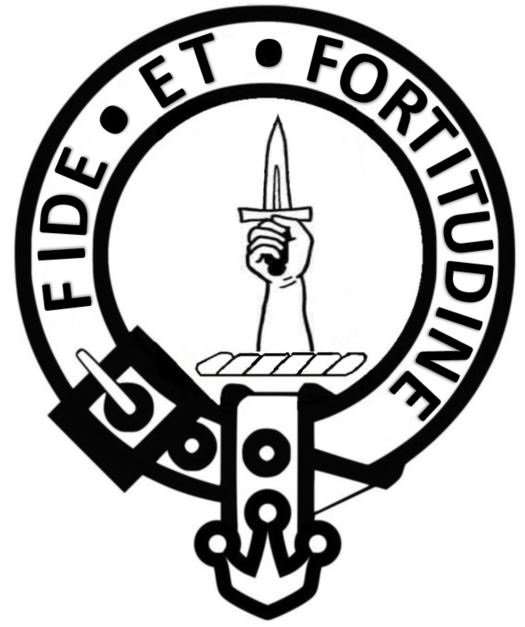
Crest: A Dexter Arm, the hand holding the dagger, pale, proper
MottoFide et fortitudine (By fidelity and fortitude)[1]
War cry"Na Bean Ris A Chat" (Touch not the cat)
Profile
RegionHighland
DistrictStrathspey[1]
Plant badgeRed whortleberry[1]
Pipe musicThe Rothiemurchus Rant, The Shaws March
Chief
Landon Shaw of Tordarroch[1]
Historic seatDoune of Rothiemurchus[2]
Septs of Clan Shaw
Adamson, Adamsone, Ademson, Ademsoun, Ademsoune, Aesone, Aison, Aissone, Aissoun, Aissoune, Asson, Assone, Aue, Ave, Ay, Aye, Ayesone, Ayson, Aysone, Aysoun, Ayssoun, Eason, Easone, Easson, Esson, Ison, Isone, MacAy, Saythe, Scaith, Scayth, Schau, Schaw, Schawe, Scheoch, Scheok, Schiach, Schioch, Schioche, Seah, Seath, Seith, Seth, Sha, Shau, Shawe, Shay, Sheach, Sheath, Sheehan, Sheoch, Shiach, Siache, Sith, Sithach, Sithech, Sithig, Skaith, Sythach, Sythag, Sythock, Tordarroch
Allied clans
Rival clans

Clan Shaw is a Highland Scottish clan and is a member of the Chattan Confederation.[3]

History

[edit]

Origins

[edit]
A Victorian era, romanticised depiction of Private Farquhar Shaw of the Blackwatch by R. R. McIan, from The Clans of the Scottish Highlands, published in 1845.

The progenitor of the Clan Shaw is believed to be one Shaw MacDuff who was a younger son of Duncan, the Thane or Earl of Fife, who was a descendant of Kenneth MacAlpin.[3] Shaw MacDuff was made keeper of Inverness Castle, which was a strategic royal castle, by Malcolm IV of Scotland.[3] His heirs were known as the Mhic anToiseach which means the sons of the Thane and they supported the royal government, consolidating their power around Inverness.[3] Shaw's grandson was Shaw Macwilliam, who in 1263 acquired lands at Rothiemurchus.[3] His son was Farquhard who due to problems with their powerful neighbours the Clan Comyn, made an alliance with the Clan Donald by marrying Mora, daughter of Aonghas Mór, Lord of Islay.[3] Farquhard's son was Angus Mackintosh, sixth chief of Clan Mackintosh who married Eva, daughter of the chief of Clan Chattan (Chattan Confederation). Eva's second son John-Angus, was the first chief of Clan Shaw.[3]

Wars of Scottish Independence

[edit]

The feud with the Clan Comyn brought the Chattan Confederation support from Robert the Bruce and they fought for him at the Battle of Bannockburn in 1314.[3] They also took part in the Scottish invasions of England in 1318 and 1319.[3]

14th century

[edit]

The second chief of Clan Shaw was Shaw Macghillechrist Mhic Iain who was a great-grandson of Angus Mackintosh and Eva.[3] He was known as Sgorfhiachlach(bucktooth) and was raised with his cousins at Moy, seat of the Mackintoshes.[3] It seems certain that he was present at the Battle of Invernahavon against the Clan Cameron in 1370.[3] In 1391 Shaw was elected as Captain of Clan Chattan for a raid on Angus under Alexander Stewart, Earl of Buchan who was known as the "Wolf of Badenoch".[3] In 1396 Shaw was appointed to lead the Clan Chattan at the Battle of the North Inch, a trial by combat against the Clan Cameron, which took place in front of an audience that included Robert III of Scotland and the Dauphin of France.[3]

15th, 16th and 17th centuries

[edit]

James Shaw of Rothiemurchas was killed at the Battle of Harlaw in 1411.[2]

The grandson of Shaw Bucktooth was Aedh who settled at Tordarroch in 1468.[3] He occupied a strategic site near the River Nairn and he and his followers became known as the "Clan Ay".[3] On 22 May 1543 Angus MacRobert of Tordarroch was one of the signatories of a band of union and management of the Clan Chattan, that was signed at Inverness.[3] Shaw of Tordarroch again signed a similar agreement on 4 April 1609.[3] The clan prospered and Duncan Shaw, Laird of Crathienaird rose to become chamberlain to the Earl of Mar by 1691.[3]

18th century and Jacobite risings

[edit]

On 15 September 1715 Mackintosh of Borlum called out the Clan Chattan to fight for the Jacobite cause in the Jacobite rising of 1715.[3] The Shaw contingent was led by Robert, the younger of Tordarroch and his brother Angus.[3] The Shaw contingent was noted for its discipline, equipment and bravery.[3] Robert and Angus were both imprisoned after the rising had collapsed and Robert died soon after being released in 1718.[3] Angus was transported to Virginia but was pardoned in 1722.[3] Angus never recovered from his experience or the death of his brother and as a result he refused to call out his clan for the Jacobite rising of 1745.[3] However many Shaws rallied to support the Jacobite Stuarts such as James Shaw of Crathienaird.[3] Lady Anne Farquharson-MacKintosh called out the entire Clan Chattan to fight for the Jacobites and two of her most trusted lieutenants were James Shaw and John Shaw of Kinrara.[3]

Chiefs

[edit]

The grave of Shaw Macghillechrist Mhic Iain

[edit]

The 2nd chief of Clan Shaw has an unusual grave. Shaw Macghillechrist Mhic Iain known as Sgorfhiachlach was appointed to lead the Clan Chattan at the Battle of the North Inch, a trial by combat, as the Chief of Clan Macintosh was too old at that stage. His grave in Doune at Rothimurchus has 5 heavy homing stones resting on top, said to represent those who survived the battle. Any person who tampers with these stones is said to suffer illness or death. In 1983 an iron cage was placed over the grave to protect visitors from the curse. A spirit known as a Bordach an Duin is also said to guard the grave.[4][5]

Current Chief

[edit]

In 1970 Major Charles John Shaw of Tordarroch was recognized by the Lord Lyon King of Arms as chief of Clan Shaw.[3] He was the grandfather of the present chief, in an unbroken line of continuity back to the ancient Earls of Fife.[3]

Clan Castles

[edit]
Tordarroch House
  • Doune of Rothiemurchus, two miles south of Aviemore in Strathspey is an eighteenth-century mansion which replaced an earlier castle.[2] The lands were held by the Shaws, Mackintoshes and by the Dallases of Cantray.[2] James Shaw of Rothiemurchus was killed at the Battle of Harlaw in 1411.[2]
  • Tordarroch Castle, seven miles south of Inverness was once a strong tower but little survives.[2] It was held by the Shaws from 1468.[2] The castle was later replaced by Tordarroch House.[2]

References

[edit]
[edit]
Revisions and contributorsEdit on WikipediaRead on Wikipedia
from Grokipedia
Clan Shaw is a Highland Scottish clan, recognized as one of the principal septs of the ancient Confederation, with origins tracing back to Shaw MacDuff, a 12th-century son of Duncan, 5th , who was appointed Constable of around 1163. The clan derives its name from the Gaelic "Toiseach" meaning "leader," reflecting early ties to the MacDuff earls and broader Scottish royalty through the line of Malcolm III, and it adopted the motto Fide et Fortitudine ("By Faith and Fortitude") along with the plant badge of red whortleberry. The clan's early history intertwined with the Mackintoshes, as early chiefs of were of Shaw descent, and the marriage of the 6th chief Angus Mackintosh to Eva, heiress of the previous Chattan chief, made their second son John Shaw the first chief of Clan Shaw as a principal . Shaw Mor, a grandson of John and the clan's notable early leader, captained the forces to victory in the famous Battle of the North Inch at Perth in 1396, a trial-by-combat against that solidified their reputation for martial prowess before an audience including the . Following this triumph, the Shaws were granted lands in Rothiemurchus in the , where they established their principal seat at Tordarroch, though these estates were lost to the by 1567 amid feuds and legal disputes. Throughout the medieval and early modern periods, Clan Shaw participated in key Scottish conflicts, including support for at the in 1314 under chiefs like Angus Mac Ferquhard, and later involvement in the Jacobite Risings of 1715 and 1745, with some members fighting at Culloden despite the devastating aftermath for Highland clans. Notable chiefs include Alan Ciar Mac Iain, the 7th chief fined for treason in 1528, and more recently, the 21st chief Major Iain C.J. Shaw, recognized by the Lord Lyon in 1970. The lineage has maintained continuity, with branches at Tordarroch, Dell, Dalnavert, and Kinrara, and today the clan remains active under the 23rd Chief of Tordarroch, Iain Shaw, who succeeded his father John in 2017 and resides in while the clan headquarters operates from Newhall House near .

History

Origins

The origins of Clan Shaw are rooted in the ancient royal lineage of the , tracing descent from Shaw MacDuff, a younger son of Duncan, , and thus connected to the broader MacDuff family, hereditary high constables of . In 1163, King Malcolm IV appointed Shaw MacDuff as constable of , a strategic royal stronghold in the north, tasking him with maintaining order amid ongoing unrest in following a campaign against rebellious local lords in 1160. This position elevated the family, whose descendants became known as the "Mhic an Toiseach" (sons of the thane or chief), marking their transition from Lowland nobility to Highland influencers. Following Shaw MacDuff's death around 1179, his heirs migrated deeper into the Highlands, settling in areas such as Petty, Breachley, and Strathdearn. A pivotal development occurred in 1236 when Shaw MacWilliam, grandson of Shaw MacDuff, acquired the lands of Rothiemurchus in Strathspey from the Bishopric of , securing a vital territorial base amid the ancient and establishing the clan's enduring presence in . These holdings, strategically located for and defense, formed the core of Shaw influence and foreshadowed their role in regional power dynamics. The clan's integration into the solidified in the late through the marriage of Angus Mackintosh—sixth chief of and a direct descendant of the MacDuff line—to Eva, daughter of Gilpatrick (or Dougal Dall), sixth chief of , around 1291. This union transferred of the Chattan federation to the Mackintoshes, with the Shaws, as a key branch, assuming an early role as enforcers and protectors of Mackintosh interests within the , including military in affairs. By this period, the Shaws had firmly established themselves as a distinct Highland kindred, bound by blood and loyalty to the broader Chattan structure.

13th and 14th centuries

During the 13th century, the Shaws consolidated their presence in the Highlands through strategic land acquisitions, with Shaw Mac William securing the lands of Rothiemurchus from the Bishopric of in 1236, establishing the family as the first lairds there and laying the foundation for territorial control in the region. This holding positioned the Shaws as key allies to the Mackintosh chiefs, whom they served loyally, contributing to the early structure of the confederation. In the , the Shaws played a significant role in the Wars of Scottish Independence, aligning with against English forces. At the in 1314, Angus Mac Ferquhard, a prominent Shaw of Rothiemurchus and descendant of the lairds, served as a chief officer under the and led the contingent in support of Bruce's victory. This military service enhanced the Shaws' standing within the and helped solidify their influence in Highland affairs. Tensions with neighboring clans escalated in the late , particularly a feud with over territorial disputes in . This conflict culminated in the Battle of Invernahavon around 1386, where a small force led by Shaw Mac Ghillechrist Mhic Iain—known as Shaw Mhor or Sgorfhiachlach (Bucktooth)—and his kinsmen ambushed a larger Cameron party allied with the Comyns. Despite being outnumbered, the Shaws and their Mackintosh allies achieved a decisive victory, with Shaw Mhor and ten companions reportedly standing victorious over 29 slain Camerons; this triumph, attributed to Shaw's leadership, further entrenched the Shaws' role as a distinct and valued of . Through such service to the Mackintoshes, including acting as captains and enforcers in 's military endeavors, the Shaws expanded their influence and secured their Rothiemurchus territories against rivals, transitioning from lowland origins to established Highland power by the century's end.

15th to 17th centuries

In the early , played a significant role in regional conflicts as part of the confederation, with James Shaw of Rothiemurchus falling at the on July 24, 1411, while supporting the ' claim to the Earldom of Ross under the command of the Mackintosh chief. His death highlighted the clan's loyalty to broader Highland alliances amid the power struggles between Lowland forces and the Islesmen, where Shaw forces contributed to the Chattan contingent's efforts to defend northern interests. The longstanding rivalry with Clan Cameron persisted into the 15th century, marked by raids and skirmishes over territorial boundaries in Rothiemurchus and surrounding Badenoch lands, as the Camerons continued to challenge Chattan control following earlier clashes like Invernahavon. Clan Shaw tacksmen maintained vigilant border patrols, engaging in retaliatory cattle raids to protect their holdings in the forested straths of Inverness-shire, which served as a buffer against Cameron incursions from Lochaber. This feud underscored the clan's role in sustaining the social fabric of Highland kinship networks, where defense of communal grazing lands reinforced internal cohesion. By mid-century, land disputes with the Comyns and Mackintoshes led to legal affirmations of Shaw tenure; in 1464, Bishop William of granted a confirming Alasdair Ciar Shaw's possession of Rothiemurchus, resolving prior encroachments after Alasdair's recovery of the estate upon reaching maturity. However, internal strife eroded these gains in the , as Allan Shaw, the last Shaw of Rothiemurchus, forfeited the lands around 1564 following his conviction for murdering his stepfather, Dallas of Cantray, prompting their and sale to John Grant of Freuchie. Clan Shaw members served in royal military campaigns during this period, where father and son among the Shaws perished alongside thousands of Scots at the on September 9, 1513, in the disastrous encounter with English forces. Later, under James VI, Shaw tacksmen from the Chattan branches contributed to efforts suppressing lawless elements in the Borders, aligning with the crown's pacification drives that integrated Highland levies into broader stability operations by the early . Culturally, the Shaws deepened their immersion in Gaelic traditions during the 16th and 17th centuries, adopting the linguistic and poetic customs of the Highland Gaeldom as integral to identity, with family bards preserving oral histories of feuds and chiefs in verse form. They also supported the piping heritage of the region, employing hereditary pipers who composed ceòl mòr tunes commemorating battles like Harlaw, thereby embedding the clan within the bardic and musical lore that defined social gatherings and martial rituals in Rothiemurchus.

18th century and Jacobite risings

In the early , Clan Shaw, as a sept of the Confederation, actively supported the Jacobite cause during the 1715 rising. The Shaw contingent, led by Robert Shaw the Younger of Tordarroch and his brother Angus, joined forces under Brigadier William Mackintosh of Borlum and fought with distinction for their discipline and bravery at the . Following the rising's collapse, both brothers were captured at the Battle of Preston and imprisoned in Carlisle; Robert died shortly after his release in , while Angus was transported to as a penal before receiving a in 1722. Another Shaw participant, Æneas Shaw of Tordarroch, served as an officer in Mackintosh's battalion, was confined at , and later exiled to America before being released on bond for allegiance. During the 1745 Jacobite rising, the clan's chief, Angus Shaw of Tordarroch—scarred by his 1715 imprisonment—refrained from calling out the clan and maintained neutrality to protect his estates. Nevertheless, numerous Shaws from branches in Rothiemurchus, , and elsewhere rallied to the Jacobite standard under Lady Anne Farquharson-Mackintosh, fighting in the ranks at the and the . At Culloden in April 1746, Shaws were among the first to charge in fierce , suffering heavy casualties; notable fighters included the five sons of Duncan Shaw of Crathienaird, Captain Alister Shaw of Auchavan (wounded at and present at Culloden in Lord Ogilvy's Regiment), and the younger Shaw of Kinrara, who was executed in cold blood shortly after the battle along with 14 companions. The defeat at Culloden led to severe repercussions for participating Shaws, including attainders, executions, and the dispersal of families amid government reprisals against Jacobite supporters. While the Tordarroch chief's neutrality spared his core estates from forfeiture, individual branches faced property seizures and economic hardship, contributing to the clan's broader adaptation during the of the mid- to late 18th century. Some Shaw families emigrated to , including earlier exiles like Angus in and later Clearance-displaced kin seeking opportunities in the colonies, accelerating the decline of traditional chiefly authority as survivors shifted toward commercial estate management by the 1770s.

Chiefs

Lineage of the chiefs

The lineage of Clan Shaw's chiefs traces back to the late with Shaw of Rothiemurchus, a descendant of the Earls of through the MacDuff line, who acquired lands in Rothiemurchus around 1236 and served as captain of the Confederation. He was succeeded by his son Shaw Macghillechrist Mhic Iain, who led Clan Chattan forces and was killed at the Battle of Invernahavon in 1386 (or 1370) during feuds with the Camerons; his father, Ghillechrist, had also perished in the conflict. The Rothiemurchus line continued through subsequent chiefs into the 17th century, maintaining the clan's leadership within . James Shaw, son of Shaw Macghillechrist, was killed at the in 1411. He was followed by his son, Alasdair "Ciar" Shaw (d. after 1464), who secured formal possession of Rothiemurchus lands through a tack from the Mackintosh chief in 1464, confirmed by the of . Alasdair was succeeded by his son Iain "Ciar" Shaw (late 15th century), then by Iain's son Alan Shaw (d. 1542), who sold the feu of Rothiemurchus in 1539 but retained a life rent; the lands were ultimately lost to the around 1567. Alan's son, James Shaw (d. 1628), held the estate amid growing pressures from neighboring clans like . Another Alan Shaw (d. after 1645), was outlawed for murdering his stepfather and died in captivity at , effectively ending the direct Rothiemurchus male line. With the Rothiemurchus line's extinction in the , the chiefly succession transitioned to the Tordarroch branch, descending from Adam Shaw, brother of Alasdair "Ciar," who had settled lands at Tordarroch around 1468. This branch faced challenges from the Jacobite risings of and , which led to forfeitures and imprisonment for some members, contributing to the clan's dispersal. The Tordarroch Shaws maintained the chiefly title through the , with the line's legitimacy formally affirmed in the when the recognized John Shaw of Tordarroch as chief in 1970, matriculating the arms and resolving a longstanding vacancy in official recognition dating back over 400 years. This endorsement solidified the Tordarroch branch as the principal chiefly house, preserving the clan's ancient descent from the Earls of . Note that chief numbering varies across traditions; the Tordarroch line is sometimes counted separately as Chiefs of Ay.

Current chief

Iain Shaw of Tordarroch serves as the 23rd Chief of Clan Shaw (and 18th Chief of Clan Ay), having succeeded his father, John Shaw of Tordarroch, following the latter's death in on October 22, 2017. The chiefly line traces its formal modern recognition to 1970, when the King of Arms confirmed Major Iain Charles John Shaw of Tordarroch—grandfather to the current chief—as representative of the undifferenced arms of the name, establishing an unbroken succession from historical origins within the Confederation. The current chief resides in with his partner, Ana Maria Prades Llombart, and their son, James Shaw of Tordarroch Prades, who is designated as the heir and tanist. Iain Shaw also has three other children—Iselin, Marcus Alexander, and Sunniva Shaw of Tordarroch—who live in , . This international family arrangement reflects the chief's personal ties to both Iberian and Scandinavian contexts, inherited in part from his parents' long-term residence in , where they engaged with local historical and cultural pursuits. As chief, Iain Shaw actively contributes to the revival and sustenance of Clan Shaw through his leadership role in the Association, a key body for coordinating activities among the confederation's member clans. His efforts emphasize maintaining global connections among clan members, including participation in international clan gatherings that promote shared heritage and fellowship. These initiatives build on the post-1970 reestablishment of the chiefly line, which revitalized clan identity after centuries of fragmented leadership. In addressing modern challenges, the chief focuses on the Scottish diaspora's dispersal and the preservation of Gaelic and Highland cultural traditions, fostering outreach to Shaw descendants worldwide to counteract historical and land losses. This includes supporting heritage education and community events that reinforce the clan's ties to its Strathspey roots, ensuring continuity amid contemporary global mobility.

Castles and residences

Doune of Rothiemurchus

The Doune of Rothiemurchus, located approximately two miles south of Aviemore in the Strathspey region of the Scottish Highlands, served as the primary historical seat of Clan Shaw within the Rothiemurchus estate. The lands were originally granted to Shaw Mac William by the Bishopric of Moray in 1236, establishing the site's early significance to the clan as a fortified stronghold in the ancient Caledonian Forest. The original structure was an ancient timber hill fort, possibly originating as a Bronze Age settlement around 1500 BC or evolving into a Norman-era motte-and-bailey fortification in the 12th or 13th century, strategically positioned on a mound to guard a ford over the River Spey. Following the Battle of the North Inch in 1396, where Shaw Mhor led Clan Chattan forces, the site was leased to the Shaws by Lachlan Mackintosh, solidifying its role as the clan's main residence and a hub for tribal leadership within the confederation. The fort was burned during a Comyn in 1411, but Alasdair Ciar Shaw reclaimed it, securing a permanent feu from the Bishop of on September 4, 1464, which reinforced the Doune's defensive and residential importance amid ongoing feuds. It remained the chiefs' seat, hosting clan gatherings and serving as a base during conflicts such as the in 1411, until the Shaws' control ended through a series of transfers: sold with life rent to George Gordon in 1539 and fully purchased by Iain Grant of Freuchie on July 14, 1567. Under Grant ownership, the site underwent significant architectural evolution, with Patrick Grant constructing an initial at the base of the mound in the late , followed by Georgian-style additions in the 1780s by Dr. William Grant, including a , , and bedrooms. Further expansions occurred between 1803 and 1821 under Sir John Peter Grant, who added a , morning , wing, and a third floor, restoring the exterior to reflect this period while preserving elements of the earlier fortified layout. The functioned as a key residence for , embodying the transition from medieval clan fortress to Georgian mansion, though the Shaws continued to assert claims into the late , with Alan Shaw, 9th of , who died after losing the lands amid feuds. Today, the of Rothiemurchus stands as a private residence on the Rothiemurchus estate, having been derelict by 1976 but partially restored to maintain its historical features, including remnants of the original mound and 18th- and 19th-century interiors. It is occasionally open to the public for guided tours, highlighting its enduring legacy as the cradle of Clan Shaw's Rothiemurchus lineage.

Tordarroch

Tordarroch, located in Strathnairn near the approximately 12 miles southeast of , was acquired in 1468 by Aedh Shaw, grandson of the second chief of , as a from the Mackintosh chief following his aid in reclaiming Rothiemurchus lands. This cadet , known as the Shaws of Tordarroch or Clan Ay, established the property as a strategic stronghold on a knoll overlooking a key ford, utilizing its position to defend against feuds with neighboring clans such as the Camerons during the 15th and 16th centuries. In the , Robert Shaw of Tordarroch constructed a sturdy , or fortalice, with thick stone walls on the site west of what became Tordarroch House, serving as a defensive that withstood various assaults during feuds in the 15th and 16th centuries. By the , however, the structure had fallen into decay amid ongoing conflicts and neglect; Rev. Lachlan Shaw described it in as the ancient seat of an established branch holding the lease for over two centuries, though little remained beyond crumbling walls and a garden boundary, which was later obliterated to make way for modern cottages at Baile na Bodach. Following the decline of the Rothiemurchus line in the late 17th and 18th centuries, Tordarroch gained prominence in the chiefly succession, emerging as the recognized chiefly house of Clan Shaw; in 1970, the confirmed Major Iain Shaw of Tordarroch as the 21st chief, solidifying the branch's leadership. The site also hosted clan musters, notably during the 1715 Jacobite Rising, where Robert and Angus Shaw rallied supporters near Tordarroch at Farr before their capture at Preston. Today, Tordarroch holds no practical relevance to the current chief, Iain Shaw of Tordarroch, who resides in , but it retains symbolic value for Clan Shaw heritage. Little of the original tower remains, with the site now occupied by modern cottages known as Baile na Bodach, though it attracts interest through local tourism focused on Highland history and the remnants of its strategic past.

Clan symbols

Motto, crest, and

The motto of Clan Shaw is , translating to "By fidelity and fortitude," which underscores the clan's emphasis on loyalty and strength in their alliances, particularly with the broader confederation. The clan crest features a dexter cubit arm couped, the hand grasping a held erect (in pale), all proper, symbolizing readiness for defense and commemorating historical victories, such as the clan's triumph over the Comyns around 1430 at Lag na Cuimeanach. Clan Shaw's plant badge is the red whortleberry (), a hardy shrub native to the ancient forests of Rothiemurchus, the clan's historic seat in Strathspey; it was traditionally worn in bonnets or on sashes during gatherings to identify members amid the Highland terrain. These symbols appear in historical records from the onward, with early seals—such as that of Alexander Kiar Shaw affixed to a 1481 deed—incorporating elements like a dexter hand holding a , while the clan fought under shared standards in battles like the North Inch affray of 1396.

Tartans

The tartans of Clan Shaw were adopted in the years following the repeal of the Dress Act of 1746, which had prohibited the wearing of including in an effort to suppress Jacobite sympathies. The first documented Shaw tartan dates to 1845, illustrated by Robert Ronald McIan in "The Clans of the Scottish Highlands" by James Logan and McIan, depicted on Farquhar Shaw, a member of the executed for in 1743. The ancient Shaw tartan features predominant colors of green, black, and white, reflecting the muted tones of vegetable-based dyes used in historical Highland weaving. This variant was registered in the , drawing from 18th-century samples associated with the clan's ties to the regiment. It serves as a foundational for clan members seeking a representation of pre-industrial aesthetics. The modern Shaw incorporates brighter dyes, with added thin lines of red and blue enhancing the green and black base for greater vibrancy. Popularized in the , it is commonly used for kilts, sashes, and other accessories at gatherings and formal events. A weathered variant of the Shaw employs faded, earthy tones to evoke the effects of prolonged exposure on natural-dyed fabrics from earlier eras. This style holds particular significance in the dress uniform of the broader Clan Chattan , of which the Shaws are a principal branch.

Septs and associated names

Principal branches

The principal branches of Clan Shaw emerged as cadet lines from the chiefly stem, primarily within the Clan Chattan , each holding distinct territorial divisions in the . These branches maintained close alliances with the Mackintoshes and other Chattan septs, contributing to the confederation's military and political strength, though they bore variations in heraldic symbols reflecting their regional identities. The Rothiemurchus branch formed the original chiefly line, originating with Shaw MacWilliam's acquisition of lands in 1236 and solidified by Shaw Mhor after the 1396 Battle of the North Inch, where they secured permanent tenure as Thanes of Rothiemurchus in 1464. This branch held the core Strathspey territories, including the forested lands around and the strategic hill-fort of , until lost to around 1567 amid feuds and legal disputes, with the line declining further after 18th-century Jacobite forfeitures. Their arms featured a fir tree on a , symbolizing the ancient of Rothiemurchus, with a crest of a demi-lyon rampant holding a sword to denote their thanage. The Tordarroch branch, known as Clan Ay, was established in 1468 when Aedh Mackintosh leased the estate in Strathnairn, , providing a northern stronghold after Rothiemurchus pressures. It rose to prominence as the chiefly line in the , with the current chief, Iain Shaw of Tordarroch, recognized in 2017, and focused on holdings along the River Nairn. Their heraldic distinction included a red dagger in the crest, commemorating a 1430 victory over the Comyns at Lag na Cuimeanach, emphasizing their role in defending Chattan interests. The branch arose as a 16th-century offshoot from Alasdair 'Og', younger son of Alasdair Ciar of Rothiemurchus, establishing lairdships in near the Dell estate, with associated septs at Guislich and Kinrara na Choille. This line, linked to the historian Rev. Lachlan Shaw, maintained influence in local affairs through the 1700s, signing the 1609 Band of Union while sharing the confederation's broader alliances. Unlike the chiefly branches, their arms lacked unique recorded symbols but aligned with general Shaw totems such as the red plant badge.

Associated surnames

The surname Shaw derives from the Gaelic "sitheach," meaning "wolf," reflecting the clan's ancient ties, with principal septs stemming from related Gaelic patronymics and anglicizations in the Highlands as part of the Chattan Confederation. These include Adamson (from Mac Adam, an early variant), Esson (from Mac Eòin or a form), MacAy and MacHay (direct Gaelic forms of "son of Ay" or "Shaw"), Sheach, and Shiach (anglicized from Sìach, denoting "" or clan adherent). Other variants such as Sheath, , , Scaith, and Skaith emerged as phonetic adaptations in English records. During the 16th-century anglicization of Highland naming conventions, many bearers of these Gaelic surnames adopted anglicized forms like Shaw or Seth to integrate into Lowland society, particularly after the forfeiture of Rothiemurchus lands in 1564 following internal clan disputes. Post-Culloden dispersals in 1746 further accelerated this, as Jacobite supporters from Clan Shaw and its septs faced proscription, leading to emigration and occasional surname alterations for survival, such as shifts to occupational names in diaspora communities. In modern clan societies, such as the Association and the Clan Shaw Society, these associated surnames qualify individuals for membership and recognition, fostering global connections through events, resources, and heritage preservation without strict proof of direct descent. For example, bearers of Adamson or Shiach are welcomed as affiliates, emphasizing cultural ties over lineage exclusivity.
Add your contribution
Related Hubs
User Avatar
No comments yet.