Recent from talks
Contribute something
Nothing was collected or created yet.
Musselburgh
View on Wikipedia

Key Information
Musselburgh (/ˈmʌsəlbərə/; Scots: Musselburrae; Scottish Gaelic: Baile nam Feusgan[3]) is the largest settlement in East Lothian, Scotland, on the coast of the Firth of Forth, five miles (eight kilometres) east of Edinburgh city centre. It had a population of 21,100 as of 2020.[2]
History
[edit]The name Musselburgh is Old English in origin, with mussel referring to the shellfish.[note 1] The burgh element appears to derive from burh, in the same way as Edinburgh, before the introduction of formal burghs by David I.[4] Its earliest Anglic name was Eskmuthe (Eskmouth) for its location at the mouth of the River Esk.
Musselburgh was first settled by the Romans in the years following their invasion of Scotland in 80 AD. They built a fort a little inland from the mouth of the River Esk, at Inveresk.
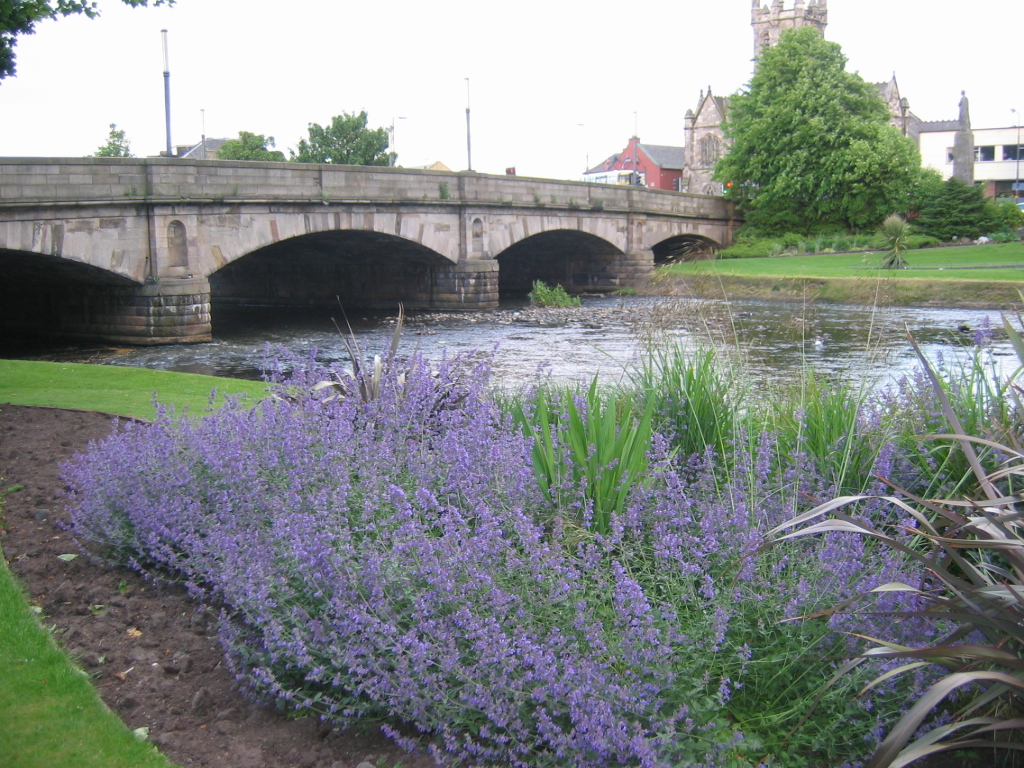
They bridged the Esk downstream from the fort, and thus established the line of the main eastern approach to Scotland's capital for most of the next 2,000 years. The bridge built by the Romans outlasted them by many centuries. It was rebuilt on the original Roman foundations some time before 1300, and in 1597 it was rebuilt again, this time with a third arch added on the east side of the river. The Old Bridge is also known as the Roman Bridge and remains in use today by pedestrians. To its north is the New Bridge, designed by John Rennie the Elder and built in 1806. This in turn was considerably widened in 1925.
Musselburgh was made a burgh of barony c.1315 and a burgh of regality in 1562. The town attempted to become a royal burgh in 1632 but this was prevented by opposition from Edinburgh burgesses. Although Edinburgh is now known to have been a burgh by 1125, Musselburgh's antiquity is reflected in the Scots-language traditional rhyme:
Musselburgh was a burgh
When Edinburgh was nane,
And Musselburgh will be a burgh
When Edinburgh's gane.[5]


Musselburgh is known as "The Honest Toun", and celebrates this by the annual election of the Honest Lad and Lass. The town motto "Honestas" dates back to 1332, when the Regent of Scotland, Randolph, Earl of Moray, died in the burgh after a long illness during which he was devotedly cared for by the townsfolk. His successor offered to reward the people for their loyalty but they declined, saying they were only doing their duty. The new regent, the Earl of Mar, was impressed and said they were a set of honest men, hence "Honest Toun".
Archaeological excavations by Headland Archaeology between 2003 and 2004, as part of work to renew the water mains, found that the medieval town was concentrated on the High Street and that occupation in the North High Street area and Fisherrow only dates to the 16th century or later. The early town was centred on the eastern side of the river Esk.[6]
Musselburgh is home to the Palladian Manor House of Newhailes, which dates back to 1702 and was home to eight generations of the Dalrymple family, who in the 18th century were a prominent political and legal force within Scotland. The house and grounds are now managed by the National Trust for Scotland.
Stoneyhill House dates from the mid 18th century. The estate of Stoneyhill was formerly owned by Sir William Sharp and later passed to the Earl of Wemyss,[7] the notorious Francis Charteris.
The town and its population grew considerably throughout the latter half of the twentieth century, with major local authority and private housing developments on both the eastern and western outskirts.
The Battle of Pinkie, part of the Rough Wooing between Scotland and England, was fought south of Musselburgh in 1547.
Town Council
[edit]Prior to the local government reforms of 1975, Musselburgh was a small burgh within the county of Midlothian. As such, it elected a town council responsible for a number of areas of local governance, including housing, lighting and street cleaning and drainage. Midlothian County Council was responsible for other areas, including education. The town council met at the Musselburgh Tolbooth and later, for a short period before its abolition, at the Brunton Hall. The town's civic head and chairman of the council was the provost and there were three bailies and a treasurer.[8]
| Provost[9] | Party | Term | |
|---|---|---|---|
| David Lowe | Independent | 1928-37 | |
| John Henry Paton | Independent | 1937-40 | |
| Thomas White | Labour | 1940-45 | |
| Daniel Feeney | Labour | 1946-49 | |
| Robert Hunter | Labour | 1949-56 | |
| Joseph H. F. Reid | Moderate | 1956-57 | |
| James Lannan | Labour | 1957-60 | |
| Peter Hamilton | Labour | 1960-63 | |
| Robert Arthur | Labour | 1963-66 | |
| Thomas White | Labour | 1966-69 | |
| William Caird | Ratepayers | 1969-72 | |
| Jessie B. Burns | Labour | 1972-75 | |
After the local government reforms of 1975, Musselburgh was transferred to the East Lothian district of the new Lothian region, and subsequently became part of the East Lothian unitary council area in 1996.[10]
Demography
[edit]Population
[edit]At the 2022 census, the population was 21,479 and 79.2% of residents were born in Scotland, 9.5% other UK, 7.2% Europe and 4.1% Other.
| Ethnicity | Musselburgh | Scotland[11] |
|---|---|---|
| White | 95.2% | 92.9% |
| Asian | 2.2% | 3.9% |
| Black | 0.6% | 1.2% |
| Mixed | 0.7% | 1.1% |
| Other | 1.3% | 0.9% |
Religion
[edit]At the 2011 Census, 52% of Musselburgh residents stated they belonged to a religion, with 51% being Christians,[12] and there are several churches catering to different denominations.
| Religion | Number | % |
|---|---|---|
| Christian (total) | 7,352 | 36.4% |
| No religion | 12,243 | 60.6% |
| Church of Scotland | 3,976 | 19.7% |
| Roman Catholic | 2,221 | 11.0% |
| Religion not stated | 1,237 | 11.5% |
| Other Christian | 1,155 | 5.7% |
| Muslim | 237 | 1.2% |
| Other religion | 380 | 1.9% |
Church of Scotland
[edit]There are three Church of Scotland ecclesiastical parishes in Musselburgh, each with its own church, however discussions are currently underway regarding the future of these three churches and possible amalgamation:[13]
- North Esk
- St. Andrew's High
- St. Michael's, Inveresk
Roman Catholicism
[edit]There is one Roman Catholic congregation which worships at Our Lady of Loretto and St Michael Catholic Church.
Scottish Episcopal Church
[edit]There is one Scottish Episcopal congregation which worships at St Peter's Church.
Other Churches
[edit]- Harbour Church
- Hope Church
- Musselburgh Baptist Church
- Musselburgh Congregational Church
Education
[edit]Schools include Loretto School, a private boarding school, and Musselburgh Grammar School, the local large comprehensive that is one of the oldest grammar schools in the country, dating from 1608. Primary schools include: Campie Primary School, Musselburgh Burgh Primary School, Stoneyhill Primary School, Pinkie St Peter's Primary School, Loretto RC Primary School and Loretto Nippers (private). Early learning locations (ages 3–5) include The Burgh, Stoneyhill, Loretto RC, and St. Ninian's. There are also several private nurseries for pre school aged children. Queen Margaret University relocated all its schools from Edinburgh to Musselburgh in 2007. Her Majesty The Queen officially opened the QMU campus in July 2008.
Transport
[edit]

Railway
[edit]Musselburgh is served by two railway stations. Musselburgh railway station is in the west of the town adjacent to Queen Margaret University and has regular ScotRail services from Edinburgh Waverley to North Berwick. It is a relatively new station, having opened in 1988. The other station serving the town is Wallyford railway station to the east of the town in the village of Wallyford, which opened in 1994.
The town's original station was close to the town centre at the end of a short branch from Newhailes Junction. Passenger services from there ceased in 1964, and the line closed to all traffic in the early 1970s. The former railway line is now a road bypassing the Fisherrow area of the town. There was also a station at Fisherrow.
Bus
[edit]The town is served by Lothian Buses, East Coast Buses and Prentice Coaches Ltd.[14]
Roads
[edit]The A1 by-passes the town and meets the A720 Edinburgh City Bypass at the edge of the town before continuing to Edinburgh city centre. The A199 goes through the High Street to Edinburgh in the west and to Dunbar to the east. This was originally the A1 until the town's bypass was built in the mid-1980s.
Sport
[edit]The Musselburgh Silver Arrow is reputed to be the oldest sporting trophy in United Kingdom,[15] and is competed for annually by the Royal Company of Archers. It dates back to at least 1603.[16]
Musselburgh is home to both Musselburgh Racecourse and Musselburgh Links golf course. The links, a former venue of golf's Open Championship, have recently been acknowledged as the oldest continuously played golf course in the world.[17] Musselburgh Athletic F.C. are the town's football team, competing in the East of Scotland League at their Olivebank Park ground in the west of the town. Musselburgh also has some grassroots teams for young players, such as the Musselburgh Windsor and the Musselburgh Youngstars. Musselburgh RFC play in the Scottish Premiership at Stoneyhill.
The Musselburgh Roads Cycling Club was formed in January 1936 by a breakaway group of 16 from the Musselburgh Clarion. After forming an alliance with other clubs during the war, the MRCC reformed again in its own right in January 1945. The club has a long and successful history of competitive cycling. Notable riders include: Jock Allison, who in 1945 won the British Best All Rounder title and is to date still the only Scottish club rider to do so; Janet Sutherland, who dominated Scottish woman's cycling in 1951–4; and Sandy Gilchrist, who in 1977 won 5 individual and 4 team Scottish Championships. Many other riders from the club have won national championships or have been selected to compete at world championship level or the Commonwealth Games. Today, club members take part in track racing, road racing, time trials, cyclo cross and mountain biking. Their base is at the Tolbooth in the High Street.
There is also a locally run darts league, the Musselburgh and District Darts League, comprising an A and B league, each containing eight teams. Many players from this league represent the Lothian team at county level.
In Musselburgh there is also an amateur swimming club called Musselburgh Amateur Swimming Club. The club is home to the Musselburgh Marlins and trains at Musselburgh Sports Centre. The club was first established in 1886 and in its current format in 1994 where they trained at Loretto Swimming Pool which is now closed.
The East Lothian Seagulls of the Scottish Floorball League are based in Musselburgh and train and play matches at the sports centre at Queen Margaret University.
Notable people
[edit]

- Acting
- James Martin, best known for his role as Eric in Still Game. Although originally from Glasgow, he has lived in East Lothian since 1974.
- Callum Kerr, actor and musician
- Medicine
- David Macbeth Moir, physician and writer
- Military
- John Grieve, recipient of the Victoria Cross
- Writers and artists
- Alexander Carrick, sculptor
- Margaret Oliphant, novelist and historical writer, who usually wrote as Mrs Oliphant
- Sports
- Gary Anderson, darts player
- Barney Battles Jr., footballer[20]
- Alistair Brown, footballer
- Billy Brown, football coach
- John Clark, footballer
- Jason Holt, footballer
- Willie Jamieson, footballer
- Jim Jefferies, football manager
- John McGlynn, football manager
- Michael McKenna, footballer
- Paul McLean, footballer
- Bill McPhillips, footballer
- Kenny Miller, footballer
- Alan Morgan, footballer
- Ross Muir, professional snooker player
- Scott Murray, rugby union player
- Yvonne Murray, athlete
- Colin Nish, footballer
- Willie Ormond, footballer and manager
- Kirsten Reilly, footballer
- Kris Renton, footballer
- George Walker, footballer
- John White, footballer
- Various
- Callum Beattie, singer-songwriter
- Rhona Cameron, comedian
- Kirsten Imrie, professional model and former Page Three girl
Areas
[edit]Fisherrow, Inveresk, Levenhall Links, Pinkie, Stoneyhill, Clayknowes, Denholm, Stoneybank, Queen Margaret University Student Village, Monktonhall, Pinkie Braes
Twin towns
[edit]Musselburgh is twinned with:[21]
- Champigny-sur-Marne (France)
- Rosignano Marittimo (Italy)
"Champigny was already twinned with Rosignano, so a three-way link was considered advantageous."[21]
Gallery
[edit]-
A panoramic view of Fisherrow harbour and its pleasure craft
-
Harbour Master's Office at Fisherrow
-
Pinkie House, now one of the buildings of Loretto School
-
Scottish Episcopal church on the High Street
-
Eskmills, a former factory complex, is transformed into a business park
-
Musselburgh railway station, showing a local eastbound (North Berwick) train, and a westbound (Edinburgh) intercity (125) train
-
Brunton Hall provides access to East Lothian Council's services, as well as a theatre and restaurant
-
Brunton Hall, from the west of the town
See also
[edit]References
[edit]Notes
[edit]- ^ Musselburgh was famous for the mussel beds which grew in the Firth of Forth; after many years of claims that the mussels were unsafe for consumption, a movement has been started to reestablish the mussel beds as a commercial venture.
Citations
[edit]- ^ "Map of Scotland in Scots - Guide and gazetteer" (PDF).
- ^ a b "Population estimates for settlements and localities in Scotland: mid-2020". National Records of Scotland. 31 March 2022. Retrieved 31 March 2022.
- ^ "Musselburgh". Gaelic Place-Names of Scotland. Ainmean-Àite na h-Alba. Archived from the original on 26 June 2015.
- ^ "The early history of Scotland and meanings of the clan names and place-names appearing on the Clan Map of Scotland". www.gwp.enta.net. Archived from the original on 17 May 2006.
- ^ Ayton, John; Crofton, Ian (2005). Brewer's Britain & Ireland. Weidenfeld and Nicolson. p. 787.
- ^ "Vol 30 (2009): Archaeological monitoring in the streets of Musselburgh: recent discoveries | Scottish Archaeological Internet Reports". journals.socantscot.org. Retrieved 12 August 2021.
- ^ "Stonehouse - Stromness Pages 500-519 A Topographical Dictionary of Scotland". British History Online. S Lewis, London 1846. Retrieved 7 April 2023.
- ^ "Scran Web Site". Scran. Retrieved 13 July 2021.
- ^ See also Local Government etc. (Scotland) Act 1994, Office of Public Sector Information (OPSI) website Archived 1 March 2010 at the Wayback Machine (OPSI home page Archived 18 April 2008 at the Wayback Machine)
- ^ a b "Musselburgh (United Kingdom)". citypopulation.de. Retrieved 16 August 2024.
- ^ "Scotland's Census 2011 (Table KS209SCb - Religion)".
- ^ Church of Scotland Statistics for Mission Group
- ^ "Timetables - Prentice of Haddington". prenticeofhaddington.info.
- ^ Hugo Arnot, The History of Edinburgh, from the earliest accounts, to the year 1780, Edinburgh, 1816
- ^ "Musselburgh". Archived from the original on 6 October 2006.
- ^ "Links play out onto record books". BBC News.co.uk. 17 March 2009. Retrieved 18 March 2009.
- ^ Groome 1895, p. 88.
- ^ Lewis 1846, p. 294.
- ^ "Remembering 1930s Hearts star Barney Battles Junior, from Fisherrow". East Lothian Courier. 21 April 2016. Retrieved 10 January 2025.
- ^ a b "East Lothian Council: Town Twinning". Retrieved 14 April 2020.
Sources
[edit]- Carlyle, Alexander (1791). "Parish of Inveresk". The statistical account of Scotland. Drawn up from the communications of the ministers of the different parishes. Vol. 16. Edinburgh: W. Creech. pp. 1–19. Retrieved 1 July 2020.
- Chisholm, Hugh, ed. (1911). "Musselburgh". Encyclopædia Britannica. Vol. 19 (11th ed.). Cambridge University Press.
- Groome, Francis, Hindes (1882). "Inveresk". Ordnance gazetteer of Scotland : a survey of Scottish topography, statistical, biographical, and historical. Vol. 2. Edinburgh: T.C. Jack. pp. 296-297. Retrieved 6 June 2020.
{{cite book}}: CS1 maint: multiple names: authors list (link) - Groome, Francis, Hindes (1895). "Musselburgh". Ordnance gazetteer of Scotland : a survey of Scottish topography, statistical, biographical, and historical. Vol. 5. Edinburgh: T.C. Jack. pp. 85-89. Retrieved 6 June 2020.
{{cite book}}: CS1 maint: multiple names: authors list (link) - Hannah, Ian Campbell (1913). "Eskdale". The Berwick and Lothian coasts. London: T.F. Unwin. pp. 179–200. Retrieved 1 July 2020.
- Lewis, Samuel (1851). "Inveresk". A topographical dictionary of Scotland, comprising the several counties, islands, cities, burgh and market towns, parishes, and principal villages, with historical and statistical descriptions: embellished with engravings of the seals and arms of the different burghs and universities. Vol. 1. London: S. Lewis and co. pp. 586-587. Retrieved 6 June 2020.
- Lewis, Samuel (1846). "Musselburgh". A topographical dictionary of Scotland, comprising the several counties, islands, cities, burgh and market towns, parishes, and principal villages, with historical and statistical descriptions: embellished with engravings of the seals and arms of the different burghs and universities. Vol. 2. London: S. Lewis and co. pp. 294-296. Retrieved 6 June 2020.
- Moodie, Leslie; Beveridge, J. G. (1845). "Parish of Inveresk". The new statistical account of Scotland. [electronic resource]. Edinburgh and London: William Blackwood and Sons. pp. 246–304. Retrieved 1 July 2020.
- Paterson, James (1857). History of the Regality of Musselburgh : with numerous extracts from the town records. Musselburgh: J. Gordon. pp. 1–253. Retrieved 1 July 2020.
- Scott, Hew (1915). Fasti ecclesiae scoticanae; the succession of ministers in the Church of Scotland from the reformation. Vol. 1. Edinburgh: Oliver and Boyd. pp. 324–328. Retrieved 27 February 2019.
{{cite book}}: CS1 maint: publisher location (link)
External links
[edit]
Musselburgh travel guide from Wikivoyage- Census data (PDF)
- Musselburgh Festival
- Video footage of Fisherrow Harbour
Musselburgh
View on GrokipediaGeography
Location and topography
Musselburgh occupies a coastal position in East Lothian, Scotland, on the southern shore of the Firth of Forth at the mouth of the River Esk, approximately 6 miles (9.7 km) east of Edinburgh city centre.[2][5] The town's geographical coordinates are 55°56′32″N 3°03′08″W.[6] The topography features low-lying terrain characteristic of a coastal plain, with elevations averaging around 9-32 meters above sea level, rising gently inland from the harbour area at near sea level.[7][8] The River Esk bisects the town, forming a flat alluvial valley that facilitates urban development along its banks and supports historical harbour activities at Fisherrow.[1] To the south, the landscape transitions to undulating ground leading toward higher elevations, while the northern boundary abuts the tidal waters of the Firth of Forth, influencing local drainage and flood patterns.[9]Climate and natural environment
Musselburgh lies within a temperate oceanic climate zone typical of eastern Scotland, with mild winters, cool summers, and frequent precipitation influenced by its coastal position on the Firth of Forth. Average annual rainfall measures 728 mm, spread evenly across approximately 130 days, with October being the wettest month at around 64 mm and May the driest.[10][7] Summer highs in August reach about 18°C, while January lows average 2°C, reflecting moderated temperatures due to marine proximity that limits extremes.[7] The town's natural environment centers on the River Esk estuary and adjacent coastal features, forming a dynamic interface of riverine, intertidal, and dune habitats. The River Esk, flowing into the Firth of Forth at Musselburgh, sustains migratory fish populations including Atlantic salmon and sea trout, alongside the critically endangered freshwater pearl mussel in its upper reaches.[11] Mudflats and sands exposed at low tide along Fisherrow Harbour and the river mouth provide foraging areas for wading birds, with mussel beds supporting species such as eider and long-tailed ducks.[12][13] Inveresk and Levenhall Links to the east encompass wetland reserves and reclaimed coastal land, fostering biodiversity through saltmarsh, dunes, and grassland that host nationally important birds like scoter and bar-tailed godwit.[14][15] These areas, part of broader East Lothian coastal systems, have seen habitat enhancements via flood management incorporating natural solutions like setback embankments to boost ecological resilience.[16] Historical pollution from industrial effluents degraded mussel stocks and avian habitats in the mid-20th century, but regulatory improvements have restored viability for shellfish and birdlife.[14] The flat coastal topography, with gently undulating lowlands inland, integrates these features into a landscape supporting both terrestrial and marine species amid ongoing erosion and accretion dynamics.[17]History
Prehistoric and Roman origins
![Roman bridge foundations at the Old Bridge over the River Esk][float-right]Archaeological excavations in Musselburgh have uncovered evidence of prehistoric human activity dating back to the Mesolithic period, including a scatter of flaked lithics found in slope-wash deposits at the Musselburgh Primary Health Care Centre site on Inveresk Road.[18] Further phases indicate Early Neolithic and Late Neolithic presence in the vicinity.[18] Iron Age activity is evidenced by a burial ground and a possible prehistoric ring ditch identified near the site of the later Roman fort at Inveresk.[19] The Roman period saw significant military and logistical presence in the area, with Inveresk Roman Fort established around 79 AD during the campaigns of Gnaeus Julius Agricola as a supply base supporting advances into southern Scotland, featuring a small timber fort and associated harbor on the River Esk.[20] The fort, located within the grounds of St Michael's Church in Inveresk—a suburb of Musselburgh—was primarily occupied during the Antonine period (c. 140–160 AD), serving as a base for legions advancing north toward the Antonine Wall.[21] Excavations of the associated civil settlement (vicus) from 1996–2000 revealed structures and artifacts confirming Roman military occupation.[22] Relics, including a vaulted chamber interpreted as part of a bath house, were first documented in 1565.[23] Roman engineering is attested by the foundations of a bridge over the River Esk, incorporated into the medieval Old Bridge (also known as the Roman Bridge), which facilitated crossings and connected the fort to eastern routes into Scotland.[24] Subsequent inhumation burials, some with grave goods, indicate continued Roman use of the area for funerary purposes into the 2nd century AD.[19]
Medieval to early modern periods
In the medieval period, Musselburgh emerged as a significant settlement, transitioning from a fishing village to a burgeoning port known for its mussel fisheries. The town's bridge over the River Esk, originally constructed by the Romans, was rebuilt in the 13th century, facilitating trade and connectivity along the coast.[25] By the early 14th century, Musselburgh had gained recognition for its integrity; in 1332, the inhabitants cared for Randolph, Earl of Moray and Regent of Scotland, during his fatal illness and returned his valuables untouched after his death, earning the town the enduring nickname "The Honest Toun" with the motto Honestas.[26] Musselburgh was granted burgh of barony status around 1315, conferring local judicial and economic privileges under a feudal superior, though it never achieved royal burgh standing like nearby Haddington.[26] The settlement's medieval church at Inveresk, dedicated to St. Michael, served as a focal point, with the town center shifting toward the Pinkie lands by the 13th century.[27] Elements of the Tolbooth, including its tower, likely date to this era, reflecting the burgh's administrative development.[28] The 16th century brought turmoil with the Battle of Pinkie Cleugh on 10 September 1547, fought on the River Esk's banks near Musselburgh during the War of the Rough Wooing; English forces under the Duke of Somerset decisively defeated a larger Scottish army, resulting in up to 15,000 Scottish casualties and the sacking of the town, including the burning of its title deeds.[29] In response, Queen Mary granted a new charter in 1562, elevating Musselburgh to burgh of regality status, which expanded its jurisdictional rights over a larger territory.[30] The bridge was further rebuilt in the 16th century, with a third arch added in 1597 to accommodate growing traffic.[25] Into the early modern period, Musselburgh's economy diversified with fishing, coal mining, and woollen production; by 1690, its population surpassed that of Leith, supported by mills and a harbor near the Roman site.[1] The Mercat Cross, symbolizing market rights, stood on a medieval site, with its current structure erected around 1740.[27] These developments underscored the town's resilience amid feudal and monarchical shifts.Industrial Revolution and 20th century
During the Industrial Revolution, Musselburgh's economy expanded through water-powered mills along the River Esk, focusing on paper production, wire manufacturing, and fishing net making. A cotton factory was established around 1750, marking an early shift toward mechanized textile production.[31] By the early 19th century, innovation in net production advanced the local fishing industry; in 1812, Colonel James Paterson patented the first machine for tying knots in fishing nets, enabling scalable manufacturing.[32] J. W. Stuart acquired the patents and established a factory at Eskmills for net production, which expanded in the 1870s to meet growing demand.[32] Paper milling became a cornerstone industry with the founding of Inveresk Paper Mill in 1867 by Alex Cowan & Sons, utilizing the river's power for machinery that produced up to 50 tons of paper weekly and employed around 300 workers by the mid-19th century.[33][31] Concurrently, wire production emerged with Bruntons Wire Mill, built in 1876 by Ward and Fraser partnership, initially for general wire goods and later specializing in products like aircraft wires developed in 1909.[34] These mills—Inveresk Paper, Stuarts Net, and Bruntons Wire—collectively employed hundreds, driving economic growth tied to local resources and proximity to Edinburgh markets.[35] In the 20th century, these industries peaked mid-century, with Stuarts Net Mill achieving global leadership in 'Scotch Weave Nets,' employing over 800 in net, cotton processing, and rope production, with export facilities across North America, Europe, and Australia.[32] Bruntons contributed to World War II efforts by supplying critical wire components from its Musselburgh site.[36] However, post-war technological shifts led to decline; Stuarts failed to adopt synthetic materials like nylon and terylene promptly, resulting in factory closure in 1979.[32] Paper and wire operations similarly waned amid broader deindustrialization, though remnants like Eskmills were repurposed into business parks by the 1980s.[32] Local firms such as George Maxwell & Son, fairground equipment makers, liquidated in 1982 due to market contraction.[37] Despite industrial contraction, Musselburgh experienced population growth through housing developments in the latter half of the century.[38]Post-2000 developments
Since 2000, Musselburgh has undergone significant population expansion, with the town's wards recording a 4% increase from 2001 to 2013, though broader estimates indicate up to 21% growth over the period driven by housing developments in surrounding areas like Wallyford and Pinkie Mains.[39][40] This growth aligns with East Lothian's Local Development Plan, committing 2,036 new homes by the mid-2010s and planning an additional 2,945 by 2025, including council housing projects such as the 45-unit development completed in 2024 featuring accessible flats and terraced houses.[41] Private initiatives, like Taylor Wimpey's 98-home approval at Almond Park in 2017, further contributed to residential expansion.[42] Economic redevelopment focused on repurposing industrial sites, exemplified by Eskmills, a former factory complex converted into a business park hosting over 100 companies and employing around 500 people across 12 buildings.[43] Queen Margaret University relocated its main campus to Musselburgh in 2007, enhancing educational infrastructure and supporting local knowledge-based employment.[44] Town centre regeneration efforts intensified through the Musselburgh Town Centre Strategy (MTCS), first implemented in the 2000s and updated as Strategy 2 in 2019 as supplementary guidance to the Local Development Plan. Key actions included a £600,000 street reorganization in 2015, creating civic space near the Mercat Cross and improving parking, which correlated with a 27.9% rise in footfall since 2014/15 and vacancy rates falling to 5.3% by 2016/17. Infrastructure projects addressed environmental risks, notably the Musselburgh Flood Protection Scheme initiated in 2016, evolving from an £8.9 million study into a £100 million initiative to mitigate 1-in-200-year flooding events through sustainable measures like catchment management.[45] Complementary efforts, such as the 2023 River Esk Restoration project integrated with flood defenses, aimed to enhance biodiversity and public access along the riverside.[46] These developments reflect a shift toward resilient, mixed-use urban planning amid ongoing housing pressures.Governance and administration
Local government structure
Musselburgh is administered as part of East Lothian unitary council area, governed by East Lothian Council, which was established under the Local Government etc. (Scotland) Act 1994 and became operational on 1 April 1996, replacing the former East Lothian District Council within Lothian Region. The council operates as a single-tier authority responsible for all local services, including education, planning, housing, and waste management, with a total of 22 councillors elected from six multi-member wards via single transferable vote system, with full elections every five years; the most recent occurred on 5 May 2022. The town of Musselburgh is encompassed within the Musselburgh ward (Ward 1), which elects four councillors to represent its approximately 20,000 residents, making it the largest ward by population in East Lothian and covering the core urban area including Fisherrow, the town centre, and adjacent suburbs.[3] Ward boundaries were last reviewed and implemented in 2017 by the Local Government Boundary Commission for Scotland to ensure electoral parity, with Musselburgh's configuration reflecting its status as East Lothian's principal settlement. Local decision-making is supported by the Musselburgh Area Partnership, a community planning body that coordinates with council officers and residents on priorities such as housing, transport, and economic development specific to the ward.[47] East Lothian Council's executive structure includes a council leader elected by councillors, supported by a cabinet-style committee system for policy scrutiny, alongside a chief executive (Laurence Rockey, appointed in 2023) and two executive directors overseeing operational directorates for health and social care, place services, and people services.[48] Musselburgh lacks independent burgh status or town council, having been integrated into the unitary system, though historical burgh privileges influence certain ceremonial roles, such as the provost's functions now held council-wide. Public access to council services in Musselburgh is provided through the Musselburgh Area Office and facilities like Brunton Hall, which hosts administrative counters and council-related events.[49]Political representation and elections
Musselburgh is represented at the local level by four councillors in Ward 1 (Musselburgh) of East Lothian Council, elected via the single transferable vote system in multi-member wards. The council, which administers services across the area, held its most recent elections on 5 May 2022, with a turnout of 47.8% across the authority. In Ward 1, the elected councillors were Ruaridh Bennett and Andy Forrest (both Scottish Labour Party), Cher Cassini (Scottish National Party), and Shona McIntosh (Scottish Green Party), based on first-preference votes of 1,074, 1,209, 1,596, and 991 respectively.[50] At the Scottish Parliament level, Musselburgh falls within the Midlothian North and Musselburgh constituency, which elects one Member of the Scottish Parliament (MSP) via first-past-the-post. The current MSP is Colin Beattie of the Scottish National Party, who has held the seat since 2011 and was re-elected on 6 May 2021. The constituency forms part of the larger Lothian electoral region, which elects seven additional regional MSPs by proportional representation to balance constituency results.[51][52] For the UK Parliament, following boundary changes implemented for the 2024 general election, Musselburgh was incorporated into the Edinburgh East and Musselburgh constituency. Chris Murray of the Scottish Labour Party won the seat on 4 July 2024 with 18,778 votes (41.2% of the valid vote), securing a majority of 3,715 over the Scottish National Party candidate; turnout was 59.8% among an electorate of 76,188. This represented a gain for Labour from the SNP, reflecting national shifts in that election.[53][54]Demographics
Population trends and statistics
The population of the Musselburgh settlement, defined as a built-up area by National Records of Scotland, stood at 21,479 according to the 2022 census.[55] This figure reflects a density of 3,310 persons per square kilometer across an area of 6.49 km².[55] Compared to the 2011 census, which recorded 22,639 residents, the population experienced a modest decline of about 5% over the intervening decade, contrasting with broader growth in East Lothian.[56] Historical trends indicate steady expansion during the 19th century, driven by industrial activities such as coal mining and textile production, with the burgh population rising from 6,328 in 1841 to 7,092 in 1851 and further to 11,704 by 1901.[57][58] Mid-20th-century deindustrialization led to stagnation and decline; for instance, the population fell from approximately 19,539 in 1971 to 19,082 in 1981.[59] Subsequent recovery occurred through suburban development and commuting ties to Edinburgh, stabilizing the figure around 22,000 by the early 2000s, with 22,112 recorded in the 2001 census.[56] The recent dip may stem from localized economic pressures or census definitional adjustments rather than broader emigration, as East Lothian overall continues to attract net migration.[60]| Census Year | Population (Settlement/Burgh) |
|---|---|
| 1841 | 6,328 |
| 1851 | 7,092 |
| 1901 | 11,704 |
| 1971 | 19,539 |
| 1981 | 19,082 |
| 2001 | 22,112 |
| 2011 | 22,639 |
| 2022 | 21,479 |
Ethnic, religious, and social composition
In the 2022 Scottish Census, the Musselburgh ward population of 21,695 was 95.2% White, with 78.1% identifying as White Scottish, compared to 79.5% in East Lothian and 77.7% in Scotland overall.[3] Non-White ethnic minorities comprised 4.8% of the population, higher than the East Lothian average of 3.1% but lower than Scotland's 7.1%; this included 2.2% Asian (primarily Pakistani, Indian, and Chinese origins), 0.6% African or Caribbean, 0.6% mixed or multiple ethnic groups, and 0.2% other ethnic groups, based on aggregated census outputs for the ward.[62] [3] 79.3% of residents were born in Scotland, with 88.7% UK-born and only 4.1% born outside Europe.[3] Religiously, 57.1% reported no religion, aligning closely with East Lothian's 57.5%, while 34.1% identified as Christian (35% in East Lothian), including 18.4% Church of Scotland, 10.3% Roman Catholic, and 5.4% other Christians.[3] Muslims accounted for 1.1% (0.8% in East Lothian), with negligible shares for other faiths such as Buddhist (0.3%) or Hindu (0.2%).[3] [62] 94.0% spoke English as their main language, slightly below East Lothian's 96.5%.[3] Socially, the ward exhibits moderate deprivation, with 13.4% income-deprived (vs. 10.2% in East Lothian) and 10.2% employment-deprived (vs. 8.1% in East Lothian), per the Scottish Index of Multiple Deprivation; one data zone ranks in Scotland's 20% most deprived, and nine in East Lothian's.[3] Household composition includes 37.7% one-person households, exceeding East Lothian's 31.0%, indicating higher solitary living.[3] Economic activity stands at 74.6%, with 48.7% in full-time work (below East Lothian's 51.0%).[3]Economy
Historical economic foundations
Musselburgh's historical economic foundations were rooted in its coastal position on the Firth of Forth, enabling fishing and small-scale maritime trade from medieval times. As a burgh of barony, the town functioned as a local center for markets and commerce, with records indicating early trade links to Holland before the rise of Leith as a dominant port.[31][63] The Fisherrow harbor supported exports of local goods while importing essentials, fostering regional connectivity.[64] Fishing emerged as a core industry, originating in a small village economy centered on mussel beds and whitefish catches off the coast. By the medieval period, the harbor had expanded to accommodate deeper-sea vessels, as encouraged by a 1492 royal decree mandating larger boats in burghs to boost fishing output.[57][65] Musselburgh's name derives from its mussel fisheries, which supplied bait and food, with associated netting production developing later to support the trade.[66] Salt panning and coal extraction provided essential commodities for preservation and fuel, with salt pans operational in the vicinity from at least the 12th century to cure fish and other exports.[67] Coal from local collieries on the town's outskirts became the chief export by the 19th century, shipped coastally via Fisherrow, building on East Lothian's early mining seams documented from the 13th century onward.[57][68] Wool and agricultural produce, including market gardening for Edinburgh's markets, complemented these activities, with leeks and vegetables noted as specialties by the mid-19th century.[57] By the 16th century, these sectors—fishing, salt, coal, and agrarian trade—had solidified Musselburgh's role as a regional economic node, though proximity to Edinburgh limited its expansion compared to larger ports.[64] Population growth from 6,328 in 1841 to 7,092 in 1851 reflected sustained activity in these foundational industries before industrial shifts.[57]Key modern industries
Musselburgh's key modern industries center on business services, light manufacturing, and professional sectors, reflecting its role as a commuter hub adjacent to Edinburgh. The town's industrial estates, including Inveresk and Fisherrow, host small-scale manufacturing, warehousing, and logistics operations, with units accommodating companies in engineering and production.[69][70] Eskmills Business Park, redeveloped from historic mills, provides flexible office spaces for professional, scientific, and technical firms, emphasizing modern workspaces with amenities like meeting rooms and breakout areas.[71] This aligns with East Lothian's higher employment rates in professional, scientific, technical, and education industries compared to Scotland's average, where such sectors employ more residents proportionally.[72] Retail and hospitality contribute through sites like Olive Bank Retail Park, supporting local commerce and tourism-related services tied to the town's historical attractions and golf courses. Transport firms, such as coach operators, also play a role, with employers like Lowland Coaches maintaining significant local operations.[37][73] Overall, these industries leverage Musselburgh's strategic location, fostering a diverse but service-oriented economy with limited heavy industry.[74]Employment, challenges, and fiscal realities
Employment in Musselburgh is characterized by relatively low economic activity compared to surrounding areas, with 74.6% of the working-age population economically active according to the 2022 Scotland Census, the lowest rate among East Lothian wards.[3] The unemployment rate stood at 2.7% in September 2024, slightly above East Lothian's 2.2% but below Scotland's 3.0%.[3] Across East Lothian, the employment rate reached 83.5% in 2023/24, exceeding Scotland's 77.9%, reflecting near full employment regionally.[75] Key sectors include retail trade and education, each accounting for about 10% of total employment in East Lothian, alongside tourism at 15%.[75] Musselburgh residents show higher employment in sales and customer services but lower in managerial roles relative to East Lothian averages.[3] Job density in East Lothian remains low at 0.58 in 2020 compared to Scotland's 0.80, driving significant commuting to Edinburgh for work.[72] Median hourly pay in the area is £17.71, below Scotland's £18.09, with gross weekly earnings at £594 for residents in 2021.[75][72] Economic challenges persist, including concentrated employment deprivation in Musselburgh, affecting 10.2% of the population—higher than East Lothian's 8.1% and Scotland's 9.3%.[3] In-work poverty has risen to 27.1% in 2023, far exceeding Scotland's 14.4%, exacerbated by post-pandemic business closures and a lack of affordable housing.[75] Local traders have opposed proposed parking charges in 2025, citing potential harm to high street viability.[76] Universal Credit claimants in the ward reached 16.5% in September 2024, above the regional 14.8%.[3] Fiscal realities for East Lothian Council, which administers Musselburgh, involve ongoing pressures from inflationary costs, rising service demands due to population growth, and insufficient central funding, necessitating significant service delivery changes as noted in 2025 audits.[77] Budget proposals for 2025/26 highlight demand-driven cost increases, leading to council tax hikes and targeted grant reductions while prioritizing vulnerable support.[78] These constraints indirectly impact local employment through potential cuts to public sector roles and community projects, with the council employing around 4,000 regionally.[72][79]Infrastructure
Transport networks
Musselburgh is connected to the national transport infrastructure primarily through road, rail, and bus services, facilitating access to Edinburgh and surrounding areas. The town lies adjacent to the A1 trunk road, a major dual carriageway linking southeastern Scotland, with ongoing improvements at key junctions such as Bankton to enhance safety and capacity. Drainage and resurfacing works on the A1 near Musselburgh, including slip road closures, were scheduled across eight phases in late 2025 to address infrastructure maintenance.[80] [81] Rail services operate from Musselburgh railway station, located on the East Coast Main Line approximately 5.25 miles (8 km) east of Edinburgh Waverley, which opened in 1988 under British Rail. The unstaffed station provides ScotRail commuter trains to Edinburgh Waverley and North Berwick, with additional access to intercity services via Edinburgh. Historical rail connections date to 1847 with the North British Railway's Musselburgh Branch, though earlier terminals like the 1847 station have since closed.[82][83] Bus networks are extensive, operated mainly by Lothian Buses, with routes such as 125 linking Musselburgh to North Berwick, 26 and 44 to Edinburgh, and 48 to Gorebridge, providing frequent local and regional connectivity. Services like the 113 connect to Edinburgh via Pencaitland, while airport access to Edinburgh Airport (EDI), about 17 miles away, requires transfers involving buses to central Edinburgh followed by Airlink or tram. No direct airport bus exists, but integrated public transport options support commuting.[84][85][86]Utilities and public services
Water and wastewater services in Musselburgh are provided by Scottish Water, the public corporation responsible for these utilities across Scotland, ensuring supply, treatment, and sewerage management for the EH21 postcode area.[87] Electricity distribution is handled by SP Energy Networks, which maintains the infrastructure in East Lothian, while retail supply is competitively provided by companies such as ScottishPower and Octopus Energy.[88] Gas distribution falls under Scotland Gas Networks (SGN), serving the region with pipeline maintenance and emergency response, though customer supply contracts vary by provider. Waste management and recycling are overseen by East Lothian Council, offering weekly kerbside collections for recycling, food waste, and non-recyclable refuse, with a pre-paid £35 annual permit required for garden waste in brown bins.[89] Residents access nearby recycling centres, such as Kinwegar, for bulk disposal, though vans and trailers require online booking; collections continue on most public holidays except Christmas and New Year periods.[90] Public services include the Musselburgh Area Office at Brunton Hall, Ladywell Way, open weekdays from 9:00am to 5:00pm (10:00am Wednesdays), providing access to council functions like housing advice and benefits.[49] The local library on Bridge Street offers books, DVDs, free Wi-Fi, internet access, photocopying, and community events, supporting educational and social needs.[91] Emergency services feature a wholetime fire station under the Scottish Fire and Rescue Service, responding to incidents like the March 2025 warehouse fire at Eskmills Road.[92] Police Scotland operates Musselburgh Police Station at 174 High Street for local policing.[93] The Scottish Ambulance Service covers the area for medical emergencies, with national dispatch to over 5 million residents.[94]Education and healthcare
Educational institutions
Queen Margaret University, a public institution in Musselburgh, provides undergraduate and postgraduate education primarily in health sciences, social sciences, and creative industries.[95] Founded in 1875 and granted university status in 2007, it operates from a campus in the town with easy rail access to Edinburgh.[95] Musselburgh Grammar School serves as the principal state-funded secondary school for the area, catering to non-denominational, mixed-gender pupils from Musselburgh and nearby Whitecraig.[96] Located at 86 Inveresk Road, it accommodates secondary education levels.[97] Rosehill High School, also under East Lothian Council, focuses on pupils with additional support needs.[98] State primary schools in Musselburgh include Campie Primary School, Craighall Primary School, Loretto Roman Catholic Primary School, Musselburgh Burgh Primary School, Pinkie St. Peter's Primary School, and Stoneyhill Primary School, all managed by East Lothian Council.[98] These institutions provide early years and primary education to local children. Loretto School, established in 1827, is Scotland's oldest independent boarding school and offers co-educational day and boarding options for pupils aged 3 to 18 across an 85-acre campus in Musselburgh.[99] It emphasizes a broad curriculum including academics, sports, and extracurricular activities.[99]Healthcare facilities and access
Musselburgh's primary healthcare services are primarily delivered through the Musselburgh Primary Care Centre on Inveresk Road, a modern facility offering general practitioner consultations, physiotherapy, dentistry, podiatry, psychiatry, occupational therapy, and outpatient departments.[100][101] Key GP practices within the centre include Riverside Medical Practice, which employs a team of approximately 50 staff contracted by NHS Scotland to provide comprehensive primary care, and Inveresk Medical Practice, focusing on local patient needs with clinics for chronic conditions and preventive services.[102][103] The town lacks an acute hospital, with residents accessing secondary care at the East Lothian Community Hospital in Haddington—approximately 10 miles away—which provides outpatient services and six inpatient wards for rehabilitation and community-based treatments but no emergency department.[104][105] For emergencies and specialized interventions, patients are referred to major facilities in Edinburgh, such as the Royal Infirmary of Edinburgh.[106] Access to GP services has encountered pressures reflective of broader NHS Lothian challenges, including an independent review of Riverside Medical Practice initiated in April 2022 due to patient-reported difficulties in triaging and appointments; the final progress report published on 29 June 2023 documented substantial improvements through collaborative actions with East Lothian Health and Social Care Partnership, resulting in reduced complaints over the prior six months, though sustained monitoring remains essential amid ongoing resource constraints.[107] Urgent primary care is supported by the Care When It Counts (CWIC) service, which conducts initial telephone assessments and offers same-day in-person slots at the Primary Care Centre, with out-of-hours advice available via NHS 111.[108]Culture and landmarks
Sports and recreation
Musselburgh Racecourse, located on the town's eastern outskirts, hosts flat horse racing events as the second-largest course in Scotland, staging around 25 fixtures per year. The venue traces its origins to 1777, when the Royal Caledonian Hunt organized the first races there, though major meetings shifted to Leith between 1789 and 1816 before returning permanently.[109] Notable annual events include the Musselburgh Gold Cup in October and New Year's Day racing, drawing crowds for both thoroughbred competitions and supplementary activities like Oktoberfest-themed days.[110] Rugby union holds prominence through Musselburgh Rugby Football Club (MRFC), which competes in Scottish National League Division One at Stoneyhill Farm Road grounds. Established as a community-focused club, MRFC fields senior men's and women's teams alongside youth and mini sections, emphasizing development from local schools.[111] The club integrates with broader East Lothian rugby networks, supporting pathways for players via ties to Musselburgh Grammar School's active programs.[112] Golf enthusiasts access Musselburgh Links, recognized among the world's oldest courses with a nine-hole layout dating to at least 1672 and formalized expansions by 1870. The site preserves historical play using hickory clubs and feathery balls for demonstrations, linking to the town's early golfing heritage alongside nearby coastal links.[113] Angling opportunities center on the River Esk via the Musselburgh District Angling Association, managing three miles of lower river stretches for salmon, trout, and sea trout fishing, accessible to day permit holders.[114] Recreational facilities include Musselburgh Sports Centre, offering a 25-meter swimming pool, gym with free weights, health suite, and multi-sport courts under EnjoyLeisure management, serving community fitness and youth activities.[115] Local bowling clubs, such as Niddrie and Inveresk, provide casual and competitive lawn bowls, complementing parks and coastal paths for walking and cycling.[116]Notable sites and events
The Old Tolbooth, a 16th-century structure in Musselburgh, originally functioned as a combined prison, courthouse, and assembly hall before being repurposed to house the Musselburgh Museum, preserving local artifacts and history.[117] Musselburgh Racecourse, Scotland's second-largest venue for horse racing, traces its origins to 1777 under the Royal Caledonian Hunt, with permanent operations established in 1816 by the local town council; it features a dual-purpose track for flat and jumps racing, including the Listed Queen of Scots Stakes and the Scottish Cheltenham Trials meeting.[118] Musselburgh Links ranks among the world's oldest golf courses, with records of play by Mary Queen of Scots in 1567 and usage by figures like Tom Morris, integrating a nine-hole layout within the racecourse grounds that predates modern racing facilities.[117] The Battle of Pinkie Cleugh, fought on 10 September 1547 in open country between Inveresk and Wallyford adjacent to Musselburgh, pitted approximately 23,000 Scottish forces under the Earl of Arran against 19,000 English troops led by the Duke of Somerset during the War of the Rough Wooing; the English secured a decisive victory, marking the last major pitched battle between the independent kingdoms of Scotland and England and resulting in 6,000 to 15,000 Scottish casualties.[29][119][120] Pinkie House, a surviving 16th-century mansion near the Pinkie Cleugh battlefield, exemplifies Renaissance architecture and currently serves as part of Loretto School premises.[121]Cultural heritage and traditions
Musselburgh's cultural heritage is deeply rooted in its maritime and fishing traditions, with the town's name deriving from the abundant mussel beds along the Firth of Forth, reflecting Old English origins where "mussel" denoted the shellfish and "burgh" indicated a settlement.[2][122] The local coat of arms features three mussels and three anchors, symbolizing the longstanding importance of shellfish harvesting and sea fishing to the community's economy and identity.[2][123] The Fisherrow district, historically the hub of this activity, produced the renowned Fisherrow fishwives, who were distinguished by their striped skirts and aprons and played a vital role in distributing seafood across Scotland, preserving a distinctive aspect of coastal folk culture.[124] A key tradition is the Riding of the Marches, a medieval custom of perambulating the town's boundaries to affirm territorial rights, recorded as early as 1682 and likely predating that event.[125] This ceremonial ride, involving horseback processions, music, and communal gatherings, occurs fully every 21 years, with the most recent in 2016 and the next scheduled for 2037, while annual echoes are incorporated into the broader Musselburgh Festival.[126][127] The festival, held annually in July, honors these rituals through outdoor events featuring costumes, animals, and period dress, alongside music and historical reenactments that engage all ages in preserving communal memory.[128][129] The annual Fisherrow Waterfront Festival further upholds fishing customs with activities such as boat races, seafood tastings, and live music, directly linking modern celebrations to the town's pre-industrial maritime practices.[64] These traditions, supported by local heritage initiatives like the Musselburgh Museum and East Lothian Archaeology & Heritage Fortnight, emphasize empirical continuity from Roman-era settlements through Saxon and medieval periods, countering any narrative minimization of such rooted, community-driven customs.[130][64]Notable individuals
Historical figures
Margaret Dickson, known as "Half-Hangit Maggie," was born around 1702 in Musselburgh, where she worked as a fishwife. Abandoned by her husband, she gave birth to an illegitimate child in 1724 while working in the Borders; convicted of concealing the child's death, she was hanged in Edinburgh's Grassmarket but revived during transport to burial in Musselburgh, leading to her release on grounds of legal resurrection.[131] She later returned to Musselburgh, remarried, and operated an alehouse named Half-Hangit Maggie until her death around 1765, becoming a local folk legend symbolizing survival and defiance.[131] David Macbeth Moir, a physician and author who wrote under the pseudonym Delta, was born on 5 January 1798 in Musselburgh to Robert Moir, a local surgeon-apothecary.[132] Educated at Musselburgh Grammar School, he apprenticed locally before studying medicine at Edinburgh, qualifying in 1820 and practicing in Musselburgh for several years.[133] Moir contributed poetry and essays to Blackwood's Magazine, publishing collections like Poems (1822) and The Life of Mansie Wauch (1828), a humorous novel reflecting Scottish rural life; he died on 6 July 1851 in Dumfries after a carriage accident.[132][134] Alexander Carlyle, dubbed "Jupiter Carlyle" for his imposing stature and classical interests, served as minister of Inveresk parish—encompassing much of Musselburgh—from 1747 until his death on 28 August 1805.[135] Born 26 January 1722 near Prestonpans, he graduated from the University of Edinburgh, rose to Moderator of the General Assembly of the Church of Scotland in 1770, and authored an autobiography detailing 18th-century Scottish ecclesiastical and social history.[136] Carlyle opposed the Moderate Party's extremes while advocating establishment ties, influencing golf's early documentation in the area through parish records.[135]Contemporary contributors
Rhona Cameron (born 1965), raised in Musselburgh after moving there at age seven, is a Scottish comedian, writer, and actress who rose to prominence in the 1990s stand-up circuit, winning Channel 4's So You Think You're Funny award in 1992.[137] Her work includes television appearances on shows like The Mrs. Merton Show and The World Stands Up, as well as autobiographical books such as This Side of Paradise (1999), which details her experiences growing up in the town during the 1970s, and 1979: A Big Year in a Small Town (2006). Cameron's contributions extend to LGBT+ advocacy through her storytelling on themes of identity and personal struggle.[138] James Martin (1931–2025), a long-term resident of Musselburgh, was a Scottish actor recognized for his role as the elderly Eric "Auld Eric" Jones in the BBC Scotland sitcom Still Game (2002–2019), which depicted working-class life in Glasgow's Craiglang neighborhood and drew millions of viewers per episode.[139] Prior to Still Game, Martin appeared in films like Solid Air (2003) and contributed to local theater; his portrayal added authenticity to the series' ensemble of pensioners, earning tributes from co-stars upon his death on 18 February 2025 at age 93.[140] Yvonne Murray (born 1964), born and raised in Musselburgh, was a prominent Scottish middle-distance runner who competed in three Olympics (1984, 1988, 1992) and won gold in the 800 meters at the 1986 Commonwealth Games in Edinburgh, setting a Games record of 1:57.89. Her achievements helped elevate Scottish athletics on the international stage during the 1980s, including a silver medal in the 1500 meters at the 1987 World Indoor Championships.Suburbs and districts
Central and coastal areas
The central area of Musselburgh revolves around the High Street, which serves as the historic core of the town and features key landmarks such as the Tolbooth. Built in 1590 on the north side of the High Street, the Tolbooth originally functioned as a council house, courthouse, and prison, with parts potentially surviving from an earlier structure dating to 1496; it was renovated in 1840 and stands as a three-story building topped by a steeple.[141][142] The structure's asymmetrical frontage and square tower underscore its medieval origins, reflecting Musselburgh's role as a burgh with administrative functions since the 16th century.[1] Adjoining the central district, the coastal areas encompass Fisherrow, a former fishing village integrated into Musselburgh, centered on its 17th-century harbour at the mouth of the River Esk. Fishing activities here trace back to Roman times, with the harbour primarily supporting catches of herring, whitefish, and prawns until its decline as a commercial port.[143][144] The harbour now accommodates pleasure craft and retains historical elements like the Harbour Master's Office, contributing to the area's appeal for recreation amid its coastal setting along the Firth of Forth.[145] Connecting the central High Street to Fisherrow is a five-arched stone bridge over the River Esk, constructed in 1806 to a design by engineer Sir John Rennie, facilitating historical trade and movement between the inland burgh and the shore-based fishing community.[31] This riverside linkage highlights Musselburgh's unique blend of urban and coastal geography, with the central streets exhibiting attractive historic architecture alongside the tidal influences shaping Fisherrow's development.[146]Peripheral neighborhoods
Inveresk, situated immediately south of Musselburgh's town center, functions as a distinct historic village and conservation area encompassing residential properties amid preserved ecclesiastical and vernacular architecture, including St. Michael's Church dating to the 12th century. The area maintains a rural character with limited modern development, prioritizing heritage preservation as outlined in local planning appraisals that highlight its status among Scotland's premier conservation zones.[147] Monktonhall, a southwestern suburb, comprises primarily post-1960s residential housing between the Edinburgh-Musselburgh railway line and the River Esk, serving commuters with proximity to the A1 trunk road and local amenities. Originally a separate hamlet, it has integrated into Musselburgh's urban fabric, featuring family-oriented estates without significant industrial remnants.[148] To the east, Wallyford and Whitecraig represent peripheral villages within the expanded Musselburgh ward boundaries established in 2016, transitioning from coal-mining heritage to mixed residential and employment zones with ongoing housing allocations at sites like Howe Mire in Wallyford. These areas, population approximately 5,000 combined in recent ward data, include regenerated brickworks sites and new-build estates addressing East Lothian's housing needs.[149][150] Additional peripheral residential districts, such as Newbigging and Goosegreen south of the High Street, feature mid-20th-century developments including prefabs cleared by the 1960s and subsequent council housing, alongside private estates in areas like Stoneyhill noted for quieter suburban appeal in local accounts. These zones contribute to Musselburgh's overall ward population of 24,119 as of 2011 census figures extended into planning documents.[151][39]International relations
Twin towns and partnerships
Musselburgh has two twin towns: Champigny-sur-Marne, located near Paris in France, twinned since 1961, and Rosignano Marittimo, situated in Tuscany near Pisa in Italy, twinned since 1983. These formal partnerships, facilitated by the Musselburgh Twinning Association, seek to encourage cultural exchanges, mutual understanding, and community ties between the localities through organized visits, events, and collaborative initiatives. The link with Champigny-sur-Marne originated in the post-World War II twinning movement to build international friendship, marked by the 60th anniversary celebrations in December 2022 following delays from the COVID-19 pandemic. Recent activities include a French choir performance from Champigny in Musselburgh in May 2025, highlighting ongoing musical and social exchanges.[152] In July 2025, an exhibition at Musselburgh Museum showcased artifacts and history from both twin towns, emphasizing sustained dedication amid challenges like travel disruptions.[153] The partnership with Rosignano Marittimo, established two decades later, focuses similarly on reciprocal visits and shared events, with the association supporting practical logistics for delegations and cultural programs. East Lothian Council provides administrative backing to these associations, promoting them as means to enhance local international relations without formal economic or political alliances. No additional twin towns or distinct partnerships beyond these have been formally documented.References
- https://en.wikisource.org/wiki/Dictionary_of_National_Biography%2C_1885-1900/Moir%2C_David_Macbeth
