Hubbry Logo
Chemical clockChemical clockMain
Open search
Chemical clock
Community hub
Chemical clock
logo
8 pages, 0 posts
0 subscribers
Be the first to start a discussion here.
Chemical clock
Chemical clock
from Wikipedia
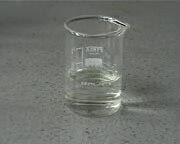
In an iodine clock reaction, colour changes after a time delay.

A chemical clock (or clock reaction) is a complex mixture of reacting chemical compounds in which the onset of an observable property (discoloration or coloration) occurs after a predictable induction time due to the presence of clock species at a detectable amount.[1] In cases where one of the reagents has a visible color, crossing a concentration threshold can lead to an abrupt color change after a reproducible time lapse.

Types

[edit]

Clock reactions may be classified into three or four types:[2]

Substrate-depletive clock reaction

[edit]

The simplest clock reaction featuring two reactions:[2]

A → C (rate k1)
B + C → products (rate k2, fast)

When substrate (B) is present, the clock species (C) is quickly consumed in the second reaction. Only when substrate B is all used up or depleted, species C can build up in amount causing the color to change. An example for this clock reaction is the sulfite/iodate reaction or iodine clock reaction, also known as Landolt's reaction.

Sometimes, a clock reaction involves the production of intermediate species in three consecutive reactions.

P + Q → R
R + Q → C
P + C → 2R

Given that Q is in excess, when substrate (P) is depleted, C builds up resulting in the change in color.

Autocatalysis-driven clock reaction

[edit]

The basis of the reaction is similar to substrate-depletive clock reaction, except for the fact that rate k2 is very slow leading to the co-existing of substrates and clock species, so there is no need for substrate to be depleted to observe the change in color. The example for this clock is pentathionate/iodate reaction.[2][3]

Pseudoclock behavior

[edit]

The reactions in this category behave like a clock reaction, however they are irreproducible, unpredictable and hard to control. Examples are chlorite/thiosulfate and iodide/chlorite reactions.[2]

Crazy clock reaction

[edit]

The reaction is irreproducible in each run due to the initial inhomogeneity of the mixture which result from variation in stirring rate, overall volume as well as geometry of the reactors. Repeating the reaction in the statistically meaningful manners leads to the reproducible cumulative probability distribution curve. The example for this clock is iodate/arsenous acid reaction.[4]

One reaction may fall into more than one classification above depending on the circumstance. For example, iodate−arsenous acid reaction can be substrate-depletive clock reaction, autocatalysis-driven clock reaction and crazy clock reaction.

Examples

[edit]

One class of example is the iodine clock reactions, in which an iodine species is mixed with redox reagents in the presence of starch. After a delay, a dark blue color suddenly appears due to the formation of a triiodide-starch complex.

The cinnamaldehyde clock reaction is an organic clock reaction, in which acetone is added to a basic solution containing trans-cinnamaldehyde and acetone. A precipitate of dicinnamalacetone appears suddenly after a delay.

Additional reagents can be added to some chemical clocks to build a chemical oscillator. For example, the Briggs–Rauscher reaction is derived from an iodine clock reaction by adding perchloric acid, malonic acid and manganese sulfate.[5]

See also

[edit]

References

[edit]
Revisions and contributorsEdit on WikipediaRead on Wikipedia
from Grokipedia
A chemical clock, or clock reaction, is a type of chemical system in which an abrupt change in concentration of a key occurs after a well-defined induction period, resulting in a sudden observable effect such as a color change. This predictable timing, which depends on factors like reactant concentrations and , allows the reaction to function analogously to a timekeeping device in laboratory settings. The most prominent example of a chemical clock is the , first described by German Hans Heinrich Landolt in 1886. In this reaction, persulfate ions (S₂O₈²⁻) oxidize iodide ions (I⁻) to produce iodine (I₂), which is initially consumed by thiosulfate ions (S₂O₃²⁻); once the thiosulfate is depleted, the accumulating iodine forms a deep blue complex with , marking the endpoint after a measurable delay typically lasting seconds to minutes. Other variants include the hydrogen peroxide-iodide clock and the clock, which similarly rely on sequential reactions to produce a visible transition, often adapted for educational demonstrations due to their safety and visual appeal. These reactions highlight non-linear kinetics, where the induction time follows an inverse relationship with reactant concentrations, enabling precise rate measurements. Chemical clocks are primarily employed in chemical kinetics studies to determine reaction orders, rate constants, and activation energies using the method of initial rates, where the time to the observable change inversely correlates with the . Beyond , they illustrate complex phenomena like and oscillatory behavior in systems such as the Belousov-Zhabotinsky reaction, which periodically alternates colors and serves as a model for biological . Their reliability stems from the sharp demarcation between latent and overt phases, making them invaluable tools for exploring how environmental factors influence reaction dynamics without advanced instrumentation.

Fundamentals

Definition

A chemical clock, or clock reaction, is a chemical system in which an observable property, such as a sudden color change, emerges after a predictable induction period, thereby mimicking the timed progression of a mechanical clock. This induction period represents a measurable delay during which the reaction proceeds without visible manifestation, allowing the timing to be controlled and studied through variations in initial conditions like concentrations or . At the core of such systems is the clock species, a key chemical entity—often a colored product or indicator—that accumulates gradually until its concentration surpasses a threshold, abruptly triggering the detectable change. This threshold-crossing mechanism ensures the reaction's "ticking" behavior, where the delay can be precisely tuned for experimental purposes. Chemical clocks differ from chemical oscillators in that they produce a singular, non-repeating event rather than periodic cycles of concentration fluctuations.

Principles of Operation

Chemical clock reactions operate through a series of kinetic processes that result in a predictable delay followed by a sudden change. The core involves sequential or coupled reactions where reactants are consumed gradually until a critical point is reached, allowing the formation of a detectable product. This behavior stems from the underlying reaction kinetics, governed by rate laws that describe how the velocity of each step depends on reactant concentrations. A key feature is the induction period, which represents the initial delay before the observable event occurs. During this phase, the concentrations of intermediate or product build up slowly due to the rates of the preceding reactions and the initial concentrations of the reactants. The duration of the induction period is determined by the and the rate constants of the involved steps, making it reproducible under controlled conditions. For instance, in many clock systems, this period arises from the slow accumulation of a clock until it surpasses a threshold. The threshold crossing marks the transition to the observable change, occurring when the concentration of the clock species exceeds a critical value. This often manifests as a sharp color change, facilitated by chemical indicators such as the starch-iodine complex, where iodine binding to produces a vivid hue once free iodine accumulates sufficiently. The predictability of this event relies on the sharp nonlinearity near the threshold, ensuring the change happens abruptly after the induction period. The kinetics are described by rate laws for the sequential reactions, typically of the form for a step A → B: rate=k[A]m\text{rate} = k [\text{A}]^m where kk is the rate constant and mm is the reaction order. In clock reactions, such as A → B → C, the overall timing emerges from integrating these laws over the , with the induction time inversely related to the initial concentrations and directly to the rate constants. This controlled progression ensures the timing is calculable and consistent. Several factors influence the timing of chemical clocks. Concentration of reactants directly affects the reaction velocity; higher initial concentrations shorten the induction period by accelerating the buildup to the threshold, often following inverse proportionality in systems. Temperature modulates the rate constants according to the : k=AeEa/RTk = A e^{-E_a / RT} where AA is the , EaE_a is the , RR is the , and TT is the absolute ; small increases in temperature can dramatically reduce induction times due to the exponential dependence. pH impacts timing in reactions involving proton-dependent steps, altering rate constants by influencing species or . For reliable operation, chemical clocks require conditions that ensure , including uniform mixing to avoid local concentration gradients and precise control of and initial compositions. Inconsistent mixing can lead to variable induction times, while deviations in environmental factors amplify errors in the predictable threshold crossing. These requirements underscore the importance of standardized procedures in kinetic studies using clock reactions.

History

Early Discoveries

The study of in the mid-19th century provided the initial framework for exploring s and temporal behaviors in chemical systems. German chemist Ludwig Wilhelmy conducted the first quantitative investigation of a in 1850, examining the acid-catalyzed inversion of into glucose and . His experiments demonstrated that the reaction rate is proportional to the concentrations of and acid, introducing the concept of rate laws and laying the groundwork for kinetics as a discipline. This empirical approach to measuring how concentrations evolve over time set the stage for later inquiries into delayed or sudden changes in reactions. Building on these foundations, chemical clocks first appeared in studies of kinetics toward the end of the . In 1886, Swiss chemist Hans Heinrich Landolt reported the discovery of a striking delayed reaction between and ions in acidic solution, now recognized as the inaugural chemical clock and commonly referred to as the Landolt reaction or iodine clock. Landolt's work involved mixing (KIO₃) with (Na₂SO₃) in the presence of and a indicator; the mixture initially remains colorless as the sulfite reduces iodate to without producing detectable free iodine, but after an induction period—dependent on initial concentrations—the solution abruptly turns deep blue-black due to the formation of the starch-iodine complex. Landolt's experiments were motivated by a desire to quantify induction times and delays in processes, aiming to elucidate reaction orders and the factors influencing the timing of observable changes. By varying concentrations and temperatures, he measured reproducible time lags, providing early insights into how kinetic barriers could lead to non-intuitive temporal profiles in multi-step reactions. These observations highlighted the potential of such systems for studying reaction mechanisms, though Landolt focused primarily on empirical data rather than underlying causes. Early investigations like Landolt's were constrained by the absence of theoretical models for complex kinetics, resulting in purely observational accounts without recognition of autocatalytic feedback loops that amplify the sudden iodine release after the induction phase. This limitation meant that while the clock behavior was reliably documented, its mechanistic drivers—such as the role of in accelerating iodine production—remained unexplained until detailed kinetic analyses in the mid-20th century.

Key Developments and Recent Advances

The Belousov-Zhabotinsky (BZ) reaction, discovered in the early 1950s by Soviet biochemist Boris Belousov while attempting to model the Krebs cycle, marked a pivotal shift toward understanding oscillatory chemical systems through autocatalytic cycles involving cerium ions and oxidation by . Despite initial publication challenges due to skepticism about non-equilibrium oscillations, Anatol Zhabotinsky validated and expanded the work in the 1960s at , demonstrating sustained color changes driven by autocatalytic feedback loops that challenged classical . This reaction introduced the concept of chemical oscillators as models for , laying foundational principles for later clock studies. In 1973, high school teachers Thornton S. Briggs and Warren C. Rauscher developed the first reliably reproducible oscillating clock reaction by modifying the BZ system, substituting for , incorporating , and using to produce dramatic, periodic color shifts between clear, amber, and deep blue phases. Published in the Journal of Chemical Education, this innovation bridged traditional clock reactions with true oscillators, enabling consistent demonstrations of nonlinear dynamics without the variability plaguing earlier systems. The Briggs-Rauscher reaction's radical-mediated mechanism highlighted the role of free radicals in timing abrupt changes, influencing subsequent research on complex reaction networks. Advancements in the 2020s have emphasized safer and more accessible clock designs, with a 2022 review detailing organic dye-based reactions—such as those using or with reducing agents like glucose—that offer vivid visual endpoints without hazardous inorganic oxidants like . These systems provide tunable induction times for analytical applications, reducing toxicity while maintaining sharp transitions for educational and sensing purposes. Concurrently, a 2025 machine-learning model from MIT, React-OT, leverages optimal transport algorithms to predict structures—the "point of no return" in reactions—with over 90% accuracy in under a second, enabling precise forecasting of commitment points in clock-like kinetics across diverse . Mathematical modeling has progressed with Caputo fractional-order derivatives to capture non-integer kinetics in clock reactions, where traditional integer-order models fail to describe memory effects and in induction phases; publications from 2023 to 2025, as of November 2025, demonstrate improved simulations of fractional-order clock systems using methods like Haar wavelets for Liouville-Caputo operators, achieving convergence rates that better match experimental delays in autocatalytic setups. Computational simulations have further impacted the field by predicting induction times in complex mixtures, as shown in a 2025 model of the C-iodine clock reaction, which integrates precursor depletion and inhibition to forecast switchover times with errors below 5% for varying concentrations, facilitating virtual optimization of reaction conditions.

Types

Substrate-Depletive Clock Reactions

Substrate-depletive clock reactions represent a fundamental class of chemical clocks in which the observable change, such as a sudden color shift, occurs due to the exhaustion of a limiting substrate that suppresses the accumulation of the clock during an initial induction period. Unlike other types, these reactions lack autocatalytic feedback, relying instead on straightforward sequential kinetics for their timing. The process typically involves the slow production of an intermediate or product species that is rapidly scavenged by the depleting substrate until it is consumed, at which point the clock species builds up abruptly. The general mechanism can be illustrated by a simplified scheme: a precursor species A is converted to the clock species C via a relatively slow reaction (A → C), while the substrate B reacts with C to form stable products in a faster step (B + C → products). This setup ensures that [C] remains negligible until B is depleted, triggering the visible endpoint. A canonical kinetic model for this behavior is captured by the rate equations d[C]dt=k1[A]k2[B][C],\frac{d[\mathrm{C}]}{dt} = k_1 [\mathrm{A}] - k_2 [\mathrm{B}][\mathrm{C}], d[B]dt=k2[B][C],\frac{d[\mathrm{B}]}{dt} = -k_2 [\mathrm{B}][\mathrm{C}], where k1k_1 and k2k_2 are rate constants, and assuming [A] is approximately constant during the induction phase. The induction time τ\tau, or the delay before significant [C] accumulation, can be approximated as τ[B]0k1[A]0\tau \approx \frac{[\mathrm{B}]_0}{k_1 [\mathrm{A}]_0}, assuming fast scavenging and 1:1 stoichiometry, providing a predictable measure of reaction progress under controlled conditions. These reactions exhibit high reproducibility and sharp transitions, making them prevalent in redox-based systems where drives the depletion. Their simplicity allows for precise control of τ\tau by varying initial concentrations, typically yielding linear relationships between lnτ\ln \tau and reactant levels for kinetic analysis. A key advantage lies in their straightforward , which facilitates educational applications in measuring reaction rates and orders without complex instrumentation. The classic exemplifies this type, where depletion enables iodine accumulation and complexation.

Autocatalysis-Driven Clock Reactions

Autocatalysis-driven clock reactions rely on a feedback mechanism where a product of the reaction accelerates its own formation, resulting in a prolonged induction period followed by a rapid surge in the production of the observable "clock" . In these systems, the initial reaction between the substrate (denoted as B) and the proceeds at a slow rate constant k2k_2, allowing the substrate to coexist with the emerging clock species (C) without immediate detection. This slow phase builds up a low concentration of an autocatalyst, often an intermediate like iodide ion (I⁻), which then participates in a faster autocatalytic step, such as \ceC+B>2C\ce{C + B -> 2C}, leading to exponential growth once a critical threshold is reached. The sudden acceleration produces a sharp transition, such as a color change, marking the clock event. A representative example is the pentathionate-iodate reaction, where sodium pentathionate (\ceS5O62\ce{S5O6^2-}) reacts with (\ceIO3\ce{IO3^-}) in acidic medium to produce iodine as the clock species. The kinetics follow a complex 14-step model incorporating the direct slow oxidation of pentathionate by , which generates , followed by autocatalytic iodine formation primarily through the Dushman reaction (\ceIO3+5I+6H+>3I2+3H2O\ce{IO3^- + 5I^- + 6H^+ -> 3I2 + 3H2O}), where acts as the autocatalyst. The rate of iodine production can be approximated by contributions from the initial non-autocatalytic term and an autocatalytic term dependent on and concentrations, such as d[\ceI2]dtk[\ceS5O62][\ceIO3]+kauto[\ceI]2[\ceIO3]\frac{d[\ce{I2}]}{dt} \approx k [\ce{S5O6^2-}][\ce{IO3^-}] + k_{\text{auto}} [\ce{I^-}]^2 [\ce{IO3^-}], though the exact form varies with conditions; the inverse induction time is proportional to [\ceIO3]0[\ce{IO3^-}]_0 and [\ceH+]2[\ce{H^+}]^2. This results in a long lag phase due to the slow initial production, followed by rapid iodine accumulation once reaches sufficient levels. These reactions exhibit greater complexity than substrate-depletive types, often producing sigmoidal or rise-and-fall concentration profiles sensitive to initial concentrations, , and temperature, which can lead to highly reproducible yet tunable clock times. The autocatalytic feedback amplifies small perturbations, enabling sharp transitions observable over seconds to minutes. Under specific parameter ranges, such as varying reactant ratios or adding inhibitors, these systems can transition from single clock events to periodic oscillations, linking them mechanistically to chemical oscillators like the Belousov-Zhabotinsky reaction, where sustained autocatalytic loops drive repetitive cycles.

Pseudoclock and Crazy Clock Behaviors

Pseudoclock behaviors in chemical clock reactions manifest as an apparent delay period followed by a sudden change, mimicking standard clock mechanisms but lacking due to influences such as side reactions and fluctuations in reactant distribution. In the chlorite-iodide reaction, for instance, the induction time exhibits high variability, arising from the autocatalytic accumulation and abrupt consumption of iodine, which is highly sensitive to initial mixing conditions and trace impurities that trigger competing pathways. Similarly, the chlorite- reaction displays pseudoclock-like characteristics through variable induction periods influenced by side reactions, where fluctuations in thiosulfate oxidation lead to inconsistent timing under non-ideal stirring. These behaviors highlight the role of inherent noise in nonlinear kinetics, often rendering the apparent clock unreliable for precise applications. Crazy clock behaviors represent an extreme form of unpredictability, characterized by wide scatter in reaction timing even under controlled conditions, often exceeding 50% deviation from mean values. A prominent example is the iodate-arsenous acid reaction in buffered media, where initial inhomogeneities—such as localized concentrations from imperfect mixing—initiate random ignition sites, causing the iodine appearance time to vary dramatically across replicates despite consistent bulk compositions. This variability stems from bistable states that allow multiple kinetic pathways, exacerbated by impurities or inadequate stirring that prevent uniform reactant dispersal. Common causes of both pseudoclock and crazy clock phenomena include non-ideal mixing, which introduces spatial heterogeneities, and impurities that catalyze unintended side reactions, alongside that permits switching between stable regimes with triggers. These factors disrupt the deterministic progression assumed in ideal clock models, linking to broader challenges in nonlinear systems. Despite their impracticality for timing, such behaviors hold significant research value in probing dynamics and kinetic sensitivity, enabling studies of noise propagation and front propagation in reaction-diffusion systems.

Examples

Iodine Clock Reaction

The is a classic demonstration of , first described by Hans Heinrich Landolt in 1886, involving the delayed formation of iodine that suddenly complexes with to produce a vivid blue-black color. In this substrate-depletive process, a consumes iodine as it forms slowly, maintaining a colorless solution until the reducer is exhausted, allowing free iodine to accumulate and trigger the visible change. The reaction typically employs two colorless solutions: one containing (KIO₃, 0.02 M) as the oxidant, and the other with (NaHSO₃, derived from 0.2 g Na₂S₂O₅ per liter), 4 g soluble as the indicator, and 5 mL of 1 M (H₂SO₄) for acidification. To perform the demonstration, equal volumes (e.g., 100 mL each) of the solutions are mixed at , resulting in an initially clear mixture due to the rapid reduction of nascent iodine by ; the solution remains colorless until the bisulfite is depleted, at which point iodine concentration exceeds the threshold for binding with starch, causing an abrupt shift to deep blue-black. The induction period before the color change typically lasts 10–60 seconds and serves as a visual measure of , adjustable by varying concentrations—for instance, halving the iodate volume roughly doubles the time, illustrating first-order kinetics dependence on the oxidant. Landolt's original 1886 setup used (Na₂SO₃) instead of in dilute with and , but modern protocols favor for stability; safer variants replace with ascorbic acid () to avoid toxicity, mixing a solution (e.g., crushed 1000 mg tablet in 60 mL water) with iodine tincture and , then adding to initiate the clock, yielding a similar delayed blue color upon ascorbic acid depletion.

Briggs-Rauscher Reaction

The Briggs-Rauscher reaction is an oscillating chemical clock developed in 1973 by Thomas S. Briggs and Warren C. Rauscher at Galileo High School in San Francisco as a reliable demonstration for classroom use, producing visible color changes without the need for specialized equipment. The reaction mixture typically consists of hydrogen peroxide (H₂O₂) as the primary oxidant, potassium iodate (KIO₃), malonic acid (CH₂(COOH)₂), manganese(II) sulfate (MnSO₄) as a catalyst, soluble starch as an indicator, and sulfuric acid (H₂SO₄) to provide an acidic environment. These components are combined in specific ratios—often prepared as stock solutions for safety and reproducibility—to initiate the oscillation upon mixing. In the reaction, the solution undergoes periodic color changes, cycling through colorless, amber (due to free iodine), and deep (from the starch-iodine complex) phases approximately every 5–10 seconds for up to 10–15 minutes, depending on concentrations and . This rhythmic behavior arises from competing oxidation-reduction processes: both oxidizes to iodine and reduces to , while ions facilitate radical-mediated steps that amplify these cycles. The oscillations cease when key reagents are depleted, leaving a yellowish or residue. The underlying mechanism involves the reduction of (IO₃⁻) to (I⁻) by , followed by the reoxidation of back to iodine (I₂) under acidic conditions, creating a feedback loop. plays a crucial role by rapidly reacting with iodine to form colorless iodomalonic acid, which inhibits further iodine accumulation until the concentration drops, allowing reoxidation to resume and regenerate free iodine. This interplay, enhanced by manganous ions catalyzing radical production of (HOI), sustains the autocatalytic oscillations characteristic of the reaction.

Other Notable Examples

The clock reaction involves a base-catalyzed between acetone and trans-, resulting in the sudden formation of a yellow precipitate of dicinnamalacetone after an induction period of approximately 30–45 seconds. This non-redox process demonstrates the kinetics of condensation reactions, where the delay arises from the slow buildup of intermediates before rapid product formation and . The reaction is typically performed in an ethanol-water mixture with as the catalyst, making it suitable for illustrating mechanisms in educational settings. Another example is the vitamin C clock reaction, which utilizes ascorbic acid () to scavenge iodine generated from the reaction of with , preventing immediate complexation with until the ascorbic acid is depleted. Upon exhaustion of , free iodine rapidly forms the blue starch-iodine complex, marking the end of the delay period, which can be tuned by varying concentrations of the . This substrate-depletive system employs common like 3% , , and laundry , offering a safer alternative to traditional iodine clocks for studying reaction rates. Recent developments in organic dye-based clocks include the oxygen-safranin-benzoin reaction and the cysteine-iodine- system, both introduced as non-toxic, visually striking demonstrations using water-soluble dyes. In the safranin-benzoin clock, dissolved oxygen oxidizes benzoin in the presence of dye, leading to a sudden color change from pink to colorless after the substrate is consumed, with the delay influenced by oxygen levels and concentration. Similarly, the cysteine-iodine- clock relies on reducing iodine produced from and , culminating in a color shift when cysteine is depleted, enabling adjustable timing for pedagogical purposes. These systems highlight progress toward alternatives with vibrant, reversible color transitions. A more advanced example emerged in 2024 with the electrochemical oxidation of to oxide, revealing an oscillating reaction characterized by periodic color shifts from light brown to dark brown on the surface. This process, observed via time-resolved , involves structural oscillations between and intermediate oxide phases during anodic oxidation in aqueous , correlating with potential cycles and indicating dynamic phase changes. The oscillations, persisting for hours, provide new insights into the mechanistic complexity of oxide synthesis, distinguishing it as a science-oriented chemical clock.

Applications

Educational Demonstrations

Chemical clock reactions serve as engaging tools in settings to illustrate fundamental concepts in , including reaction rates, rate laws, and the influence of reactant concentrations on reaction timing. For instance, by varying the concentration of in the , students can observe how increased iodate levels shorten the induction period before the color change, allowing them to derive rate laws through systematic measurements. These demonstrations highlight the non-linear nature of reaction progress, where slow initial phases lead to abrupt changes, mirroring real-world processes like enzyme-catalyzed reactions that exhibit timed thresholds. To ensure safety in educational environments, modern adaptations replace hazardous reagents such as with benign alternatives like (ascorbic acid) and food-grade dyes, minimizing risks while preserving the observable clock behavior. The clock reaction, for example, uses household items including , , and indicator, enabling safe exploration of kinetics without specialized ventilation or protective gear. Interactive student experiments often involve timing multiple runs of the reaction under varied conditions, such as altering concentrations or temperatures, to collect data on induction times and plot graphs of reaction rate versus concentration. These activities foster hands-on learning, where students calculate average rates from time measurements and analyze how doubling a reactant's concentration might halve the clock time, reinforcing quantitative aspects of rate laws. The dramatic visual "magic" of sudden color shifts in chemical clocks captivates learners, enhancing engagement and retention of abstract kinetics principles by connecting classroom phenomena to biological timing mechanisms, such as reactions in metabolic pathways. The remains a staple demonstration for these purposes due to its reliability and striking effect.

Scientific and Technological Uses

Chemical clock reactions serve as valuable tools in chemical kinetics research, enabling precise measurement of reaction orders and activation energies through the timing of observable changes, such as color shifts in the iodine clock reaction. By varying reactant concentrations and temperatures while recording the induction period until the clock event, researchers can derive rate laws and Arrhenius parameters; for instance, experiments with the iodine clock have quantified activation energies around 50-60 kJ/mol for key steps. Recent advancements include validation of machine learning models, such as MIT's 2025 computational framework, which predicts transition states—the commitment points in reactions—with sub-second accuracy. In modeling complex systems, chemical clocks provide insights into oscillatory and chaotic dynamics, often simulated using fractional-order differential equations to capture non-integer memory effects in reaction networks. The fractional-order clock chemical model, for example, extends classical kinetics to describe anomalous diffusion and long-range dependencies, aiding simulations of biological processes like circadian rhythms. Researchers have reconstructed temperature-compensated oscillations in non-enzymatic chemical systems to mimic circadian clock properties, such as period stability across 15–30°C, offering a chemical analog for studying gene-regulatory feedback loops without biological complexity. Technological applications leverage chemical clocks for precise temporal control in emerging devices, including microreactors where induction times trigger drug release profiles. In soft material systems, clock reactions enable programmable delays for pulsatile delivery, with induction periods tunable from minutes to hours via catalyst concentrations, enhancing chronotherapeutic efficacy for conditions like . For materials synthesis, oscillating reactions in oxide production—discovered in 2024—monitor reaction progress through periodic potential fluctuations, allowing real-time adjustment of oxidation states for uniform nanosheet quality. In , chemical clocks facilitate quantitative assays by correlating induction times with analyte concentrations, achieving precisions of 1-5 seconds for detecting species like or iodine at micromolar levels through timed color changes. These methods, exemplified by modified iodine clocks, provide simple, visual endpoints for environmental or clinical monitoring without complex , though sensitivity depends on autocatalytic amplification.

References

Add your contribution
Related Hubs
User Avatar
No comments yet.