Hubbry Logo
ColobomaColobomaMain
Open search
Coloboma
Community hub
Coloboma
logo
8 pages, 0 posts
0 subscribers
Be the first to start a discussion here.
Coloboma
Coloboma
from Wikipedia
Coloboma
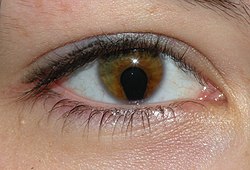
Coloboma in a 16-year-old female
SpecialtyOphthalmology

A coloboma (from the Greek κολόβωμα, meaning "defect")[1] is a hole in one of the structures of the eye, such as the iris, retina, choroid, or optic disc. The hole is present from birth and can be caused when a gap called the choroid fissure, which is present during early stages of prenatal development, fails to close up completely before a child is born. Ocular coloboma is relatively uncommon, affecting less than one in every 10,000 births.

The classical description in medical literature is of a keyhole-shaped defect. A coloboma can occur in one eye (unilateral) or both eyes (bilateral). Most cases of coloboma affect only the iris. The level of vision impairment of those with a coloboma can range from having no vision problems to being able to see only light or dark, depending on the position and extent of the coloboma (or colobomata if more than one is present).

Signs and symptoms

[edit]
Iris coloboma in the right eye of a 10-month-old child. The pupil cannot contract to a smaller size than pictured, but may still be able to dilate in low light.

Visual effects may be mild to more severe depending on the size and location of the coloboma. If, for example, only a small part of the iris is missing, the vision may be normal; when a large part of the retina or (especially) optic nerve is missing, the vision may be poor. Commonly posterior colobomata affect the inferior retina, with resultant deficit in the superior visual field. Other conditions can be associated with a coloboma. Sometimes, the eye may be reduced in size, a condition called microphthalmia. Glaucoma, nystagmus, scotoma, or strabismus may also occur.

[edit]

Other ocular malformations that include coloboma or are related to it:

  • CHARGE syndrome, a term that came into use as an acronym for the set of unusual congenital features seen in a number of newborn children.[2] The letters stand for: coloboma of the eye, heart defects, atresia of the nasal choanae, retardation of growth and/or development, genital and/or urinary abnormalities, and ear abnormalities and deafness. Although these features are no longer used in making a diagnosis, the name has remained.
  • Cat eye syndrome, caused by the short arm (p) and a small section of the long arm (q) of human chromosome 22 being present three (trisomic) or four times (tetrasomic) instead of the usual two times. The term "cat eye" was coined because of the particular appearance of the vertical colobomas in the eyes of some patients.
  • Patau syndrome (trisomy 13), a chromosomal abnormality that can cause a number of deformities, some of which include structural eye defects, including microphthalmia, Peters anomaly, cataract, iris and/or fundus coloboma, retinal dysplasia or retinal detachment, sensory nystagmus, cortical visual loss, and optic nerve hypoplasia.
  • Treacher Collins syndrome, autosomal dominant syndrome caused by mutation of TCOF1. Coloboma is part of a set of characteristic facies that features craniofacial malformations, such as downslanting eyes, ear anomalies, or hypoplasia of zygomatic bone and jaw (micrognathia).
  • Tilted disc syndrome, an unusual congenital malformation associated with myopic astigmatism characterized by tilting of the intraocular tip of the optic nerve (the optic disc), also known as Fuchs coloboma.

Causes

[edit]

Coloboma can be associated with a mutation in the PAX2 gene.[3]

Eye abnormalities have been shown to occur in over 90% of children with fetal alcohol syndrome.[4]

Diagnosis

[edit]

Typically a coloboma appears oval- or comet-shaped with round end towards the centre. There may be a few vessels (retinal or choroidal) at the edges. The surface may have irregular depression.

Treatment

[edit]

Coloboma of the iris may be treated in a number of ways. A simple cosmetic solution is a specialized cosmetic contact lens with an artificial pupil aperture. Surgical repair of the iris defect is also possible. Surgeons can close the defect by stitching in some cases.

Vision can be improved with glasses, contact lenses or even laser eye surgery but may be limited if the retina is affected or there is amblyopia.[5]

Epidemiology

[edit]

The number of cases is around 5 to 7 per 100,000 births, making it a relatively rare condition.[6]

Notable cases

[edit]

Notable people with coloboma include actor John Ritter, model/actress Karolina Wydra, The New York Times columnist Andrew Ross Sorkin, pop singer songwriter Lachi, U.S. Olympic medalist Stephen Nedoroscik, and George Soros. Madeleine McCann, a young girl who went missing in Portugal in 2007, does not have the condition. She has a freckle under her pupil. Her unique eye was a large part of her parents' media appeal to find her.

References

[edit]
[edit]
Revisions and contributorsEdit on WikipediaRead on Wikipedia
from Grokipedia
Coloboma is a congenital eye abnormality present at birth, characterized by gaps or notches in the tissue of ocular structures such as the iris, , , , lens, or eyelids, resulting from the incomplete closure of the during early fetal development around the seventh week of . This developmental defect occurs in approximately 1 in 10,000 individuals and can affect one or both eyes, often appearing as isolated anomalies or as part of broader genetic syndromes. The condition arises from genetic mutations or chromosomal abnormalities that disrupt normal eye formation, with potential inheritance patterns including autosomal dominant, recessive, or X-linked modes; it may also occur sporadically without a family history. Environmental factors, such as maternal alcohol consumption during pregnancy, can increase the risk, alongside associations with syndromes like , , or Wolf-Hirschhorn syndrome. Symptoms vary depending on the location and extent of the missing tissue: iris colobomas typically cause a distinctive keyhole- or teardrop-shaped without significant vision impairment but may lead to light sensitivity (), while retinal, choroidal, or colobomas can result in vision loss, reduced , field defects, or even blindness in severe cases. Additional complications may include (underdeveloped eye), (involuntary eye movements), cataracts, , or retinal , potentially worsening over time if untreated. Eyelid colobomas might cause exposure issues, leading to dryness or infection risks. Diagnosis is usually made through a comprehensive by an ophthalmologist, often identifiable at birth via slit-lamp or dilated fundus exams, with tests for older children to assess functional impact. There is no cure for the missing tissue, but management focuses on correcting refractive errors with or contact lenses, using low-vision aids for impaired sight, and surgical interventions for cosmetic concerns (e.g., iris implants) or complications like cataracts or prevention via patching. Regular monitoring is essential to address associated risks and support visual development.

Overview

Definition and Types

Coloboma is a congenital ocular malformation characterized by a gap-like defect in one or more eye structures, resulting from the incomplete closure of the embryonic during early fetal development. This , also known as the optic or embryonal fissure, forms as a temporary indentation in the ventral aspect of the developing optic cup and typically closes between weeks 5 and 7 of , around the 17-mm embryonic stage. Failure of this closure leads to tissue absence, most commonly in the inferior or inferonasal quadrant of the eye, reflecting the ventral orientation of the . Colobomas are classified based on the affected ocular structures, with typical forms occurring in the inferonasal region and atypical forms elsewhere. Iris coloboma manifests as a notch or keyhole-shaped , often visible externally. and retinal colobomas involve posterior defects in the vascular and sensory , potentially extending to the , where an excavated or crater-like appearance may occur. Lens coloboma presents as a notch along the due to zonular defects, while eyelid coloboma features a full-thickness gap, usually in the upper lid. Rarer types include those affecting the or , which may disrupt aqueous humor production or central vision pathways. Colobomas can occur unilaterally or bilaterally, with population-based studies indicating approximately two-thirds of cases are unilateral. Bilateral involvement may be symmetric or asymmetric and is more common in syndromic associations.

Pathophysiology

Coloboma arises from a in the normal embryological closure of the choroidal fissure during early ocular development. Eye morphogenesis begins around the third week of with the specification of the eye field in the anterior , followed by the evagination of optic vesicles from the by day 22. By the fourth to fifth week, the optic vesicle invaginates to form the optic cup, creating a ventral groove known as the choroidal fissure that allows ingress of mesenchymal tissue and the hyaloid vasculature. This fissure typically closes through a zipper-like mechanism starting at its midpoint and progressing bidirectionally, completing fusion by the seventh week of . The closure process involves intricate cellular mechanisms, including (apoptosis) to remove excess tissue, directed of periocular , and the formation of adherens junctions mediated by cadherins to fuse the neuroepithelial edges. Disruptions in these processes, such as impaired or defective cell motility, prevent complete apposition and adhesion of the fissure margins, resulting in a persistent defect. Unlike other ocular dysgeneses that may involve tissue or , coloboma represents an absence of tissue in the inferonasal quadrant due to this failed , rather than a simple or through intact structures. Signaling pathways, particularly Sonic Hedgehog (SHH), play a crucial role in ventral patterning of the optic vesicle; dysregulation of SHH gradients can hinder fissure closure by altering cell fate specification and migration patterns. In affected individuals, the initial embryonic defect persists into postnatal life, often leading to progressive complications due to mechanical instability in the defect region. The absence of supportive choroidal and l tissues can cause retinal thinning over time, as the unsupported neurosensory stretches or atrophies. Larger colobomas may predispose to formation, where ectatic protrusion of the posterior globe occurs secondary to weakened , potentially exacerbating in adulthood.

Clinical Presentation

Signs and Symptoms

Coloboma manifests primarily through ocular abnormalities present at birth, with symptoms varying based on the affected eye structure, such as the iris, , , , lens, or eyelids. In iris coloboma, a characteristic keyhole- or cat-eye-shaped results from missing tissue, often located inferonasally, leading to irregular light entry. or choroidal colobomas appear as white or pigmented lesions with possible pigment clumping at the edges, while colobomas present with enlarged, excavated disc cupping, typically inferiorly. Visual symptoms range from mild reduction in acuity to severe vision loss or blindness, depending on the coloboma's size and location. For instance, retinal colobomas often cause inferior defects, such as scotomas, impairing , while optic nerve involvement can lead to profound central vision loss. Iris colobomas may induce or glare due to the pupil's irregular shape, exacerbating light sensitivity without necessarily affecting acuity. Physical signs are often visible externally in anterior structures; for example, colobomas create a notch or gap, potentially exposing the , and lens colobomas may flatten the lens equator from absent zonules. Posterior colobomas, like those in the or , might not be apparent without dilated examination but can associate with (small eye) or (involuntary eye movements). Small iris colobomas frequently remain and are discovered incidentally during routine eye exams, causing no visual disturbance or cosmetic concern. These congenital defects are typically evident at birth, though subtler cases may go unnoticed until infancy or later childhood. Complications such as or can emerge in early childhood, further reducing vision in the affected eye. Individuals with symptomatic colobomas often face daily challenges, including light sensitivity necessitating tinted lenses, eccentric viewing to compensate for field defects, or reliance on low-vision aids for tasks like reading or navigation.

Associated Conditions

Coloboma is frequently associated with various systemic and ocular conditions, with many cases exhibiting syndromic features that involve multisystem involvement. In particular, ocular coloboma occurs in 15-30% of patients with , a multisystem disorder characterized by coloboma, heart defects, choanae, growth retardation, genital anomalies, and ear abnormalities, primarily caused by mutations in the CHD7 gene. Cat-eye syndrome, resulting from or partial duplication of 22q11, often presents with iris or chorioretinal coloboma alongside , anal , and cardiac defects. , an X-linked dominant condition almost exclusively affecting females, features optic disc coloboma in conjunction with and infantile spasms, linked to abnormalities at Xp22.31. Renal-coloboma syndrome, due to mutations in the PAX2 gene on 10q24.3, combines optic nerve coloboma with renal or and may include . Beyond syndromic associations, coloboma commonly coexists with other ocular anomalies within the microphthalmia/anophthalmia/coloboma (MAC) spectrum, where —defined as an axial length less than 18.5 mm in adults—is a frequent companion. Persistent hyperplastic primary vitreous (PHPV) is also observed in some cases, particularly in association with and lens dysplasia. Cataracts occur in up to 48.9% of affected eyes, often manifesting as (51%) or coloboma-specific linear opacities (29%). In non-syndromic coloboma, patients face elevated risks of secondary ocular complications, including with a reported prevalence ranging from 2.4% to 47.5%, where the odds increase by 1.147 per year of age. is another linked condition, notably in associations like Rieger syndrome type 1 due to PITX2 gene mutations.

Etiology

Genetic Causes

Coloboma exhibits significant , with over 100 genes implicated in its pathogenesis, often demonstrating variable expressivity and that complicates genotype-phenotype correlations. Mutations or variants in these genes disrupt critical developmental pathways during ocular embryogenesis, particularly the closure of the optic fissure. While many cases are sporadic, monogenic causes account for up to 20% of instances within the microphthalmia, anophthalmia, and coloboma (MAC) spectrum. Several key genes have been strongly associated with coloboma. Mutations in , located on chromosome 3q26.33, are linked to or often accompanied by coloboma, as well as extraocular features like malformations. PAX6 variants (11p13) contribute to iris and lens defects, including coloboma, within a broader spectrum of anterior segment dysgenesis. CHD7 mutations (8q12.1) underlie , where coloboma affects up to 80% of cases, typically involving the choroid, , or . PAX2 alterations (10q24.31) cause renal-coloboma syndrome, featuring coloboma alongside renal . The MAF gene (16q23.2) is associated with and coloboma in the context of anterior segment anomalies. Additional genes such as FOXC1 (6p25.3) and PITX2 (4q25) are implicated in coloboma as part of syndromes involving iris and . Inheritance patterns for coloboma vary widely. Autosomal dominant transmission is common, as seen in syndromes like CHARGE (CHD7) or renal-coloboma (PAX2), where a single mutated suffices. Autosomal recessive forms occur, exemplified by mutations in genes like SALL2 for isolated ocular coloboma. X-linked inheritance is rarer, notably in , which includes chorioretinal coloboma. De novo mutations predominate in many cases, particularly for and CHD7, contributing to sporadic presentations. Chromosomal abnormalities also play a role in coloboma etiology. Deletions in 13q, often involving the 13q32 region, are associated with retinal and optic nerve coloboma alongside . , particularly partial trisomy of 22q11, manifests as with iris coloboma, anal atresia, and preauricular tags. 22q11.2 deletions, as in , can lead to iris or chorioretinal coloboma in conjunction with cardiac and immune defects. Advancements in genomic technologies have illuminated novel genetic contributors. As of 2025, whole-exome and whole-genome sequencing have identified rare variants in NR6A1 (1p35.3), causing a newly described oculo-vertebral-renal characterized by uveal coloboma, , vertebral anomalies, and renal malformations; these findings emerged from large-scale cohorts like the National Eye Institute's MAC study and Genomics England.

Environmental Factors

Environmental factors contribute to coloboma by disrupting the closure of the optic fissure during early embryonic development, typically between weeks 4 and 8 of gestation. These non-genetic influences include teratogenic exposures that interfere with ocular morphogenesis, often in interaction with underlying genetic vulnerabilities. Teratogenic exposures during this critical window have been implicated in coloboma. Maternal diabetes is associated with elevated risks of congenital eye malformations, including coloboma, owing to hyperglycemia-induced oxidative stress and metabolic disruptions in the embryo. Prenatal alcohol consumption, particularly in cases of fetal alcohol syndrome, shows overlap with coloboma, with reports identifying it in up to 4% of affected individuals and animal studies confirming iris defects from ethanol exposure. Thalidomide, when taken between days 20 and 36 post-fertilization, has caused coloboma in 5-25% of exposed cases across multiple cohorts. Maternal infections like rubella during early pregnancy can also trigger coloboma by eliciting inflammatory responses that impair fissure closure. Nutritional deficiencies further support a role for environmental influences. shortage, essential for signaling in , induces optic fissure defects in and models, with human case reports linking maternal deficiency to bilateral colobomas. similarly produces coloboma in rat embryos exposed during gestation days 9-11, highlighting disruptions in migration and fissure fusion, although direct human associations remain tentative. Multifactorial mechanisms underscore gene-environment interactions in coloboma . Exposures such as alcohol can perturb sonic hedgehog (SHH) signaling, a key pathway for ventral eye patterning, thereby amplifying risks in genetically susceptible embryos; rescue experiments with SHH protein mitigate such defects in animal models. Maternal smoking and hypoxia may contribute via similar oxidative and signaling impairments, though epidemiologic evidence is emerging rather than definitive. Rare iatrogenic factors involve early pregnancy medications. Antithyroid drugs like methimazole are linked to coloboma through case reports of and ocular defects, while immunosuppressants such as mycophenolate mofetil show associations in up to 20% of exposed fetuses with chorioretinal coloboma. Reviews of non-syndromic coloboma indicate that environmental factors account for a subset of cases, estimated at 10-20% based on integrated epidemiologic data.

Diagnosis

Clinical Examination

The clinical examination for coloboma begins with a detailed patient history to identify potential risk factors and associated conditions. This includes inquiring about family ocular history, as coloboma can exhibit autosomal dominant inheritance with variable expressivity or occur sporadically. Prenatal exposures, such as maternal diabetes or use, should be assessed, given their links to embryonic fissure closure defects. Developmental milestones are reviewed to detect delays or early signs like , while screening for syndromic features—such as cardiac or ear anomalies in —is essential. Visual assessment evaluates functional impact through standardized tests. Visual acuity is measured using age-appropriate methods, such as Snellen charts in older children, to quantify reduction often linked to or macular involvement. Confrontation visual field testing detects scotomas or peripheral defects corresponding to coloboma location, particularly inferonasal quadrants. Pupillary response to light is examined for irregularities, such as asymmetric in iris coloboma cases presenting as a keyhole-shaped . Slit-lamp biomicroscopy provides detailed anterior segment evaluation. It reveals iris defects, typically inferonasal notches or keyhole shapes, and lens abnormalities like cataracts, reported in nearly 49% of cases, with being the most common type. assesses the anterior chamber angle for colobomatous extensions, which may predispose to in microphthalmic eyes. Fundoscopy, performed under pupillary dilation, is crucial for posterior segment inspection. It identifies choroidal or retinal defects as excavated areas with scleral exposure and pigmented borders, often classified by size and involvement per Ida Mann criteria. coloboma appears as enlarged, excavated cups, increasing risks for associated . In newborns, early detection relies on the test during routine screening. An abnormal or absent , appearing dull or white, signals posterior coloboma and prompts immediate ophthalmologic referral.

Imaging and Genetic Testing

Imaging modalities play a crucial role in confirming and characterizing coloboma by providing detailed visualization of ocular structures beyond what clinical examination alone can achieve. (OCT) is particularly valuable for assessing retinal layering and identifying disruptions in the retinal architecture associated with colobomatous defects, such as thinning or absence of layers in the macular region. High-resolution OCT can delineate the extent of chorioretinal involvement, revealing subretinal fluid or schisis-like changes in affected areas. Fundus autofluorescence (FAF) imaging helps evaluate the choroidal extent of colobomas by highlighting areas of hypoautofluorescence corresponding to absent and choroidal tissue, aiding in mapping the lesion's boundaries. B-scan ultrasonography is employed to detect posterior staphylomas or ectatic changes in the adjacent to colobomas, especially in cases involving the or posterior pole, where it can confirm communication between the colobomatous excavation and the optic nerve head. This modality is useful for identifying buried structures or calcifications that may mimic or complicate coloboma. (MRI) of the orbits is indicated for evaluating and orbital involvement, particularly to assess for associated midline brain anomalies or to differentiate coloboma from mimics like morning glory disc anomaly, where MRI can reveal characteristic peripapillary or funnel-shaped excavations. Electrophysiology testing, such as (ERG), is recommended in severe cases to objectively assess function, particularly when colobomas involve extensive areas or are associated with syndromic features like . Full-field ERG can detect reduced amplitudes in photopic and scotopic responses indicative of widespread dysfunction, while multifocal ERG may localize functional deficits to the colobomatous region. Alterations in ERG waveforms are typically observed only with significant anomalies, such as large colobomas or secondary detachment, helping to predict visual . Genetic testing is essential for identifying underlying molecular causes, especially in isolated or syndromic coloboma, with molecular achieved in approximately 20% of cases using targeted panels or as of 2024. Targeted gene panels focusing on coloboma-associated genes like and PAX2 are first-line, using next-generation sequencing to detect pathogenic variants that disrupt ocular development. For PAX2-related disorders, sequence analysis is followed by deletion/duplication testing if initial sequencing is negative, as large deletions are common in renal-coloboma syndrome. Chromosomal analysis (CMA) is utilized to identify copy number variations or deletions, such as those involving PAX2, which may not be captured by sequencing alone. In syndromic cases or when standard panels are unrevealing, whole-genome sequencing is recommended to uncover novel variants across the genome, providing comprehensive etiological insights. Prenatal diagnosis of severe , , and coloboma (MAC) spectrum disorders can be achieved through screening at 18-20 weeks gestation, which may detect ocular structural anomalies like absent or malformed globes. If findings raise suspicion for genetic risks, is performed to obtain fetal cells for karyotyping, CMA, or targeted , enabling early identification of chromosomal abnormalities or monogenic causes. These diagnostic tools also aid in by ruling out mimics; for instance, imaging characteristics like the central glial tuft and radial vessels on OCT or FAF, combined with MRI findings of a funnel-shaped disc, help distinguish morning glory syndrome from coloboma, which typically shows inferior excavation without such peripapillary changes.

Management

Nonsurgical Treatments

Nonsurgical treatments for coloboma primarily focus on correcting refractive errors, managing , addressing secondary complications, and providing supportive care to optimize . Refractive errors, such as or , are common in individuals with coloboma and can be managed with prescription eyeglasses or contact lenses to improve . For iris coloboma, which may cause due to irregular pupil shape, tinted contact lenses or those with an artificial pupil can reduce glare and light sensitivity. In cases of moderate to severe that cannot be fully corrected with refractive aids, low-vision rehabilitation is essential, incorporating optical devices such as handheld magnifiers, telescopic lenses, and non-optical aids like high-contrast materials. Electronic aids, including screen-reading software and digital magnifiers on tablets or smartphones, further support daily activities and reading. These interventions have been shown to enhance visual performance in children with chorioretinal coloboma. Medical management targets specific complications, such as (CNV), a rare but vision-threatening issue in retinochoroidal coloboma, where intravitreal anti-vascular endothelial growth factor () injections, such as or , can stabilize or improve vision with minimal recurrence after a . For associated , which may arise from structural abnormalities, topical beta-blockers like timolol eye drops are used to lower when elevated. Regular ophthalmologic monitoring is crucial, with follow-up examinations recommended at least annually or more frequently in high-risk cases to detect complications like , , or progression early. Multidisciplinary care is particularly important when coloboma occurs as part of genetic syndromes like CHARGE, involving to discuss inheritance risks and , alongside input from pediatricians, otolaryngologists for associated anomalies, and low-vision specialists to initiate rehabilitation in .

Surgical Interventions

Surgical interventions for coloboma are indicated primarily for symptomatic cases involving structural defects that impair vision, cause cosmetic concerns, or lead to complications such as exposure keratopathy or . These procedures aim to restore function and prevent progression of associated issues, with techniques tailored to the specific ocular structure affected, including the iris, lens, , or eyelids. Outcomes vary based on the extent of the coloboma and patient age, but early intervention in pediatric cases can mitigate long-term risks. Iris repair is pursued in symptomatic iris coloboma to correct pupil irregularities that cause , , or . Sector iridoplasty involves suturing the iris edges to reshape the and improve and function, often using a novel technique with U-sutures to approximate leaflets efficiently. The modified McCannel suture technique, employing double-armed sutures to fixate the iris to the scleral , provides acceptable functional and cosmetic results for congenital defects, particularly when performed ab externo to minimize intraocular manipulation. These approaches are reserved for cases with significant visual symptoms, as smaller defects may be managed conservatively. Cataract surgery in uveal coloboma addresses lens opacities complicated by zonular instability, which increases the risk of intraoperative complications like posterior capsule rupture. (MSICS) with (IOL) implantation is preferred due to its stability in weakened zonules, allowing for posterior chamber IOL placement despite the anatomical challenges. A 2025 study of uveal coloboma patients reported favorable visual outcomes post-MSICS and IOL implantation, with low rates of complications and improved acuity in most cases, highlighting its efficacy even with zonular weakness. Retinal detachment, a major complication in choroidal coloboma with a lifetime risk estimated at 10-20% due to retinal thinning and traction at coloboma edges, requires prompt surgical repair to preserve vision. Rhegmatogenous detachments are managed with scleral buckling to support the externally or pars plana vitrectomy (PPV) with endolaser and for internal reattachment, particularly when breaks occur within the coloboma where buckling alone yields poorer outcomes. PPV is often favored in complex cases involving colobomatous , achieving anatomical success in over 70% of instances, though functional recovery depends on macular involvement. Eyelid coloboma correction is indicated for functional defects causing incomplete closure and exposure keratopathy, which can lead to corneal ulceration if untreated. Techniques such as elongate the deficient eyelid margin by transposing adjacent tissues, providing tension-free closure and preventing . For larger defects, local flaps like advancement or rotation flaps from periorbital skin are mobilized to reconstruct the full-thickness , restoring protective function and reducing keratopathy risk in pediatric patients. Prophylactic barricade photocoagulation around coloboma edges aims to strengthen the periphery and prevent detachment in high-risk pediatric cases, though its remains controversial due to variable long-term data. laser retinopexy creates chorioretinal adhesions to seal potential breaks, with studies showing reduced detachment rates (from 24% to 3%) in treated eyes compared to untreated ones. This measure is selectively applied in young patients with large or peripapillary colobomas, balancing potential benefits against risks like iatrogenic damage.

Epidemiology and Prognosis

Prevalence and Incidence

Coloboma is a rare congenital ocular malformation with a global incidence ranging from 2 to 19 per 100,000 live births, though reported rates vary by region and study methodology. In , prevalence estimates differ significantly, with 0.5 cases per 10,000 births in and 8 per 100,000 in , reflecting potential differences in genetic screening and population demographics. Overall, coloboma accounts for 3.2% to 11.2% of worldwide, underscoring its role as a notable contributor to pediatric . Type-specific incidence rates highlight variations across ocular structures. Iris coloboma is among the most frequently reported forms, often comprising a substantial proportion of cases in clinical cohorts, while chorioretinal coloboma with macular involvement predominates in up to 62% of documented instances. coloboma occurs at a rate of 8.9 per 100,000 children, frequently presenting unilaterally but associated with systemic conditions. coloboma, estimated at 0.2 to 0.8 per 10,000 live births, shows bilaterality in approximately 44% of cases. Demographic factors influence coloboma , with higher rates observed in consanguineous populations due to increased genetic forms; for instance, 21.4% of isolated ocular coloboma cases in highly consanguineous South Indian communities are familial. Certain syndromes, such as , exhibit a marked female predominance, affecting nearly exclusively females. trends remain stable globally, bolstered by enhanced prenatal detection, and a 2024 European registry study (covering 1995–2019) reported coloboma at 0.48 per 10,000 births, within total congenital ocular anomalies of 3.71 per 10,000. In developing countries, coloboma represents a major cause of severe , exacerbated by limited access to early and intervention.

Long-Term Outcomes

The visual prognosis for individuals with coloboma varies significantly depending on the location and extent of the defect. Patients with isolated small iris colobomas often achieve normal or near-normal , while those involving the or , particularly the , experience more substantial impairment; in one population-based study, best-corrected was less than 20/60 in 32% of cases with sufficient data, with severe reduction (counting fingers or worse) in 32.2% of macula-involving colobomas. Moderate affects approximately 50% of cases overall, often due to or refractive errors, whereas 20-30% may progress to legal blindness, especially in or extensive retinal types. Early intervention, such as patching for or surgical repair of associated , can improve outcomes, with post-surgical better than 20/400 achieved in 35.7-78.4% of anatomically successful cases. Over time, coloboma predisposes patients to several complications that can further degrade vision. Progressive retinal degeneration occurs in a subset of cases, particularly those with chorioretinal involvement, though specific long-term rates are limited; associated retinal thinning and contribute to ongoing visual decline. Secondary can arise from malformed drainage structures in affected eyes, often requiring lifelong monitoring and management. Choroidal neovascularization develops in 13.7% of chorioretinal colobomas, typically at the defect's margin, leading to subretinal hemorrhage or macular distortion if untreated. remains a primary concern, with risks of 23-42% in posterior pole colobomas, potentially accelerating vision loss without prompt intervention. Life expectancy in nonsyndromic coloboma is generally normal, as the condition primarily affects ocular structures without systemic impact. However, in syndromic forms such as —where coloboma occurs in about 80% of cases—mortality is elevated in early childhood due to associated cardiac defects, airway anomalies, and feeding difficulties, though many survivors reach adulthood with appropriate care; overall lifespan can approach normal despite residual risks from infections, aspiration, and respiratory issues. Quality of life for those with coloboma is influenced by the degree of , with adaptation through rehabilitation services enabling many to maintain independence. Visually impaired individuals face higher rates of depression and anxiety compared to the general population, often stemming from and activity limitations; studies on related conditions like microphthalmia-anophthalmia-coloboma spectrum highlight heightened emotional distress and reduced . Lifelong follow-up is essential to manage evolving risks, with annual comprehensive eye examinations recommended for all uveal coloboma patients to detect complications early. More frequent monitoring every 6-12 months is advised for those with posterior segment involvement, bilateral disease, or syndromic associations to address issues like or promptly.

Notable Cases

Historical and Famous Individuals

The term "coloboma" derives from word kolobōma, meaning "defect" or "mutilation," reflecting its description as a congenital gap in ocular tissue. The earliest documented report of uveal coloboma appeared in 1673, when Danish anatomist described a case involving an orbital cyst associated with the condition. During the , ophthalmologists advanced the understanding of coloboma through detailed anatomical studies, including histological examinations of associated retinal detachments, as reported by researchers like Ida Mannhardt in 1897. In the 1970s, coloboma gained recognition as a feature of multisystem syndromes, most notably , which was first delineated in 1979 by Bryan D. Hall and Helga Hittner based on observations in 17 children exhibiting coloboma alongside other anomalies like and heart defects. This linkage marked a shift toward viewing coloboma not merely as an isolated ocular defect but as part of broader genetic disorders. Among notable individuals, American actor (1948–2003) lived with iris coloboma in his right eye, resulting in a distinctive keyhole-shaped that was visible in many of his performances; his widow, , has confirmed the condition had no connection to his later aortic health issues. Similarly, CNBC co-anchor has publicly disclosed his left-eye coloboma, which alters iris pigmentation without impairing his vision, as he explained in a 2012 social media post. Polish-American actress and model was born with coloboma in her left eye, a condition she has discussed in interviews as a affecting the iris. Olympic gymnast Stephen Nedoroscik, who won a in the 2024 Games, competes with coloboma affecting both eyes—causing partial vision loss and a notched appearance—alongside , conditions he credits for honing his mental focus in sports. Historical documentation of coloboma remains sparse, particularly among pre-20th-century figures, due to rudimentary diagnostic tools, though post-2000 genetic research—identifying mutations in genes like CHD7 for —has dramatically increased public and medical awareness, facilitating earlier interventions and support networks. In sharing such cases, ethical considerations emphasize and , often spotlighting inspirational narratives of resilience, as seen in Nedoroscik's for vision-impaired athletes.

Case Studies in Literature

One notable case in the involves a 62-year-old presenting with lifelong poor vision, dryness, and foreign body sensation in both eyes, diagnosed with bilateral congenital macular coloboma via fundus examination and (OCT) showing large chorioretinal atrophic lesions at the . Her best-corrected was 20/500 in the right eye and 20/400 in the left, with high (-9.0 diopters bilaterally), and no anterior segment abnormalities; treatment focused on symptomatic relief with , as the coloboma required no direct intervention. In a rare association with Sturge-Weber syndrome (SWS), a 5-month-old girl exhibited high (IOP), a facial , foveal coloboma, and diffuse choroidal , marking the first reported instance of macular coloboma in SWS. Managed with micropulse cyclophotocoagulation for secondary open-angle , her IOP stabilized over two years, though she developed decreased vision and due to the foveal involvement and . Familial optic disc coloboma was illustrated in two Nigerian sisters: the index 9-year-old girl had severe cognitive deficits, , and unassessable due to bilateral asymmetric excavated s, with a large right disc and smaller left excavation plus a temporal pit, absent syndromic features. Her 8-year-old sibling later presented with left-eye vision loss, showing 6/6 acuity in the right eye and counting fingers in the left, with similar bilateral colobomatous discs but no cognitive issues. A unique "hourglass coloboma" configuration was reported in a 21-year-old myopic , featuring multiple fundal colobomata in the right eye (inferior and superior, forming an pattern) alongside a typical Type 3 coloboma in the left eye, with normal irides bilaterally, suggesting an accessory embryonic fissure in ocular development.

References

Add your contribution
Related Hubs
User Avatar
No comments yet.