


Community hub
Recent from talks
Contribute something
Nothing was collected or created yet.
Exercise book
View on Wikipedia

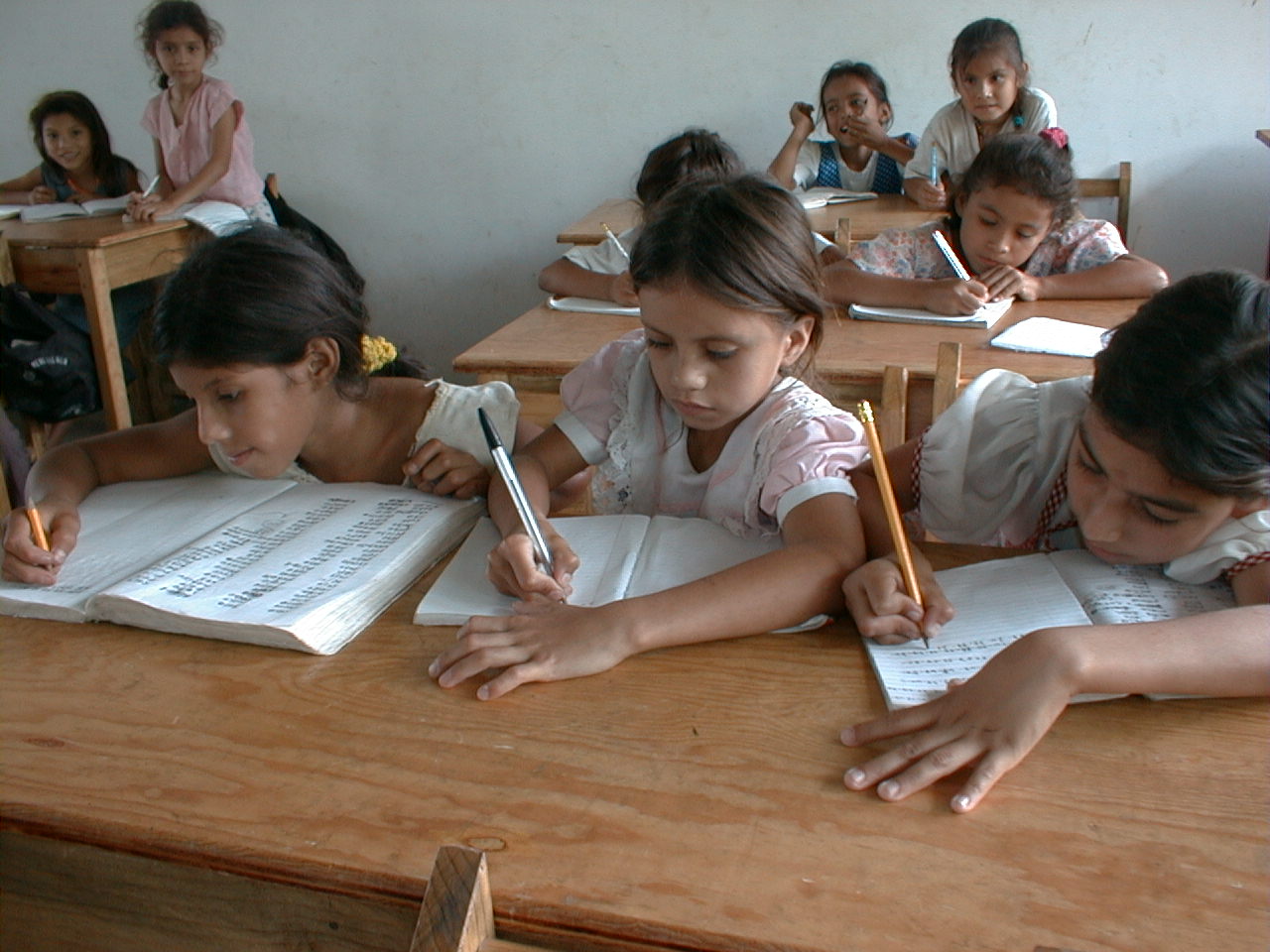
An exercise book is a notebook that is used in schools to copy down schoolwork and notes. A student will usually have different exercise books for each separate lesson or subject.
The exercise book format is different for some subjects: for the majority of subjects, the exercise book will contain lined paper with a margin, but for other subjects such as mathematics, the exercise book will contain squared paper to aid in the drawing of graphs, tables or other diagrams.
Exercise books may act as a primary record of students' learning efforts. For younger pupils, books are often collected at the end of each lesson for review, scoring, or grading. Loose worksheets may be pasted into the book so that they are bound with other work.
In some schools, exercise books may be colour-coded depending on the subject. For example, biology might be green and algebra blue.
The exercise book was also called version book historically, and is called khata in India, scribbler in Canada, jotter in Scotland,[1] and copy book in Ireland.[citation needed] The US equivalent is composition book, which traditionally has a distinctive cover pattern.
Size
[edit]Australia
[edit]The traditional size of a school exercise book in Australia is 7 by 9 inches (180 mm × 230 mm), which may be approximated by B5 (176 × 250 mm). Larger A4 (previously foolscap) notebooks are also very commonly used.
Czech Republic and Slovakia
[edit]Exercise books manufactured in the Czech Republic and Slovakia are labeled by three-digit codes that encode their size, number of pages, and ruling.
The first numeral stands for the size:
The second numeral stands for the number of pages:
- 1 for 10 pages
- 2 for 20 pages
- 4 for 40 pages
- 6 for 60 pages
- 8 for 80 pages
The third numeral stands for the ruling:
- 0 for blank exercise book
- 1 for lined paper—lines at 20 mm
- 2 for lined paper—lines at 16 mm
- 3 for lined paper—lines at 12 mm
- 4 for lined paper—lines at 8 mm
- 5 for squared paper—squares are 5 x 5 mm
- 10 for squared paper—squares are 10 x 10 mm
Ireland
[edit]Copy books sold in Ireland usually come with 32, 40, 88, or 120 pages. The pages can be blank, ruled, and/or squared.
New Zealand
[edit]School exercise books in New Zealand generally conform to standard NZS 8132:1984 (Specification for school stationery). An alphanumeric code is used to describe the exercise book's binding, format, and size.
The first numerals(s) refer to the binding:
- 1 for softcover
- 2 for hardcover
- 8 for spiral bound
The letter refers to the format:
- A for unruled
- B for 7 mm ruled
- I for 9 mm ruled
- F for 12 mm ruled
- L for alternating pages unruled and 7 mm ruled
- J for 5 mm quad
- E for 7 mm quad
- H for 10 mm quad
The last numeral refers to the size:
- 4 for 230 mm × 180 mm (9.1 in × 7.1 in)
- 5 for 255 mm × 205 mm (10.0 in × 8.1 in)
- 8 for 297 mm × 210 mm (11.7 in × 8.3 in) (A4 size)
Russia
[edit]The most common Russian exercise notebooks, codified in the Russian industry standard,[2] are:
- A "thin" notebook (Russian: школьная тетрадь, school notebook) with 12, 18, or 24 sheets, having size 170 x 205 mm. They are stapled through the fold, which, aided by their thinness, allows to open them completely flat, simplifying writing on the left side. These notebooks are used for daily work in primary school like teaching penmanship and arithmetic, and are often collected for review and grading. These notebooks are called copybooks at English language lessons in Russian schools.[3]
- A "thick" notebook (Russian: общая тетрадь, general-use notebook) with more than 24 sheets and up to 96 sheets, having width at least 144 mm and height no more than 297 mm (same height as A4 paper size). These notebooks are intended for usage in middle and high school for tasks like lesson notes, long-term projects, essays, laboratory experiments, etc.
Other sizes and number of sheets are permitted. The preferable sizes are (in mm): 210 x 297 (A4), 203 x 288, 203 x 275, 170 x 203, 148 x 210 (A5), 144 x 203.
"Thin" notebooks must be either ruled with 8 mm spacing between the lines, or graph-ruled with 5 mm or 7 mm squares. "Thick" notebooks must be either ruled with 6 mm, 7 mm, 8 mm, 9 mm spacing between the lines, or graph-ruled with 3 mm, 4 mm, 5 mm, 6 mm, or 7 mm squares.
The paper for cursive writing uses pairs of lines 4 mm apart, with 8 mm between the pairs. They may also have angled lines at 65 degrees to vertical to provide additional guidance.
The lines can have gray, blue, green, or purple colour. The vertical margin line must have a red or orange color. Vertical margin is optional for graph-ruled notebooks.
United Kingdom
[edit]There are three commonly used sizes of exercise book in the UK: A5 (148×210 mm), A4 (210×297 mm), and 178×229 mm (approximately 7″×9″, based on a traditional size used before the UK adopted ISO 216 paper sizes). They usually come with 32, 48, 64, or 80 pages which can be plain, ruled, or squared.
In Scotland, exercise books are commonly known as "jotters".[1]
United States
[edit]
In the United States, exercise books used by writers and students are known as composition books. Although available in several colors, the original marbled black-and-white cover, with its generic label on the front, is the most common. Typically, they have dimensions of 9+3⁄4 by 7+1⁄2 inches (250 mm × 190 mm) or 8+1⁄2 by 6+7⁄8 inches (220 mm × 170 mm) and 20, 40, 80 or 100 sheets.
Composition books can be ruled or graphed.
The papers in a composition book often have the baseline and cap line printed in blue to aid writing, with a (sometimes red) vertical line for a margin on the left hand of every page. Traditionally, the inside back cover contains a table of the weights and measures of the English (imperial) system printed for reference; however, this feature has become less common in countries that have adopted the metric system. Sometimes a multiplication table, or grammar or punctuation tips, are also found on the inside back cover. The inside front cover typically has a place to put one's weekly class schedule.
Composition books are traditionally bound through the fold—that is, the pages are folded, and stitched vertically along the fold. This allows to open them completely flat, simplifying writing on the left side, and also makes them significantly more durable than loose leaf pads or spiral notebooks.
Exercise books with fewer sheets, such as Blue books, are used in many post-secondary schools during assessment tests.
Examples
[edit]-
 Squared 12-sheet and 18-sheet exercise books used in Russian primary schools
 -
 Graph-ruled composition book used in the United States
 -
 A 12-sheet Blue book used in many post-secondary schools in the United States


See also
[edit]References
[edit]- ^ a b "Scots word of the Week: Jotter". The Herald. 6 March 2021.
Although shared with English, the origin of jot and jotter appears to be Scots. The Dictionary of the Scots Language (DSL) [says] "a note, memorandum, now especially applied to a pupil's rough exercise book".
- ^ "Exercise notebook, basic technical requirements". Retrieved 25 March 2017.
- ^ "copybook (in Russian)". Retrieved 28 March 2017.

Exercise book
View on GrokipediaOverview
Definition
An exercise book is a bound notebook specifically designed for schoolwork, featuring pre-ruled pages for writing, drawing, or calculations, typically with margins to aid organization and neatness.[1][2] These notebooks prioritize functionality in academic settings, providing a structured format that supports tasks like note-taking, problem-solving, and practice exercises.[7] Historically referred to as a "version book," the term exercise book has evolved alongside regional variations.[2] Key characteristics of exercise books include sewn or glued binding for secure page retention and stiff covers—often cardboard or flexible plastic—to enhance durability during repeated handling in classrooms and for homework.[8][9] This construction ensures longevity under frequent use, distinguishing them from less robust personal stationery.[9] In contrast to general notebooks, which typically offer blank or lightly ruled pages for unstructured personal journaling or creative pursuits, exercise books focus on predefined rulings and layouts optimized for educational exercises, promoting disciplined recording of information.[7][10]Educational Usage
Exercise books serve as essential tools in school environments for capturing and organizing instructional content. Students commonly use them to transcribe lectures, notes, and key concepts from the board or teacher explanations during class, facilitating immediate reinforcement of taught material.[11] This practice is prevalent across subjects; for example, in a 2014 study of Croatian secondary students, 64.3% in gymnasiums and 79.4% in vocational programs reported always learning from exercise books.[11] Beyond note-taking, exercise books enable the completion of homework assignments, practice of problems in disciplines like mathematics and languages, and submission of work for teacher evaluation, consolidating classroom learning through structured repetition.[12] To manage multiple subjects effectively, students typically maintain separate exercise books for each academic area, often employing color-coding or clear labeling on covers to distinguish them quickly and support executive functioning.[13][14] This organizational strategy aids in systematic retrieval of information for revision, reducing cognitive overload and promoting efficient study habits.[14] In assessment processes, teachers integrate exercise books by marking student work directly within them, offering targeted feedback to guide improvements and monitor progress longitudinally.[12] Common practices include using codes like "WWW" for strengths and "EBI" for areas needing development, alongside directed improvement tasks that prompt student responses, ensuring feedback is actionable and tied to ongoing learning.[12] This direct interaction fosters accountability and allows educators to track skill development over time through regular sampling and review.[12] While digital tools increasingly supplement traditional methods, exercise books persist due to the tactile advantages of handwriting, which enhance memory retention and cognitive engagement compared to typing.[15][16] Research indicates that handwriting activates broader neural networks, improving encoding and recall, particularly in literacy and problem-solving tasks, thereby supporting deeper learning outcomes.[16] Despite transitions to electronic alternatives, this hands-on approach remains valued for building foundational skills like letter recognition and comprehension.[17]History
Origins in Early Education
The concept of the exercise book as a tool for children's writing practice emerged in the 18th century within European educational contexts. Early exercise books took the form of simple sewn paper booklets, often handmade and used in European schools for copying texts, arithmetic problems, and basic penmanship drills, evolving directly from unbound sheets of paper that students previously gathered for temporary practice.[18] These rudimentary notebooks facilitated repetitive exercises to build skills, as seen in 18th-century private boarding schools where pupils spent time creating and decorating their own books for lessons in reading, writing, and arithmetic.[19] By the late 1700s, such books were integral to literacy training, with preserved examples including a 1773 British notebook containing handwriting and composition exercises, highlighting their role in daily school routines.[20] In the 1700s, these notebooks served primarily for moral and literacy training in nascent public education initiatives, such as England's charity schools supported by the Society for Promoting Christian Knowledge (SPCK), founded in 1698, which aimed to teach poor children basic reading and writing alongside religious principles to instill ethical behavior and social deference.[21] The SPCK's efforts expanded to hundreds of schools by the mid-18th century, promoting affordable writing practice to combat illiteracy amid urbanization and the Industrial Revolution's demands for skilled laborers.[22] Examples from this period, archived in collections like the Exercise Book Archive, reveal children's entries focused on catechism recitations and simple narratives, underscoring the books' function in reinforcing both intellectual and moral foundations.[23] Initial materials for these exercise books were economical to support widespread access, utilizing low-cost rag paper—made from recycled linen and hemp fibers, the standard for European papermaking until the 19th century—and basic sewn bindings with parchment or plain paper covers to withstand frequent use by young students.[24] This construction aligned with the goals of mass education in emerging systems, where charity and dame schools prioritized inexpensive tools to reach underprivileged children, enabling the transition from elite tutoring to broader instructional practices across Europe.[18]Evolution in the 19th and 20th Centuries
The 19th century marked a pivotal shift in the production of exercise books, driven by technological advancements that enabled mass manufacturing and aligned with the expansion of formal education systems. The invention of wood pulp paper in the 1840s by Friedrich Gottlob Keller provided a cheaper alternative to rag-based paper, facilitating the large-scale production of affordable notebooks suitable for school use.[25] Concurrently, the Industrial Revolution introduced mechanized binding processes, such as sewing and gluing machines, which replaced labor-intensive hand-binding and allowed for standardized, durable products.[26] This transformation coincided with the adoption of compulsory education laws across Europe and North America; for instance, Massachusetts enacted the first such law in the United States in 1852, while England followed with the Education Act of 1870 and France in 1882, dramatically increasing demand for accessible school materials.[27][28] Key milestones in the early 20th century further solidified the role of exercise books in education. Companies like Victor Stationery, founded as a bookshop in Belfast in 1882 and transitioning to manufacturing in the early 1920s, pioneered affordable and robust exercise books using improved paper and binding techniques, making them staples in classrooms.[29] These innovations supported widespread adoption in colonial education systems, where British-influenced curricula emphasized structured writing and arithmetic exercises, extending the use of standardized notebooks to regions under imperial administration throughout the early 20th century.[30] In the 20th century, exercise books adapted to pedagogical reforms that prioritized structured and subject-tailored learning, leading to the introduction of specialized rulings and sizes. Influenced by progressive education movements, such as those advocating child-centered instruction in the early 1900s, manufacturers developed variations like lined pages for composition and squared grids for mathematics, enhancing precision in tasks aligned with evolving curricula.[31] Post-World War II, amid global education booms fueled by international development efforts, exercise books became integral to school readiness in developing regions, symbolizing access to basic literacy and numeracy in postcolonial Africa and Asia, with examples preserved from over 30 countries.[32][4]Design and Materials
Paper Types and Rulings
Exercise books are typically produced using paper that weighs between 70 and 90 gsm, composed primarily of wood-pulp derived from chemical processes or recycled fibers to balance cost, availability, and environmental considerations.[33][5][34] This paper is internally sized to control ink absorption, allowing for smooth writing with minimal feathering—where ink spreads along paper fibers.[35] Higher gsm levels within this range contribute to reduced show-through from pens, ensuring usability on both sides of the sheet.[36] Ruling patterns in exercise books vary to suit different writing needs, with horizontal lines spaced 8-10 mm apart and including a vertical margin (typically 25-32 mm wide) for general subjects like language arts and history.[33][37] Squared or graph rulings feature 5 mm grids, ideal for mathematics to facilitate precise plotting and geometric drawings.[38] Dotted rulings, with points spaced similarly to lined options, or completely blank pages accommodate creative tasks such as drawing or music notation.[37] These adaptations align with subject-specific requirements, such as graph paper for technical subjects.[39] Special features enhance functionality and sustainability in exercise books, including perforated edges along the outer margins for clean tear-out of individual sheets without compromising the binding.[40] Eco-friendly variants utilize chlorine-free bleaching processes and post-consumer recycled content, reducing environmental impact while maintaining print quality.[34][41] Durability is prioritized through acid-free formulations that resist yellowing and degradation over time, even with frequent handling and storage in school environments.[41] The paper's thickness, at 70-90 gsm, effectively prevents bleed-through from common writing instruments like ballpoint pens and markers, promoting longevity for repeated use throughout a term.[35][33]Covers, Binding, and Construction
Exercise books typically feature covers made from stiff cardboard, ranging from 200 to 300 gsm, which provides durability while keeping production costs low.[42] These covers are often produced in distinct colors to facilitate subject coding in educational settings; for example, in some UK schools, blue is used for mathematics, red for English, and green for science, allowing students to easily identify books by discipline.[3] The exterior is commonly printed with horizontal lines, subject labels, or simple designs to aid organization and personalization. For reusable variants, flexible plastic covers, such as polypropylene (PP), are employed to enable wiping clean and repeated use without degradation.[43] Binding techniques for exercise books prioritize cost-effectiveness and functionality, with saddle-stitching using wire staples being prevalent for thinner volumes to ensure pages lay flat when open.[44] Perfect binding with flexible glue is applied for thicker books, creating a secure spine that withstands frequent handling. Wire-bound options, including spiral or double-wire mechanisms, offer enhanced flipping capability and lie-flat performance, particularly useful in classroom environments.[45] The manufacturing process begins with web-fed printing on reel paper to apply rulings, followed by sheeting, folding into signatures, and precise cutting to form individual pages.[42] Covers are then attached via binding, with gluing or stitching securing the assembly, typically yielding books of 48 to 96 pages for standard school use. During this stage, ruled paper sheets are integrated into the bound structure for cohesive construction.[44] The entire operation emphasizes efficiency, often completing large runs in automated lines to meet educational demands. Quality standards in exercise book production focus on safety and longevity, incorporating rounded corners to minimize injury risks during handling by children.[44] Reinforced spines, achieved through pressing and optional tape application, enhance resistance to wear from transport in school bags and daily use. Strict inspections occur at each step, from material selection to final packaging, ensuring compliance with educational durability requirements.[46]Formats and Sizes
Standard Formats by Subject
Exercise books are tailored to the specific demands of various academic disciplines, with ruling patterns and layouts designed to facilitate subject-specific tasks such as writing, diagramming, or creative expression. These adaptations ensure that students can organize information effectively, whether drafting essays, plotting graphs, or notating music. Standard formats prioritize functionality, drawing from established educational practices to support learning outcomes across core subjects.[39] For language and English studies, exercise books typically feature lined pages with wide margins to accommodate annotations, revisions, and essay drafting. The ruling, often 6mm to 8mm feint lines for older students, promotes neat handwriting and structured writing, allowing space on the side for teacher feedback or outlines. This format supports literary analysis, vocabulary exercises, and narrative composition by keeping text aligned while providing room for marginal notes.[39][3][47] In mathematics and science, graph or squared rulings dominate, enabling precise plotting of data, diagrams, and formulas. Common grids include 5mm or 7mm squares for secondary levels, which help align equations, construct graphs, and draw geometric figures without distortion. These formats reduce errors in calculations and support visual representations like coordinate planes or lab sketches, essential for problem-solving in algebra, physics, or biology. Isometric rulings may supplement for three-dimensional modeling in advanced geometry.[39][3][48] Art and design exercise books employ blank or lightly dotted pages to encourage free-form sketching and ideation. This unruled or minimally guided layout allows unrestricted drawing with pencils or light inks, fostering creativity in composition, perspective studies, and conceptual designs. Heavier paper stocks are standard to withstand erasing and layering without bleed-through, accommodating media suited to exploratory work.[39][47] Music education relies on staff-lined pages, featuring 6 to 8 staves per sheet for notation of melodies, rhythms, and harmonies. These books often include additional blank space or alternating lined pages for lyrics, chord annotations, or explanatory notes, supporting composition, theory exercises, and performance preparation. The precise stave ruling, typically 7mm to 8mm apart, aligns with standard musical notation conventions.[39][49] Interdisciplinary formats, such as half-ruled and half-blank hybrids, cater to subjects blending text and visuals, like history or social studies. One half of the page provides lines for notes or timelines, while the other offers blank space for diagrams, maps, or illustrations, enabling integrated activities such as event sequencing with supporting sketches. This versatile layout promotes holistic understanding by combining narrative and graphical elements in a single book.[39][50]Regional Size Variations
In Australia, exercise books used in primary and secondary education commonly adhere to A4 dimensions of 210 × 297 mm or B5 dimensions of 176 × 250 mm, with 96 pages being a standard configuration for general use across subjects.[51][52] These sizes accommodate varying rulings and support the national curriculum's emphasis on structured handwriting and note-taking.[53] In the Czech Republic and Slovakia, school notebooks typically measure A5 at 148 × 210 mm for everyday use, while A4 at 210 × 297 mm is preferred for advanced or larger-scale work, often featuring 80 to 120 pages (40 to 60 sheets) depending on the grade level.[54] This aligns with ISO standards adapted for educational purposes, where A5 supports compact portability for younger students and A4 allows for detailed diagrams in higher education.[54] Ireland's educational system favors smaller copy books for primary levels, often in A6 format at 105 × 148 mm or traditional foolscap dimensions of 203 × 330 mm (8 × 13 inches), with an emphasis on portrait orientation to facilitate handwriting practice.[55][56] These sizes, typically bound in 88 to 120 pages, reflect historical influences from British colonial standards while adapting to modern primary curricula.[57] New Zealand follows conventions similar to Australia, employing A4 sizes of 210 × 297 mm with 8 mm rulings as a standard for secondary education, alongside the common exercise book dimension of 255 × 205 mm for primary use.[58] This sizing ensures compatibility with national stationery codes, where the 255 × 205 mm format supports intermediate handwriting development across 64 to 96 pages.[59] In Russia, the standard obuchatel'nyy bloknot (educational notebook) for schools measures approximately 170 × 205 mm, containing 48 to 60 pages suited to primary and secondary curricula.[60] This compact size facilitates oblique line rulings for Cyrillic script practice and is widely produced for uniform distribution in state education.[61] The United Kingdom utilizes A4 (210 × 297 mm) as the predominant size for comprehensive exercise books in secondary schools, while jotters for younger age groups measure 228 × 178 mm (9 × 7 inches), varying by 32 to 96 pages based on subject needs.[62][63] These dimensions support the National Curriculum's requirements for lined or squared pages in portrait format.[62] In the United States, the composition book remains the standard for school use, sized at 9.75 × 7.5 inches (approximately 248 × 190 mm), available in wide-ruled or quadrille variants with marble-pattern covers and typically 200 pages (100 sheets).[64] This format, rooted in early 20th-century educational norms, provides durable construction for daily note-taking and assignments.[65]| Region | Primary Sizes (mm) | Typical Page Count | Notes |
|---|---|---|---|
| Australia | A4 (210 × 297), B5 (176 × 250) | 96 | For primary/secondary; supports varied rulings |
| Czech Republic/Slovakia | A5 (148 × 210), A4 (210 × 297) | 80–120 | A5 for notebooks, A4 for advanced |
| Ireland | A6 (105 × 148), Foolscap (203 × 330) | 88–120 | Portrait emphasis for handwriting |
| New Zealand | 255 × 205, A4 (210 × 297) | 64–96 | 8 mm rulings common |
| Russia | 170 × 205 | 48–60 | Obuchatel'nyy bloknot standard |
| United Kingdom | A4 (210 × 297), 228 × 178 | 32–96 | Jotters for younger groups |
| United States | 248 × 190 (9.75 × 7.5 in) | 200 | Wide-ruled composition books |