Hubbry Logo
Compound eyeCompound eyeMain
Open search
Compound eye
Community hub
Compound eye
logo
8 pages, 0 posts
0 subscribers
Be the first to start a discussion here.
Compound eye
Compound eye
from Wikipedia
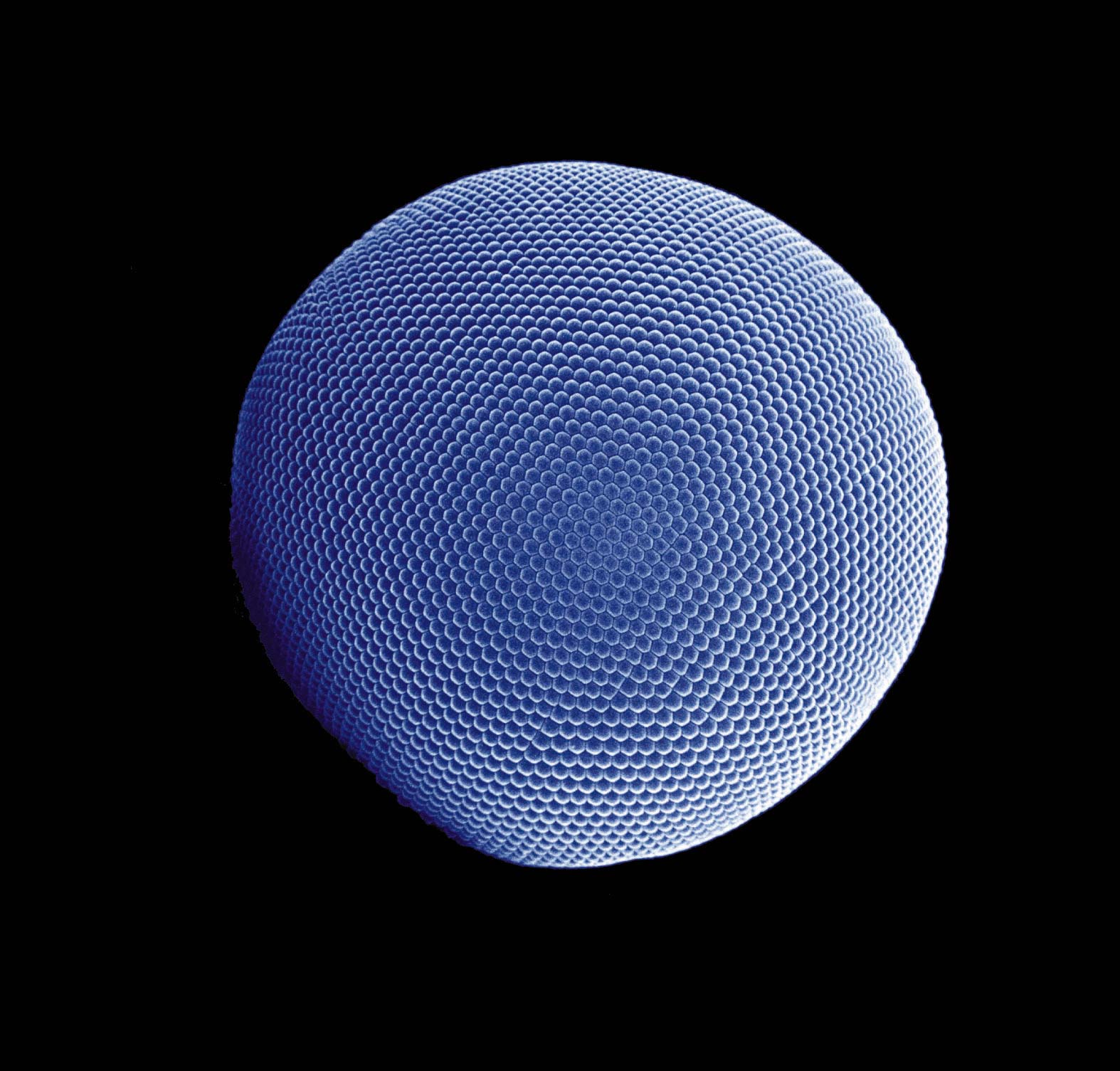
Compound eye of Antarctic krill as imaged by an electron microscope

A compound eye is a visual organ found in arthropods such as insects and crustaceans. It may consist of thousands of ommatidia,[1] which are tiny independent photoreception units that consist of a cornea, lens, and photoreceptor cells which distinguish brightness and color. The image perceived by this arthropod eye is a combination of inputs from the numerous ommatidia, which are oriented to point in slightly different directions. Compared with single-aperture eyes, compound eyes have poor image resolution; however, they possess a very large view angle and the ability to detect fast movement and, in some cases, the polarization of light.[2] Because a compound eye is made up of a collection of ommatidia, each with its own lens, light will enter each ommatidium instead of using a single entrance point. The individual light receptors behind each lens are then turned on and off due to a series of changes in the light intensity during movement or when an object is moving, creating a flicker-effect known as the flicker frequency, which is the rate at which the ommatidia are turned on and off– this facilitates faster reaction to movement; honey bees respond in 0.01s compared with 0.05s for humans.[3]

Types

[edit]

Compound eyes are typically classified as either apposition eyes, which form multiple inverted images, or superposition eyes, which form a single erect image.[4]

Apposition eyes

[edit]
Head of a mantisfly showing a compound eye

Apposition eyes can be divided into two groups. The typical apposition eye has a lens focusing light from one direction on the rhabdom, while light from other directions is absorbed by the dark wall of the ommatidium. The mantis shrimp is the most advanced example of an animal with this type of eye. In the other kind of apposition eye, found in the Strepsiptera, each lens forms an image, and the images are combined in the brain.[5] This is called the schizochroal compound eye or the neural superposition eye (which, despite its name, is a form of the apposition eye).

Superposition eyes

[edit]

The superposition eye is divided into three subtypes; the refracting, the reflecting, and the parabolic superposition eye. The refracting superposition eye has a gap between the lens and the rhabdom, and no side wall. Each lens takes light at an angle to its axis and reflects it to the same angle on the other side. The result is an image at half the radius of the eye, which is where the tips of the rhabdoms are. This kind is used mostly by nocturnal insects. In the parabolic superposition eye, seen in arthropods such as mayflies, the parabolic surfaces of the inside of each facet focus light from a reflector to a sensor array. Long-bodied decapod crustaceans such as shrimp, prawns, crayfish and lobsters are alone in having reflecting superposition eyes, which also have a transparent gap but use corner mirrors instead of lenses.

Other

[edit]
Compound eye of a dragonfly

Good fliers like flies or honey bees, or prey-catching insects like praying mantises or dragonflies, have specialized zones of ommatidia organized into a fovea area which gives acute vision. In the acute zone the eye is flattened and the facets larger. The flattening allows more ommatidia to receive light from a spot and therefore higher resolution.

There are some exceptions from the types mentioned above. Some insects have a so-called single lens compound eye, a transitional type which is something between a superposition type of the multi-lens compound eye and the single lens eye found in animals with simple eyes. Then there is the mysid shrimp, Dioptromysis paucispinosa. The shrimp has an eye of the refracting superposition type, in the rear behind this in each eye there is a single large facet that is three times in diameter the others in the eye and behind this is an enlarged crystalline cone. This projects an upright image on a specialized retina. The resulting eye is a mixture of a simple eye within a compound eye.

Another version is the pseudofaceted eye, as seen in Scutigera. This type of eye consists of a cluster of numerous ocelli on each side of the head, organized in a way that resembles a true compound eye.

Asymmetries in compound eyes may be associated with asymmetries in behaviour. For example, Temnothorax albipennis ant scouts show behavioural lateralization when exploring unknown nest sites, showing a population-level bias to prefer left turns. One possible reason for this is that its environment is partly maze-like and consistently turning in one direction is a good way to search and exit mazes without getting lost.[6] This turning bias is correlated with slight asymmetries in the ants' compound eyes (differential ommatidia count).[7]

The body of Ophiomastix wendtii, a type of brittle star, was previously thought to be covered with ommatidia, turning its whole skin into a compound eye, but this has since been found to be erroneous; the system does not rely on lenses or image formation.[8]

Cultural references

[edit]

See also

[edit]

References

[edit]
[edit]
Revisions and contributorsEdit on WikipediaRead on Wikipedia
from Grokipedia
A compound eye is a multifaceted visual organ characteristic of arthropods, such as and crustaceans, composed of numerous repeating units called that collectively provide a wide-angle, panoramic while typically offering lower resolution than single-lens eyes. These paired structures are located on the sides of the head and can contain anywhere from a few dozen to over 30,000 per eye, depending on the and ecological demands. Each functions as an independent photoreceptor, featuring a corneal lens that focuses , a crystalline cone that channels it, and a rhabdomere-rich retinula of typically eight photoreceptor cells that convert into neural signals. Compound eyes exhibit two primary optical designs: apposition eyes, common in diurnal species like bees and dragonflies, where light is isolated to individual ommatidia by screening pigments to form a direct mosaic image; and superposition eyes, prevalent in nocturnal arthropods such as moths, which allow light from multiple ommatidia to overlap on a shared retina for enhanced sensitivity in low light. This structural diversity enables adaptations for motion detection, color vision, and even polarization sensitivity, crucial for navigation and predator avoidance in diverse environments. Evolutionarily, compound eyes trace back over 500 million years to the Cambrian period, originating in the last common ancestor of insects and crustaceans within the Pancrustacea clade, with fossil evidence from early arthropods demonstrating sophisticated visual systems that likely contributed to the ecological success of the group during the Cambrian Explosion.

Anatomy

Ommatidium

The serves as the fundamental repeating unit of the compound eye in and many other arthropods, comprising a dioptric apparatus for focusing and a receptor region for phototransduction. Each typically includes a corneal lens at the distal end, which acts as the external facet; a beneath it, formed by secretions from four cone cells; eight photoreceptor cells bearing rhabdomeres; and surrounding pigment cells that provide structural support and optical isolation. In typical insect ommatidia, such as those in , the eight photoreceptor cells are designated R1 through R8 and are arranged in a characteristic pattern. The outer photoreceptors R1–R6 form a ring around the central axis, with their elongated rhabdomeres extending distally to proximally and contributing to the peripheral light detection. The inner photoreceptors R7 and R8 occupy the core: R7 is positioned above R8, with R7's rhabdomere sensitive to shorter wavelengths and R8's to longer ones, enabling . These rhabdomeres—microvillar extensions of the photoreceptor plasma membrane—fuse laterally to form a central rhabdom, a waveguide-like structure that captures and guides light to the for . Pigment cells, including primary pigment cells encircling the photoreceptors and secondary pigment cells between adjacent ommatidia, play a crucial role in isolating each unit optically. These cells contain light-absorbing granules that migrate to block , thereby preventing —unwanted light leakage between neighboring that could blur the image. This isolation ensures that each processes light from a narrow , contributing to the mosaic-like resolution of the compound eye. The number of ommatidia varies widely across insect species, reflecting adaptations to visual demands and body size. For instance, the fruit fly Drosophila melanogaster possesses approximately 800 ommatidia per eye, while large dragonflies can have over 30,000, allowing for enhanced resolution in predatory behaviors.

Supporting Structures

The outer surface of the compound eye is covered by a corneal lens array composed of tightly packed, typically hexagonal facets that form a continuous, transparent layer. Each facet acts as a microlens, focusing incoming into the underlying ommatidium while providing mechanical protection against environmental damage. In species adapted to low-light conditions, such as certain beetles, the corneal facets are thicker to enhance durability and light-gathering efficiency. Beneath the corneal array lies a thin that secretes and maintains the cuticular cornea, contributing to the eye's overall structural integrity. Deeper within the eye, the forms a supportive foundation at the proximal end of the ommatidia, consisting of an extracellular overlaid by cellular extensions from cone cells and pigment cells. This separates the retinal elements from the surrounding tissues and permits the of nutrients from the to sustain the eye's metabolic needs, as the itself lacks direct vascularization. The compound eye integrates seamlessly with the arthropod's , where the corneal merges with the head capsule to anchor the eye in place. This integration allows for varied morphologies across species; for instance, in (Stomatopoda), the eyes are mounted on movable stalks in a turreted configuration, enabling independent rotation and a wide while maintaining structural stability through cuticular reinforcements. In contrast, many exhibit recessed or flush-mounted eyes embedded within the for protection. Sexual dimorphism in compound eye structure is evident in certain flies, such as stalk-eyed species in the family Diopsidae, where males possess elongated eyestalks supporting enlarged compound eyes compared to females, often with greater eye span relative to body size to facilitate mate attraction and visual signaling. This dimorphism enhances the males' dorsal , aiding in territorial and behaviors.

Types

Apposition Eyes

Apposition compound eyes represent a fundamental design in arthropod vision, where each operates as an independent optical unit. In this configuration, the corneal lens of an individual ommatidium focuses parallel light rays originating from a narrow portion of the directly onto its own set of photoreceptors, forming a of discrete image elements. Screening pigments surrounding each ommatidium play a crucial role by absorbing from neighboring units, ensuring that only light aligned with the of the specific ommatidium reaches its rhabdom, thereby preventing and maintaining image clarity. These eyes are particularly prevalent among diurnal , such as honeybees (Apis mellifera) and houseflies (Musca domestica), which rely on them for high-acuity vision in bright environments where abundance allows prioritization of resolution over sensitivity. In such species, the apposition design supports rapid detection of motion and fine details essential for navigation, foraging, and predator avoidance during daylight activity. Unlike more sensitive eye types, apposition eyes sacrifice light-gathering efficiency to achieve sharper imagery, making them ill-suited for dim conditions but optimal for the intense illumination of day. Key structural adaptations in eyes enhance their daylight performance, including elongated crystalline cones that extend from the to precisely direct focused light onto the proximal rhabdom tip, minimizing divergence within the . During the day, screening pigments—located in retinula cells and around the cones—migrate proximally and extend fully, forming a tight sheath that isolates and blocks oblique rays, which further sharpens the by reducing optical blur. These pigments retract at night in some , but in strictly diurnal ones, they remain positioned to enforce strict . The of apposition eyes is fundamentally constrained by the interommatidial angle, the angular separation between the optical axes of adjacent ommatidia, which determines the smallest resolvable detail in the mosaic image. In many diurnal insects, this angle measures approximately 1–2 degrees, as seen in the frontal regions of honeybee eyes where the minimum is around 1 degree, enabling behavioral resolutions sufficient for detecting patterns at close range. In houseflies, values range from about 2.4 degrees vertically to 3.9 degrees horizontally, reflecting adaptations to their while still providing adequate acuity for optomotor responses. Facet density and eye size further modulate this limit, with larger eyes accommodating smaller angles for enhanced detail.

Superposition Eyes

Superposition compound eyes are a type of compound eye in which rays from a single point in space are collected by multiple adjacent ommatidia and focused onto the same point on the , creating a superimposed image that enhances sensitivity. This optical arrangement relies on a clear zone—a transparent region between the crystalline cones and the —that allows to converge from numerous facets (often up to 2000) onto individual photoreceptors, such as rhabdoms in . In refracting superposition eyes, typical of moths, the crystalline cones have a refractive index that bends towards the shared focal plane, while reflecting superposition eyes, found in some crustaceans like lobsters, use mirrored cone walls to redirect rays. These eyes predominate in nocturnal insects, such as moths and beetles, and certain crustaceans, where they enable vision in dim conditions by maximizing capture. A key is the migration of screening pigments: in dark-adapted states, pigments withdraw from the clear zone, permitting overlap from multiple ommatidia; during , pigments migrate into the clear zone to scatter and reduce superposition, effectively converting the eye toward an apposition-like configuration for brighter environments. This process, which can take approximately 30 minutes for full dark , is controlled by environmental levels and involves proximal pigment granules positioning between the crystalline cones in . Structural features include shorter crystalline cones compared to apposition eyes and wider acceptance angles per ommatidium, often up to 20–30 degrees, allowing summation of from a broad field (e.g., 109 ommatidia in some moths). Some species also incorporate a tapetum layer to reflect back through the , further boosting sensitivity. The primary advantage of superposition eyes is their dramatically increased light sensitivity—up to 1000 times greater than apposition eyes of similar size—due to the larger effective (e.g., 940 µm in the hawk moth , yielding a sensitivity of 69 µm² sr). This gain arises from pooling light across ommatidia, with low F-numbers (e.g., -0.6 to -1.2 in dung beetles) enabling efficient collection in low light. However, this comes at the cost of reduced , as the broader fields of view per photoreceptor result in a coarser image , and slower limits motion detection in bright conditions. Despite these trade-offs, superposition allow nocturnal arthropods to perform complex behaviors like and color discrimination under or intensities.

Optical Principles

Light Collection

In compound eyes, light collection begins at the level of individual , where each unit accepts photons from a narrow angular field. The acceptance (Δρ) represents the angular width of light that a single can detect, typically defined as the of its Gaussian-like angular sensitivity function, which sets the and per ommatidium. This is primarily determined by the optical properties of the ommatidium, including the and asphericity of the corneal facet lens, which minimizes aberrations, and the graded in the underlying crystalline cone, which guides efficiently to the photoreceptor rhabdom. effects also contribute, particularly in smaller ommatidia, where the size limits the minimal Δρ; for instance, in the compound eyes of wasps like , Δρ measures approximately 1.3° in high-acuity zones due to facet diameters around 26 µm and focal lengths of 67 µm. The facet lens of each ommatidium, with its convex curvature and short (often 100 µm or less), focuses incoming parallel rays onto the rhabdom, while the refractive index gradient in the crystalline cone—typically decreasing from the axis outward—acts as a tapered to concentrate without significant spherical or . This design ensures that from a specific direction is isolated and directed to the rhabdom's photosensitive microvilli, enhancing capture per unit. In apposition eyes, for example, the lens-cornea system maintains optical isolation between ommatidia, preventing during bright conditions. The total light-gathering power of a compound eye scales with the number of and the size of each facet lens, allowing larger eyes in bigger animals to collect more photons overall despite the relatively poor sensitivity of individual units. Characterized by a high ( divided by diameter, often around 2–3), each has limited light flux, but eyes with thousands of , such as those in dragonflies, compensate by summing inputs across the array; for a fossil compound eye with ~100 large (50 µm lenses) and an effective of 350 µm, sensitivity reaches about 2.9 m²·sr, comparable to modern shallow-water crustaceans. Adaptations for varying light levels involve dynamic pigment migration, functioning like a to modulate intake. In diurnal , such as active in bright intertidal zones, pigments in primary cells around the crystalline cone and secondary pigments in retinula cells migrate proximally during light adaptation, constricting the effective to ~0.5 µm and narrowing Δρ to protect against overload. Conversely, in nocturnal or crepuscular species, dark adaptation prompts distal pigment migration, widening the aperture to ~4.8 µm and expanding Δρ (e.g., from 4.45° to 8.48° in Polyrhachis sokolova), thereby increasing capture by 2–3 log units across wavelengths. This mechanism is particularly pronounced in eyes of hemimetabolous like beetles and dragonflies.

Image Formation

In compound eyes, image formation occurs through a mosaic-like assembly where each ommatidium captures light from a narrow directional field, contributing a single point of information akin to a pixel in a low-resolution digital image. This results in a coarse, wide-field view rather than a sharp, focused projection, as the overall image is constructed from the parallel inputs of thousands of ommatidia without central superposition or inversion correction. The mosaic theory, first elaborated in detail through optical models of apposition eyes, emphasizes that the erect, convex image arises from the spatial arrangement of these independent visual units, enabling simultaneous sampling across a broad visual scene. Spatial resolution in this mosaic is primarily governed by the interommatidial (Δφ), the angular separation between the optical axes of adjacent ommatidia, which sets the minimum resolvable detail. Smaller Δφ values yield higher resolution; for instance, predatory dragonflies achieve Δφ as low as 0.24–0.3° in acute zones, allowing sharp focus on distant prey from several meters away. In contrast, typical dipteran flies exhibit Δφ around 1–2°, limiting acuity to coarser patterns but suiting rapid aerial maneuvers. Distortions in the image include , where high-frequency spatial patterns exceed the Nyquist limit (half the reciprocal of Δφ), causing false low-frequency signals, particularly in high-resolution foveal or acute zones of predatory . Additionally, the curved geometry of compound eyes in many produces panoramic vision spanning nearly 360°, providing seamless azimuthal coverage but introducing tangential distortion at equatorial meridians. These optical properties support key behaviors, such as motion detection, where temporal differences in signals across adjacent ommatidia enable the of local optic flow via mechanisms like the Hassenstein-Reichardt detector. In flies, this inter-ommatidial comparison facilitates rapid orientation to moving objects, prioritizing dynamic cues over static detail in the mosaic.

Physiology

Photoreceptors

In compound eyes, light detection occurs within specialized photoreceptor cells housed in the ommatidia, where the primary site of absorption is the rhabdomere—a densely packed array of microvilli protruding from the apical surface of each cell. These microvilli consist of tightly apposed plasma membranes enriched with s, forming a large surface area (approximately 30,000–50,000 microvilli per rhabdomere in ) that enhances light capture efficiency. The , comprising an protein covalently bound to 11-cis-3-hydroxyretinal, is embedded in these microvillar membranes; upon absorption, it initiates the visual signal. Photoreceptors in insect compound eyes exhibit diverse spectral sensitivities, enabling trichromatic through distinct classes tuned to (UV), , and wavelengths. In , for example, outer photoreceptors R1–R6 express Rh1 with peak sensitivity at 478 nm (broad green), while inner photoreceptors include R7 subtypes expressing Rh3 (345 nm, short UV) or Rh4 (375 nm, long UV), and R8 subtypes expressing Rh5 (437 nm, ) or Rh6 (508 nm, ). This arrangement allows comparative processing across UV, blue, and green channels for color discrimination. The phototransduction process begins with photochemical : light absorption converts 11-cis-retinal in to all-trans-retinal, activating metarhodopsin and triggering a protein-coupled cascade. This stimulates (PLC) to hydrolyze (PIP₂) into diacylglycerol (DAG) and inositol 1,4,5-trisphosphate (IP₃), leading to the opening of transient (TRP) and TRPL cation channels in the microvillar membrane. The resulting influx of Na⁺ and Ca²⁺ ions generates graded depolarizing potentials, with single photons eliciting "quantum bumps" (∼10 pA amplitude, ∼20 ms duration) that sum to larger responses. Some compound eye photoreceptors exhibit polarization sensitivity due to the orthogonal alignment of microvilli within rhabdomeres, which preferentially absorbs polarized parallel to the microvillar axis. In , this is prominent in the dorsal rim area (DRA) ommatidia, where R7 and R8 photoreceptors express UV-sensitive Rh3 and maintain straight, untwisted rhabdomeres for high sensitivity (up to 99% modulation depth) to the e-vector orientation of linearly polarized , aiding in sky navigation.

Neural Integration

In the compound eye of insects like Drosophila, photoreceptor axons project topographically to the optic lobe, where the first processing layer, the lamina, receives inputs primarily from outer photoreceptors R1–R6, forming synaptic connections with lamina neurons such as L1–L3, while inner photoreceptors R7 and R8 extend deeper to the medulla. This organization preserves the spatial arrangement of the visual field through modular units called cartridges or visual columns, each corresponding to a single ommatidium and enabling parallel processing of local visual information across the retina. In the lamina, each cartridge contains approximately 800–1000 neurons that perform initial computations, such as temporal filtering and contrast enhancement, before signals relay via the first optic chiasm to the medulla, where further integration occurs in layered neuropils with expanded cartridges. Edge enhancement in the early visual pathway arises from antagonistic interactions within cartridges, where lamina neurons like L1 (ON-selective) and L2 (OFF-selective) sharpen spatial boundaries by comparing differences between adjacent ommatidia. Motion detection builds on this through dedicated circuits, including T4 and T5 neurons in the medulla and lobula plate, which implement correlation-based algorithms akin to the Reichardt detector model by delaying and multiplying signals from neighboring cartridges to compute local motion direction. In flies, directionally selective neurons, particularly the large tangential cells (LPTCs) in the lobula plate, integrate inputs from thousands of T4/T5 neurons to respond preferentially to wide-field optic flow patterns, such as those encountered during flight. These neurons exhibit tuning to specific directions (e.g., horizontal or vertical), with their preferred directions shaped by the compound eye's , allowing robust detection of self-motion across the . Color processing in compound eyes involves opponent mechanisms that compare signals from spectrally distinct photoreceptors, primarily R7 and R8, which express UV- or green-sensitive rhodopsins and project to specific medulla layers. In , color opponency emerges early in the medulla through neurons like t5c (broadband) and Tm5/Tm9 (UV-preferring), which receive excitatory inputs from one spectral channel and inhibitory inputs from another, enabling discrimination of hues like UV-green contrasts essential for behaviors such as . This parallel processing of chromatic information complements achromatic motion pathways, with opponent circuits enhancing under varying illumination. Neural outputs from the optic lobe drive behavioral responses, notably the optomotor reflex in flying , where directionally selective signals from LPTCs modulate wing steering muscles to counteract unintended rotations and stabilize flight trajectory. In , this response activates within 50–100 ms of visual perturbation, scaling with the velocity and contrast of rotating patterns to maintain course, as demonstrated in tethered flight assays. Such integration underscores the compound eye's role in reflexive visuomotor control, linking low-level feature detection to adaptive locomotion.

Occurrence

In Arthropods

Compound eyes are the predominant visual structures in arthropods, serving as the primary sensory organs for the vast majority of and many crustaceans, enabling wide-angle vision and rapid motion detection essential for survival in diverse environments. In , these eyes often dominate the head morphology, occupying a substantial portion of the facial surface to maximize light capture and , as exemplified by flies where the paired compound eyes cover most of the head, facilitating quick evasion of threats. In crustaceans, compound eyes exhibit similar prevalence among mobile forms, though adaptations vary; for instance, in sessile species like (Cirripedia), compound eyes are prominent in the free-swimming cyprid larvae for navigation in planktonic habitats, but are reduced or absent in the attached adult stage. Specializations of compound eyes in arthropods reflect ecological niches, with regional modifications enhancing specific functions. In bees, such as the honeybee (Apis mellifera), the dorsal rim area of the compound eyes contains specialized ommatidia sensitive to polarized light, aiding during foraging and orientation flights by detecting the polarization pattern of the sky. Predatory like praying mantises (Mantodea) feature enlarged compound eyes with high-acuity zones and significant binocular overlap, allowing precise and for accurate prey capture through cues. These adaptations underscore the versatility of compound eyes, balancing resolution, sensitivity, and behavioral needs across lifestyles. Developmental transitions highlight the evolutionary flexibility of compound eyes in arthropods. In crustacean nauplius larvae, initial vision relies on simple, unpaired naupliar eyes, which evolve into paired eyes in later larval stages or adults, as seen in decapods where transparent eyes in juveniles mature into more complex superposition types for enhanced low-light performance. Similarly, in , holometabolous larvae possess stemmata—simple, often reduced eyes—for basic light detection, while adult compound eyes emerge from imaginal discs, dramatically increasing complexity; for example, honeybee workers develop eyes with approximately 5,000 ommatidia per eye, optimized for and color pattern recognition to locate nectar-rich flowers. This larval-to-adult progression allows arthropods to adapt visual systems to shifting ecological demands, from dispersal in early stages to and predation in maturity.

In Non-Arthropods

Compound eyes, characterized by multiple photoreceptive units, occur rarely outside of arthropods, typically in simpler forms with far fewer ommatidia than the thousands often found in or crustaceans, reflecting instances of rather than shared ancestry. In annelids, particularly certain polychaetes, compound eyes feature ommatidia-like units adapted for environmental sensing. For example, in sabellid polychaetes such as fan worms, each eye comprises 40–60 ommatidia formed by tapered, pigmented tubes derived from a single cell with a crystalline core and an apical photoreceptor connected to an , enabling directionality and isolation from stray light. These structures use ciliated photoreceptors that hyperpolarize in response to light, differing from the microvillar, depolarizing systems in arthropods. While ragworms ( species) primarily possess simple eyes, some polychaetes exhibit this multicellular organization for basic visual tasks like predator detection on feeding tentacles. Among mollusks, compound-like visual elements appear in chitons, where hundreds of shell-embedded eyes function as a dispersed compound system. These include complex shell eyes with aragonite lenses and retinas that form rough images, alongside thousands of simpler eyespots for spatial vision; such structures have evolved independently at least twice, allowing detection of shadows from predators like birds or fish on rocky shores. Whether these qualify as true compound eyes remains debated, as the ocelli operate more like independent facets without a unified corneal array, contrasting with arthropod ommatidia. In bivalves like scallops, up to 200 simple eyes with mirror optics line the mantle edge, providing a wide-field detection system for movement and shadows akin to a compound eye. In nautiluses, the pinhole eye lacks a lens but features a modular structure with subdivided photoreceptor and retinal components, sometimes interpreted as rudimentary compound elements, though consensus views it as a primitive single-chambered system without true ommatidial organization. Velvet worms () possess simple eyes with a continuous rhabdomeric adjoining an irregular lens under a curved , allowing light from multiple directions to overlap on shared photoreceptors for enhanced sensitivity in dim conditions and low-resolution detection of large movements within centimeters. This design shows convergence with the superposition optics of some compound eyes but lacks discrete ommatidia.

Evolution

Fossil Record

The fossil record of compound eyes begins in the Early , with the oldest known examples preserved in arthropods from approximately 530 million years ago. These include exceptionally well-preserved compound eyes in the Schmidtiellus reetae from deposits in , featuring calcified lenses and internal sensory structures that demonstrate a sophisticated comparable to those in modern arthropods. In , the earliest compound eyes appear around the same time, with holochroal designs characterized by numerous contiguous lenses forming a kidney-shaped array, as seen in Early species like Fallotaspis and Olenellus. These structures indicate that compound eyes were already a key adaptation during the , enabling enhanced visual acuity in early marine arthropods. Trilobite eyes exhibit three main types in the fossil record, each reflecting evolutionary innovations and environmental adaptations. The holochroal eye, the most widespread and ancestral form, persisted from the through the Permian (~520–251 million years ago), with small, closely packed lenses covered by a common . The schizochroal eye, unique to phacopid trilobites, emerged in the and lasted until the (~488–360 million years ago); it featured fewer but larger independent lenses (up to 2 mm in diameter) separated by sclerotized interspaces, each overlying a cluster of sub-ommatidia for potentially improved resolution in low-light conditions, as evidenced by specimens like Eldredgeops rana from deposits. A rarer type, the abathochroal eye with tiny separated lenses, is restricted to early to middle eodiscid trilobites (~520–505 million years ago). Superposition compound eyes, where light from multiple lenses converges on shared photoreceptors, first appear in the fossil record during the (~359–299 million years ago) in early and crustaceans, marking a shift toward enhanced sensitivity in dimmer environments. Preservation of compound eyes poses significant challenges due to the delicate nature of their soft tissues and crystalline structures, requiring exceptional conditions in lagerstätten such as the or Slate to capture internal details like rhabdoms and neural connections. In trilobites, the mineralization of lenses with facilitated better fossilization compared to non-calcified eyes, though sublensar structures are rarely preserved without advanced imaging techniques like tomography. Key specimens, including the 390-million-year-old hyper-compound schizochroal eye of a phacopid from the Lower Slate, reveal intricate nerve fibers and ommatidial organization, highlighting the optical complexity achieved by these ancient visual systems. The diversification of compound eyes correlates closely with the radiation of arthropods, particularly trilobites, during the (~485–443 million years ago), when eye morphologies became more varied and specialized amid increasing ecological complexity in seas. This period saw the emergence of schizochroal eyes alongside the proliferation of holochroal types, coinciding with arthropod clade expansions that filled new niches, from pelagic to benthic habitats. Such developments underscore how compound eyes contributed to the evolutionary success of arthropods throughout the era.

Developmental Mechanisms

The development of compound eyes in arthropods, particularly in the fruit fly Drosophila melanogaster, begins in the larval eye , where a wave of differentiation sweeps across the tissue via the morphogenetic furrow (MF). This indentation in the progresses from posterior to anterior, initiating during the third larval and completing over approximately 48 hours, thereby organizing the disc into ommatidial clusters that form the facets of the adult compound eye. Central to this process are master regulatory genes, including Pax6 homologs such as eyeless (ey) and (toy), which initiate and coordinate eye specification by activating downstream retinal determination genes. These Pax6 factors work in concert with signaling pathways involving (hh) and decapentaplegic (dpp), which pattern the disc by regulating cell proliferation anterior to the MF and promoting furrow progression, respectively. Photoreceptor differentiation within each ommatidial cluster starts with the specification of the R8 founder cell, driven by the proneural atonal (ato), which is expressed in a periodic array of cells ahead of the MF and selects individual R8 precursors through . The transcription factor (sens) then stabilizes R8 fate by repressing alternative neuronal like rough, enabling sequential recruitment of the remaining photoreceptors (R2/R5, R3/R4, R1/R6, and finally R7) via inductive signals such as EGFR and Notch pathways. These mechanisms exhibit evolutionary conservation across arthropods and beyond, with homologs playing essential roles in compound eye formation in crustaceans, such as the Exopalaemon carinicauda, where targeted mutations disrupt ommatidial development. Similarly, in vertebrates, regulates optic vesicle formation and cell differentiation, underscoring a shared genetic toolkit for eye despite divergent eye structures.

Comparisons

With Single-Lens Eyes

Compound eyes and single-lens eyes, also known as camera-type eyes, differ fundamentally in their optical design. Compound eyes feature distributed composed of numerous ommatidia, each functioning as an independent visual unit with its own corneal lens, crystalline cone, and photoreceptor cluster, collectively producing a mosaic-like from parallel inputs. In contrast, single-lens eyes employ centralized , where a solitary lens focuses incoming rays onto a continuous surface lined with densely packed photoreceptors, forming a single, inverted projection of the visual field. This structural divergence arises from evolutionary adaptations: compound eyes prioritize broad coverage through modular arrays, while and single-lens eyes emphasize precise focusing via adjustable lenses and spherical retinas. Resolution in compound eyes is generally lower than in single-lens eyes, constrained by the angular separation between ommatidia (interommatidial angle, typically 1–3°), yielding visual acuities of 0.1–2 cycles per degree, though some species achieve as low as 0.14 cycles per degree. Vertebrate single-lens eyes, such as the human eye, attain much higher acuities of around 60 cycles per degree under optimal conditions, enabling finer spatial discrimination. However, compound eyes compensate with expansive fields of view, often approaching 360° in insects like flies, allowing near-panoramic monitoring without head movement. Single-lens eyes typically offer narrower fields, around 180–200° horizontally in humans, but support superior detail resolution within that scope. A notable comparison involves insect compound eyes and the single-lens eyes of cephalopods like the , both of which support through distinct mechanisms—insects via multiple photoreceptor types sensitive to , , and wavelengths, and octopuses potentially via and post-retinal processing despite a single photoreceptor class. differs markedly: compound eyes rely on motion due to their low individual ommatidial resolution, limiting , whereas octopus single-lens eyes utilize cues like accommodation and size constancy for more accurate distance estimation during prey capture. In terms of sensitivity, compound eyes excel at motion detection through their array of ommatidia, which provide rapid, parallel sampling of temporal changes across a wide field, enabling to track fast-moving objects with high . Single-lens eyes, conversely, prioritize sensitivity to fine spatial details via concentrated photoreceptor arrays and neural , allowing vertebrates to discern subtle patterns but with comparatively slower motion integration.

Advantages and Limitations

Compound eyes offer several adaptive advantages that suit the lifestyles of many arthropods. One key benefit is their ability to provide near-omnidirectional vision without requiring , as the arrangement of ommatidia on a curved surface enables a often exceeding 180° and approaching 360° in some species, allowing comprehensive monitoring of the surroundings. Additionally, the parallel processing in each ommatidium supports rapid adaptation to motion, with high facilitating the detection of fast-moving objects essential for predator avoidance and prey capture. The redundancy inherent in the numerous independent ommatidia also confers robustness to damage; even if some units are impaired, the overall visual function persists, enhancing survival in hostile environments. Despite these strengths, compound eyes have notable limitations that constrain their performance in certain contexts. Resolution is generally poor due to the relatively large interommatidial angles, typically 1–3°, which result in coarse images compared to those from single-lens systems. They lack accommodation, possessing an infinite from short focal lengths (e.g., around 0.06 mm in bees), which prevents sharp focusing on objects at varying distances. Furthermore, the small size of individual lenses (10–140 µm) makes them vulnerable to , limiting the amount of light that reaches the photoreceptors and degrading image quality, particularly in low-light conditions. These features make compound eyes particularly well-suited to ecological niches occupied by fast-moving arthropods in cluttered, dynamic environments, such as flying navigating dense , where wide-angle motion detection and optic flow processing aid collision avoidance more than fine detail resolution. In contrast, they are less advantageous for tasks requiring precise , like detailed object recognition at distance. compound eyes, common in diurnal species, excel in bright, open settings, while superposition types predominate in nocturnal or deep-water arthropods needing enhanced low-light performance. Quantified trade-offs underscore these adaptations: visual sensitivity generally scales with overall eye size, as larger eyes accommodate more ommatidia or wider facets to capture greater light flux, but resolution varies inversely with the acceptance angle of individual ommatidia, where narrower angles improve acuity at the expense of reduced light gathering per unit. This balance reflects evolutionary optimizations for survival in specific habitats rather than universal superiority.

Human Applications

Biomimicry

Artificial compound eyes have inspired the development of microlens array-based systems that replicate the wide (FOV) and compact form factor of natural eyes. These systems typically consist of curved arrays of micro-optical elements, each functioning as an individual to capture light from specific directions, enabling seamless panoramic without the need for bulky fisheye lenses. Post-2010 advancements, including DARPA-funded projects, have focused on hybrid overlapping designs for precision-guided munitions and , achieving FOVs up to 120° in seekers for urban navigation and . In medical , waterproof microlens arrays with variable FOVs (0°–160°) have been engineered using micro-optical fibers, allowing high-resolution in humid environments while minimizing invasiveness. These biomimetic cameras offer key advantages, such as ultrawide FOVs exceeding 160° without peripheral or off-axis aberrations, due to the hemispherical arrangement that aligns chief rays to each detector. This design also provides an effectively infinite , as short focal lengths (e.g., 1.35 mm) keep objects in focus across distances. For lightweight applications like drones, the compact, elastomeric structures—often under 2 cm³ and weighing less than 2 g—enable energy-efficient wide-angle vision for autonomous flight and collision avoidance, outperforming traditional flat sensors in mobility-constrained scenarios. A prominent involves neuromorphic sensors that mimic ommatidial sampling for real-time motion detection, processing optic flow via event-based photodetectors to estimate angular velocities (50°–358°/s) with low power (under 1 W). The CurvACE system exemplifies this, integrating a curved microlens array with neuromorphic chips to deliver high (up to 1.5 kfps) for robotic egomotion in dynamic environments. As of 2025, recent progress includes curved sensor arrays fused with event cameras in compact devices, such as DJI's obstacle avoidance systems using curved for panoramic, bio-inspired imaging in drones and emerging mobile platforms.

Cultural Depictions

In literature, compound eyes often symbolize fragmented or distorted perception, reflecting themes of alienation and otherness. In Franz Kafka's (1915), the protagonist Gregor Samsa's transformation into a giant includes acquiring compound vision, which warps his view of the world and underscores his isolation within the confines of his bedroom, mirroring his emotional and social disconnection. Similarly, in science fiction such as Robert A. Heinlein's (1959), the alien Arachnids possess compound eyes that emphasize their inscrutable, hive-minded perspective, portraying them as an incomprehensible threat to human unity and individuality. Visual media frequently exaggerates compound eyes to evoke horror and the uncanny in depictions of insect-like creatures. In David Cronenberg's 1986 film The Fly, the protagonist's metamorphosis into a fly-human hybrid culminates in the emergence of bulging compound eyes, which distort reality through subjective shots multiplying images like a , amplifying the terror of bodily dissolution and loss of humanity. This motif extends to video games, where alien antagonists often feature oversized compound eyes to convey alien vigilance and menace, as seen in adaptations like the Starship Troopers series, where the Bugs' multifaceted gazes heighten the sense of an relentless, multifaceted enemy during . Historical art incorporates compound eyes through stylized representations of scarab beetles in ancient Egyptian motifs, linking them to cycles of renewal. The scarab, associated with the god as a manifestation of the rising sun, symbolized rebirth and self-creation, with its dung-rolling behavior evoking the sun's daily regeneration; amulets and seals depicted the beetle's form, including its naturally multifaceted eyes rendered in carved detail to invoke and transformation in funerary contexts. Modern cultural references highlight compound eyes in educational museum exhibits and as inspiration for artistic experimentation. Institutions like the feature interactive displays on arthropod morphology, using labeled diagrams of insect heads—such as grasshoppers' faceted compound eyes—to illustrate panoramic vision and sensory adaptations, fostering public understanding of diversity. In surrealist art, drew on imagery to develop his , which simulates multiple simultaneous viewpoints; works like (1931) employ such distortions to evoke dreamlike fragmentation, influenced by Dalí's fascination with entomological forms.

References

Add your contribution
Related Hubs
User Avatar
No comments yet.