Hubbry Logo
Connie ChungConnie ChungMain
Open search
Connie Chung
Community hub
Connie Chung
logo
8 pages, 0 posts
0 subscribers
Be the first to start a discussion here.
Connie Chung
Connie Chung
from Wikipedia

Key Information

Connie Chung
Traditional Chinese宗毓華
Simplified Chinese宗毓华
Transcriptions
Standard Mandarin
Hanyu PinyinZōng Yùhuá
Wade–GilesTsung1 Yü4-hua2

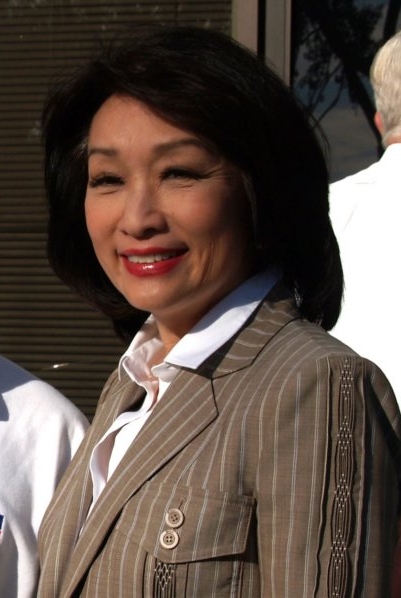
Constance Yu-Hwa Chung Povich (née Chung; born August 20, 1946) is an American journalist who has been a news anchor and reporter for the U.S. television news networks ABC, CBS, NBC, CNN, and MSNBC. Some of her more famous interview subjects include Claus von Bülow and U.S. representative Gary Condit, whom Chung interviewed first after the Chandra Levy disappearance,[1] and basketball legend Magic Johnson after he went public about being HIV-positive. In 1993, she became the second woman to co-anchor a network newscast, as part of CBS Evening News.

Early life and education

[edit]
Chung in 1964

The youngest of ten children, Chung was born in Washington, D.C., less than a year after her family emigrated from China, and was raised in Washington, D.C.[2] Her parents were in an arranged marriage.[3] Her father, William Ling Chung, was an intelligence officer in the Chinese Nationalist Government, and five of her siblings died during wartime.[4] She was named after singer and actress Constance Moore.[5]

Chung attended Montgomery Blair High School in Silver Spring, Maryland.[6] In 1969, she graduated from the University of Maryland, College Park with a degree in journalism.[7] She was a summer intern for New York congressman Seymour Halpern.[8]

Career

[edit]

Early career

[edit]

Chung began her career as a copier at WTTG-TV until a position as newsroom secretary opened up. In 1971,[9] Chung became a Washington, D.C.–based correspondent for the CBS Evening News with Walter Cronkite in the early 1970s during the Watergate political scandal. Chung left to anchor evening newscasts for KNXT, a CBS owned and operated station in Los Angeles (now KCBS-TV). Her co-anchors at KNXT included Joe Benti, Brent Musburger and Jess Marlow.[10] The Los Angeles Times TV columnist said Chung "helped give Channel 2 an agreeable, respectable, middle-road identity".[11] Chung also anchored CBS's primetime news updates (CBS Newsbreak) for West Coast stations from the KNXT studios at Columbia Square during her tenure there. During this time, Chung also served as the presenter for the Maryland Instructional Television series Terra: Our World, which won a Peabody Award.[12]

In early 2018, Chung was asked if she was sexually harassed in her career. She replied, "Oh, yeah! Oh, sure. Yeah. Every day. I mean, a lot. Especially when I started out".[13] Later that year, following Christine Blasey Ford's testimony to the Senate Judiciary Committee alleging she was sexually assaulted by Brett Kavanaugh, Chung wrote an open letter to Blasey-Ford in which Chung said she was assaulted in college by the doctor who delivered her, during an appointment when she approached him for birth control.[14]

NBC

[edit]

In 1983, Chung returned to network news as anchor of NBC's new early program, NBC News at Sunrise, which was scheduled as the lead-in to the Today program.[8] She was also anchor of the Saturday edition of NBC Nightly News and filled in for Tom Brokaw on weeknights.[9] NBC also created two newsmagazines, American Almanac and 1986, which she co-hosted with Roger Mudd.

CBS

[edit]

In 1989, Chung returned to CBS to host Saturday Night with Connie Chung (later renamed Face to Face with Connie Chung) (1989–90) and anchor CBS Sunday Evening News (1989–1993). The former show was also planned to move to Mondays, but Chung's increasing health commitments and pregnancy led to the show being replaced by The Trials of Rosie O'Neill.[15] On June 1, 1993, she became the second woman (after Barbara Walters with ABC in 1976) to co-anchor a major network's national weekday news broadcast.[16][a] While hosting the CBS Evening News, Chung also hosted a side project on CBS, Eye to Eye with Connie Chung. After her co-anchoring duties with Dan Rather ended in 1995, Chung left CBS. She eventually jumped to ABC News, where she co-hosted the Monday edition of 20/20 with Charles Gibson and began independent interviews.[9]

Kathleen Gingrich interview

[edit]

In an interview by Chung on Eye to Eye with Kathleen Gingrich on January 5, 1995, (mother of Republican politician Newt Gingrich), Mrs. Gingrich said she could not say what her son thought about First Lady Hillary Clinton on the air. Chung asked Mrs. Gingrich to "just whisper it to me, just between you and me"; Mrs. Gingrich's microphone volume was turned up as she replied, "He thinks she's a bitch".[18] Many people interpreted Chung's suggestion to Mrs. Gingrich that she whisper her response as a promise that it would be off the record. Bill Carter for The New York Times reported, "Ms. Chung had become the object of some of the most ferocious criticism, justified or not, ever directed at any network anchor as a result of her now infamous interview with Speaker Newt Gingrich's mother, Kathleen".[19] The interview was parodied on Saturday Night Live.[20]

Oklahoma City bombing interview

[edit]

A few months later, in the wake of the April 1995 Oklahoma City bombing, Chung was widely criticized for sarcasm as she asked an Oklahoma City Fire Department spokesman, "Can the Oklahoma City Fire Department handle this?" Many Oklahomans felt the question was insensitive to the situation. A few women created "Bite Me, Connie Chung" shirts in response to the interview.[21] Thousands of viewers in Oklahoma and elsewhere called and wrote letters of protest over the tone of the questions.[22] Moreover, co-anchor Dan Rather took particular offense that Chung was sent from New York to the assignment, as he was already nearby in his home state of Texas.[23] Consequently, after public outcry, and Rather's complaints, Chung left the network after being removed as co-anchor of CBS Evening News.

ABC

[edit]

In 1997, Chung moved to ABC News as a reporter on 20/20 and cohost of the Monday edition of the program alongside Charles Gibson. In 2001, she conducted an interview with Gary Condit on Primetime Thursday, focusing on his relationship with murdered Washington, D.C., intern Chandra Levy.

She was a guest host of the morning program Good Morning America. After short-lived host Lisa McRee left the program, Chung declined to take over on a permanent basis. She also was on ABC 2000 Today in Las Vegas.

CNN

[edit]

Between 2002 and 2003,[24] Chung hosted her own show on CNN titled Connie Chung Tonight, for which she was paid $2 million per year. Though her arrival at CNN was heavily hyped by the network, her show was panned by critics. CNN changed her show from live to tape-delay to improve its continuity. Although it performed moderately well in the ratings (a 500,000 increase in viewers), her show was suspended once the 2003 Iraq War began. During the war, she was reduced to reading hourly headlines. Once CNN resumed regular programming, Chung requested that CNN resume broadcasting her show as soon as possible. The network responded by cancelling it, even though her contract had not yet expired. In an interview, CNN founder Ted Turner called the show "just awful".[25]

Martina Navratilova interview

[edit]

In July 2002, Chung interviewed tennis player Martina Navratilova, who at that time had been a naturalized U.S. citizen for more than 20 years, about her recent criticisms of the U.S. political system. Chung labeled these criticisms "un-American" and "unpatriotic" and suggested Navratilova should "go back to Czechoslovakia" (which had ceased to be a united nation nine years earlier) rather than use her celebrity status to gain a platform for her complaints. When Navratilova asked why it was unpatriotic to speak out, Chung replied, "Well, you know the old line, love it or leave it".[26]

MSNBC

[edit]

In January 2006, Chung and Maury Povich began hosting a show titled Weekends with Maury and Connie on MSNBC. It was Chung's first appearance as a television host since 2003. The show was canceled after six months on air; in its final episode that aired June 17, 2006, Chung—dressed in a white evening gown and dancing on top of a black piano—sang a parody to the tune of "Thanks for the Memory". Video clips of the off-key farewell performance circulated on internet video sites. Chung commented, "All I want to be sure of is that viewers understood it was a giant self-parody. If anyone took it seriously, they really need to get a life".[27] Chung has not made a return to network television in an official capacity since this final episode.[28]

Interview style

[edit]

Chung's interviews were largely gentle, but often they were punctuated by a rapid-fire barrage of sharp questions. Consequently, her interviews were often used as a public relations move by those looking to overcome scandal or controversy. Some of her more famous interview subjects include Claus von Bülow and U.S. representative Gary Condit, whom Chung interviewed first after the Chandra Levy disappearance.[1]

Teaching

[edit]

Chung accepted a teaching fellowship at the John F. Kennedy School of Government at Harvard University.[29] While at Harvard, she wrote a discussion paper titled The Business of Getting "The Get": Nailing an Exclusive Interview in Prime Time.[30][31]

Personal life

[edit]

Chung has been married to talk show host Maury Povich since 1984. They have one son, Matthew Jay Povich, whom they adopted on June 20, 1995.[32] They live in Montana.[33]

On September 17, 2024, Chung released a memoir, Connie.[34]

Impact

[edit]

In her early career, Chung was only the second woman and the first American of Asian descent to anchor a major nightly news program in the U.S. As such, for the growing number of new Chinese immigrants to the U.S. from the late 1970s to the mid-1990s, she was a rare, nationally visible representative. Many of these immigrant families, wanting their daughters to achieve and succeed, named their girls Connie after the one woman on mainstream media who could be seen as a role model for them.[5] In 2024, Chung received the Hugo Shong Reporting on Asia Award from Boston University.[35]

Career timeline

[edit]

Book

[edit]
  • Chung, Connie (September 17, 2024). Connie: A Memoir. New York: Grand Central Publishing. ISBN 978-1-538-76698-9. OCLC 1437542522.

See also

[edit]

Explanatory notes

[edit]

References

[edit]
[edit]
Revisions and contributorsEdit on WikipediaRead on Wikipedia
from Grokipedia
Constance Yu-Hwa Chung (born August 20, 1946) is an American journalist and former television news anchor of Chinese immigrant parentage, recognized for advancing visibility for women and Asian Americans in broadcast media. Born in Washington, D.C., as the youngest of five siblings and the only one native-born, Chung began her career in local news before rising to national prominence at networks including CBS and NBC, where she reported on major events and conducted high-profile interviews. She achieved a milestone in 1993 as the first Asian American and second woman to co-anchor the CBS Evening News with Dan Rather, a role she held until 1995. Chung earned three Emmy Awards, a George Foster Peabody Award, and recent lifetime achievement honors, including the Asian American Journalists Association's 2024 award and the Silurians Press Club's 2025 recognition, for her contributions to journalism. Her tenure included notable controversies, such as a 1995 interview with Kathleen Gingrich—mother of Speaker Newt Gingrich—in which Chung prompted the revelation of a private insult directed at Hillary Clinton, sparking accusations of entrapment and contributing to her departure from CBS amid ratings struggles and internal shifts. In her 2024 memoir, Chung detailed experiences of professional sexism, including from co-anchor Rather, whom she accused of bias against female colleagues. Married to broadcaster Maury Povich since 1986, she has largely retired from on-air work but continues to reflect on the evolution of news media.

Early Life and Education

Family Background and Childhood

Constance Yu-Hwa Chung was born on August 20, 1946, in Washington, D.C., as the tenth child of Chinese immigrant parents. Her parents had an arranged marriage in China, where her father initially worked in the family jewelry business before serving as an intelligence officer for the Nationalist government under Chiang Kai-shek. The family emigrated from to the in 1945, fleeing the advance of Communist forces; her father arrived earlier with a group of Chinese Air Force cadets, while her mother and four surviving older daughters made a perilous wartime journey by boat to join him in . Of the ten children her parents had, five—including all three sons—died in infancy in amid high mortality rates during wartime conditions. Chung, the only child born in America, was thus the youngest of five surviving daughters, all sisters. Raised in , by parents who emphasized traditional Chinese values, Chung recalled being a timid and soft-spoken girl, with one noting that she "speaks too softly." Her four older sisters, who had endured the hardships of war and , selected her name "" from a movie magazine.

Academic Pursuits and Influences

Chung attended in , graduating in 1964. The school's location in the Washington, D.C., suburbs exposed her to a politically charged environment that likely fostered early interest in current events and public affairs. Following high school, Chung enrolled at the , where she pursued studies leading to a degree in , awarded in 1969. Initially considering , she shifted to journalism, extending her time at the university by an additional year to complete the degree. During her undergraduate years, she gained practical experience by writing for The Diamondback, the campus newspaper, and reporting for WMUC, the student radio station. These academic pursuits were shaped by Chung's personal ambition and the era's evolving opportunities for , though specific mentors or pivotal influences from her university period remain less documented in primary accounts. Her transition to reflected a pragmatic alignment with her emerging career aspirations in , influenced by the proximity to national news hubs in the capital region.

Professional Career

Initial Roles in Local and National Reporting

Chung began her journalism career immediately after graduating from the University of in 1969, securing an entry-level position as a copy person at the local , television station , a Metromedia-owned independent outlet. She advanced rapidly within the newsroom, progressing from newsroom secretary to news writer and eventually to on-air reporter, marking her initial foray into local amid a field dominated by men. In 1971, Chung transitioned to national reporting by joining as a correspondent, where she contributed stories to the and collaborated with anchor on coverage of significant events, including the 1972 presidential campaign and the . Her reporting during this period established her as one of the few Asian American women in network news, though opportunities remained limited by gender and ethnic barriers in the industry. By 1976, Chung relocated to Los Angeles to co-anchor the evening newscasts at KNXT-TV, the CBS-owned station (now ), serving in that role for seven years until 1983 and handling both local stories and national feeds. This position at a major-market affiliate enhanced her visibility, blending local anchoring duties with contributions to network-level reporting, though it represented a step back from full-time national correspondence to build broader on-air experience.

NBC Period and Breaking into Network News

In 1983, after seven years as co-anchor of the evening news at CBS-owned KNXT-TV in , Connie Chung joined as a and , marking her return to national network television following earlier stints in Washington, D.C., local reporting. recruited her to anchor its newly launched early-morning program, NBC News at Sunrise, positioned as a lead-in to the Today show amid efforts to revitalize morning viewership; the role required her to relocate to and accept a significant pay cut from her local salary. She hosted Sunrise from 1983 to 1986, delivering news segments that emphasized her reporting skills honed in field coverage of events like the and presidential campaigns. During her NBC tenure, Chung expanded her network presence by anchoring the Saturday edition of and contributing to various prime-time specials, which showcased her versatility in both hard news and feature reporting. These assignments allowed her to cover national stories with a focus on investigative depth, building on her reputation for tenacity established in local markets. Her poised delivery and ability to connect with audiences helped elevate Sunrise's profile, contributing to 's morning lineup stability despite competitive pressures from ABC and . By 1989, Chung had emerged as one of NBC's most recognized journalists, with her contract renewal reflecting strong viewer appeal and internal acclaim for boosting early-morning ratings through engaging, straightforward broadcasts. This period solidified her breakthrough into major network anchoring, overcoming barriers as an Asian American woman in a male-dominated field, and positioned her for subsequent high-profile roles at .

CBS Tenure and Evening News Co-Anchorship

Chung first joined in 1971 as a reporter, where she covered major stories including the 1972 presidential campaign, the , and Vice President Nelson Rockefeller's activities following Watergate. From 1976 to 1983, she served as co-anchor of the evening news at CBS-owned KNXT (now ) in , establishing herself as a prominent local anchor. After departing for in 1983, she rejoined in 1989 as anchor and correspondent for Saturday Night with Connie Chung and host of the Sunday edition of the . In 1993, CBS appointed Chung co-anchor of the CBS Evening News alongside Dan Rather, with her debut in the role occurring on June 1, 1993; this made her the first Asian American woman to co-anchor a major network's nightly news program. The decision, supported by News president Eric Ober, aimed to modernize the broadcast, attract younger and female viewers, and improve ratings amid competition from ABC's World News Tonight with , which had surpassed in viewership. Chung and Rather alternated delivering leads on stories, with Chung often contributing investigative segments and interviews. The co-anchorship lasted until November 1995, when reassigned Chung following stagnant ratings that averaged around 8-9 million viewers nightly, failing to close the gap with rivals. During this period, Chung also hosted the prime-time interview series Eye to Eye with Connie Chung from 1993 to 1995, featuring high-profile guests and expanding her profile within the network. In her memoir Connie, Chung attributed interpersonal challenges, including what she described as Rather's "inherent against women" and resistance to equal billing, to underlying tensions that contributed to the arrangement's end, though cited strategic programming shifts.

ABC, CNN, and MSNBC Engagements

Following her departure from CBS in 1995, Connie Chung took a period of leave to focus on family matters, including the adoption of her son in 1995, before returning to network television. In November 1997, she joined ABC News as a reporter and co-anchor for the primetime newsmagazine 20/20, initially co-hosting the Monday edition alongside . During the 1999-2000 season, Chung shifted to co-anchoring the Monday broadcasts with John Miller, contributing investigative segments and interviews to the program, which aired on ABC's schedule. She also appeared on other ABC properties, such as , delivering reports and features. Her tenure at ABC concluded in early 2002 when she negotiated an early exit from her contract to pursue opportunities elsewhere, amid ABC's restructuring of 20/20's formats, including the end of its Monday edition. In January 2002, Chung transitioned to cable news by signing with to anchor Connie Chung Tonight, a one-hour prime-time program airing weeknights at 8 p.m. Eastern Time, focusing on news analysis, interviews, and commentary. The show aimed to blend Chung's established journalistic style with 's 24-hour format, but it struggled with ratings competition from established cable rivals. She stepped away from on-air duties at in March 2003, after approximately 14 months, as the network shifted programming strategies; the show was shelved without a direct replacement featuring her. This period marked Chung's brief foray into cable primetime, contrasting her prior broadcast experience. Chung's final major network engagement came in January 2006 with MSNBC, where she co-hosted Weekends with Maury and Connie, a half-hour weekend news program alongside her husband, , offering a lighter, conversational review of the week's top stories. Aired Saturdays and Sundays, the format emphasized accessible discussions rather than hard news, drawing on the couple's personal chemistry to differentiate from MSNBC's weekday lineup. The show lasted only a few months before cancellation in mid-2006, attributed to low viewership in a competitive weekend slot; its finale featured an unconventional sign-off with Chung performing a musical number. This MSNBC stint represented Chung's last regular on-air role before largely retiring from television journalism, though she made occasional guest appearances thereafter.

Post-Network Ventures and Retirement

Following the conclusion of her MSNBC program Weekends with Maury and Connie in May 2003, after a five-month run, Chung stepped back from regular . She prioritized life, particularly raising her adopted son Matthew, born in 1995 to her and husband , amid a career marked by demanding schedules that had previously strained personal commitments. This period represented a deliberate retreat from the high-pressure network environment, allowing her to focus on motherhood after decades of trailblazing on-air roles. Chung formally retired from the industry around , eschewing further anchoring positions despite earlier offers for substitute roles. In , she maintained a lower public profile, occasionally contributing to discussions on and women's experiences in media through interviews and panels. Her return to prominence came with the publication of her memoir on September 17, 2024, which details her career challenges, including barriers and family trade-offs, drawing from personal archives and reflections. The received attention for its candid insights, aligning with her post-retirement activities like keynote speaking on leadership and ambition in broadcasting. Chung has been honored for her legacy, including a Lifetime Achievement Award from the Silurians Press Club in 2025, recognizing her contributions to journalism amid evolving media landscapes. She continues selective engagements, such as promoting her and commenting on contemporary issues like diversity in newsrooms, but has not pursued new on-air ventures, solidifying her status as a retired pioneer.

Key Interviews and Reporting Milestones

High-Profile Political Coverage

Chung served as ' White House correspondent from 1976 to 1983, providing coverage of the Jimmy Carter and administrations amid key events such as foreign policy shifts and domestic policy debates. In this role, she reported from and the , contributing to network broadcasts on presidential initiatives and legislative developments. Her early Washington reporting also included Watergate-related stories, where she interviewed figures like and covered Vice President Nelson Rockefeller's activities. During her tenure at CBS, Chung acted as a floor reporter at the 1992 national political conventions, delivering on-site analysis of delegate proceedings and candidate speeches. She further participated in Election Night coverage for CBS in 1990, 1992, and 1994, offering real-time commentary on vote tallies and outcomes. These contributions extended her earlier local political reporting, such as the 1978 including Proposition 13, broadcast on KNXT. Chung conducted notable interviews with political leaders, including a 1993 joint session with President alongside , discussing administration priorities on . In 2001, while at ABC, she interviewed Congressman regarding the Chandra Levy case, probing connections to his political career and public scrutiny. Her political reporting spanned networks, reflecting consistent engagement with U.S. electoral processes and executive branch activities over three decades.

Disaster and Human Interest Stories

During her tenure at NBC News from 1983 to 1989, Connie Chung contributed to coverage of the on January 28, 1986, including reports on the ongoing search for debris and investigation into the explosion that killed all seven crew members. As anchor of segments, she provided studio updates on the shuttle program's safety record and recovery efforts in the weeks following the incident. In 1995, while co-anchoring the , Chung reported live from on the day of the bombing, April 19, which claimed 168 lives and injured over 680 others. Her broadcast devoted significant airtime to the immediate aftermath, including eyewitness accounts and the scale of destruction from the domestic terrorist attack using a truck bomb. Chung's human interest reporting often highlighted personal stories amid broader events, exemplified by her December 11, 1991, exclusive interview with NBA star Magic Johnson on "Face to Face with Connie Chung." Conducted shortly after Johnson's public disclosure of his HIV-positive status and subsequent retirement from professional , the sit-down explored his emotional response, family impact, and advocacy plans, marking the first such in-depth discussion with a . Johnson credited Chung's persistent pursuit for securing the opportunity, which drew widespread viewership and amplified awareness of at a time when stigma surrounded the disease.

Controversies and Professional Setbacks

Kathleen Gingrich Interview Fallout

In December 1994, Connie Chung conducted a taped interview with Kathleen Gingrich, the 68-year-old mother of incoming House Speaker Newt Gingrich, as part of CBS's coverage ahead of the Republican-led Congress's inauguration. During the exchange, Chung pressed Kathleen on her son's private views of Hillary Rodham Clinton, prompting the response: "Just whisper it to me—just between you and me." Kathleen then whispered into the microphone, "She's a bitch," attributing the remark to Newt Gingrich. The segment aired on the January 5, 1995, broadcast of CBS Evening News, despite the whisper's intended confidentiality, sparking immediate backlash for what critics described as manipulative interviewing tactics targeting a vulnerable family member. Newt Gingrich publicly condemned the broadcast as "unprofessional and frankly pretty despicable," accusing of betraying his mother's trust after an eight-hour visit that included his family hosting her warmly, such as his father baking a cake. He demanded an apology from and , framing the incident as emblematic of against conservatives and labeling it a "gotcha" ploy that exploited his elderly mother's candor. Gingrich's step-sister, , later called "two-faced" for airing the remark after building rapport. The controversy fueled broader debates on journalistic ethics, with some outlets questioning whether 's coaxing violated standards of off-the-record assurances or fair treatment of interview subjects, particularly non-public figures like family members. CBS executives, including News President Eric Ober, defended the airing, asserting that Kathleen's whisper was a deliberate "stage whisper" audible on the open microphone and not a genuine private aside, thus warranting broadcast as newsworthy commentary on Gingrich's mindset amid his rising political influence. Chung herself maintained that the exchange was playful and consensual, rejecting claims of deception. However, the incident drew widespread media criticism, with commentators like those in the Chicago Tribune arguing it exemplified "tricking" sources for sensationalism, eroding public trust in broadcast journalism. The fallout contributed to perceptions of Chung's tenure at CBS as increasingly scrutinized, with reports suggesting it intensified internal tensions and factored into her eventual departure from the network in 1995 after less than two years as co-anchor of the Evening News. In later reflections, Chung acknowledged the episode's role in amplifying conservative critiques of tactics, though she stood by the journalistic value of capturing unguarded insights into public figures' inner circles. The event remains cited in discussions of ambush-style reporting, highlighting tensions between pursuit of candid revelations and respect for interpersonal dynamics in interviews.

Oklahoma City Bombing Reporting Criticism

During live coverage of the on April 19, 1995, Connie Chung, reporting from the scene for , interviewed Oklahoma City Assistant Fire Chief Jon Hansen and asked, "Can you handle this? Can this fire department handle this?" The question, delivered amid the chaos following the truck bomb explosion that killed 168 people and injured over 680, was perceived by some local observers as doubting the competence of at a time of national tragedy. Students in a sixth-hour math analysis class at El Reno High School, located about 25 miles west of , viewed Chung's tone, facial expressions, and phrasing as sarcastic and insulting to Oklahomans' resilience and the rescue efforts. On April 20, 1995, ten students and their teacher, Tera J. Roblyer, drafted and sent a letter to Chung expressing offense, arguing that her remarks undermined the "commendable" work of local teams and reflected poorly on national appreciation for the response. The letter, also published in , praised the unified community effort while decrying the perceived insensitivity. CBS News defended Chung's reporting as sympathetic and sensitive to the circumstances, providing a transcript of the exchange to contextualize her inquiry as concern rather than skepticism. In her 2024 memoir Connie: A Memoir, Chung reflected on the backlash from residents, who criticized her on-the-ground approach as insensitive amid the raw grief following the bombing perpetrated by Timothy McVeigh and Terry Nichols. This incident compounded internal tensions at CBS, as co-anchor Dan Rather, vacationing at the time, expressed frustration over not being assigned the story, contributing to strains in their partnership.

Martina Navratilova Confrontation

In July 2002, during an episode of her program Connie Chung Tonight, Connie Chung interviewed tennis champion , questioning her over comments attributed to her in a German newspaper. The newspaper quoted Navratilova as stating that her defection from in 1975 had resulted in exchanging one system suppressing free opinion for another in the United States, specifically criticizing the Bush administration for manipulating and prioritizing financial gain over health, morals, and environmental concerns. Navratilova, a U.S. citizen since who had resided in the country for 27 years by that point, clarified that the translation had distorted her words; she specified her objections to policy decisions like bill amendment allowing drilling in the and broader post-September 11 centralization of power under President and Attorney General , which she argued diminished personal rights. As an openly athlete, she contrasted restrictions in the U.S. with greater freedoms in but affirmed her love for America as the place that enabled her success and free speech. Chung responded that the original quote seemed un-American and unpatriotic, adding, "Honestly, when I read this, I found it un-American, unpatriotic. I wanted to say, go back to . If you don’t like it here, this country gave you so much." She invoked the phrase "love it or leave it" to underscore perceived ingratitude toward the opportunities America provided to an immigrant defector. Navratilova rebutted that her long-term contributions, including tax payments and public advocacy, entitled her to critique and improve , positioning as a patriotic exercise rooted in the freedoms she had embraced since defecting from communist . The confrontation occurred amid a post-9/11 climate emphasizing national unity, where public figures faced scrutiny for government criticism; Navratilova maintained that athletes and celebrities had a duty to address social and political issues, potentially even pursuing office to effect change. Chung's suggestion that Navratilova return to her country of birth despite her and history elicited backlash, with observers labeling it insensitive or xenophobic toward naturalized citizens' loyalty and right to .

CBS Departure and Dan Rather Dynamics

In June 1993, Connie Chung joined as co-anchor of the CBS Evening News, marking the first time the program featured two anchors in its broadcast history. This arrangement, intended to modernize the format and leverage Chung's rising popularity from her work at , quickly encountered challenges, including reported interpersonal strains. Chung later recounted in her 2024 that Rather exhibited an "inherent bias regarding women," allegedly complaining to colleagues about her assignments and dismissing her with remarks such as instructing her to "start reading the newspaper" upon her arrival, which she interpreted as undermining her journalistic credentials. Rather, in contrast, publicly maintained that he supported the co-anchorship and was surprised by CBS's decision to end it, denying any opposition to Chung's prominent stories. The partnership faltered amid declining ratings for the Evening News, which fell behind competitors like ABC's World News Tonight during the co-anchor period from 1993 to 1995, prompting network executives to revert to a solo anchor model. Internal dynamics exacerbated the situation; Chung described efforts to secure major assignments, such as covering the Haitian crisis, being overruled in favor of Rather's preferences, leading to perceptions of unequal treatment. On May 20, 1995, announced Chung's removal from the anchor desk, effectively ending her role after approximately two years, though she continued briefly with other network projects before departing altogether later that year. This decision aligned with broader leadership shifts at , including executive pressures to address performance issues, but personal frictions with Rather—whom Chung felt positioned as the dominant figure—contributed to the untenable arrangement, as evidenced by contemporaneous reports of discord within the news division.

Journalistic Style and Techniques

Approach to Interviews and On-Air Delivery

Connie Chung's approach to interviews emphasized building rapport through genuine listening and a conversational demeanor, often likened to "chatting with a neighbor, classmate or friend." She positioned herself as "normal and ordinary," fostering trust with interviewees who felt comfortable sharing personal details, as evidenced by her 2001 interview with confessed murderer John List, where her attentive listening prompted his on-camera confession after years of evasion. Chung avoided gratuitous "gotcha" tactics, prioritizing good-faith questions on substantive topics to elicit authentic responses rather than confrontational traps. This listener-oriented technique contrasted with more aggressive styles in , allowing her to secure revelations in high-stakes settings, such as interviews with figures like Chinese Premier in 1989 and NBA star Magic Johnson upon his 1991 HIV diagnosis announcement. While some observers characterized her probing as hard-hitting and tenacious, particularly in political and scandal coverage, Chung attributed successes to preparation and interpersonal connection over adversarial posturing. Her style evolved from early Washington reporting at starting in 1973, where she honed skills in drawing out sources amid a male-dominated field. On-air delivery reflected a calm, relatable presence honed from a soft-spoken childhood, transforming into confident broadcasting marked by quick wit and sass. To navigate gender biases, Chung employed humor—talking "like a sailor" and using self-deprecating quips—to disarm colleagues and avoid derogatory labels, maintaining professionalism without softening her edge. As co-anchor of the CBS Evening News from June 1993 to May 1995 alongside Dan Rather, she delivered serious, structured segments in a "Patty Cake" format of alternating leads, prioritizing factual gravity over flair amid competitive network pressures. This approach sustained viewer engagement through poised narration, even in tense scenarios like live disaster coverage, underscoring her adaptability in evolving 24-hour news cycles.

Adaptations to Evolving Media Landscape

Chung has voiced significant concerns regarding the transformation of amid the rise of digital platforms and 24-hour cable news cycles, lamenting the difficulty in discerning verifiable facts in contemporary reporting. In a July 2025 discussion at the Aspen Ideas Festival, she contrasted the media's historical prestige—exemplified by its role in exposing deceptions like the Pentagon Papers—with the current environment plagued by and fragmented trust. Similarly, in a September 2024 Harvard Business Review interview, she described the television news industry as a "shadow" of its former self, emphasizing the fourth estate's vital role while questioning its sustainability amid audience fragmentation and sensationalism. These critiques reflect her adaptation through reflective commentary rather than active participation in fast-paced digital news, prioritizing depth over immediacy. Rather than pivoting to or viral content creation, Chung has gravitated toward long-form formats that align with her broadcast roots while accommodating slower-paced analysis. Her 2024 memoir, , serves as a medium for unfiltered personal and professional insights, including critiques of industry and journalistic evolution, which traditional evening news constraints precluded. She has engaged in appearances, such as the October 2024 episode of Bialik Breakdown, where she addressed the "toilet" state of current , attributing declines to competitive pressures and ethical lapses. These outlets allow extended on topics like truth-seeking, absent in brevity-driven TV segments. In recent years, Chung has embraced and academic engagements as primary adaptations, delivering keynotes that dissect media narratives and legacy amid technological shifts. At Boston University's Power of Narrative Conference in March 2025, she explored storytelling's enduring value in an algorithm-dominated era. A September 2025 Knight Lecture at the focused on her pioneering role and the challenges of maintaining journalistic integrity online. In an October 2025 Northeast Ohio event, she discussed initiatives alongside journalism's present state, underscoring her shift to mentorship-oriented platforms that foster critical dialogue over real-time reporting. This trajectory highlights a deliberate pivot to influential, non-ephemeral venues, preserving her emphasis on factual rigor amid pervasive digital noise.

Teaching and Mentorship Roles

Academic Positions and Educational Contributions

In 1997, Chung held a fellowship at the Joan Shorenstein Center on the Press, Politics and within Harvard University's School of Government. This role followed her departure from and allowed her to engage with academic on media and . During the fellowship, she produced a discussion paper titled "Nailing an Exclusive Interview in ," analyzing strategies for securing high-profile interviews and offering practical guidance on journalistic persistence and preparation. Chung's fellowship contributions extended to seminars and interactions with students and faculty, fostering dialogue on broadcast journalism's role in political coverage. The Shorenstein Center, focused on into media influence, provided a platform for her to draw from decades of on-air experience, including coverage of events like Watergate and presidential campaigns. Beyond formal fellowships, Chung has advanced education through guest lectures and keynotes at universities. In March 2025, she delivered the keynote address at University's annual Power of Narrative Conference, emphasizing narrative techniques in reporting. She participated in a fireside chat at in 2025, reflecting on career challenges and media evolution drawn from her . Additionally, in 2025, she presented the John S. Knight Lectureship at the , discussing journalistic integrity amid shifting media landscapes. These engagements highlight her role in mentoring aspiring journalists on ethical reporting and adaptability.

Personal Life

Marriage and Partnership with Maury Povich

Connie Chung first encountered in 1969 at WTTG-TV in , where she started as a copy girl and he served as a prominent news anchor; Povich initially took little notice of her amid his established role. Their romantic relationship developed later, spanning seven years of long-distance dating conducted non-exclusively before they married in 1984. The couple, both prominent television figures, adopted a newborn son, Matthew Jay Povich, on June 20, 1995, following an extended wait; Chung had previously pursued fertilization (IVF) treatments in her late 40s amid public scrutiny for seeking motherhood at an advanced age. Matthew, now an adult maintaining a private life, recently became engaged, as announced by Chung in 2024. Throughout their 40-year as of 2024, Chung and Povich have emphasized mutual as central to their enduring , with Chung noting they avoid encroaching on each other's professional domains and maintain separate pursuits to prevent friction. Povich has provided career guidance to Chung, aiding her navigation of competitive media environments, while their shared journalistic backgrounds fostered a supportive dynamic without formal joint ventures. In recent reflections, Povich described their bond as resilient due to humor and not over-seriousness, attributing longevity to complementary personalities despite occasional disagreements.

Family Formation and Health Struggles

Chung and her husband, , encountered significant difficulties in conceiving biological children, prompting her to undergo fertilization (IVF) treatments in the early 1990s amid concerns over her advancing age in her mid-40s. Her autoimmune conditions contributed to repeated embryo rejections and multiple miscarriages during these efforts. In July 1990, at age 43, Chung suspended her interview series Face to Face with Connie Chung to prioritize treatments, stating publicly that she wished to have a child before it was "too late." These fertility challenges drew media scrutiny and , with some outlets questioning the viability of IVF for women of her age, though Chung persisted despite the physical and emotional toll. Unable to achieve a successful , the couple turned to , welcoming newborn son Matthew Jay Povich on June 19, 1995, after an extended waiting period that tested their resolve. Matthew, now an adult, became engaged in 2024. Beyond reproductive health, Chung has disclosed a childhood incident of by her family physician, which she revealed publicly in but did not report at the time, contributing to long-term personal trauma. In her 2024 Connie: A Memoir, she reflects on how these experiences, including , reshaped her priorities, leading her to embrace motherhood through at age 48 and step away from high-profile anchoring roles.

Publications

Memoir and Written Reflections

Connie: A Memoir, published on September 17, 2024, by , chronicles Chung's professional trajectory in , from her early reporting roles to her tenure as the first Asian-American woman to co-anchor a major network evening newscast at in 1993. The narrative details specific career milestones, including her coverage of events like the and international conflicts, while addressing institutional barriers such as gender-based discrimination and competitive rivalries, notably with , who reportedly resisted her integration into the anchor team. Chung's reflections extend to personal dimensions, including her marriage to since 1986 and their decision to pursue parenthood via in 1995, yielding a son amid her recounting of fertility struggles and health issues like a 2011 diagnosis. She employs a direct, self-deprecating style to critique industry practices, such as the era's emphasis on appearance over substance for female anchors, and her own strategic adaptations, including softening her on-air persona to mitigate perceptions of aggressiveness. The memoir positions Chung's experiences within the broader evolution of television news during its peak influence from the to the , highlighting causal factors like network profit motives and male-dominated hierarchies that limited women's advancement, evidenced by her demotion from co-anchor in following Rather's reported insistence on solo status. Reviewers have noted its value as a historical document, though some critiques point to selective emphasis on grievances over comprehensive self-analysis. No prior major written works by Chung, such as essays or autobiographies, are documented in public records.

Legacy and Assessment

Pioneering Achievements in Broadcast Journalism

Connie Chung entered broadcast journalism in 1969 as one of the earliest Asian American women in the field, starting with local news reporting in Washington, D.C., at WTTG, a position that marked her as a trailblazer amid an industry dominated by white male anchors. Her breakthrough came in 1971 when she joined CBS News as a correspondent in the Washington bureau, where she covered major political events, including the Watergate scandal, establishing her reputation for tenacious reporting in a male-centric environment. By the 1980s, Chung had advanced to anchor roles at NBC's NBC News at Sunrise and KNBC in Los Angeles, demonstrating versatility across local and national platforms while navigating persistent skepticism toward non-traditional faces in prime-time news. In June 1993, Chung achieved a historic milestone by becoming the first woman to co-anchor the alongside , a role that debuted on June 1, 1993, and positioned her as the first Asian American to anchor any major network evening newscast. This appointment, which lasted until 1995, challenged entrenched norms in broadcast news, where solo male anchors had long prevailed, and highlighted Chung's ability to command national audiences despite facing internal resistance at , including from Rather himself. During this period, she also launched Eye to Eye with Connie Chung, a syndicated program that emphasized in-depth celebrity and political dialogues, further expanding her influence in non-traditional news formats. Chung's pioneering role extended to CNN, where she hosted Connie Chung Tonight from 1995 to 2002, becoming one of the network's first prominent prime-time anchors and adapting to the 24-hour cable news cycle that was reshaping the industry. Her career cumulatively advanced visibility for Asian American women in television, as evidenced by the surge in Asian American girls named "Connie" following her prominence, reflecting a direct cultural impact on aspiring journalists from underrepresented groups. These accomplishments, grounded in her persistent ascent through competitive newsrooms, underscored the feasibility of merit-based breakthroughs in a field historically resistant to demographic shifts.

Criticisms and Broader Media Impact

Chung faced significant criticism for her January 5, 1995, interview with Kathleen Gingrich, mother of then-incoming House Speaker , on Eye to Eye with Connie Chung. During the segment, Chung prompted Gingrich's mother to whisper off-camera what her son privately thought of , leading to the revelation that he had called her a "bitch." Critics accused Chung of journalistic by exploiting the elderly woman's trust and naivety, with Gingrich publicly denouncing the tactic as unethical and the media's response as overly sensational. Similar ethical concerns arose from her February 1994 pursuit of figure skater Tonya Harding amid the Nancy Kerrigan attack scandal. Chung followed Harding onto a flight to Norway for the Winter Olympics, securing an interview that Harding abruptly ended by removing her microphone and departing. Observers criticized the aggressive "ambush" style as predatory, prioritizing access over sensitivity, though Chung defended it as necessary for competitive reporting in a high-stakes story. Chung's tenure as co-anchor of the alongside from June 1993 to May 1995 drew scrutiny for contributing to declining ratings, which fell to third place behind ABC and . Television critics argued she struggled with live hard-news anchoring, appearing less authoritative on serious topics compared to Rather, leading to her reassignment and eventual departure from in 1995. In her 2024 memoir, Chung attributed internal tensions to Rather's alleged bias against female colleagues, claiming he undermined her role, though Rather disputed such characterizations. Despite these episodes, Chung's career highlighted broader shifts in toward personality-driven and confrontational interviewing, mirroring the era's tabloid influences on network news. Her high-profile controversies underscored tensions between pursuit of exclusive scoops and ethical boundaries, influencing perceptions of reporters as adversarial figures rather than neutral observers. Chung's broader media impact lies in advancing visibility for Asian American women in a predominantly white, male field, becoming the first to co-anchor a major network evening newscast in 1993 and inspiring subsequent generations of minority . However, her experiences reflected systemic barriers, including and , that she navigated through persistence amid a competitive favoring aggressive tactics. Critics of practices during her peak note that such approaches, while yielding visibility, sometimes prioritized spectacle over substantive reporting, contributing to public erosion of trust in by the late 1990s.

Influence on Diversity and Future Generations

Chung's tenure as co-anchor of the from 1993 to 1995 positioned her as the first Asian American to anchor a major network evening newscast, elevating the representation of minorities in at a time when such roles were overwhelmingly held by white men. This milestone, achieved amid documented industry resistance to non-traditional anchors, correlated with subsequent increases in Asian American visibility on network news, as her success demonstrated viability for journalists from underrepresented backgrounds. Her barrier-breaking path, starting from local reporting in , in 1969, underscored the causal role of individual perseverance in challenging systemic exclusions based on race and gender. A tangible measure of her influence on future generations is the naming of hundreds of Asian American girls "Connie" after her, a trend spanning decades and reflecting her status as a for aspiring female journalists of Asian descent. This "Generation Connie" phenomenon, highlighted in her 2024 and media analyses, illustrates how her on-screen presence—ubiquitous in the and —served as an empirical model, prompting emulation among young women who viewed her ascent from immigrant family origins to national prominence as attainable. Organizations like the Asian American Journalists Association have recognized this legacy through awards, such as her 2024 Lifetime Achievement honor, affirming her role in fostering diversity pipelines. Chung has extended her impact through public engagements, including keynote addresses at universities like in 2025 and in 2025, where she shared career insights to guide emerging journalists on navigating industry biases. These efforts, combined with her documented advocacy for underrepresented entrants, have contributed to a measurable uptick in Asian American women in broadcast roles post-1990s, though persistent underrepresentation— with comprising under 5% of on-air talent as of recent industry audits—highlights ongoing challenges beyond symbolic breakthroughs.

References

Add your contribution
Related Hubs
User Avatar
No comments yet.