


Community hub
Recent from talks
Contribute something
Nothing was collected or created yet.
Crinoid
View on Wikipedia
| Crinoids Temporal range:
| |
|---|---|

| |
| Crinoid on the reef of Batu Moncho Island, Indonesia | |
Scientific classification 
| |
| Kingdom: | Animalia |
| Phylum: | Echinodermata |
| Subphylum: | Crinozoa |
| Class: | Crinoidea Miller, 1821[2] |
| Major groups | |
| |
Crinoids are marine invertebrates that make up the class Crinoidea. Crinoids that remain attached to the sea floor by a stalk in their adult form are commonly called sea lilies, while the unstalked forms, called feather stars[3][4] or comatulids, are members of the largest crinoid order, Comatulida. Crinoids are echinoderms in the phylum Echinodermata, which also includes the starfish, brittle stars, sea urchins and sea cucumbers.[5] They live in both shallow water[6] and in depths of over 9,000 metres (30,000 ft).[7]
Adult crinoids are characterised by having the mouth located on the upper surface. This is surrounded by feeding arms, and is linked to a U-shaped gut, with the anus being located on the oral disc near the mouth. Although the basic echinoderm pattern of fivefold symmetry can be recognised, in most crinoids the five arms are subdivided into ten or more. These have feathery pinnules and are spread wide to gather planktonic particles from the water. At some stage in their lives, most crinoids have a short stem used to attach themselves to the substrate, but many live attached only as juveniles and become free-swimming as adults.
There are only about 700 living species of crinoid,[8] but the class was much more abundant and diverse in the past. Some thick limestone beds dating to the mid-Paleozoic era to Jurassic period are almost entirely made up of disarticulated crinoid fragments.[9][10][11]
Etymology
[edit]The name "Crinoidea" comes from the Ancient Greek word κρίνον (krínon), "a lily", with the suffix –oid meaning "like".[12][13]
Morphology
[edit]
The basic body form of a crinoid is a stem (not present in adult feather stars) and a crown consisting of a cup-like central body known as the theca, and a set of five rays or arms, usually branched and feathery. The mouth and anus are both located on the upper side of the theca, making the dorsal (upper) surface the oral surface, unlike in the other echinoderm groups such as the sea urchins, starfish and brittle stars where the mouth is on the underside.[14] The numerous calcareous plates make up the bulk of the crinoid, with only a small percentage of soft tissue. These ossicles fossilize well and there are beds of limestone dating from the Lower Carboniferous around Clitheroe, England, formed almost exclusively from a diverse fauna of crinoid fossils.[15]

The stem of sea lilies is composed of a column of highly porous ossicles which are connected by ligamentary tissue. It attaches to the substrate with a flattened holdfast or with whorls of jointed, root-like structures known as cirri. Further cirri may occur higher up the stem. In crinoids that attach to hard surfaces, the cirri may be robust and curved, resembling birds' feet, but when crinoids live on soft sediment, the cirri may be slender and rod-like. Juvenile feather stars have a stem, but this is later lost, with many species retaining a few cirri at the base of the crown. The majority of living crinoids are free-swimming and have only a vestigial stalk. In those deep-sea species that still retain a stalk, it may reach up to 1 m (3 ft) in length (although usually much smaller), and fossil species are known with 20 m (66 ft) stems.[5]
The theca is pentamerous (has five-part symmetry) and is homologous with the body or disc of other echinoderms. The base of the theca is formed from a cup-shaped set of ossicles (bony plates), the calyx, while the upper surface is formed by the weakly-calcified tegmen, a membranous disc. The tegmen is divided into five "ambulacral areas", including a deep groove from which the tube feet project, and five "interambulacral areas" between them. The mouth is near the centre or on the margin of the tegmen, and ambulacral grooves lead from the base of the arms to the mouth. The anus is also located on the tegmen, often on a small elevated cone, in an interambulacral area. The theca is relatively small and contains the crinoid's digestive organs.[5]
The arms are supported by a series of articulating ossicles similar to those in the stalk. Primitively, crinoids had only five arms, but in most modern forms these are divided into two at ossicle II, giving ten arms in total. In most living species, especially the free-swimming feather stars, the arms branch several more times, producing up to two hundred branches in total. Being jointed, the arms can curl up. They are lined, on either side alternately, by smaller jointed appendages known as "pinnules" which give them their feather-like appearance. Both arms and pinnules have tube feet along the margins of the ambulacral grooves. The tube feet come in groups of three of different size; they have no suction pads and are used to hold and manipulate food particles. The grooves are equipped with cilia which facilitate feeding by moving the organic particles along the arm and into the mouth.[5]
-
 Stem, theca and arms of a "true" (stalked) crinoid (family Isselicrinidae)
 -
 Oxycomanthus bennetti (comatulid)
 -
 Tegmen of a Lamprometra palmata. The mouth is located at the center of the 5 feeding grooves, and the anus at the top of the column.
 -
 Close-up on the cirri that allow comatulids to walk and attach themselves
 -
 Close-up on the pinnules of a Tropiometra carinata (with parasites Myzostoma fuscomaculatum)


Feeding
[edit]
Crinoids are passive suspension feeders, filtering plankton and small particles of detritus from the sea water flowing past them with their feather-like arms. The arms are raised to form a fan-shape which is held perpendicular to the current. Mobile crinoids move to perch on rocks, coral heads or other eminences to maximise their feeding opportunities. The food particles are caught by the primary (longest) tube feet, which are fully extended and held erect from the pinnules, forming a food-trapping mesh, while the secondary and tertiary tube feet are involved in manipulating anything encountered.[5]
The tube feet are covered with sticky mucus that traps any particles which come in contact. Once they have caught a particle of food, the tube feet flick it into the ambulacral groove, where the cilia propel the mucus and food particles towards the mouth. Lappets at the side of the groove help keep the mucus stream in place. The total length of the food-trapping surface may be very large; the 56 arms of a Japanese sea lily with 24 cm (9 in) arms, have a total length of 80 m (260 ft) including the pinnules. Generally speaking, crinoids living in environments with relatively little plankton have longer and more highly branched arms than those living in food-rich environments.[5]
The mouth descends into a short oesophagus. There is no true stomach, so the oesophagus connects directly to the intestine, which runs in a single loop right around the inside of the calyx. The intestine often includes numerous diverticulae, some of which may be long or branched. The end of the intestine opens into a short muscular rectum. This ascends towards the anus, which projects from a small conical protuberance at the edge of the tegmen. Faecal matter is formed into large, mucous-cemented pellets which fall onto the tegmen and thence the substrate.[5]
Predation
[edit]Specimens of the sea urchin Calocidaris micans found in the vicinity of the crinoid Endoxocrinus parrae, have been shown to contain large quantities of stem portions in their guts. These consist of articulated ossicles with soft tissue, whereas the local sediment contained only disarticulated ossicles without soft tissue. This makes it highly likely that these sea urchins are predators of the crinoids, and that the crinoids flee, offering part of their stem in the process.[16]
Various crinoid fossils hint at possible prehistoric predators. Coprolites of both fish and cephalopods have been found containing ossicles of various crinoids, such as the pelagic crinoid Saccocoma, from the Jurassic lagerstatten Solnhofen,[17] while damaged crinoid stems with bite marks matching the toothplates of coccosteid placoderms have been found in Late Devonian Poland.[18] The calyxes of several Devonian to Carboniferous-aged crinoids have the shells of a snail, Platyceras, intimately associated with them.[19] Some have the snail situated over the anus, suggesting that Platyceras was a coprophagous commensal, while others have the animal directly situated over a borehole, suggesting a more pernicious relationship.[20]
Water vascular system
[edit]Like other echinoderms, crinoids possess a water vascular system that maintains hydraulic pressure in the tube feet. This is not connected to external sea water via a madreporite, as in other echinoderms, but only connected through a large number of pores to the coelom (body cavity). The main fluid reservoir is the muscular-walled ring canal which is connected to the coelom by stone canals lined with calcareous material. The coelom is divided into a number of interconnecting spaces by mesenteries. It surrounds the viscera in the disc and has branches within the stalk and arms, with smaller branches extending into the pinnules. It is the contraction of the ring canal that extends the tube feet. Three narrow branches of the coelom enter each arm, two on the oral side and one aborally, and pinnules. The action of cilia cause there to be a slow flow of fluid (1mm per second) in these canals, outward in the oral branches and inward in the aboral ones, and this is the main means of transport of nutrients and waste products. There is no heart and separate circulatory system but at the base of the disc there is a large blood vessel known as the axial organ, containing some slender blind-ended tubes of unknown function, which extends into the stalk.[5]
These various fluid-filled spaces, in addition to transporting nutrients around the body, also function as both a respiratory and an excretory system. Oxygen is absorbed primarily through the tube feet, which are the most thin-walled parts of the body, with further gas exchange taking place over the large surface area of the arms. There are no specialised organs for excretion while waste is collected by phagocytic coelomocytes.[5]
Nervous system
[edit]The crinoid nervous system is divided into three parts, with numerous connections between them. The oral or uppermost portion is the only one homologous with the nervous systems of other echinoderms. It consists of a central nerve ring surrounding the mouth, and radial nerves branching into the arms and is sensory in function. Below this lies an intermediate nerve ring, giving off radial nerves supplying the arms and pinnules. These nerves are motor in nature, and control the musculature of the tube feet. The third portion of the nervous system lies aborally, and is responsible for the flexing and movement actions of the arms, pinnules and cirri. This is centred on a mass of neural tissue near the base of the calyx, and provides a single nerve to each arm and a number of nerves to the stalk.[5]
Reproduction and life cycle
[edit]Crinoids are dioecious, with individuals being either male or female. In most species, the gonads are located in the pinnules but in a few, they are located in the arms. Not all the pinnules are reproductive, just those closest to the crown. The gametes are produced in genital canals enclosed in genital coeloms. The pinnules eventually rupture to release the sperm and eggs into the surrounding sea water. In certain genera, such as Antedon, the fertilised eggs are cemented to the arms with secretions from epidermal glands; in others, especially cold water species from Antarctica, the eggs are brooded in specialised sacs on the arms or pinnules.[5]
The fertilised eggs hatch to release free-swimming vitellaria larvae. The bilaterally symmetrical larva is barrel-shaped with rings of cilia running round the body, and a tuft of sensory hairs at the upper pole. While both feeding (planktotrophic) and non-feeding (lecithotrophic) larvae exist among the four other extant echinoderm classes, all present day crinoids appear to be descendants from a surviving clade that went through a bottleneck after the Permian extinction, at that time losing the feeding larval stage.[21] The larva's free-swimming period lasts for only a few days before it settles on the bottom and attaches itself to the underlying surface using an adhesive gland on its underside. The larva then undergoes an extended period of metamorphoses into a stalked juvenile, becoming radially symmetric in the process. Even the free-swimming feather stars go through this stage, with the adult eventually breaking away from the stalk.[5]
Regeneration
[edit]Crinoids are not capable of clonal reproduction as are some starfish and brittle stars, but are capable of regenerating lost body parts. Arms torn off by predators or damaged by adverse environmental conditions can regrow, and even the visceral mass can regenerate over the course of a few weeks.[5] The stalk's uppermost segment and the basal plates have the capacity to regenerate the entire crown. Nutrients and other components from the stalk, especially the upper 5 cm, are used in crown regeneration.[22]
Crinoids have been able to regenerate parts since Paleozoic times.[22] These regenerative abilities may be vital in surviving attacks by predatory fish.[5]
Locomotion
[edit]
Most modern crinoids, i.e., the feather stars, are free-moving and lack a stem as adults. Examples of fossil crinoids that have been interpreted as free-swimming include Marsupites, Saccocoma and Uintacrinus.[23] In general, crinoids move to new locations by crawling, using the feather-like arms to heft the body. Such a movement may be induced in relation to a change in current direction, the need to climb to an elevated perch to feed, or because of an agonistic behaviour by an encountered individual.[24] Crinoids can also swim. They do this by co-ordinated, repeated sequential movements of the arms in three groups. At first the direction of travel is upwards but soon becomes horizontal, travelling at about 7 cm (2.8 in) per second with the oral surface in front. Swimming usually takes place as short bursts of activity lasting up to half a minute, and in the comatulid Florometra serratissima at least, only takes place after mechanical stimulation or as an escape response evoked by a predator.[24]
In 2005, a stalked crinoid, Neocrinus decorus, was recorded pulling itself along the sea floor off the Grand Bahama Island. While it has been known that stalked crinoids could move, before this recording the fastest motion known for a stalked crinoid was 0.6 metres (2 feet) per hour. The 2005 recording showed one of these moving across the seabed at the much faster rate of 4 to 5 cm (1.6 to 2.0 in) per second, or 144 to 180 m (472 to 591 ft) per hour.[25]
Evolution
[edit]Origins
[edit]

If one ignores the enigmatic Echmatocrinus of the Burgess Shale, the earliest known unequivocal crinoid groups date back to the Ordovician, 480 million years ago. There are two competing hypotheses pertaining to the origin of the group: the traditional viewpoint holds that crinoids evolved from within the blastozoans (the eocrinoids and their derived descendants, the blastoids and the cystoids), whereas the most popular alternative suggests that the crinoids split early from among the edrioasteroids.[26] The debate is difficult to settle, in part because all three candidate ancestors share many characteristics, including radial symmetry, calcareous plates, and stalked or direct attachment to the substrate.[26]
Diversity
[edit]Echinoderms with mineralized skeletons entered the fossil record in the early Cambrian (540 mya), and during the next 100 million years, the crinoids and blastoids (also stalked filter-feeders) were dominant.[27] At that time, the Echinodermata included twenty taxa of class rank, only five of which survived the mass extinction events that followed. The long and varied geological history of the crinoids demonstrates how well the echinoderms had adapted to filter-feeding.[5]
The crinoids underwent two major episodes of abrupt adaptive radiation. The first occurred during the Ordovician (485 to 444 mya) and was followed, much later in the Paleozoic, by a selective mass extinction at the end of the Permian period, during which all blastoids and most crinoids became extinct.[28] After the end-Permian extinction, crinoids never regained the morphological diversity and dominant position they had enjoyed in the Paleozoic, instead adopting a different suite of ecological strategies from those that had proven so successful previously.[28]
The second radiation occurred during the early Triassic (around 230 mya),[28] and resulted in forms with flexible arms becoming widespread. Motility—primarily a response to predation pressure—also became much more common than sessility.[29] This radiation occurred somewhat earlier than the Mesozoic marine revolution, possibly because it was mainly driven by increases in benthic predation, particularly from echinoids.[30] As predation by sea urchins intensified around 225 million years ago, stalked crinoids gradually retreated to deeper waters, while motile forms retained stalks only during their early life stages.[31][32]
Fossils
[edit]
Some fossil crinoids, such as Pentacrinites, seem to have lived attached to floating driftwood and complete colonies are often found. Sometimes this driftwood would become waterlogged and sink to the bottom, taking the attached crinoids with it. The stem of Pentacrinites can be several metres long. Modern relatives of Pentacrinites live in gentle currents attached to rocks by the end of their stem.
In 2012, three geologists reported they had isolated complex organic molecules from 340-million-year-old (Mississippian) fossils of multiple species of crinoids. Identified as "resembl[ing ...] aromatic or polyaromatic quinones", these are the oldest molecules to be definitively associated with particular individual fossils, as they are believed to have been sealed inside ossicle pores by precipitated calcite during the fossilization process.[33]
Crinoid fossils, and in particular disarticulated crinoid columnals, can be so abundant that they at times serve as the primary supporting clasts in sedimentary rocks.[citation needed] Rocks of this nature are called encrinites.
Taxonomy
[edit]

.jpg)
Crinoidea has been accepted as a distinct clade of echinoderms since the definition of the group by Miller in 1821.[34] It includes many extinct orders as well as four closely related living orders (Comatulida, Cyrtocrinida, Hyocrinida, and Isocrinida), which are part of the subgroup Articulata. Living articulates comprise around 540 species.
- Class Crinoidea
- †Protocrinoidea (incertae sedis)
- Subclass †Camerata
- Order †Diplobathrida
- Order †Monobathrida
- Subclass Pentacrinoidea
- Parvclass †Disparida
- Order †Eustenocrinida
- Order †Maennilicrinida
- Order †Tetragonocrinida
- Order †Calceocrinida
- Parvclass Cladida
- Superorder †Porocrinoidea
- Order †Hybocrinida
- Order †Porocrinida
- Superorder †Flexibilia
- Order †Sagenocrinida
- Order †Taxocrinida
- Magnorder Eucladida
- †Ampelocrinida (incertae sedis)
- Superorder †Cyathoformes
- Superorder Articulata
- Order †Encrinida
- Order †Holocrinida
- Order †Millericrinida
- Order †Roveacrinida
- Order †Uintacrinida
- Order Comatulida
- Order Cyrtocrinida
- Order Hyocrinida
- Order Isocrinida
- Superorder †Porocrinoidea
- Parvclass †Disparida
Phylogeny
[edit]The phylogeny, geologic history, and classification of the Crinoidea was discussed by Wright et al. (2017).[35] These authors presented new phylogeny-based and rank-based classifications based on results of recent phylogenetic analyses.[34][36][37][38] Their rank-based classification of crinoid higher taxa (down to Order), not fully resolved and with numerous groups incertae sedis (of uncertain placement), is illustrated in the cladogram.


In culture
[edit]Fossilised crinoid columnal segments extracted from limestone quarried on Lindisfarne, or found washed up along the foreshore, were threaded into necklaces or rosaries, and became known as St. Cuthbert's beads in the Middle Ages.[39] Similarly, in the Midwestern United States, fossilized segments of the columns of crinoids are sometimes known as Indian beads.[40] A species of crinoid, Eperisocrinus missouriensis, is the state fossil of Missouri.[41] The aliens in the movie franchise Alien were inspired by crinoids.[42]
Fossil crinoid gallery
[edit]-
 Crushed crinoid stems from Shamshak Formation, Jurassic, Iran
 -
 Fossil from Germany showing the stem, calyx, and arms with pinnules
 -
 330 million year old crinoid fossils from Iowa
 -

-

-
 Crinoid columnals (Isocrinus nicoleti) from the Middle Jurassic Carmel Formation at Mount Carmel Junction, Utah
 -
 Root-like crinoid holdfast from the Upper Ordovician, southern Ohio
 -
 Internal mold of crinoid stem lumen (and external mold of stem) from Lower Carboniferous, Ohio
 -
 Fossils of Seirocrinus subsingularis from the Jurassic Holzmaden Black Shale Formation, Germany
 -
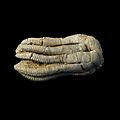 Crinoid
 -
 Some extinct crinoids, like Monstrocrinus from the Early to Middle Devonian, could bear arrangements of complex spines attached to calyx plates


.jpg)


See also
[edit]- Echinobase, a database that contains information about various echinoderms, including a crinoid species.
References
[edit]- ^ "Crinoidea – Digital atlas of Ancient life".
- ^ Hansson, Hans (2012). "Crinoidea". WoRMS. World Register of Marine Species. Retrieved 2013-01-30.
- ^ Gordon, D.P. (2009). New Zealand inventory of biodiversity: 1. Kingdom Animalia: Radiata, Lophotrochozoa, Deuterostomia. Christchurch: Canterbury University Press. p. 373. ISBN 978-1-877257-72-8.
- ^ McFall-Johnsen, Morgan; Lee, Lloyd (12 August 2023). "Scientists found a new sea creature with 20 'arms' and named it after a strawberry". Insider. Archived from the original on 12 August 2023. Retrieved 13 August 2023.
- ^ a b c d e f g h i j k l m n o Ruppert, Edward E.; Fox, Richard S.; Barnes, Robert D. (2004). Invertebrate Zoology: A Functional Evolutionary Approach (7th ed.). Belmont, CA: Thomson-Brooks/Cole. pp. 917–918. ISBN 9780030259821. OCLC 53021401.
- ^ Zmarzly, D.L. (1985). "The Shallow-Water Crinoid Fauna of Kwajalein Atoll, Marshall Islands: Ecological Observations, Interatoll Comparisons, and Zoogeographic Affinities". Pacific Science. 39: 340–358. hdl:10125/941.
- ^ Oji, T.; Ogawa, Y.; Hunter, A. W. & Kitazawa, K. (2009). "Discovery of Dense Aggregations of Stalked Crinoids in Izu-Ogasawara Trench, Japan". Zoological Science. 26 (6): 406–408. doi:10.2108/zsj.26.406. PMID 19583499. S2CID 5991969.
- ^ Reproduction and Development in Echinodermata and Prochordata
- ^ Lucia, F. Jerry (1962). "Diagenesis of a Crinoidal Sediment". SEPM Journal of Sedimentary Research. 32: 848–865. doi:10.1306/74D70D8F-2B21-11D7-8648000102C1865D.
- ^ Blyth Cain, J. D. (September 1968). "Aspects of the depositional environment and palaeoecology of crinoidal limestones". Scottish Journal of Geology. 4 (3): 191–208. Bibcode:1968ScJG....4..191B. doi:10.1144/sjg04030191. S2CID 219538295.
- ^ Jach, Renata (April 2005). "Storm-dominated deposition of the Lower Jurassic crinoidal limestones in the Krížna unit, Western Tatra Mountains, Poland". Facies. 50 (3–4): 561–572. Bibcode:2005Faci...50..561J. doi:10.1007/s10347-004-0028-3. S2CID 128947091.
- ^ Webster's New Universal Unabridged Dictionary. 2nd ed. 1979.
- ^ "crinoid". Online Etymology Dictionary.
- ^ O'Hara, Timothy; Byrne, Maria (2017). Australian Echinoderms: Biology, Ecology and Evolution. Csiro Publishing. pp. 171–180. ISBN 978-1-4863-0763-0.
- ^ Hess, Hans; Brett, Carlton E.; Ausich, William I.; Simms, Michael J. (2002). Fossil Crinoids. Cambridge University Press. pp. 3–5, 45–46. ISBN 978-0-521-52440-7.
- ^ Baumiller, Tomasz K.; Mooi, Rich; Messing, Charles G. (2008). "Urchins in the meadow: Paleobiological and evolutionary implications of cidaroid predation on crinoids". Paleobiology. 34 (1): 22–34. Bibcode:2008Pbio...34...22B. doi:10.1666/07031.1. JSTOR 20445573. S2CID 85647638.
- ^ Hess, Hans (2003). "Upper Jurassic Solnhofen Plattenkalk of Bavaria, German". In Brett, Carlton E.; Ausich, William I.; Simms, Michael J. (eds.). Fossil Crinoids. Cambridge University Press. pp. 216–24. ISBN 978-0-521-52440-7.
- ^ Gorzelak, Przemys Law; Rakowicz, Lukasz; Salamon, Mariusz A.; Szrek, Piotr (2011). "Inferred placoderm bite marks on Devonian crinoids from Poland". Neues Jahrbuch für Geologie und Paläontologie - Abhandlungen. 259: 105–12. doi:10.1127/0077-7749/2010/0111.
- ^ Brett, Carlton E.; Walker, Sally E. (2002). "Predators and predation in Paleozoic marine environments" (PDF). Paleontological Society Papers. 8: 93–118. doi:10.1017/S1089332600001078. Archived from the original (PDF) on 2012-08-13. Retrieved 2014-04-06.
- ^ Gahn, Forest J.; Baumiller, Tomasz K. (2003). "Infestation of Middle Devonian (Givetian) camerate crinoids by platyceratid gastropods and its implications for the nature of their biotic interaction" (PDF). Lethaia. 36 (2): 71–82. Bibcode:2003Letha..36...71G. doi:10.1080/00241160310003072. hdl:2027.42/75509.
- ^ Raff, R A; Byrne, M (2006). "The active evolutionary lives of echinoderm larvae". Heredity. 97 (3): 244–52. doi:10.1038/sj.hdy.6800866. PMID 16850040.
- ^ a b Amemiya, Shonan; Oji, Tatsuo (June 1992). "Regeneration in sea lilies". Nature. 357 (6379): 546–547. Bibcode:1992Natur.357..546A. doi:10.1038/357546a0. ISSN 1476-4687.
- ^ "About Crinoids". FossilEra. Retrieved 15 March 2019.
- ^ a b Shaw, G.D.; Fontaine, A.R. (2011). "The locomotion of the comatulid Florometra serratissima (Echinodermata: Crinoidea) and its adaptive significance". Canadian Journal of Zoology. 68 (5): 942–950. doi:10.1139/z90-135.
- ^ Baumiller, Tomasz K.; Messing, Charles G. (6 October 2005). "Crawling In Stalked Crinoids: In Situ Observations, Functional Morphology, and Implications for Paleozoic Taxa". Geological Society of America Abstracts with Programs. Vol. 37. p. 62. Archived from the original on 12 May 2006. Retrieved 6 April 2014.
- ^ a b Guensburg, Thomas E.; Mooi, Rich; Sprinkle, James; David, Bruno; Lefebvre, Bertrand (2010). "Pelmatozoan arms from the mid-Cambrian of Australia: Bridging the gap between brachioles and brachials? Comment: There is no bridge". Lethaia. 43 (3): 432–440. Bibcode:2010Letha..43..432G. doi:10.1111/j.1502-3931.2010.00220.x.
- ^ Waggoner, Ben (16 January 1995). "Echinodermata: Fossil Record". Introduction to the Echinodermata. Museum of Paleontology: University of California at Berkeley. Retrieved 30 March 2019.
- ^ a b c Foote, Mike (1999). "Morphological diversity in the evolutionary radiation of Paleozoic and post-Paleozoic crinoids". Paleobiology. 25 (sp1): 1–116. doi:10.1666/0094-8373(1999)25[1:MDITER]2.0.CO;2. ISSN 0094-8373. JSTOR 2666042. S2CID 85586709.
- ^ Baumiller, Tomasz K. (2008). "Crinoid Ecological Morphology". Annual Review of Earth and Planetary Sciences. 36: 221–249. Bibcode:2008AREPS..36..221B. doi:10.1146/annurev.earth.36.031207.124116.
- ^ Baumiller, T. K.; Salamon, M. A.; Gorzelak, P.; Mooi, R.; Messing, C. G.; Gahn, F. J. (2010). "Post-Paleozoic crinoid radiation in response to benthic predation preceded the Mesozoic marine revolution". Proceedings of the National Academy of Sciences. 107 (13): 5893–5896. Bibcode:2010PNAS..107.5893B. doi:10.1073/pnas.0914199107. JSTOR 25665085. PMC 2851891. PMID 20231453. INIST 22572914.
- ^ Predator-induced macroevolutionary trends in Mesozoic crinoids
- ^ Escalating arms race: Predatory sea urchins drive evolution
- ^ O'Malley, C. E.; Ausich, W. I.; Chin, Y.-P. (2013). "Isolation and characterization of the earliest taxon-specific organic molecules (Mississippian, Crinoidea)". Geology. 41 (3): 347. Bibcode:2013Geo....41..347O. doi:10.1130/G33792.1. Note that the first sentence of the phys.org article contradicts the paper itself, which reviews several isolations of molecules from particular fossils over the past decade.
- Pam Frost Gorder (Feb 19, 2013). "Ancient fossilized sea creatures yield oldest biomolecules isolated directly from a fossil". Phys.org.
- ^ a b Ausich, William I.; Kammer, Thomas W.; Rhenberg, Elizabeth C.; Wright, David F. (2015). "Early phylogeny of crinoids within the pelmatozoan clade". Palaeontology. 58 (6): 937–952. Bibcode:2015Palgy..58..937A. doi:10.1111/pala.12204.
- ^ Wright, David F.; Ausich, William I.; Cole, Selina R.; Peter, Mark E.; Rhenberg, Elizabeth C. (2017). "Phylogenetic taxonomy and classification of the Crinoidea (Echinodermata)". Journal of Paleontology. 91 (4): 829–846. Bibcode:2017JPal...91..829W. doi:10.1017/jpa.2016.142.
- ^ Wright, David F. (2017). "Bayesian estimation of fossil phylogenies and the evolution of early to middle Paleozoic crinoids (Echinodermata)". Journal of Paleontology. 91 (4): 799–814. Bibcode:2017JPal...91..799W. doi:10.1017/jpa.2016.141.
- ^ Cole, Selina R. (2017). "Phylogeny and morphologic evolution of the Ordovician Camerata (Class Crinoidea, Phylum Echinodermata)". Journal of Paleontology. 91 (4): 815–828. Bibcode:2017JPal...91..815C. doi:10.1017/jpa.2016.137.
- ^ Rouse, Greg W.; Jermiin, Lars S.; Wilson, Nerida G.; Eeckhaut, Igor; Lanterbecq, Deborah; Oji, Tatsuo; Young, Craig M.; Browning, Teena; Cisternas, Paula; Helgen, Lauren E.; Stuckey, Michelle; Messing, Charles G. (2013). "Fixed, free, and fixed: the fickle phylogeny of extant Crinoidea (Echinodermata) and their Permian-Triassic origin". Molecular Phylogenetics and Evolution. 66 (6): 161–181. Bibcode:2013MolPE..66..161R. doi:10.1016/j.ympev.2012.09.018. PMID 23063883.
- ^ Lane, N. Gary; Ausich, William I. (2001). "The Legend of St Cuthbert's Beads: A Palaeontological and Geological Perspective". Folklore. 112 (1): 65–73. JSTOR 1260865.
- ^ "Identifying Unknown Fossils (by their shape)". Kentucky Geological Survey / University of Kentucky. Retrieved 21 June 2009.
- ^ "Missouri's State Fossil". Office of the Secretary of State, Missouri. Retrieved 31 March 2019.
- ^ Bressan, David (26 April 2019). "The Fossils That Inspired 'Alien'". Forbes. Retrieved 1 February 2024.
External links
[edit]

- Messing, Charles. "Sea Star on a Stick: Introducing Crinoids". Vimeo.
- Charles Messing's Crinoid Pages
| National | |
|---|---|
| Other | |

Crinoid
View on GrokipediaOverview and Etymology
Definition and General Characteristics
Crinoids are sessile or stalked marine invertebrates belonging to the phylum Echinodermata and class Crinoidea.[6] Over 6,000 fossil species have been described, with approximately 660 species extant today.[7] These organisms exhibit pentaradial symmetry, a hallmark of echinoderms, and possess a calcified endoskeleton composed of individual ossicles that form a flexible, articulated structure.[6] Key defining traits include a cup-like theca, or calyx, that encloses the vital organs, and multiple arms, known as brachia, which branch out from the calyx and are equipped with fine, feather-like structures for filter-feeding on planktonic particles suspended in the water column.[7] The arms create a fan-like array that traps food via mucus and ciliary action, directing it toward the mouth located on the upper surface of the calyx.[6] Many species also feature a slender stalk composed of stacked ossicles, anchoring them to the seafloor, though this is absent in mobile forms.[8] Among living crinoids, the subclass Articulata predominates, encompassing both stalked forms called sea lilies, which remain attached to substrates, and unstalked feather stars (comatulids), which can actively swim or crawl using their arms.[8] In contrast, extinct crinoid lineages from Paleozoic and Mesozoic eras displayed greater morphological diversity, including more rigid-stalked and plated forms that dominated ancient marine ecosystems.[7] Crinoids exhibit a biphasic life history, with planktonic, ciliated lecithotrophic larvae that disperse before metamorphosing into benthic adults; their delicate, flower-like appearance in the water, with arms swaying gently, contributes to their evocative common names.[9] This lineage has persisted from the Cambrian period to the present, underscoring their evolutionary resilience.[8]Etymological Origins
The term "crinoid" derives from the class name Crinoidea, coined by English naturalist John Samuel Miller in 1821 in his seminal work A Natural History of the Crinoidea, or Lily-Shaped Animals. This nomenclature reflects the organisms' resemblance to lilies, stemming from the Ancient Greek words krinon (κρίνον, meaning "lily" or "flower") and -oeidēs (-ειδής, meaning "like" or "resembling"). Miller's publication marked a pivotal moment in classifying these echinoderms as a distinct group, emphasizing their fossilized, flower-like forms preserved in Paleozoic rocks.[10][11] Prior to Miller's formalization, earlier naturalists employed related terms such as "encrinites," a blend of Latin en- ("in") and Greek krinon ("lily"), evoking the idea of lilies embedded in stone. This designation appeared in the late 17th century, notably in the writings of English polymath John Ray, who discussed fossil encrinites in his Miscellaneous Discourses Touching Several Circumstances Relating to the Use of Plants (1692), interpreting them as petrified marine organisms rather than mere curiosities. French biologist Jean-Baptiste Lamarck further advanced this recognition in 1816, describing numerous encrinite species in his Histoire naturelle des animaux sans vertèbres and grouping them under the order Encrines, highlighting their stalked, lily-like morphology in both living and fossil contexts.[12][13] The nomenclature evolved from pre-scientific folklore, where crinoid fossils—particularly the disc-shaped columnals—were known as "star-stones" in medieval Europe, believed to be stars fallen from the sky or remnants of divine creation. Swedish taxonomist Carl Linnaeus contributed to this progression in his Systema Naturae (10th edition, 1758), classifying certain crinoid-like forms under the genus Asterias within the class Zoophyta, though without distinguishing them as a separate class; this Linnaean framework laid groundwork for later elevations of Crinoidea to class status by the early 19th century. Such early associations often stemmed from cultural misconceptions, including the notion in medieval lore that these fossils represented petrified lilies planted by saints or transformed by biblical floods, influencing their naming until scientific observation clarified their zoological nature.[14][15][16]Anatomy
External Morphology
Crinoids exhibit a distinctive external morphology characterized by a central body, radiating arms, and, in many species, a supportive stalk, all constructed from a mesodermal endoskeleton of calcareous ossicles. The body plan is pentaradial, with fivefold symmetry evident in the arrangement of skeletal elements and soft tissues. This structure allows for efficient suspension feeding in marine environments, with the external features primarily serving protective and anchorage roles.[17] The theca, or calyx, forms the central, cup-shaped body that encloses and protects the visceral mass. It consists of one to three circlets of ossicles, typically including five basal plates in an interradial orientation forming the aboral portion, five radial plates above them aligned with the arms, and occasionally reduced infrabasal plates at the base where the stalk attaches. These ossicles interlock via synovial articulations and ligaments, creating a rigid yet flexible structure that varies from a hollow cup in families like Hyocrinidae to a more wedge-shaped form in Isselicrinidae. The oral surface of the theca is covered by the tegmen, a flexible membrane or plated structure perforated by hydropores and bearing the mouth and anus.[18][19] The arms, or brachia, radiate from the radial plates of the theca, numbering from five to over 200 in branched forms, and serve to increase surface area for feeding. Each arm is composed of a series of cylindrical ossicles articulated by muscles and ligaments, with ambulacral grooves running along the oral side lined by tube feet, or podia, that project from the stereom meshwork. Pinnules, short side branches on the arms, further expand this surface; they are of three types—oral pinnules without podia for sensory functions, genital pinnules housing gonads, and distal feeding pinnules with podia and grooves. The grooves converge toward the mouth without crossing the tegmen in many species.[18][20] In stalked crinoids, the aboral pole of the theca connects to a stalk, or column, composed of stacked columnals—disc-shaped ossicles up to 1 meter in total length—that anchor the organism to the substrate via a holdfast. These columnals articulate via ligaments and may bear cirri, jointed appendages for enhanced grip or locomotion. Unstalked forms, known as comatulids or feather stars, lack a persistent stalk; instead, the aboral pole features a centrodorsal ossicle from which cirri radiate for temporary attachment, as seen in species like Comactinia. The oral surface in both forms positions the mouth centrally or marginally on the tegmen, surrounded by podia, with the anus typically on a raised papilla.[19][20] Morphological variations distinguish stalked sea lilies, which inhabit deeper waters and retain a long column for permanent attachment, from mobile comatulids like Antedon, which have reduced or absent stalks, 10 or more branched arms, and cirri enabling crawling or swimming. These differences reflect adaptations to substrate stability and mobility, with stalked forms showing more rigid thecae and fewer arms compared to the flexible, pinnulate crowns of feather stars.[17][20]Internal Systems
The digestive system of crinoids is characterized by a U-shaped gut housed primarily within the theca or calyx. Food particles captured by the arms enter through the mouth located on the upper surface of the tegmen, passing via a short esophagus into the stomach, which is divided into a cardiac region for initial digestion and a pyloric region for further processing. The intestine then curves through the body before terminating at the anus, which is positioned on the oral surface of the tegmen, often on a raised papilla near the mouth.[6] Crinoids lack a true heart or closed circulatory system, relying instead on an open system for nutrient distribution. The hemal system, comprising a network of interconnected sinuses including the axial organ at the base of the theca, facilitates the transport of nutrients and other substances from the digestive tract to surrounding tissues. Circulation is augmented by the movement of coelomic fluid through body cavities, driven by ciliary action and muscular contractions, which also supports waste removal.[21] Respiration in crinoids occurs primarily through diffusion across thin-walled surfaces, without specialized respiratory organs. In stalked forms, gas exchange takes place via the body wall and podia along the arms, while in mobile feather stars (comatulids), the eversible bursae—sac-like extensions of the coelom—enhance oxygen uptake by increasing surface area when the animal is perched. This process integrates with the water vascular system for fluid circulation, as detailed in physiological studies.[22] The coelom of crinoids is a spacious, fluid-filled body cavity divided into multiple chambers that envelop the internal organs, providing hydrostatic support for structural integrity and movement. This perivisceral coelom, along with extensions into the arms (such as the axial coelom and genital coelom), contains coelomic fluid rich in amoebocytes that aid in nutrient transport, immune response, and maintaining internal pressure. The compartmentalization allows for efficient organ isolation while permitting fluid flow essential to overall homeostasis.[6] Sensory structures in crinoids are decentralized, reflecting the absence of a centralized brain. Statocysts, small sac-like organs containing otoliths for gravity detection, are located in the theca and arms to sense orientation and equilibrium. Photoreceptors, consisting of light-sensitive cells embedded in the arm epidermis and pinnules, enable responses to light gradients, aiding in habitat selection and predator avoidance without forming complex eyes.Physiology and Reproduction
Water Vascular and Nervous Systems
The water vascular system of crinoids, a defining feature of echinoderms, consists of an interconnected network of fluid-filled canals that facilitate hydraulic functions such as arm movement and particle capture.[23] This system includes a ring canal encircling the mouth on the oral surface, from which five radial canals extend into the arms (brachioles), branching further to supply tube feet (podia) arranged in double rows along ambulacral grooves.[19] Water enters the system through numerous small hydropores on the oral tegmen surface, connecting internally via the stone canal to the ring canal and distributing through the canals under muscular control. In crinoids, this system exhibits adaptations for a largely sessile lifestyle, with reduced emphasis on locomotion compared to mobile echinoderms; the tube feet primarily extend and contract to fan arms for suspension feeding and retract into protective grooves when disturbed, enhancing efficiency in current-dependent particle collection rather than active crawling.[19][24] The nervous system in crinoids is decentralized and lacks a centralized brain, reflecting their radial symmetry and sedentary habits, with coordination achieved through a tripartite arrangement of ectoneural (oral), hyponeural (ambulacral), and entoneural (aboral) components.[9] A circumoral nerve ring surrounds the mouth, giving rise to radial nerves that extend along the arms, innervating muscles and sensory structures, while an aboral nerve center acts as a ganglion for overall body coordination.[25] These radial nerves, typically 0.35–0.4 mm in diameter in fossil examples, branch into peripheral nerves (0.05–0.15 mm) that connect to coelomic tissues and arm surfaces, supporting subtle movements and environmental monitoring.[25] Sensory integration in crinoids relies on the nervous system's linkage to the water vascular system, with chemoreceptors and touch-sensitive cells embedded in the tube feet (podia) detecting food particles and water currents for targeted arm positioning.[24] Balance is maintained via statoliths in sensory cells associated with the radial nerves, providing gravitational orientation essential for upright posture in stalked forms.[9] Compared to more mobile echinoderms like asteroids, the crinoid nervous system is less elaborate, prioritizing passive sensory cues over complex motor control to suit their filter-feeding, sessile existence.[24][26]Feeding and Locomotion
Crinoids are passive suspension feeders that rely on ambient water currents to deliver food particles to their elevated crowns, where arms and pinnules form a filtration fan to intercept plankton and organic detritus.[27] The arms, lined with tube feet (podia), extend perpendicular to the current, creating a large surface area for capture; primary and secondary podia adhere to particles using mucus secretions, while tertiary podia in some species assist in transfer. Particles are then flicked into the ambulacral grooves along the arm's oral surface, where ciliary action propels them toward the mouth in mucous boluses.[27] The mucus-ciliary-mucus (MCM) mechanism underpins this process, involving sequential mucus entrapment, ciliary transport, and re-entrapment for efficient ingestion. Initially, particles contact adhesive mucus on extended podia tips or threads, adhering via surface tension or electrostatic forces; the podia then retract and wipe against the groove's ciliary tracts, depositing the mucus-enveloped particles.[28] Cilia on the groove floor generate a directed current, moving the bolus proximally at speeds up to 1-2 mm/s, where it encounters fresh mucus from glandular cells to prevent loss and facilitate swallowing.[27] This system excels in low-flow environments, as seen in deep-water species with elongated podia and spaced arms that maximize interception without self-generated flow, achieving capture efficiencies of 20-50% for particles 10-100 μm in size.[29] Locomotion in crinoids varies markedly between stalked (sea lilies) and unstalked (feather stars) forms, reflecting adaptations to sessile versus mobile lifestyles. Stalked crinoids exhibit minimal movement, primarily rooting or slight repositioning via cirri—hooked appendages on the stalk's holdfast—that grip and release the substrate to adjust orientation against currents.[30] In contrast, feather stars actively crawl across surfaces using arm undulations or cirral propulsion, with cirri anchoring and pulling the body forward at rates of 1-10 cm/min; some species swim short distances (up to 1 m) by rhythmic, overlapping waves of arm flexion, propelling via drag-based thrust. These behaviors align with crinoids' low metabolic rates, typically 0.2-0.5 μL O₂/g/min at 20°C, which support energy-efficient sessile existence while allowing occasional relocation without high costs.[31] Arm flexibility, enabled by mutable collagenous tissues, facilitates both feeding posture adjustments and escape maneuvers, minimizing energetic demands.[27] As an adaptation, crinoids employ arm autotomy—rapid detachment at syzygies (joints)—to evade threats, followed by regeneration of lost structures within weeks to months, restoring feeding capability with minimal metabolic investment.[30] The water vascular system briefly aids this through podia extension for traction during crawling.[32]Reproduction and Development
Crinoids primarily reproduce sexually and are gonochoristic, with separate male and female individuals, although synchronous hermaphroditism occurs in some species such as Himerometra bartschi, Cenometra perspinosa, and Oxycomanthus benhami.[33][34] Gametes are produced in genital canals within the pinnules and released into the surrounding seawater, where external fertilization takes place.[33] Fertilized eggs typically develop into free-swimming vitellaria larvae, which are lecithotrophic and rely on yolk reserves for nutrition, though planktotrophic larvae that feed on plankton occur in some species.[33] The larval phase begins with the vitellaria stage, transitioning to the barrel-shaped, ciliated doliolaria larva, which swims using five circumferential ciliary bands and an apical tuft for navigation.[9] After a brief free-swimming period of 1–2 weeks, the doliolaria settles onto a substrate using an adhesive pit and metamorphoses into the pentacrinoid stage, a stalked, sessile juvenile that attaches via a holdfast and develops feeding structures.[9] During this pentacrinoid phase, the larva grows and differentiates, eventually undergoing further metamorphosis: stalked species retain the stalk as adults, while comatulid feather stars resorb it and become free-living.[9] The overall embryonic development to hatching occurs in about 4–5 days at 17°C in species like Antedon mediterranea, with molecular regulation involving conserved pathways such as Wnt and Nodal signaling for neuroectoderm patterning.[9] Asexual reproduction is rare in crinoids but documented in some comatulids, where arm autotomy can lead to the detached arm regenerating a complete disc and additional arms, forming clonal individuals.[35] This process serves as a stress response or anti-predator adaptation, though it is less common than in other echinoderms like asteroids.[36] Crinoids exhibit remarkable regenerative abilities, capable of regrowing entire arms from the brachial stump within a few weeks to several months, depending on the extent of injury and environmental conditions.[36] In extreme cases, fragments containing portions of the crown can regenerate a full body, including viscera, through an epimorphic process involving cellular dedifferentiation and proliferation without a distinct blastema, though blastema-like structures form in some regenerates.[37] Molecular mechanisms include upregulation of TGF-β and BMP signaling pathways, which coordinate tissue remodeling and skeletal formation.[37] Adult crinoids are long-lived, with lifespans typically reaching 10–20 years in species such as Cenocrinus asterius, contrasting the short larval duration.[38]Ecology
Habitats and Distribution
Crinoids are exclusively marine organisms, occupying a broad spectrum of habitats from intertidal zones to abyssal depths exceeding 9,000 meters. They predominantly attach to hard substrates, including rocks, coral reefs, and biogenic structures like black corals (antipatharians), which provide stable anchoring points for their stalks or cirri.[6][39][40] Their global distribution is cosmopolitan across all major ocean basins, with the highest species diversity concentrated in the Indo-West Pacific region, particularly among comatulid feather stars that thrive in tropical and subtropical waters. Stalked crinoids, such as those in the order Isocrinida, are largely confined to deep-water environments below 150 meters, often on continental slopes and seamounts, while unstalked feather stars (Comatulida) dominate shallower coastal and reef habitats, extending from intertidal pools to bathyal depths. Depth zonation reflects adaptations to varying hydrodynamic conditions, with shallow-water forms exhibiting greater mobility to cope with wave action and currents, and deep-sea species showing elongated stalks suited to low-energy settings.[41][7][4] Many crinoid species exhibit a preference for cold-water environments in deeper zones, though tropical taxa are prominent in Indo-Pacific shallows; overall, they demonstrate sensitivity to elevated sedimentation, which can clog feeding structures, and pollution from contaminants like endocrine disruptors. Biogeographically, modern crinoid populations represent relictual assemblages from post-Mesozoic diversification, with notable hotspots on Antarctic shelves and isolated seamounts where dense aggregations persist due to favorable hard substrates and reduced disturbance.[42][43][44][45]Predation and Interactions
Crinoids face predation from a variety of marine predators, primarily targeting their arms, which serve as the main feeding structures. Fish, including triggerfish such as Balistapus undulatus and Balistoides conspicillum, are prominent predators, often engaging in sublethal grazing that removes portions of the arms without killing the crinoid. Crustaceans, exemplified by the crab Oregonia gracilis, and asteroids like Pycnopodia helianthioides and Porania antarctica, also prey on crinoids, with sea stars using their tube feet to pry at arms or thecal regions. These attacks frequently induce autotomy, a defensive response where crinoids detach arms at specialized syzygy joints to escape, allowing subsequent regeneration; for instance, up to 80% of individuals in some deep-sea populations exhibit regenerating arms.[46][47] To counter predation, crinoids have evolved multiple defense strategies. Cryptic coloration enables many species to blend into benthic substrates or coral environments, reducing visibility to visual hunters like fish. Behavioral defenses include arm waving, which may startle or deter approaching predators by creating erratic movements, and nocturnal activity patterns where feather stars hide during daylight to avoid diurnal hunters. Certain comatulid species produce chemical repellents, such as polyketide sulphates, rendering their tissues unpalatable to fish and other predators; laboratory assays confirm that nearly all tested comatulids are distasteful to coral reef fish. In addition, crinoids can briefly employ locomotion for escape, crawling or swimming short distances using their arms or cirri.[46][48] Symbiotic interactions further shape crinoid ecology. Epibiosis is common on stalked species, with algae and sponges colonizing the stalks to form associations that may provide mutual benefits, such as enhanced camouflage for the crinoid or structural attachment sites for the epibionts; fossil and modern records show crinoids frequently hosting sponge epizoans without apparent harm. Mutualistic relationships occur with certain fish, where juveniles of species like Bodianus anthioides incidentally clean crinoids by removing parasites and debris from arms and theca, benefiting both parties through parasite control and a food source for the fish.[49][50] In benthic communities, crinoids occupy a vital trophic niche as passive filter-feeders, capturing plankton and organic particles with their arms to influence water clarity by reducing suspended matter and promoting clearer conditions for photosynthesis in associated algae. This role positions them as foundational species in reef and seamount ecosystems, enhancing habitat complexity; however, they also serve as prey, channeling energy to higher trophic levels like predatory fish and echinoids, thereby supporting food web dynamics.[51][52] Human activities exacerbate vulnerabilities in crinoid populations through overfishing bycatch, where trawling and trap fishing in crinoid-rich grounds incidentally capture or damage individuals, disrupting beds and reducing densities in affected areas. Ocean acidification further threatens calcification, as decreased seawater pH lowers carbonate ion availability, impairing skeletal growth; post-2020 laboratory and field studies on echinoderm calcifiers, including crinoids, report reduced calcification rates under projected conditions, contributing to population declines in vulnerable habitats.[53][54]Evolutionary History
Origins and Phylogeny
Crinoids originated during the Early Ordovician period, approximately 485 million years ago, marking the appearance of the earliest definitive fossils from the Fillmore Formation in shallow marine deposits of what is now Utah.[19] Their stem-group forms, however, trace back to the Cambrian period, with echinoderm ancestors resembling early crinoids emerging several million years earlier, around 505–570 million years ago, though no true crinoid fossils are known from Cambrian rocks.[19] Possible Ediacaran precursors remain debated, with some hypotheses suggesting soft-bodied antecedents, but definitive evidence is lacking and largely unsupported by the fossil record.[55] Phylogenetically, crinoids occupy a basal position among echinoderms, serving as the sister group to the Eleutherozoa clade, which includes all other extant echinoderm classes such as asteroids, ophiuroids, echinoids, and holothuroids.[56] Cladistic analyses of both fossil and morphological data consistently support crinoids as a monophyletic group, originating independently from early pentaradial echinoderms rather than deriving from blastozoans, with unique ambulacral traits like slat-like floor plates distinguishing them from blastozoan-grade forms.[57] This separation highlights a distinct evolutionary lineage, potentially linked to mobile edrioasteroid-like ancestors, emphasizing crinoids' role in reconstructing the early diversification of the phylum Echinodermata.[56] Key evolutionary transitions in crinoids occurred during the Paleozoic era, shifting from mobile, unattached ancestral forms to predominantly stalked, sessile lifestyles that anchored them to the seafloor via holdfasts, enhancing stability for filter-feeding in marine environments.[7] This adaptation dominated Paleozoic crinoid diversity, with muscular arm articulations evolving by the Devonian to allow limited locomotion while retaining the stalk.[7] In the post-Paleozoic, particularly after the Permian-Triassic extinction, many lineages underwent a reversal, with the loss of the stalk in adult stages leading to the rise of free-living feather stars (comatulids), which detach early in ontogeny to become highly mobile swimmers or crawlers.[7] Molecular phylogenetic studies, incorporating 18S rRNA and mitochondrial DNA sequences such as COI, Cytb, and 16S from diverse extant taxa, robustly support the monophyly of the Articulata clade, encompassing all living crinoids and originating from a common ancestor dated to 231–252 million years ago in the Middle to Upper Triassic.[58] Crinoid diversification accelerated during the Ordovician radiation, with rapid increases in genus and species richness driven by ecological specialization in planktonic feeding and habitat expansion in shallow seas.[55] Their survival through major mass extinctions, including the Late Ordovician and Late Devonian events, is attributed to refugia in deeper waters, where environmental stability allowed low-diversity holdouts to persist and repopulate post-extinction ecosystems.[59]Diversity and Extinctions
Crinoids reached their zenith of diversity during the Paleozoic era, particularly in the Carboniferous period, often referred to as the "Age of Crinoids," with over 5,000 fossil species described, predominantly stalked forms that dominated marine reefs and benthic communities.[60][61] This peak reflects their role as key ecosystem engineers, forming dense assemblages on stable substrates like carbonate platforms, where origination rates outpaced extinctions following earlier perturbations. However, diversity began to decline after the Late Devonian mass extinction events, including the Kellwasser and Hangenberg anoxic episodes, which disrupted shallow-water habitats and reduced reef-building capacity, leading to selective pressures that favored more resilient morphologies.[61][62] The end-Permian mass extinction, the most severe biotic crisis in Earth's history, nearly eradicated crinoids, with approximately 96% of marine species lost overall due to massive volcanism, ocean anoxia, and acidification from the Siberian Traps eruptions.[63][64] Stalked forms persisted as survivors in deeper, less affected waters, enabling a Mesozoic recovery characterized by rapid radiation in the Middle to Late Triassic, where motile adaptations emerged in response to escalating predation.[65] This rebound saw stalked crinoids like isocrinids diversify alongside the rise of unstalked comatulids, though overall species richness remained below Paleozoic levels until a Cenozoic shift, where unstalked forms became dominant in shallow, high-energy environments, comprising over 80% of modern taxa.[65] The end-Cretaceous extinction, triggered by the Chicxulub asteroid impact and Deccan volcanism, resulted in about 90% loss of marine species, but crinoids fared relatively better, with stalked lineages retreating to deeper habitats while unstalked ones expanded post-event.[66] Key drivers of crinoid diversity fluctuations include substrate availability, which supported high Paleozoic abundances on stable, hardgrounds, and predation pressure, particularly from durophagous echinoids and fish in the Mesozoic, prompting evolutionary shifts toward motility and anti-predatory traits like increased plate thickness.[67][68] Today, approximately 650 extant species represent less than 10% of historical peaks, underscoring a long-term decline linked to these biotic interactions and habitat fragmentation.[69] The fossil record, however, likely underestimates true diversity due to poor preservation of soft tissues, such as mutable collagenous ligaments critical for locomotion and posture; exceptional lagerstätten reveal regenerative capabilities and morphological variations that suggest higher paleo-diversity than skeletal remains alone indicate.[70]Fossil Record
Crinoid fossils are most commonly preserved as disarticulated ossicles embedded in limestones, where post-mortem decay in oxygenated bottom waters causes the connective tissues to break down rapidly, resulting in dense concentrations known as "hash plates."[19][71] For complete preservation, crinoids require burial in quiet, oxygen-poor environments that inhibit bacterial decomposition of the skeleton; such conditions are rare but occur in exceptional lagerstätten, including the Late Jurassic Solnhofen Limestone of Germany, where articulated specimens, including soft-tissue impressions, are found.[19][72] Key fossil localities highlight the temporal and ecological range of crinoids. The Silurian Wenlock Limestone Formation in the United Kingdom preserves a diverse array of stalked crinoids within reefal carbonates, offering insights into early Paleozoic communities.[73] In the United States, Mississippian crinoid reefs, particularly in the Midwest, document the group's peak abundance during the Carboniferous, with vast assemblages of articulated and fragmented remains in shallow marine carbonates.[59] The Early Jurassic Posidonia Shale at Holzmaden, Germany, another lagerstätte, yields exceptionally preserved feather stars and stalked forms, often in mass-death assemblages reflecting pseudoplanktonic rafting.[74] Fossils provide valuable paleobiological data beyond mere morphology. Growth rings observable in crinoid stem ossicles indicate periodic, seasonal accretion of skeletal material, suggesting environmental cyclicity in ancient habitats.[75] Bioerosion traces, such as boreholes and bite marks on ossicles and arms, reveal evidence of predation by fish and echinoids, documenting biotic interactions across geologic time.[76] Recent discoveries continue to refine our understanding of crinoid evolution. Recent analyses, including a 2015 study of a columnal-bearing eocrinoid from the Cambrian Burgess Shale, have clarified stem echinoderm relationships relevant to crinoid origins.[77] Non-destructive techniques like X-ray micro-computed tomography (μCT) scanning have enabled three-dimensional visualization of internal anatomy, such as nervous and circulatory systems, in Cretaceous feather stars, revealing soft-tissue details previously inaccessible.[21] Despite these advances, gaps persist in the crinoid fossil record. Soft parts, including arms and holdfasts with organic components, are rarely preserved due to their rapid decay, limiting insights into full functional morphology.[7] The record also exhibits a strong bias toward shallow-water, carbonate-dominated environments, as deeper-water siliceous or muddy deposits are less conducive to fossilization and collection, underrepresenting bathyal and abyssal forms.[59][70]Taxonomy
Classification
Crinoids belong to the class Crinoidea within the phylum Echinodermata, characterized by their stalked or free-living forms with feather-like arms used for filter feeding.[7] The class Crinoidea encompasses both extinct and extant groups, traditionally divided into several subclasses based on the morphology of the theca (calyx), arms, and stalk. Early classifications recognized five main subclasses: the extinct Camerata, Inadunata, Flexibilia, and Disparida from the Paleozoic, and the Articulata, which includes all post-Paleozoic and modern forms.[78] More recent phylogenetic analyses have proposed six subclasses, incorporating Aethocrinea as an early Ordovician group, with Cladida emerging from within Inadunata.[79] The subclass Camerata, dominant in the Ordovician to Devonian, features a rigid theca with fused interradial plates and biserial arms, exemplified by orders like Dendrocrinida.[78] Inadunata, another major Paleozoic subclass, is characterized by an open theca with separate radial and interradial plates, encompassing diverse orders such as Monobathrida and Diplobathrida, and was particularly abundant during the Ordovician and Silurian.[79] Flexibilia and Disparida represent additional extinct Paleozoic lineages, with Flexibilia noted for flexible arm articulations and Disparida for unique stem structures and early appearances in the Ordovician.[78] The subclass Articulata, originating in the Triassic after the Permian-Triassic extinction, includes all living crinoids and is defined by uniserial arms with elaborate muscular articulations and a flexible stalk in stalked forms.[58] Extant articulates are classified into five main orders: Comatulida (feather stars, lacking a stalk in adults), Isocrinida (stalked sea lilies), Hyocrinida, Cyrtocrinida, and Bourgueticrinida, comprising approximately 25 families and 180 genera with around 700 species.[58][80] Classification criteria primarily rely on ossicle morphology, such as thecal plating patterns, arm branching (uniserial vs. biserial), and stalk articulation types, with fossil taxa governed by the International Code of Zoological Nomenclature (ICZN).[14] Recent updates in the 2020s incorporate cladistic analyses and molecular data from DNA sequencing, particularly for extant groups, to refine relationships within Articulata and resolve ambiguities in order-level boundaries.[69]Modern Diversity
As of 2025, approximately 700 species of crinoids are currently recognized as extant, representing a small fraction of the group's historical diversity but spanning a wide range of marine habitats from shallow reefs to abyssal depths.[7] Around 80% of these species belong to the unstalked feather stars (order Comatulida), which are mobile as adults and dominate modern assemblages, while the remaining 20% are stalked sea lilies (orders such as Isocrinida, Hyocrinida, Cyrtocrinida, and Bourgueticrinida) that attach to the substratum throughout life.[81][58] The deepest diversity occurs in bathyal and abyssal zones exceeding 1,000 meters, where stalked forms predominate and exhibit adaptations to low-light, high-pressure environments.[82] Among the most prominent families, Comatulidae includes over 150 species of colorful, tropical feather stars that thrive on shallow coral reefs, particularly in the Indo-West Pacific, where their vivid pigmentation aids in camouflage and symbiosis with other reef organisms.[83] In contrast, Antedonidae comprises about 50 species adapted to cold-water environments in temperate and polar regions, often at intermediate depths of 100–500 meters, with morphologies suited to stronger currents and lower temperatures.[84] A smaller number of stalked crinoid species, such as those in the family Hyocrinidae, are endemic or closely associated with extreme deep-sea settings like hydrothermal vents and seamounts, where they exploit chemosynthetic productivity and hard substrata for attachment.[82] Global biodiversity patterns reveal a strong concentration of crinoid species in the Pacific Ocean, accounting for roughly 90% of extant diversity, driven by the Indo-West Pacific as a major evolutionary hotspot for comatulids due to historical dispersal and habitat heterogeneity.[41] In the Atlantic, diversity is markedly lower and has declined further due to historical overexploitation through trawling and bycatch in demersal fisheries, which have disrupted shallow and shelf habitats.[85] Recent explorations using remotely operated vehicles (ROVs) have accelerated discoveries, with 10–15 new species described since 2020, including several hyocrinids and comatulids from the Clarion-Clipperton Zone in the central Pacific, highlighting untapped deep-sea reservoirs.[86][87][88] Emerging threats to crinoid diversity include ocean warming and acidification from climate change, which are projected to shift suitable habitats for vulnerable species like the feather star Leptometra phalangium toward deeper, poleward refugia, potentially reducing population viability.[85] Deep-sea mining in polymetallic nodule fields poses additional risks through sediment plumes and habitat destruction, endangering abyssal assemblages where many crinoids reside.[89] IUCN Red List assessments indicate vulnerable status for some species, such as Leptometra phalangium, underscoring the need for targeted monitoring in biodiversity hotspots.[90]Cultural and Scientific Significance
Role in Culture and Paleontology
Crinoid fossils have long featured in folklore across cultures, often interpreted as mystical objects due to their flower-like appearance and segmented stems. In British and European traditions, isolated crinoid stem segments, known as ossicles, were called "St. Cuthbert's beads" or "fairy stones," believed to possess protective qualities against evil or disease, with legends tying them to the 7th-century saint or supernatural beings.[91] Similarly, in Native American communities, particularly in the Midwest United States, these disc-shaped ossicles were valued for their natural bead-like form and incorporated into jewelry, such as necklaces and ornaments, symbolizing connection to ancestral lands and the ancient marine environments where they originated.[92] In the 19th century, crinoids became central to paleontological debates, particularly among American scientists classifying Paleozoic invertebrates. Paleontologists James Hall and Fielding Bradford Meek, key figures in early surveys, engaged in extensive discussions over crinoid taxonomy and stratigraphy, contributing to foundational works like Hall's reports on Iowa fossils, where Meek assisted in descriptions that refined species distinctions and challenged earlier European classifications.[93] These exchanges, amid broader rivalries in American paleontology, advanced understanding of crinoid diversity but highlighted tensions over priority and interpretation in a rapidly expanding field. Crinoids have appeared in scientific illustrations and museum displays, underscoring their role in evolutionary studies. Today, institutions like the Smithsonian National Museum of Natural History feature prominent crinoid exhibits, such as slabs of Carboniferous specimens in the Sant Ocean Hall and Deep Time hall, educating visitors on Paleozoic marine ecosystems through well-preserved fossils that evoke thriving ancient seabeds.[94][95] Economically, crinoid fossils support a niche lapidary trade, where polished ossicles and stems are crafted into beads and pendants for jewelry, drawing on their aesthetic appeal without significant industrial extraction.[96] Unlike commercially fished marine species, crinoids have no role in modern fisheries, as living forms are deep-sea dwellers not targeted for harvest. Symbolically, crinoids represent the vitality of ancient oceans in educational contexts, serving as icons of Paleozoic biodiversity and evolutionary continuity, often featured in literature and curricula to illustrate prehistoric marine life and ecological balance.[7][97]Contemporary Research and Conservation
Recent advances in crinoid genomics have focused on sequencing efforts to uncover molecular mechanisms underlying their biology, including regeneration. In 2025, researchers generated the first full-length transcriptome of the stalked crinoid Metacrinus rotundus using PacBio Iso-Seq, identifying 160,849 transcripts and annotating over 68% against functional databases, which provides a foundation for studying gene regulation in echinoderms.[98] Molecular studies on regeneration reveal conserved pathways, with transforming growth factor-β (TGF-β) and bone morphogenetic protein (BMP) family members, such as Anbmp2/4, showing increased expression during arm regeneration in species like Antedon mediterranea and Antedon bifida.[37] A 2021 review of echinoderm regeneration highlighted these genes' roles in cellular migration and tissue patterning, though high-throughput genomic data for crinoids remains limited compared to other echinoderms.[37] Biomechanical modeling has advanced understanding of crinoid arm flexibility and locomotion. A 2018 study used digital 3D models of arm ossicles (vertebrae) in stalked crinoids to demonstrate wide ranges of motion, enabling behaviors like rapid flexures for defense and feeding, with articulations allowing up to 180° abduction.[99] Complementing this, a 2022 analysis of arm regrowth rates across 10 comatulid species found that swimming feather stars regenerate arms 1.4 to 3.5 times faster (0.89–1.01 mm/day) than non-swimmers (0.29–0.71 mm/day), linking mobility to enhanced recovery from predation.[100] Deep-sea exploration using remotely operated vehicles (ROVs) and autonomous underwater vehicles (AUVs) since 2020 has significantly expanded knowledge of crinoid distributions and diversity. NOAA expeditions in the Pacific, such as the 2022 Papahānaumokuākea ROV dives, documented high densities of undescribed stalked crinoids dominating rocky seafloors at depths over 1,000 m, contributing to revised estimates of global deep-sea echinoderm diversity.[101] Similar surveys in the Arctic (2024) and Argentina's Mar del Plata Canyon (2025) revealed new species aggregations, underscoring crinoids' role in nutrient-poor habitats and prompting updates to biodiversity inventories.[102][103] Conservation efforts for crinoids are nascent, with no species-specific protections but incidental benefits from marine reserves targeting vulnerable marine ecosystems (VMEs). Bottom trawling poses a primary threat, destroying benthic habitats and causing community-wide declines in deep-sea assemblages, including crinoid beds, as evidenced by post-trawling surveys showing reduced faunal cover.[104] Ocean acidification further endangers calcification-dependent structures, with experimental studies on echinoderms indicating reduced skeletal growth rates under elevated CO₂ levels.[53] In 2024, species distribution models for the vulnerable Leptometra phalangium predicted habitat contractions under climate scenarios, overlapping with trawled areas in the Mediterranean.[85] Knowledge gaps persist, particularly in deep-water surveys, where over 80% of potential habitats remain unexplored, limiting accurate diversity assessments. The 2023 establishment of the IUCN Species Survival Commission Marine Star Specialist Group aims to address this by coordinating Red List assessments for crinoids, none of which are currently evaluated despite emerging threats from mining and warming.[105] Future research directions include biotechnological applications from crinoid-derived compounds, such as the anthraquinone rhodoptilometrin isolated from Himerometra magnipinna in 2019, which promotes wound healing and mitochondrial function in human gingival fibroblasts, suggesting potential for regenerative medicine.[106] Integrated genomic and ecological studies could further elucidate responses to climate stressors, informing VME protections.References
- https://en.wiktionary.org/wiki/encrinite