Hubbry Logo
Crown corkCrown corkMain
Open search
Crown cork
Community hub
Crown cork
logo
8 pages, 0 posts
0 subscribers
Be the first to start a discussion here.
Crown cork
Crown cork
from Wikipedia
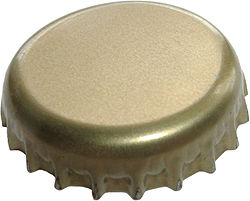
A generic 21-tooth crown cork bottle cap.
Opening a crown capped bottle

The crown cork (also known as a crown seal, crown cap, metal bottle cap, or just cap) was the first commercially successful bottle cap design. It was invented by William Painter in 1892 in Baltimore. Painter had been working for years trying various bottle cap designs, with his company the Bottle Seal Company. After he patented the crown cork in 1892, which was an immediate success, he started a new company, Crown Cork & Seal Company (now Crown Holdings) which went on to become one of the largest manufacturing companies in the United States producing billions of caps annually.

History

[edit]
A Dutch patent application from 1892

The inventor was William Painter who was born in 1838 in Tridelphia, Maryland to a Quaker family. Described as an "irrepressible tinkerpreneur," he had no higher education but had the drive to "make something."[1][2] In the late 19th century, the market for bottled beverages like beer and soda was growing, but sealing carbonated drinks was a problem. Existing stoppers were a mix of cork, glass, wire, and rubber contraptions. They were often expensive, unsanitary, and unreliable. Corks could dry out and shrink, causing leaks, while other stoppers were difficult to clean and could affect the taste. By the 1880s, the U.S. Patent Office had approved an estimated 1,500 different bottle stopper patents.[1][3][4] While working as a foreman at Baltimore's Murrill & Keizer machine shop, Painter became preoccupied with the bottle stopper challenge. In 1885, he patented two stoppers: the "Triumph," a wire-retaining stopper, and the "Bottle Seal" (also known as the "Baltimore loop seal"). The Bottle Seal was a simple, flat rubber disk that fit into a groove inside the bottle's mouth, forming an "inverted arch" that resisted internal pressure. It was cheap enough to be disposable, selling for just twenty-five cents per gross, a fraction of the cost of reusable stoppers.[1][5] To manufacture it, Painter and his business partner Samuel Cook formed the Bottle Seal Company.[1]

Unsatisfied with the success of the Bottle Seal, he experimented between 1888 and 1891 on a better external cap. Patent number US 468259  applied for on November 5, 1889, featured a cap with holes on the top to facilitate leverage for removal with a hand instrument. However to prevent leakage through the holes required a long piece of cork and likewise a long skirt, neither of which were effective or cheap.[6][7] Then Painter realized the cap could easily be removed by levering it off with a lifting device, a "bottle cap opener", making the holes on the cap superfluous and also reducing the amount of cork. Patent number US 468258  was applied for on June 18, 1890. It had a slightly shorter skirt, the cork thickness was reduced, and there were no holes in the cap.[6][8] In further experiments Painter discovered that the cork and skirt length could be reduced even further. Patent number US 468226  was applied for on May 19, 1891 — a lower patent number despite being a later application — it further shortened the skirt and reduced the cork thickness.[8][6] This last patent perfected the design.

In its final form, the thin cork liner created a gas-tight seal, while the metal cap held it in place with a series of crimped "flutes" that locked under the bottle's head. This approach was not only sanitary—eliminating contact between the beverage and the metal cap—but so effective that its basic design is still in use to this day.[7] Painter understood the cap's advantage as a small, cheap and most importantly a disposable product. It guaranteed never-ending sales, a very low cost to manufacture, and no ongoing stopper maintenance (collecting, cleaning, repairing). In his patent application, he noted that he had devised "metallic sealing-caps... so inexpensive as to warrant throwing them away after a single use."[1] This concept was unusual in an era accustomed to reuse. On February 2, 1892, Painter was granted three patents for his new system: one for the cap itself, one for the sealing disk's composition, and one for the use of cork and other materials.[1][9] The family dubbed the invention the "crown cap," and Painter's son Orrin drew the company's crown logo.[1] One editor marveled that the invention "crowned one of the most troublesome inventive problems with a success which is simply dazzling."[10]

In 1892, Painter patented the invention and founded the Crown Cork & Seal Company in Baltimore to manufacture his new invention. Painter died in 1906 having lived long enough to see it become widely adopted. The expiration of Painter's original patents in 1909 opened the company to competition and further solidified the ubiquity of the crown cap.[7] In 1923 the crown-finish bottle was standardized by the relevant national standards body.[7] In the late 1920s, "spot crowns" were invented that placed vinyl or aluminum foil underneath the cap to protect the liquid product from spoiling on contact with the cork or metal, for certain types of drinks.[7] A shallower shell and shorter skirt was introduced in the 1950s to reduce material cost.[7] In the same decade the cork liner began to be replaced with plastic liners which are still in use to this day.[7]

See also

[edit]

References

[edit]
[edit]
Revisions and contributorsEdit on WikipediaRead on Wikipedia
from Grokipedia
The crown cork, also known as a crown cap, is a metal bottle closure featuring a circular corrugated edge that crimps onto the lip of a , typically containing a cork or liner to create an airtight seal, primarily used for carbonated beverages such as and soft drinks. Invented by American mechanical engineer William Painter and patented on February 2, 1892 (U.S. Patent 468,258), the crown cork addressed longstanding issues with traditional cork stoppers, which were prone to , , and inconsistent sealing that limited the and transportability of carbonated drinks. Painter, an inventor based in , , born in Triadelphia, , founded the Crown Cork and Seal Company (now ) in 1892 to commercialize the design, marking it as the first highly successful disposable and revolutionizing the beverage industry by enabling , extended freshness, and global distribution of sealed bottles. The original design consisted of a tin-plated cap with 24 serrations for secure crimping, a natural cork disk for pressure resistance, and a thin moisture-resistant lining to prevent direct contact between the cork and the beverage, ensuring retention without leakage or flavor alteration; standard diameters include 26 mm for and soft drinks. Over time, the crown cork evolved: by the 1910s, composite cork liners replaced pure cork for better durability; in the 1960s, (PVC) liners were introduced for improved resealability and ; and variations like the screw crown emerged for twist-off functionality, while the standard number of serrations standardized at 21 after extensive testing in the 1930s. Beyond its technical innovations, the crown cork transformed consumer packaging by providing an inexpensive, tamper-evident solution that preserved product quality during Prohibition-era shifts to non-alcoholic sodas in the and supported branding through customizable designs, colors, and logos, making it an enduring staple in , (e.g., for secondary in champagne), and beyond, with billions produced annually worldwide.

History

Invention

William Painter, born in Triadelphia, , in 1838, worked as a mechanical engineer and machine shop foreman in , Maryland, during the late , where he specialized in developing improved bottle closure mechanisms. His inventive efforts were driven by the challenges faced by the growing carbonated beverage industry, which relied on natural corks and rudimentary stoppers that frequently failed under pressure. These closures often resulted in leaks, rapid loss of carbonation, and even hazardous explosions, as the internal pressure from carbon dioxide could dislodge or rupture the seals, posing safety risks and wasting product. To address this, Painter designed a more secure and efficient alternative after experimenting with various materials and crimping techniques in his workshop. On February 2, 1892, Painter was granted U.S. No. 468,258 for his "Bottle-Sealing Device," which described the crown cork as a thin, corrugated metal lined with a compressible cork disk, crimped securely over a beaded on the bottle to create an airtight seal under compression. The design utilized a flanged metal shell coated internally to prevent , with the cork liner—thinner than traditional stoppers—pressed firmly against the bottle lip to withstand pressures without leakage. Early iterations involved refining the cork's preparation to eliminate hard spots, ensuring consistent sealing performance. Painter conducted initial tests of the prototype in 1892, successfully sealing a carbonated beverage bottle and demonstrating its reliability by maintaining pressure without failure, marking a pivotal advancement over existing methods. That same year, to commercialize the invention, he established the Crown Cork and Seal Company in Baltimore, Maryland, dedicated to manufacturing and marketing the new closure system.

Commercialization and Adoption

Following the patenting of the crown cork in 1892, William Painter established the Crown Cork & Seal Company in , , to manufacture and market the innovation. The company began initial production that year, focusing on the metal caps with cork liners designed for sealing carbonated beverages in glass bottles. Incorporated on April 1, 1893, the firm quickly pursued partnerships with regional bottlers in the 1890s to demonstrate the cap's reliability over earlier closures like corks and stoppers, leading to its first widespread commercial applications in soda bottling by the mid-decade. In the early 1900s, the company expanded operations domestically and internationally, establishing manufacturing bases in by 1906 and in and . Painter died on July 15, 1906, in , . A key innovation in 1915 involved shifting from solid cork liners to composite versions made from waste cork shavings, which reduced costs and improved scalability while maintaining airtight seals. The 1927 merger with New Process Cork Company Inc. and New York Improved Patents Corporation reincorporated the business in as Crown Cork & Seal Company, Inc., bolstering its supply chain for cork materials and facilitating further global outreach. The onset of Prohibition in 1919 prompted a strategic pivot from bottling to soft drinks, securing in the growing U.S. carbonated beverage sector; by 1920, the crown cork had become the standard closure for American soft drinks due to its efficiency and tamper-evident design. The repeal of Prohibition in 1933 fueled renewed growth in bottling, with the company introducing high-speed production techniques that accelerated adoption. By the 1930s, Crown Cork & Seal supplied approximately half of the world's bottle caps, achieving global dominance in beverage packaging by the mid-20th century as bottlers worldwide standardized on the design for its durability and cost-effectiveness.

Design and Components

Structure

The crown cork, also known as a crown cap, consists of a circular metal shell, typically made of tin-plated steel for durability and resistance, designed to fit over the finish of a , featuring a flat central disc approximately 26 mm in that serves as the primary sealing surface. This disc is connected to a downward-extending scalloped skirt around its periphery, which includes 21 evenly spaced teeth or flutes that facilitate secure attachment. The skirt's fluted design allows it to be deformed during application without cracking, enabling it to conform tightly to the bottle's external profile. Key structural elements include the central disc, which provides a stable platform for the sealing liner, and the scalloped metal , which forms the bead-locking mechanism by engaging the annular or lip on the bottle . When applied, the skirt's teeth are crimped inward beneath the bead, creating a mechanical interlock that resists from carbonated contents. The overall height of the cap typically measures 6 mm before application, with the corrugations in the skirt allowing radial compression to achieve an airtight seal. The sealing mechanics rely on the interaction between the cap's structure and a crowning machine, which presses the cap onto the bottle neck and simultaneously folds the skirt's flutes downward and inward in a single operation. This crimping action compresses the liner against the bottle's lip while locking the skirt under the bead, forming a hermetic barrier capable of withstanding pressures up to several atmospheres without leakage. The design ensures that the cap's inner diameter, approximately 26.75 mm, fits over standard bottle finishes (with external bead diameter around 26-28 mm) for optimal contact. The cap design accommodates different neck configurations, such as shallow finishes (26 H 126) and tall finishes (26 H 180), with the standard 6 cap height compatible across both while maintaining sealing integrity via the bead-locking mechanism. These adaptations ensure the bead-locking mechanism functions effectively across types without altering the core crimping process. An inherent tamper-evident feature arises from the cap's one-time crimping, as removal deforms the skirt's teeth irreversibly, preventing resealing without visible distortion or gaps that indicate tampering.

Sealing Materials

The sealing liner in a crown cork is essential for creating a that prevents leakage, maintains , and protects the beverage from external contaminants. In its original 1892 design by William Painter, the liner consisted of a thin natural cork disc compressed within the metal cap, leveraging cork's natural compressibility and impermeability to gases for an effective airtight barrier. By around 1915, advancements in manufacturing enabled the shift to composite liners made from granulated cork waste bound with glue, which facilitated while retaining the material's sealing efficacy and reducing costs by utilizing byproducts. In the mid-20th century, particularly from the onward, cork liners began to be replaced by alternatives such as (PVC) or , introduced around 1957 for enhanced durability, flavor neutrality, and resistance to degradation over time. Modern crown cork liners adhere to FDA-approved standards and often incorporate oxygen barrier technologies, such as liners that absorb residual oxygen in the bottle headspace to minimize oxidation and loss in beverages. These liners exhibit key properties including high elasticity to conform to bottle necks under crimping and withstand internal pressures typical of carbonated drinks (up to approximately 5 bar or 72 psi), as well as chemical resistance to acidic beverages like sodas and juices to prevent or flavor alteration.

Manufacturing Process

Production Steps

The production of crown corks follows a highly automated sequential process to achieve high-volume output with precision sealing capabilities. It begins with the preparation of metal sheets or coils, typically or aluminum, which are first coated with protective lacquers to prevent and provide a base for . These coated sheets are then printed using high-speed lithographic processes to apply branding, designs, and text on the top panel, ensuring durability and visual appeal. The printed and coated material is fed into high-speed presses, where it is stamped into circular blanks and progressively formed into the final shape. This forming step uses specialized dies to create the cylindrical and the characteristic 21 flutes or corrugations along , which enable secure crimping onto bottle necks during application. Modern presses, such as those from SACMI, operate at speeds up to 6,000 caps per minute, allowing for efficient large-scale production. Next, the formed caps receive their sealing liner through automated insertion. Pre-cut discs made from materials like cork, PVC, or composites are placed in the center of each cap, often secured with or by to ensure an airtight seal. Lining machines achieve matching high speeds of up to 6,000 units per minute, maintaining alignment and consistency across the batch. The process concludes with rigorous , where vision systems and automated check for defects such as uneven flutes, liner misalignment, or imperfections. Defective caps are rejected, and approved ones are packaged in stacks, rolls, or cartons for distribution. This inspection phase utilizes advanced on-line and off-line systems capable of evaluating up to 180,000 caps per hour. Historically, crown cork production in the relied on manual assembly shortly after William Painter's 1892 invention, with workers hand-forming and lining basic metal caps in small-scale operations. advanced rapidly, with early automated presses introduced by the late , evolving into fully integrated lines; by the 1980s, robotic had become widespread in the industry, enhancing precision and reducing labor in forming, lining, and inspection stages.

Materials Used

The primary material for the body of crown corks is , consisting of low-carbon sheet coated on both sides with commercially pure tin via an electrolytic process. This combination provides essential properties such as high strength for secure sealing, excellent formability during , and superior recyclability, as can be endlessly reused without loss of quality. Aluminum emerged as an for crown cap bodies starting in the late , with broader adoption in the due to its lighter weight—reducing transportation emissions—and ease of opening without specialized tools. features a standard electrolytic weight of 2.8 g/m² to inhibit and from external moisture. Internally, organic lacquers, such as or polyester-based formulations, are applied to shield the metal from acidic beverages like carbonated soft drinks or , preventing flavor contamination and extending . Liner materials typically incorporate binders like , , or (a PVC-based paste) to form the compressible seal that contacts the bottle . These must adhere to stringent standards, including EU Regulation 1935/2004, which mandates inertness and low migration of substances into to ensure . Sustainability efforts in crown cork production include increasing the use of recycled content, with some manufacturers incorporating up to 50% post-consumer recycled or aluminum by the 2020s to reduce virgin material demand and lower carbon footprints. Biodegradable liner options, such as those with enhanced additives, are under development to minimize while maintaining sealing efficacy. Cost considerations play a key role in material sourcing, with tinplate priced at approximately $1,500 per metric ton in 2025, influenced by global steel markets, tin supply chains, and energy costs for coating processes. This pricing affects production economics, particularly in high-volume beverage packaging regions.

Applications

Beverage Packaging

The crown cork serves as the primary closure for a wide range of bottled beverages, providing an airtight seal that preserves carbonation, flavor, and freshness in glass containers. This innovation facilitated the growth of the global beverage industry, particularly for portable, shelf-stable products distributed beyond local soda fountains. In s, the crown cork achieved dominance as the standard closure for soda bottles starting in the early , used on the vast majority of glass containers for carbonated beverages until the widespread shift to plastic bottles in later decades. It enabled the portable packaging of fizzed drinks, allowing brands like to expand bottling operations from the late 1890s onward through improved sealing that maintained during transport and storage. By the 1920s, crown corks were integral to the soft drink boom, supporting automated production that made carbonated sodas affordable and ubiquitous. For and ale, crown corks became essential following the 1933 repeal of U.S. , when bottled production surged and required closures capable of withstanding processes. The cap's crimped design maintains internal CO2 pressure during , preventing flavor degradation and ensuring microbial safety while preserving the 's integrity from brewery to consumer. This reliability supported the post- expansion of the American brewing industry, with crown corks quickly becoming the preferred method for sealing pasteurized bottles. Crown corks also find application in non-carbonated beverages such as juices, waters, and energy drinks, where their airtight seal prevents oxidation and extends by blocking oxygen ingress. In these uses, the liner material—often cork or —creates a barrier that minimizes flavor changes and loss, making the closure suitable for clear or sensitive liquids packaged in . For instance, premium juices benefit from the cap's ability to maintain product quality without the need for retention. Additionally, crown corks are used in , particularly for secondary in champagne and other sparkling wines. Integration with bottling lines has been a key factor in the crown cork's adoption, as it is compatible with automatic crowning machines that apply caps at high speeds on production lines. Modern systems can achieve rates of up to 1,200 bottles per minute, enabling efficient, continuous operation in large-scale beverage facilities. Globally, the crown cork market produces billions of units annually, with beverages accounting for approximately 62% of applications as of 2024, underscoring its central role in the sector. This scale reflects sustained demand driven by glass bottle usage in both carbonated and still drinks worldwide.

Other Uses

Crown corks find application in pharmaceutical packaging for sealing glass vials and bottles containing liquids such as cough syrups, where sterile liners ensure product integrity and compliance with regulatory standards. In the , crown corks are used to seal condiments like and hot sauces in bottles, with adaptations such as larger diameters or twist-off variants to accommodate wider mouths. Crown corks serve as collectibles among enthusiasts, often prized for their vintage designs and cork liners phased out in the , and are incorporated into crafts such as kits where users crimp them onto bottles for personal beer production. They also function as promotional items, featuring custom prints. Industrial adaptations of crown corks include modified versions for sealing chemical containers, utilizing reinforced materials and protective varnishes resistant to and other treatments to contain samples safely.

Advantages and Innovations

Benefits

Crown corks offer significant cost-effectiveness in production and application, with standard caps priced between $0.005 and $0.02 per unit depending on material and volume, making them an economical choice for high-volume bottling operations. Their high-speed application process, capable of up to 150 caps per minute on suitable lines, historically reduced bottling expenses compared to earlier alternatives like natural cork stoppers by enabling efficient, automated sealing that minimized labor and material waste. This affordability contributed to the widespread adoption of crown corks in the beverage industry shortly after their invention in the late . In terms of reliability, crown corks provide a that effectively prevents leakage and preserves in beverages, ensuring product integrity during storage and transport. For carbonated products, this sealing capability minimizes CO2 evaporation and oxygen ingress, extending shelf life to approximately 6-12 months when stored at room temperature. Such performance has made them a preferred closure for maintaining the quality of carbonated drinks over extended periods. The versatility of crown corks stems from their compatibility with standardized bottle neck finishes, such as the 26 mm finish, which aligns with global industry norms for and aluminum bottles used in beverages worldwide. Additionally, they support easy customization through techniques like on the top surface, allowing brands to incorporate logos, promotional designs, or colors for enhanced appeal. From a sustainability perspective, corks are constructed from fully recyclable metals like or aluminum, facilitating integration into closed-loop systems that recover a substantial portion of used caps. Industry efforts aim for rates of up to 80% in key regions such as , the , and , supporting goals by reducing raw material demands and minimizing waste. User convenience is another key advantage, as crown corks require no specialized tools for application during bottling and can be quickly removed using a simple bottle opener, providing an intuitive experience for consumers. This ease of use, combined with their secure grip on standard necks, enhances practicality for everyday beverage packaging.

Modern Developments

In the 2020s, crown cork technology has increasingly emphasized sustainability, with manufacturers like Crown Holdings advancing initiatives to reduce environmental impact through enhanced recyclability and material efficiency. Aluminum and steel crown corks benefit from infinite recyclability without quality degradation, contributing to lower energy use and emissions compared to virgin production. For instance, the carbon footprint of steel-based packaging, including closures, has been reduced by 30% since 2004 due to lightweighting and recycling advancements. Crown Holdings' Twentyby30 program targets a 50% reduction in Scope 2 greenhouse gas emissions by 2030, supported by 100% renewable power activation in U.S. and Canadian beverage plants since 2020. In August 2025, the Science Based Targets initiative validated Crown Holdings' 2050 net-zero emissions goal along with updated near-term targets, advancing the company's climate commitments. Smart features have integrated digital traceability into crown corks, enhancing since the mid-2010s. Crown Holdings introduced QR codes printed under the cap in 2013, enabling consumer engagement and product tracking via scans. By 2016, this evolved into a system assigning unique QR identities to packages for real-time scanning and monitoring throughout production and distribution. Emerging enhancements include potential RFID and NFC tags on crown corks for improved authenticity verification and , aligning with broader smart packaging trends in the beverage sector. Design innovations focus on preserving product quality, particularly for sensitive beverages like craft beers. Oxygen-scavenging liners, such as Crown's OXYCAP® technology, absorb residual oxygen in the bottle headspace during sealing, minimizing oxidation and extending by preventing flavor degradation. These liners, often PVC-free and paired with barrier properties, are widely used in pry-off crown corks for carbonated drinks. Additionally, variants allow tool-free opening by pulling a ring, offering convenience without compromising seal integrity. Industry consolidation has driven standardization and innovation in crown cork production. Crown Holdings expanded its global footprint through key acquisitions, including Signode Industrial Group in 2018 for packaging automation and Helvetia Packaging AG in 2023, which bolstered aluminum closure capabilities in . These moves have facilitated and uniform quality standards across international supply chains. Looking ahead, future trends in crown cork technology emphasize biodegradable alternatives and tailored to niche markets like microbreweries. While traditional metal crowns remain dominant, into bio-based composites, such as cork-polymer blends, explores eco-friendly options for liners and closures to further reduce non-recyclable . advancements, including semi-automatic and high-speed cappers, enable microbreweries to achieve up to 1,200 bottles per hour with precise crown application, supporting sector growth. The global crown cork market is projected to expand at a of approximately 1.5% through 2034, driven by demand for sustainable and efficient in beverages.

References

Add your contribution
Related Hubs
User Avatar
No comments yet.