Hubbry Logo
search
logo
1755402

Dalkhola

logo
Community Hub0 Subscribers
Read side by side
from Wikipedia

Dalkhola is a city and a municipality of Uttar Dinajpur district in the state of West Bengal, India.[2]

Key Information

History

[edit]

Dalkhola was originally in the state of Bihar in India. After 1959, Dalkhola was located in the state of West Bengal. The town expanded around the Dalkhola village panchayats and developed into an important centre for trade and commerce due to its mainstream connection with both railway and roadway. It is an important center for commodities like jute, corn and oil trade in North Dinajpur. It is also an important center for the trade of maize, which is produced in the neighboring state of Bihar.[3]

Before and for some time after the independence of India in 1947, Dalkhola was a sleepy, rural area where some Pucca and Kaccha roads were connected. The area was mostly covered by jungle, and only some parts of the town were suitable for living. The residents' main source of income was agriculture and fishery in the Mahananda River. It was ruled by Raja P. C. Lal. After the partition of India, numerous refugees (Hindus) came to Dalkhola from Bangladesh (formerly known as East Pakistan) and started living in surrounding rural areas such as Hatbari, Goalgaon (Madrasa), Goalgaon (west), Shikarpur, Pukurchala, Bhusamoni etc. In 1956 the area was transferred to the territory of West Bengal by the tireless efforts of the then Chief Minister Dr. B. C. Roy. It is an important place in this region, as NH 12 and NH 27 intersect at this place. Small villages are administered by the Panchayat Ministry, and they have gradually developed into busy market zones, which have gradually converted into small townships. With the growth of population and economic activities, the people of Dalkhola experienced a massive change in terms of both socio-economic development and quality of life. As a consequence, Dalkhola Municipality was set up on 1 January 2003 to foster social and economic development.

Politics

[edit]

Dalkhola became a municipality in 2003. In the Dalkhola municipal area, there were 14 Wards. But now 2 more wards are divided and there are 16 wards. In the last election, the Indian National Congress won 9 seats out of 14, and the Communist Party of India (Marxist) won the other 5 seats.[4] It is one of the four municipalities in North Dinajpur district. Dalkhola has 16 now. in Recently the 2013 Municipality election Congress won 10 seats, CPIM 4 and TMC 2. Now whole councillors of the Congress party joined Trinamool Congress nd now the status are TMC 12, CPIM 4 and CONG 0.

In the general civic body election 2022 Dalkhola's figures are 12 Trinamool Congress, 4 Independent

Geography

[edit]
Map
About OpenStreetMaps
Maps: terms of use
16km
9.9miles
T
Mahananda River
S
West
Bengal
R
Bihar
Q
Bangladesh
P
India
T
Raiganj
Wildlife Sanctuary
T Raiganj Wildlife Sanctuary (T)
R
Radhikapur
checkpoint
R Radhikapur (R)
R Radhikapur (R)
CT
Itahar
CT Itahar, Uttar Dinajpur (CT)
CT
Kasba
CT Kasba, Uttar Dinajpur (CT)
CT
Nachhratpur
Katabari
CT Nachhratpur Katabari (CT)
R
Hemtabad
R Hemtabad, Uttar Dinajpur (R)
R
Karandighi
R Karandighi, Uttar Dinajpur (R)
R
Chakulia
R Chakulia, Uttar Dinajpur (R)
R
Goalpokhar
R Goalpokhar (R)
R Goalpokhar (R)
CT
Hanskunda
CT Hanskunda (CT)
CT Hanskunda (CT)
CT
Chopra
CT Chopra, Uttar Dinajpur (CT)
M
Dalkhola
M
Kaliaganj
M Kaliaganj (M)
M Kaliaganj (M)
M
Islampur
M Islampur, Uttar Dinajpur (M)
M
Raiganj
M Raiganj (M)
M Raiganj (M)
Cities and towns in the North Dinajpur district
M: municipal city/ town, CT: census town, R: rural/ urban centre, T: tourist centre
Owing to space constraints in the small map, the actual locations in a larger map may vary slightly
Geographical map of Dalkhola

Dalkhola has an average elevation of 23 meters (75 feet) and is located at 25°51′N 87°51′E / 25.85°N 87.85°E / 25.85; 87.85.[5]

In the map alongside, all places marked on the map are linked in the full-screen version.

It is the second-largest area in the Uttar Dinajpur district, with a length 13 km from East to West, 18 km from North to South. Dalkhola was divided into 14 wards. But now to more wards are added, 9-number wards divided into 9 and 16 and 11-number wards divided into 11 and 15.

The following 16 wards are:

  • Muhammadpur
  • Haripur
  • Bhusamani
  • Mithapur
  • Mallickpore More
  • Deshbandhu Para
  • Dalkhola Bazar
  • High School Para
  • Dalkhola Slum
  • Subhashpally
  • Farsara
  • Bidhanpally
  • North Dalkhola
  • Purnia More
  • Shikarpur
  • Nichitpur
  • Binoy colony
  • Shree pally
  • Vivekanandapally
  • Hatbari
  • College para
  • College more
  • High school more

Climate

[edit]

The cooler months in Dalkhola begin in December and end in February. The temperature generally peaks at about 35 °C. The annual low temperature is usually near 10 °C. The monsoon season starts in June and runs through September.

Climate data for Dalkhola
Month Jan Feb Mar Apr May Jun Jul Aug Sep Oct Nov Dec Year
Mean daily maximum °C (°F) 20.3
(68.5)
26.5
(79.7)
32.6
(90.7)
37.7
(99.9)
38.9
(102.0)
36.7
(98.1)
33.0
(91.4)
32.4
(90.3)
32.3
(90.1)
31.5
(88.7)
28.8
(83.8)
24.7
(76.5)
31.53
(88.75)
Mean daily minimum °C (°F) 9.2
(48.6)
11.6
(52.9)
16.4
(61.5)
22.3
(72.1)
25.2
(77.4)
26.7
(80.1)
26.2
(79.2)
26.1
(79.0)
25.7
(78.3)
21.8
(71.2)
14.7
(58.5)
9.9
(49.8)
19.65
(67.37)
Average precipitation mm (inches) 19
(0.7)
11
(0.4)
11
(0.4)
8
(0.3)
33
(1.3)
134
(5.3)
306
(12.0)
274
(10.8)
227
(8.9)
94
(3.7)
9
(0.4)
4
(0.2)
1,130
(44.5)
Source: worldweather.org[6]

Development

[edit]
Dalkhola library

Dalkhola is the largest exporter of Maize in West Bengal.[citation needed] In Dalkhola, a national-level Power Grid was established in 1973, which expanded the availability of electricity to the Municipality and nearby areas of Dalkhola. Other developments include a Flour Mill, Tantia Agro Chemical Pvt Ltd and a maize processing company that uses the crops produced by local farmers.[citation needed]

Official languages

[edit]

As per the West Bengal Official Language (Amendment) Act, 2012, which came into force from December 2012, Bengali was given the status of official language in areas, such as subdivisions and blocks, having more than 50% Bengali speaking population.[7] In North Dinajpur district, Goalpokhar I and II blocks, Islampur block and Islampur municipality were identified as fulfilling the norms set[8] In 2014, Calcutta High Court, in an order, included Dalkhola municipality in the list.[9]

Education

[edit]

The schools in Dalkhola include:

  • Dalkhola High School (H.S)
  • Dalkhola Girls High School (H.S)
  • North Dalkhola High School (H.S)
  • Hindi High School (H.S)
  • Middle School
  • Farsara F.P School
  • Nazarpur F.P School
  • Jawahar Navadoya Vidyalaya, Dalkhola
  • Dalkhola Urdu Jr High School
  • Itvata F.P. School
  • Sarsar F.F. School
  • Nichitpur F. P. School
  • Subhash Pally F.P. School

English medium schools

[edit]
  • St. Mary's School (Dalkhola)
  • St. Stephen's School
  • St. Xavier's School (Dalkhola)
  • Dalkhola Public School (D.P.S)
  • Iqra Public School
  • Children's Academy
  • South Point Public School (Loknathpara)
  • Holy Cross School
  • National Public School (High School Para)
  • St Ignatius School

College

[edit]

Demographics

[edit]
Religions in Dalkhola Town (2011)
  1. Hinduism (58.3%)
  2. Islam (39.5%)
  3. Others (2.20%)

As per the 2011 Census of India, Dalkhola had a total population of 36,930, of which 19,230 (52%) were males and 17,700 (48%) were females. The population below 6 years was 5,592. The total number of literates in Dalkhola was 21,207 (67.67% of the population over 6 years).[12]

In the 2001 India census, Dalkhola had a population of 13,891. In 2008, the population grew to approximately 19,000. Males constituted 54% of the population and females 46%. The literacy rate in Dalkhola of 69% was greater than the national average of 59.5%; male literacy was 70% and female literacy was 63%. In Dalkhola, 18% of the population was under 6 years of age.

Languages

[edit]
Languages spoken in Dalkhola Town (2011)[13]
  1. Bengali (46.4%)
  2. Hindi (26.3%)
  3. Urdu (12.8%)
  4. Surjapuri (4.68%)
  5. Santali (3.79%)
  6. Savara (3.22%)
  7. Others (2.75%)

Decadal growth for the period 1991 to 2001 was 30.41% in Dalkhola, compared to 28.72% in the North Dinajpur district.[14] Decadal growth in West Bengal was 17.84%.[15]

Year of Establishment Dalkhola Municipality was formed on 01 /01 /2003 as per Notification No. 1 /MA/0 /C-4 /1 M-14 / 2000 with the entire area of Dalkhola 1 and four mouzas of Dalkhola 2 gram panchayats with a population of 29783 according to the census of 2001. Dalkhola Municipality is the 4 th Municipality of North Dinajpur district constituted with 14 wards and first election was held on 22 /06 /2003 and second election was held on 29 /06 /2008. Sri Himadri Mukharjee was the first chairman and Sri Subhas Goshwami became the chairman in the second. Sri Tanay Day was the 3rd chairman. Swadesh Sarkar is in the chair.[16]

Transport

[edit]
NH 34 starts from 31 in Dalkhola

Highway 34 cuts through the middle of the town to meet NH 31.[3] NH 34 starts from Dalkhola and it ends in Dumdum, near Kolkata to help connect the northeastern part of India to Kolkata.

There are two airports near Dalkhola. Bagdogra Airport is 100 km away, and Purnea Airport is 40 km from Dalkhola.

Dalkolha railway station

The largest railway station and busiest Rack point in the district is located in Dalkhola. This railway connects to several major cities, including Siliguri, Kolkata, Guwahati, Delhi, Jaipur, Chennai and Patna. Bus transportation runs from Dalkhola to Siliguri, Raiganj, Kishanganj, Kaliaganj, Balurghat, and Malda.

AC bus services for Kolkata, Bhutan, Patna and Siliguri are also available from Dalkhola.

Media

[edit]

Dalkhola Press Club is under the District Press Club. A fortnightly newspaper called Nava Provat Jyoti was published from Dalkhola.

References

[edit]
[edit]
Revisions and contributorsEdit on WikipediaRead on Wikipedia
from Grokipedia
Dalkhola is a municipality town in Uttar Dinajpur district, West Bengal, India, functioning as a secondary commercial hub in the region with a focus on agriculture and transit connectivity.[1][2] As of the 2011 census, its population stood at 36,930, comprising 19,230 males and 17,700 females, reflecting significant urban growth driven by economic expansion and proximity to the Bihar border.[3][4] The local economy relies primarily on agriculture, particularly maize cultivation and associated flour mills, supplemented by its role as a gateway for trade and transportation to northeastern India via rail and road networks.[1][2] Established as a municipality in 2003 to support social and economic development, Dalkhola benefits from a green revolution spurred by population influx and infrastructural improvements, though its border position has drawn attention for facilitating alcohol sales to residents of neighboring dry Bihar.[5][6] Educational institutions such as Dalkhola College underscore its growing civic infrastructure amid a district literacy rate of around 60%.[7]

Geography

Location and Topography

Dalkhola is situated in the Uttar Dinajpur district of West Bengal, India, at approximately 25°52′N 87°50′E.[8] The town lies in close proximity to the Bihar state border to the west, approximately 37 kilometers south of Purnea district, facilitating cross-border trade and connectivity.[6] To the east, Uttar Dinajpur district shares a frontier with Bangladesh, though Dalkhola itself is positioned inland within the district's western part, contributing to its role as a regional hub. The municipal area encompasses 15.95 square kilometers, characterized by flat alluvial plains typical of the Gangetic region, which support agriculture through fertile soils but expose the area to periodic riverine flooding from local tributaries of the Ganga system.[9] These plains feature gentle slopes and urban-rural interfaces that enhance accessibility, with National Highway 27 traversing the town as a vital east-west transit corridor linking West Bengal to Bihar and beyond.[10] The highway's alignment underscores Dalkhola's strategic positioning for logistics and commerce in northern West Bengal.[11]

Climate

Dalkhola features a tropical monsoon climate (Köppen classification Aw), marked by high temperatures, seasonal heavy rainfall, and high humidity throughout the year. Average annual temperatures hover around 25°C, with summers peaking at highs of 38.9°C and lows of 25.2°C in May, the warmest month, while winters are mild with January lows dipping to approximately 10°C.[12] The district's climate includes a hot summer period from March to May, followed by a humid post-monsoon season, and a relatively short cool season from November to February. Precipitation in Uttar Dinajpur, encompassing Dalkhola, totals around 1,300 mm annually, with 77-85% concentrated in the southwest monsoon from June to September, leading to frequent heavy downpours and associated flooding risks.[13] The Mahananda River, flowing through the region, often overflows during these months due to intense rainfall upstream, causing inundation in low-lying areas around Dalkhola, as observed in major flood events like those in 2017 affecting North Bengal.[14] Long-term rainfall data from 1901-2019 indicate increasing variability in Uttar Dinajpur, with erratic patterns contributing to unpredictable wet seasons.[15] These climatic conditions directly influence local agriculture, where rice cultivation aligns with the monsoon for kharif cropping, yielding dependent on timely rains for paddy transplantation and growth, while jute, a key cash crop, thrives in the warm, humid pre-monsoon and early monsoon phases but suffers from excess flooding that delays harvesting and reduces fiber quality.[16] Temperature extremes and rainfall variability exacerbate yield fluctuations in these crops, with heat stress in summers and waterlogging in monsoons posing recurrent challenges to productivity in alluvial soils typical of the area.[16]

History

Establishment and Colonial Period

Dalkhola functioned as a modest rural settlement within the Purnea district of Bihar province under British colonial administration from the late 18th century onward, following the East India Company's assumption of control over the region in 1765.[17] The area's agrarian communities relied on the fertile alluvial plains drained by the Mahananda River, supporting subsistence farming and limited local trade across shallow fords that served as natural crossing points for overland routes connecting Bihar to Bengal.[18] The pivotal development occurred with the integration into the expanding British railway network in the late 19th century, transforming Dalkhola from an obscure outpost into an emerging market town. The railway station's establishment facilitated the transport of agricultural goods, such as jute and grains, to larger markets in Calcutta and beyond, drawing merchants and laborers to the vicinity and laying the foundation for commercial activity centered on weekly haats (markets).[19] This infrastructure-driven growth reflected broader colonial priorities of exploiting interior resources through connectivity, though the town remained predominantly rural with sparse pucca roads until the early 20th century.[18]

Post-Independence Expansion

Following India's independence in 1947, Dalkhola initially remained part of Bihar's Purnia district, retaining its rural character with limited pucca and kuccha roads connecting sparse settlements. In 1959, the area was transferred to West Bengal amid border realignments, integrating it into West Dinajpur district and positioning it as a strategic node near the Bihar frontier.[20][1] This shift enabled administrative alignment with West Bengal's development frameworks, though initial growth stemmed primarily from pre-existing physical infrastructure rather than new policies. The town's expansion accelerated through enhanced transport linkages, particularly the Dalkhola railway station on the Howrah-New Jalpaiguri main line, which handled increasing freight and passenger traffic post-transfer, drawing traders and laborers to the region. National Highway 34, traversing Dalkhola, further bolstered connectivity to Kolkata southward and Siliguri northward, facilitating commodity flows like agricultural produce and timber without reliance on subsidized interventions. These causal links—rail for bulk movement and highway for regional access—drove spatial expansion around the junction, transforming peripheral villages into contiguous urban fringes by the late 20th century, as evidenced by rising commercial establishments tied to transit efficiencies. Administrative upgrades reflected this urbanization: Dalkhola was designated a municipality on January 1, 2003, via state notification, encompassing the core town and adjacent mouzas to oversee infrastructure like drainage and roads amid mounting civic demands.[5] This formalization addressed integration strains from influxes along the porous border, including undocumented movements post-1971, though records highlight logistical burdens on local resources without attributing causality to policy-driven resettlement. Empirical patterns indicate that such expansions prioritized pragmatic containment of spillover effects from Bihar's economic pressures, maintaining Dalkhola's role as a buffer trade hub rather than a planned refugee hub.

Demographics

Population Dynamics

According to the 2001 census, Dalkhola municipality had a population of 29,783, which rose to 36,930 by the 2011 census, yielding a decadal growth rate of 23.97%. [3] This rate exceeded the 23.15% decadal growth observed across Uttar Dinajpur district, indicating accelerated urban expansion within the municipality.[21] The sex ratio in 2011 was 950 females per 1,000 males, marginally above the district average, while the overall literacy rate reached 67.67%, though female literacy trailed male rates as typical in rural-adjacent urban centers.[3] At 15.95 km², the municipality's population density stood at 2,315 persons per square kilometer in 2011, exerting pressure on local resources such as water supply and sanitation amid ongoing in-migration.[22] Proximity to National Highway 27 and a key railway junction has driven rural-urban migration from agrarian blocks in Uttar Dinajpur, sustaining growth trends observable in district-level urbanization patterns.[23] Municipal projections estimate the population at 49,500 by 2025, implying continued density increases and potential infrastructure demands unless offset by planned development.

Religious Composition

According to the 2011 Census of India, the religious composition of Dalkhola municipality showed Hindus as the largest group at 58.26% (approximately 21,516 individuals), followed by Muslims at 39.54% (about 14,600 individuals). Christians comprised 0.96% (roughly 355 persons), Jains 1.02% (around 377 persons), Buddhists 0.04%, Sikhs 0.01%, and other religions or no religion the remaining 0.17%.[3] This distribution indicates a more pronounced Hindu majority in Dalkhola than in Uttar Dinajpur district overall, where Muslims form 49.92% and Hindus 49.31% of the 3,007,134 residents.[24] The municipality's total population expanded from 13,891 in 2001 to 36,930 in 2011—a 166% decadal growth rate exceeding the district's 35.7%—driven by inward migration from neighboring areas with higher Muslim concentrations, such as Bihar and Bangladesh border regions, which has incrementally elevated Muslim shares district-wide while maintaining local pluralism without state favoritism toward any group.[25]

Linguistic Composition

According to the 2011 Census of India, the mother tongues reported in Uttar Dinajpur district, encompassing Dalkhola, indicate Bengali as the predominant language at 68.06% of the population, followed by Surjapuri at 13.22%, Urdu at 9.48%, Hindi at 3.76%, Santali at 3.77%, and smaller shares for other languages including Bhojpuri and Kurukh/Oraon. This distribution stems from historical migrations and proximity to Bihar, where Hindi and Urdu prevail, and Bangladesh, reinforcing Bengali usage. In Dalkhola, as a commercial hub on trade routes, these languages intersect, with Surjapuri and related dialects like Kishtwari spoken among local Muslim and indigenous groups, fostering adaptive communication patterns. Multilingualism in Dalkhola supports economic interactions, particularly in markets where Urdu facilitates dealings among Muslim traders from Bihar and local vendors, while Hindi aids connectivity with migrant laborers. Bengali remains central for administration and daily discourse, yet the blend enables fluid exchanges without a single dominant commercial tongue. Literacy in vernaculars exceeds 67% district-wide, but functional knowledge of Hindi—spoken by over 3.76% as mother tongue—correlates with better access to regional jobs in transportation and retail, as English proficiency remains limited to urban elites. This linguistic diversity, driven by demographic mixing rather than policy, underscores causal ties between language versatility and trade resilience in border areas.

Governance and Politics

Municipal Structure

Dalkhola Municipality operates as a statutory body under the West Bengal Municipal Act, 1993, which delineates its structure as an elected board comprising 16 ward councillors, each representing a defined geographic ward within the municipal limits.[26][27] The board collectively elects a chairperson from among its members to preside over meetings and provide strategic oversight, while an executive officer—appointed by the state government—functions as the chief administrative authority, managing routine operations under the chairperson's supervision and ensuring compliance with statutory duties.[28] Municipal revenue is generated mainly through property taxes levied on the annual rental value of land and buildings, supplemented by other levies such as trade licenses and fees, alongside allocations from state and central government grants to address fiscal shortfalls common in smaller urban local bodies.[29] Property assessments follow standardized valuation procedures to determine tax liabilities, though enforcement varies due to local economic constraints.[30] Core responsibilities encompass urban sanitation, including solid waste collection and disposal, and water supply coordination, where the municipality distributes treated water sourced primarily from the Public Health Engineering Department, achieving coverage for the majority of households but with intermittent supply in peripheral wards reliant on tubewells. These functions align with decentralization mandates post the 74th Constitutional Amendment's implementation via state legislation, granting operational autonomy while tying larger projects to intergovernmental transfers amid limited own-source revenue.[31] In the Karandighi Assembly constituency, which encompasses Dalkhola and is reserved for Scheduled Castes, the All India Trinamool Congress (TMC) has maintained dominance since the 2011 West Bengal Legislative Assembly elections, reflecting strong support from Muslim and Scheduled Caste voters amid regional demographic patterns. In the 2021 elections, TMC candidate Goutam Paul secured victory with 116,594 votes, defeating Bharatiya Janata Party (BJP) contender Subhas Chandra Sinha who received 79,968 votes, while voter turnout reached 86.44% among 246,568 electors. This outcome underscored TMC's consolidation of minority votes, particularly in Muslim-majority pockets like Dalkhola, where identity-based appeals often overshadowed development-focused campaigns, as evidenced by the party's emphasis on welfare schemes targeting these groups over broader infrastructure planks.[32][33][34] The 2021 results marked a narrowing margin compared to prior cycles, with BJP's vote share rising to challenge TMC's hold, signaling a shift driven by Hindu voter mobilization against perceived minority favoritism in state policies. Earlier, in 2016, TMC retained the seat amid similar dynamics, though specific margins highlighted the party's reliance on religious and caste alignments rather than secular development narratives, a pattern critiqued by observers for prioritizing communal consolidation over empirical economic progress in agrarian districts like Uttar Dinajpur.[32][35] At the parliamentary level, Dalkhola falls under the Raiganj Lok Sabha constituency, where trends have shown volatility, with BJP gaining ground in recent polls amid national narratives on security and migration. In the 2024 Lok Sabha elections, BJP's Kartick Chandra Paul won with 558,644 votes (plus 2,253 postal), defeating TMC's Krishna Kalyani, reflecting Hindu consolidation in response to TMC's minority outreach, though turnout details aligned with district averages around 70-80%. This contrasted with TMC's assembly-level strength, highlighting split-ticket voting influenced by local versus national identity cues.[36][37] Local elections for Dalkhola Municipality, established in 2003, followed state patterns in the 2022 municipal polls, where TMC secured control through ward-level victories, leveraging the same demographic loyalties evident in assembly contests. Emerging challengers like the All India Majlis-e-Ittehadul Muslimeen (AIMIM) have signaled intentions to contest 2026 assembly seats in Muslim-heavy areas, potentially fragmenting TMC's base by offering alternative minority representation, though their impact remains untested beyond planning stages.[38][39] Overall, electoral trends in Dalkhola prioritize identity politics, with verifiable data indicating TMC's edge from minority turnout (often 60-70% district-wide) but vulnerabilities to BJP's Hindu outreach and potential AIMIM splits, rather than competition on measurable development metrics.[35][40]

Economy

Agricultural Foundations

Agriculture in Dalkhola, situated in the alluvial plains of Uttar Dinajpur district, relies predominantly on rain-fed cultivation of rice, jute, and maize, facilitated by the fertile Ganga alluvium soils that support high water retention and nutrient availability for these crops.[41] The district's net sown area constitutes 88.65% of the total reporting area of 312,470 hectares, underscoring the agrarian foundation of the local economy, where rice variants (Aus, Aman, and Boro) occupy the largest acreage, followed by jute and maize in rotated systems such as jute-rice-fallow or maize-fallow-rice.[42][43] Approximately 70% of the rural workforce in Uttar Dinajpur engages in agriculture, characterized by small and marginal landholdings—96% of farmers statewide fall into this category— which constrain mechanization and promote subsistence-oriented farming over large-scale commercial production.[44] Boro paddy production reached around 70,000 hectares in district assessments, while jute and maize serve as key cash and food crops, though yields remain modest due to limited irrigation coverage, with only supplemental systems mitigating monsoon dependencies.[43] Recent shifts from jute to pre-kharif maize reflect farmer responses to higher yield potentials and market prices, yet overall output emphasizes self-sufficiency rather than surplus, as evidenced by district-level data showing variable productivity influenced by topography and labor-intensive techniques.[45][46] Market access for Dalkhola's produce links to regional hubs like Siliguri and Kolkata via National Highway 27, enabling jute and maize sales, but seasonal monsoon floods pose recurrent risks, eroding soils and disrupting harvests in this flood-prone Gangetic terrain.[47] Government interventions, such as contingency plans for rice and jute under variable rainfall, aim to bolster resilience, though empirical district reports highlight persistent challenges from inadequate capital and high labor costs in sustaining commercial viability.[48]

Trade and Industrial Activities

Dalkhola functions as the principal commercial hub of Uttar Dinajpur district, leveraging its railway junction status on the New Jalpaiguri-Balurghat line and intersection with National Highway 27 to facilitate regional commodity flows. Local markets handle trade in maize, oils, and related products, with over 100 rice mills and numerous flour mills processing agricultural outputs into marketable goods.[49][50] Industrial activity remains limited to small- and medium-scale enterprises, primarily in agro-processing. The Modern Dalkhola Flour Mills Private Limited maintains a production facility in the area with an installed capacity of 650,000 quintals annually, focusing on wheat and maize derivatives.[51] Other units, such as the Dalkhola Flour Mill (P) Ltd., contribute to district-level medium-scale output, though large industries are absent.[52] The 2011 census recorded 11,229 workers in Dalkhola municipality, comprising 9,286 main workers and 1,943 marginal workers, with a skew toward male participation (9,510 males versus 1,719 females). While detailed occupational splits are unavailable at the town level, the prevalence of markets like Hassan Bazaar and retail chains such as Reliance Smart Bazaar indicates a significant non-agricultural segment in trade and services.[3][53][54] Since its elevation to municipality status around 2010, commercial expansion has included a proliferation of shops and informal vending, though the sector is dominated by unregulated activities lacking formal oversight. District profiles note gradual entrepreneurial growth in service-oriented units like auto repair, but export volumes remain negligible, with no major cross-border hubs operational in Dalkhola as of recent assessments.[52][55]

Infrastructure and Development

Education Facilities

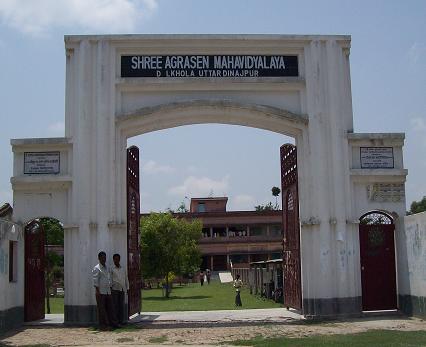
Dalkhola features a range of primary and secondary schools, predominantly government-run, alongside a few private English-medium institutions. The area's literacy rate stood at 67.67% in the 2011 Census, with male literacy at 73.49% and female literacy at 61.31%, below the West Bengal state average of 76.26%.[3] Government primary schools, such as Dalkhola F.P. School serving grades 1-4, provide basic education to local children.[56] Secondary facilities include Dalkhola High School, Uttar Dalkhola High School, and Dalkhola Girls High School, with approximately twelve primary schools overall and four offering secondary education.[57] Private options, like St. Mary's School, an English-medium co-educational institution from nursery to grade 10, cater to demands for curriculum aligned with broader job markets, though enrollment data remains limited.[58] Jawahar Navodaya Vidyalaya, a residential central school in Dalkhola, targets rural talent with free education up to higher secondary.[59] Quality debates persist, with private schools often perceived as superior in English proficiency and facilities compared to government ones, amid rural-urban access disparities in Uttar Dinajpur district.[60] Higher education is anchored by Shree Agrasen Mahavidyalaya, established in 1995 and offering undergraduate arts courses affiliated with the University of Gour Banga.[61] Students seeking advanced degrees frequently attend nearby institutions like Raiganj University, approximately 45 km away.[62] Dropout rates in Uttar Dinajpur's secondary schools hover around 15%, often tied to economic pressures such as family labor needs in agriculture or migration, exacerbating gaps post-primary levels.[63]

Healthcare Services

Dalkhola's primary public healthcare facility is the Dalkhola Primary Health Centre (PHC), a government-operated unit under the Karandighi block that provides basic outpatient services, maternal and child health care, and emergency treatment.[64][65] The PHC, located near National Highway 34, serves as the main access point for routine medical needs in the municipality and surrounding areas, supplemented by a handful of private clinics such as Mubashshir Home and local nursing homes offering limited inpatient care.[66][67] The district of Uttar Dinajpur, including Dalkhola, exhibits acute shortages in medical infrastructure, with only 1.50 hospitals per 100,000 population and approximately 37.79 hospital beds per 100,000 residents, translating to roughly one bed for every 2,646 people—well below national benchmarks.[68] Rural hospitals in the district serve up to 8,063 persons per bed, far exceeding the West Bengal state average of 3,687, highlighting overburdened facilities and reliance on referrals to the 60-bed district hospital in Raiganj for advanced care.[69] Doctor availability is uneven, with peripheral blocks like Karandighi—where Dalkhola is situated—experiencing greater shortages compared to central areas such as Raiganj.[70] In response to longstanding gaps, the West Bengal State Health Department approved the construction of a 50-bed State General Hospital in Dalkhola on February 21, 2025, aimed at reducing dependence on distant district-level facilities and addressing the prior limitation of a single PHC for the area's needs.[71] The district's health system supports immunization drives under the Universal Immunization Programme, delivering vaccines for preventable diseases, though specific coverage rates for Uttar Dinajpur lag behind state averages due to infrastructural constraints and population pressures in border regions.[65]

Transportation Systems

Dalkhola's primary road connectivity is provided by National Highway 27 (NH 27), a major east-west corridor that traverses the town, linking it to Islampur, Siliguri in West Bengal, and Purnea in Bihar, facilitating inter-state vehicular movement.[72] State highways branching from NH 27 extend access to the Bihar border and northern districts, supporting regional logistics. The local bus stand manages inter-state bus operations, with regular services to Kolkata (covering approximately 371 km) and other cities, operated by private and state transporters handling passenger traffic.[73] Dalkhola railway station (DLK) operates as a junction on the broad-gauge Howrah-New Jalpaiguri line under the Northeast Frontier Railway's Katihar division, with three platforms accommodating 42 daily train halts, including 34 mail/express and 2 superfast services to destinations such as New Delhi, Kolkata, and New Jalpaiguri.[74] [75] These include trains like the Teesta Torsa Express (departing at 00:10) and Garib Nawaz Express (to New Delhi, departing at 06:00), enabling passenger connectivity across eastern India.[74] The station also supports freight movement for goods along the Barauni-Guwahati and Katihar-Siliguri lines. Air travel is unavailable locally, with the nearest airport being Bagdogra Airport (IXB), located about 102 km southeast, serving domestic flights via airlines like IndiGo and Air India.[76] Intra-town transport relies on auto-rickshaws for general mobility and cycle-rickshaws for short distances, forming the core of non-motorized local conveyance.[2]

Culture and Society

Festivals and Traditions

Dalkhola's festivals primarily revolve around major Hindu and Muslim observances, reflecting the town's demographic composition of approximately 60% Muslims and 40% Hindus as per recent census data. Durga Puja, celebrated in September or October, features elaborate pandals, idol immersions in nearby water bodies, and community feasts, drawing participation from Hindu families and some cross-communal visitors for cultural events.[1][2] Diwali follows in October or November with lighting of lamps, fireworks, and exchange of sweets, emphasizing themes of prosperity observed mainly by Hindus but with neighborhood-wide illuminations.[1] Eid al-Fitr and Eid al-Adha, marking the end of Ramadan and the sacrifice festival respectively, involve congregational prayers at local mosques such as those in the town center, followed by feasting on traditional dishes like biryani and sheer khurma; these draw large attendance from the Muslim majority, with some Hindu neighbors joining public celebrations.[1] Muharram processions occur in the Islamic month of Muharram, featuring tazias carried through streets by Shia communities, though Sunni observance predominates in the region.[1] Other events include Dussehra with Ramlila enactments and Christmas services at the small Christian minority's churches, typically in December.[1] Local traditions incorporate Surjapuri linguistic elements in folk songs and dances during these festivals, such as renditions of bhajans or qawwalis adapted to regional dialects, fostering informal cross-communal interactions at rural haats or seasonal melas near agricultural fields.[77] These gatherings, often held post-harvest in November-December, feature shared activities like kite flying and sweet distribution, with attendance estimated in the thousands based on similar events in Uttar Dinajpur.[2]

Local Media

Local media in Dalkhola primarily consists of regional print newspapers with circulation in Uttar Dinajpur district, supplemented by national radio and television broadcasts accessible via cable and DTH services. Dainik Jagran, a Hindi-language daily, maintains a local edition covering northern West Bengal, including distribution in Dalkhola for daily news on regional events and agriculture.[78] Similarly, Uttarbanga Sambad, a Bengali newspaper based in North Bengal, provides coverage of district-level developments with print runs extending to Uttar Dinajpur towns like Dalkhola.[79] Radio services are dominated by All India Radio (Akashvani), which offers AM and FM broadcasts receivable in the area, including news bulletins in Bengali and Hindi focused on state and local updates such as weather and agricultural advisories.[80] No dedicated community radio stations operate specifically in Dalkhola, though regional FM stations from nearby Siliguri provide supplementary programming.[81] Television access relies on cable operators and DTH providers offering over 100 national channels, with Hindi and Bengali news networks like those from Doordarshan and private broadcasters dominating viewership for broader coverage.[82] Local "news channels" such as Mr TV emerge via social media platforms, posting video updates on community matters.[83] Since the 2010s, digital platforms have expanded local news dissemination, with Facebook groups like Dalkhola News and Public News Group Bengal in Bihar (Dalkhola) serving as primary hubs for resident-shared updates on traffic, markets, and emergencies, amassing thousands of members.[84] Twitter handles such as @DalkholaNews and emerging online portals facilitate real-time information sharing via WhatsApp, marking a shift from print to social media for hyper-local alerts.[85] YouTube channels, including RCTV Sangbad, upload Dalkhola-specific videos on daily incidents, enhancing community awareness beyond traditional outlets.[86]

Challenges and Controversies

Urban and Environmental Problems

Dalkhola faces recurrent waterlogging and flooding, primarily triggered by overflows from the nearby Mahananda River during intense monsoon rainfall, with annual flood reports documenting affected areas in Uttar Dinajpur district including the town.[87] Inadequate drainage connectivity compounds these issues, leading to prolonged submersion of low-lying zones and disruptions to rail and road transport, as evidenced by instances of submerged tracks near Dalkhola railway station in 2017 and flooding impacting electrical substations in 2019.[88][89][90] Local governance challenges, including limited financial resources for infrastructure maintenance, hinder effective mitigation, as highlighted in case studies of the Dalkhola Municipality's service delivery constraints.[91] Road infrastructure suffers from deterioration, particularly on national highway segments traversing the town, such as stretches of NH-12 toward Siliguri, where poor surfacing and potholes contribute to vehicular hazards and delays.[92] Flood damage exacerbates these conditions, with reports noting highway impairments from water ingress and erosion in flood-prone North Bengal corridors.[93] Environmental pressures include untreated municipal and industrial waste discharge into local water bodies, contributing to river pollution along the Mahananda, alongside deforestation from expanding construction and agriculture that heightens flood vulnerability by reducing natural water retention.[94][95] Solid waste management remains underdeveloped, with reliance on basic disposal methods lacking comprehensive recycling or treatment, mirroring broader deficiencies in small urban bodies in the region.[96] These lapses stem from underinvestment in regulatory enforcement and planning, amplifying ecological risks amid rapid urbanization.[97]

Migration, Security, and Communal Issues

Dalkhola's proximity to the Indo-Bangladesh border in Uttar Dinajpur district has facilitated waves of migration since the 1947 Partition, with additional influxes following the 1971 Bangladesh Liberation War, primarily involving Muslims from East Bengal seeking refuge or economic prospects. These movements, documented in historical analyses of the region, have altered local demographics, contributing to the Muslim population rising to 39.54% in Dalkhola municipality by the 2011 Census, amid broader district trends where Muslims comprised 49.92% of Uttar Dinajpur's residents.[3][98][99] Ongoing undocumented entries persist due to the area's porous 44-km border stretch, with the Border Security Force (BSF) reporting apprehensions of Bangladeshi nationals in Uttar Dinajpur, often tied to smuggling routes. In February 2023, BSF troops nabbed a Bangladeshi smuggler near the international border in the district, highlighting vulnerabilities exploited for illicit crossings despite fencing efforts. National BSF data for 2023 recorded 3,137 undocumented Bangladeshis intercepted along the entire border, with regional operations underscoring enforcement gaps in districts like Uttar Dinajpur, where terrain and local networks enable infiltration.[100][101] Communal tensions have manifested in sporadic violence, most notably during the Ram Navami procession on March 30, 2023, when clashes at Tajamul Chowk in Dalkhola killed one person—identified as a Hindu participant—and injured several others, including police. Eyewitness accounts and investigations revealed stone-pelting and arson targeting the procession, prompting the National Investigation Agency (NIA) to take over the probe from state police, who had filed cases against 162 suspects. The NIA arrested 16 individuals in February 2024 for conspiring in a "communal attack," citing evidence of premeditated targeting amid heightened religious processions in Muslim-majority areas. The Calcutta High Court intervened, directing the state to ensure future processions' safety, reflecting critiques of initial police response delays.[102][103][104] Security challenges compound these issues through cross-border smuggling of goods like timber and gold, with Dalkhola's highway connectivity aiding transit. BSF and revenue intelligence operations have seized contraband in the region, but persistent local involvement raises concerns over enforcement efficacy versus community integration, where settled migrants contribute economically yet strain resources in a district with documented post-1971 demographic pressures.[100]

References

User Avatar
No comments yet.